There’s a point in watch collecting when the price starts to shape our expectations before the watch even reaches the wrist. A $500 diver is expected to be good. A $1,500 diver should be better. But once we get into Rolex Submariner, Omega Seamaster, Glashütte Original SeaQ, and Tudor Pelagos FXD territory, it’s tempting to assume we’re buying a completely different kind of dive watch. After years of wearing and reviewing watches across these price ranges, we’ve found the reality is a little less straightforward. The expensive watches are more refined, sometimes dramatically so, but put them next to the mid-priced options, and the price gap starts to look considerably larger than the gap on the wrist.
That’s the part worth digging into. We’re not here to pretend a mid-price watch can duplicate everything a luxury model does, or to turn this into another specification contest where whoever has the deepest water-resistance rating wins. We care more about what happens after the watch has been worn all day: whether the bracelet stays comfortable, the bezel and crown feel precise, the dial stays easy to read, the finishing keeps rewarding you months later, and whether the watch makes sense to live with. Our hands-on experience says luxury dive watches do earn their premium through better execution, finishing, and overall cohesion. The harder question is whether those improvements matter enough to justify paying several times more, or whether the best mid-price alternatives already give you most of the dive-watch experience that matters.
What Does the Extra Money Actually Buy?
A luxury dive watch doesn’t become automatically more useful as the price climbs. At this level, the meaningful differences usually come down to how thoroughly the watch is executed: the finishing, feel of the controls, bracelet, and movement. Those details can make a watch more satisfying to live with.
Finishing, Fit, and Overall Cohesion
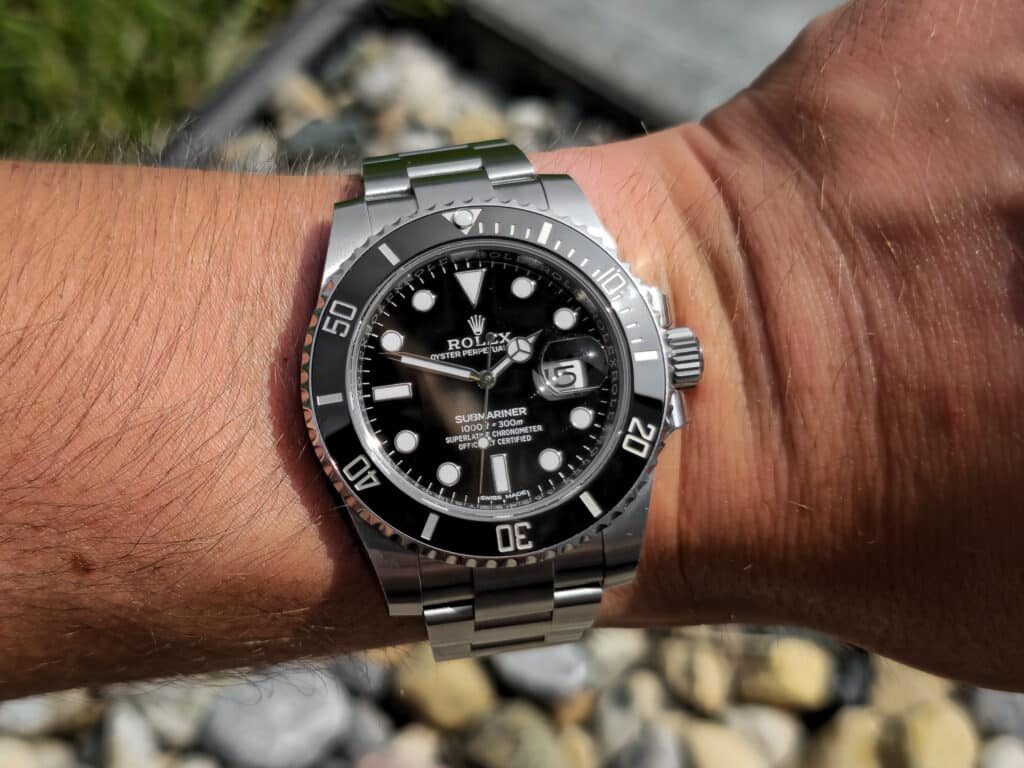
The Rolex Submariner is a good example of these aspects. The case itself is fairly restrained, with brushing on top and highly polished sides, and our dedicated review of the Sub notes that it can look a little plain on its own. What makes the watch so compelling is how well the individual pieces work together. At 12.5mm thick with a 48mm lug-to-lug, it has proportions that make a 300m-rated diver unusually easy to wear. The links articulate naturally around the wrist, while the end links sit tightly against the case. Those are small details until you spend a full day wearing the watch, at which point they become the difference between a watch you tolerate and one you stop thinking about.
The Glashütte Original SeaQ takes a more overtly luxurious route. Its 39.5mm case wears remarkably well for a 12.5mm watch, helped by the thin mid-case and domed sapphire crystal. The deeply brushed side surfaces and polished bevel have a tactile quality that comes through when you handle the watch. This is the sort of finishing you notice less as a specification and more as an overall sense that the case has been carefully resolved from every angle.
Bracelets, Clasps, Bezels, and Crowns
This is where luxury can sometimes justify itself one tiny interaction at a time. The Submariner’s bracelet and clasp are a good example because they affect the watch every minute it is on your wrist. The articulation, fit against the case, and Glidelock adjustment make it easy to keep the watch comfortable, rather than leaving you with the usual dilemma between “too tight” and “too loose.”
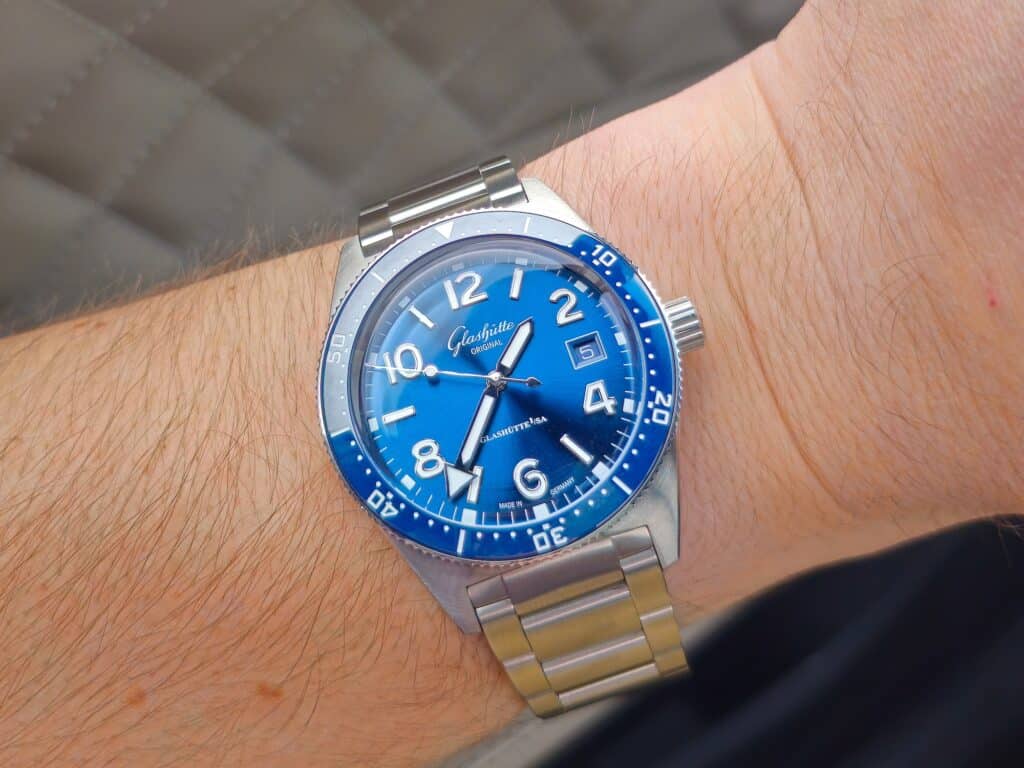
The SeaQ’s bezel offers another example. As covered in our in-depth review, its action is tight, precise, and free of the noticeable play that can make a bezel feel cheaper than the rest of the watch. That doesn’t make the watch more capable in the water on its own, but it does make setting and resetting the bezel feel deliberate rather than approximate. The bracelet adds another layer of refinement with silky-feeling links and a tool-less clasp you can adjust while the watch is still on your wrist. That sounds like a minor convenience until your wrist decides to expand halfway through the day, as wrists apparently enjoy doing.
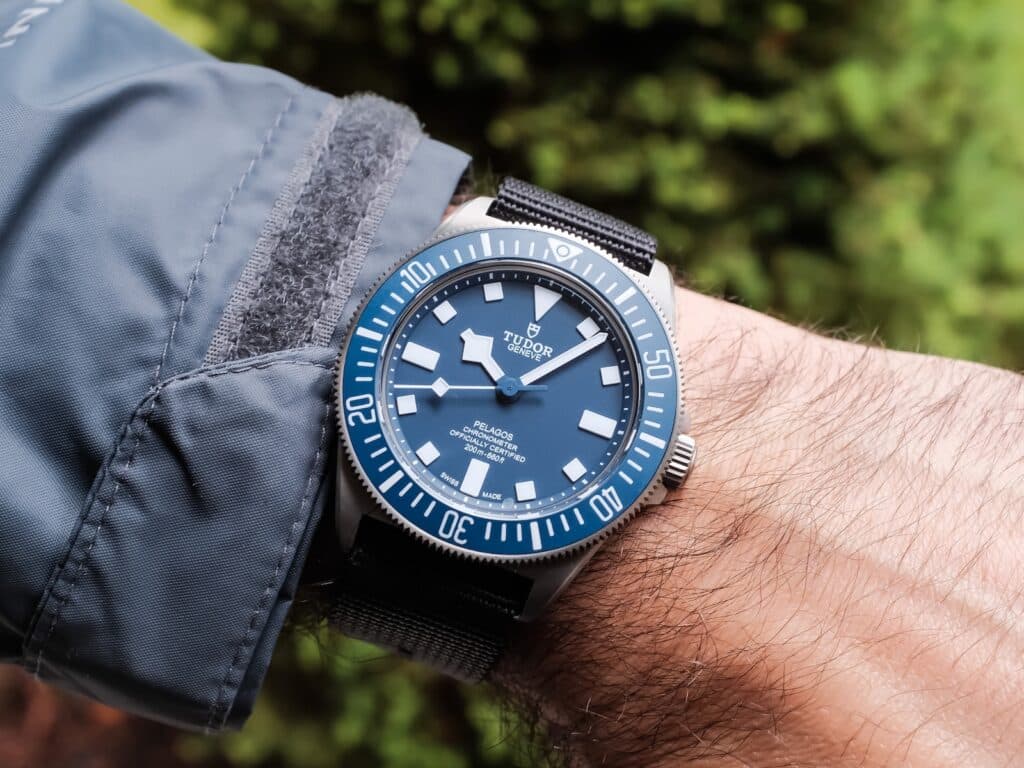
The Tudor Pelagos FXD we tested hands-on takes the opposite approach, showing that luxury can also mean purposeful engineering rather than polished presentation. The titanium case keeps the relatively large watch manageable on the wrist, while the fixed bars and strap-focused design are deliberate choices for a tool-watch setup. Its wider bezel knurling also makes it easier to grip when your hands are wet. It’s a different kind of refinement, but refinement nonetheless: the parts have been designed around how the watch is meant to be used.
Movement Performance and Accuracy
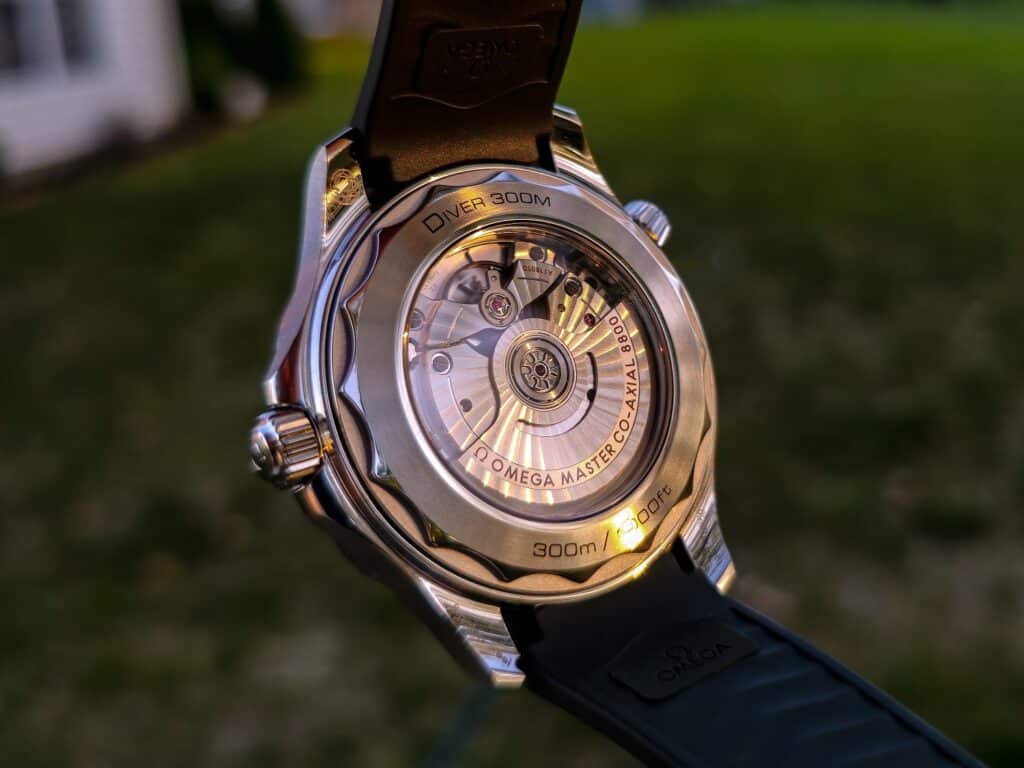
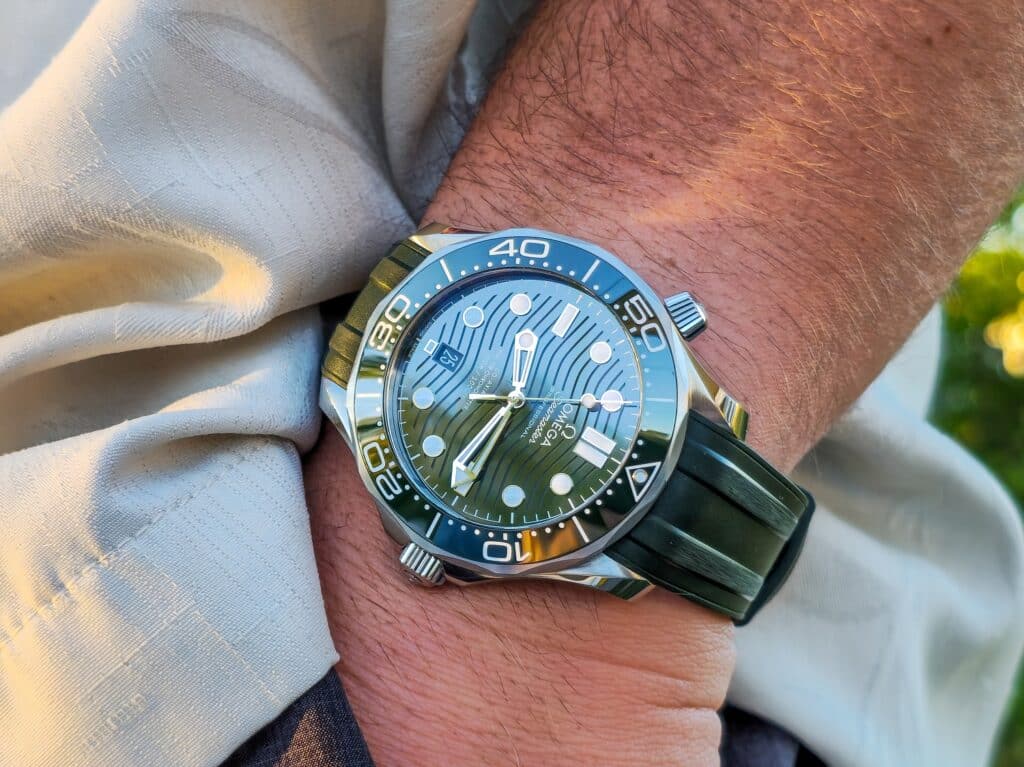
Movement performance is one area where luxury can really offer more, though it matters most to buyers who care about mechanical performance beyond “it keeps decent time.” For instance, the current Omega Seamaster Diver 300M uses the Co-Axial Master Chronometer Caliber 8800, with METAS certification. The version we reviewed was running within about 1 second per day. It is also highly resistant to magnetic fields, which gives the movement a real technical advantage beyond simply sounding impressive on the specification sheet.
The Rolex Submariner also performed extremely well, running around +0.5 seconds per day. That kind of accuracy is genuinely impressive, but whether it changes your life depends on what you expect from a mechanical watch. Most owners aren’t timing their morning coffee to atomic-clock standards. The value is more about consistency, engineering, and knowing that the movement is operating at a very high level.
That distinction matters because once a mechanical watch is keeping time reliably enough for your needs, additional movement sophistication doesn’t automatically make it more enjoyable to wear. It makes the mechanical side more sophisticated, which is valuable if that is part of what you enjoy about collecting.
Where Luxury Dive Watches Still Fall Short
The extra money can buy a more polished watch, but it doesn’t make every design decision smarter. Even at the luxury end, we’ve seen watches that nail the big picture but fall short in the bezel, bracelet, crown, or strap setup. That matters because you interact with these parts most, and a small annoyance on paper can become much bigger after weeks of real wear.
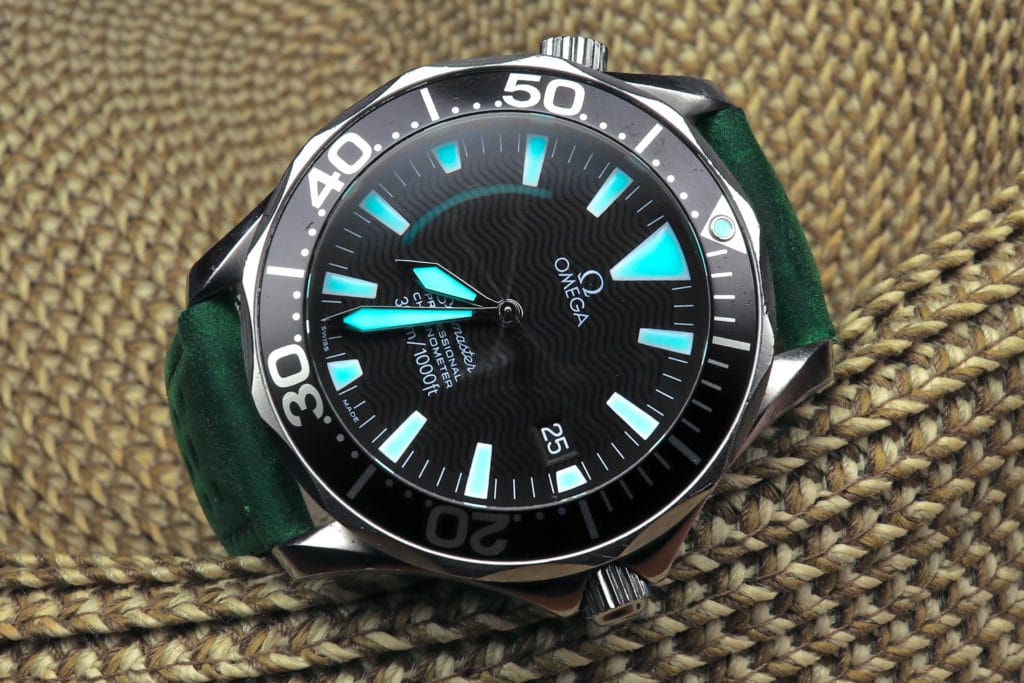
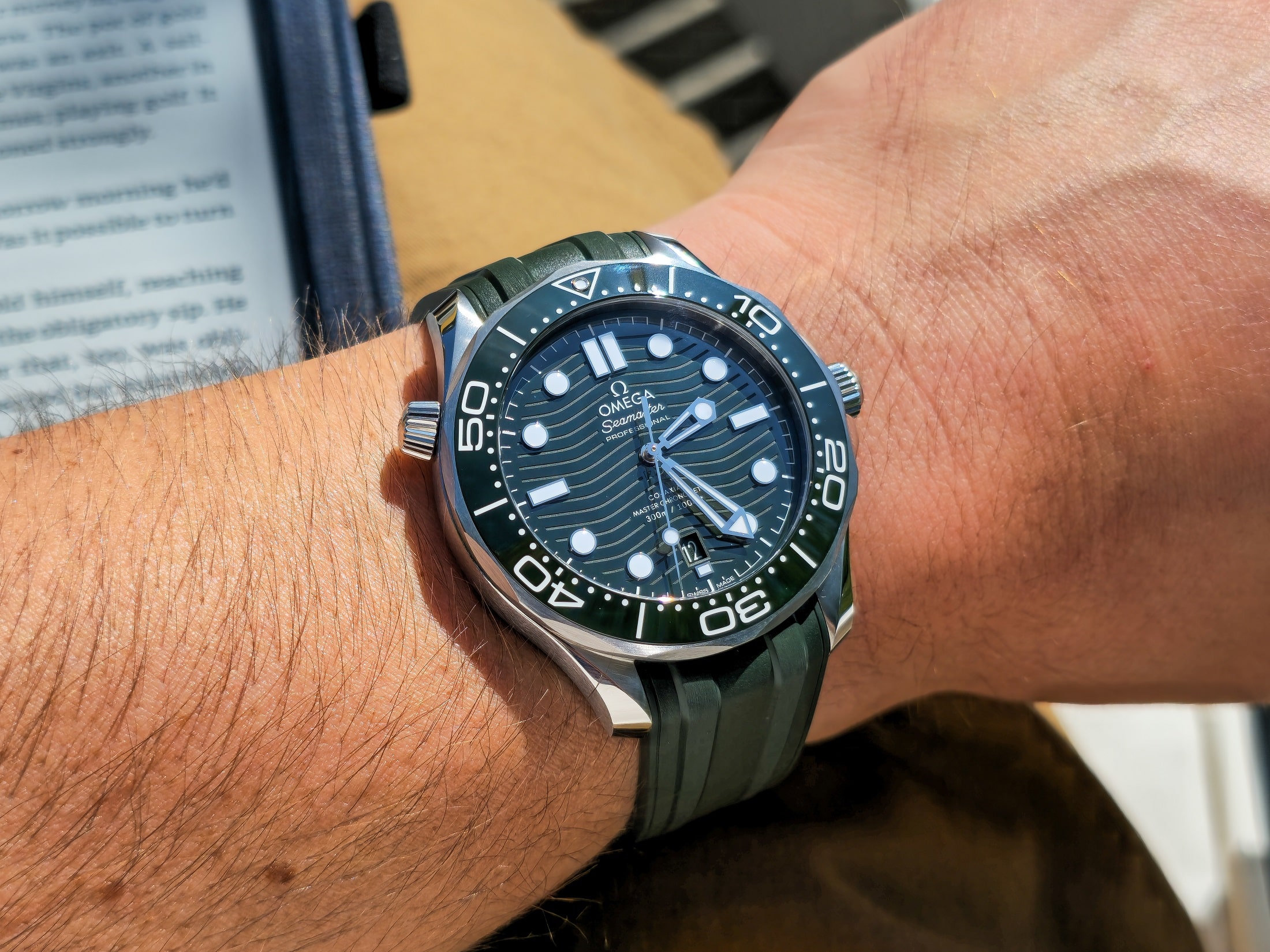
The Omega Seamaster Professional 300M 2254.50 is useful here because it prevents the discussion from turning into “expensive equals flawless.” As mentioned in our hands-on insights, the watch is highly wearable at 41mm wide and around 12mm thick, its wave dial is legible, and its C3 Super-LumiNova is strong. But the bezel is hard to grip when wet, and the bracelet lacks the kind of fine microadjustment found on newer designs. Those aren’t theoretical criticisms. They’re the sort of things you notice when you’re actually using the watch.
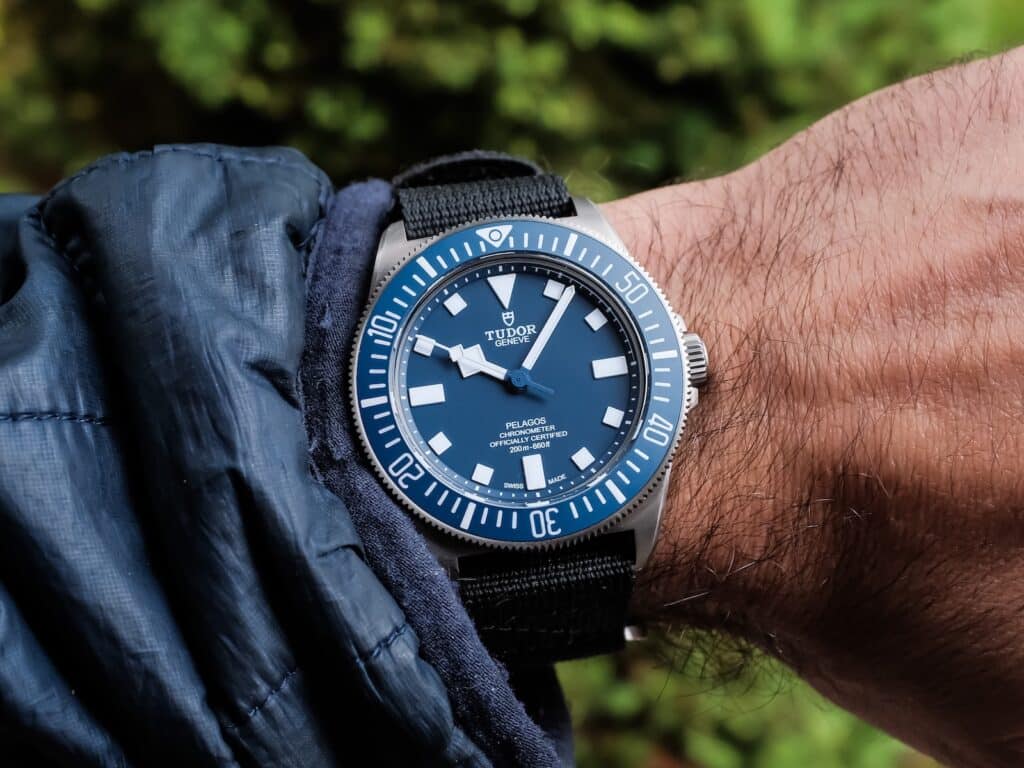
The Pelagos FXD has a different kind of trade-off. Its fixed spring bars and strap-oriented design mean it isn’t trying to be the universally adaptable bracelet diver that a Submariner is. That’s less a flaw than a reminder that luxury watches can still make deliberate compromises to serve a particular use case.
How Close Do Mid-Price Dive Watches Get—and Where Do They Make More Sense?
Mid-price dive watches have already cleared the part of the test that matters most: they can be good watches without needing a famous name on the dial. You can spend more, certainly. The real question is how much more you actually get for it.
Design and Personality Can Close More of the Gap Than Specs Suggest
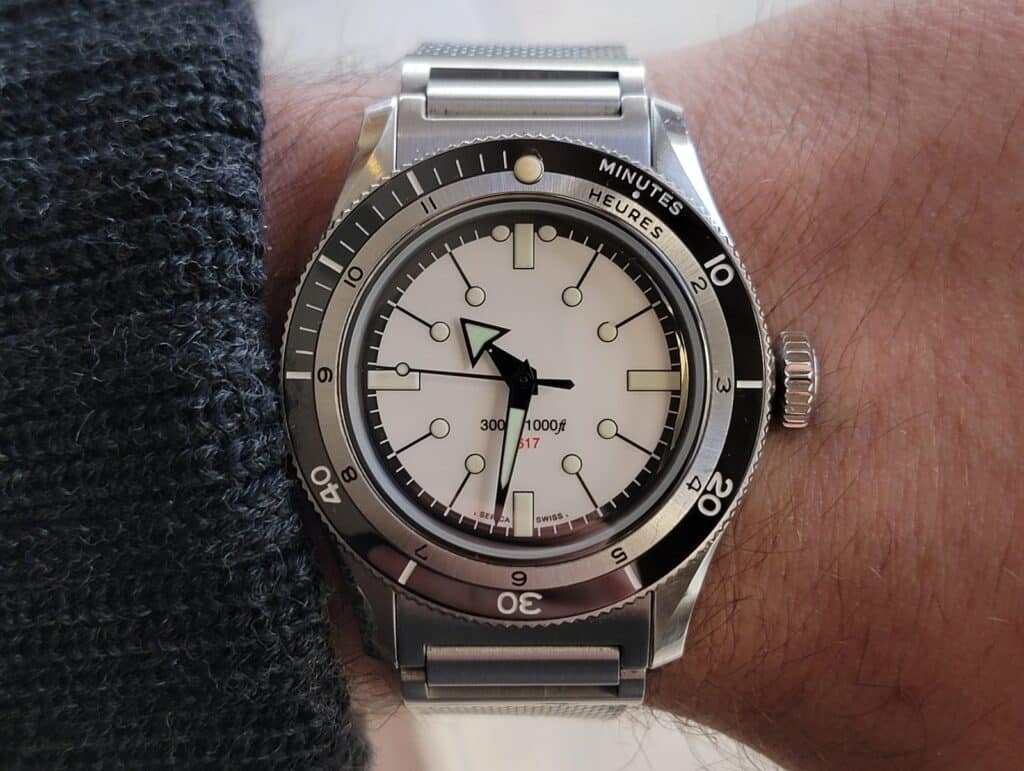
The Serica 5303-2 is a good example of why “luxury alternative” can be the wrong way to look at this category. It doesn’t need to look like a cheaper Submariner. Its 39mm case and 46mm lug-to-lug put it in a comfortable spot on the wrist, while the unusual bezel combines a dive scale with an inner 12-hour scale. The result is a watch with its own visual language, rather than spending its existence trying to remind you of something more expensive. In our testing experience, the lume is excellent, and the 120-click bezel has no play, so the interesting design doesn’t come at the expense of basic usability.
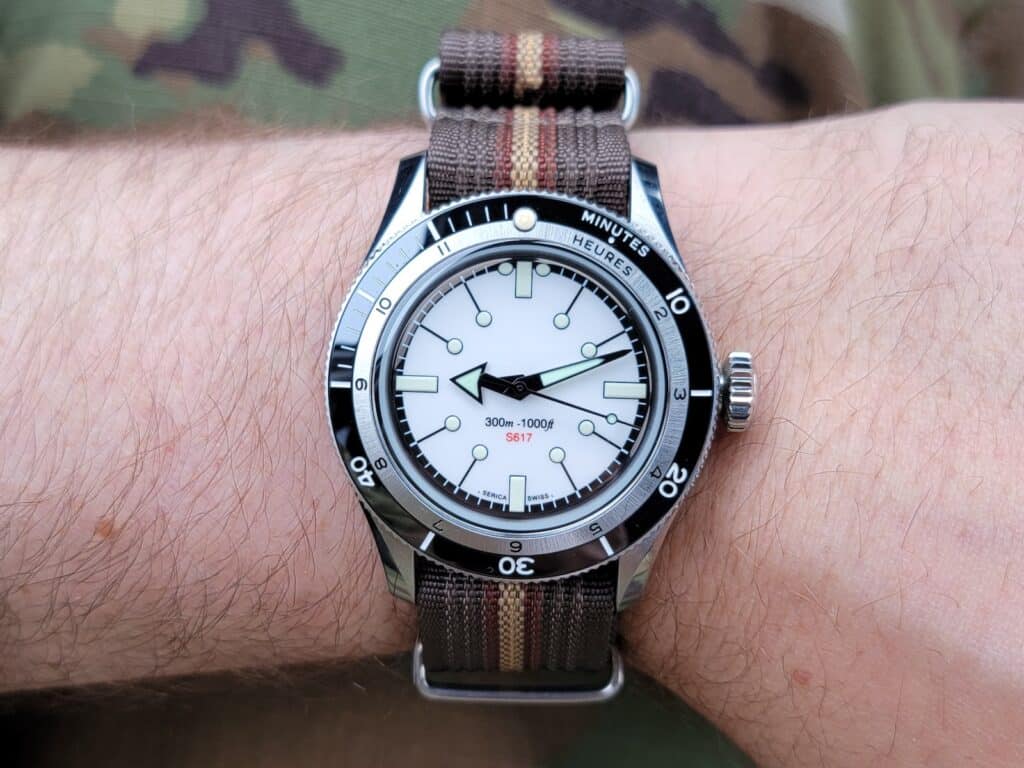
There are also some very real microbrand caveats. The first-generation Serica we reviewed used the Soprod Newton and had occasional issues with the crown slipping while setting the time or the second hand failing to hack. The current version moved to the Soprod M100 and received chronometer certification. From a long-term ownership perspective, the important bit is that those flaws didn’t stop the original watch from becoming one of our most-worn pieces, including on trips, while swimming, and snorkeling. That’s a pretty convincing endorsement of the watch as an object you actually want to wear, rather than one you merely admire on a website.
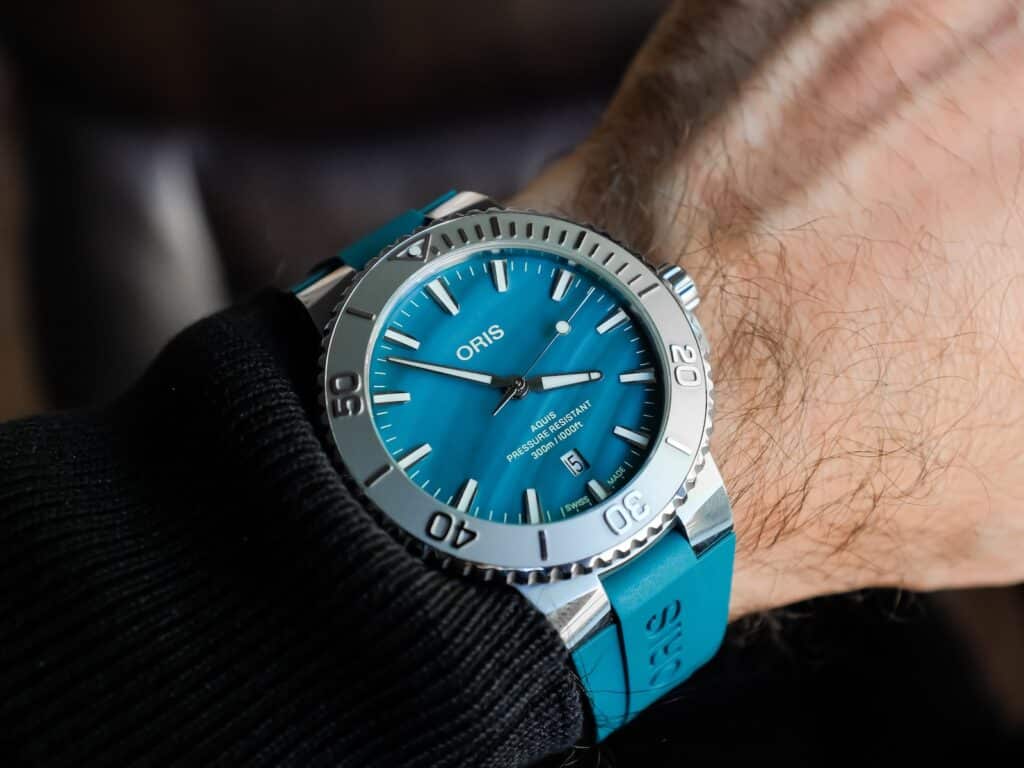
The Oris Aquis New York Harbor II makes a similar argument from a different direction. Its 43.5mm case sounds substantial, but the curved lugs and integrated rubber strap make it wear more compactly than the measurements imply. More importantly, the aqua-green mother-of-pearl dial gives it an identity that a standard black diver simply doesn’t have. It shifts with the light yet remains legible, and during our testing period, we found the rubber strap comfortable enough to prefer it over adding more weight with a bracelet. It also has a firm, precise bezel and smooth crown operation. The catch is that all this personality makes it more situational; it’s a watch you return to when the mood is right, rather than the obvious grab-and-go option.
Mid-Price Can Still Deliver Serious Tactile Quality
The Seiko Marinemaster is where the argument gets more interesting because Seiko managed to make the watch head feel considerably more expensive than its price bracket indicates. The case uses Zaratsu polishing, and the polished flanks reflect light so dramatically that they help tame what is otherwise a very large watch. The 44mm case and 50.5mm lug-to-lug are substantial, and at roughly 200 grams on the bracelet, this watch doesn’t quietly disappear on your wrist. But the bezel is excellent in a very Seiko way: firm and smooth, with a fluid feel that’s luxurious without behaving like a Submariner or Seamaster.
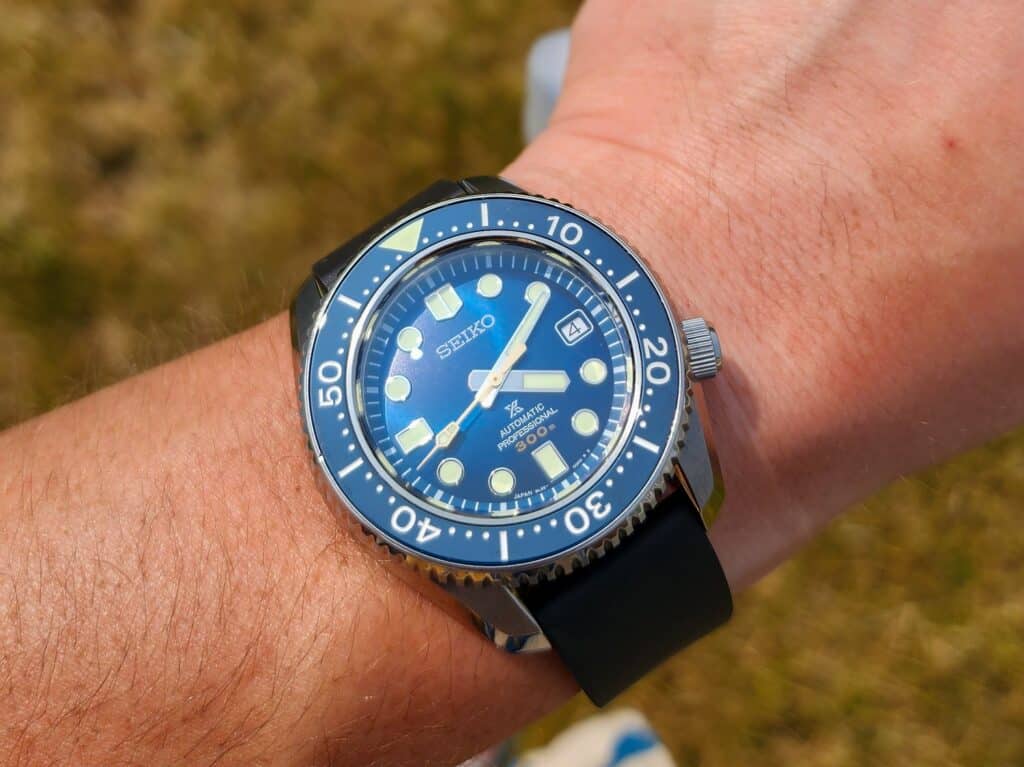
The bracelet is where Seiko gives some of that money back. The ratcheting clasp is excellent and easy to adjust, but the links are long, the male end links add more length, and the overall bracelet was judged poor enough that we moved almost immediately to FKM rubber and NATO. That is the sort of trade-off worth knowing about from our hands-on insights. The watch head can deliver a surprisingly high-end experience, while the bracelet reminds you that the $3,100 price tag doesn’t buy perfection in every component.
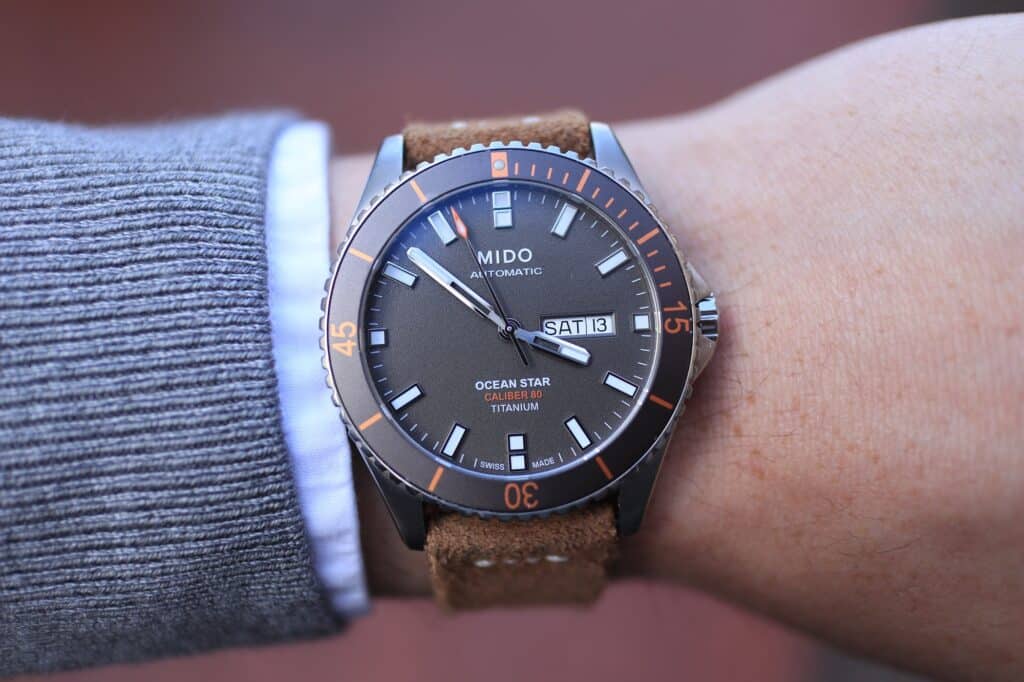
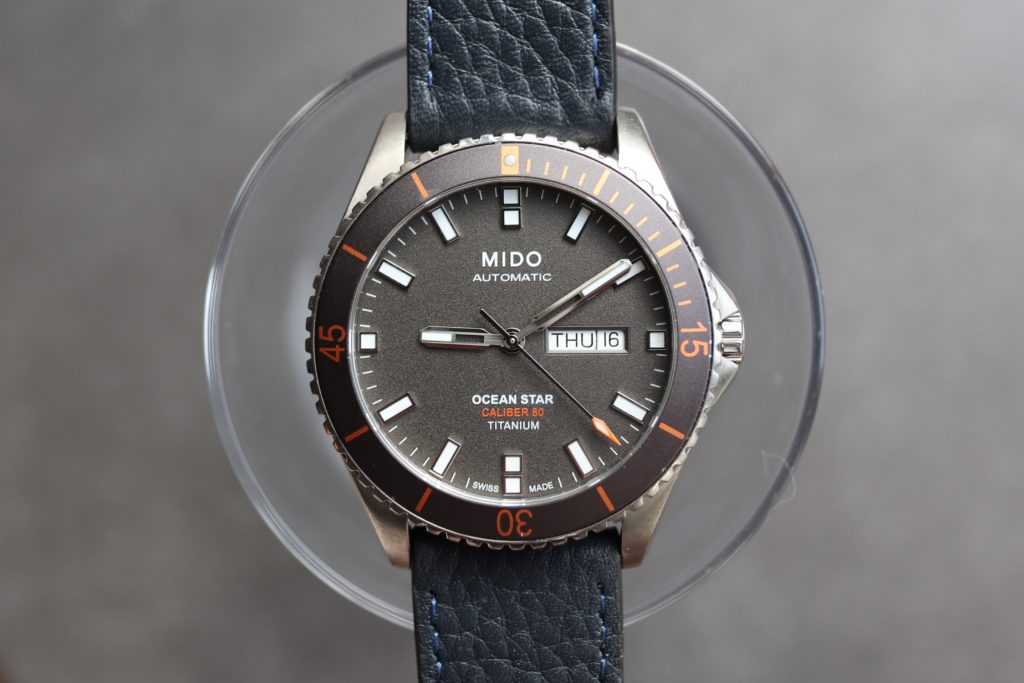
The Mido Ocean Star Titanium takes a less dramatic route to the same destination. Its 42.5mm case is only 11.75mm thick, and the titanium construction makes the watch feel much lighter than its size might suggest. The bracelet is particularly convincing: the links curve naturally around the wrist, it tapers from 22mm to 19mm, and the ratcheting clasp is quite easy to operate. After more than a year and a half of regular wear despite having 15–20 watches in rotation, it remained a frequent choice for us. The crown takes more effort than it should to unscrew, but once you get past that annoyance, ownership is quite straightforward.
Lower Cost Can Change How You Actually Wear the Watch
There is also a less glamorous advantage to spending less: you may stop worrying about the watch and start wearing it. The Serica is particularly useful here. After four years, it had been taken to work, beaten up a bit, and used for swimming and snorkeling in the Pacific, with no meaningful problems in general timekeeping or functionality. That tells us more about ownership value than another paragraph about specifications ever could.
The Mido makes a similar case from a different angle. Its long-term appeal came down to comfort and the fact that it kept getting worn despite a large rotation of watches. That’s the real advantage of lower-cost ownership: the watch gets to participate in your life rather than becoming an object you spend half your time protecting.
Luxury vs Mid-Price — Which Makes More Sense for You?
Luxury makes sense when refinement is part of the hobby for you. You notice when a bezel lands exactly where it should. You appreciate a bracelet that articulates properly instead of simply holding the watch to your arm. You care about case finishing, clasp adjustment, movement performance, and that general feeling that someone obsessed over the last five percent of the design.
It also makes sense when you’d rather spend more once than keep buying cheaper alternatives while thinking about the watch you really wanted. There’s not much value in saving $5,000 if you spend the next three years browsing the same luxury model every Tuesday night.
Mid-price makes more sense when you like variety, experimentation, and the freedom to try watches without making every purchase feel like a major decision for your collection. It’s the better route if you enjoy microbrands, unusual designs, or rotating through several watches rather than building around one expensive centerpiece.
There’s also something liberating about wearing a watch that doesn’t require a risk assessment before you leave the house. You can take it traveling, wear it outside, swap straps, bump it into the occasional door frame, and accept that scratches are part of the hobby. The watch stays a watch instead of becoming a small financial hostage situation.
Final Verdict: Better, or Just More Famous?
After looking at watches we’ve actually worn, tested, and lived with, the answer is pretty clear: luxury dive watches are genuinely better made, but they are not dramatically better dive watches. The distinction matters. Their advantage shows up in refinement, execution, and the cumulative quality of the object rather than in some giant leap in what you can actually do with it.
The price gap and the quality gap are not the same thing. Mid-price watches can still deliver a convincing ownership experience, while luxury takes it further for people who care enough about the details to notice. And yes, fame plays a role in luxury’s appeal, but being recognizable across a restaurant doesn’t make a watch more capable.
So spend more if you genuinely want the finer execution. Stop lower if you don’t. Either way, the useful question isn’t whether the watch is expensive enough. It’s whether the things you’re paying extra for will still matter to you six months after the honeymoon is over.

Co-Founder and Senior Editor
Kaz has been collecting watches since 2015, but he’s been fascinated by product design, the Collector’s psychology, and brand marketing his whole life. While sharing the same strong fondness for all things horologically-affordable as Mike (his TBWS partner in crime), Kaz’s collection niche is also focused on vintage Soviet watches as well as watches that feature a unique, but well-designed quirk or visual hook.
you buy “luxury…” Rolex, Omega, because you can, not because they are necessarily ‘better’ I collect cheap for fun and looks and Luxury because of a bit of vanity and value. my luxury watches have all appreciated in value…
I don’t know if I can say the same about my “luxury” watches, Clive. But I definitely get the point. Different kinds of fun.
I bought a new submariner date in 1972 and compared to todays watches they were not that good. Time keeping not that good – bracelet clasp had to keep bending the two prongs to keep it tight and the perspex glass had to polish to remove the scratches. It got stolen in 1975 off the diving vessel in Victoria dock 12 Bombay. Bought a second hand Explorer in 76′ and had stolen in Hatton Garden London 2007.
Sheesh that’s some bad luck. Sorry to hear that Brian.