For a long time, recommending a first watch was easy. If someone asked where to start, the answer was usually a dive watch. Not because everyone needed 200 meters of water resistance, but because a good diver rarely felt like the wrong choice. It worked almost anywhere, handled everyday wear without complaint, and offered enough versatility that most collectors never regretted starting there. But today’s affordable watch market looks very different. Field watches, GMTs, integrated sports models, and microbrands have given new collectors more compelling options than ever before. That makes the old advice worth questioning. Are dive watches still the best entry point for new collectors, or has the hobby simply outgrown its default answer?
After more than a decade of wearing, reviewing, and revisiting affordable watches, we’ve learned that the first watch someone enjoys owning isn’t always the one with the most impressive specs. It’s the one they keep reaching for after the excitement of a new purchase fades. From the Casio Duro and Citizen Promaster Diver to the Orient Kamasu and Seiko Turtle, we’ve spent enough time with these familiar favorites to see what still holds up, where the trade-offs begin to appear, and whether a dive watch remains the smartest way into the hobby today.
Casio Duro
| Price: | $85 |
| Water Resistance: | 200m |
| Case Dimensions: | 44.2mm (diameter) x 48.5mm (lug-to-lug) x 12.1mm (thickness) |
| Lug Width: | 22mm |
| Movement: | Casio 2784 Quartz |
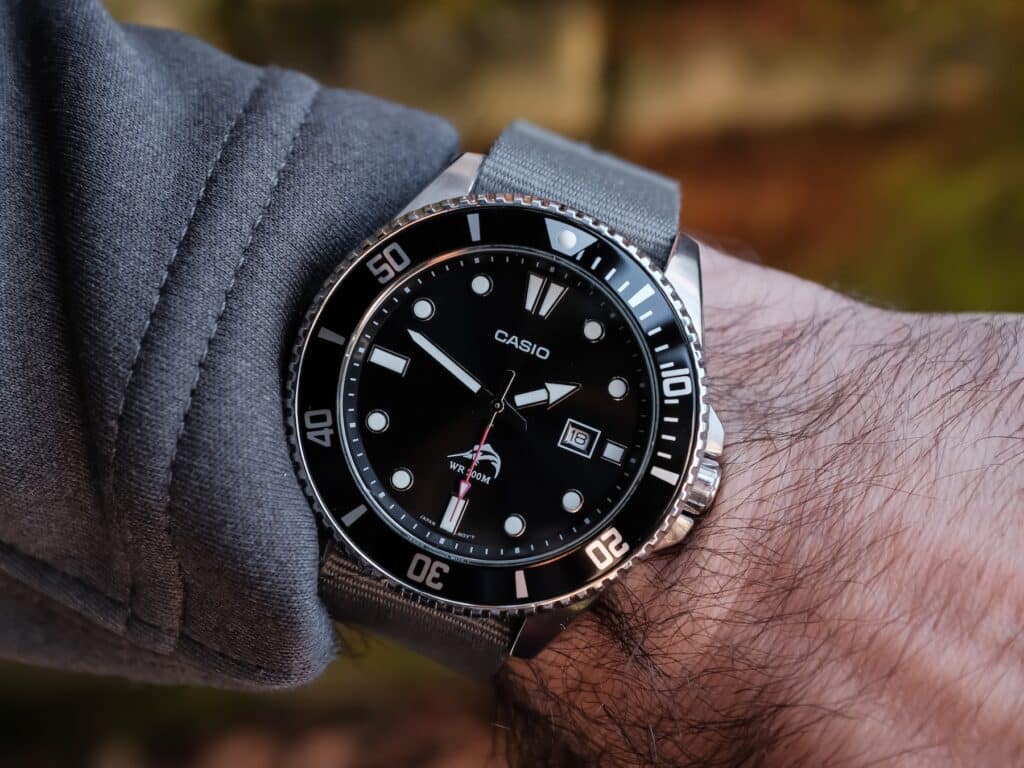
If we had to explain why dive watches became the default first recommendation, we’d probably hand someone a Casio Duro. It isn’t the most refined or mechanically interesting watch in this lineup, but that’s almost the point. The Duro strips the dive-watch formula down to the essentials: a clean dial, dependable water resistance, and a price low enough that you can stop overthinking your first purchase. For someone figuring out whether they’ll even enjoy wearing a watch every day, that’s a compelling place to start.
The dial shows why this formula has worked for so many years. Large hour markers, reflective arrow-style hands, restrained text, and a framed date window at three o’clock make the watch easy to read without trying too hard. Around the case, the practical theme continues with 200 meters of water resistance, a solid caseback, and a screw-down crown that encourages you to wear it rather than worry about it. During our wrist time with the watch, the bezel also stood out for the right reasons. It rotates with a controlled, deliberate action that feels more reassuring than the loose, rattly bezels we’ve encountered on plenty of inexpensive dive-style watches.
The Duro also reminds us that convenience has a place in this hobby. Its quartz movement stayed within ±20 seconds per month in our testing period, while hacking seconds and a quick-set date made day-to-day ownership almost effortless. Leave it on the dresser for a few days, pick it back up, and you’re ready to go.
The compromises are exactly where you’d expect them. The 44mm case won’t suit every wrist, although the short lug-to-lug measurement and downward-curving lugs help it wear better than the diameter suggests. The flat mineral crystal won’t shrug off scratches like sapphire, and while the lume is bright enough at first, it fades earlier than we’d like. Even so, the simple brushed surfaces, polished case sides, subtle case bevel, and versatile 22mm lug width give the Duro enough character to keep experimenting with different straps as your tastes evolve. As a first dive watch, it succeeds by teaching the right lessons without demanding a big investment.
Pros
- Quartz movement is accurate, hacks, includes a quick-set date, and requires almost no maintenance.
- 200m water resistance with a screw-down crown makes it easy to wear without second-guessing its durability.
- Clean, highly legible dial with bold markers, reflective hands, and restrained text.
- The bezel clicks with a reassuring, controlled action that feels better than many budget dive watches.
- Standard 22mm lug width makes experimenting with straps simple and inexpensive.
Cons
- The 44mm case can dominate smaller wrists despite the short lug-to-lug and curved lugs.
- Mineral crystal scratches more easily than sapphire, and the lume loses intensity sooner than we’d like.
Orient Mako II
| Price: | $160 – $220 |
| Water Resistance: | 200m |
| Case Dimensions: | 41.5mm (diameter) x 47mm (lug-to-lug) x 13mm (thickness) |
| Lug Width: | 22mm |
| Movement: | Orient Caliber F6922 (Mechanical Movement) |
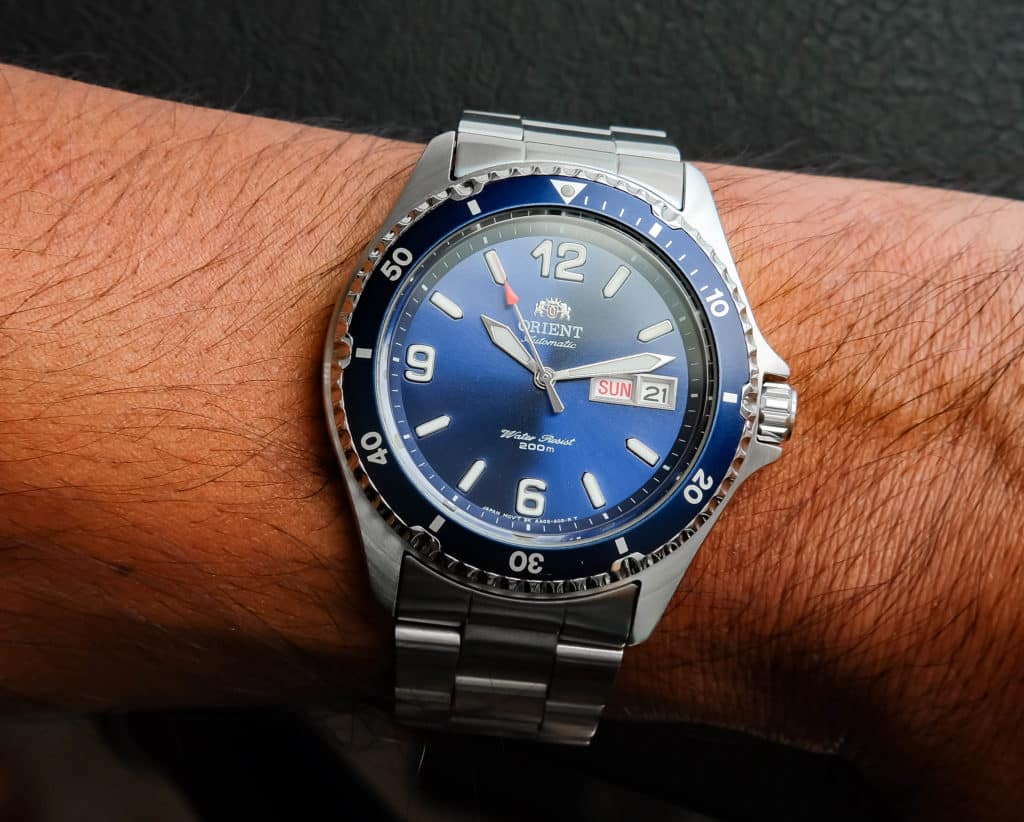
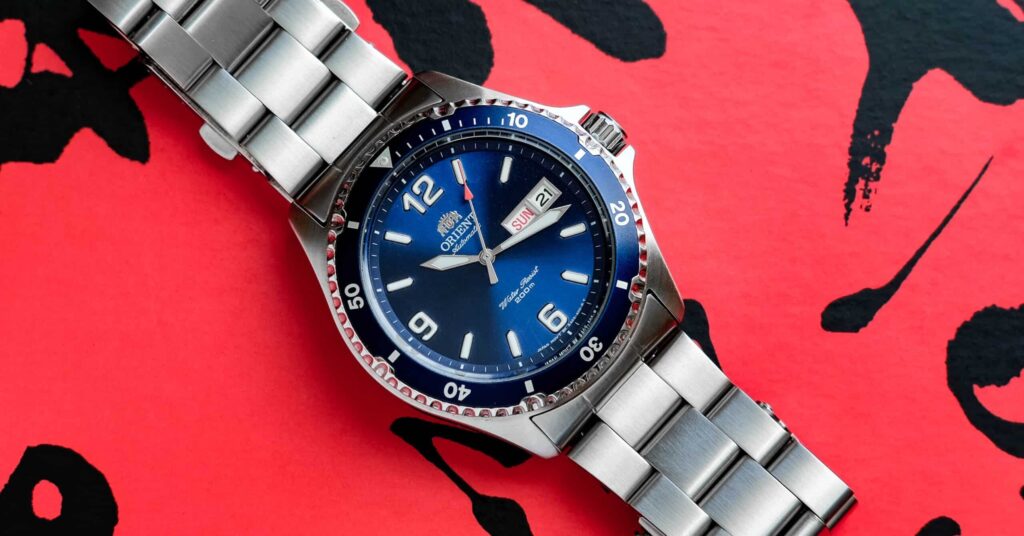
For many new collectors, the Orient Mako II represents the classic path into mechanical dive watches. It skips the novelty and gives you the parts of the hobby that tend to keep people interested: an automatic movement, straightforward styling, and a watch that feels satisfying to wear without demanding constant attention. The in-house F6922 movement is a big reason why. Hacking seconds and hand-winding mean you don’t have to rely on the old “shake it until it starts” routine after the watch has been sitting for a few days. It’s a small convenience, but one that makes owning a mechanical feel approachable rather than intimidating when you’re buying your first automatic.
Its dimensions reinforce that beginner-friendly character. The 41.5mm case, paired with a compact lug-to-lug distance, wears flatter and more securely than plenty of affordable divers that mistake size for wrist presence. It never felt top-heavy throughout our time with it, and the combination of brushed lugs, polished case sides, and a cleaner transition to the bracelet gives the watch a more refined appearance than its price. The bracelet feels secure during daily wear, while the clasp does what it needs to do, although the hollow end links become noticeable once the watch is off the wrist and in your hands.
The dial is another reminder that good everyday watches don’t need to be busy. The subtle sunburst finish adds depth without hurting legibility, while the applied markers, polished hand accents, framed day-date display, and red-tipped second hand provide enough visual character to keep the watch from feeling sterile. Around the edge, the 120-click bezel engages with a firm, reassuring action once you start turning it, though the sloped bezel profile isn’t as easy to grip as a deeper coin-edge design.
The lume is perfectly adequate for checking the time in dim conditions, but it fades sooner than the stronger lume we’ve seen on some competing dive watches. That’s a fair compromise at this price, and it doesn’t take away from what the Mako II does best. It remains one of the clearest examples of why affordable dive watches continue to make so much sense as a first step into collecting.
Pros
- The in-house F6922 automatic movement features hacking and hand-winding, making everyday ownership more approachable.
- Comfortable 41.5mm case wears flat and avoids the top-heavy feel of many affordable divers.
- Sunburst dial, applied markers, polished hands, framed day-date, and red-tipped second hand add personality without sacrificing readability.
- The 120-click bezel feels firm and reassuring once engaged.
- The bracelet feels secure in daily wear, and the clasp performs well.
Cons
- Hollow end links are noticeable when handling the watch off the wrist.
- The sloped bezel profile can be less intuitive to grip than a traditional coin-edge bezel.
- Lume doesn’t last as long as stronger-performing dive watches.
Orient Ray II
| Price: | $160 – $220 |
| Water Resistance: | 200m |
| Case Dimensions: | 41.5mm (diameter) x 47mm (lug-to-lug) x 13mm (thickness) |
| Lug Width: | 22mm |
| Movement: | Orient Caliber F6922 (Mechanical Movement) |
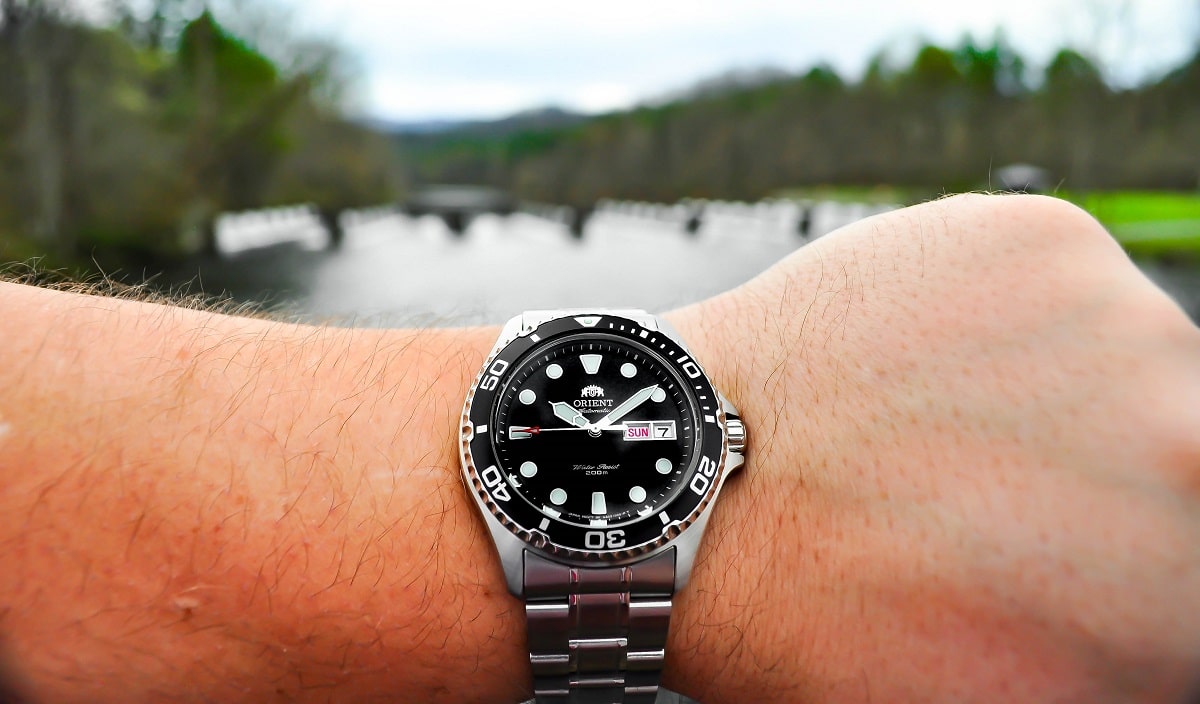
If the Orient Mako II introduces you to affordable mechanical dive watches, the Orient Ray II shows how two watches with nearly the same foundation can have very different personalities. That’s part of what makes it a worthwhile first collector’s watch. It gives newcomers a chance to discover that choosing a watch isn’t only about comparing specifications. Small design decisions change how a watch feels on the wrist and how enjoyable it is to use every day. The familiar F6922 automatic movement keeps ownership approachable with hacking seconds, hand-winding, 22 jewels, roughly 40 hours of power reserve, and Orient’s claimed -15 to +25 seconds per day.
The Ray II immediately separates itself through its dial. Instead of the Mako’s more restrained look, it leans into classic dive-watch cues with a matte black dial, chrome-edged round hour markers, trapezoidal quarter-hour indices, polished sword hands, and an arrow-shaped hour hand that catches your eye quickly. The framed split day-date window, applied Orient logo, printed wordmark, and even the tiny red dot inside the shield add detail without making the dial feel crowded. That stronger visual language carries over into low-light use, where the bright green lume performs better than we’d expect at this price. During our hands-on review, the chapter ring added welcome depth while leaving enough breathing room around the markers to keep quick time checks effortless after dark.
The case follows the same philosophy. Softened edges, brushed upper surfaces, polished flanks, downward-curving lugs, and the engraved dolphin caseback give the watch more character than a typical entry-level diver without compromising comfort. Orient also cleaned up the second-generation design by removing the old 2 o’clock screw-down day-correction pusher, making the case simpler to operate and less visually busy. Not every detail is as polished, though. The mineral crystal remains the expected compromise, while the tactile experience can be inconsistent. Depending on the example, the 120-click bezel ranges from smooth to stubborn, and its low-profile coin edge makes it harder to grip than we’d like. The engraved crown looks great with the engraved Orient logo, but it is small, polished, protected by crown guards, and doesn’t offer much purchase.
Likewise, the stock bracelet is perfectly serviceable, although the hollow 22mm end links and modest taper can make it feel broader than the watch’s refined styling. Fortunately, swapping to a NATO, leather strap, or a better aftermarket bracelet transforms the wearing experience. For a new collector deciding between similar affordable divers, the Ray II proves that personality can matter just as much as specifications.
Pros
- Bright green lume holds up well, making low-light legibility one of the Ray II’s strengths.
- F6922 automatic movement offers hacking, hand-winding, and an approachable mechanical ownership experience.
- Matte black dial, chrome-edged markers, sword hands, and subtle red accents create a bold yet uncluttered dive-watch look.
- Downward-curving lugs, softened case edges, and the cleaner second-generation case design improve everyday wear.
- Removing the old 2 o’clock day-correction pusher makes daily operation more straightforward.
Cons
- Bezel grip is awkward, and the action can vary noticeably between individual watches.
- The small, polished crown is difficult to grip because of its size and crown guards.
- The mineral crystal is less resistant to scratches than sapphire.
- The stock bracelet feels average, with hollow 22mm end links and a taper that remains wider than we’d prefer.
Seiko 5 Sports SRPD51 / 5KX
| Price: | $200 – $350 |
| Water Resistance: | 100m |
| Case Dimensions: | 42.5mm (diameter) x 46mm (lug-to-lug) x 13.5mm (thickness) |
| Lug Width: | 22mm |
| Movement: | Seiko 4R36 |
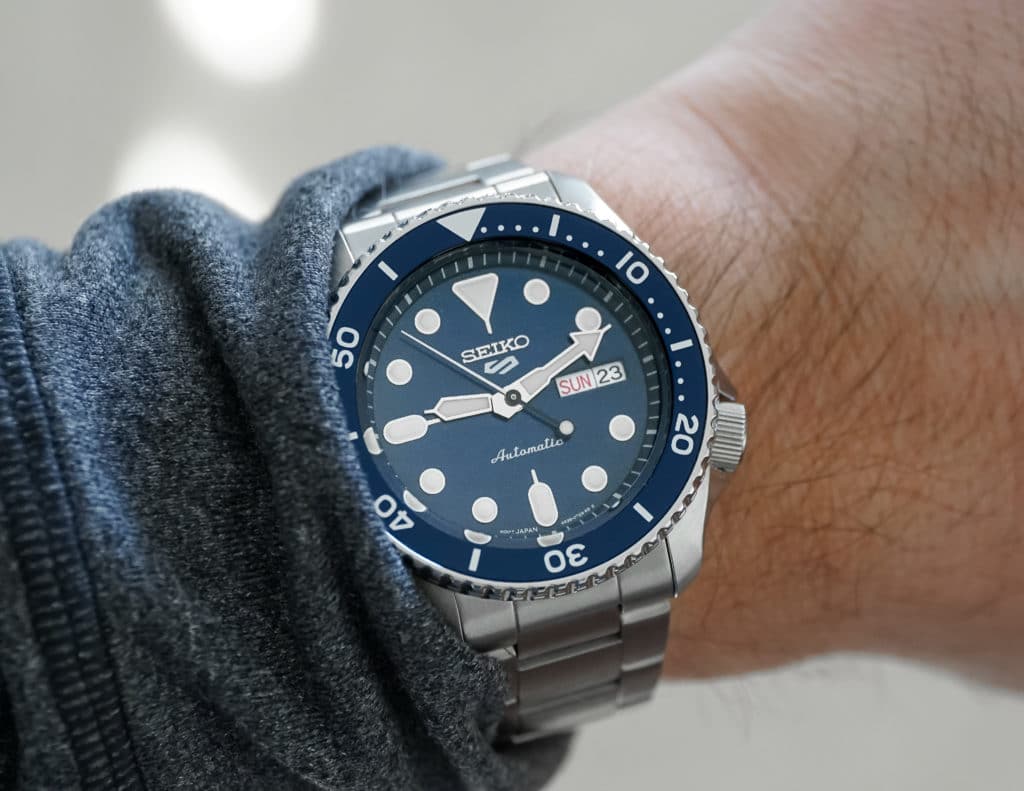
The Seiko 5 Sports SRPD51 earns its place in this conversation because it challenges one of the biggest assumptions behind recommending a diver as a first watch: do new collectors actually need a true dive watch? On paper, the SRPD51 looks every bit the part. It carries the familiar Seiko diver silhouette, a rotating bezel, and the kind of rugged styling that has introduced countless people to the hobby. Yet it isn’t ISO-certified like the SKX it resembles, making it less of a purpose-built dive watch and more of an everyday sports watch. For many first-time buyers, that’s probably a more relevant distinction than it first appears.
The mechanical ownership experience is still very Seiko-ish. The in-house 4R36 movement adds hacking seconds and hand-winding—two upgrades collectors wanted for years. The display caseback lets newcomers watch the movement in action rather than hiding it behind solid steel. On the wrist, the 46mm lug-to-lug keeps the watch compact enough to avoid feeling oversized, while the 13.5mm thickness gives it noticeable presence without becoming cumbersome. Smaller wrists may still find the height a little pronounced, but the recessed 4 o’clock crown, improved milled grip, and drilled lugs make everyday use and frequent strap changes easy. In fact, the SRPD51 seems happier on a NATO or rubber strap than on its factory bracelet.
Much of the watch’s personality comes from the dial. The blue sunburst finish shifts from a deep navy indoors to a brighter blue in direct light, while the matte blue aluminum bezel keeps the overall look balanced rather than too glossy. Applied hour markers and the applied Seiko logo introduce more depth than many older entry-level Seiko divers, giving the watch a more refined feel than its price suggests. The Lumibrite is another standout. As seen in our hands-on testing, it remained impressively bright and long-lasting, performing closer to some Prospex models than we’d expected.
The bracelet, however, reminds you where Seiko prioritized its budget. The clasp feels thin, the adjustment links are fussier than they should be, and the overall bracelet experience doesn’t quite match the quality of the case and dial. That’s the trade-off with the SRPD51, which makes it such an interesting first watch. It blurs the line between a dive watch and an everyday sports watch, forcing new collectors to decide which qualities they’ll value long before they even care about ISO certifications.
Pros
- The 4R36 movement features hacking and hand-winding, making mechanical watch ownership easier for beginners.
- Lumibrite is very bright and long-lasting for the price.
- Blue sunburst dial, matte bezel, and applied details give the watch more depth than many entry-level Seikos.
- Familiar Seiko diver case with drilled lugs encourages easy strap changes and everyday versatility.
Cons
- The factory bracelet trails the rest of the watch in overall quality.
- Thin clasp and fiddly adjustment links make sizing less enjoyable.
- Case height can feel a little tall on smaller wrists.
- Lacks ISO dive certification, so it isn’t a true replacement for the SKX as a dive watch.
Citizen Promaster Diver BN0151
| Price: | $250 – $300 |
| Water Resistance: | 200m |
| Case Dimensions: | 43mm (diameter) x 48mm (lug-to-lug) x 11.5mm (thickness) |
| Lug Width: | 20mm |
| Movement: | Citizen Eco-Drive E168 (solar quartz) |
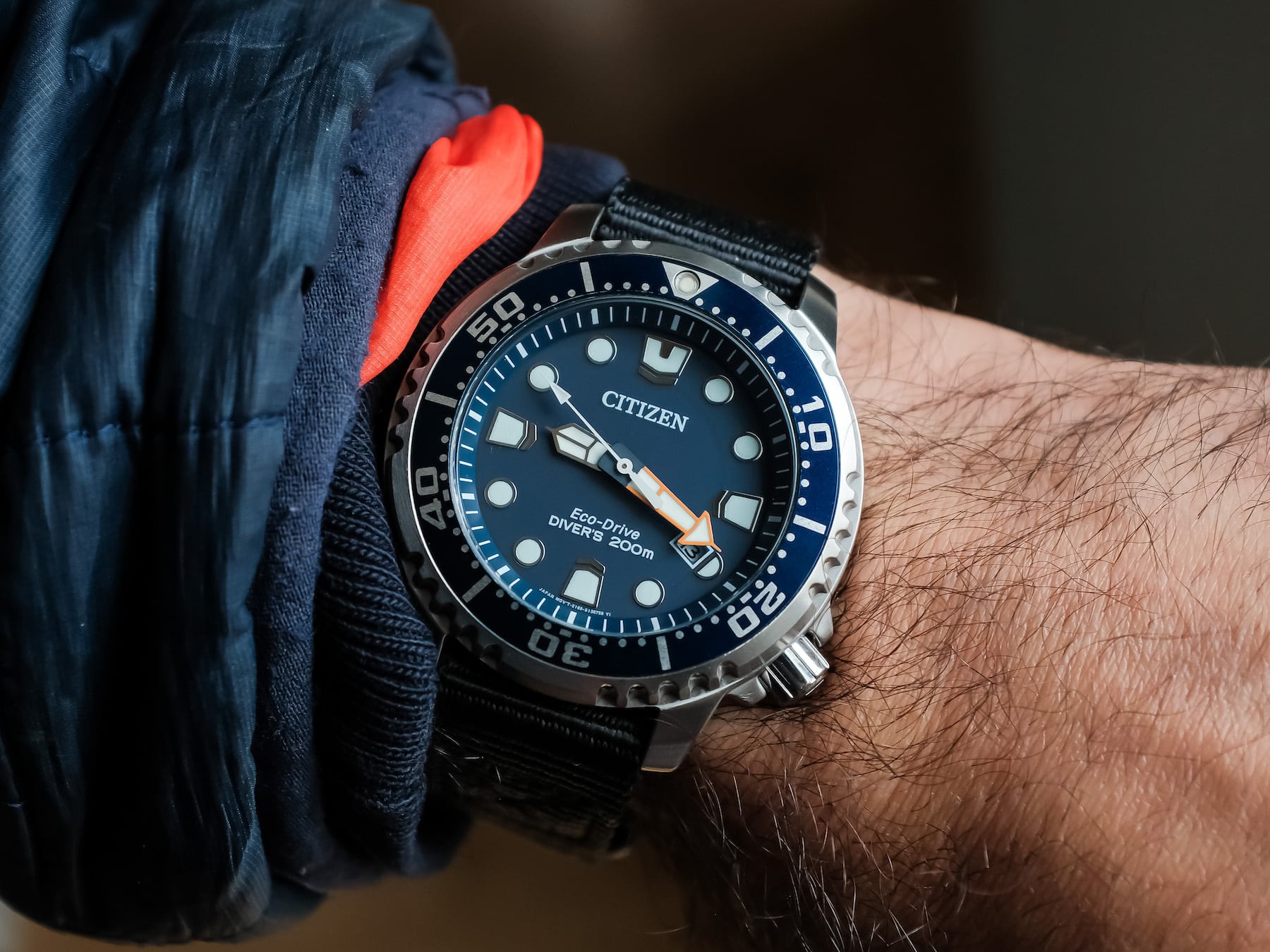
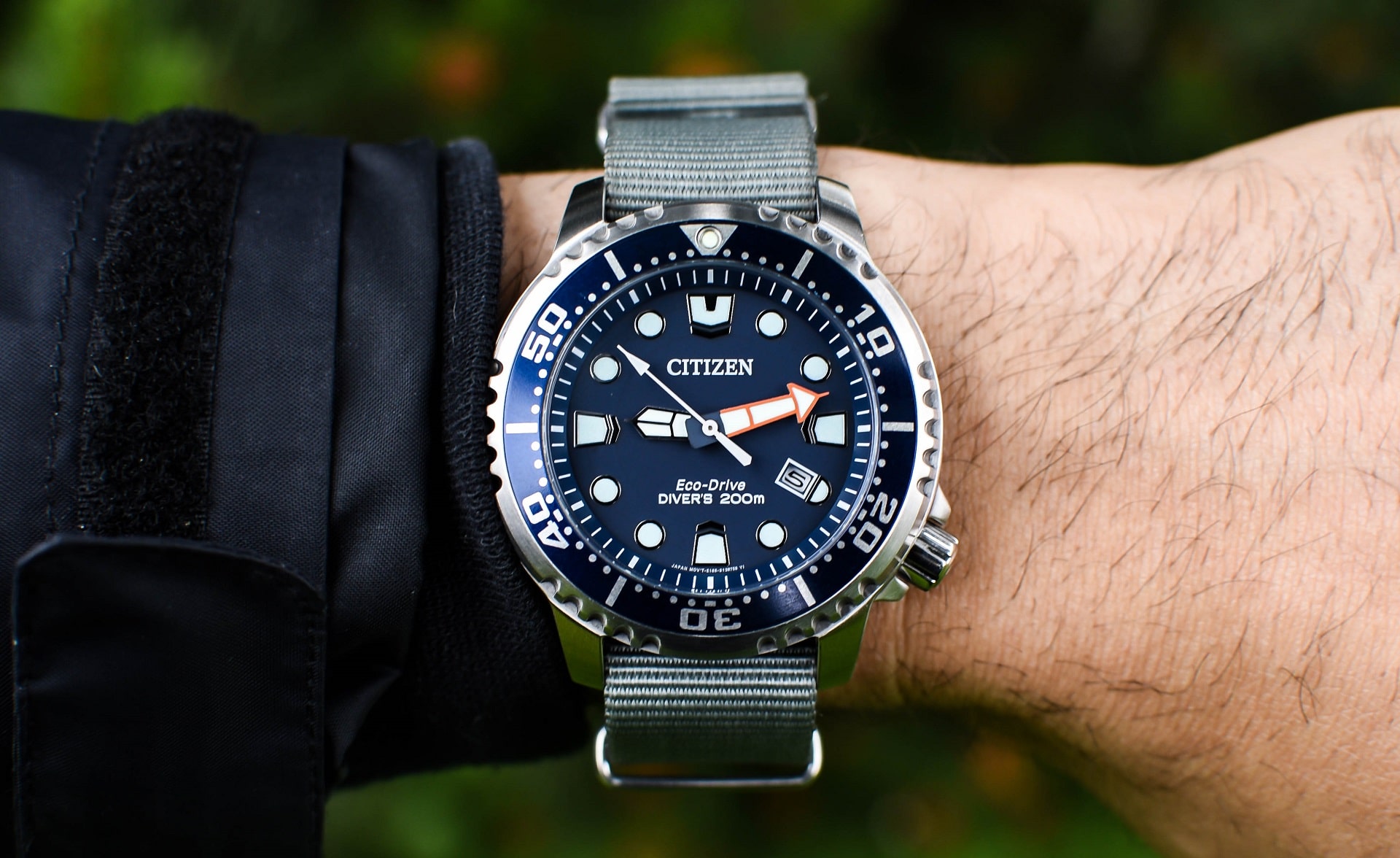
The Citizen Promaster Diver BN0151 makes a strong case for dive watches as a first serious watch by removing many of the ownership hurdles that discourage new collectors. Its Eco-Drive movement doesn’t ask you to think about winding schedules or routine battery replacements. After putting it through normal daily use, it maintained accuracy of around ±15 seconds per month, and a full charge delivered roughly six months of runtime. We only managed to trigger the low-power indicator once, and a short spell in the light had it running normally again. That kind of reliability lets you focus on wearing the watch instead of maintaining it, which is a bigger advantage than many first-time buyers realize.
Citizen backs up that convenience with a capable tool-watch package. The 200m water resistance encourages the sort of carefree ownership that has made dive watches such a popular starting point. Whether it’s a day at the beach, time around the pool, or simply getting caught in heavy rain, the BN0151 never gave us a reason to second-guess it. Despite measuring 43mm, the case wears quite comfortably, thanks to its short lug-to-lug distance and downward-curving profile. It also feels lighter than expected throughout the day, while the recessed 4 o’clock crown stays comfortably out of the way instead of digging into the back of your hand during long stretches of wear.
The dial follows the same practical approach. Large hands and markers make quick time checks effortless, while the blue dial reveals a subtle purple hue at certain angles, adding personality without hindering readability. In low light, the aqua-toned lume remained visible for hours, and the lumed pip on the second hand made it easy to confirm the watch was still running. There are a few sensible compromises, though. The mineral crystal doesn’t offer the scratch resistance of sapphire, although ours held up better than expected. The 60-click bezel stayed well aligned and felt deliberate in operation, yet its grip became slick when wet. Likewise, the supplied polyurethane strap suits the watch’s tool-watch character but starts stiff before gradually breaking in. We ultimately preferred it on a NATO strap, where it felt lighter and more balanced.
For anyone deciding whether a first watch should prioritize convenience or mechanical romance, the Promaster Diver makes a compelling argument that low maintenance is an advantage you’ll appreciate long after the excitement of a new purchase fades.
Pros
- Eco-Drive movement eliminates the need for routine winding and battery changes while delivering excellent real-world accuracy.
- 200m water resistance encourages worry-free daily wear in and around water.
- Comfortable case wears smaller than its 43mm diameter thanks to the compact lug-to-lug and curved profile.
- Aqua-toned lume remains visible for hours, with a lumed second-hand pip that confirms the watch is running.
- The recessed 4 o’clock crown improves comfort during extended wear.
Cons
- Bezel grip loses traction when operated with wet hands.
- Stock polyurethane strap feels stiff initially.
Citizen NY0040
| Price: | $250 – $350 |
| Water Resistance: | 200m |
| Case Size: | 42mm (diameter) x 47.3mm (lug-to-lug) x 12.6mm (thickness) |
| Lug Width: | 20mm |
| Movement: | Miyota automatic Caliber 8204 |
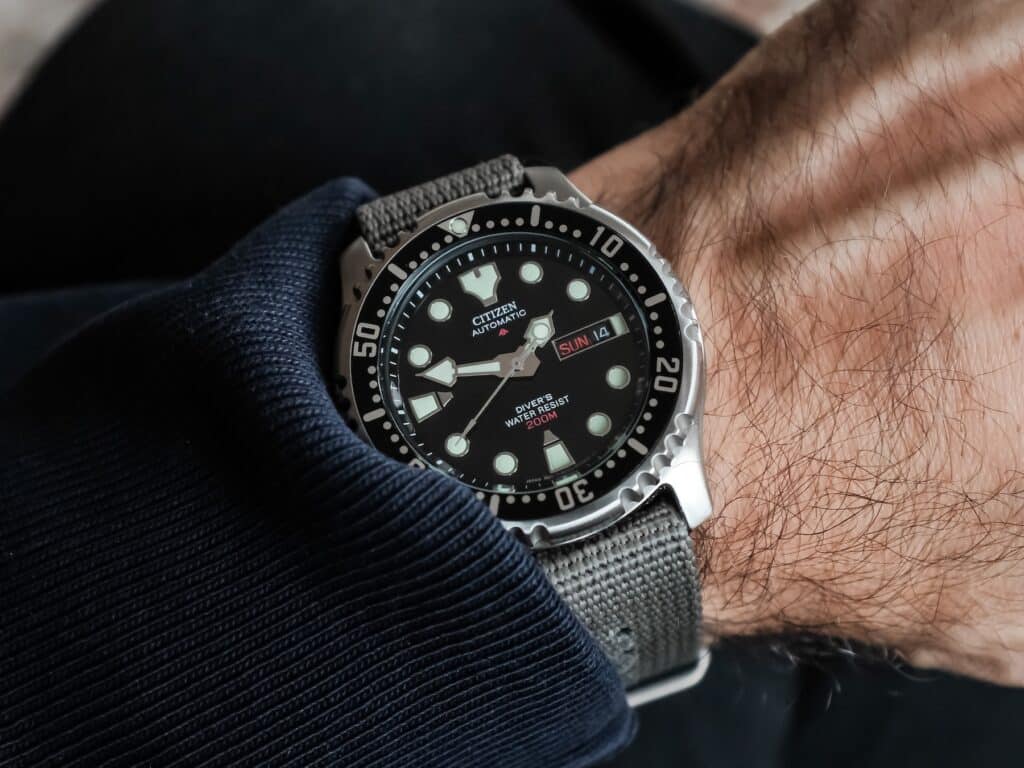
The Citizen NY0040 is one of those watches that remind us that not every first automatic diver has to be a Seiko. That’s usually where the conversation goes, but the NY0040 deserves better than being treated as “the other Japanese diver.” It takes a different approach. Instead of leaning on nostalgia or trying to become the next collector darling, the NY0040 feels like Citizen sticking to its own playbook. It’s a serious, ISO-rated tool watch that lets real-world use do the talking instead of relying on a grand backstory. The association with the Italian Navy’s COMSUBIN unit is a nice bonus, but we’d recommend it for a much simpler reason: it puts function ahead of hype.
The left-side crown is the first thing most people notice, but it quickly stops being a novelty. After a few days on the wrist, we appreciated how it stayed clear of the back of the hand during typing, driving, and everyday wear. Setting the time takes a little adjustment if you’ve only owned traditional right-side crowns, but that learning curve disappears quickly. The rest of the case follows the same practical thinking. Although it measures nearly 42mm, the 47.3mm lug-to-lug, restrained thickness, inward-sloping bezel, and compact dial opening make it wear smaller than expected. Brushed upper surfaces, polished case sides, and those broad shoulders keep it looking purposeful without feeling oversized.
The Miyota 8204 inside won’t win anyone over with refinement, and that’s perfectly fine. It hacks, hand-winds, and simply gets on with the job. The rotor is certainly loud, something longtime Miyota owners will recognize immediately. Some collectors treat that as character, while others find it distracting. Both reactions are fair. Around the movement, everything else feels equally honest. The coin-edge bezel offered excellent grip during our review, stayed perfectly aligned, and clicked with confidence.
The black dial stays clean and easy to read, with a subtle red arrow, an unobtrusive day-date display, and enough lume to remain useful once your eyes adjust, even if it doesn’t explode to life like some Seiko divers. The flat mineral crystal is the expected compromise, and the thick factory rubber strap never became our favorite. Swap it onto a NATO or an aftermarket bracelet, though, and the whole watch relaxes into itself. That’s where the NY0040 makes the most sense. It doesn’t try to become the next SKX. It simply shows that a first dive watch can have its own personality without giving up the practical Japanese automatic-diver credibility that makes this category such an easy place to start. Read our full review for the smaller on-wrist details.
Pros
- Left-side crown stays out of the way and improves long-term comfort.
- Coin-edge bezel offers excellent grip, accurate alignment, and a reassuring 60-click action.
- The Miyota 8204 movement includes hacking and hand-winding, making mechanical watch ownership more approachable.
- Compact proportions mean it wears smaller than the nearly 42mm case size suggests.
- Strong aftermarket support makes experimenting with NATOs and bracelets easy.
Cons
- Rotor noise is part of the Miyota experience and won’t appeal to everyone.
- The mineral crystal isn’t as scratch-resistant as sapphire.
Orient Kamasu
| Price: | $250 – $375 |
| Water Resistance: | 200m |
| Case Dimensions: | 41.5mm (diameter) x 47mm (lug-to-lug) x 13mm (thickness) |
| Lug Width: | 22mm |
| Movement: | Orient F6922 (automatic movement) |
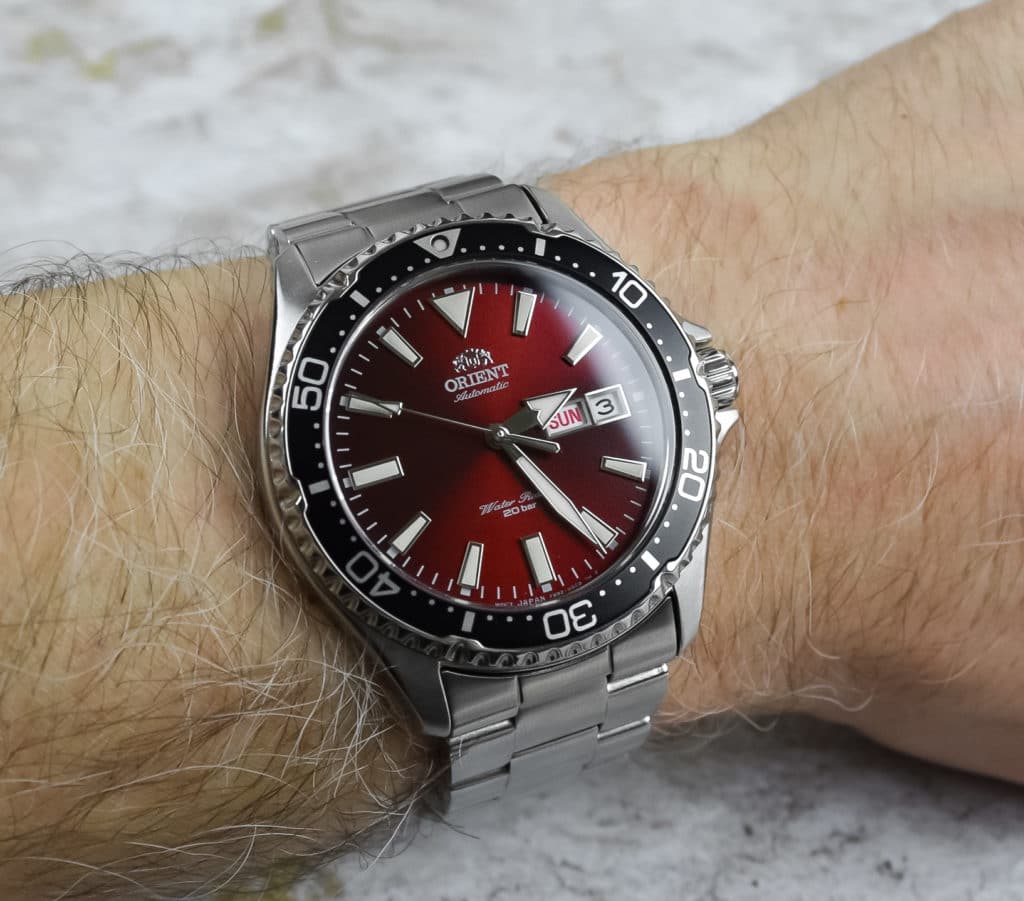
The Orient Kamasu is what usually happens after someone buys an entry-level diver and starts wondering what a little more money gets them. It doesn’t reinvent the affordable dive watch. It simply smooths out a lot of the rough edges. If the Mako II feels like the dependable first chapter, the Kamasu feels like the watch that convinces plenty of collectors to stick around. That’s why it belongs here. It still captures everything that makes dive watches such an approachable place to start, but it adds enough refinement that you don’t immediately feel the need to plan an upgrade.
The biggest difference shows up the moment light hits the dial. The wine-red sunburst finish gives the Kamasu far more personality than the Mako II or Ray II. Still, Orient resisted the temptation to let style get in the way of usability. Applied markers, well-proportioned hands, and minute and second hands that actually reach the track make quick time checks effortless. It sounds like a tiny detail until you’ve lived with watches where the hands fall short, and every glance feels slightly unfinished. The framed day-date window and restrained branding keep everything balanced, while the lume charges quickly, glows brightly, and, during our in-depth testing, held its own against several Seiko divers we’ve worn over the years.
The rest of the package explains why the Kamasu keeps showing up in first-watch conversations. The 41.5mm case, curved lugs, and manageable 13mm thickness wear comfortably without the top-heavy feel that can plague affordable divers. Then come the upgrades many new collectors eventually wish they’d bought from the start: a sapphire crystal, 200m of water resistance, and the familiar F6922 movement with hacking and hand-winding. None of those features is exciting on its own. Together, they make the watch easier to live with.
That said, the compromises are easier to spot once you start looking for them. The clasp and end links feel a step behind the rest of the watch, the guarded crown isn’t the easiest to grip, and the aluminum bezel insert will show wear long before ceramic would. Even so, the bezel action feels tight, and the fully brushed bracelet, complete with four micro-adjustment positions, keeps the watch comfortable as your wrist size changes throughout the day. Overall, the Kamasu doesn’t make the dive-watch formula more complicated. It simply makes a familiar formula feel more complete, which is often what many first-time collectors are looking for.
Pros
- The F6922 movement, with hacking and hand-winding, makes mechanical watch ownership easy to grow into.
- The wine-red sunburst dial adds personality without sacrificing readability.
- The sapphire crystal, along with 200m water resistance, makes it feel ready for everyday wear.
- Bright, long-lasting lume performs better than many affordable rivals.
- Comfortable proportions and a bracelet with four micro-adjustment positions wear very well.
Cons
- The guarded crown can be awkward to grip.
- Clasp and end links don’t feel as refined as the rest of the watch.
- The aluminum bezel insert will show scratches sooner than a ceramic or steel bezel insert.
Seiko Turtle
| Price: | $370 – $525 |
| Water Resistance: | 200m |
| Case Dimensions: | 44.3mm (diameter) x 48mm (lug-to-lug) x 14mm (thickness) |
| Lug Width: | 22mm |
| Movement: | Seiko 4R36 |
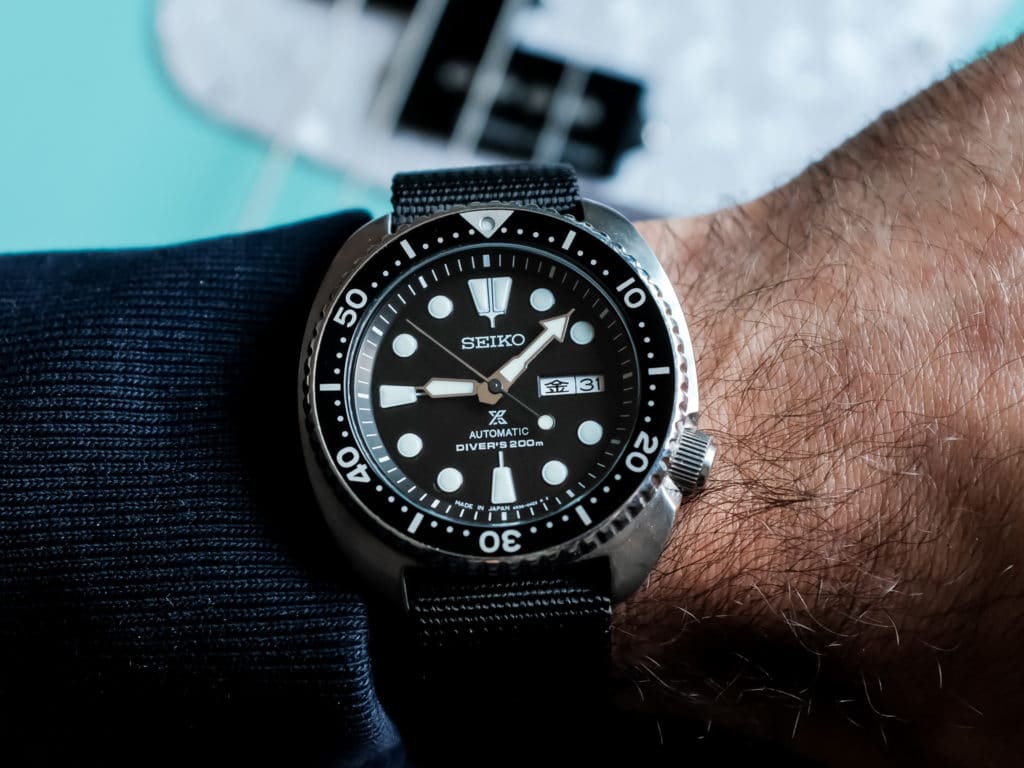
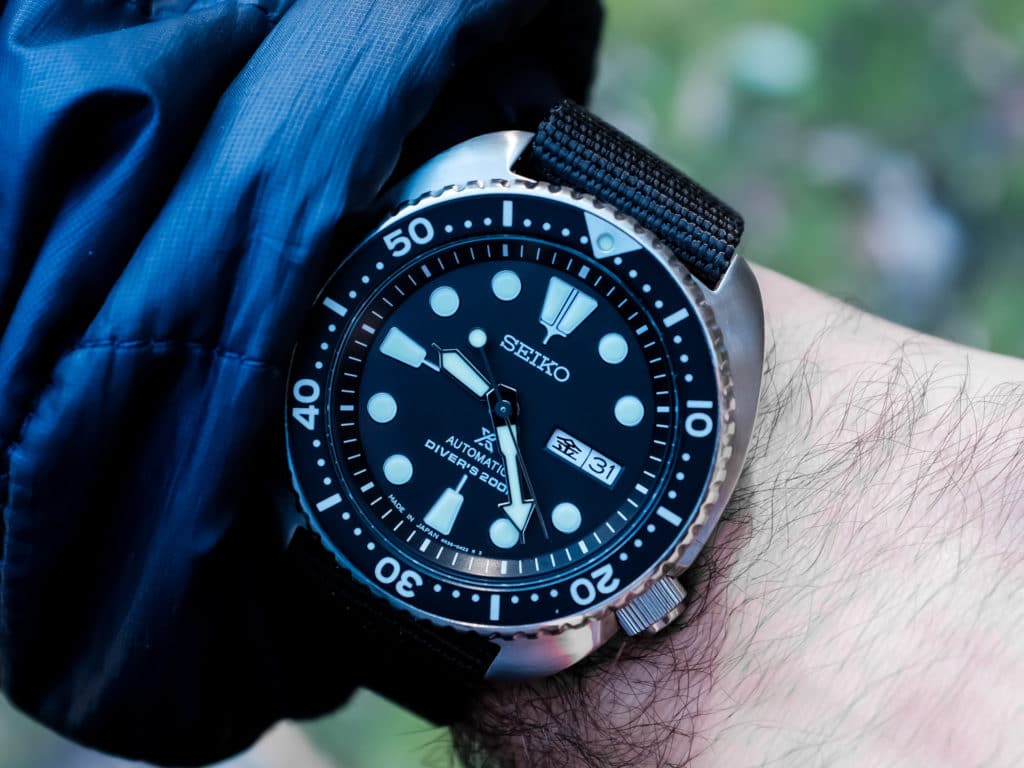
If there’s one watch that explains why so many collectors develop an emotional attachment to dive watches, it’s probably the Seiko Turtle. On paper, it shouldn’t be this approachable. It’s large and shaped like almost nothing else in the affordable dive-watch world. Yet a few days on the wrist usually explain why people keep coming back to it. The Turtle doesn’t try to disappear under a cuff or pretend it’s a do-everything sports watch. It leans into its personality, and that’s often what pulls new collectors deeper into the hobby.
That personality starts with the case. The 44.3mm diameter looks intimidating until you wear it. The cushion-shaped design spreads the watch across the wrist rather than adding height, making it feel more planted than bulky. The offset crown helps, too. It stays clear of the back of your hand throughout the day, which is more than can be said for plenty of smaller divers we’ve worn.
Strap choice changes the experience more than you’d expect. The stock silicone strap is a noticeable improvement over Seiko’s older rubber options. It doesn’t immediately send you hunting for replacements, but the Turtle always felt more relaxed on a NATO. It suits the case shape, makes the watch feel less serious, and reinforces the knockaround personality that has made it such a collector favorite. Hardlex remains the familiar compromise. It won’t satisfy sapphire loyalists, but it has held up well enough in normal wear without making the watch feel too precious.
The dial is classic Seiko in all the right ways. A matte black surface keeps reflections under control. At the same time, oversized Lumibrite markers and the broad handset make checking the time almost effortless, whether you’re outside, near the water, or glancing at the watch before your morning coffee has fully kicked in. The lume remains one of the Turtle’s biggest strengths, staying bright long after many similarly priced divers have begun to fade.
Inside, the 4R36 movement adds hacking and hand-winding, making daily ownership far more convenient than older entry-level Seikos. It isn’t a precision champion, though. During our hands-on review it ran between +35 and +45 seconds per day, and bezel alignment can still vary from one sample to another. Some collectors also enjoy hunting down the Made in Japan versions or Kanji day-wheel references, although the Kanji display is one of those details that’s more fun to own than it is to read quickly every day. Those imperfections are part of the Turtle’s appeal. It isn’t the most refined first dive watch you can buy, but it remains one of the clearest examples of how a watch’s character can matter just as much as its specifications once you start collecting.
Pros
- The cushion case wears more comfortably than its 44.3mm diameter implies.
- Oversized Lumibrite markers and broad hands make time checks effortless in bright or dark conditions.
- Offset crown stays comfortably out of the way during all-day wear.
- The 4R36 movement includes hacking and hand-winding to encourage mechanical ownership.
- The stock silicone strap is better than older Seiko rubber, while NATOs suit the case very well.
Cons
- The broad case shape can still overwhelm smaller wrists.
- Hardlex crystal isn’t as scratch-resistant as sapphire.
- Accuracy and bezel alignment can vary between individual watches.
- Kanji day wheel adds collector appeal but isn’t the quickest to read at a glance.
Seiko Samurai
| Price: | $400 – $500 |
| Water Resistance: | 200m |
| Case Dimensions: | 43.8mm (diameter) x 47mm (lug-to-lug) x 13mm (thickness) |
| Lug Width: | 22mm |
| Movement: | Seiko 4R35 (Mechanical) |
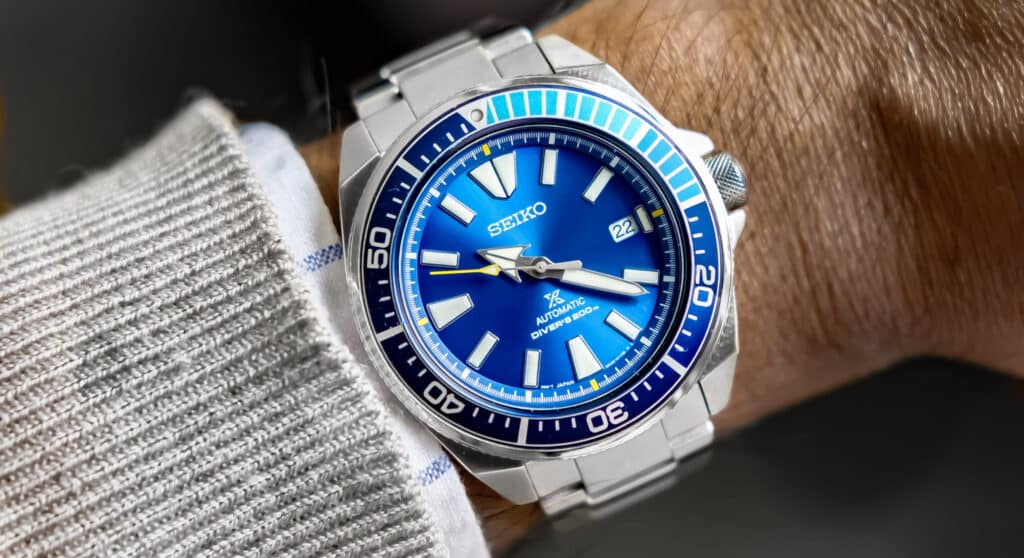
The Seiko Samurai is a good reminder that one dive watch can teach you as much about your preferences as an entire spec sheet. On paper, it isn’t dramatically different from a Turtle. Both are automatic Seiko divers with similar capabilities. On the wrist, though, they couldn’t feel more different. That’s an important lesson for new collectors. Buying your first dive watch isn’t only about choosing a movement or a water-resistance rating. It’s also about discovering whether you gravitate toward softer, rounded cases or something with a bit more attitude.
The Samurai leaves no doubt where it stands. The hard-brushed case, crisp edges, and sharply defined surfaces give it a modern, almost architectural look that separates it from Seiko’s rounder divers. We expected all those angles to make the watch feel awkward, but it settled onto the wrist better than the geometry suggests. There’s still plenty of presence, and the faceted case won’t disguise scratches as gracefully as the Turtle’s cushion shape, but that’s part of the trade-off. You’re choosing a watch with a stronger visual identity rather than one that quietly blends into the background.
After spending significant wrist time with it, we believe the stock 22mm bracelet deserves more credit than it usually gets, too. It flows neatly into the case, feels secure throughout the day, and never made us feel like we had to swap it immediately. The drilled lugs are still appreciated for easy strap changes, but unlike many affordable divers, we didn’t feel compelled to reach for a NATO on day one. The dial follows the same confident approach. Applied hour markers, generous Seiko lume, and the familiar Monster-style hands make quick time checks effortless, while the blue dial shifts between lighter and darker shades as the light changes without affecting readability.
Around the edge, the bold knurled bezel matches the watch’s personality and clicks with reassuring confidence, although our review sample was quite stiff to operate. The sloped crown guards protect the screw-down crown without making it difficult to grip, and inside, the 4R35 movement delivers hacking, hand-winding, and around 40 hours of power reserve. It’s a dependable movement rather than a very accurate one, so chasing perfect numbers misses the point. The Samurai earns its place in this conversation because it shows that two Seiko dive watches with similar specifications can offer completely different wearing experiences. Figuring out which one speaks to you is part of becoming a collector.
Pros
- The angular brushed case gives the Samurai a distinctive personality.
- Applied markers, Monster-style hands, and strong Seiko lume keep the dial very easy to read.
- The comfortable factory bracelet integrates well with the case and doesn’t feel like an immediate upgrade candidate.
- Sloped crown guards protect the screw-down crown without hurting usability.
- Drilled lugs make strap changes quick and painless.
Cons
- Sharp case geometry is less forgiving of scratches and everyday wear than rounder Seiko cases.
- The bezel on our review sample required more force to turn than we’d have liked.
So, Are Dive Watches Still the Best Entry Point?
We still think so, although probably for different reasons than we did ten years ago. Dive watches don’t make every decision for you, but they make very few mistakes. They fit into everyday life with very little effort, giving new collectors room to discover what they enjoy before chasing more specialized watches.
That’s also what these watches reveal. The Casio Duro, Citizen Promaster Diver, Orient Mako II, Seiko Turtle, and the rest don’t all succeed in the same way, even when the specifications look quite similar. Some win on convenience, others on comfort, personality, or mechanical charm. Spending time with them is a reminder that the hobby quickly stops being about water resistance or movement specs. Before long, you’re choosing between a cushion case and an angular one, a left-side crown and a traditional layout, or a watch that simply makes you smile every time you fasten the clasp.
If your first watch ends up being a dive watch, there’s still a good chance you’ll understand why so many collections begin there. If it doesn’t, that’s fine too. Watch collecting already has enough imaginary rules. That said, we’ve only included models we’ve personally reviewed and lived with. So, if you think we missed one that would fit well into this discussion, let us know in the comments. Around here, good recommendations have a habit of turning into future hands-on reviews.

Co-Founder and Senior Editor
Kaz has been collecting watches since 2015, but he’s been fascinated by product design, the Collector’s psychology, and brand marketing his whole life. While sharing the same strong fondness for all things horologically-affordable as Mike (his TBWS partner in crime), Kaz’s collection niche is also focused on vintage Soviet watches as well as watches that feature a unique, but well-designed quirk or visual hook.