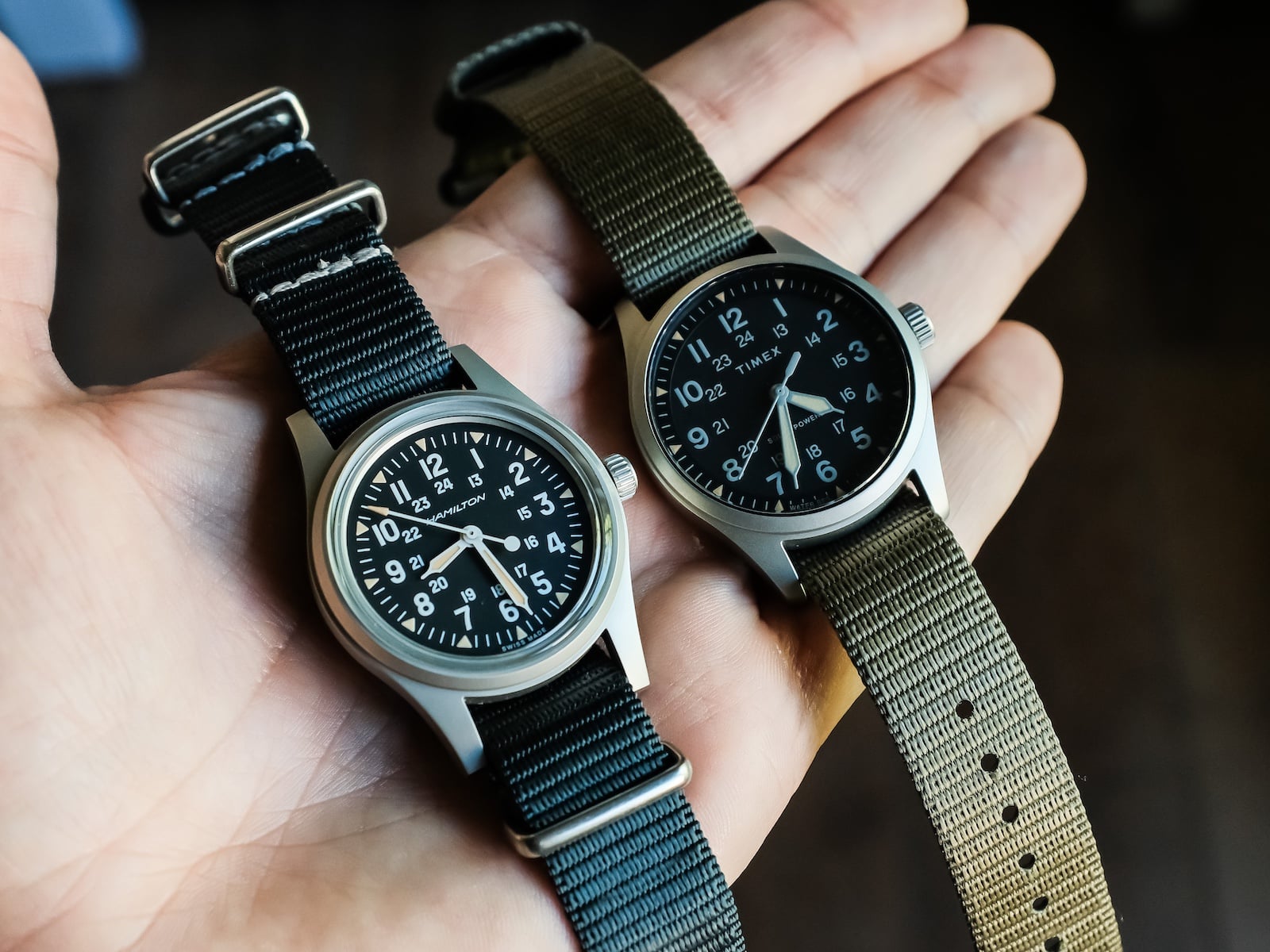
Thanks to this ridiculous hobby, I now own two 36mm field watches that were built to do almost exactly the same job. At some point, a collection stops letting you pretend that’s fine. The Timex Expedition Field Post Solar and the Hamilton Khaki Field Mechanical 250 both live in the same box and answer the same basic question: what do I strap on when I want a no-drama, military-style watch that just tells the time? When two watches overlap like that, one of them is usually coasting on goodwill. So this is the comparison I’ve been putting off having with myself. Which one earns the spot, and which one goes.
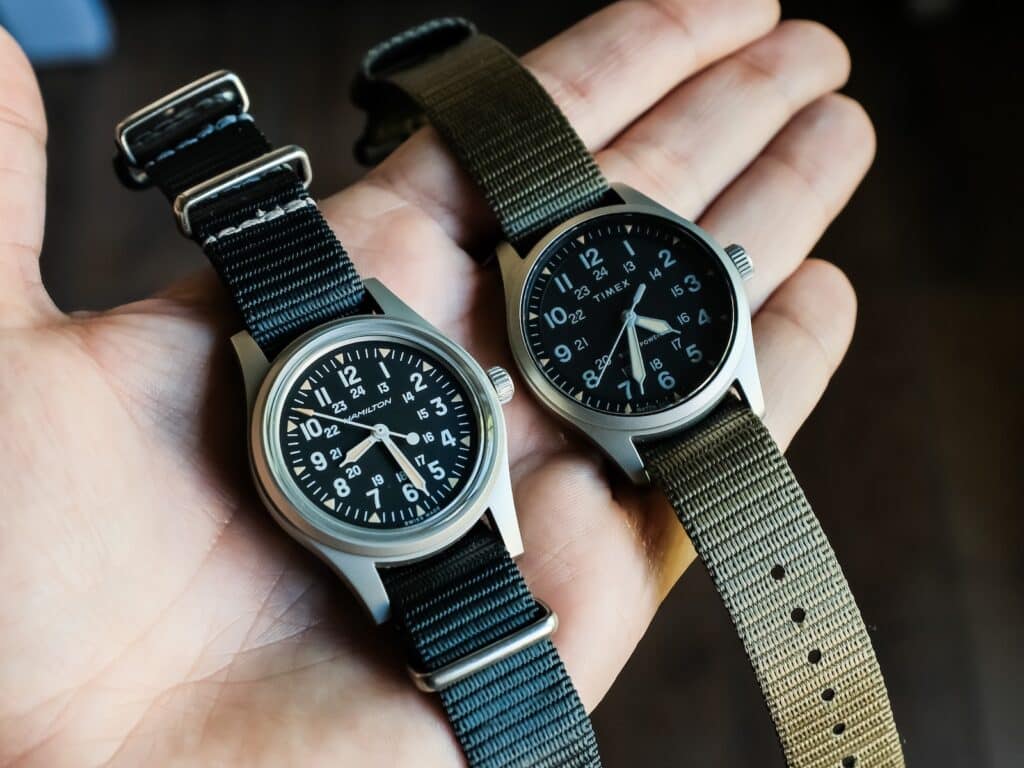
I’ll tell you up front where I land, because we’ve already half-told the story. In my review of the Hamilton 250, I admitted a favorite Timex was making room for it in the watch box. And in my end-of-2025 collection rundown, I described the Timex’s place as consistency of use rather than emotional attachment. Those two points basically wrote the verdict before I sat down. What’s worth doing here is showing the work, because the watch that loses this fight is one I’d recommend to almost anyone reading. The Hamilton stays. That doesn’t make the Timex a loser. It makes it the better deal.
Overview & Identity
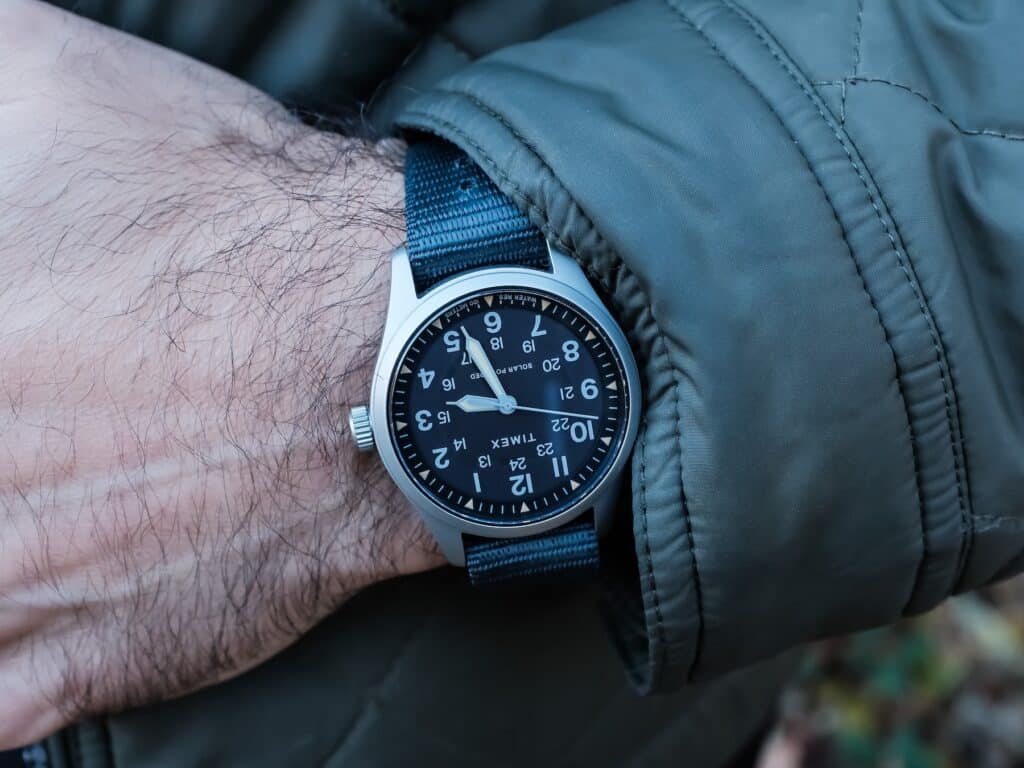
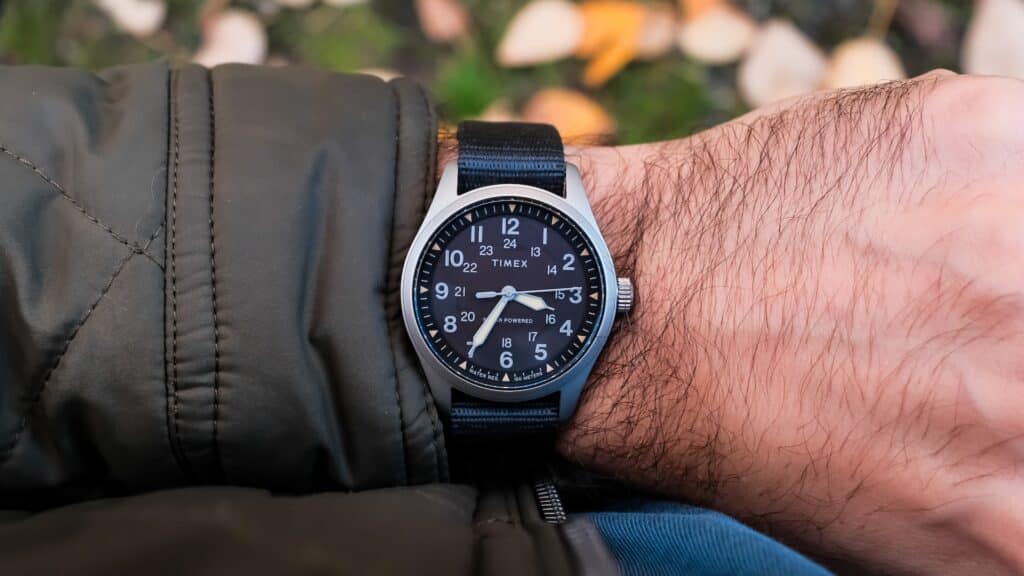
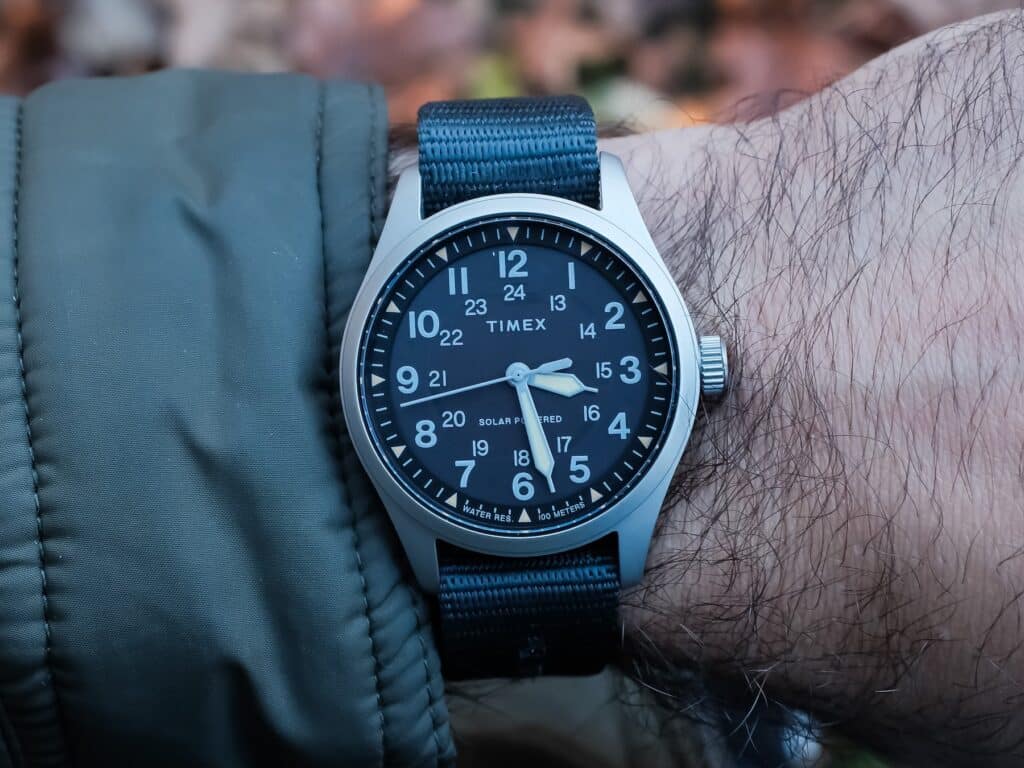
The Timex Expedition Field Post Solar knows exactly what it is and never pretends otherwise. In my hands-on review, it ended a frustrating search for a classically sized field watch that actually delivered the basics I wanted: military styling, a screw-down crown, and water resistance I could trust on a rainy commute. It’s a 36mm solar-quartz tool that follows the old military template closely, costs almost nothing to live with, and asks nothing of you. That’s the entire pitch.
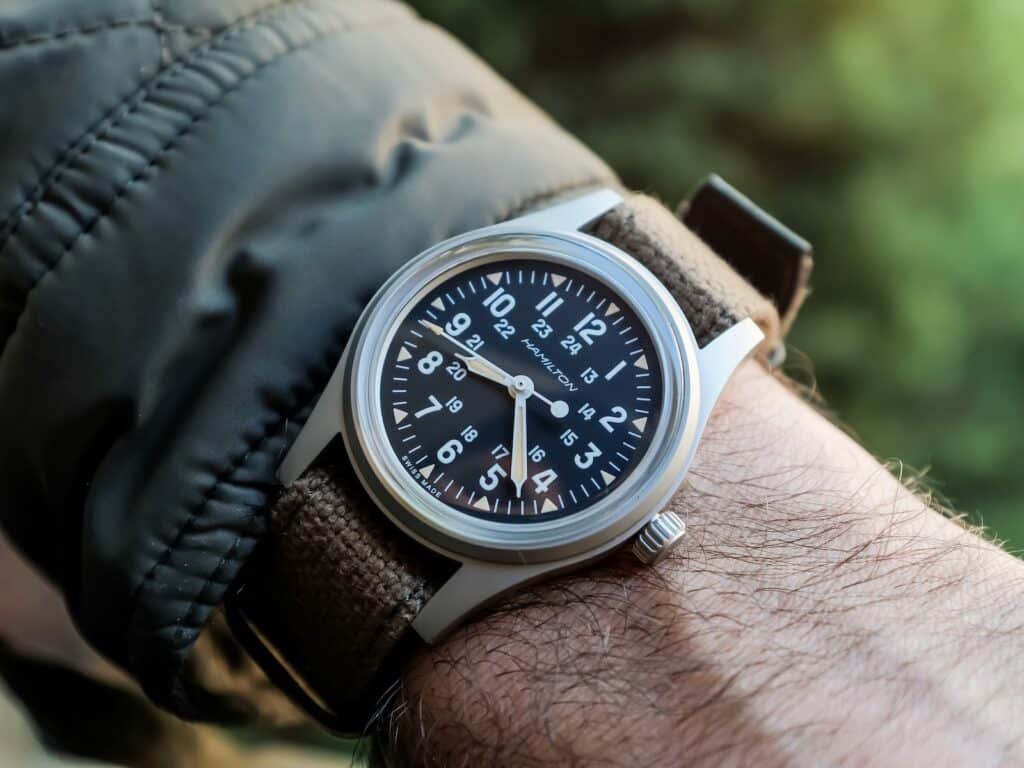
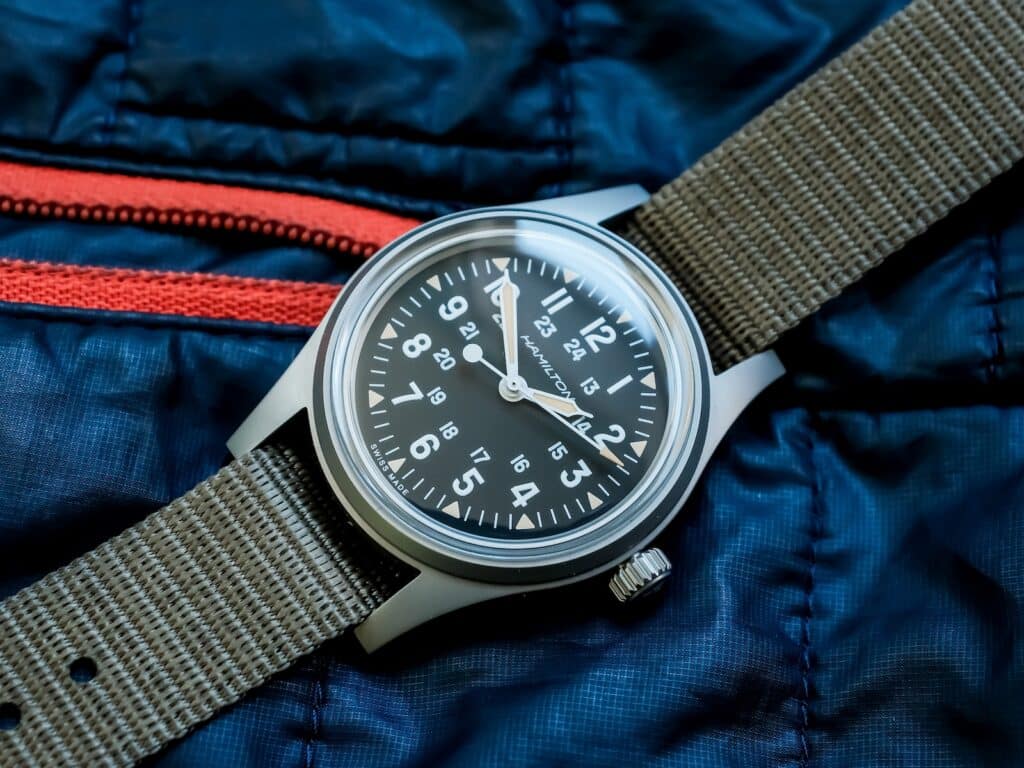
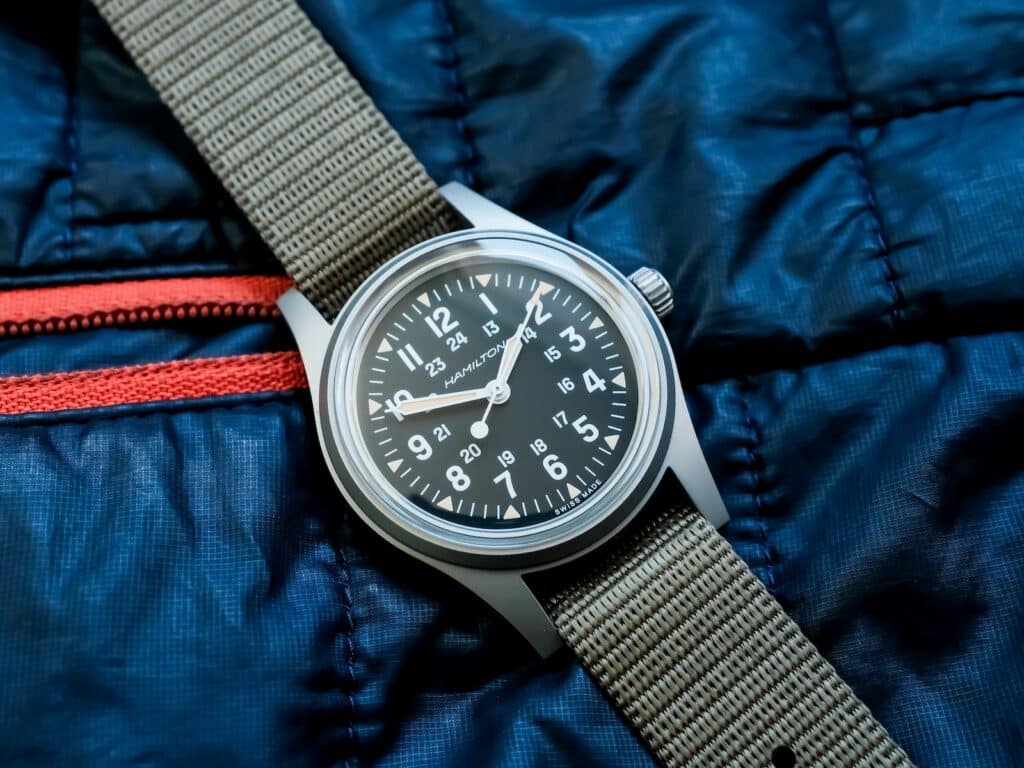
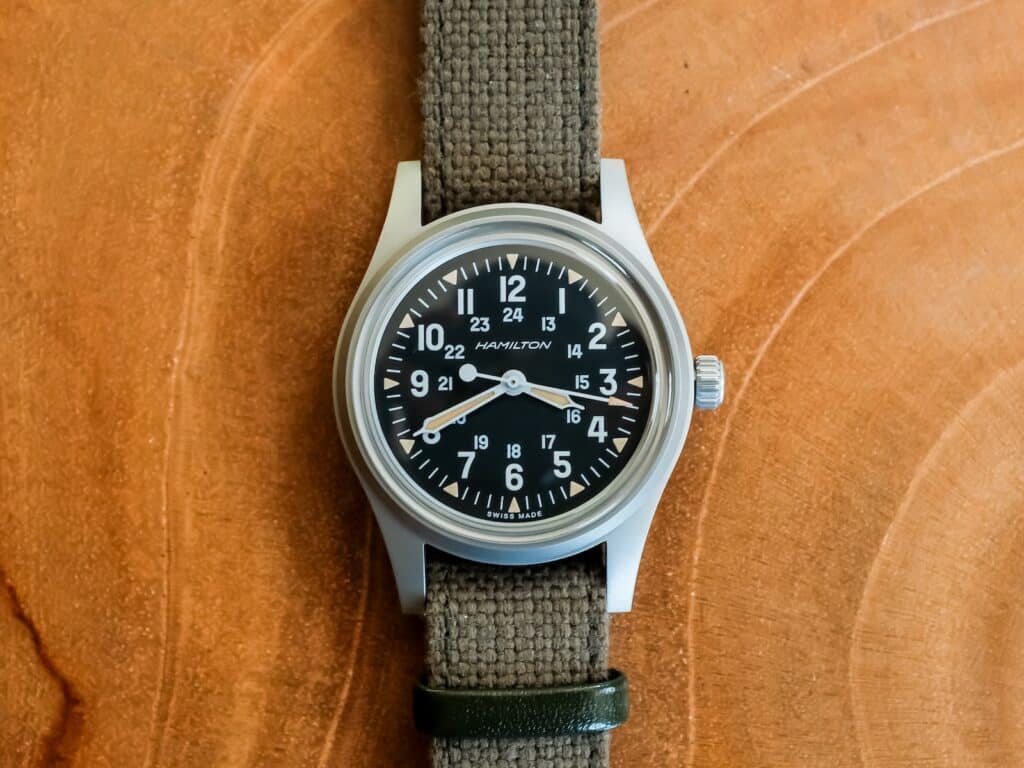
The Hamilton Khaki Field Mechanical 250 carries a heavier history and earns it. I’d watched the Khaki Field from a distance since the early 2010s and never found the version that clicked. The 250 recreates a fairly obscure navigator’s watch issued to U.S. military pilots, the FAPD 5101 Type 1, and Hamilton approached the project with more discipline than I expected for a brand that could easily have phoned in another reissue. After years of buying homages and almost-right field watches to fill the gap, this is the one that closed the search the same way my CWC Royal Navy Diver became the end of my “my mil-sub” hunt. It’s a watch I waited a decade to want this badly.
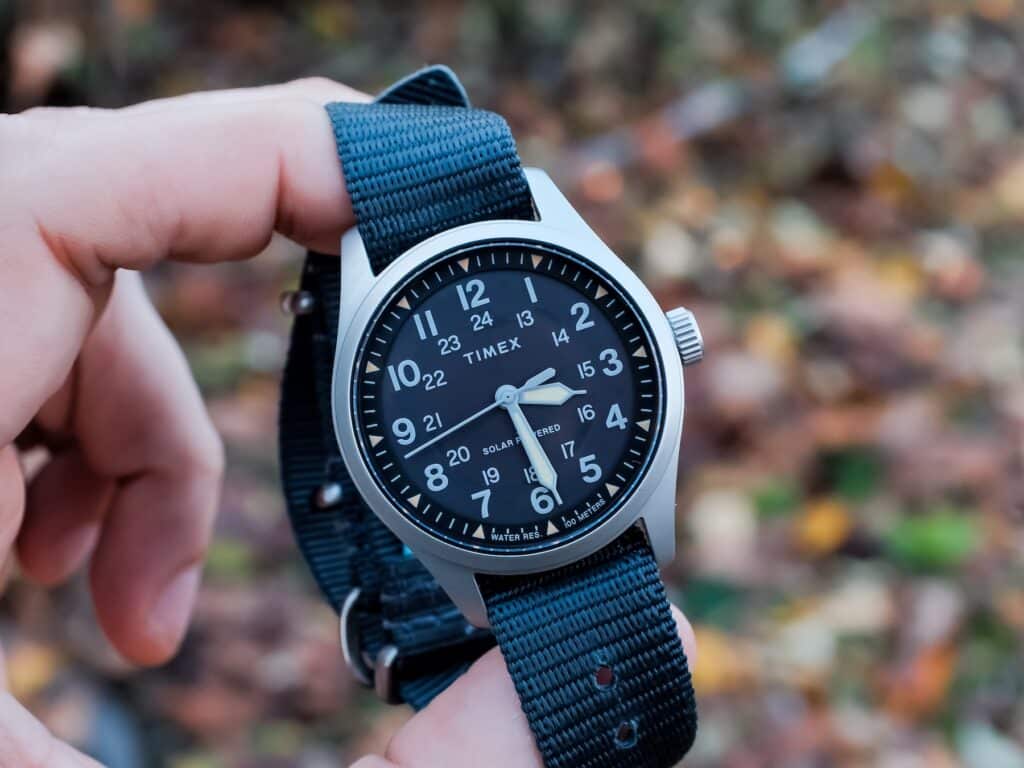
- The Timex Expedition Field Post Solar is an honest, affordable field watch that ended a long search by nailing the basics. Lightweight, legible, screw-down crown, and effortless to wear without thinking about it.
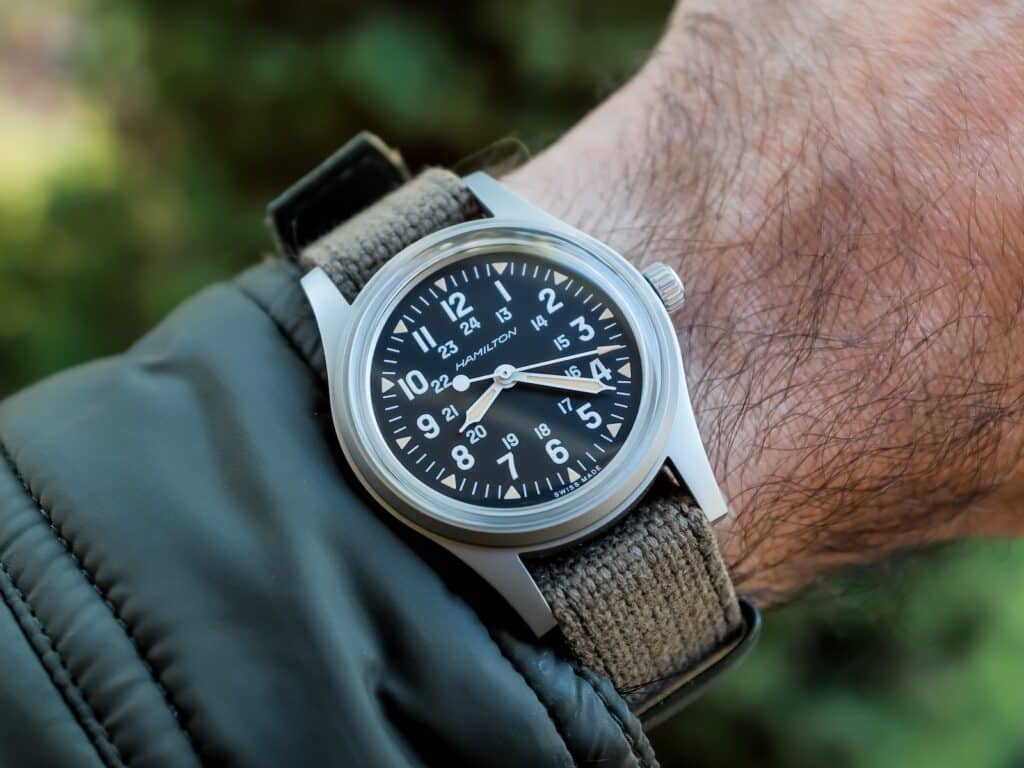
- The Hamilton Khaki Field Mechanical 250 is a disciplined recreation of a real issued navigator’s watch that finally gave me the Khaki Field I’d wanted for years. It earns wrist time through closure, not convenience.
Design & Wearability: Disappearing Daily Tool vs Decade-Long Itch
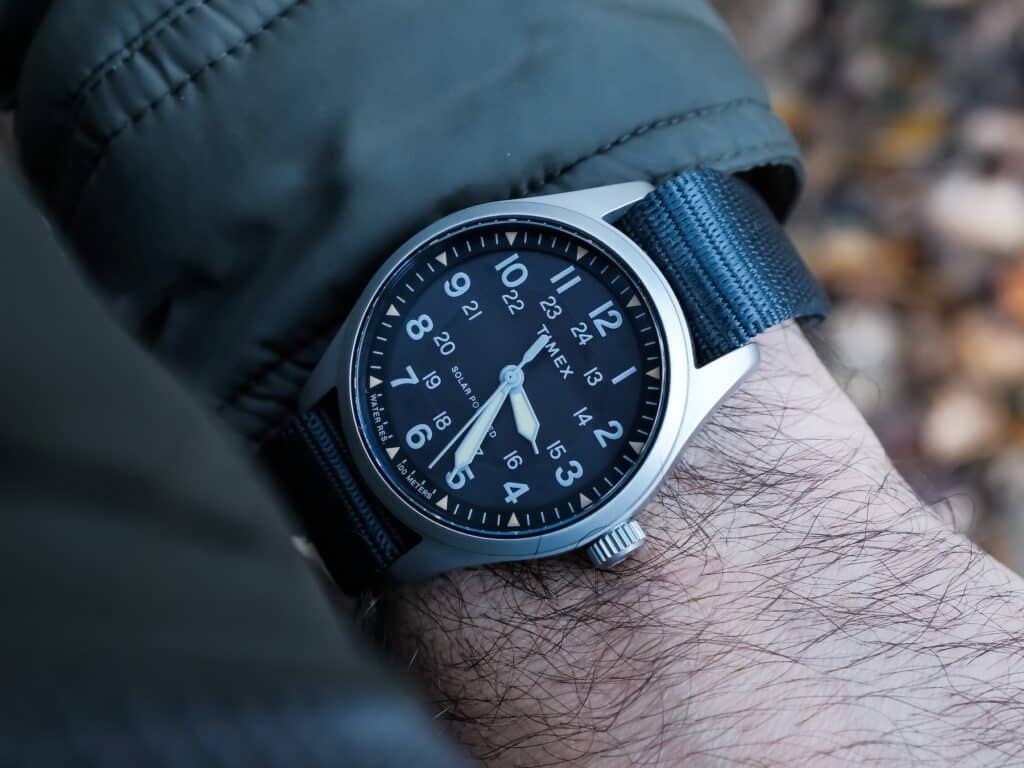
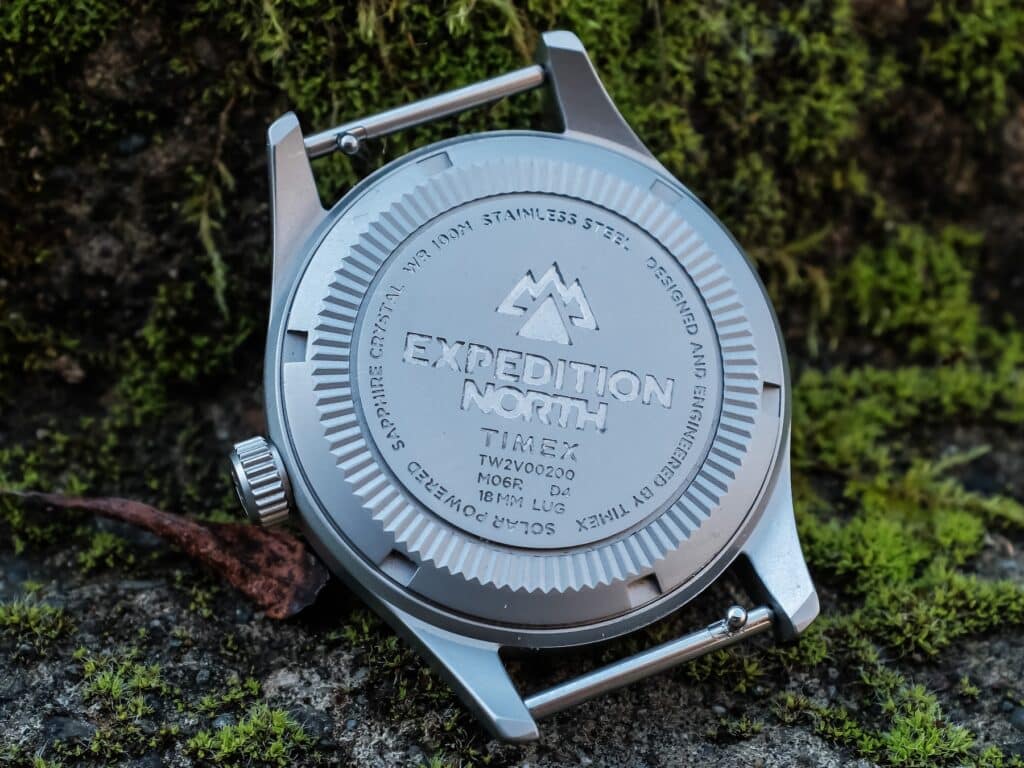
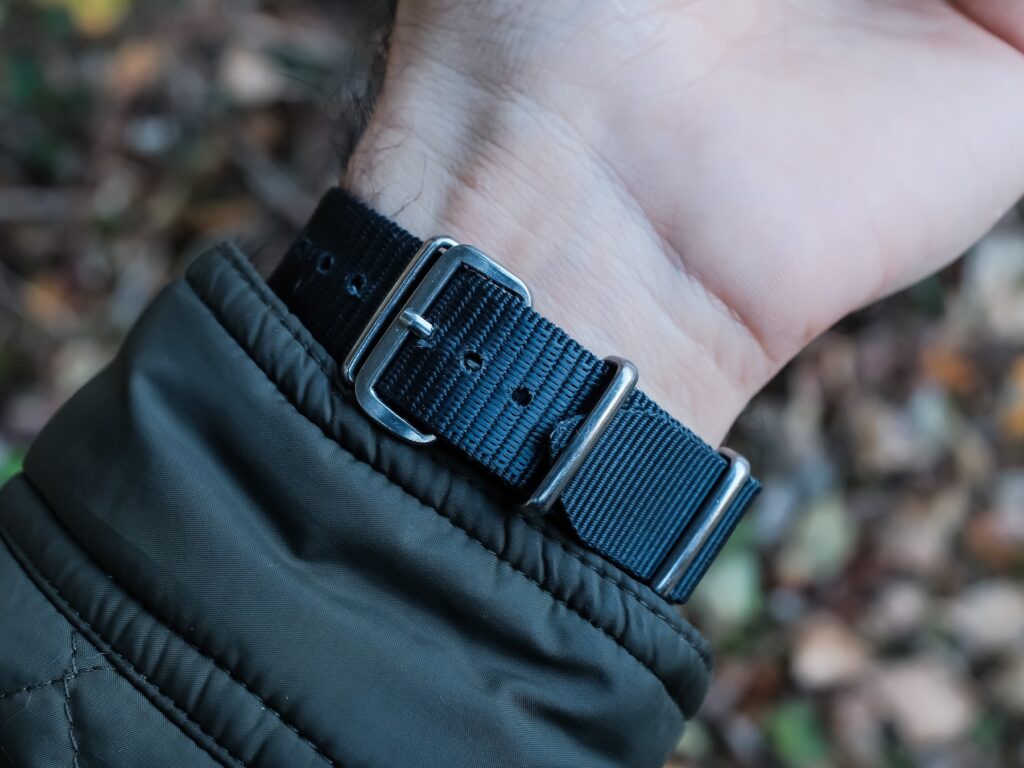
Both watches measure 36mm, and on paper they should wear almost identically. They don’t, quite. The Timex runs about 12mm thick with a roughly 44mm lug-to-lug, wrapped in a brushed, bead-blasted stainless case that looks ready to take scratches and not care. It sits lean and flat, disappears under a sleeve, and never once asked to be adjusted during a day of wear. The crown threads in without drama, not buttery but far from crunchy, and the screw-down action is the detail that sold me on the watch in the first place. The stock leather strap was the weak point. It’s decent quality but too thick for a case this small, so it went straight to the strap graveyard and the watch has lived on a plain grey US-made MIL-Strap ever since.
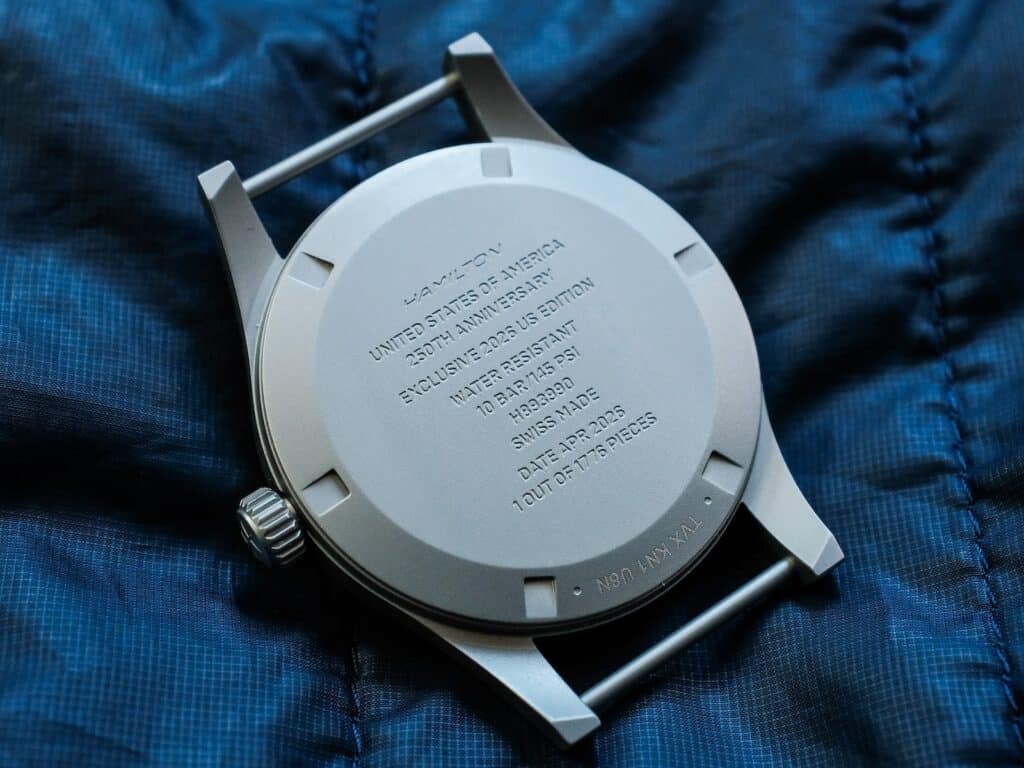
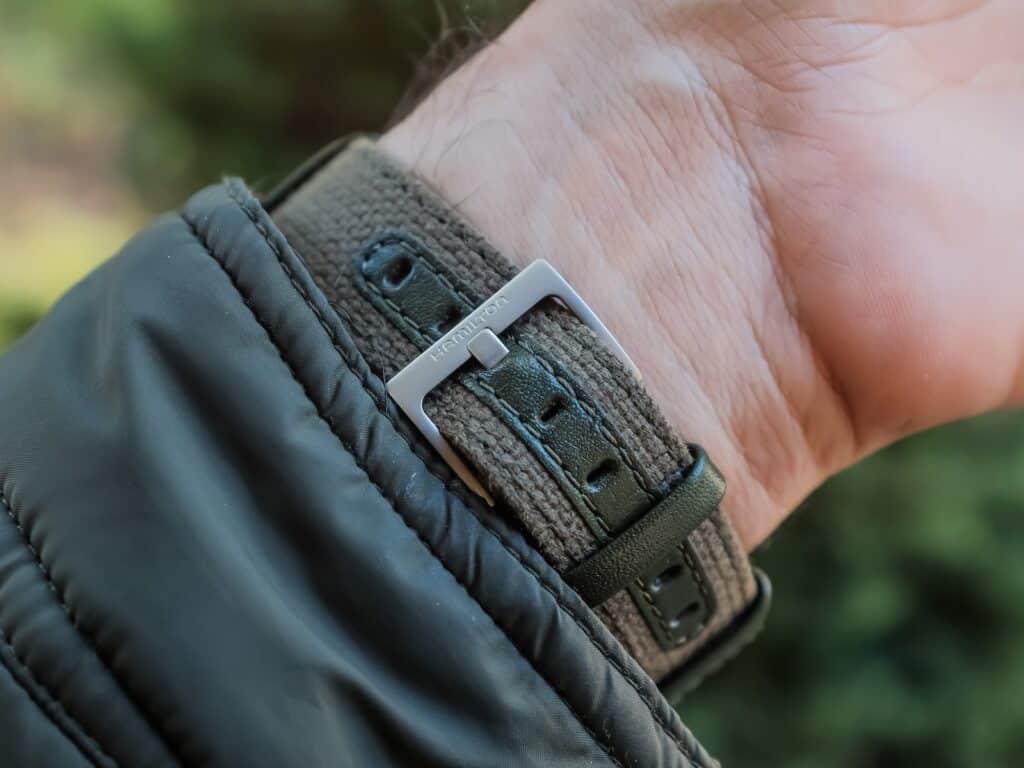
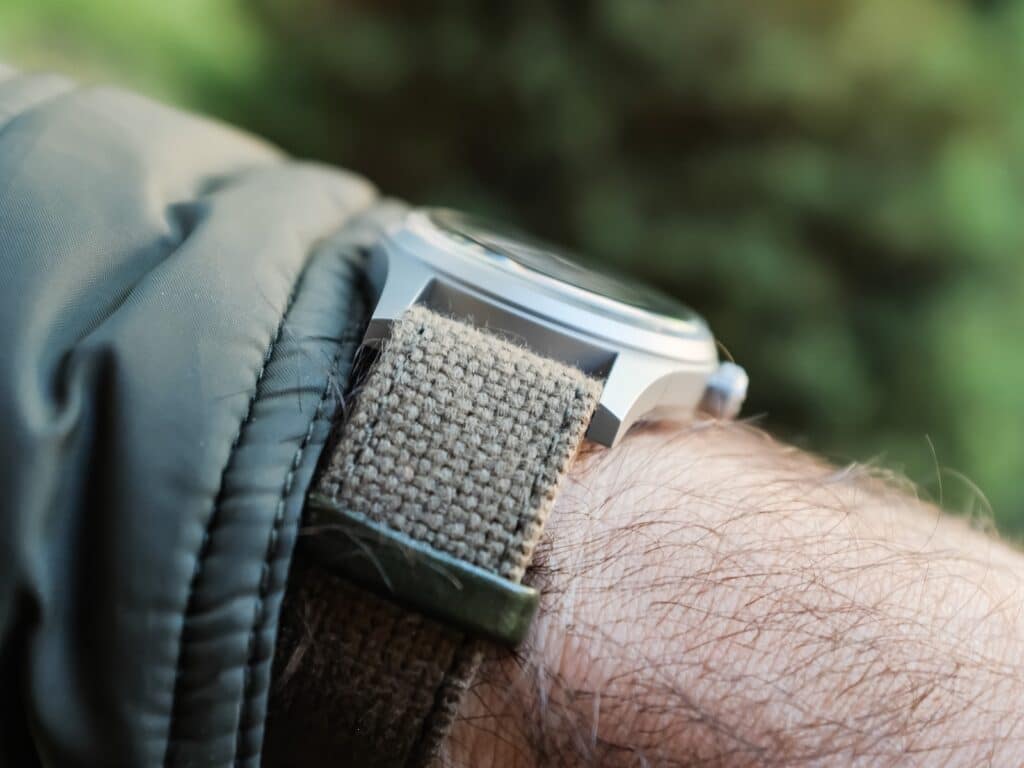
The Hamilton is the slimmer of the two at just over 10mm thick, with a 46mm lug-to-lug that gives it a touch more presence without tipping into oversized. On my 6.75-inch wrist it lands exactly right, where the 38mm version of this watch never fully connected for me. The defining decision is the fixed strap bars, machined into the case the way the original had them. That sounds restrictive, and it is, but I already live with fixed bars on my Pelagos FXD and CWC, so the constraint reads as authentic rather than annoying. It’s also made me change straps more often than almost anything else I own. The 250 has spent most of its time alternating between an olive drab Maratac single-pass and a grey ADPT NATO, and it changes character between them.
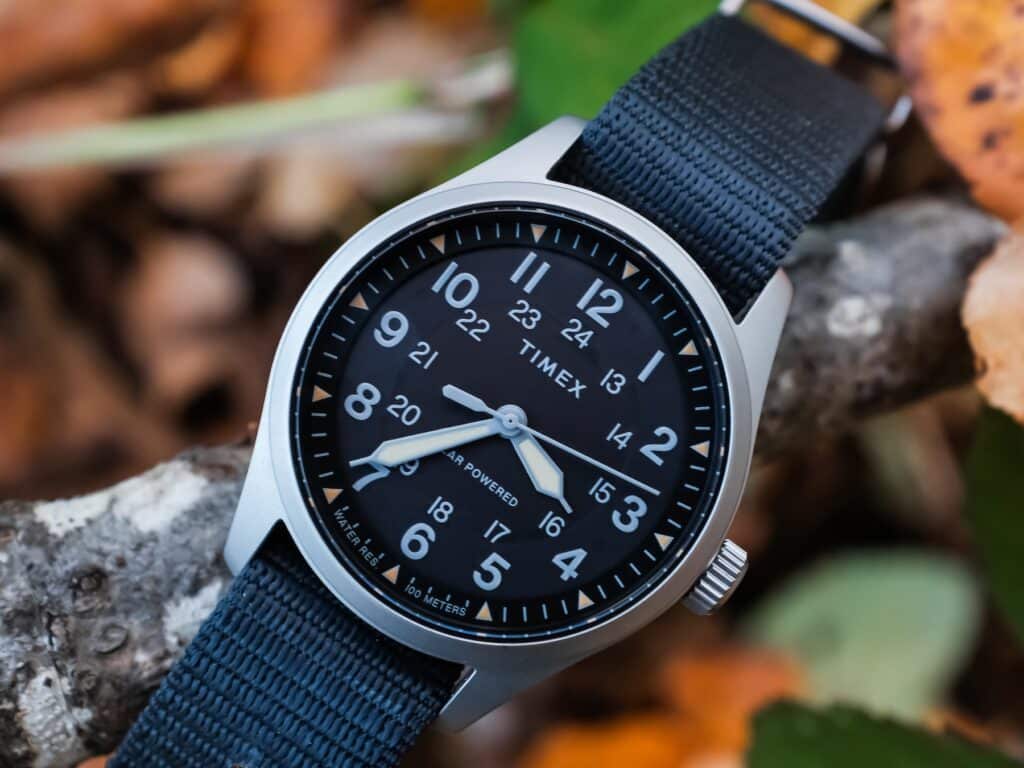
- Timex Expedition: A bead-blasted steel field watch that vanishes on the wrist and goes anywhere. Traditional spring bars and a screw-down crown make it the more practical everyday choice, once you swap the thick stock strap.
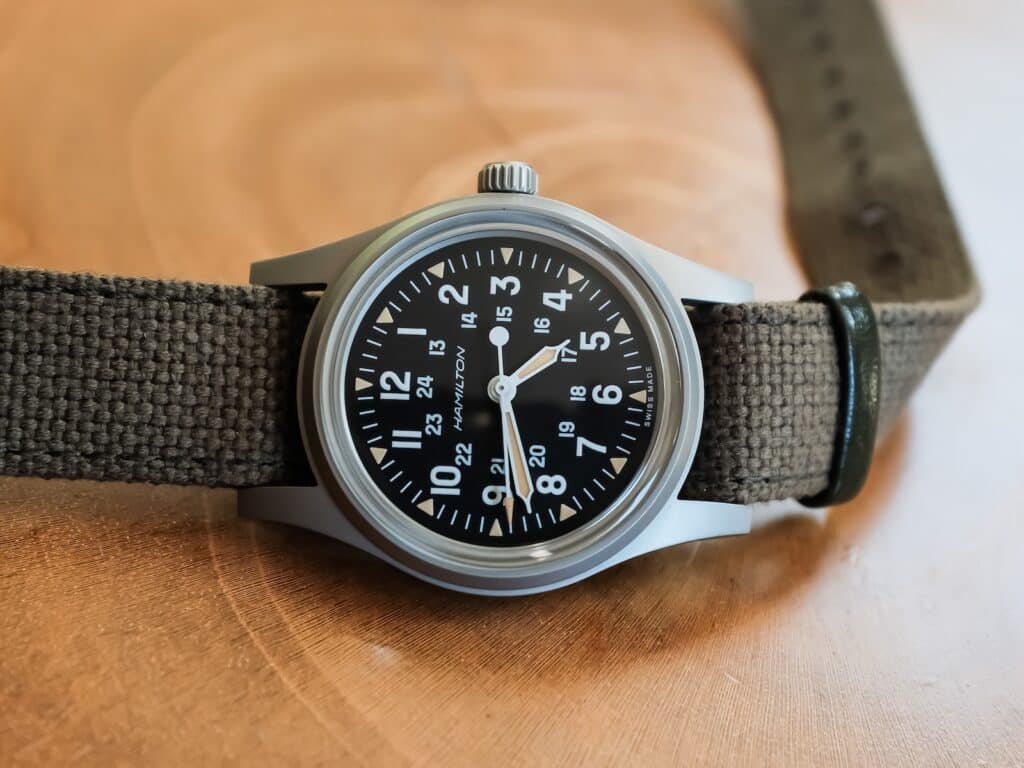
- Hamilton 250: A slimmer, period-correct recreation that wears its 36mm beautifully and commits to fixed bars. That focus is the point, though it locks you into single-pass and NATO-style straps if you want easy changes.
Build Quality & Technical Approach
Both watches are built to take more than a desk job will ever throw at them. The split is philosophical. One is engineered around never having to think about it, the other around an interaction you choose to have every morning. Once they move from the box to the wrist, the gap between those two ideas is where the keep-or-cull decision actually gets made.
Movements:
The Timex runs a solar-quartz movement with up to four months of power reserve, and for what this watch is meant to do, that’s perfect. Once it’s charged I never think about it again. No winding, no resetting after a stretch in the drawer. Light plus time equals go, which is exactly what I want from the watch I grab when I don’t want to make a decision. The honest reservation is the obvious one for some collectors: it’s quartz, and a chunk of the field-watch audience wants something mechanical ticking away regardless of how practical the alternative is. Whether the solar movement reads as smart or as a compromise depends entirely on what you wanted before you strapped it on. I’ll also flag that the comments on my review include an owner whose solar unit died early, so it’s worth keeping the receipt, though my own example has been flawless.
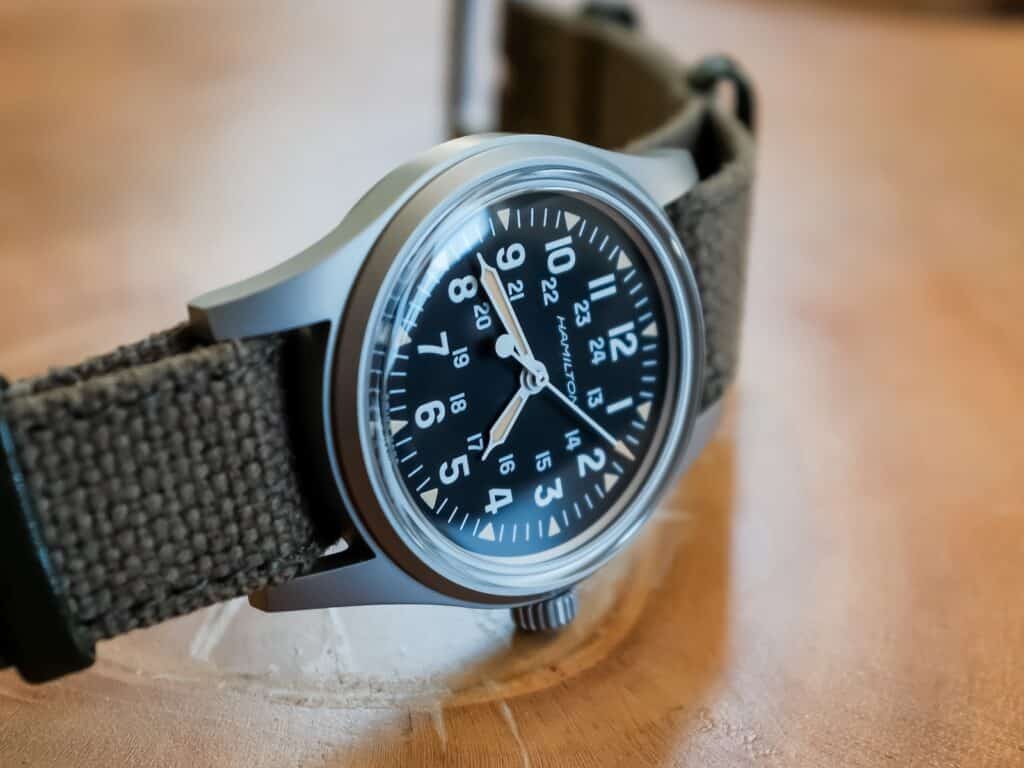
The Hamilton answers with the hand-wound H-50, a caliber that shows up across the Khaki Field range and does its job here without fuss. The headline number is the 80-hour power reserve, but what stands out in daily use is the winding itself. The crown action is smooth and satisfying in a way that hasn’t worn off, and the ritual feels appropriate for a watch this rooted in military design. Underneath the vintage looks sits modern hardware: a Nivachron balance spring, hacking seconds, and even a movement dust cover that nods to the original. The reservation is that you’re paying for an interaction you have to want. If your real life is grab-and-go, a watch you have to wind every morning is a feature you’ll either love or resent, and only you know which.
Case Construction & Finishing:
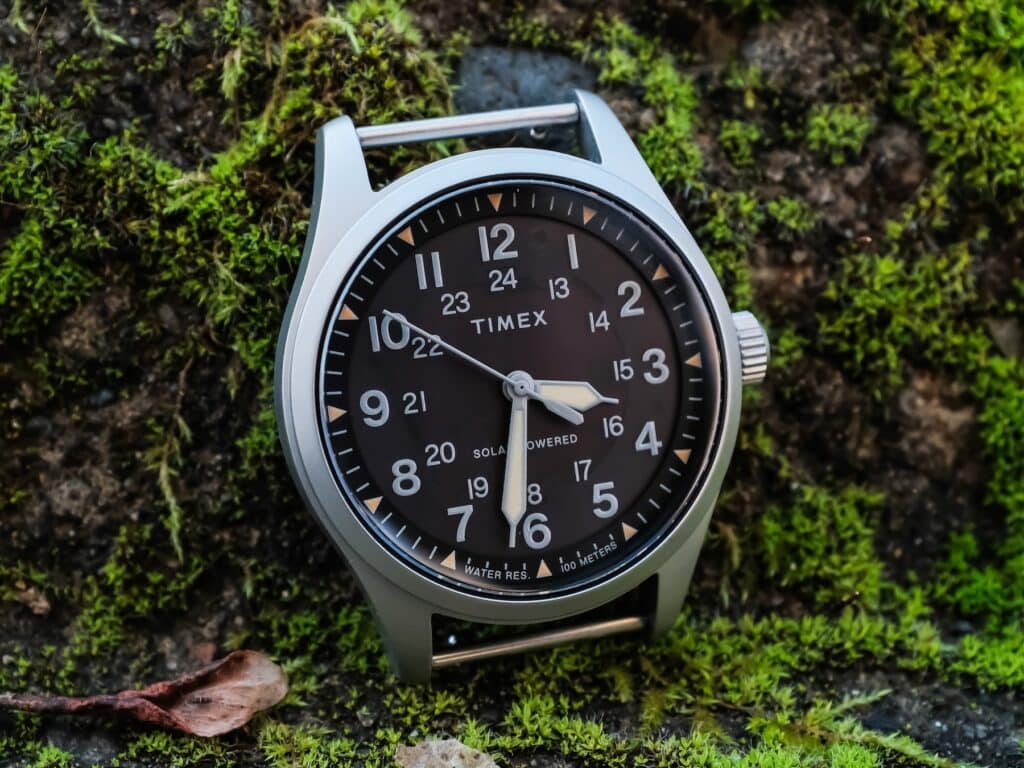
The Timex case is more watch than the price suggests. The brushed, bead-blasted stainless finish leans into the working-tool look and hides daily wear well, the proportions stay balanced for a small case, and the screw-down crown does what it claims. Over it sits a slightly domed sapphire crystal with anti-reflective coating, which is a nice spec at this money and keeps the dial clean and readable with just a hint of edge distortion. Nothing about it is fancy. All of it is correct for what the watch sets out to be.
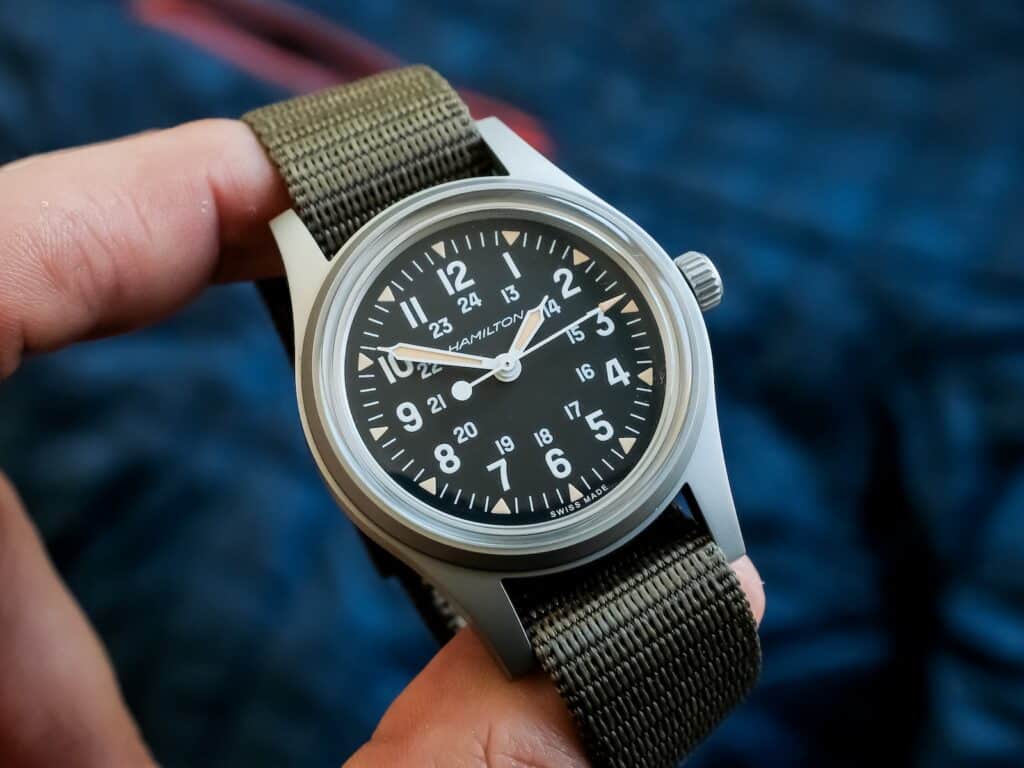
The Hamilton trades modern glass for an acrylic crystal, and that’s a deliberate, character-driven choice rather than a cost-saving one. Viewed from an angle, the boxed profile gives the watch a warmth and distortion sapphire can’t replicate, and Hamilton seems to have tamed the glare that followed earlier Khaki Field models. Acrylic divides people, and that’s fair. Scratches happen, but a tube of Polywatch has always felt like a cheap price for the look. The matte case finishing and the restraint Hamilton showed with the vintage details keep the watch feeling cohesive instead of costumey.
Dial & Legibility:
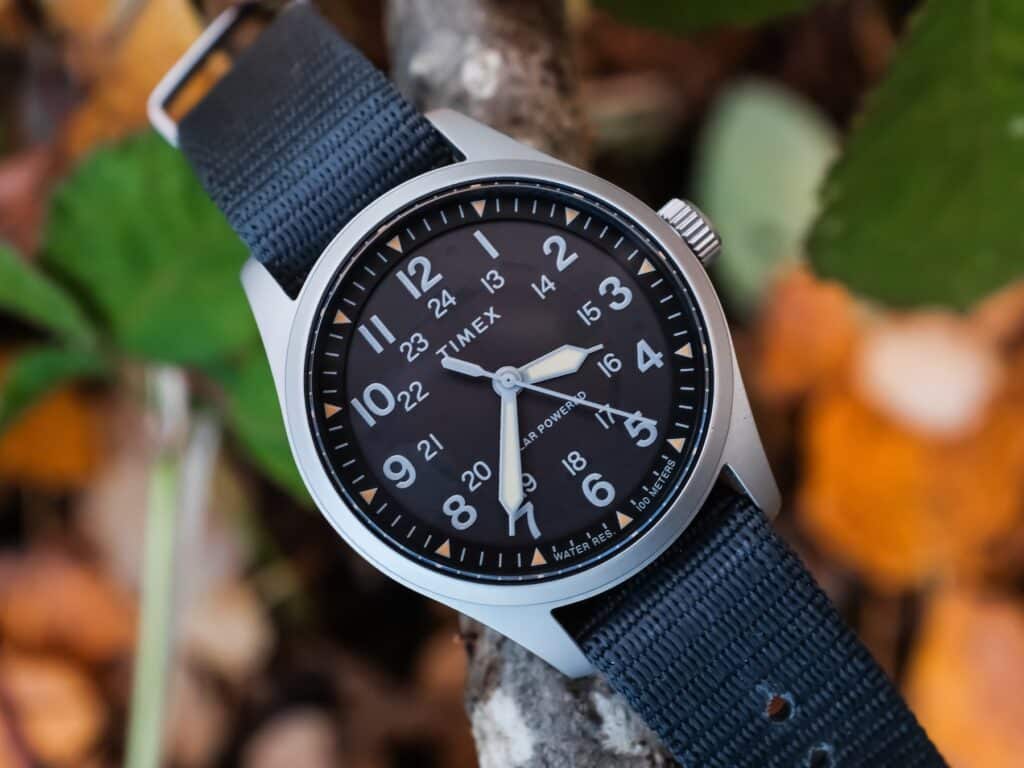
Both dials descend from military specs, and both are excellent at the one thing a field dial has to do. The Timex follows the MIL-W-46374 template almost to the letter: matte black, full Arabic numerals, no fluff. Legibility is spot on under that AR-coated sapphire, and the layout has the kind of issued-and-trusted clarity that template earned over decades.
The Hamilton draws from the FAPD 5101 and packs in more information without crowding anything. The larger hour numerals read instantly, the inner 24-hour track stays useful without becoming visual noise, and the white minute track frames the whole layout. Hamilton also showed restraint with the aging: a warm lume tone and lightly aged triangular markers and seconds hand soften the stark black-and-white without turning the watch into a costume. The period-correct logo under twelve stays subordinate to everything else. A quick glance tells you the time indoors, outside, or from an awkward angle, which is the entire job.
Water Resistance & Lume:
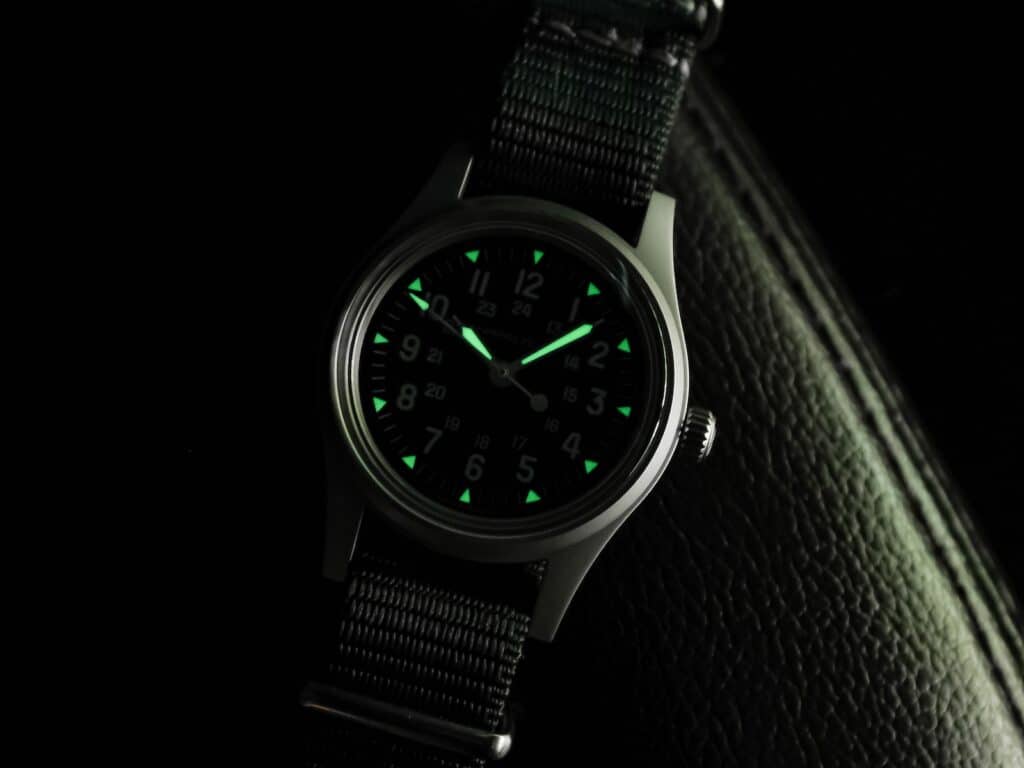
This is the section where the two watches split most clearly, and it’s not in the Timex’s favor. The Timex earns its tool-watch keep with the screw-down crown and a sealed feel that shrugged off rainy commutes and sink splashes without a thought. But the lume is bad. It’s technically there, then it’s gone, fading to a ghost a couple of minutes after even a strong charge. On a watch this purpose-built, it’s the one corner that feels truly cut, and I still daydream about how perfect this thing would be with Indiglo.
The Hamilton carries 100 meters of water resistance, which wouldn’t normally move me on its own, but it pairs with Super-LumiNova that actually holds through the night. Combined with the compact dimensions and matte finishing, the 100m rating makes the watch feel free of limitations in a way the Timex doesn’t quite match once the lights go out. Both will survive your life. Only one of them is still readable at 3 a.m.
- Built around never thinking about it, the Timex favors solar convenience, a real screw-down crown, AR sapphire, and honest splash-proof toughness, undercut only by lume that fades almost instantly.
- The Hamilton layers character and capability: a hand-wound movement you choose to engage with, an acrylic crystal with real warmth, 100m water resistance, and lume that lasts into the night.
Cost Considerations
The Timex lands at $199, and at that number it’s close to impossible to argue with. You get a properly sized field watch with a screw-down crown, AR-coated sapphire, and a solar movement that runs for months on light. There’s no pressure to baby it, no upkeep, and nothing about owning it carries weight beyond the cost of the watch itself. For someone who wants one good field watch and never wants to think about it again, this is the easiest recommendation in the category.
The Hamilton sits at $725, and it’s worth being precise about what the extra roughly $526 actually buys. Not status, and not a flex, because nobody’s clocking a 36mm field watch across a room. You’re paying for a hand-wound mechanical movement with modern internals, a faithful recreation of a real issued reference, acrylic-crystal character, and finishing that holds up to scrutiny. For a watch I waited this long to find, that premium reads as fair. It still demands that you want what it’s offering, because nothing here is engineered to win on a spec sheet.
Final Thoughts: Which One Stays?
So here’s the call I’ll actually stand behind. The Hamilton Khaki Field Mechanical 250 stays, and it isn’t close. It scratched a decade-long itch the Timex was only ever holding the place for. It gave me the same closure my CWC did, the kind that ends the browsing and the spec-sheet comparisons instead of feeding them. The hand-wound movement, the acrylic warmth, the 100m rating, the lume that survives the night, and most of all the fact that I reach for it without thinking add up to a watch that has pushed others out of the rotation faster than almost anything I’ve owned.
The Timex is the one that goes, and I want to be clear about what that does and doesn’t mean. It loses this fight only because the Hamilton occupies the same lane and means more to me. On its own terms it’s still the watch that ended a long, frustrating search, and at $199 it does its job as well as I could ask. The honest weak spots are the lume and the stock strap, and the lume is the only one that would give me pause recommending it. For someone who wants a single, sized-right field watch with a screw-down crown and zero upkeep, the Timex is one of the best buys in watches right now. It’s just redundant in a collection that already found its forever field watch.
I’ll also be fair to the dissent. There’s a reader on my Hamilton review who owns both, found the Timex nicer in the metal, and begrudgingly returned the 250. I don’t share that read, but I understand it, and it points at the real takeaway here. The gap between these two isn’t about which is the better watch in the abstract. It’s about which one a specific person, with a specific wrist and a specific reason for wanting a field watch, can’t put down. For me that’s the Hamilton. For plenty of people, and for plenty of budgets, the smart answer is the Timex, and there’s nothing broke or snobby about saying so.
So… tell me in the comments which one you’d keep, especially if you’ve handled both.

Co-Founder & Senior Editor
Michael Peñate is an American writer, photographer, and podcaster based in Seattle, Washington. His work typically focuses on the passage of time and the tools we use to connect with that very journey. From aviation to music and travel, his interests span a multitude of disciplines that often intersect with the world of watches – and the obsessive culture behind collecting them.