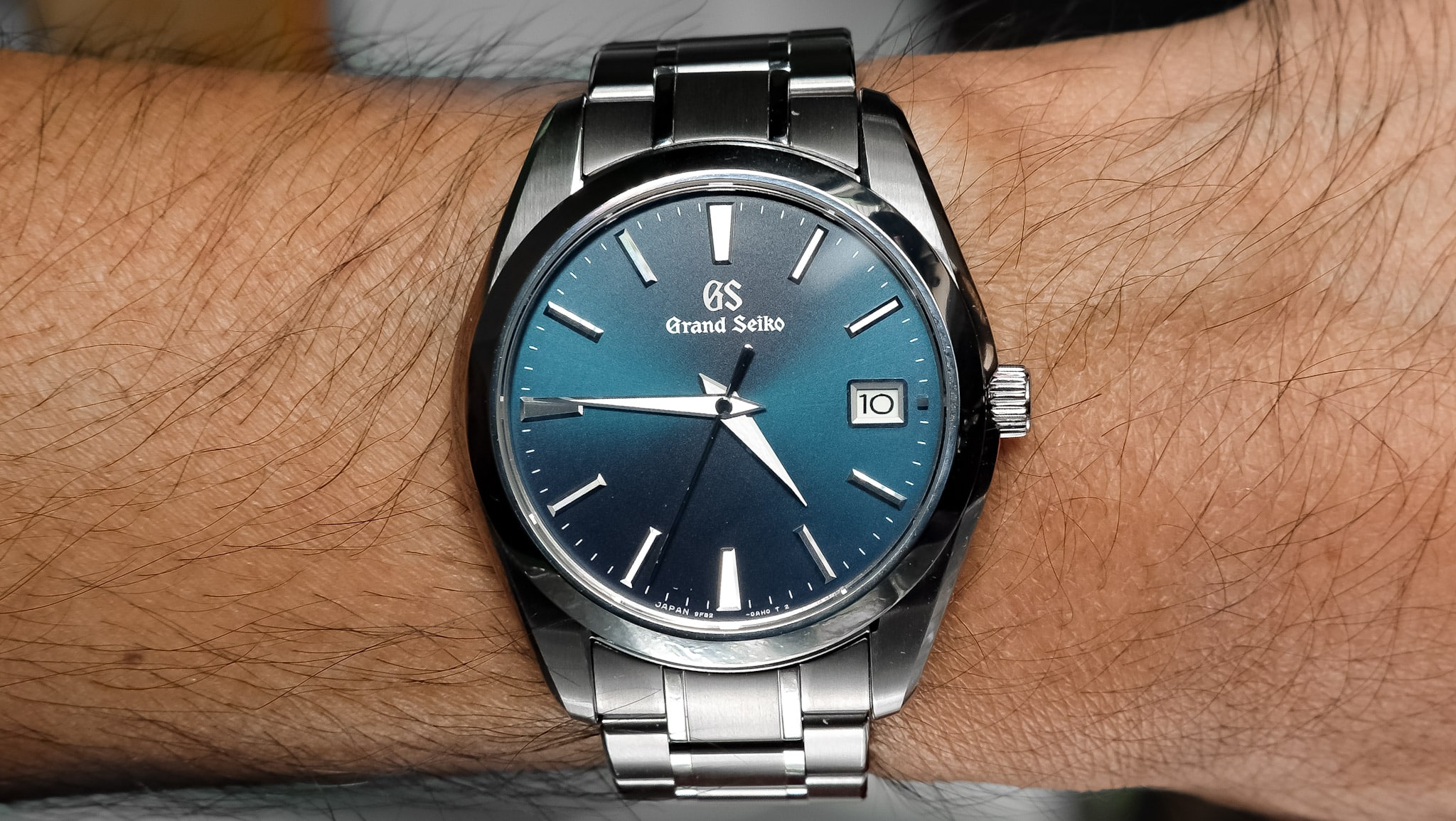
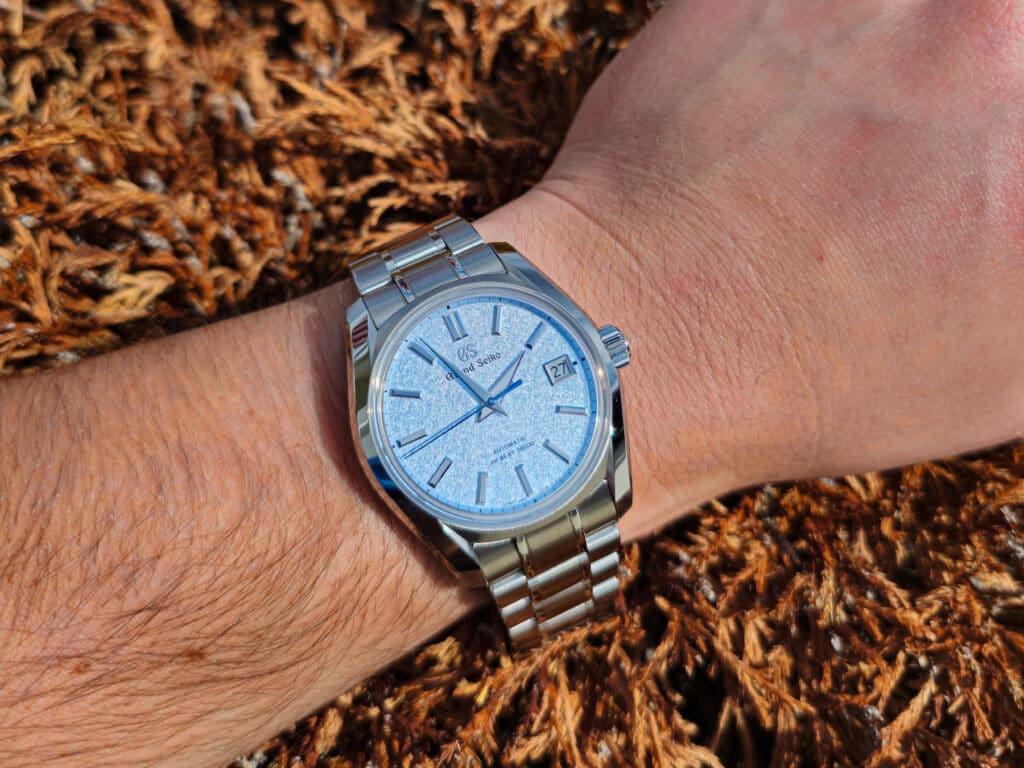
Some arguments only happen inside a brand, and Grand Seiko is one of the few that’s earned its own civil war. On one side of the table is the Grand Seiko SBGV233, the 9F quartz Heritage three-hander with a dark teal dial that looks like it was poured rather than painted — the watch that insists quartz can still be a grail. On the other is the Grand Seiko SBGH295 Sōkō Frost, the Hi-Beat automatic whose frosted blue dial behaves like weather and whose movement glides across the dial like a skater who never stops. Two watches, one workshop, completely opposite hearts. We’ve worn both, and the question we kept circling back to wasn’t which one is “more Grand Seiko.” Both are pure Grand Seiko, head to toe.
The real question is which one puts the least between you and the craftsmanship. That became the throughline for everything we tested: accuracy, finishing, wearability, and the long tail of ownership costs that nobody photographs for the catalog. The SBGV233 makes the strongest practical argument, delivering Grand Seiko’s core appeal with almost no friction. The Sōkō Frost makes the stronger emotional argument, turning the same brand language into something more theatrical, mechanical, and romantic. That tension is what makes the comparison interesting. One feels like the smarter watch to own every day. The other feels like the one you keep stealing glances at.
Overview & Identity
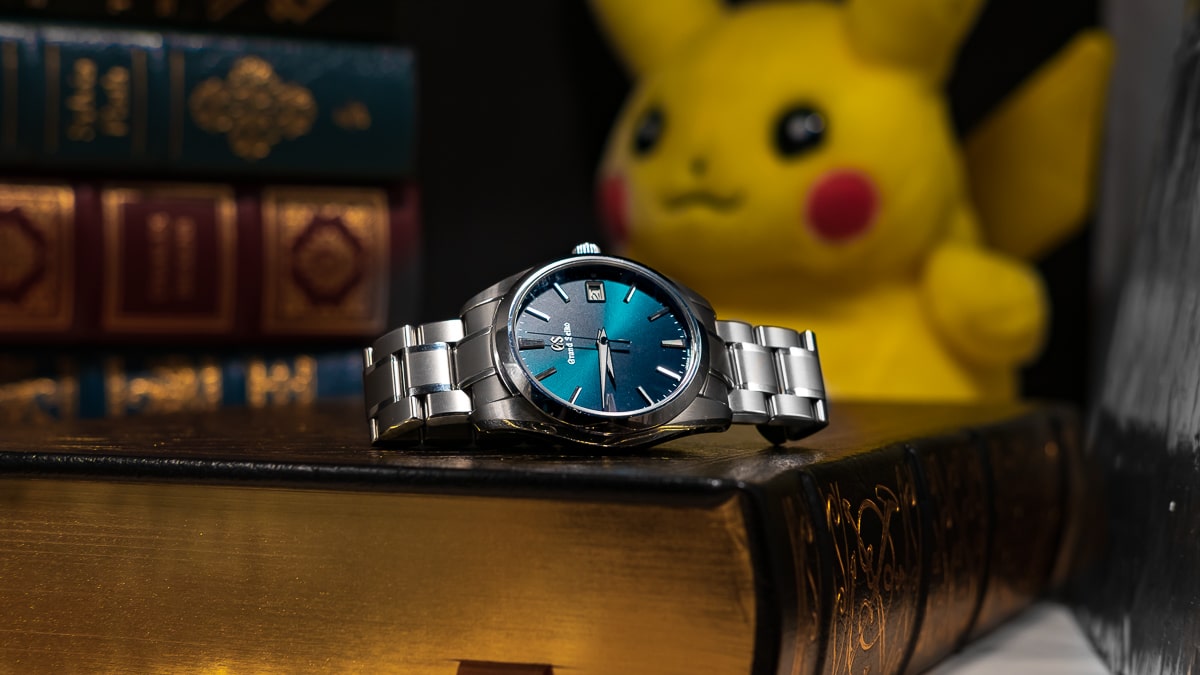
The Grand Seiko SBGV233 is the under-the-radar one, and it wears that anonymity like a tailored coat with no logo on the outside. Non-watch people glance at it and call it “plain,” which is exactly the point — it’s a Heritage Collection design built around balance rather than trend-chasing, the kind of watch that reveals itself slowly to anyone who knows what they’re looking at. It runs the in-house 9F82 quartz, and we want to be clear that the quartz isn’t a compromise here. It’s the reason the watch exists. During our hands-on review we discuss how this is a piece that argues, convincingly, that the most accurate thing in your house can also be the most quietly beautiful.
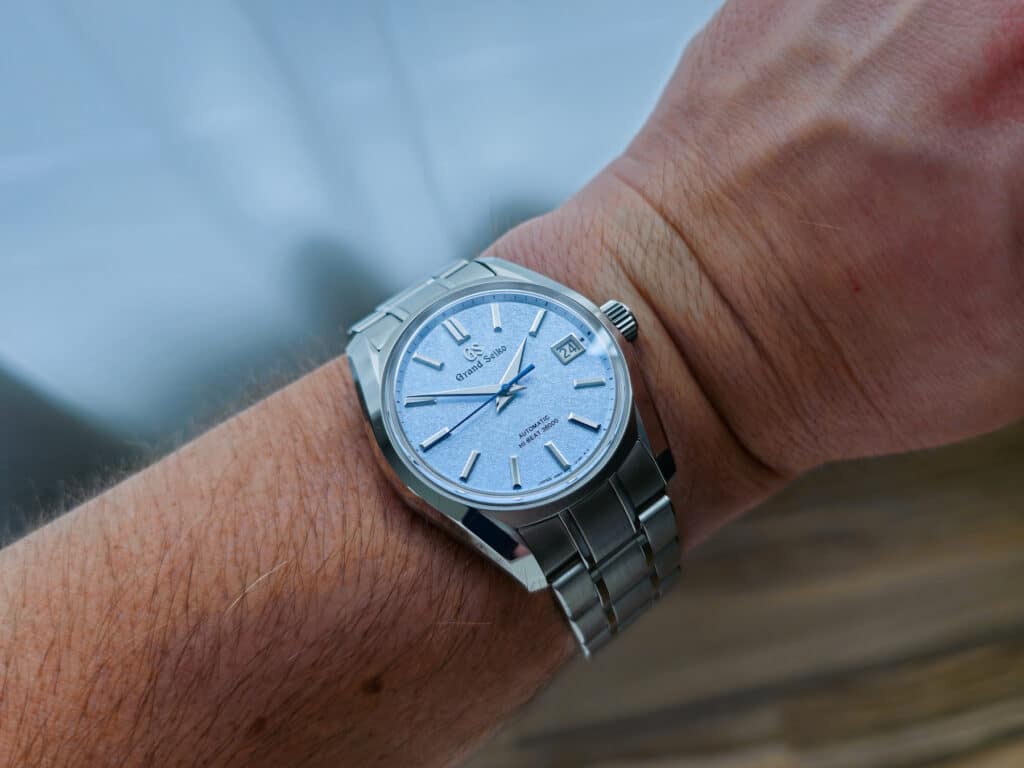
The Grand Seiko SBGH295 Sōkō Frost comes from the opposite emotional zip code. It’s a US-exclusive special edition built around its dial and its Hi-Beat movement, and it doesn’t whisper so much as it hums. Where the SBGV233 is content to disappear under a shirt cuff, the Frost wants you to keep flicking your wrist into the light just to watch the dial change temperature (we know we did during our hands-on time testing it). It isn’t trying to be the sensible everyday answer. It’s trying to be the watch you fall a little bit in love with, and on that mission it lands almost every shot it takes. The catch — and there’s always a catch — is that falling in love with the Frost costs considerably more than developing a quiet respect for the quartz.
Dial & Wearability: Under-the-Radar Teal vs First-Frost Blue
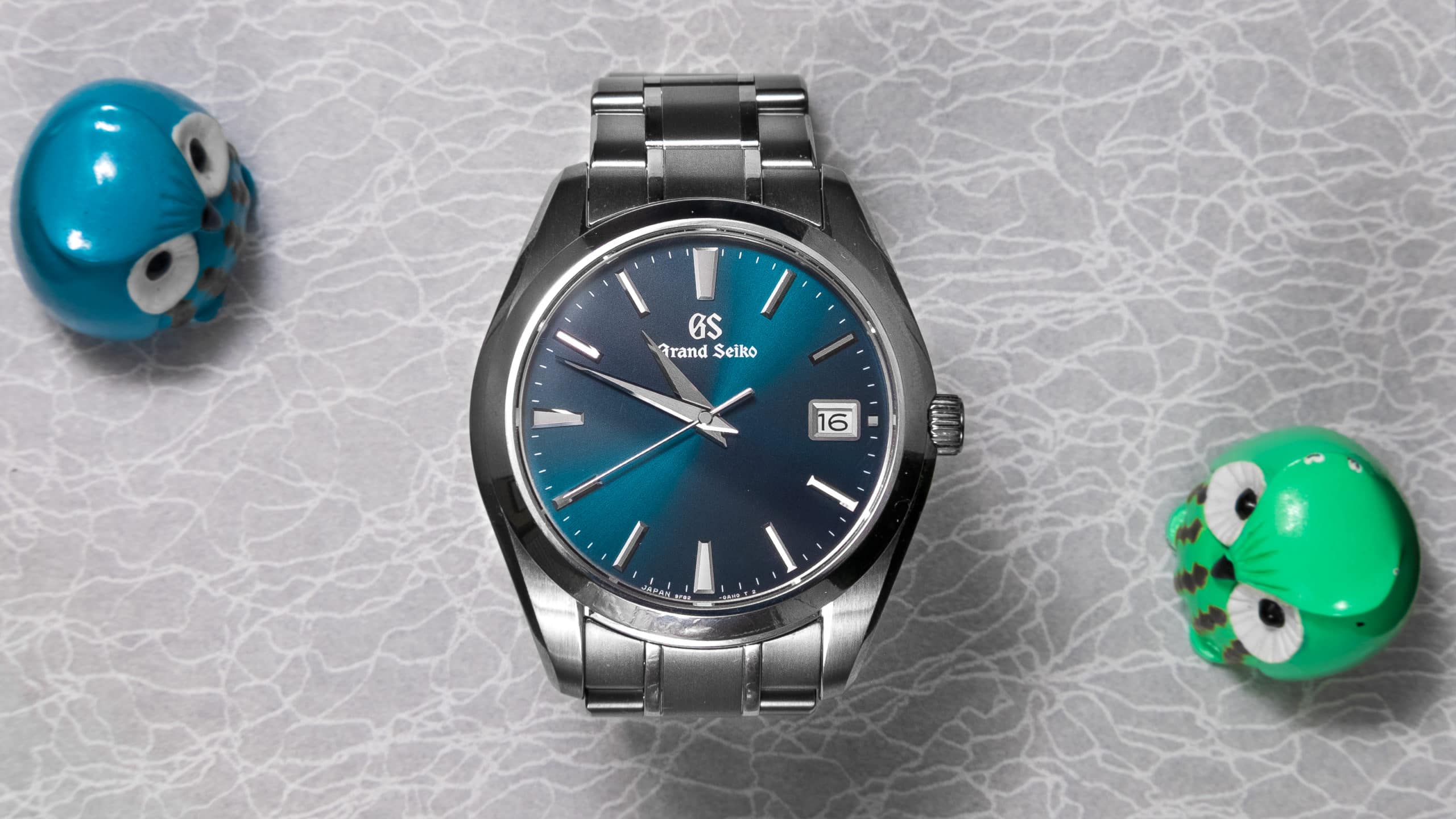
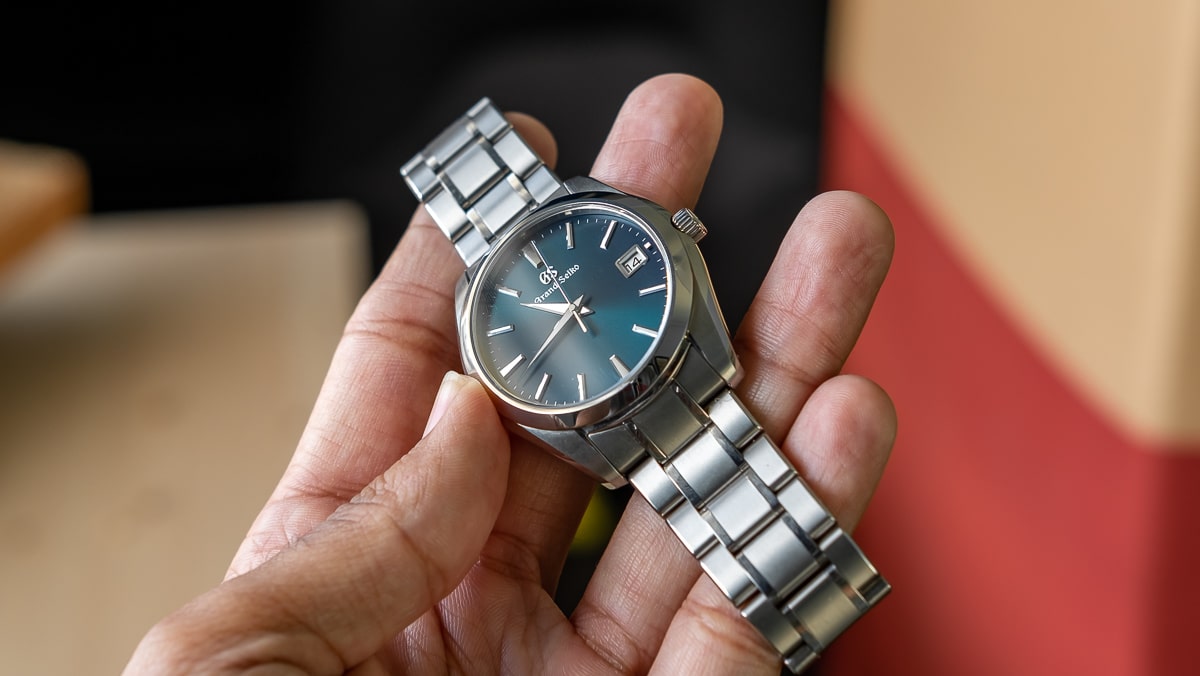
Let’s start with the SBGV233’s dial, because it’s the part that turns a sensible quartz watch into something people obsess over. The dark teal isn’t a flat hue and it isn’t a glossy mirror — it manages to be both at once, catching radial polishing like sunlight skipping across a still lake without ever tipping into bling. The “GS” logo sits in a pale gold, “Grand Seiko” beneath it in muted silver, and the bar markers are sharp little geometric slabs polished cleanly enough that you can roll light off them just for fun. It’s a Japanese-domestic-only release, which is part of the allure and part of the headache, since tracking one down outside Japan takes effort.
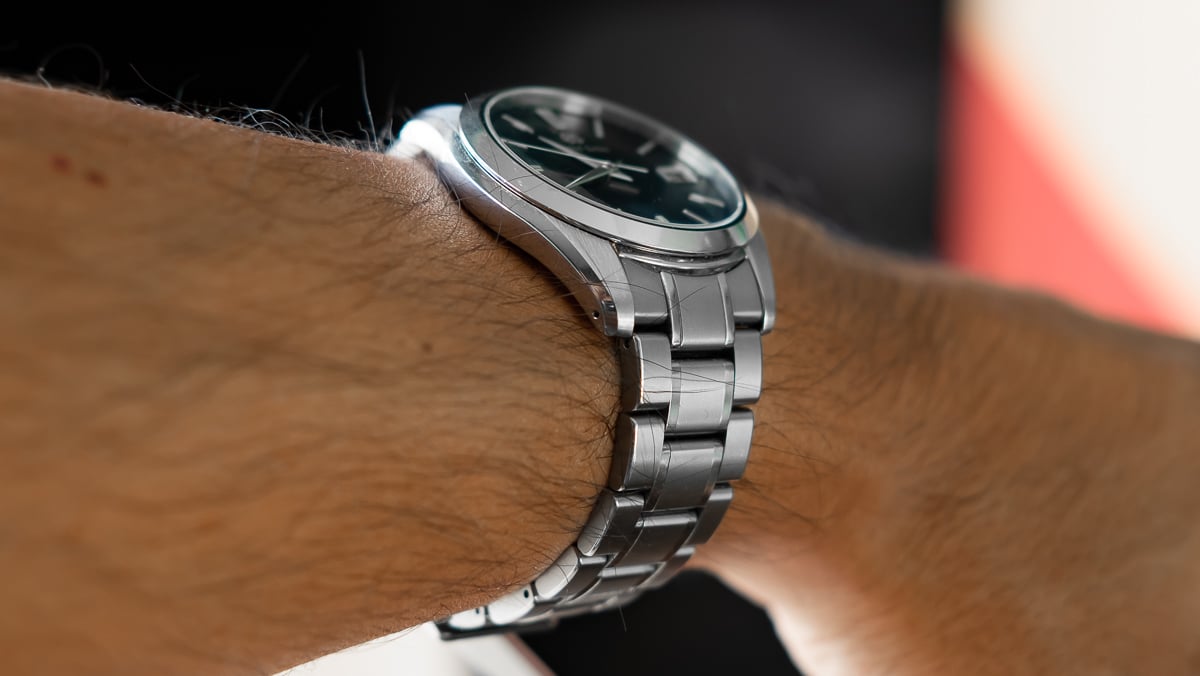
On the wrist, the SBGV233 is the more obliging of the two by a wide margin. At 40mm wide, 46mm lug-to-lug, and a genuinely svelte 10mm thick, it slides under a cuff like a business card under a door, and the titanium case means it lands on the wrist almost weightless — the watch feels like it forgot to pack its own heft. The lugs curve organically and dip just below the caseback, so whether your wrist is flat-topped or rounded, the thing sits planted and comfortable. Our one wearability gripe lives at the bracelet: the titanium can be scratch-resistant against the outside world but not against itself, and tiny rub marks show up inside the clasp faster than you’d expect from a watch this nice.
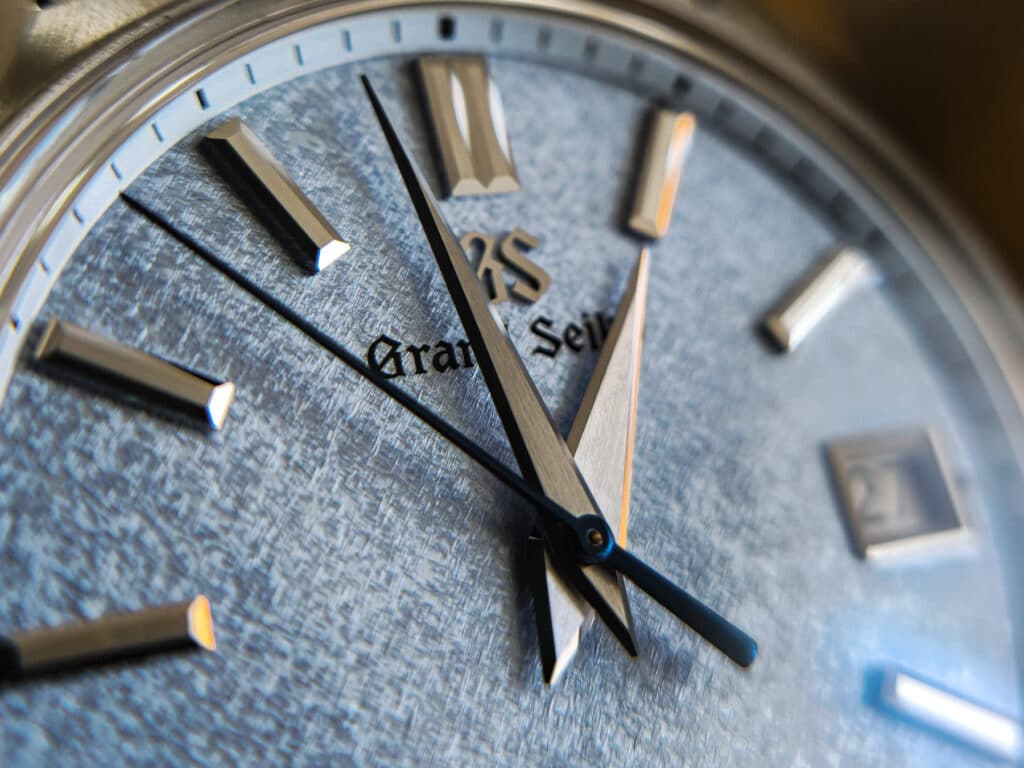
The Sōkō Frost answers with a dial that’s frankly more theatrical. That arctic blue is said to be inspired by the clear winter skies over the Sea of Japan, and with most brands we’d file that under marketing perfume — but Grand Seiko backs it up. A fine cross-hatch pattern is etched into the surface so the color seems to drift across the dial like mist rolling off a frozen field, shifting with every angle. It’s a dial meant to be discovered rather than read, and it’s one of the most compelling dials we’ve seen under $10,000. If the teal SBGV233 is a watch that hides in plain sight, the Frost is one that performs.
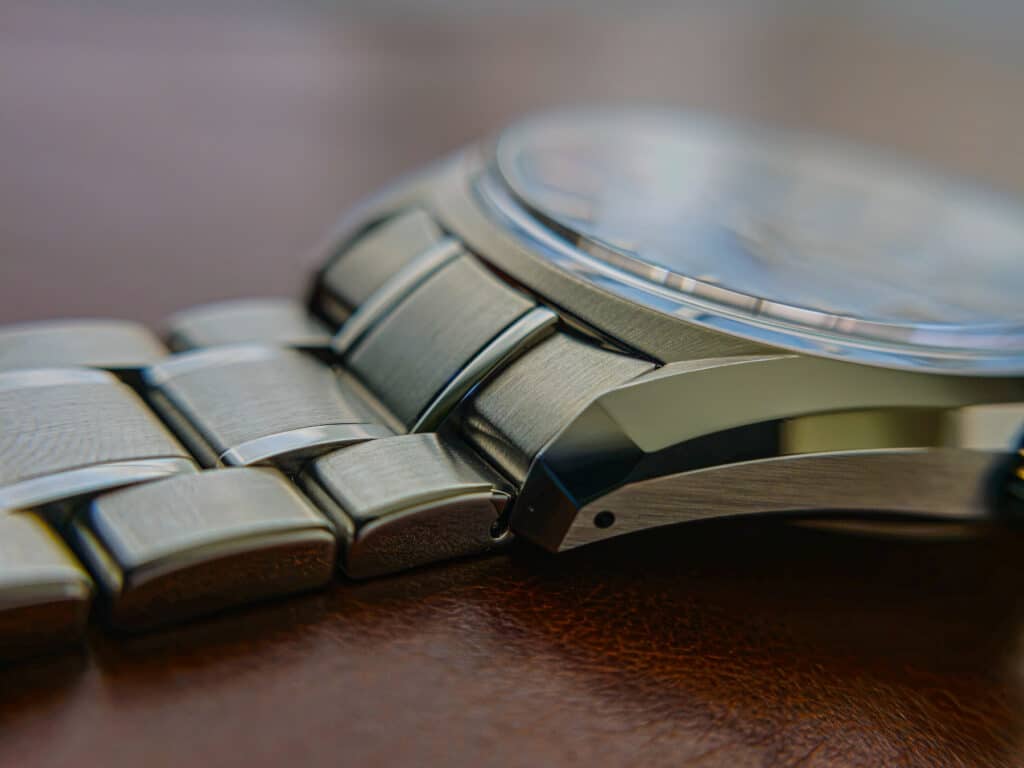
Wearability is where the Frost gives a little of that drama back. It’s also 40mm wide, but at 47mm lug-to-lug and a stated 12.7mm thick in steel, it carries more presence and more mass than the feather-light quartz. The saving grace is the box crystal: roughly 1–2mm of that thickness is the protruding sapphire, so it wears thinner than the spec sheet threatens, more like a dress watch that snuck a tool-watch profile past the bouncer. The reservation here is the bracelet’s lack of micro-adjustment, which we’ll get into under cost and ownership — for a daily wearer whose wrist swells in summer, that’s a real, recurring annoyance rather than a one-time quibble.
- The SBGV233 is the easier daily companion: thinner, lighter titanium, slips under a cuff, near-invisible on the wrist — at the cost of a clasp that scuffs against itself.
- The SBGH295 trades that ease for spectacle: a frost dial that shifts like weather and more wrist presence, with a box crystal that keeps the height honest.
- If “wear it and forget it” is the goal, the quartz wins; if “wear it and stare at it” is the goal, the Frost does.
Build Quality & Technical Approach
Movements
The SBGV233’s 9F82 is the rare quartz movement that earns a place in the same sentence as fine mechanical calibers. It’s accurate to ±10 seconds per year, which makes it about the most precise thing in the house short of a phone, but accuracy is only the headline. The 9F is regulatable — sealed in dust-proof enclosures that lock in lubrication, yet equipped with a regulation switch so a tech can fine-tune it, which almost no quartz movement allows. It even fights the cheap-quartz tell of a bouncing seconds hand with a backlash auto-adjust mechanism, and the crown’s hyper-precision setting advances the minute hand just 20 minutes per full rotation so you can nail the marker exactly. The honest reservation: this is the older 9F82, a straight three-hander, and the updated 9F85 adds an independently adjustable hour hand the SBGV233 doesn’t have.
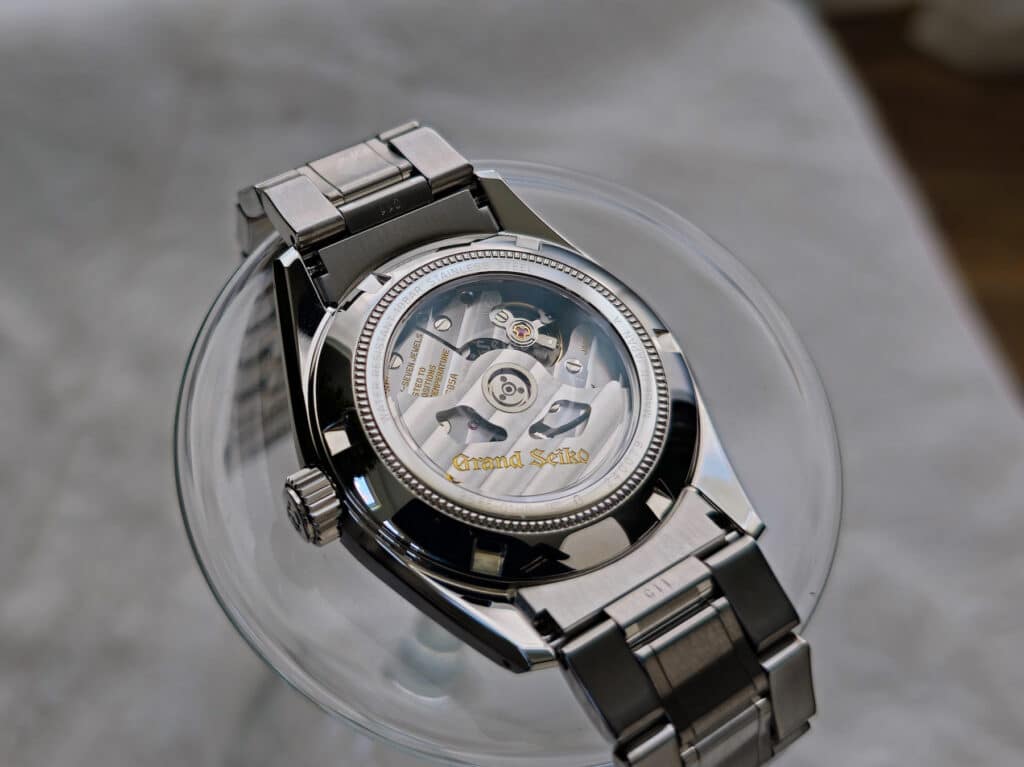
The Sōkō Frost runs the Hi-Beat 9S85 automatic — not a Spring Drive, and proudly mechanical. Its party trick is a 36,000 beats-per-hour rate, ten ticks a second, which sends the blued seconds hand gliding across the dial like it’s been greased. Grand Seiko engineered that smoothness with genuinely advanced tooling: MEMS technology borrowed from semiconductor manufacturing makes the escape wheel and pallet fork to tolerances finer than a ten-thousandth of a millimeter, and the Spron 530 mainspring alloy squeezes out a 55-hour reserve. It’s a small marvel that makes most Swiss movements feel like they’re ticking in slow motion. The reservation is structural rather than a flaw: a Hi-Beat is a living machine that will eventually need servicing, where the sealed 9F can run for years on a battery swap and barely think about a watchmaker.
Case
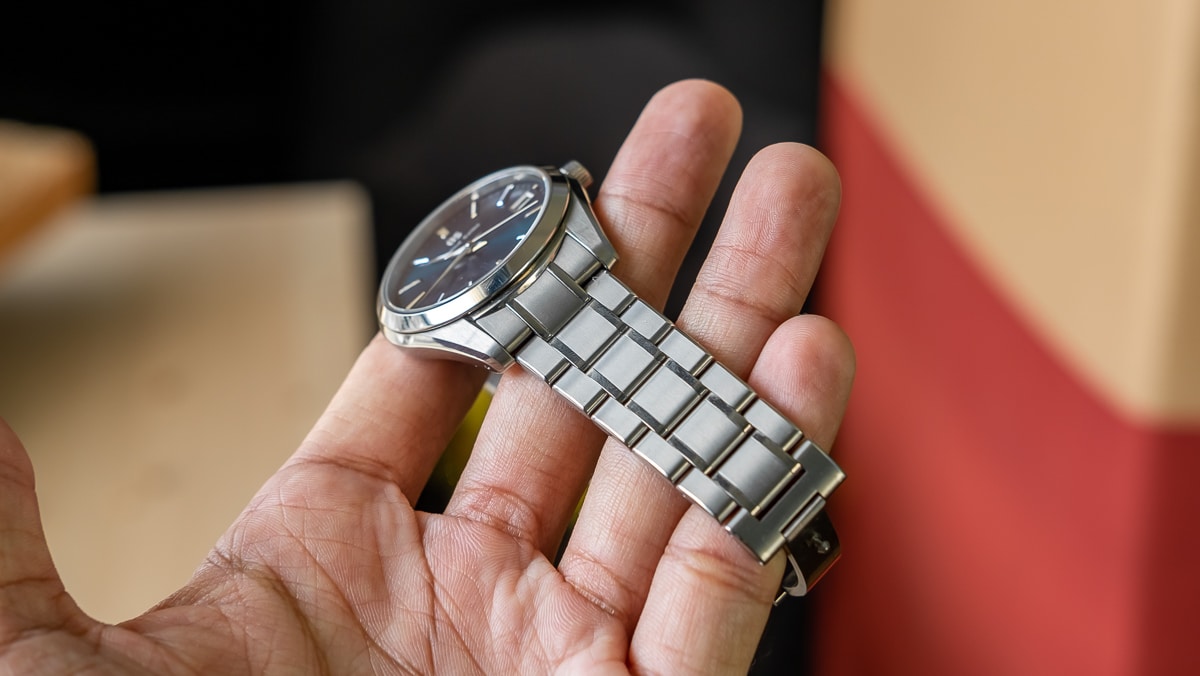
Both cases are master-class finishing exercises that happen to use different metals. The SBGV233 is titanium, and Grand Seiko plays the polished-and-brushed contrast like a duet: high-polish sides, bevel, and fixed top bezel set against a brushed matte top surface that visually anchors the whole watch, clean enough that it looks pressed rather than machined. Titanium buys you lightness and excellent scratch resistance against the outside world. The drawback we already flagged returns here — titanium scuffs against titanium, so the clasp picks up wear marks the rest of the watch never would.
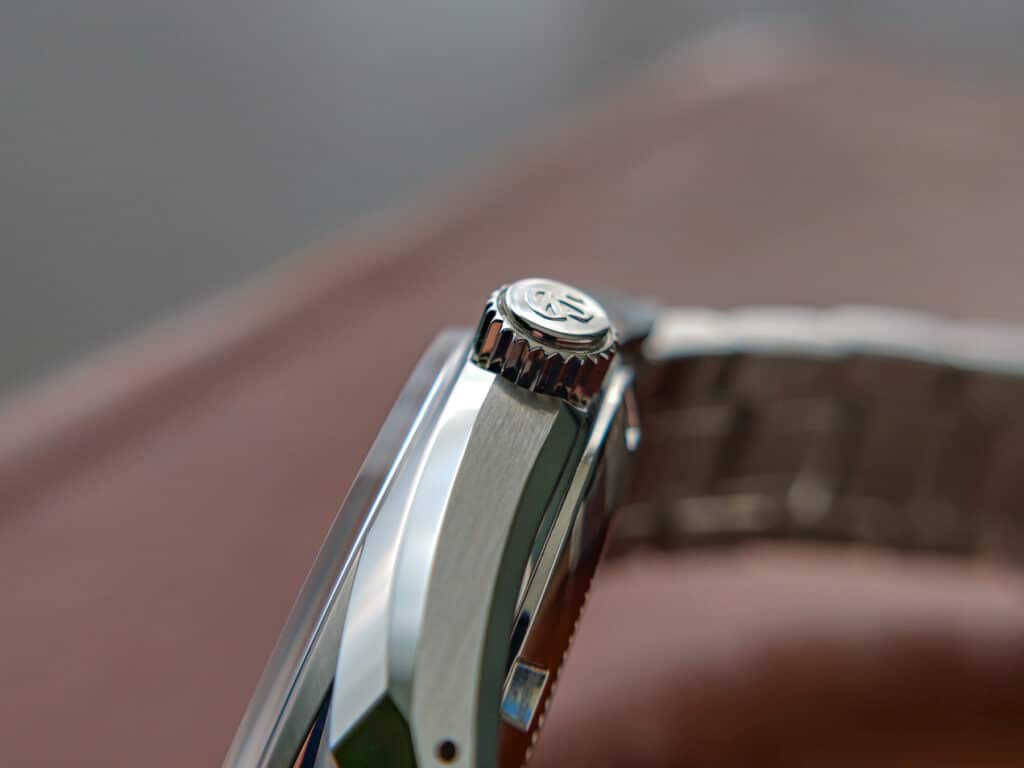
The Frost’s stainless steel case is, if anything, the more jaw-dropping of the two. The center flank is immaculately brushed and sandwiched between zaratsu-polished bevels done by hand, and those mirror surfaces throw light around like a card dealer fanning a deck. The lugs are a small sculpture of angles and finishes. It’s the kind of casework that makes obvious rivals look ordinary by comparison. The honest reservation is mass and money: all that hand-finished steel is heavier than the quartz’s titanium and sits on a watch that costs multiples more, so you’re paying a steep premium for finishing that, dollar for dollar, the SBGV233 nearly matches.
Crystals & Bezels
Both watches sit under sapphire, but they treat the front glass differently. The SBGV233 keeps it conventional: a flat sapphire over the dial and a fixed, high-polish top bezel framing everything with restraint. The Sōkō Frost is more adventurous — it skips a traditional bezel entirely, letting the polished case bevels twist upward to cradle a flat box sapphire that protrudes proud of the case like a slightly domed window. Its anti-reflective coating is deliberately measured, applied heavily enough to stay clear but not so heavily that it casts the usual blue tint over that carefully tuned frost dial.
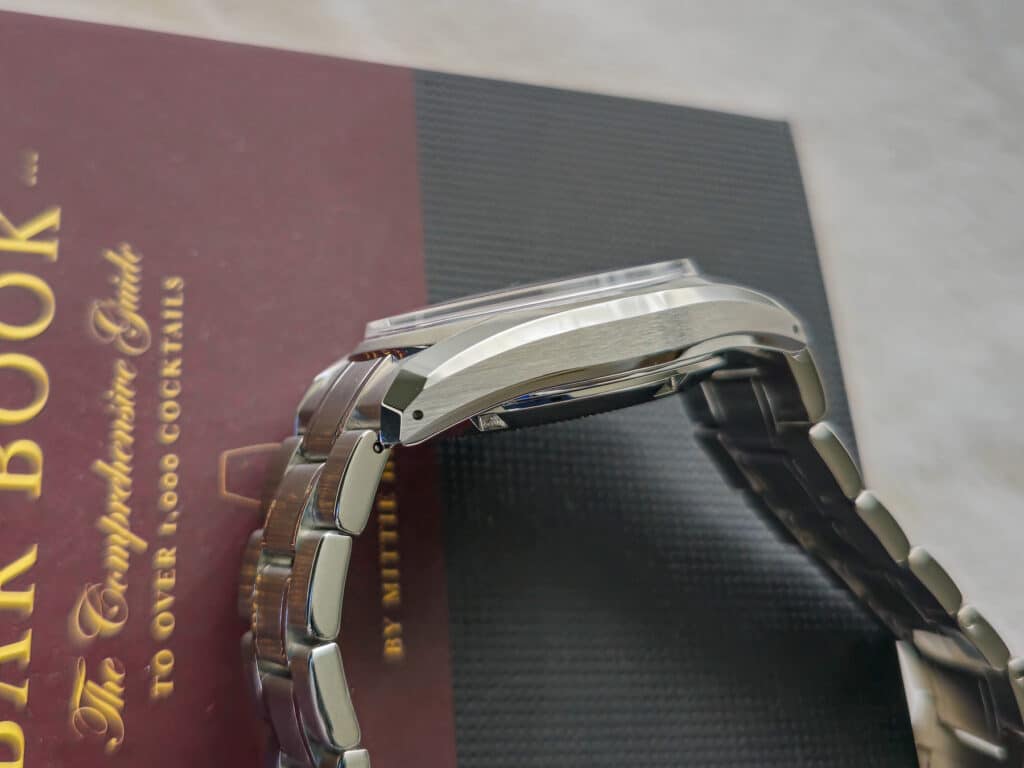
The reservation cuts both ways. The Frost’s protruding box crystal is gorgeous but stands more exposed than a recessed flat crystal, the sort of detail you’ll baby around door frames. The SBGV233’s fixed polished bezel is safer and cleaner but also the less interesting of the two — it’s a frame doing its job well, not a design statement. Neither is wrong; they just reflect the two watches’ personalities, one playing defense and one showing off.
Water Resistance
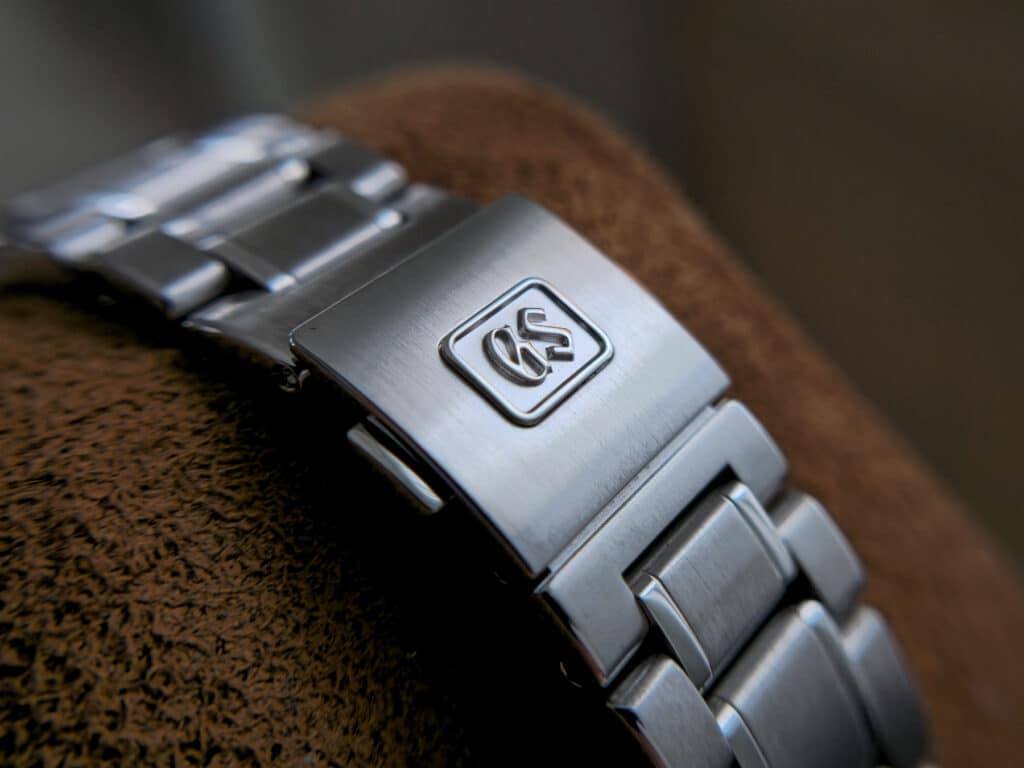
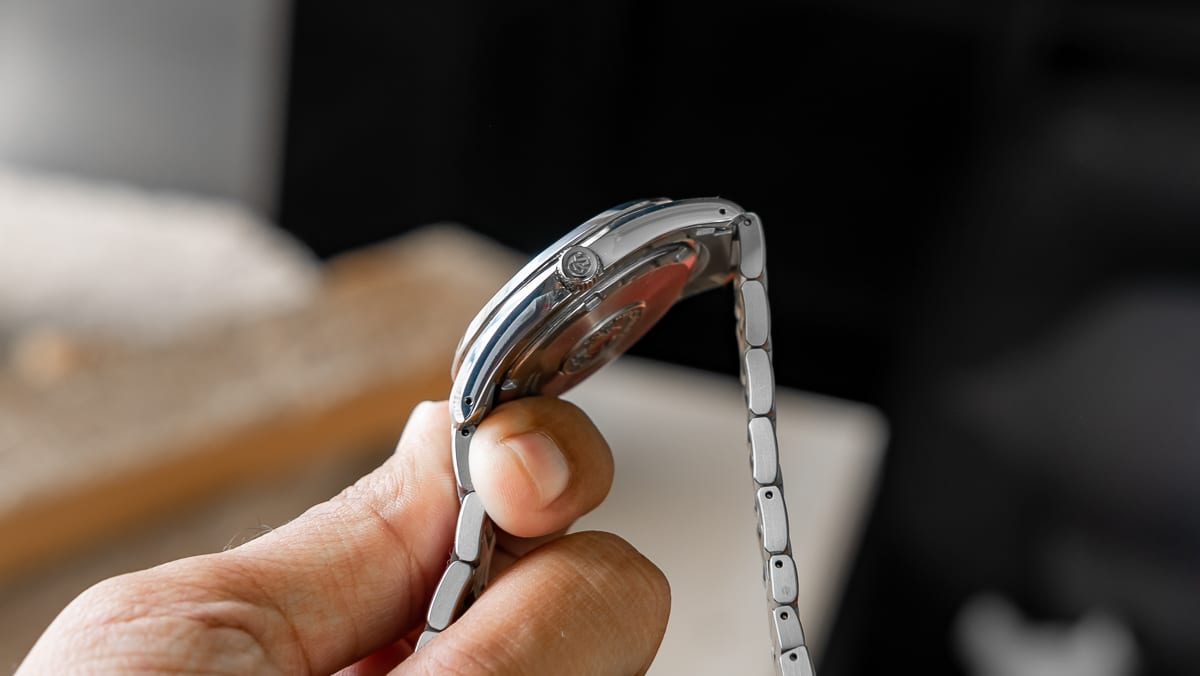
Here the two are closer than anywhere else, and a little disappointing in the same way. Both rate 100m of water resistance, which is plenty for real life and short of anything you’d call a dive watch. The Sōkō Frost backs its rating with a screw-down crown, the detail you want when 100m is the number. The SBGV233 does not have a screw-down crown, which makes it feel less like a true sport watch despite its practical case and everyday water resistance.
- Movements: the 9F quartz wins on accuracy and low-maintenance ownership (±10s/year, sealed, regulatable); the 9S85 Hi-Beat wins on soul, with its 36,000bph glide and MEMS-grade engineering.
- Cases & crystals: both are reference-grade finishing — titanium and restraint on the SBGV233, hand-done zaratsu steel and a box crystal on the Frost — with the steel costing far more for a similar finishing payoff.
Cost, Resale & Long-Term Value
This is where the slight quartz lean starts to look less slight. The Sōkō Frost is $7,300 today — money that puts it squarely cross-shopping Rolex Explorers, Omega Aqua Terras, and IWC Mark XXs, and our review makes a sincere case that the finishing justifies it. We agree it’s worth its number against that company.
The SBGV233 lands far below that, which is exactly the friction-reducing argument we keep coming back to — you get Grand Seiko’s finishing language, dial artistry, and in-house movement without the luxury-tier invoice. Because the watch currently appears discontinued, we’ve got to rely on street price, which we currently find to be around $2400 – $3000.
Long-term value is where the quartz quietly extends its lead. The 9F’s sealed, regulatable construction means ownership is closer to a battery change every few years than a recurring date with a watchmaker, so the cost of keeping it alive stays low and predictable, idling in the background like a parked meter you rarely feed. The Hi-Beat is the opposite proposition: more moving parts, eventual service bills, and the standing maintenance tax that comes with any fine mechanical movement. On the resale and collectibility side it’s more of a wash — the SBGV233’s JDM-only teal dial and the SBGH295’s US-exclusive special-edition status each carry their own scarcity appeal, so neither is the obvious flip. The reservation worth stating plainly: with the quartz price unconfirmed and the mechanical price stale, every dollar figure in this section should be refreshed before this goes live.
Final Thoughts: So Which One Would We Actually Wear?
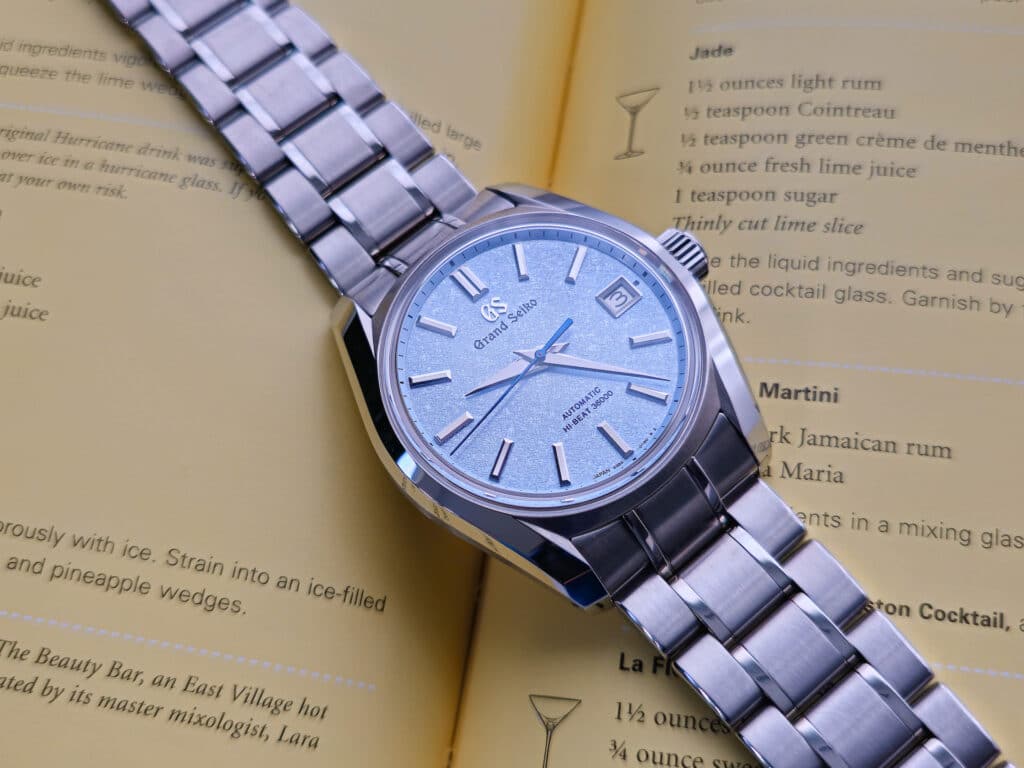
The Sōkō Frost still has a grip on us, and pretending otherwise would be a lie. That Hi-Beat glide, that frost dial shifting like a January morning, that hand-finished steel case — it gives you the feeling of wearing a small living machine that the quartz simply can’t fake. If the romance of mechanical watchmaking is the reason you’re buying, the Frost earns every cent it asks for, and we’d never talk you out of it.
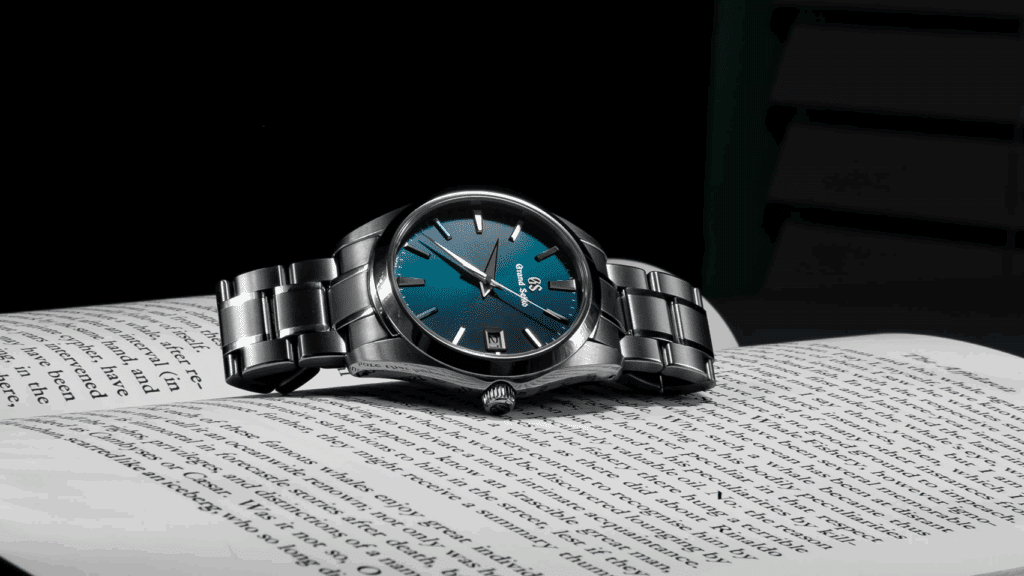
But the question we set out to answer was which one we’d actually wear after living with both, and the answer is the Grand Seiko SBGV233. Not because the Hi-Beat is overrated, and not because quartz is somehow cooler for trying less. The SBGV233 wins because it delivers the same Grand Seiko craftsmanship — the same dial sorcery, the same finishing, the same Heritage restraint — with almost nothing standing between you and it. It’s lighter, thinner, far more accurate, dramatically cheaper, and nearly maintenance-free, while giving up only the glide of a mechanical seconds hand and a bit of dial theater. The Frost is the watch you fall for. The SBGV233 is the watch you keep reaching for, and after wearing both, that’s the one we’d put on tomorrow.

Co-Founder and Senior Editor
Kaz has been collecting watches since 2015, but he’s been fascinated by product design, the Collector’s psychology, and brand marketing his whole life. While sharing the same strong fondness for all things horologically-affordable as Mike (his TBWS partner in crime), Kaz’s collection niche is also focused on vintage Soviet watches as well as watches that feature a unique, but well-designed quirk or visual hook.
Thanks for this excellent article.
I pulled the trigger on my new SBGX355 (after getting a decent discount here in the UK) after having fallen for it ages ago.
Quite simply, it’s perfection !
Glad to hear you’re enjoying the watch, Nick!