At some point, every watch collector looks at the box and starts doing the math wrong. There’s the affordable diver bought because it was a ridiculous value, the automatic picked up for a little mechanical charm, the quartz beater that somehow gets more wrist time than watches costing ten times as much, and maybe a Seiko with a case shape you still can’t explain to normal people without sounding like you’ve joined a very specific cult.
Then the thought creeps in: what if I sold all of this and bought one great luxury dive watch instead? That’s the question we’re dealing with here: is one luxury dive watch better than five thoughtfully chosen affordable divers?
After years of hands-on reviews, ownership mistakes, strap changes, bezel nitpicks, accuracy checks, and the kind of wrist time that makes you weirdly attached to a watch you originally bought “just to try,” this doesn’t come down to price alone. This isn’t about flexing a Rolex Submariner at dinner or pretending resale value is a personality. It’s about how watches fit into daily life: what gets worn, what stays in the box, what feels comfortable enough to take a scratch, and what starts to feel too precious for its own good.
Getting honest about those habits is where this debate starts getting useful.
What You Gain With One Luxury Dive Watch
Fewer Choices, More Certainty
There’s a real calm in owning one watch you trust completely. You put it on, it works with what you’re wearing, and you stop hovering over the watch box like you’re trying to solve a tiny steel escape room. That’s the appeal of consolidation. You’re no longer buying another affordable diver because the dial looked good at midnight, or because the price made refusal feel irresponsible. The hobby gets quieter: less browsing, less comparing, fewer justifications.
That said, this only works if you already know your taste. A luxury dive watch can simplify collecting, but it can’t define your preferences for you. If the size, bracelet, dial layout, and overall feel are wrong, you’ve just made indecision more expensive.
The Watch Starts Collecting Your Life
The best argument for one watch is attachment. A watch worn constantly picks up the boring, specific evidence of daily life: desk marks, travel scratches, clasp scuffs, the ding from loading groceries too aggressively. At first, those marks hurt. Later, they become part of what makes the watch feel like yours. That connection is harder to build when everything gets rotated every few days. One watch worn through work, weekends, trips, errands, and bad decisions starts becoming part of the routine.
Some collectors will hate that. Wearing one watch every day can feel less like a commitment and more like self-imposed watch jail. But if you want depth over variety, one luxury diver has the emotional edge.
What You Lose With One Luxury Dive Watch
The Mental Weight Is Real
They’re often built to take abuse, but the price can make you hesitate before using them that way. You start thinking about where you’re going, whether the watch is insured, what the servicing costs are, and how bad it would feel to damage or lose it. The watch may be ready for water, travel, sweat, and knocks. Your nervous system may not be.
That friction matters. A tool watch that feels too expensive to treat like a tool changes the ownership experience. It doesn’t make the watch worse, but it can make it less casual.
One Watch Can’t Scratch Every Itch
Even a great luxury diver has one personality. It can be versatile, but it can’t be quartz-practical, vintage-leaning, colorful, understated, experimental, and strap-hungry all at once. Some days you want something lighter. Some days you want something weirder. Some days, you want a watch that looks better on a NATO than it has any right to. So the question is not whether one luxury watch is good enough. The question is whether one good watch is enough for how you enjoy the hobby.
The Two Luxury Paths: Rolex Submariner vs Omega Seamaster Diver 300M
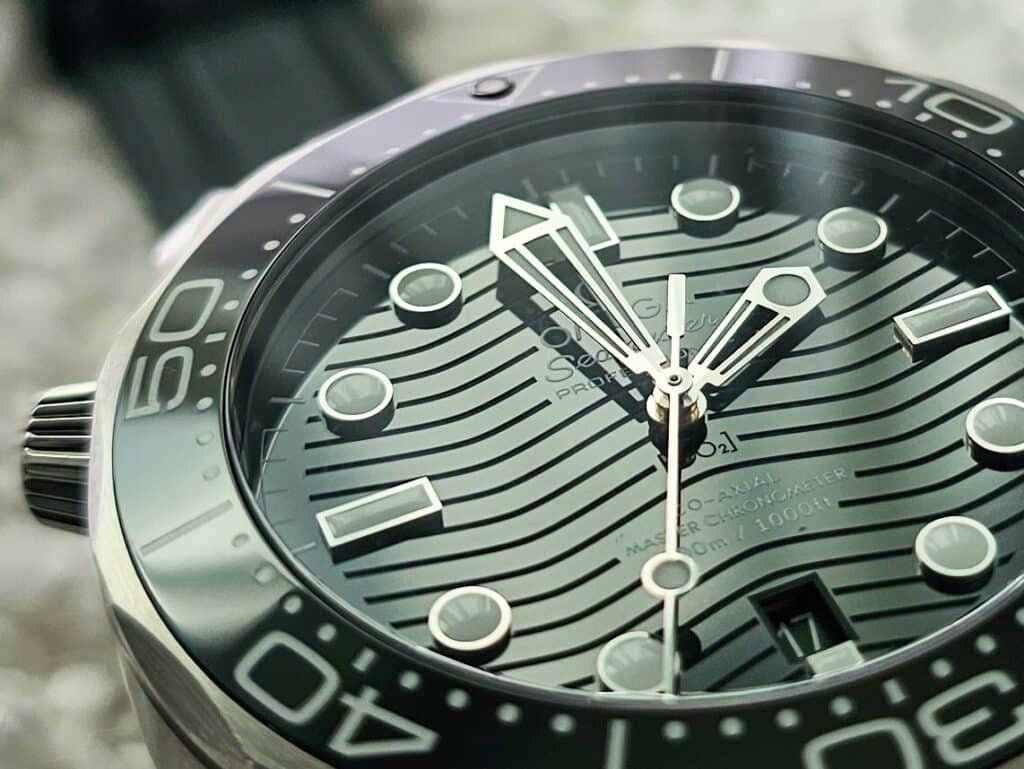
For the luxury side, we’re using the Rolex Submariner and Omega Seamaster Diver 300M as two versions of the same consolidation fantasy. The Submariner is the clean, iconic one-watch answer. The Seamaster is the more personality-driven luxury alternative. They are not meant to function as a two-watch luxury collection.
They are here because if you’re thinking about selling several affordable divers to buy one serious luxury dive watch, these are two of the most obvious paths that argument usually takes.
That distinction matters because the question is not really “does a Rolex beat five cheaper watches?” or “does an Omega beat five cheaper watches?” The better question is whether the one-watch luxury approach gives you enough refinement, certainty, and emotional attachment to beat a more varied, lower-stakes affordable collection.
Why the Rolex Submariner Still Represents the Dream
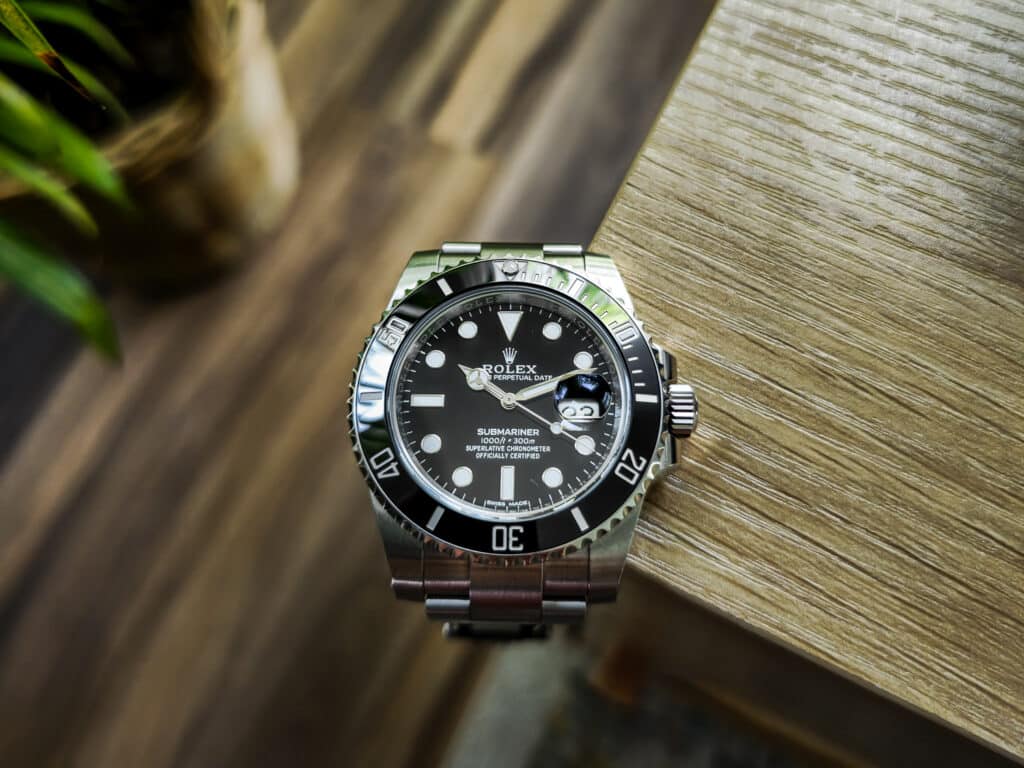
| Price: | $10,000 – $12,000 (ref. 116610) |
| Water Resistance: | 300m |
| Case Dimensions: | 40mm (diameter) x 48mm (lug-to-lug) x 12.5mm (thickness) |
| Lug Width: | 20mm |
| Movement: | Caliber 3130 |
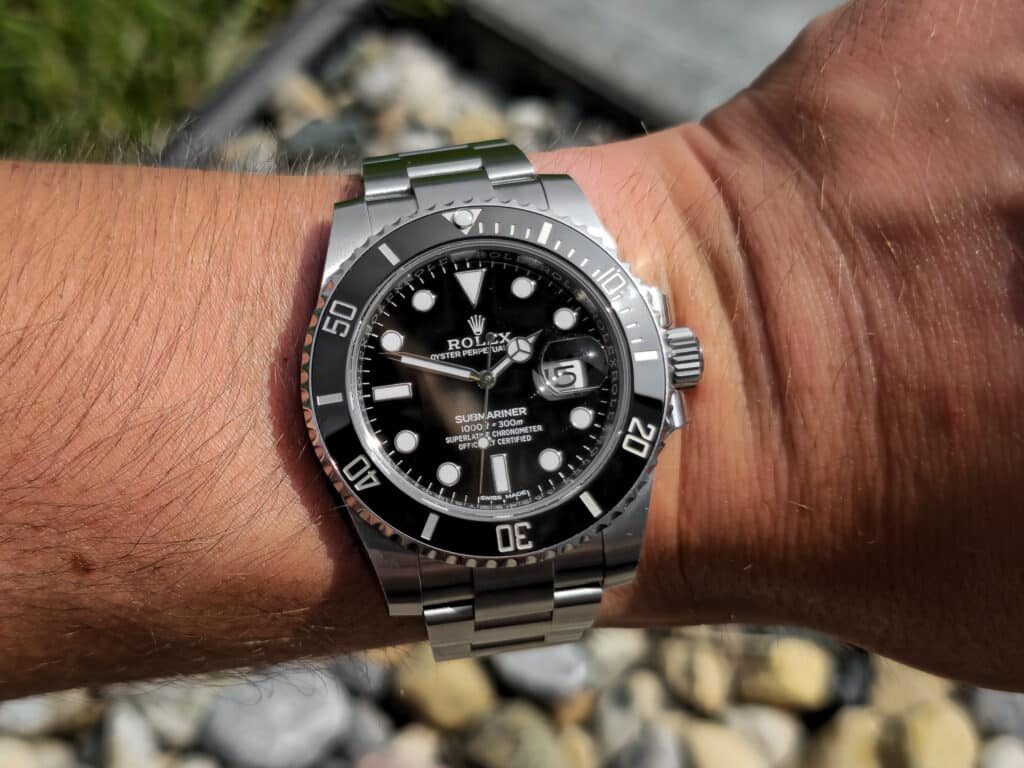
The Rolex Submariner is the easiest place to start because it still makes the cleanest case for the one-great-dive-watch idea. In our Rolex Submariner hands-on review, the version we spent time with measured 40mm wide, around 48mm lug-to-lug, and roughly 12.5mm thick, which is the kind of sizing that explains why the Sub works in so many boring, normal, useful situations. It has enough steel and presence to feel like a proper dive watch, but it never turns into a wrist-mounted paperweight. You can wear it with a T-shirt, under a cuff, through an airport, at dinner, or near actual water without feeling like you brought the wrong watch.
A lot of that comes down to how resolved the whole thing feels on the wrist. The Oyster bracelet tapers from 20mm to 16mm, so it has substance without feeling like a steel bracelet from a hardware store. The links move cleanly, the end links fit tightly, and the Glidelock clasp is one of those features that sounds like forum bait until you use it during a long day. When your wrist swells, when the weather changes, when you’re typing for hours and suddenly hate everything touching your skin, that quick adjustment matters. It is not a spec-sheet flex. It changes how wearable the watch is.
The rest of the Submariner has that same irritating competence. The black dial is simple, the Mercedes handset is familiar to the point of cliché, and the bezel action feels tight and deliberate rather than ornamental. None of it is trying to be charming in an affordable-watch way. It is trying to be finished, legible, and dependable every time you look down.
Of course, the name on the dial complicates things. A Submariner is still a Rolex, and people notice. That recognition can be part of the appeal, but it also brings baggage: price, theft anxiety, servicing costs, and the strange experience of owning a tool watch that now feels like a financial object. From a product standpoint, the Submariner still earns its reputation. As a daily luxury diver, it makes a frightening amount of sense. As a value argument, things get messier fast.
How the Omega Seamaster Diver 300M Makes the Luxury Case With More Personality
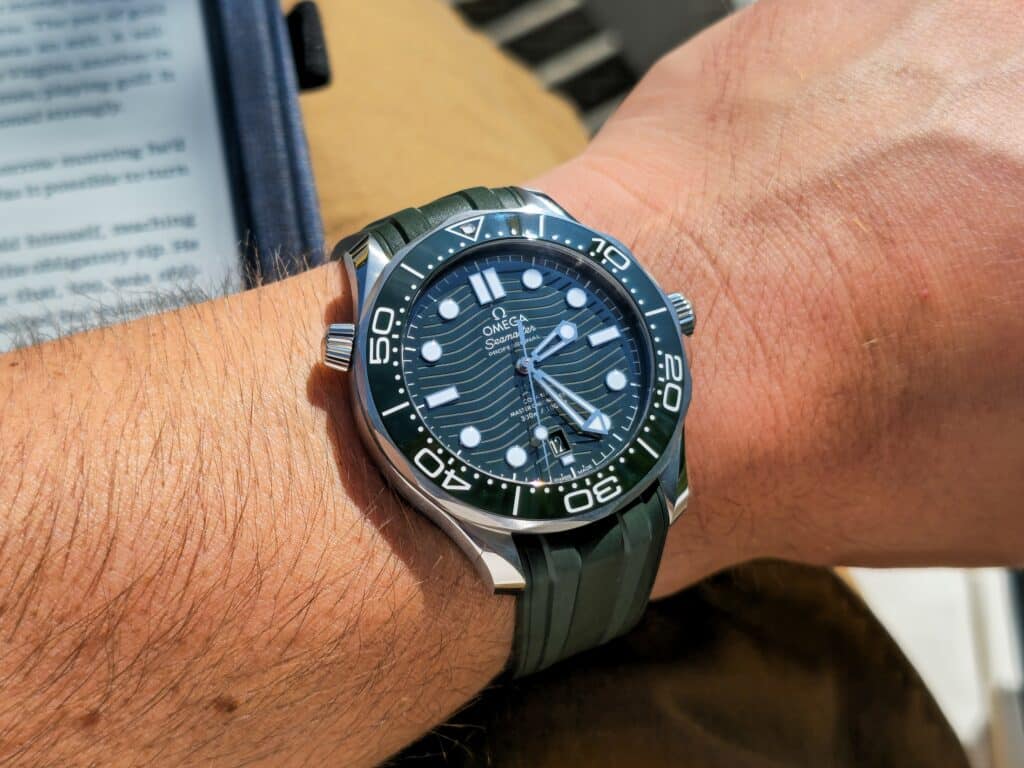
| Price: | $5,600 – $5,900 |
| Water Resistance: | 300m |
| Case Dimensions: | 42mm (diameter) x 49.9mm (lug-to-lug) x 13.9mm (thickness) |
| Lug Width: | 20mm |
| Movement: | Caliber 8800 Co-Axial Master Chronometer |
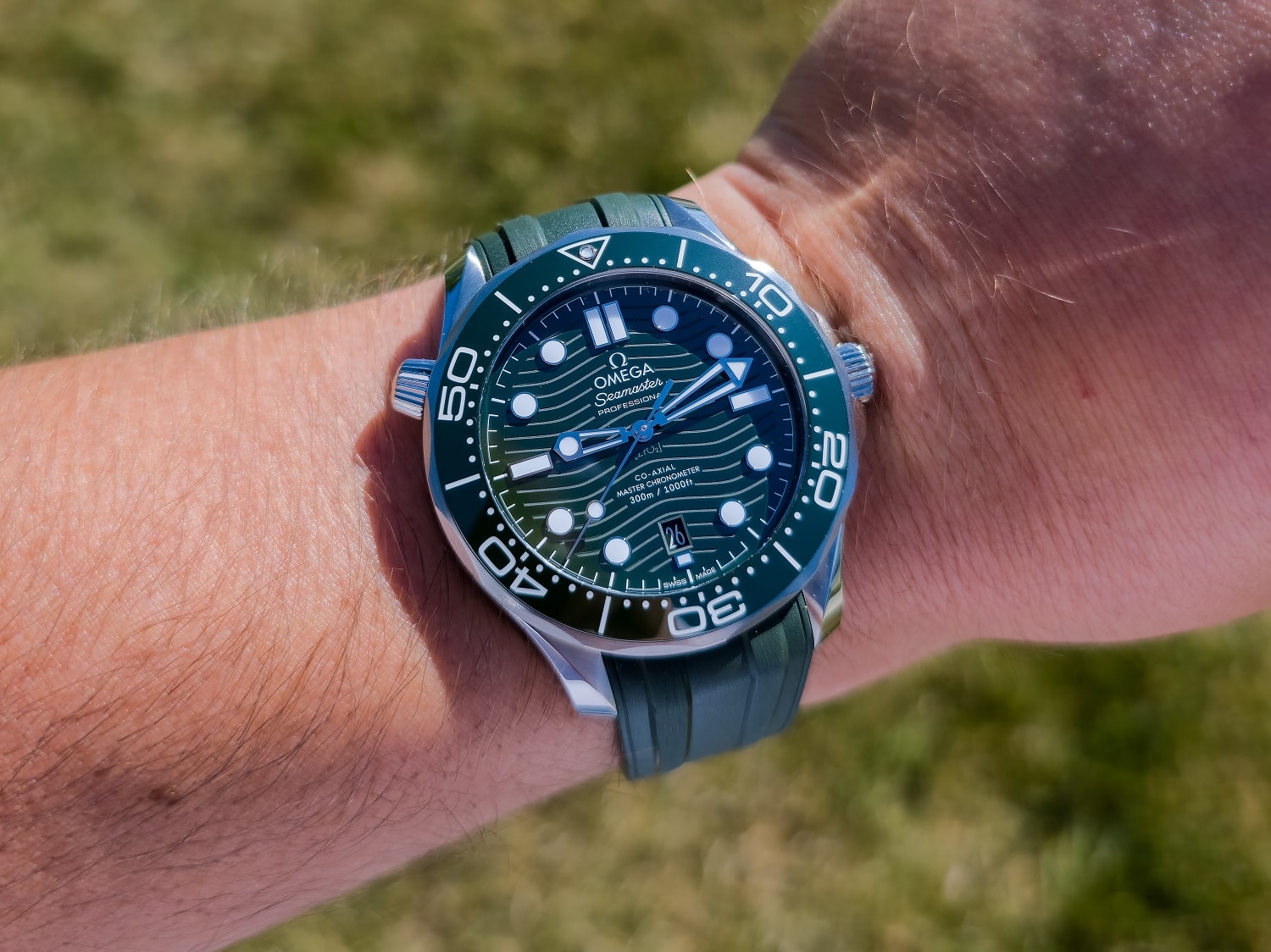
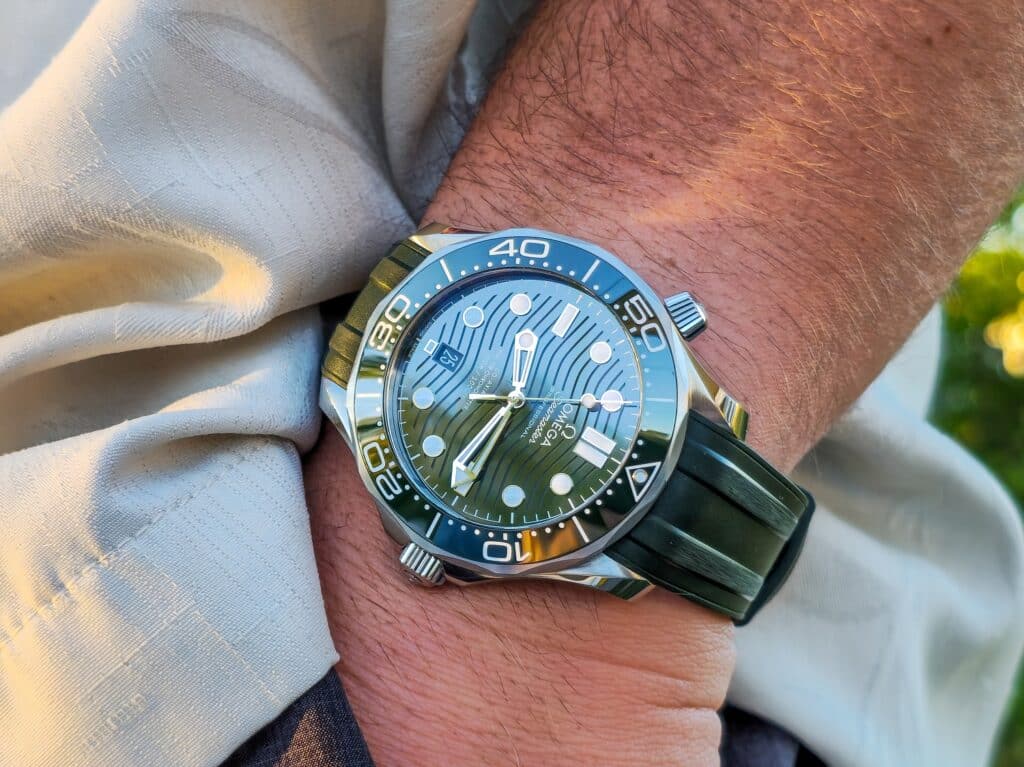
If the Submariner is the cleanest version of the one-great-dive-watch argument, the Omega Seamaster Diver 300M is the louder, stranger, more visually committed version of the same idea. As we covered in our hands-on testing experience, the 42mm case sounds like it should wear big, and in some ways it does. The dial and bezel give it plenty of visual width. But the case doesn’t feel as thick as the numbers suggest, and the twisted lyre lugs do a lot of work in making the watch sit better than expected.
That case shape is a big part of the Seamaster’s appeal. The polished surfaces catch light, the brushed flanks keep it from feeling too shiny, and the bevels give the watch a sculpted look that the Submariner doesn’t try to have. On rubber, especially, the Seamaster feels sporty without becoming stiff or precious. We found the strap easier to live with than the bracelet, which has its own personality but can feel heavy and oddly committed to not tapering. The rubber keeps the watch relaxed, though the strap-hole spacing could be more precise. A luxury watch can still annoy you in small, very specific ways. That is part of the fun, unfortunately.
The dial is where the Seamaster separates itself emotionally from the Rolex. The engraved wave pattern, ceramic surface, color-matched date wheel, skeletonized hands, and helium escape valve all give it a distinct identity. It is less invisible than a Submariner and more willing to look like an Omega from across the room. That works beautifully if you want one luxury diver with personality. It may work less well if your dream one-great diver is something that disappears under every sleeve and avoids conversation.
The real-world performance backs up the design, too. The anti-reflective sapphire makes the dial easy to read in most lighting, and the METAS-certified Caliber 8800 in our sample ran around +1 second per day, which is the kind of accuracy that quietly spoils you. The bezel action was crisp with no obvious back play, though the scalloped edge makes it less satisfying to grip than some more tool-focused divers. The lume layout is clever, with different colors helping to orient the minute hand in the dark, even if it doesn’t outshine the better Seiko divers we’ve worn.
Still, the same ownership friction applies, even if the watch itself is excellent. Wearing it into rough situations can feel different from wearing a Casio Duro or Citizen Promaster that you bought to take abuse without needing a small emotional support group. The Seamaster makes a strong case as the less expensive luxury diver for someone who wants refinement with more visual character. However, it still doesn’t erase the basic problem: the more expensive the tool watch gets, the less casually some of us treat it.
What Five Less Expensive Dive Watches Give You
You Learn Your Taste Faster
Affordable collecting teaches you things no spec table can. You may think you want an automatic until quartz convenience fits your week better. You may think you love big divers until the case thickness starts to annoy you by lunch. You may learn that drilled lugs matter, that rubber beats bracelets in summer, or that a crown digging into your hand is enough to ruin an otherwise good watch.
That’s where less expensive watches are useful, especially early on. The point is not owning more watches. It’s understanding what earns wrist time before spending serious money.
The Collection Can Match the Day
A small, affordable rotation can make practical sense when each watch has a job to do. One can be the grab-and-go quartz piece. One can be the automatic daily. One can be the summer diver, the travel watch, or the strap experiment. When the roles are clear, the collection feels useful instead of random.
What Five Less Expensive Dive Watches Can’t Quite Replace
Cohesion Is Harder Than It Sounds
Five affordable divers can quickly become five compromises. For instance, one was discounted. One had a fun dial. One came from a lesser-known brand. One looked better in photos. Again, none of those are crimes. But together, they can turn a collection into a drawer full of “sure, why not?” And if half the box keeps getting skipped, the problem probably isn’t the rotation. It’s the buying.

Maintenance and Attention Add Up
Five affordable watches still ask for attention. There are straps, batteries, gaskets, bracelet sizing, accuracy quirks, spring bars, and water-resistance checks. Mechanical watches can still need regulation or servicing. Quartz watches are easier to use, but they are not immune to neglect, especially if they’re used around water. In short, a larger, affordable collection can still quietly become its own little admin job. Whether that feels like fun tinkering or unpaid labor depends on the collector.
That’s the ownership math. Now it helps to put names and cases to the theory, because this debate only gets useful when the watches are real. The luxury side has its obvious heavyweights, and the less expensive side has a few annoying little counterarguments that refuse to stay in their price bracket.
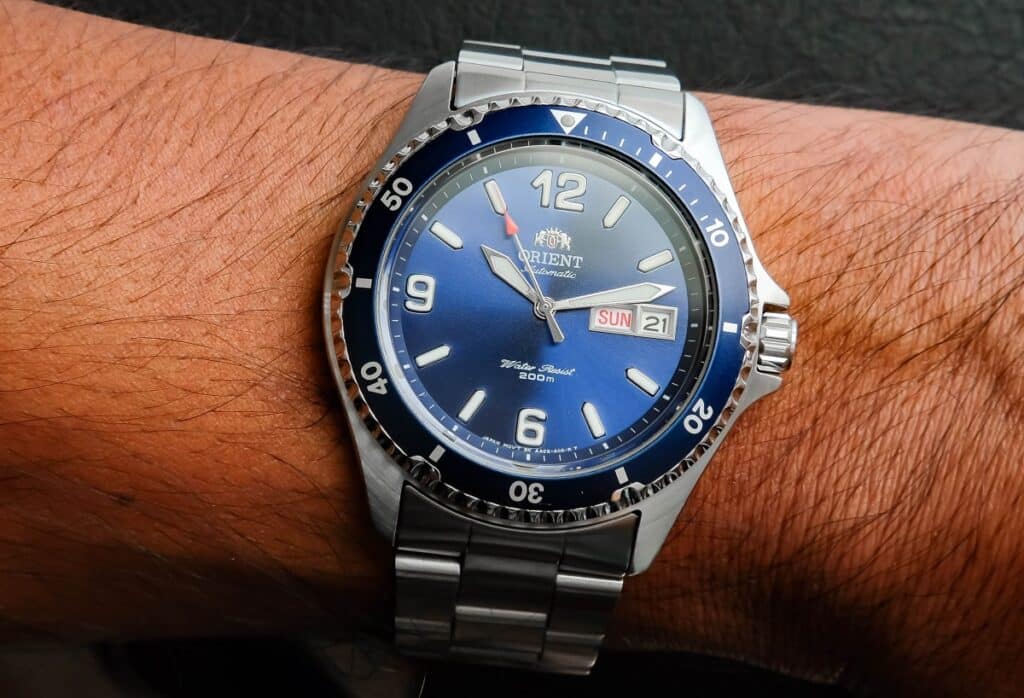
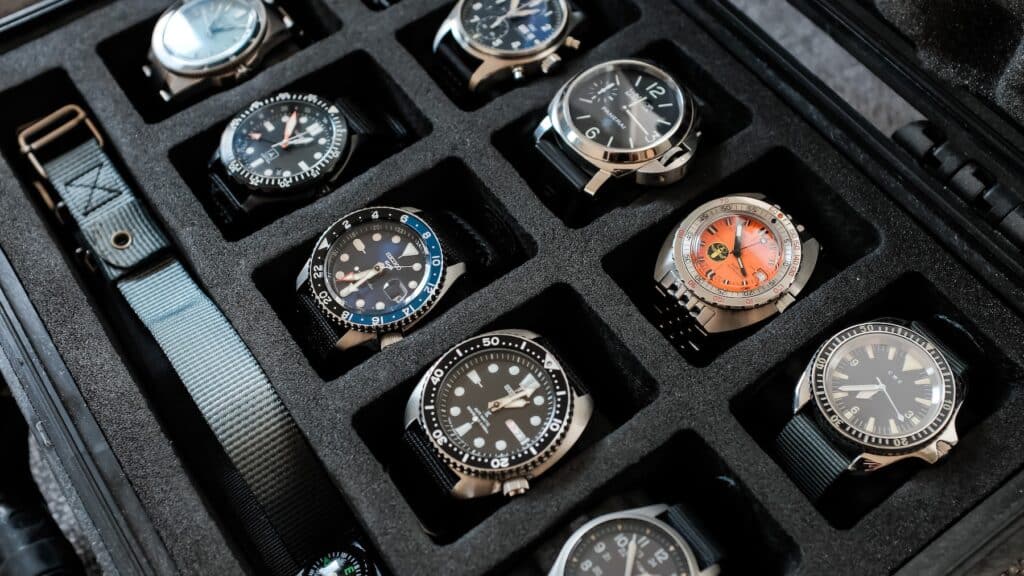
The point is not that five random affordable divers automatically beat one luxury watch. They don’t. The argument only works when each watch has a job. In this version of the box, the Casio Duro is the low-stakes quartz beater, the Orient Mako II is the affordable automatic daily, the Citizen Promaster Diver BN0151-09L is the solar-powered tool watch, the Seiko Turtle brings the Seiko enthusiast charm, and the Raven Trekker gives the collection its microbrand edge.
That spread is what makes the comparison interesting. You are not buying five versions of the same idea. You are buying five different ways to enjoy dive watches.
Five Affordable Divers That Complicate the Luxury Argument
Before the luxury crowd starts sharpening their spring bars, none of these affordable divers are “better Submariners.” That’s not the point. They matter because they show how much fun, function, and actual wearability still exist far below luxury pricing. The Casio Duro, Orient Mako II, Citizen Promaster Diver, Seiko Turtle, and Raven Trekker each make the debate less clean in their own annoying, charming way.
The Casio Duro Makes the Luxury Argument Feel Slightly Ridiculous
| Price: | $85 |
| Water Resistance: | 200m |
| Case Dimensions: | 44.2mm (diameter) x 48.5mm (lug-to-lug) x 12.1mm (thickness) |
| Lug Width: | 22mm |
| Movement: | Casio 2784 Quartz |
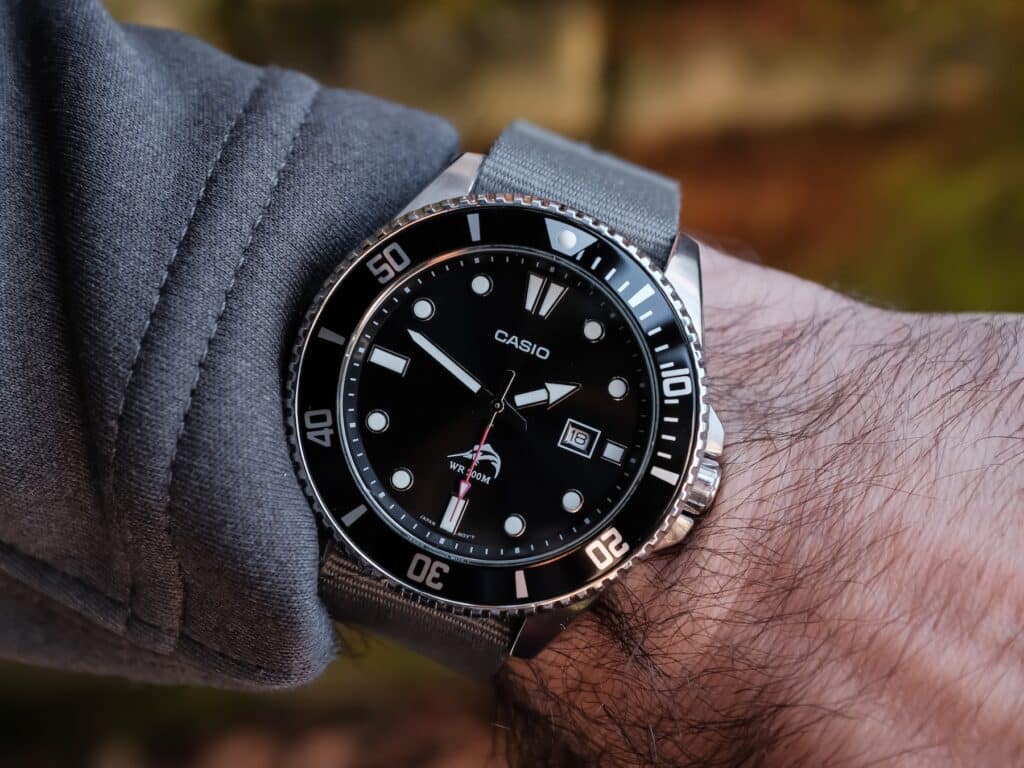
The Casio Duro is where the whole “one great luxury dive watch” conversation starts getting a little uncomfortable. Not because it feels anything like a Submariner. It doesn’t. Nobody is confusing the Duro’s flat mineral crystal, basic case finishing, and stock strap situation for Swiss luxury. But in terms of what most people need from a dive-style watch most days, the Duro covers a shocking amount of ground.
As we found in our review, the quartz movement is a big part of the appeal. It hacks, has a battery-powered setup, a quickset date, and our sample stayed around ±20 seconds per month. That matters because it changes your relationship with the watch. You can leave it sitting for a few days, grab it on the way out, and not perform the little mechanical-watch apology ritual of setting the time, winding it, checking the date, and wondering why you own so many tiny machines that punish you for ignoring them.
The dial is simple in the right way. The hands are easy to read, the applied markers add more depth than the price suggests, and the date window is clean enough to do its job without shouting for attention. The lume is useful, though not heroic. It fades sooner than we’d like, which is exactly the kind of thing that reminds you this is still an affordable watch, not magic with a marlin logo.
The case is the bigger compromise. At 44mm, the Duro is not pretending to be discreet. The curved lugs help it sit better than the number suggests, and if you’re used to something like a Seiko Turtle, the wrist presence won’t feel foreign. But it is still large, and smaller-wristed collectors may find it more of a “weekend beater” than an everyday watch. The upside is that it feels purposeful. The screw-down crown, 200m water resistance, solid caseback, and controlled bezel action make it easy to trust near water, at the beach, doing yard work, or traveling somewhere you’d rather not think about what your watch costs. The 22mm lug width also helps the Duro stay useful after the honeymoon period. We’ve worn it on nylon, rubber, and aftermarket bracelets without much drama, which gives it more range than the stock setup suggests.
That is Duro’s real contribution to this debate. It asks a rude little question: how much dive-watch function do you use, and how much are you paying for the feeling around it?
The Orient Mako II Shows Why Affordable Automatic Divers Still Matter
| Price: | $160 – $220 |
| Water Resistance: | 200m |
| Case Dimensions: | 41.5mm (diameter) x 47mm (lug-to-lug) x 13mm (thickness) |
| Lug Width: | 22mm |
| Movement: | Orient Caliber F6922 (Mechanical Movement) |
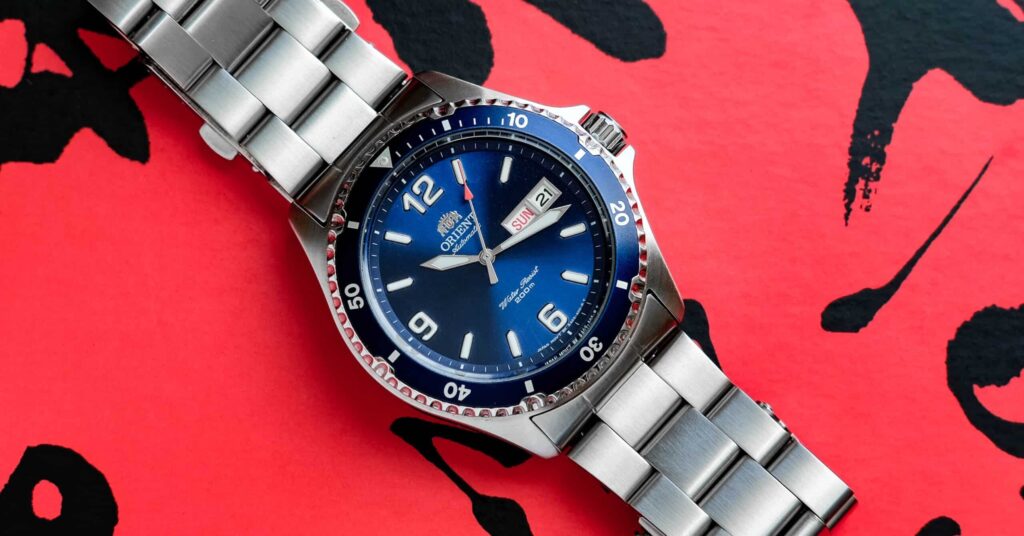
The Orient Mako II is the affordable automatic diver that feels less like a random cheap-watch detour and more like a proper first step into the hobby. That matters in this debate because not every affordable watch exists to be a disposable beater. During our team’s hands-on review we determined that this is a watch that gives you enough mechanical charm to feel involved without dragging you into luxury pricing.
The in-house F6922 movement helps a lot here. Hacking and hand-winding may not sound exciting, but they make the watch easier to live with when it has been sitting for a few days. You can set it cleanly, wind it, and leave the house without doing the old automatic-watch wrist shake. The case is where the Mako II makes its best argument. At 41.5mm, it avoids the dinner-plate problem that affects plenty of affordable divers, and the compact lug-to-lug keeps it wearable across a wider range of wrist sizes than the diameter suggests. It sits flat, feels planted, and doesn’t carry its weight awkwardly all day. The finishing is not luxurious, but it is coherent: brushed lugs, polished case sides, and a bracelet transition that feels more thought-out than you often get at this price.
The dial does enough without trying too hard. The sunburst finish gives it some movement in changing light, while the applied markers stay easy to read. The framed day-date window and red-tipped second hand add personality without pushing the watch into novelty territory. The lume is where expectations need to stay realistic. It works for quick checks in the dark, but if long-lasting low-light performance is high on your list, this probably won’t be the watch that ruins Seiko for you.
The tradeoffs are the usual affordable diver ones, but they matter. The 120-click bezel is firm once you get a grip on it, though the sloped edge makes it less satisfying to grip than a more aggressively cut dive bezel. The bracelet feels secure on the wrist, but the hollow end links remind you where the money was saved when the watch is off. The mineral crystal is functional, not precious, and will not shrug off scratches like sapphire. That is why the Mako II still belongs in the conversation. It is valuable because it helps a collector figure out whether compact proportions, a day-date layout, and a restrained automatic diver design matter to them.
The Citizen Promaster Diver BN0151-09L Is the Practical Counterpunch
| Price: | $250 – $300 |
| Water Resistance: | 200m |
| Case Dimensions: | 43mm (diameter) x 48mm (lug-to-lug) x 11.5mm (thickness) |
| Lug Width: | 20mm |
| Movement: | Citizen Eco-Drive E168 (solar quartz) |
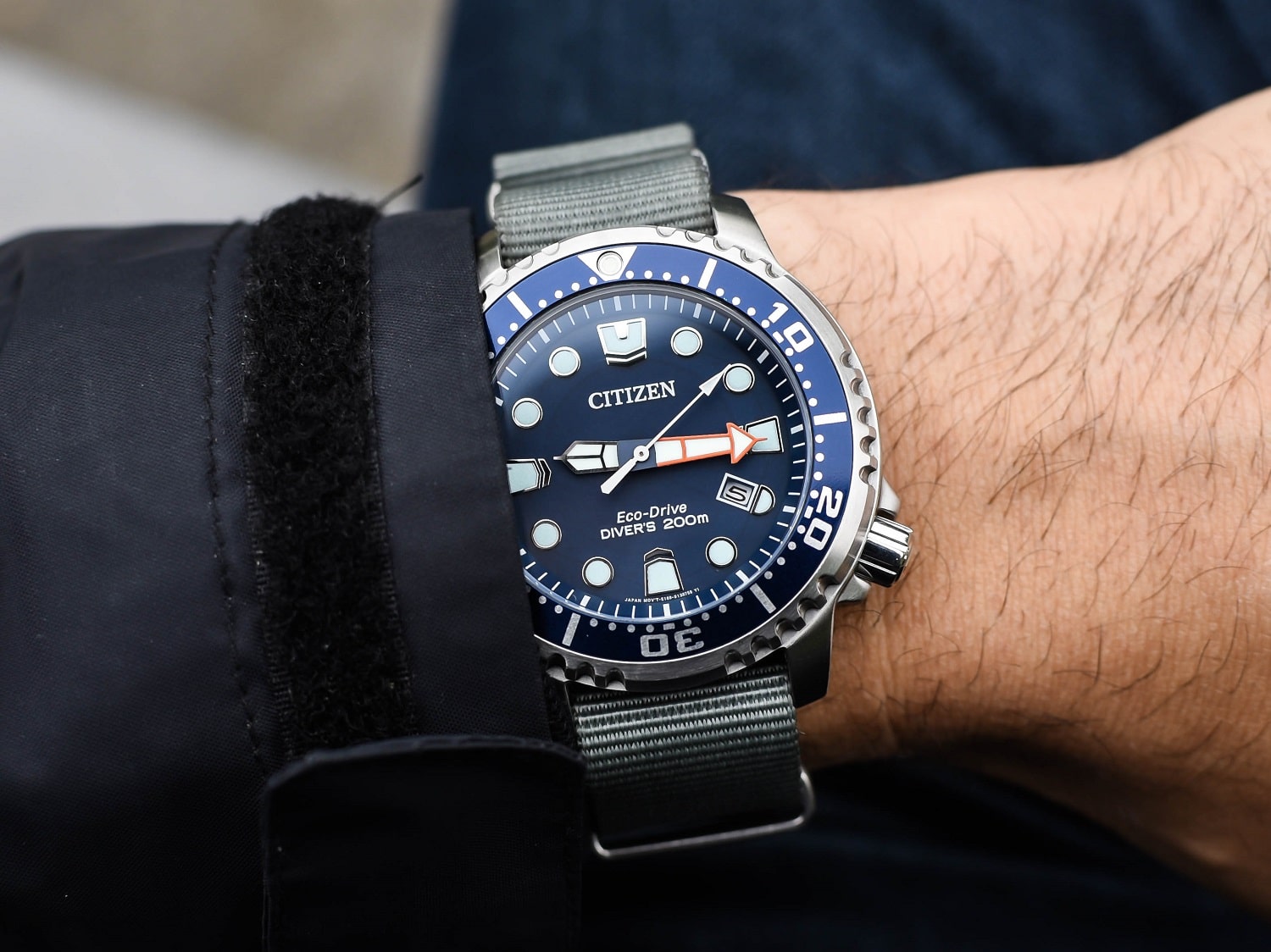
The Citizen Promaster Diver BN0151-09L brings very little romance, which is partly why it works. It is not trying to give you the warm mechanical fuzzies. It is not asking you to pretend that winding a crown is a spiritual practice. It is a practical, solar-powered diver that mostly wants to be worn, knocked around, rinsed off, and left in peace.
As covered in our detailed review, Eco-Drive is what separates the Promaster from the automatic options in this debate. Once fully charged, the watch can stay operational for up to six months, and our sample stayed within ±15 seconds per month. That kind of accuracy and low-maintenance ownership changes how you use the watch. There is no winding routine, no date-reset punishment after a few days off the wrist, and no battery-change appointment quietly waiting in the future. Give it light, and it gets on with the job.
The case sounds large at 43mm, but the Promaster wears better than that number suggests. The weight stays low, and the case curves downward enough that it doesn’t feel like a hockey puck strapped to your wrist. We’ve worn it through hiking, errands, and general daily abuse, and it has that useful tool-watch quality of fading into the background until you need it. The 200 meters of water resistance and low-profile screw-down crown help reinforce that confidence. This is the affordable diver you grab when pool time, beach days, rain, sweat, or a mildly questionable travel itinerary are involved.
It also isn’t as plain as “practical Citizen diver” might sound. The blue dial can shift toward purple at certain angles, which gives it a little life without hurting legibility. The bold hands and markers are easy to read in direct sunlight, and the BGW9-style lume holds up well in low light. The lumed second hand is a small but genuinely useful diver detail because you can confirm the watch is running without squinting like you’re decoding a submarine transmission. The bezel has a slower, deliberate 60-click action that feels made for actual timing, though it can get slippery with wet hands.
The tradeoffs are real. The mineral crystal is not sapphire, even if it held up better than expected during normal wear. The factory polyurethane strap works, but it starts stiff and awkward enough that switching to a NATO made the watch feel more natural to rotate. The finishing is functional rather than beautiful, and if you want mechanical charm, this is not where you’ll find it. But that is also why the Promaster complicates the luxury argument so well. It is a proper, affordable tool watch that removes much of the anxiety about ownership.
The Seiko Turtle Explains the Emotional Side of Affordable Collecting
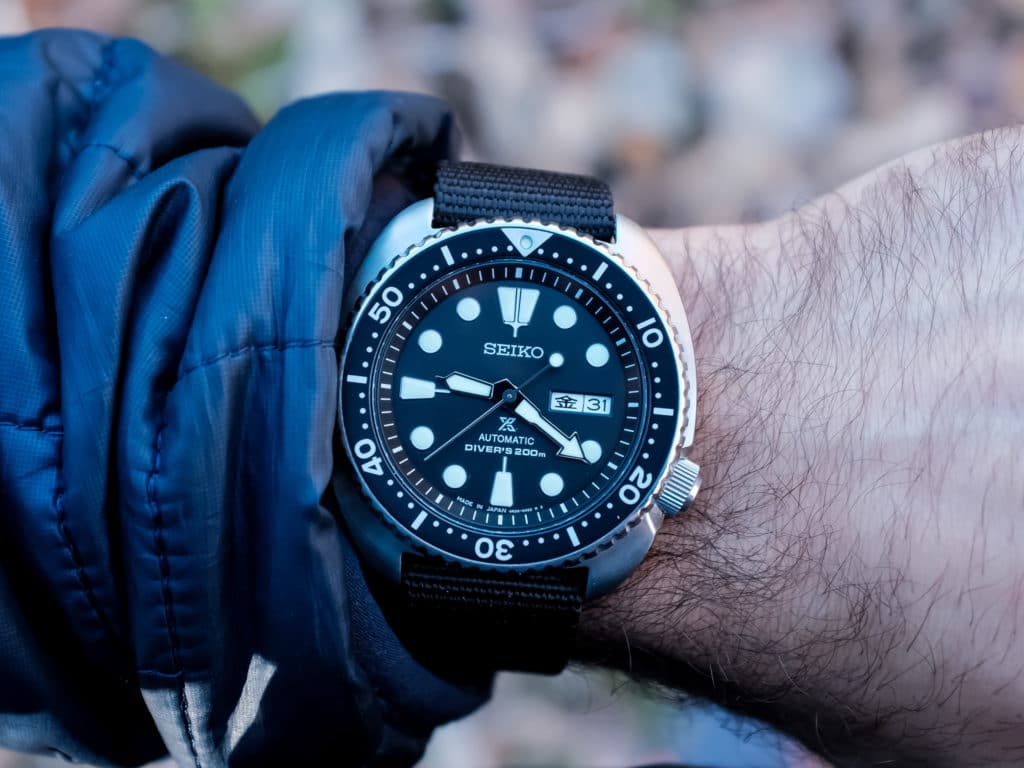
| Price: | $370 – $525 |
| Water Resistance: | 200m |
| Case Dimensions: | 44.3mm (diameter) x 48mm (lug-to-lug) x 14mm (thickness) |
| Lug Width: | 22mm |
| Movement: | Seiko 4R36 |
The Seiko Turtle is where the affordable side of this debate gets harder to dismiss as “settling.” It has the kind of personality that makes collectors forgive things they would absolutely complain about on a more expensive watch. In our dedicated review, that was the larger point: this is an affordable enthusiast diver with real charisma.
The size looks intimidating on paper. At over 44mm, the Turtle sounds like it should wear like a serving dish, but the cushion case changes the whole experience. It spreads across the wrist instead of stacking upward, so the watch feels broad and planted rather than awkwardly tall. That shape gives it presence, but not in the same stiff, slab-sided way some large divers wear. It feels like a watch designed to be used, not admired from six safe angles under soft lighting. The offset crown helps more than people expect. Because it sits slightly out of the way, it does not dig into the back of the hand when your wrist bends. Over a full day, that matters. The stock silicone strap is also better than older Seiko rubber straps, soft enough that you do not immediately feel punished for leaving it on. Still, the Turtle becomes more fun once you start swapping straps. NATOs work especially well with the case shape and push the watch further into travel, beach, and weekend-beater territory.
The dial is classic Seiko in the useful sense. The matte black surface keeps glare down outdoors, and the large Lumibrite markers are easy to read without effort. In low light, the oversized plots give the watch the kind of quick-read confidence that makes Seiko divers such dependable everyday watches. Hardlex will annoy anyone who insists every affordable diver needs sapphire, but in normal wear, it holds up well enough and keeps the watch approachable. It is one of those watches that don’t look cheap, even if a few material choices remind you why it costs what it does. The 4R36 movement keeps things practical with hacking and hand-winding, though accuracy expectations need to stay grounded. Our example ran around +35 to +45 seconds per day, which is not thrilling if you keep timing logs like a tiny wristwatch accountant, but it is manageable for regular wear. The bezel feels solid, though alignment can vary from watch to watch because Seiko likes to keep us humble. The bracelet also will not make anyone forget a Rolex Oyster or Omega bracelet.
It has flaws: size, QC quirks, Hardlex, and bracelet limitations. But it also has comfort, legibility, charm, and a case shape that feels distinct in a sea of safe dive-watch designs. It is the kind of affordable dive watch that reminds you why substitution was never the whole point.
The Raven Trekker Keeps the Affordable Argument From Feeling Cheap
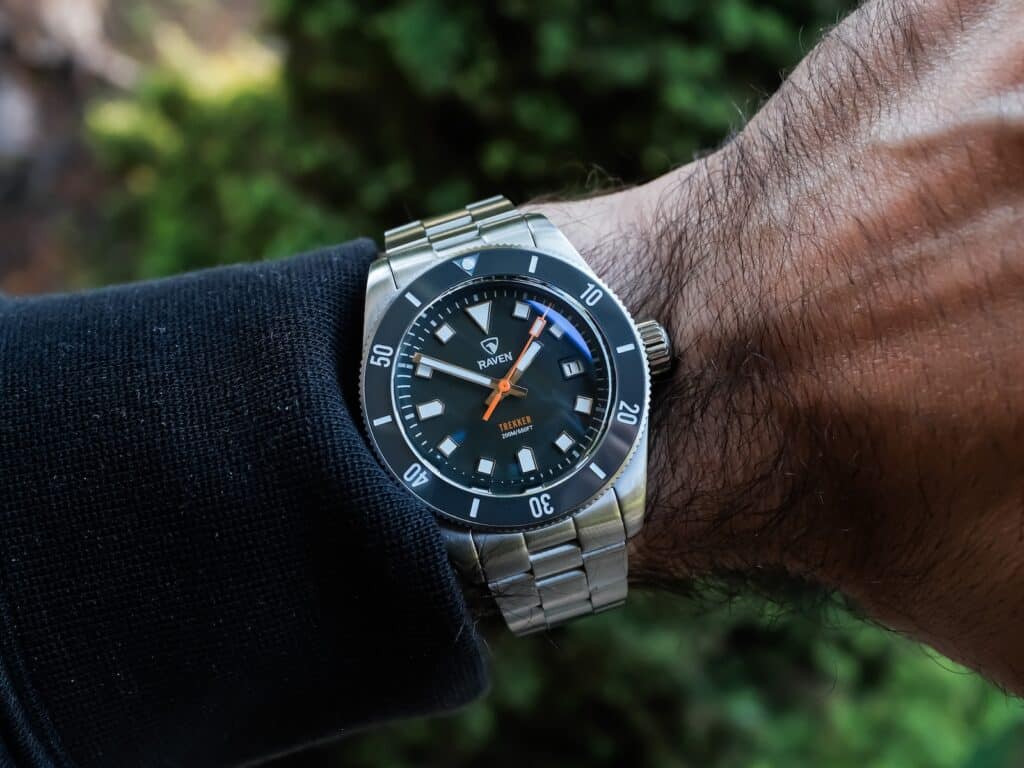
| Price: | $690 |
| Water Resistance: | 200m |
| Case Dimensions: | 39mm (diameter) x 48mm (lug-to-lug) x 12.5mm (thickness) |
| Lug Width: | 20mm |
| Movement: | Miyota 9015 |
The Raven Trekker matters here because it keeps the affordable side of this debate from turning into a simple cheap-watch argument. The Casio Duro, Orient Mako II, Citizen Promaster, and Seiko Turtle all make sense for different reasons, but the Trekker adds something else: the feeling of a purpose-built enthusiast microbrand diver that still lives far below luxury pricing.
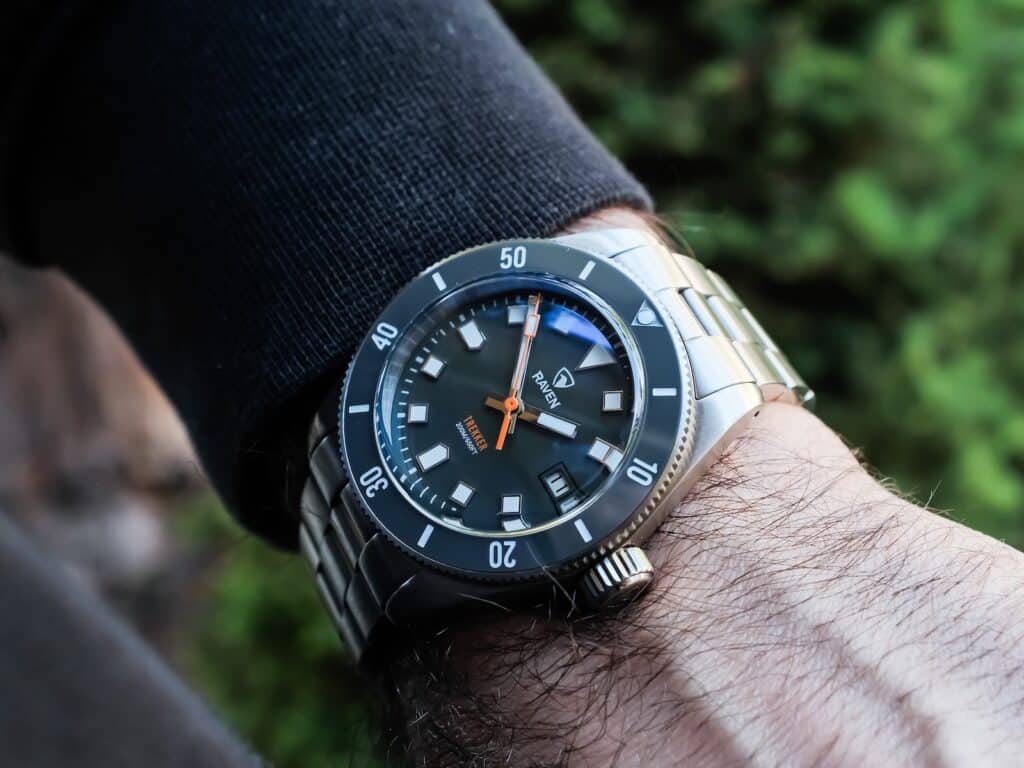
During our hands-on review, the latest Gloss Grey version felt like the most refined Trekker Raven has made so far. That is the key reason it belongs here. The Trekker is not just filling out the five-watch box. It gives the affordable collection an enthusiast slot that feels more deliberate than another obvious budget pick.
The proportions are the biggest reason it works. At 39mm wide, 48mm lug-to-lug, and 12.5mm thick including the boxed sapphire crystal, this is the slimmest Trekker Raven has made so far. Older versions always wore well enough, but this one feels more settled on the wrist. The flat case back helps too, and the whole watch comes across more refined without losing the straightforward tool-watch feel that made earlier Trekkers interesting.
The drop from 300m to 200m of water resistance also matters less in practice than it might on paper. The oversized screw-down crown still feels substantial, the case still feels robust, and nothing about the watch came across fragile or compromised during our time with it. For the kind of real-world use most dive watches actually see, that tradeoff feels easy to accept.
The gloss grey dial and ceramic bezel give the Trekker a more mature personality than expected. The dial can shift darker indoors, the polished hands and indices keep things legible, and the small orange accents break up the monochromatic look without turning the watch into a color experiment. The AR coating can throw noticeable blue glare in certain light, but it never became distracting enough to ruin the experience. The bezel itself is excellent, with a coin-edge grip and a firm 120-click action that feels deliberate without becoming stiff.
The case and bracelet help the Trekker feel more considered than a lot of similarly priced divers. The drilled lugs make strap changes easier, the Oyster-style bracelet feels solid without becoming overbuilt, and the 20mm to 16mm taper helps the watch feel balanced once sized. The Nodex clasp system is the one mixed area. The on-the-fly adjustment is useful, but the extension section is not the prettiest once opened, and our review sample showed a little side-to-side looseness in the mechanism.
Inside, the Miyota 9015 makes sense for this kind of microbrand diver. The Trekker wound smoothly, kept excellent time during the review period, and stayed mechanically unobtrusive the entire time we wore it. No loud rotor noise. No weird quirks. It just worked.
At $690, the Trekker is not the cheapest watch in this affordable box, but that is exactly why it belongs here. It gives the collection an enthusiast edge. It is the watch that says the five-watch route is not only about beaters, bargains, and practical tools. It can also include something refined, specific, and genuinely tempting on its own terms.
The Ownership Math Is Not Close
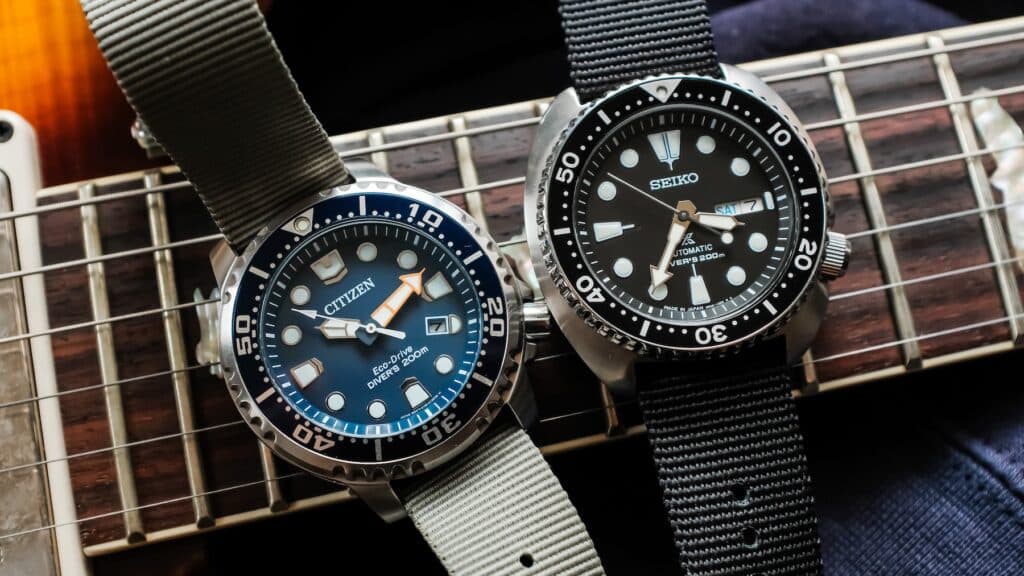
This is where the comparison gets sharper. The five-watch affordable box comes in roughly like this:
- Casio Duro: $85
- Orient Mako II: $160 to $220
- Citizen Promaster Diver BN0151-09L: $250 to $300
- Seiko Turtle: $370 to $525
- Raven Trekker: $690
That puts the whole affordable group around $1,555 to $1,820.
That is still dramatically below the Omega Seamaster Diver 300M at around $5,600 to $5,900, and nowhere near the Rolex Submariner at around $10,250.
Of course, that does not mean the affordable collection is automatically the better buy. One excellent watch can still feel better than five watches you only sort of like. But the math does make the affordable side harder to dismiss. You are not comparing one luxury diver against five disposable placeholders. You are comparing one luxury diver against a genuinely varied collection that covers quartz convenience, solar practicality, affordable mechanical charm, Seiko personality, and microbrand refinement.
That is a much more interesting fight.
The Final Verdict
For most collectors, we’d take five thoughtfully chosen, less expensive dive watches over one great luxury diver. Not because a Casio Duro, Orient Mako II, Citizen Promaster, Seiko Turtle, or Raven Trekker cleanly outclasses a Rolex Submariner or Omega Seamaster Diver 300M. They don’t.
The luxury watches are better finished, more refined, and more cohesive. The Submariner still makes a frighteningly strong case as the clean one-watch answer. The Seamaster still makes a compelling argument for the collector who wants one serious luxury diver with more visual personality.
But the one-watch luxury path only works if the watch actually becomes a daily watch.
If the Submariner or Seamaster gets worn constantly, scratched honestly, taken on trips, brought near water, and treated like a real part of daily life, the argument for one luxury diver becomes much stronger. That is when the emotional depth of one watch can beat the variety of five.
The problem is that many collectors don’t wear luxury divers that way. The watch gets protected, babied, insured, hidden, saved for “better” occasions, and slowly turned into the opposite of what a dive watch is supposed to be. At that point, refinement loses to wrist time.
Choose one luxury dive watch if:
- You already know your taste and don’t need to experiment further.
- You want one long-term daily watch and will wear it often.
- You value consistency, refinement, and emotional commitment over variety.
- You’re comfortable taking scratches on an expensive watch.
- You don’t feel pulled toward straps, colors, quirks, or rotation.
Choose five affordable dive watches if:
- You’re still learning what case sizes, movements, straps, and dial layouts actually work for you.
- You enjoy switching watches based on the day, mood, weather, or activity.
- You want lower-stakes watches that can handle travel, beach days, errands, and scratches without drama.
- You care more about use than prestige.
- You’d rather build a small, useful collection than put all your collecting energy into one object.
So here’s the firm answer: five good, affordable dive watches are the better choice for most people. They teach you more, get worn harder, and keep the hobby from turning into a single expensive object you’re afraid to enjoy. A Rolex Submariner sitting in a safe loses badly to a scratched Citizen Promaster, Seiko Turtle, or Raven Trekker that actually gets worn.
However, the word “good” is doing real work there. Five mediocre compromises do not beat one excellent watch. The five-watch route only wins when the collection is deliberate. Otherwise, you are not building a better collection. You are just spreading one bad purchase across five watches.

Co-Founder and Senior Editor
Kaz has been collecting watches since 2015, but he’s been fascinated by product design, the Collector’s psychology, and brand marketing his whole life. While sharing the same strong fondness for all things horologically-affordable as Mike (his TBWS partner in crime), Kaz’s collection niche is also focused on vintage Soviet watches as well as watches that feature a unique, but well-designed quirk or visual hook.
A great read this, and gets to the heart of an ongoing dilemma – a collection of great affordables, or one or two higher end pieces. I veer between these choices…
I would say that my best ‘affordable’ (in comparison to Omega , Rolex etc) diver remains the Certina DS Action Powermatic 38mm. I put in on a black rubber strap from Straphabit and it rocks. Beautiful watch.
Nick – the Certina DS Action at 38mm is an underrated pick. Certina in general doesn’t get talked about enough for what you’re getting at the price. And the affordable collection vs. one grail dilemma never really goes away. That’s just part of the hobby. Thanks for reading.
Or you can really commit and buy a Blancpain Fifty Fathoms.
The full send option <3
Forgot one of the nicest, The Tissot Seastar 2000, love the new 44 version.
Tissot is still doing some amazing stuff. Even at the sub-$1k mark.
I owned my first Seiko wheen my brother, a marine, went on sea trials on the Ark Royal to Japan, and when he came back made me a present of my very first Seiko in 1962. That started a life-long fascination of watches, but I always found myself coming back to a Seiko. Breitling came and went (the Navitimer was the best) but in 60 years I have never owned a Rolex or Omega. An IWC Spitfire yes, but it now languishes in the drawer. My daily choices are between two watches, and after over thirty years both are Seikos. You may be surprised, both are dependable, but only one is accurate to less than one minute per week, has seen more wrist time than any other watch I have owned. Step forward the Seiko Monster MK 1. Battered and scratched it may be, but in the shower or the sea it just keeps ticking, accurate to less one minute per week,, and has never had a service. My second choice? No surprise here- a Prospex. Why spend a fortune spending a fortune just to tell the time? I’m happy with what I have.
Solid options
Thanks for reading, Felipe
What a well written article and I can tell that you have developed far enough as a watch person to understand the nuances of psychology that make us tick. I have a 2007 Omega 300 “Peter Blake” and a Seiko (King) Turtle with manta rays on it. Beautiful watches both and I love them.
I appreciate the kind words, Dave. The Peter Blake Seamaster and a King Turtle is a pairing that covers a lot of ground without any overlap. Glad the piece resonated. Thanks for reading.