The Seiko 5 GMT vs Citizen Nighthawk comparison is one of those affordable travel-watch decisions that sounds simple until both watches are sitting in front of you. They live close enough in price and purpose to make the choice feel obvious from a distance, but once you start thinking about real ownership, the answer gets messier in the way watch decisions usually do.
That said, we’ve spent years reviewing, wearing, selling, missing, and sometimes buying back watches in this exact lane, including hands-on TBWS reviews of both the Citizen Nighthawk and the Seiko 5 GMT. That matters because these two watches don’t compete on the wrist in the same way they do in a search tab. So the question we’re answering here is simple: when the boarding pass is buried in your phone, your coffee is terrible, and your watch needs to be the one thing not making the day harder, which affordable GMT actually makes more sense?
Overview & Identity
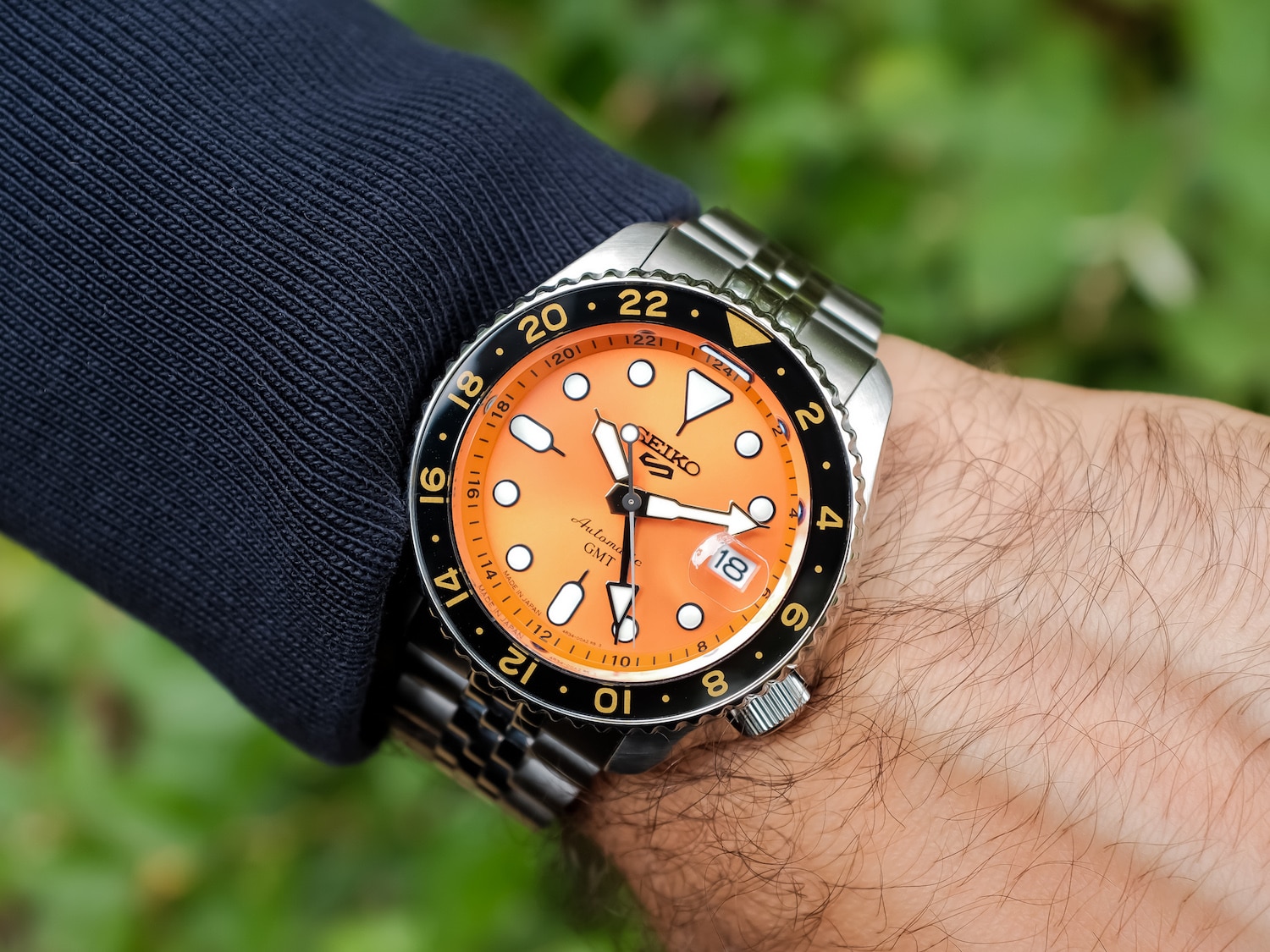
The Seiko 5 GMT has a distinct identity. In our review, it felt like Seiko finally gave the 5 Sports crowd the watch many of us had been daydreaming about for years: an automatic GMT built around that familiar SKX-adjacent case language, easygoing wear, and approachable price point. It’s not trying to be a luxury travel watch, and that works in its favor. The push/pull crown, 100m water resistance, Hardlex-heavy build, and caller-style 4R34 movement all keep it firmly in the affordable Seiko universe. As an everyday watch, it leans more on charm, familiarity, and mechanical appeal than on pure convenience.
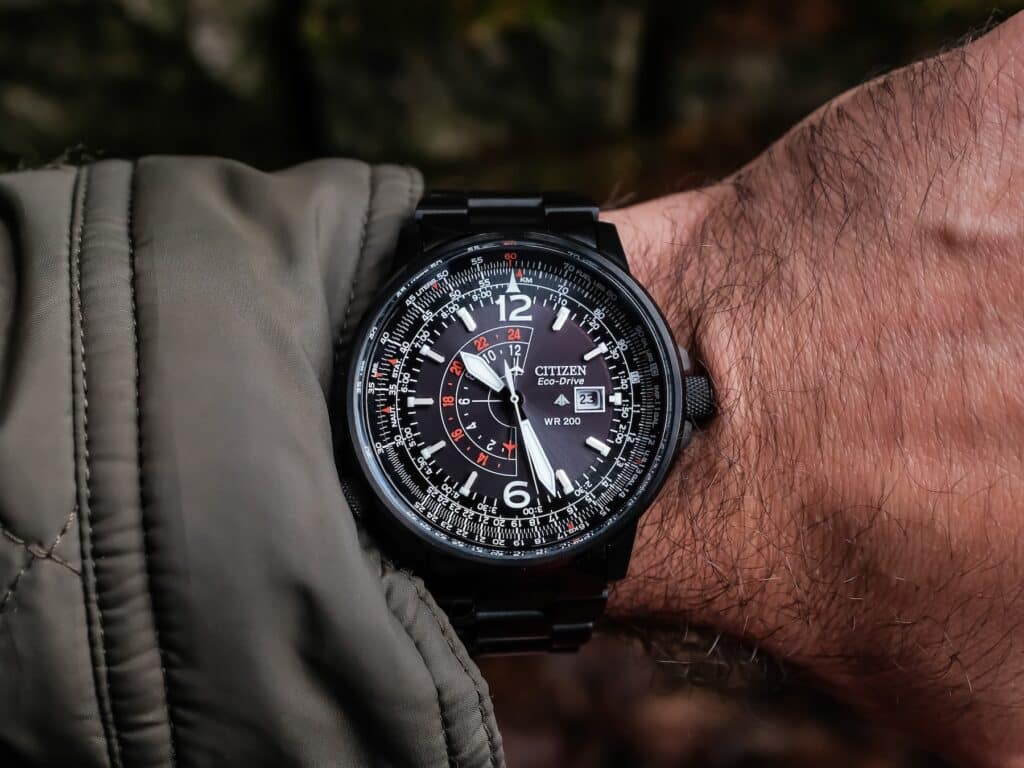
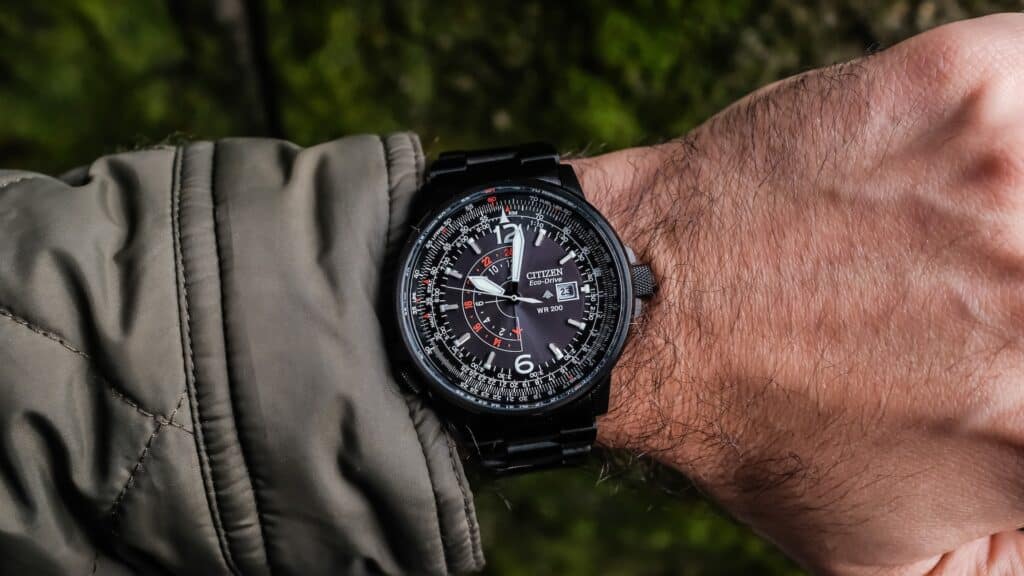
The Citizen Nighthawk comes across as the more intentionally practical side of the Citizen Nighthawk vs Seiko 5 GMT comparison. In our hands-on review of the blacked-out JDM version, it didn’t feel like a totally different watch from the U.S. Nighthawk so much as a familiar one with a sharper personality. Same general architecture, same useful travel-watch intent, but with a darker, more assertive tone that pushes it away from plain aviation utility. It still sits in that middle ground that Citizen does well: more interesting than a basic three-hander, less exhausting than a feature-stuffed pilot watch. That balance is why the Nighthawk still feels like one of the more compelling affordable GMT watches for people who want function without making ownership feel like homework.
- The Seiko 5 GMT is the more enthusiast-friendly mechanical GMT, built around familiar Seiko 5 comfort and personality.
- The Citizen Nighthawk is the more no-fuss, function-first travel watch with a stronger practical streak.
Design & Wearability: Dense Pilot Utility vs Familiar Seiko Ease
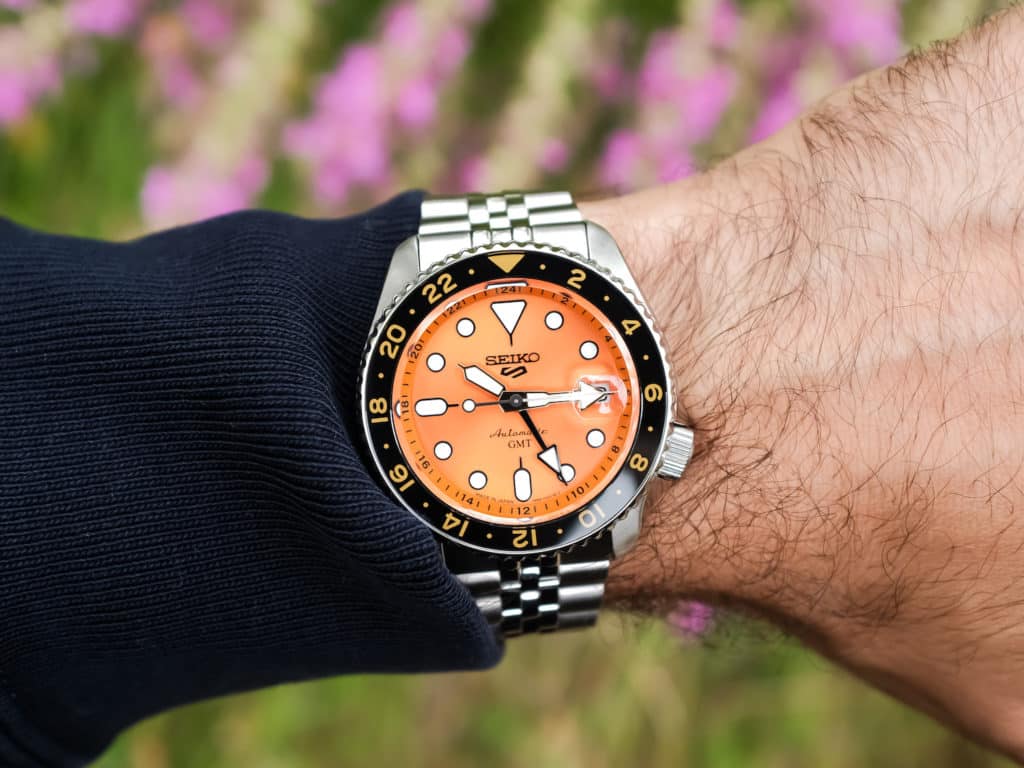
The Seiko 5 GMT takes the more familiar route, especially if you’ve spent time with Seiko sports watches. The dial has that high-legibility Seiko thing, but the orange sunray finish keeps it from feeling flat or purely utilitarian. It isn’t matte and blunt like a Doxa or old Seiko Monster; it catches light with more warmth and movement. The black surrounds help the markers stand out against the orange dial. The text is balanced, with Seiko and the 5 logo under 12 and “Automatic” and “GMT” above 6, so the dial doesn’t over-explain itself. The handset ties it together: the glossy black GMT hand links to the inner 24-hour scale, the gilt hour and minute hands add older-Seiko warmth, and even the black gloss on the seconds counterweight brings a small hit of charm. The cyclops is the detail we could live without.
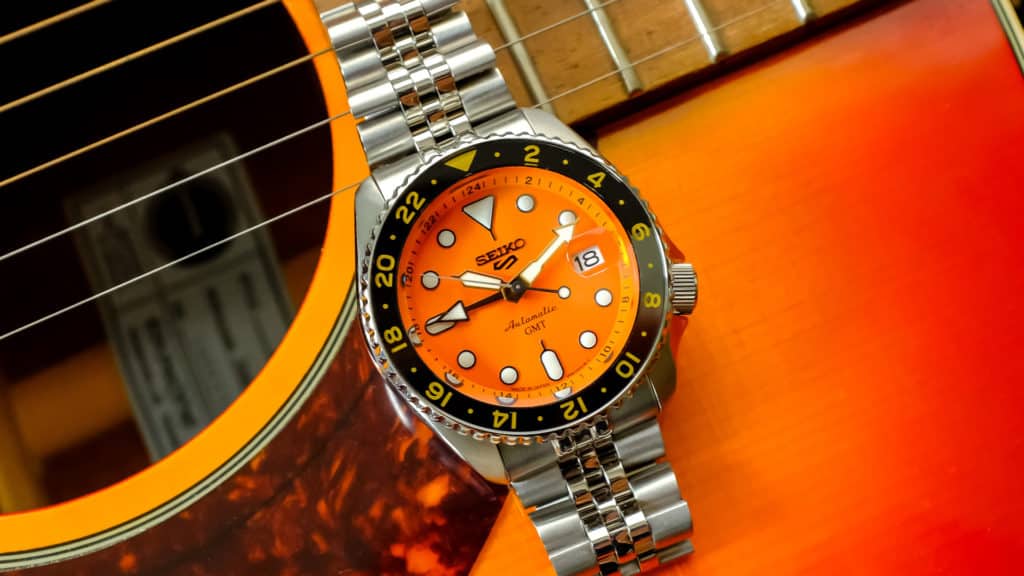
In terms of wearability, the Seiko 5 GMT feels familiar in the right way. If you’ve owned or handled an SKX-style Seiko, the wrist feel won’t need much adjustment. The bracelet is lightweight, stamped, tapered from 22mm toward the clasp, and not pretending to be luxury-grade. Some will dislike the stamped clasp, polished bits, or pin-and-collar system, and fair enough. But that lightness suits the watch, keeping it casual and wearable instead of stiff and overbuilt. If the bracelet annoys you, it also makes a strong case for a NATO strap, where the Seiko 5 GMT’s travel-friendly personality feels even more natural.
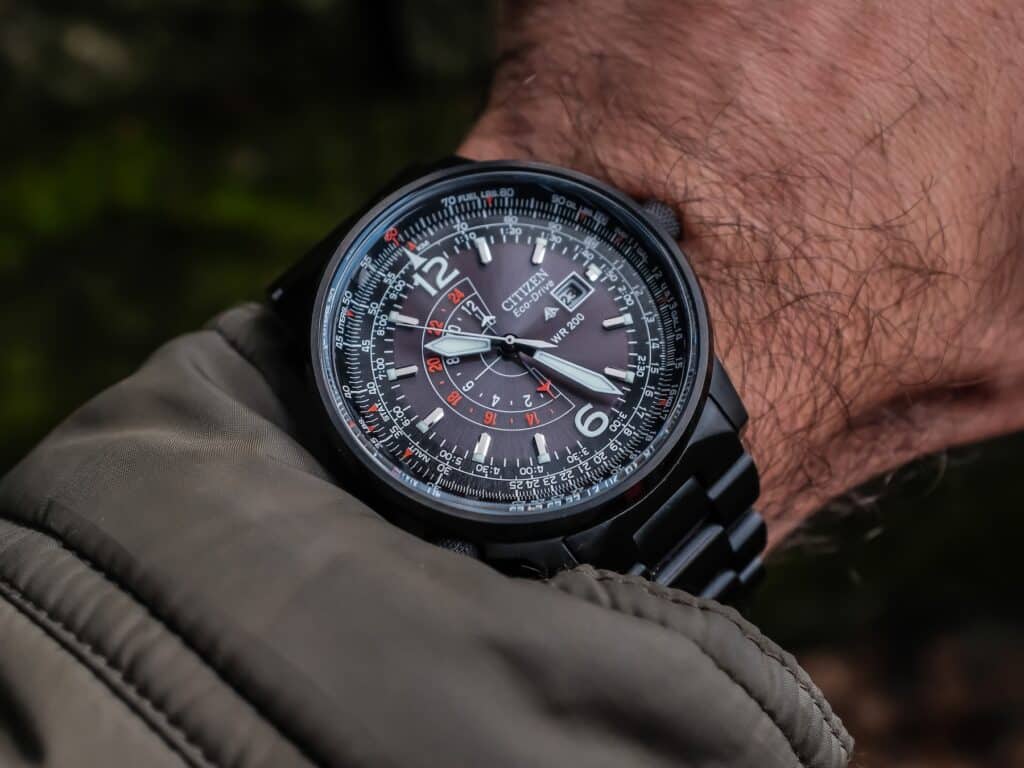
The Citizen Nighthawk is busy by design, but the dial works because Citizen gives the eye places to rest. Up close, there’s a lot to process: the slide rule, secondary time zone scale, applied markers, sword hands, and small red-and-white airplane motifs on the GMT hand. Yet, as mentioned in our hands-on review, the sharp printing, clean alignment, and restrained branding keep it from feeling like an aviation-themed corkboard. The raised markers have polished edges and lume-filled outer sections, while the sword hands bring enough size and contrast to make basic time-telling easy. At a glance, the finer details recede, and the hands and indices take over. The one annoyance is that the main hands can partially block the secondary time zone scale, so reading the GMT function takes more patience than it would on a cleaner 24-hour bezel setup.
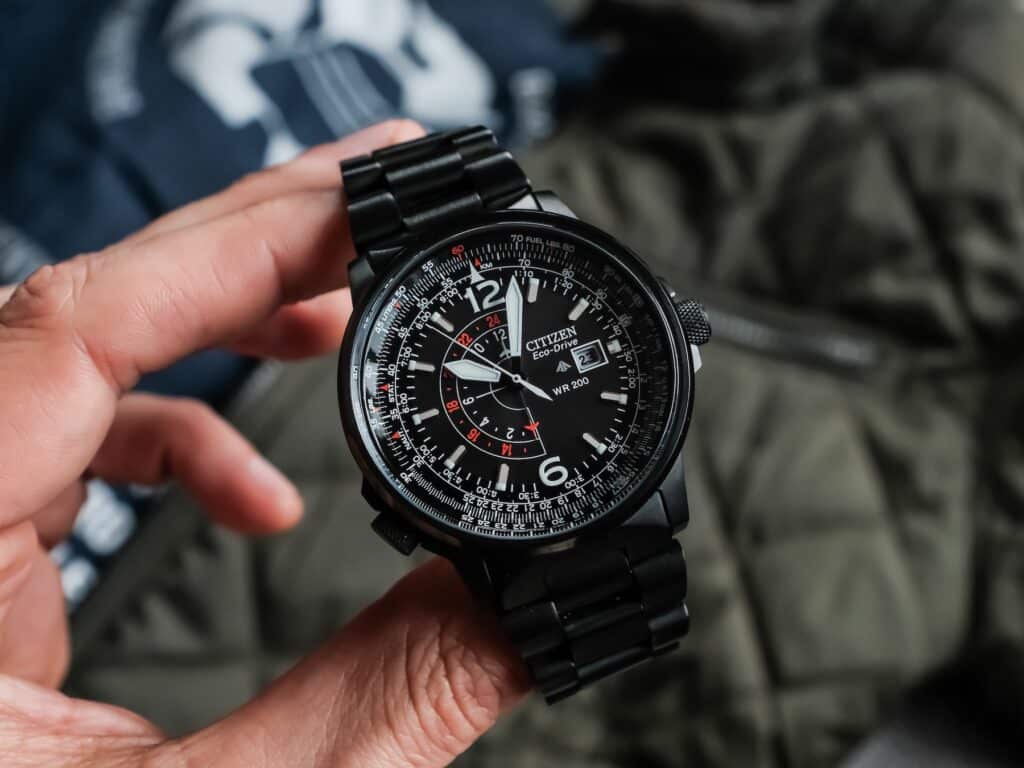
On the wrist, the Nighthawk feels like a deliberate pick rather than an automatic daily default. The black ion-plated steel case and bracelet combination give it purposeful weight that suits the watch but won’t please everyone, especially if you prefer smaller, thinner, lower-profile watches. You feel it throughout the day, which can be satisfying or a bit much depending on your wrist and tolerance for heft. The bracelet fits the character well: solid, secure, and free of the rattly looseness that makes some affordable watches feel cheaper than they are. The clasp is simple but effective, with a push-button deployant, fold-over safety, and enough micro-adjustment to dial in the fit. Still, the Nighthawk becomes easier to live with on rubber or nylon, where it relaxes into a more comfortable grab-and-go travel or pilot watch.
- The Seiko 5 GMT offers a more familiar, colorful, and comfortable everyday design, with enough Seiko personality to feel like more than a simple, affordable GMT.
- The Citizen Nighthawk delivers a denser, more technical design with stronger wrist presence and better strap-based versatility than its bracelet-only impression suggests.
Build Quality & Technical Approach
Both the Citizen Nighthawk and Seiko 5 GMT are built around the same broad idea: affordable travel functionality without making the watch feel fragile, fussy, or too precious for real use. But they get there in very different ways.
Movements:
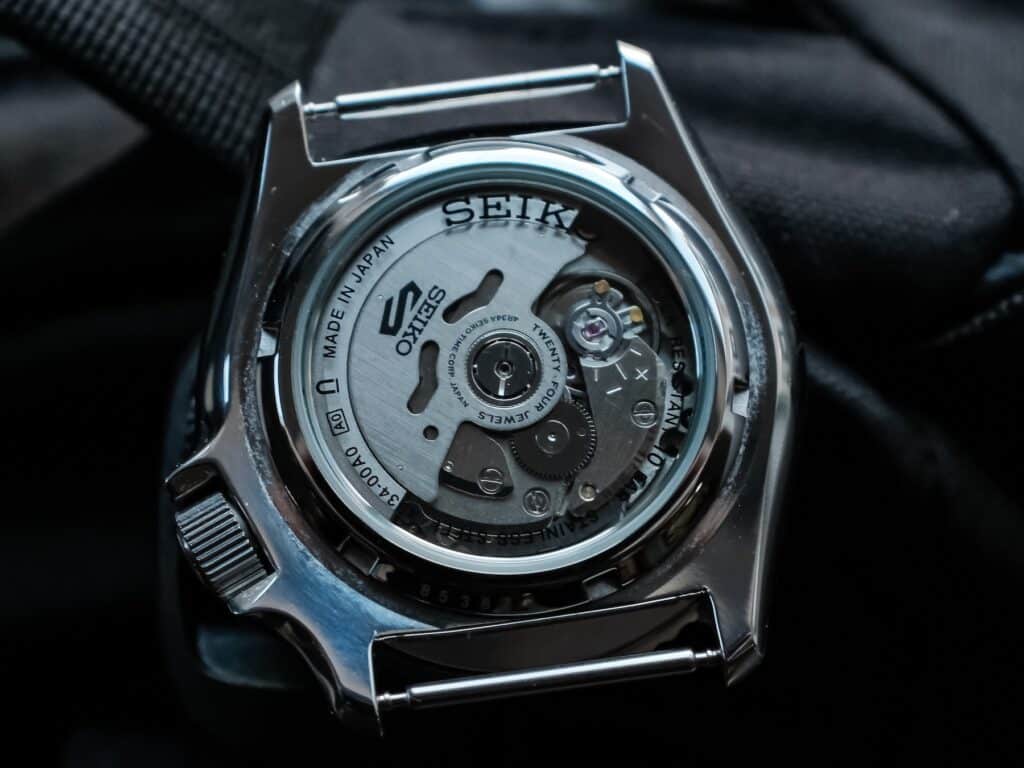
The Seiko 5 GMT uses Seiko’s in-house 4R34 movement, and it brings a very different kind of appeal. During our dedicated time with the watch, it did the job well enough, letting us track another time zone or two without turning the whole thing into a crisis. No, it doesn’t have a jumping local-hour hand, and yes, that matters if you travel often and want a smoother “true GMT” experience. But for casual timezone tracking, it works. The roughly 40-hour power reserve is decent for this price range, though we’d still want more long-term time with the movement to judge accuracy and durability over years instead of weeks. As a mechanical GMT in an affordable Seiko, it feels more charming than technically superior, which is the point.
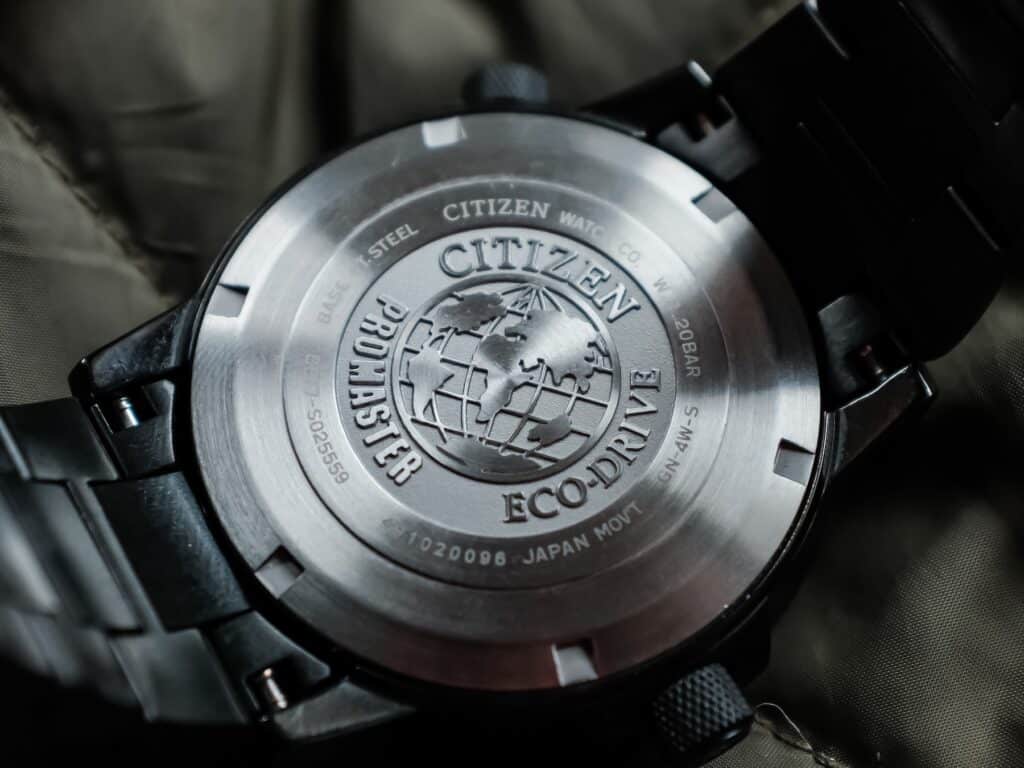
The Citizen Nighthawk takes the practical route with Citizen’s B877 Eco-Drive caliber, and that fits the watch almost perfectly. It’s a quartz movement powered by any light source with a GMT hand, so the appeal is less about mechanical romance and more about not having to think about the watch until you need it. While testing, the setting action felt precise, with crisp hand movement, minimal play once engaged, and a jumping local hour hand feature that makes actual travel less annoying. Accuracy is rated within fifteen seconds per month, which is the kind of number most mechanical watches aren’t touching in normal life. Fully charged, it can run for roughly six months without light, so you can leave it off-wrist for weeks and still trust it when you come back. That’s not glamorous, but neither is resetting your watch while your ride is waiting outside.
Case Construction & Finishing:
The Seiko 5 GMT feels familiar if you’ve handled the older SKX divers. The 42.5mm case diameter is still there, along with a 13.6mm thickness and 46mm lug-to-lug, but in typical Seiko fashion, the numbers don’t tell the whole story. Those rounded, melted-looking lugs and the mix of brushed and polished finishing help the case sit smaller than the specs suggest. The added thickness appears tied to the exhibition caseback, but the overall feel remains very much in that comfortable Seiko sports-watch lane. The GMT bezel is where the Seiko 5 GMT gets more interesting. Its glossy surface gives the watch more shine and depth than you might expect at this price. It rotates in both directions without clicks, so it feels more casual than tool-like, but it works visually. The best detail is how Seiko visually splits the 24-hour scale, making the daylight portion catch more light and shift between black and grey depending on the angle. It’s a small thing, but it adds a bit of visual theater to the watch without turning it into a gimmick.
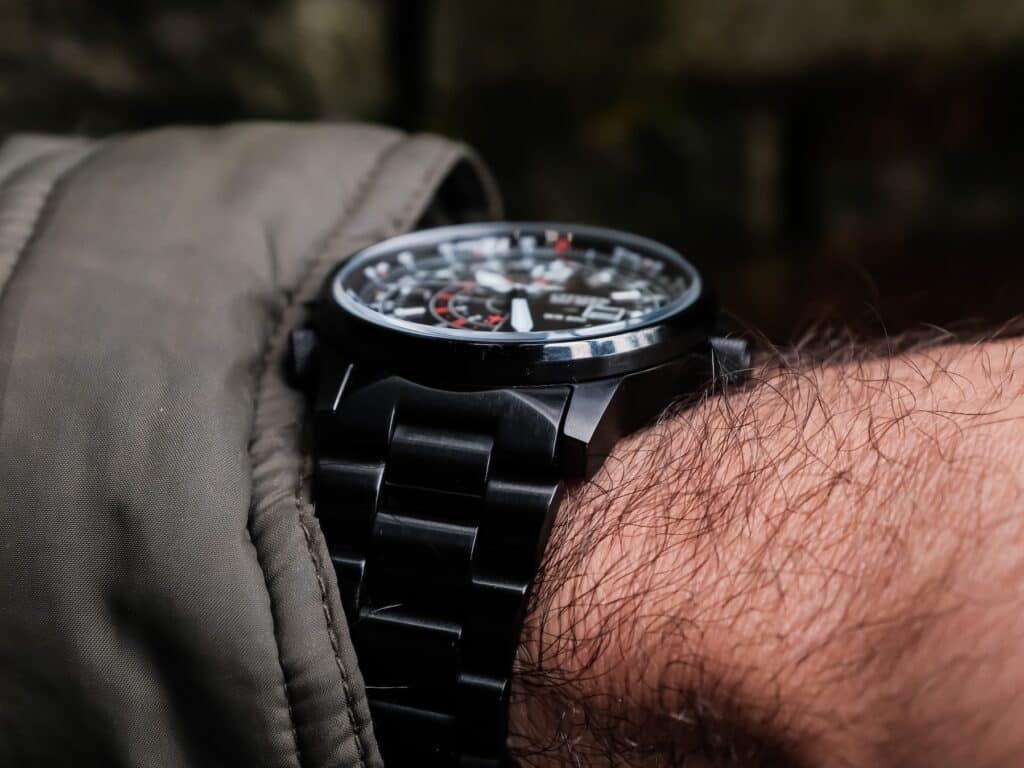
The Citizen Nighthawk’s 42.5mm case and 12.6mm thickness sound manageable enough on paper, but in practice, the watch wears with clear presence. It’s large, solid, and heavy in the way a practical pilot-style watch can be. The black ion-plated finish gives the case a uniform, almost industrial look, though deeper scratches will expose the steel underneath because physics remains rude. The case itself feels tougher than the price might suggest. The rotating E6B slide rule bezel is built into the upper case and adjusted through the secondary crown at eight o’clock, so it doesn’t get knocked around or turned accidentally. The main screw-down crown gets the Promaster Sky logo, which is a small detail, but a good one. Around back, the engraved screw-down caseback feels clearer and better executed than expected, especially compared to the earlier Nighthawk we owned. It gives this version a more finished, premium impression without pretending the watch is something it isn’t.
Crystals:
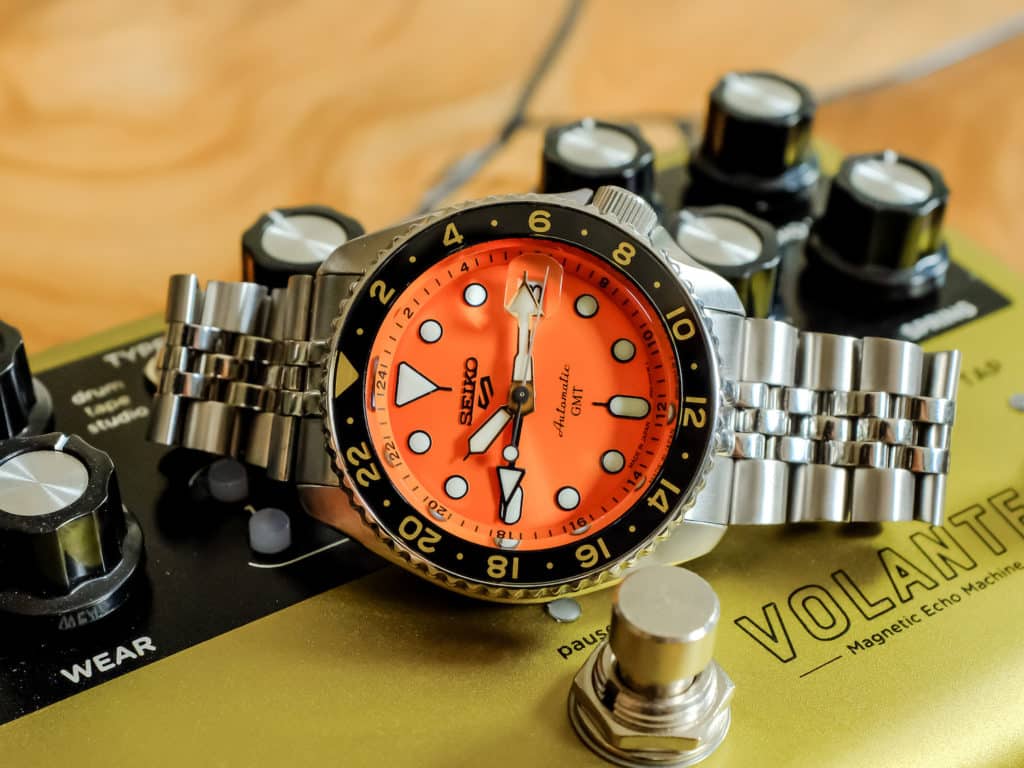
The Seiko 5 GMT stays firmly in familiar Seiko territory with Hardlex. The main crystal is Hardlex, the exhibition caseback is likely Hardlex as well, and the glossy GMT bezel insert appears to use the same material. That gives the watch a shiny, polished look, especially around the bezel, where the surface helps add visual depth. But this is still Hardlex, not sapphire, so expectations need to stay grounded. It fits the affordable Seiko personality, though: practical enough, visually pleasing, and very much in line with what we expect from the brand at this price.
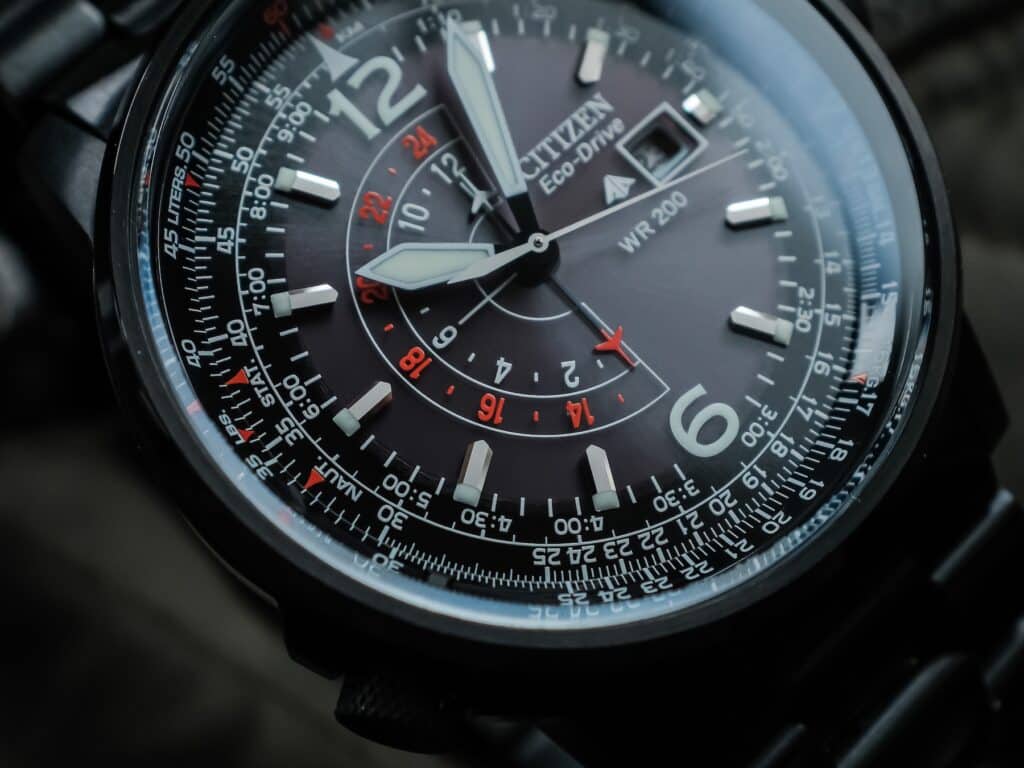
The Citizen Nighthawk keeps things serviceable, but this is also where the compromise shows. It uses a flat mineral crystal with internal anti-reflective treatment, and in daily use, it stays clear enough that the busy dial doesn’t become harder to read than it needs to be. Still, sapphire would have made sense here, especially because the crystal sits fairly exposed above the case. It’s not a dealbreaker, but it does mean the Nighthawk asks for a little more wrist awareness than a tougher, recessed sapphire setup would.
Water Resistance & Lume:
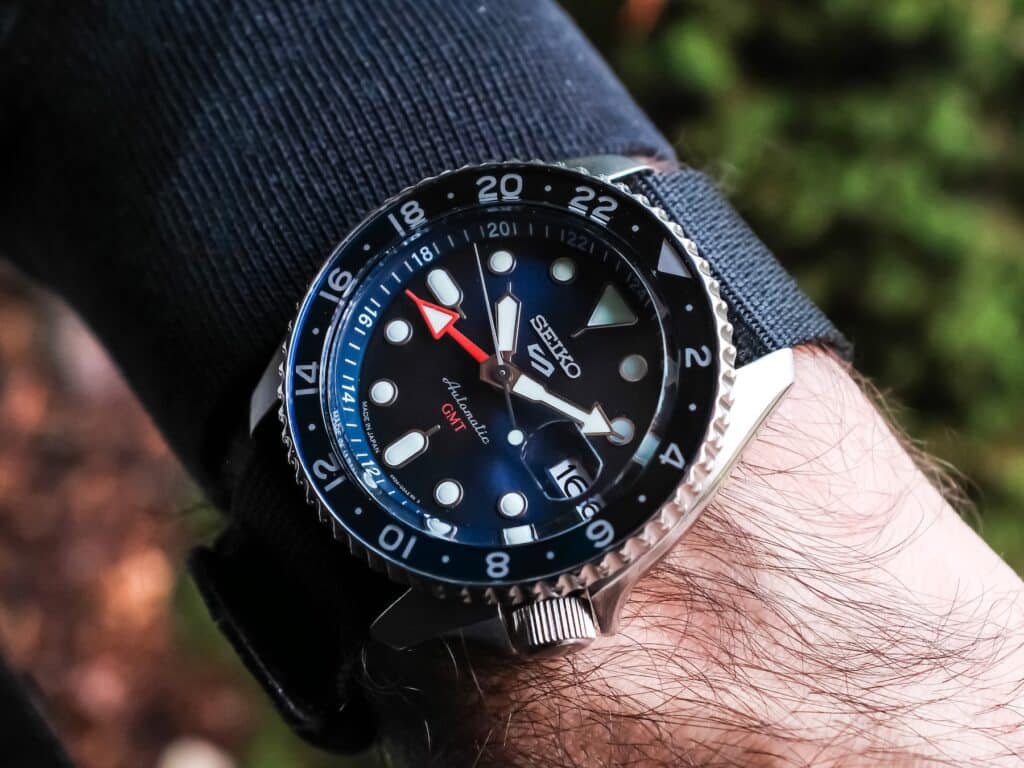
The Seiko 5 GMT feels modest on paper, with a push/pull crown and 100 meters of water resistance. We still go back and forth on this because a screw-down crown and 200-meter rating would have made the watch feel closer to perfect. That said, the case feels ready for the kind of normal abuse most of us dish out: rain, hand-washing, travel days, desk dives, and the occasional splash that somehow becomes a full personality test online. It’s not the more confidence-inspiring spec between the two, but it doesn’t feel fragile either. Low-light performance is where the Seiko 5 GMT gets back to very familiar ground. You get the usual highly legible Seiko sports-watch dial with serious Lumibrite, and the indices feel a bit more refined than those on some Prospex models. That matters because this isn’t just “bright lume” as a party trick. It supports the everyday-wear side of the watch, making it easy to read after dark without turning the dial into a glowing novelty item. The Citizen has the stronger water-resistance setup, but Seiko still knows how to make a dial behave when the lights go out.

The Citizen Nighthawk feels quite overbuilt for everyday life, with 200 meters of water resistance and a screw-down crown. That gives it the kind of everyday confidence you want from a travel watch, especially when “travel” usually means airports, hotel sinks, sudden rain, and the occasional questionable pool rather than anything heroic. In our hands-on time, it never felt like a watch that needed babying, even if it also isn’t the one we’d deliberately drag outside its comfort zone every day. For an affordable GMT built around practicality, that’s the right balance. Lume is solid too, with Citizen’s familiar blue glow across the markers and numerals. It charges quickly, and brief exposure to daylight does most of the work, which is what you want from a watch that may spend the day moving between cars, terminals, offices, and poorly lit restaurants with menus printed by cowards. It’s not trying to win a lume contest, but it gives you enough low-light legibility to feel useful rather than decorative.
- Seiko wins on mechanical charm and wrist familiarity. The 4R34 GMT movement, SKX-like case feel, glossy split-tone bezel, and strong Lumibrite make it more emotionally satisfying, though less technically convenient than the Citizen.
- Citizen wins on low-maintenance travel confidence. Eco-Drive accuracy, a jumping local-hour hand, 200m water resistance, and a screw-down crown make it easier to trust when it’s been sitting unworn or getting knocked around during normal travel.
Cost Considerations
The Citizen Nighthawk makes its value case through usefulness more than novelty. The blacked-out JDM version came in at about $488 imported, and at that price, it’s hard to get too grumpy about what it delivers. The lack of sapphire still stands out, and the GMT display takes more patience than a cleaner bezel-based setup, but neither compromise feels careless. What makes the Nighthawk interesting is that it fills a specific role: not the watch we’d reach for every day, and not necessarily a main-box staple, but a capable, affordable GMT that brings enough personality and practicality to justify sticking around.
The Seiko 5 GMT lands in a similarly tempting zone, with its $475 price point doing a lot of heavy lifting. An in-house automatic GMT movement from Seiko at that number still feels like a big deal, especially for buyers who wanted a mechanical travel watch without wandering into “maybe I should sell a guitar” territory. The manual-winding automatic movement, classic Seiko looks, and accessible price make the argument pretty easy on paper. Taste still matters, though. The orange sunray dial may not work for everyone, and that’s fine, because other colors exist.
Final Thoughts: Which Affordable GMT Is Better for Everyday Travel?
For everyday travel, the Citizen Nighthawk is the stronger pick. Not because it’s cooler, more charming, or more likely to make Seiko people nod approvingly from across the coffee shop. It wins because it does the boring travel-watch stuff better, and boring is exactly what you want when you’re changing time zones, rushing through an airport, or grabbing a watch after it’s been sitting unworn for a few weeks. In short, the Nighthawk is more dependable, more convenient, and better suited to the messy reality of being on the move.
That doesn’t make the Seiko 5 GMT a bad choice. It’s the better fit for someone who wants an affordable mechanical GMT with familiar Seiko character and doesn’t mind giving up some convenience for charm. It works well for casual timezone tracking, daily wear, and the simple joy of owning a mechanical Seiko that does a little more than tell the time. But it’s not the better everyday travel watch. The lack of a jumping local-hour hand matters here.
So, choose the Citizen Nighthawk if you want the more practical, durable, grab-and-go GMT for real travel and regular life. Choose the Seiko 5 GMT if you want a mechanical Seiko with travel functionality and can live with the compromises because the charm matters more to you.

Co-Founder and Senior Editor
Kaz has been collecting watches since 2015, but he’s been fascinated by product design, the Collector’s psychology, and brand marketing his whole life. While sharing the same strong fondness for all things horologically-affordable as Mike (his TBWS partner in crime), Kaz’s collection niche is also focused on vintage Soviet watches as well as watches that feature a unique, but well-designed quirk or visual hook.
I own both of these watches, and TBH, neither gets much wrist time (though that might have more to do with the fleet of 198 watches). I feel that the Seiko could be so much more compelling if it had a sapphire crystal, a screw-down crown, and 200m WR. With that combination, it would not be a contest with the Citizen. Unfortunately, it is the Citizen in current form that would be my choice if I needed to use this for travel
At 198 watches, I’d imagine wrist time is pretty competitive. Your point about the Seiko’s missing specs is well taken, though. Sapphire, screw-down crown, and 200m would close the gap fast. Until then, the Citizen earns the travel spot for practical reasons alone.
Michael, you are spot-on with the competitive wrist time. Great articles, keep it up, I come back for more every day!
Thank you! Glad folks are enjoying the site.