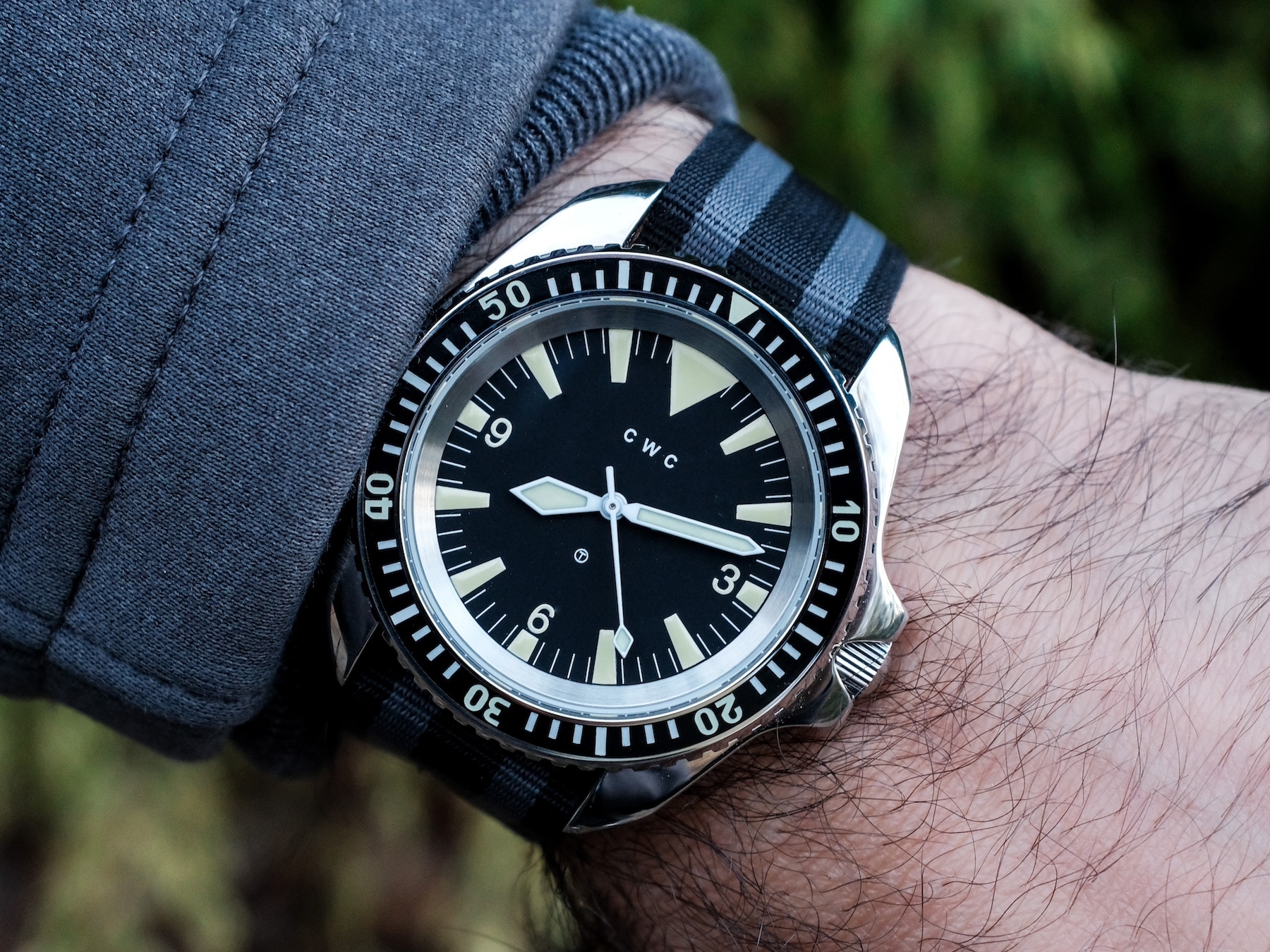
Most of us don’t end up at CWC because we’re hunting for luxury polish, display-caseback romance, or the kind of finishing that makes watch forums start typing in all caps. We often reach there after spending enough time with affordable watches, field watches, divers, and military-inspired pieces to realize there’s a difference between something that borrows the look and something that feels connected to the job it was built around. That brings us to a common question: are CWC watches any good? Yes, but they’re good in a very specific way. CWC watches work because they lean into legibility, practical design, and real military watch history without trying to dress the whole thing up as Swiss luxury. That’s the appeal. They can feel plain, stiff, and stubborn in places, but that’s also the point.
After nearly a decade of honest watch reviews, plus our own hands-on time with pieces like the CWC SBS Diver, 1980 Royal Navy Diver Re-Issue, and others, we have a useful cross-section of the brand’s strengths and compromises. The model insights we’ve compiled here help explain the logic behind calling CWC watches good, not in the vague “military-inspired watches are cool” way, but in the more useful sense of how they wear, how their design choices hold up, and where the charm starts to run into real-world trade-offs. This article is less about crowning CWC as one of the best value watches for everyone. It’s more about figuring out who these watches make sense for, why collectors keep coming back to them, and where another tool watch might better serve someone.
CWC Mellor 72
| Price: | $600 |
| Water Resistance: | 50m |
| Case Dimensions: | 35mm (diameter) x 42mm (lug-to-lug) x 11mm (thickness) |
| Lug Width: | 18.5mm |
| Movement: | Sellita SW210 hand-wound movement |
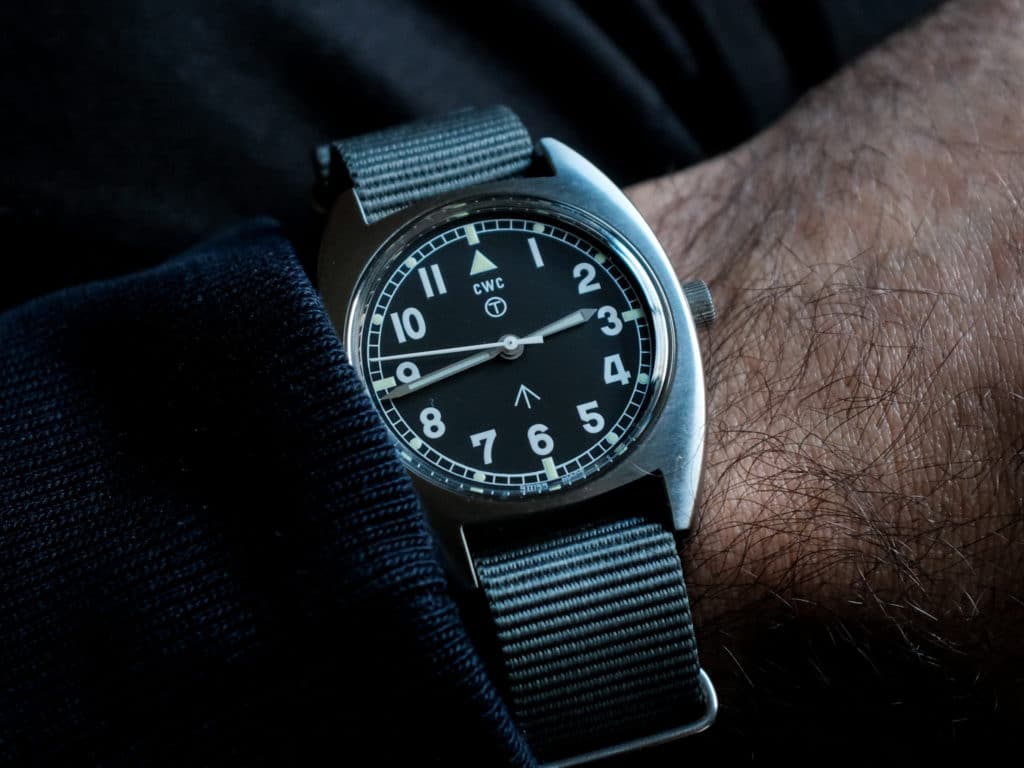
The CWC Mellor 72 is one of the better examples of why CWC watches are good in a very particular way. It takes the brand outside of the diver conversation and into something quieter: a compact, hand-wound field watch that feels built around function rather than nostalgia marketing. On paper, the 35mm case sounds small by modern standards, but the wider tonneau shape and crown presence help it wear closer to a compact 38mm. During our time with it on a basic NATO strap, it never disappeared from the wrist or felt too delicate. Instead, it landed in that useful middle ground where the watch stayed unobtrusive but remained easy to read whenever we glanced down.
The dial does most of the work here. High contrast is the point, with bold Arabic numerals standing out clearly and a minute hand that reaches all the way to the railroad seconds track. That extra reach sounds minor until you wear the watch for a while and realize how much easier it makes quick time checks feel precise instead of approximate. The vintage CWC typeface and the circled T marker lend a military character, but the watch never treads into cosplay territory. Modern Super-LumiNova also holds up well for nighttime checks, which keeps the Mellor 72 practical after dark rather than turning it into a daytime-only vintage tribute.
The hand-wound Sellita SW210 adds another layer to the experience. Winding it became a simple morning ritual during testing, and the action felt smooth and consistent throughout. This is not a watch trying to impress with movement decoration or mechanical theater. The appeal is more direct than that: wind it, set it, wear it, move on. The snap-back case also matters because it should make servicing easier down the line, which is worth caring about if this becomes a long-term keeper rather than a short-lived curiosity.
The fully brushed case and fixed bars reinforce the no-frills attitude. Nothing here feels decorative for the sake of looking expensive. It feels more like a practical piece of steel built for straps, movement, and daily use. The fixed bars improve durability and suit the military-tool personality, though they also limit strap flexibility if you prefer standard two-piece options. The Hesalite crystal fits the look and adds warmth, but it will scratch if you are rough on your watches. Keeping Polywatch nearby feels like part of the ownership agreement. Water resistance sits at 50m, which handled rain, handwashing, and everyday errands without issue in our testing, though this is not the CWC to grab for deep swimming.
That balance is what makes the Mellor 72 useful for this larger CWC discussion. For collectors who like the idea of military watches but do not want to deal with vintage fragility, sketchy listings, or the little maintenance surprises that come with older pieces, the Mellor 72 sits in a smart middle ground. It helps explain why CWC’s purpose-built approach still works: the watch is compact, readable, interactive, and honest about its limits.
Pros
- The high-contrast dial and long minute hand make quick time checks easy.
- Fixed bars reinforce the durable, strap-ready military feel.
- The hand-wound Sellita SW210 adds satisfying daily interaction without feeling fussy.
- The 35mm case wears larger than expected, thanks to the tonneau shape and crown.
Cons
- The Hesalite crystal fits the design but scratches more easily than sapphire.
- The 50m water resistance is fine for daily life, but not enough for serious water use.
- Fixed bars limit strap options compared to standard spring bars.
CWC SBS Diver
| Price: | $960 |
| Water Resistance: | 300m |
| Case Dimensions: | 45mm (diameter incl. crown) x 47mm (lug-to-lug) x 11mm (thickness) |
| Lug Width: | 20mm |
| Movement: | Ronda Swiss-made 517 quartz |
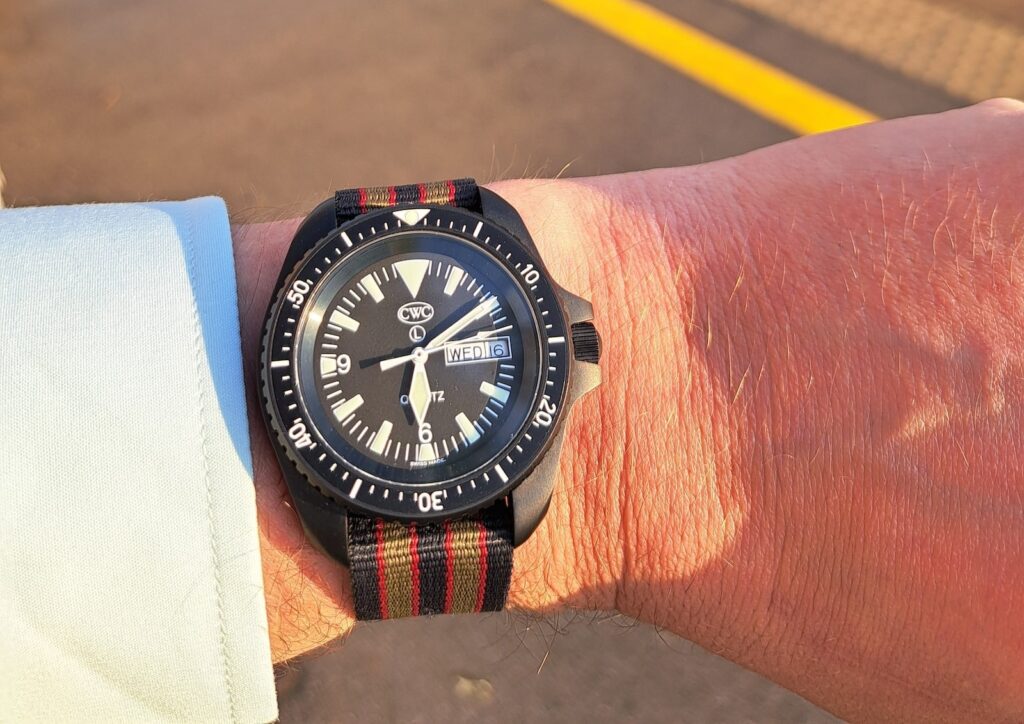
The CWC SBS Diver is probably the strongest argument for why CWC watches are good, as long as we judge them on the terms they actually care about. Again, this is not a watch that tries to charm with polished bevels, movement romance, or a big “look how serious I am” design gesture. It comes across as blunt, dark, and purpose-led. The black PVD case keeps the whole thing visually subdued, which fits the watch’s Special Boat Service connection without making it feel like cosplay. It looks like a tool first, and that is where CWC tends to be at its best.
The quartz movement is a major reason the SBS Diver makes sense. Over five weeks of wear and timing, it stayed within five seconds, which is the kind of boring accuracy that becomes charming when the rest of the watch is built around use. There is no winding ritual, no checking whether it drifted over the weekend, no little mechanical mood swings to manage. You put it on, and it does its job. Here, that feels more honest than treating quartz like a compromise.
The dial takes a little time to settle in. At first, it can feel slightly busy compared to cleaner dive watches, but after wearing it in normal conditions, that busyness becomes less distracting. The oversized hour markers and sword hands make the watch easy to read quickly, especially when moving or in lower light. The “circle L” marking signals Luminova, and in use, it charged quickly and stayed visible through most of the night. The flat crystal also helped outdoors by keeping glare under control, making the dial easier to read during longer stretches.
On the wrist, the case feels dense and reassuring without becoming awkward or pointlessly heavy. That balance matters because a watch can feel tough in the hand and annoying after six hours. The SBS Diver did not give us that excuse. It also worked naturally on single-pass nylon, RAF-style straps, and other utilitarian setups. Each strap changed the watch’s personality a little, but it never lost its blunt, purpose-driven character. It felt right during camping, errands, and long days out, which is what makes its military-tool identity feel earned rather than decorative.
The SBS Diver makes CWC’s larger appeal easy to understand. It is good because it feels trustworthy, legible, subdued, and built around real utility. Someone wanting a luxury-feeling diver may find the price hard to square with the simple finishing and quartz movement. But for collectors who care about military credibility, outdoor wearability, and a watch that gets better once you stop asking it to behave like a polished desk diver, this is one of the clearest CWC arguments.
Pros
- Luminova charges quickly and remains visible through most of the night.
- The flat crystal helped cut glare during outdoor wear.
- Oversized markers and sword hands made quick time checks easy in real use.
- Strap versatility is excellent across single-pass nylon, RAF-style, and other utilitarian setups.
- The case feels dense and reassuring without becoming awkward or too heavy.
Cons
- The dial can feel busy until you spend more time wearing it.
- The price is above many quartz alternatives that may look similar on paper.
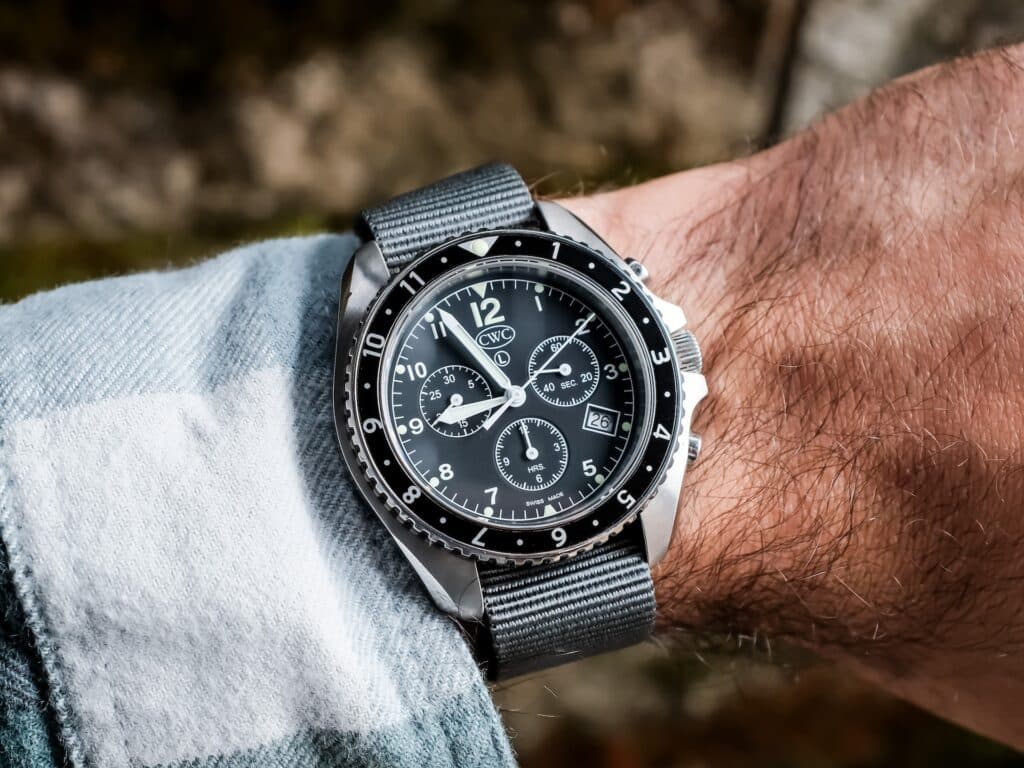
CWC Sea Falcon Chronograph
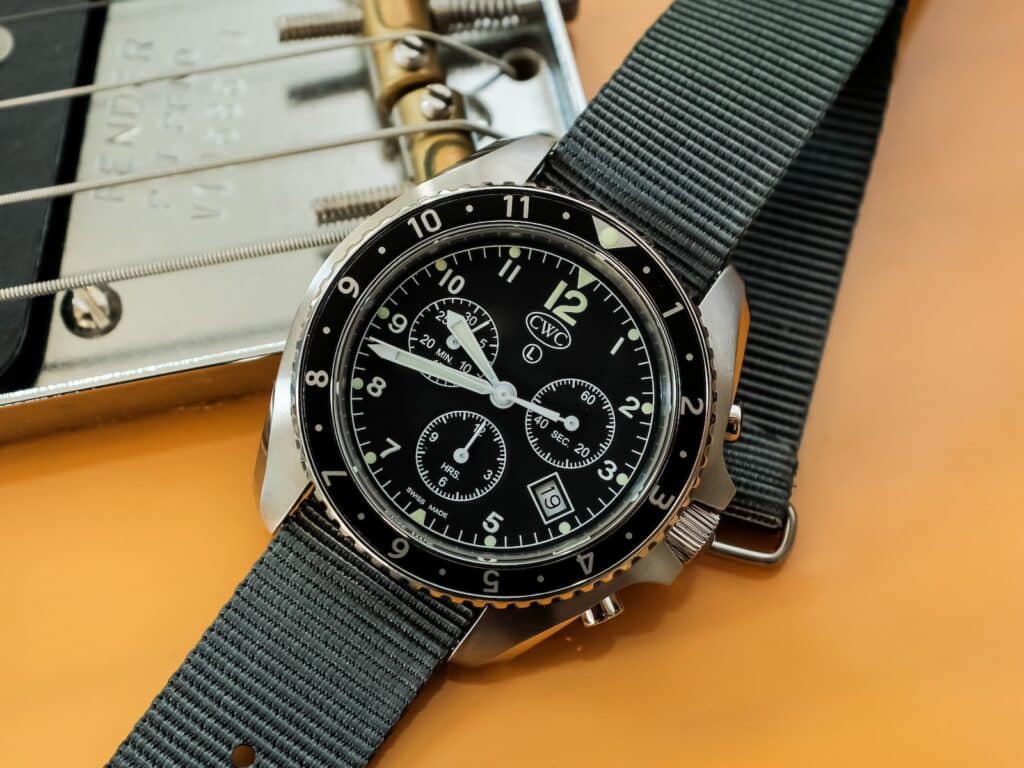
| Price: | £749 (approx. $1,000) |
| Water Resistance: | 200m |
| Case Dimensions: | 41mm (diameter) x 47mm (lug-to-lug) x 11mm (thickness) |
| Lug Width: | 20mm |
| Movement: | Swiss quartz Ronda 5030.d 13 jewels gold-plated movement |
The CWC Sea Falcon Chronograph helps the broader CWC argument because it steps away from the brand’s usual diver and field-watch comfort zone without losing the plot. This is not a one-to-one recreation of an old MOD-issued watch, and that is probably for the best. Instead, CWC pulls from the quartz chronographs issued to RAF, RN, and BAF pilots in the late 90s and early 2000s, then gives the format a more modern tool-watch setup. The result feels function-forward rather than nostalgic for its own sake. With the rotating 12-hour bezel, it becomes useful because you get elapsed-time tracking from the chronograph and a second-time-zone reference from the bezel. For anyone who travels, works odd hours, or enjoys pretending their kitchen timer is mission-critical, that combination makes sense fast.
The case also does the classic CWC thing, where the numbers sound scarier than the watch feels. CWC lists the diameter, including the crown, at 45mm, but on the wrist, it wears much closer to 41mm. The 47mm lug-to-lug and 11mm thickness help keep it compact, and the quartz movement deserves some credit for that slim profile. If you are comfortable with the SBS Diver or CWC’s early 80s diver-style cases, the Sea Falcon will feel familiar. It has that same solid, no-nonsense presence, but it never became clunky during wear. The 20mm lug width keeps strap options familiar, though the fixed spring bars mean this watch is happiest on pass-through straps.
The Ronda 5030 jeweled quartz chronograph is a big part of why this watch works. It does not feel like a throwaway quartz chrono module stuffed into a cool case. The reset action looks sharp, and the crown interaction was one of the more satisfying details from our time with it. Each crown position clicked out cleanly, with almost no wobble, which gives the watch a more precise feel in daily use. The bezel can be ordered as either a conventional dive-style elapsed-time bezel or the rotating 12-hour version. The 12-hour option here is better suited to the pilot-watch personality. It is unidirectional, with what appears to be 120 clicks, and while a bidirectional bezel would be more intuitive for tracking another time zone, the alignment looked good, and the function still felt useful.
The 200m water resistance adds confidence, even if we are not pretending that most of us are taking a quartz chronograph anywhere near that limit. More importantly, it makes the Sea Falcon feel robust enough for regular life without becoming precious. We would avoid using the chronograph pushers underwater, but for travel, errands, weekend use, and daily timing tasks, the watch feels overbuilt in the right way. The caseback markings, including the Broad Arrow, Cabot Watch Company text, and water-resistance engraving, give it that familiar CWC military-tool flavor without turning the whole thing into a costume.
The strap experience helps seal the deal. The gray NATO-style strap has that slim-but-not-flimsy feel we like, and its tone is close to that of the Phoenix-style British military straps collectors tend to obsess over. Because of the fixed spring bars, the Sea Falcon more or less has to live on NATO-style straps, though leather pull-through and rubber NATO options can change the mood a bit. Still, gray NATO feels like home for this watch. That is the point with the Sea Falcon: it is not trying to be a luxury chronograph or a mechanical flex. It is good because it feels rock solid, useful, comfortable, and specific. As part of the larger “Are CWC watches any good?” conversation, it shows that CWC can move into a more specialized chronograph format while keeping the same practical logic that makes the brand appealing in the first place. Check out our hands-on video review for more of our personal experience.
Pros
- The 11mm thickness keeps the watch comfortable and easy to wear.
- The Ronda 5030 jeweled quartz chronograph feels substantial yet low-maintenance.
- Crown positions are positive, with clean clicks and almost no wobble.
- A combination of elapsed-time tracking through the chronograph and second-time-zone tracking through the 12-hour bezel.
- 200m water resistance adds confidence for regular wear.
Cons
- A bidirectional bezel would be more intuitive for a 12-hour second-time-zone setup.
- Fixed spring bars limit strap choices to pass-through options.
- It’s quite expensive for a quartz watch.
CWC 1983 Quartz Royal Navy Diver

| Price: | $1,000 approx. (used and grey market) |
| Water Resistance: | 300m |
| Case Dimensions: | 45mm (diameter incl. crown) x 47mm (lug-to-lug) x 11mm (thickness) |
| Lug Width: | 20mm |
| Movement: | ETA 955.122 Quartz |
The CWC 1983 Quartz Royal Navy Diver is the watch that makes the “quartz is a compromise” argument feel a little lazy. In CWC’s world, quartz is not there because the brand ran out of imagination. It is part of the military tool logic. During in-depth testing, the ETA 955.122 movement ran between -0.3 and +0.5 seconds per day, which is the kind of accuracy that makes ownership feel uneventful (in a positive way). The tick is quiet enough to disappear into the background, and once you get past the slightly awkward initial setup caused by the hidden day-and-date mechanism, there is not much to fiddle with. Set it, wear it, and leave it alone for years. That feels right for this kind of watch.
The case is where the Royal Navy Diver starts to explain itself physically. The asymmetrical shape follows the old Ministry of Defense specifications, with oversized crown guards and a layout that prioritizes protection and usability over visual elegance. With 300 meters of water resistance, it carries the basic confidence of a serious dive watch, but the personality is tougher and more utilitarian than polished. It wears in a familiar no-date Submariner-adjacent way, but without trying to become a Swiss luxury diver. On the supplied Phoenix NATO, it stayed light, balanced, and easy to wear across normal daily use, which helps keep the watch from feeling like a historical object you have to babysit.
The bezel adds a lot of character. Instead of going modern and ceramic, CWC uses an acrylic insert with a glossy, slightly domed look that catches light in a softer, more old-school way. It gives the watch some warmth without making it feel dressed up. The 60-click action felt firm with very little play, and the lumed 10-minute markers made timing tasks easy to track at a glance. It is one of those details that makes the watch feel designed around use first, even when the vintage cues are doing plenty of collector service in the background. Legibility follows the same pattern. The matte dial reduces glare, while the bold sword hands and thick markers make the watch easy to read at a glance. The vintage-toned lume stayed visible long after the lights went out, which matters here. The “circle T” still appears on the dial as a visual reference, even though the watch now uses Super-LumiNova instead of tritium. That detail may bother strict authenticity hawks, but in daily wear, the practical benefit of modern lume is hard to argue with.
This model helps answer whether CWC watches are any good by showing the brand’s strengths without requiring a mechanical movement to validate them. The 1983 Quartz Royal Navy Diver is accurate, legible, and rugged, and it is tied to real military design language in a way that feels earned rather than ornamental.
Pros
- The MOD-spec asymmetrical case and oversized crown guards give it real military-tool credibility.
- The ETA 955.122 quartz movement was highly accurate, running between -0.3 and +0.5 seconds per day.
- 300m of water resistance supports the watch’s serious dive-watch intent.
- The acrylic bezel adds distinctive character, with a firm 60-click action and very little play.
- Vintage-toned Super-LumiNova stays visible long after dark.
Cons
- The price may feel steep for buyers expecting a mechanical movement.
- The fixed spring bars limit the flexibility of strap-swapping.
CWC 1980 Royal Navy Diver Re-Issue

| Price: | $2,800 approx. |
| Water Resistance: | 300m |
| Case Dimensions: | 41mm (diameter) x 47mm (lug-to-lug) x 12.7mm (thickness) |
| Lug Width: | 20mm |
| Movement: | ETA 2824-2, CWC-engraved |
The CWC 1980 Royal Navy Diver Re-Issue is one of the models that makes the “military watch icon” title feel earned instead of borrowed. What stands out first is not flash or novelty, but how settled the watch feels. It does not come across like a modern brand trying to reverse-engineer credibility from vintage cues. It feels more like a piece of issued equipment that was allowed to keep existing, with enough practical updates to make it usable now. That matters when we’re asking whether CWC watches are any good, because this is where the brand’s connection to Royal Navy diver design turns into something you can understand on the wrist.
The movement supports the long-term-use argument. After regulation, the ETA 2824-2 ran consistently within about 3 to 5 seconds per day during testing, which is plenty reassuring for a watch built around function rather than mechanical showmanship. It is also a widely serviceable movement, and that counts for more than people sometimes admit. A military-inspired diver should not become a servicing puzzle five years down the line. In this case, the movement choice makes the watch feel like something you could wear for decades without turning ownership into a scavenger hunt.
The case is where the watch’s character really comes through. At around 41mm, it wears smaller than the number suggests, landing closer to the feel of a 1990s Submariner than many bulkier modern dive watches. The polished case and gently curved profile help it sit compactly, and the balance on the wrist was one of the more convincing parts of our dedicated time with it. The fixed spring bars limit strap options, but they also tie directly back to the original military specification, which is part of the point of this watch. On the included Cabot Military Watch Strap and later on a Phoenix Bond NATO, it stayed comfortable, adaptable, and easy to wear without feeling like it needed special treatment.
The dial keeps the classic mil-sub language intact, with trapezoidal hour markers, sword hands, a restrained CWC logo, and the familiar circle T marking now used as a decorative reference. Legibility remains strong, and the sapphire crystal did a solid job of controlling glare even in harsh sunlight, making the watch feel more practical outdoors than its polished surfaces might suggest. The vintage-tinted Super-LumiNova performs well in different lighting conditions, though the current lume color choices may split opinions. The brighter white can look a bit too clean, while the darker pumpkin tone can feel more intentional than naturally aged. That is a small thing, but on a watch built around a historical feel, such small things tend to get noticed.
As part of the broader CWC picture, the 1980 Royal Navy Diver Re-Issue shows why the brand works best when it stays close to its purpose-built identity. It is not cheap, and like other CWC pieces, it is not trying to win over someone who wants maximum polish for the money. But the construction, wrist balance, serviceable movement, and Royal Navy design language give it a kind of confidence that feels harder to fake. For collectors who want a practical diver with real military-watch roots rather than a cleaned-up homage with better manners, this is one of the clearest picks.
Pros
- The ETA 2824-2 movement ran within roughly 3 to 5 seconds per day after regulation and should be straightforward to service.
- The dial remains clear and easy to read, with lume that performs well across different lighting conditions.
- The case wears smaller than its 41mm size suggests and stays balanced on the wrist.
Cons
- Pricing is on the higher side for a niche, historically driven diver.
- The current lume color options lack the more natural warmth of earlier executions.
- Minor bezel play is seen when handled closely.
Let us know what you think in the comments below. We’re only drawing from CWC watches we’ve reviewed hands-on here, because judging one from a spec sheet feels like reviewing boots by staring at the box. And if there’s a CWC model you think would change the answer, sharpen the argument, or expose a blind spot, tell us, and we’ll try to get it in for a proper review.

Co-Founder and Senior Editor
Kaz has been collecting watches since 2015, but he’s been fascinated by product design, the Collector’s psychology, and brand marketing his whole life. While sharing the same strong fondness for all things horologically-affordable as Mike (his TBWS partner in crime), Kaz’s collection niche is also focused on vintage Soviet watches as well as watches that feature a unique, but well-designed quirk or visual hook.