Dive watches from microbrands tend to earn their place the hard way. We don’t buy them because of heritage timelines or auction results. We consider them because they promise to do a job without asking for much in return. Over the years, we’ve reached for these watches when swimming, traveling, working, and living day-to-day, often without thinking twice about what was on our wrists. And what we kept noticing was that the same microbrand divers showed up again and again.
We’ve worn these dive watches long enough to notice things that don’t show up in a spec sheet: bezels that loosen over time, cases that wear better than expected, bracelets that age gracefully (or don’t), and designs that either grow on you or quietly start to annoy you. Many of these watches have overlapped in our rotation, been worn side by side, been regulated and timed, and occasionally retired when something better came along. This isn’t a list built on first impressions or launch hype. It’s a reflection of the microbrand dive watches that held up to real use, honest criticism, and the kind of ownership that only makes sense if you’re wearing the watch instead of babying it.
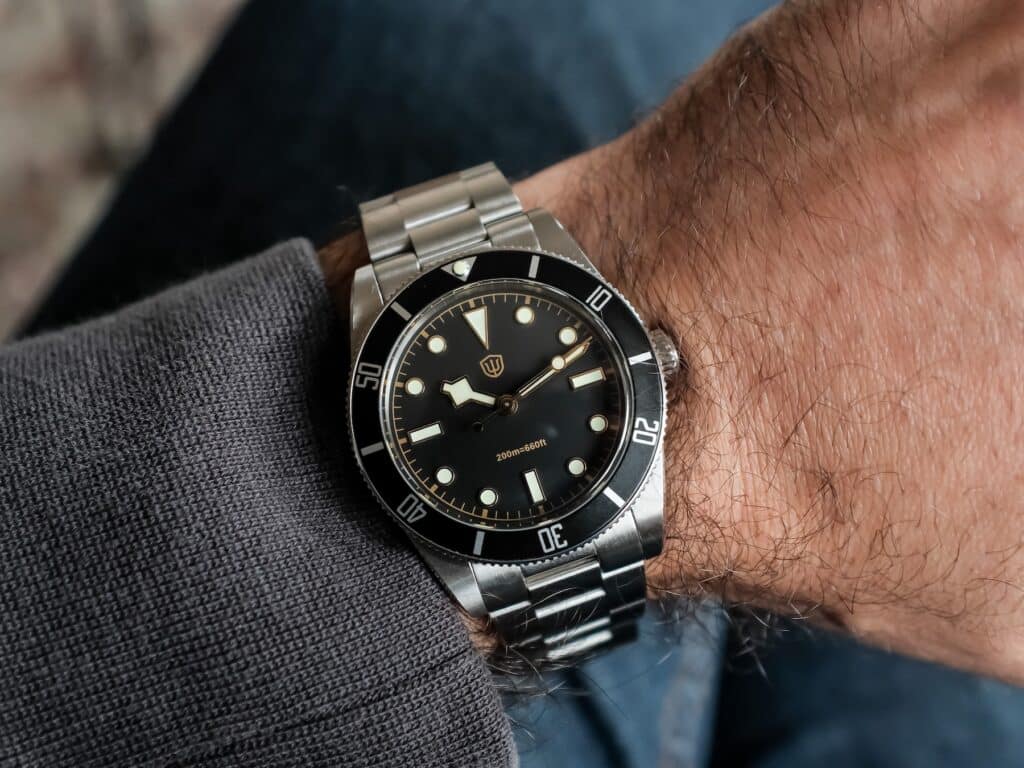
Watchdives WD7922
| Price: | $94 – $110 |
| Water Resistance: | 200m |
| Case Dimensions: | 37mm (diameter) x 45.5mm (lug-to-lug) x 11mm (thickness) |
| Lug Width: | 20mm |
| Movement: | Seiko VH31 Quartz |
We’ve handled plenty of vintage-leaning divers that look right in photos but fall apart once you start wearing them day to day. The WD7922 avoids that trap. It makes its case the moment it hits the wrist. The mid-30s case size sounds small, but the proportions are dialed in well enough that it never feels toy-like or overly precious. The brushed case flanks were an immediate relief. They hide daily scuffs better than polished sides ever could, which matters if you plan to wear the thing instead of treating it like a desk diver. The slim polished chamfer adds enough contrast without turning the watch into a scratch magnet. On the wrist, it sits flat, balanced, and easy to forget about in the best way.
The bezel is where the WD7922 really surprised us during testing. It has positive grip, clean alignment, and none of the mushy feel we often forgive at this price point. Using it casually for timing chores around the house or cooking, we felt more confident than with watches costing several times as much. The dial sticks to a familiar formula, but execution matters here. The matte black surface cuts glare well, the gilt details are restrained, and the lume is stronger than expected. After lights out, it stayed readable long enough to matter, which is more than we can say for many budget divers we’ve lived with. The overall effect feels intentional rather than costume-driven.
The bracelet is comfortable, tapers nicely, and fits the case without gaps, even if the mixed finishing breaks visual consistency a bit. The VH31 sweeping quartz movement is the kind of choice we appreciate more with time. It delivers smooth seconds, excellent accuracy, and removes the need for constant interaction. Over extended wear, that reliability became part of the appeal. Yes, the screw-down crown action can be fiddly, but with a quartz setup, it’s rarely something you need to deal with. This is a watch for someone who wants the vintage diver experience without the financial commitment or maintenance overhead.
Pros
- The compact case is balanced and comfortable for daily use.
- Brushed finishing hides wear better than high-polish alternatives.
- The bezel action is crisp, well-aligned, and easy to grip.
- The sweeping quartz movement delivers excellent accuracy with low maintenance.
- Strong lume performance for a watch at this price point
Cons
- The screw-down crown can be frustrating to thread smoothly.
- Bracelet finishing lacks consistency across all surfaces.
- The sweeping quartz movement will drain batteries faster than a standard quartz.
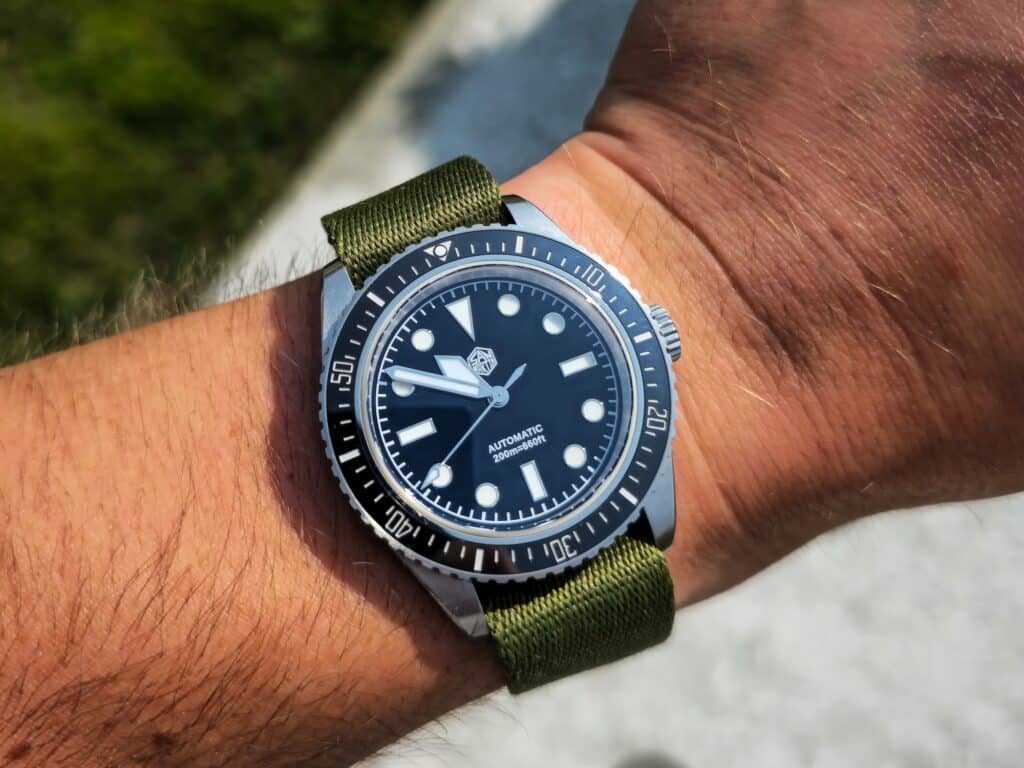
San Martin SN004 MilSub
| Price: | $167 – $200 |
| Water Resistance: | 200m |
| Case Dimensions: | 38mm (diameter) x 46mm (lug-to-lug) x 13mm (thickness) |
| Lug Width: | 20mm |
| Movement: | NH35 Seiko Automatic |
The San Martin SN004 earned its place on this list by doing something we rarely see at this price. It delivers a dive watch that feels considered on the wrist rather than assembled to hit a number. The 38mm case stood out on the wrist, especially for those of us with smaller wrists who usually struggle with bulky divers. It sits compact and balanced, helped by clean brushing along the lugs and case sides. A polished bevel runs through the length of the case, adding visual interest without feeling flashy. The 13mm thickness is primarily due to the crystal, and that domed sapphire adds height without making the watch feel top-heavy. Across multiple wrists, the case felt solid and deliberate, with tolerances that exceeded our expectations for a sub-$200 microbrand diver.
The dial-and-bezel combination is where the SN004 starts to separate itself. The glossy black dial catches light nicely, and the applied markers rise enough to add depth to the surface. After exposure, the blue BGW9 lume lit up strongly and stayed legible longer than many watches we have tested in this category. The ceramic bezel features a gear-tooth edge that is easy to grip, even with wet hands, and the 120-click action remained smooth and consistent, with no noticeable play. We also appreciated how the domed sapphire subtly distorts the dial at certain angles, giving the watch a soft, vintage-adjacent glow without feeling forced. The hands are well finished, but their flat profile can disappear in bright light, especially under glare. The printed text is clean but plain, which stands out only because the rest of the watch feels so thoughtfully executed.
Inside, the Seiko NH35 keeps things practical. During our testing, accuracy was around 7 to 9 seconds per day, which is right where we expect it to be. The movement is easy to service and familiar to most watchmakers, making long-term ownership less intimidating. The bracelet mirrors the case, brushing nicely, and uses screw links that make sizing straightforward. Some edges on the clasp felt sharper than we would like, and occasionally grabbed a stray hair. After extended wear, several of us swapped it onto a NATO or canvas strap, which lightened the feel and leaned into its utilitarian character. As an everyday diver, the SN004 delivers a reassuring, tactile experience that consistently makes us forget its price.
Pros
- Strong lume performance with bright, long-lasting BGW9 glow
- Smooth, precise ceramic bezel action with no wobble
- The case finishing and tolerances rival far more expensive microbrands.
- The compact 38mm case wears comfortably, especially for smaller wrists.
Cons
- The flat hands can lose contrast in harsh lighting.
- The clasp edges on the bracelet can feel sharp during extended wear.
- Dial text is clean but lacks the refinement seen elsewhere on the watch.
Scurfa Diver One
| Price: | $250 – $399 |
| Water Resistance: | 500m |
| Case Dimensions: | 40mm (diameter) x 47mm (lug-to-lug) x 14mm (thickness) |
| Lug Width: | 20mm |
| Movement: | ETA F06.402 (Quartz Movement) |
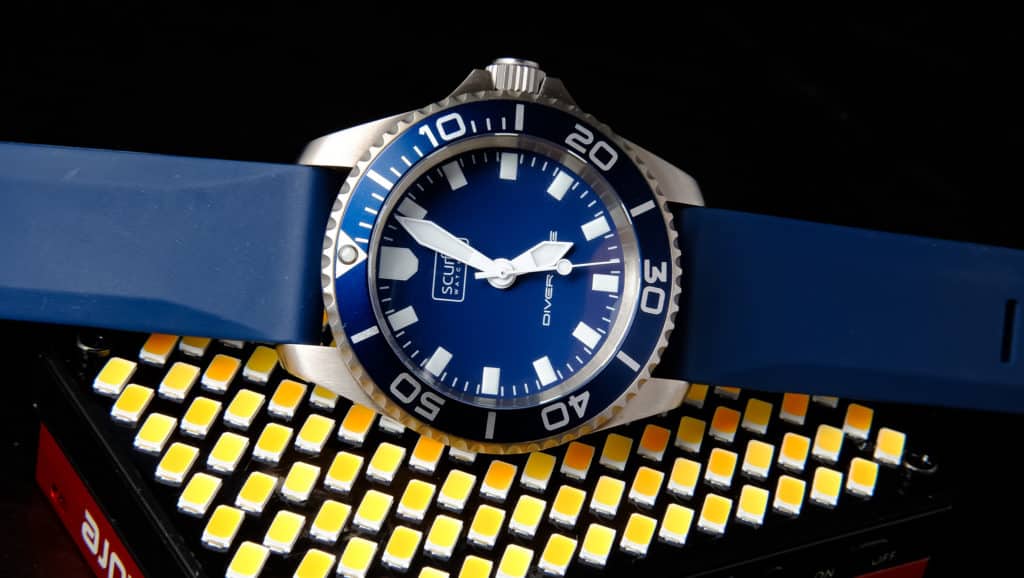
The Scurfa Diver One made its case with us less through specs and more through how confidently it handled real wear. The lightweight titanium case immediately stood out during extended wrist time. It keeps things comfortable over long days without ever feeling hollow or delicate. On paper, the 40mm width and 14mm thickness suggest a watch that might wear tall, but the contoured mid-case changes that equation. It distributes the weight evenly and avoids pressure points, making it easier to live with than many slimmer divers we have tested. Design choices like the screw-down crown and helium escape valve are not decorative here. They reinforce the sense that this watch was built with real underwater use in mind, not just desk-bound durability.
The dial and bezel are focused on clarity and reliability. Oversized markers and sword-style hands make reading the time effortless, even in less-than-ideal lighting. The matte blue dial shifts subtly with the light, adding visual interest without compromising legibility. The domed sapphire introduces mild edge distortion, giving the watch character without sacrificing function. Super-LumiNova BGW9 lume performs very well, charging quickly and remaining visible for hours, sometimes glowing faintly even in indirect light. The bezel action is another highlight. It rotates with firm, consistent clicks and no play, which inspired confidence whether timing something meaningful or everyday tasks.
Inside, the Swiss Ronda 713SM quartz movement fits the watch’s personality perfectly. It ran accurately throughout our testing and promises long battery life, which means less interaction and fewer interruptions. That reliability became more appreciated the longer we wore it. The rubber strap deserves equal recognition. It is soft, flexible, and secure, pairing well with the titanium case and keeping the watch stable during active use. Drilled lugs and titanium hardware make strap changes straightforward if you want to mix things up. After weeks on the wrist, the Diver One felt like a watch designed to be used without hesitation.
Pros
- The lightweight titanium case wears comfortably over long periods.
- Strong lume performance with excellent low-light legibility
- Bezel action is firm, precise, and free of play.
- Reliable quartz movement with long battery life
- Comfortable rubber strap that suits daily and active wear
Cons
- The Quartz movement may not appeal to mechanical-only collectors.
- Case thickness can feel tall on smaller wrists.
Dan Henry 1970
| Price: | $270 – $400 |
| Water Resistance: | 200m |
| Case Dimensions: | 40mm (diameter) x 46mm (lug-to-lug) x 14.8mm (thickness) |
| Lug Width: | 22mm |
| Movement: | NH35 (Automatic Movement) |
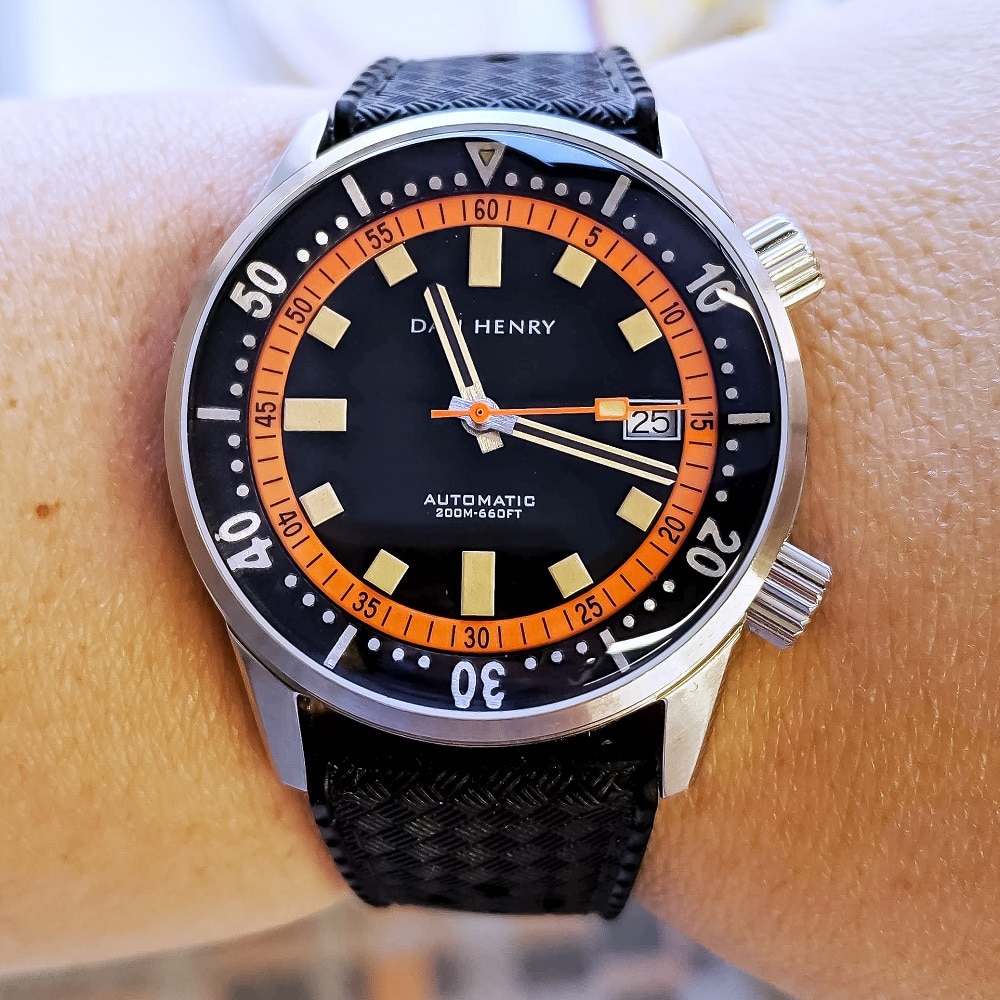
The Dan Henry 1970 is one of those dive watches that feels intentionally designed for people who actually wear their watches, not just admire them in a box. On the wrist, the 40mm case surprised us with how well it settled in despite being close to 15mm thick. The short, gently sloped lugs do most of the work here, pulling the case down onto the wrist and keeping it stable during long days. That thickness is mainly due to the domed mineral crystal, which adds visual depth without making the watch feel awkward under a sleeve. The mix of brushed surfaces with subtle polished accents gives the case enough character to avoid feeling flat, while still staying practical for daily wear.
The dual-crown layout is more than a visual nod. The large, cross-hatched crowns are easy to grip and intuitive in use, especially when adjusting the internal timing bezel via the crown at two. We found the internal bezel easier to live with than the external ones in crowded environments since it avoids accidental knocks. The matte black dial keeps reflections in check, and the rectangular lume plots and hands strike a good balance between vintage styling and modern readability. The pop of orange from the chapter ring and seconds hand adds energy without overwhelming the dial, and the framed date window at three stays legible without disrupting the layout. The internal bezel is well angled, with applied markers and a lumed triangle that made timing tasks straightforward in low light.
Inside, the Seiko NH35 felt like the right choice for this watch. It offers a familiar winding-and-setting experience, along with hacking and hand winding, and it ran consistently during our time with it. The second-hand sweep has enough texture to feel mechanical without trying to be precious. The included tropic-style rubber strap started stiff but softened with wear, becoming comfortable for long stretches. The lack of drilled lugs makes strap swaps slightly more involved, but standard spring bars are easy to replace and feel secure. Small details, like the deeply stamped octopus caseback and the included three-watch roll, reinforced that this is a watch designed by someone who understands what enthusiasts appreciate.
Pros
- The short lugs help the thick case sit comfortably on a wide range of wrists.
- The internal timing bezel is easy to use and avoids accidental bumps.
- Balanced dial layout with strong legibility and subtle color contrast
- Reliable automatic movement with hacking and hand winding
- Thoughtful packaging and caseback details add personality.
Cons
- The domed mineral crystal contributes noticeable thickness.
- The tropical strap is stiff out of the box.
- No drilled lugs make strap changes less convenient.
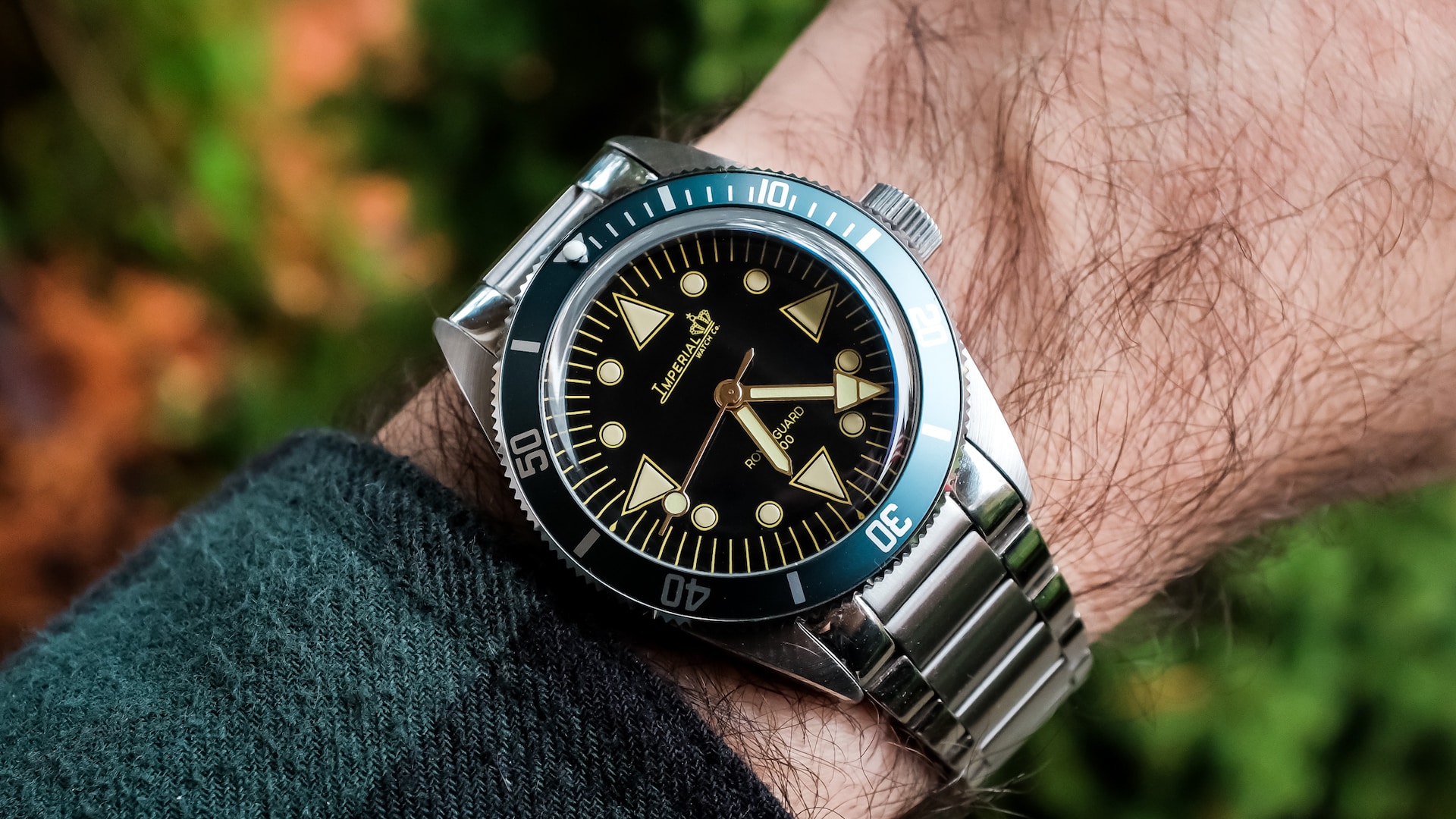
Imperial Royalguard 200
| Price: | $450 |
| Water Resistance: | 200m |
| Case Dimensions: | 38mm (diameter) x 47mm (lug-to-lug) x 14mm (thickness) |
| Lug Width: | 20mm |
| Movement: | Seiko NH35 (Mechanical Movement) |
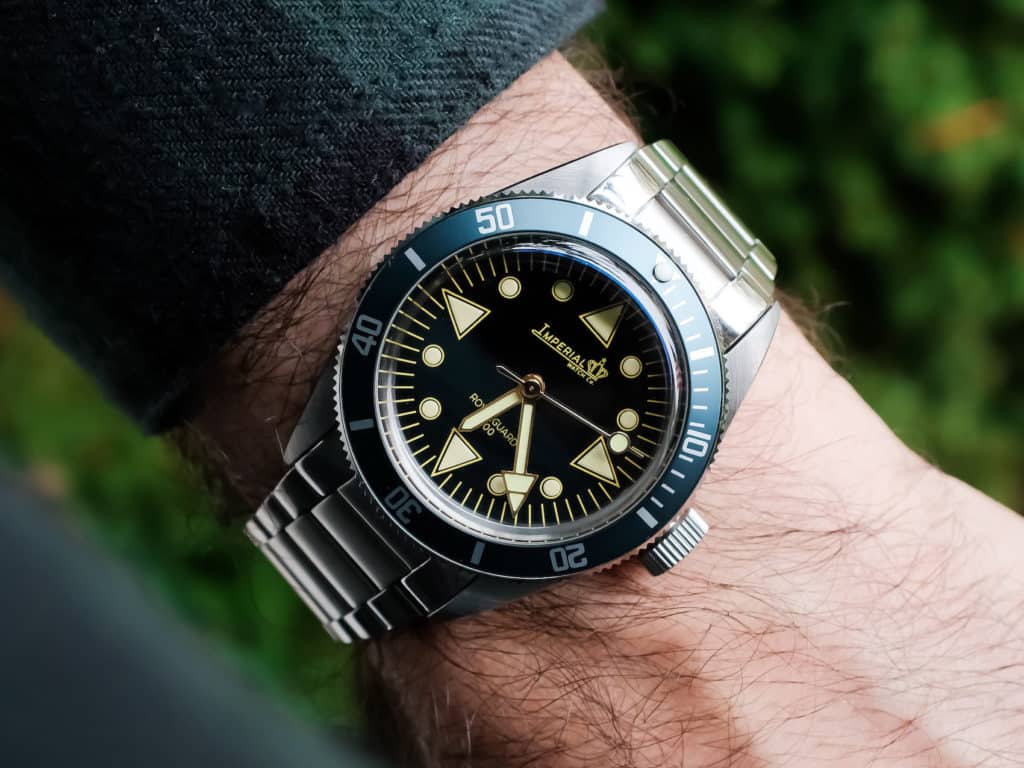
The Royalguard 200 stood out to us less for any single spec and more for how cohesive it felt on the wrist. The influence of its modding roots shows up quickly, not in loud references but in small decisions that add up during wear. The 38mm case hits a sweet spot for everyday comfort, and despite the 14mm thickness, it stays centered and stable thanks to its proportions. At 47mm lug-to-lug, it avoids the overhang issues that often make compact divers feel awkward. The drilled lugs made strap changes painless during testing, and the aluminum bezel insert was more interesting than expected, shifting color subtly as lighting conditions changed. With 200 meters of water resistance, it feels ready for real use without leaning into excess.
We spent more time than expected interacting with its 7.5mm crown, which turned out to be a highlight. Its oversized profile makes winding and setting feel deliberate and satisfying rather than fiddly. The bracelet tapers from 20mm to 16mm, keeping the watch visually balanced while still giving it presence on the wrist. On the dial, the repeating triangle motif adds a rhythm that feels intentional and quite easy to read at a glance. It is a layout we do not see often, and it gave the watch its own identity during daily wear. The aluminium bezel may not have the permanence of ceramic, but it fits the watch’s character and will age in a way some of us enjoy.
The familiar Seiko NH35 keeps things practical and serviceable, though the ghost date is something you notice when setting the time. Accuracy isn’t great, with the watch running about -25 seconds/day during testing. The clasp is functional but basic, doing its job without adding much personality. Even with those trade-offs, the Royalguard 200 earned its place on this list through feel rather than flash. It came across as personal, thoughtfully assembled, and confident in what it is. Among the microbrand dive watches we’ve reviewed, it remains one of the most distinctive under $500.
Pros
- The compact 38mm case wears centered and comfortable on a variety of wrists.
- The oversized crown offers a satisfying and secure seating experience.
- The triangle-based dial layout is distinctive and easy to read.
- The aluminum bezel insert shows pleasing color shifts in different light.
- Drilled lugs make strap changes quick and easy.
Cons
- The NH35 ghost date is noticeable during time setting.
- The clasp feels basic compared to the rest of the watch.
WMT Royal Marine Divers
| Price: | $550 |
| Water Resistance: | 100m |
| Case Dimensions: | 39.5mm (diameter) x 47mm (lug-to-lug) x 14.8mm (thickness) |
| Lug Width: | 20mm oyster style that tapers down to 16mm |
| Movement: | Seiko NH35 |
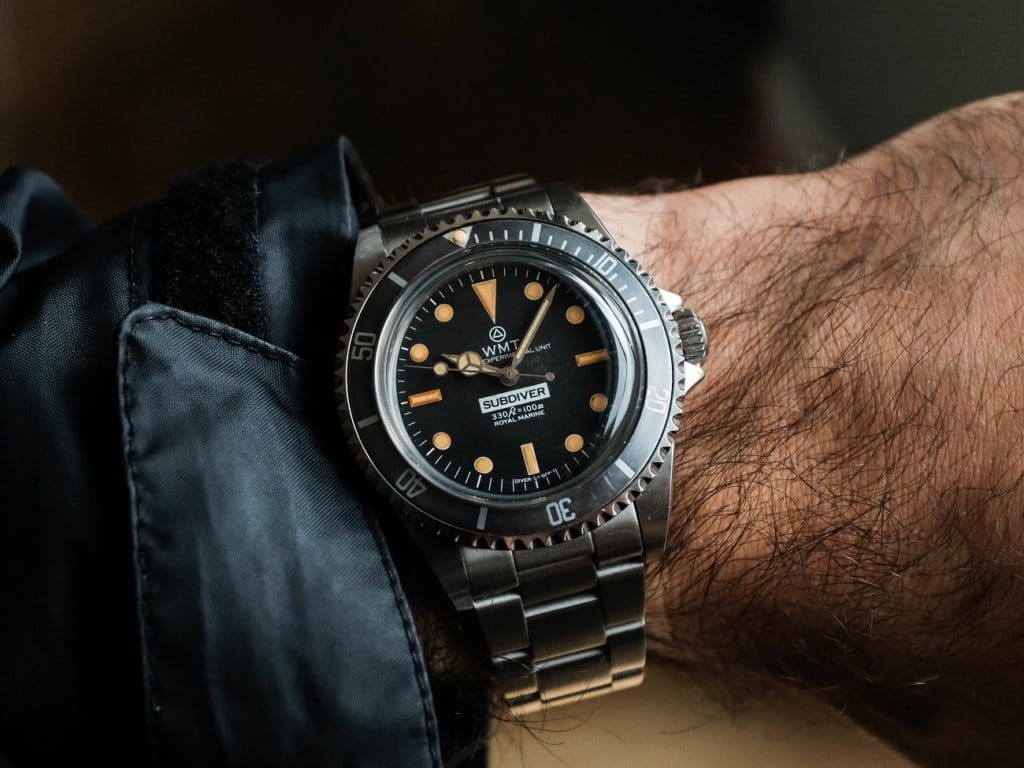
The Royal Marine Divers from WMT stood out to us because they felt lived-in right out of the box, not styled to look that way for effect. Both versions share a 39.5mm case that struck a nice balance between presence and comfort during extended wear. The finishing is sharper than we expected at this price, with brushed surfaces broken up by subtle polished transitions that add depth without drifting into flashy territory. The tall acrylic crystal plays a significant role here. It adds distortion at the edges and softens reflections, which gives the watches a warmth that steel and sapphire alone usually cannot. Water resistance sits at 100 meters, which proved more than enough for swimming and daily mishaps, even if it stops short of more extreme use.
Dial execution is where the two variants start to feel distinct. The Royal Navy version leans understated, with its muted gray-black dial, sword hands, and small circle-T marking, while the Subdiver pushes a bolder personality with blockier text and greater visual weight. Both aim for a worn, issued look, and during wrist time, that intention came across clearly. The lume is intentionally subdued and fades quickly, limiting nighttime visibility but reinforcing the aged aesthetic. Interestingly, the slight mismatch in tone between the hands and markers felt intentional rather than careless, adding to the sense that these watches are meant to feel broken-in rather than pristine. On the wrist, we found them versatile. They worked just as well for casual wear on NATO as they did on steel in a more buttoned-up setting.
Power comes from the Seiko NH35, which continues to earn its reputation for dependability. Our samples ran roughly 2 seconds per day, which is excellent for this movement and price range. The Subdiver’s bracelet was a highlight. It felt solid, tapered nicely, and used screw links that made sizing painless. The Royal Navy, on the other hand, shipped on a WMT-branded Phoenix-style strap that ran short for some of us, prompting a quick swap to a longer NATO that suited the watch better. For a deeper dive into these models, read our dedicated hands-on review.
Pros
- Convincing vintage-inspired aesthetic that feels natural on the wrist
- Comfortable 39.5mm case with well-executed finishing and acrylic crystal
- The bracelet version offers solid construction and easy sizing.
- Versatile wear on both straps and the bracelet
Cons
- Lume performance is weak and fades quickly.
- No screw-down crown limits perceived robustness.
- The included strap on the Royal Navy version may be too short for some wrists.
- A slight tone variation between the hands and markers is noticeable in bright light.
Nodus Sector Deep
| Price: | $599 |
| Water Resistance: | 500m |
| Case Dimensions: | 38mm (diameter) x 47mm (lug-to-lug) x 13.6mm (thickness) |
| Lug Width: | 20mm |
| Movement: | Seiko NH35 (Mechanical Movement) |
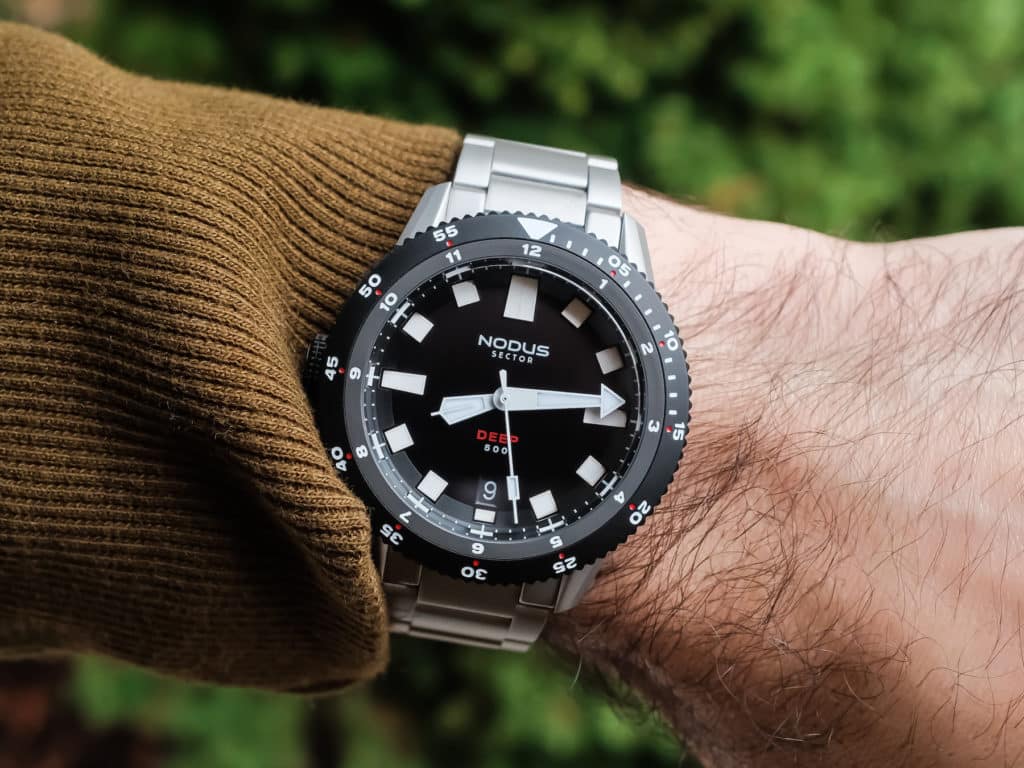
The Sector Deep felt like a turning point for Nodus when we spent real time with it. It keeps the microbrand’s usual attention to detail but shifts the focus firmly toward function. The 38mm case wears low on the wrist, which is not something we take for granted on a watch this deep. During daily wear, it stayed balanced and never felt top-heavy, even on smaller wrists. The crown placement on the left side made a noticeable difference. It avoided digging into the wrist and gave the case a slightly asymmetrical look that made sense once you lived with it. The matte DLC bezel added grip without glare, and the dual-scale layout proved helpful when tracking elapsed time while keeping an eye on a second time zone.
The dial execution reinforced that sense of practicality without feeling flat. The white PVD-coated frames around the indices subtly catch light, and the lume-filled centers taper outward at the cardinal points, creating a gentle domed effect when viewed head-on. That detail added depth while keeping legibility clean and immediate. BGW9 Super-LumiNova performed well in our low-light checks, making nighttime reading straightforward. Inside, the Seiko NH35 was regulated in-house by Nodus, and our samples ran within roughly +/- 10 seconds per day. That out-of-the-box accuracy felt better than what we often expect from an unregulated example. The 41-hour power reserve fit naturally into a rotation without surprises.
Bracelet comfort was another strong point, according to our review team. The links are secured with screws, which made sizing painless, and the taper from 20mm to 18mm kept the watch from feeling overly broad at the clasp. The NodeX adjustment system enabled quick micro-adjustments throughout the day, which we appreciated when wrists swelled with heat or from activity. The dual push-button clasp stayed secure, though when fully extended, some hardware remains visible, breaking the clean look. Taken as a whole, the Sector Deep earns its place among the best dive watches from microbrands by combining real-world wearability, thoughtful design decisions, and useful timing features in a compact package.
Pros
- The case wears low and balanced despite extreme depth capability.
- Left-side crown improves comfort during extended wear.
- The NodeX clasp makes on-the-fly adjustments easy.
- Dual-scale DLC bezel offers a firm grip and practical timing options.
- Well-executed dial with excellent BGW9 lume performance
Cons
- Exposed hardware when the clasp is fully extended
- Asymmetrical design prioritizes function over visual symmetry, which may not suit all tastes.
Baltic Aquascaphe
| Price: | $650 – $750 |
| Water Resistance: | 200m |
| Case Dimensions: | 39mm (diameter) x 47mm (lug-to-lug) x 12mm (thickness) |
| Lug Width: | 20mm |
| Movement: | Miyota 9039 (Mechanical Movement) |
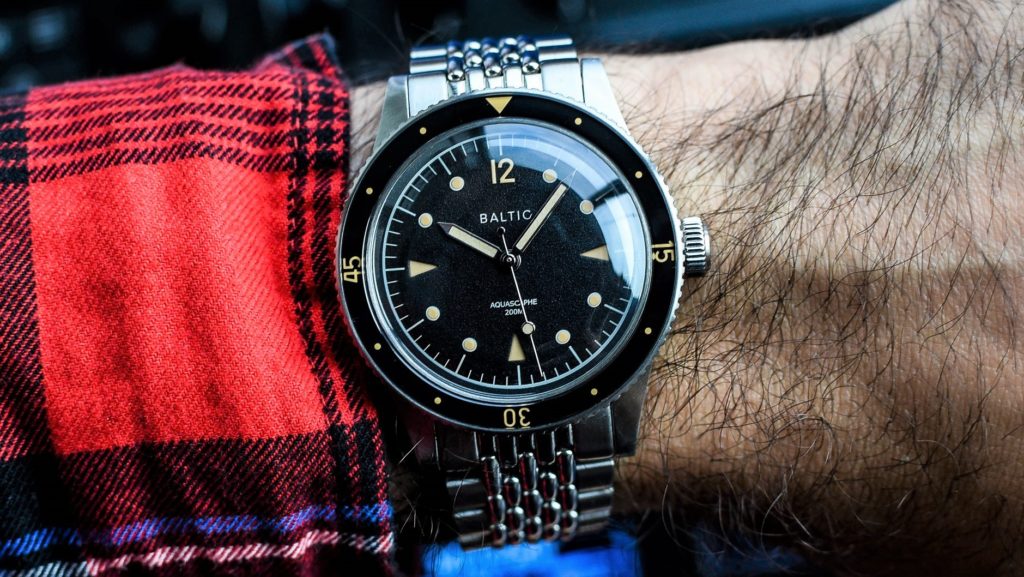
The Aquascaphe is one of those microbrand dive watches that quietly earns its place rather than demanding it. The case measures modestly, but Baltic’s finish and weight lend the watch a presence that feels much more refined. At just over 12mm thick, it slid easily under sleeves during daily wear, and the 47mm lug-to-lug kept it planted without overhang. The mostly brushed surfaces do a good job of hiding wear, and the textured crown was easier to grip than expected when adjusting or unscrewing it. With the double-domed sapphire, screw-down crown, and 200 meters of water resistance, it felt like a watch we could wear without thinking twice about conditions.
The dial is where the Aquascaphe wins people over. The hybrid sandwich construction adds depth without making the layout busy, revealing a fully lumed layer beneath the cut-out indices. In low light, that design paid off with an even, readable glow that felt practical rather than flashy. The gilt-toned accents are restrained and warm, tying in naturally with the sapphire bezel insert instead of leaning into forced aging. The matte texture shifts depending on lighting, which kept the dial interesting over long stretches of wear. The handset deserves special mention. The pencil-style hands are sharp, well-sized, and easy to track at a glance, while the lollipop seconds hand reaches the chapter ring cleanly. Minimal dial text keeps everything feeling balanced and intentional.
On the bracelet, the Aquascaphe wore comfortably for whole days without hot spots. The beads-of-rice design conforms well to the wrist and tapers naturally, making it easy to forget you are wearing a steel bracelet at all. Polished beads paired with brushed outer links struck a nice visual balance, and the clasp kept things simple while offering plenty of micro-adjustment. Quick-release spring bars made swapping to other straps painless, and the optional Tropic rubber strap leaned into the vintage character. Inside, the Miyota 9039 was a sensible choice for a time-only watch. The two-position crown avoids unnecessary clicks, and the movement ran smoothly during testing with a stable beat rate of 28,800 vph and a usable 42-hour power reserve.
Pros
- The hybrid sandwich dial adds depth and strong low-light legibility.
- Warm gilt accents feel balanced rather than overdone.
- Comfortable beads-of-rice bracelet with easy strap swapping
- The slim case profile wears comfortably and slips under sleeves easily.
- Reliable time-only movement without unnecessary complexity
Cons
- The mostly brushed case lacks the contrast that those who prefer high polish prefer.
- No date function may limit appeal for some daily wearers.
Gavox Avidiver
| Price: | $685 – $800 |
| Water Resistance: | 200m |
| Case Dimensions: | 43mm (diameter) x 50.8mm (lug-to-lug) x 12.8mm (thickness) |
| Lug Width: | 22mm |
| Movement: | Miyota 9015 (Automatic) |
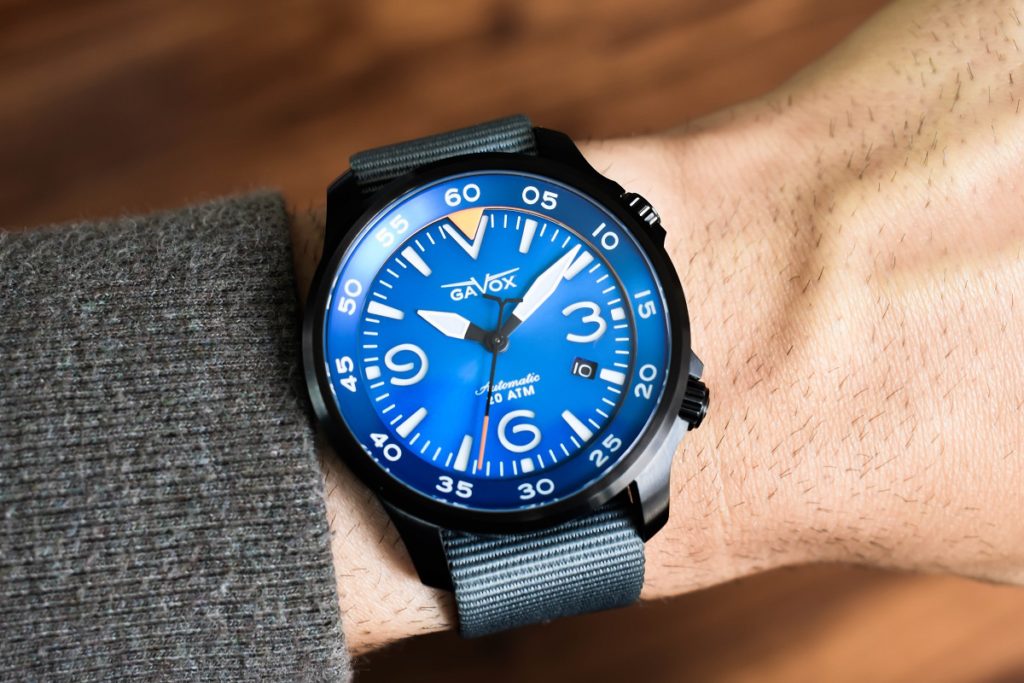
The Gavox Avidiver is one of those microbrand dive watches that made us rethink how rigid categories really need to be. On paper, its aviation influence is evident, but on the wrist, it works well as an everyday diver. The thoroughly brushed 316L stainless steel case minimizes reflections and gives the watch a clean, utilitarian feel. At 43mm across, we expected it to feel bulky, but the relatively slim 12.8mm thickness and curved lugs helped it sit lower than anticipated. Paired with the integrated rubber strap, it stayed close to the wrist during long days and never felt top-heavy. The twin-crown layout also felt purposeful rather than decorative, and water resistance is rated to 200 meters.
The dial is where the Avidiver shows its personality. High contrast markings and large sword hands made time checks quick and intuitive, even at a glance. The layered dial construction adds real depth, and the lume application is generous across nearly every surface. During in-depth testing, it charged quickly and stayed visible well into the night. The internal rotating triangle, controlled by the crown at two, became more useful than we expected. It worked well for tracking elapsed time, short reminders, and other timing tasks beyond anything dive-specific. The small date window at four stayed out of the way and felt more practical than intrusive.
Inside, the Miyota 9015 delivered exactly what we hoped for. Accuracy was consistent across multiple examples, and the smooth winding action made interaction pleasant. The only friction point we noticed was during crown operation when switching between winding and setting positions, where the action occasionally felt hesitant. The exhibition caseback added some visual interest, with a rotor logo that subtly reinforced the brand’s aviation cues. Also, the silicone rubber strap deserves real credit. It was soft, flexible, and light, and the integrated design kept the watch stable without pressure points. Dust attraction was noticeable at times, but comfort outweighed it.
Pros
- Excellent lume coverage with strong low-light visibility
- Slim wearing profile despite larger case diameter
- The internal rotating triangle adds practical timing flexibility.
- Comfortable, well-executed integrated rubber strap
Cons
- The crown action can feel sticky when switching settings.
- The larger lug-to-lug size may not suit smaller wrists.
- The rubber strap attracts dust and lint easily.
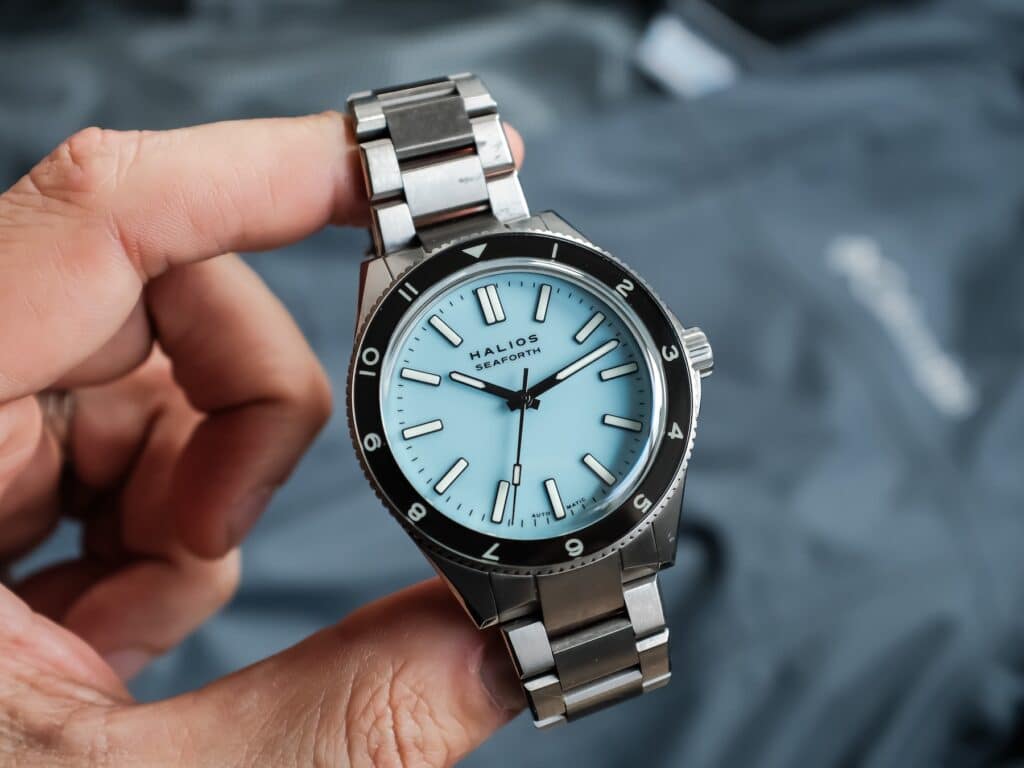
Halios Seaforth in Titanium
| Price: | $965 |
| Water Resistance: | 200m |
| Case Dimensions: | 41mm (diameter) x 46.5mm (lug-to-lug) x 12.4mm (thickness) |
| Lug Width: | 20mm |
| Movement: | Sellita SW200-1 |
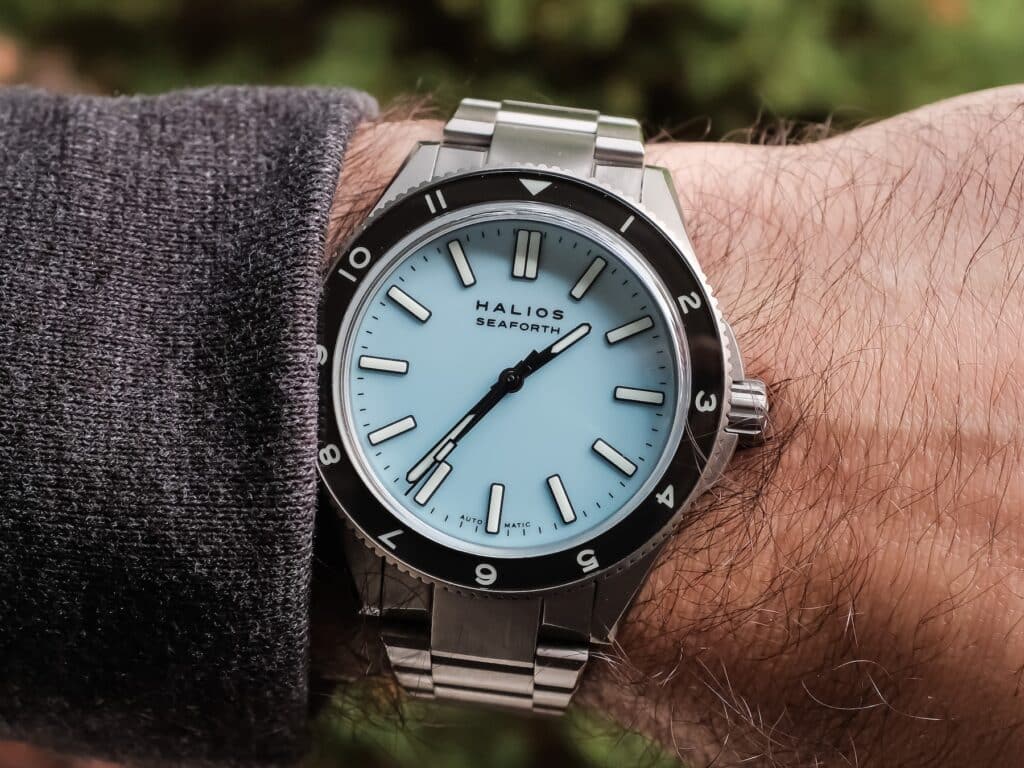
The titanium Seaforth earned its place on this list by slowly taking over wrist time without asking permission. We started wearing it with the intent of rotating, and it never left. Titanium changes the entire experience here. The watch feels almost weightless when you pick it up, and even more so once it is on the wrist. The familiar Seaforth case shape benefits from that shift, wearing slimmer than the measurements suggest, thanks to the way the case tapers. The double-domed sapphire adds visual height without bulk. Finishing is clean and controlled, with uniform brushing and polished chamfers on the lugs that add definition without being overbearing. With a screw-down crown and caseback and 20 ATM water resistance, it still feels ready for real use, just with a lighter touch than steel versions.
Living with the Seaforth day-to-day felt effortless. The absence of a date keeps interaction minimal, which we came to appreciate. Setting the watch, throwing it on, and getting through the day required no thought. The unidirectional bezel moves through its 120 clicks with a smooth, confident action and enough grip to use easily without feeling sharp. We went with the 12-hour bezel, and it quickly became part of our routine. Tracking a second time zone for work or family felt intuitive and honest, avoiding the clutter and compromises that often come with dedicated GMT layouts.
The dial carries more presence than its soft pastel tone suggests. The blue surface subtly shifts with changing light and avoids appearing flat, while ceramic hour markers rise from the dial with crisp edges. Lume performance was another quiet win. The Super-LumiNova C3 X1 faded evenly across hands, markers, and bezel, making nighttime checks feel natural rather than uneven.
The titanium bracelet ties the whole package together. It integrates seamlessly with the case, flows comfortably around the wrist, and uses screw links that make sizing painless. The stainless steel clasp adds reassuring weight, and the tool-free adjustment system proved invaluable during long days when wrist size fluctuates. Inside, the Sellita SW200-1 behaved predictably, set easily, and maintained steady accuracy with a practical power reserve of 40 hours. Over time, the titanium case and bracelet did pick up scratches, but that felt like honest wear rather than a flaw.
Pros
- The titanium case and bracelet are incredibly light and comfortable for extended wear.
- Case proportions and taper make it feel slimmer than expected on the wrist.
- The even lume fade improve low-light legibility.
- The 12-hour bezel offers practical second time zone tracking.
- Excellent bracelet integration with tool-free micro-adjustment
Cons
- Titanium shows scratches quickly with regular use.
- Limited availability can make purchasing frustrating.
If you’ve spent time living with any of these microbrand dive watches, we’re genuinely curious how they’ve held up for you. And if there’s a lesser-known diver you think deserves a spot in this conversation, drop it in the comments. Fair warning, though. If enough of you mention the same watch, we will probably end up chasing one down and putting it through its paces.

Co-Founder and Senior Editor
Kaz has been collecting watches since 2015, but he’s been fascinated by product design, the Collector’s psychology, and brand marketing his whole life. While sharing the same strong fondness for all things horologically-affordable as Mike (his TBWS partner in crime), Kaz’s collection niche is also focused on vintage Soviet watches as well as watches that feature a unique, but well-designed quirk or visual hook.
Where is “deep blue” watches , ?
Hey Jake – good call. If we ever get one in for review/photos, it would be great to update this with one of their models.
The Baltic Aquascaphe on beads of rice was my first real watch and I love it. Your review helped me decide and I couldn’t be happier. Whenever I see other dive watches I ask myself how it compares in aesthetic, capability, and price to the Baltic and I’ve had no real compulsion to buy another diver! It’s an incredible piece in general, and the price is accessible. If only US buyers didn’t have deal with tariffs and overseas shipping cost!
Hey Gumbo – the Aquascaphe is one of those pieces that just gets the fundamentals right, and the beads of rice bracelet suits it perfectly. I still look back fondly at my time with it. The shipping and tariff situation for US buyers is a real pain point for a lot of European microbrands, though. Hopefully that improves over time.
Haven’t heard of most. Baltic is not a Microbrand. What about Resco and Ocean Crawler?
Don’t know much about Ocean Crawler. Would love to review a Resco some day.
Baltic has been around less than 10 years, and independent. That’s the epitome of a micro brand.
Can’t beat Nomadic watches diver quality all the way
Hi, Mark:
This is a brand that we actually haven’t had any hands-on experience with. If we’re able to secure a hands-on review with them brand than they’ll absolutely be considered for inclusion on this piece.
Thank you!
-Kaz