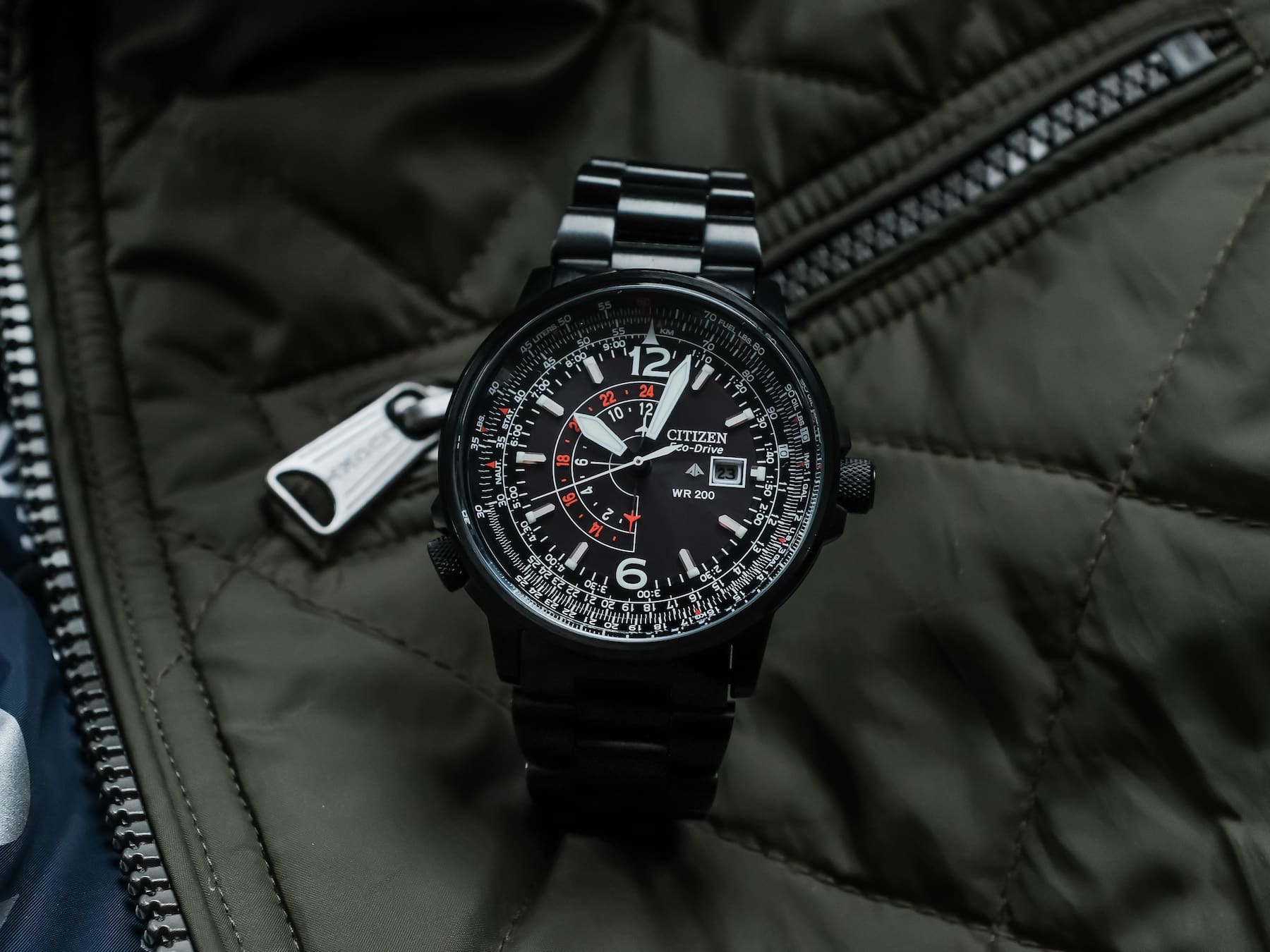
This isn’t my first Citizen Nighthawk. For years on the TBWS podcast, Kaz and I have kept coming back to it as one of the most function-forward and genuinely interesting watches in Citizen’s Eco-Drive lineup. A few years back, I bought and later sold one of the standard stainless steel models. It left more of an impression than I expected, and I still think the Nighthawk stands as one of the most affordable and compelling true-GMT watches you can buy, especially when you look at what it offers without asking for much compromise.
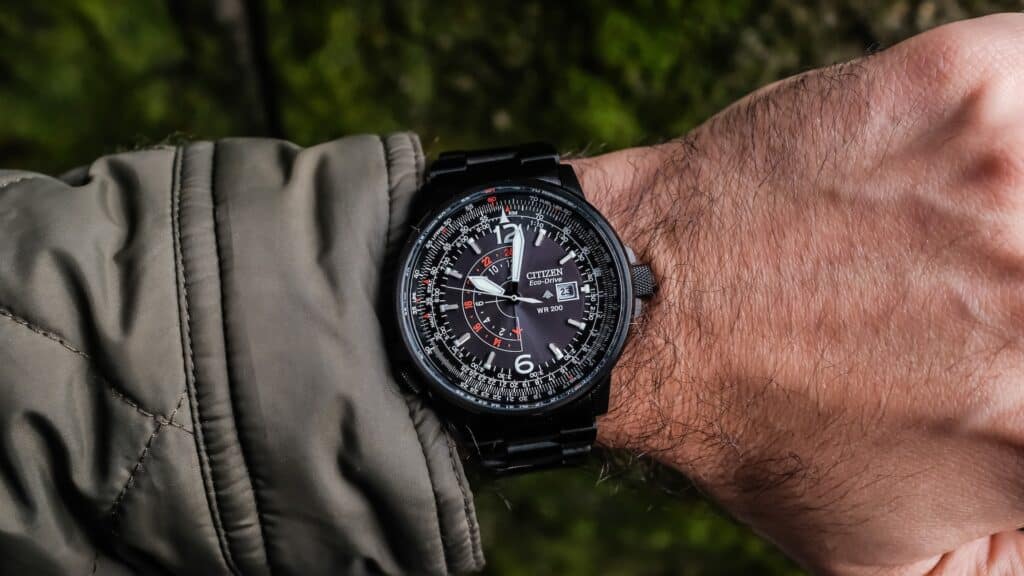
After some time without one in the collection, I found myself missing it in a very specific way. Not out of regret, but because certain watches start to make more sense the longer you’ve been collecting. That eventually led me back to the Citizen Nighthawk, and more specifically to this blacked-out JDM version. On paper, it’s familiar, but in hand, a handful of design quirks shift the tone enough that it doesn’t feel like a repeat experience.
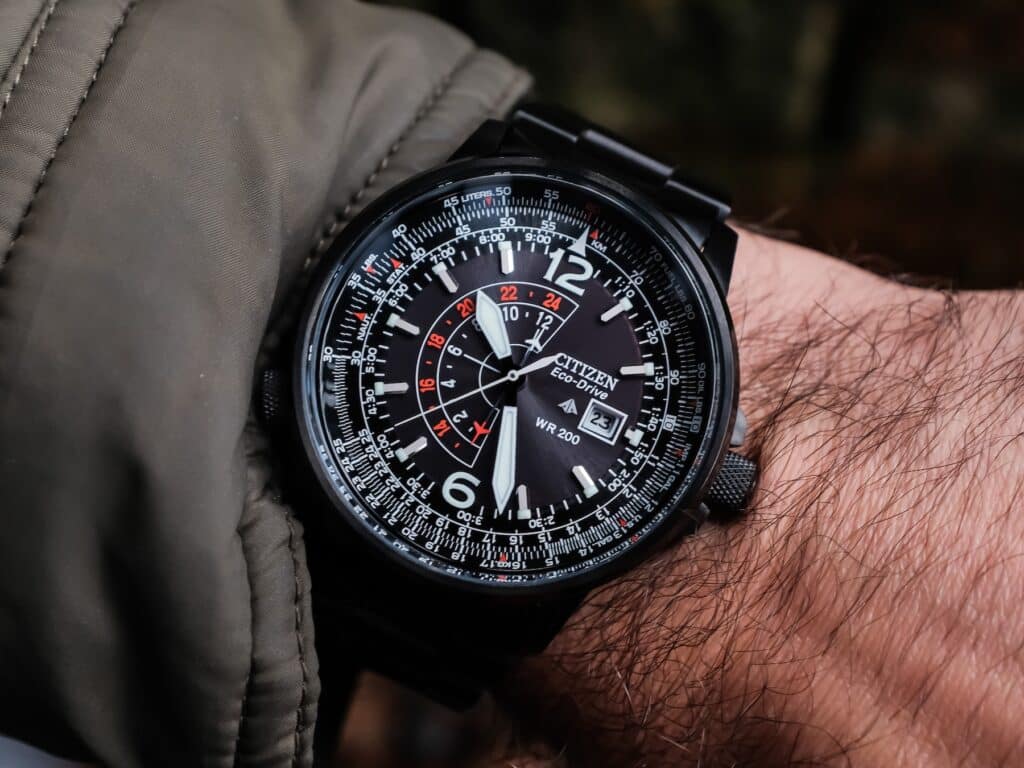
I’ve been wearing it here and there for a bit now, and it felt like the right moment to sit down and talk about a Citizen Nighthawk you don’t commonly see changing hands among other reviewers. It’s not rare for the sake of novelty, but it does offer a slightly different perspective on a watch many of us already think we understand.
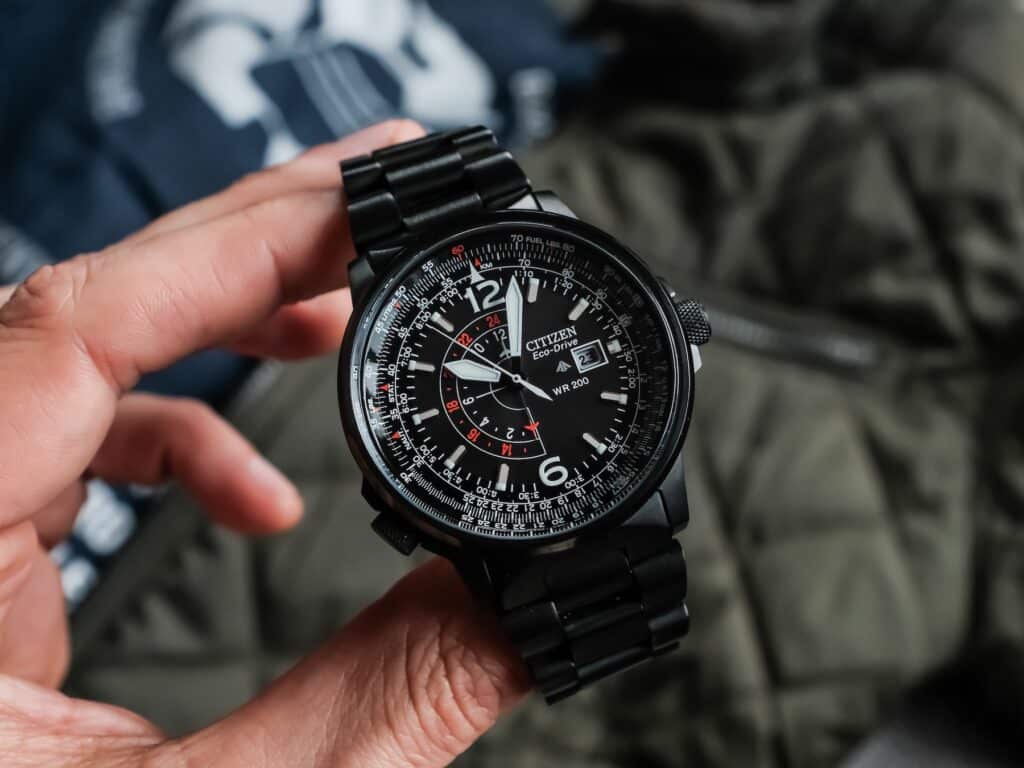
What This Version Actually Is
Citizen never officially applies the Nighthawk nickname outside the U.S. market, and this watch doesn’t pretend otherwise. In practice, though, the differences between this Japanese and European market version and the U.S. Nighthawk are so subtle that the distinction feels more technical than experiential. Same architecture, same intent, same overall feel once it’s on the wrist.
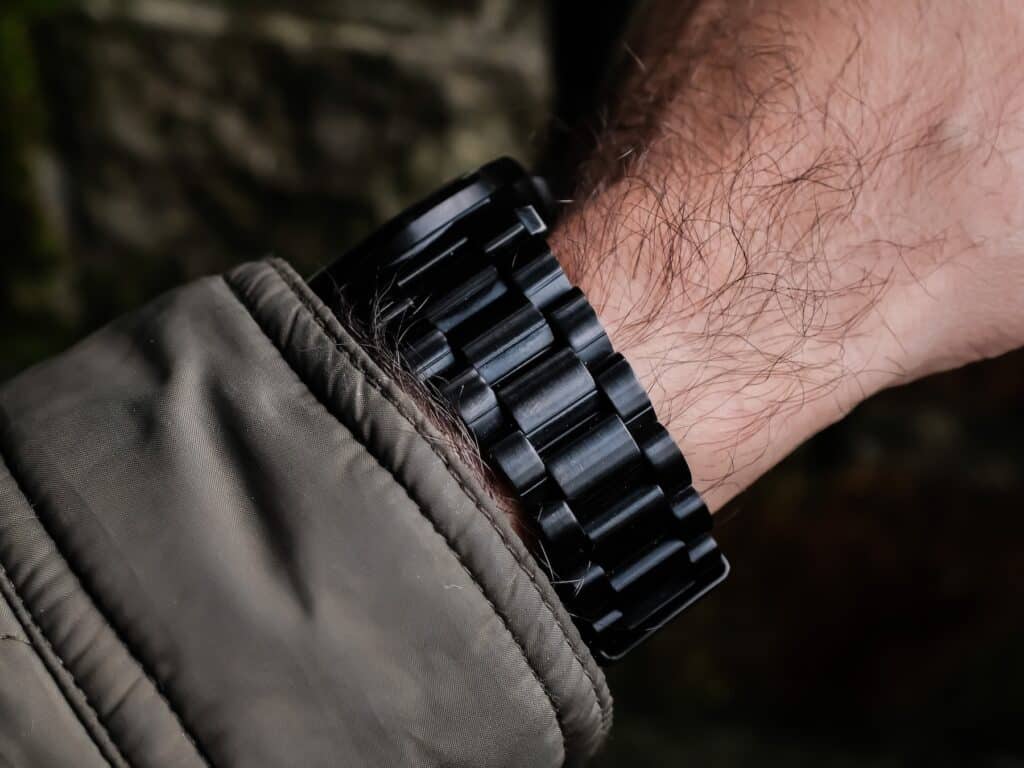
Where this version separates itself is tone. The blacked-out case and bracelet shift the watch away from straightforward aviation utility and into something a little more assertive. It still avoids excess. It’s more involved than a basic three-hand tool watch, but it stops well short of the complexity found in Citizen’s more elaborate pilot models. That middle ground has always been the Nighthawk’s strength, and this variant leans into it with more confidence.
Case, Bezel, and Wearing It
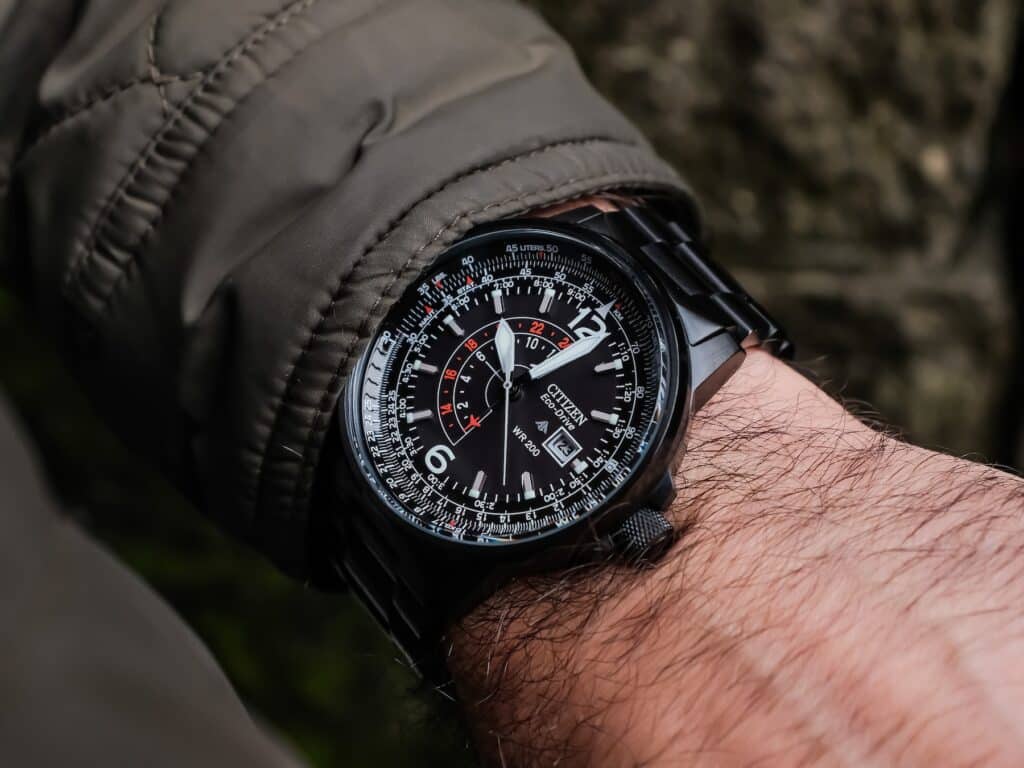
This is not a watch that disappears once it’s on your wrist. You’re aware of it throughout the day. On paper, the 42.5mm case and 12.6mm thickness explain why it never fades into the background, and on the wrist those numbers translate exactly the way you’d expect. It’s large, it’s heavy, and it has a presence that announces itself. Sometimes, though, that’s exactly what you want. There are days when reaching for something substantial just makes sense, and this watch fills that role easily.
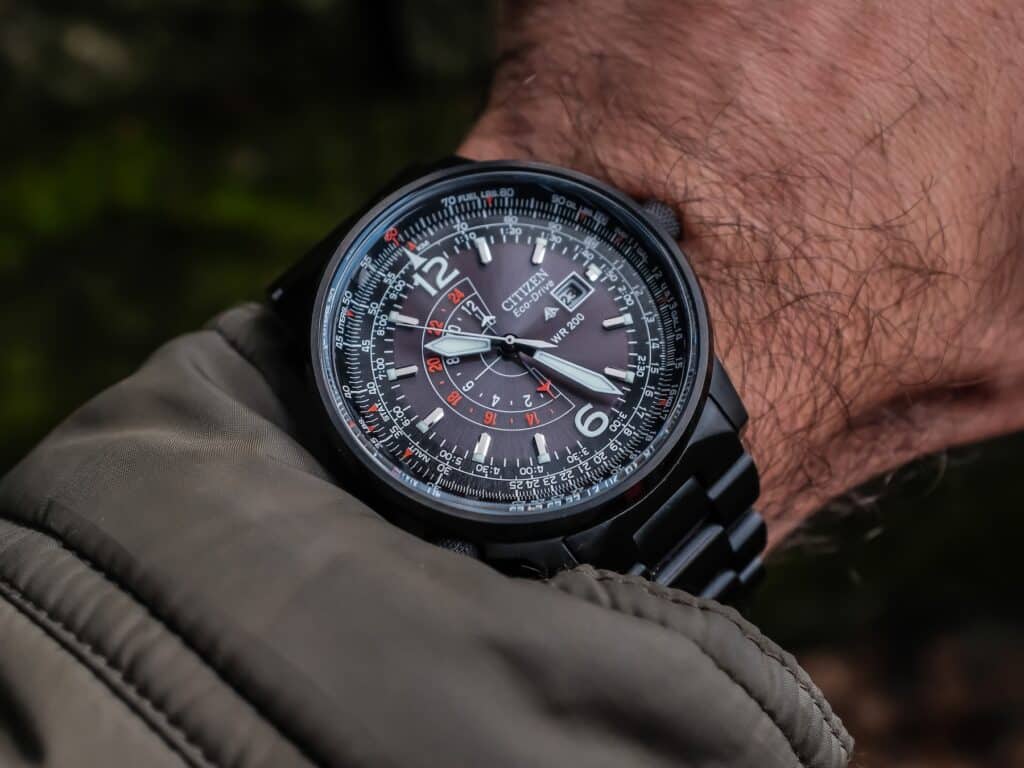
That said, it’s not something I could see myself wearing daily over long stretches. I tend to gravitate toward smaller, lower-profile watches, and this feels more like a deliberate choice than a default. As a counterpoint in a rotation, it works extremely well. If this were full titanium, the conversation would be very different, but in stainless steel with black ion plating, it stays firmly in the category of purposeful heft.
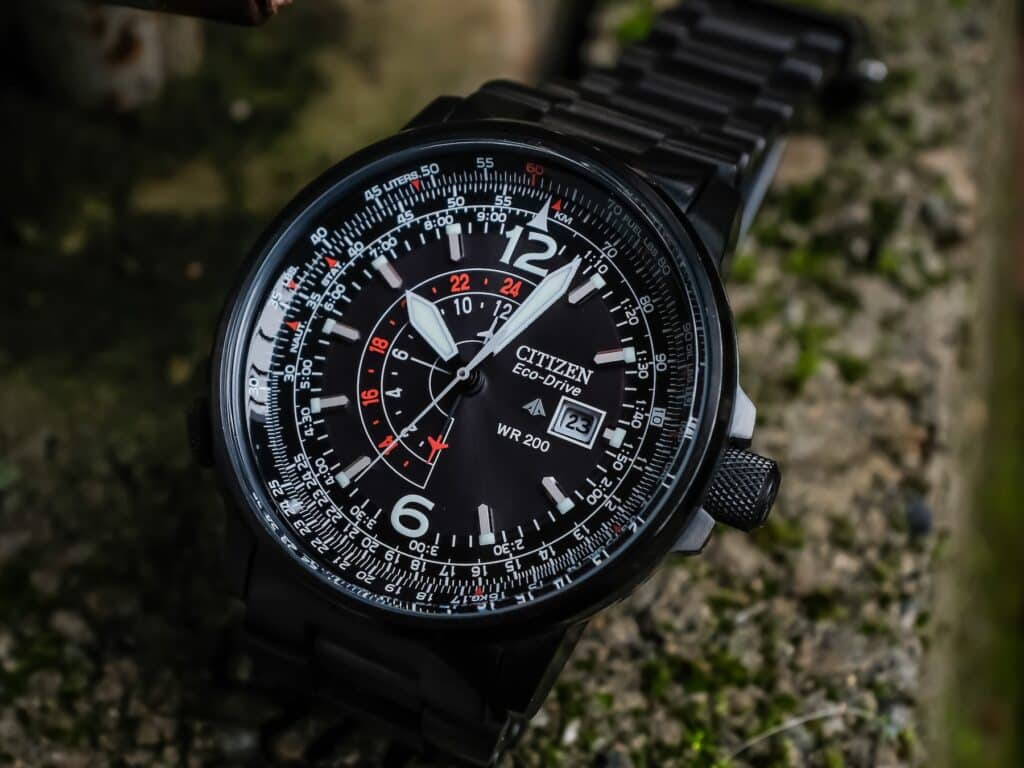
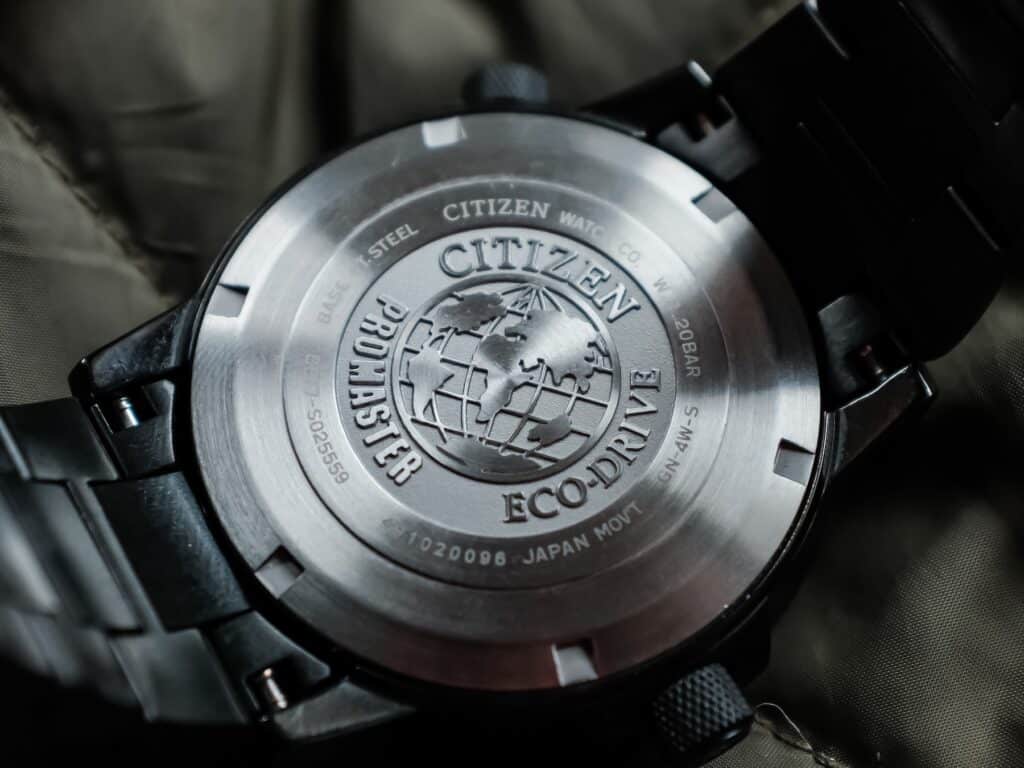
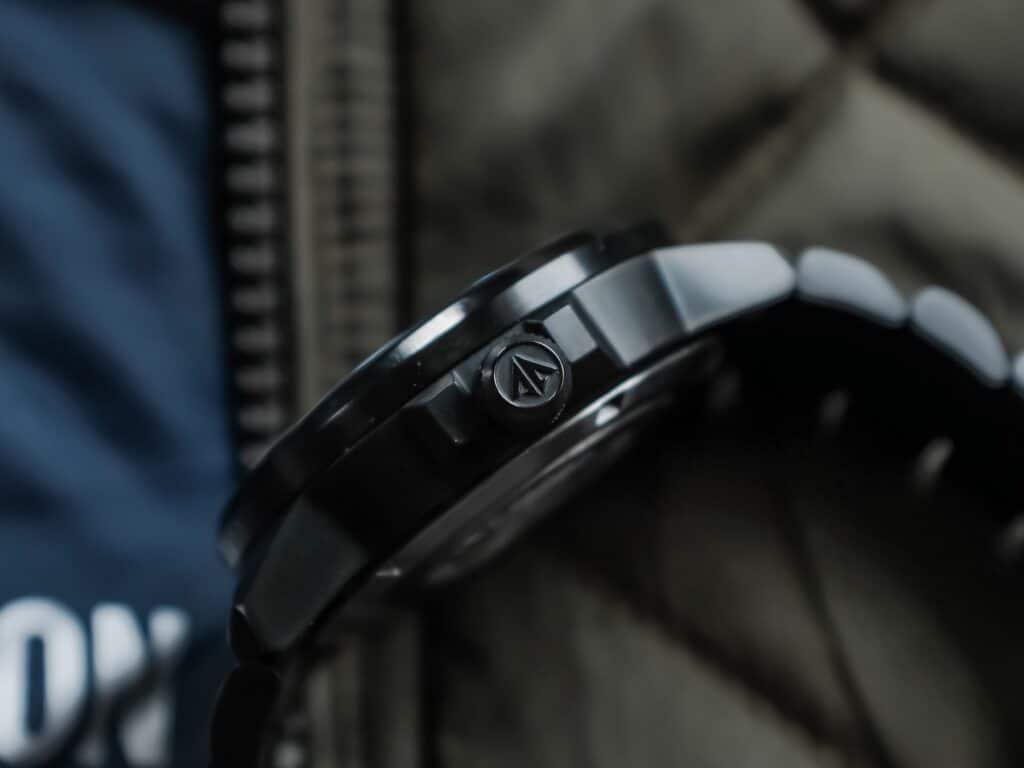
The case itself feels solid. The black ion-plated finish gives it a uniform, almost industrial look, with the usual reality that deeper scratches will reveal steel underneath. In everyday use, it feels durable enough to handle regular wear without concern. The rotating E6B slide rule bezel is integrated into the upper portion of the case and controlled via the secondary crown at eight o’clock. Because it can’t be turned easily by hand, it always feels secure and intentional. The main crown screws down and carries the Promaster Sky logo, a small but appreciated detail. Around back, the engraved screw-down caseback is clear, functional, and better executed than the price would suggest. This is different from the previous Nighthawk I owned and the caseback on this one just feels way more premium. With 200 meters of water resistance and a screw-down crown, it never feels like a watch you need to baby, even if it isn’t something I’d take out of my rotation’s comfort zone every day.
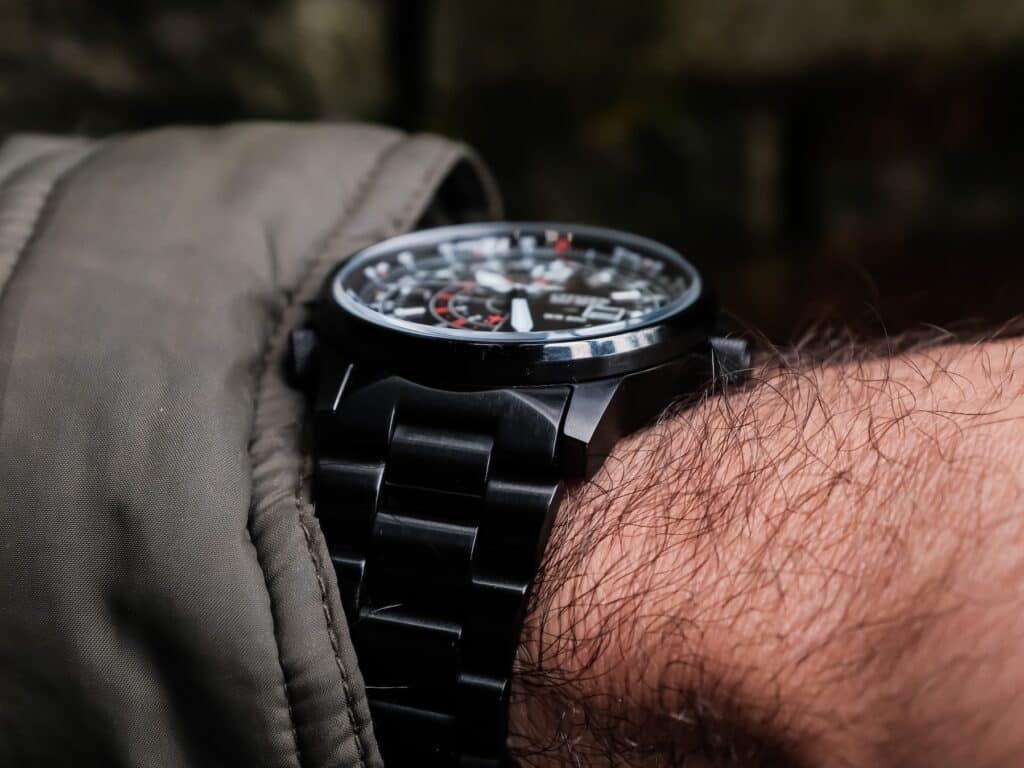
The crystal remains the most obvious compromise. Citizen uses a flat mineral crystal with internal anti-reflective treatment. Sapphire would have been welcome, especially given how exposed the crystal sits above the case. In use, it’s clear and rarely distracting, but it does require a bit more awareness than a recessed sapphire would.
Dial, Legibility, and the Slide Rule
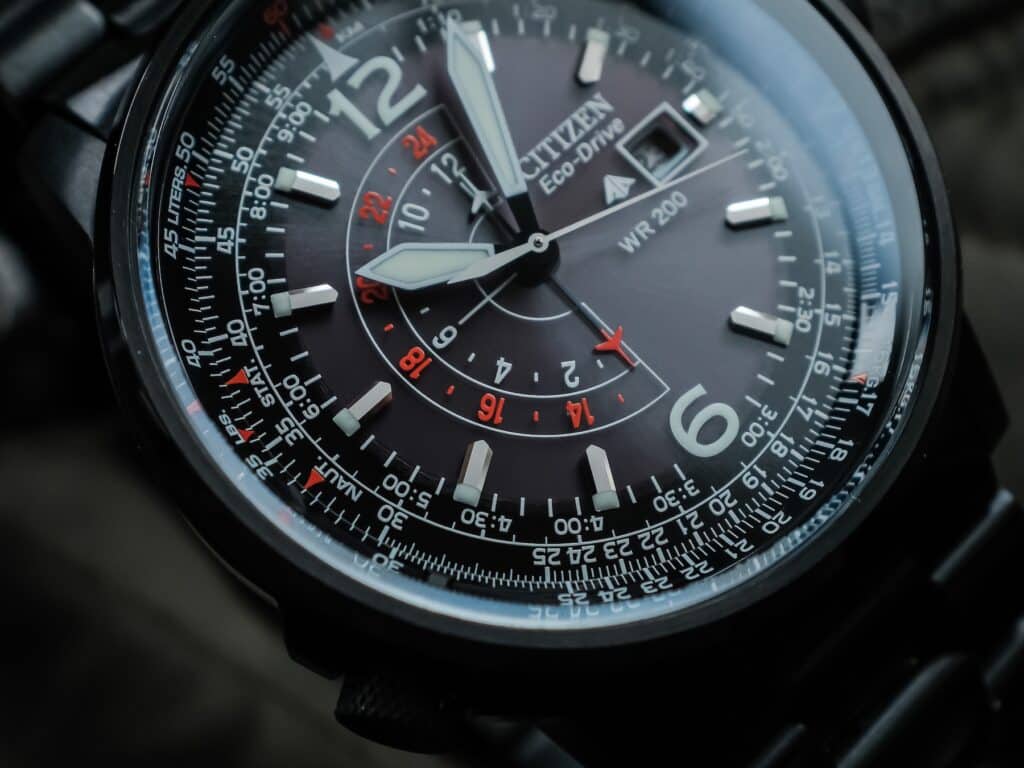
The dial is where the Citizen Nighthawk earns its reputation. Up close, it’s dense with information, but the execution is disciplined. Printing is sharp, alignment is precise, and the slide rule is genuinely usable if you’re inclined to engage with it. At a glance, the experience is very different. The finer details recede, leaving strong hour indices and hands that make telling the time surprisingly easy. It’s one of the better examples of a complex dial that doesn’t punish you for complexity.
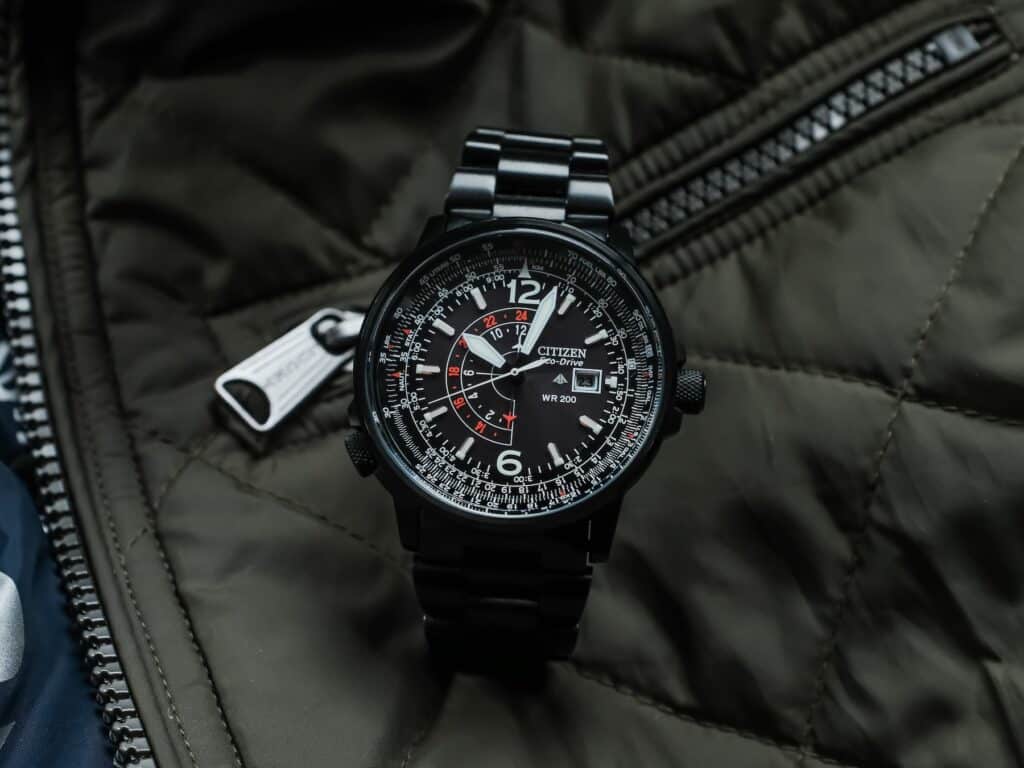
The applied hour markers sit slightly above the dial with polished edges and lume-filled outer sections. The hands are classic sword shapes with luminous centers and steel outlines. The GMT hand adds character, finished with small red and white airplane motifs at either end to indicate which half of the scale you’re referencing. It’s a thoughtful design choice that adds personality without tipping into novelty. Branding is restrained, limited to the essentials, which helps the dial stay readable despite everything going on.

There is, however, a trade-off worth mentioning. The secondary time zone scale can be partially obscured by the main hands at certain points during the day. It’s not a dealbreaker, but if you’re used to reading a second time zone off a 24-hour bezel, this requires a bit more patience. It’s something you adapt to, but it’s there.
Lume performance is solid and quick to charge, with Citizen’s familiar blue glow across the markers and numerals. Brief exposure to daylight does most of the work.
Movement, Bracelet, and Its Place in the Box
Powering the watch is Citizen’s B877 Eco-Drive caliber, a solar-powered quartz movement that tracks a second time zone via the GMT hand. You can set it to an alternate time or use it as a 24-hour reference alongside the date. Setting feels precise, with crisp hand movement, a jumping local hour hand feature, and minimal play once engaged. Accuracy is rated within fifteen seconds per month, which puts it in a category most mechanical watches don’t approach in normal use. Fully charged, it’ll run for roughly six months without seeing light, which makes it easy to leave it off-wrist for weeks at a time and still trust it when you come back to it.
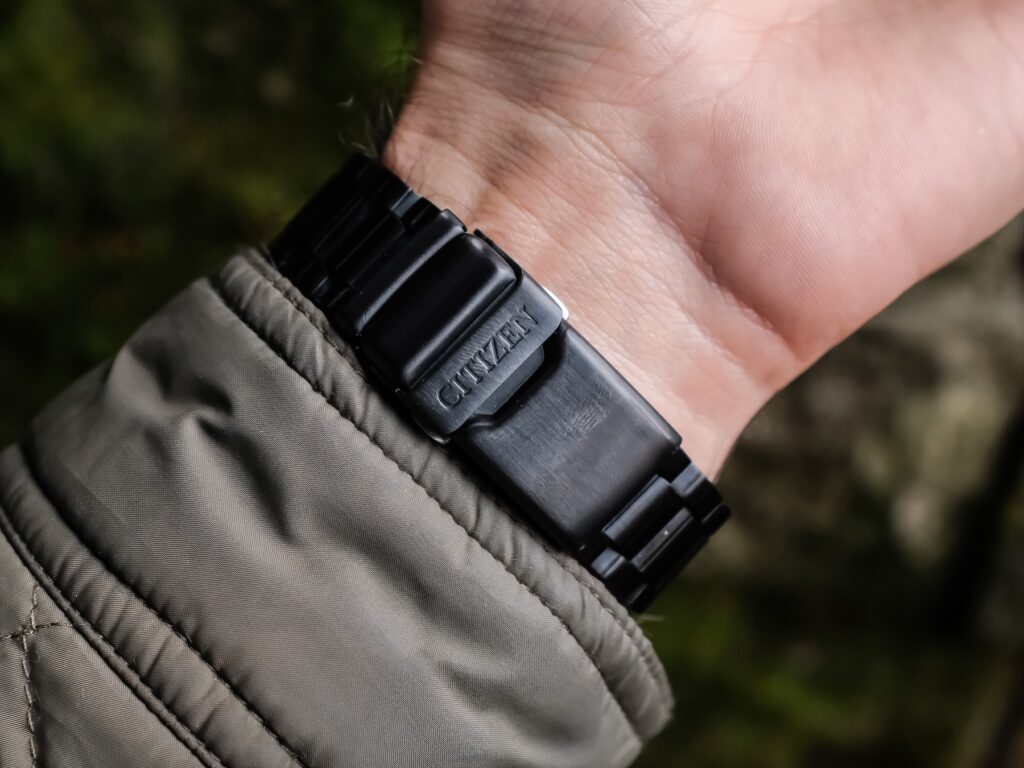
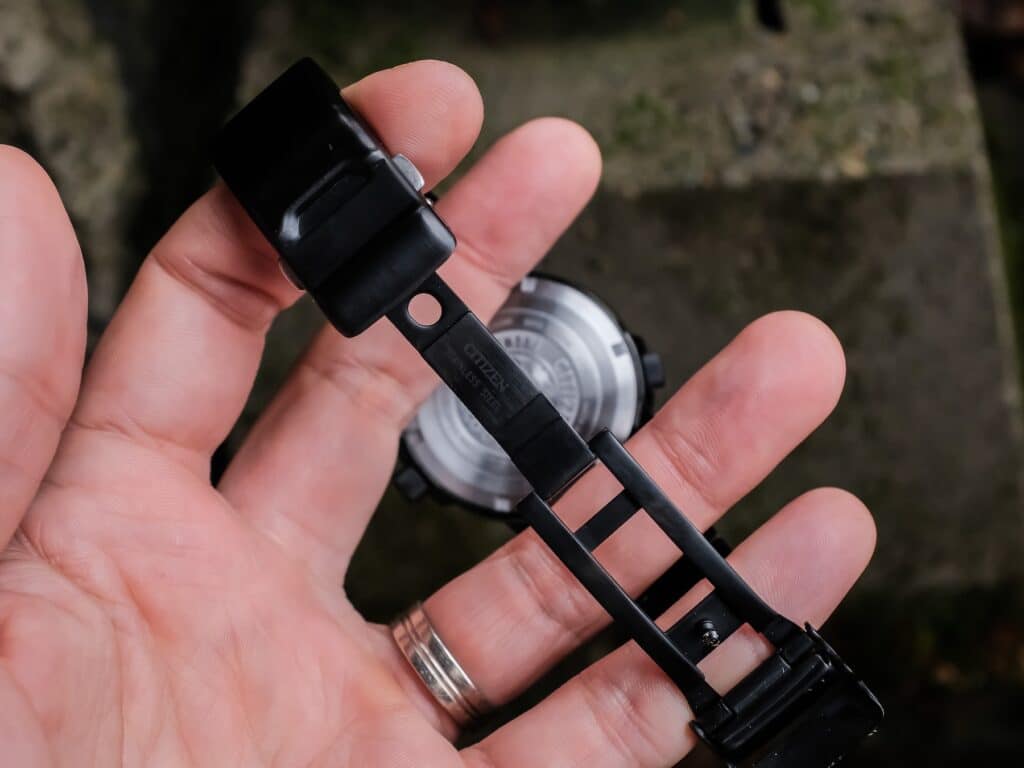
The bracelet matches the case in black ion plating and feels exceptionally solid, with no rattle and no looseness. The clasp is straightforward and effective, using a push-button deployant with a fold-over safety and enough micro-adjustment to fine-tune the fit. It’s functional, durable, and well suited to the watch’s character. On rubber or nylon, the watch becomes more comfortable and easier to live with, and it works surprisingly well as a grab-and-go travel or pilot watch in that configuration.
After spending time with this version, it’s hard not to look back at my previous Nighthawk as a bit plain by comparison. The more aggressive styling here gives it a stronger presence and helps it balance more evenly alongside the rest of my collection. That’s likely why it’s still around. It’s not a main-box staple, and it’s not something I reach for constantly, but it fills a role nothing else quite does.
At its price (I paid $488 total to import this), the value proposition is still difficult to argue with. The lack of sapphire stands out, and the GMT legibility isn’t perfect, but neither feels careless. For me, this blacked-out JDM Nighthawk makes a convincing case for revisiting watches you thought you already understood. Some pieces just land differently the second time around, especially when your perspective has changed. Now… readers… please chime in with some high-quality rubber strap recommendations for this one. Really curious about messing with strap swaps soon.

Co-Founder & Senior Editor
Michael Peñate is an American writer, photographer, and podcaster based in Seattle, Washington. His work typically focuses on the passage of time and the tools we use to connect with that very journey. From aviation to music and travel, his interests span a multitude of disciplines that often intersect with the world of watches – and the obsessive culture behind collecting them.
Nope. I’ve had 2 over the years, and both died in about 8 years. Both limited edition ones.Sent back to citizen and was told they can’t/won’t repair. No more ecodrives for me
I have had a Citizen ecodrive for over Twenty years it’s never stopped or missed a beat.
I’ve got all sorts of watches. I bought this eco drive almost 23 years ago and it still functions at its best. One of the most rugged and good looking watch at the same time. Emotionally attached to it more than my other very expensive watches.