Choosing between a $400 GMT and a $4,000 GMT isn’t as simple as deciding how much you want to spend. If you’ve ever wondered whether the Tudor Black Bay GMT genuinely delivers ten times the experience of a Seiko 5 GMT, you’re not alone. We’ve asked this question ourselves. After nearly a decade of reviewing everything from entry-level beaters to higher-end pieces that spark endless debates, we’ve learned that price alone rarely tells the whole story. What matters more is how these watches behave once the honeymoon phase is over.
That’s why we decided to put the Seiko 5 GMT vs Tudor Black Bay GMT conversation into real terms: not hype, not collector mythology, just lived-in impressions from years of swapping, flying with, sweating on, and occasionally regretting both budget and luxury watches. This comparison is about understanding what each tier offers on the wrist and helping you decide whether your next GMT belongs closer to $400 or $4,000.
Overview & Identity
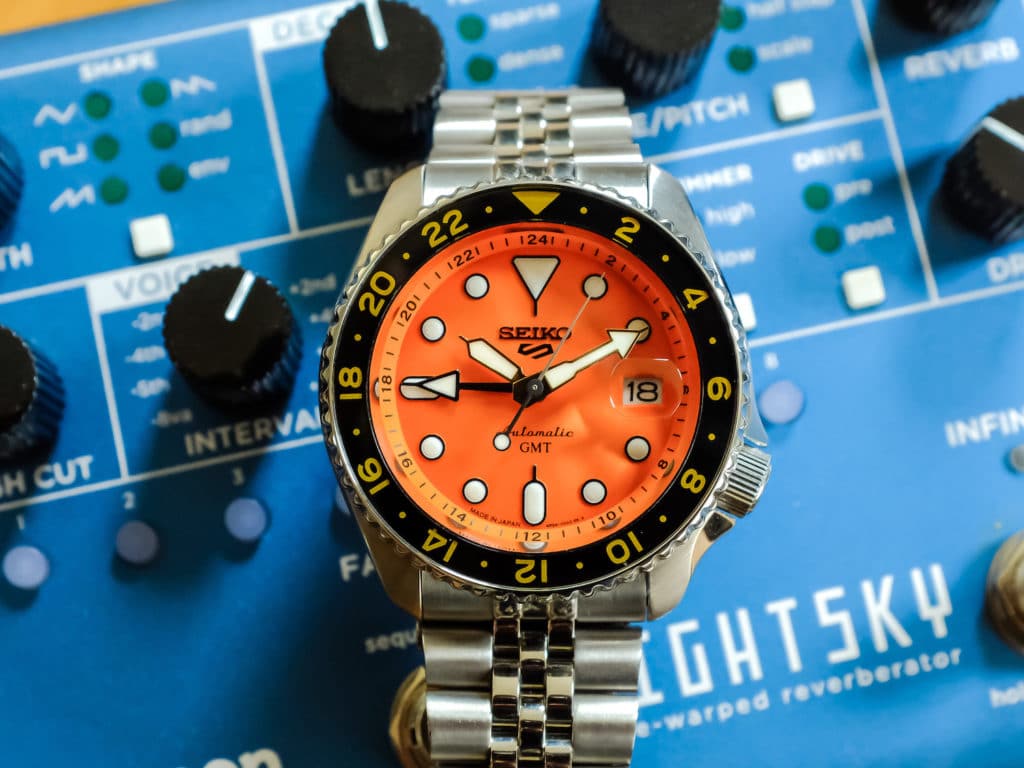
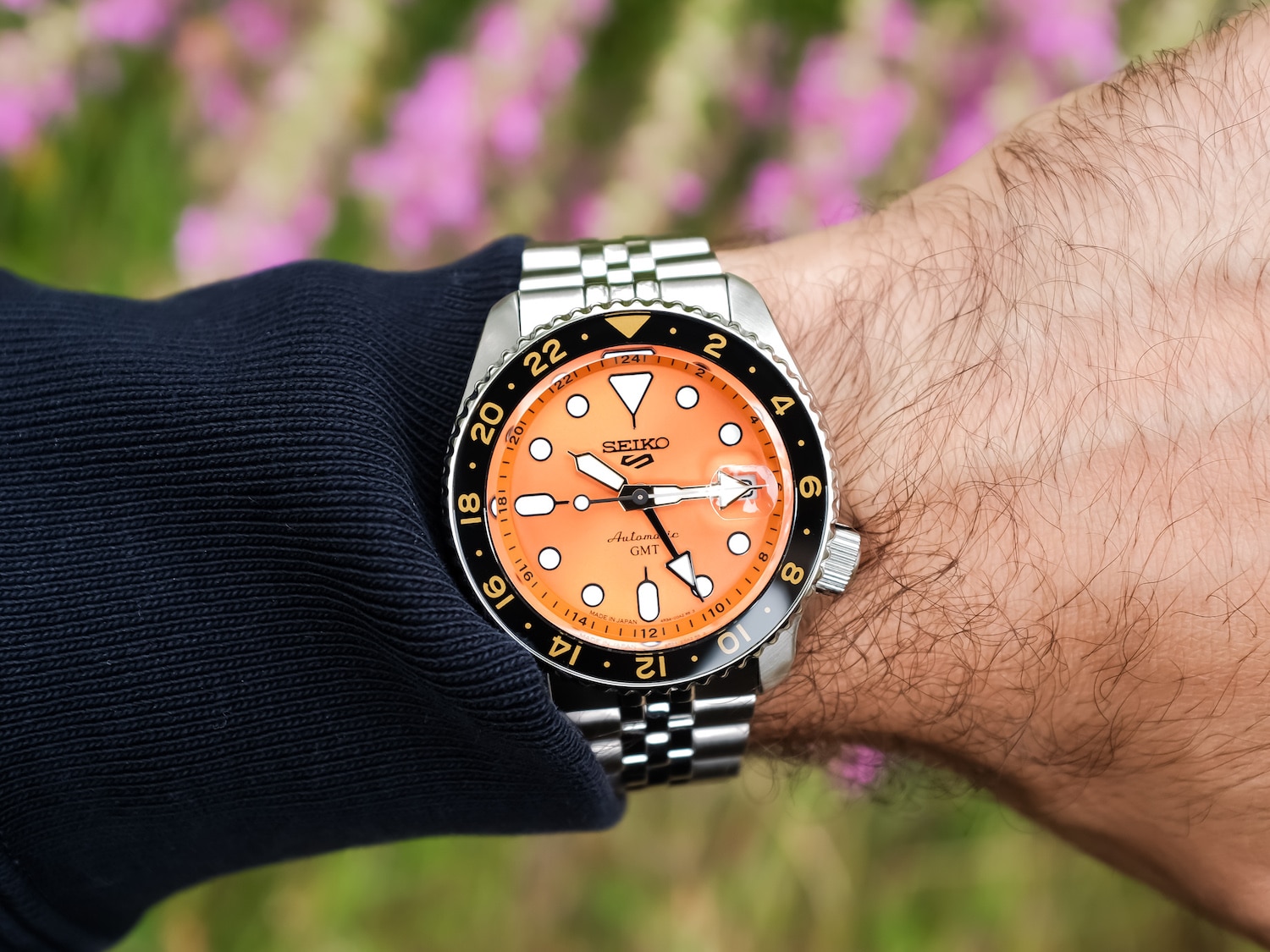
Seiko 5 GMT lands as the “common-sense” GMT for the affordable end of the hobby. In our hands-on review, it came across as a natural extension of the Seiko 5 Sports line: simple, approachable, and built around that same “throw it on and go” personality that made the SKX case shape so popular. The added GMT hand, the friction 24-hour bezel, and the no-nonsense 4R series movement all fit the watch’s practical identity. It’s a GMT that doesn’t pretend to be anything more than a budget-friendly, real-world travel companion, and that straightforwardness is a big part of its charm.
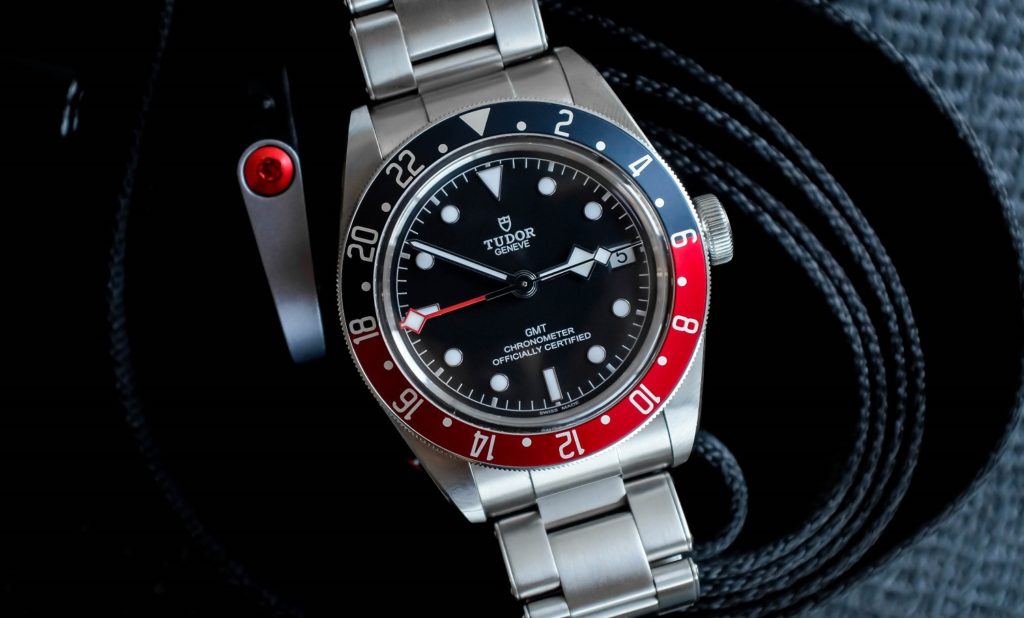
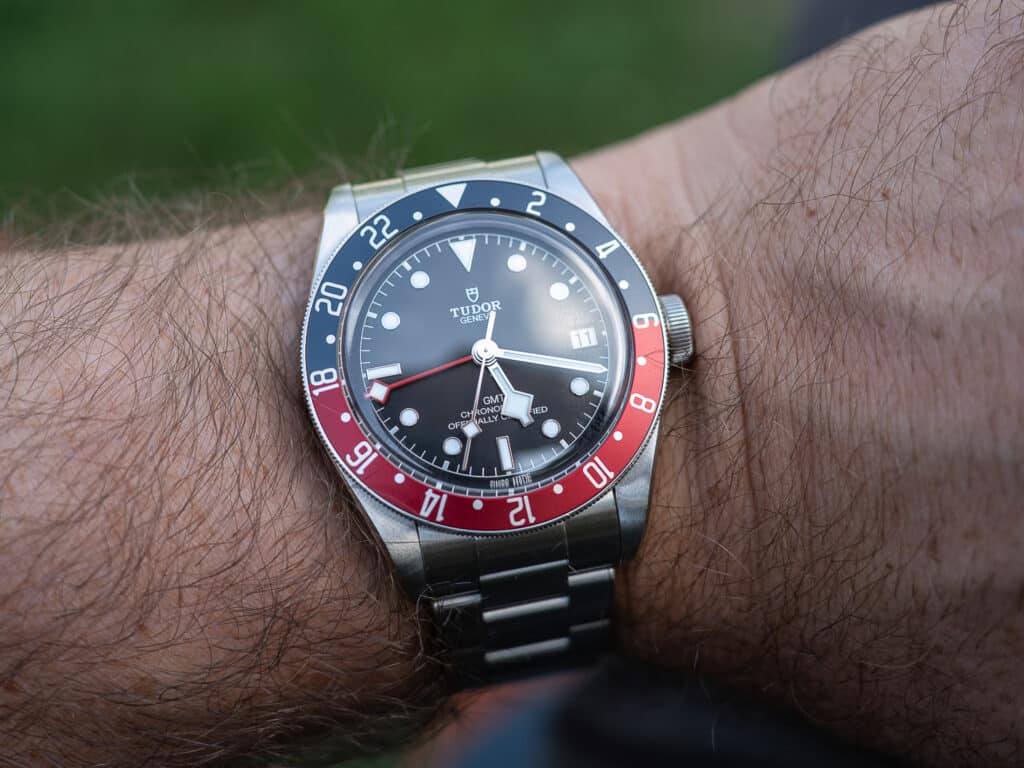
Meanwhile, the Tudor Black Bay GMT carries itself with the kind of confidence that comes from a clear design lineage. While testing, it felt like Tudor took the established Black Bay formula: the vintage-leaning aesthetic, the purposeful tool-watch stance, and simply built a travel watch around it. The multi-time-zone function, the in-house movement with real traveler GMT capability, and the familiar Black Bay heft all reinforce that identity. It’s a GMT meant to feel substantial and capable on the wrist, leaning into refinement without losing the utilitarian backbone.
- The Seiko 5 GMT is an approachable, everyday GMT built around value and practicality.
- The Tudor Black Bay GMT is a heritage-driven, purpose-built travel watch with a more substantial and refined feel.
Design & Wearability: Everyday Practicality vs Purpose-Built Refined Presence
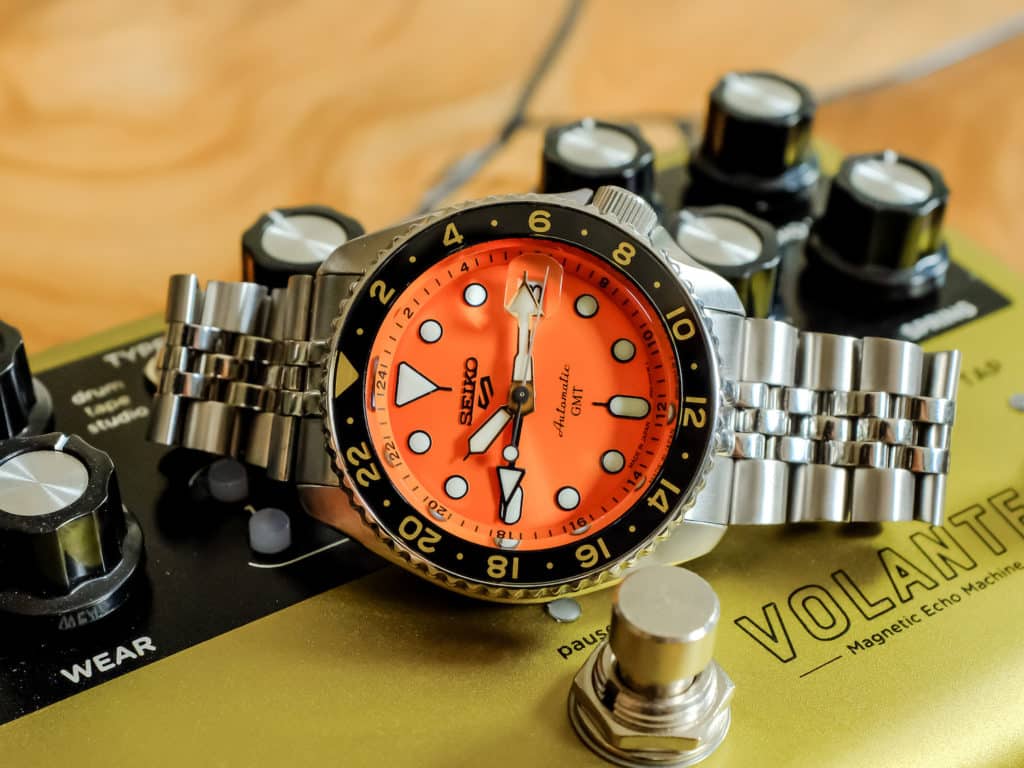
Seiko leans into approachable versatility with the Seiko 5 GMT, and that shows the moment it hits the wrist. As reflected in our hands-on review, the dial felt classic Seiko sports: significant markers, and a layout that stays readable even when the orange sunray dial gets flashy under sunlight. The mix of gilt hands, the black GMT pointer, and the matching chapter-ring scale gives the watch more depth than you’d expect at this price. And that jangly jubilee-style bracelet, the kind we’ve missed since the SKX days, keeps the watch light, wearable, and intentionally unfancy. On the wrist, the whole package feels like a travel watch meant for real life, not curated airport lounges.
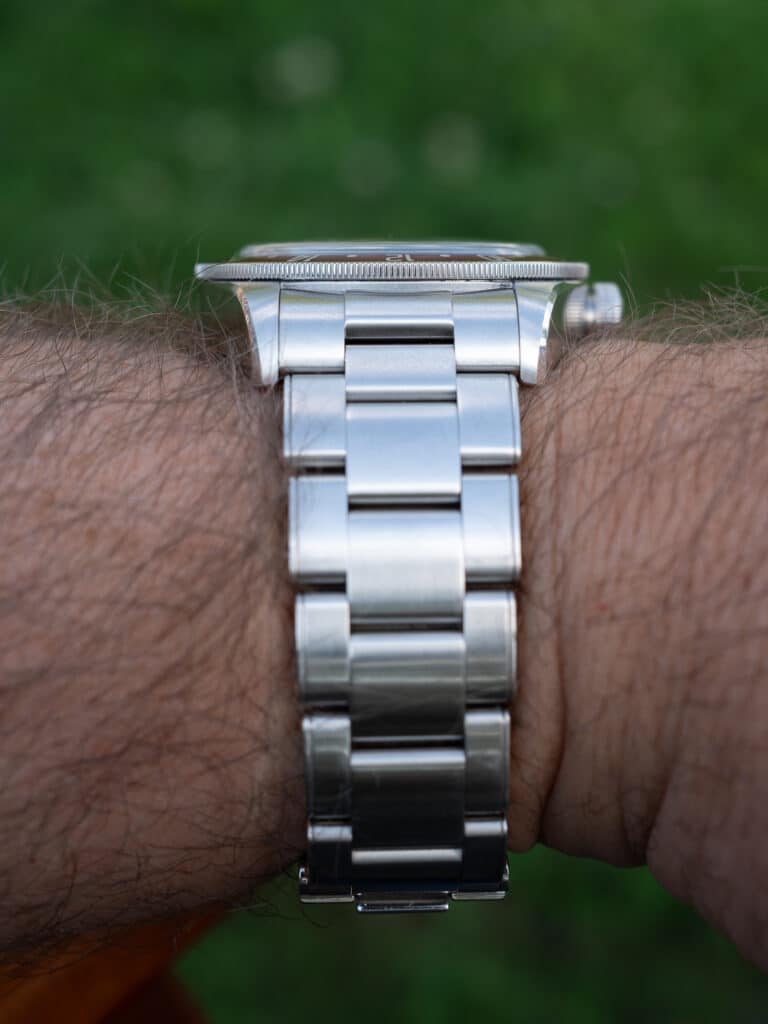
The Tudor Black Bay GMT leans into clean, purposeful design with its matte black dial and minimal white text at noon and six. Polished dot markers, longer rectangles at 9 and 6, and the triangle at 12 keep the dial balanced. The trio of snowflake hands gives the watch that “blizzard” look we called out in our review. The red GMT hand reaches far enough to emphasize the 24-hour scale. The bracelet is classic Tudor: solid, comfortable, and easy to forget once it’s on, despite not featuring half links. And when you throw it on a NATO, the watch gains extra height but shifts entirely into tool-watch mode: a look that suits it better than you’d expect.
- Seiko brings everyday energy with significant, legible markers, sunray dial options, and that jubilee-style bracelet that feels right at home on a watch meant to be worn hard.
- Tudor brings a more deliberate tool-watch presence, with a pared-back matte dial, polished snowflake hands, and a bracelet that feels overbuilt in the best way while still taking to NATOs effortlessly.
Build Quality & Technical Approach
Both the Seiko 5 GMT and the Tudor Black Bay GMT are built to handle far more than the light travel most of us put them through. But the way each brand approaches durability and function shows two different interpretations of what “quality” looks and feels like day to day.
Movements:
The Seiko 5 GMT keeps things straightforward with its in-house 4R34. While spending time with it, it did precisely what a caller-style GMT should: track an extra time zone (or three, if you get creative) without adding complexity. You can adjust the date and GMT hand from the crown’s second position. While there’s no jumping local hour, nothing about daily wear ever felt limited because of it. The movement’s roughly 40-hour power reserve is serviceable, and, true to Seiko form, it’s more about reliability and ease of ownership than mechanical prestige.
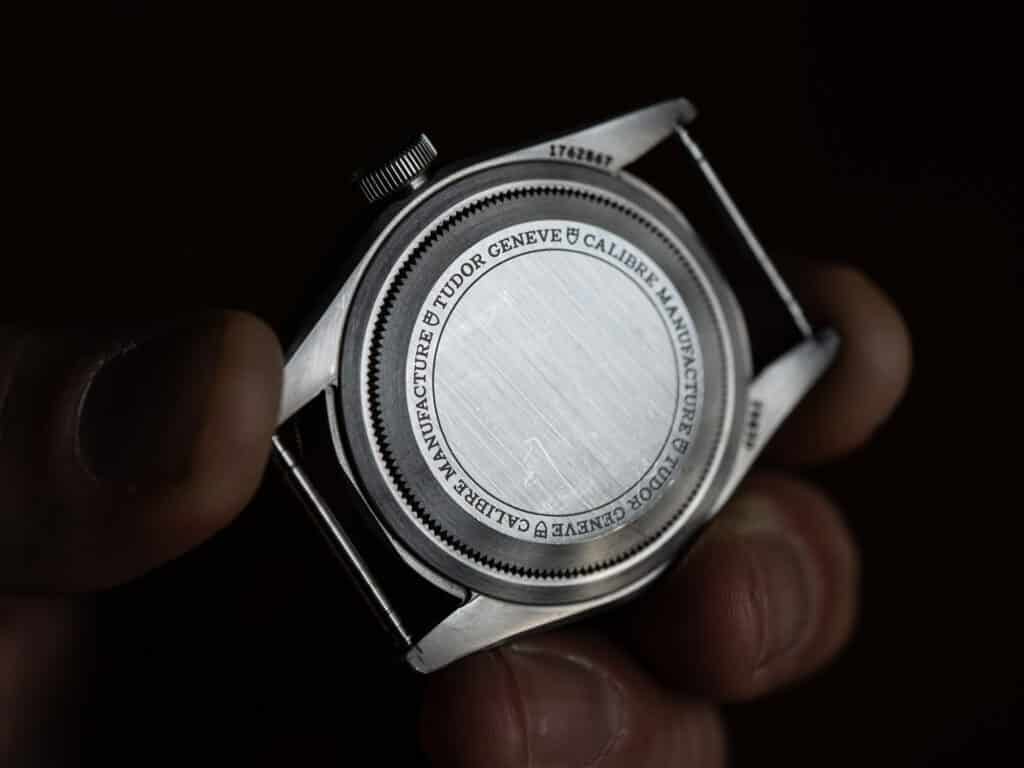
The Tudor Black Bay GMT takes a very different approach with the in-house MT5652 COSC-spec movement. It runs at 28,800 bph, offers 70 hours of power reserve, and functions as a true-flyer GMT. That means the first crown position lets you jump the local hour hand in one-hour steps while the date moves with it. The second crown position ties the GMT, minutes, and main hour hand together. In our testing, it hovered around +4 seconds per day, which is more than acceptable for a watch at this level, especially one built for travel rather than laboratory numbers.
Case Construction & Finishing:
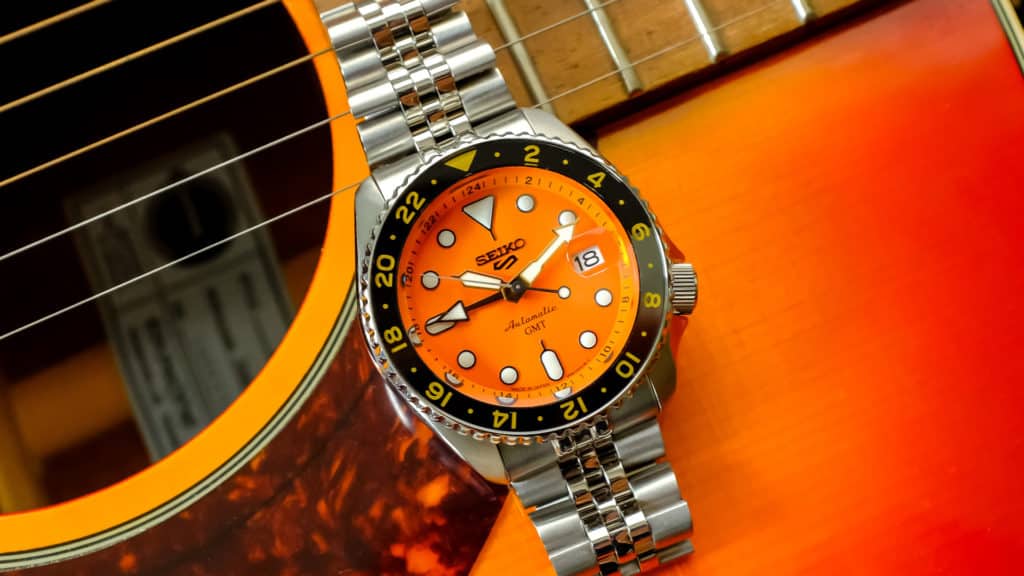
The Seiko 5 GMT sticks closely to the SKX roots we’re all familiar with, and that’s part of why it wears so naturally. The 42.5 mm case, 13.6 mm thickness, and compact 46 mm lug-to-lug feel almost identical on the wrist, though the exhibition caseback does add a touch of extra height. True to Seiko form, the softened “melted” lugs and mixed brushed–polished finishing help the watch sit smaller than the dimensions suggest. The bi-directional GMT bezel is a highlight. It’s free-floating, smooth, and visually split into a reflective day/night effect that shifts depending on how light hits it. Altogether, the case leans into approachable, everyday sturdiness rather than precision machining.
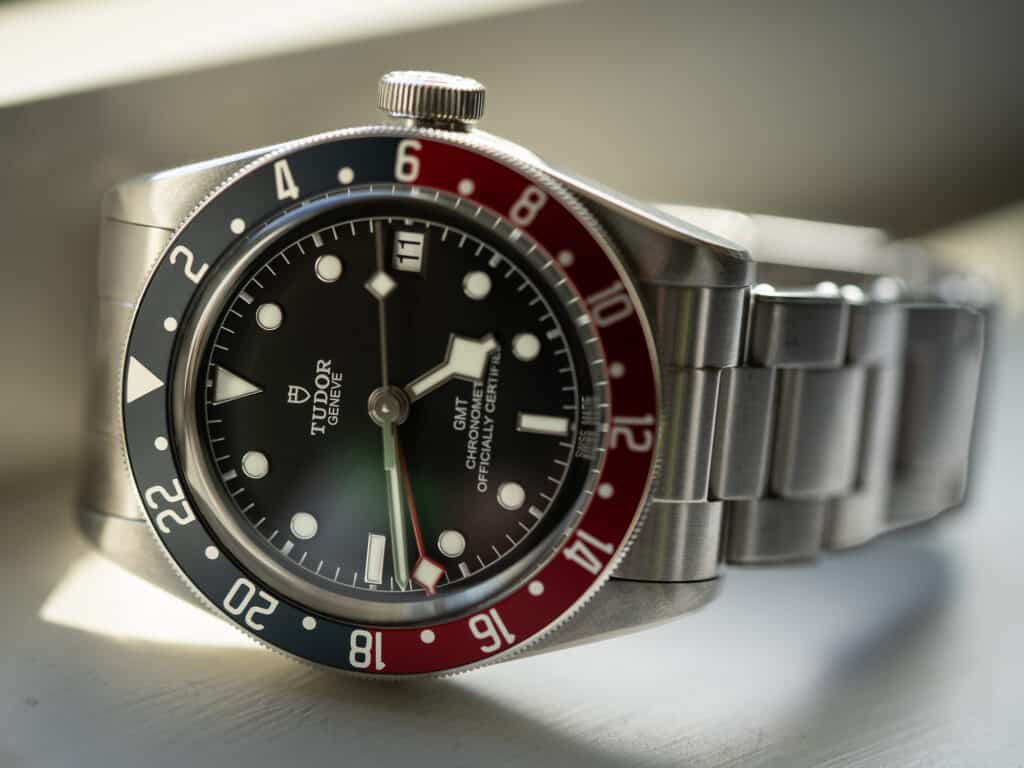
The Tudor Black Bay GMT takes a more structured, tool-first approach with its 41 mm × 50 mm × 14.7 mm stainless-steel case. On the wrist, those sharply dropped lugs do the heavy lifting, giving the watch a more natural curve and helping it wear better than the numbers suggest, especially on wrists measuring 7″–7.5″. The brushing across the top surfaces and polished slab sides gives it a simple but intentional finish, and the slight case-side bevel keeps the watch from feeling blocky or restrictive during movement. The burgundy-and-blue anodized aluminum bezel reinforces the day/night split in a way that feels more classic tool-watch than decorative. Overall, Tudor’s attention to subtle geometry shows up every time it hits the wrist.
Crystals:
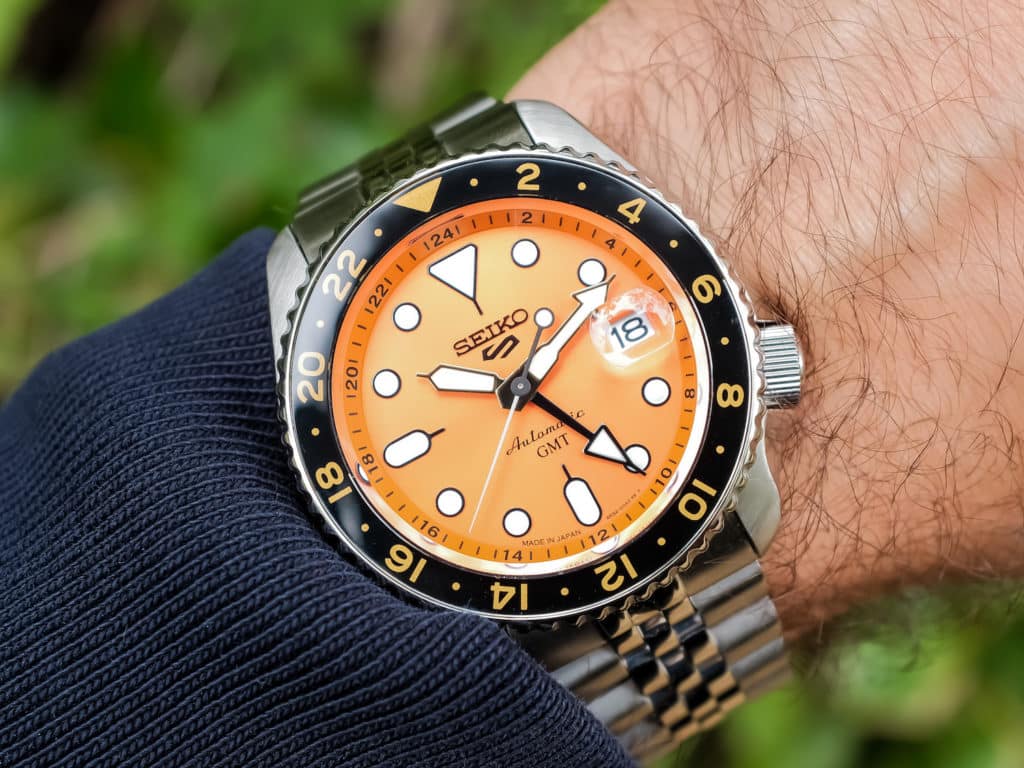
The Seiko 5 GMT stays true to Seiko’s practical approach, using a Hardlex crystal over the dial, complete with a polarizing little cyclops that you may love or ignore entirely. It’s durable enough for daily wear and keeps reflections manageable, even if it doesn’t disappear the way higher-end crystals can. Seiko also tops the bezel with what appears to be a Hardlex layer, giving the entire ring a glossy, almost lacquered look that plays nicely with the bi-directional 24-hour scale.
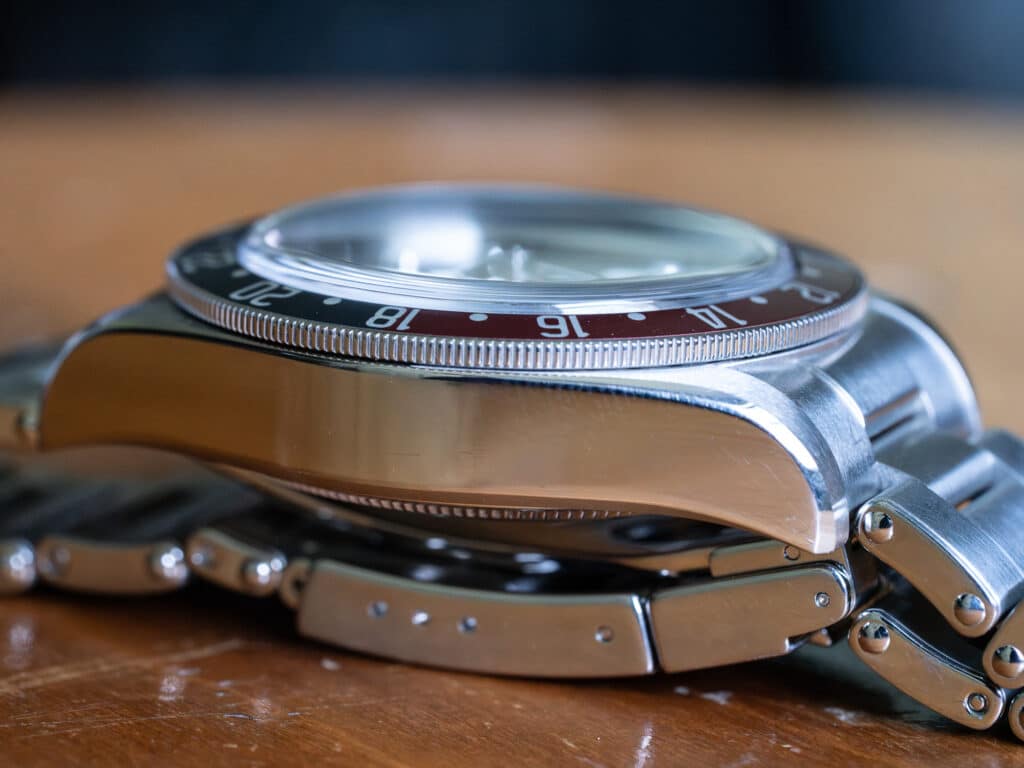
The Tudor Black Bay GMT moves in the opposite direction with a raised, domed sapphire crystal that pushes its vintage-inspired profile forward. As also mentioned in our detailed review, a noticeable portion of the watch’s overall thickness comes from that boxed crystal, but the trade-off is a clean, distortion-free view of the dial. It feels sturdy, scratch-resistant, and suited for long-term wear without much fuss. Paired with the aluminum bezel insert, the crystal keeps the BBGMT grounded in classic tool-watch design while still giving it a bit of elevated polish.
Water Resistance & Lume:
The Seiko 5 GMT keeps things straightforward with 100 meters of water resistance and a push/pull crown. Our review team found it more than adequate for the kind of real-world splashes, showers, and casual swim sessions most of us actually put our watches through. Sure, a screw-down crown and 200 meters would’ve been lovely, but nothing about daily wear ever suggested the watch was out of its depth. Where it does flex is lume. Those Lumibrite-filled markers hit harder than some Prospex models we’ve tested, glowing evenly and staying readable long after you’ve forgotten you charged them.
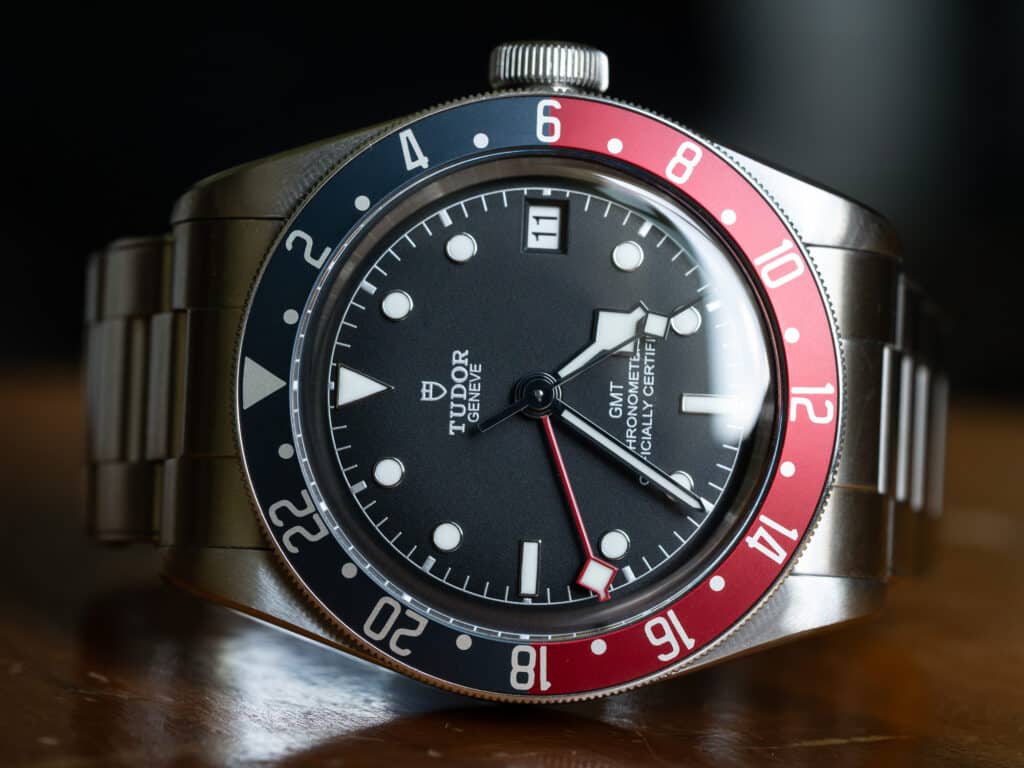
The Tudor Black Bay GMT steps things up with a full 200 meters of water resistance and that properly solid tool-watch build. It’s a travel watch that won’t complain if your trip includes a pool, a beach, or a questionable hotel hot tub. At night, the polished hands and lume-filled markers light up reliably, giving you that clean, even glow Tudor does so well. It’s consistent, functional, and entirely in line with the BBGMT’s practical, no-gimmick personality.
- The Seiko 5 GMT delivers practical, real-world durability with its straightforward 4R34 movement, SKX-rooted case, Hardlex setup, and standout Lumibrite.
- The Tudor Black Bay GMT brings a more engineered, tool-first refinement with its true-flyer MT5652, sculpted case geometry, domed sapphire, 200 m resistance, and consistent lume.
Cost Considerations
The Seiko 5 GMT hits a price point that makes the hobby feel fun again. At around $475, it lands squarely in “why not?” territory. It’s the kind of watch you can buy without drafting a financial justification, a multi-page spreadsheet, or a diplomatic pitch to your spouse. In our opinion, that price is a significant part of its charm.
The Tudor Black Bay GMT, by contrast, asks for a more committed relationship. At roughly $4,300–$4,700 retail, it sits firmly in the premium tool-watch category. You can feel where the money goes: the movement, the machining, the bracelet, the overall seriousness of the build.
Final Thoughts: Which GMT Actually Earns Its Price?
The Seiko 5 GMT is the GMT for people who want utility without emotional or financial baggage. It’s perfect for new collectors, frequent strap-swappers, and anyone who wants a second (or third) time zone without adding stress to their wallet. It’s not for someone who needs a true-flyer GMT or expects luxury finishing, and that’s fine. Its charm lies in being the watch you don’t have to baby. It’s a dependable, affordable tool that pulls far above its weight, and for the money, it’s the more convincing proposition.

The Tudor Black Bay GMT, on the other hand, is built for the collector who wants a serious, long-term travel watch with real mechanical capability. The MT5652 COSC-certified movement, the case geometry, and the bracelet all feel designed for someone who cares about refinement. It’s not for someone looking for something light, thin, or inexpensive, and it’s definitely not for someone who just wants to “try a GMT” for the first time. This is not a watch for experimentation; it’s a commitment.
In the end, the value split couldn’t be clearer: the Seiko 5 GMT delivers more enjoyment per dollar than almost anything else in the category, and it’s the better purchase for the vast majority of enthusiasts. In contrast, the Tudor Black Bay GMT delivers more capability per dollar if you’re the type who will actually use and appreciate its engineering and are willing to pay for that edge. The Tudor isn’t a bad choice—but the Seiko 5 GMT is the one that actually makes sense for most wrists and most wallets.

Co-Founder and Senior Editor
Kaz has been collecting watches since 2015, but he’s been fascinated by product design, the Collector’s psychology, and brand marketing his whole life. While sharing the same strong fondness for all things horologically-affordable as Mike (his TBWS partner in crime), Kaz’s collection niche is also focused on vintage Soviet watches as well as watches that feature a unique, but well-designed quirk or visual hook.
We can all agree that the Seiko is a better value. Immediately buys the Tudor instead.
Yeah my both keep the same time as my $30 watch from walmart and minenlights up in the dark.. and who the hell describes a watch as approachable what does that even mean?
Hi, Kevin:
Haha truthfully most $30 quartz watches will keep better time than anything that’s mechanical, which is something we tend to bring up on the TBWS podcast a lot. Also in this context we’re using “approachable” here as a way of saying it’s a user-friendly or not too visually alienating design and wearing experience.
Thanks for checking the piece out.
Best,
-Kaz
I don’t recall you discussing how inaccurate the Seiko 4R35 movement can be. And even get worse after only 1 month of wear. I have both the Tudor and a dress KX, SRPE51. It is approaching -18 per day. I have to adjust the time every 3 days. My watch repair person told me to sell it. On the other hand, I have the Tudor for 5 years and it is still -3 per day on the wrist, and it goes back to 0 over night by putting it dial down. I recommend the Helm Miyako with the Miyota 9 series.
Marcus:
We tried to reference that by referencing that the 4R movement was more about function than anything else. But you’re right in that we don’t directly state that accuracy can be an issue as QC there can be inconsistent from watch to watch. We’ve had 4R movements that exceed factory specs and then some which aren’t as accurate.
I’m going to work on clarifying the language there based on movement QC inconsistency.
Thank you!
-Kaz