Most collections start with a simple idea: one watch that can handle everything. Something you can wear to work, take on a trip, forget about for a few days, and then pick back up without it feeling fragile or out of place. Over time, we’ve noticed that certain watches keep drifting back onto our wrists when that “just grab one and go” moment happens. The point is that the ultimate one-watch collection is about which watch quietly earns your trust when you stop overthinking it.
After nearly a decade of writing and podcasting about watches, we’ve handled everything from luxury staples like the Rolex Submariner and Omega Seamaster to low-friction daily wearers like the Casio Duro and the uncomplicated Casio F-91W. We’ve also spent plenty of time with smaller brands trying to prove themselves, like the Monta Atlas and the Dryden Heartlander. Living with watches across that whole spectrum tends to change how you think about “one watch.” It’s about how a watch behaves in real life, how it wears over long days, how easy it is to live with when you rotate back to it, and whether it still feels right months after the excitement of a new purchase fades. The watches in this list come from that perspective.
Casio F-91W
| Price: | $15 – $20 |
| Water Resistance: | 30m |
| Case Dimensions: | 34mm (diameter) x 38mm (lug-to-lug) x 8.5mm (thickness) |
| Lug Width: | 18mm |
| Movement: | Casio Quartz Module 593 |
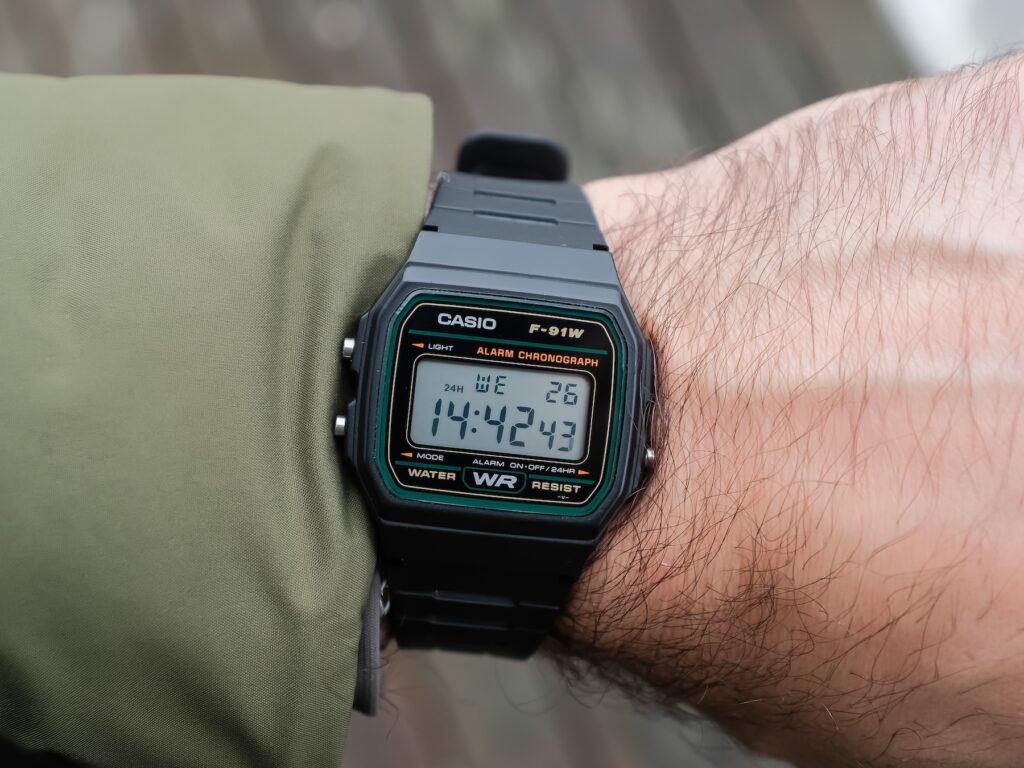
If the idea of a one-watch collection is about practicality rather than romance, the Casio F-91W is difficult to ignore. It’s the kind of watch that disappears on the wrist almost immediately. The case is thin, the resin construction keeps it very light, and nothing about the design demands attention during the day. That low-profile feel turns out to be the watch’s biggest strength. During our extensive testing period, we’ve worn it through travel days, workouts, and long stretches of errands, where a heavier watch would have felt like baggage. The resin case and strap might look simple, but in use, they never felt flimsy. The watch behaves like it expects to be bumped around a bit.
The digital module is where the F-91W proves its usefulness. Casio packed a calendar, alarm, stopwatch, and the option for 12- or 24-hour time into a layout that stays easy to read at a glance. The interface is intuitive enough that even after leaving it in a drawer for months, the button sequence comes back quickly. The green LED backlight is more of a quick glow than full illumination. That said, it’s enough to check the time in a dark room. According to our review team, the quartz module stayed within about ±30 seconds per month, right in line with what you’d expect from a dependable digital. Pair that with a CR2016 battery that tends to last several years, and you end up with a watch that requires almost no attention to keep running.
Turn the watch over, and the same straightforward philosophy continues. The stainless steel caseback is secured with four screws and marked only with the essentials. On paper, the dimensions sound tiny, but the case shape gives it more structure than you might expect. Small corner guards around the case add definition and make the pushers easier to find by feel, which helps when you’re setting an alarm or starting the stopwatch without staring down at your wrist. Comfort is another quiet advantage. The resin strap is soft and flexible with plenty of adjustment holes, making it easy to wear all day.
Pros
- Very lightweight, which makes it easy to forget you’re even wearing it
- The resin case and strap handle daily bumps without feeling fragile.
- Simple digital layout with useful functions and logical controls
- Reliable quartz accuracy with a battery that lasts for years
Cons
- The integrated resin strap limits strap swapping if you like to customize.
- Water resistance is modest and not ideal for swimming.
- The green LED backlight works, but it’s dim compared to modern digital displays.
Casio Duro
| Price: | $85 |
| Water Resistance: | 200m |
| Case Dimensions: | 44.2mm (diameter) x 48.5mm (lug-to-lug) x 12.1mm (thickness) |
| Lug Width: | 22mm |
| Movement: | Casio 2784 Quartz |
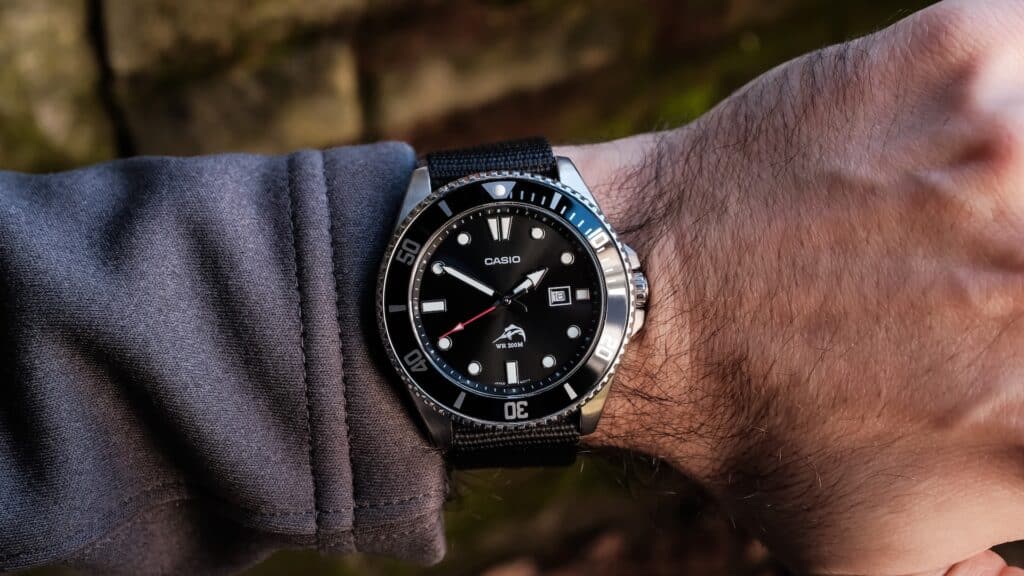
A good candidate for a one-watch collection has to do a few things well: stay readable, tolerate water, and avoid becoming a watch you’re constantly worrying about. The Casio Duro manages to check those boxes. At the center of that practicality is the quartz movement. It hacks, includes a quickset date, and in our hands-on review stayed within roughly ±20 seconds per month. That kind of reliability changes how you use the watch. You can leave it on the nightstand for days, pick it back up, and it’ll still be ready to go without the usual reset ritual. The battery-powered setup also means minimal upkeep.
The dial design leans toward straightforward legibility rather than visual flair. Under a flat mineral crystal, the arrow-shaped hands catch light well, and the applied indices give the dial a little more depth than you might expect. Casio kept the text restrained, placing the brand at twelve and the 200-meter water resistance marking near six. The framed date window at three is cleanly executed and easy to read at a glance, something we noticed. Lume coverage is generous enough to be useful in the dark, though it tends to fade sooner than we would prefer during longer stretches in low light.
Case proportions are where many people hesitate at first. On paper, a 44mm dive watch doesn’t sound subtle. In practice, the lug-to-lug measurement is shorter than expected, and the lugs curve downward enough that the case sits securely rather than spreading across the wrist. It still wears large, but in a way that feels intentional rather than awkward. If you’ve worn something like the Seiko Turtle before, the overall wrist presence will feel familiar.
The finishing reinforces that sense of purpose. The top of the case is brushed while the sides carry a polished surface, with a small bevel separating the two. It adds visual interest without making the watch feel decorative. Functionally, it behaves like a proper dive watch. The screw-down crown and solid caseback give confidence in water resistance, and the aluminum bezel rotates with a controlled action. It never developed the loose, rattly feeling that often shows up on watches in this category. Another practical advantage is the 22mm lug width, which makes strap changes easy. We’ve worn the Duro on nylon, rubber, and aftermarket bracelets without any trouble.
Pros
- 200 meters of water resistance, paired with a screw-down crown, adds everyday durability.
- Quartz movement stays accurate and requires very little attention.
- The bezel action feels solid and controlled during timing tasks.
- The clean dial, with well-finished hands and applied indices, makes the watch easy to read.
- Standard 22mm lugs make it easy to swap between nylon, rubber, or bracelets.
Cons
- The 44mm case can feel oversized for smaller wrists.
- The mineral crystal is more susceptible to scratching than sapphire.
- Lume is visible but fades faster than ideal during long, low-light periods.
Casio G-Shock GW6900
| Price: | $140 |
| Water Resistance: | 200m |
| Case Dimensions: | 53.2mm (diameter) x 50mm (lug-to-lug) x 17.7mm (thickness) |
| Lug Width: | 16mm |
| Movement: | Solar Quartz Module 3179 |
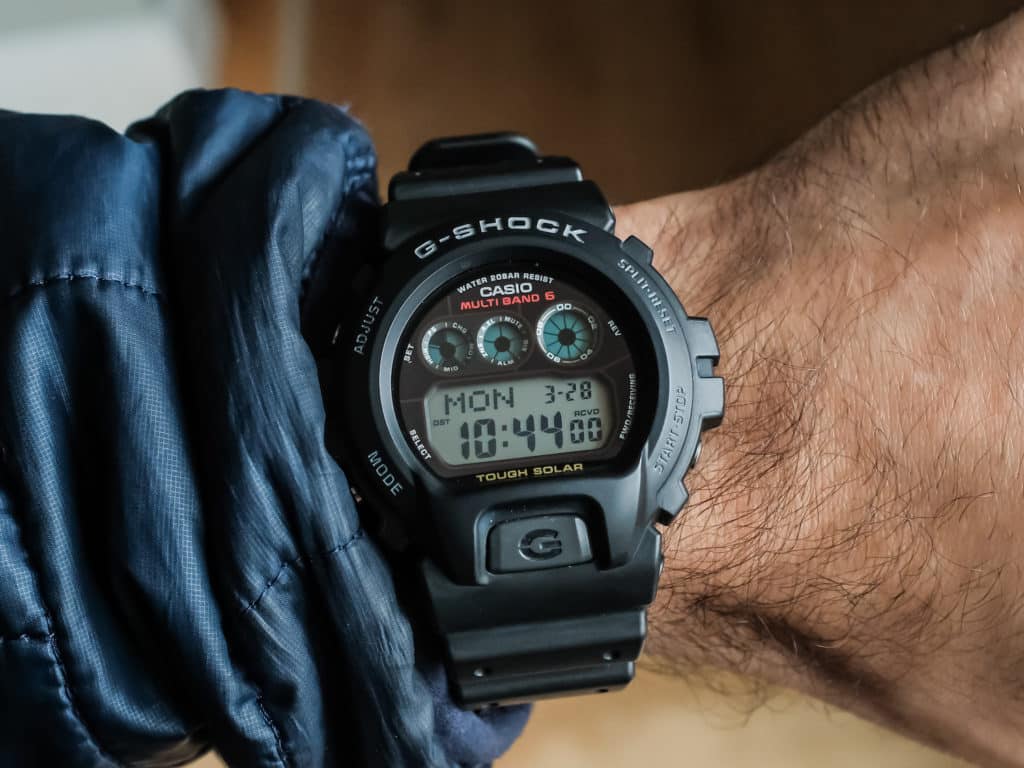
The GW6900 is the watch we grab when the day doesn’t leave room to think about watches. Yard work, last-minute airport runs, or the kind of mornings when you’re already late and digging through a bowl of keys. In a conversation about a one-watch collection, that default-watch behavior matters more than almost anything else. The GW6900 has earned that role simply by being dependable. The full resin case with a steel caseback feels purpose-built for abuse, and the weight stays quite low for something measuring over 50mm across and nearly 18mm thick. On the wrist, it feels more like a puff of resin than a slab of plastic. You forget it’s there until you bump it into something, and usually the doorframe loses that argument.
The digital layout looks busy at first, with the familiar triple “eye” display across the top, but it becomes intuitive after a few days. The large lower screen displays the main time and date, while the upper indicators show functions such as stopwatch status or radio reception. That stopwatch measures down to 1/100 of a second, which we’ve used for everything from timing runs to measuring how long a coffee brews. The countdown timer is also practical, and the five alarms add another layer of utility even if you rarely use them all. One detail we appreciated during our hands-on testing is the dual time display tucked neatly in the corner. Instead of a rotating bezel or extra hand, the second time zone sits quietly on the screen and stays readable without cluttering the main display.
Casio’s Tough Solar charging keeps the battery topped up from regular light exposure, so you’re not thinking about battery swaps. Multi-Band 6 radio synchronization checks in with atomic time signals overnight across regions like the U.S., Japan, the UK, Germany, and China. Most nights, it grabs the signal shortly after midnight and corrects itself automatically. That means the time stays precise whether you’ve worn it daily or left it sitting for weeks. The EL backlight helps too. The large front-facing button activates a bright green glow that lights the entire display. Some of us wished this model used Casio’s newer LED system, but in practice, the illumination remains easy to read in the dark.
The resin strap contributes to the watch’s practicality. It starts a bit squeaky when new, but softens quickly and hugs the wrist well. It dries fast after sweat or rain and stays comfortable for long stretches of wear. We know some owners experiment with custom straps or adapters, but we never felt the need.
Pros
- Tough Solar charging reduces maintenance and keeps the watch running with regular exposure to light.
- Multi-Band 6 radio sync maintains extremely accurate time without manual adjustment.
- The lightweight resin construction absorbs impacts and stays comfortable despite the large case.
- Clear digital layout with practical functions like world time, stopwatch, and countdown timer
- The bright EL backlight, activated by the front button, makes nighttime checks easy.
Cons
- The large case dimensions can feel bulky on smaller wrists.
- The triple display layout may take a few days to feel natural if you prefer simpler screens.
- The resin strap can feel slightly stiff and squeaky when brand new.
Seiko Turtle
| Price: | $370 – $525 |
| Water Resistance: | 200m |
| Case Dimensions: | 44.3mm (diameter) x 48mm (lug-to-lug) x 14mm (thickness) |
| Lug Width: | 22mm |
| Movement: | Seiko 4R36 |
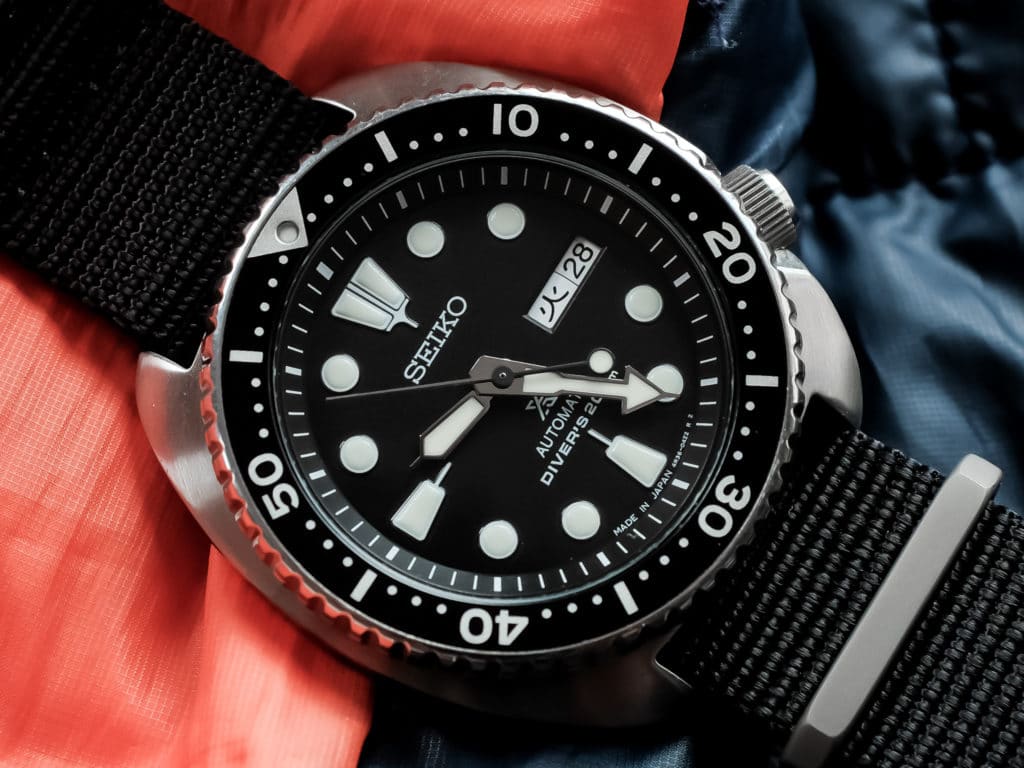
The Seiko Turtle tends to show up when the goal is simple: wear one watch that can handle most situations without constant attention. It’s a watch we’ve reached for on travel days, beach trips, and ordinary weekday routines when swapping watches feels unnecessary. The 4R36 automatic movement inside isn’t trying to impress anyone with laboratory precision, but it gets the job done. Our example stayed within Seiko’s typical range of about +35 to +45 seconds per day. That variance is part of the deal with this movement, yet in everyday use, it rarely becomes a problem. The hacking and hand-winding features make quick adjustments easy if you’re particular about accuracy.
On paper, the Turtle sits past the 44mm mark, which might give smaller-wristed collectors pause. Once you wear it, the experience changes quickly. The cushion-shaped case distributes weight evenly across the wrist, and the curved profile keeps it from feeling tall or awkward. The asymmetrical case design also positions the screw-down crown slightly off to the side, keeping it out of the way instead of pressing into the back of the hand during daily wear.
Legibility is another reason the Turtle works well as a one-watch candidate. The matte-black dial reduces glare, while the oversized Lumibrite markers remain easy to read even in poor lighting. A glance is usually enough to confirm the time without second-guessing what you’re seeing. Seiko uses Hardlex crystal here rather than sapphire. For us, it hasn’t been a deal breaker. Over the years of wear, it tends to hold up well and keeps the overall watch price approachable. The Prospex “X” logo sparks a lot of debate online, though on the wrist, it fades into the background pretty quickly.
The bezel and strap options round out the everyday experience. The bezel rotates reassuringly when timing something, though we’ve seen examples where the alignment isn’t perfectly centered. That’s still a known quirk with some Seiko divers. As we mentioned in our dedicated review, the watch also comes in variations such as the “Made in Japan” version and models with a Kanji day wheel. The Kanji adds personality, but can slow a quick day check once the novelty wears off. The stock silicone strap is softer than older Seiko straps. It includes a sturdy buckle and a steel keeper, though many owners eventually switch to a NATO or other casual strap, where the Turtle feels at home.
Pros
- The cushion case distributes weight well and wears more comfortably than the size suggests.
- Large Lumibrite markers make the dial very easy to read in most lighting conditions.
- The screw-down crown with 200 meters of water resistance adds everyday durability.
- Strap versatility works well with NATOs and other casual options.
Cons
- 4R36 movement accuracy can vary from one example to another.
- Bezel alignment inconsistencies still appear on some pieces.
Dryden Heartlander
| Price: | $599 |
| Water Resistance: | 100m |
| Case Dimensions: | 38mm (diameter) x 46mm (lug-to-lug) x 11.2mm (thickness) |
| Lug Width: | 20mm |
| Movement: | Miyota 9015 Automatic |
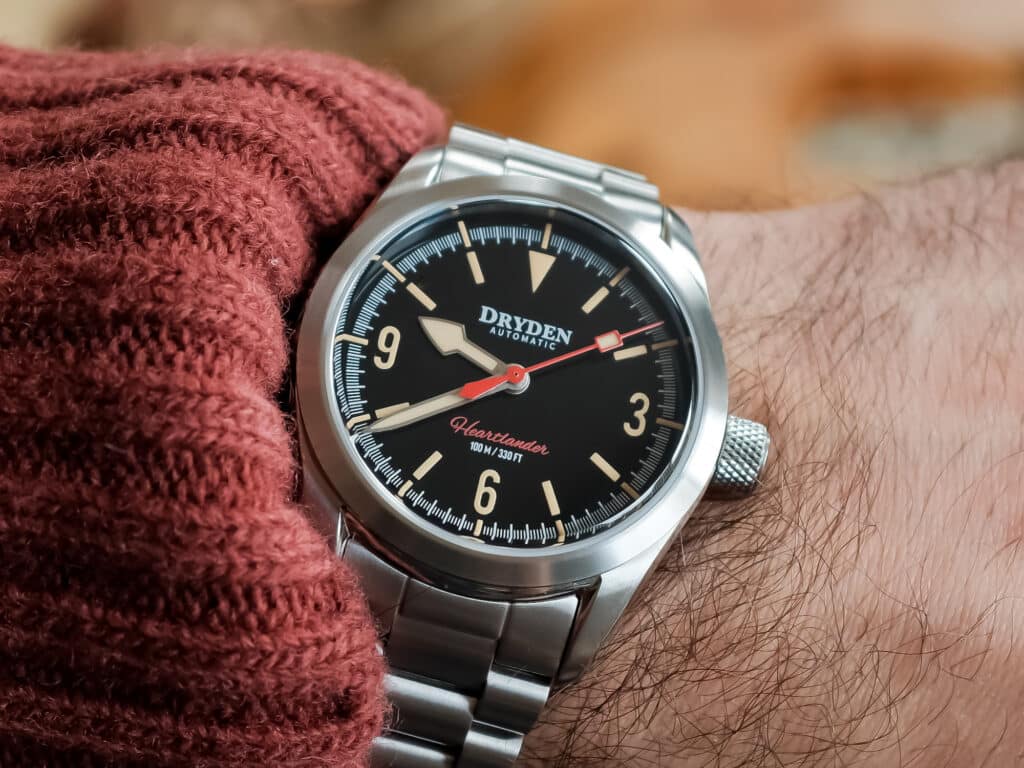
Some watches make sense as a one-watch collection because they strike a balance between simplicity and everyday durability. The Dryden Heartlander fits that description well. The Miyota 9015 automatic movement inside helps set that tone. In our time with it, the movement wound smoothly and kept steady time without drawing attention to itself. It’s the kind of movement that encourages mechanical ownership without adding unnecessary complexity. You wind it, set it, and then get on with the day.
Case proportions are a big part of why the Heartlander works so easily in daily wear. At 38mm, the case lands in a size range that feels natural on a wide variety of wrists. During long days of wear, the watch stayed balanced and never developed the top-heavy feeling that sometimes shows up with thicker mechanical pieces. The oversized screw-down crown also stood out during our time with it. It’s easy to grip and operate, even when your hands are cold or you’re adjusting the time quickly before heading out the door. That practical detail reinforces the idea that this watch was designed for regular use rather than for cautious handling.
The dial choices add some personality without complicating the experience. Dryden offers two primary layouts. The Classic Sport version leans toward the familiar Explorer-style arrangement, while the Traditional Field option uses full Arabic numerals and a date window. Both remain clean and easy to read, which helps build confidence when checking the time quickly during daily routines. Lume choices include Super-LumiNova BGW9 or Old Radium. Each gives the watch a slightly different visual character while still maintaining good nighttime visibility.
The Heartlander comes on a presidential-style bracelet that feels solid and articulates smoothly across the wrist. Quick-release spring bars make removal simple, which is helpful if you prefer experimenting with different straps. That said, the bracelet style sparked a bit of debate among us. Some felt a simpler oyster-style bracelet would better match the watch’s tool-watch personality. Fortunately, the standard 20mm lug width opens the door to plenty of alternatives, from leather to nylon straps. Durability rounds out the experience. The domed sapphire crystal adds scratch resistance while giving the watch a bit of visual depth. There is some mild distortion near the edges, depending on the viewing angle, but it never interfered with reading the time. Combined with 100 meters of water resistance, the Heartlander handled everyday situations comfortably.
Pros
- The 38mm case size sits comfortably on a wide range of wrists.
- The Miyota 9015 movement runs smoothly and offers dependable mechanical performance.
- The oversized screw-down crown makes setting and winding easy.
- Multiple dial styles and lume options allow different aesthetic preferences.
- The 20mm lug width and quick-release bracelet make strap changes simple.
Cons
- The presidential-style bracelet may not appeal to those who prefer a simpler tool-watch look.
- The domed crystal introduces a slight distortion at certain viewing angles.
Monta Atlas
| Price: | $1950 |
| Water Resistance: | 150m |
| Case Dimensions: | 38.5mm (diameter) x 47mm (lug-to-lug) x 10.2mm (thickness) |
| Lug Width: | 20mm |
| Movement: | MONTA Caliber M-23 (Mechanical) |
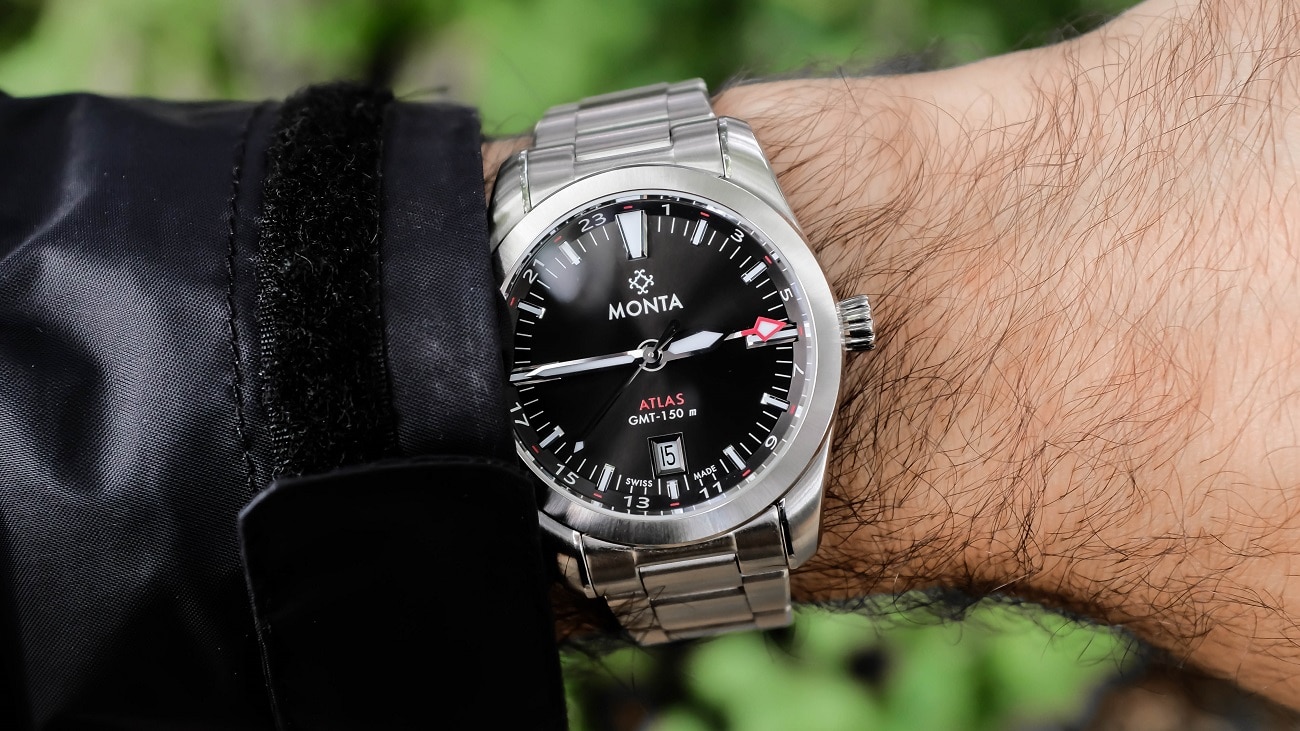
Some watches try to justify their price through branding or flashy complications. The Monta Atlas takes a different approach. It wins you over through everyday interaction. The moment you start wearing it, the proportions make sense. The 38.5mm case sits comfortably on a wide range of wrists, including those of us who normally hesitate around the 40mm mark. Thickness stays just over 10mm, which keeps the watch low and balanced throughout long days. Whether we wore it during work hours, flights, or a full day of running errands, the Atlas never felt bulky or attention-seeking. Instead, it carries itself like a refined everyday watch that happens to include a travel function.
That sense of restraint continues on the dial. The layout stays clean and symmetrical while still showing a second time zone alongside local time. Nothing feels crowded or decorative. While we reviewed it, the additional time display proved useful for tracking family or work in another region. At the same time, the feature stays quiet when you don’t need it. The Atlas avoids the exaggerated aviation styling that sometimes comes with GMT watches.
Durability is another reason it fits into the one-watch conversation. The case includes a screw-down crown and a reassuring 150 meters of water resistance. In practice, that meant we could wear it through travel days, bad weather, and even quick swims without second-guessing the watch. It feels robust enough for everyday activity without crossing into overbuilt territory. The finishing supports that impression. Brushed and polished surfaces are executed cleanly, giving the watch a level of refinement that stands out once you handle it.
Where Monta separates itself is in the bracelet and clasp. The bracelet articulates smoothly across the wrist, and the clasp snaps shut with a secure, precise feel every time you put the watch on. Inside, the MONTA Caliber M-23 powers the watch. It is essentially a Sellita SW330 movement that Monta carefully regulates. Our testing showed consistent accuracy of around -5 to +5 seconds per day, which added confidence during longer wear periods. The only questionable design decision is the exhibition caseback. While it lets you see the movement, the view itself is not particularly compelling.
Pros
- The balanced 38.5mm case and slim profile make it comfortable for long days of wear.
- The clean dial layout keeps the second time zone readable without clutter.
- Well-regulated movement delivers consistent daily accuracy.
- Excellent bracelet and clasp with tight tolerances and a secure feel
- 150 meters of water resistance support real everyday use.
Cons
- The exhibition caseback offers a limited visual reward for the movement inside.
- The second time zone function may feel unnecessary for those who rarely travel.
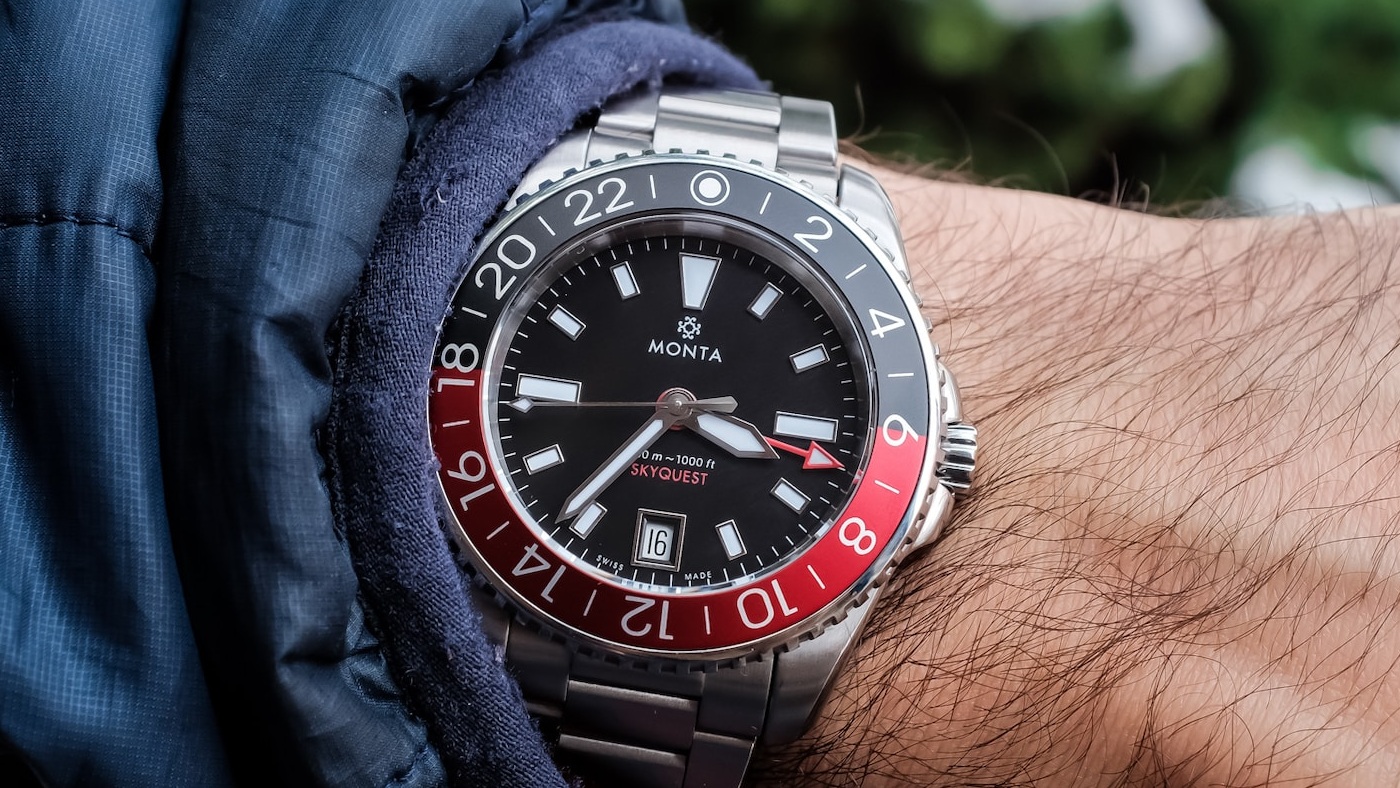
Monta Skyquest GMT
| Price: | $2,435 |
| Water Resistance: | 300m |
| Case Dimensions: | 40.7mm (diameter) x 47.4mm (lug-to-lug) x 11.8mm (thickness) |
| Lug Width: | 20mm |
| Movement: | Monta Caliber M-23 (Sellita SW330-2 base) |
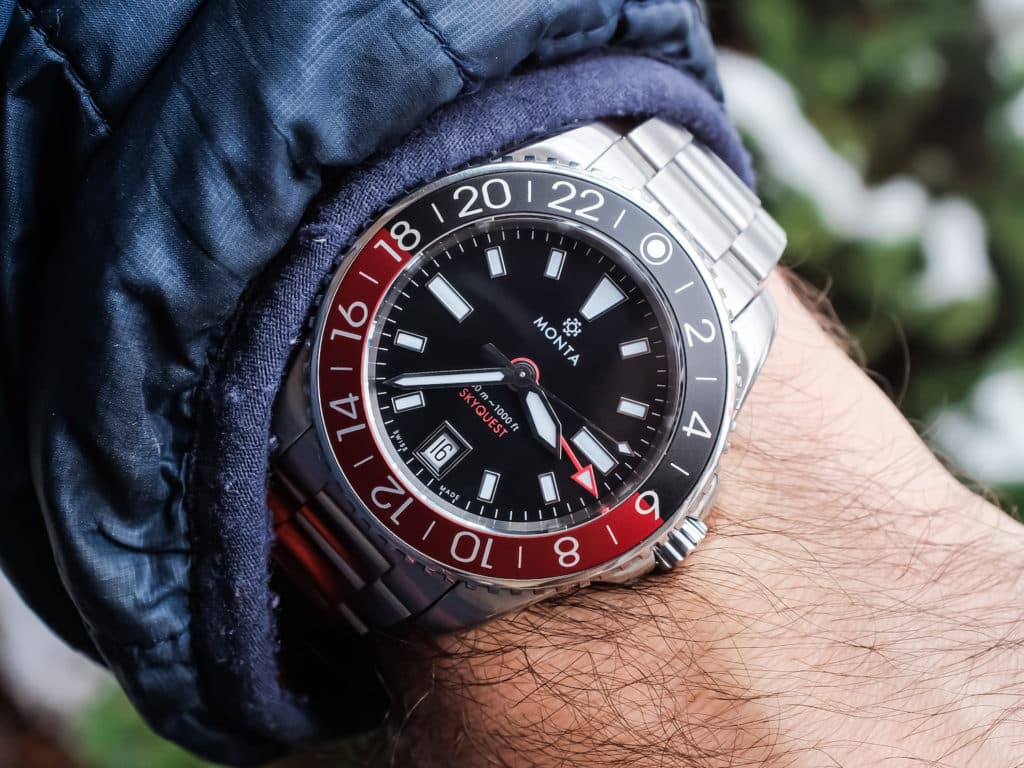
Some watches grow on you gradually rather than making a loud first impression. The Monta Skyquest GMT falls squarely into that category. At first glance, it feels understated for a travel-ready sports watch with 300 meters of water resistance. After spending time with it, that restraint starts to feel intentional. The case proportions sit in a sweet spot that works well across different wrists, and the watch ends up wearing smaller than the numbers suggest. Much of that comes down to the visual balance between the dial and the 24-hour bezel. The larger bezel markings draw your attention outward, making the overall watch feel calmer and more compact during daily wear.
The GMT function is central to why the Skyquest works well in a one-watch collection. Tracking another time zone becomes straightforward thanks to the clear 24-hour bezel and the uncluttered dial layout. During everyday use, the bezel proved easy to operate. The grip is solid enough that adjusting it with gloves or cold hands never felt like a struggle. The action itself is firm and predictable. Monta leaned toward clarity with the dial design. Some of the earlier visual quirks are gone, but the cleaner layout makes quick time checks easier in real-world situations. Applied markers and hands are sized well for legibility, and the BGW9 Swiss Super-LumiNova provides strong nighttime visibility.
Finishing and hardware are where the Skyquest begins to separate itself from many watches in the same space. The bracelet feels thoughtfully constructed with screw links and a milled clasp that closes with reassuring precision. The built-in tool-free micro-adjustment system proved useful during long days when wrist size changes slightly. It’s the kind of feature that gets used regularly rather than forgotten. Comfort stayed consistent across extended wear.
Inside the watch is Monta’s Caliber M-23, a Sellita-based GMT movement. During our time with it, the movement behaved predictably. Servicing down the road should also be straightforward thanks to the widely understood movement architecture. The roughly 55-hour power reserve added some flexibility. Overall, the Skyquest focuses on practical execution, which is often what matters most in a watch meant to cover daily life and travel alike.
Pros
- Case proportions wear smaller and more balanced than the specifications suggest.
- Firm, grippy bezel action makes tracking another time zone straightforward.
- The clean dial layout improves legibility during everyday use.
- Bracelet quality stands out, with screw links and practical tool-free micro-adjustment.
- Reliable GMT movement with a useful 55-hour power reserve
Cons
- Some earlier design quirks are removed, which longtime fans may miss.
- The screw-down crown could be slightly larger to make handling easier.
- Pricing places it in direct competition with well-known, established brands
Omega Seamaster 300M
| Price: | $5,600 – $5,900 |
| Water Resistance: | 300m |
| Case Dimensions: | 42mm (diameter) x 49.9mm (lug-to-lug) x 13.9mm (thickness) |
| Lug Width: | 20mm |
| Movement: | Caliber 8800 Co-Axial Master Chronometer |
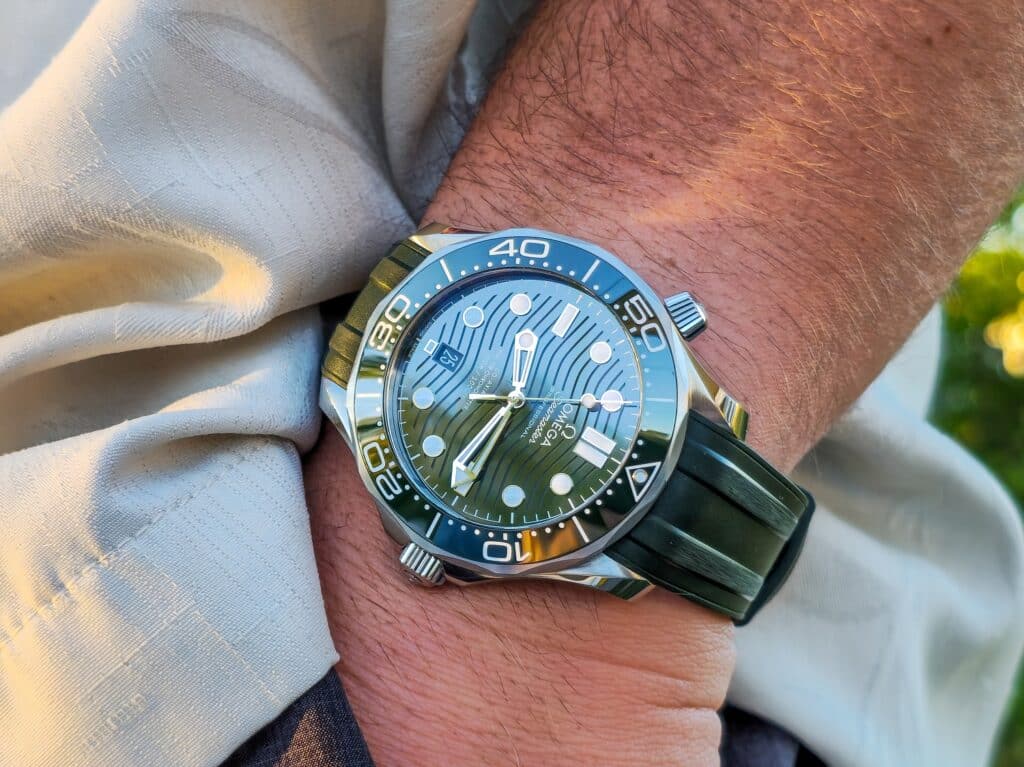
The Omega Seamaster Diver 300M merits consideration for a one-watch collection because it blends technical capability with everyday wearability. On paper, the 42mm case sounds larger than many of us prefer. Once it lands on the wrist, the watch expands in width thanks to the dial and bezel proportions, and the case thickness feels closer to 12mm than what the spec sheet suggests (14mm). That balance matters when the watch needs to move easily between office hours, travel days, and casual evenings.
A big part of that comfort comes from the case design. Omega’s twisted lyre lugs are beautifully executed here. The polished tops catch the light, while a sharp bevel runs along the edge beneath the bezel. Brushed surfaces on the case flanks keep the watch grounded. On the wrist, those lugs visually break up the case width, which makes the watch feel compact. The rubber strap also plays a role in that experience. It stays soft and comfortable during long days and pairs naturally with the case design. We found it easier to live with than the bracelet, which feels heavy and lacks taper. The rubber strap keeps the watch feeling sporty and relaxed, though the spacing between the strap holes could be tighter for a more precise fit.
Omega brought back the wave pattern dial in this generation, engraving it into the ceramic surface. In person, the texture creates depth and subtle reflections across the dial. The green tone shifts depending on lighting conditions. The color-matched date disc is a thoughtful touch that avoids the common problem of mismatched date windows. Skeletonized hands add visual interest but slightly compromise legibility against the luminous markers in certain lighting conditions. Lume itself is distinctive. The minute hand and bezel pip glow green, while the hour hand and indices shine blue, making it easy to orient the minute hand in the dark. Brightness and longevity are decent, though they do not match the stronger lume we see on many Seiko divers.
The sapphire crystal deserves special mention. During our time with the watch, the anti-reflective coating made the crystal nearly disappear under most lighting conditions. Glare rarely interfered with reading the dial. The trade-off is that external AR coatings can pick up small scratches over time. Inside the case sits Omega’s Caliber 8800. This METAS-certified Master Chronometer movement proved stable, with our sample running within roughly +1 second per day. Winding the movement through the crown feels smooth and refined. However, the crown itself is too small, which makes screwing it down less satisfying than the winding action. There is also the signature helium escape valve at ten o’clock.
The bezel looks excellent. The glossy ceramic insert matches the dial well, and the scalloped edges help the watch appear slimmer. The action is crisp with no noticeable back play. However, gripping the bezel can require a bit of effort, especially compared to more aggressively textured dive watch bezels. It feels precise but not enjoyable to fidget with. Overall, the Seamaster Diver 300M often feels more like refined jewelry than a purely rugged tool watch, which might be exactly what some collectors want from the single watch they wear most days.
Pros
- Excellent real-world accuracy from the METAS-certified Caliber 8800
- Case finishing and lyre lug design add visual interest while keeping proportions balanced.
- Highly legible dial with distinctive dual-color lume system
- The sapphire crystal with a strong anti-reflective coating minimizes glare.
- Comfortable rubber strap that suits long daily wear
Cons
- The skeletonized hands reduce legibility against certain dial angles.
- The bezel grip is less practical than many traditional dive watch designs.
- The bracelet feels heavy and lacks the taper of modern alternatives.
- External AR coating may pick up small scratches over time.
Rolex Explorer 14270
| Price: | $5,900 – $6,900 |
| Water Resistance: | 100m |
| Case Dimensions: | 36mm (diameter) x 44mm (lug to lug) x 11.1mm (thickness) |
| Lug Width: | 20mm |
| Movement: | Cal. 3000 (in-house) movement |
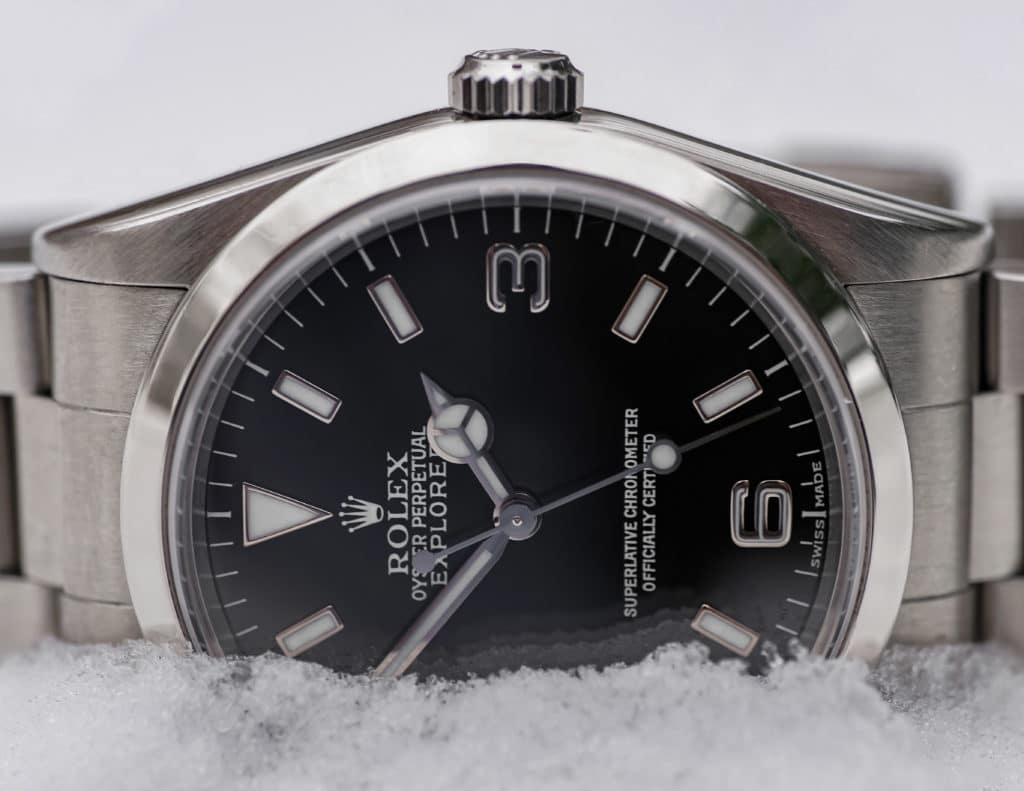
If the goal of a one-watch collection is simplicity that holds up over time, the Rolex Explorer 14270 is an easy watch to understand. There is very little about it that grabs attention. The dial shows only what you need to read the time quickly. The black surface, crisp white printing, and the familiar 3-6-9 numerals create one of the clearest layouts Rolex has ever produced. No date window or extra complication is competing for space. In daily use, that restraint becomes a real advantage. Many examples now carry aged tritium lume that has softened into a light cream tone. Under bright light, it still gives off a faint glow, adding character without interfering with legibility.
Power comes from Rolex’s Caliber 3000, the same movement used in several other models of that era. While testing it on wrist, the watch stayed within roughly -4 seconds per day, which remains respectable even by modern standards. The movement starts quickly with the slightest wrist motion and winds smoothly through the crown. A power reserve of around 42 hours means it will comfortably last a day off the wrist. For a one-watch setup, that simplicity helps.
The case design reinforces that understated approach. At 36mm wide and about 11.1 mm thick, the watch sits flat and balanced across the wrist. The 44mm lug-to-lug keeps it stable, while the absence of crown guards softens the overall shape. Instead of feeling like a rugged expedition tool, the watch leans toward the feel of a precise instrument built for everyday use. The smooth bezel adds a slightly dressier touch, though the Oyster case still brings the durability Rolex is known for. On smaller wrists, the watch feels natural and comfortable. On larger wrists, it becomes a reminder that proportion often matters more than size.
The bracelet continues that theme. The 20mm Oyster bracelet feels light yet solid during wear and tapers gradually toward the clasp. It is not too complicated and never feels fussy to put on. That said, it does show its age. The hollow end links and stamped clasp reflect an older era of Rolex construction. They still function well, but compared to modern bracelets, they feel a bit dated.
Pros
- The clean dial layout with the classic 3-6-9 numerals makes time reading quick and intuitive.
- Slim case proportions sit comfortably on a wide range of wrists.
- Reliable in-house Caliber 3000 movement with smooth winding and steady accuracy
- The smooth bezel allows the watch to transition easily between casual and more formal settings.
Cons
- The 36mm case may feel small for those accustomed to larger modern sports watches.
- Bracelet construction with hollow-end links and a stamped clasp feels dated today.
- Servicing can become expensive due to the watch’s age and the sourcing of its movement.
- Limited availability pushes prices higher on the secondary market.
Omega Railmaster
| Price: | $6,400 |
| Water Resistance: | 150m |
| Case Dimensions: | 40mm (diameter) x 46.5mm (lug-to-lug) x 12.5mm (thickness) |
| Lug Width: | 20mm |
| Movement: | Omega 8806 Master Chronometer Co-Axial |
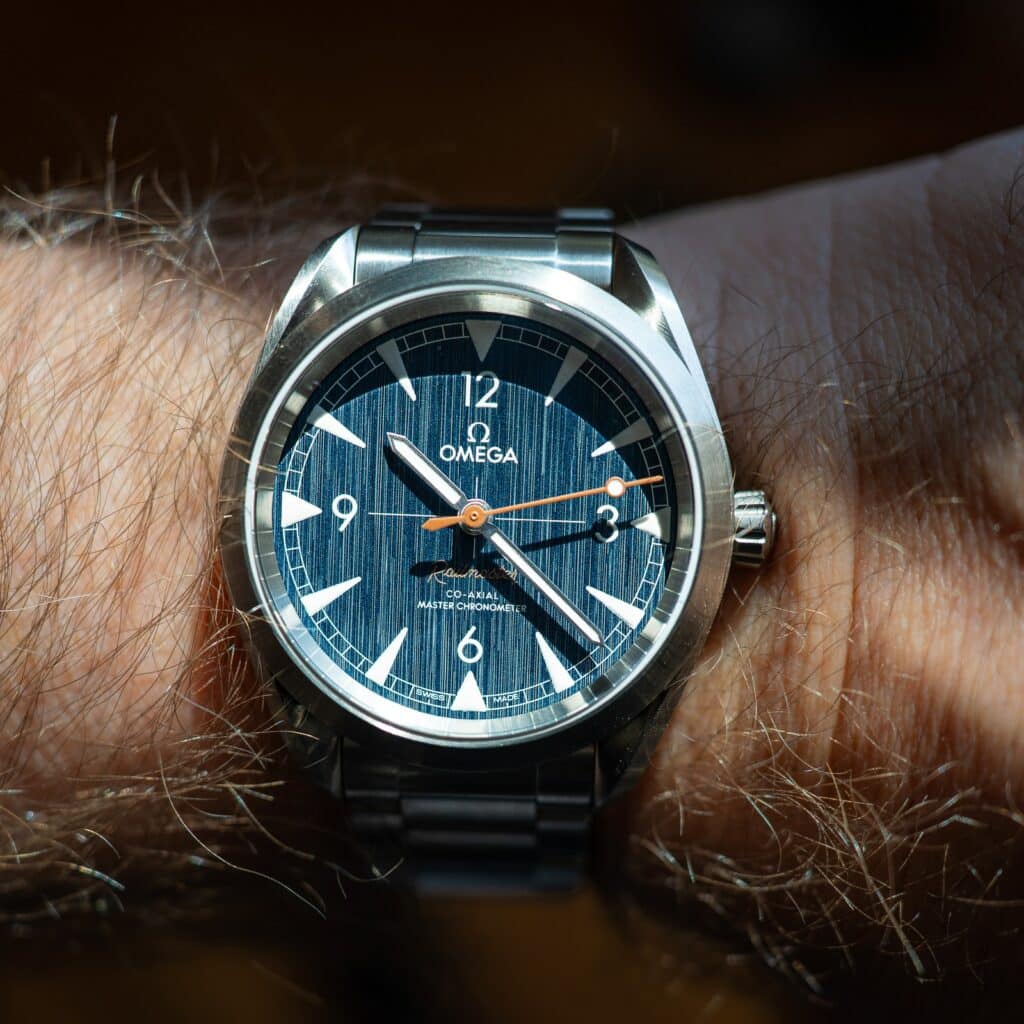
The Omega Railmaster fits the description of watches that earn a place in a one-watch collection by doing less, but doing it well. It focuses on the basics and avoids drawing attention to itself. The time-only layout keeps the dial uncluttered, which is part of its appeal. After a few days of wear, the vertically brushed dial stands out. Light moves across the surface throughout the day, shifting between darker and warmer tones depending on the angle of view. It stays easy to read at a glance, but it never feels flat or static. The bronze seconds hand adds the right amount of contrast to keep the dial interesting without turning the watch into a design experiment.
The case dimensions help reinforce that quiet versatility. At 40mm with a 46.5mm lug-to-lug measurement, the watch stays stable on a range of wrist sizes. The thickness sits around 12.5mm, which keeps it manageable under a shirt cuff while still feeling solid. Most of the case is brushed, giving the Railmaster a utilitarian feel that holds up well to everyday wear. Polished chamfers along the edges soften the look slightly and keep the watch from feeling too basic. In daily use, that balance makes it easy to wear in different settings.
The movement is where the Railmaster quietly builds long-term confidence. Omega’s Co-Axial Master Chronometer movement performed consistently during our in-depth testing, running at roughly +1 second per day. Over several weeks, that level of stability meant the watch stayed accurate without constant adjustments. The METAS certification and strong magnetic-field resistance add another layer of reassurance. Those features matter less as marketing points and more as practical safeguards during everyday life around electronics and travel.
The bracelet matches the rest of the watch’s restrained personality. The three-link design feels solid and well-made, with a mostly brushed finish that helps hide small scratches over time. The real frustration we ran into was the lack of micro-adjustment. Getting the fit right required more trial and error than we would have preferred. Moreover, pricing can feel ambitious compared to simpler watches that offer a similar visual style. Once you spend time with it, though, the finishing, movement performance, and overall design coherence begin to justify where that cost is going.
Pros
- The Master Chronometer movement delivers excellent real-world accuracy.
- Strong resistance to magnetic fields adds practical reliability in daily environments.
- The vertically brushed dial provides visual depth while remaining easy to read.
- Predominantly brushed finishing handles everyday wear well.
Cons
- The bracelet lacks micro-adjustment, which makes fine-tuning the fit less convenient.
- The time-only design offers no additional complications.
- The price may feel high compared to simpler alternatives with fewer technical features.
Rolex Submariner
| Price: | $10,250 |
| Water Resistance: | 300m |
| Case Dimensions: | 40mm (diameter) x 48mm (lug-to-lug) x 12.5mm (thickness) |
| Lug Width: | 20mm |
| Movement: | In-house caliber 3130 |
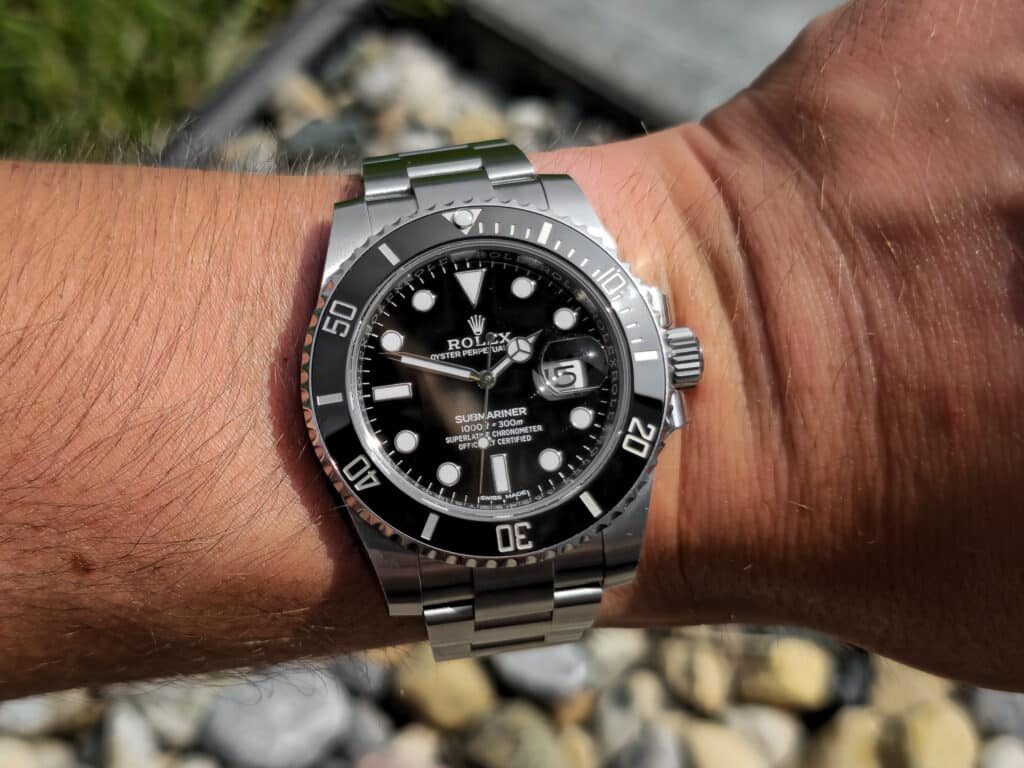
The Rolex Submariner often carries more reputation than it probably needs. Many people recognize it instantly because of the crown on the dial. Once you spend time wearing it, the appeal starts to make more sense. The watch balances rugged capability with proportions that work almost anywhere. On the wrist, the case dimensions feel substantial enough to remind you that it is a dive watch, yet slim enough to slide under a cuff during a workday.
Rolex’s Oyster bracelet remains one of the most comfortable bracelets we have worn. The links articulate smoothly and taper from 20mm to 16mm at the clasp, keeping the watch balanced on the wrist. The Glidelock clasp allows quick adjustments without tools and adds roughly a link-and-a-half of flexibility. That small adjustment range turns out to be useful when wrist size changes throughout the day. The brushed finish on the links also hides scratches well.
The bezel is another highlight. It rotates with precise clicks and no noticeable back play. The motion feels controlled and consistent as it moves around the dial. The ceramic Cerachrom insert carries engraved numerals filled with platinum and resists fading over time. One detail we appreciated is the raised lume pip at the twelve o’clock position. It sits high enough that you can locate it by touch, which is quite useful for quickly checking orientation in low light.
The dial itself is straightforward. Glossy black with luminous markers, the familiar Mercedes handset keeps everything easy to read. The white gold surrounds on the indices add refinement without distracting from legibility. The Chromalight lume glows in a cool blue tone and stays visible well into the night. The sapphire crystal above the dial remains clear, though the limited anti-reflective coating means you occasionally notice a faint haze under certain lighting. It is a small quirk.
Inside the case sits Rolex’s in-house caliber 3130. The movement is not flashy, but it focuses on reliability. During our review, it ran around +0.5 seconds per day. The Triplock screw-down crown contributes to the watch’s 300 meters of water resistance and feels very smooth when winding or setting the time. That said, owning a Submariner does come with a few frustrations. Buying one at retail can involve long wait times, and gray-market prices often push the watch into uncomfortable territory. Counterfeit versions have also become very convincing, which makes the used market more complicated to navigate.
Pros
- Balanced case proportions make it comfortable for everyday wear
- The oyster bracelet with Glidelock clasp provides excellent comfort and quick adjustment.
- Precise ceramic bezel with strong alignment and durable construction
- Strong blue Chromalight lume remains visible late into the night.
Cons
- Limited anti-reflective coating can create a slight haze in certain lighting.
- Retail availability is limited, and gray-market pricing is quite steep.
- A high number of convincing counterfeits complicates buying used.
That’s our take on a few watches that could realistically carry a one-watch collection without drama. None of them is perfect, but every one proved itself by surviving real life instead of just looking good on a spec sheet. Be sure to let us know your thoughts on these picks and if you’ve got a watch you keep reaching for while the rest sit in the box, please tell us in the comments below.

Co-Founder and Senior Editor
Kaz has been collecting watches since 2015, but he’s been fascinated by product design, the Collector’s psychology, and brand marketing his whole life. While sharing the same strong fondness for all things horologically-affordable as Mike (his TBWS partner in crime), Kaz’s collection niche is also focused on vintage Soviet watches as well as watches that feature a unique, but well-designed quirk or visual hook.
I would suggest the Sinn 556. It is virtually indestructible for active sporty types, relatively cheap compared to the Omegas and Rolexes mentioned, wears extremely well on any wrist, and is elegant enough to wear out on a night on the town, or with jeans to beach.
That’s a really great pick. We really only like to include watches in these lists that we’ve officially reviewed. But the 556 would absolutely kill it as a one-watch collection. I’m gonna try to see if we can get one in for a review soon 🙂
Great call on the Sinn! They still fly under the radar, but punch well above their weight. The 556 is solid and understated. In my opinion, Sinn is an “if you know, you know” kinda watch. I own a Tegmented U1 and a 6100 Regulateur (there’s something romantic about a manual wind). Great call again!
Good shout pal 😉
Have you looked at any of the Glock watches?. I have one and like it very much. I paid around $300 for it.
I’d love to get my hands on one for a review.
Grand Seiko Snowflake? That’s the ultimate one watch in your second half price range IMHO.
It’s definitely a strong contender. We’d love a chance at giving one a detailed review and hands-on time before including in a list 🙂
If you’re not stuck on the snowflake, other references may be a little cheaper. I had a Grand Seiko Heritage collection titanium spring drive that I found on Chrono24 for just shy of $2,000. I still have a manual wind Seamaster and an old Seiko Presmatic, but I just wear my Seamaster Pro 300M chronograph now. I may wear one of the other two to church sometimes.
Longines Conquest 38mm
Perfect Explorer alternative with 300m WR and simple, beautiful design.
Definitely a ton of great stuff in the Conquest lineup.
In that list would be a good idea to include the Omega Seamaster Aquaterra as one if the best options for an everyday watch. Sporty and dressy at the same time.
The different combinations of case, dial and straps/bracelet gives plenty of options to decide which one is the best for your taste and style.
The Aqua Terra is one of the better “do everything” watches out there and the range of configurations makes it easy to find one that fits. Good call.
Railmaster is fully brushed. There is absolutely no polished parts. I have a silver one in my one watch collection… 😉
How do you like it? It’s always been one of our favorites.