
For over a decade, we’ve worn and tested both the Omega Seamaster 2254.50.00 and the newer Seamaster Diver 300M during real-world use. In that time, the 2254 evolved from a quietly capable diver to one of Omega’s most beloved modern classics—slim, legible, and built with a kind of no-nonsense charm that’s hard to find today. Meanwhile, the contemporary 300M arrived with a complete redesign, a ceramic bezel, and an updated movement that pushed it closer to luxury territory.

In this Seamaster 2254 vs 300M comparison, we’re putting both watches side by side in the way we always do: by living with them. We’ve examined how they wear, how they perform, and what they represent for genuine enthusiasts who value usability as much as design. The real question is whether Omega’s modern 300M genuinely improves on the older reference, or if something got lost along the way.
Overview & Identity
When it comes to the Seamaster 2254 vs 300M debate, both watches capture Omega’s evolving idea of what a modern dive watch should be: one rooted in function but shaped by different priorities.

The Omega Seamaster Professional 2254.50.00, as we explored in our hands-on review, isn’t the hardcore tool some make it out to be. It’s a dress-diver through and through. It’s sleek, purposeful, and refined enough to feel at home in nearly any setting. The slimmer 41mm case and sword hands make it immediately legible, while the matte black wave dial absorbs light instead of reflecting it. It’s not built for saturation diving so much as it’s built for daily wear, business trips, and the occasional weekend swim. The 2254 has that understated charm that makes you glance at your wrist a few times a day, not to show it off, but to appreciate how effortlessly it fits into your life.

The modern Seamaster Diver 300M takes that same DNA and amplifies it. The ceramic dial, featuring laser-engraved waves, the mirror-polished case surfaces, and the more intricate bracelet, are all beautifully executed, yet in a way that feels deliberate and polished rather than quietly capable. The newer 300M is smoother and far more expressive; a watch that leans into Omega’s luxury identity without apology. As we said in our review, this is a watch that feels “more fine jewelry than unabashed tool.” You can still dive with it, but it’s meant to impress long before it hits the water.
- The 2254 embodies refined practicality. It’s a dress-diver that blends everyday wearability with Omega’s classic tool-watch DNA, quietly confident rather than loud.
- The modern 300M embraces modern luxury: a more visually striking evolution that prioritizes polish and presence while keeping the Seamaster spirit alive beneath the surface.
Design & Wearability: The Subtle Classic vs the Polished Performer
The Omega Seamaster Professional 2254, as explored in our review, is a masterclass in balanced design. The black wave dial remains one of Omega’s most distinctive textures. It plays with light in a way that feels alive, disappearing under shade, then suddenly catching a glint that reminds you this watch was made to see water. The sword hands are sharp, fully lumed, and solid. Together with the oversized triangular markers and red-tipped seconds hand, legibility is instant and effortless. The beveled, color-matched date window maintains symmetry, while the printed Omega logo and text lend the dial an old-school tool feel without tipping into flash.

The three-link bracelet, though simple, remains one of Omega’s most comfortable. It articulates naturally, and even without microadjustment, it feels balanced throughout a long day. More than once, we’ve swapped the bracelet for a suede strap or NATO and been reminded why this reference is such a strap monster: every combination just works. The 2254’s restrained design makes it equally at home under a sleeve or above the surface of the water.
The modern Seamaster Diver 300M, as covered in our hands-on review, takes that foundation and cranks up the refinement dial. Its laser-engraved ceramic wave dial has a glassy depth that borders on porcelain, catching light in dramatic sweeps. The skeletonized hands, while intricate, lose some legibility against the dial’s reflective sheen. That’s a clear trade-off of style over utility. Omega’s finishing here is clinical: the crispness of the printed text and the recessed “canyons” of the wave pattern all remind you this is a $6,000 watch.

Yet, that refinement comes with heft. The bracelet feels dense, and its lack of taper gives it an almost armored presence that’s too weighty. On the optional rubber strap, however, the watch breathes again. The supple material lightens the experience, fitting snugly and flexing naturally in a way that makes the 300M feel more wearable. This version of the Seamaster isn’t shy; it’s Omega leaning confidently into luxury territory, crafting a diver that feels less like a tool and more like fine jewelry designed to go swimming.
- The 2254 channels timeless versatility. It nails the balance between form and function without ever feeling overdesigned.
- The 300M showcases Omega’s modern flair. It’s bold, glossy, and meticulously finished, trading subtle charm for striking wrist presence.
Build Quality & Technical Approach
Both generations of the Seamaster are built with undeniable quality, but their technical philosophies reveal two very different interpretations of what a modern dive watch should be.
Movements:

The Seamaster Professional 2254 is powered by the Omega Caliber 1120, a COSC-certified chronometer based on the ETA 2892-A2. Beating at 28,800vph with a 44-hour power reserve, it’s one of those excellent movements that works. Our test model, bought with an unknown service history, still ran within +4.2 seconds per day, showing how well this caliber holds up over time. The rhodium plating adds a hint of refinement, but it’s still a workhorse at heart that’s smooth, reliable, and easy to live with.

The modern Seamaster Diver 300M adopts a different approach with the Caliber 8800. This METAS-certified Master Chronometer movement is Omega’s precision showcase, accurate to 0/+5 seconds per day and resistant to a staggering 15,000 gauss. The coaxial escapement, designed by George Daniels, reduces friction and extends service intervals. At the same time, the finishing, featuring spiraling Geneva waves and rhodium details, is beautiful, even if not ultra-high-end. While testing, the slightly offbeat 25,200vph beat rate gave the seconds hand a smoother, distinctive glide. In short, the 8800 is the technical evolution of the Seamaster ethos: a movement as overbuilt as it is overqualified.
Case Construction & Finishing:

The 2254’s 41mm stainless steel case feels sleek and balanced, with the trademark twisted lyre lugs giving it unmistakable character. At only 12mm thick, it wears far slimmer than most modern divers, comfortable under a cuff yet sturdy on the wrist. Brushed surfaces dominate, interrupted only by a thin polished chamfer that adds subtle depth. The crown guards blend smoothly into the midcase, protecting a signed screw-down crown that’s easy to operate, if slightly narrow. The scalloped aluminium bezel looks great, but it can be tough to grip with wet hands. That’s a small design compromise in an otherwise superb case. Despite the occasional scratch, we found it to be one of Omega’s most balanced case executions.

The modern Seamaster Diver 300M refines that formula with sharper details and enhanced finishing. The proportions stay close, but the presence is bolder. The polished lyre lugs and finely brushed flanks are among the best in the segment, creating shifting reflections as the watch moves on the wrist. Our review team found that despite its listed 14mm thickness, the curved case profile allows it to wear closer to 12mm. This leads to a thin, secure, and comfortable fit. The ceramic bezel, featuring alternating brushed facets and a glossy insert, looks fantastic, even if the scalloped edge remains tricky to grip. The caseback showcases the movement, framed by a detailed gear-tooth motif that adds to the luxurious feel.
Crystals:
The Seamaster Professional 2254.50.00, as noted in our hands-on review, uses a sapphire crystal. It’s tough, scratch-resistant, and provides a crisp view from nearly any angle. There’s no over-the-top dome or glare trickery here; just a clean, functional piece of sapphire that lets the wave dial do its thing. Even after years of wear, ours remained very clear, showing only the faintest scuff under direct light.

The modern Seamaster Diver 300M takes the crystal game to another level. Omega applies multiple layers of anti-reflective coating (AR) on both sides of the sapphire, creating one of the clearest viewing experiences we’ve seen. In most lighting, the crystal virtually disappears, leaving only the wave dial floating beneath it. The trade-off, as always with external AR, is vulnerability to micro-scratches that can appear at certain angles. It’s a small price to pay for the near-total absence of glare.
Water Resistance & Lume:
The 2254’s screw-down crown and solid caseback lock in a full 300 meters of water resistance, even if the helium escape valve at 10 o’clock feels more like a design flourish than a necessity for anyone not living in a dive world. In regular use, the crown’s slim but secure threading provided a reassuring feel.

The real standout here, though, is the lume. Omega’s C3 Super-LumiNova remains one of the strongest we’ve tested on any diver. A few seconds of sunlight are enough to make the hour markers and sword hands glow, and the lume’s slightly uneven fade pattern (brighter in the centers of the plots) adds a bit of character as it dims.
The modern Seamaster Diver 300M, as we reviewed, retains the same 300-meter rating but updates it for the modern era. The helium escape valve still sits proudly at 10 o’clock, dividing opinions as always: quirky to some, unnecessary to others. But it’s become part of the Seamaster’s visual identity. In our testing, the case sealed perfectly through pool sessions and humid days without issue.

The lume, meanwhile, is pure Omega showmanship. The minute hand and bezel pip glow green, while the hour markers and other hands emit a deep, electric blue. It’s vibrant, quick to charge, and legible in the dark, even if it doesn’t last as long as the 2254’s C3 compound. Here, the lume feels more stylistic than functional: a light show designed to complement the watch’s modern luxury personality.
- The 2254 is classic Omega done right: reliable, slim, and purpose-built, with excellent lume and understated durability.
- The modern 300M elevates that formula with sharper finishing, METAS precision, and luxury flair that favors polish over pragmatism (to an extent).
Cost Considerations

The Seamaster Professional 2254.50.00 tells a familiar story for long-time enthusiasts: the “sleeper hit” that’s quietly become collectible. Once a regular in Omega boutiques, the 2254 has been discontinued for years, and prices on the pre-owned market have climbed accordingly. Examples now range from about $2,500 for well-worn pieces to over $4,800 for complete sets with box and papers, averaging around $3,500 in good condition.

The modern Seamaster Diver 300M firmly steps into the realm of luxury pricing. Retail prices sit around $5,600 for the rubber or $5,900 for the bracelet, placing it above most “entry-level luxury” divers but still shy of Rolex territory. It’s not “affordable” by TBWS standards, but it earns its keep through craftsmanship and long-term wearability rather than hype.
Final Thoughts: Does the Modern Seamaster 300M Actually Improve?
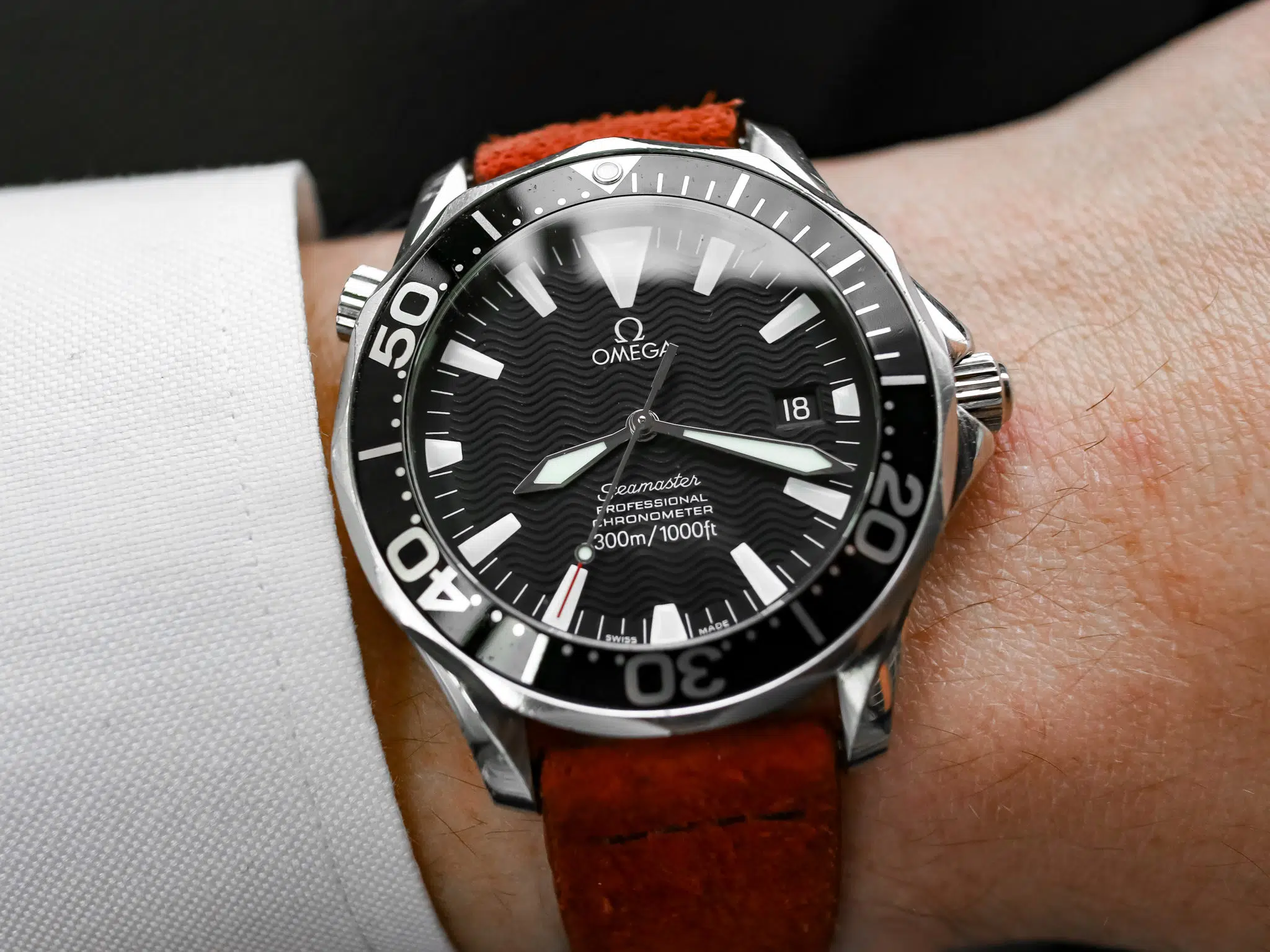
After spending meaningful wrist time with both versions, one thing becomes clear: “improvement” depends on what you value in a dive watch. The Seamaster Professional 2254 remains one of Omega’s most balanced and wearable divers. The sword hands, matte dial, and restrained finishing make it a competent watch built for people who actually wear their watches, not just admire them. Sure, it lacks ceramic gloss and exhibition flair, but that’s part of its charm.

The modern Seamaster Diver 300M, by contrast, leans into luxury with confidence. Its laser-engraved ceramic dial, mirror polishing, and METAS-certified movement are undeniably impressive. It’s also, by design, less utilitarian. It’s a “diver” in aesthetic more than intent.
So, does the modern Seamaster actually improve? Technically, yes, but not proportionate to the price hike. The 300M offers better materials, tighter tolerances, and next-level accuracy; yet, much of what you’re paying for resides in its polish and presentation rather than functional advancements. The 2254 still delivers 70-80% of the real-world experience for a lesser cost.
Have you owned and worn both or either of these watches? Please let us know your thoughts in the comments below.

Co-Founder and Senior Editor
Kaz has been collecting watches since 2015, but he’s been fascinated by product design, the Collector’s psychology, and brand marketing his whole life. While sharing the same strong fondness for all things horologically-affordable as Mike (his TBWS partner in crime), Kaz’s collection niche is also focused on vintage Soviet watches as well as watches that feature a unique, but well-designed quirk or visual hook.
Agree with your analysis. The 2254 is hands down the better watch.
A great article and comparison, however I’m going to have to disagree with you on the price part. You compared used 2254 prices with retail Diver 300M prices, where the 2254 wins easily. Except the 300M is over half a decade old at this point and a quick Chrono24 browse showed a bunch of excellent condition examples with box/papers for under $4K (albeit only blue and black dials; the green shown here is newer), which is the same as an equivalent 2254.
There’s plenty of reasons to prefer the 2254 other than price, and a “well worn” one is still arguably the best value way to own an Omega, but if you’re willing to spend extra to get a good example, then you can afford to buy whichever one you prefer.
I own the 2264.50 (same watch, but quartz) and I love it. It keeps time about as accurate as my cell phone and can be worn with 6 year old jeans or a suit. It’s more than just a better value than a new Omega; it’s a no-brainer! And every time I wear it I still can’t believe how bright the lume is for 24 year watch…
Hi, Mike:
We’re on the same page then haha – I have a 2541 in my collection (quartz) and I can’t imagine getting a newer version for nearly double or triple the price. I’m glad you’re enjoying your 2264!
Best,
-Kaz