
Choosing between the Omega Speedmaster and the Bulova Lunar Pilot usually starts as a money question, but it doesn’t stay that way for long. One costs several times more than the other, yet both trade heavily on “moon watch” legitimacy, and both show up in conversations about watches worth owning at any level. If you’ve ever wondered whether the Speedmaster feels like a different experience than the Lunar Pilot once the excitement wears off, we’ve been asking the same thing. This comparison exists for one reason: after real wrist time, which moon watch actually wins?

We’ve spent the last decade reviewing watches by wearing them, not just admiring them from across a desk. That includes extended time with the Speedmaster 3861 and long-term use of the Bulova Lunar Pilot as watches you live with. We’ve rotated them in and out, noticed what we missed when they were gone, and paid attention to what started to annoy us over time. And we’re not here to sell you mythology or echo internet opinions; we want to share what living with these two watches felt like, and ultimately, whether spending more for the Omega really changes the experience in a way that matters.
Overview & Identity

The Omega Speedmaster 3861 feels like the watch Omega has been quietly trying to make for years. In our hands-on time, it didn’t feel like a reinvention, but more like a long-overdue course correction. The Speedmaster has always carried a lot of baggage: expectations, mythology, endless reference debates, and, over the years, most updates barely moved the needle in daily wear. The 3861 was different. On the wrist, it felt familiar in a comforting way, but also noticeably more dialled-in, like someone finally sharpened the edges without changing the outline. It still wears as a Speedmaster should, but with a sense that Omega stopped being afraid of refining its most sacred object. That “coming home” feeling wasn’t nostalgia; it was relief.

The Bulova Lunar Pilot comes at the moonwatch idea from a different angle. During our hands-on testing, it leaned hard into the grab-and-go chronograph identity: a significant presence, a black dial, a steel bracelet, and a movement that’s unapologetically quartz but far from ordinary. That high-frequency sweep sets it apart in use, and for a while, it’s easy to get swept up in how much performance and visual punch Bulova packed into a no-nonsense sports chrono. At the same time, the Lunar Pilot made its priorities clear. It’s bold, utilitarian, and designed to be worn without overthinking.
- The Omega Speedmaster 3861 is a carefully refined evolution that rewards long-term ownership and familiarity.
- The Bulova Lunar Pilot is a high-impact, grab-and-go chronograph that prioritizes performance and presence over subtlety.
Design & Wearability: Refined Familiarity vs Bold, Unapologetic Scale

The Speedmaster 3861 leans into restraint in a way that only becomes obvious after living with it. The dial layout feels calmer than earlier versions, helped by subtle dimensional tweaks that make everything read more clearly without calling attention to themselves. That stepped dial pulls your eye inward, and the applied logo on the sapphire version adds depth without tipping the watch into dress-watch territory. But the fundamental shift in wearability shows up once it’s on the bracelet. Omega finally figured out how this watch should sit. The stronger taper and earlier articulation help the case hug the wrist rather than hover, and the redesigned end links shorten the visual footprint more than you’d expect. It wears flatter, more comfortably, and with less mental negotiation than past Speedmasters. As also mentioned in our in-depth review, the bracelet isn’t flashy, but it feels intentional, even if sizing it at home tests your patience.
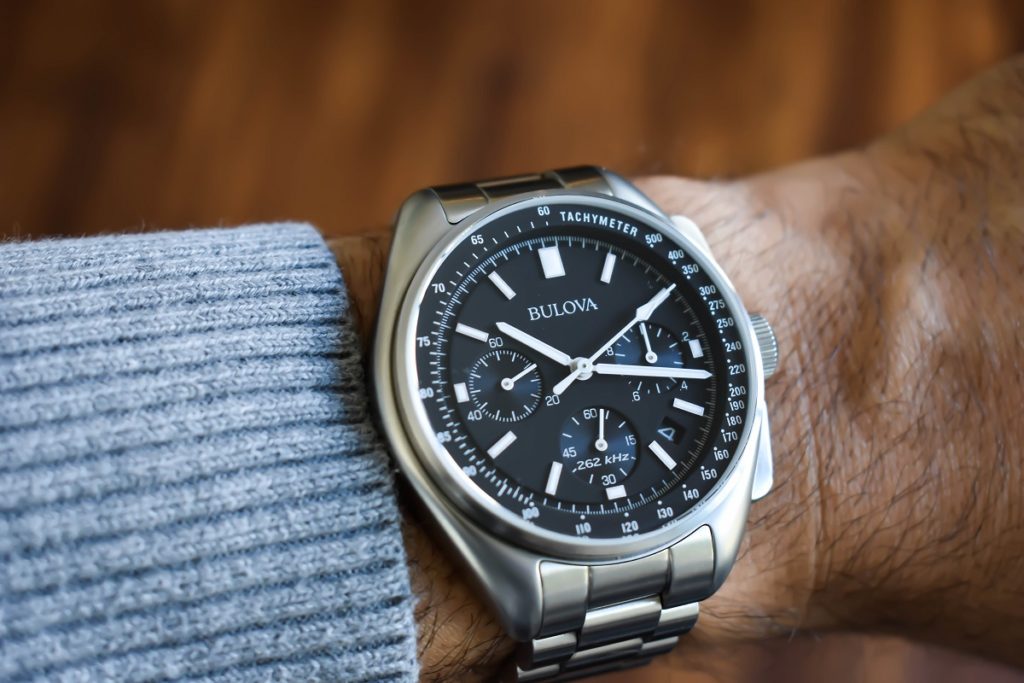
The Bulova Lunar Pilot takes the opposite approach, committing fully. It’s big, it knows it’s big, and the design does not attempt to disguise that. The dial uses every millimeter of the case, and it works. Everything stretches where it should, from the long central hands to the sub-dials that feel properly spaced instead of crammed. Legibility is excellent, aided by layered surfaces that separate information without clutter. It’s a watch you can read instantly, even at a glance. The bracelet matches that confidence. It’s hefty, solid, and visually seamless when closed, but the execution isn’t perfect. The lack of taper and mismatched finishing feels like a self-inflicted wound, especially given how good the bracelet is otherwise. It’s comfortable, but stubborn, and it doesn’t love being swapped to straps, which limits flexibility in daily wear.
- The Omega Speedmaster rewards long-term wear with improved comfort, better wrist balance, and thoughtful refinements that make it easier to live with day after day.
- The Bulova Lunar Pilot prioritizes immediate impact and legibility, delivering a bold, high-visibility chronograph experience with less flexibility for changing straps or wrist sizes.
Build Quality & Technical Approach
Both the Omega Speedmaster 3861 and the Bulova Lunar Pilot are solidly built chronographs, but they get there through different philosophies. You feel that contrast once you start wearing them and interacting with them day to day.
Movements:
The Speedmaster 3861 finally gives the Moonwatch a movement that feels as considered as the rest of the watch. Omega took the long road here, reworking the old 1861 architecture over several years rather than starting from scratch. The result is a hand-wound Co-Axial chronograph with about 50 hours of reserve that keeps the rituals intact while quietly fixing the things owners used to excuse. Winding feels smoother and more deliberate, the pushers have a firmer, more confident action, and accuracy in daily wear has been consistently strong (+3 seconds a week). Being able to see the movement through the sapphire caseback changes the relationship, too. You start noticing the finishing and layout, and it reinforces the sense that this isn’t a mere update for the spec sheet; it’s a mechanical experience Omega finally feels proud to put on display.

The Bulova Lunar Pilot approaches the problem from the opposite direction and doesn’t apologize for it. The high-frequency quartz movement is the entire reason this watch exists, and in daily use, it’s hard to argue with the results. Accuracy (about 10 seconds a year) is borderline absurd, to the point where setting it becomes a once-in-a-long-while event rather than a routine. The second hand glides instead of snapping, which gives the chronograph a visual smoothness you don’t expect from quartz, and it adds a little joy every time you engage it. There’s no winding ritual, no mechanical theater, but the trade-off is a movement you can trust without thinking about it. It’s less romantic, sure, but it’s also the thing we missed most once the watch left the rotation.
Case Construction & Finishing:

The Speedmaster 3861 sticks closely to the case shape we all recognize, but the minor adjustments make a real difference in wear. On paper, it’s still a 42mm Speedmaster, yet on the wrist it feels more settled and less top-heavy than older versions. Omega trimmed just enough material in the right places for the watch to sit flatter and feel more planted, especially once it’s on the wrist for a full day. The finishing is pretty much what we expect here: clean brushing and crisp transitions that feel intentional rather than flashy. The bezel brings the dot-over-ninety back to its position. That’s a minute detail that somehow restores the watch’s rhythm. Overall, it feels solid without ever drifting into bulky. That balance is what makes it easy to wear in situations where earlier Speedmasters sometimes felt like they were pushing it.
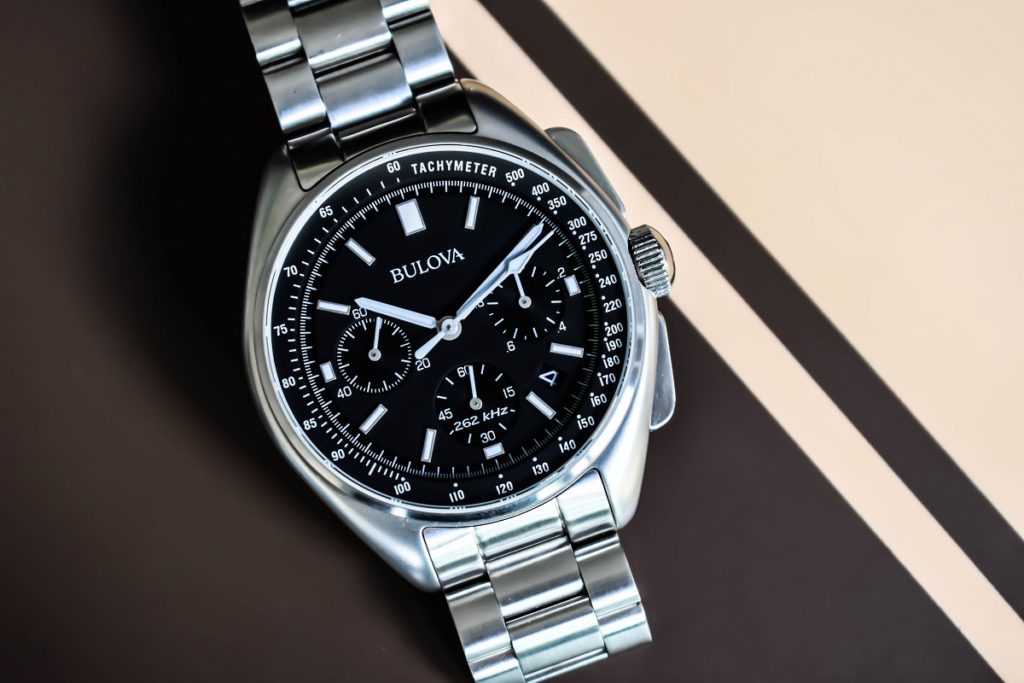
The Bulova Lunar Pilot, by contrast, makes no attempt to downplay its size. At 45mm wide with a long lug-to-lug measurement, it’s polarizing, and for some wrists it’s a hard stop. That said, once it’s on, the case design does more work than the dimensions suggest. Our review team found that the soft, almost bead-blasted finishing gives the steel a muted, tool-watch character that keeps the size from feeling shiny or overwhelming. There’s a surprising fluidity between the lugs and bracelet that helps the watch balance better than expected, especially when worn as intended. From the side, the playful case architecture becomes more obvious, with a chunky cylindrical bezel and oversized chronograph pushers that are genuinely satisfying to use. It’s still big, and there’s no escaping that, but the construction at least tries to make peace with its own scale.
Crystals:

The Speedmaster 3861 keeps things familiar, but the choice between crystals still shapes how the watch feels in daily use. The Hesalite version leans fully into tradition. It scratches more easily, sure, but it also feels more forgiving and in-character for a watch that’s meant to be worn, not babied. The sapphire version shifts the experience. It’s cleaner, sharper, and pairs well with the more refined bracelet execution, adding a subtle modern edge without turning the Speedmaster into something precious or flashy. Both work; it comes down to whether you value charm or clarity more on the wrist.
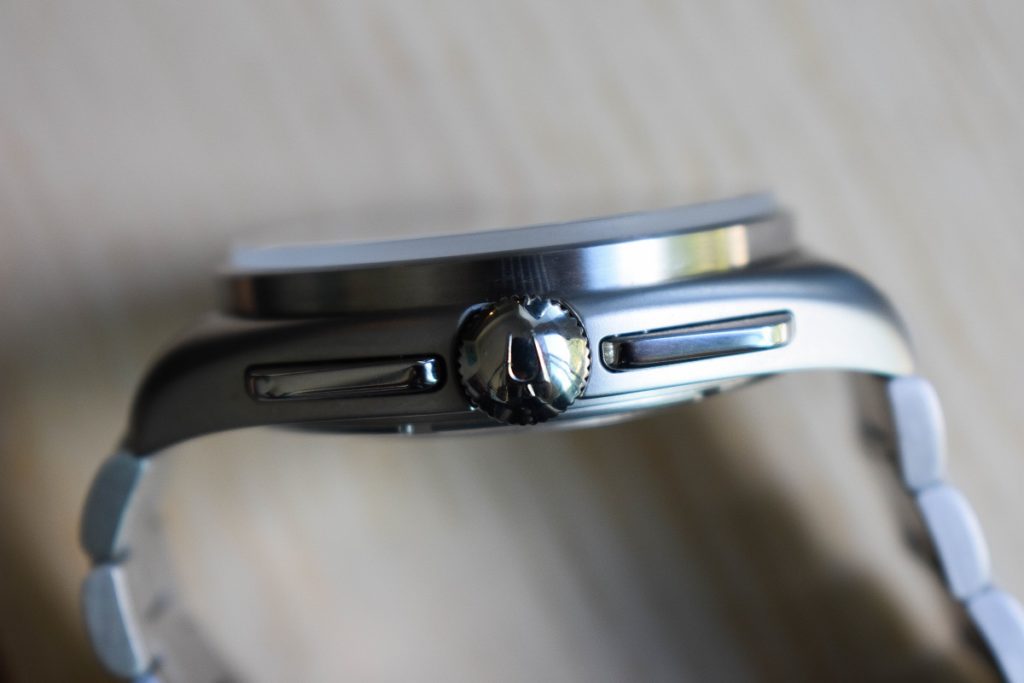
The Bulova Lunar Pilot goes modern with a tall box sapphire crystal that matches the watch’s overall presence. The height adds drama and reinforces the chunky, tool-forward aesthetic. In use, the sapphire holds up well and keeps the already legible dial crisp, even when light hits it from odd angles. It doesn’t disappear the way heavily coated crystals can, but it doesn’t fight you either.
Water Resistance & Lume:
The Speedmaster 3861 keeps expectations firmly grounded. With 50 meters of water resistance, it’s honest about what it’s for and, more importantly, what it isn’t. We never felt nervous wearing it day to day, but it’s also not the watch you’d dunk absentmindedly in a pool. Rain, hand washing, the occasional splash—fine. Anything more than that and you’re tempting fate for no good reason. Where it quietly wins points is lume. It doesn’t scream for attention, but it does its job. During testing, it stayed readable through the night, which is more than we can say for plenty of chronographs that technically “have lume.” Daytime legibility is pure Speedmaster: crisp contrast, well-spaced subdials, and nothing competing for your eye.

The Bulova Lunar Pilot plays in the same water-resistance lane, also rated to 50 meters with a straightforward screw-down caseback. It’s functionally similar in real-world use: daily wear is safe; aquatic ambition is discouraged. Lume performance follows the watch’s overall personality. Those large rectangular indices charge up quickly and glow confidently, making the dial easy to read when the lights go out.
- Omega Speedmaster 3861 – A mechanically focused chronograph that prioritizes tactile engagement, long-term comfort, and subtle refinement, rewarding owners who enjoy daily interaction and ritual over raw specs.
- Bulova Lunar Pilot – A purpose-built, quartz-driven tool that trades romance for extreme accuracy, bold presence, and zero mental overhead, ideal if you want performance and legibility without ongoing attention.
Cost Considerations

The Speedmaster now lives in a price bracket that still makes us pause before saying it out loud. The sapphire version, hovering around $9,000, is a far cry from its launch price of $7,150, and that steady climb has quietly reshaped how we think about value here. The Hesalite model feels like the more rational entry point if you’re trying to keep emotions in check, though that’s easier said than done with a Moonwatch. In wear, the refinements feel real, not theoretical. Whether that justifies the premium comes down to how much those upgrades matter to you and whether owning the Speedmaster carries weight beyond specs. The secondhand market helps, but this is still a commitment piece, not an impulse buy.
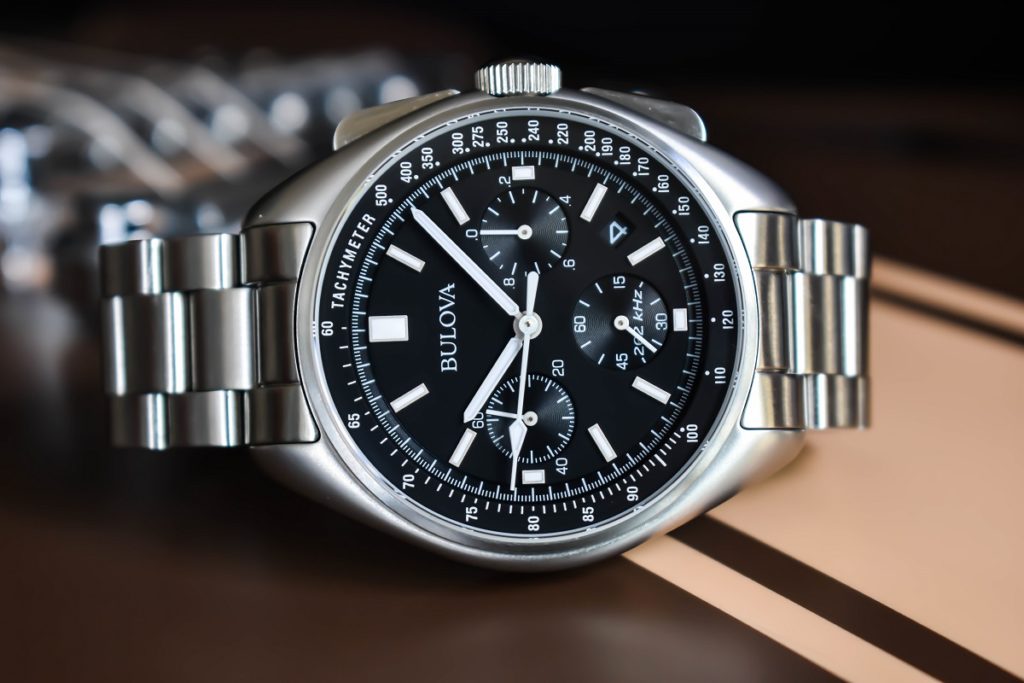
The Bulova Lunar Pilot lands on the opposite end of the financial spectrum. With a retail price between $695 (on strap) and $825 (on bracelet), and real-world pricing often well below that, it’s one of those watches that makes you double-check what you’re giving up. You’re not paying for prestige or mechanical romance here; you’re paying for performance, presence, and a surprisingly well-built chronograph that asks very little in return. It’s the kind of watch you can enjoy without doing mental gymnastics to justify the purchase, which, frankly, is refreshing.
Final Thoughts: Which Moon Watch Actually Earns Its Price?

The Omega Speedmaster 3861 earns its price through emotional clarity. Not immediately, and not loudly—but over time. This feels like the version many of us were unknowingly working toward all along. The interaction, the refinement, the confidence in every adjustment all add up to something rare: a watch that stops feeling like an object and starts feeling like part of your personal timeline. It’s not for someone looking for convenience or indifference-proof ownership. It is for someone ready to commit to a watch that rewards attention and grows more meaningful the longer it stays on the wrist.
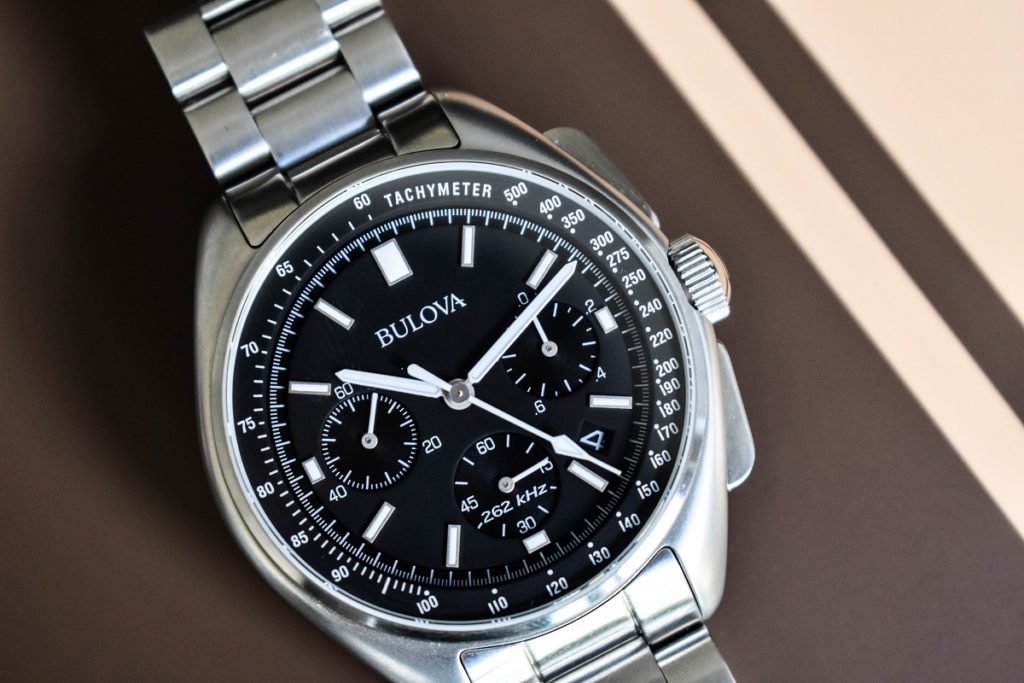
The Bulova Lunar Pilot earns its price in a far more pragmatic way. It’s for those who want the moonwatch idea without the emotional or financial overhead. The accuracy is absurd, the legibility is effortless, and the ownership experience is uncomplicated. It’s not trying to be a lifelong companion in the same way, and that’s not a flaw. It’s for people who value performance, presence, and reliability over ritual. If you want a chronograph that works, asks nothing, and still delivers a sense of purpose every time you strap it on, the Lunar Pilot is an easy recommendation.
When we strip this comparison down to one question—which moon watch wins after reviewing?—the honest answer is that these two watches aren’t playing the same game. The Omega Speedmaster 3861 and the Bulova Lunar Pilot live in entirely different price brackets, and pretending otherwise does a disservice to both. Once we accepted that, the comparison became much clearer.
Viewed through that lens, the Bulova Lunar Pilot is the watch that wins after reviewing. It delivers an experience that consistently overperforms its price: extreme accuracy, excellent legibility, solid build quality, and zero ownership anxiety. It asks very little when compared to the Speedmaster and gives a lot back, which is precisely what most people actually want from a watch they plan to wear regularly. The Speedmaster 3861 may offer deeper emotional payoff for those ready to invest in it, but that payoff comes at a cost that not everyone needs or wants.

Co-Founder and Senior Editor
Kaz has been collecting watches since 2015, but he’s been fascinated by product design, the Collector’s psychology, and brand marketing his whole life. While sharing the same strong fondness for all things horologically-affordable as Mike (his TBWS partner in crime), Kaz’s collection niche is also focused on vintage Soviet watches as well as watches that feature a unique, but well-designed quirk or visual hook.
Nope, wrong answer.
You must be the guy who spent 10X more than the Bulova on your moonwatch and trying to remember why when you’re never going to space and just need to know the time
While a big fan of Omega bought a Bulova Lunar Pilot for myself last year.
Zero regrets, it’s an amazing watch and makes me smile every time I wear it. I’ve got bigger wrists so enjoy larger wearing watches but the Lunar Pilot isn’t a showstopper for size.
The case and band finish mismatch is odd but not a deal breaker. If you want a great Moon watch and don’t want to break the bank I highly recommend the Lunar Pilot!
I have both. But got the meteorite Lunar Pilot in 43mm titanium. I prefer it…both great and both great heritage stories.
Hi, Rob:
Those meteorite dial Lunar Pilots are absolutely beautiful – great pick up on one for sure. Also, it seems like you’re not alone in owning both – a lot of readers have shared that their collections feature both, which isn’t surprising considering they hit a lot of the same enthusiasts hallmarks (moon watch, chrono, heritage pieces, ect).
Best,
-Kaz
Hate them both with a passion . Two horrible watches
Hi, Laurence:
They certainly aren’t for everyone and the pool of folks who would like these watches is more niche than some other well known models. So I totally get it.
Best,
-Kaz
I have the Lunar Pilot on a Leather band, totally satisfied.
Hi, Zeke!
On leather the watch offers a really special wearing experience. Depending on which model you have, some of the earlier models can certainly wear on the larger side, especially with the bracelet. So opting for the model with the leader strap makes so much sense.
Best,
-Kaz
I have both and they are both great!
Hi, Matt:
It seems like a lot of people own both and enjoy them equally haha – thanks for checking out our piece and letting us know your thoughts!
Best,
-Kaz
I’m fortunate enough to own both and I’d say this review sums it up well. One point to note is that the Lunar Pilot was given a facelift in the last couple of years and now is polished to match the strap and also has removed the date from the dial, bringing the size down to 42mm. This makes the Lunar Pilot just that more manageable on the wrist and brings it inline to the Lunar Pilot taken to the moon.
The Speedmaster just feels and looks more refined in every way to me. It’s not worth 10x the price of the Lunar Pilot, but it is a gorgeous piece and something I am proud to own and wear.
I wear the Lunar Pilot to work every day to save the Speedmaster from any mishaps (fairly hands on Engineering Manager in heavy industry) but enjoy the Speedmaster at weekends.
Hi, Jack:
That’s actually a really cool way to have both of these watches operate in the same collection. Also totally hear you in that the Speedmaster is more refined from a construction point of view, but that lends itself even more to not necessarily being your daily wearer haha.
Thank you for checking out our piece and for sharing your personal experiences!
Best,
-Kaz
I own a Speedmaster, bought at auction back in the 90’s. Still immaculate too. It’s part of a big collection-and while I like it-I’m not madly passionate about it. All in all however, I tend to agree with your review and, your reasoning in choosing the LP. Funnily enough, I’ve met Commander Scott a couple of times too. The LP has real heritage for the genuine enthusiast. Id likely buy one but the size doesn’t work for me.
Hi, Denis:
Oh wow – that’s amazing you’ve actually met commander Scott before! Thank you for sharing your experience aqcuring your own Speedmaster and for sharing your perspective on why we’d recommend the Lunar Pilot over it. It can really be valuable to put two watches side by side like and analyze the pros and cons to contextualize what you’re really buying.
Best,
-Kaz