
I’ve been following microbrands long enough to remember when discovering one felt like stumbling onto a secret forum post or a late-night blog link passed around between collectors. That feeling isn’t as common anymore, but every once in a while it comes back, even if it starts with a press email or a clean set of renders. Looking back at 2025, a few releases managed to spark that familiar sense of curiosity and optimism. This is a look at the microbrand watches under $1,000 from 2025 that reminded me why this corner of the hobby still feels awesome.

Brew Metric Manual Wind
After nearly a decade of building its reputation on playful design and quartz-powered accessibility, Brew made one of its most consequential moves to date with the Metric Manual Wind. It was the first time the brand moved to a Swiss mechanical movement, opting for the manual-wind Sellita SW210, a choice that eliminated the rotor and allowed the familiar Metric case to slim down to 8.5mm. The overall format remained recognizably Brew, with a compact 36mm case and restrained pops of color across two dial options, but the intent felt more deliberate and more serious than past releases. Limited to 125 pieces and priced at $875, the Metric Manual Wind came across less as a departure from Brew’s identity and more as a signal of where the brand saw itself heading, maintaining its visual personality while testing a higher level of mechanical and pricing ambition.

Typsim 100M
Rather than borrowing loosely from vintage dive watch tropes, the Typsim 100M leaned fully into historical accuracy as its defining principle. Designed by Seattle-based architect Matthew Zinski, the 37mm diver emphasized period-correct materials and construction, from its box-style acrylic crystal and friction-fit aluminum bezel to a brass dial plate finished with clear lacquer and black galvanic coating, allowing exposed brass to form the markers and text. That attention extended to the lume, developed with RC Tritec to begin white and gradually age toward a warmer patina, complete with subtle moisture-indicator callbacks. Power came from a no-date Sellita SW300-1 b automatic movement, regulated in-house, reinforcing the sense that this release prioritized longevity and process over surface-level styling. At $999, the 100M felt like a carefully constructed time capsule aimed squarely at collectors who value restraint and accuracy over novelty.

Lorier Merlin
With the Merlin, Lorier took a different approach to pilot-watch history, focusing on compact Allied-issued navigation watches rather than the more familiar German Flieger template. Created in collaboration with The Urban Gentry, the Merlin traced its lineage to the Longines Weems and Omega CK2129, translating their rotating bezel and locking mechanism into a modern 37mm case that balanced historical fidelity with contemporary proportions. Period-driven details like the bezel lock at 4 o’clock, heat-blued hands, railroad minute track, and cream-toned Super-LumiNova markers reinforced the source material without tipping into costume. A no-date Miyota 90S5 automatic movement kept the layout clean and the price accessible, and at $550 with a 500-piece production run.
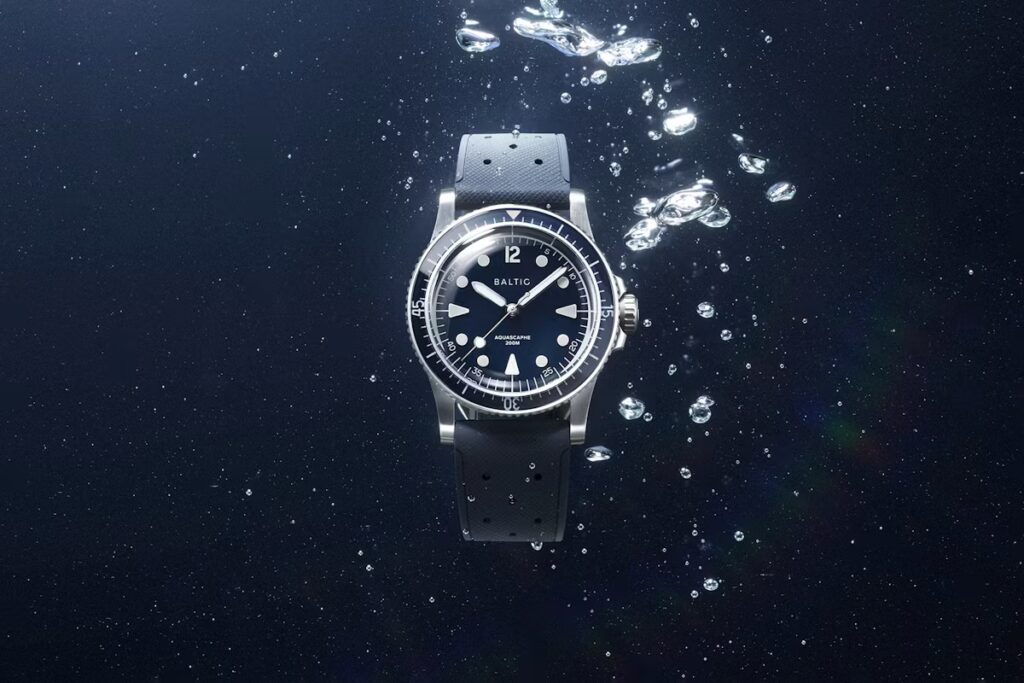
Baltic Aquascaphe MK2
Several years after the original Aquascaphe established itself as a go-to affordable diver, Baltic returned to the platform with a more refined follow-up in the Aquascaphe MK2. Rather than a full redesign, the update focused on sharpening what already worked, introducing two case sizes at 37mm and 39.5mm while retaining the familiar 200m water resistance and adding crown guards that nudged the silhouette in a more tool-forward direction. The dial saw the most noticeable changes, with applied Super-LumiNova BGW9 markers replacing the earlier sandwich layout, paired with revised hands and a choice of glossy or grained finishes. A double-domed sapphire crystal, sapphire bezel, and the continued use of the no-date Miyota 9039 kept the formula intact, with pricing ranging from €630 to €695 depending on configuration. The MK2 felt like a natural next chapter rather than a reset, reflecting Baltic’s growing confidence and design maturity.

Anders & Co. AC2 Volcán
In a year where stone dials often felt locked behind luxury pricing, the AC2 Volcán from Anders & Co. offered a notably different proposition. The watch centered its appeal on material and proportion rather than status, pairing stone dials in turquoise, charoite, and red agate with a slim 37mm tonneau case measuring just 5.6mm thick. That ultra-thin profile drove the use of a Miyota 9T22 quartz movement and a seconds-free dial layout, keeping visual focus on texture and color rather than mechanics. Priced between $628 and $716, the Volcán read as an exercise in restraint and coherence, showing that expressive materials didn’t have to be treated as luxury trophies to feel intentional and well executed.
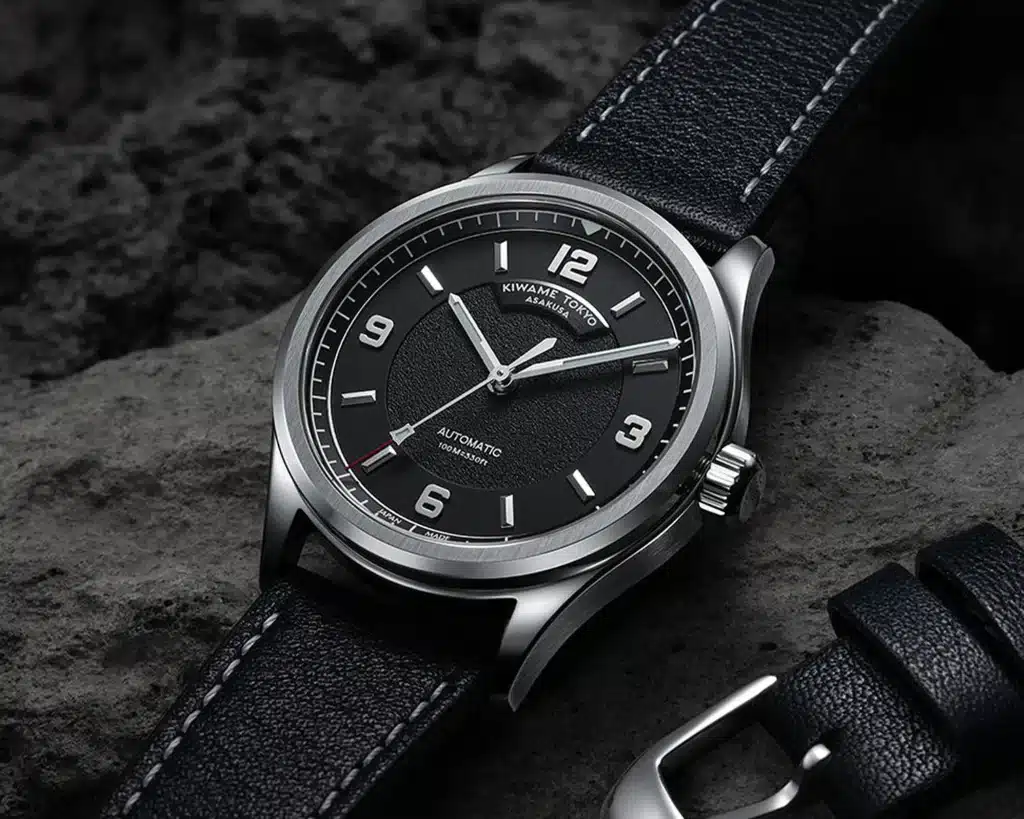
Kiwame Tokyo Iwao
Field watches tend to reveal a brand’s priorities quickly, and in 2025 the Iwao from Kiwame Tokyo made a strong case for restraint over spectacle. Produced in Asakusa and built around the idea of refinement rather than novelty, the Iwao kept its proportions conservative at 38mm wide and 9.5mm thick, placing emphasis on dial execution instead of silhouette. A grain-textured central dial surface was paired with a smooth satin chapter ring, diamond-cut markers, and restrained Arabic numerals that favored clarity without leaning into overt vintage mimicry. Subtle details, including a low rehaut and an orientation triangle, reinforced the watch’s functional intent without drawing undue attention to itself. Powered by a no-date Miyota 9039 and rated to 100 meters of water resistance, the Iwao avoided limited-edition theatrics and inflated positioning. Priced at $690, it presented itself as a measured, process-driven field watch aimed at collectors who value intention and proportion over microbrand gimmicks.

Taken together, these releases captured a version of the microbrand space in 2025 that felt more confident and more self-aware. None of these watches leaned on inflated narratives. Instead, they reflected brands refining their identities, making deliberate material and design choices, and trusting collectors to notice the difference.

Co-Founder & Senior Editor
Michael Peñate is an American writer, photographer, and podcaster based in Seattle, Washington. His work typically focuses on the passage of time and the tools we use to connect with that very journey. From aviation to music and travel, his interests span a multitude of disciplines that often intersect with the world of watches – and the obsessive culture behind collecting them.
Someone from your position as watch reviewers should tell Kiwame Tokyo that they have a terrible way of doing business when a would be customer follows instructions to the letter as to when to get online and what needs to be done in order to procure one of their watches, only to be told that none of their watches are available. What horse feathers! Since these knuckleheads don’t seem to care maybe they would perk up and listen if someone like you spoke up. I know I won’t go back to them as they’ve lost me as a customer, but I also know they could care less!
Was interested in buying one bu5 now won’t bother what a shame really liked that watch