Casio is expected to expand its affordable A159 lineup this month with two new references, the A159WEVJ-2 and A159WEVJ-7, both built around the brand’s familiar vintage digital format and dressed up with Seigaiha-inspired dial patterns. That alone makes these stand out a bit. The A159 is already one of Casio’s most recognizable old-school designs, but this release gives it a more specific identity than the usual color refresh.
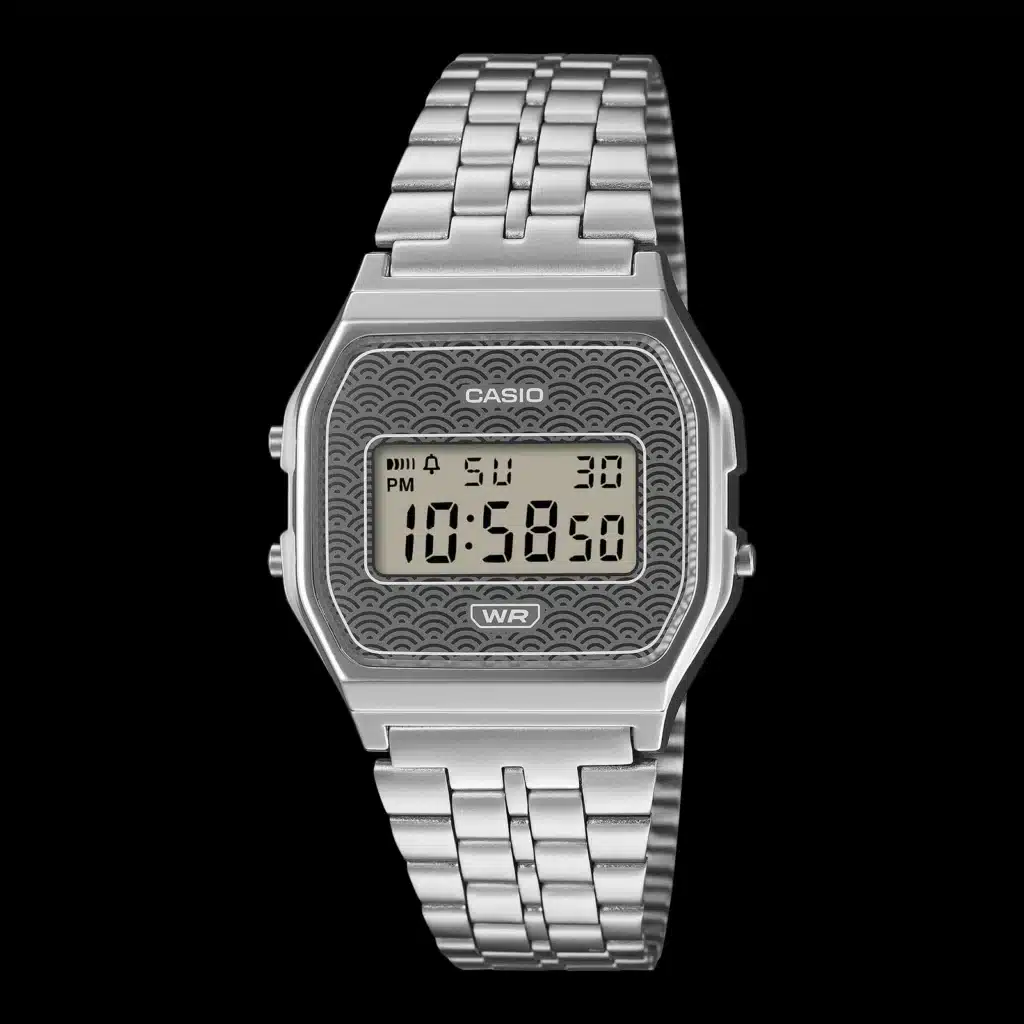
The big story here is the use of Seigaiha, the traditional Japanese wave motif made up of layered concentric arcs. It is a pattern with deep roots in Japanese decorative culture, long associated with peace, harmony, and good fortune. Casio is reportedly applying that visual language through a mix of vapor deposition and traditional printing, giving the dial a light-reactive surface that shifts depending on the angle. On a watch this small and this inexpensive, that kind of detail feels unusually deliberate.
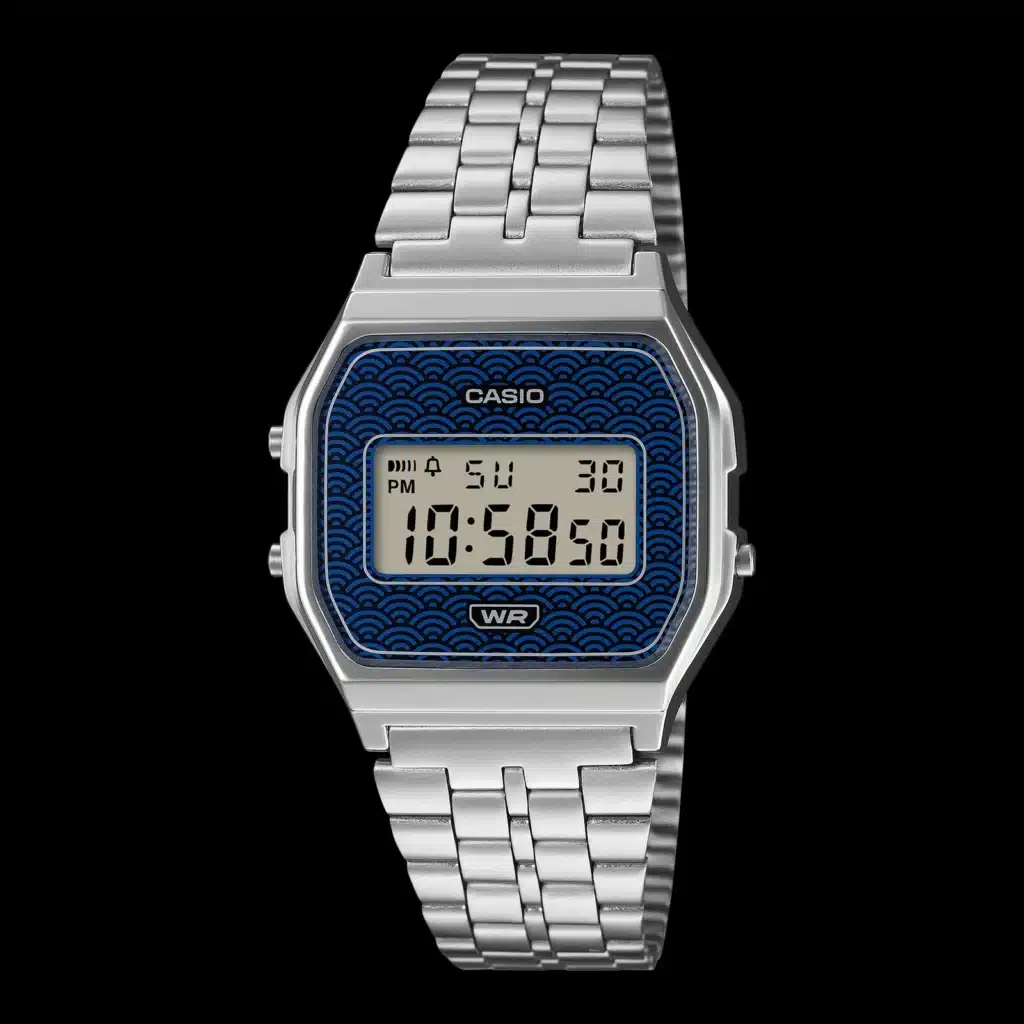
The two expected versions are the indigo-toned A159WEVJ-2 and the lighter gray A159WEVJ-7. Both keep the classic compact case proportions at 36.8 × 33.2 × 8.5 mm, so nothing about the actual wearing formula seems to be changing. That is probably the right move. The appeal of the A159 has always been tied to its straightforward shape, featherweight profile, and the fact that it does exactly what people expect from a simple vintage Casio.
The rest of the spec sheet stays familiar, too. These are expected to include a stopwatch, alarm, hourly signal, LED backlight, calendar, 12/24-hour display, and battery life rated up to seven years. The crystal is acrylic, and water resistance is listed at 30 meters, which is basic but perfectly in line with what this kind of watch has always been about.
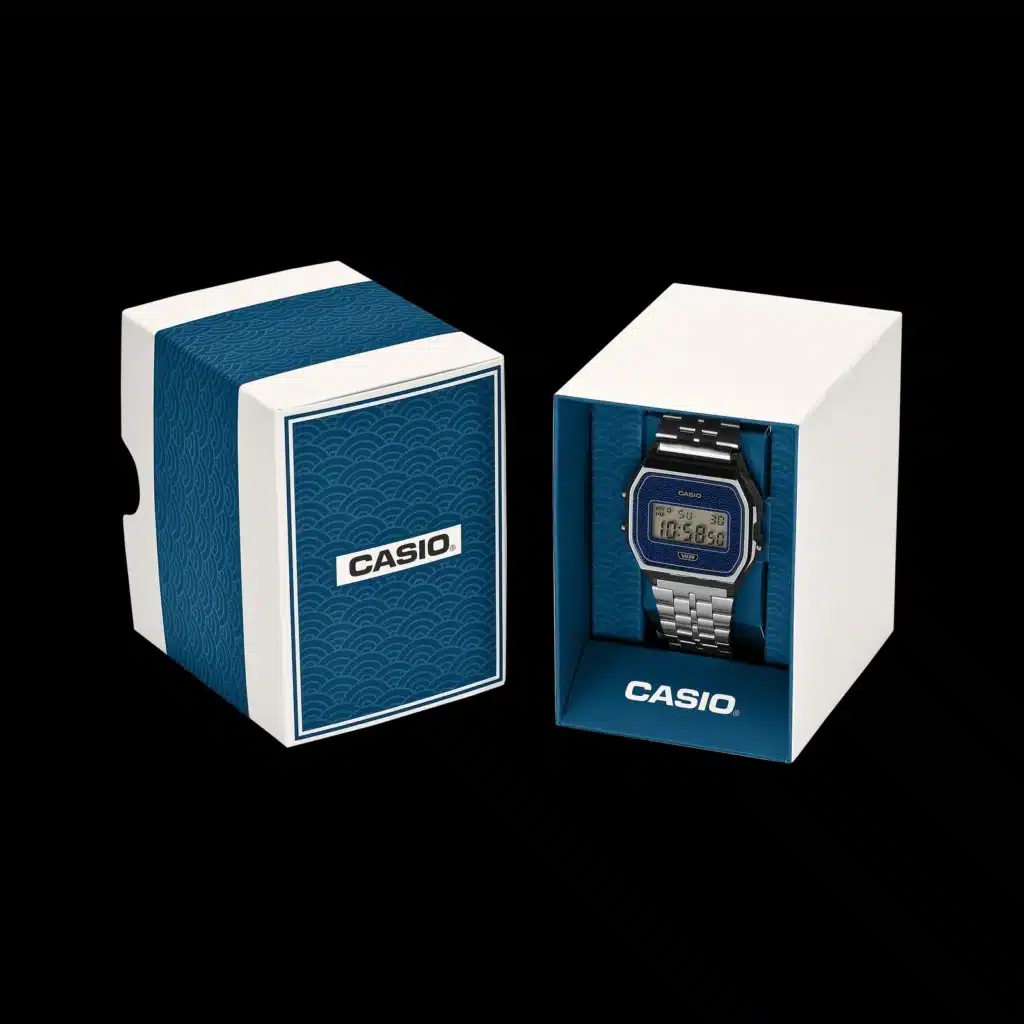
A few smaller details help sell the concept. The case back is engraved with “Casio” in katakana, and even the packaging is expected to carry the same Seigaiha wave theme. There is also speculation that the watches may be produced at Yamagata Casio in Japan, which only adds to the sense that this is meant to be more than a routine variation.

At an expected price of around $100, these feel like the sort of release that could land well with both casual buyers and the usual Casio obsessives. The A159 did not need to be reinvented, and thankfully that does not seem to be the goal here. Casio appears to be taking one of its most familiar digital classics and giving it a more culturally specific design treatment, which makes these a lot more interesting than another standard vintage reissue.

Co-Founder & Senior Editor
Michael Peñate is an American writer, photographer, and podcaster based in Seattle, Washington. His work typically focuses on the passage of time and the tools we use to connect with that very journey. From aviation to music and travel, his interests span a multitude of disciplines that often intersect with the world of watches – and the obsessive culture behind collecting them.