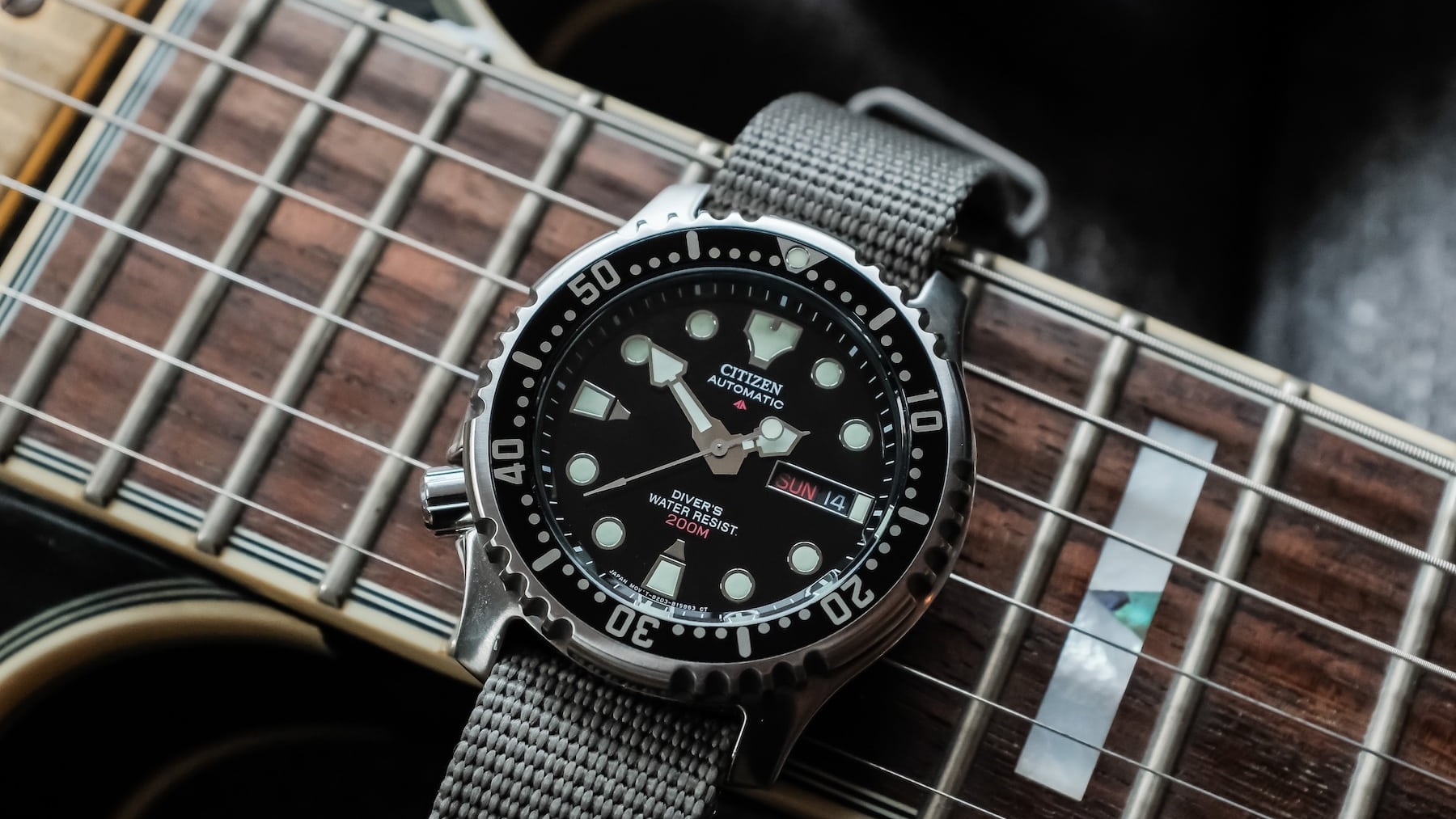
Seiko found a clever way to follow one of the most beloved affordable dive watches ever made: keep the familiar SKX silhouette, upgrade the dial and movement, and quietly strip out the specs that made it a proper diver in the first place. We understand the business decision. What we find harder to explain is why an inexpensive Citizen that never attracted anything like the same fanfare was still offering so much of what Seiko had decided its new watch didn’t need. That makes for an awkward comparison if you’ve spent years recommending Seiko to anyone who asks about their first automatic.

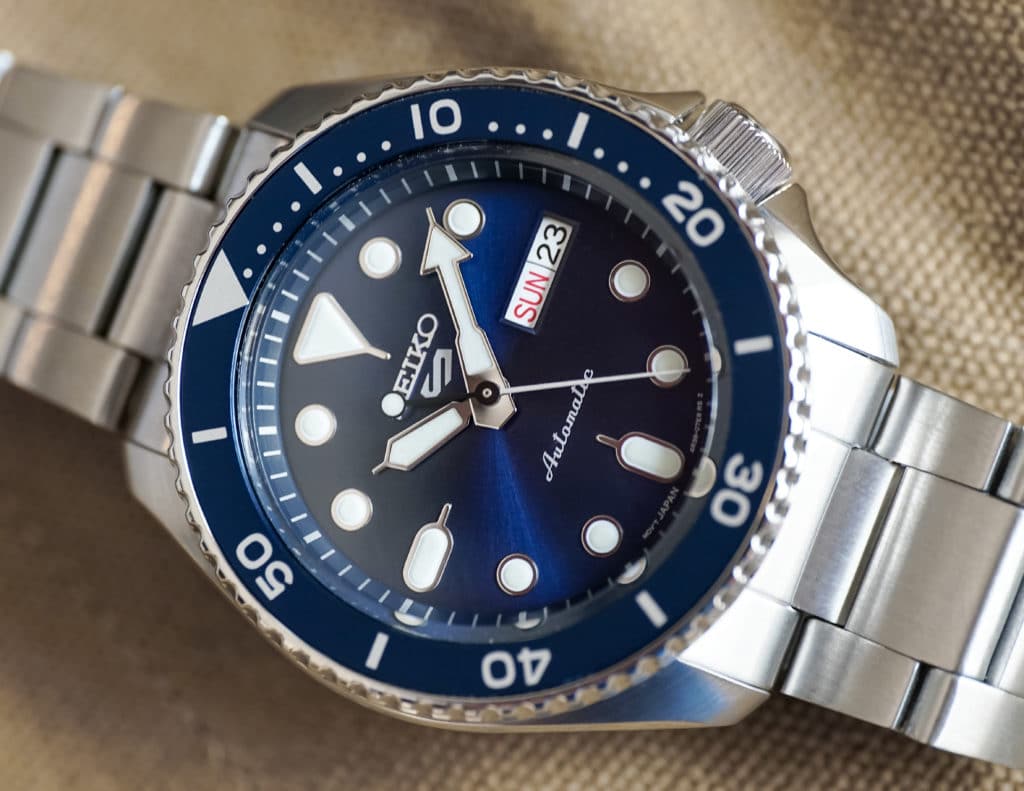
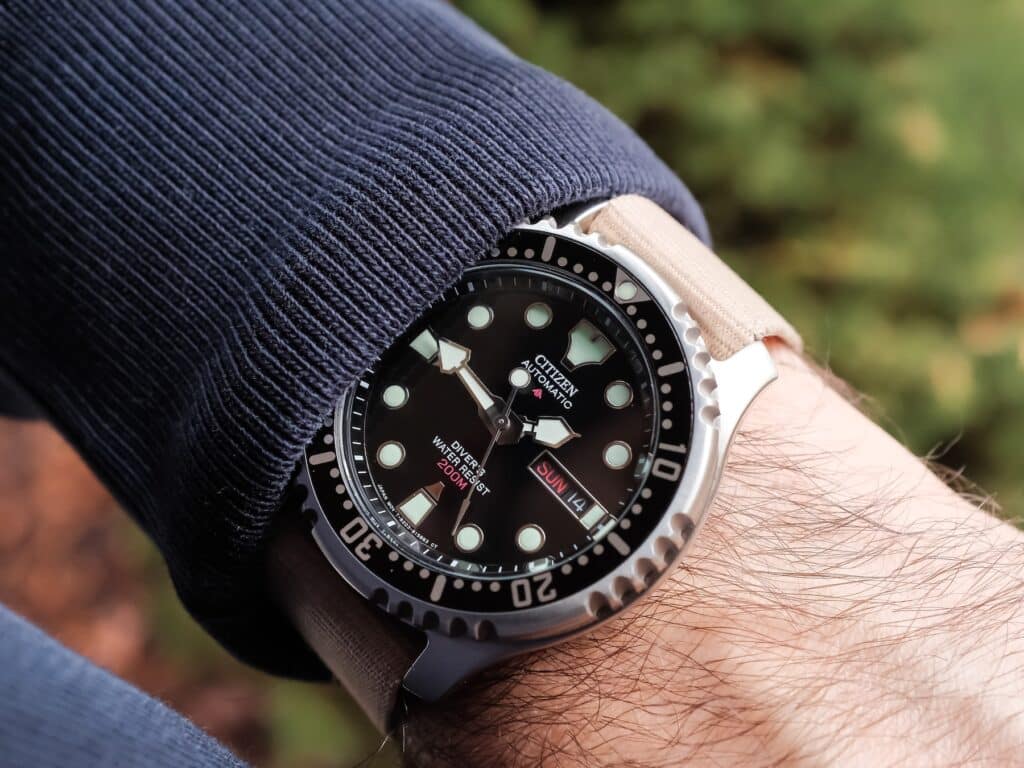
The Seiko in question is the blue-dial 5 Sports SRPD51, better known to collectors as a 5KX. The Citizen is the black-dial Promaster NY0040, with its peculiar left-side crown and a decidedly less enthusiastic approach to making itself fashionable. We’ve had our hands on both, and neither behaves quite the way its reputation might suggest. The Citizen is the more serious dive watch, but that isn’t necessarily the same as being the watch we’d want to wear every day. The Seiko has some unexpectedly persuasive reasons to exist, provided we stop asking it to be the SKX.
Overview and Identity
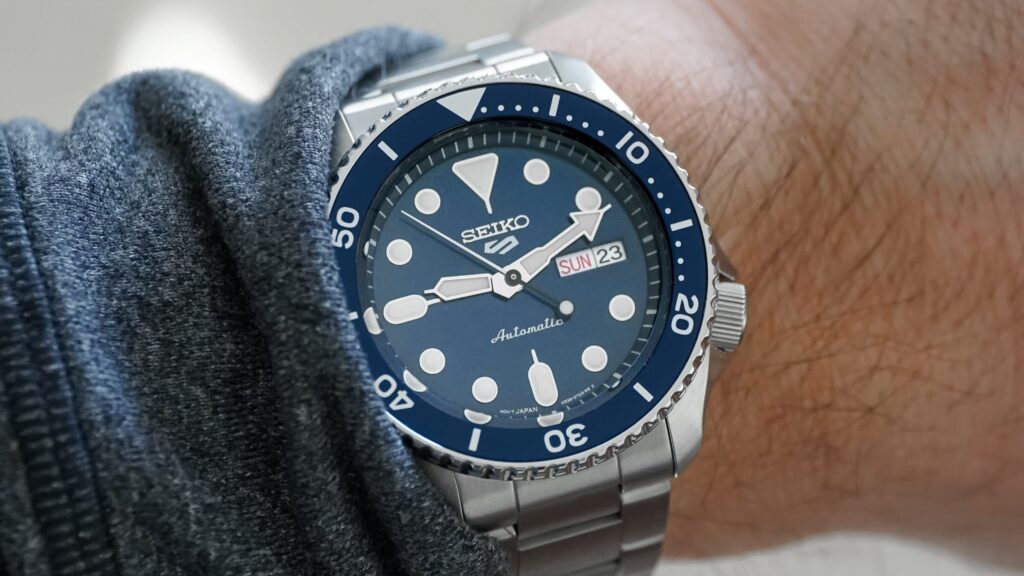
The 5KX arrived in 2019 with a fairly thankless job. The outgoing SKX007 and its relatives had become default recommendations for anyone wanting a rugged mechanical diver without a frightening bill, and enthusiasts were understandably reluctant to see that formula changed. Seiko transferred the recognizable case design into the 5 Sports family, where it could play with dial colors, bracelets and styling without treating professional dive-watch specifications as sacred. The SRPD51 is a good example. We get the classic crown position and broad-shouldered silhouette, but the bright blue treatment makes it feel more playful than the old black-dial SKX. Calling it a replacement is accurate enough in spirit; expecting it to do exactly the same job misses why Seiko made it.
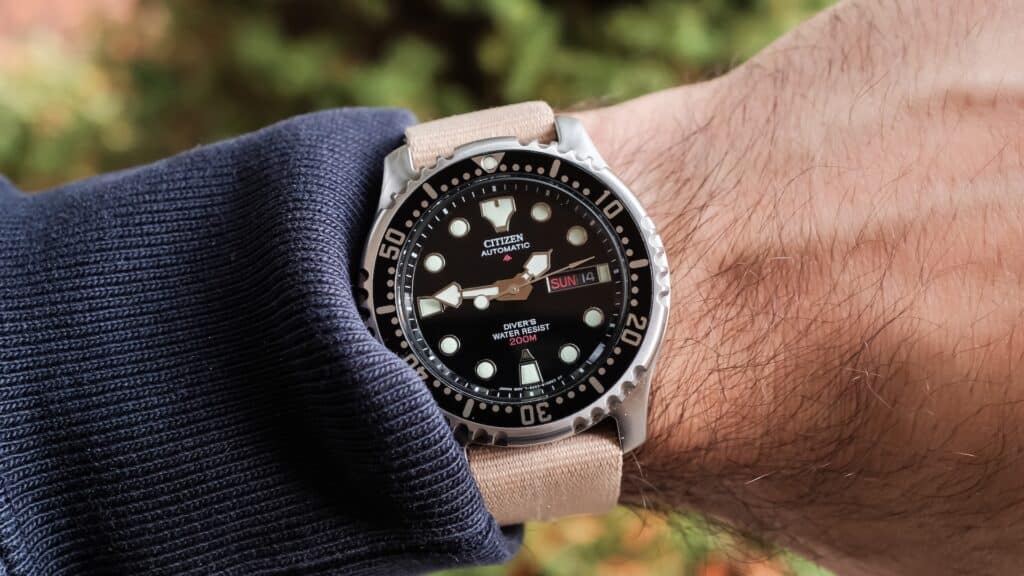
Citizen never gave the NY0040 quite that sort of starring role. The design dates to 1997, and its diving history, including the well-known connection to Italian Navy COMSUBIN divers, is far more interesting than the amount of attention it receives from mainstream watch collectors. There hasn’t been the same endless argument about whether Citizen betrayed an icon, because the NY0040 never became that kind of cultural event. It has simply carried on being a mechanical Promaster with a 200-meter rating, an unusual crown, and very little interest in dressing itself up. We like that confidence. We also wonder whether a watch that never had to satisfy the SKX fan club had an easier time concentrating on what it was supposed to do.
Dial and Straps/Bracelets
Blue is doing an awful lot of work on the SRPD51, and we mean that as a compliment. The sunburst dial shifts from a fairly restrained navy in indirect light to something much more animated when the light catches it, while the matte blue aluminum bezel keeps the overall effect from becoming too glossy. Seiko retained the recognizable hands and hour-marker shapes, but making the indices and logo applied gives the dial a more contemporary appearance than the old SKX. We still aren’t completely sold on the cursive Automatic lettering, and the redesigned 5 logo was never going to please everyone. Once the watch is on the wrist, though, the combination of color, generous negative space and excellent LumiBrite is easy to enjoy. There’s a reason people get attached to a particular Seiko dial rather than to the model number printed on the receipt.

The bracelet is where that enthusiasm runs into something less charming. Our SRPD51 came on Seiko’s three-link steel bracelet, which ought to have been a welcome upgrade over the old SKX options. Instead, the folded clasp components, pin-and-collar adjustment and lack of a convincing taper left us distinctly unimpressed. Starting at 22mm and finishing at about 20mm makes the bracelet feel more substantial than it needs to, particularly on a watch that already sits a little tall. We’d rather Seiko had put some of its dial-design enthusiasm into the hardware holding the watch on. Fortunately, the drilled lugs make changing straps pleasantly easy, and the 22mm aftermarket is enormous. A good aftermarket bracelet or a simple fabric strap can fix much of what we disliked, although paying to improve a new watch is a peculiar sort of congratulations to its manufacturer.
Our NY0040 looks comparatively plain until you start noticing the small decisions that give the dial its character. The black dial has large luminous markers, straightforward hands, a day-date window at three, and a little red arrow beneath the branding that provides just enough personality to stop everything feeling clinically sensible. The dial opening is relatively small, which contributes to how compact the watch looks despite the nearly 42mm case. Nothing competes with the time, and we appreciate the restraint, especially on a watch with a genuine diving background. It isn’t dull in the way a poorly considered black dial can be dull. The proportions and small details give it some character, but Citizen isn’t trying to convince us that we’re buying a collectible design statement. We get the impression it would be faintly embarrassed by that description.
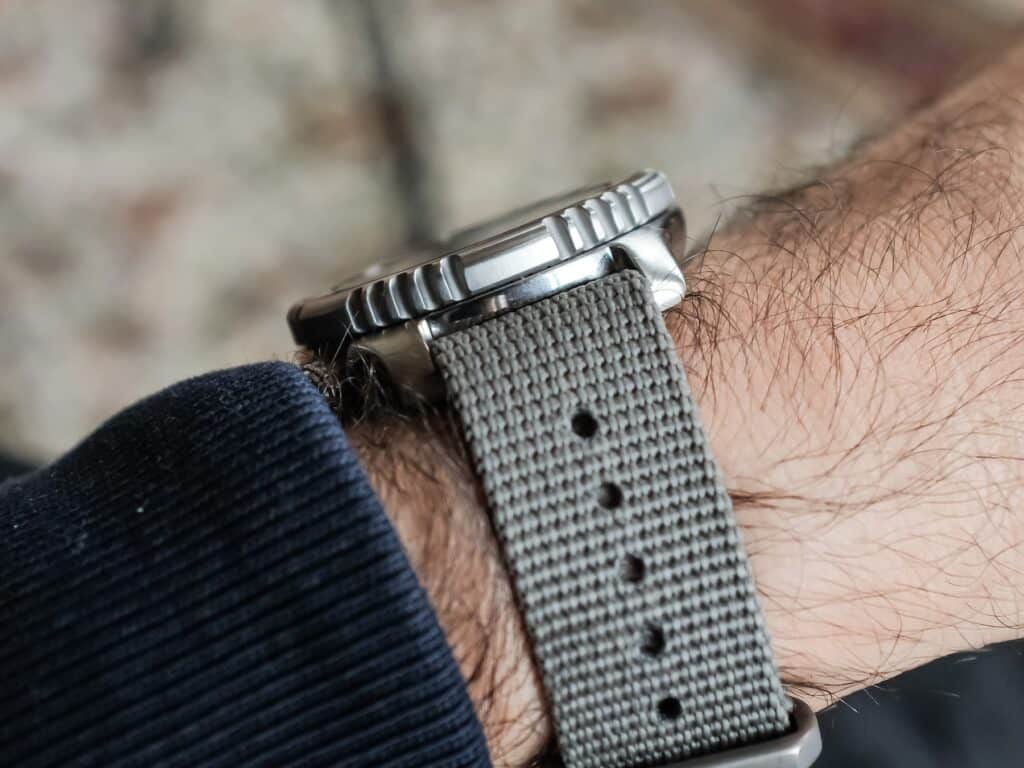
Citizen supplied the NY0040 on a thick rubber strap. It’s perfectly usable, and we can see why it suits the watch’s intentions, but it wasn’t the part of the package that won us over. We started reaching for NATO straps instead, which work well with the softer case shape and make the watch feel less like specialized equipment. Its standard 20mm lugs also make that experiment painless, with purpose-built steel bracelets available if we eventually want a different look. Neither factory attachment in this comparison is something we’d rush to defend. The difference is that the Citizen’s strap feels like an unglamorous but sensible starting point, whereas the Seiko’s bracelet seems to promise more polish than it delivers. That’s a strange reversal when the SRPD51 is the watch being marketed around style.
Build Quality & Technical Approach
There’s an argument we hear whenever a discussion about the 5KX gets heated: who actually needs a certified mechanical dive watch to sit at a desk, buy groceries and occasionally get into a swimming pool? Fair question. We certainly aren’t spending our afternoons planning decompression stops. But the opposite argument deserves some respect, too. If two affordable watches can both look good and keep reliable time, it seems reasonable to ask why the one with the more substantial tool-watch credentials should be treated as the consolation prize. The interesting differences turn up well before either watch goes near the ocean.
Movements
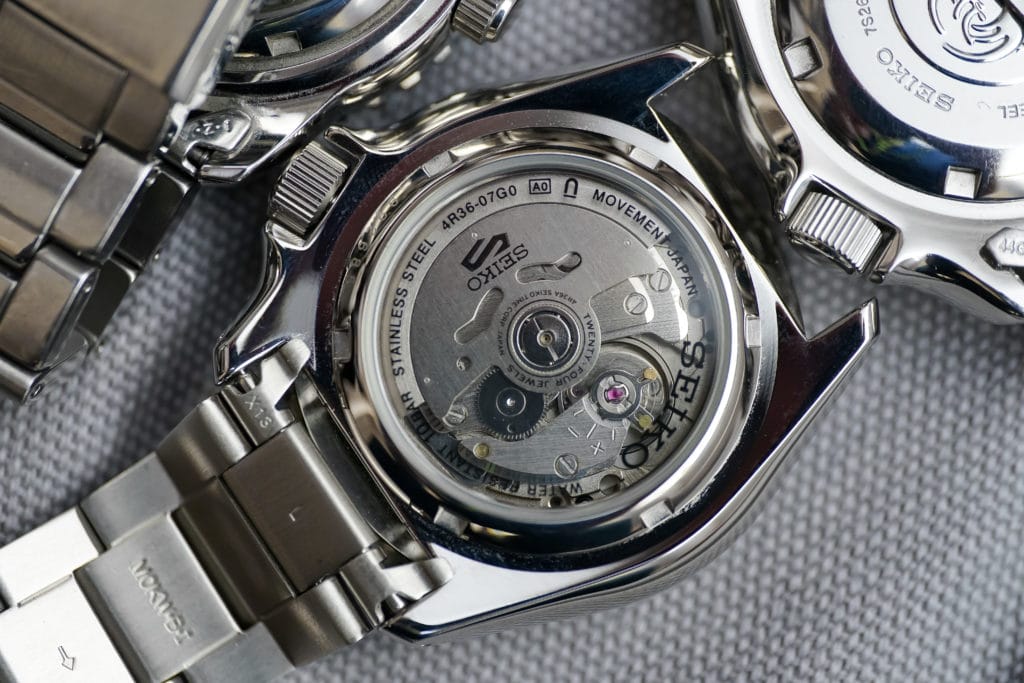
Seiko made an improvement that longtime SKX owners had every reason to want. The 4R36 inside the SRPD51 hacks, winds by hand and provides a day-date display, along with approximately 41 hours of power reserve. Those aren’t exotic specifications now, but anyone who spent years shaking an old 7S26-powered Seiko back to life can appreciate the convenience. There’s also a display caseback, which isn’t an especially beautiful view of movement finishing but is surprisingly enjoyable when an automatic watch is still a new fascination. Part of the appeal of the 5KX is that it lets us see and interact with the mechanics instead of presenting the whole exercise as a miniature piece of industrial equipment. For someone’s first automatic, that can matter more than another impressive-sounding rating.
The NY0040 we reviewed runs on Citizen’s Miyota 8204, another straightforward Japanese automatic with hacking, hand-winding, a day-date calendar and a stated reserve of roughly 42 hours. Earlier examples of this model used the non-hacking 8203, so we’d check the exact movement before assuming every used NY0040 behaves identically. The 8204 has been dependable in our experience, but it certainly isn’t shy about announcing itself. The rotor makes a very noticeable noise, the kind that causes new Miyota owners to wonder whether something has come loose. We know the feeling, and the sound didn’t translate into a problem with the watch. Still, there’s no pretending that every mechanical sensation is automatically a charming one just because we enjoy mechanical watches.
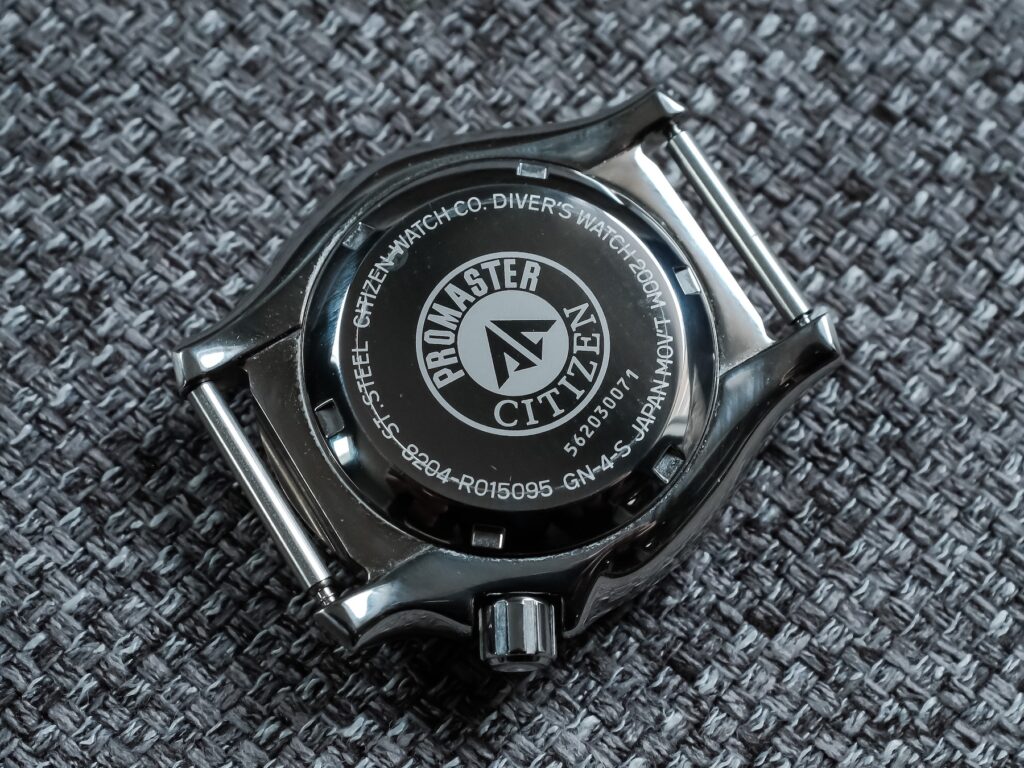
If we’re choosing between these movements on specifications alone, we’re going to be there for a while. Both offer the everyday conveniences that matter, and the tiny difference in stated reserve isn’t enough to change how we’d use either watch. The Seiko’s display back gives us an occasional excuse to turn it over and watch the rotor moving. With the Citizen, the rotor tends to announce itself long before we think about admiring the movement. That’s an amusing distinction between two calibers doing much the same job. We’d take the Seiko’s mechanical presentation, but we wouldn’t mistake that preference for proof it makes a better dive watch.
Case Construction, Finishing & Wearability
The SRPD51 measures 42.5mm across, 46mm from lug to lug and about 13.4mm thick, so it’s hardly small, but the measurements don’t explain why the case feels so familiar. Seiko kept the softly rounded SKX-derived outline and the crown down near four o’clock, where it stays mostly out of the way of the wrist. We felt comfortable with the shape almost immediately. It’s one of those watches that settles into a familiar spot without requiring much experimentation, even if the vertical height makes itself known from the side. We’re not going to claim it wears like a 38mm dress watch, because it doesn’t. It simply carries its width better than the number on a specification page might suggest.
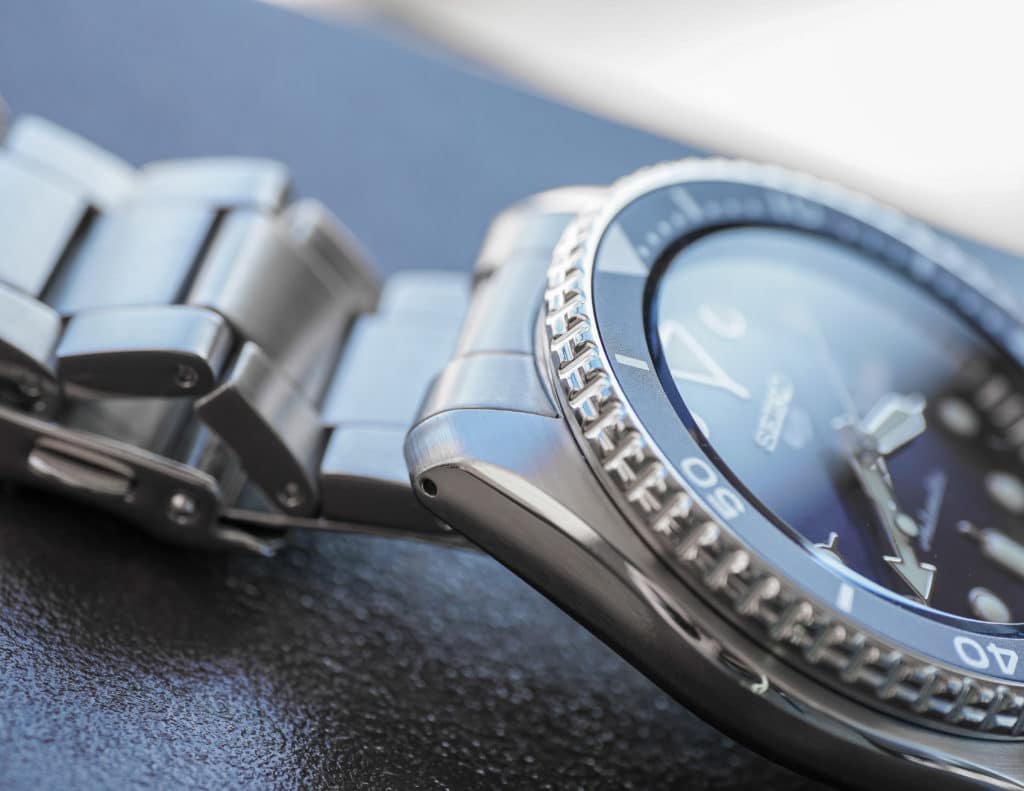
The details that separate it from the old SKX are a mixture of welcome and debatable. Drilled lug holes make it easier to change straps, and the display back gives the mechanical newcomer something to show an interested friend. The push-pull crown is easier to operate when setting the time than a screw-down one, although that convenience comes at the expense of the old diver’s construction. We like that Seiko did more than just change the dial and declare the job finished. What frustrates us is that so much thought went into making the case approachable while the supplied bracelet makes it feel less refined. The case deserves a better companion than the one our SRPD51 arrived with.
Citizen’s case is a little stranger, and we like it more for that. Around 42mm wide, just over 47mm lug to lug and roughly 12.6mm thick in our published measurements, it has broad, rounded shoulders that pull the shape inward rather than sending the lugs straight toward the edges of the wrist. The smaller dial opening and gently narrowing bezel help it look more compact than the diameter would suggest. On the 6.75-inch wrist documented in our review, it sat with a balance that surprised us. The brushed upper surfaces and polished sides aren’t especially elaborate, but nothing about the finishing felt carelessly executed. Citizen managed to make a serious-looking dive watch that doesn’t spend every second reminding us how serious it is.
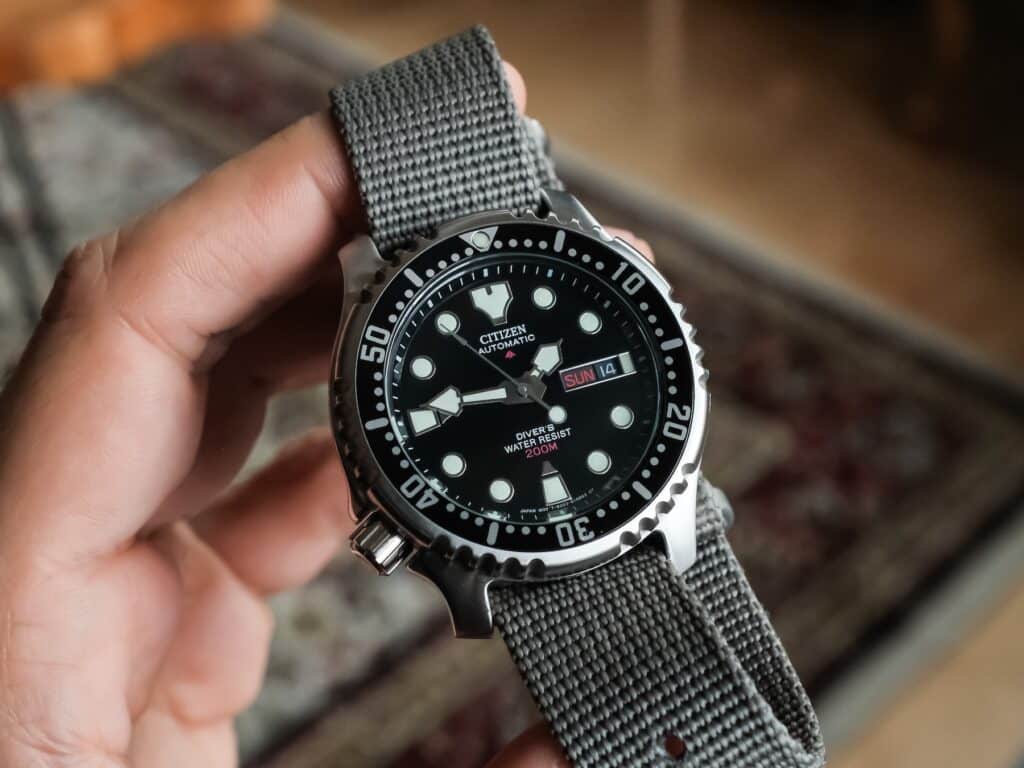
Then there’s the crown at eight o’clock. It looks odd at first, especially if most of our watches have trained us to reach toward the right side of the case, and the first few attempts at setting it required a little adjustment. Once that became familiar, the benefit was difficult to ignore: the crown stays clear of the back of the hand, even when the watch sits fairly low on the wrist. We appreciate the physical logic of that choice more than we expected to. It isn’t automatically better for everyone, and some right-handed owners may never love the unfamiliar winding position. But Citizen made an unusual decision for a practical reason, and in this case the design earns its eccentricity.
Crystals and Bezels
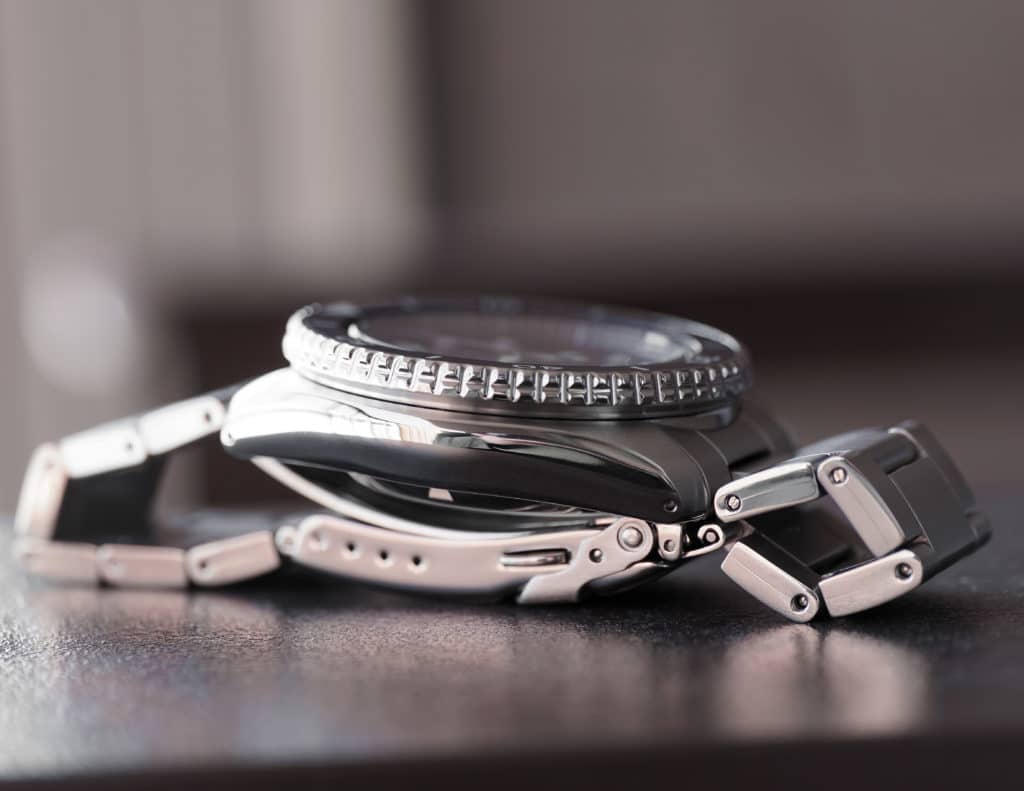
Seiko uses Hardlex on the SRPD51, a familiar choice that tends to generate more arguments online than it does in our day-to-day wearing. We’d still welcome sapphire, particularly at full retail, but there’s nothing inherently dishonest about Hardlex on an affordable sports watch. The matte blue aluminum bezel insert also suits the dial much better than something overly shiny would. We liked how the bezel looked on this particular Seiko, but the appearance made more of an impression in our review than any special quality of its click action. The SKX silhouette is doing a lot of the work here, and looking like a familiar diver doesn’t automatically bring the original’s diving capabilities along with it.
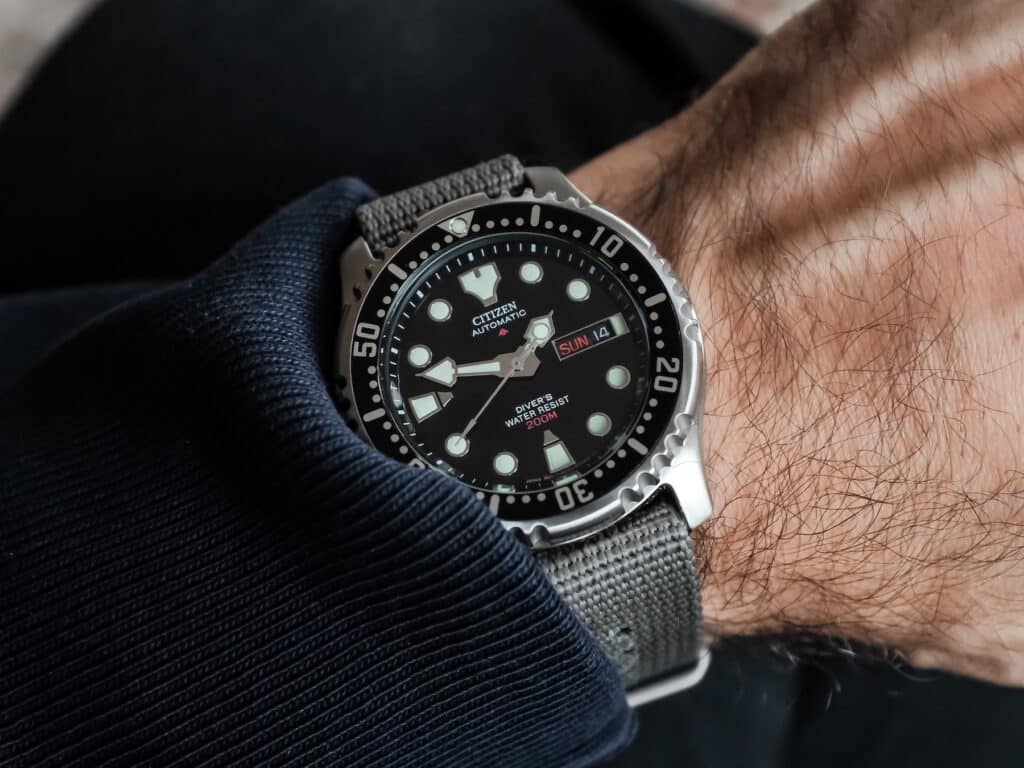
The NY0040 makes a better argument with the bezel itself. Our example’s 60-click action was smooth, the alignment was right where it should be, and the coin-edge grip felt secure even when operated with wet fingers. More importantly, there was no loose movement between clicks. We spend an embarrassing amount of time rotating bezels when we don’t need to time anything, and the Citizen has the kind of firm, confident action that makes that particular habit rewarding. The flat mineral crystal is a less exciting choice, although it hadn’t caused problems in our use. Sapphire would be nice here too, but we’d take the excellent bezel before paying extra for a crystal upgrade that doesn’t change how the watch functions.
Water Resistance & Lume
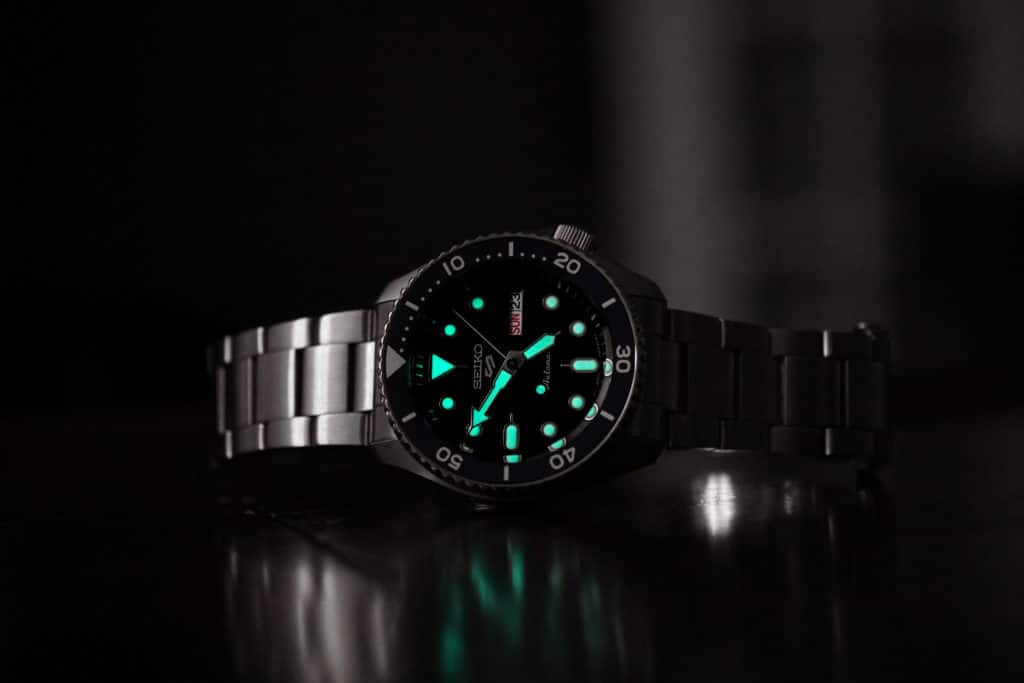
Here’s the awkward part for Seiko. The SRPD51 has a 100-meter water-resistance rating and a push-pull crown, and Seiko doesn’t present it as an ISO-certified diver. That doesn’t make it frightened of water. Our review watch handled swimming and hot-tub use without trouble, and 100 meters is plenty of rating for the ordinary water exposure most of us have in mind. We wouldn’t use it for scuba diving, and Seiko doesn’t ask us to. Its lume, meanwhile, is excellent. The applied markers and familiar handset glow with the enthusiasm we’ve come to expect from the brand, making the SRPD51 a particularly easy watch to read after dark. A professional certification wouldn’t make that dial any more enjoyable on a Tuesday evening.
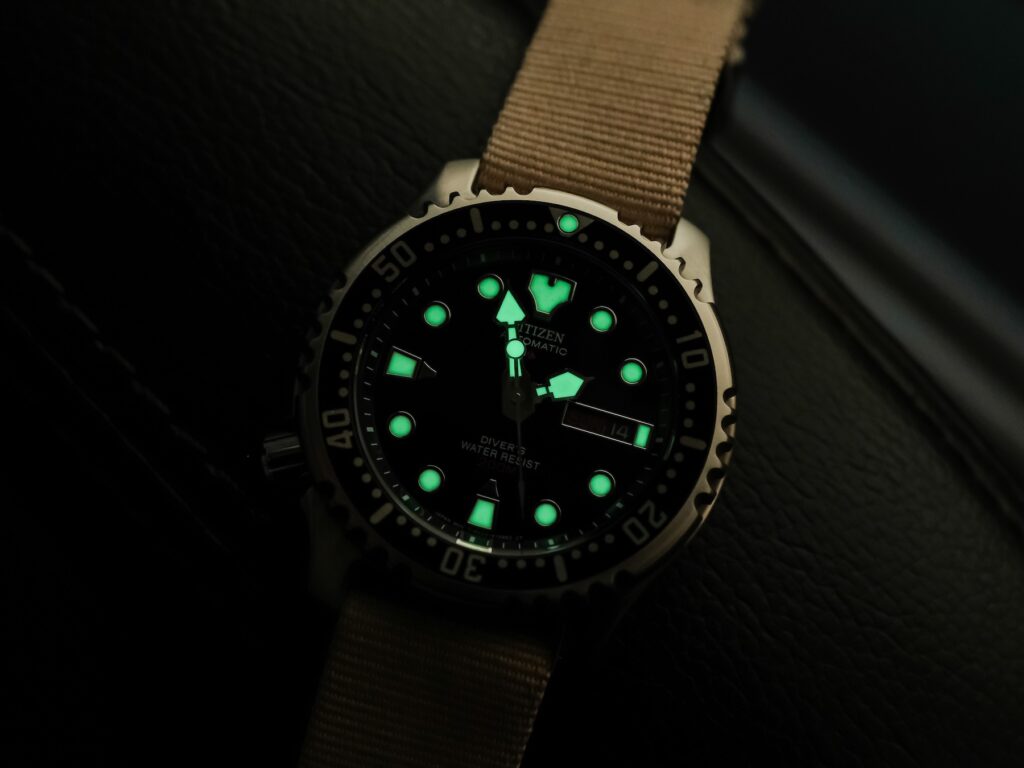
The NY0040 is the genuine 200-meter, ISO-rated dive watch of the pair, with a screw-down crown and a bezel built for practical elapsed-time readings. That difference matters if we’re choosing a watch for actual diving, even if neither of our reviews is an account of taking the pair underwater. Citizen’s luminous material is dependable and easy to read, but it doesn’t have the same immediate punch as some of the Seikos we’ve worn. We aren’t particularly bothered by that once our eyes adjust, though it prevents Citizen from sweeping every functional category without debate. The larger point is that the NY0040 retained the professional purpose the 5KX deliberately moved away from. Whether we need that purpose is a separate question from whether the Citizen deserves credit for delivering it.
Cost Considerations
Unlike a $200 watch against a $5,000 one, there’s no obvious financial dividing line here. Our SRPD51 cost around $200 during a department-store promotion, while Seiko currently lists it at $350. In our 2025 Citizen review, NY0040s could still be found for less than $200, although more recent listings have often landed in the $200s. These are different prices from different dates, not a neat head-to-head checkout comparison. Either watch can look like the bargain depending on what you find, which makes the decision more interesting than simply spending less.
We were especially happy with the Seiko at its discounted price. Getting that familiar case with a more convenient movement felt like an easy purchase to rationalize, which is probably how a fair number of watches end up in our collection. The calculation looks different when the first accessory we want to buy is a replacement for something that came in the box. A bracelet here, a strap there, and suddenly the bargain has its own little budget. We can enjoy changing a watch to suit us without pretending those costs don’t count.
The Citizen is comparatively easy to justify when prices overlap. It doesn’t need to be discounted from a more impressive figure for us to see the point of buying it. We might still put its supplied strap in a drawer, but that’s the sort of optional expense we’ve made with countless watches. It feels different from paying to improve a part of the original package that we expected to like. Neither purchase is immune to those extra costs, and we’d factor them into the decision before declaring a winner on the basis of a listing price.
There’s also a kind of collector’s premium that never appears on a receipt. We know the SKX shape, we have a history with it, and we like seeing it on a wrist. Those feelings can make the SRPD51 worth paying more for even when another watch offers more on paper. We’d be the last people to claim that choosing a mechanical watch is an exercise in perfectly rational shopping. Still, it’s useful to notice when we’re paying for something we love about the design rather than for an improvement we can actually use.
For roughly the same outlay, then, this is less about saving money than avoiding the purchase we’ll second-guess later. If the SRPD51 is the watch we keep coming back to in photographs, buying something else because it has a stronger specification sheet may be false economy. On the other hand, paying extra for a familiar shape makes little sense if what we really wanted was the substance of the older diver. That’s the financial decision worth making before either watch goes into the cart.
Final Thoughts: Seiko 5 Sports vs Citizen NY0040
The 5KX has had a particularly difficult time escaping the shadow of the SKX. Seiko kept enough of the old watch’s identity to invite the comparison, then gave the new one a different job. We can understand why that irritated collectors, ourselves included. But the SRPD51 becomes much easier to appreciate once we stop demanding that it satisfy every requirement of the watch it resembles. We still wish Seiko had made some choices differently. We also think there’s room in a collection for a handsome mechanical sports watch that never pretends to be professional diving equipment.
The NY0040 hasn’t needed that kind of explanation. It has a somewhat strange personality, and we don’t love every sound or accessory that came with ours, but the watch feels coherent in a way that surprised us. We particularly enjoy that its unusual decisions have practical reasons behind them. Citizen isn’t counting on affection for a discontinued predecessor to smooth over what it left out. We found ourselves appreciating the NY0040 on its own terms, which is a more substantial compliment than calling it a respectable substitute for a better-known Seiko.
Perhaps the strangest thing about this comparison is how quickly a familiar case can define our expectations. Look at the SRPD51 and we instinctively think of the SKX, whether or not Seiko wants us to. Look at the Citizen and it’s tempting to assume we’re being offered a less exciting alternative. Living with these designs makes both reactions feel a bit lazy. The Seiko has genuine charm without needing to meet an old diving standard. The Citizen is far more enjoyable than its strictly functional reputation might suggest. Those are two good reasons to reconsider what we think we know about them.
If we’re recommending one as an affordable dive watch, we’d buy the Citizen NY0040. That’s not a punishment for the SRPD51. Seiko built an appealing everyday automatic, and we’d happily recommend it to someone who loves the design and doesn’t need a certified diver. But the Citizen gives us the familiar pleasures of a mechanical watch without asking us to explain away its original purpose. At comparable money, that would be enough to settle the decision for us.

Co-Founder and Senior Editor
Kaz has been collecting watches since 2015, but he’s been fascinated by product design, the Collector’s psychology, and brand marketing his whole life. While sharing the same strong fondness for all things horologically-affordable as Mike (his TBWS partner in crime), Kaz’s collection niche is also focused on vintage Soviet watches as well as watches that feature a unique, but well-designed quirk or visual hook.