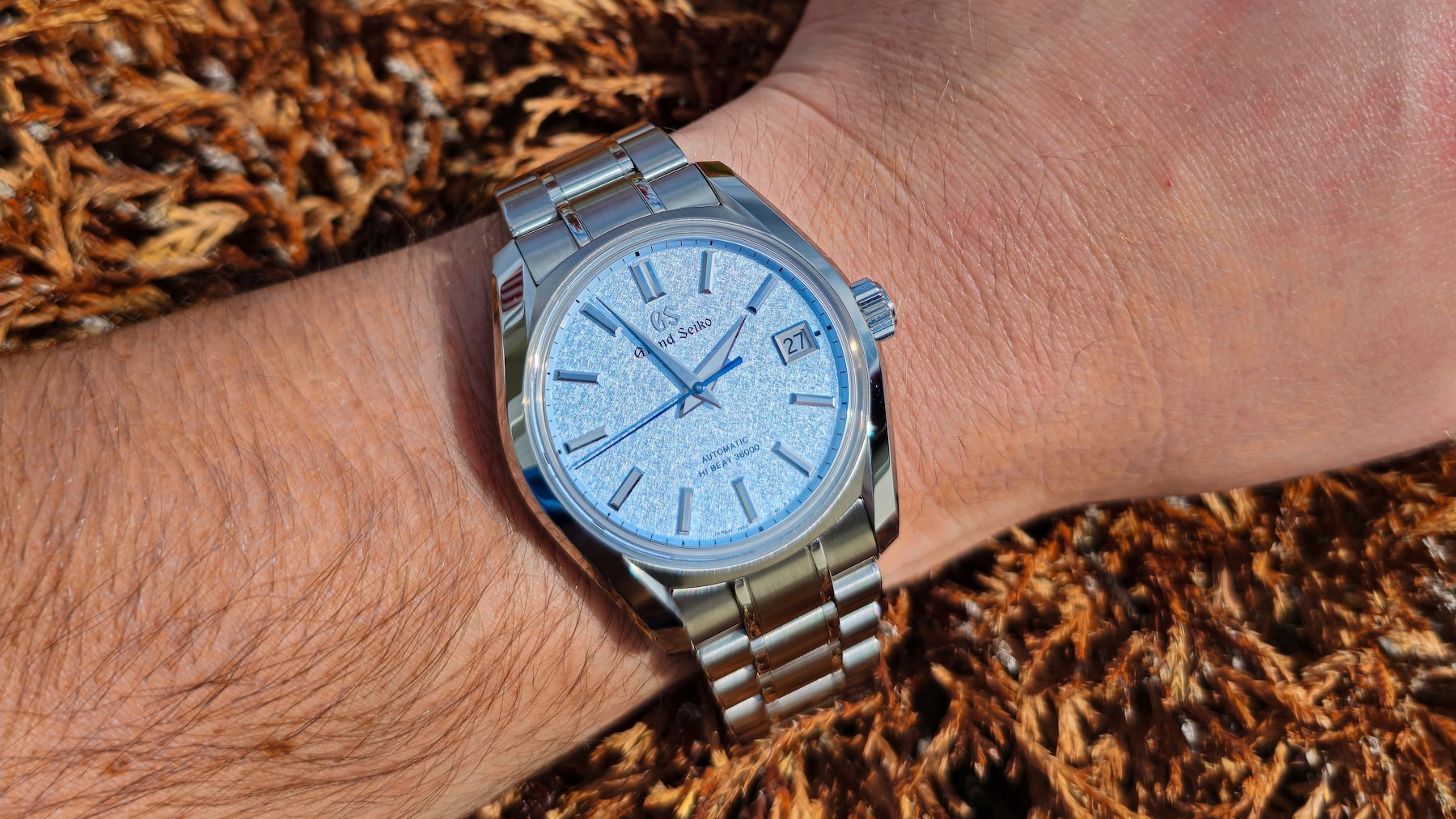
Spending $5,000 on a dress watch is an entirely different proposition from spending $200. At the lower end, we’re usually looking for something attractive, reasonably comfortable, and mechanically interesting enough to make us feel like we’re getting more than an inexpensive fashion accessory. At the higher end, expectations change considerably. Dial finishing, movement engineering, case construction, and the smallest details of everyday operation suddenly become important considerations. But here’s the question that makes this comparison interesting: if both watches look good with a suit and tell the time, how much of that additional $4,800 are we actually going to appreciate? The Grand Seiko Sōkō Frost SBGH295 and Orient Bambino approach Japanese mechanical watchmaking from opposite ends of the market, yet both manage to capture something enthusiasts find genuinely appealing about dress watches.
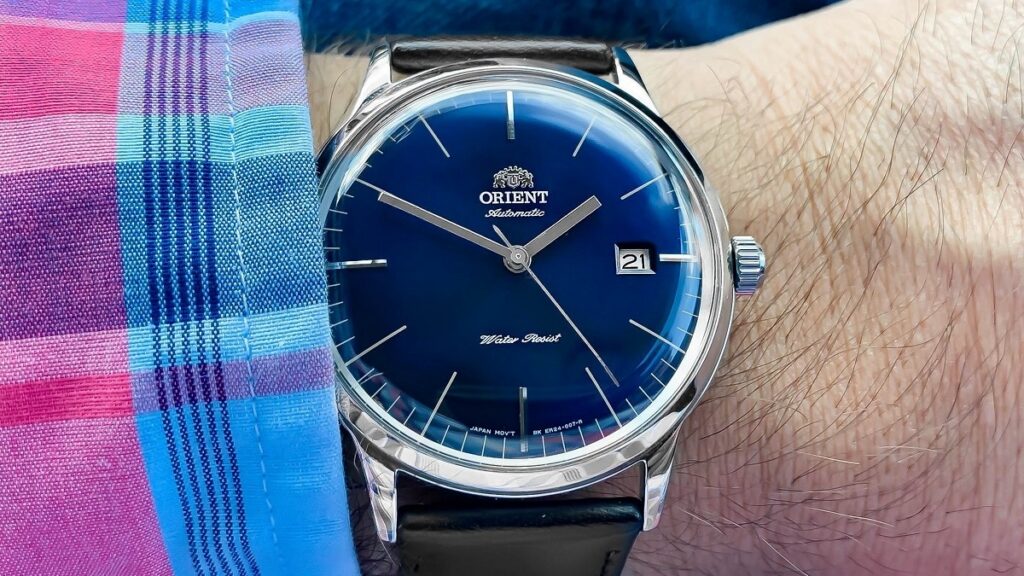
We’ve reviewed both watches hands-on at TBWS, and the experiences reveal more than their prices might suggest. Our Grand Seiko Sōkō Frost review examined a remarkable ice-blue dial, exceptional case finishing, and a Hi-Beat movement that represents some of the finest mechanical engineering coming out of Japan. The Orient Bambino review focused on the blue-dial Version 3, a considerably more affordable automatic that impressed us with its comfortable proportions and attractive dial color despite some meaningful shortcomings. We’re using approximately $5,000 as a pre-owned market benchmark for the Grand Seiko, rather than its substantially higher retail price, and roughly $200 as an illustrative buying budget for the Orient. Neither figure guarantees what every retailer or seller will charge. With that distinction established, we’re interested in something more useful than proving that an expensive watch has better finishing: where does spending more actually transform the experience, and where does the Bambino already provide everything we need?
Overview and Identity
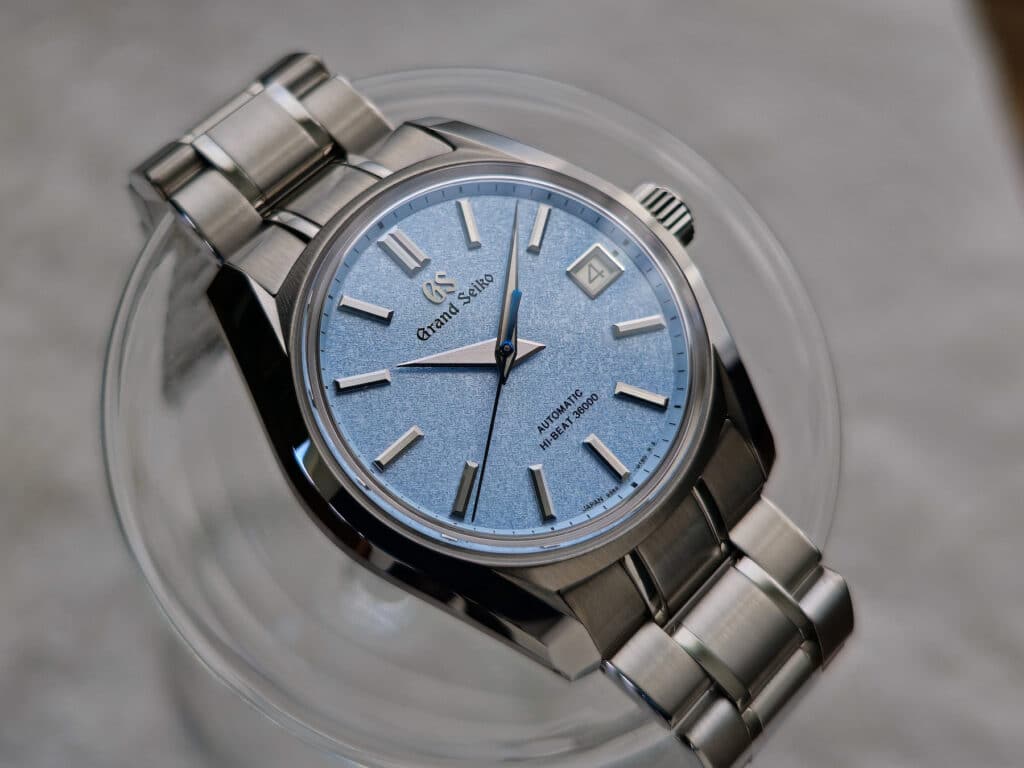
Grand Seiko has spent decades refining a distinctly Japanese interpretation of luxury watchmaking, one that places enormous emphasis on precision, light, and the relationship between polished and brushed surfaces. The Sōkō Frost SBGH295 is a particularly expressive example of that philosophy. Part of the Heritage Collection, it uses the familiar 62GS-inspired case design and a textured ice-blue dial intended to evoke the clear winter skies over the Sea of Japan. Our original review approached the watch with considerable enthusiasm, having already experienced much of Seiko’s affordable and premium mechanical lineup. What made the Sōkō Frost stand out wasn’t simply that it represented another step up the pricing ladder. It felt like an entirely different interpretation of what careful watchmaking could accomplish. Although its stainless steel bracelet and 100-meter water resistance make it more versatile than a traditional formal dress watch, the dial, restrained proportions, and decorative finishing place it comfortably in the conversation about modern dress watches.
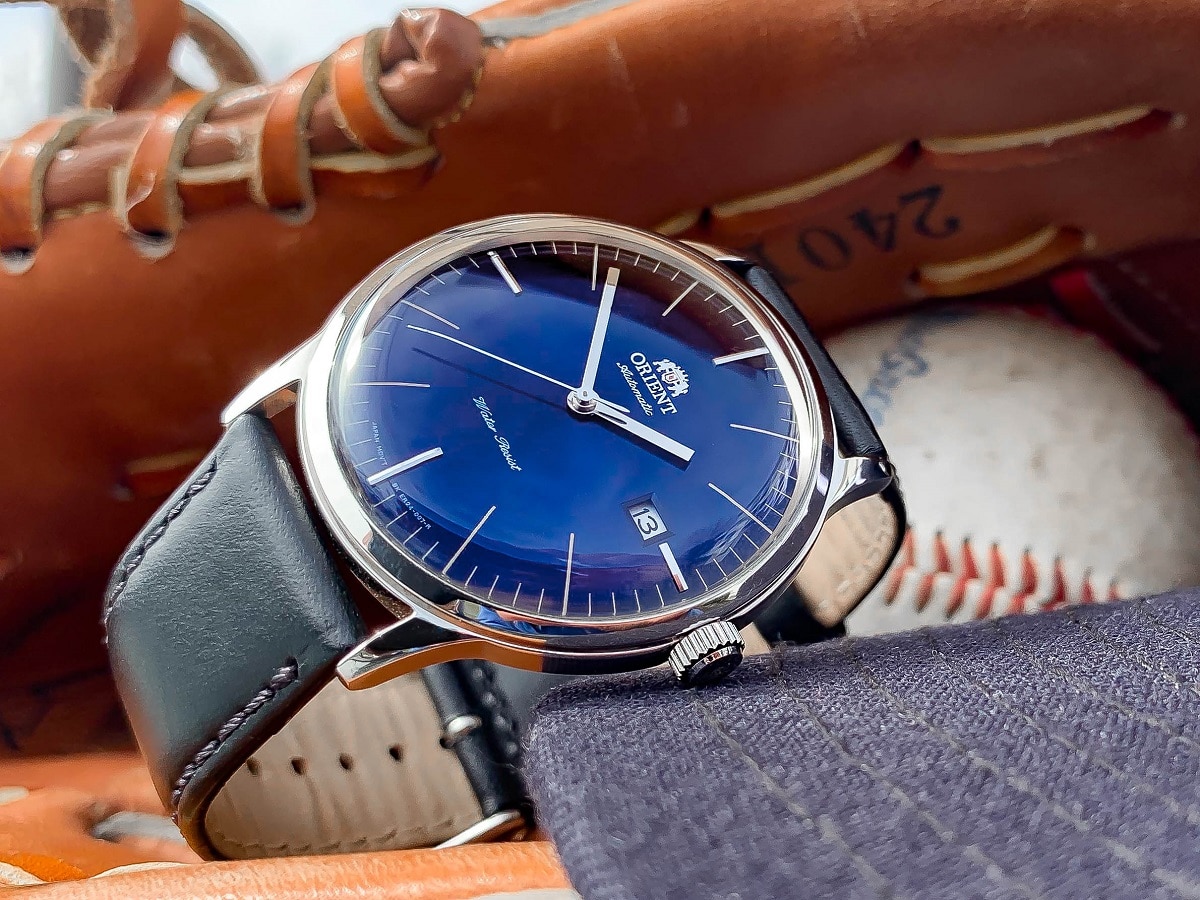
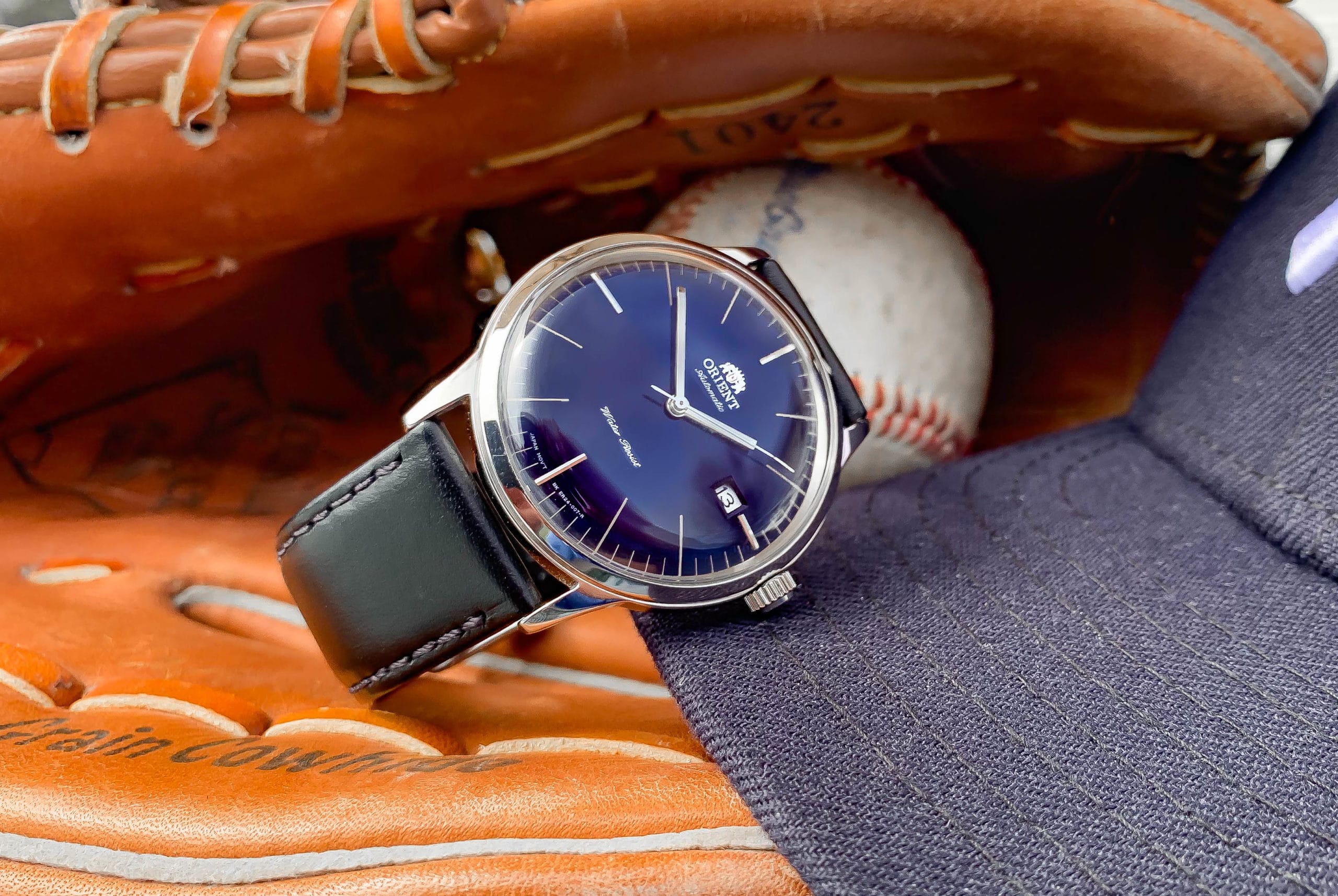
Orient’s Bambino has a far less extravagant identity, but its success is no accident. For years, it has served as one of the most accessible introductions to traditional mechanical dress watches, offering buyers an in-house automatic movement and a variety of designs without demanding a luxury-watch budget. The Version 3 we reviewed takes a relatively modern approach, combining simple rectangular hour markers, straight hands, and a deep blue dial with a prominent domed crystal. It’s less ornate than some of the Roman-numeral Bambinos, and that restraint gives it a versatility we appreciate. Our original reviewer approached the watch with some skepticism about its enthusiast reputation, only to discover that several aspects of the design were considerably better than expected. The Bambino doesn’t promise exceptional finishing or complicated engineering. It promises an attractive mechanical watch that can handle a dinner, a wedding, or a day at the office without looking out of place.
Dial and Straps/Bracelets
There are watches with attractive dials, and then there are watches that make us question whether the rest of the industry is trying hard enough. The Grand Seiko Sōkō Frost falls firmly into the latter category. Its pale blue surface incorporates a remarkably fine crosshatch texture, producing an appearance that changes as light moves across the dial. Rather than relying on a dramatic sunburst effect, Grand Seiko creates visual depth through tiny variations in the surface itself. Our original review found the effect captivating in nearly every lighting condition, revealing details that weren’t immediately obvious during a quick glance. The hands and indices are equally impressive, with carefully brushed surfaces, sharply polished facets, and exceptionally crisp transitions that catch light from different directions. Even the date window receives proper attention through its faceted frame, while the blued seconds hand provides a darker accent against the icy dial. It’s a remarkably intricate display that remains highly legible, demonstrating a level of finishing that rewards closer examination rather than merely looking impressive in photographs.

Bracelet quality is one area where we’d expect the Grand Seiko to establish an overwhelming advantage, but the experience is more complicated. Its stainless steel bracelet is exceptionally well finished, comfortable, and free from the rattles or loose-feeling components that can undermine less expensive watches. We particularly appreciate its articulation and the way the relatively small clasp integrates into the overall design. However, that clasp lacks meaningful micro-adjustment, an increasingly frustrating omission on a watch occupying this price category. Our reviewer achieved an excellent fit, but changing wrist size throughout the day or across seasons would require adding or removing links. That’s not an insignificant compromise when manufacturers charging considerably less have found ways to make fine adjustment easier. Grand Seiko includes an additional blue crocodile strap, and the drilled lugs make switching between configurations relatively straightforward, although the 21mm lug width remains an unusual choice.
The Orient Bambino’s blue dial delivers a different kind of satisfaction. Rather than relying on intricate surface texture, its appeal comes from the richness of the color and the simplicity of the overall design. Our reviewer compared its deep, saturated blue to looking into a pristine lake, and that reaction captures why the Version 3 has become such an appealing entry-level dress watch. The polished rectangular markers and straightforward hands create a contemporary appearance without requiring elaborate ornamentation. Unfortunately, the reflective dial, crystal, hands, and indices occasionally work against one another, making the time harder to read than we’d prefer. The hands can disappear into the background depending on the viewing angle, and their proportions don’t fully complement the curvature of the crystal. That’s where Grand Seiko creates meaningful separation. Its intricate finishing doesn’t compromise readability, while the Bambino’s comparatively simple design occasionally struggles with it. We enjoy the Orient’s overall presentation, but its attractiveness sometimes comes at the expense of basic functionality.
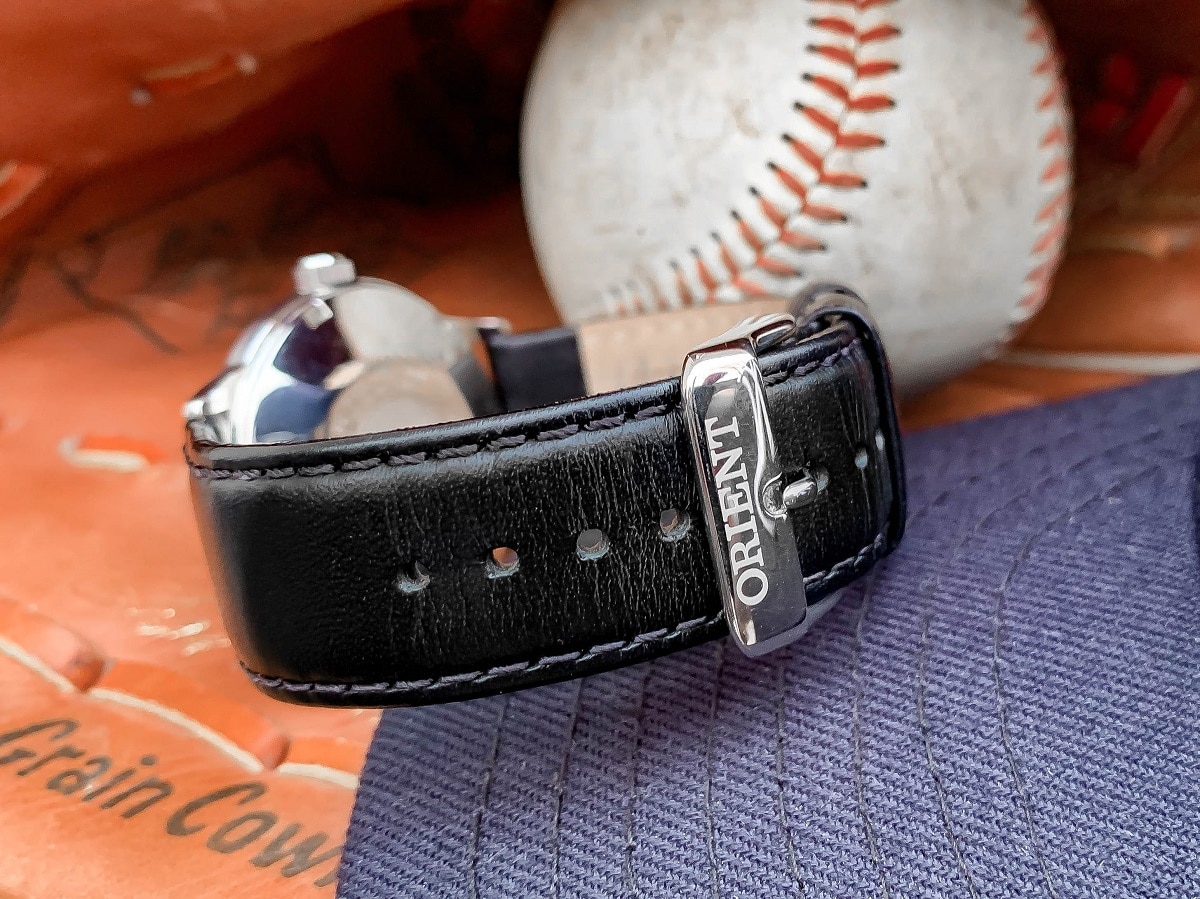
Orient doesn’t pretend that the Bambino’s included leather strap is particularly luxurious, and we appreciate that there’s little ambiguity about what we’re getting. The black leather is relatively inexpensive, but the material is serviceable and the strap felt comfortable throughout our review. It also complements the blue dial without demanding much attention, which is exactly what we’d want from an affordable dress watch. The modest taper toward the buckle creates a traditional appearance, and the relatively compact case helps the entire combination sit naturally on the wrist. Like the Grand Seiko, the Bambino uses a 21mm lug width, so neither watch benefits from the convenience of more common 20mm or 22mm alternatives. The interesting difference is in our expectations. We can easily forgive a basic leather strap on a $200 Orient, while the lack of bracelet adjustment on a $5,000 Grand Seiko feels considerably more difficult to excuse.
Build Quality & Technical Approach
A twenty-five-fold price difference should produce meaningful engineering differences, and these watches certainly deliver them. Grand Seiko uses a sophisticated Hi-Beat movement, exceptionally finished stainless steel case, and sapphire crystal, while Orient concentrates on reliable mechanical fundamentals and an attractive design. But the more interesting question is whether those improvements matter during ordinary ownership, particularly when neither watch is intended to function as a specialized diving or sports instrument.
Movements
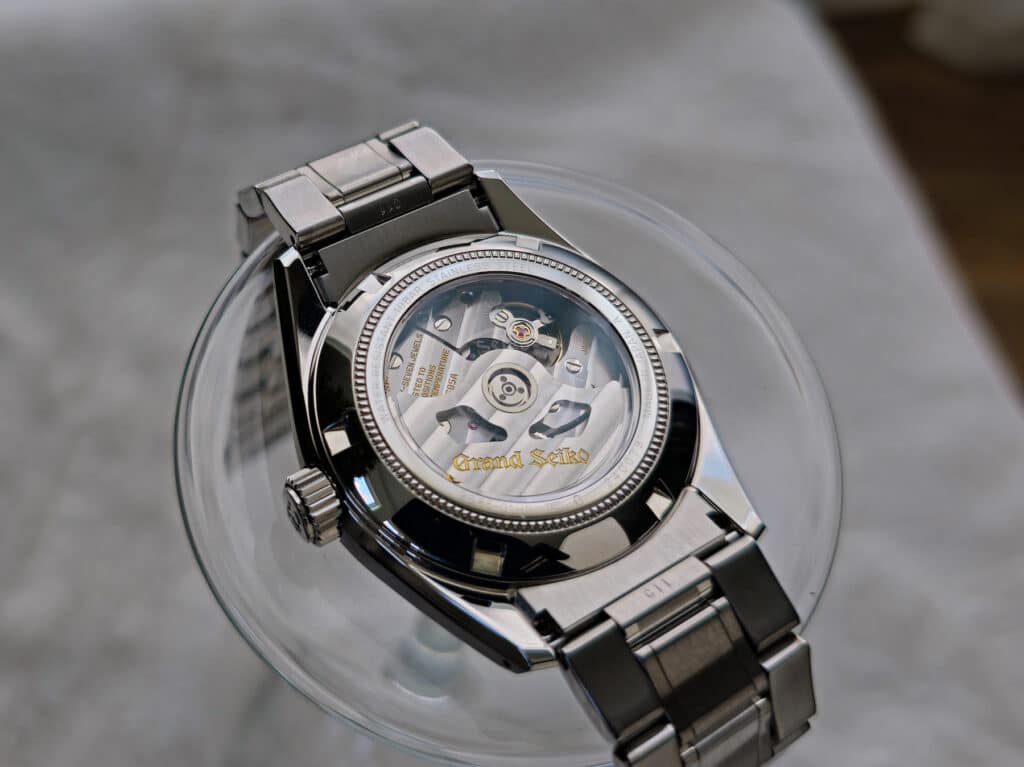
The Sōkō Frost houses Grand Seiko’s caliber 9S85, a mechanical movement that makes an unusually convincing argument for the appeal of traditional watchmaking. Operating at 36,000 vibrations per hour, it delivers ten beats per second and creates a beautifully smooth sweep across the dial. That higher frequency isn’t simply a decorative gimmick. Grand Seiko developed specialized components and manufacturing techniques to support the movement, including MEMS technology that allows exceptionally precise production of elements such as the escape wheel and pallet fork. The movement also incorporates the Spron 530 mainspring alloy, helping sustain a roughly 55-hour power reserve despite its demanding operating frequency. We appreciated the finishing visible through the exhibition caseback, where the carefully executed decoration provides another reason to examine the watch beyond the dial. There’s genuine mechanical sophistication here, and it helps explain why Grand Seiko has earned such a strong reputation among enthusiasts.
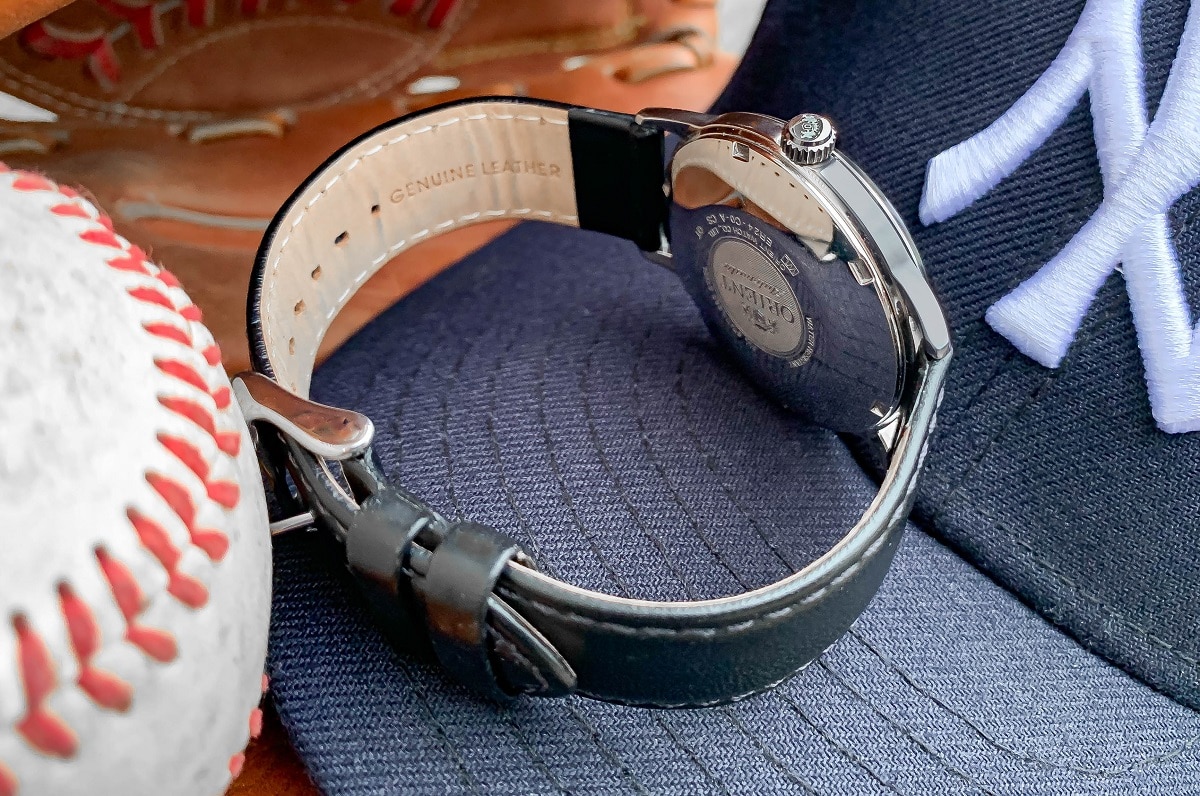
Orient’s caliber F6724 operates at the other end of the mechanical spectrum, but its simplicity doesn’t make it uninteresting. The automatic movement provides hacking seconds, manual winding, and a date complication, giving buyers the fundamental features we’d expect from a modern mechanical dress watch. It doesn’t offer the refined decoration or high-frequency operation of the Grand Seiko, and the Version 3’s closed caseback prevents us from observing the movement in action. Our reviewer also found the rotor noticeably loud, with the example providing less than 30 hours of observed reserve during use. That’s shorter than the movement’s nominal specification, so we wouldn’t assume every Bambino will behave identically. Nevertheless, it illustrates the kinds of compromises that become more apparent at the lower end of the mechanical-watch market. The F6724 gets the essential job done, but it doesn’t attempt to transform ordinary timekeeping into a demonstration of advanced engineering.
This is one category where the extra money produces an undeniably different experience. Grand Seiko’s Hi-Beat movement represents a considerable technical achievement, with its higher operating frequency, carefully developed components, and refined finishing creating something that feels special even among expensive mechanical watches. The Bambino provides the basic enjoyment of an automatic movement without requiring a substantial investment, but it can’t reproduce that level of sophistication. Whether the difference matters depends on what we enjoy about collecting. If the appeal lies primarily in knowing that our watch operates mechanically rather than electronically, Orient provides most of that satisfaction for very little money. If we’re fascinated by how manufacturers continue improving traditional watchmaking, the 9S85 gives us considerably more to appreciate. Neither perspective is unreasonable, but the mechanical advantages of the Grand Seiko are real rather than merely a function of its price.
Case Construction, Finishing & Wearability
Measuring 40mm across and approximately 47mm from lug to lug, the Grand Seiko Sōkō Frost occupies a particularly comfortable position within the modern dress-watch category. Its 62GS-inspired case uses broad surfaces and sharply defined transitions to create an appearance that feels substantial without becoming oversized. We were especially impressed by how naturally the watch wore, particularly because the stated thickness of approximately 12.7 to 12.9mm might initially seem excessive for something intended to accompany formal clothing. Part of that height comes from the box-shaped sapphire crystal, which rises above the surrounding case and helps the watch appear slimmer than its measurements suggest. The curved lugs also contribute to its comfortable fit. Our reviewer generally preferred watches closer to 38mm for this style, yet the Sōkō Frost proved exceptionally well proportioned.
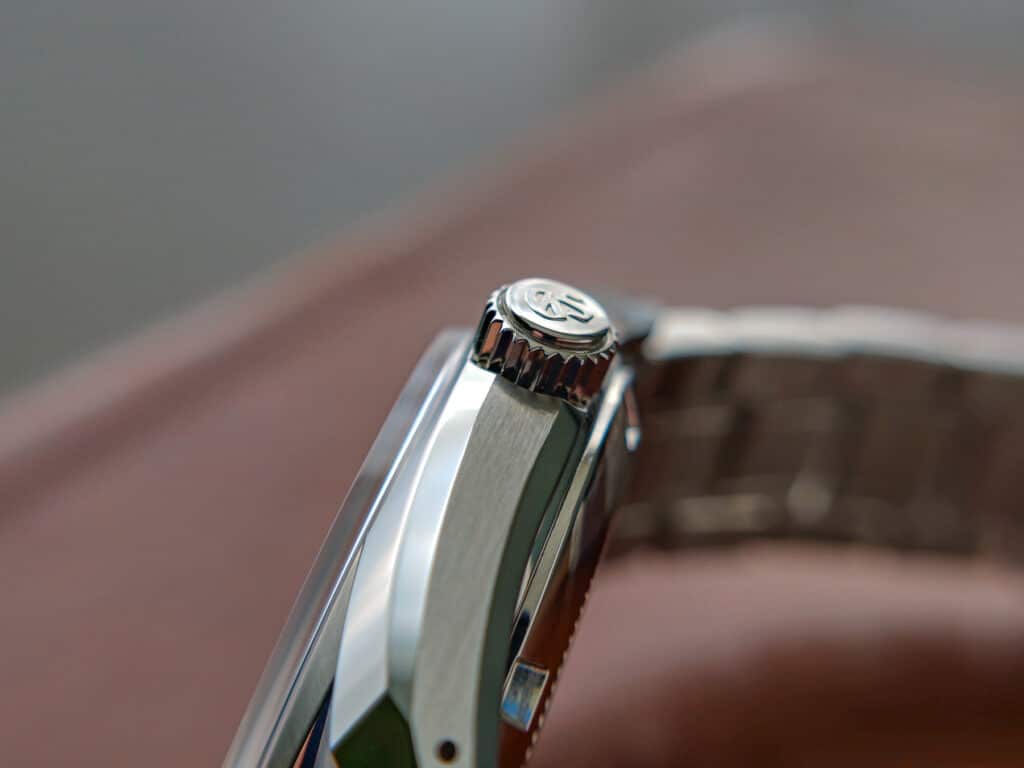
The finishing is where Grand Seiko creates its most dramatic advantage. Zaratsu-polished surfaces surround carefully brushed sections, producing exceptionally crisp reflections and transitions that almost resemble facets on a cut gemstone. Rather than applying polish uniformly across the case, Grand Seiko uses it to emphasize the geometry, allowing different surfaces to interact with light in carefully controlled ways. We found that approach particularly successful around the lugs and the bezel-free crystal opening, where the case’s angular structure becomes a defining feature. It’s the sort of finishing that can make otherwise expensive watches appear surprisingly ordinary by comparison. The effect is impressive in photographs, but the real appeal comes from observing how reflections change as the case moves. Grand Seiko has made the watch’s construction part of the visual experience rather than something that merely supports the dial.
Orient’s Bambino measures 40.5mm across, but its relatively short 44.3mm lug-to-lug distance makes the wearing experience considerably more compact than we might expect. Our reviewer was particularly enthusiastic about the case proportions, noting that several people with different wrist sizes found the watch comfortable. The secret is relatively simple: short lugs, a gentle downward curve, and a smooth bezel that keeps the dial from appearing unnecessarily large. At approximately 12mm thick, the Bambino isn’t an ultra-thin dress watch, but the domed crystal accounts for some of that height, and the case sits comfortably beneath a shirt cuff. It’s a reminder that getting the proportions right doesn’t require an expensive manufacturing process or a complicated design. Orient has managed to create a watch that feels approachable and properly balanced despite costing a small fraction of the Grand Seiko.
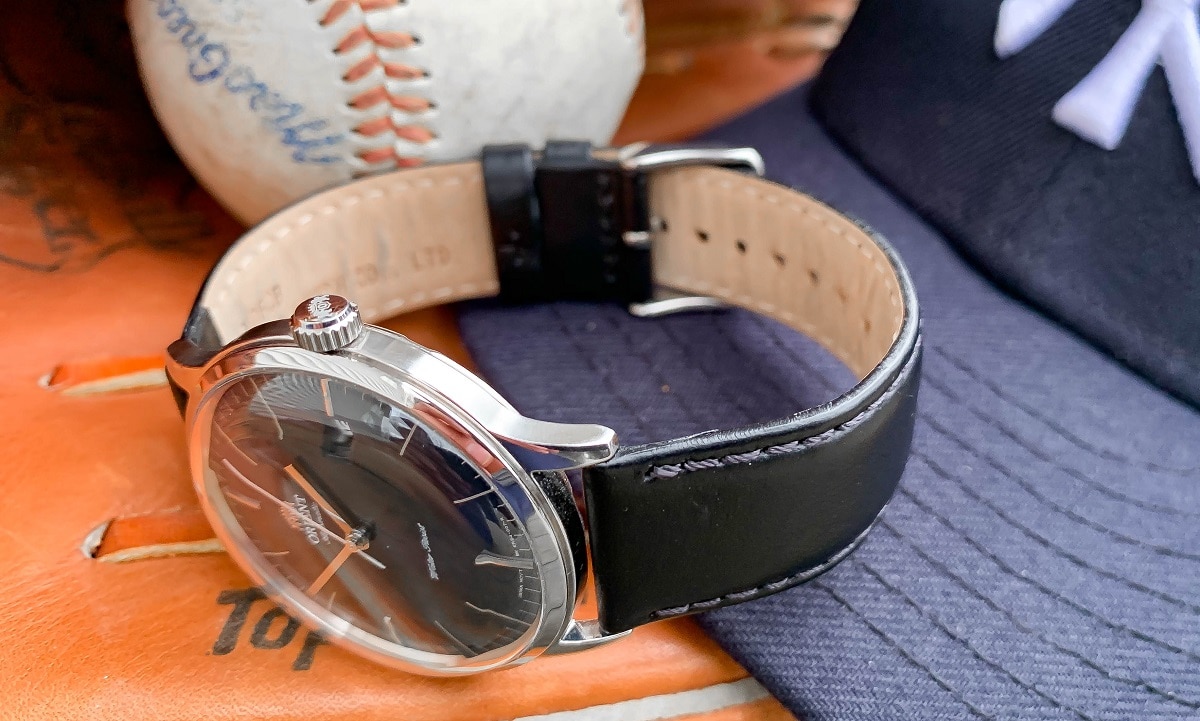
The difference in case finishing is immediately apparent, but comfort produces a much closer comparison. Orient’s shorter lug-to-lug measurement makes the Bambino particularly accommodating, while Grand Seiko’s curved lugs and well-balanced bracelet help the Sōkō Frost wear naturally despite its somewhat more substantial construction. We’d never suggest that the Bambino matches Grand Seiko’s exceptional surface work, particularly around the case transitions and polished facets. But the Orient doesn’t need that level of sophistication to achieve its basic purpose. It looks appropriate with formal clothing, feels comfortable, and avoids the awkward proportions that can undermine much more expensive watches. Grand Seiko makes case construction an art form; Orient demonstrates that good design and practical proportions can be remarkably inexpensive.
Crystals and Bezels

The Sōkō Frost uses a box-shaped sapphire crystal with an anti-reflective coating on its inner surface, providing excellent protection against everyday scratching while allowing the intricate dial to remain clearly visible. The crystal also contributes to the watch’s distinctive appearance, rising above the highly polished case in a way that complements its angular geometry. Rather than incorporating a conventional raised bezel, Grand Seiko allows the surrounding polished surfaces to frame the dial opening. We appreciate how deliberately this arrangement has been executed. Nothing appears to have been added simply because an expensive watch should contain more complicated components. The crystal and case work together to emphasize the dial, which is precisely where much of the Sōkō Frost’s appeal resides.
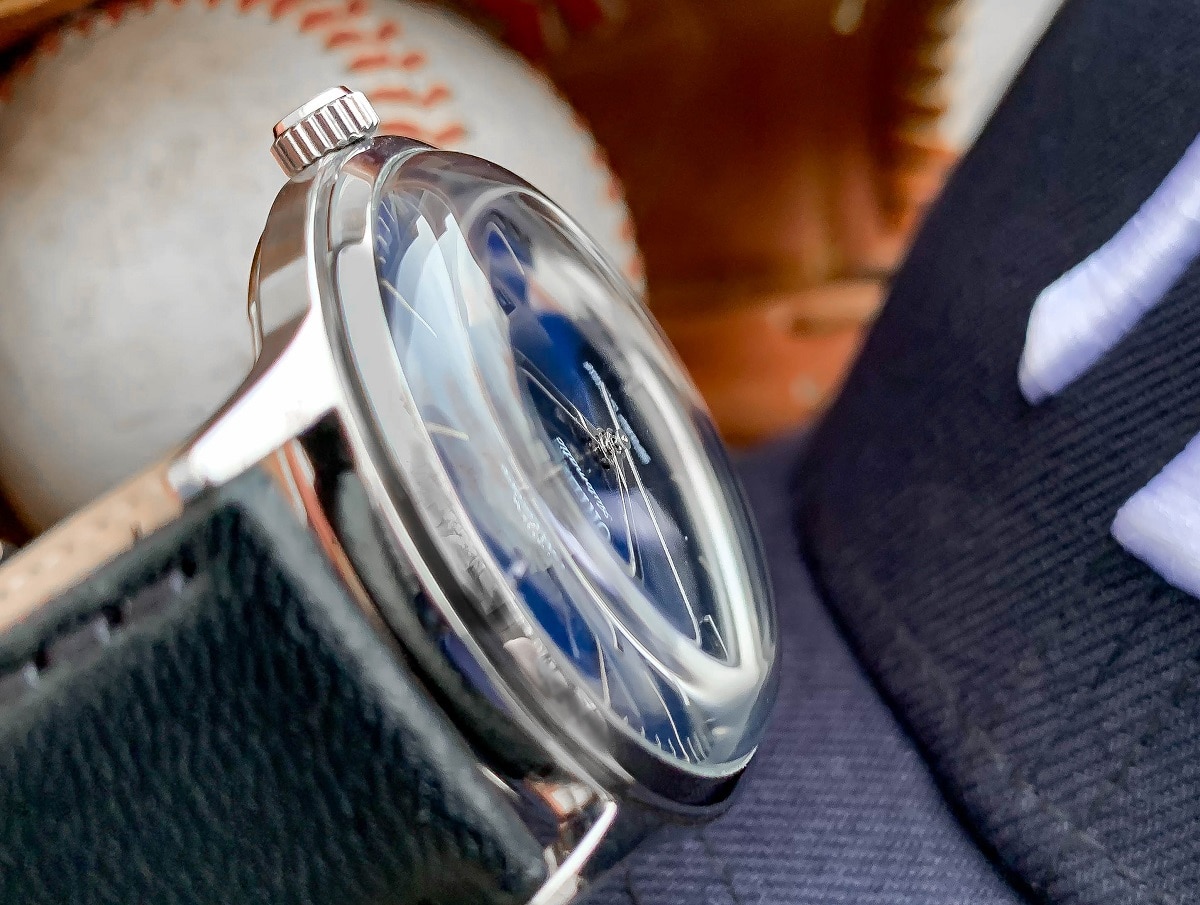
Orient’s Bambino takes the traditional approach of pairing a prominently domed mineral crystal with a smooth polished bezel. The result is attractive, particularly when viewed from an angle, where the curvature gives the watch a strong vintage-inspired character. Our reviewer appreciated how the bezel helped manage the visual proportions of the case, but the crystal introduced a meaningful compromise. Reflections could become distracting, making the dial difficult to read and even complicating attempts to photograph the watch. Mineral glass also provides less scratch resistance than sapphire, which is worth considering for anyone planning to wear the Bambino regularly. Still, the domed crystal is an important part of the watch’s identity. Replacing it with a conventional flat alternative might improve certain practical characteristics while removing some of the charm that makes the design appealing in the first place.
Water Resistance
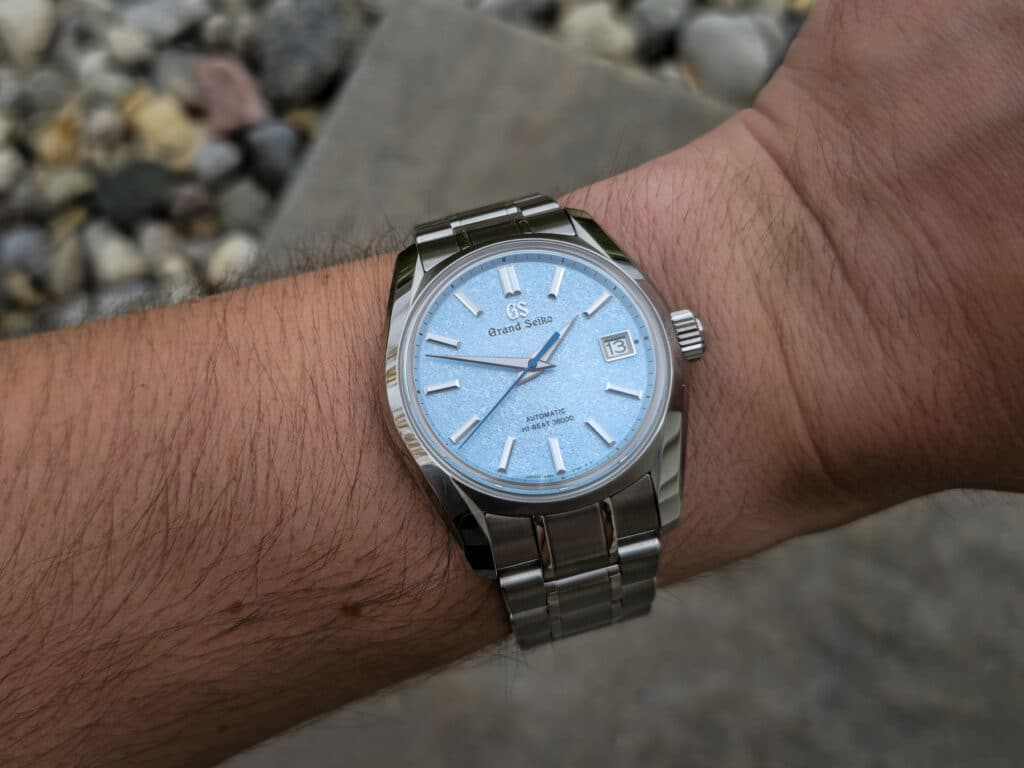
One of the more interesting qualities of the Grand Seiko Sōkō Frost is that its dress-watch appearance doesn’t prevent it from functioning as a relatively versatile everyday watch. The case provides 100 meters of water resistance, supported by a screw-down crown, which is considerably more reassuring than the modest ratings commonly found on traditional formal watches. We wouldn’t choose it for recreational diving, but it’s well suited to the incidental exposure to water that comes with ordinary ownership. The polished hands and indices also provide impressive readability through their contrasting surface treatments, although the watch isn’t designed around conventional luminous material. That’s an important distinction. Grand Seiko achieves its visual clarity primarily through exceptional finishing rather than attempting to make this elegant watch behave like a dedicated sports diver.

The Bambino Version 3 provides just 30 meters of water resistance, which is appropriate for a traditional dress watch but imposes considerably more practical limitations. We wouldn’t recommend swimming or deliberately submerging it, particularly given the watch’s conventional crown and overall design. The absence of lume is also unsurprising in this category, although it makes the existing reflection issues more noticeable when lighting conditions become difficult. Our original review found the small crown somewhat awkward to manipulate, which is another reminder that affordable mechanical watches can introduce compromises beyond their movement specifications. None of these shortcomings makes the Bambino unsuitable for formal occasions. But Grand Seiko clearly offers greater everyday versatility, especially for someone who wants a dressy watch that doesn’t have to be removed whenever life becomes slightly less formal.
Cost Considerations
At roughly $200, the Orient Bambino offers a remarkably accessible introduction to mechanical dress watches. We’re getting an in-house automatic movement, a rich blue dial, comfortable proportions, and a design that looks entirely appropriate with a suit. There are legitimate compromises, particularly in legibility, crystal material, strap quality, and movement refinement, but they don’t prevent the watch from accomplishing its primary purpose. Someone shopping for a graduation, wedding, job interview, or occasional formal event could purchase the Bambino without feeling that they’ve settled for something inappropriate or poorly designed. It’s also an easy watch to experiment with because the financial commitment is relatively small. We don’t have to approach every scratch or imperfection as though we’ve damaged a significant investment. That freedom is part of what makes affordable watches enjoyable, especially when they deliver this much traditional styling for the money.
Grand Seiko occupies a considerably different financial position. Although the Sōkō Frost currently carries a retail price around $7,300, recent secondary-market estimates place the SBGH295 closer to $5,000, depending on condition, accessories, and the individual seller. That’s the figure we’re using for this comparison, and it matters because the watch becomes a more compelling proposition when purchased below its original retail level. Even so, we’re spending enough money to buy an extensive collection of affordable mechanical watches. The appeal therefore needs to extend beyond simply obtaining something attractive and comfortable. Grand Seiko makes that argument through its extraordinary dial, beautifully executed case, sophisticated Hi-Beat movement, and level of detail that remains impressive even when compared with other luxury manufacturers. Those improvements don’t make the watch twenty-five times more useful, but they create an ownership experience that the Bambino cannot realistically reproduce.
The difference becomes particularly apparent when we consider how each watch rewards attention. Orient’s blue dial is attractive at a glance, but closer inspection exposes the reflective hands, less elaborate markers, and basic date treatment. Grand Seiko’s Sōkō Frost moves in the opposite direction. The more closely we examine it, the more details emerge, from the crosshatched dial texture to the sharply faceted indices and carefully finished case surfaces. That’s a substantial part of what buyers are paying for. Mechanical watches are rarely the most rational way to keep track of time, and dress watches introduce another layer of subjectivity because their appeal is so closely connected to aesthetics. If we’re going to spend considerably more for a watch that performs the same basic function, exceptional craftsmanship is one of the more convincing reasons to do it. Grand Seiko provides that justification more effectively than many watches we’ve experienced.
Yet spending thousands of additional dollars doesn’t eliminate every frustrating compromise. The Sōkō Frost’s bracelet is beautifully finished and comfortable, but the missing micro-adjustment remains difficult to excuse at this price. Orient’s strap is inexpensive and relatively ordinary, although replacing it with something nicer is straightforward and doesn’t substantially change the total investment. Neither manufacturer has delivered a perfect wearing setup, and the comparison illustrates how expectations evolve with price. We don’t expect a $200 watch to include every convenience associated with luxury models, but we certainly expect a $5,000 watch to address basic fit adjustments thoughtfully. The Grand Seiko also introduces higher potential servicing costs, particularly because the Hi-Beat movement is more specialized than Orient’s relatively straightforward caliber. Those considerations won’t outweigh its craftsmanship for every buyer, but they’re worth remembering when evaluating long-term value.
The most useful way to approach this comparison is to separate what we need from what we genuinely enjoy. If the goal is simply to own a handsome automatic dress watch that looks appropriate at formal occasions, the Bambino accomplishes that for remarkably little money. Spending an additional $4,800 won’t make our suit fit better or transform the experience of checking the time during dinner. But if we appreciate the art of mechanical watchmaking, Grand Seiko offers something that exists beyond basic utility. Its dial and case finishing reward close examination, while the Hi-Beat movement demonstrates a level of engineering that few inexpensive automatics can approach. We wouldn’t suggest that every enthusiast needs to spend that kind of money to enjoy a dress watch. We would argue that the Sōkō Frost provides a legitimate reason someone might want to, particularly at its lower pre-owned market price.
Final Thoughts: Grand Seiko vs Orient Bambino
The Orient Bambino is exactly the kind of watch that makes affordable mechanical collecting appealing. Its blue dial has genuine personality, the case proportions are exceptionally well considered, and the automatic movement provides a satisfying introduction to traditional watchmaking without demanding much money. We have reservations about the reflective hands and crystal, along with the relatively basic strap and movement refinement, but those limitations are easier to accept when the watch costs around $200. What matters is that the Bambino looks and feels like a proper dress watch rather than a cheap imitation of something more expensive. It has its own identity, and we appreciate that Orient has managed to preserve that appeal across so many versions of the collection.
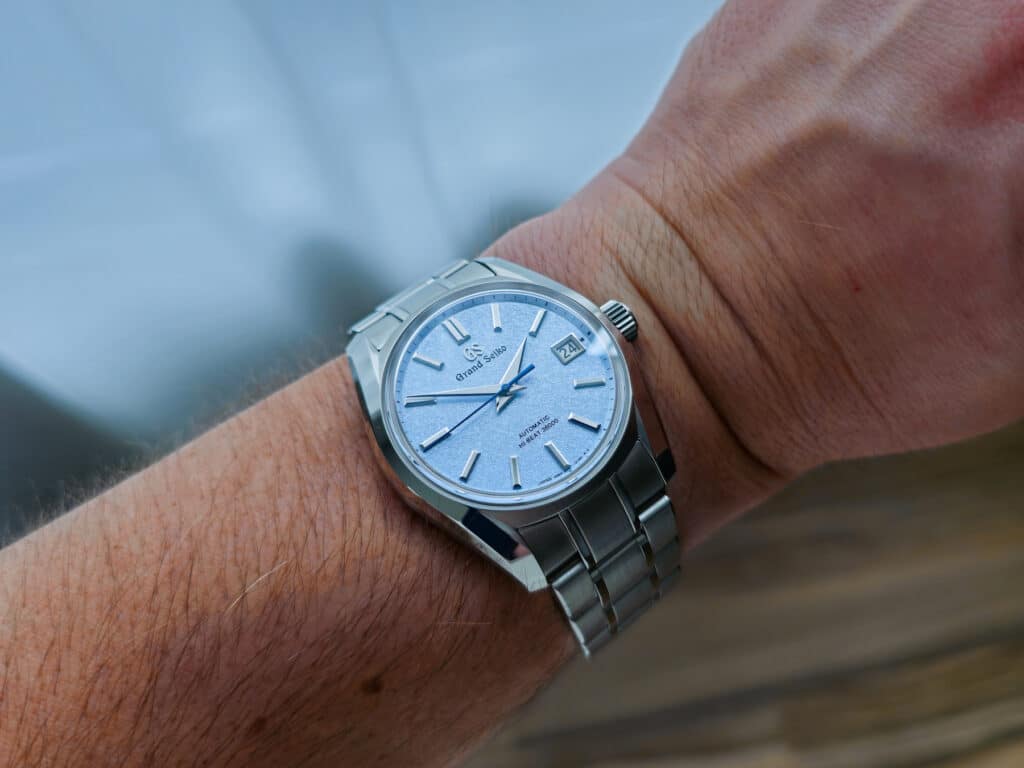
Grand Seiko’s Sōkō Frost delivers a considerably more memorable experience, especially for anyone who appreciates the details that separate excellent watchmaking from merely competent construction. The textured ice-blue dial is extraordinary, the hands and indices demonstrate exceptional precision, and the Zaratsu-polished case creates reflections that change the watch’s character throughout the day. We also appreciate the sophistication of the Hi-Beat movement, which represents genuine technical achievement rather than decorative complexity for its own sake. It’s not flawless. The bracelet’s lack of micro-adjustment remains frustrating, and the watch occupies a slightly more versatile dress-sport category rather than the restrained proportions of a traditional formal watch. But those shortcomings don’t diminish how impressive the overall package feels.
Choosing between them ultimately depends on whether we’re trying to buy a dress watch or indulge a deeper appreciation for watchmaking. For someone who occasionally needs something elegant to wear with formal clothing, the Bambino makes considerably more financial sense. We wouldn’t encourage spending thousands of dollars simply because a luxury watch offers sharper finishing or a more complicated movement. But collectors often want something beyond functionality, and the Grand Seiko provides a particularly compelling example of why that desire exists. Its craftsmanship creates an experience that becomes more rewarding with attention, rather than depending entirely on the prestige of the name printed on the dial. The Bambino is satisfying because it delivers so much for so little. The Grand Seiko is satisfying because it demonstrates how much further the same basic concept can be developed.
Our winner for value is the Orient Bambino, while the Grand Seiko Sōkō Frost wins decisively on craftsmanship and overall refinement. That’s not a consolation prize for either watch. Orient proves that an affordable dress watch can be attractive, comfortable, and mechanically interesting without costing a fortune. Grand Seiko demonstrates why exceptional watchmaking can still be worth pursuing even when the practical improvements become increasingly difficult to justify. If we had $200 to spend on a dress watch, we’d happily choose the Bambino. If we had $5,000 and wanted something genuinely special, the Sōkō Frost would make a much stronger impression than its relatively understated appearance might suggest. The most interesting conclusion is that both watches succeed on their own terms, even though they’re separated by an enormous amount of money.

Co-Founder and Senior Editor
Kaz has been collecting watches since 2015, but he’s been fascinated by product design, the Collector’s psychology, and brand marketing his whole life. While sharing the same strong fondness for all things horologically-affordable as Mike (his TBWS partner in crime), Kaz’s collection niche is also focused on vintage Soviet watches as well as watches that feature a unique, but well-designed quirk or visual hook.