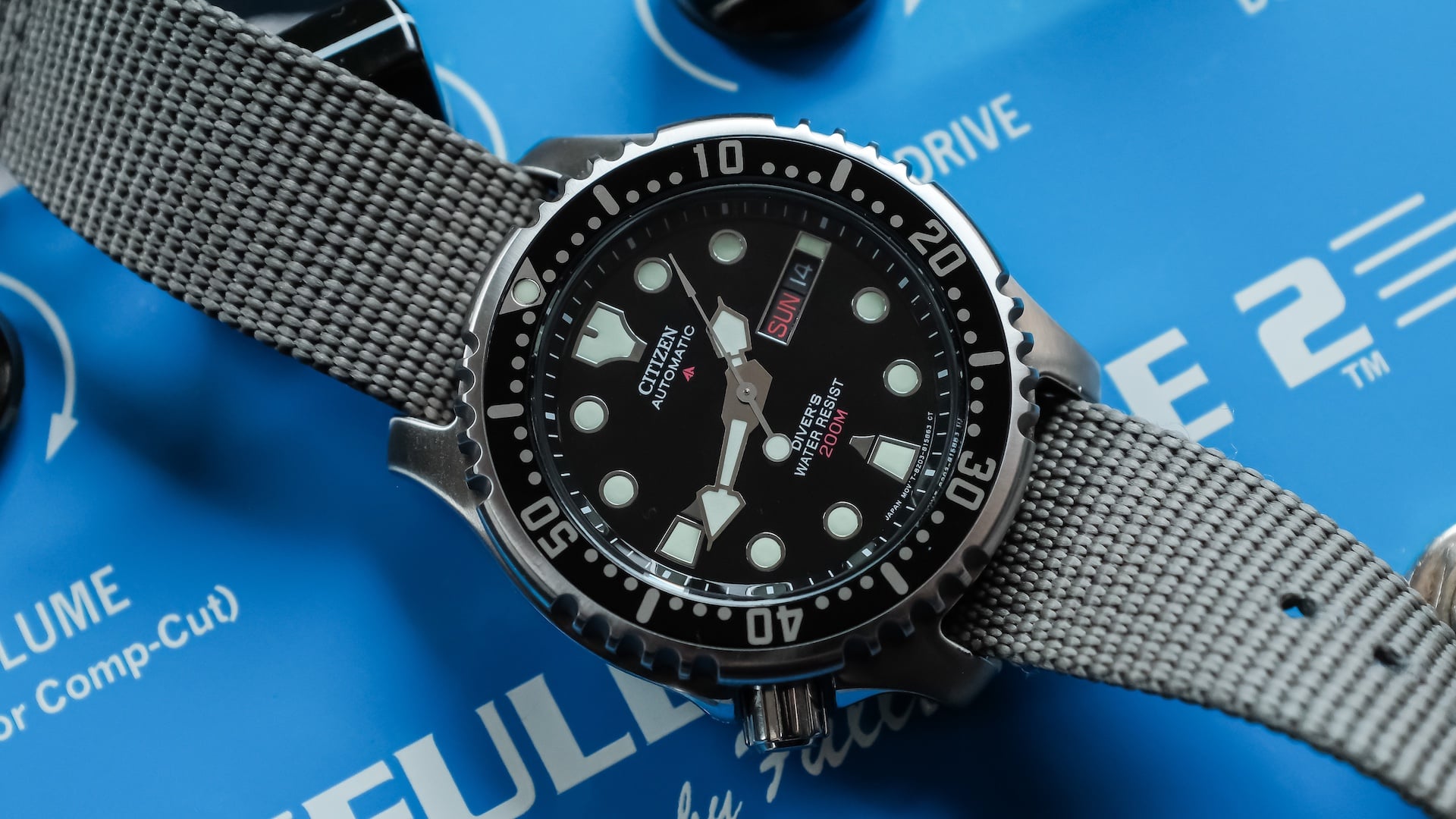
Two hundred and fifty dollars is an interesting amount of money to spend on a dive watch. It’s enough to move beyond the cheapest quartz options, but not quite enough to guarantee that every feature on the specification sheet will be particularly impressive. Manufacturers still have to make compromises, and those decisions become obvious when we start comparing watches that cost roughly the same. The Citizen Promaster NY0040 and Timex Deepwater Meridian 200 are perfect examples. Both offer 200 meters of water resistance, rotating dive bezels, stainless steel cases, and enough credibility to appeal to enthusiasts who expect more than something that simply looks good next to a swimming pool. Yet almost everything about how they approach those requirements is different.

We’ve had both watches on hand at TBWS, and neither behaved quite the way we expected. The Citizen NY0040 is an automatic diver that has spent much of its existence being compared with Seiko’s discontinued SKX, despite having plenty of character of its own. Timex, meanwhile, surprised us with a quartz diver that feels substantially more serious than the brand’s usual casual watches. With the Citizen available around the $200–$250 mark through certain retailers and the Timex carrying a $259 price tag, these are realistic alternatives for someone shopping within the same budget. Drawing on our Citizen NY0040 review and Timex Deepwater Meridian 200 review, we’re looking at which watch offers the better combination of build quality, comfort, functionality, and everyday enjoyment. Because when the prices are this close, choosing between them becomes much more interesting than simply asking which one is cheaper.
Overview and Identity
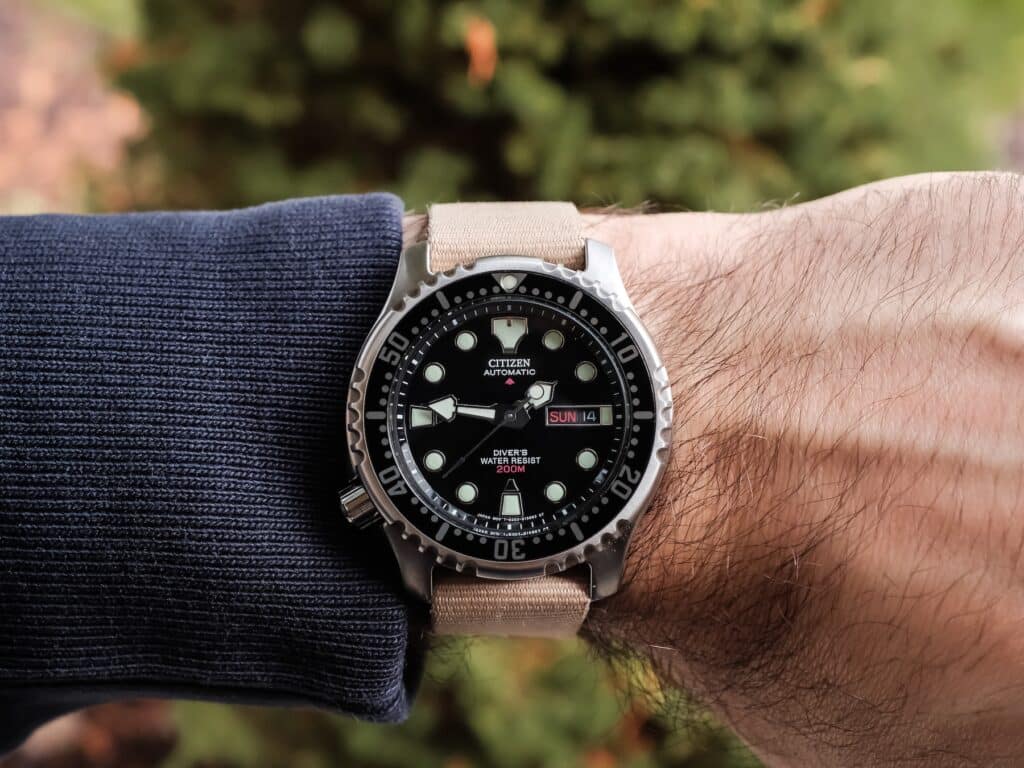
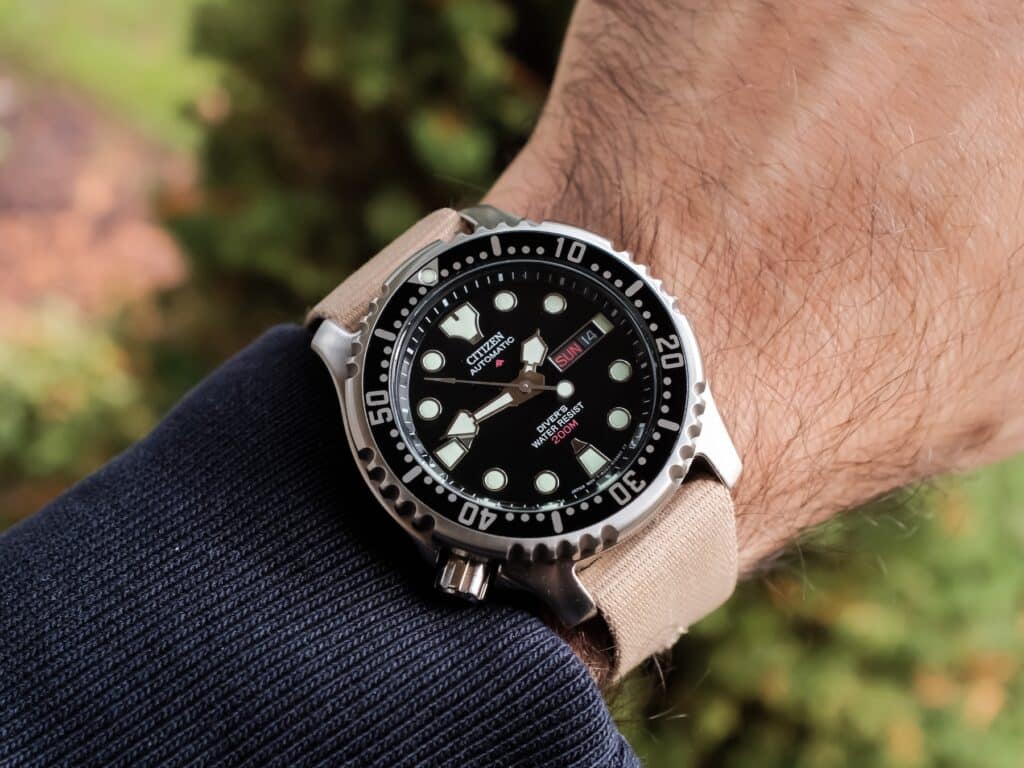
Citizen has never been particularly interested in making the NY0040 fashionable, and that might be one of its greatest strengths. Its design dates back to the 1990s, with professional diving credentials and a history that includes its association with the Italian Navy’s COMSUBIN divers. The left-side crown, broad case shoulders, and compact black dial give it a recognizable appearance without borrowing heavily from the usual Swiss dive-watch formula. We appreciate that the NY0040 doesn’t need to be another interpretation of a Seiko SKX to justify its existence. It’s a legitimate dive watch with a mechanical movement, practical proportions, and some slightly unconventional design decisions. Our original review found plenty to appreciate in its straightforward construction, particularly the way its peculiar-looking case made more sense once it was actually on the wrist.
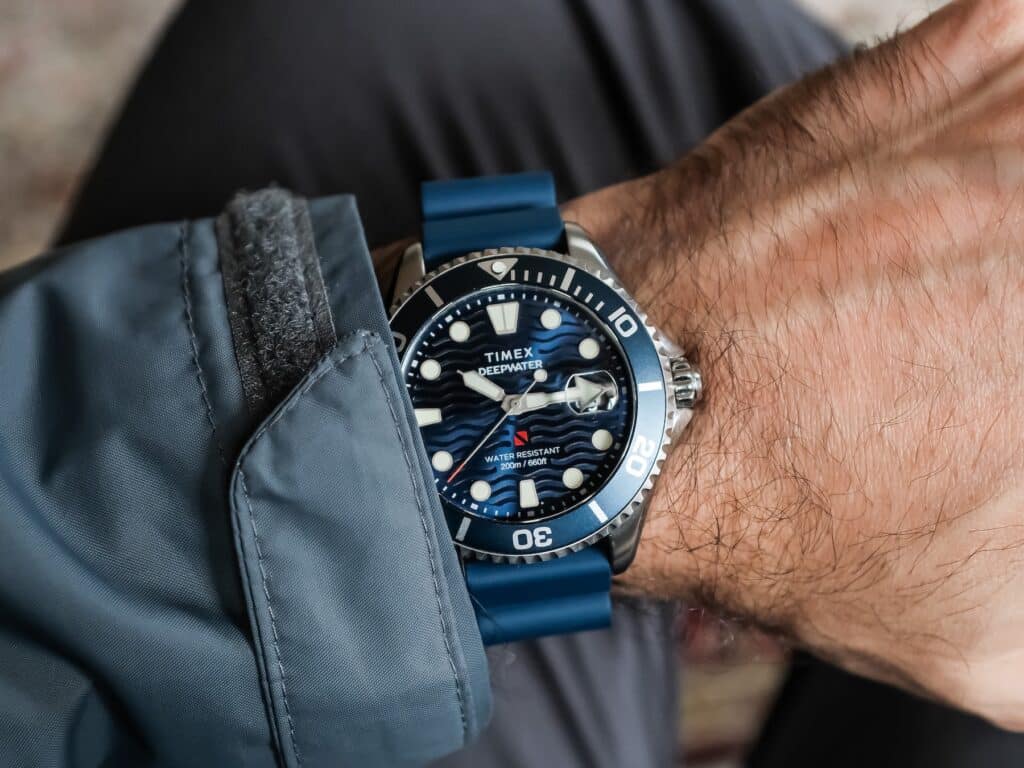
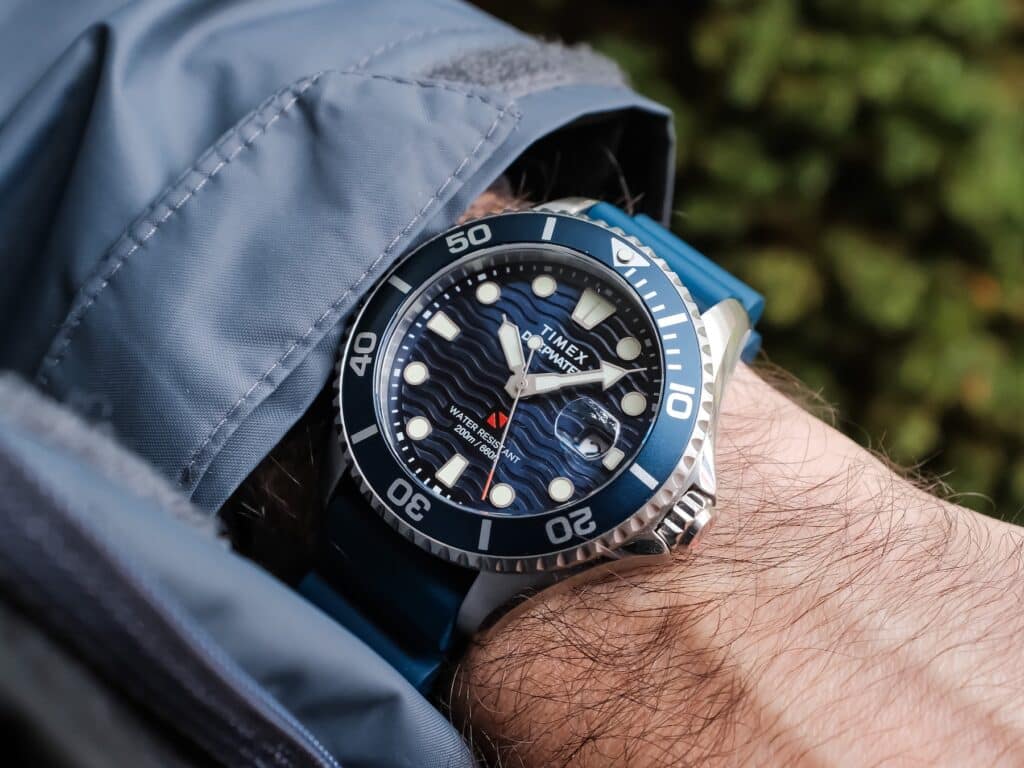
Timex approaches the same budget from a considerably more modern direction. Introduced as part of the Deepwater collection that debuted in 2024, the Meridian 200 feels like an attempt to establish a more serious presence in affordable diving watches. The blue-dial TW2W81500 we reviewed makes that intention obvious, with a substantial stainless steel case, sapphire crystal, screw-down crown, and a prominent rotating bezel. There’s a certain confidence to the design that we don’t always associate with Timex. Rather than leaning on one of its familiar military or vintage-inspired collections, the company has produced a contemporary diver with a distinct personality. The watch is unapologetically large, but its finishing and tactile qualities impressed us enough to reconsider what we’d normally expect at this price. Citizen has decades of credibility behind the NY0040, while Timex is making a surprisingly convincing argument for its newer Deepwater platform.
Dial and Straps/Bracelets
The NY0040’s dial is about as straightforward as we’d want from an affordable mechanical diver. The black background creates strong contrast with the large hands and hour markers, making the display immediately understandable. Citizen also deserves some credit for resisting the temptation to cover every available inch with unnecessary text. The branding beneath twelve o’clock is restrained, while the familiar 200-meter designation near six communicates the watch’s purpose without becoming decorative. We particularly enjoy the small red arrow beneath the Citizen logo, which adds just enough personality to prevent the dial from feeling anonymous. The day-date display at three o’clock also integrates surprisingly well, thanks to its darker background and lighter lettering. It’s a functional arrangement with a little more visual character than photographs initially suggest.
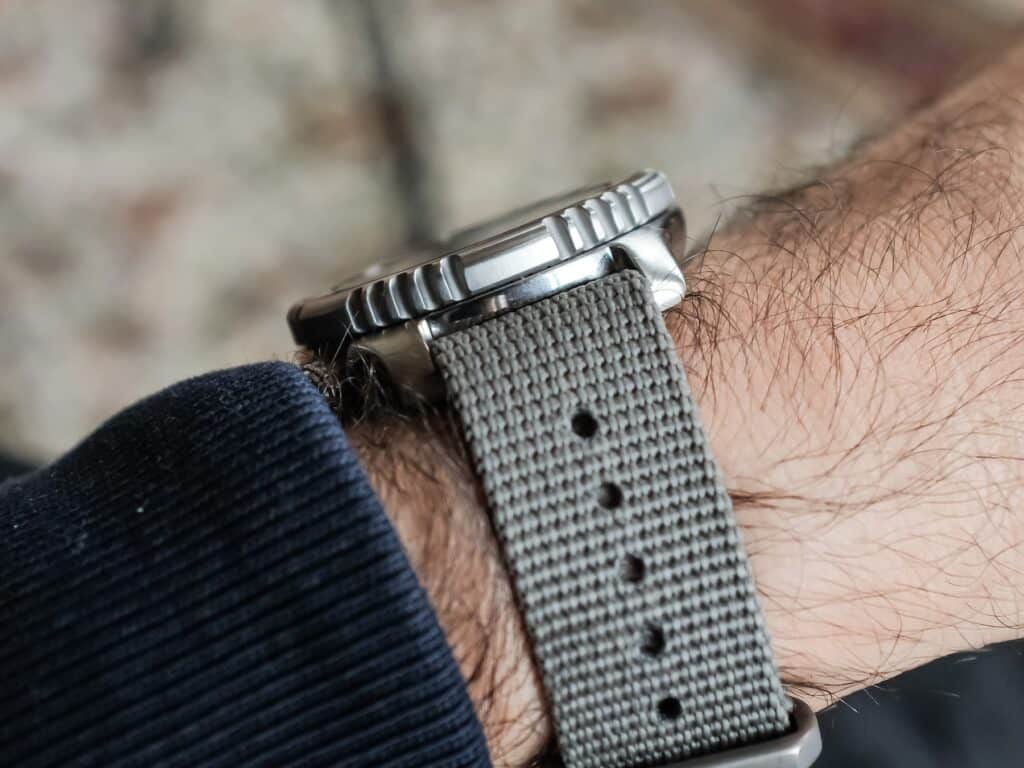
The included rubber strap is less interesting. It’s thick, functional, and perfectly adequate for getting the watch onto the wrist, but we never found it particularly compelling. Fortunately, the Citizen’s 20mm lug width makes replacing it straightforward, and the watch looks especially natural on a NATO strap. Our original review explored several options, and the combination of the compact case and simple fabric strap gave the NY0040 a more relaxed personality than its stock configuration suggested. There’s also a healthy aftermarket for fitted stainless steel bracelets, including options from Long Island Watch, although we haven’t evaluated those alternatives firsthand. For our purposes, the important distinction is that the Citizen works extremely well as a platform for inexpensive customization. The watch head does most of the work, and the choice of strap can be left largely to personal preference.
Timex takes a more decorative approach with the Meridian 200’s blue dial, but it manages to avoid becoming overly busy. The sunburst finish and subtle wave pattern introduce a considerable amount of visual movement, particularly when light catches the dial at an angle. Applied hour markers, white text, and a red diver’s flag at twelve o’clock create an attractive combination without compromising legibility. There’s an obvious resemblance to some more expensive Swiss divers in the overall presentation, although we wouldn’t describe the Timex as an outright imitation. The date magnifier at three o’clock is probably the most divisive detail. We’re generally skeptical of unnecessary magnifiers, but this one is neatly integrated into the sapphire crystal and didn’t produce the kind of distracting distortion we sometimes encounter. More importantly, the dial feels like a deliberate design rather than an assortment of features selected to make the watch appear expensive.
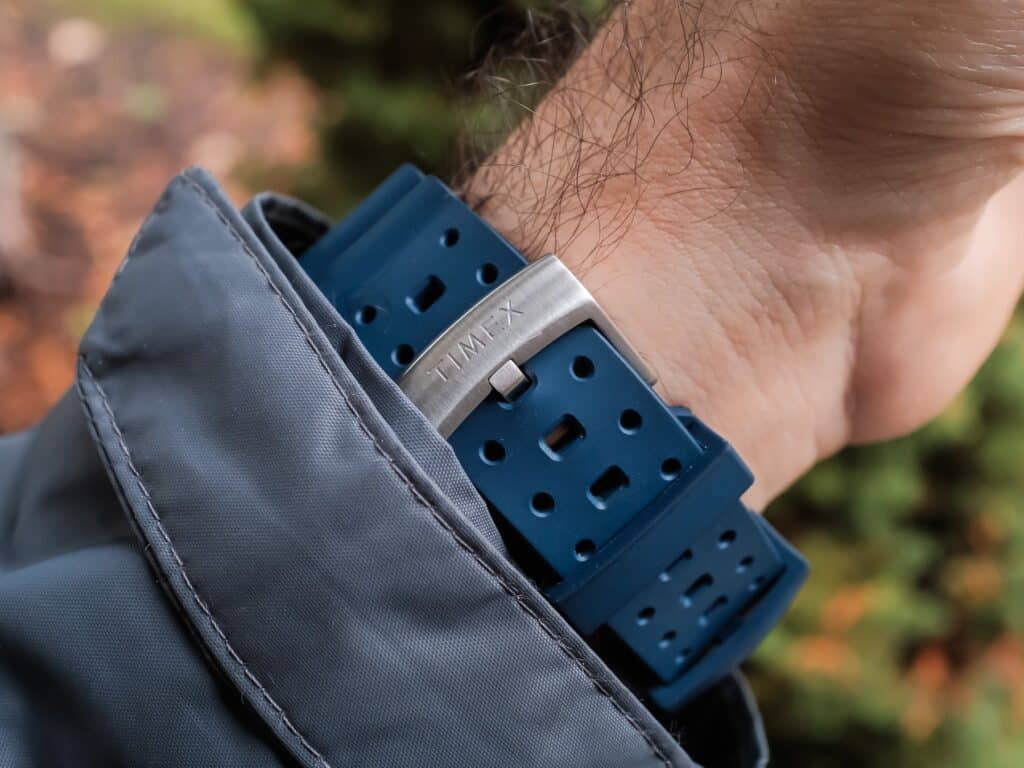
The Meridian 200 comes with a rubber strap that complements its broader, more contemporary case. Its substantial appearance makes sense alongside the watch’s 44mm diameter, particularly because Timex isn’t pretending this is a delicate or understated diver. The original review focused more heavily on the case and overall wearing experience than on the strap itself, so we wouldn’t claim an elaborate advantage in rubber quality over the Citizen. What matters is the difference in personality. Citizen’s NY0040 invites experimentation with fabric straps and aftermarket bracelets, while the Timex feels more like a modern, integrated tool-watch design. Both leave room for personal preference, but neither justifies its price primarily through an unusually luxurious factory strap. At this budget, that’s a reasonable place for manufacturers to concentrate their resources elsewhere.
Build Quality & Technical Approach
The two watches make their biggest differences apparent through relatively ordinary interactions. Citizen gives us a mechanical movement, a compact case, and an exceptionally satisfying dive bezel. Timex concentrates on durable materials, a more substantial case, and the convenience of quartz. Neither approach is inherently better, but the compromises matter when both watches are competing for the same $250.
Movements
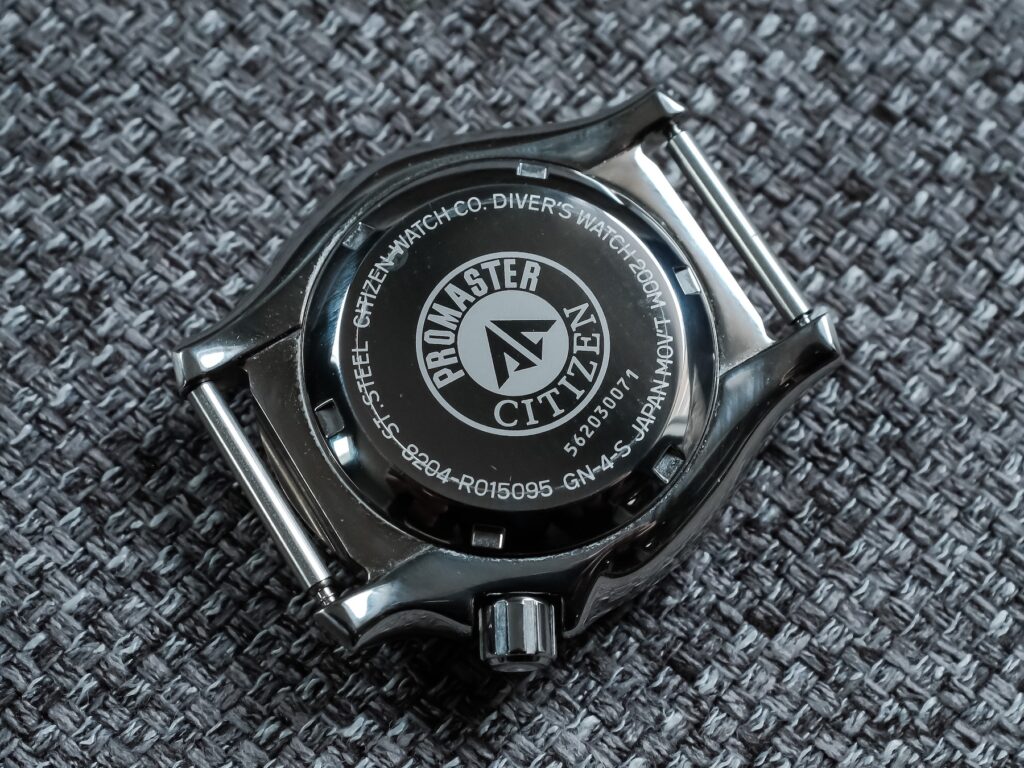
Inside the Citizen NY0040 is the Miyota caliber 8204, an automatic movement from the long-running 8000-series family. It offers hacking seconds, manual winding, and a day-date complication, giving enthusiasts the basic mechanical features we’d expect from a modern affordable automatic. There’s nothing particularly elaborate about its construction, and Citizen hasn’t attempted to disguise the movement as something more sophisticated than it is. Our experience reflected that straightforward personality. The movement was easy to engage with, setting and winding felt familiar after adjusting to the unusual crown position, and the overall experience reinforced why mechanical divers remain appealing even when quartz alternatives are more convenient. We also noticed the rotor noise, which is particularly pronounced on this caliber. Some collectors enjoy that kind of mechanical presence, but we can understand why others might find it distracting during quieter moments.
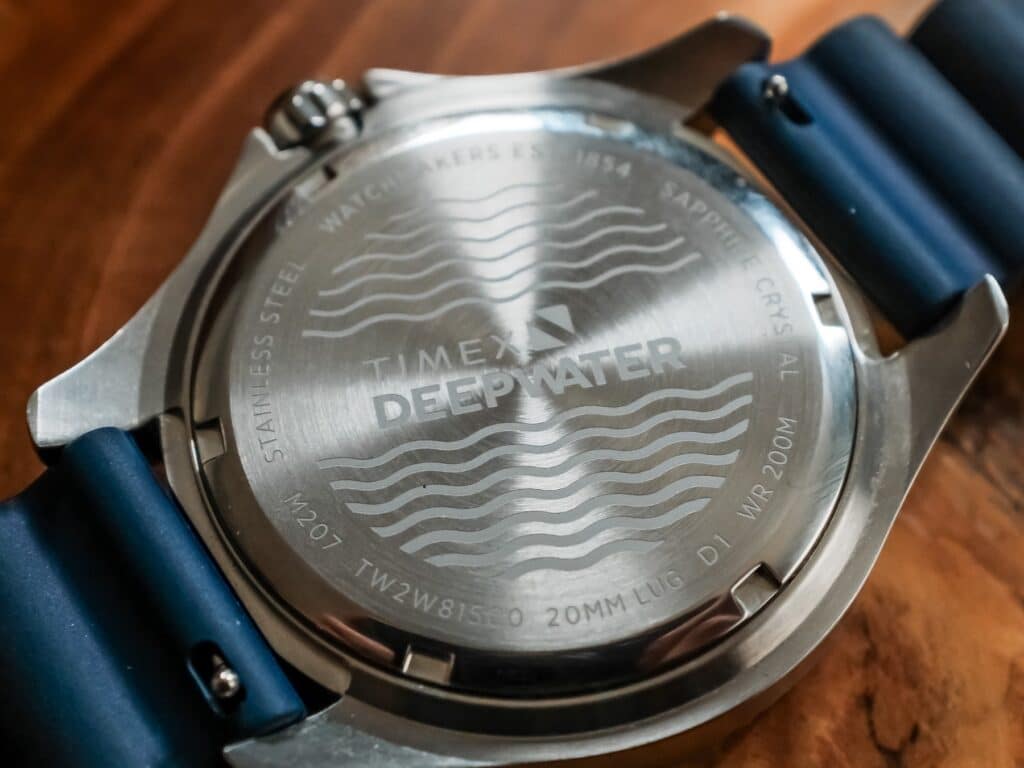
Timex uses the Seiko Epson VX42E quartz movement, which takes practically the opposite approach to everyday ownership. It provides a quick-set date, hacking seconds, and approximately three years of battery life, making it an uncomplicated choice for someone who doesn’t want to think about maintaining a mechanical power reserve. The crown action felt reassuringly precise during our review, with clean engagement and no noticeable looseness when setting the hands. That’s worth mentioning because an inexpensive quartz movement doesn’t automatically excuse poorly executed controls. We would have appreciated a solar-powered option, particularly given Citizen’s success with Eco-Drive technology, but conventional quartz makes sense in a watch that’s intended to be reliable and accessible. It also eliminates the regular resetting that can accompany rotating several mechanical watches in and out of a collection.
For enthusiasts, the decision between these movements isn’t really about which one is more technologically impressive. The Timex should offer the more consistent everyday timekeeping experience, while the Citizen provides the mechanical interaction that makes automatic watches interesting in the first place. We enjoy the ritual of winding and setting a watch, but that enjoyment doesn’t make the 8204 inherently more useful. Similarly, there’s nothing particularly romantic about replacing a battery every few years, although it’s a small inconvenience compared with the regular attention a mechanical movement can require. Neither movement is an obvious bargain-breaking weakness. The choice comes down to whether we value the experience of mechanical watchmaking or prefer a watch that remains ready for use with minimal involvement.
Case Construction, Finishing & Wearability
The Citizen NY0040 measures approximately 42mm across, 47.3mm from lug to lug, and 12.6mm thick. Those dimensions are relatively modest for a professional-style automatic diver, but the watch feels even more compact than the numbers suggest. Much of that comes from the case’s unusual geometry. The broad, tooth-like shoulders curve inward, while the bezel and dial opening are proportioned to make the watch appear smaller on the wrist. We particularly appreciate the left-side crown, which removes one of the more irritating aspects of conventional dive-watch cases. There’s nothing protruding toward the back of the hand during ordinary wear, and the difference becomes surprisingly noticeable once we’re accustomed to it. Setting the watch takes a little adjustment for right-handed wearers, but the comfort benefits are difficult to ignore.

Citizen’s finishing is also better than the relatively modest price might suggest. Brushed upper surfaces contrast with polished flanks, and the transitions feel appropriate for a watch designed primarily as a tool. There’s a reassuring density to the case without the excessive bulk that sometimes accompanies inexpensive automatic divers. We wouldn’t compare the finishing with anything approaching a luxury Swiss watch, but neither did we find obvious shortcuts that undermined the NY0040’s credibility. The shape has a hint of traditional skin-diver character, particularly in the way its shoulders soften the overall profile. That gives the Citizen a distinct identity in a category where manufacturers frequently default to familiar Submariner-inspired proportions. It’s an attractive watch precisely because it doesn’t look as though Citizen was trying to make everyone happy.
Timex makes no effort to disguise the Meridian 200’s size. At 44mm across, 50.5mm from lug to lug, and approximately 12.5mm thick in our review, it’s a substantial watch with considerably more wrist presence than the Citizen. Yet the case wears more comfortably than we’d initially expected. The lugs curve downward, and the relatively flat caseback helps the watch sit securely rather than rocking awkwardly across the wrist. We were also surprised by the overall impression of solidity. There’s a weight and confidence to the construction that feels distinct from the more casual Timex watches we’ve handled over the years. The crown is particularly satisfying, with smooth threading and enough resistance to feel secure without becoming difficult to operate. These are exactly the kinds of details that can make an affordable watch feel more expensive than its price suggests.
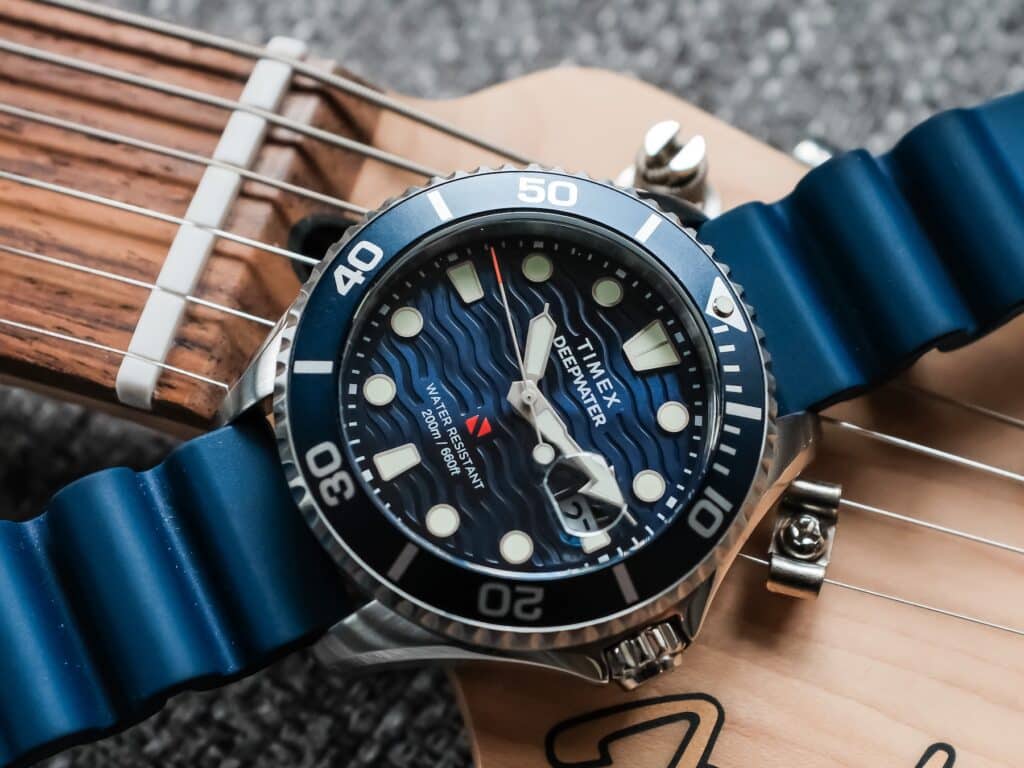
The fit comparison is where the Citizen establishes its strongest advantage. We can appreciate how well Timex manages the Meridian 200’s size, but a 50.5mm lug-to-lug distance is still substantial, particularly for someone with a smaller wrist. Citizen accomplishes a similar level of functional credibility in a noticeably more compact package, and its crown placement makes it especially comfortable during extended wear. That doesn’t mean everyone will prefer the NY0040. Larger-wristed collectors may appreciate the Timex’s visual presence, and the Meridian’s flatter profile gives it a surprisingly approachable feel despite its diameter. But if we’re considering which watch will be easier to wear across different situations, the Citizen makes a convincing argument without requiring us to overlook its dimensions.
Crystals and Bezels
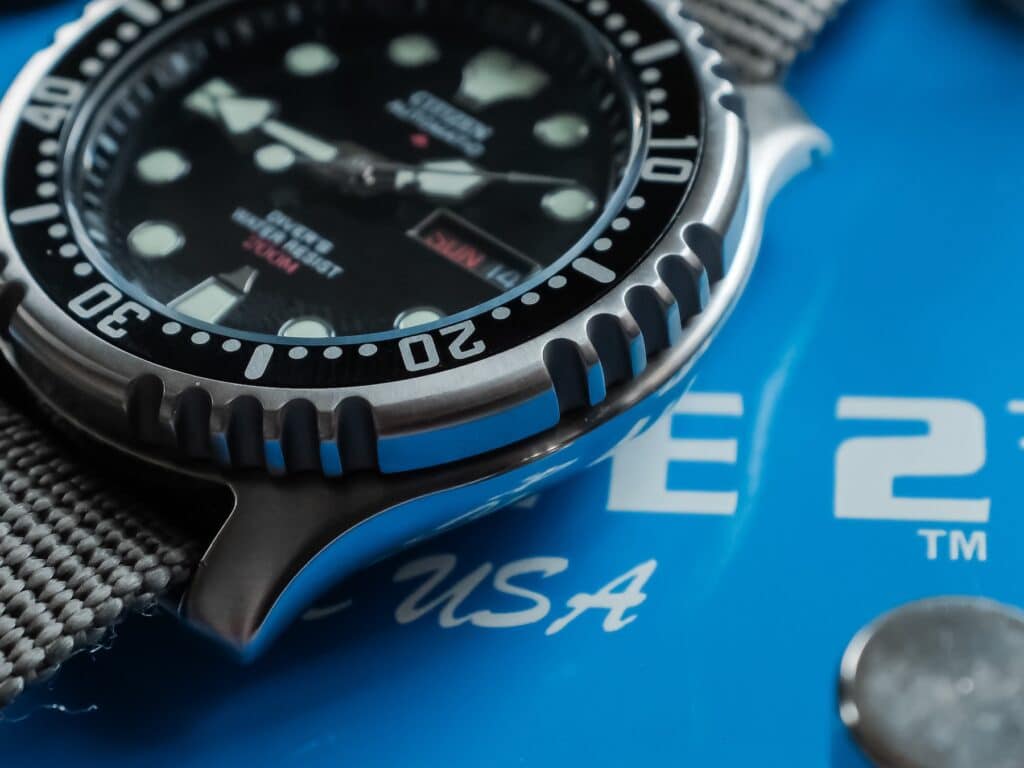
The NY0040 uses a flat mineral crystal, which is one of its clearest compromises against the Timex. Mineral glass can hold up reasonably well in ordinary use, and our original review didn’t identify any problems significant enough to undermine confidence in the watch. Nevertheless, sapphire provides superior resistance to everyday scratching, and that’s an advantage we’d rather have when prices are otherwise similar. Citizen earns back some ground with its bezel, however. The 60-click unidirectional mechanism was exceptionally satisfying on our example, with smooth rotation, precise alignment, and no noticeable wobble or backplay. Its coin-edge grip also provided excellent purchase, even with wet fingers. We particularly appreciate that kind of execution on a watch intended for practical use, because bezel action is one of the few mechanical interactions we regularly experience outside of setting the time.
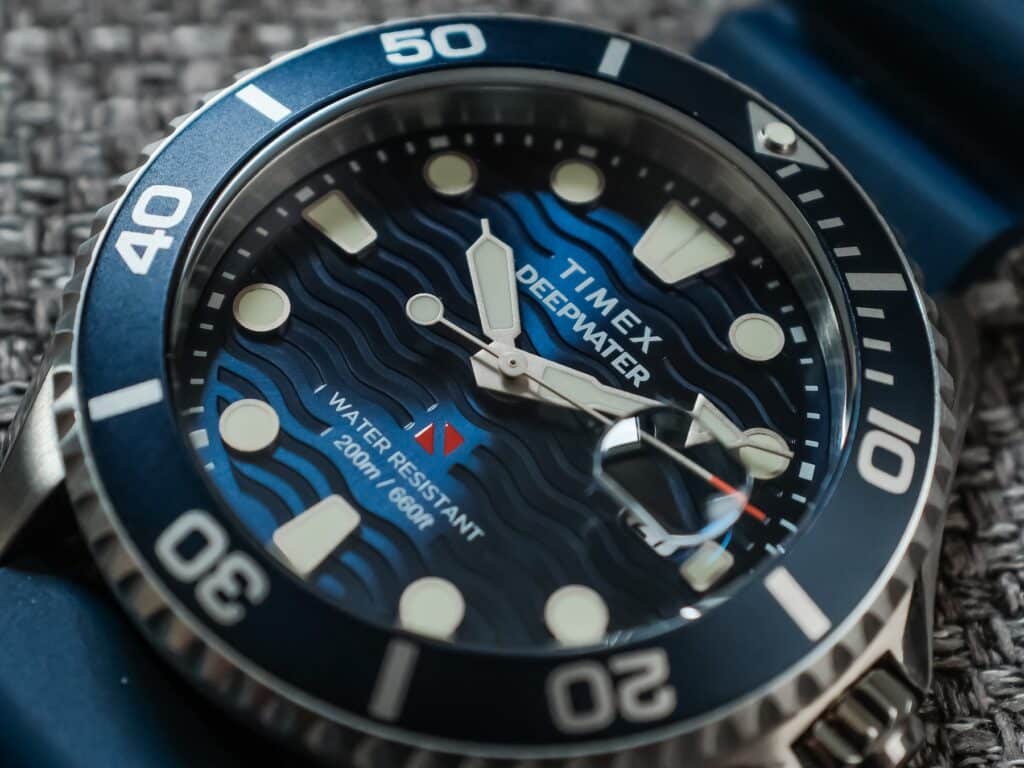
Timex counters with a sapphire crystal featuring an anti-reflective coating and a magnifier over the date. That’s a meaningful material advantage at approximately $250, particularly for buyers who want greater protection against surface scratches. The 120-click aluminum bezel also impressed us, operating cleanly without the hollow sensation or looseness we sometimes encounter on inexpensive divers. Its action felt appropriately firm, and the bezel remained securely positioned once adjusted. In practical terms, both watches execute this component well enough that we’d be reluctant to call either disappointing. Citizen offers the particularly enjoyable tactile experience and excellent grip, while Timex combines a satisfying bezel with the more scratch-resistant crystal. Of all the trade-offs in this comparison, this is one of the most difficult to settle because both manufacturers get the important details right.
Water Resistance & Lume
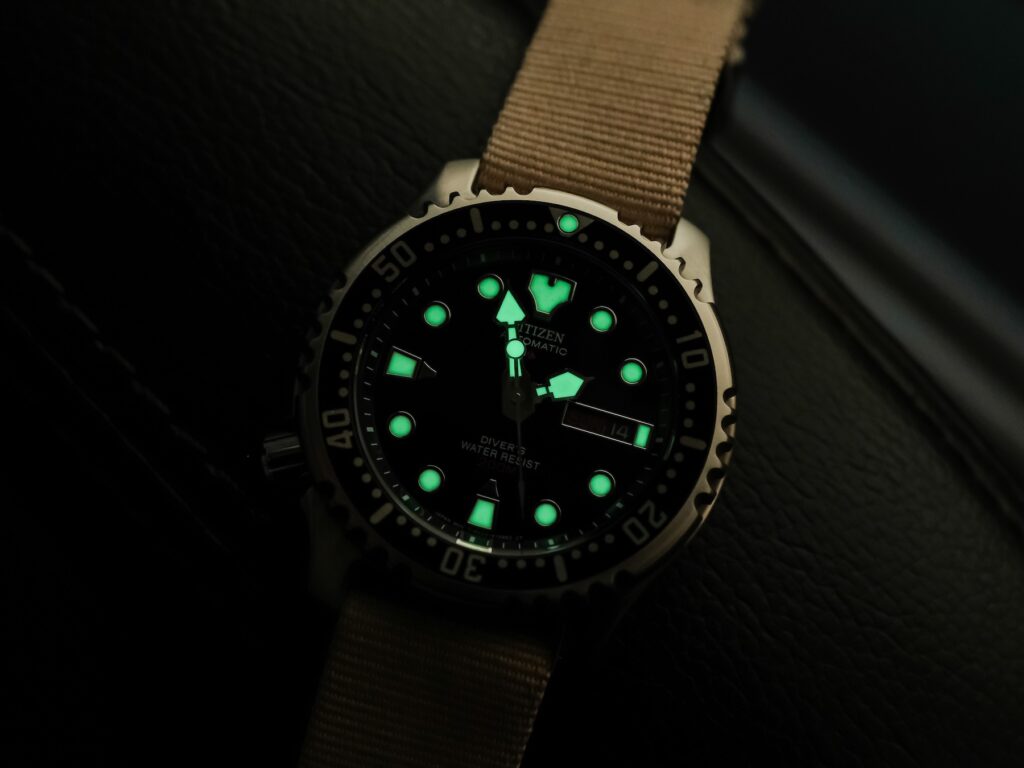
Citizen’s 200-meter water resistance comes with ISO diving credentials, reinforcing the NY0040’s history as a serious professional-style tool watch. The left-side screw-down crown and functional rotating bezel complement that construction, while the black dial provides excellent contrast across the hands and hour markers. Luminous performance is dependable rather than extraordinary. We found the hands and markers remained sufficiently readable in dim lighting, although the initial brightness wasn’t as dramatic as some Seiko divers we’ve experienced. That’s not necessarily a problem. Consistent legibility matters more than an impressive first few seconds of glow, and the Citizen performed well within the expectations we’d have for an affordable mechanical diver. Its strongest argument remains how naturally the functional details work together.
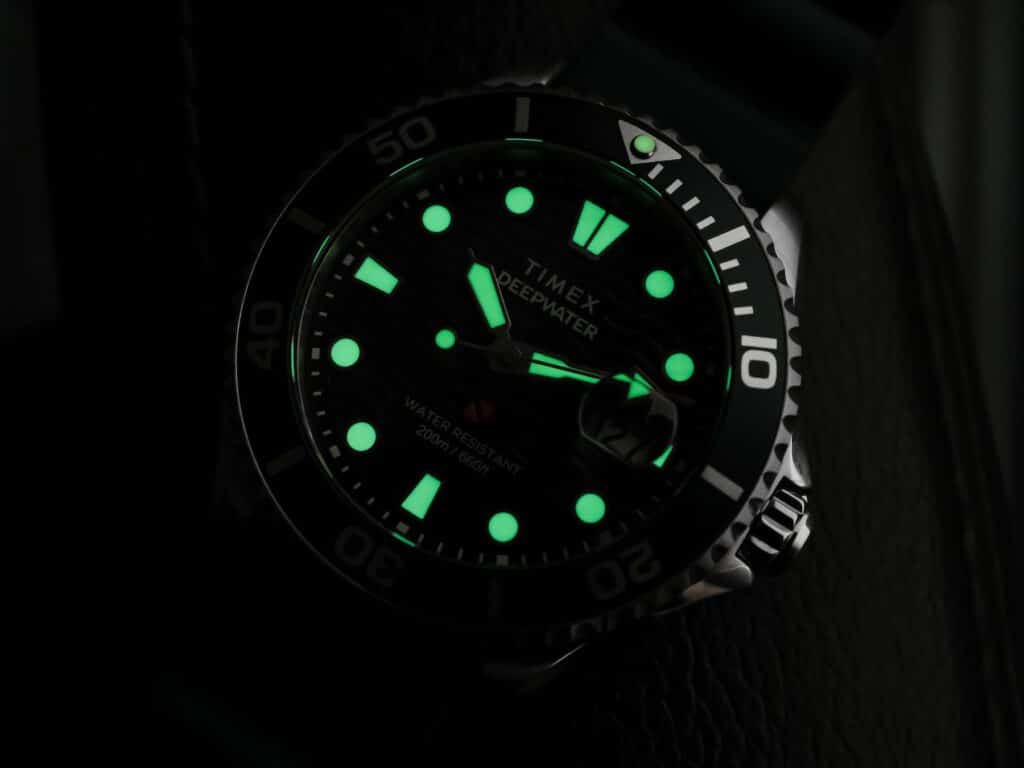
Timex also offers 200 meters of water resistance, along with a screw-down crown and caseback. Those are reassuring specifications, although we wouldn’t equate the published rating alone with the Citizen’s ISO certification. The Meridian 200 uses Super-LumiNova across its hands and markers, producing a strong initial glow and useful visibility after dark. We found the luminous treatment satisfactory in everyday conditions, even if it didn’t maintain its brightest intensity indefinitely. Both watches therefore provide credible nighttime legibility without turning this into a particularly decisive category. Citizen has the stronger documented professional-diver pedigree, while the Timex delivers a functional package that should be more than adequate for the swimming, travel, and recreational water use most owners are likely to encounter.
Cost Considerations
Shopping at approximately $250 changes how we evaluate these watches. We aren’t asking whether a $50 Casio can somehow compete with an expensive Swiss diver, or whether a premium automatic offers enough refinement to justify thousands of additional dollars. The Citizen and Timex occupy overlapping price territory, so every advantage comes with a corresponding question about what we’re giving up. The Citizen NY0040 has historically been available below $200, although recent retailer listings have also placed it closer to $250 and beyond. Timex lists the Deepwater Meridian 200 at $259, giving us a relatively straightforward benchmark. Actual prices will vary by retailer, availability, and promotions, but the two are close enough that someone shopping in this category could reasonably consider either.
Citizen’s value proposition begins with the automatic movement and professional diving identity. It’s difficult to overlook how much traditional mechanical-watch appeal the NY0040 delivers without requiring a particularly large investment. We get hacking, hand-winding, a day-date complication, 200 meters of water resistance, and a case that feels carefully designed around comfort. The bezel is especially impressive, and the overall construction is confident enough that we don’t find ourselves constantly thinking about its affordability. There are compromises, naturally. The mineral crystal isn’t particularly exciting, the stock rubber strap left us looking for alternatives, and the loud rotor won’t appeal to everyone. But these aren’t weaknesses that fundamentally undermine the watch’s personality. The Citizen feels like a complete design rather than a collection of attractive specifications.
Timex makes a different argument by concentrating its budget on the features buyers can immediately appreciate. Sapphire crystal is a meaningful advantage, particularly for a watch that might be worn regularly without much concern for scratches. The case finishing, crown operation, and 120-click bezel are all more satisfying than we’d generally expect from Timex at this price. We also appreciate the choice of quartz for someone who values accuracy and convenience over mechanical engagement. The dial is attractive without becoming excessively elaborate, and the blue finish gives the watch a distinctive identity. Its biggest limitation isn’t really the movement or materials. It’s the size. The 44mm case and 50.5mm lug-to-lug measurement will simply be too much for some buyers, regardless of how competently Timex has shaped the lugs.
Where this becomes interesting is how much each watch asks us to compromise. Choosing the Citizen means accepting a mineral crystal and the quirks of an inexpensive automatic movement in exchange for a compact case, distinctive design, and legitimate mechanical-watch appeal. Choosing the Timex means accepting a battery-powered movement and a larger wearing footprint in exchange for sapphire, quartz convenience, and surprisingly satisfying construction. These aren’t differences that can be resolved by adding up specifications and declaring the watch with the most checkmarks the winner. Each manufacturer has directed its resources toward a different experience, and both approaches have legitimate merit. We’d rather see that than two nearly identical watches competing through increasingly insignificant specification changes.
If we’re spending our own $250, however, the Citizen begins to feel like the more versatile purchase. Its compact proportions make it easier to wear across a wider range of wrist sizes, the left-side crown is genuinely comfortable, and the automatic movement introduces something to enjoy beyond basic timekeeping. We wouldn’t dismiss the Timex’s sapphire crystal or superior quartz convenience, which could easily make it the better choice for a particular buyer. But the NY0040 offers a combination of mechanical engagement, functional credibility, and distinctive character that feels unusually complete at this price. It’s also worth remembering that a sensible aftermarket strap can improve the wearing experience without dramatically changing the overall cost. For collectors who enjoy affordable mechanical divers, Citizen makes an especially persuasive case.
Final Thoughts: Citizen NY0040 vs Timex Deepwater
The Timex Deepwater Meridian 200 is a considerably more impressive watch than we initially expected. Its sapphire crystal, sturdy case, excellent crown operation, and satisfying bezel demonstrate that Timex is capable of producing a genuinely serious affordable diver. We also appreciate the confidence of its design. The blue dial has enough personality to stand apart from more conventional black-dial alternatives, and the quartz movement provides precisely the kind of straightforward reliability that makes sense in an everyday tool watch. Our reservations are primarily about its proportions rather than its execution. If the 44mm case fits comfortably and the idea of a battery-powered diver doesn’t bother you, the Meridian 200 deserves serious consideration. It’s one of those watches that encourages us to reconsider assumptions we’ve made about a familiar brand.
Citizen’s NY0040 appeals to a different side of collecting, and that’s ultimately where our preference begins to emerge. The unusual crown placement, compact proportions, and restrained dial give it an identity that doesn’t depend on looking more expensive than it is. We appreciate its mechanical movement despite the noticeable rotor noise, and the bezel remains one of our favorite aspects of the entire package. There’s also something satisfying about a watch that has maintained its essential design for so many years without feeling particularly outdated. The NY0040 isn’t attempting to compete through elaborate finishing or luxury-inspired details. It’s comfortable, functional, and interesting in ways that become more apparent through regular wear rather than through a glance at the specification sheet.
For someone who prioritizes convenience, scratch resistance, and a larger contemporary design, we’d recommend the Timex without much hesitation. Quartz accuracy removes the regular adjustments associated with an automatic movement, and the sapphire crystal is a practical advantage that the Citizen can’t match. But if the goal is to find a mechanical dive watch that delivers the most satisfying overall ownership experience around $250, the NY0040 has the stronger personality and more accommodating proportions. We’d also argue that Citizen has managed to preserve something increasingly uncommon in affordable watchmaking: a design that feels unmistakably its own. The Timex may have the more appealing crystal and the more convenient movement, but the Citizen is the one we’d be more inclined to reach for when deciding what to wear.
Our choice is the Citizen Promaster NY0040, although the Timex Deepwater Meridian 200 makes the stronger argument for quartz convenience and scratch-resistant materials. That’s a closer result than we expected, and it speaks well of both watches. Timex has produced an affordable diver with enough substance to compete beyond its usual reputation, while Citizen continues to demonstrate why the NY0040 deserves recognition on its own terms. At this price, we don’t think buyers need to settle for a watch that merely looks the part. Both provide legitimate functionality and enjoyable design, but the Citizen’s blend of mechanical character, comfort, and thoughtful construction makes it the one we’d choose to keep on our wrist.

Co-Founder and Senior Editor
Kaz has been collecting watches since 2015, but he’s been fascinated by product design, the Collector’s psychology, and brand marketing his whole life. While sharing the same strong fondness for all things horologically-affordable as Mike (his TBWS partner in crime), Kaz’s collection niche is also focused on vintage Soviet watches as well as watches that feature a unique, but well-designed quirk or visual hook.