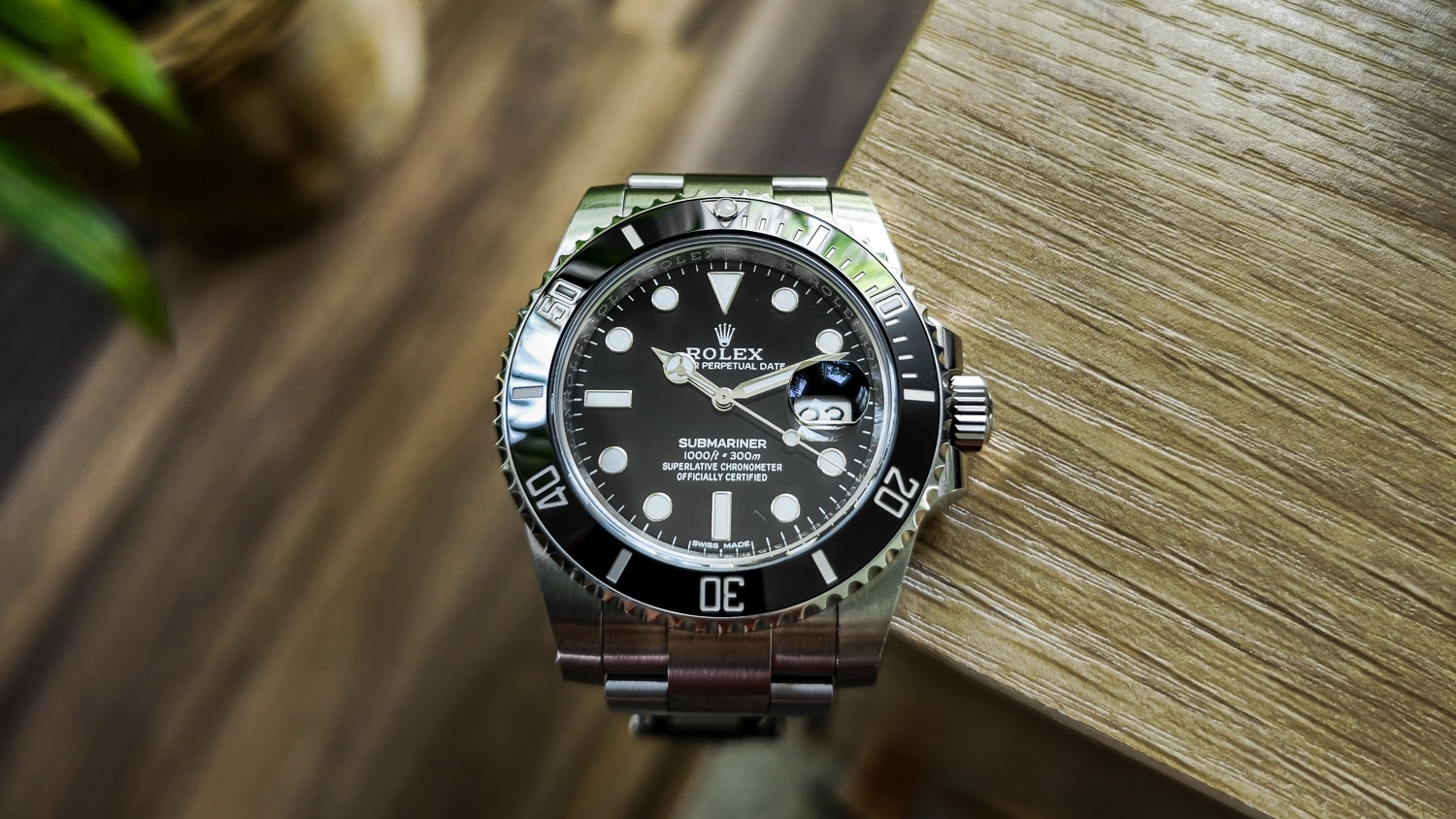
The Rolex Submariner and Seiko Turtle don’t belong in the same price category, but they’ve spent decades occupying a surprisingly similar place in watch collecting. Both are recognizable, purpose-built dive watches with genuine history behind their designs. Both have developed devoted followings, and both represent the kind of watch that enthusiasts can spend years appreciating without necessarily feeling the need to move on. The difference, of course, is that one can cost roughly thirty times as much as the other. At around $11,000 for a pre-owned Rolex Submariner and approximately $370 for the Seiko Turtle in our original review, we’re looking at two wildly different interpretations of what a mechanical dive watch should be.
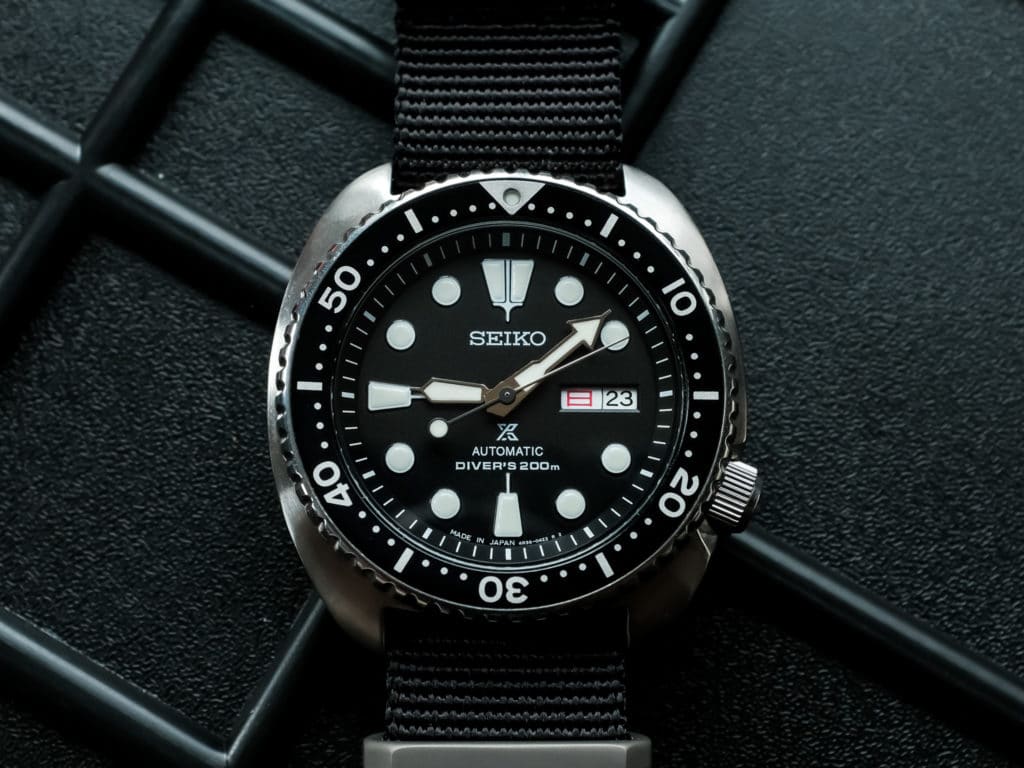
We’ve spent considerable time with both, and the differences are more interesting than the price tags suggest. Our Rolex Submariner review examines the Date reference 116610, a watch whose extraordinary bracelet, precise bezel, and comfortable proportions earned genuine admiration despite our reservations about Rolex as a brand. The Seiko Turtle review follows the Japanese-market SBDY015, a version of the familiar SRP777 that survived several rounds of buying and selling to become a long-term keeper. Neither watch is flawless, and we’re not interested in pretending that the Seiko somehow matches Rolex’s engineering simply because it’s inexpensive. What we want to understand is how much of the Submariner’s experience Seiko manages to deliver for a fraction of the cost, and whether the remaining differences justify such an enormous premium.
Overview and Identity
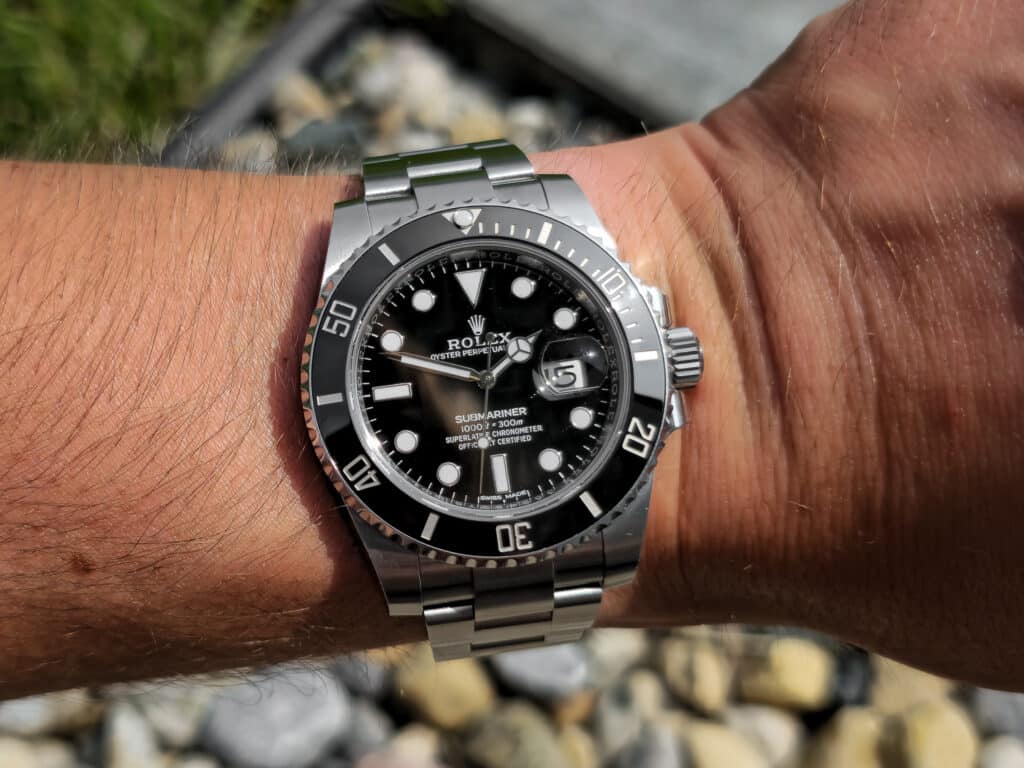
Few watches have influenced the modern dive-watch category as profoundly as the Rolex Submariner. Introduced in 1953, the collection helped establish many of the design conventions that enthusiasts now take for granted, from the rotating timing bezel to the bold luminous markers and restrained steel case. Rolex has refined the Submariner gradually rather than reinventing it with every generation, and the 116610 represents an especially recognizable point in that evolution. Its 40mm Maxi-case, ceramic bezel, Oyster bracelet, and Cyclops date magnifier make it unmistakably a Submariner. There’s an almost frustrating confidence to the design. Nothing particularly adventurous is happening, yet the entire watch feels remarkably cohesive. We have complicated feelings about the hype, authorized-dealer culture, and inflated expectations surrounding Rolex, but it’s difficult to spend meaningful time with the Submariner without understanding why so many people want one.
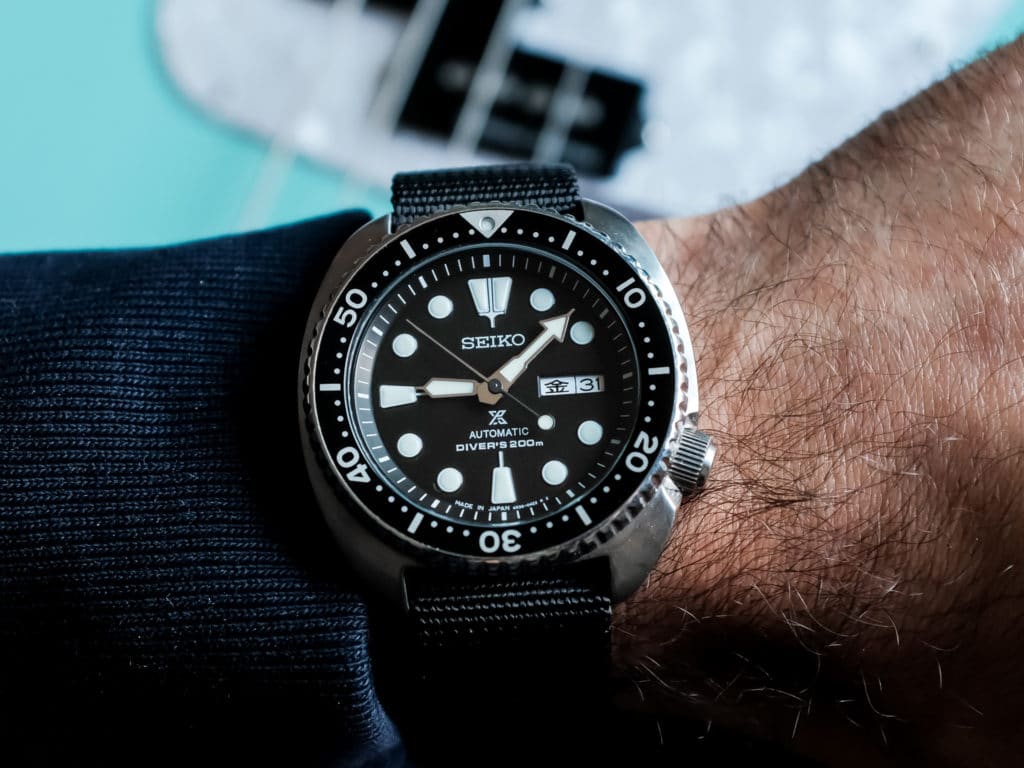
Seiko’s Turtle has a different history, although its connection to the past is equally important to its identity. The familiar cushion-shaped case descends from the 6309 divers manufactured between 1976 and 1988, watches that developed a reputation for dependable service and distinctively Japanese design. When Seiko revived the style in 2016, it managed to capture much of what made the original appealing without turning the watch into an expensive nostalgia exercise. Our SBDY015 adds a Kanji day wheel and Japanese-market dial details to the familiar black-on-black configuration. These aren’t features that transform its performance, but they’re exactly the sort of small distinctions collectors learn to appreciate. The Turtle doesn’t need to resemble a Swiss diver to establish its credibility. It has its own design language, its own history, and an unusually convincing argument for remaining in a collection long after more expensive watches arrive.
Dial and Straps/Bracelets
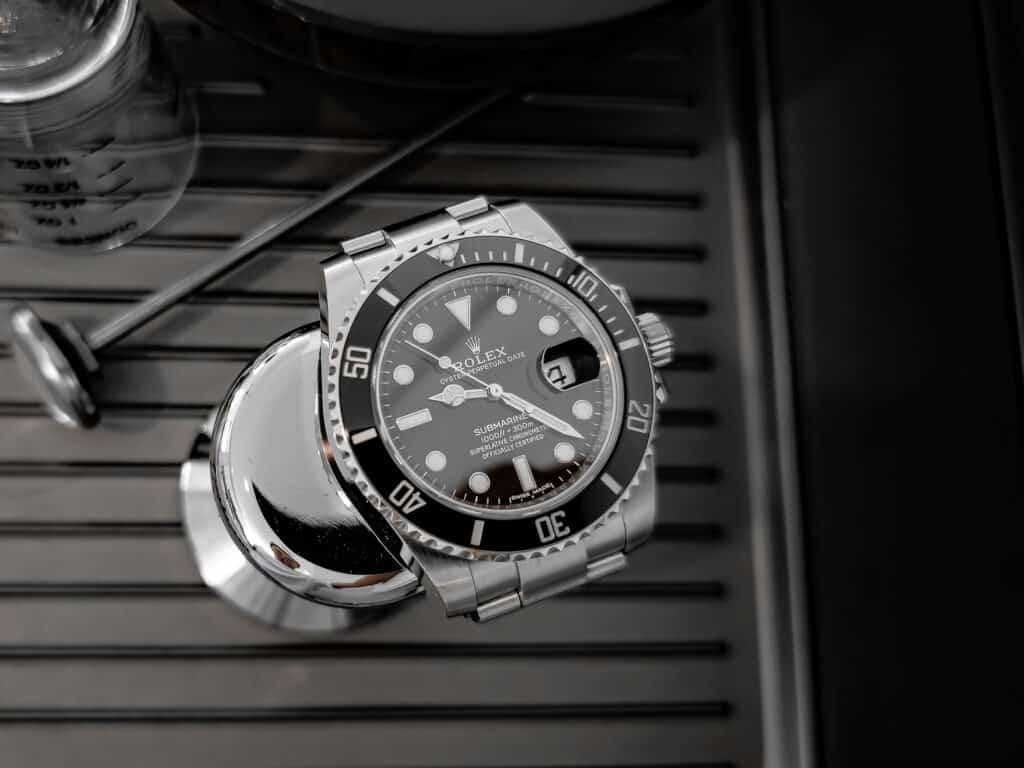
Rolex’s approach to dial design is almost aggressively conservative, which is part of why the Submariner works so well. The glossy black surface provides a beautiful contrast against the white gold surrounds of the luminous hour markers, while the familiar Mercedes hands remain among the most recognizable in watchmaking. There’s plenty of text on the dial, but Rolex has managed the spacing carefully enough that nothing feels especially crowded. We appreciate how immediately readable everything is, even when checking the watch quickly rather than deliberately studying it. The date display and Cyclops magnifier are more divisive, particularly among enthusiasts who prefer the symmetry of a no-date Submariner. On our 116610, however, the magnifier feels like an integral part of the watch’s identity. It’s a practical feature that’s also become one of the most recognizable elements of the design.
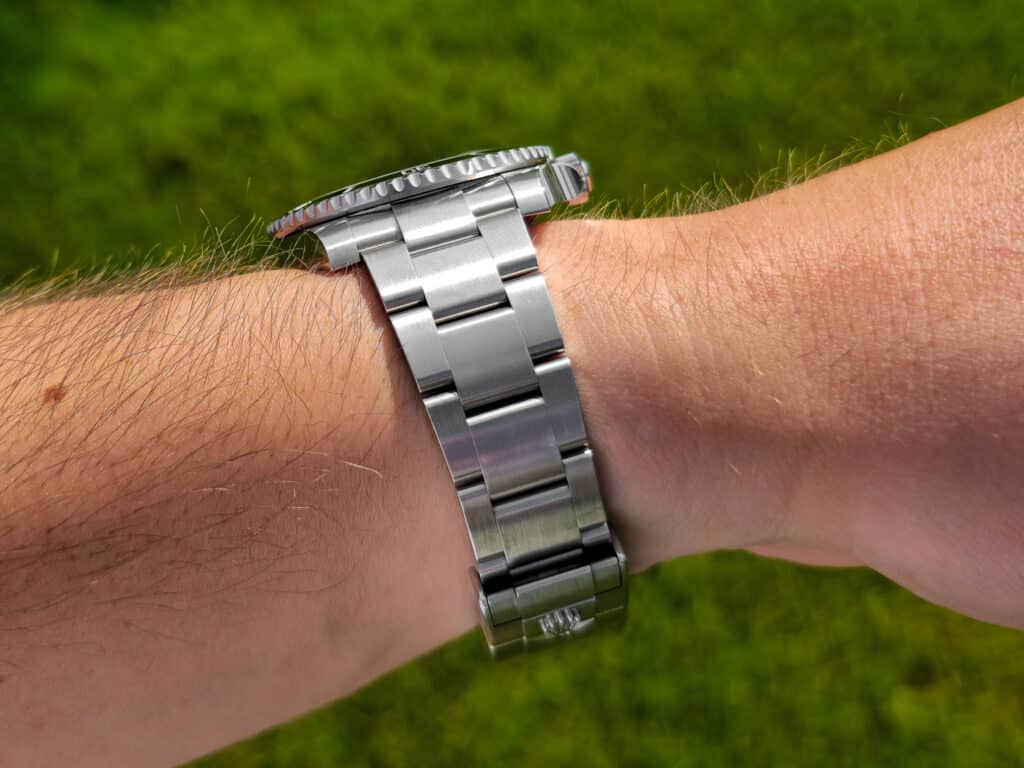
The Oyster bracelet is where the Rolex begins creating genuine separation from less expensive divers. Our original review was particularly enthusiastic about the way its links articulate, the secure fit of the end links, and the 20mm-to-16mm taper that gives the watch such a balanced presence. The brushed surfaces hide everyday scratches reasonably well, but the real highlight is the Glidelock clasp. Being able to make precise adjustments without tools is remarkably useful, especially as wrist size changes throughout the day. Just as importantly, the clasp is comfortable, relatively thin, and exceptionally smooth to operate. We’ve encountered plenty of expensive watches with impressive movements and decorative finishing that fail to deliver this level of practicality in their bracelets. Rolex deserves credit for recognizing that the part of the watch in constant contact with our wrist deserves just as much attention as the movement inside it.
The Seiko Turtle takes a considerably more straightforward approach to its dial, and we wouldn’t necessarily change much about it. Large LumiBrite-filled markers sit against a matte black background, while the broad hands provide the kind of immediate legibility we’d expect from a traditional diver. It’s an arrangement that feels familiar without appearing derivative of the Rolex. Seiko’s proportions and marker shapes have their own identity, and the asymmetrical case helps reinforce that distinction. Our Japanese-market example also incorporates the Kanji day wheel, which provides a small but genuinely enjoyable collector detail. Is it more practical than the English-language alternative? Not particularly, especially if we’re unable to read the characters. But that’s part of the appeal of collecting watches. Sometimes the details that mean the most to us have absolutely nothing to do with making the watch more useful.
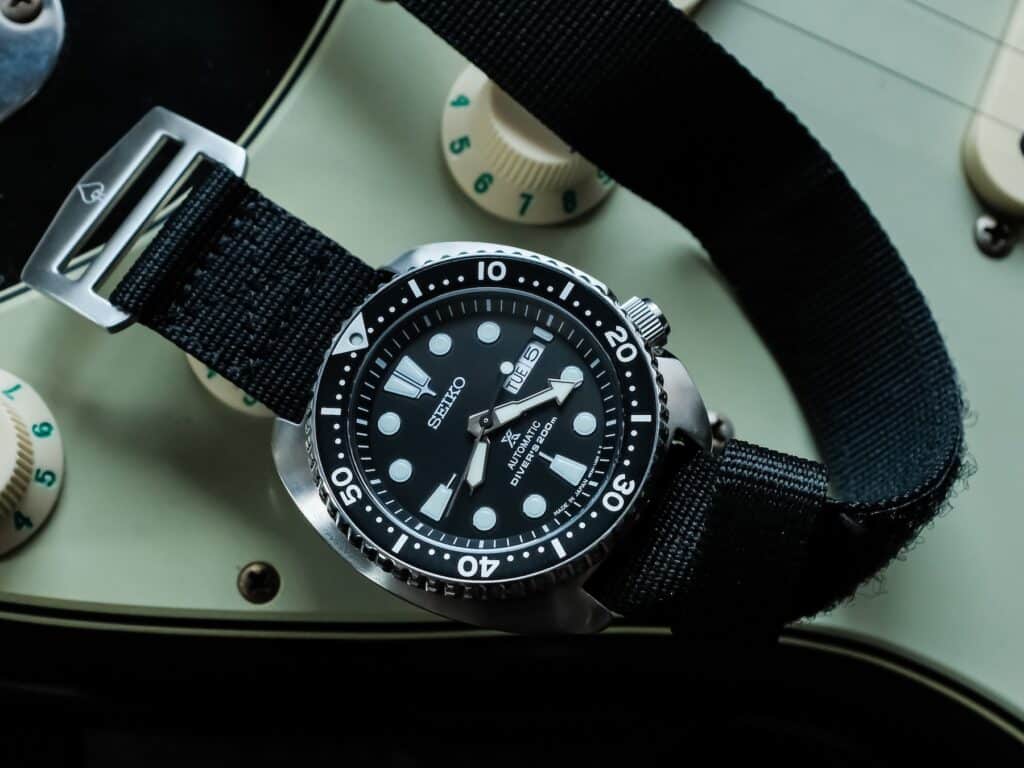
Where the Rolex delivers an almost perfect integrated bracelet experience, the Turtle encourages a different relationship with straps. The soft, vented silicone strap supplied with our example was a significant improvement over some of Seiko’s older rubber options, offering a comfortable fit and reasonably substantial hardware. But the real enjoyment came from experimenting with alternatives. A NATO strap feels particularly natural on this case, and our review featured the Turtle on options from Ute Watch Co. and Prometheus Design Werx. The 22mm lug width provides plenty of flexibility, allowing the watch to change character without much expense or effort. We haven’t evaluated the Turtle’s factory steel bracelet in the same way, so it wouldn’t be fair to compare that directly with Rolex’s Oyster. What we can say is that Seiko’s case works remarkably well with relatively inexpensive straps. Rolex offers the more polished complete package, while the Turtle makes a compelling argument for personalizing the experience.
Build Quality & Technical Approach
An enormous price difference should produce meaningful differences in engineering, but the interesting question is where those differences appear. Both watches use automatic movements, both have legitimate diving credentials, and both come from manufacturers with decades of experience building purpose-driven watches. Rolex concentrates much of its advantage in precision, refinement, and the consistency of small mechanical interactions. Seiko approaches the category with a simpler movement and less elaborate finishing, relying on a proven design that prioritizes functionality and affordability.
Movements
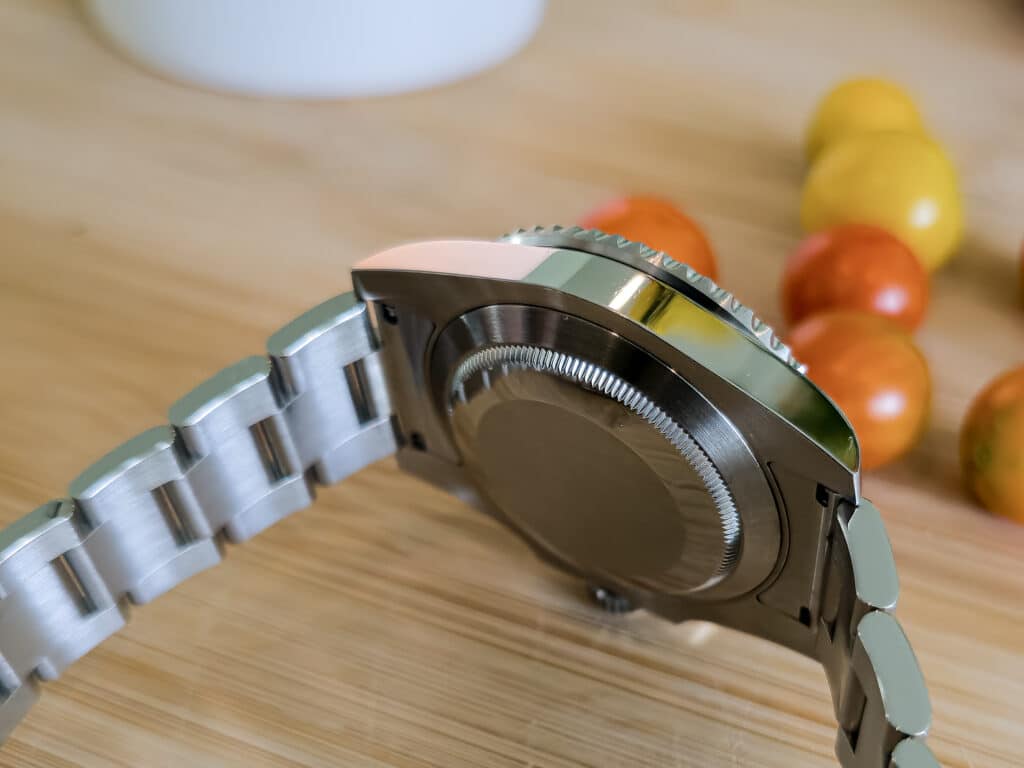
Inside the Submariner Date 116610 is Rolex’s caliber 3135, a movement that reflects the brand’s preference for durability, accuracy, and long-term serviceability rather than elaborate decorative finishing. The automatic movement operates at 28,800 vibrations per hour, provides approximately 48 hours of power reserve, and incorporates a quick-set date complication. Its chronometer credentials are an important part of the appeal, but what impressed us most was the actual experience of living with the watch. Our review example maintained accuracy of approximately half a second fast per day, which is exceptional performance for a mechanical movement. The winding action felt reassuringly smooth, and the Triplock crown added another layer of mechanical refinement. Nothing about the movement is particularly theatrical, but that’s arguably the point. Rolex has engineered something intended to function reliably for years while requiring very little attention from the person wearing it.
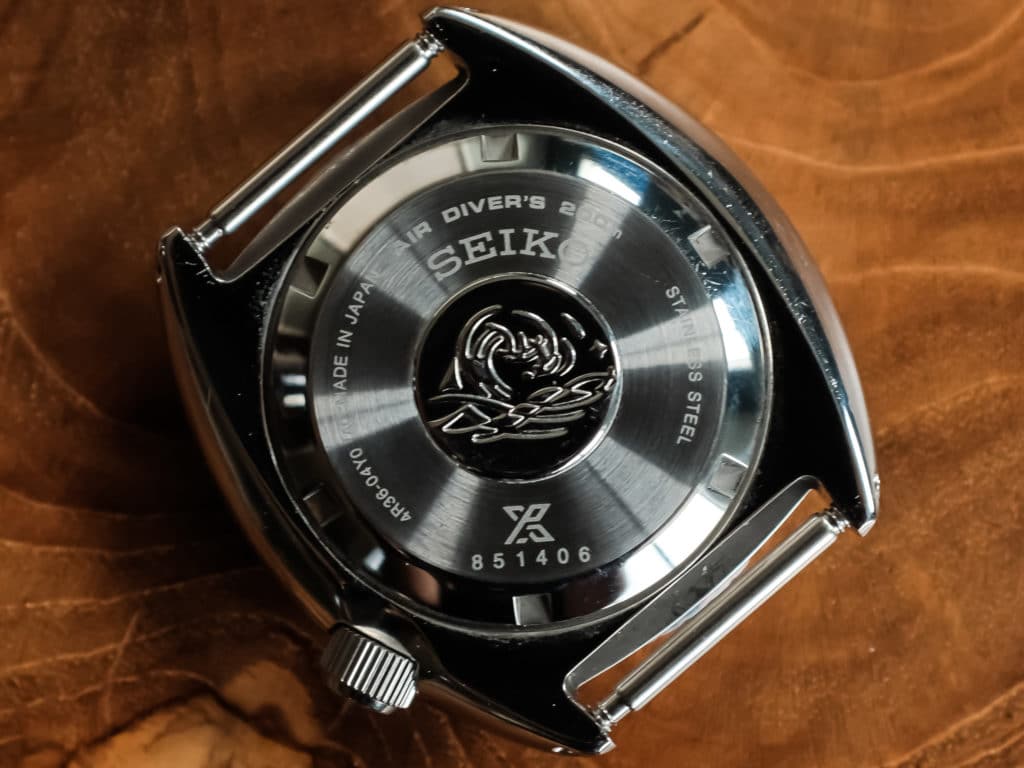
Seiko’s 4R36 automatic movement occupies a different end of the mechanical watchmaking spectrum. Operating at 21,600 vibrations per hour with approximately 41 hours of power reserve, it offers hacking seconds, manual winding, and a day-date complication. Those features make it a meaningful improvement over the older 7S26 movements found in many classic affordable Seiko divers. Our Turtle performed comfortably within Seiko’s published accuracy tolerance, although the original review acknowledged that consistency can vary considerably between individual examples. It’s not unusual for owners of affordable Seiko automatics to report different experiences, with some movements running surprisingly well and others requiring more frequent adjustment. That’s one of the compromises associated with the price category, but it doesn’t necessarily undermine the movement’s basic usefulness. For someone who appreciates the mechanics of an automatic watch without expecting chronometer-level performance, the 4R36 makes a great deal of sense.
The Rolex is unquestionably the more sophisticated movement, particularly when we consider accuracy, regulation, and the consistency expected at its price. But it doesn’t provide thirty times the mechanical functionality. Both watches display the time and date, both can be wound manually, and both rely on an automatic winding system to maintain their power reserves. The difference becomes more meaningful when we consider the ownership experience surrounding those shared functions. Rolex’s precision reduces the need for regular adjustment, while the tactile quality of the crown makes setting the watch feel unusually satisfying. The Seiko asks us to accept greater variation in exchange for a substantially lower purchase price. Whether that refinement is worth the premium depends partly on how much we value the mechanical details that become apparent only after spending time with a watch.
Case Construction, Finishing & Wearability
The Rolex Submariner 116610 measures 40mm in diameter, approximately 48mm from lug to lug, and 12.5mm thick. Those proportions are an important part of its appeal, particularly when we consider that the case also provides 300 meters of water resistance. The Maxi-case generation features relatively substantial lugs, creating a broader visual footprint than some earlier Submariners. Despite that, our experience was exceptionally comfortable. The watch feels substantial without becoming cumbersome, and the relatively slim profile allows it to fit beneath a shirt cuff more naturally than many divers. Rolex’s combination of brushed upper surfaces and polished case sides is almost understated to the point of being boring, yet the finishing is consistent and carefully executed. We wouldn’t describe this as a watch that impresses through elaborate case decoration. Its success comes from how naturally the construction works in everyday use.
The Turtle is considerably larger on paper, measuring 44.3mm across, 48mm from lug to lug, and approximately 14mm thick. That might sound like an intimidating combination, especially for anyone accustomed to smaller watches. But the familiar cushion case is responsible for one of the Seiko’s most endearing qualities: it wears much smaller than its diameter suggests. The broad case integrates the lugs into a continuous shape, distributing the visual weight across the wrist rather than creating the impression of a large circular watch with long protruding extensions. Our original reviewer found the proportions comfortable on a 6.75-inch wrist, and the 48mm lug-to-lug distance helps explain why. The Turtle is undeniably chunky, but it’s a remarkably manageable kind of chunky. Seiko has been refining this general design language for decades, and there’s a reason it continues to work.
Material choices also distinguish the two watches, although not always in the ways we’d expect. Rolex uses its proprietary Oystersteel, a corrosion-resistant stainless steel alloy that the brand promotes for its durability and ability to maintain an attractive finish. In our review, however, the practical advantages over conventional stainless steel weren’t particularly obvious. The Seiko’s standard stainless steel case feels entirely appropriate for a rugged mechanical diver, and its brushed surfaces suit the watch’s more utilitarian personality. We wouldn’t claim the finishing reaches Rolex’s level of consistency, particularly around the transitions between surfaces, but the Turtle doesn’t feel inadequately constructed simply because it costs far less. Both watches communicate durability through relatively straightforward materials. Rolex refines the execution, while Seiko makes the underlying design available at a price that allows more people to enjoy it.
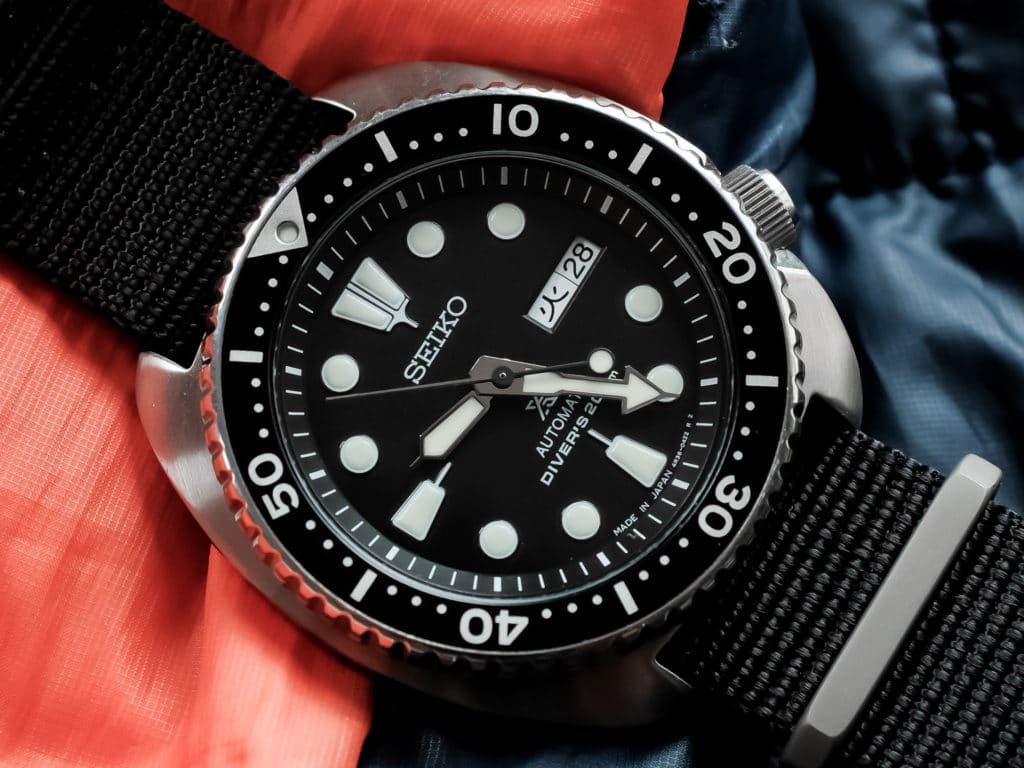
Comfort ultimately provides a more interesting comparison than the case dimensions alone. The Submariner benefits enormously from its slim profile and exceptionally well-designed bracelet, creating a wearing experience that feels almost effortless. It’s easy to understand why so many owners treat it as an everyday watch rather than something reserved for special occasions. The Turtle takes the opposite route, using a broad cushion case and flexible straps to make its larger dimensions surprisingly approachable. We wouldn’t suggest that the Seiko offers the same degree of polish, but it has a distinct kind of charm that Rolex doesn’t replicate. The Turtle feels like a dedicated tool watch that happens to be comfortable, while the Submariner feels like a highly refined everyday watch that remains capable of serious diving. That distinction says as much about their intended identities as it does about their construction.
Crystals and Bezels
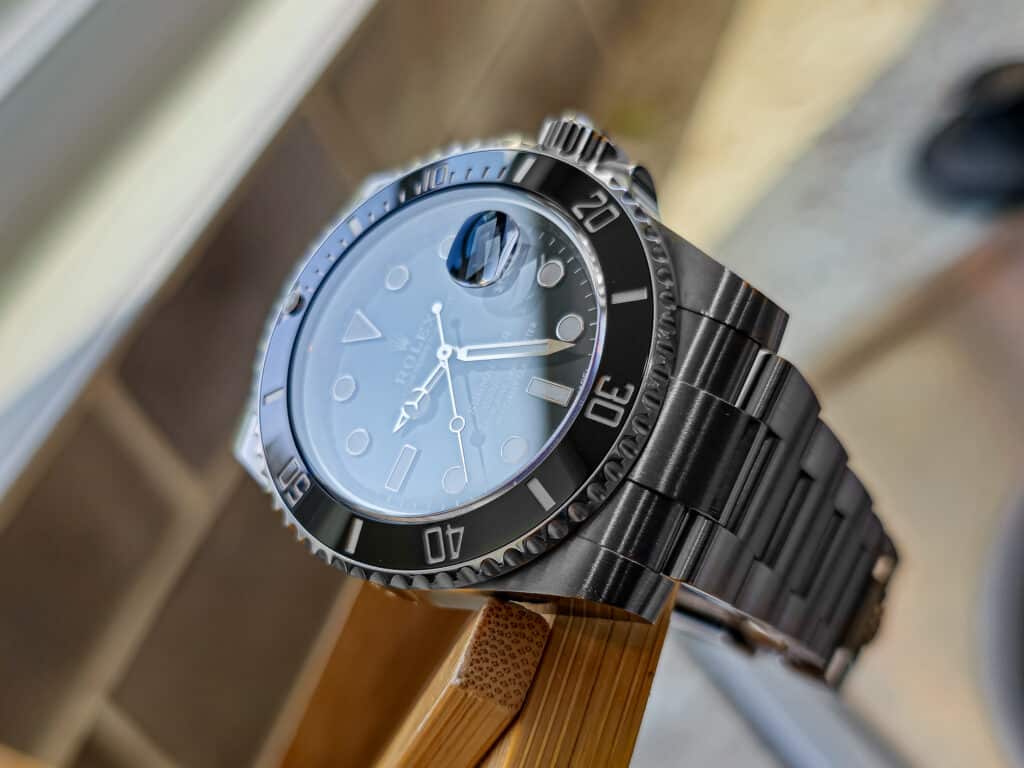
Rolex’s ceramic Cerachrom bezel is one of the clearest examples of where the additional money produces a tangible improvement. Our Submariner’s bezel operated with remarkable precision, moving smoothly between clicks without the looseness or backplay that can undermine the experience on less expensive watches. The engraved graduations are filled with platinum, and the ceramic insert offers greater resistance to everyday surface scratching than a conventional aluminum alternative. We particularly appreciated the way the bezel overhangs the case slightly, making it easy to grip despite its relatively slim design. The sapphire crystal completes the package, providing strong scratch resistance and the familiar Cyclops magnifier above the date. There are less expensive watches with ceramic bezels and sapphire crystals, of course, but Rolex’s execution feels exceptionally cohesive. It’s the combination of materials, alignment, and tactile precision that makes the difference.
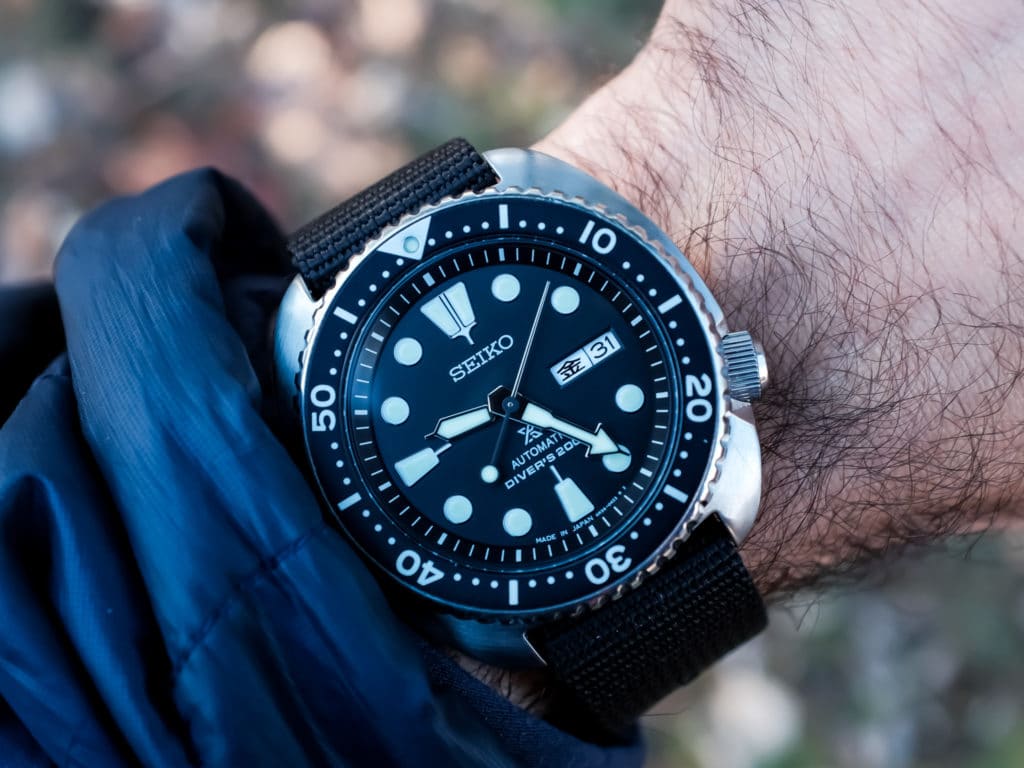
Seiko’s Turtle uses a Hardlex crystal and an aluminum bezel insert, both conventional choices for an affordable diver. The absence of sapphire is a reasonable criticism, especially for buyers who prioritize scratch resistance, but our original review didn’t identify significant problems with Hardlex during ownership. More frustrating was the bezel alignment. Despite enjoying the smooth action of the rotating mechanism, the insert on our example didn’t line up perfectly, a familiar issue among affordable Seiko divers. It’s a small defect in practical terms, yet an irritating one for anyone who appreciates careful manufacturing. The contrast with Rolex is particularly revealing here. Both watches have functional rotating bezels, and the Turtle’s action is genuinely satisfying, but the Submariner demonstrates how much more precise the overall experience can become. The frustrating part is that proper alignment shouldn’t require an $11,000 purchase.
Water Resistance & Lume
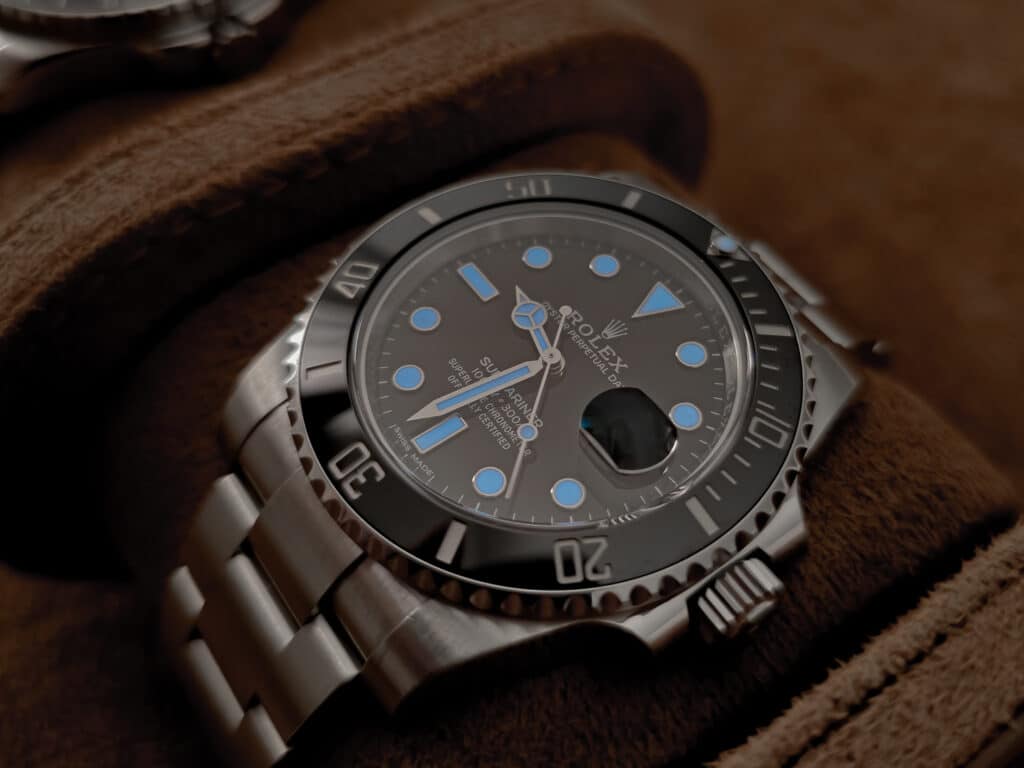
Three hundred meters of water resistance gives the Submariner a clear numerical advantage over the Seiko, although both watches offer more than enough capability for ordinary recreational swimming and most conventional diving situations. Rolex’s Triplock screw-down crown is particularly impressive, combining an exceptionally smooth operating feel with a robust sealing system. The watch’s luminous performance is similarly convincing. Its blue Chromalight material provides strong, long-lasting visibility, and the hands and markers remain easy to distinguish in darkness. Our original review specifically praised its ability to remain legible well into the night, reinforcing the impression of a watch whose functional details have received careful attention. We wouldn’t pretend that most Submariner owners will ever approach the limits of its water-resistance rating, but there’s satisfaction in knowing that the engineering is there.
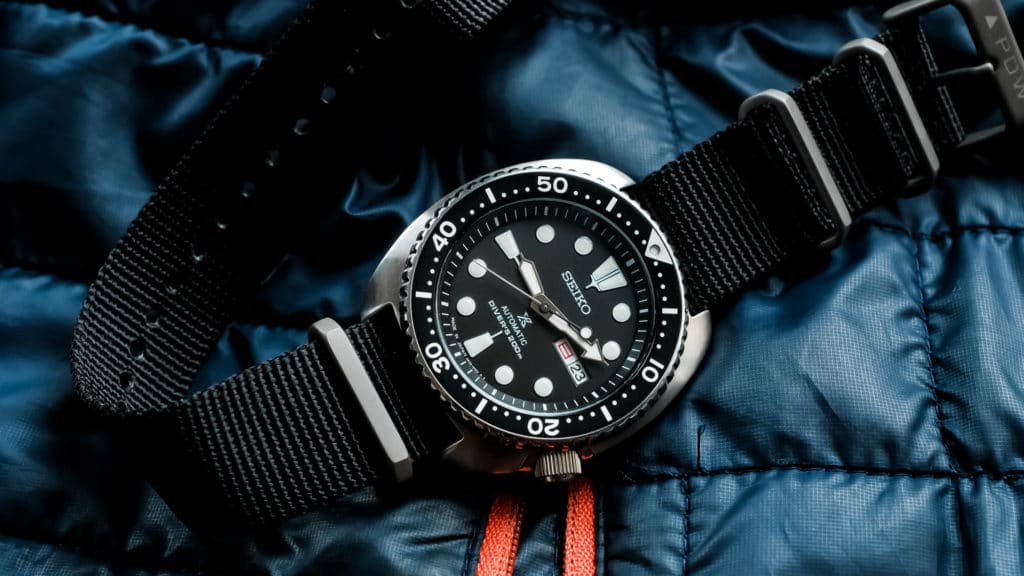
Seiko’s Turtle provides 200 meters of water resistance with a screw-down crown and the professional diving identity associated with the Prospex collection. For nearly everyone considering this watch, that’s an entirely adequate specification. Where the Turtle becomes particularly competitive is luminous performance. Seiko’s LumiBrite treatment has long been one of the brand’s strengths, and the large applied markers and broad handset make excellent use of it. The result is a watch that’s exceptionally easy to read in poor lighting, without needing expensive materials or complicated technology. We wouldn’t dismiss Rolex’s Chromalight, which is excellent in its own right, but the Seiko demonstrates how little money someone needs to spend to get outstanding nighttime legibility. Both watches deliver the basic functional requirements convincingly, with Rolex adding refinement and a higher depth rating rather than transforming what the wearer can realistically do with the watch.
Cost Considerations
The biggest obstacle to evaluating the Rolex Submariner is that its purchase price reflects considerably more than manufacturing costs or technical performance. The discontinued 116610 trades on the secondary market, and values depend on condition, provenance, accessories, and the particular reference. Around $11,000 is a reasonable starting point for our comparison, although individual examples can cost substantially more. At that level, we’re paying for a highly recognizable design, excellent engineering, brand prestige, and the broader market surrounding Rolex ownership. Some of those qualities are valuable, but they aren’t necessarily improvements we can measure through a specification sheet. The Submariner’s appeal includes everything the watch represents, whether we find that aspect of collecting compelling or not.
The Seiko Turtle was available for approximately $370 when our original review was written, making that figure a useful historical benchmark rather than a guaranteed current selling price. For that money, we receive an automatic movement, 200 meters of water resistance, excellent lume, a comfortable case, and a design with genuine historical significance. The movement isn’t especially precise by luxury standards, the Hardlex crystal won’t satisfy every buyer, and the bezel alignment issue is difficult to excuse. But none of those criticisms changes the fact that Seiko delivers an unusually complete mechanical diving experience for a small fraction of what Rolex costs. The Turtle isn’t merely a cheaper alternative to a Submariner. It’s a watch with its own distinct strengths, which is precisely why it remains relevant even when collectors can afford something considerably more expensive.
What does the additional money actually improve? The Rolex bracelet is dramatically more refined, with superior articulation, fit, and adjustment. The bezel offers a level of precision that the Seiko doesn’t match, and sapphire and ceramic introduce more scratch-resistant materials. The movement’s accuracy is another meaningful advantage, particularly for buyers who expect their mechanical watches to keep consistently excellent time. Rolex also produces a slimmer case with greater water resistance, which is an impressive engineering achievement in its own right. These aren’t imaginary benefits created by marketing or the logo on the dial. They’re tangible refinements that become apparent through regular use, and we think the Submariner deserves recognition for executing them so well.
The problem is deciding how much those refinements are worth. The Turtle already tells the time, handles serious exposure to water, provides outstanding legibility, and wears comfortably despite its substantial dimensions. It also offers an enjoyable mechanical movement and a distinctive design without requiring an investment comparable to a used car. The Submariner improves on several aspects of that experience, but the gains aren’t remotely proportional to the increase in purchase price. Someone who spends thirty times more doesn’t suddenly receive thirty times the accuracy, comfort, or functionality. That’s not necessarily a criticism of Rolex, because diminishing returns are part of practically every expensive hobby. But it does mean we should be careful about confusing the pursuit of refinement with the purchase of something objectively more useful.
There’s also a psychological difference between owning these watches that deserves consideration. The Turtle is relatively easy to buy, wear, modify, and enjoy without treating every scratch as an event worth remembering. Its affordability encourages a certain freedom, especially for collectors who enjoy rotating watches and experimenting with straps. The Submariner carries a different kind of baggage, particularly when we consider its resale value, recognition, and the attention that can accompany wearing a Rolex. Some owners enjoy those associations, while others find themselves becoming more protective of the watch than they’d like. We can’t assign a universal value to either experience, but it’s worth acknowledging that a more expensive watch can introduce considerations that have very little to do with horology. The freedom to enjoy something without constantly thinking about what it costs is a quality the Seiko possesses in abundance.
Final Thoughts: Rolex Submariner vs Seiko Turtle
The Rolex Submariner is a genuinely excellent watch, and our time with the 116610 reinforced that conclusion despite our reservations about the brand’s broader culture. Its bracelet remains among the most impressive we’ve experienced, the bezel action is extraordinarily satisfying, and the movement delivers accuracy that makes many other mechanical watches feel comparatively ordinary. We also appreciate how comfortably the case wears, particularly given its substantial diving capabilities. None of these qualities requires us to celebrate Rolex’s pricing or pretend the watch represents extraordinary value. The Submariner succeeds because its fundamental design has been refined so thoroughly that very little feels out of place. Underneath the reputation and the price tag is an exceptionally well-executed steel diver.

The Seiko Turtle earns our admiration for almost the opposite reason. Its movement is relatively simple, the case finishing is straightforward, and the bezel alignment on our review example left something to be desired. Yet the watch manages to be more enjoyable than its specifications might suggest. The cushion case is distinctive and comfortable, the dial is wonderfully readable, and the connection to Seiko’s earlier 6309 divers gives it a personality that can’t be recreated through additional polishing or more expensive materials. Our original reviewer went through several Turtles before finding the one that stayed, which tells us something meaningful about the watch’s appeal. It’s not perfect, but the things it gets right have a way of mattering more than the shortcomings.
If money were removed from the equation, we’d choose the Rolex. Its precision, bracelet, bezel, and overall execution make it the more refined watch, and we’re not going to pretend otherwise simply to manufacture a surprising conclusion. But once price enters the discussion, the Seiko becomes much harder to dismiss. Spending roughly $370 instead of $11,000 leaves an enormous amount of money available for other watches, experiences, or priorities, while still providing a mechanically interesting diver with excellent legibility and genuine heritage. The Turtle doesn’t match everything Rolex does, and it shouldn’t be expected to. What makes it compelling is how much of the experience remains intact despite the dramatic difference in cost.
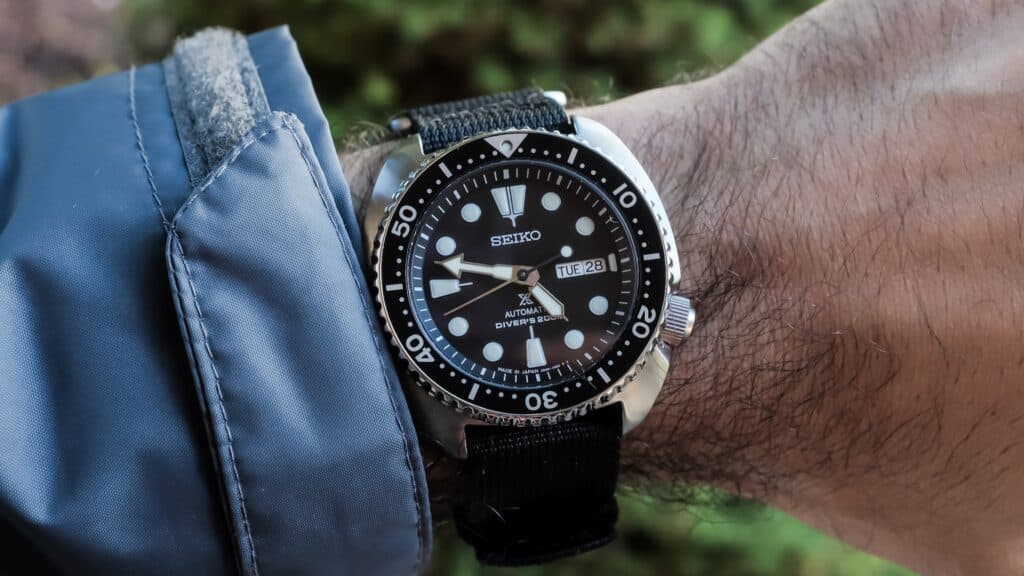
Our overall winner for value is the Seiko Turtle, while the Rolex Submariner takes the crown for quality and refinement. That’s a distinction worth preserving, because the two watches succeed for different reasons. The Rolex represents the satisfaction of pursuing exceptionally polished engineering, where even small interactions have been carefully considered. Seiko reminds us that a great dive watch doesn’t need to be expensive, perfectly finished, or particularly exclusive to earn a permanent place in a collection. We’d happily wear either, but the Turtle makes the stronger argument that genuine watch enthusiasm has very little to do with how much money we’re willing to spend.

Co-Founder and Senior Editor
Kaz has been collecting watches since 2015, but he’s been fascinated by product design, the Collector’s psychology, and brand marketing his whole life. While sharing the same strong fondness for all things horologically-affordable as Mike (his TBWS partner in crime), Kaz’s collection niche is also focused on vintage Soviet watches as well as watches that feature a unique, but well-designed quirk or visual hook.