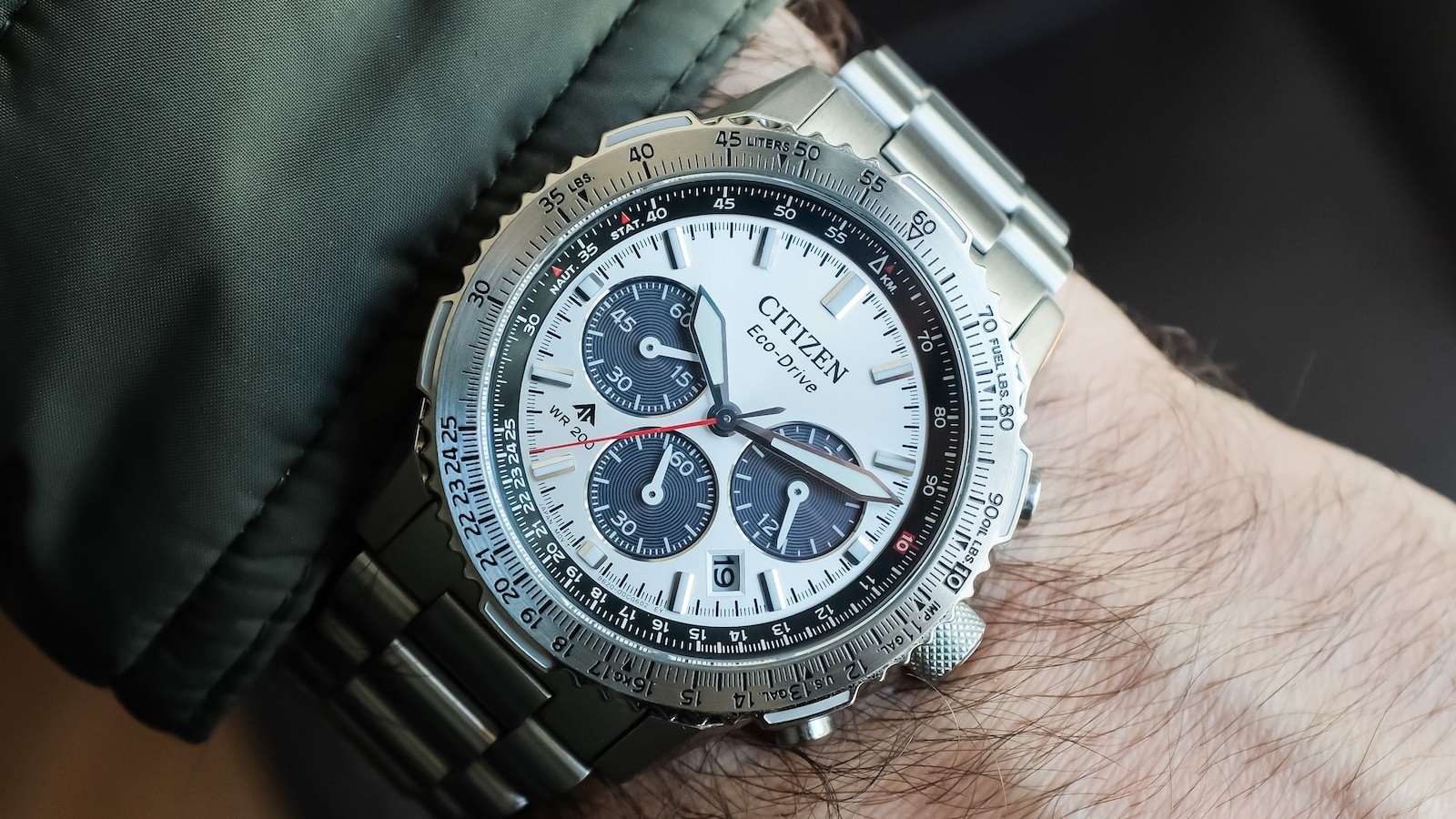
How much do we really need to spend on a good chronograph? It’s a question worth asking when a $129 Timex can handle many of the same everyday timing duties as a Citizen costing nearly $595. Both manufacturers have spent decades producing practical quartz watches, but they’ve taken considerably different approaches to what an affordable chronograph should offer. Timex concentrates on straightforward functionality and accessible pricing, while Citizen brings more sophisticated technology, materials, and finishing to the table.
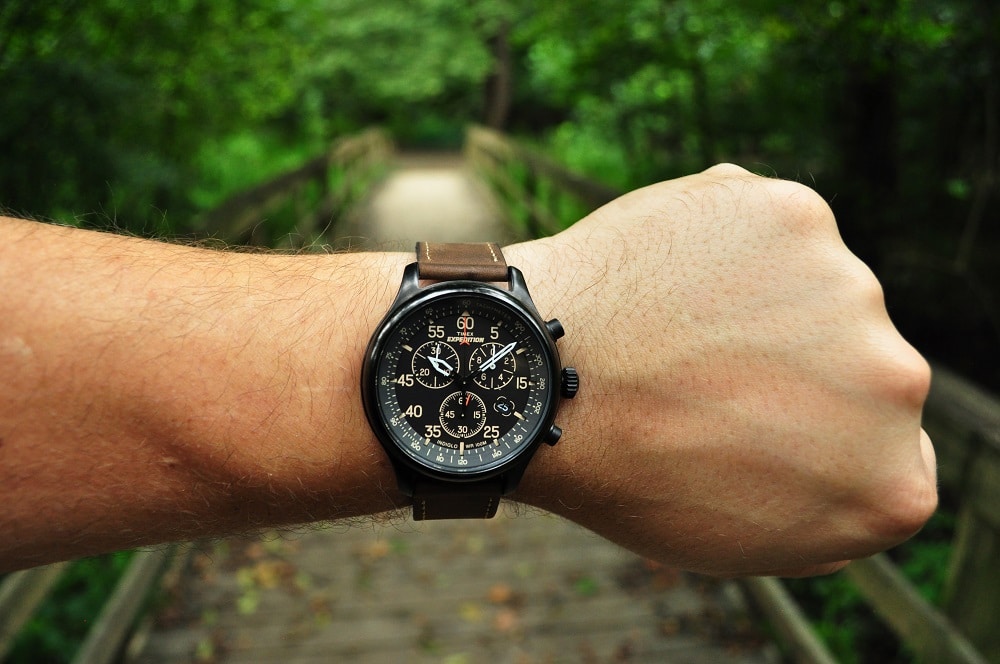
The Citizen Promaster Navihawk 40 and Timex Expedition Field Chronograph approach that idea from opposite ends of the affordable watch market. Citizen offers a sophisticated pilot’s chronograph with Eco-Drive technology, an elaborate slide rule bezel, and a compact stainless steel case. Timex counters with an inexpensive military-inspired design, a traditional quartz movement, and its familiar Indiglo illumination system. We’ve spent time with both watches through separate hands-on reviews, and each left us with something to appreciate. But with several hundred dollars separating their prices, we’re interested in finding out how much of a difference that additional money actually makes.
Overview and Identity

The Citizen Promaster Navihawk has traditionally been associated with substantial cases and complicated instrument-style dials. Earlier generations offered impressive functionality, but their dimensions could make them difficult to accommodate in an everyday collection. The Navihawk 40 represents a significant change in direction, retaining much of the collection’s personality while reducing the case to a more approachable size. When we reviewed the Citizen Promaster Navihawk 40, Citizen had provided a press loan for a relatively short evaluation period. We weren’t expecting it to challenge our plans for a future Swiss mechanical chronograph, but that’s exactly what happened. After spending the better part of a week with the watch, we found ourselves reconsidering whether that expensive mechanical purchase was really necessary.
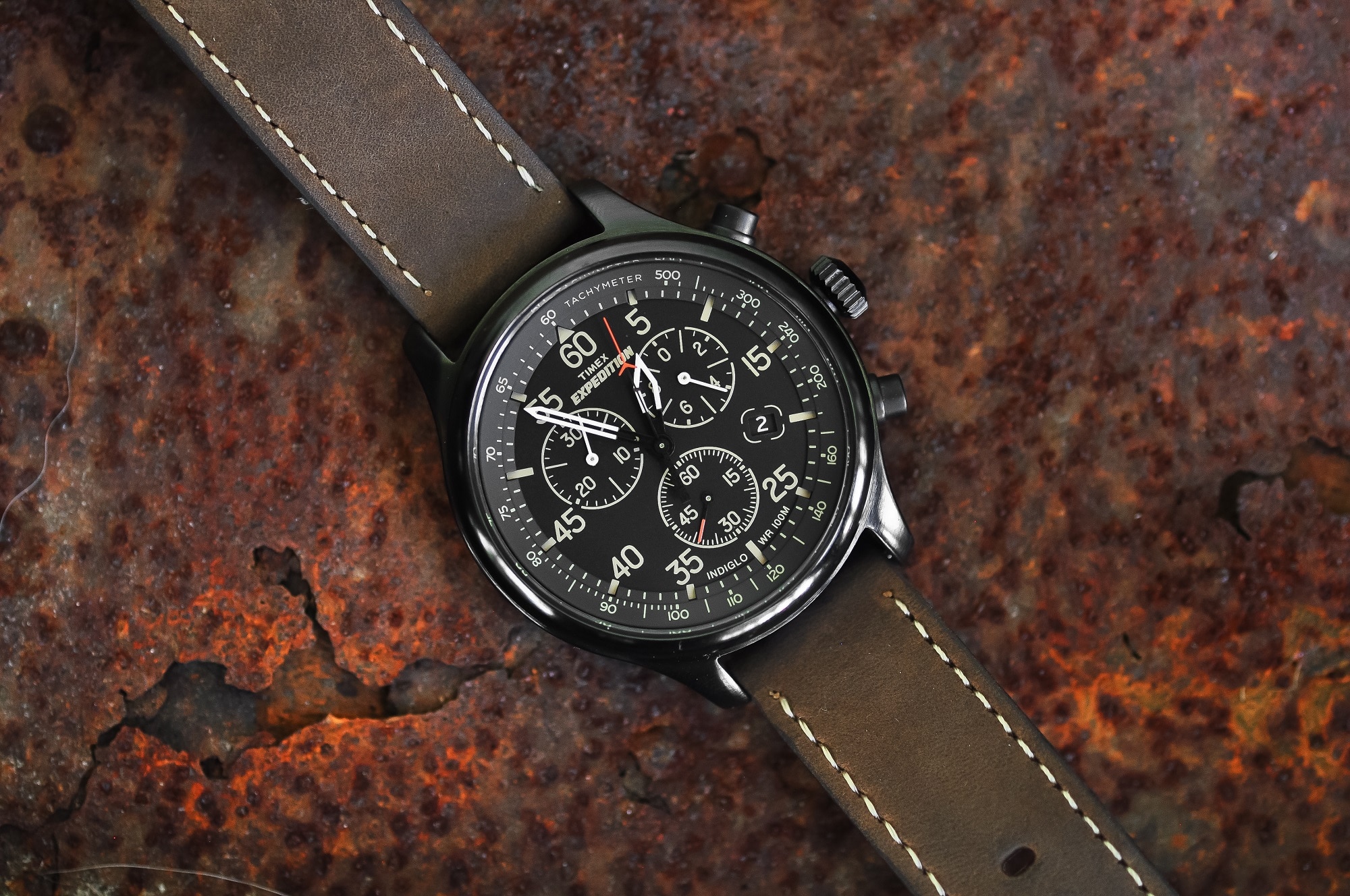
The Timex Expedition Field Chronograph T49905ZA comes from a considerably more accessible part of the watch market. The Expedition collection has long represented Timex’s practical, outdoors-oriented identity, offering watches that prioritize legibility and everyday usefulness without making elaborate claims about their construction. Our hands-on review covered the black-coated model fitted with a brown suede leather strap, which we wore for several weeks. It reminded us of the straightforward approach that has made Timex popular for generations. There’s nothing particularly prestigious about the watch, and it doesn’t pretend otherwise. Instead, its appeal comes from being an inexpensive chronograph that looks interesting, feels comfortable, and offers a few genuinely unexpected features.
Dial and Straps/Bracelets: Citizen’s Technical Precision vs Timex’s Military Simplicity
The Citizen Promaster Navihawk 40 has an unusually complicated dial for a watch measuring just 40mm across, yet its layout is considerably more organized than we initially expected. The silver-white sunburst finish provides a bright background for three contrasting black subdials, each featuring concentric texturing that adds depth without making the display unnecessarily busy. Red accents appear along the inner scale and chronograph hand, helping distinguish the timing functions from the main time display. There’s plenty happening here, including a slide rule scale and 24-hour indication, but Citizen has managed to organize the information so that the dial feels purposeful rather than chaotic. We frequently found ourselves looking down simply to appreciate the details.

That attention to detail extends to the stainless steel bracelet, which became one of our favorite aspects of the Navihawk. We initially expected to replace it with rubber or nylon, and actually experimented with both alternatives during the review. Surprisingly, we kept returning to the original three-link bracelet. Its combination of brushed and polished surfaces complements the case, while the weight helps the watch feel substantial without becoming cumbersome. The clasp closes securely and feels well constructed, although we’d appreciate an on-the-fly microadjustment system. Our main criticism of the dial itself concerns the deeply recessed date display, which can be difficult to read from certain angles. Neither issue significantly undermines what is otherwise an impressively considered design.
The Timex Expedition Field Chronograph presents information in a very different way. Its black dial uses sand-colored markings, oversized minute numerals, and prominent subdials arranged at approximately ten, two, and six o’clock. Despite the military-inspired presentation, we’ve always thought the watch has as much in common with aviation instruments as traditional field watches. The large skeletonized hands reinforce that impression, while orange-tipped seconds hands provide a welcome touch of color against the dark background. There’s also a tachymeter scale and a date window near four o’clock. The overall effect is considerably less polished than the Citizen, but the design has an appealing ruggedness that suits the Expedition collection.

The Timex’s brown suede leather strap was one of the biggest surprises during our review. At 20mm wide, with contrasting stitching and a substantial untapered profile, it looks particularly appropriate against the black case. More importantly, it was comfortable almost immediately, without requiring the usual break-in period associated with some inexpensive leather straps. During our time wearing the watch, the material began developing the marks and character that make suede appealing in the first place. We wouldn’t expect it to match the long-term durability of Citizen’s metal bracelet, particularly around water, but that’s hardly the point. Timex has managed to include a strap that feels thoughtfully selected rather than something chosen simply to keep costs down.
Build Quality & Technical Approach
These watches demonstrate how differently two established manufacturers can approach an affordable chronograph. Citizen has concentrated on sophisticated functionality, refined construction, and an ownership experience that requires very little maintenance. Timex offers a simpler, more economical package, accepting certain compromises in materials and finishing to keep the price remarkably low. Neither approach is inherently unreasonable, although the differences become increasingly apparent when we examine the movements, cases, and practical features.
Movements

The Citizen Promaster Navihawk 40 uses the Eco-Drive B620, a light-powered quartz movement with an accuracy rating of approximately plus or minus 15 seconds per month and around six months of operation available after a full charge. Its chronograph measures elapsed time in fifths of a second, while the additional displays provide useful timing and 24-hour functionality. What impressed us most wasn’t the list of complications but how convenient the watch felt in daily use. During our review, we found ourselves using the chronograph for ordinary activities like timing coffee preparation and workouts. The combination of straightforward operation and light-powered charging made the functionality feel genuinely accessible rather than something we’d admire without using.

The Timex Expedition Field Chronograph uses a conventional battery-powered quartz chronograph movement, although our original review couldn’t identify its specific caliber. The central chronograph seconds hand advances in one-second increments, and the elapsed-time display includes a 30-minute totalizer and a 1/20-second indication that comes into play when timing is stopped. It’s a somewhat old-fashioned arrangement, particularly compared with more elaborate modern chronographs, but it performs its basic functions adequately. We were less enthusiastic about the reset operation and the effort required to adjust the hands when setting the time. However, the movement also includes an unexpected feature that substantially improves its usefulness: an independently adjustable hour hand.
That independently adjustable hour hand allows the Timex to move forward or backward in one-hour increments without interrupting the running time, something we found particularly interesting for a watch with obvious aviation influences. It’s not a substitute for a dedicated GMT complication, and changing the date requires cycling the independently adjustable hour hand through successive 24-hour periods rather than simply using a conventional quickset date. Nevertheless, it’s an element of functionality we hadn’t expected at this price. Citizen remains the stronger choice for overall movement technology, especially given Eco-Drive’s convenience and the Navihawk’s broader collection of timing features. Still, the Timex deserves credit for offering more than the absolute minimum. The difference isn’t simply that one movement has more functions, but how naturally those functions fit into everyday use.
Case Construction, Finishing & Wearability
The Citizen Promaster Navihawk 40 measures 40mm across, approximately 44.3mm lug to lug, and 13.4mm thick. Those dimensions represent a substantial departure from the oversized Navihawk models that once approached 48mm in diameter. During our review, the smaller case made an immediate difference. Instead of feeling like a specialized aviation instrument that required the right occasion, the watch settled naturally into everyday wear. We barely touched several other watches in the collection during the loan period, which says considerably more about its comfort than the dimensions alone could communicate. Citizen has retained the Navihawk’s technical identity while making it far easier to live with.

The case finishing also exceeded our expectations. Broad brushed surfaces reinforce the watch’s tool-watch character, while polished accents give it enough visual contrast to avoid appearing overly utilitarian. We particularly appreciated the exposed brushing between the lugs and the pronounced coin-edge bezel, details that add personality without making the construction feel unnecessarily elaborate. The overall fit and finish were reassuring, although we noticed a slight amount of vertical movement in the bezel on our press sample. We wouldn’t assume that’s representative of every production example, but it’s something we’d examine when purchasing the watch ourselves. Otherwise, the Navihawk made a convincing impression as a thoughtfully constructed everyday chronograph.
The Timex Expedition Field Chronograph measures approximately 43mm across, 51mm lug to lug, and 12mm thick. Interestingly, although it’s larger in diameter and considerably longer across the wrist than the Citizen, we found it wore smaller than its specifications initially suggested. The rounded bezel and black case help reduce the apparent size, while the relatively modest thickness makes it easier to wear with long sleeves. It’s certainly a full-size watch, and the straighter lugs don’t conform particularly closely to the wrist, but we didn’t find the dimensions unreasonable during our review. The lightweight construction also helps compensate for the relatively large footprint.

Timex’s approach to case construction is much more economical. The Expedition uses black-coated brass rather than stainless steel, with brushed surfaces that look appropriate from a distance but reveal less precise finishing under closer inspection. We also noticed a mark developing near one of the chronograph pushers during the first couple of weeks. That’s a meaningful concern because damaged coatings can expose the underlying brass to additional wear and potential corrosion. The crown was easy to grip and operated cleanly, although the start-stop chronograph pusher provided little tactile feedback. Citizen clearly offers the more substantial and refined construction, but we also appreciate that Timex isn’t pretending to deliver premium materials at a fraction of their normal cost.
Crystals and Bezels

The Citizen Promaster Navihawk 40 features a sapphire crystal, which contributes to the watch’s appeal as something intended for frequent use. Its prominent coin-edge bezel houses the slide rule scale, adding a degree of calculation and conversion functionality that extends beyond ordinary chronograph timing. We wouldn’t expect most owners to use the slide rule regularly, but we appreciate its presence and the authenticity it brings to the Navihawk’s aviation-inspired identity. The scale also gives the watch much of its visual personality without requiring Citizen to increase the case diameter. Our only reservation concerns the slight bezel movement observed on the press sample, which prevents us from describing the execution as entirely flawless.

The Timex Expedition Field Chronograph has a considerably simpler bezel arrangement. Its rounded black exterior helps soften the appearance of the large case, while the tachymeter markings appear along a beveled inner chapter ring rather than on a conventional rotating timing bezel. The result is a watch that retains much of the visual character associated with aviation chronographs without attempting to offer the Navihawk’s extensive conversion capabilities. The original review didn’t establish the crystal material or document a comparable scratch-resistance assessment, so we wouldn’t suggest it competes directly with Citizen’s sapphire specification. What we can say is that Timex prioritized a convincing instrument-style appearance while keeping the overall construction economical.
Water Resistance & Lume

The Citizen Promaster Navihawk 40 offers 200 meters of water resistance, an impressive rating for a relatively compact aviation-inspired chronograph. Interestingly, the watch doesn’t use a screw-down crown, something we’d ordinarily prefer when considering a sports watch with this level of water resistance. Nevertheless, the overall construction inspired confidence throughout our review, and we never felt compelled to treat it as particularly delicate. The original hands-on evaluation concentrated more on the watch’s everyday legibility than its performance in complete darkness, so we wouldn’t claim a specific luminous advantage without a documented comparison. Citizen’s strongest practical argument here is the combination of water resistance, legibility, and a durable overall package.

The Timex Expedition Field Chronograph is rated to 100 meters of water resistance, which is more than reasonable for the sort of everyday activities we’d expect from an inexpensive field watch. Its more memorable feature, however, is Indiglo. Pressing the crown illuminates the dial with a soft green glow, making the time readable even after the watch has been sitting in complete darkness. Some of the hands also feature luminous material, although we found the selection of which hands received it somewhat inconsistent. Fortunately, Indiglo largely eliminates the need to depend on conventional lume. Citizen offers the stronger water-resistance specification, but we’d give Timex considerable credit for providing one of the most straightforward and effective illumination systems available on an affordable watch.
Cost Considerations
The Citizen Promaster Navihawk 40 currently carries a retail price of $595, although Citizen is offering the CA4660-61A at a discounted $446.25. That places it in an interesting position within the affordable chronograph category. Even at the promotional price, it’s a meaningful investment compared with simpler quartz watches. However, the Navihawk offers considerably more than basic stopwatch functionality. Its compact proportions, stainless steel construction, sapphire crystal, and extensive capabilities make it something we’d genuinely consider wearing regularly rather than reserving for special occasions.
That reaction is arguably the strongest argument for the Citizen’s value. We didn’t find ourselves simply admiring an impressive specification sheet; we enjoyed the actual experience of wearing the watch. The bracelet was comfortable, the dial rewarded closer inspection, and the Eco-Drive movement made everyday operation uncomplicated. There are improvements we’d welcome, particularly a tool-free bracelet adjustment system and slightly tighter bezel tolerances on the sample we handled. Still, the Navihawk feels like a complete watch rather than an inexpensive chronograph attempting to justify its price through a long list of features.
The Timex Expedition Field Chronograph T49905 is currently listed at $129 through Timex, although that particular model is out of stock on the manufacturer’s website. Even at this higher price than it once commanded, the Expedition remains a considerably less expensive alternative to the Citizen. We’re not expecting sophisticated case finishing, elaborate movement technology, or the most durable materials available at this price. Instead, the question becomes whether Timex has delivered something we’d actually enjoy wearing without feeling disappointed by the compromises. In our experience, the answer was yes. The attractive dial, surprisingly comfortable leather strap, Indiglo illumination, and practical chronograph functions make the watch easy to appreciate.
The compromises become more obvious when examining the Timex closely, particularly the black-coated brass case and relatively modest finishing. There are also operational quirks associated with the chronograph movement, and the pushers lack the satisfying action we’d expect from more expensive watches. But the Expedition doesn’t rely on a complicated story to justify its existence. It offers useful functions, distinctive styling, and everyday practicality for substantially less than the Citizen. We’d be hesitant to recommend it to someone who expects their watch to remain pristine after years of hard use, but that’s a different expectation from what Timex appears to be targeting.
Ultimately, these watches demonstrate two different interpretations of value. The Timex offers an impressive amount of enjoyment for its $129 listed price, and we’re not convinced most buyers need anything more complicated to time ordinary activities. The Citizen, however, offers enough additional comfort, refinement, and functionality that its higher price begins to make sense for someone who wants a chronograph to occupy a meaningful place in their collection. We wouldn’t argue that the Navihawk is several times better simply because it costs several times as much. But the added investment buys a distinctly different ownership experience rather than a collection of superficial upgrades.
Final Thoughts: Citizen Promaster Navihawk 40 or Timex Expedition Field Chronograph?
The Citizen Promaster Navihawk 40 left us with an unusually strong impression during its brief time in the collection. Its compact case, elaborate yet readable dial, excellent bracelet, and light-powered movement make it far more practical than the technical appearance might suggest. We originally approached it as an interesting alternative to larger pilot’s chronographs, but it ultimately challenged our assumptions about what we wanted from a more expensive mechanical watch. That’s substantial praise for something that doesn’t rely on a traditional Swiss movement or a particularly prestigious name to establish its appeal.
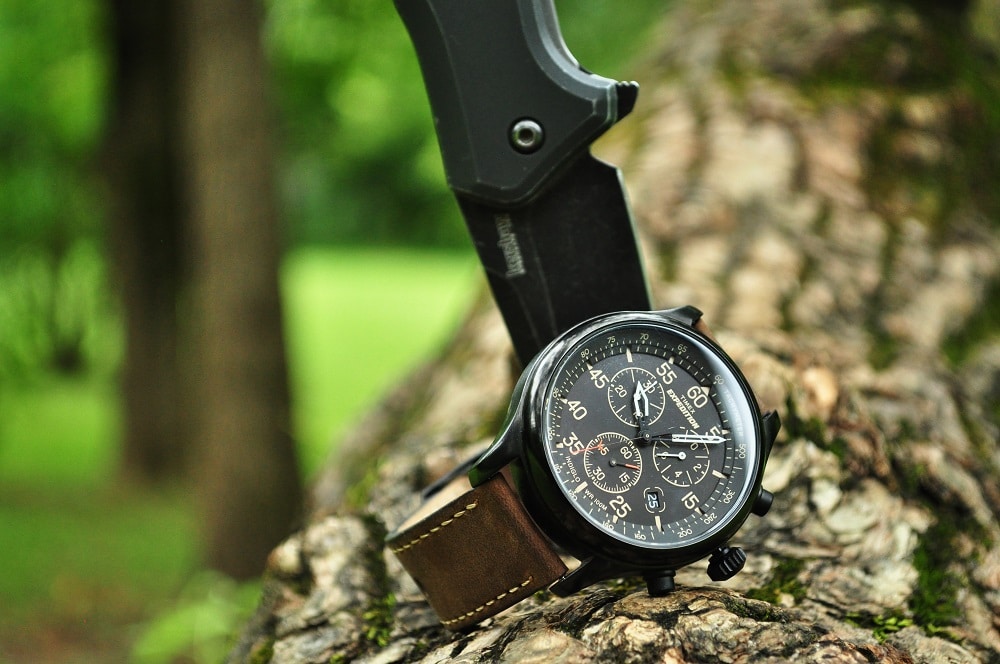
The Timex Expedition Field Chronograph reminded us why inexpensive watches can be every bit as enjoyable as more elaborate alternatives. It’s certainly not as refined as the Citizen, and the coated brass case introduces durability concerns that we’d rather avoid on a more expensive purchase. But the attractive instrument-style dial, excellent leather strap, useful chronograph, and Indiglo illumination make it considerably more interesting than the price might suggest. We also appreciate its straightforward identity. Timex isn’t asking us to admire a complicated manufacturing philosophy or an expensive mechanical movement. It’s offering a practical watch that does its job and looks good doing it.
For someone who simply wants an affordable chronograph to wear casually, we’d have little hesitation recommending the Timex. Spending considerably more isn’t necessary to enjoy the basic functionality, and the Expedition has enough personality to remain interesting beyond its price tag. But if we’re looking for something to wear regularly over several years, Citizen makes a stronger argument. The Navihawk’s dimensions, construction, movement technology, and overall refinement justify giving it serious consideration, particularly for collectors who enjoy more complicated instrument-style dials.

Our pick is the Citizen Promaster Navihawk 40, although the Timex Expedition Field Chronograph makes this a more interesting comparison than the price difference initially suggests. The Navihawk offers the more satisfying combination of daily comfort, capability, and construction quality, and we’d be happy to give it a permanent place in the collection. The Expedition remains an excellent reminder that a useful chronograph doesn’t need to be expensive. But for us, the Citizen delivers enough additional satisfaction to justify spending more, even if the Timex remains the better choice for someone working with a much smaller budget.

Co-Founder and Senior Editor
Kaz has been collecting watches since 2015, but he’s been fascinated by product design, the Collector’s psychology, and brand marketing his whole life. While sharing the same strong fondness for all things horologically-affordable as Mike (his TBWS partner in crime), Kaz’s collection niche is also focused on vintage Soviet watches as well as watches that feature a unique, but well-designed quirk or visual hook.