Buying an affordable automatic should be the fun part: find a watch we like, check the price, and picture it joining our daily rotation. Then the opinions creep in. Brand loyalty shapes our choices, design originality becomes a debate, and suddenly we wonder whether we like a watch for what it is or what it represents. The Seiko 5 Sports and Invicta Pro Diver make an interesting test of those instincts. When two watches appeal for different reasons, what deserves more weight: a design with its own character or the enduring appeal of a familiar dive-watch look? More importantly, when we’re spending our own money, how do we separate what we genuinely want from what the watch community tells us we should want?
At TBWS, a decade of hands-on watch reviews has taught us to look beyond a watch’s reputation and focus on what earns our appreciation once we get past first impressions. We’ve reviewed both models, and this comparison draws on those reviews to examine their strengths, shortcomings, and the trade-offs worth considering before you spend your money. We’re not interested in settling the debate through brand loyalty or declaring a bargain based on price alone. We want to work out which differences matter to buyers, which compromises are easier to accept, and what should ultimately guide the decision.
Overview and Identity
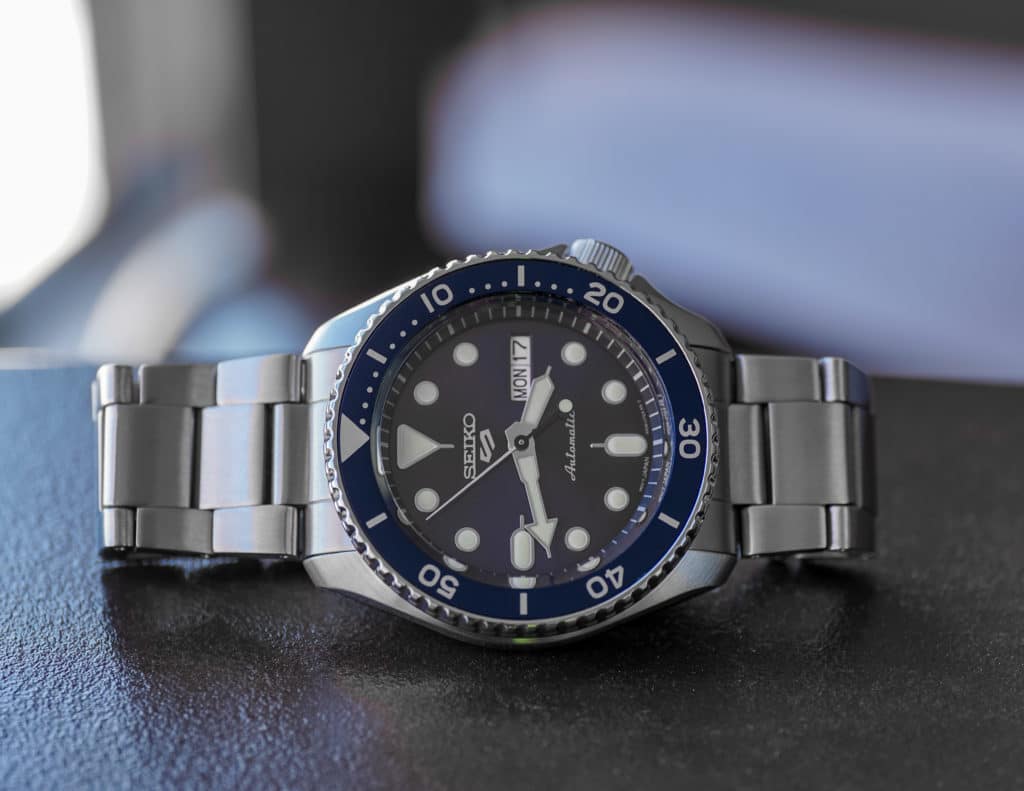
The Seiko 5 Sports, or 5KX, is the kind of automatic that reminds us why getting into watches should be fun, not a financial endurance test. In our hands-on review, its biggest appeal was how comfortably it fits different kinds of enthusiasts. Newcomers get an accessible entry into mechanical watches, while seasoned collectors get a dependable daily option that doesn’t need to justify its existence with a luxury price tag. It’s equally at home as a proper part of a collection or paired with sweatpants after a day of work (because not every wrist shot needs to happen at a cocktail bar). With newer Seikos getting pricier, the 5KX keeps the door open for people who want a nice watch without disappearing down the collecting rabbit hole. Already own an SKX? There’s no need to panic-buy its successor. Like the design? Find the version that clicks with you and enjoy wearing it.
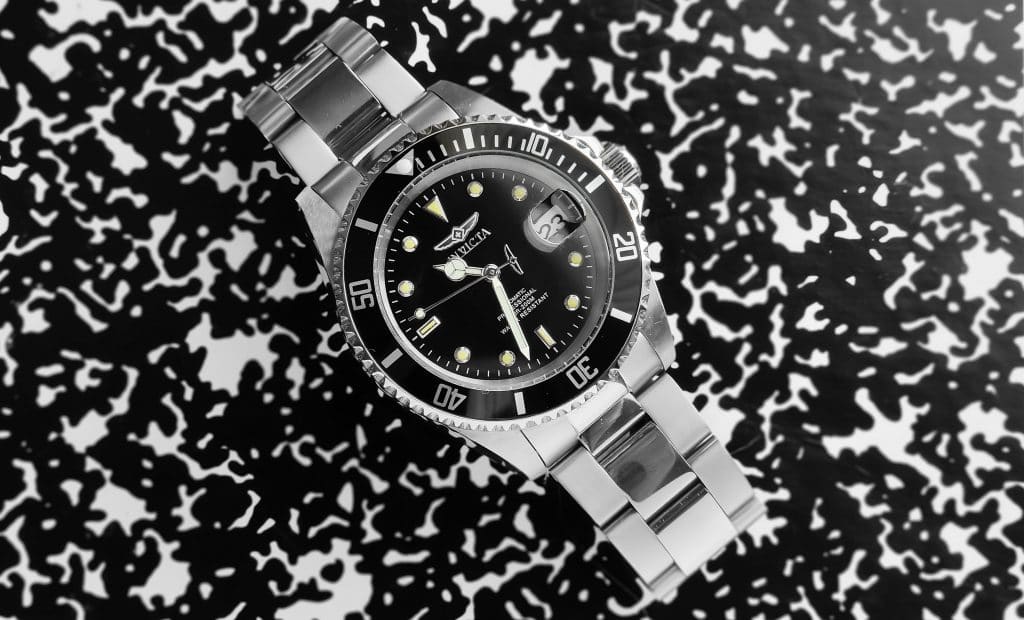
The Invicta Pro Diver 8926OB answers a different call: the hunt for a classic 40mm Submariner-style watch that doesn’t bite a serious chunk out of your budget. Many of us have looked for that combination, but an Invicta purchase can quickly turn into a referendum on the brand rather than the watch itself. The stigma, the snobbery, the unsolicited opinions from people who aren’t paying for it—none of that helps us decide whether a watch belongs in our collection. We want to make a simpler point during our hands-on review: if you’re after that traditional Sub-style case, the Pro Diver deserves to be judged on whether it scratches that itch for you. You don’t have to convince the watch-collecting jury, and there’s certainly no entrance exam for enjoying an affordable automatic.
Dial and Bracelets: Seiko’s Sunburst Personality vs Invicta’s Surprisingly Solid Execution
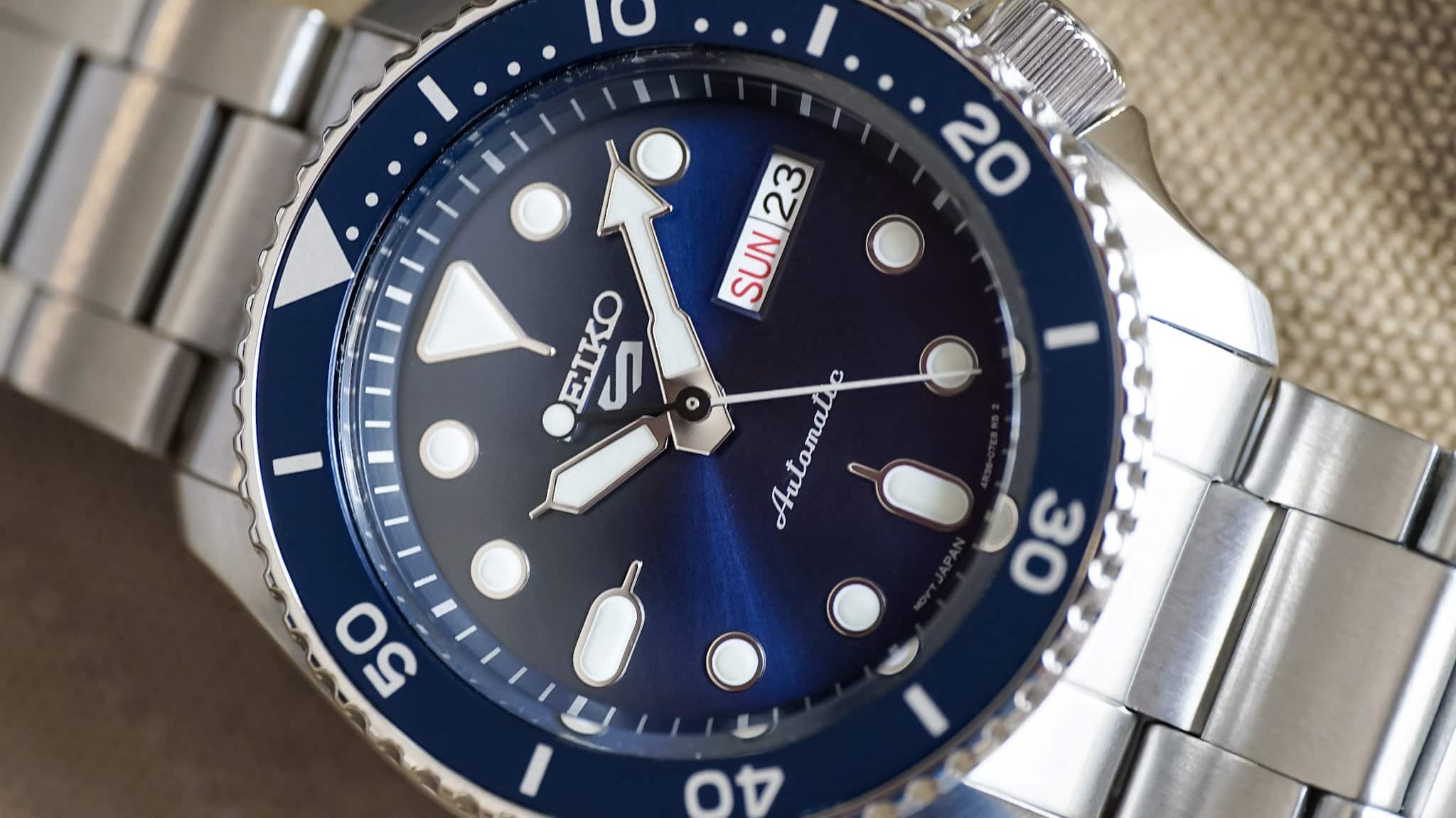
The Seiko 5 Sports SRPD51 has a sunburst blue dial that rewards a little wrist movement. Rotate it in the light and the blue shifts; in indirect lighting, it becomes more subdued. The familiar SKX-style hands won’t appeal to everyone (we weren’t a fan), but they’re unmistakably Seiko. Applied hour markers and a raised logo give the 5KX a more modern feel than the SKX and 7002’s painted markers, though you lose some vintage character along the way. We’re also not sold on the cursive “Automatic” text, but the generous negative space keeps the dial from becoming a typographic mess. Across the wider 5 Sports lineup, Seiko offers plenty of colors, textures, and collaborations.

The bracelet is where the SRPD51 loses some points. Our reviewed model came on a three-link steel bracelet, and its polished sides unflatteringly highlight the folded clasp. The pin-and-collar links are also a pain to adjust. Seiko kept the sensible 22mm lug width but missed an opportunity to taper the bracelet to 18mm at the clasp, a proportion we preferred on the SKX. Fortunately, the wider 5 Sports range offers plenty of alternative straps and bracelets. Our review recommended the Strapcode Super-O Boyer or Super-J Louis, provided you choose the versions that taper from 22mm to 18mm. That’s extra money to fix a stock-bracelet weakness, but at least there are worthwhile alternatives.
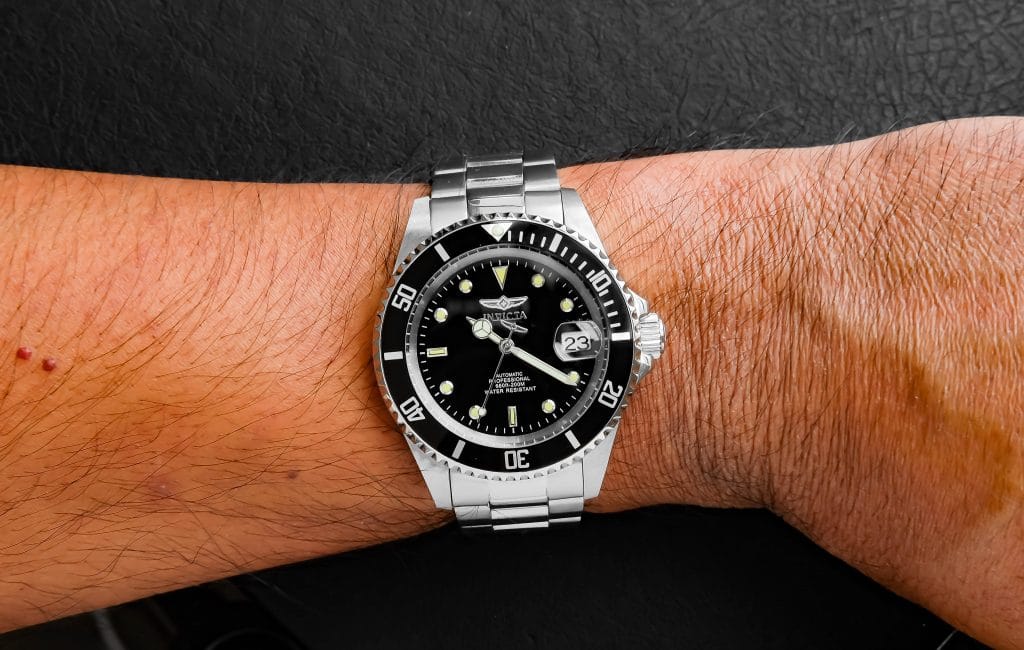
The Invicta Pro Diver 8926OB wears its Submariner resemblance openly, but the dial’s execution deserves more credit than the brand’s reputation might imply. We were pleasantly surprised to find that the applied markers, logo, and INVICTA lettering feature polished surfaces that catch the light nicely. The compass-rose markers at 12, 3, and 9 o’clock stand out, while the smaller round markers can look a little undersized. Still, the finishing feels more considered than the price suggests. Originality isn’t the selling point here; getting the familiar dive-watch look with convincing dial details is.
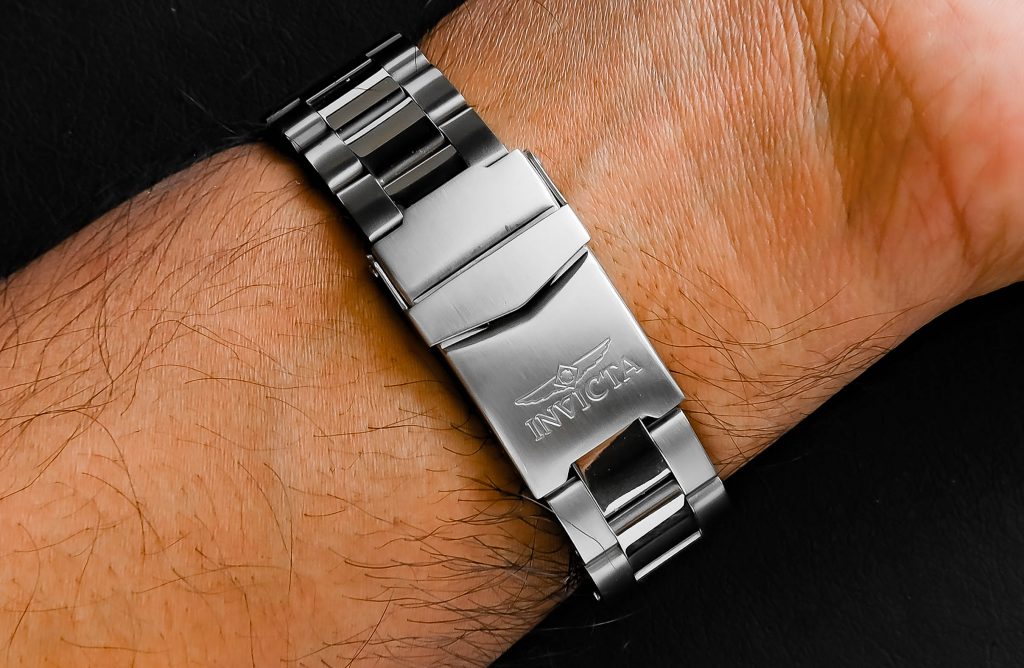
The bracelet also gets the fundamentals right. Its 20mm lug width tapers to approximately 18mm at the clasp, creating the balanced proportions the Seiko’s bracelet lacks. Polished center links complement the brushed surfaces without going overboard, while the hollow end links are an expected cost-saving measure. The remaining links feel pretty solid, with clean edges and smooth articulation that compare favorably with the bracelets on newer Orient Mako II models. Micro-adjustments also make fitting the bracelet easier. Then there’s the clasp, which apparently didn’t get the memo. The double-locking arrangement is fairly standard, but the flip lock becomes stubborn once secured and requires considerable force to open. We even noticed scrape marks where it rubs against the clasp. A bracelet that feels this good shouldn’t turn taking off your watch into a wrestling match.
Build Quality & Technical Approach
A good-looking dial gets our attention; the hardware determines whether the honeymoon lasts. The Seiko 5 Sports and Invicta Pro Diver make different budget trade-offs in the details that count: movement, case finishing, bezel action, crown operation, and water resistance. Let’s get past the price tags and see where each watch gets the engineering right—and where the savings start to show.
Movements:
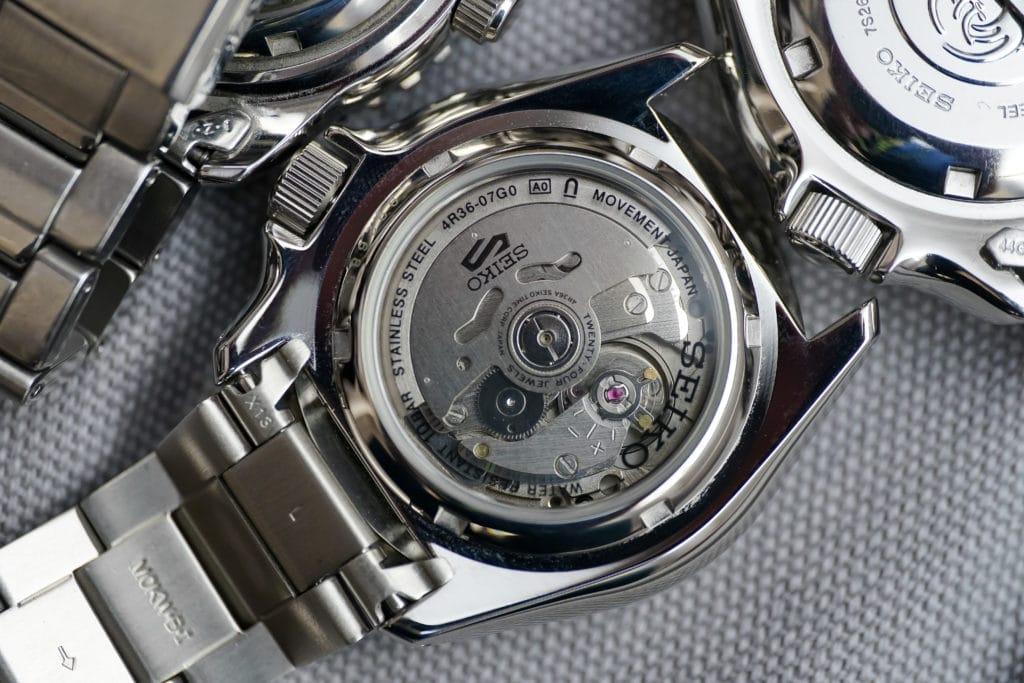
The Seiko 5 Sports runs on Seiko’s in-house 4R36 automatic movement, which keeps the price accessible without leaving out hacking. If you’ve wrestled with older Seikos using the 7S26-based movement, you’ll appreciate being able to stop the second hand while setting the time. Does that make the 4R36 a precision timekeeping monster? Hardly. With a stated accuracy tolerance of +45/-35 seconds per day, we wouldn’t get carried away pretending every second matters. Still, hacking is a welcome addition. Seiko has even dressed up the movement for the exhibition caseback. It’s no haute horology showpiece, but watching the mechanics at work is half the fun of owning an entry-level automatic. Sometimes, seeing the gears turn is worth more to a new enthusiast than another paragraph of movement jargon.
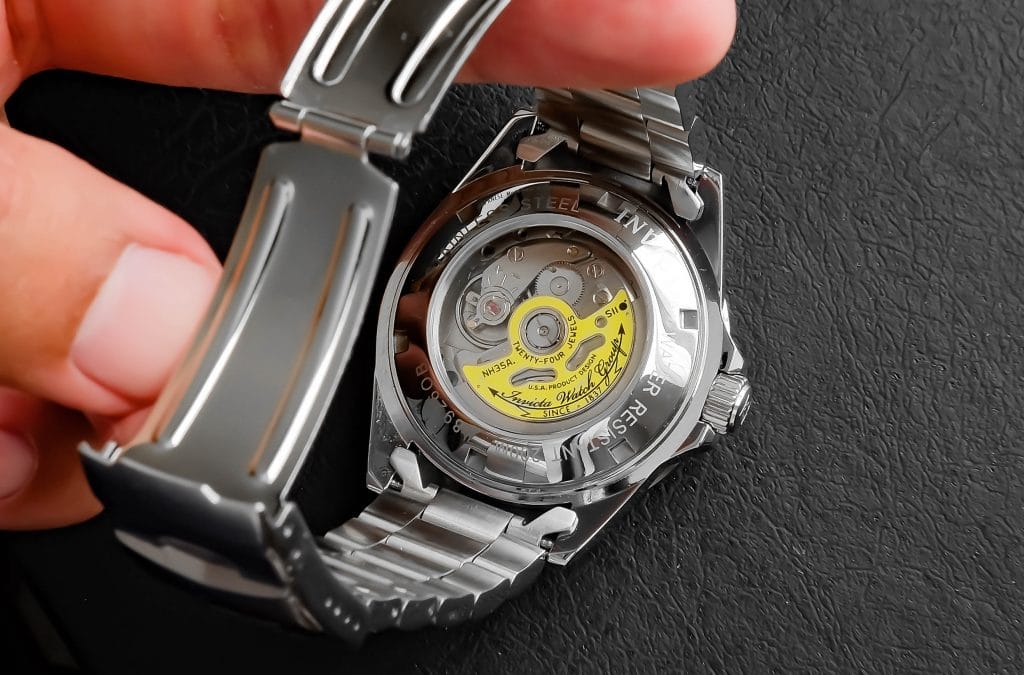
The Invicta Pro Diver 8926OB uses the NH35A, essentially Seiko’s unbranded 4R35, and this is where the watch starts punching above its price tag. The movement has built a solid reputation for reliability across countless watches, including microbrands that commonly charge $300-$500 for an NH35A-equipped model. However, at the price Invicta offers this model, a proven automatic is hard to ignore. The NH35A offers automatic and manual winding, hacking, a 41-hour power reserve, and stated accuracy of -20 to +40 seconds per day. We didn’t spot any major regulation or timekeeping issues in our review example, though one watch can’t guarantee how every specimen will perform. Invicta adds a yellow rotor and branded text, giving the movement a little personality through the caseback. The Pro Diver may be unapologetic about borrowing a familiar exterior, but the mechanical value inside is no joke.
Case Construction, Finishing & Wearability:
The Seiko 5 Sports 5KX feels like an old favorite you didn’t realize needed an update. During our review, the case felt so familiar to the SKX that we didn’t even bother reaching for the calipers. The dimensions and curves aren’t identical, but on the wrist, the family resemblance is close enough that longtime SKX fans should feel right at home. Seiko also kept the crown at four o’clock, where it belongs on this design, and finally added some milled rings to the otherwise plain, unsigned crown. That’s progress, although the polished, unsigned crown still bugs us, as it has on other Seiko divers.
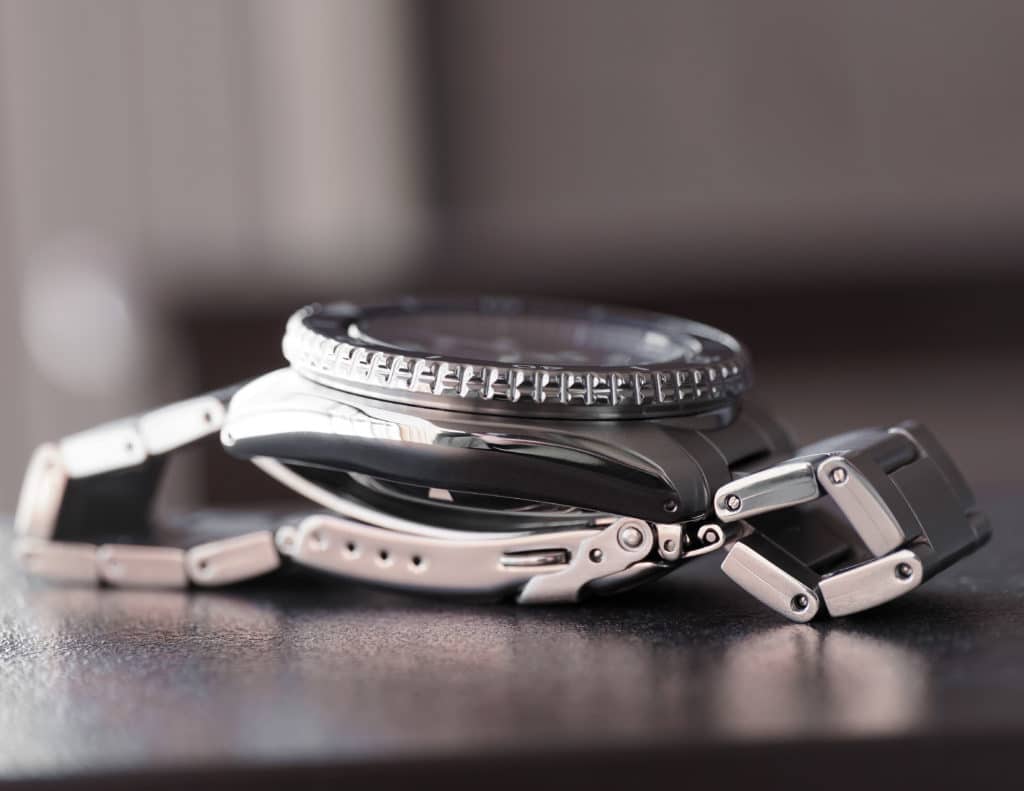
Flip the case over, and the familiar Seiko wave is gone, replaced by an exhibition caseback that lets you watch the movement at work. Drilled lugs are another welcome addition, making strap changes less of a spring-bar wrestling match. The catch is the proportions: a 46mm lug-to-lug span and 13.5mm case height give the 5KX plenty of wrist presence, but also make it wear pretty tall. That’s a double-edged sword. If you already like the SKX’s substantial feel, you’ll settle into the 5KX quickly. If you were hoping for something more compact or discreet, changing the dial won’t change the geometry.
The Invicta Pro Diver 8926OB gets the traditional 40mm Submariner-style case right, and that matters because sometimes we aren’t looking for a brand’s creative interpretation of a classic. We want the familiar shape without the familiar financial damage. At approximately 48mm lug-to-lug and 14mm thick, the Pro Diver sticks to proportions that we found immediately comfortable. There was no prolonged wrist adjustment or awkward getting-to-know-you period. Better still, the machining and finishing impressed us enough to compare them favorably with watches costing six times as much.
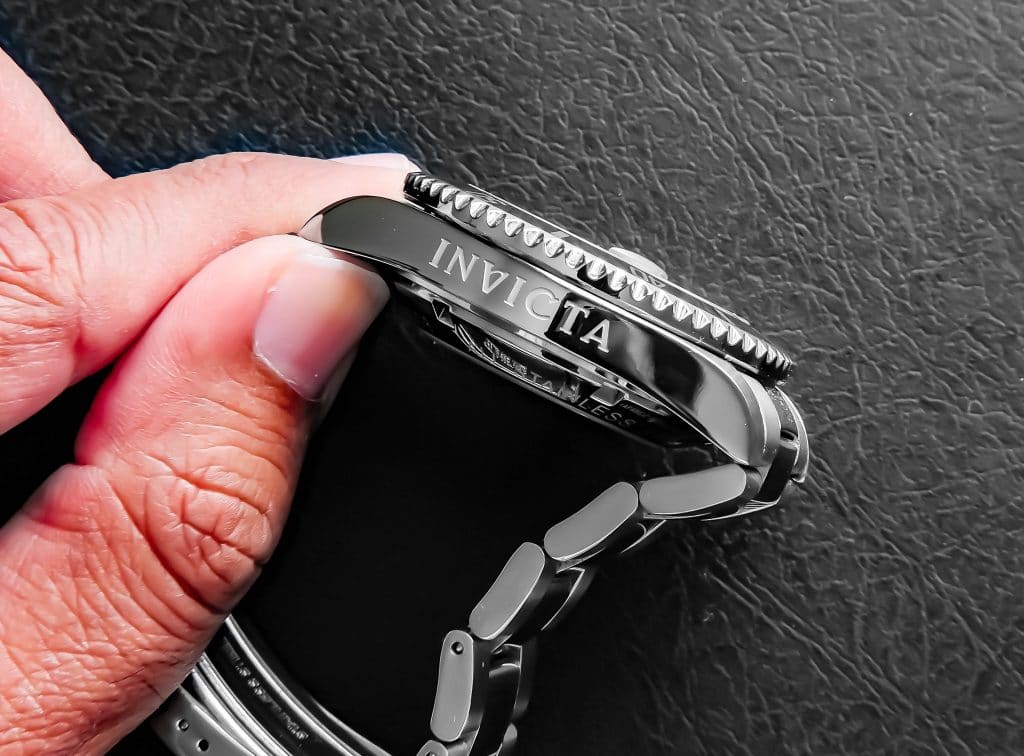
The lug tops are brushed, while the case sides are polished, giving the steel welcome contrast. The polished caseback also features an exhibition window, and the generous 7mm crown is easy to grip when manually winding the movement. These are useful details, not excuses to pad out a spec sheet. However, Invicta spoils the mood by plastering its logo across the case side. We couldn’t stand it because the branding interrupts an otherwise convincing design without adding anything useful. When the case itself does such a good job, why draw attention to the one detail that makes us want to turn our wrist away?
Crystals and Bezels:
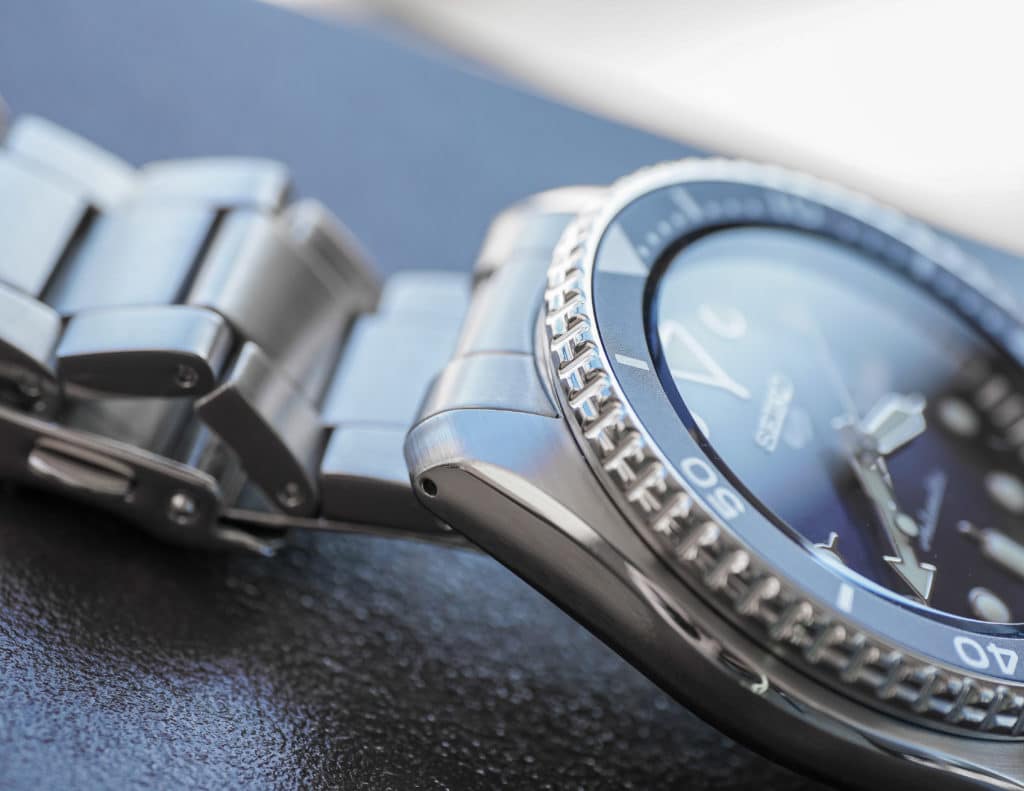
The Seiko 5 Sports 5KX uses Hardlex, Seiko’s hardened mineral crystal. It’s more shatter-resistant than standard mineral glass, but it’s also softer than sapphire and more prone to scratching over time. You get a practical crystal at this price, not an excuse to drag the watch across concrete and call it testing. The bezel is more fun. Its blue aluminum insert has a pleasantly matte finish that works with the SRPD51’s sunburst blue dial, giving us a blue-on-blue combination the SKX didn’t offer. It’s a welcome bit of personality without Seiko having to reinvent the wheel. The dial catches the light; the bezel keeps things subdued, and the contrast helps the watch feel more considered than a matching-color exercise.
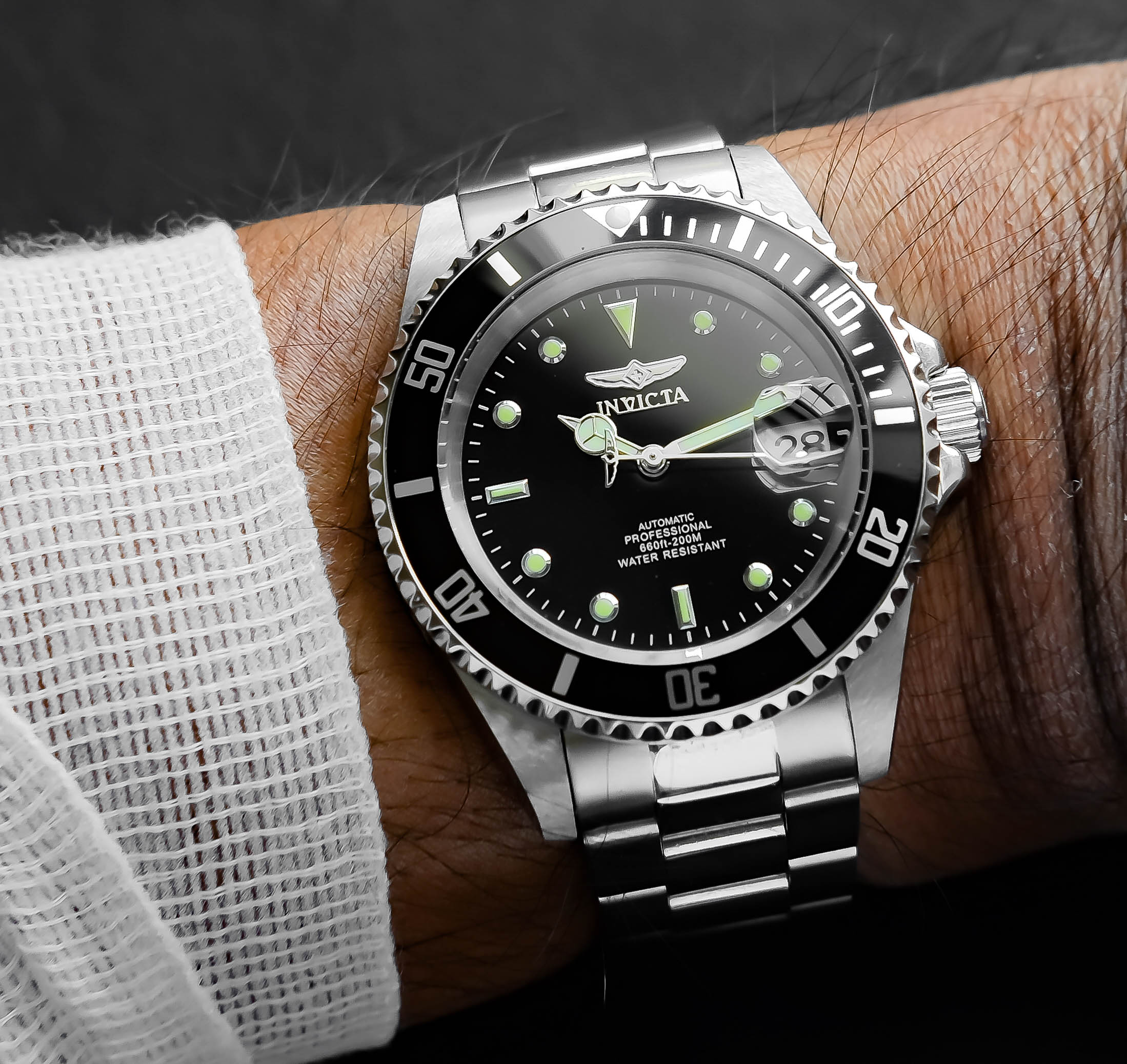
The Invicta keeps costs down with a mineral crystal and a cyclops magnifier over the date. Nothing fancy, but the magnifier does its job, and at this price we’re not expecting sapphire to show up out of sheer goodwill. The aluminum bezel is the bigger surprise. We found the action impressively solid for the money. There’s some wiggle between clicks, so don’t expect expensive-dive-watch refinement. Still, it works well for the important stuff: timing coffee, tracking a daylight break, or pretending a meeting has a hard stop. It’s not the best bezel we’ve used, but for the price, it does the job without making a fuss.
Water Resistance & Lume:
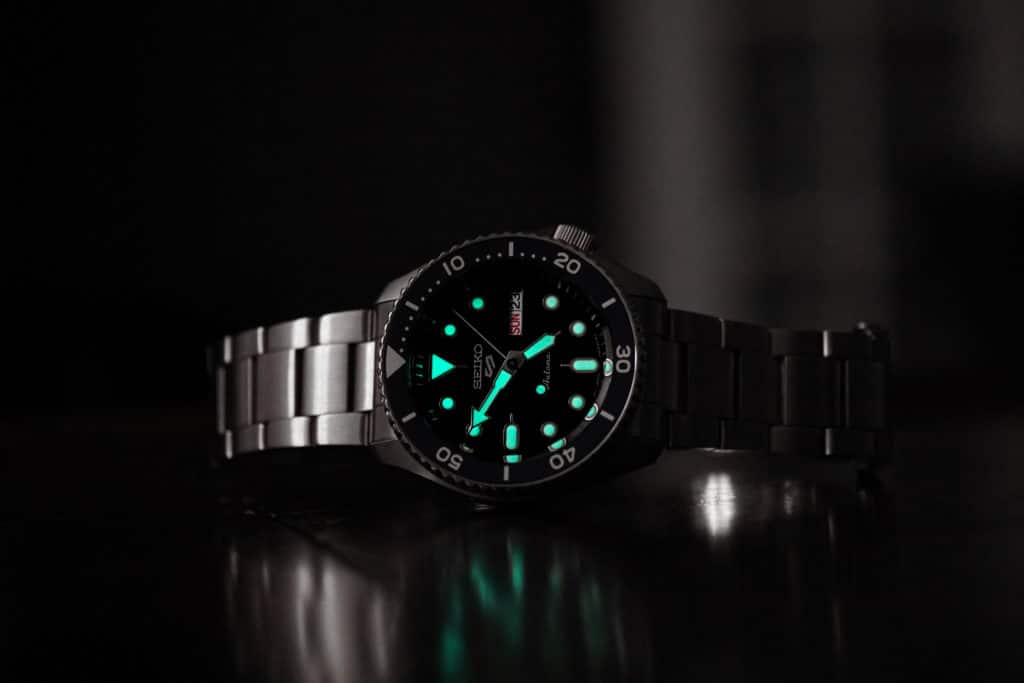
The Seiko 5 Sports 5KX makes a clear trade-off to keep its price accessible: 100 meters of water resistance, a push-pull crown, and no ISO 6425 dive-watch certification. That puts it closer to a capable everyday sports watch than a proper dive-watch replacement for the old SKX. Throughout our testing period, it handled swimming pools and hot tubs on vacation without trouble, which covers the sort of water exposure most of us are likely to encounter. We did keep checking that push-pull crown, though (old habits die hard). For everyday wear, the water resistance is reassuring, but we’d look elsewhere for serious diving. The lume is less contentious. Seiko’s Lumibrite treatment delivers the ample, long-lasting glow we’d expect, keeping the hands and markers readable after the lights go out. At least we won’t need to squint at the time in the middle of the night.
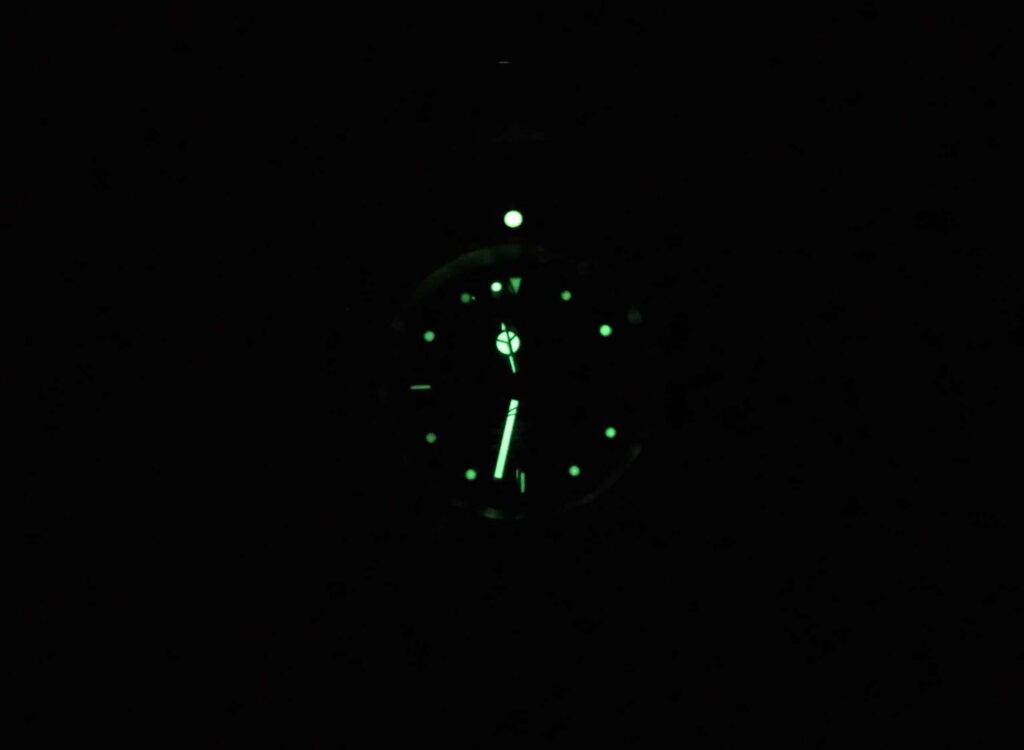
The Invicta Pro Diver 8926OB has a 200-meter water-resistance rating, plus a screw-down crown and caseback that feel pretty solid. For instance, we got caught in a Florida thunderstorm while wearing it, and the watch kept ticking after a thorough soaking. Swimming and everyday splashes shouldn’t be a concern, as long as you remember to screw the crown down properly. Actual diving is a different conversation. At the watch’s price point, we’d rather use a dive watch properly tested for demanding underwater conditions than treat the rating as an invitation to find out the hard way. The lume also shows where the Invicta saves money. The application varies between the markers and hands, which can glow in slightly different colors and intensities; the hands tend to stay visible after the markers start fading. It gets the job done in a pinch, but anyone who values consistent, long-lasting nighttime legibility will find the Seiko more satisfying.
Cost Considerations
The price gap between these two is hard to ignore. Seiko currently lists the 5 Sports SRPD51 at $350 on its official website, though we got ours at Macy’s for around $200 after taxes and discount codes. Macy’s shipped directly from Seiko USA’s distribution center, cutting out an intermediary and enabling those discounts. At $200, the Seiko becomes a more compelling buy, but it still costs roughly 2.5–3.3 times as much as the Invicta Pro Diver. At its $350 list price, that gap grows to more than four times the Invicta’s typical price.
The Invicta Pro Diver 8926OB usually hovered around $60-$80 on Amazon at the time of our review. For that money, or even any figure around $100, our hands-on experience found surprisingly good quality, especially if you’re buying it specifically for the classic 40mm Submariner-style case. Invicta also offers a three-year warranty on new watches registered through its website, covering manufacturing issues involving the hands, dial, and movement.
Final Thoughts: Which Affordable Dive Watch Wins?
For most buyers, we’d take the Seiko 5 Sports. It has a distinct Seiko identity and stands on its own as an affordable sports watch with plenty of appeal for everyday wear. It has flaws, and the bracelet gives us reasons to grumble, but the overall package makes sense for an affordable automatic. The 5KX doesn’t need to be perfect to earn its place; it just needs to be a watch we’re happy to keep reaching for.
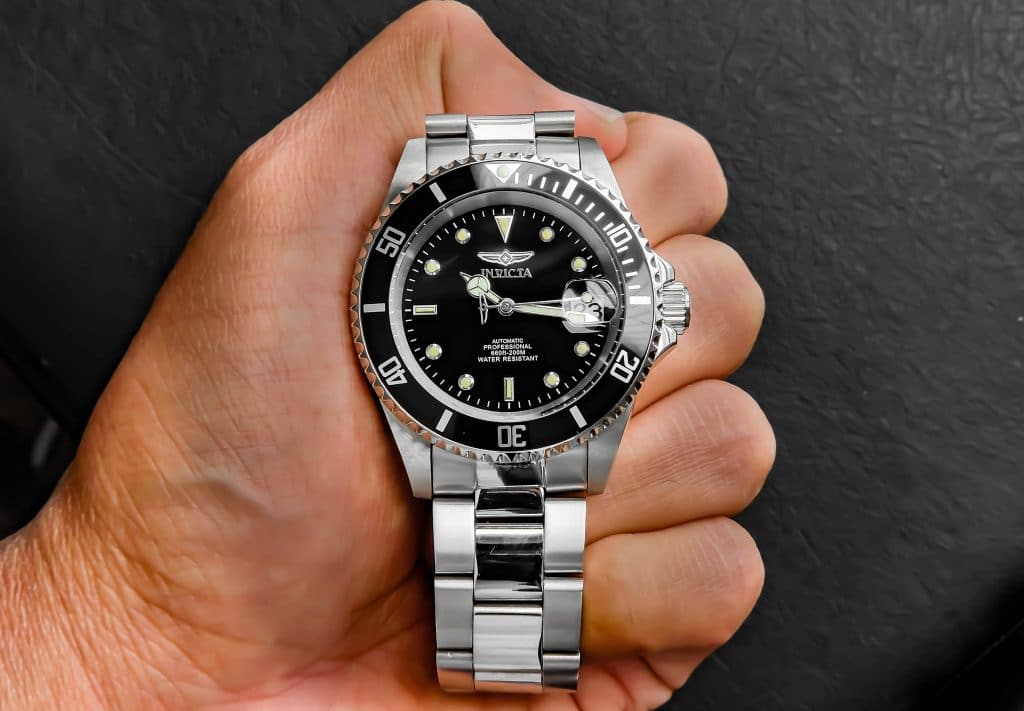
The Invicta Pro Diver deserves more credit than its brand reputation might suggest. Our hands-on review found surprisingly good quality for the money, making it an appealing entry point for anyone who wants an automatic without spending much. At its price, it offers an affordable way to get into mechanical watch ownership without feeling like an afterthought.
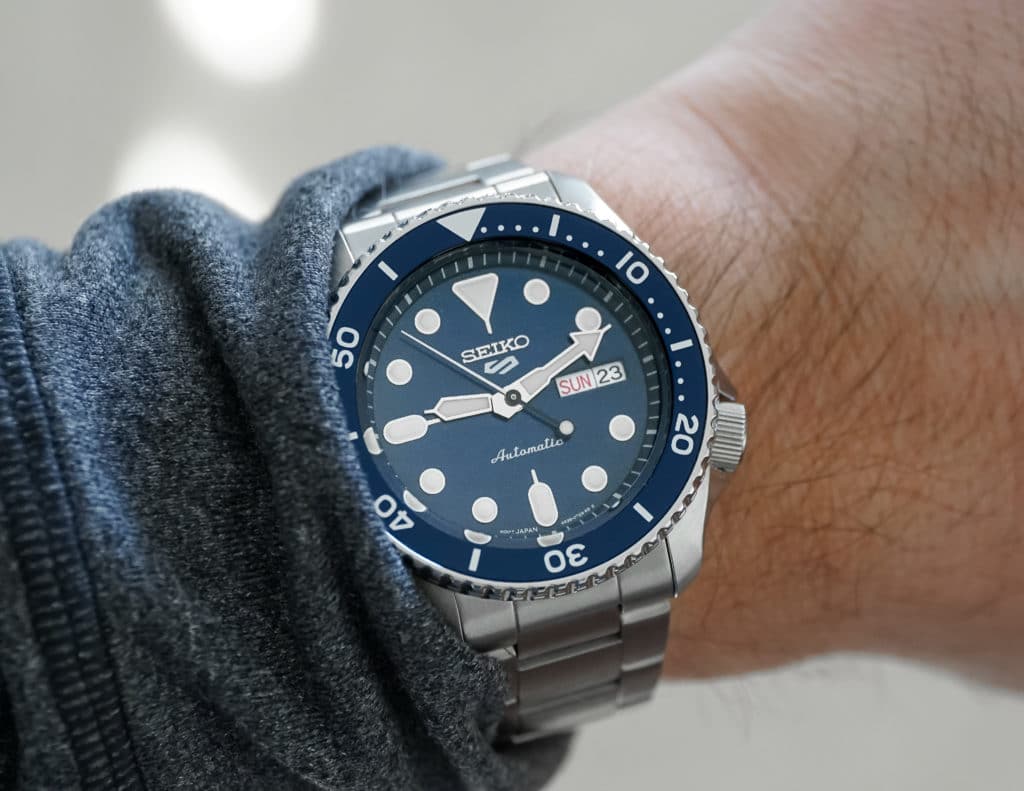
Our call: choose the Seiko 5 Sports for a better all-around everyday automatic; choose the Invicta Pro Diver if a Submariner-style silhouette is the main reason you’re shopping. We’d recommend the Seiko to most buyers, but we wouldn’t tell anyone to spend more on a watch they like less. The best bargain is the one that gets you what you came for.

Co-Founder and Senior Editor
Kaz has been collecting watches since 2015, but he’s been fascinated by product design, the Collector’s psychology, and brand marketing his whole life. While sharing the same strong fondness for all things horologically-affordable as Mike (his TBWS partner in crime), Kaz’s collection niche is also focused on vintage Soviet watches as well as watches that feature a unique, but well-designed quirk or visual hook.