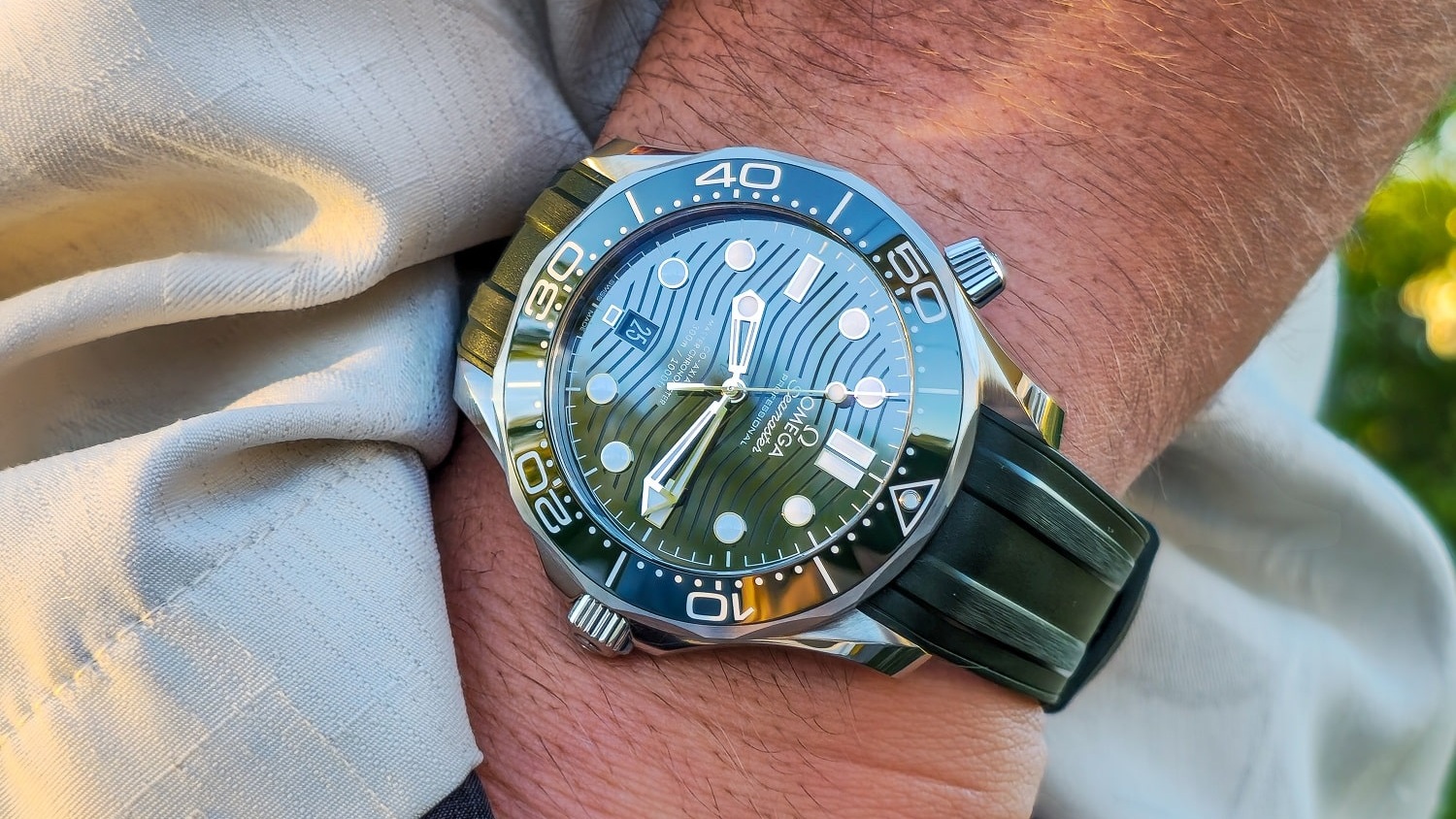
A $50 dive watch and a $6,000 Omega sound like an odd pairing until we stop looking at them as status objects and ask what we actually need from a dive watch. After a decade of wearing, testing, and scrutinizing watches hands-on, we’ve learned that what matters most once the novelty wears off is often pretty simple: can we read it quickly, trust it around water, wear it comfortably all day, and knock it around without worrying about every scratch? That makes the Casio Duro vs Omega Seamaster comparison more interesting than the price tags suggest. The Omega is clearly the more sophisticated watch, but is it actually the better dive watch, or does the Duro make more sense for the way most of us will use one?
Overview and Identity
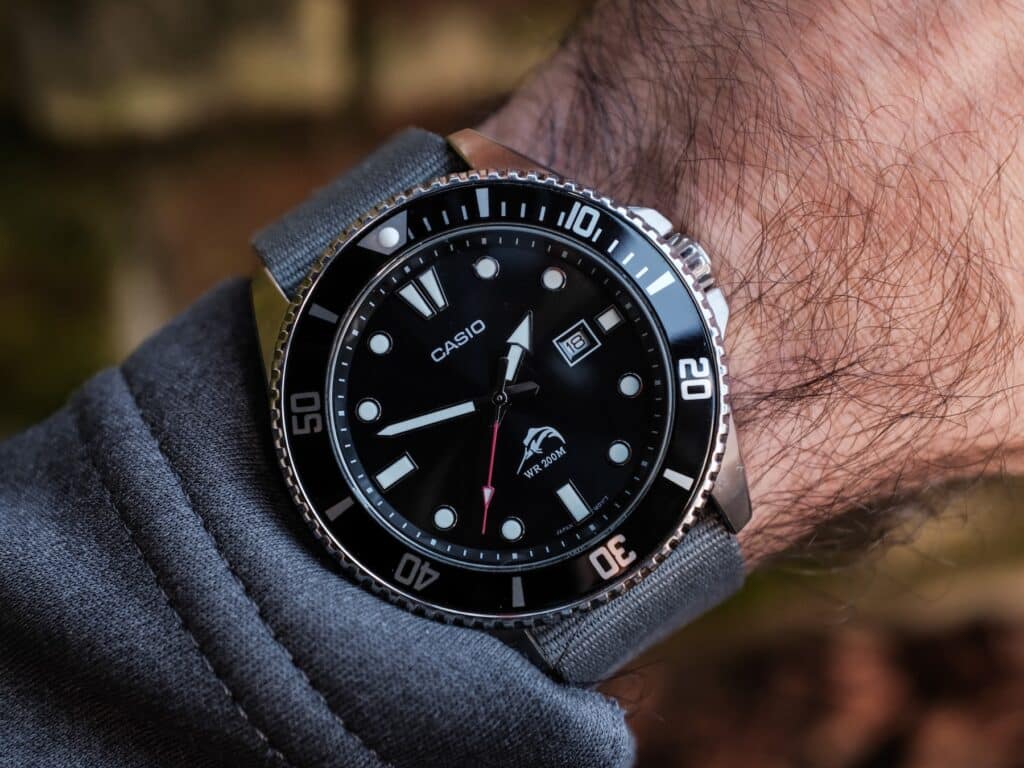
The Casio Duro is the sort of watch that makes you wonder whether the internet has collectively lost the plot, right up until you wear one. We’ve been watching its strange rise for years, including back when Bill Gates wore one, and now an entire little ecosystem treats the Duro like a shared secret. r/DuroGang has its own corner of the watch-nerd universe, which is pretty funny when you remember we’re talking about an inexpensive Casio. Our hands-on time with it helped explain the obsession. Nothing about the Duro is precious, and that is a big part of its charm. It feels uncomplicated and unassuming on the wrist, the kind of watch you can enjoy without constantly thinking about what it says about you. Plenty of more expensive watches spend a lot of effort trying to create that kind of ease.
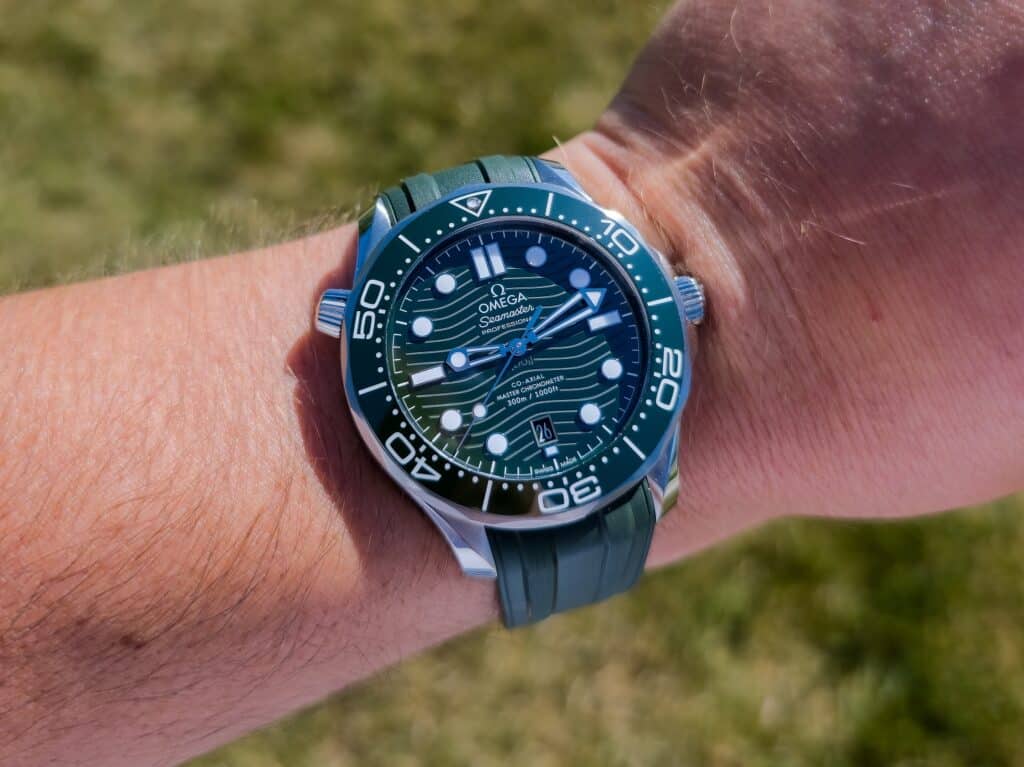
The Omega Seamaster Diver 300M comes with a very different kind of baggage, and most of it is earned. Its long history, prominent on-screen appearances, instantly recognizable design, and high level of execution have made it one of the most familiar modern luxury dive watches around. We’ve seen that reputation hold up in hands-on use, too. Spend time with the Seamaster and the attention to detail becomes part of the experience, not something you have to look for in a press release. The refinement goes well beyond the Omega name on the dial, and its genuine cult following within the collection helps explain why it remains such a prominent part of the modern dive-watch conversation. It has the polish and presence you’d expect from a luxury watch, but that also makes the $6K-versus-$50 question considerably more interesting.
Dial and Straps/Bracelets: Straightforward Utility vs Luxury Refinement
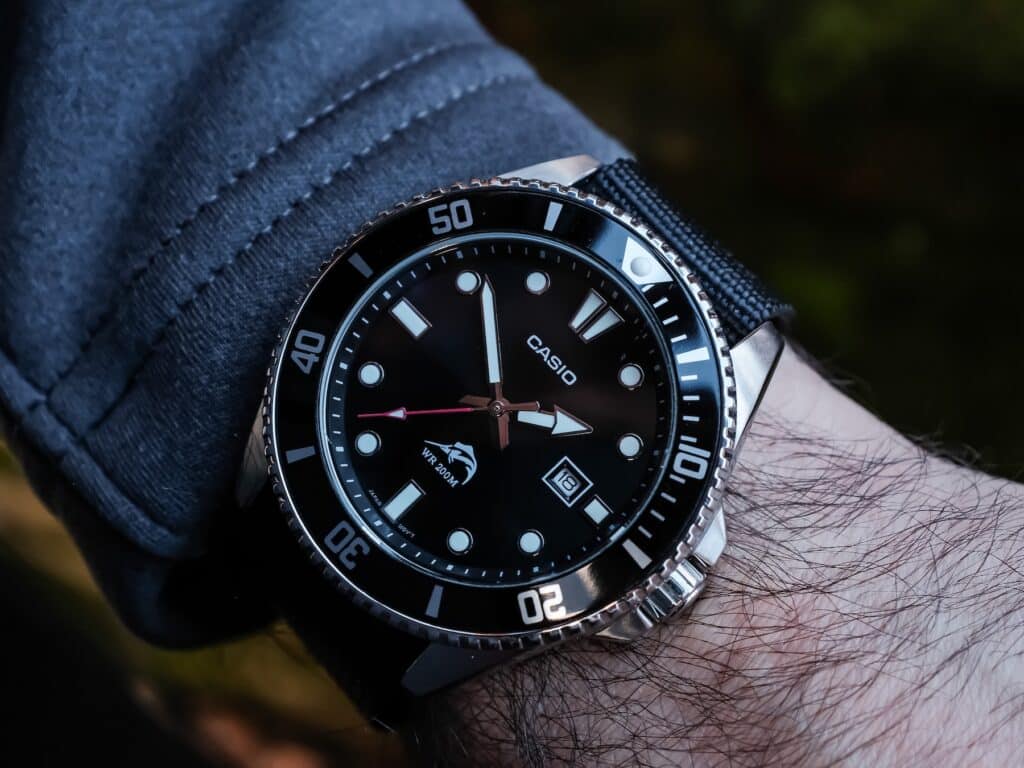
The Casio Duro doesn’t waste much time trying to impress you, and that works in its favor. The black dial follows familiar dive-watch rules, but the details are better considered than you’d expect from something this cheap. The arrow-shaped hands are faceted and polished, the applied hour indices pick up the light nicely, and the framed date window at three o’clock is properly proportioned and easy to read. Even the second hand tracked cleanly on our example, though some variation between Casio watches is inevitable. The dial text stays restrained, while the marlin logo adds the little bit of personality the Duro needs. Take that logo away and, honestly, we’d miss it.
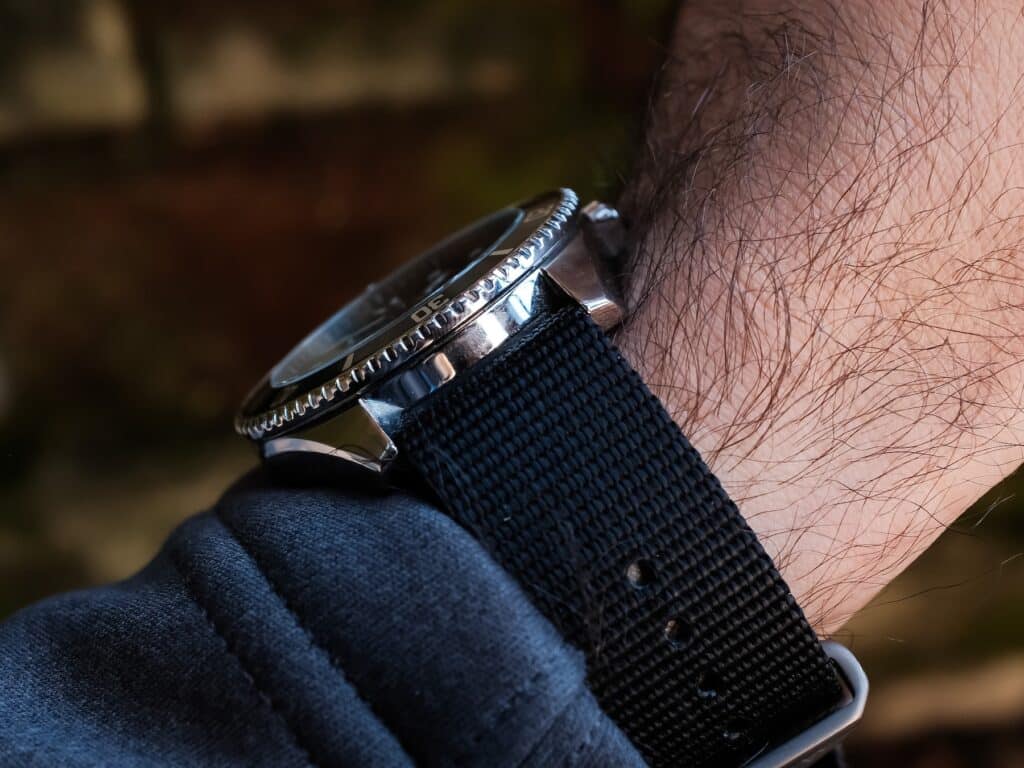
Then there’s the strap situation, which is where the Duro starts behaving like the watch-nerd playground it has become. Our review example didn’t include the stock rubber strap, so we ran it on Toxic NATOs and Prometheus Design Werx straps instead. The 22mm lugs make that sort of tinkering easy, and the aftermarket is big enough to move into bracelets when the mood strikes. That matters because the Duro never feels too precious to experiment with. Change the strap, change the vibe, move on with your day. At this price, there’s no need to hold a board meeting before ordering another NATO.
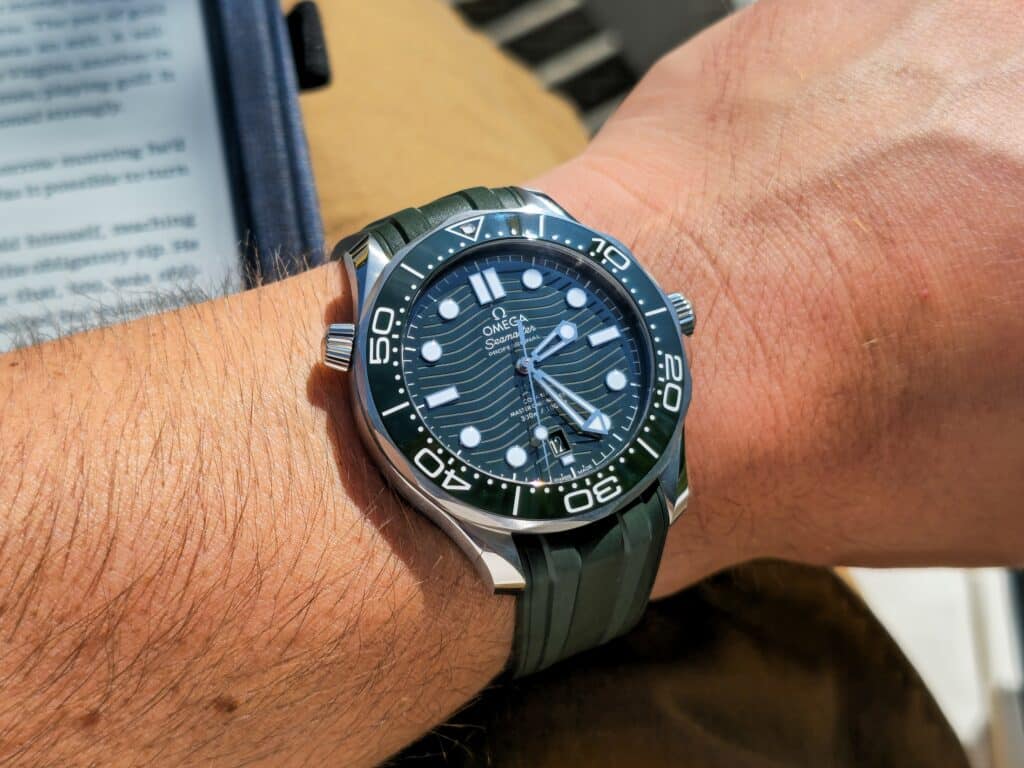
The Omega Seamaster Diver 300M takes almost the opposite approach. Its dial is central to the watch’s identity, with a layout that is recognizable from across a crowded room. As we found in our dedicated review, the latest wave pattern is deeply laser-engraved into the ceramic, giving the dial an almost enamel- or porcelain-like luster. The recessed sections of those waves drop into polished ceramic “canyons,” and the dial printing is exceptionally crisp and sharp, exactly the sort of detail that becomes more apparent the longer you stare at it. The green version is particularly interesting because the color shifts from muted olive to brighter tropical green depending on the light, without ever quite going black. Even the date disc gets the full treatment, with a green match that keeps it from looking like an afterthought. The one compromise is the skeletonized hands, which can make the time feel less immediate against the lumed hour markers. The Seamaster’s dial is undeniably more elaborate than the Duro’s, but that extra visual complexity isn’t entirely free when you need to read it quickly.
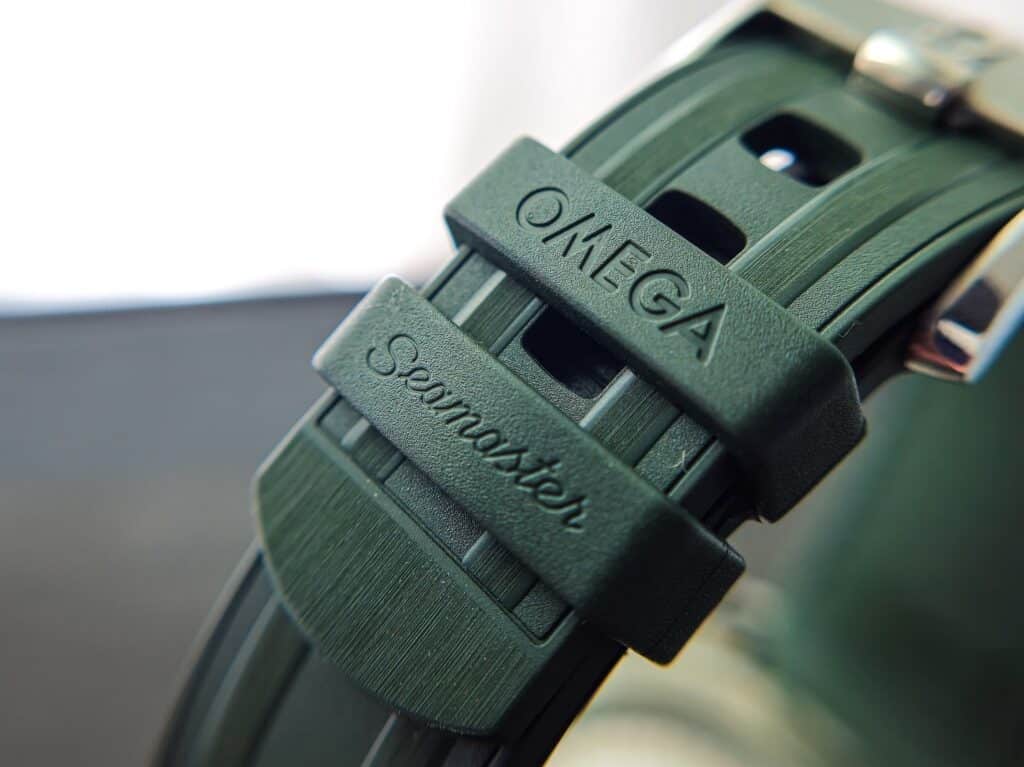
On the wrist, the Seamaster pulls off a trick we didn’t expect from a watch that measures close to 14mm thick: it wears much closer to 12mm, landing in that sweet spot where a substantial diver can become a genuine wear-and-forget watch. It’s wide, and the horizontal dial waves add visual width, but the proportions keep everything feeling natural rather than cumbersome. We’d also take the rubber strap over the steel bracelet. The bracelet is heavy, stays at 20mm without tapering, and feels like Omega bought into the idea that adding metal automatically adds quality. The rubber strap is much more convincing, with a soft, supple feel and thoughtful finishing, including brushed center ribs, embossed Omega and Seamaster keepers, and a tang buckle that combines polished and brushed surfaces. It isn’t as pliable as a good modern FKM strap, and the holes sit a little too far apart for our liking, but once properly fitted, the Seamaster settles well on the wrist.
Build Quality & Technical Approach
The Casio Duro and Omega Seamaster Diver 300M approach the demands of a dive watch from two very different directions. Casio relies on proven, inexpensive components and relatively straightforward construction to deliver reliability without much maintenance or financial commitment. Omega takes a considerably more ambitious approach, with advanced movement engineering, premium materials, and more elaborate case finishing. Both are capable water-resistant watches, but the differences in how they’re built raise an interesting question: how much of that additional engineering actually improves the experience of wearing and using a dive watch?
Movements:
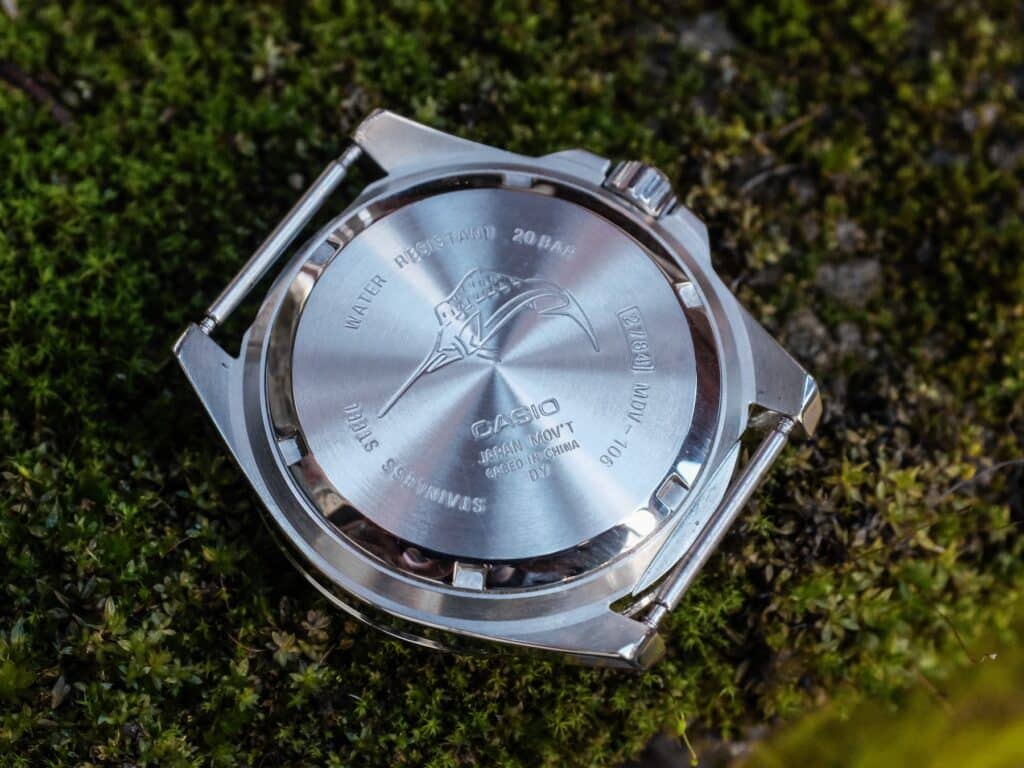
The Casio Duro’s quartz movement may lack mechanical romance, but it fits the watch perfectly. The Casio 2784 offers a quickset date and hacking seconds, runs to roughly ±20 seconds a month, and gets about three years from a battery. More importantly, it asks for almost nothing. We picked it up and wore it without winding, resetting, or syncing, and that low-maintenance behavior became part of the Duro’s appeal. For an inexpensive diver meant to be durable and easy to live with, quartz feels like the sensible choice rather than a shortcoming.
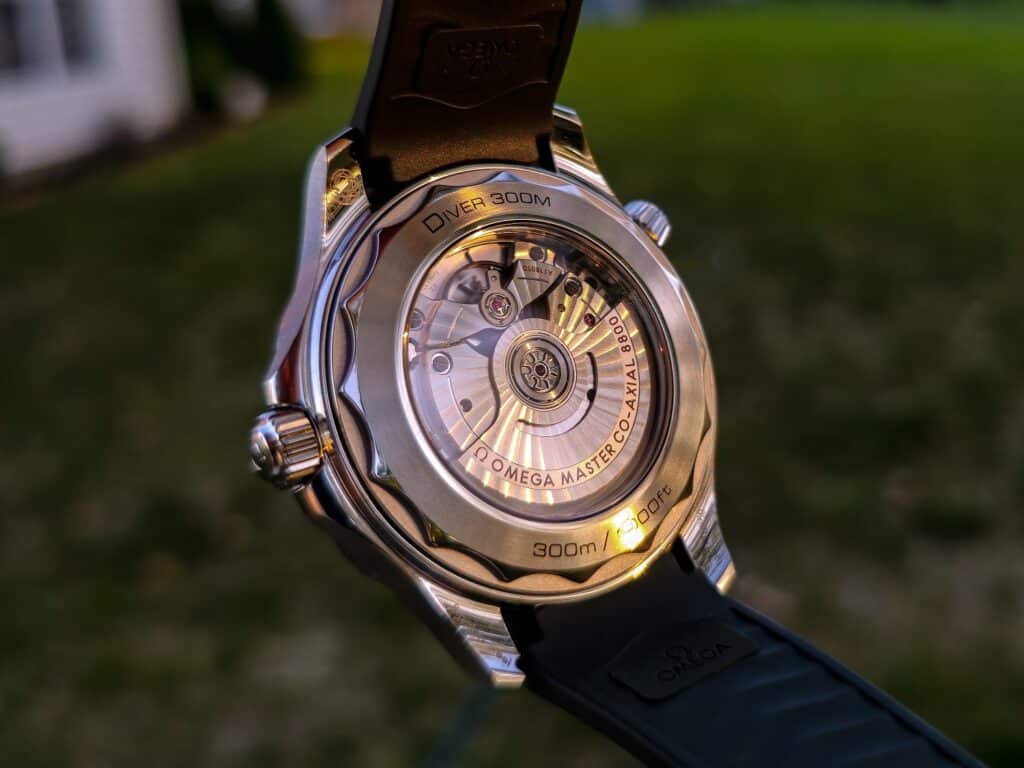
The Omega Seamaster Diver 300M makes the price gap much easier to understand with its Caliber 8800. The Seamaster is Master Chronometer certified by METAS, with an accuracy standard of 0/+5 seconds a day, and our example was running within +1 second a day. The Co-Axial escapement reduces friction and reliance on lubricants, thereby stretching service intervals. The 15,000-gauss antimagnetic resistance adds another layer of protection for everyday use. The display back also gives you Omega’s distinctive finishing, though it doesn’t quite have the depth we’ve seen from smaller independent makers. Winding the 8800 is very smooth, too, although the small crown is less pleasant to unscrew and secure. In other words, the Omega movement is far more technically ambitious; the Duro’s is simply easier to forget about.
Case Construction, Finishing & Wearability:
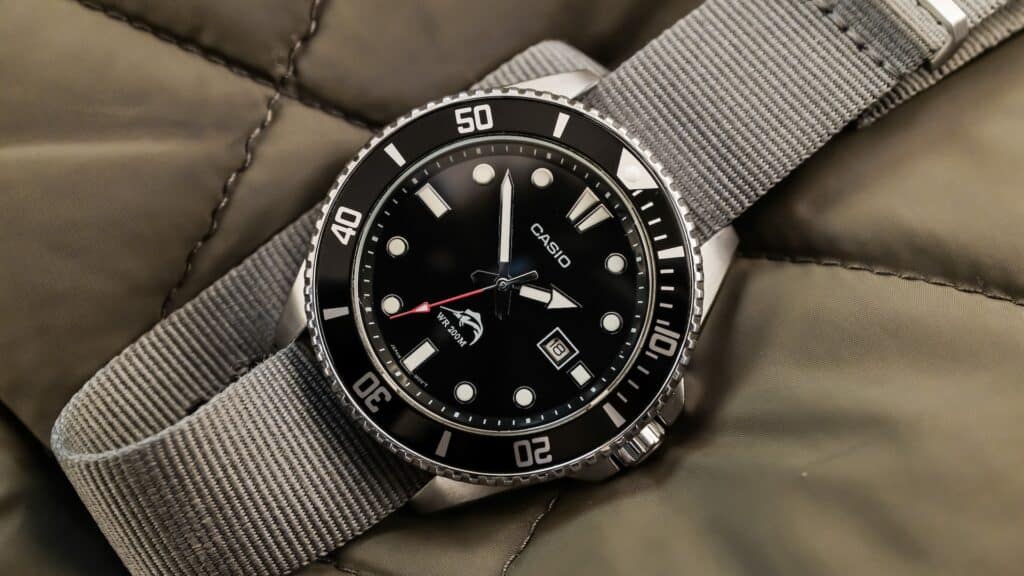
The Casio Duro arrives with dimensions that look a little ridiculous until you put one on. At 44.2mm across, 12.1mm thick, and 48.5mm lug-to-lug, the spec sheet practically dares you to ask whether a smaller case might have been a better idea. We had that thought too. On the wrist, though, the relatively short lug-to-lug and downward-curving lugs keep the case from turning into a dinner plate strapped to your arm. It wears large, but not awkwardly, and our experience with similarly sized watches like the Seiko Turtle made the proportions feel familiar. More importantly, we eventually stopped wishing it were smaller. The case itself is straightforward but far from careless, with a brushed top surface, polished sides, and a subtle bevel that catches the light and breaks up the otherwise utilitarian shape. There’s no attempt to dress the Duro up as something it isn’t, and that honesty works.
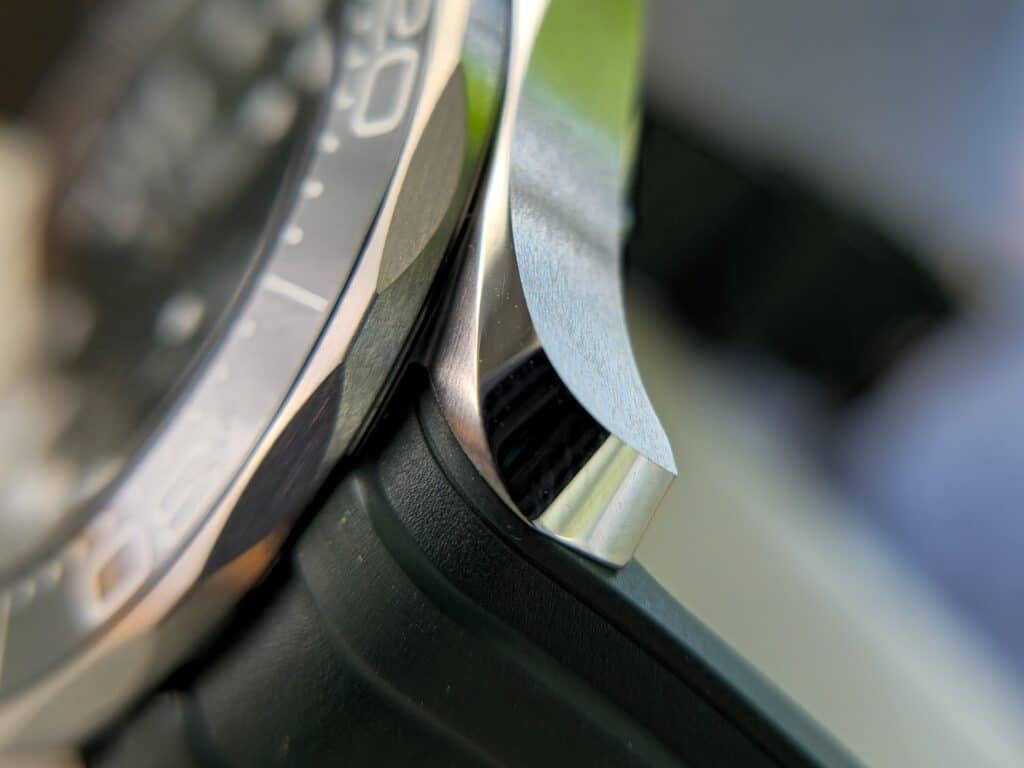
The Omega Seamaster Diver 300M takes those basic case ingredients and sends them through a considerably more expensive kitchen. The 42mm case initially made us wonder whether it would wear like the wide diver we expected, but on the wrist it comes across as only slightly larger than a 40mm Submariner. Much of that comes down to the twisted lyre lugs. Their polished tops catch the light before tightening into an extremely thin polished bevel beneath the bezel, visually slicing up the case and making some of that width disappear. The inner lug sections and case flanks are finely brushed, with a depth and consistency that immediately separates the Omega from the Casio. Flip it over, and the display caseback continues the show with its art-deco, gear-tooth surround and clear sapphire window. The Duro’s case encourages us to wear the watch without a second thought; the Seamaster’s makes us pause after putting it on, because there’s considerably more to admire.
Crystals and Bezels:
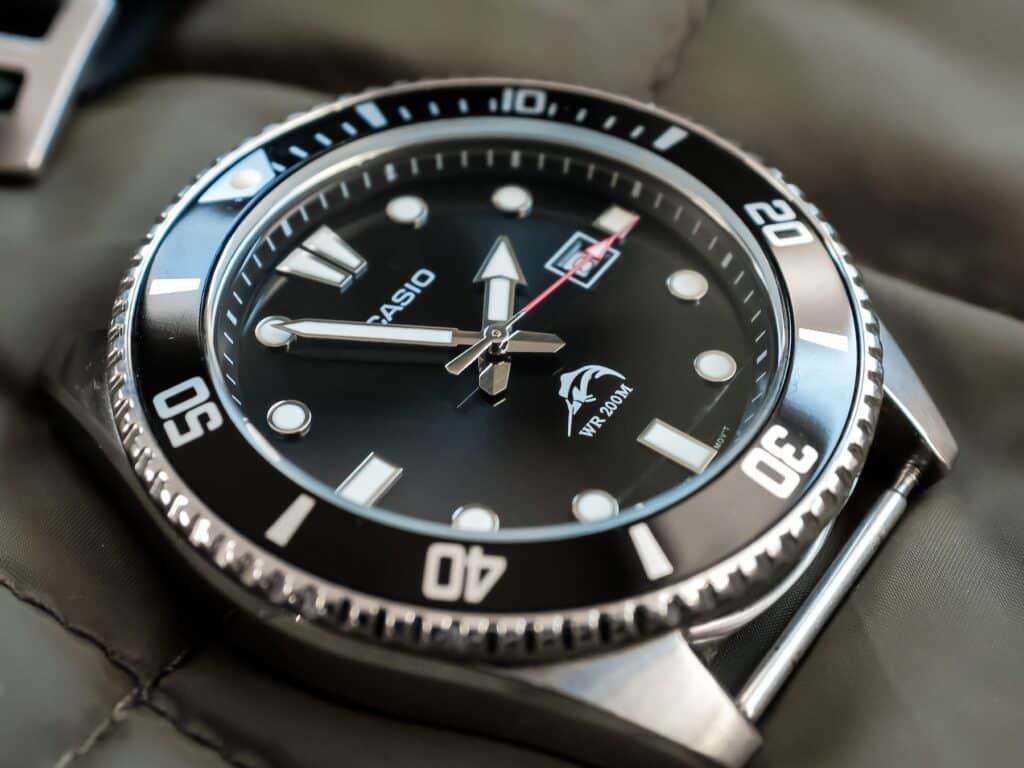
The Casio Duro keeps the front end quite uncomplicated with a flat mineral crystal, but the aluminum bezel is where it starts showing off a little. Our example’s unidirectional bezel clicked with a firm, controlled action that was smoother than expected, perhaps helped by some previous wrist time. Either way, it felt familiar in the best way, with an operation very close to dive watches we’ve handled that cost many times more. The mineral crystal is the obvious weak link against sapphire, but this is a Duro, not a family heirloom. Scratching the crystal is annoying; scratching your $50 watch is considerably less emotionally expensive than scratching your $6,000 one.
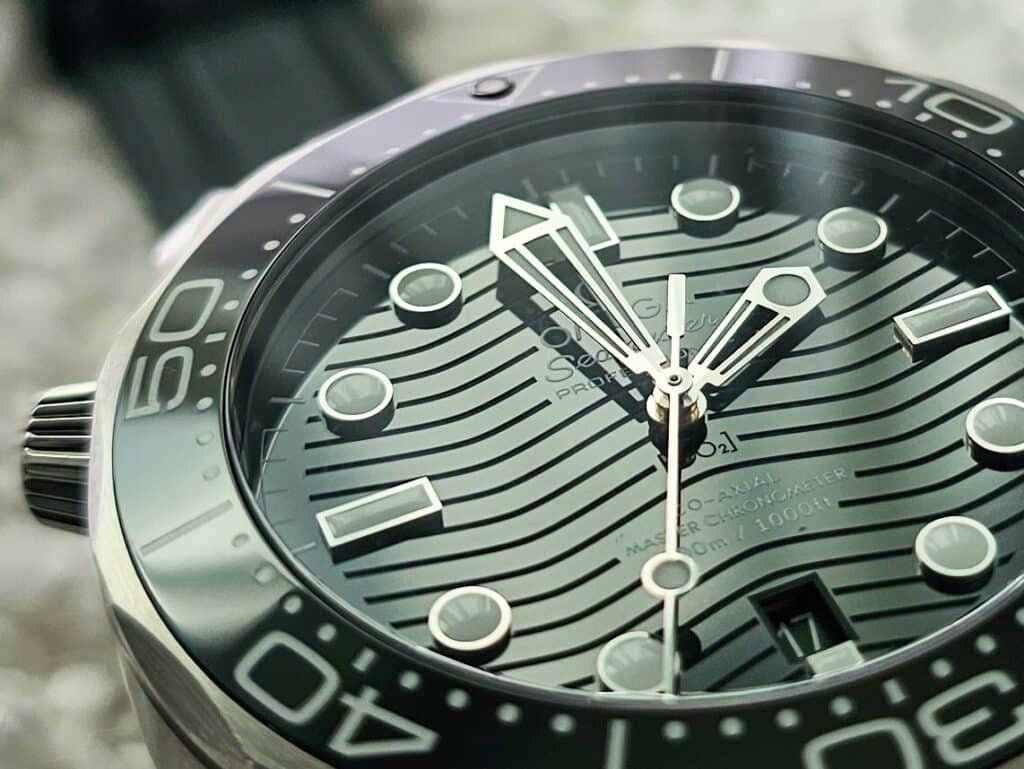
The Omega Seamaster Diver 300M is the exact opposite: the sapphire crystal is so effective that it practically disappears from the wrist. Omega’s external AR coating does an excellent job of killing reflections in almost every lighting condition. However, that outside coating also means those tiny micro-scratches can become a long-term concern. Our example arrived flawless, but we’d be more conscious of what the crystal rubs against than we would with the Duro. The ceramic bezel looks superb, with brushed facets around its edge and a glossy green insert that follows the dial’s shifting shades almost perfectly. Its 60-click action is crisp and completely free of back play, but this is where the expensive watch gets oddly human. It doesn’t have much tactile personality, and the scalloped edge can be frustrating to grab reliably. Wet fingers or gloves would make that even less fun. So while the Seamaster wins the visual and crystal contest by a considerable margin, the Duro’s bezel is the one we’d happily keep fiddling with.
Water Resistance & Lume:
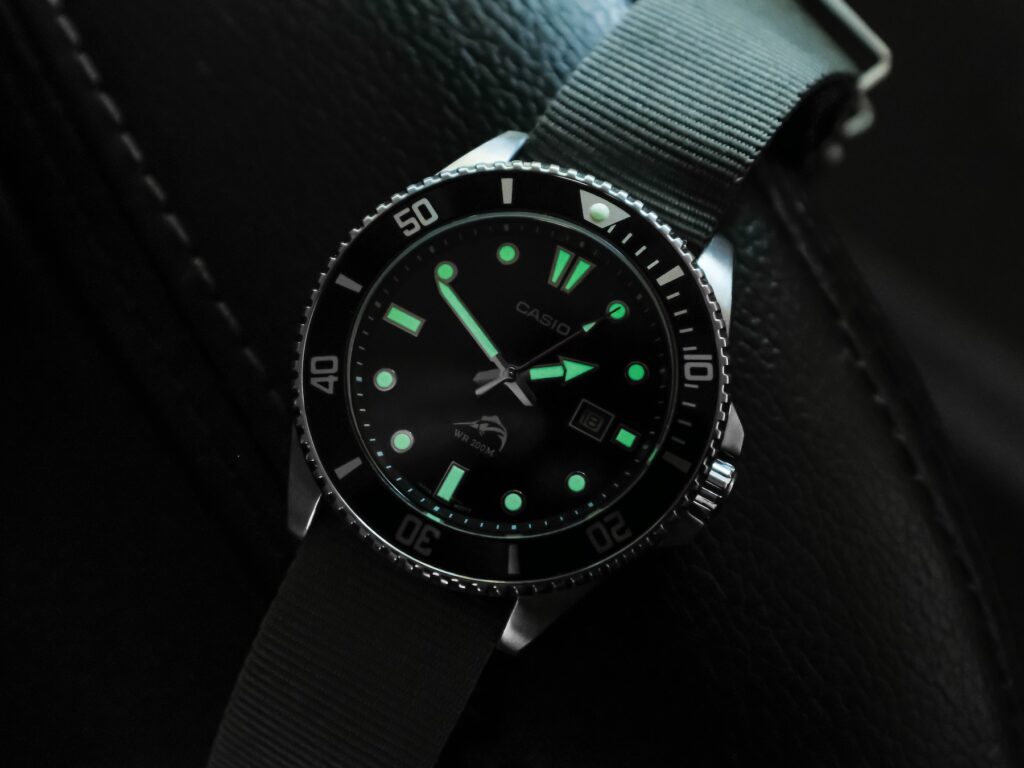
The Casio Duro has the sort of water resistance that makes the rest of the watch’s bargain-bin reputation feel a bit ridiculous. Its 200-meter rating, screw-down crown with guards, and solid screw-down caseback give it the basic architecture of a proper diver rather than a watch that merely enjoys wearing a dive-watch costume. The lume follows the same no-nonsense philosophy. The indices feature luminous material that makes the dial readable in low light, though the glow doesn’t last as long as we’d like. It isn’t trying to win a lume contest; it’s there to make sure you can still tell what time it is when the room gets dark.
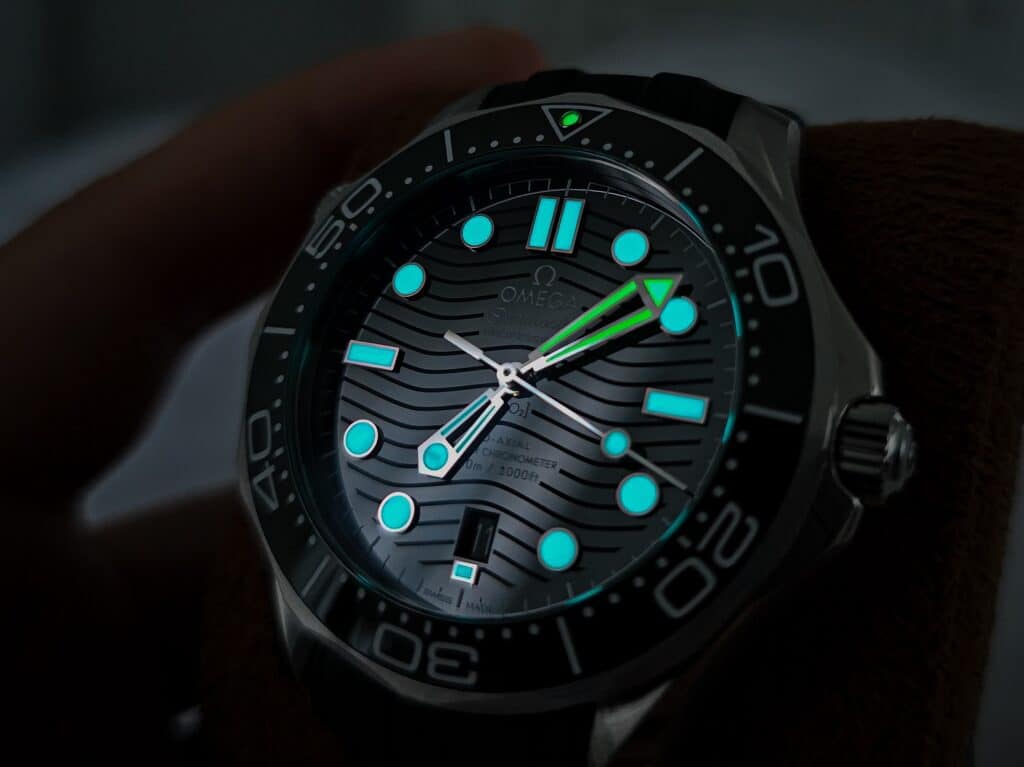
The Omega Seamaster Diver 300M pushes the rating to 300 meters and adds the helium escape valve crown at 10 o’clock, one of those wonderfully strange Seamaster signatures that gives an otherwise polished diver a little tool-watch weirdness. We like it, even if it’s hardly the first feature we’d demand when buying a watch for recreational diving. The lume is more elaborate, with blue on the indices, hour and second hands, and green on the minute hand and bezel pip. That color separation makes nighttime orientation quite easy, since the minute hand and bezel marker visually belong together. It’s clever, distinctive, and fun to look at, though it isn’t the brightest or longest-lasting lume we’ve seen, particularly next to a Seiko SKX. Like the watch itself, the Seamaster’s lume is more about thoughtful execution and visual character than brute-force tool functionality.
Cost Considerations
The Casio Duro officially lists for $84.95, but street prices regularly fall into the $50 – $70 range, too. That’s firmly in the “sure, why not?” end of watch collecting. After spending time with it, we understood why the Duro is so easy to add to a collection: it doesn’t need to replace anything, justify a milestone purchase, or pretend it’s an heirloom. We simply found ourselves wanting one because it made us smile. At this price, you can enjoy the watch, swap some straps around, and wear it without the constant background noise of worrying about what you’ve done to your expensive watch.
The Omega Seamaster Diver 300M asks for $6,300 on rubber or $6,700 on steel, which is where the calculator comes out and the enthusiasm gets briefly interrogated. That’s a serious jump over the Duro and enough to put the Seamaster in a very different part of the buying conversation. We’d normally lean toward buying on the bracelet and adding rubber or leather later, but the bigger point is what you’re paying for. The Seamaster looks so polished and refined on the wrist that it often feels more at home under a shirt cuff or beside a drink at the local distillery than strapped over a wetsuit. It is still a serious diver, but its appeal has clearly wandered into fine-jewelry territory. The Duro asks for very little money and gives you a lot of watch to enjoy; the Omega asks whether you’re prepared to spend considerably more to enjoy the version with all the expensive finishing.
Final Thoughts: Is the Omega Seamaster Actually a Better Dive Watch Than the Casio Duro?
After living with both, our answer to the original question is no—the Omega Seamaster Diver 300M isn’t a better dive watch than the Casio Duro. It’s a better luxury watch that happens to be an excellent diver. The distinction becomes obvious once we stop judging them by price and finish and ask which one we’d actually want strapped to our wrist when water, gear, and general abuse matter more than protecting the watch.
That’s where the Duro has an advantage money can’t easily buy. It’s uncomplicated, accurate enough for the job, built to get wet, and cheap enough that a scratch barely interrupts the day. The Seamaster gives us considerably more to appreciate, but it also carries more baggage: more money invested, more finishing to worry about, and more reason to notice every little mark. For diving, we’d rather have the watch that disappears into the activity than the one that keeps reminding us how much it cost.
That doesn’t make the Seamaster foolish at $6K. Far from it. The movement, case finishing, dial execution, and overall wrist experience give it a level of sophistication the Duro was never trying to achieve. But that is precisely the point: those qualities make the Omega desirable as a watch-collecting object, not as regular diving equipment.
So if the question is which one we’d rather strap on for a day of diving without worrying about scratches, damage, or the cost of ownership, we’re taking the Casio Duro. If the question is which one we’d rather admire, own, and obsess over as watch enthusiasts, then it’s the Omega’s turn.

Co-Founder and Senior Editor
Kaz has been collecting watches since 2015, but he’s been fascinated by product design, the Collector’s psychology, and brand marketing his whole life. While sharing the same strong fondness for all things horologically-affordable as Mike (his TBWS partner in crime), Kaz’s collection niche is also focused on vintage Soviet watches as well as watches that feature a unique, but well-designed quirk or visual hook.