We’ve all had watches that looked better on paper than they felt on the wrist. Affordable quartz divers are especially easy to judge that way because the formula is familiar, and it’s tempting to form an opinion before actually spending time with one. Our reviews of the Casio Duro and Timex Deepwater Meridian 200 gave us a reason to slow down and do the opposite: wear both, test both, and see which impressions lasted once the specifications stopped being the focus. That hands-on approach has shaped nearly a decade of TBWS reviews, with enough wrist time to know that the little things often matter more to the experience than a neatly arranged spec sheet.
That’s the approach we’re taking here. We’re focusing on what we noticed while wearing and testing both, where they made the strongest impressions, and where they left us wanting more. The two watches may occupy similar territory, but wearing them back-to-back tells a more interesting story than their specifications alone. So, after all that wrist time, which quartz diver did we find ourselves wanting to wear more as an everyday companion?
Overview and Identity
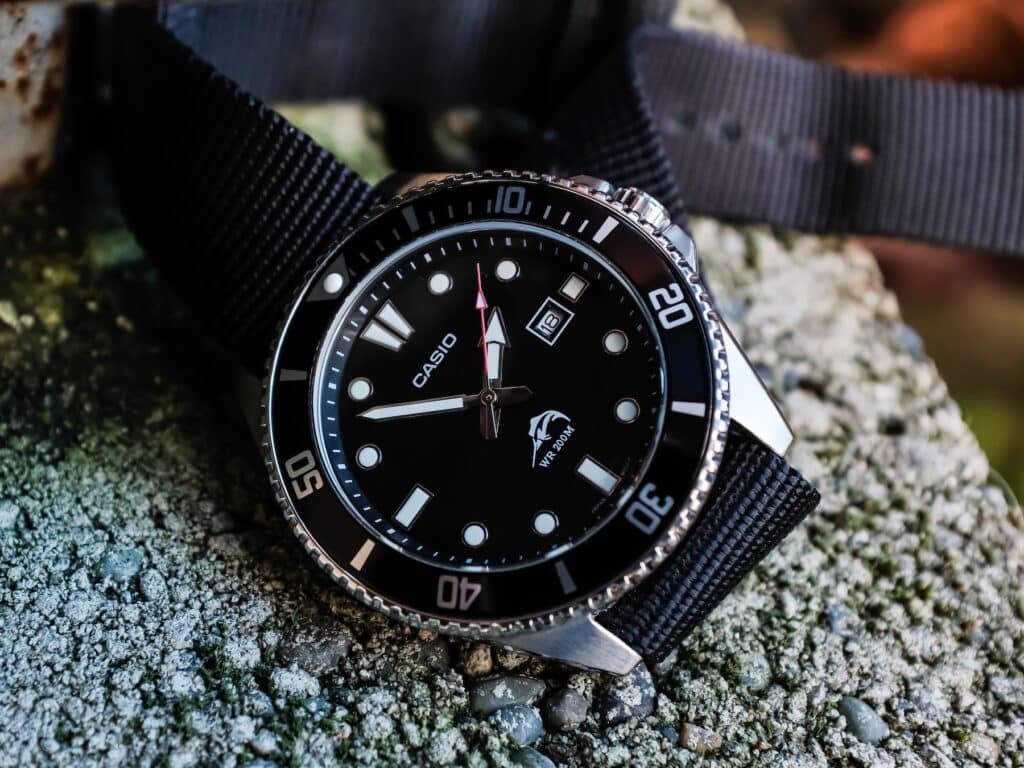
The Casio Duro has somehow escaped the fate of being “just another affordable quartz diver.” We’d already written about it years ago, including when it showed up on Bill Gates’ wrist, and the watch was developing a second life far beyond what you’d expect from something this inexpensive. An entire r/DuroGang corner of the internet is even devoted to it. That’s the odd part: step back and look at the Duro on its own, and it’s a pretty straightforward watch. Spend more time around enthusiasts, though, and you start to see why it’s become a shared obsession. At its price, that kind of loyalty is hard to dismiss as a novelty. It’s something we came to appreciate while spending hands-on time with it.
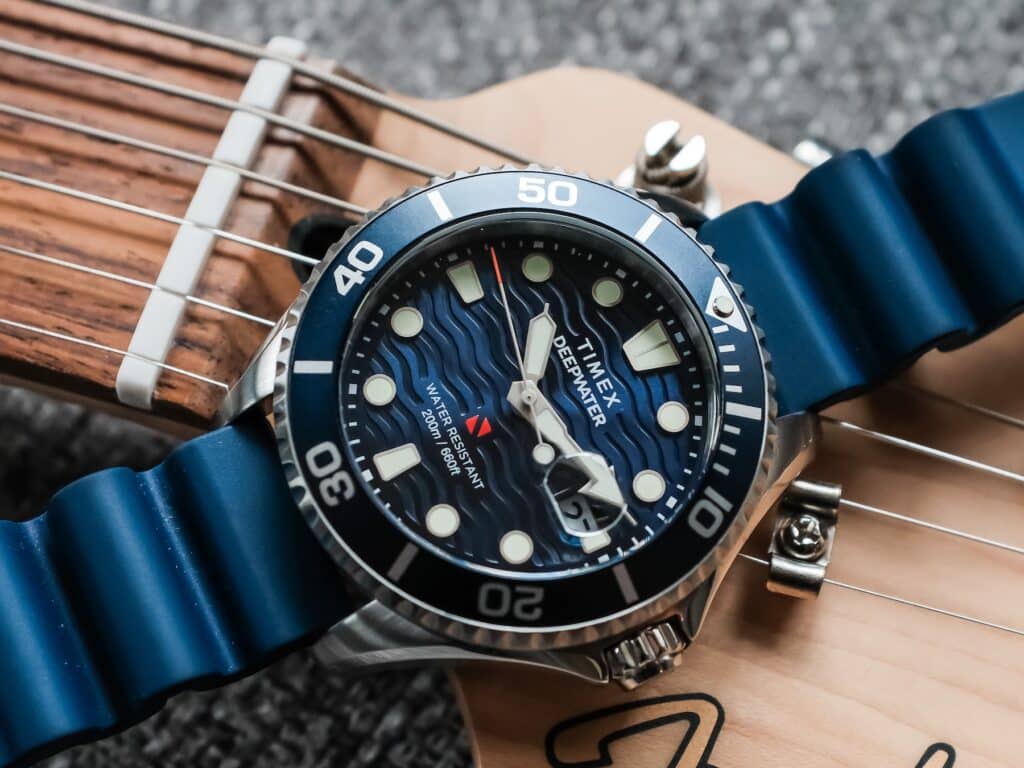
The Timex Deepwater Meridian 200 takes a more forceful route. In our hands-on review, the case had a chunkiness that reminded us of a Rolex Sea-Dweller (purely in terms of bulk, not its water-resistance rating), giving the watch a deliberate weight and presence. This was Timex stepping beyond its familiar casual and nostalgic territory with a diver that felt more serious and purpose-built. The Deepwater line launched in 2024 around that idea of practical, spec-focused dive watches that didn’t feel like toys, and the Meridian 200 sits well above Timex’s usual entry-level divers in materials.
Dial and Straps: Familiar Dive Layout vs More Refined Execution
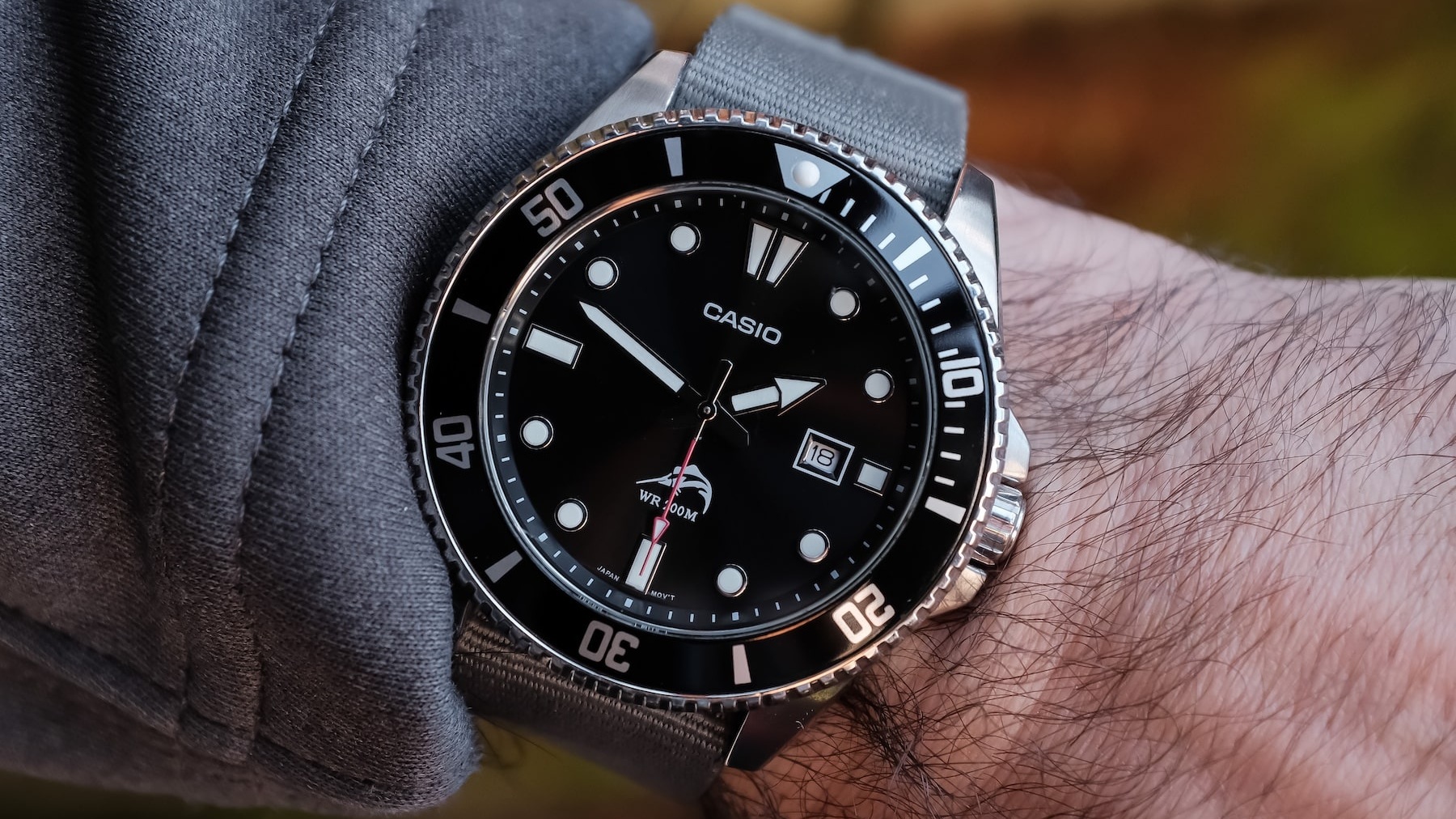
The Casio Duro sticks to familiar dive-watch territory, but spending significant time with the black dial makes it clear that Casio put more thought into the details than the price indicates. The arrow-shaped hands are faceted and polished, while the applied indices catch the light cleanly and help keep the dial legible. The date window at three is another small win: it’s framed, proportionate, and easy to read rather than squeezed into the layout as an afterthought. Even the second hand tracks cleanly enough, although there can be some variance between individual Duro examples. Dial text is kept under control, with the Marlin logo giving the watch much of its personality. For collectors, that detail matters too, since the logo remains on the MDV-106 in the U.S. while the newer MDV-107 sold in some other regions drops it.
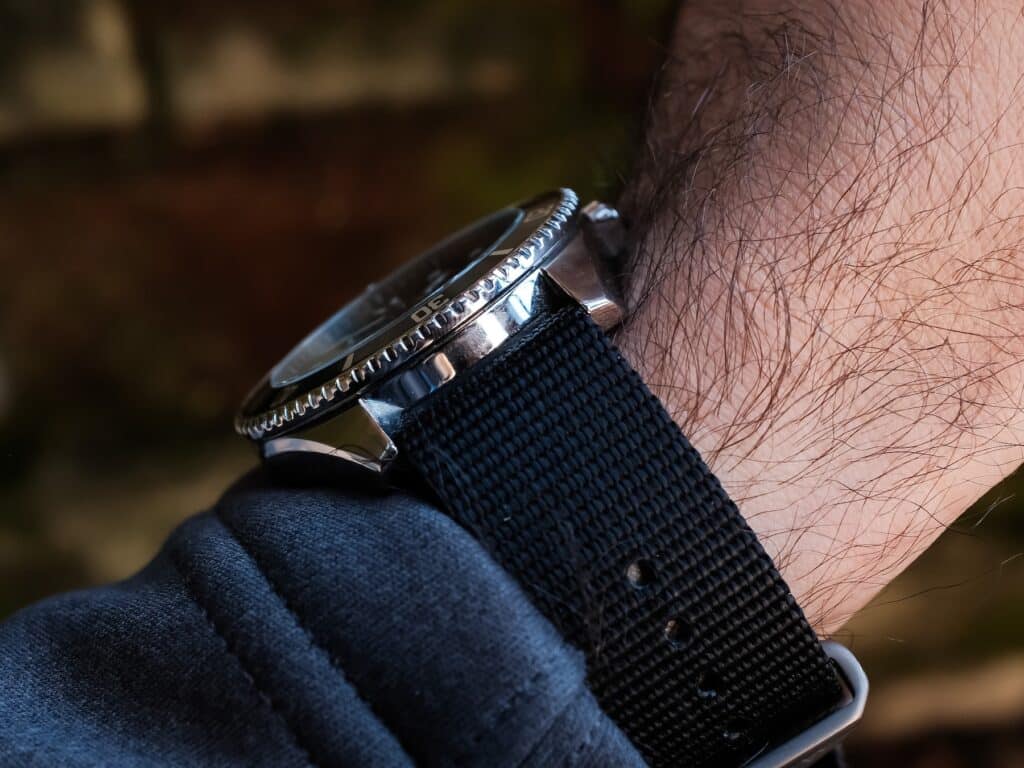
The Duro is also the more flexible strap-swapping project. We didn’t spend time with the stock rubber strap because this example didn’t include one, so we wore it on our own Toxic NATOs and Prometheus Design Werx straps instead. The 22mm lug width opens up a lot of options, and there’s a healthy aftermarket if you prefer a bracelet. That flexibility suits the Duro’s enthusiast following because you can change the personality without changing the watch. It’s the kind of detail that becomes more noticeable the longer you own it.
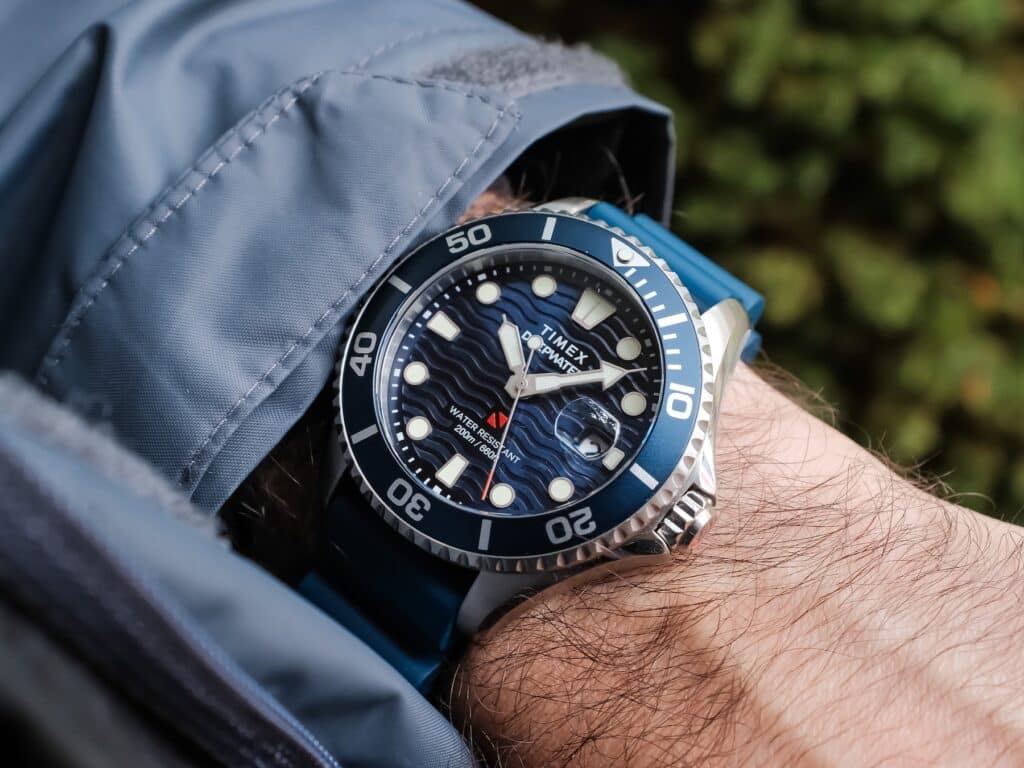
On the other hand, the Timex Deepwater Meridian 200 takes a more considered approach to the dial. Its blue sunburst surface features a wave pattern that adds visual depth and a hint of Seamaster flavor without turning it into a straight copy. Applied indices, white text, and the red diver’s flag add contrast without crowding the dial. Moreover, the blue-and-red combination gives the Meridian 200 more visual personality than its straightforward tool-watch brief might suggest. It feels like Timex wanted the dial to have some presence while still keeping the information easy to parse.
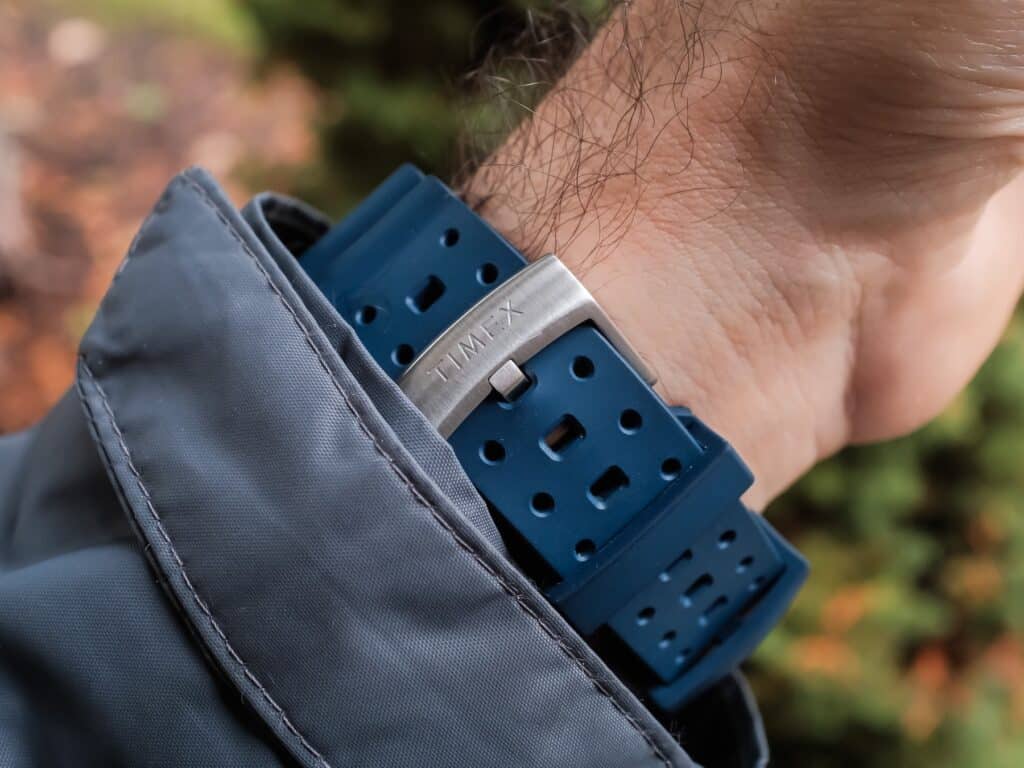
The HNBR rubber strap follows the same practical thinking. It’s designed to resist UV damage, uses perforations for better breathability, and has a stationary keeper tab that helps keep the fit secure. That makes more sense once you wear the watch for longer stretches or take it into warmer conditions. Compared with the Duro’s strap-swapping ecosystem, though, the Timex feels more resolved straight out of the box than it does inviting you to customize it.
Build Quality & Technical Approach
The Casio Duro and Timex Deepwater Meridian 200 start with the same basic brief: practical quartz diving watches without the fuss. But after some wrist time, their different priorities become obvious. The Duro keeps things straightforward, while the Timex puts more effort into pushing the formula upmarket. The interesting part is seeing where those choices actually matter in use.
Movements:
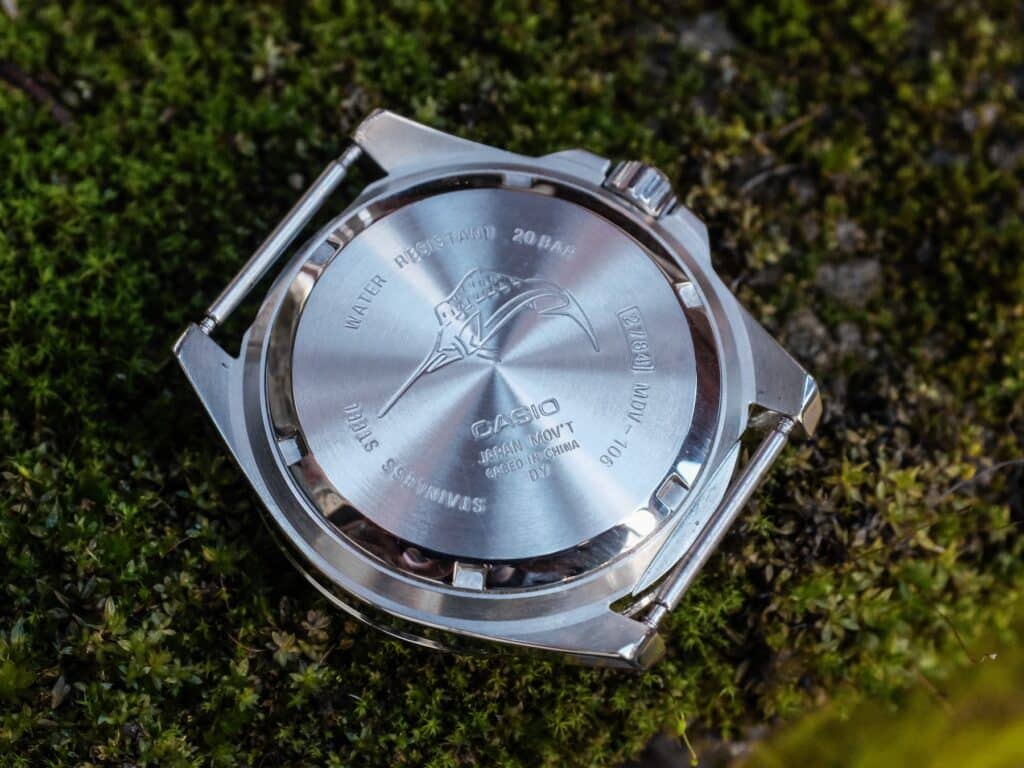
The Casio Duro uses Casio’s 2784 quartz movement, which makes perfect sense once you stop applying mechanical-watch rules to a watch that never asked for them. It hacks, has a quickset date, runs to roughly ±20 seconds a month, and gets around three years from a battery. While testing it, we never thought about winding, resetting, or syncing it. We picked it up and wore it. That sounds almost too simple, but for a watch meant to be durable and easy to live with, simple does a lot of heavy lifting. If you need your movement to give you something to admire through a loupe, this obviously isn’t that watch. If you want to grab it and get on with your day, the 2784 has the right idea.
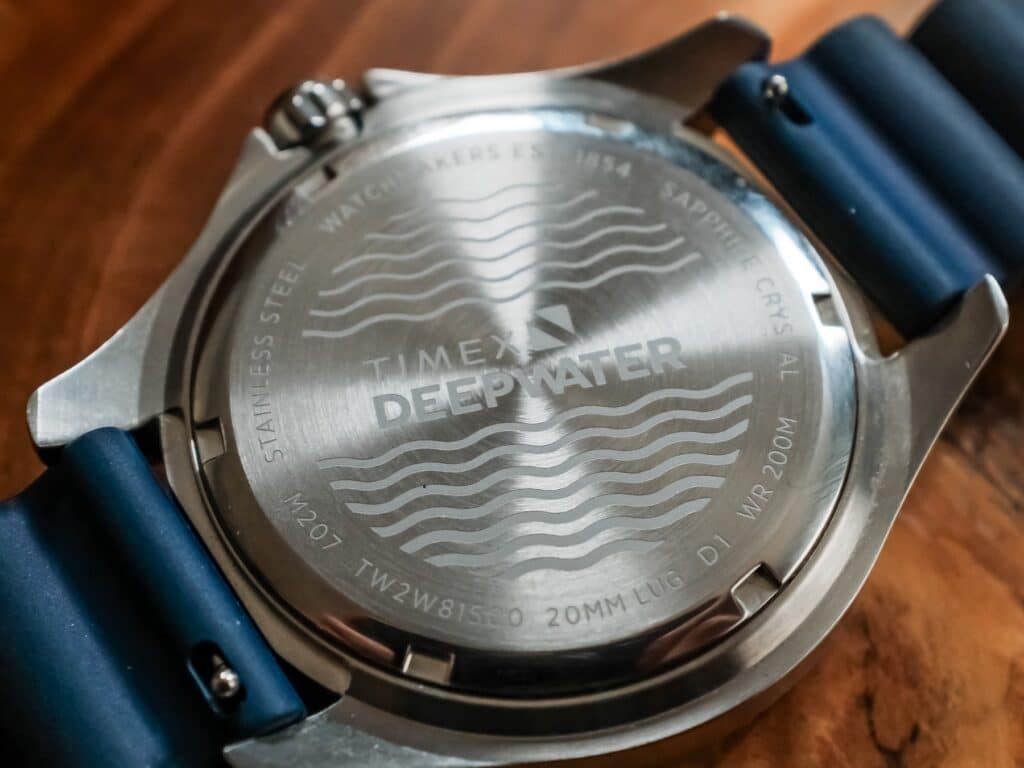
The Timex Deepwater Meridian 200 takes the same no-nonsense approach with the Seiko Epson VX42E. It hacks, offers a quickset date, and runs for about three years on one battery, while setting the time feels pretty straightforward, thanks to a steady crown and hands that snap into place without hesitation. It also has an end-of-life indicator, a useful reminder that the battery won’t simply choose the worst possible moment to call it quits.
Case Construction, Finishing & Wearability
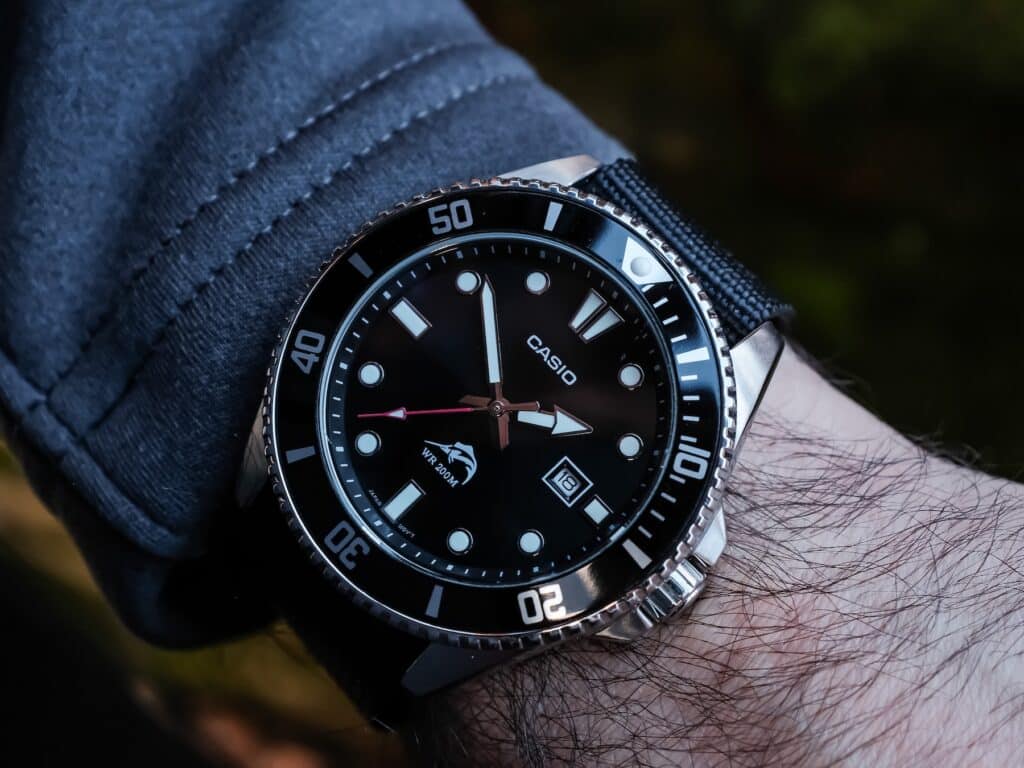
The Casio Duro is not trying to sneak onto your wrist. At 44.2mm wide, 12.1mm thick, and 48.5mm lug-to-lug, it looks big on paper and in person. The useful bit is that it doesn’t wear like a badly proportioned giant. The short lug-to-lug and downward-curving lugs keep the case from taking over the wrist, and having worn the Seiko Turtle in a similar size range, we found the Duro quite familiar. Once it was on the wrist, the initial “44mm, seriously?” reaction faded pretty quickly. We even stopped wishing Casio had made it smaller. The case is straightforward but far from careless, with a brushed top surface, polished sides, and a subtle bevel that adds just enough visual breakup. It’s a large diver with no interest in apologizing for being one, and somehow that works.
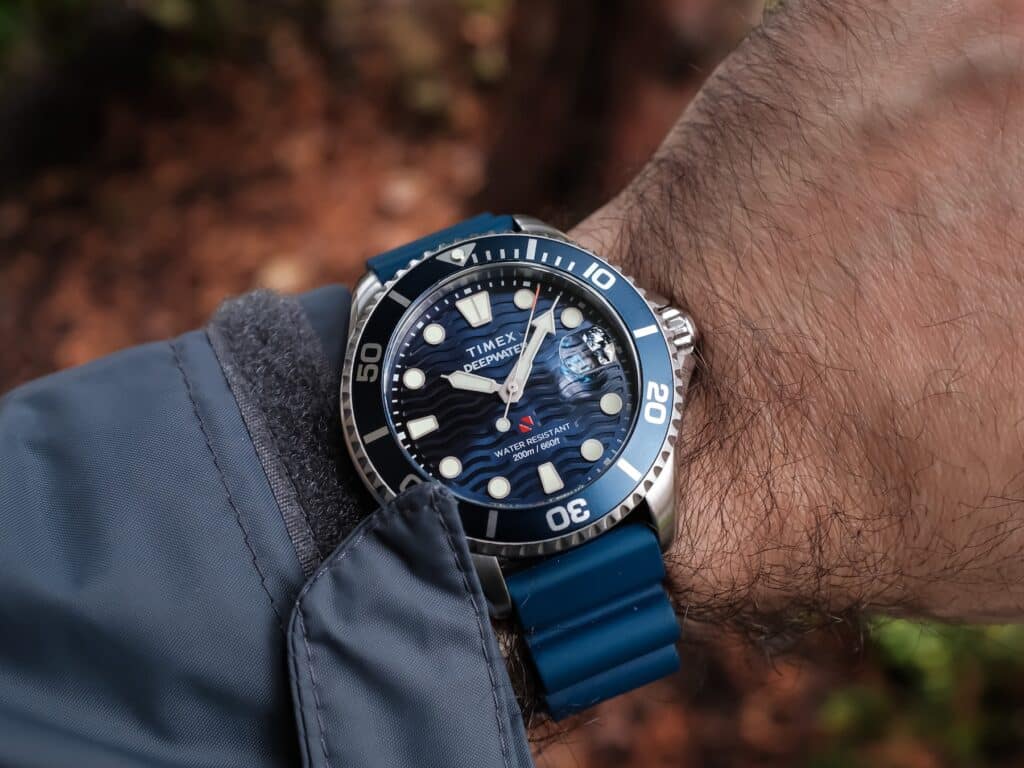
The Timex Deepwater Meridian 200 arrives at roughly the same destination but gets there with its own set of compromises. Its 44mm case is about 12.5mm thick, while the 50.5mm lug-to-lug sounds more intimidating than it feels. The lugs curve down nicely, and the flat caseback keeps the watch sitting lower than its dimensions might imply. During our time with it, the watch felt substantial without becoming clumsy. It has the physical presence we expect from a serious tool watch, rather than the awkward bulk of something designed to look impressive in a product photo. You know it’s on your wrist, but it doesn’t spend the entire day demanding attention.
Crystals and Bezels:
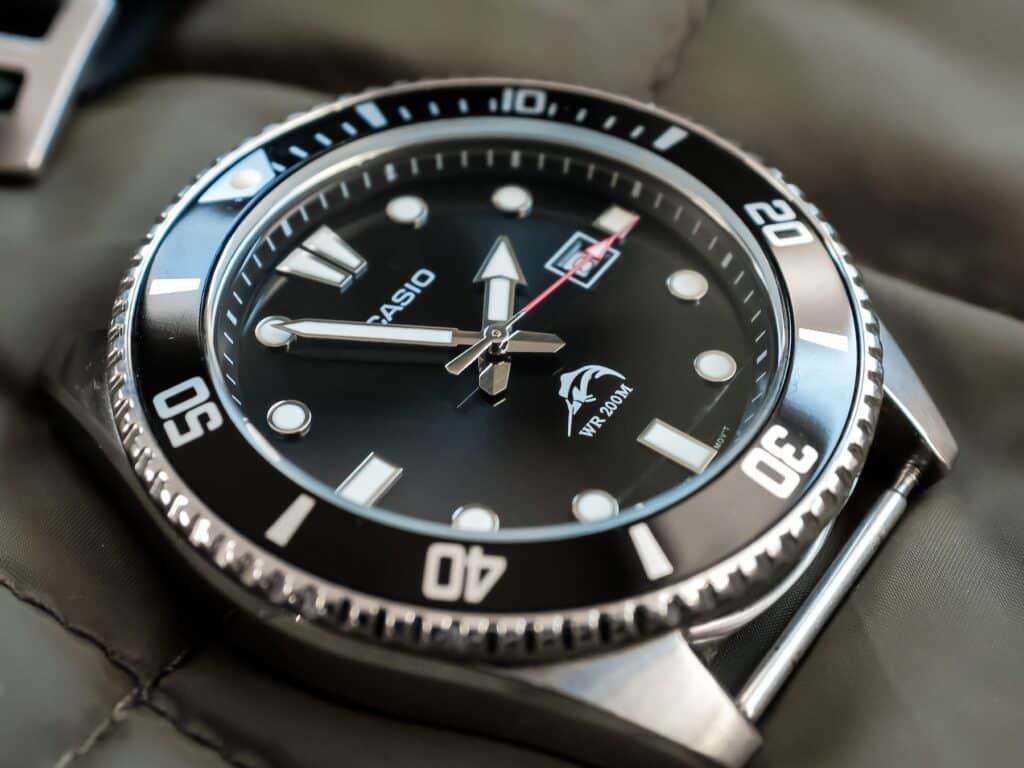
The Casio Duro isn’t pretending its flat mineral crystal is some luxury upgrade, and that’s fine by us. This is a watch where the bezel ends up being the more interesting part. Its aluminum unidirectional bezel clicks with a firmness we didn’t expect at this price, while still rotating smoothly enough to avoid feeling cheap or overly mechanical for its own sake. Our example may have been a little broken in, but the overall action was satisfying and reminded us of bezels we’ve used on watches costing several times more. That’s the kind of detail you notice every time you use the watch.
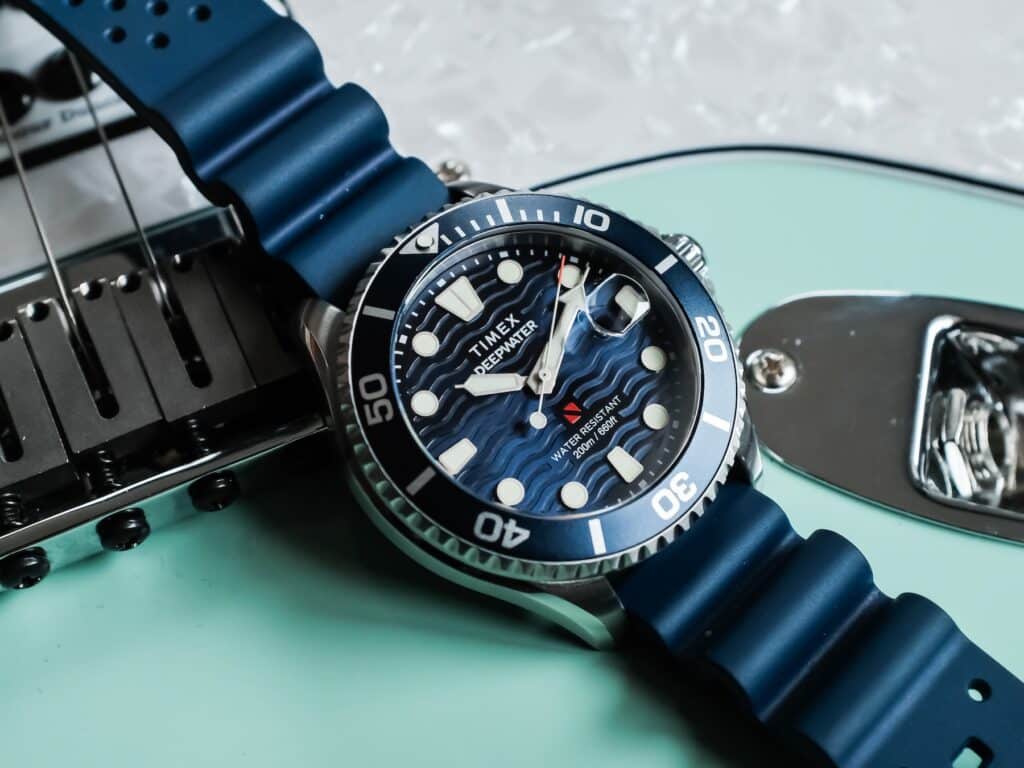
The Timex Deepwater Meridian 200 brings sapphire, AR coating, and a magnifier over the date, giving it a more premium setup from the start. We’re not universally sold on cyclops magnifiers, but this one worked better than expected, with minimal distortion through the crystal. The bezel is where the Timex really shines. Its aluminum insert has 120 clicks, and the action is tight, clean, and free of slop. No gritty rotation, no hollow-sounding clicks, no wondering whether you landed between positions. It’s a small interaction, but after enough wrist time, it’s what separates “technically fine” from “this feels good to use.”
Water Resistance & Lume:
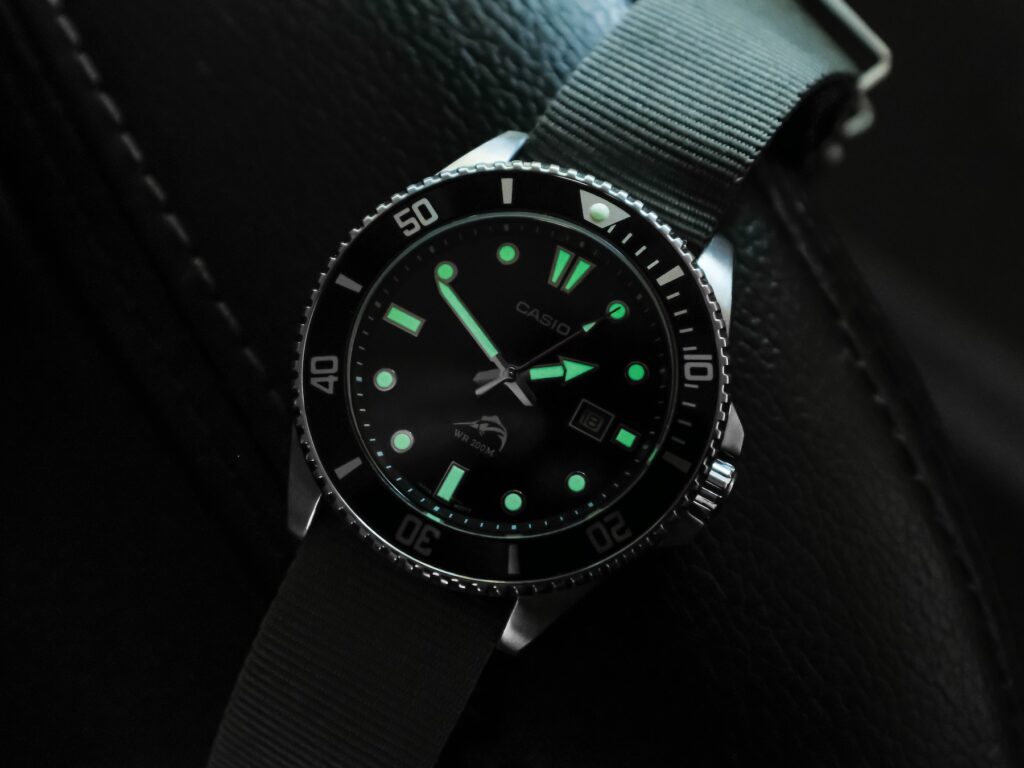
The Casio Duro doesn’t need much convincing when water is involved. Its 200-meter rating, screw-down crown with guards, and solid screw-down caseback give it the basic hardware we want in a proper diver. There’s no sense that Casio added the rating for the brochure and hoped nobody noticed the rest. The lume is similarly straightforward. The hands and indices are generously filled and easy enough to pick out in the dark, although the glow starts to fade sooner than we’d prefer. For a watch at this level, we’re happy with functional. Nobody bought a Duro expecting a portable lighthouse.
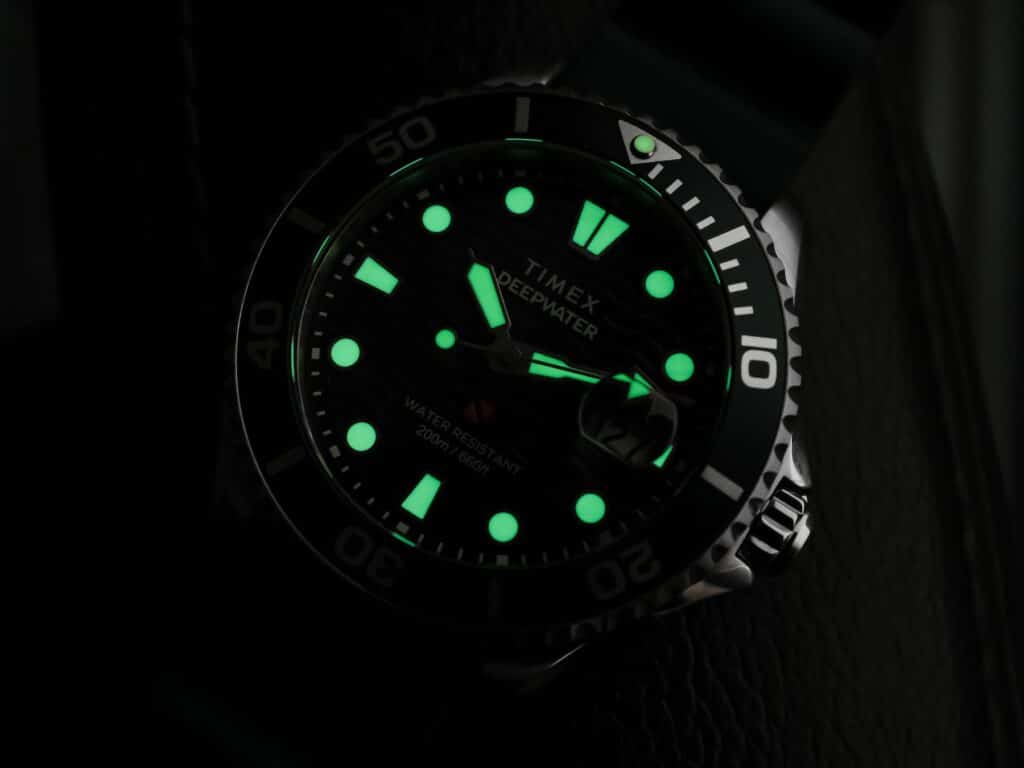
The Timex Deepwater Meridian 200 comes with the same 200-meter rating, but the details feel more deliberate. The screw-down crown has smooth threads and the right amount of resistance in the right places, making the interaction feel reassuring rather than merely functional. Then there’s the lume. The Super-LumiNova on the hands and markers gets properly bright and lasts long enough to stay useful, rather than giving us a brief glow before disappearing into the night. It’s a small thing, but after spending time with both watches, this is exactly the sort of small thing we notice.
Cost Considerations
The Casio Duro makes the cost conversation pretty easy. Casio lists it at $84.95, and you can find it for less, which puts it firmly in “why not?” territory for anyone looking for an affordable dive watch. After spending time with it, we found ourselves wanting one of our own, and that says more than the price alone. It isn’t trying to replace a more expensive watch or make some grand statement. It’s simply an inexpensive watch that fits naturally into a collection and is easy to wear without overthinking the decision.
The Timex Deepwater Meridian 200 asks for $269 on Timex’s site, so this is no longer impulse-buy territory in quite the same way. It’s not bargain-bin cheap, but the jump shows up in the ownership experience, particularly through the materials, case finishing, and tactile execution we noticed during testing. Timex appears to be moving this part of its lineup forward without abandoning accessibility. At $269, that makes the Meridian 200 less of a throwaway purchase and more of a deliberate step up for someone who wants their affordable diver to feel more substantial.
Final Thoughts: Which Quartz Diver Won Our Wrist Time?
After wearing both, we’d take the Casio Duro. That might sound predictable until you remember that the Timex Deepwater Meridian 200 is the more ambitious watch on paper and the more polished piece in the hand. But watches don’t spend their lives on paper. The Duro won us over because it never gave us a reason to overthink it. That’s partly why it works.
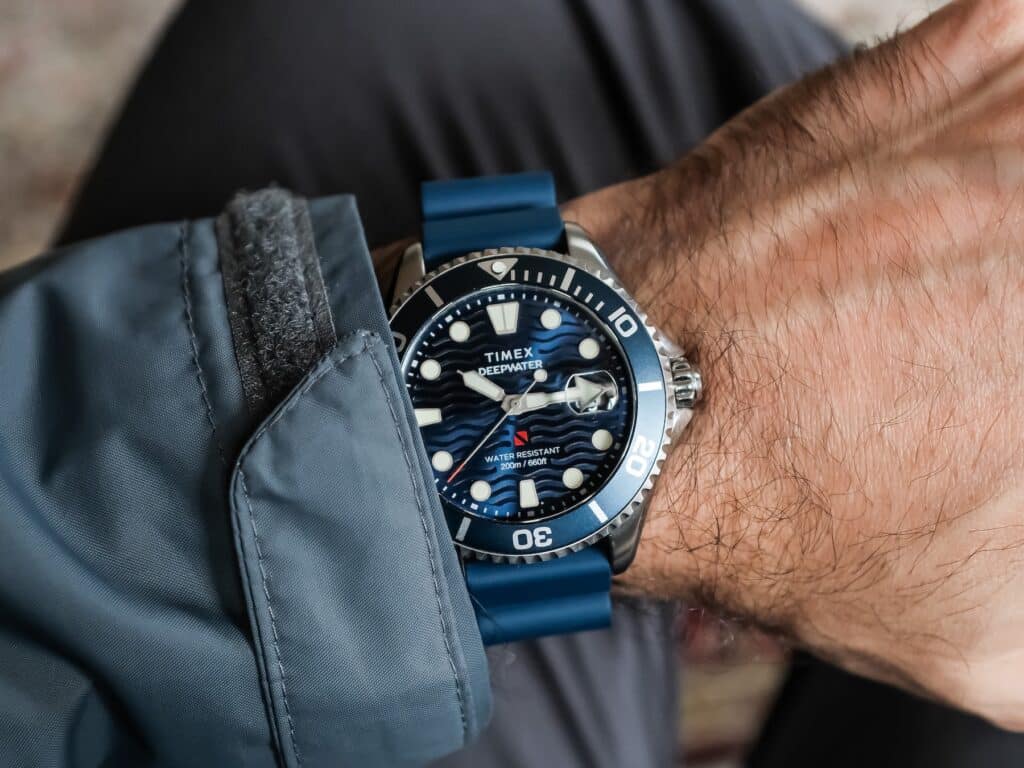
The Timex, meanwhile, feels like a watch that wants to prove Timex can play a more serious role in the dive-watch market. We respect that. But there’s a difference between appreciating a watch and reaching for it. The Duro has an odd looseness that makes it easier to enjoy. It can be the watch you buy because you’re curious, the watch you put on because the weather looks terrible, or the watch you keep long after you expected to because, somehow, it became part of the collection. That’s a surprisingly hard trick to pull off for its price.
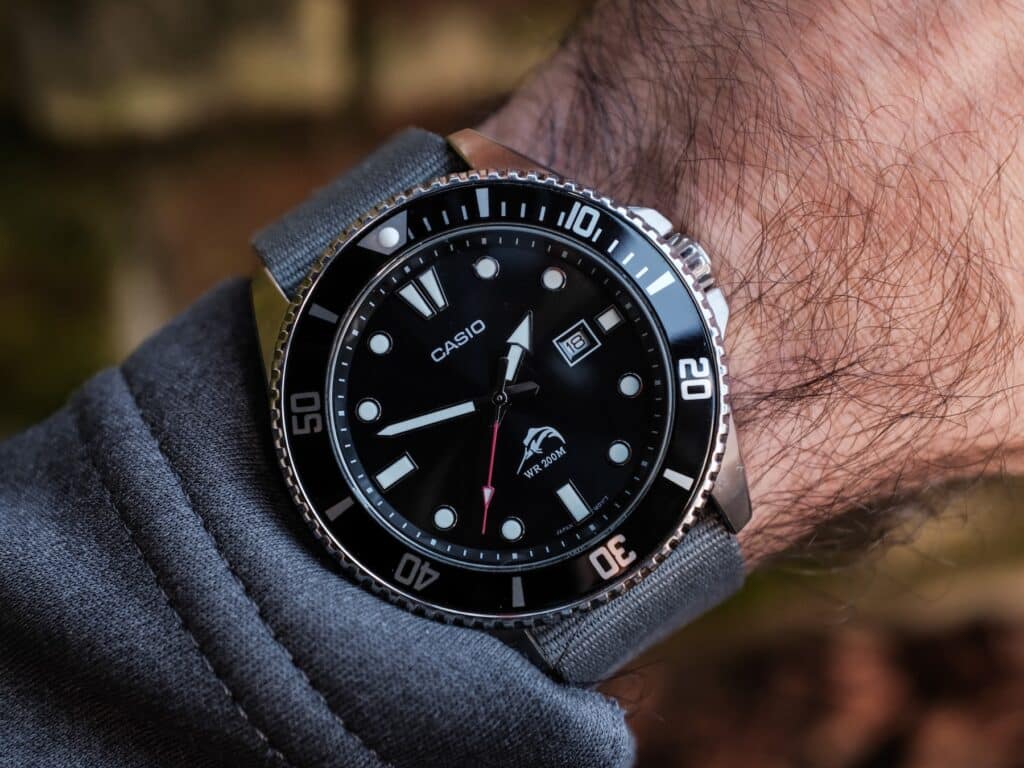
So the verdict is clear: the Casio Duro wins our wrist time. The Timex Deepwater Meridian 200 is the more refined execution, but the Duro has the stronger pull once the review notes are closed and we’re left deciding what to wear. And honestly, that may explain the whole Duro phenomenon better than any specification ever could. We went in wanting to understand why people obsess over it. We came out understanding why they keep wearing it.

Co-Founder and Senior Editor
Kaz has been collecting watches since 2015, but he’s been fascinated by product design, the Collector’s psychology, and brand marketing his whole life. While sharing the same strong fondness for all things horologically-affordable as Mike (his TBWS partner in crime), Kaz’s collection niche is also focused on vintage Soviet watches as well as watches that feature a unique, but well-designed quirk or visual hook.