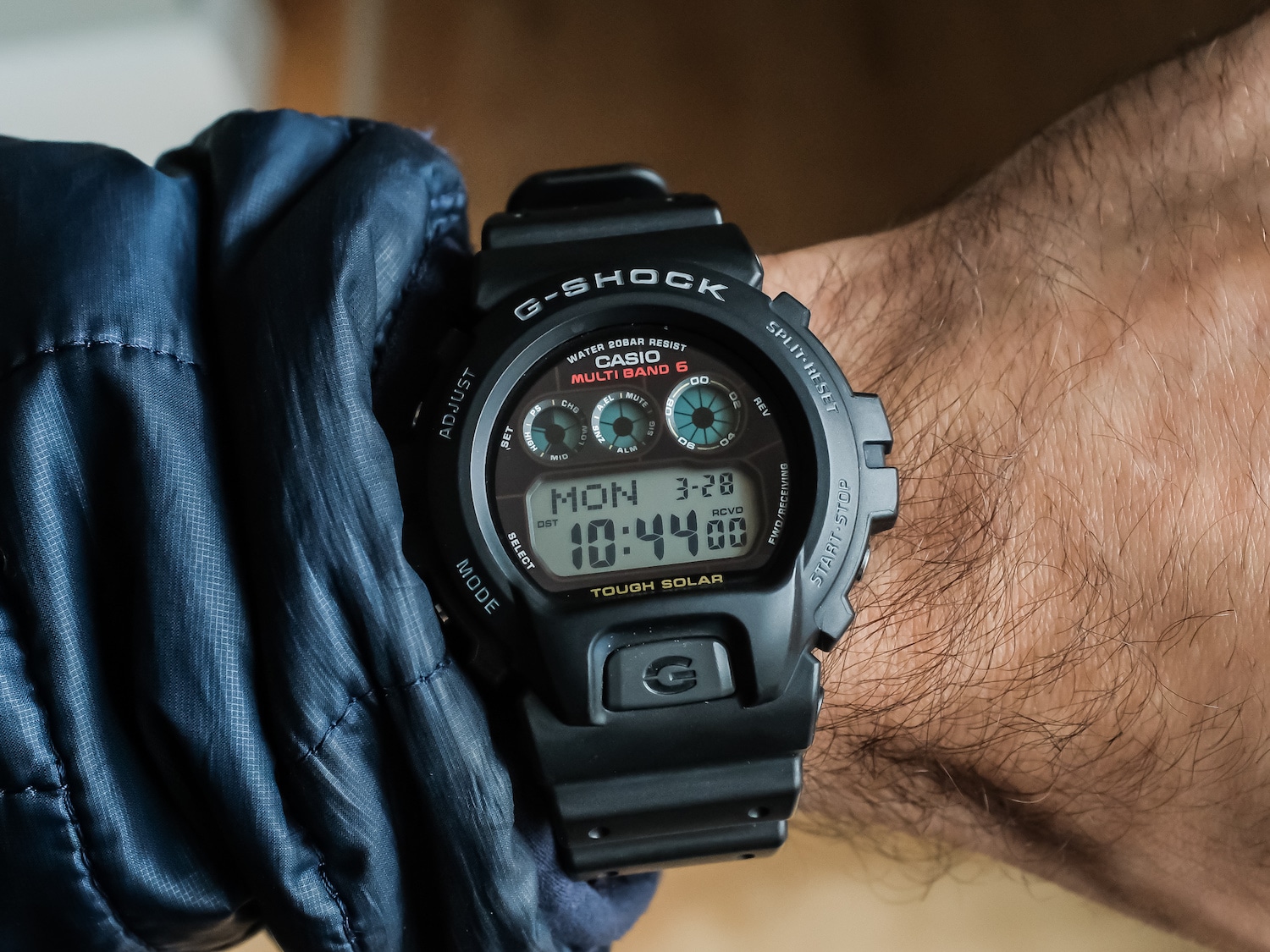
I’ve spent years bouncing between the square 5600 and the 6900 series as my favorite branch of the G-Shock family tree. The answer has never stayed settled for very long. I’ll spend some time with a square and get pulled back into the simplicity of the thing, wondering why a G-Shock really needs to be any more complicated than this. Then I’ll switch over to a 6900 and remember how different the experience can be even when both watches are built around essentially the same promise: put one on, beat it up, and don’t worry too much about what happens next.
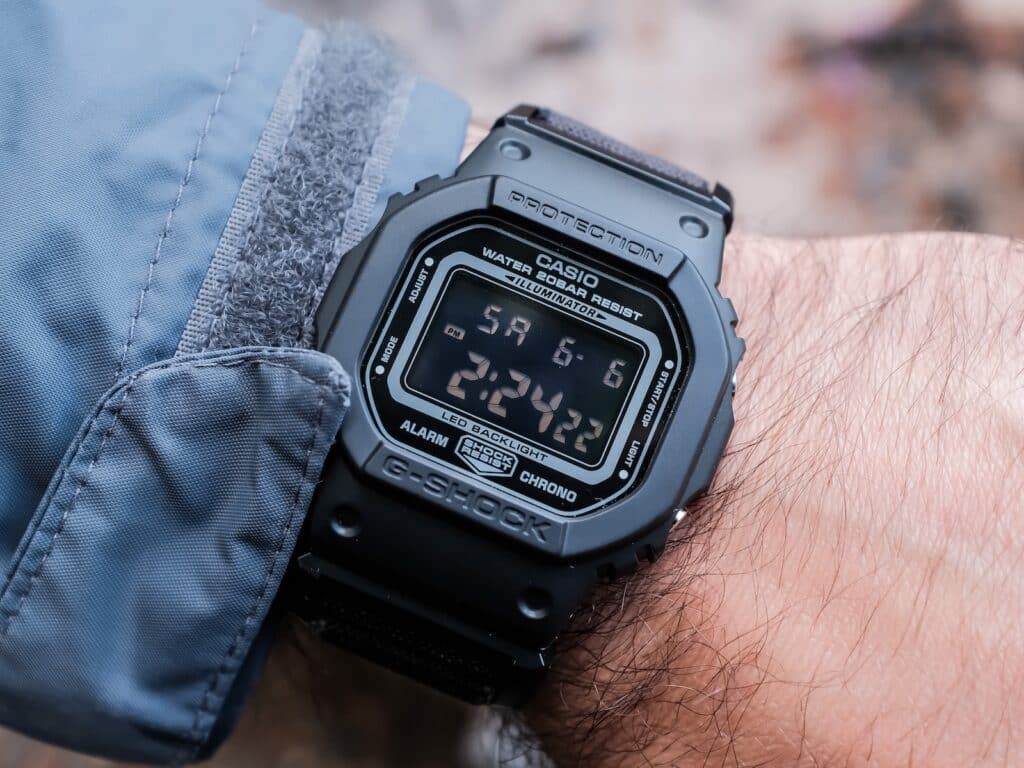
That’s what makes this comparison more interesting to me than just lining up two spec sheets. These aren’t watches separated by thousands of dollars, different movement philosophies, or radically different use cases. They’re two Casio G-Shocks that have competed for the same spot in my collection for years, and I genuinely like both for different reasons. The square is one of the longest-running watch designs on the planet, while the 6900 has become an icon in its own right with its oversized case and unmistakable triple-eye display. Both are affordable, both are designed for abuse, and both make a pretty convincing argument that you don’t need much more from a digital watch.
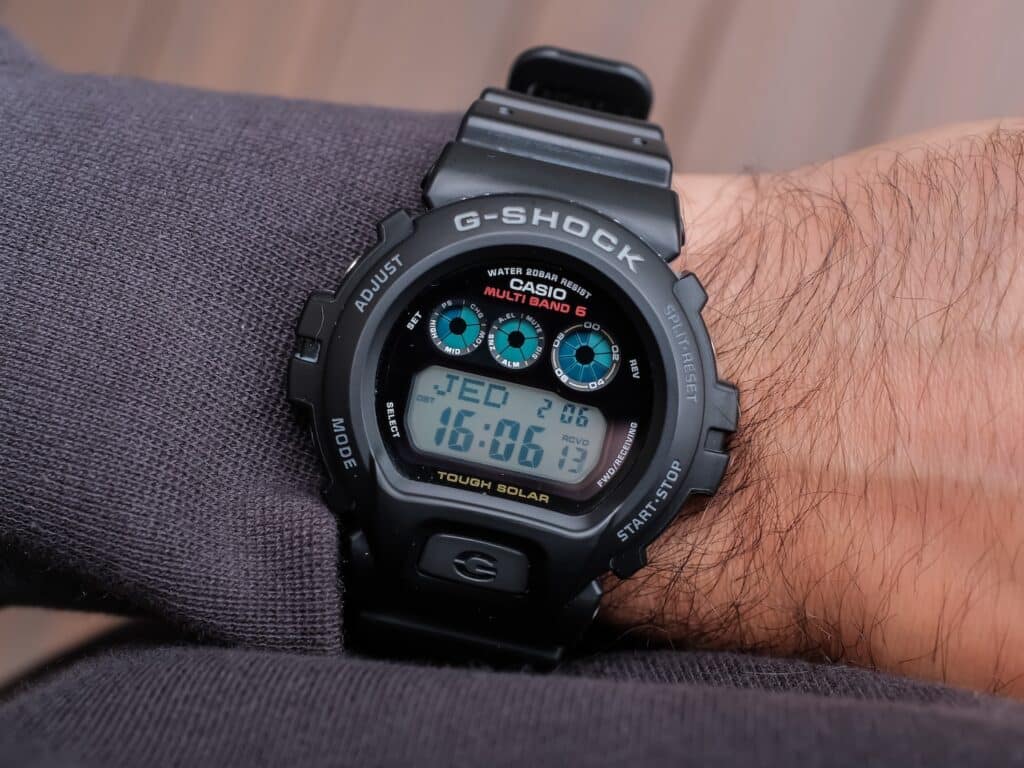
For the watches themselves, I’m using the GW6900-1 I’ve owned for years and the DW5600MNC-1 I reviewed. That creates one important caveat from the start. The MNC is a more specialized interpretation of the square, with an elastic strap, FIDLOCK clasp, and negative display that won’t apply to every 5600 you can buy. I’ll separate those reference-specific details from the broader platform wherever it matters. The goal here isn’t to decide whether one exact SKU is better than the other. I want to settle the argument I’ve been having with myself for years and decide which G-Shock platform I’d keep if I had to choose only one.
Overview & Identity
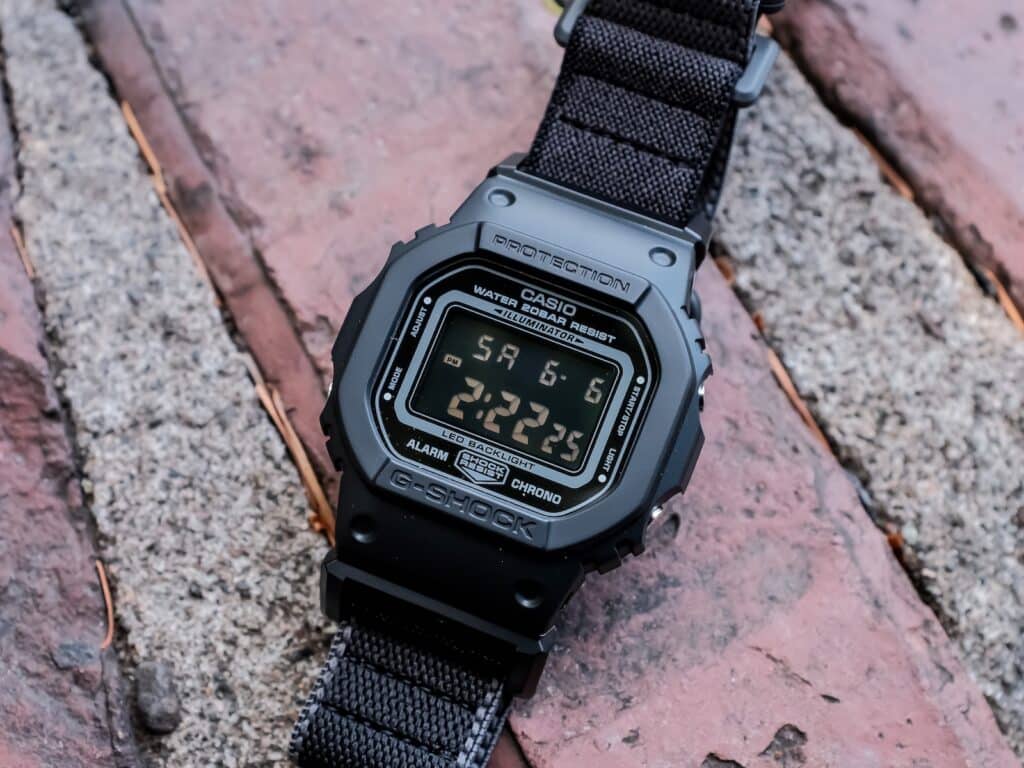
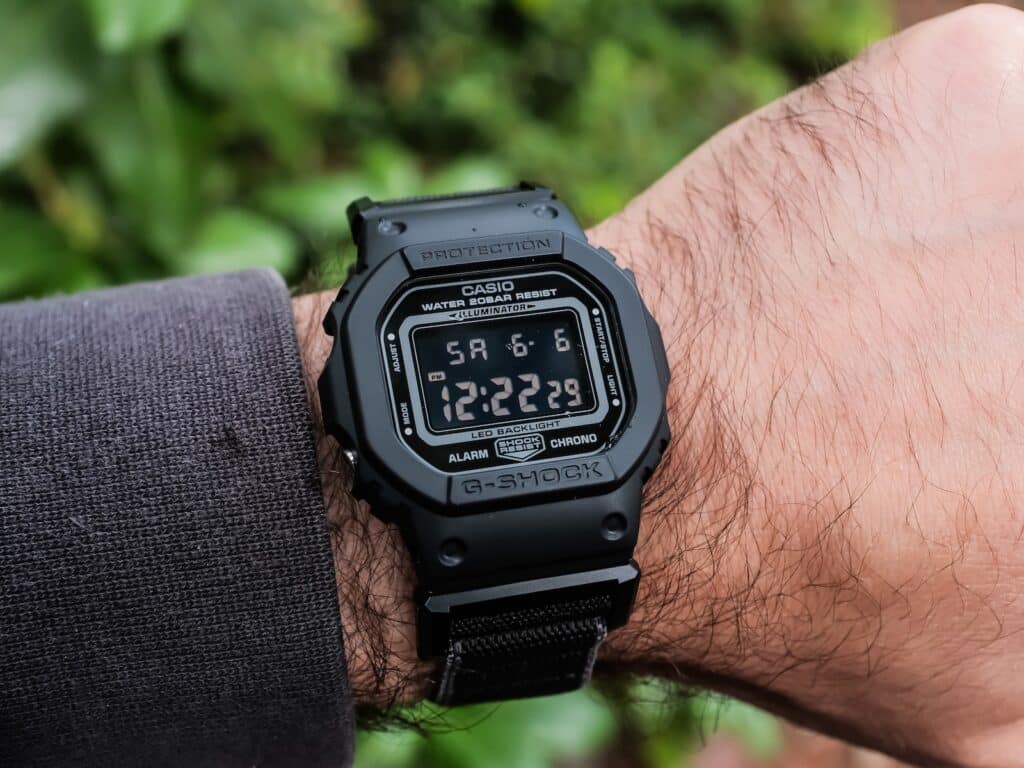
The DW5600 barely needs an introduction at this point. Its shape traces directly back to the original DW-5000 from 1983, and there are very few watches at any price point that have stayed this recognizable for more than four decades without becoming some kind of nostalgia exercise. Casio has produced countless variations of the square over the years, but while reviewing this watch it’s clear the basic formula is remarkably difficult to mess up. You get the compact rectangular case, four-button layout, protected digital display, and just enough visual weirdness to make it obviously a G-Shock without turning your wrist into a piece of tactical equipment. My DW5600MNC-1 plays with that formula more than a basic square would, but the underlying watch is still immediately familiar.
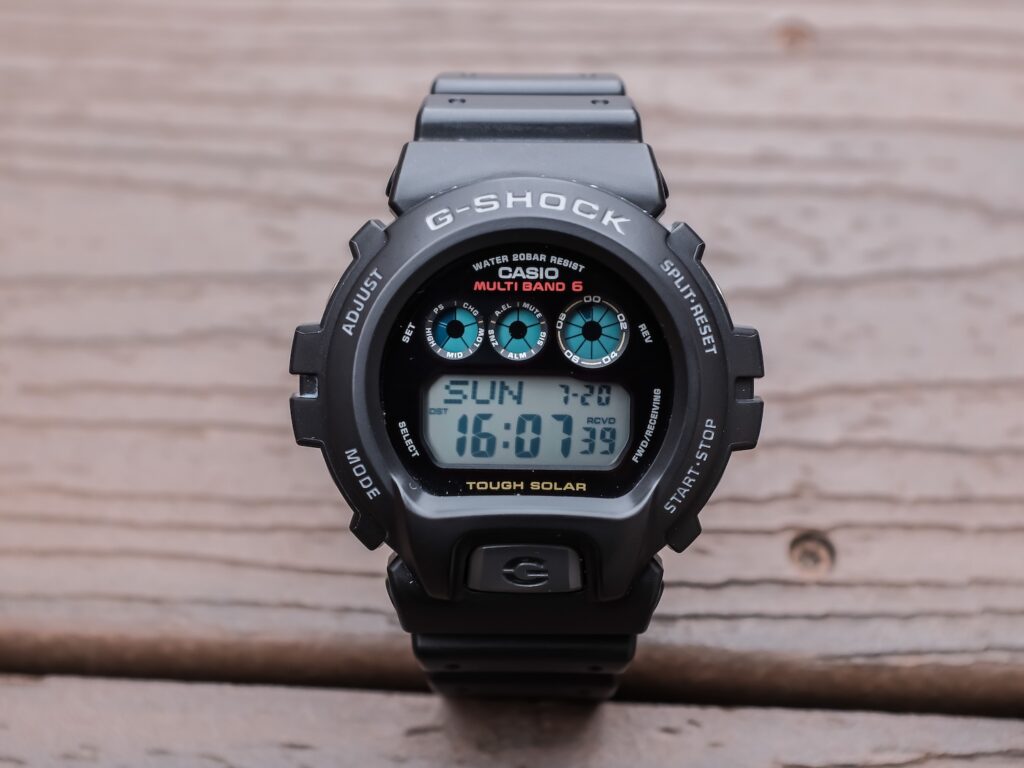
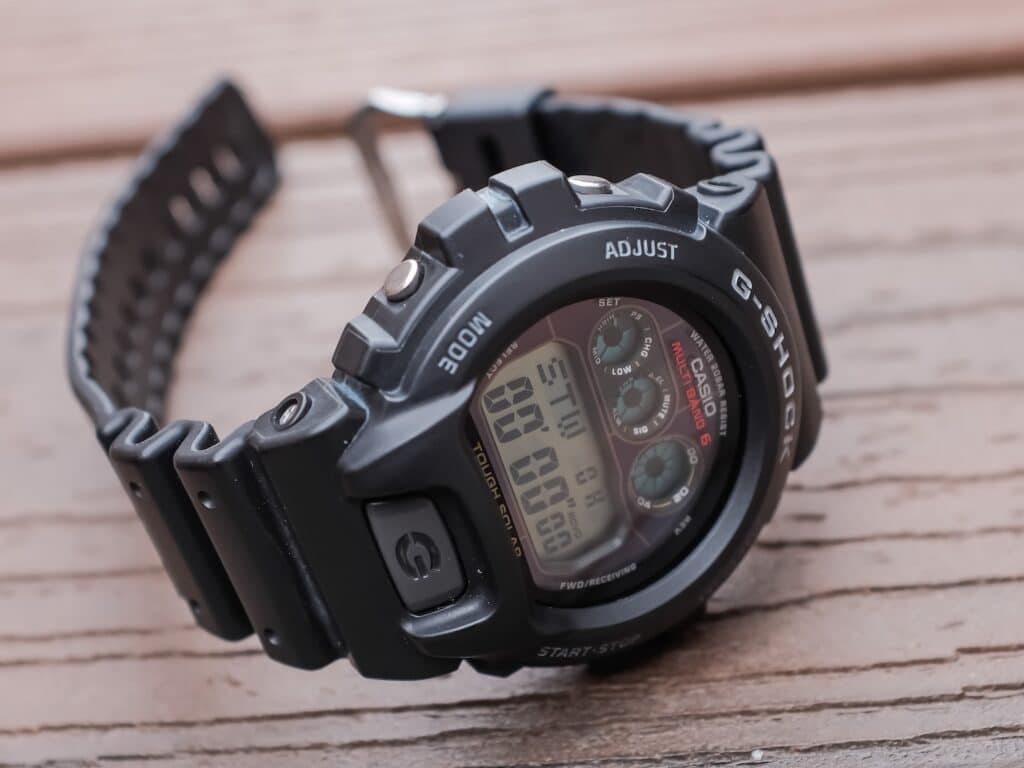
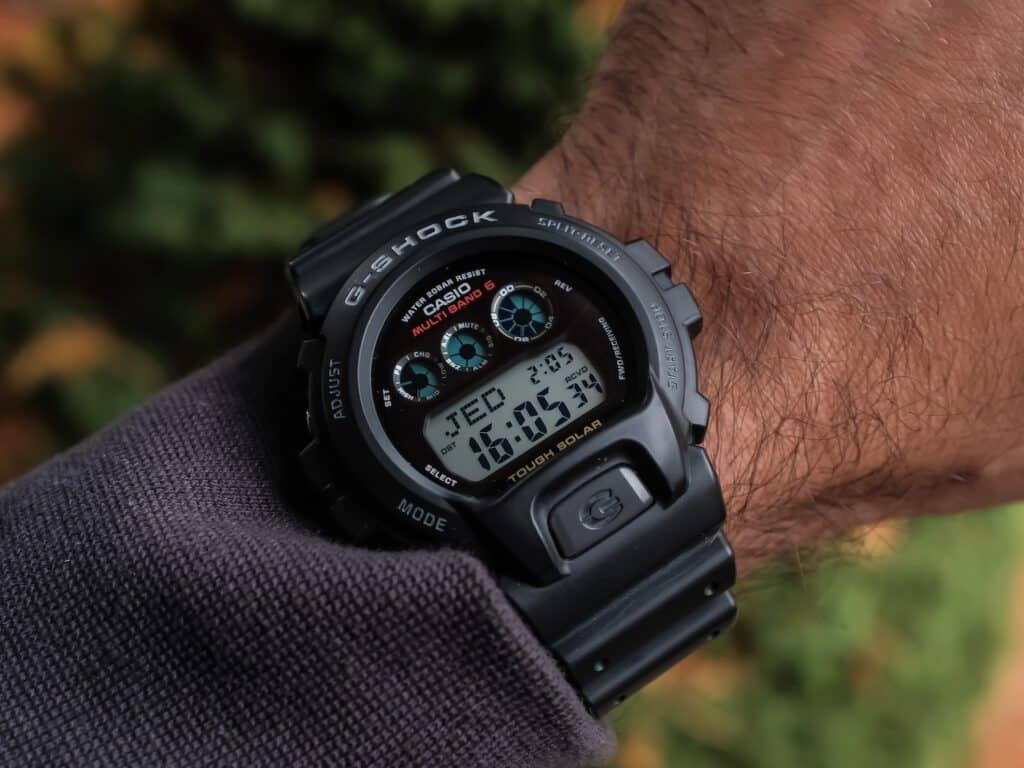
The GW6900-1 approaches the same G-Shock identity with much less restraint. The 6900 design arrived later and has its own history at this point, but visually it might be even easier to recognize from across a room. The three circular indicators across the top of the display give the watch its familiar “triple-eye” look, while the oversized front light button and thick resin guards make the whole thing feel purposefully exaggerated. It’s still a simple digital watch underneath all of that, which is part of the charm that came across during our hands-on review. Casio managed to make something look like a tiny piece of sci-fi equipment while keeping the actual experience of using it relatively straightforward.
I don’t think one design makes the other redundant. The 5600 feels like G-Shock stripped down to its original idea, while the 6900 feels like what happens when Casio lets that idea become a little more expressive. I’ve gone through periods where I strongly preferred one visually, only to reverse myself after a few weeks. The square is cleaner and easier to integrate into almost anything I’m wearing. The 6900 has more personality and looks exactly as ridiculous as a G-Shock sometimes should.
Design & Wearability: Compact Square vs. Triple-Eye G-Shock
The difference becomes much more obvious once the watches are on the wrist. My DW5600MNC-1 measures 48.9mm long, 42.8mm across, and 13.4mm thick, which sounds fairly substantial until you actually wear it. The square shape uses that space efficiently, and at only 53 grams the watch never felt top-heavy during my review. I wore it through long drives, hikes, beach walks, daily errands, and the kind of rainy weather where you eventually stop caring whether anything you’re carrying is getting wet. On my 6.75-inch wrist, it settled in quickly and generally disappeared until I actually needed to look at it.
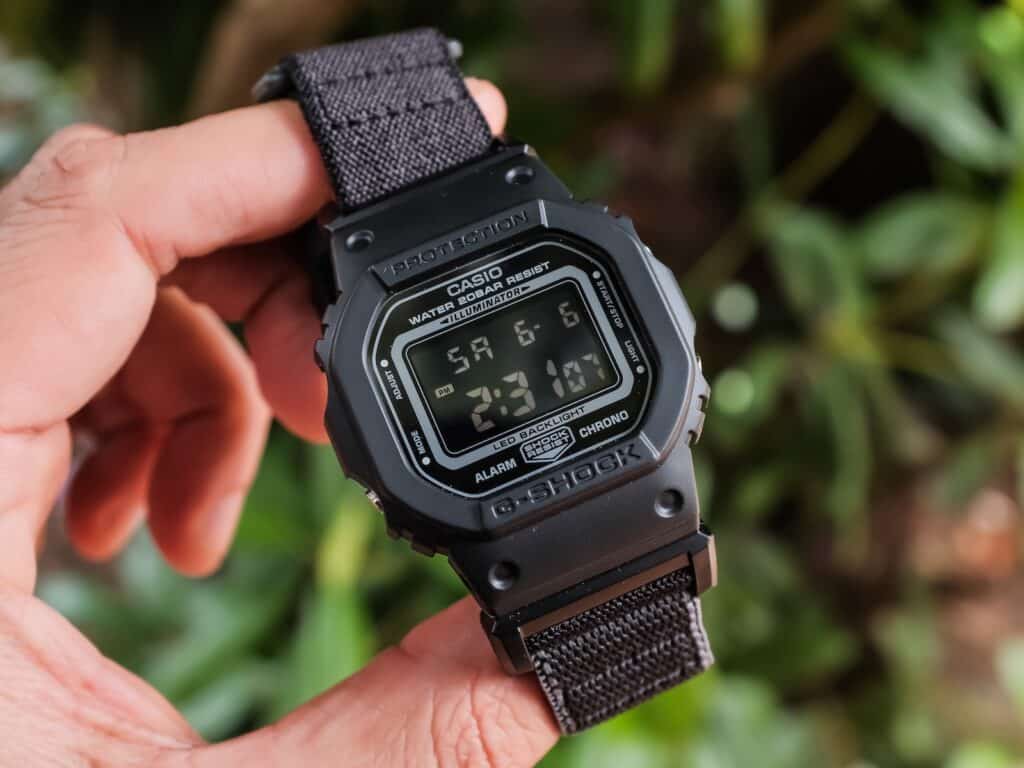
The elastic woven strap on the MNC makes that particular 5600 even easier to wear. There’s enough stretch for it to move with the wrist without constantly tightening or loosening the fit, and I didn’t experience the occasional hot spots that can develop with a traditional resin strap after a long day. Casio clearly paid attention to the aftermarket here, because enthusiasts have been putting similar strap setups on square G-Shocks for years. The weak point is the FIDLOCK clasp. Mine opened unintentionally a couple of times during the review period. It wasn’t happening constantly, and I never reached the point where I refused to wear the watch, but it was frequent enough that I became conscious of the clasp in situations where I normally wouldn’t think about a G-Shock at all. That issue belongs to the MNC rather than the entire 5600 platform, but it is part of the experience with this specific watch.
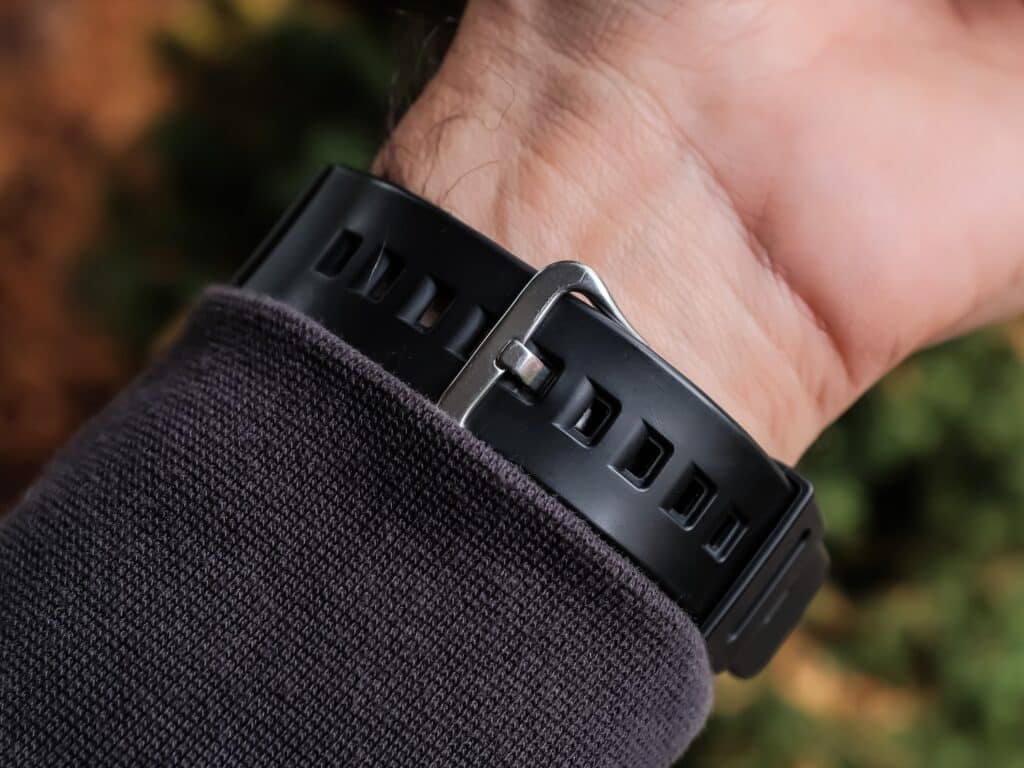
The GW6900-1 goes in the opposite direction dimensionally. At 53.2mm long, 50mm wide, and 17.7mm thick, the numbers sound borderline absurd beside the 5600. The surprise is how little those measurements matter once the watch is actually strapped on. The resin construction keeps the weight down, and the case wraps around the wrist well enough that the bulk is more visible than it is physically annoying. The stock resin strap is nothing exotic. It starts a little stiff and squeaky, softens with wear, dries quickly, and does exactly what it needs to do. There are endless aftermarket options if you want to change it, but the standard setup is perfectly functional.
The 5600 is clearly easier to wear if compactness is the priority. It’s thinner, less visually dominant, and generally easier to forget about on the wrist. The 6900 gives up some of that discretion for a case that feels much more deliberately oversized. I’m comfortable with both, but they scratch different itches. One makes a case for how little watch a G-Shock needs to be, while the other leans into the fact that subtlety was never really the point of the brand.
Build Quality & Technical Approach
Both watches start from the same basic G-Shock premise. You’re getting resin cases, shock resistance, 200 meters of water resistance, and the expectation that normal daily abuse shouldn’t require much consideration. The bigger differences come from how the two watches handle the digital side of the experience. The DW5600MNC-1 is fairly traditional and deliberately simple. The GW6900-1 adds more technology without crossing into smartwatch territory or requiring a phone connection, app, or charging cable.
Modules & Functions
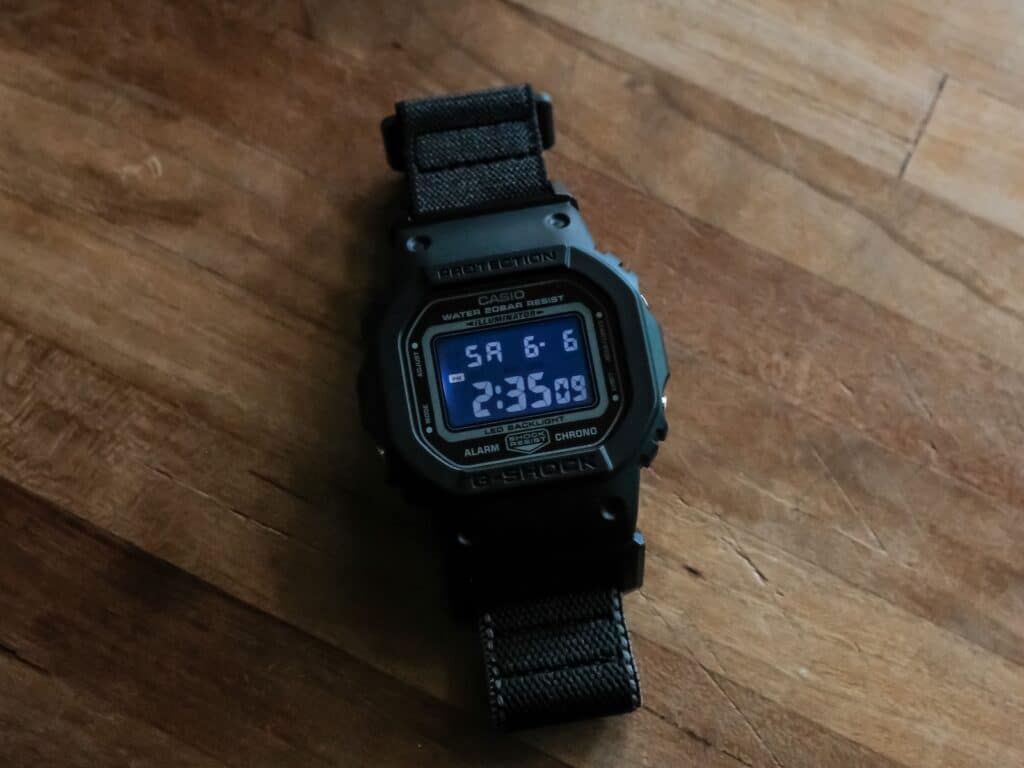
The DW5600MNC-1 gives you the core features most people expect from a digital Casio: a stopwatch, countdown timer, alarm, hourly signal, auto-calendar, and LED backlight. Accuracy is rated to approximately plus or minus 15 seconds per month, and the CR2016 battery is expected to deliver around five years of service. There’s something appealing about how little explanation any of this requires. You set the watch, learn a few button combinations, and that’s mostly the end of the conversation. It doesn’t need to synchronize with anything, and the battery interval is long enough that regular maintenance barely factors into the ownership experience.
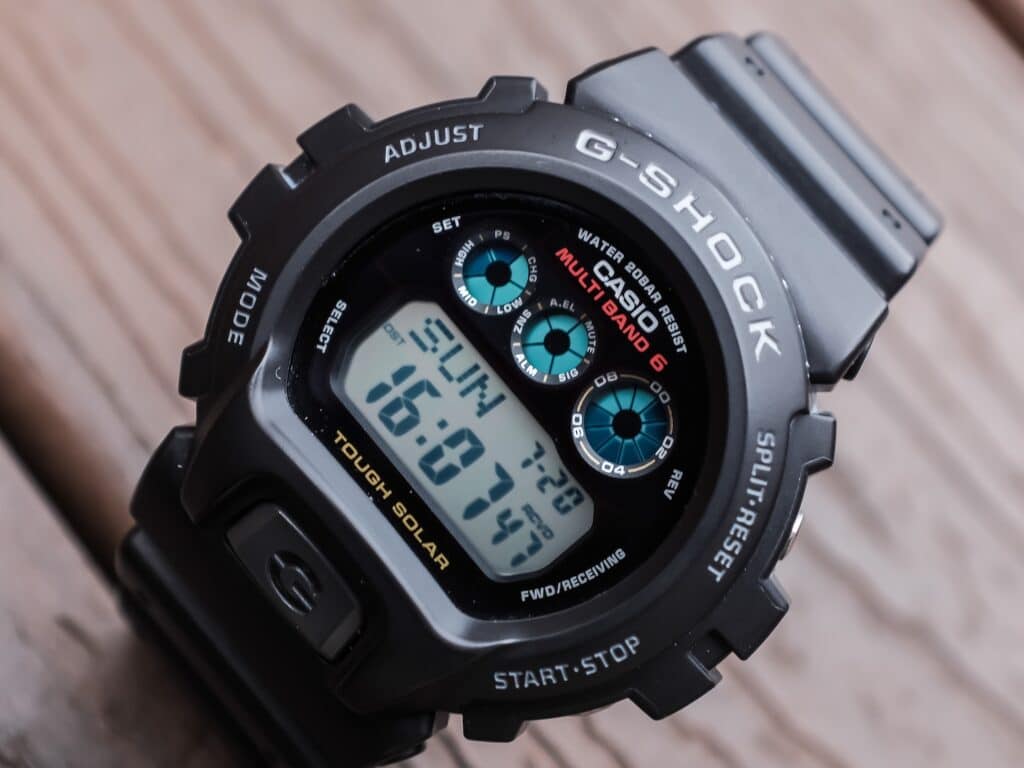
The GW6900-1 adds Tough Solar and Multi Band 6 atomic timekeeping, along with world time across 31 time zones, five daily alarms, a countdown timer, and a 1/100-second stopwatch. The solar system keeps the rechargeable battery topped up through ordinary exposure to light, while Multi Band 6 can correct the time automatically by receiving radio signals in supported regions. Mine has typically handled those syncs overnight. It’s more technology than the 5600 offers, but the interesting part is how little additional interaction it creates. You can dig into the feature set if you want to, or you can ignore most of it and use the watch like a basic digital G-Shock.
There’s a real philosophical split here despite how similar the watches appear on paper. The 5600 keeps the experience mechanically simple: conventional quartz accuracy, a long-lasting replaceable battery, and the digital tools most people will actually use. The GW6900 adds systems designed to reduce the few bits of maintenance that still remain with a quartz watch. Whether that extra capability matters is going to depend heavily on how you use a G-Shock in the first place.
Displays & Backlights
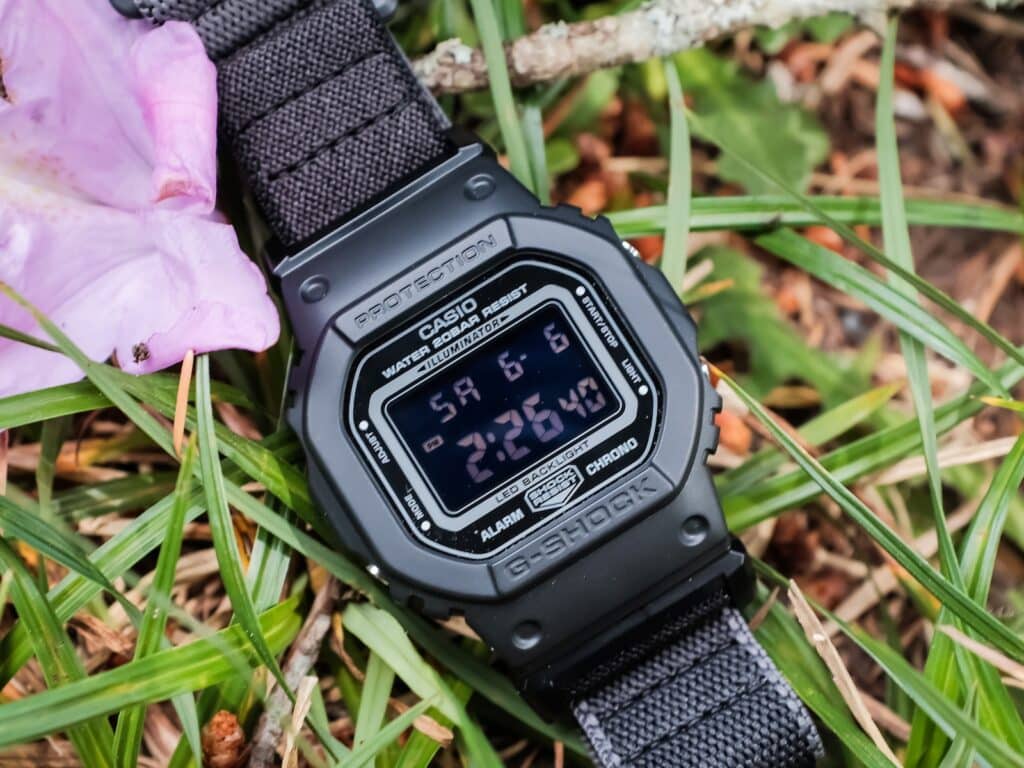
The displays create an equally interesting contrast, although the DW5600MNC-1 requires another reference-specific disclaimer. My review watch came with a negative display that looks excellent with the black case and strap. It gives the entire watch the understated military-inspired appearance that drew me to blacked-out square G-Shocks in the first place. The tradeoff is legibility. Outdoors, particularly when glare enters the equation, the display can require more effort to read than I’d like. I noticed it repeatedly while hiking and walking along the beach. A normal positive-display 5600 largely avoids that issue, so this isn’t something I’d hold against the square platform as a whole.
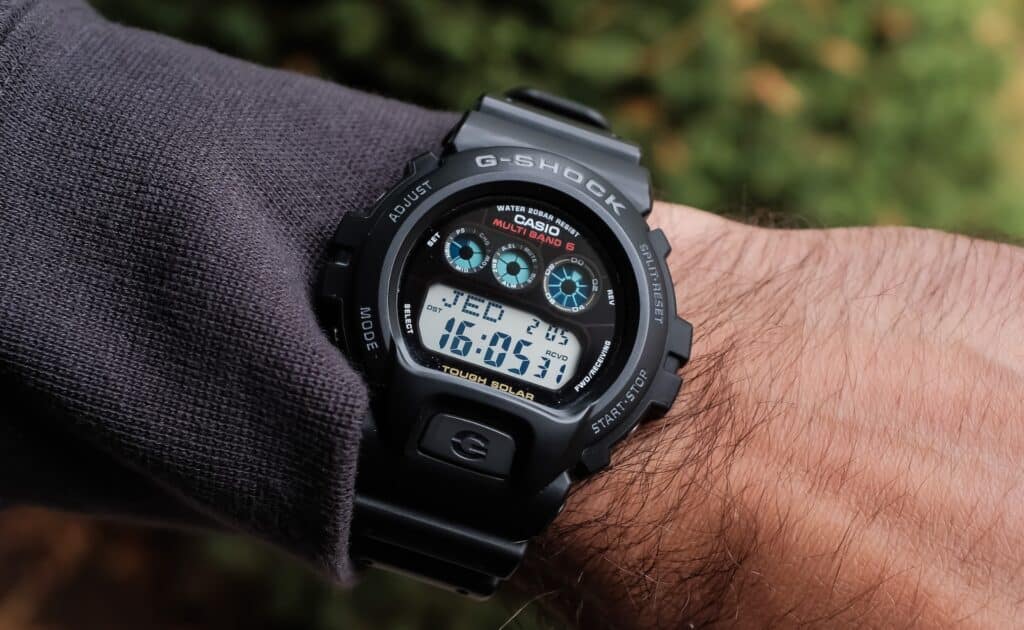
The 6900 display initially looks busier. You have the large primary digital readout below and three circular indicators occupying the upper portion of the dial. After some time with the watch, however, the layout becomes much less complicated than it first appears. The main time remains easy to find, and the secondary information stays out of the way unless you actually need it. The large front-facing EL button is also one of those decisions that makes more sense the longer you live with the watch. Instead of feeling around the side of the case in the dark, you press the large button sitting directly beneath the display.
I also like the way the 6900 handles dual time. A second time zone can sit in the upper-right portion of the display without requiring another hand, bezel, or a lot of visual real estate. That feature becomes particularly useful while traveling, although someone who mostly needs basic time and date information might reasonably prefer the simpler visual presentation of the square. The 5600 gives you less information at a glance but presents it more cleanly. The 6900 gives you more without making the primary display difficult to use once you understand the layout.
Case Construction, Straps & Water Resistance
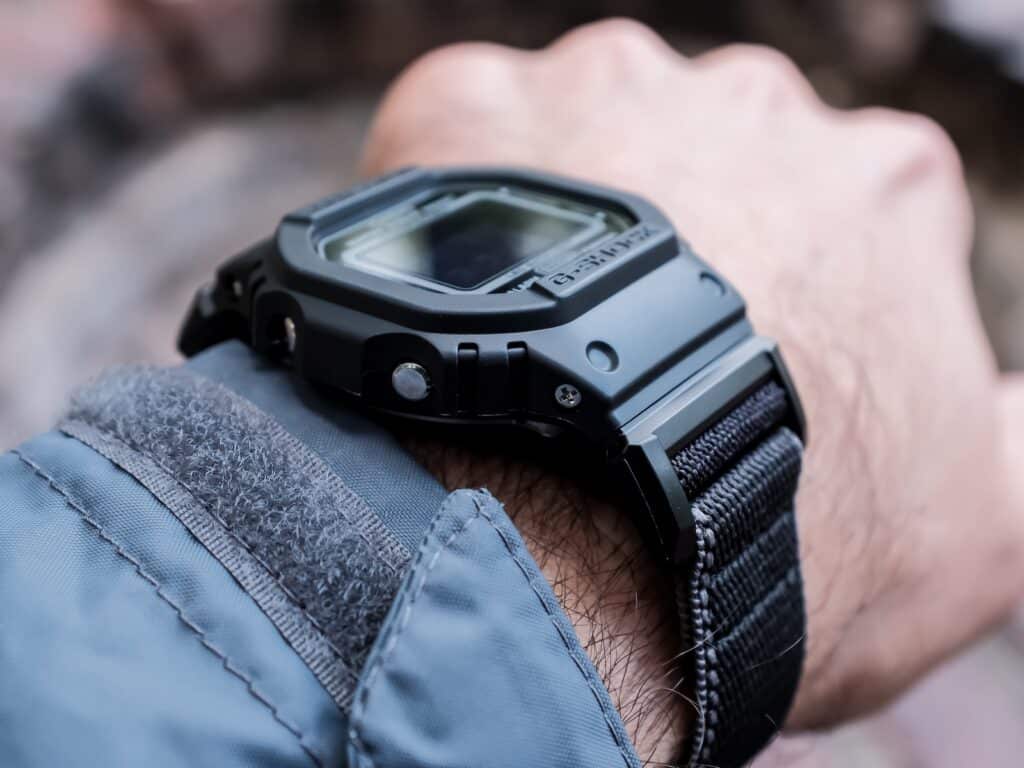
There isn’t much separating the basic durability of the two watches. Both are designed around resin construction and 200 meters of water resistance, and neither gave me any reason to question the kind of abuse G-Shocks are expected to handle. If anything, the difference comes down to how the two references package that durability. The DW5600MNC-1 experiments with comfort through its elastic strap and magnetic clasp, while the GW6900-1 sticks with a conventional resin strap and a much larger protective case.
That makes the square more interesting from a strap perspective but also introduces the only real security concern I experienced with either watch. The MNC’s elastic material itself was excellent throughout my review. The clasp was the part that occasionally made me stop and check the watch. The 6900’s resin strap is less interesting, but it’s also difficult to find much to complain about once it breaks in. This is one of those cases where experimentation creates the better comfort story and the conventional solution creates the simpler ownership story.
Cost Considerations
The DW5600MNC-1 carried a $165 price when I reviewed it, placing it above the basic square G-Shocks that can often be found much cheaper. Most of that premium makes sense when you look at what differentiates the watch. The elastic strap and FIDLOCK hardware are the headline additions, and the MNC series feels more specialized than the entry-level squares Casio sells everywhere. The broader 5600 platform also gives buyers a huge amount of flexibility. If you like the shape but don’t care about this strap system, negative displays, or a particular colorway, there are countless versions that preserve the underlying experience at different prices.
The GW6900-1 lives in a similar affordable range while spending more of its feature budget on the module itself. Tough Solar and Multi Band 6 are the obvious upgrades, and the watch adds world-time functionality and additional alarms without moving into an entirely different price category. That makes the value comparison less obvious than simply asking which one has more features. The square gives you one of Casio’s most enduring designs and, depending on the reference, can be extremely inexpensive. The GW6900 gives you more technology while remaining cheap enough that it still feels like a watch you can use without worrying about protecting the investment.
At these prices, I’m also not particularly interested in resale value or collectibility as deciding factors. Certain colorways and discontinued references will inevitably become more desirable than others, but that isn’t what either platform is fundamentally about for me. These are watches I want to wear, scratch, travel with, get wet, and occasionally smack into things. The better value is ultimately going to depend on which version of that experience matters more to you: the compact simplicity of the square or the extra functionality packed into the 6900.
Final Thoughts: Which G-Shock Would I Actually Keep?
After years of moving between these two platforms, I’m keeping the GW6900-1.
That answer isn’t as obvious to me as the spec sheet might make it seem. The 5600 is easier to wear, and I may actually prefer the square as a piece of watch design. There’s something almost annoyingly perfect about how little the shape has needed to change since the early days of G-Shock. My time with the DW5600MNC-1 reinforced that. Even with a strap system that needs some refinement and a negative display I wouldn’t personally choose again, I came away wanting Casio to keep experimenting with the platform. A basic positive-display square on a conventional strap avoids most of my complaints while preserving everything I like about the design.
What finally breaks the tie is looking at how I’ve actually lived with my GW6900-1 rather than how I think about these watches when they’re sitting next to each other on a desk. The 6900 doesn’t really participate in my normal watch rotation. It usually lives on the hallway table near my keys and whatever else I need on the way out the door. It’s the watch I’ve grabbed for yard work, rushed mornings, travel, wet weather, and the situations where I don’t want to spend any time deciding what should go on my wrist. Other watches in my collection get rotated, stored, rediscovered, and occasionally babied. The 6900 has spent years operating more like a piece of equipment.
Tough Solar and Multi Band 6 contribute to that. So does the dual-time display, the big front light button, the 200 meters of water resistance, and the fact that the oversized resin case has never bothered me as much as its dimensions suggest it should. But none of those features alone would make the decision. I’ve owned plenty of watches with impressive feature lists that eventually stopped getting worn. What matters is that after years of ownership, I still reach for this one without really thinking about why.
The 5600 keeps making me reconsider which G-Shock I like more. I suspect it always will. But if one of these two actually has to leave the collection, the GW6900-1 is staying.

Co-Founder and Senior Editor
Kaz has been collecting watches since 2015, but he’s been fascinated by product design, the Collector’s psychology, and brand marketing his whole life. While sharing the same strong fondness for all things horologically-affordable as Mike (his TBWS partner in crime), Kaz’s collection niche is also focused on vintage Soviet watches as well as watches that feature a unique, but well-designed quirk or visual hook.