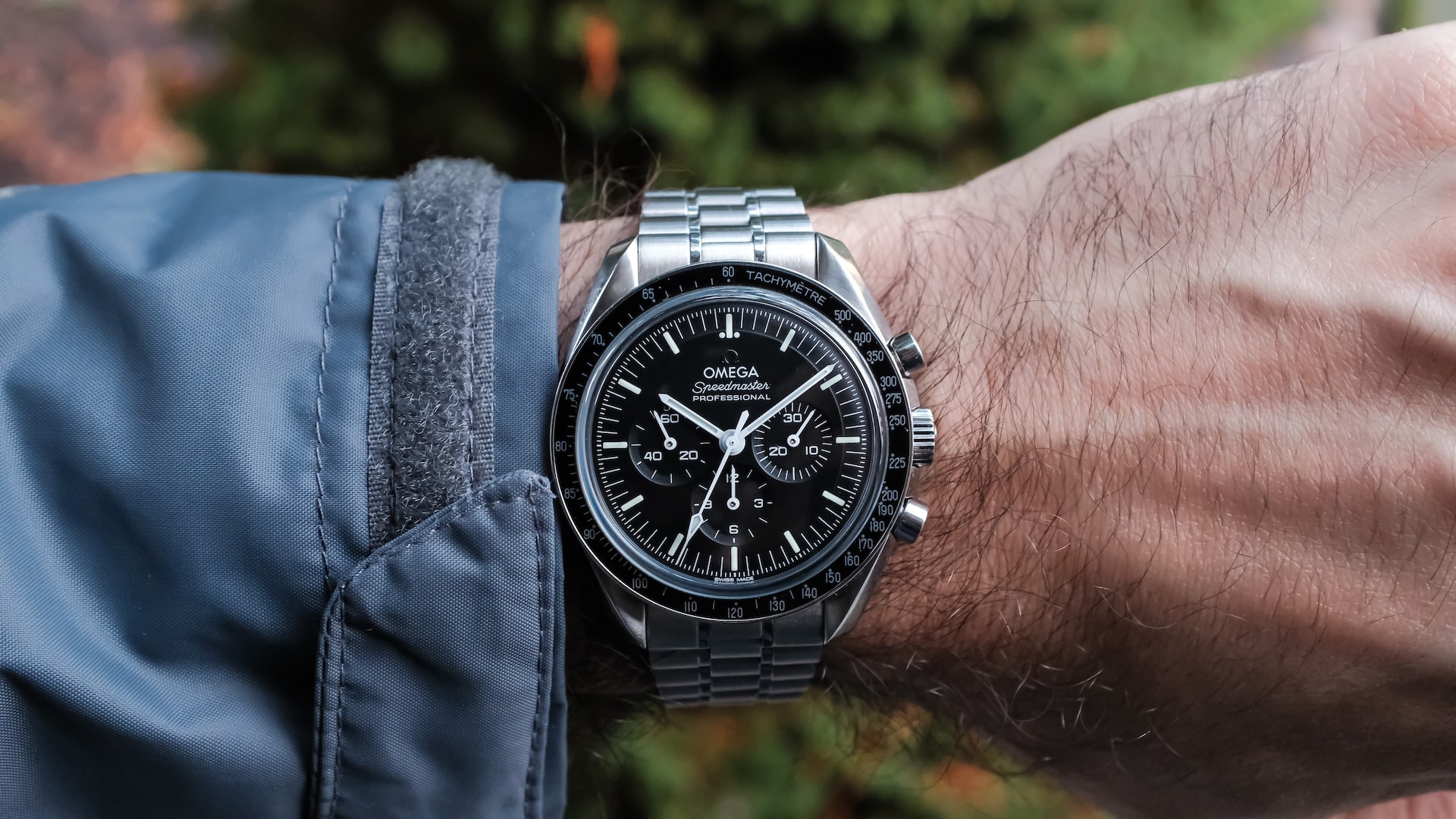
There’s a strange point in collecting where a watch stops being something you own and becomes something you keep coming back to. It might be an inexpensive Casio, a discontinued Seiko, or an Omega with a reputation that precedes it by decades. The funny part is that these watches don’t always make the most compelling case on paper. Some have dated technology, some have obvious compromises, and far more technically impressive alternatives surround some. Yet owners keep wearing them, talking about them, looking for another one, and defending the parts that should probably annoy them. That kind of attachment is harder to explain with a spec sheet.
After nearly a decade of hands-on watch reviews, we’ve learned that cult status is less straightforward than popularity or prestige. The watches in this list are ones we’ve reviewed, handled, worn, or tested ourselves, and each reveals a different reason collectors become unusually loyal. Some have earned that loyalty through years of wrist time, others through community enthusiasm, scarcity, personality, or a combination of all three. Casio, Seiko, and Omega provide some obvious examples, but the same collector behavior shows up in watches from Doxa, Citizen, Vostok, and Halios. So what keeps these watches in the conversation long after newer options have arrived? That’s what we’re here to figure out.
How Cult Watches Earn Their Following
The honeymoon phase is easy. A new watch gets plenty of wrist time because, well, you just bought it. The real test comes later, when the novelty wears off, and other watches start competing for attention. That’s when habits tell us more than first impressions. The watch you keep picking for work, travel, weekends, or the completely unremarkable trip to the grocery store makes a more convincing case for itself than the one that looked unbeatable for two weeks.
We also tend to develop oddly specific relationships with watches we’ve lived with. A slightly awkward bezel, a fussy bracelet, an outdated movement, or a case shape that makes little sense on paper can become familiar rather than frustrating. Those flaws still exist, and they don’t deserve a free pass, but they become part of the ownership story. That story takes different forms from watch to watch: buying the same model again, treating a cheap beater like an old friend, or watching an entire enthusiast community latch onto a relatively obscure piece and refuse to let it disappear. The watches ahead give us a closer look at those different kinds of loyalty.
When Collectors Keep Coming Back
Seiko SKX007 — The Watch You Buy Again After Moving On

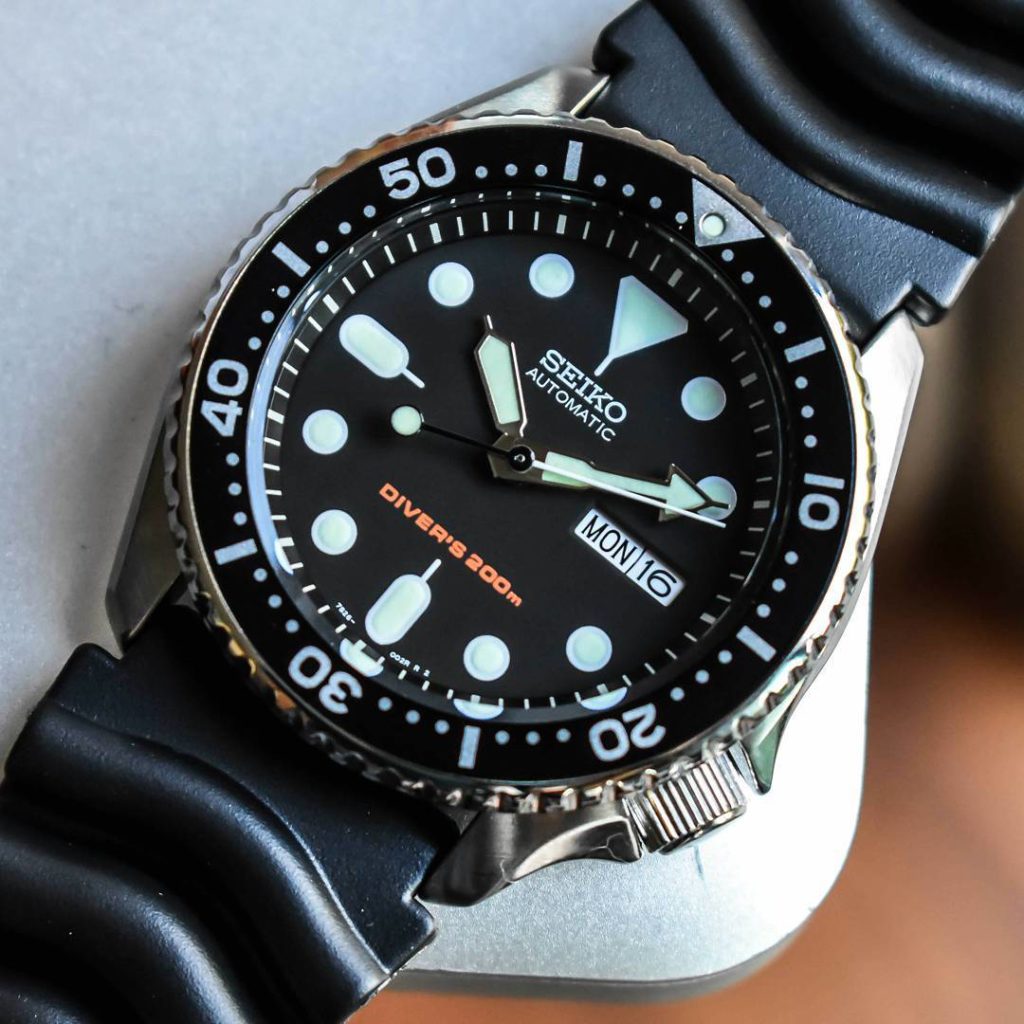
There are sensible reasons to sell a watch. You’ve stopped wearing it, something else fits better, or you’ve decided your collection doesn’t need another black dive watch. Buying the same one again three times is harder to explain. Yet that’s exactly what happened with the Seiko SKX007. In our Seiko SKX007 review, we bought and flipped this piece three times before ordering a fourth. Somewhere between discovering pricier watches and getting over the idea that the SKX was merely an “entry-level” diver, we came back around to the watch we’d already owned.
What makes that interesting is how little the SKX needs from you. The 42mm case has a reasonable lug-to-lug, the crown sits at 4 o’clock instead of trying to pick a fight with your hand, and the highly legible dial does its job without decorative gymnastics. The 7S26 movement won’t excite anyone looking for hacking and hand-winding, but it is uncomplicated, familiar, and inexpensive to service. Put the watch on a NATO, put it on the bracelet, and get on with your day.
That simplicity is easier to appreciate once you’ve spent time with watches that cost considerably more. The SKX isn’t pretending to be luxurious, and perhaps that’s part of the charm. Collectors can point out the movement’s shortcomings, the basic finishing, and the usual Seiko quirks while still admitting that the watch keeps finding a way back onto the wrist. A discontinued favorite can gain some extra nostalgia, but scarcity alone doesn’t explain repeated ownership. The better explanation is that once you’ve lived with an SKX, you know exactly what you’re getting—and apparently, sometimes you miss it enough to buy another.
Doxa Sub 300 Aqua Lung — When Years of Ownership Change the Meaning
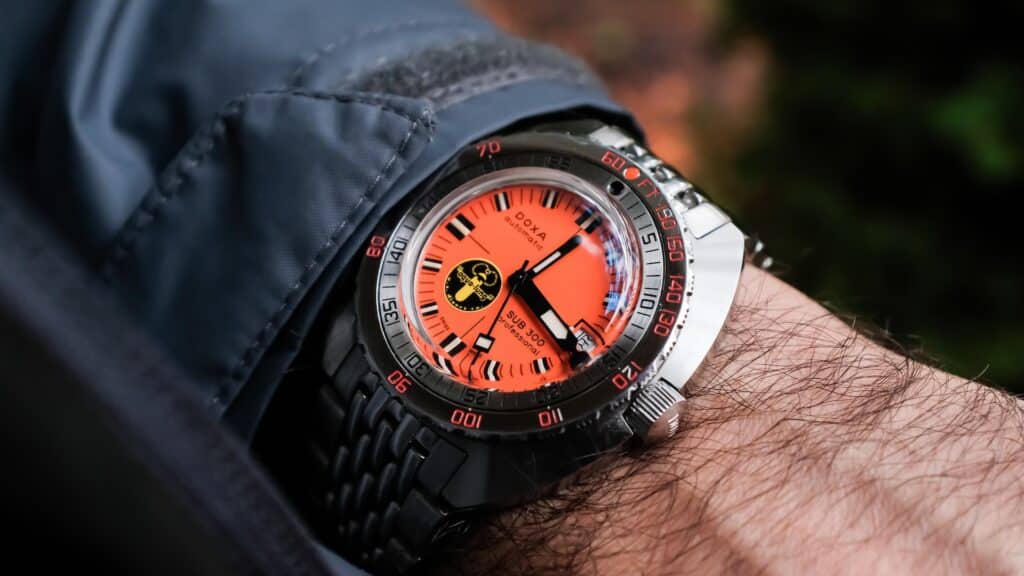
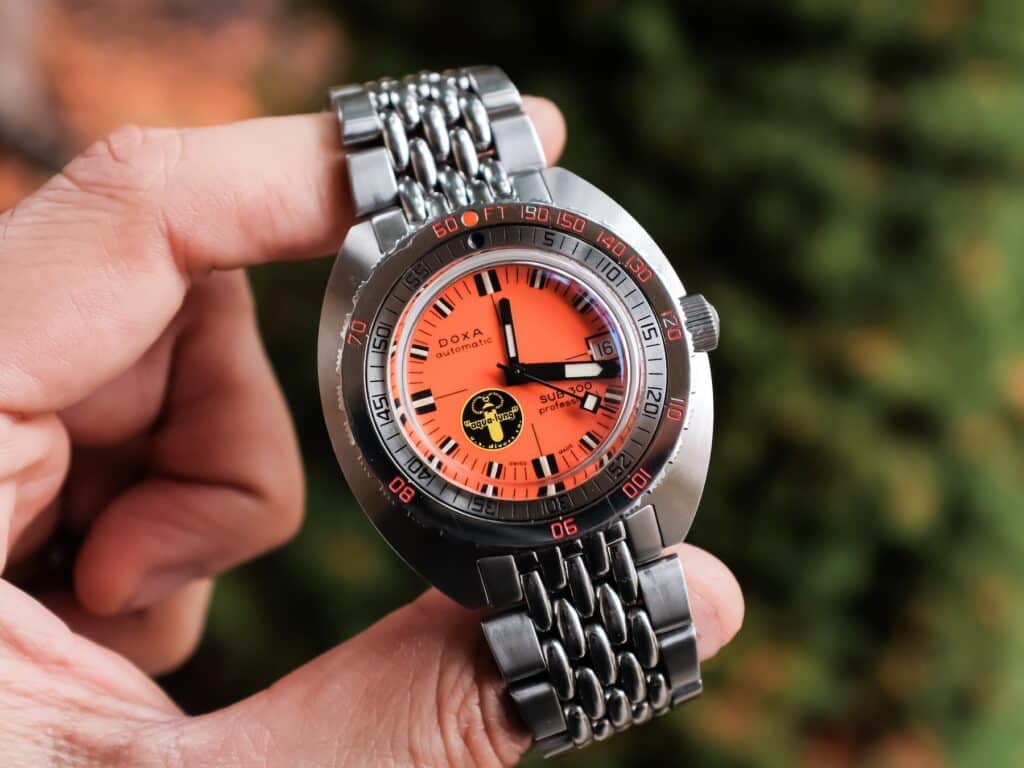
Eight years is enough time for most watches to lose their ability to surprise you. That’s what makes the Doxa Sub 300 Aqua Lung so useful here. Our hands-on review isn’t based on a few weeks with a loaner; it’s a look back at a watch bought in 2017 that has since traveled across continents, marked major life events, and taken its share of abuse. At that point, calling it a favorite feels almost irrelevant. It’s closer to an old companion that happens to tell time.
The watch itself has plenty of personality to reinforce that relationship. The 42.5mm tonneau-shaped steel case sounds substantial, but its short lug span, 12mm thickness, and low profile make it sit far more compactly than the numbers imply. The bezel still clicks firmly without backplay, and the beads-of-rice bracelet flexes enough to keep the weight centered on the wrist. After years of wear, even the fading paint on the bezel markers becomes part of the story rather than something you need to explain away.
There are still things to grumble about. The bracelet’s taper is odd, some bezel markings aren’t too friendly in dim light, and the whole design can look strange beside a conventional diver. But that’s the point. Other divers with more interesting movements or better finishing have come and gone, while the Doxa kept getting packed for trips and returning to the wrist. That’s a different kind of collector attachment. You don’t defend a watch for eight years because it won the first date. You defend it because somewhere along the way, it became yours.
Omega Seamaster 2541 — The Overlooked Bond-Era Watch Collectors Keep Discovering
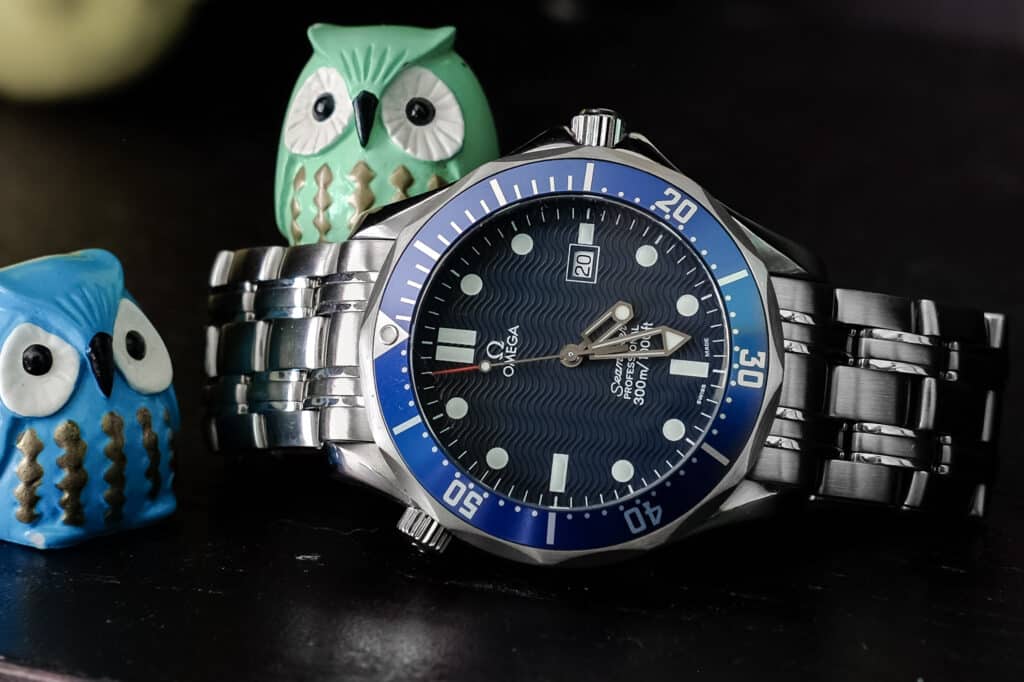
The Omega Seamaster 2541 has a stranger kind of cult appeal: everybody knows the movie, but fewer enthusiasts talk about this particular watch. Our connection to the 2541 began with GoldenEye, but years of actual wear changed what the watch meant. Instead of becoming a piece of movie memorabilia that occasionally gets taken out for a nostalgia hit, it became a proper daily-wear option with Pierce Brosnan’s wrist in its backstory.
And quartz is central to that experience. The 41mm case is only 11mm thick, while the 47.5mm lug-to-lug stretches a little on rounder wrists. On a flatter wrist, though, the slim profile lets it sit low and comfortably, noticeably less imposing than the automatic versions. The Caliber 1438 also removes most of the ceremony from ownership: no winding, no power-reserve anxiety, and excellent timekeeping. That’s useful when the goal is to wear the thing rather than negotiate with it every morning.
Naturally, the 2541 has its arguments against it. The bezel can be fiddly to grip, bracelet sizing is a pain, and the diver’s extension has a habit of coming undone even after the clasp was replaced. Some collectors also dismiss quartz as the lesser Seamaster simply because an automatic version exists. That’s precisely what makes the watch interesting here. Its appeal doesn’t depend on winning that argument. It has found an audience that likes the thinner, lighter, less demanding experience—and our own years of wear suggest the watch doesn’t need broader approval to keep earning a place in the collection.
When Practicality Creates Loyalty
Casio G-Shock GW6900-1 — The Watch That Keeps Beating More Expensive Watches
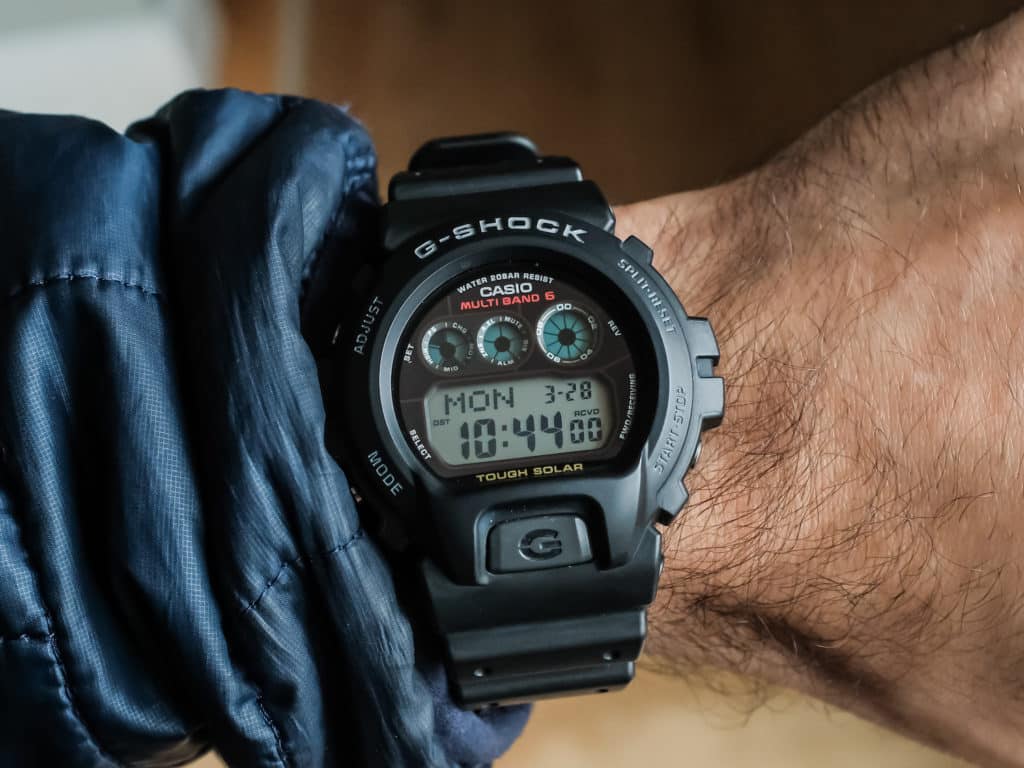
Some watches need a reason to leave the box. The GW6900-1 apparently needs a reason to stay there. As mentioned in our dedicated review, it lives on the hallway table and gets grabbed for yard work, airport security lines, and the occasional encounter with dropped tools. Meanwhile, watches with considerably more personality get rotated, stored, and sometimes treated with the sort of care normally reserved for fragile houseplants. The G-Shock gets none of that. It simply gets used.
That tells us more about its cult status than another paragraph about shock resistance ever could. At 53.2mm by 50mm by 17.7mm, it’s substantial, but the full-resin construction keeps it light on the wrist. The display is crisp, the front-facing EL backlight is easy to read in the dark, and the dual-time display is particularly useful. Tough Solar means there’s no routine battery anxiety, while Multi Band 6 atomic sync keeps the time synchronized without requiring much thought. Add the 31 time zones, 5 alarms, countdown timer, and stopwatch, and this is less a watch you admire than a watch you use.
That distinction matters. The GW6900-1 isn’t competing for the same collector satisfaction as a Doxa or Halios. It occupies a different part of the relationship. It’s the default when thinking about the watch would be more work than wearing it. After a few years of use, we still reach for it. A watch that consistently survives the rotation without needing to impress anyone has probably earned its cult following the boring way: by being useful.
Casio Duro — How a Cheap Watch Becomes a Community Favorite
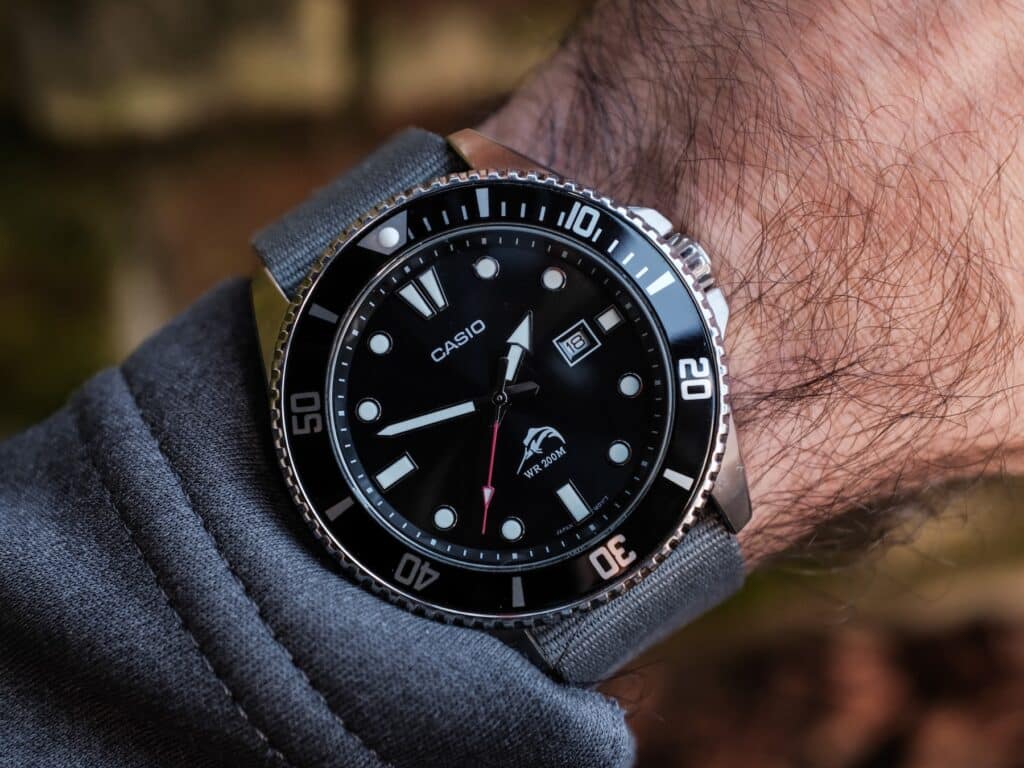
The Casio Duro is a funny thing to become emotionally invested in. It’s an inexpensive quartz diver, yet there’s an entire corner of the internet devoted to it, including r/DuroGang. Our own review started from curiosity about why this relatively ordinary-looking Casio had developed such a persistent following. The 44.2mm case looks like the obvious objection, but the way it wears quickly makes that objection feel less important. The bezel on our example was firm and well aligned, the dial was easy to read, and the quartz movement made it pretty low-maintenance.
There are compromises, though. The lume could last longer, individual examples can vary in second-hand alignment, and quartz won’t satisfy someone looking for mechanical interaction. But the Duro’s cult appeal doesn’t depend on pretending those things aren’t true. The interesting part is that a watch costing so little can create enough attachment that, after returning the review sample, we were already looking at which version to buy ourselves. That’s cheap-watch enthusiasm turning into genuine collector behavior.
Citizen NY0040 — The Underdog That Earned Its Own Following
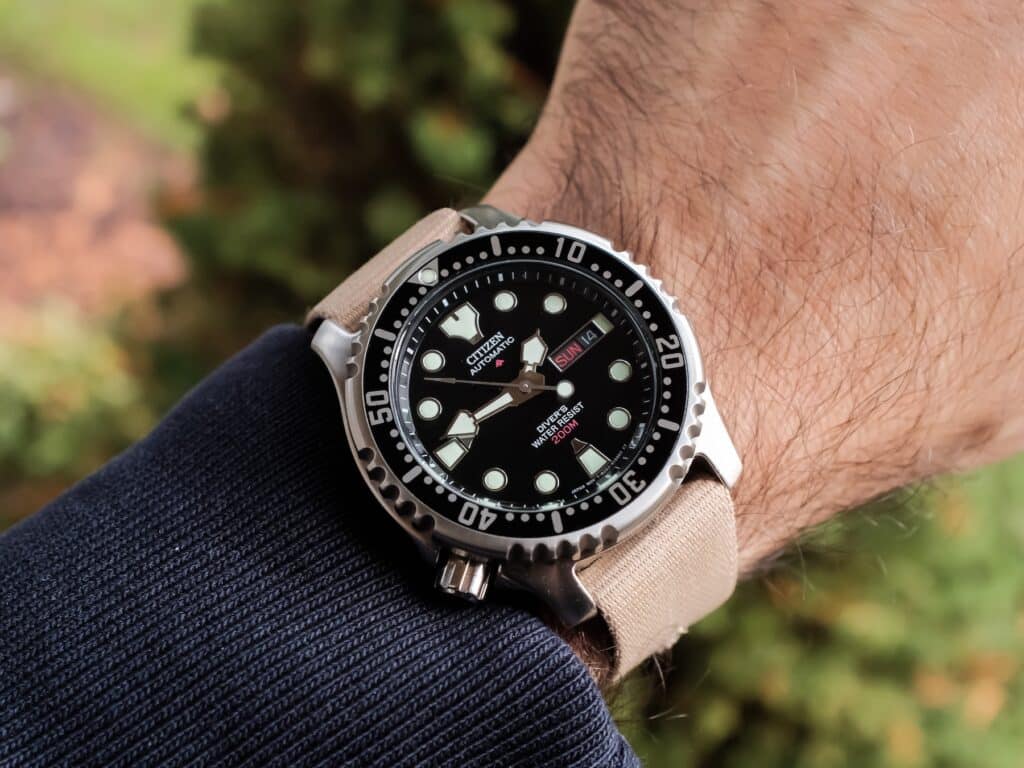
The Citizen NY0040 has spent years being introduced alongside another watch. That’s almost unfair, because our hands-on experience with it suggests the more interesting story is what happens when you stop treating it as a consolation prize for the Seiko SKX. The NY0040 was built as a serious ISO-rated diver, stayed largely unchanged for years, and never received the same enthusiast mythology. It was left to do its job. That low profile is part of what makes its following interesting today.
Take the crown placement, for instance. It sits on the left side of the case, avoiding the usual crown pressure on the back of the hand. It takes a little adjustment to set from the right side, but that awkwardness fades into routine. The nearly 42mm case wears more compactly than expected, while the left-side crown and grippy bezel make it unusually easy to live with.
That said, it isn’t perfect. The mineral crystal remains a compromise, the rotor on the Miyota 8204 is loud, and the stock rubber strap didn’t click with us. Thankfully, strap changes are straightforward, and NATO straps worked well. More importantly, after spending time with the NY0040, it proved more comfortable on the wrist than the SKX divers we’d owned previously. That’s why the underdog angle matters here. The watch doesn’t need to beat the SKX in some imaginary family argument. It needs to make enough sense on its own that you stop wondering why everyone was comparing them in the first place.
When the Flaws Become Part of the Identity
Vostok Amphibia — The Watch Collectors Defend Because It’s Weird
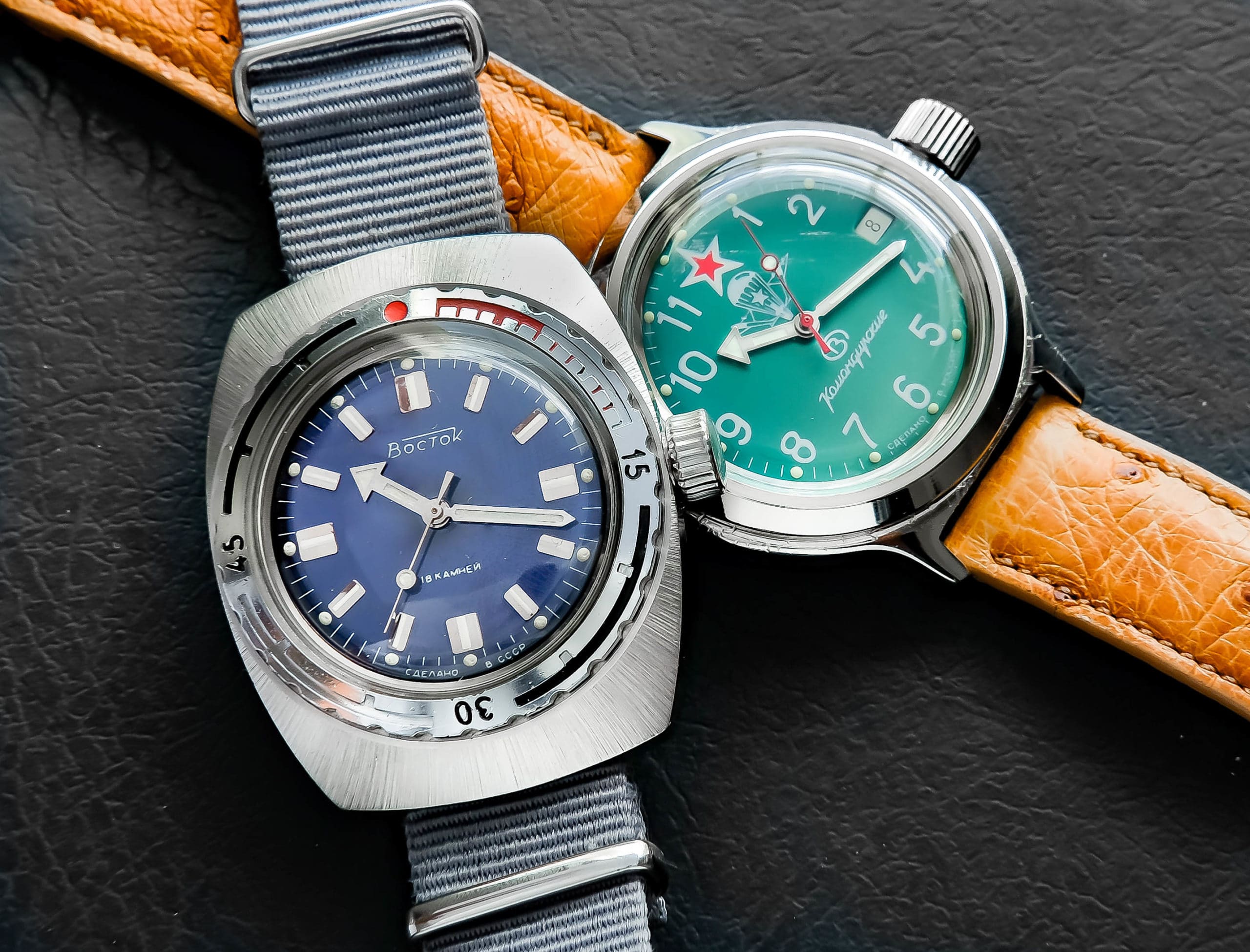
The Vostok Amphibia has the unusual distinction of making its owners explain that the watch isn’t broken. The crown wobbles, the bezel moves in both directions and can feel loose, the bracelet is thin and tinny, and the lume on our example wasn’t great. None of this sounds like the setup for collector affection, yet the Amphibia keeps attracting enthusiasts who know its oddities before they even place an order. We even gave the wobbling crown its own unofficial badge of honor: the TBWS #wobblycrowncrew.
That only works because something lies beneath the weirdness. The 420 case measures 39mm by 46mm by 15mm, and its rounded, almost porthole-like shape gives the watch a very different presence from the usual angular dive watch. The case scratches easily because of its highly polished finish, but our own marks became “a badge of honor” rather than something worth obsessing over. The loose bezel has a real drawback because it can shift on its own, but it’s also easy to modify. Amphibia offers more than ten case styles and a huge range of dials, while Vostok offers different bezels specifically for swapping. Ownership can therefore become less about preserving a factory-original object and more about making the watch your own.
That’s a very different proposition from buying a watch for flawless execution. The Amphibia’s appeal comes partly from having enough quirks to get used to. The in-house 2416 is rated at -20/+60 seconds a day, modern examples have had some quality-control issues, and the bracelet is something we’d happily replace with a NATO or another strap. None of that makes it universally appealing. Someone looking for precision, refinement, and a polished ownership experience has plenty of reasons to look elsewhere. The collector who enjoys an affordable automatic, a large modding community, unusual design, and a watch that feels more like a hobby than a finished product gets something much harder to quantify. That kind of personality can turn a flawed watch into a cult favorite. We get into all those quirks, from the wobbly crown to the modding potential, in our Vostok Amphibia 420 review.
Seiko SKX013 — When Size Creates Its Own Cult
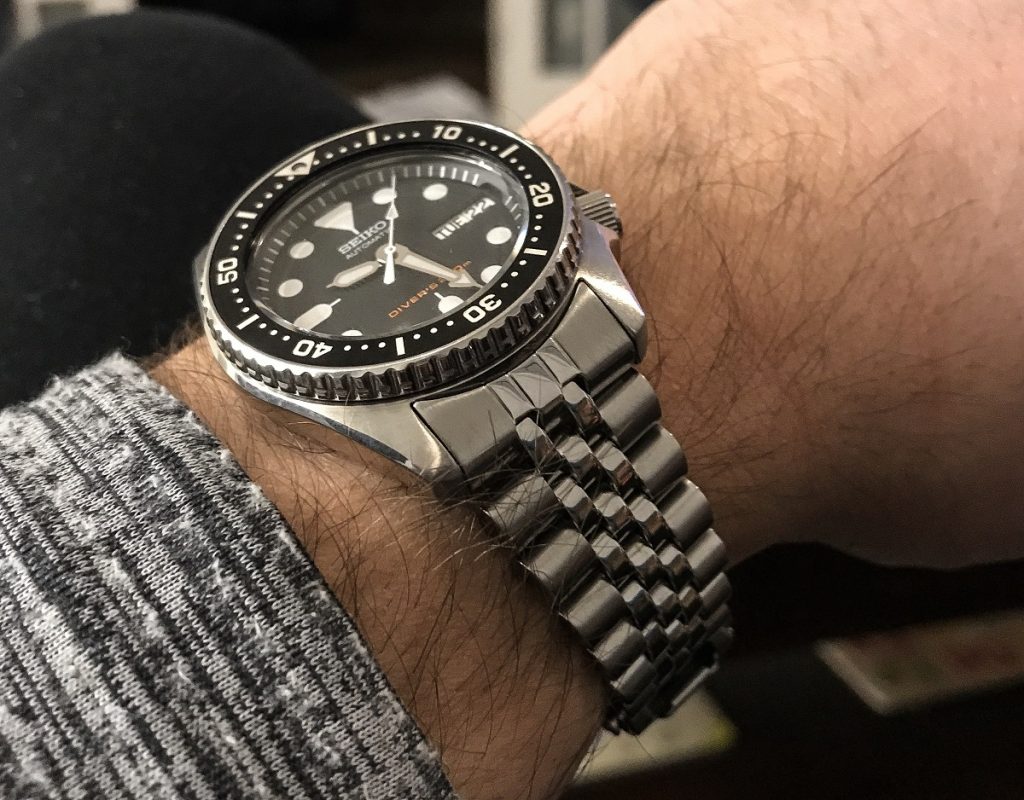
The SKX013 is what happens when you take a familiar Seiko formula and shrink it, without everyone agreeing the result is better. Our review is quite useful here because the reactions were all over the place. Some reviewers found the 38mm case comfortable and easy to wear to work, on weekends, and while hiking. Others thought the dial was too small, the case too tall, or the whole watch simply too cramped for their wrists. One person even wanted it off at the next stoplight. That isn’t exactly universal approval, but it tells us something more interesting about cult watches: sometimes the following forms around a very specific kind of fit.
For the wrists it suits, the tucked-away crown and tapered Jubilee make it genuinely comfortable, while its ability to work across different straps gives the little SKX more versatility than its dimensions suggest.
But the SKX013 never escapes the compromises created by its smaller size. The dial is unusually small, the bezel can be harder to read at a glance, and the case is relatively tall for its diameter. The familiar 7S26 also skips hacking and hand-winding, while we see fewer aftermarket mod options than the SKX007. Yet that mixed reaction is precisely why the SKX013 belongs in this conversation. It doesn’t need to be the Seiko that everyone prefers. It only needs to become the one that feels right to a particular owner. The SKX family already has a cult following; the 013 proves there can be another, slightly more specific cult living inside it.
When Enthusiast Communities Create the Cult
Halios Seaforth IV Titanium — The Microbrand Watch People Keep Talking About
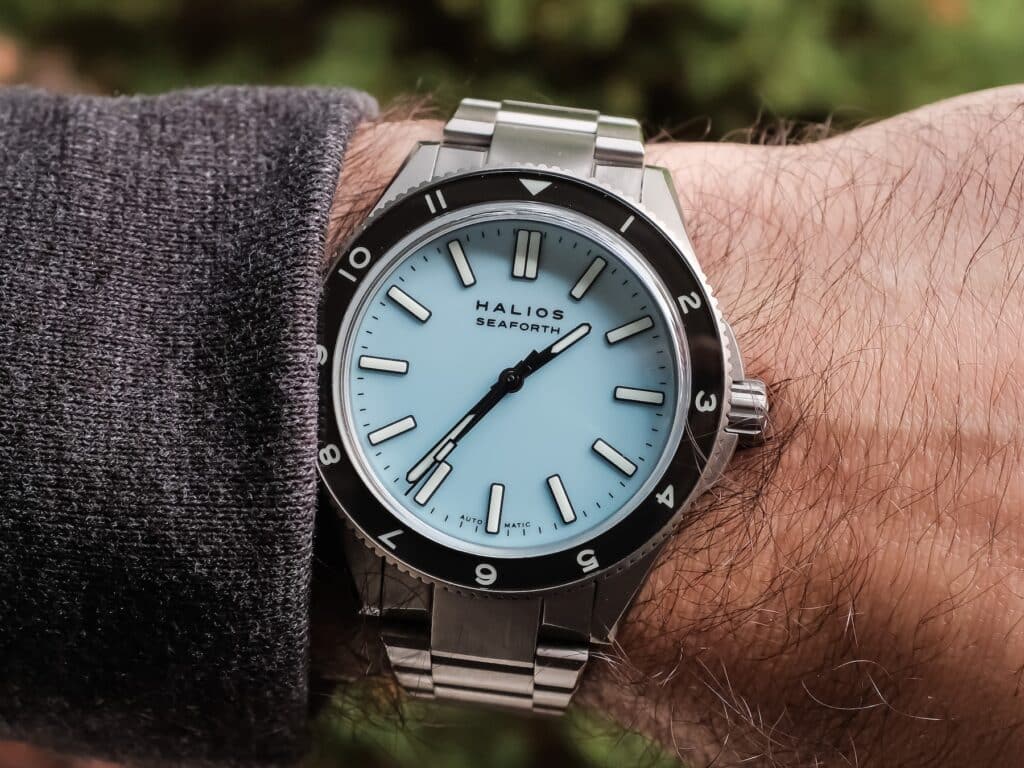
Halios is a strange kind of microbrand success story. The Seaforth IV Titanium isn’t something you casually stumble across on a display counter, buy five minutes later, and take home for dinner. As described in our review, about a year passed between placing the order and the watch arriving. The important part, though, is what happened once it finally showed up. It didn’t need a ceremonial unboxing or a forced honeymoon period. It went onto the wrist, got worn through ordinary days, and gradually stopped being part of a rotation. It became the default.
That is a much more convincing kind of enthusiast loyalty than simply being hard to buy. The 41mm case, 46.5mm lug-to-lug, and 12.4mm thickness give it a balanced footprint, but titanium changes the experience considerably. It feels light in hand and easy on the wrist through long days. The bracelet contributes to that rather than fighting it, with curved end links, screw links, and tool-free adjustment making it easy to dial in the fit as you go. The blue dial also carries a personal connection because it recalls an older Seaforth variant we chased for years without success. Even the 12-hour bezel became part of a daily routine, tracking a second time zone without adding much visual clutter.
However, there’s a catch, and it is a useful one for anyone discovering the watch today. Getting a Halios still requires attention to announcements and preorder windows, and delivery isn’t instant gratification. That scarcity has helped build the brand’s enthusiast aura, but today’s appeal comes less from simply being difficult to obtain and more from how consistently the watch rewards ownership. After about a year, the titanium case and bracelet had collected plenty of scratches. For us, that became evidence of use rather than a reason to stop wearing it. A microbrand doesn’t need mainstream visibility to create a cult. Sometimes a small group of enthusiasts wearing the same watch obsessively is enough.
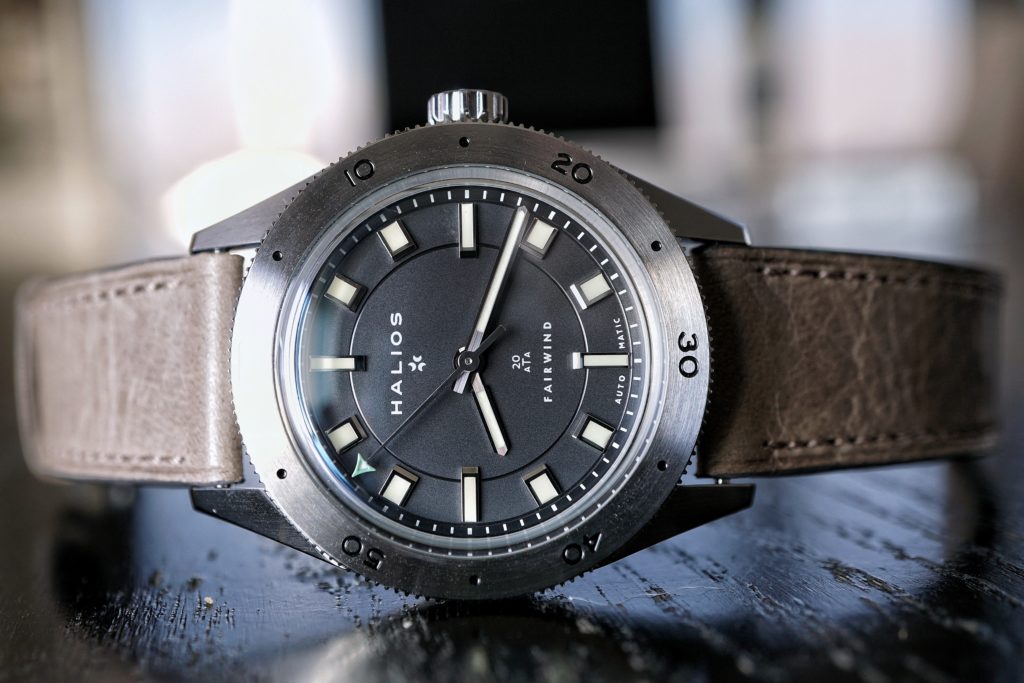
Halios Fairwind — The “If You Know, You Know” Kind of Watch
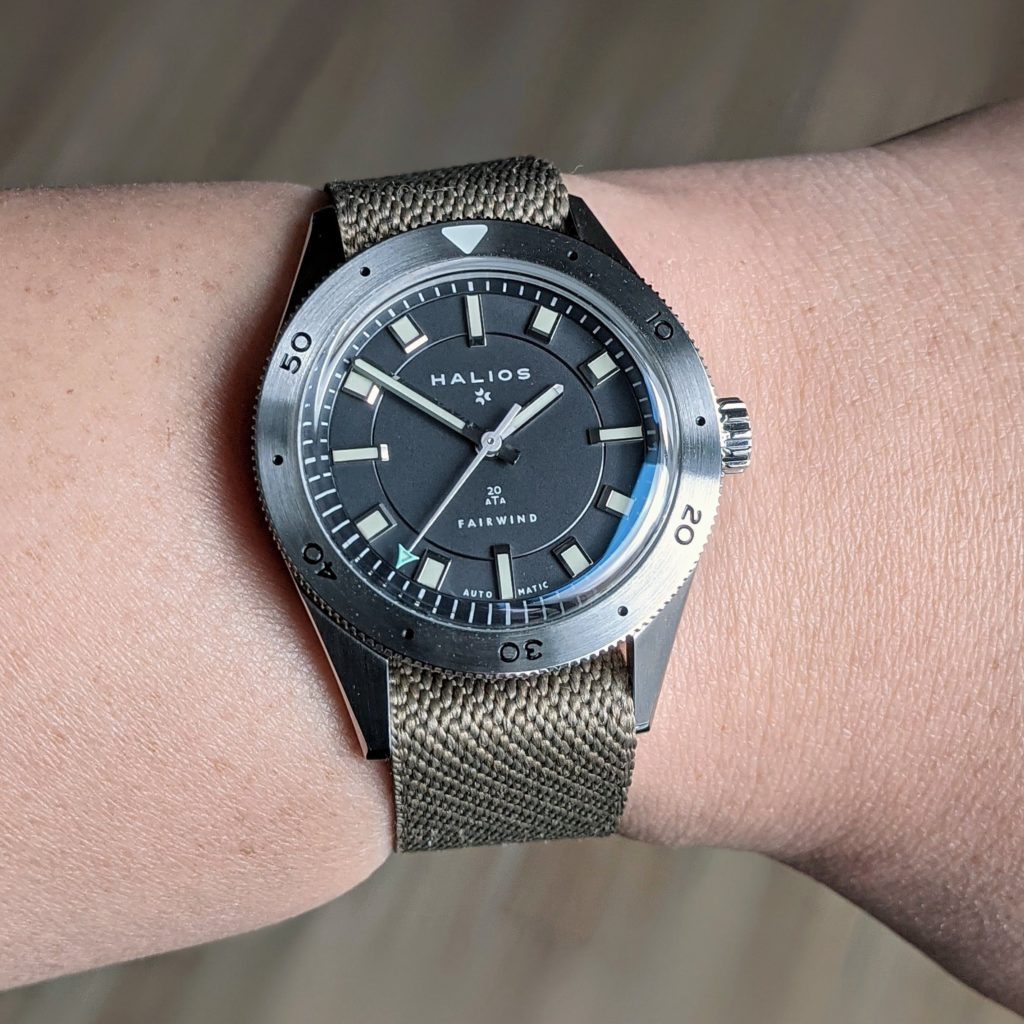
The Fairwind arrived with an unfair job description. Halios already had the Seaforth, a watch we’ve described as helping set the bar for microbrand divers. Then the Fairwind spent roughly another year trapped in development and manufacturing delays before finally reaching customers. That makes its eventual enthusiast following more interesting. People weren’t waiting around for a household name. They were waiting for a Halios.
Once on the wrist, the Fairwind gives enthusiasts plenty to talk about. The 39mm case, 48mm lug-to-lug, and sharply angled lugs create a compact skin-diver shape that hugs the wrist without feeling cramped. Moreover, the dial took some getting used to. The hands and indices initially looked slightly odd. Still, that hesitation faded after more wrist time, as the polished surfaces, subtle dial texture, and strong C3 lume revealed more of the design.
The buying experience became part of the story, too. Preorders were paused because of bracelet delays, but Halios provided regular updates and a no-questions-asked cancellation policy. We’ve praised that transparency, which matters when a watch is already asking enthusiasts to wait. The Fairwind isn’t universally better than every other sub-$1,000 diver either. Yet it stood out among the many divers we’ve tested. That’s how enthusiast credibility tends to work. A watch becomes part of the conversation because people who know the category keep bringing it up. Eventually, the shared knowledge around the watch becomes part of the attraction itself.
When a Watch Has to Earn the Myth
Omega Speedmaster Professional 3861 — Does the Icon Still Work After the Myth Wears Off?
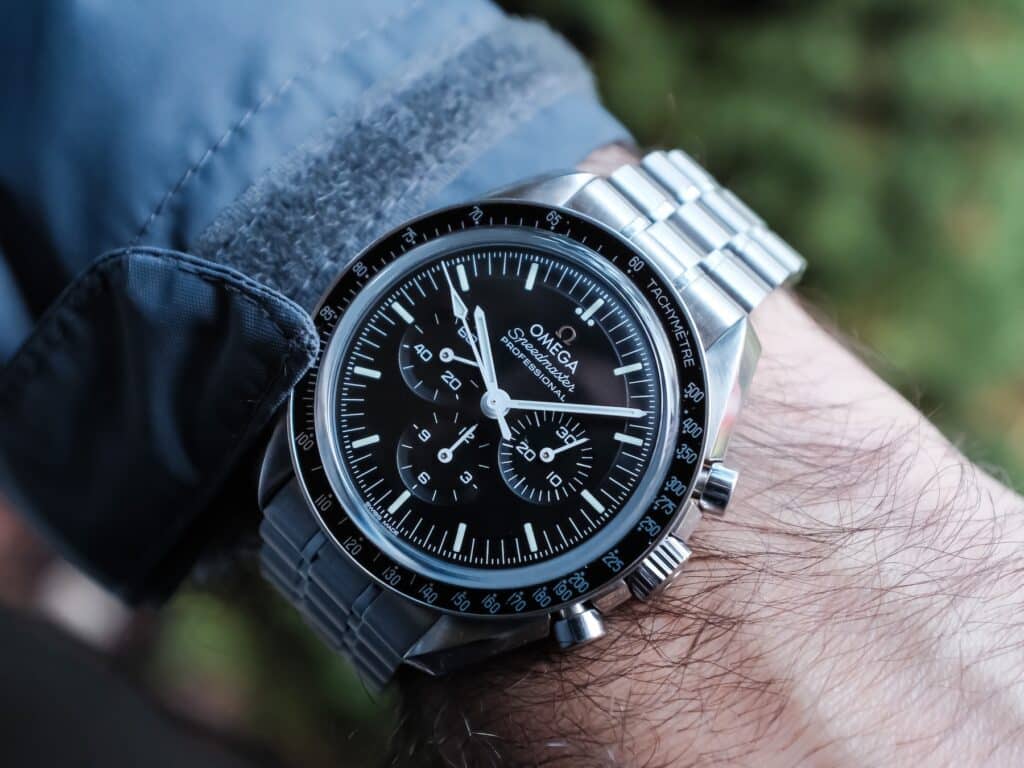
The Speedmaster comes with a lot of baggage. Some of it is cultural, some comes from decades of collector obsession, and some is simply what happens when a watch stays recognizable for a very long time. But none of that tells you what it is like to live with one. Our own experience with the earlier 1861 version is useful here because it wasn’t a brief flirtation. It was worn constantly, the Hesalite crystal was babied, and the bracelet was tolerated in the way you tolerate a noisy roommate. After enough years, “heritage” and “things I put up with” started to feel like two different categories.
That is why the 3861 matters for this particular conversation. Instead of reinventing the Speedmaster, Omega tightened up the parts that had become difficult to ignore. The 42mm case remains, but the small dimensional reductions make it sit more planted. The step dial adds some depth without turning the watch into something dressy, and the revised bracelet articulates sooner and wraps around the wrist better. Most importantly, the bracelet finally stopped feeling like something attached to the watch that we had to tolerate. It became one reason to keep it on the wrist.
The movement brings the same kind of practical refinement. The 3861 is hand-wound, anti-magnetic, Co-Axial, METAS-certified, and has around 50 hours of reserve. More importantly for ownership, we observed about +3 seconds a week, while the winding and pushers felt smoother and more deliberate than the old 1861. That’s the useful distinction with a watch like this: its reputation tells you why it matters to collectors, but living with it tells you whether those details matter to you. In our case, the changes to the 3861 addressed enough of the frustrations we’d had with the previous generation to make the watch easier to live with.
And that’s why the Speedmaster earns its place in this conversation. Plenty of watches have stories attached to them. Far fewer can survive years of ownership, scrutiny, and direct comparison with their predecessors and still make you want to wear them. The 3861 didn’t need the mythology to hide its shortcomings; it needed the day-to-day experience to justify all the fuss.
Final Thoughts: The Watches We Defend Are Usually the Ones We Actually Wear
Looking back at these watches, the funny part is how little they have in common on paper. A G-Shock and a Speedmaster have almost nothing in common; the SKX007 and Vostok Amphibia certainly aren’t cut from the same cloth, and a Halios won’t spark the same conversation as an Omega. Yet we keep coming back to them for very personal reasons. Sometimes it’s nostalgia, sometimes utility, sometimes the fun of owning something slightly weird, and sometimes it’s simply because a watch has settled so comfortably into our lives that replacing it starts to feel like creating a problem where none existed.
That is probably why collectors get so defensive about these watches. Once you’ve put enough miles, scratches, weekends, trips, and ordinary Tuesdays into something, you’re no longer judging it the same way you would a watch you’ve just seen in a product photo. You know where it works, where it annoys you, and exactly why you still reach for it anyway. And that matters more than having the “right” watch on paper. The cult classics are rarely the ones that leave us with nothing to complain about. They’re the ones we’d still choose to put on tomorrow.

Co-Founder and Senior Editor
Kaz has been collecting watches since 2015, but he’s been fascinated by product design, the Collector’s psychology, and brand marketing his whole life. While sharing the same strong fondness for all things horologically-affordable as Mike (his TBWS partner in crime), Kaz’s collection niche is also focused on vintage Soviet watches as well as watches that feature a unique, but well-designed quirk or visual hook.