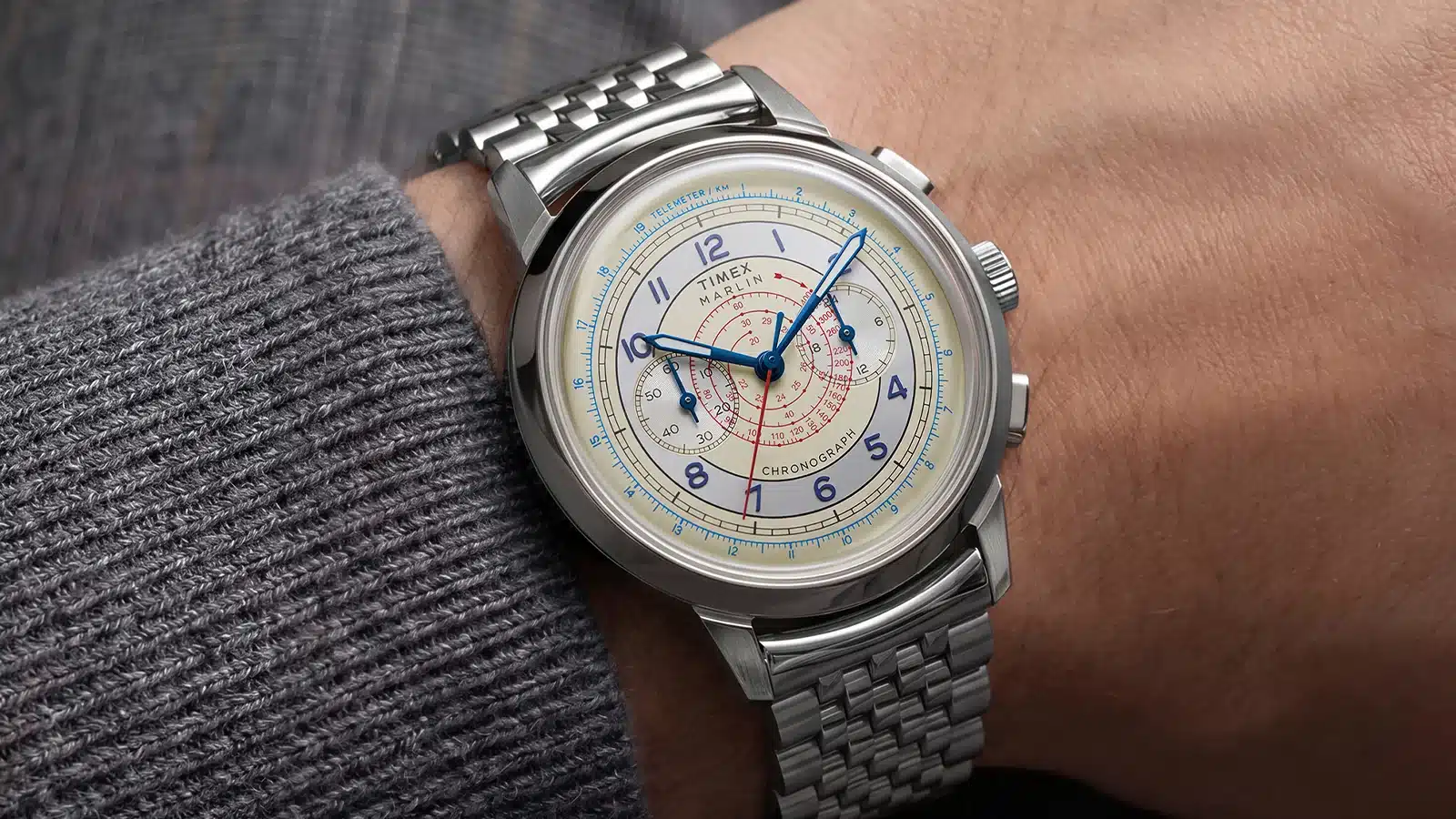
Spend enough time looking at vintage chronographs and you’ll eventually run into dials like this. Multiple scales overlap each other, and colors separate one function from another. Reading the time almost feels secondary to figuring out what everything else does. I think that’s part of the fun. Usually, watches that bring this look back today get expensive quickly. But this new Timex Marlin Neo Classic Chronograph starts at $279.
Timex went further back than usual for this Marlin. Much of the modern collection has drawn from the clean, relatively restrained style associated with the 1960s. The Neo Classic looks toward navigational chronographs produced during the 1930s through the 1950s, when brands including Breitling, Longines, and Angelus were making watches with similarly elaborate scales. In some ways, this also reminds me of the Patek Philippe 130A Sector-Dial Chronograph. GASP.
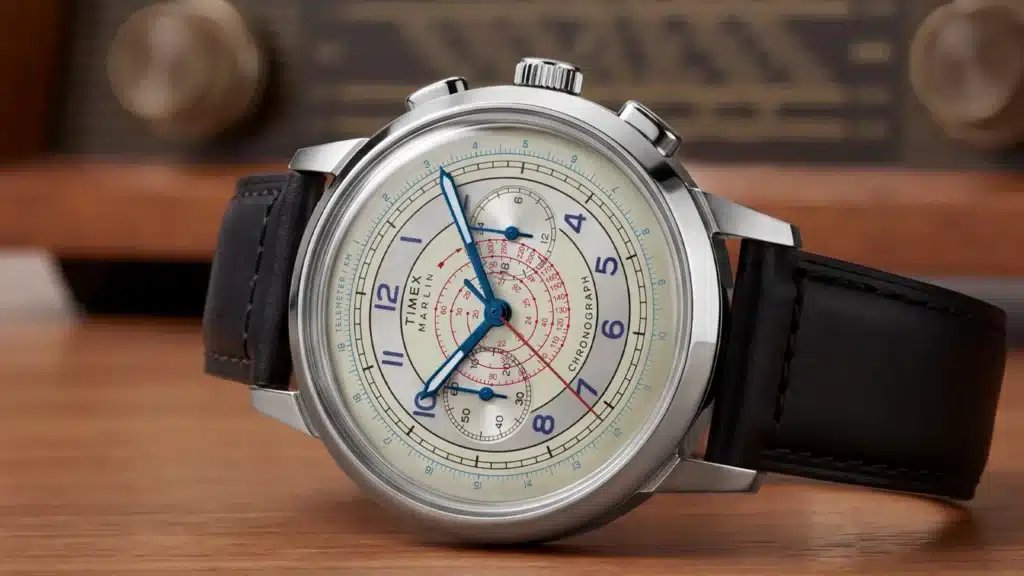
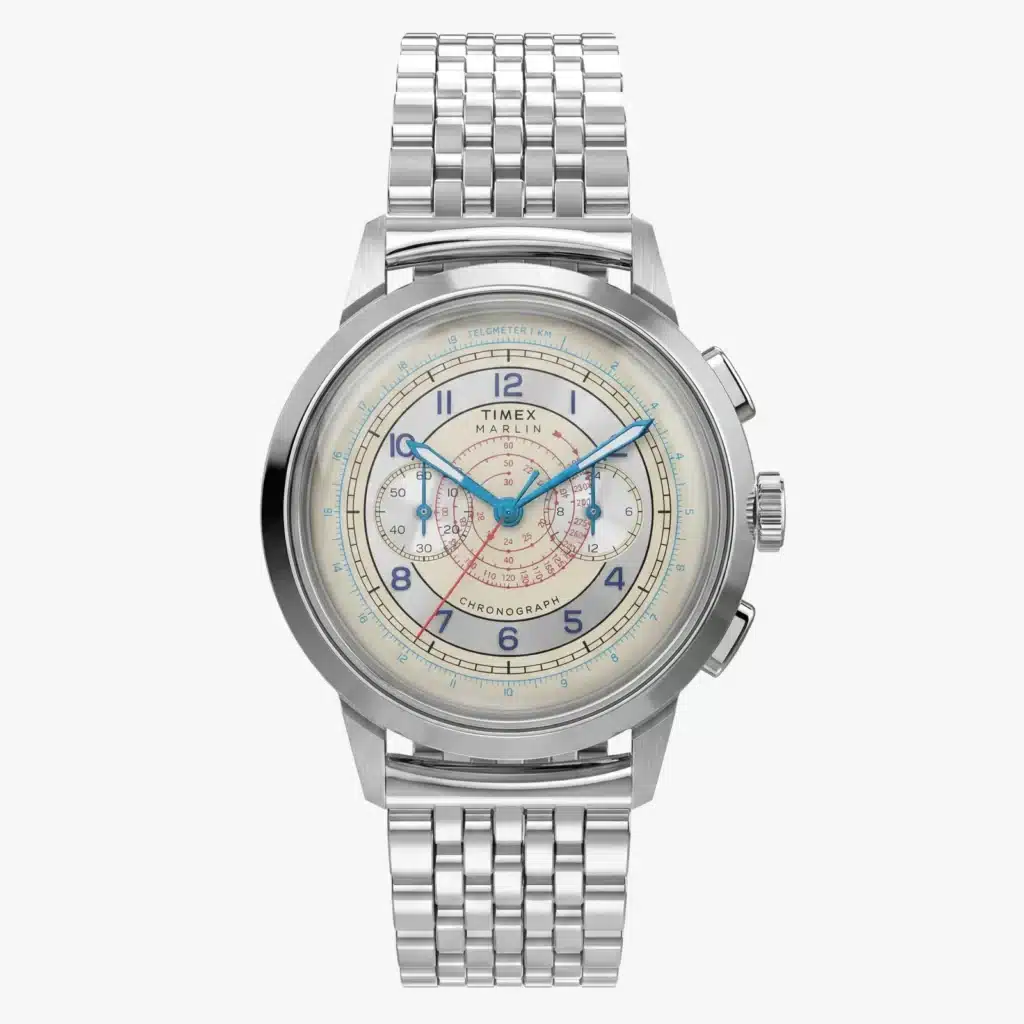
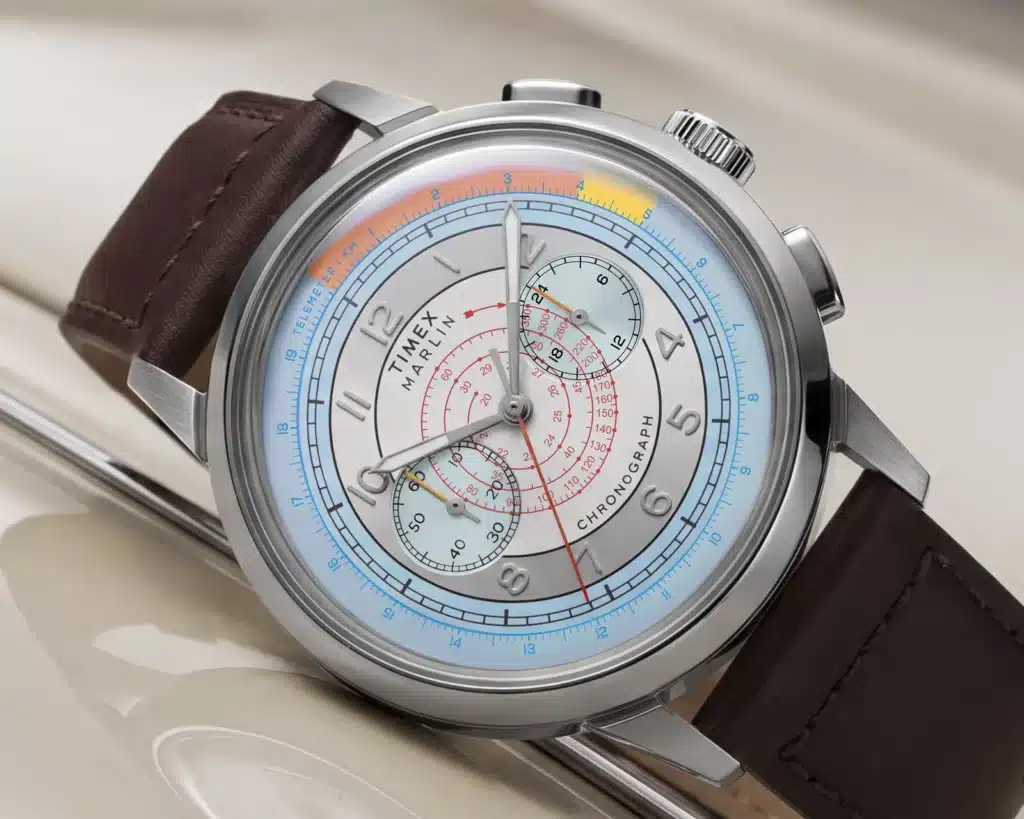
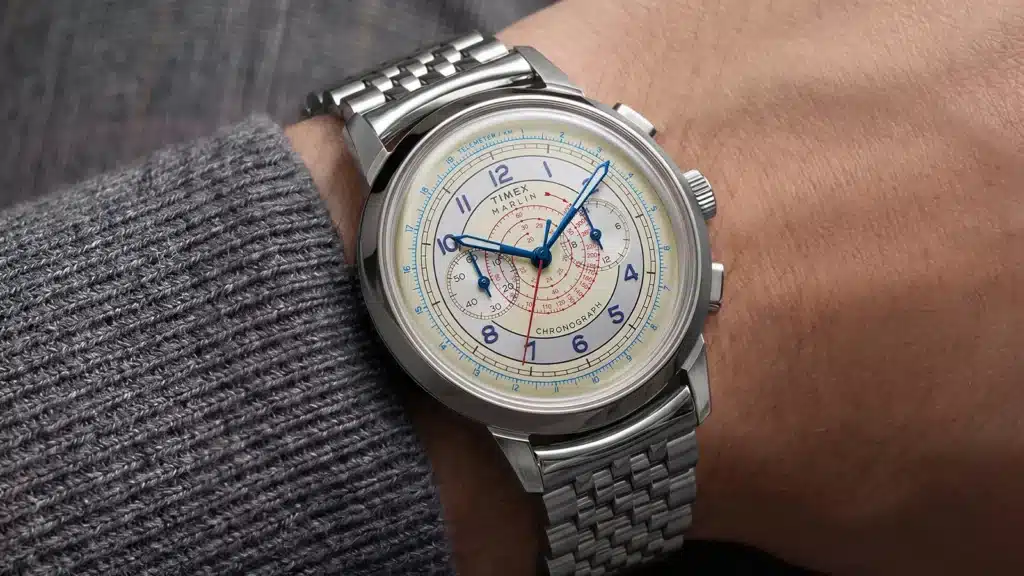
I think the complexity is exactly why this one works. The cream dial has a snail-style tachymeter scale in the center and a telemeter running around its perimeter. Red, blue, and black markings help separate the functions, while two subdials sit within everything else happening on the dial. It’s busy. To me, that’s the appeal.
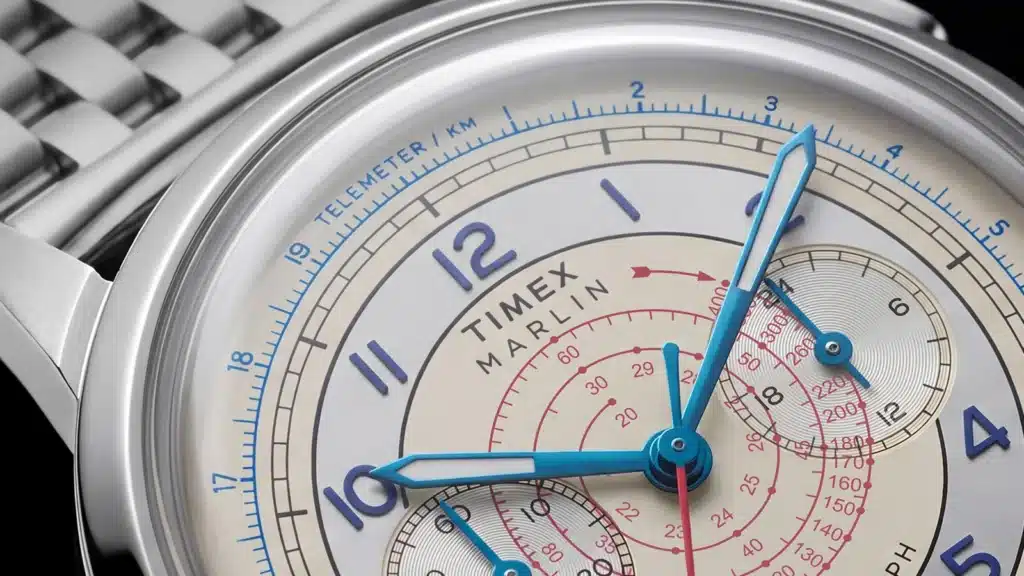
A tachymeter can calculate speed over a known distance. The less common telemeter measures distance using the elapsed time between seeing an event and hearing it. Lightning is the classic example. The practical need for either scale has obviously diminished, but they give this Marlin a very different personality from the cleaner watches we’ve come to expect from the collection.
My take is that Timex found a good direction here. There are only so many ways to revisit the same mid-century dress-watch cues before the exercise gets repetitive. Digging into an earlier and nerdier corner of chronograph design gives the Marlin something new to explore.
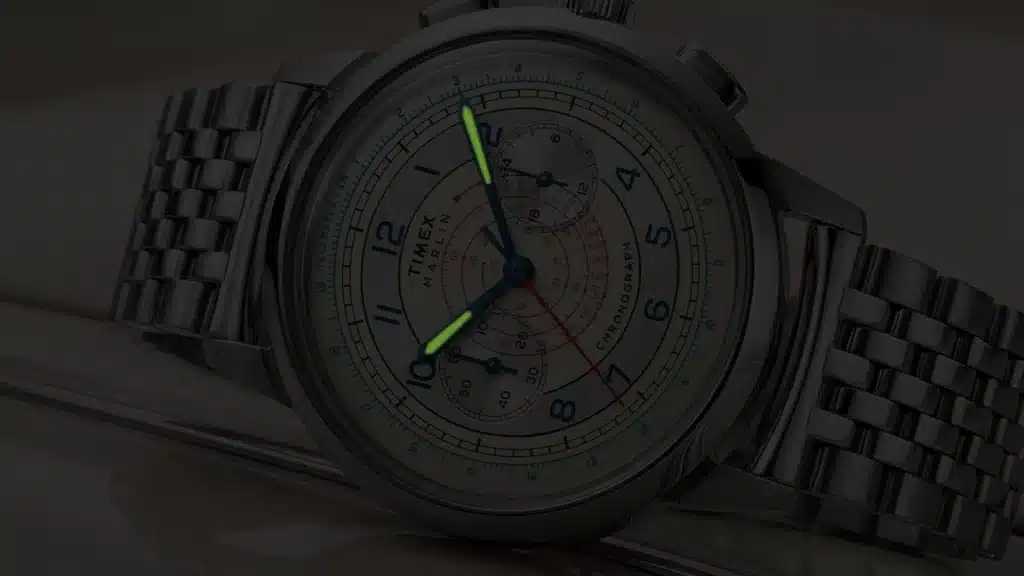
The watch itself is fairly conventional underneath all that dial furniture. The stainless-steel case measures 40mm across, 48.5mm lug-to-lug, and 13mm thick. You get curved chronograph pushers, a fluted crown, 50 meters of water resistance, and a domed acrylic crystal. Timex uses an analog quartz chronograph movement.
In my opinion, quartz is perfectly appropriate here. I’m interested in this watch because of the design, and quartz keeps the price within familiar Timex territory. I feel similarly about the acrylic crystal. Sapphire would resist scratches better. Acrylic should give the dial some of the distortion and warmth we associate with older watches, although we’ll need to see one in person before judging how successful that effect actually is.
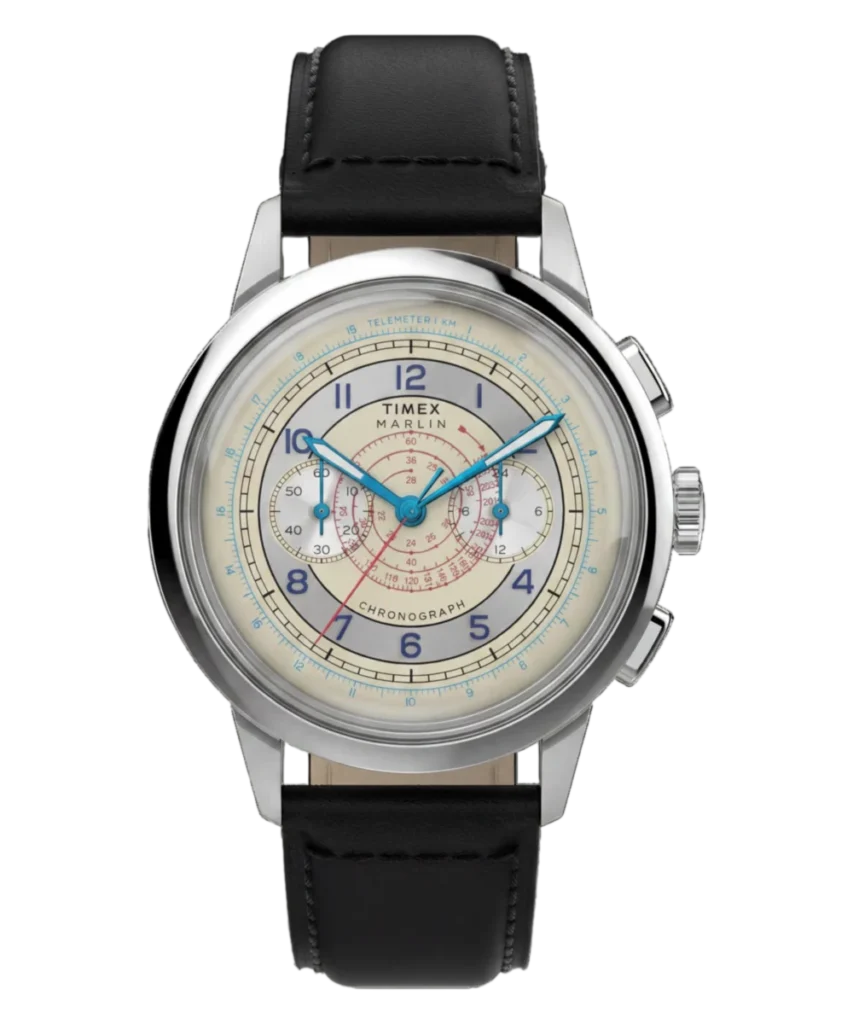
Pricing starts at $279 on leather. The cream-dial version is also available on a steel bracelet with flat end links and a butterfly clasp for $319. Timex offers another dial with a white center, silver hour track, sky-blue telemeter, and orange and yellow accents for $279 on brown leather. And that price is where I start thinking about much more expensive watches.
There are plenty of reasons to spend more on a Swiss chronograph. A mechanical movement costs more to produce. Case and dial finishing can improve considerably. Movement construction, servicing, bracelet quality, and historical connections can matter too. We haven’t handled this Timex, so I’m certainly not going to pretend those differences disappear because the product photos look good.
If what originally pulled you toward an expensive vintage-inspired chronograph was the dial, the colors, the domed crystal, and the general weirdness of an old navigational watch, how much more do you need? To me, that’s what makes the Marlin Neo Classic interesting. Timex has taken a fairly obscure chronograph design and put it into a watch costing less than $300 on leather. At that price, spending more might deserve an explanation.

Co-Founder & Senior Editor
Michael Peñate is an American writer, photographer, and podcaster based in Seattle, Washington. His work typically focuses on the passage of time and the tools we use to connect with that very journey. From aviation to music and travel, his interests span a multitude of disciplines that often intersect with the world of watches – and the obsessive culture behind collecting them.