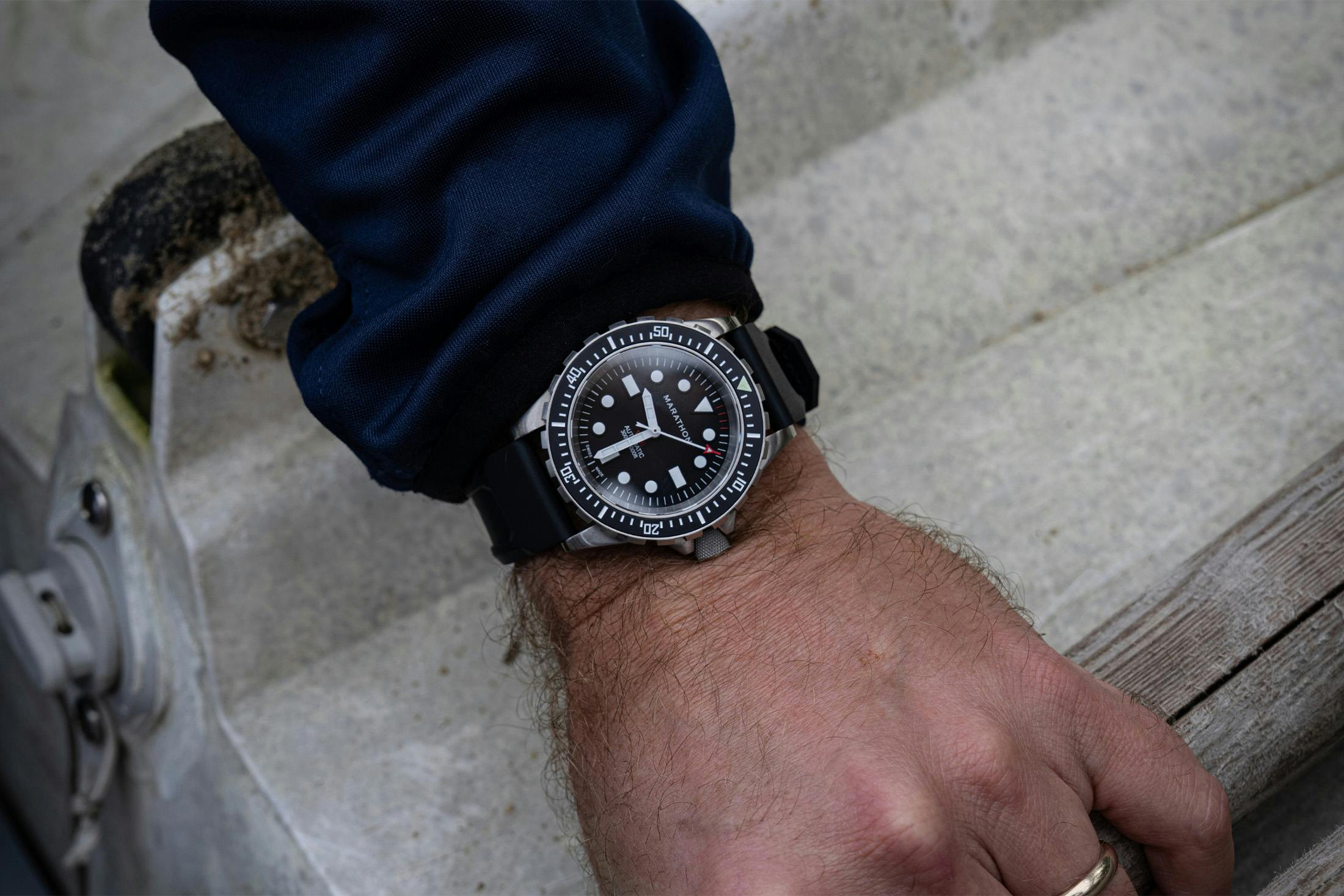
Marathon watches have never exactly been known for delicacy. That’s part of their appeal. With the new Marathon x Watches of Espionage Titanium SAR, I think one of the smarter decisions was figuring out how to preserve that familiar, overbuilt character while removing a considerable amount of weight.
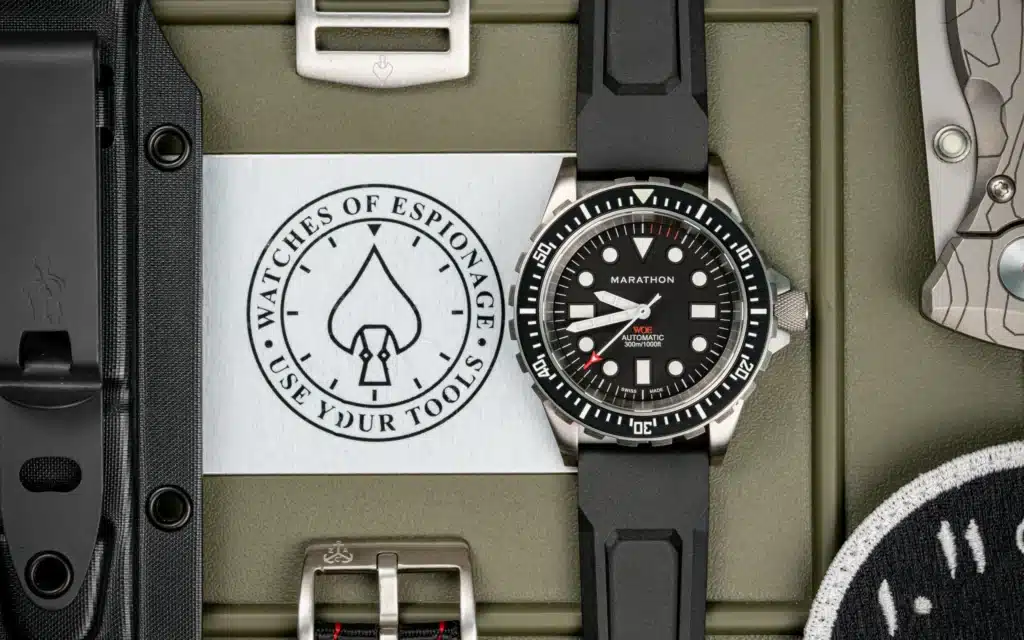
The Titanium SAR marks a first for both sides of the collaboration. It’s the first watch collaboration from Watches of Espionage and Marathon’s first watch produced in Grade 5 titanium. Limited to 200 pieces, with pre-orders opening September 24 and deliveries expected to begin in January 2027.
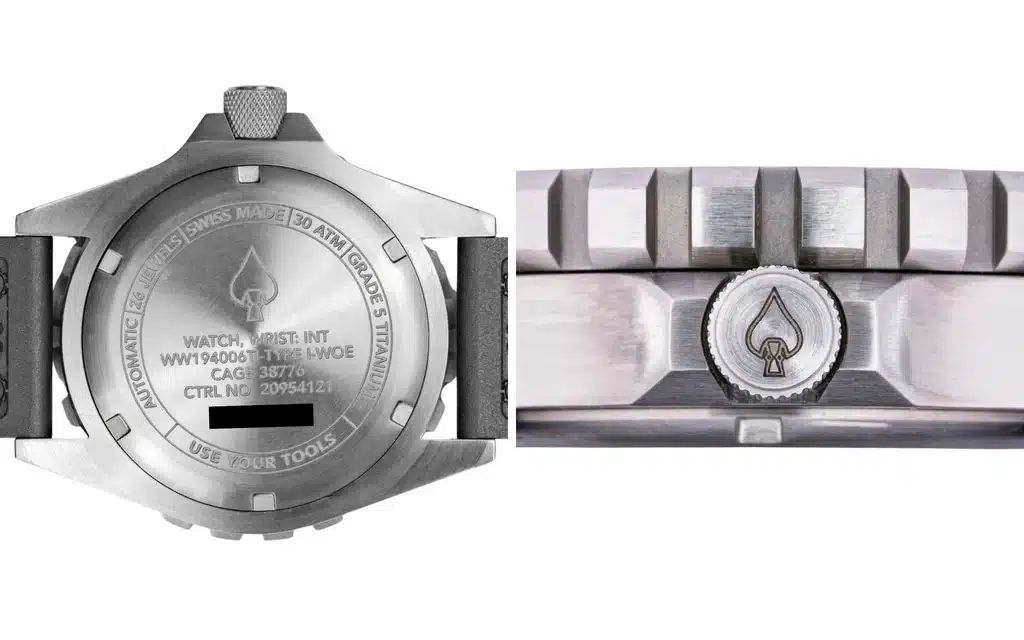
Watches of Espionage, or W.O.E., is an online publication founded five years ago by a former CIA Case Officer who maintains a mostly anonymous public identity. The site occupies one of my favorite strange little corners of the watch world, covering the watches worn by members of the military and intelligence communities alongside broader stories about collecting, espionage, and military culture. W.O.E. has also developed its own line of straps, tools, and accessories, though this Marathon represents its first collaborative watch.
As partnerships go, the connection is pretty easy to understand. Marathon has spent decades producing watches for military and government customers, while W.O.E. has built much of its readership documenting how watches end up in those environments. My take is that the collaboration works best when that connection stays in the background. The watch itself still reads immediately as a Marathon SAR.
Its basic architecture should be familiar. The case measures 41mm across, 48mm lug-to-lug, and 14mm thick, with a flat sapphire crystal and 300 meters of water resistance. The SAR platform dates to 2001, when the original watch was developed for Canadian Search and Rescue Technicians.
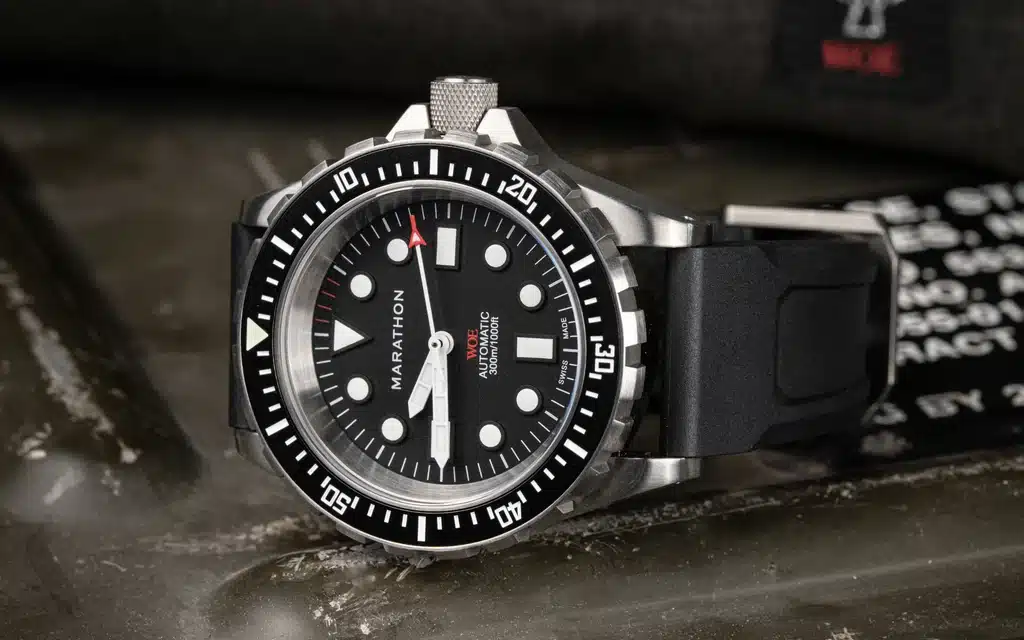
We’ve also spent time with the steel TSAR, which shares those dimensions. In our review, its slab-sided steel case, aggressive bezel, and oversized crown gave it a dense, industrial presence. To me, that makes titanium especially appropriate for this platform. W.O.E. says the Grade 5 titanium case cuts weight by roughly 40 percent compared with stainless steel. I think there’s real functional value in losing that mass without shrinking the SAR or cleaning up its deliberately chunky design.
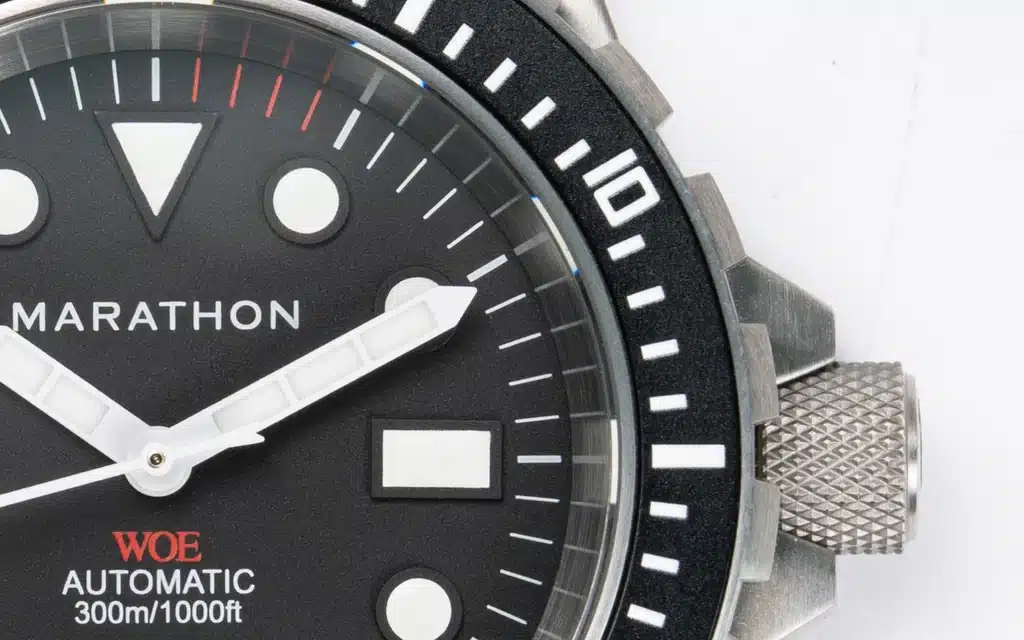
W.O.E.’s visual additions are fairly restrained. The first four minutes of the track are printed in red, a detail W.O.E. says references a timing window used during clandestine source meetings. There’s a small red W.O.E. signature at six, while its spearhead insignia appears on the crown and caseback. I think stopping there was the perfect call. The collaboration doesn’t overwhelm a design that already has a very recognizable identity.
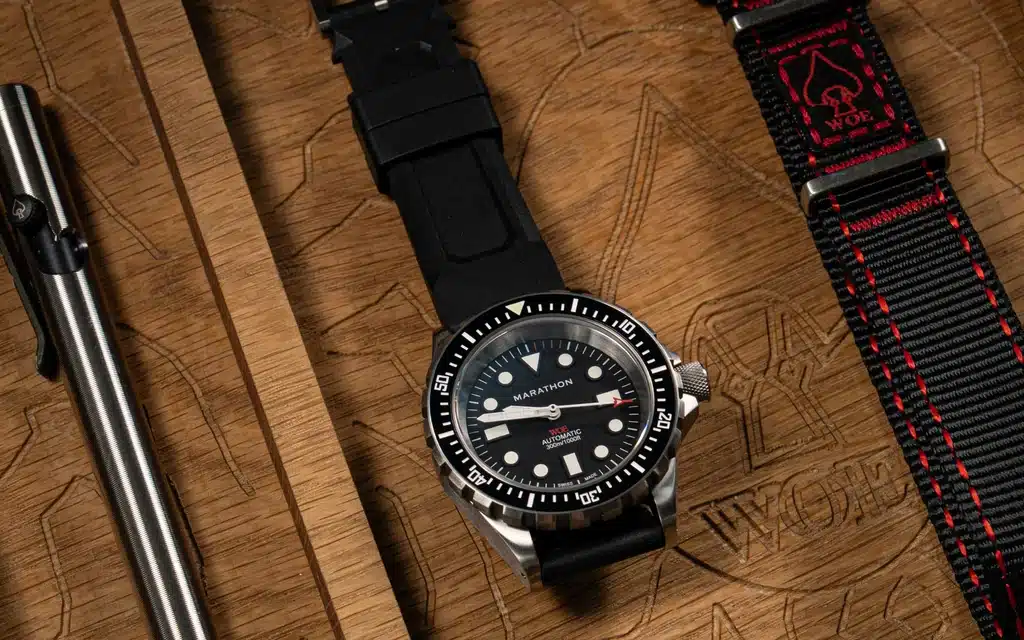
Marathon and W.O.E. chose Sellita’s automatic SW200-2B, a true no-date caliber without a phantom crown position and with up to 65 hours of power reserve. In my opinion, that’s one of the strongest changes here. The longer reserve is useful, and using a proper no-date movement is a cleaner solution for a watch that never needed a date display, if you ask me.

At $2,250, this is obviously sitting toward the upper end of Marathon’s catalog. My take is that the price feels a little high at first glance, though there’s quite a bit wrapped into that increase. You’re getting Grade 5 titanium, a substantially longer power reserve, a proper no-date movement, titanium hardware on the three-piece FKM strap, and production limited to 200 examples. I think those changes make the pricing understandable, even if buyers will have to decide how much the W.O.E. collaboration and limited production matter to them.
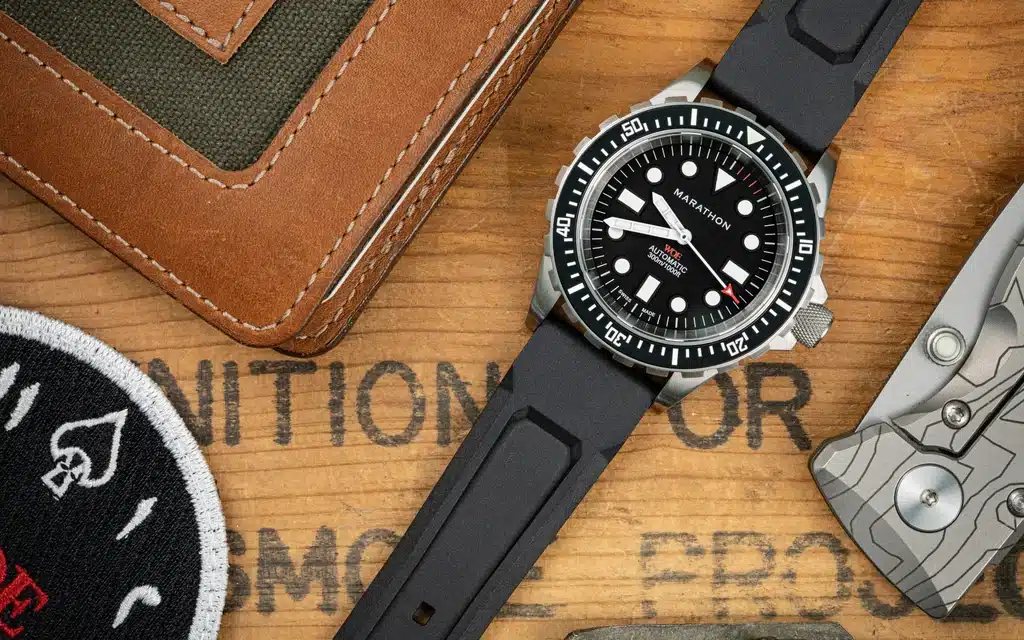
There’s another interesting wrinkle. Marathon has apparently confirmed that a titanium GSAR is coming in October. Anyone who misses these 200 pieces apparently won’t be locked out of a titanium Marathon for long.
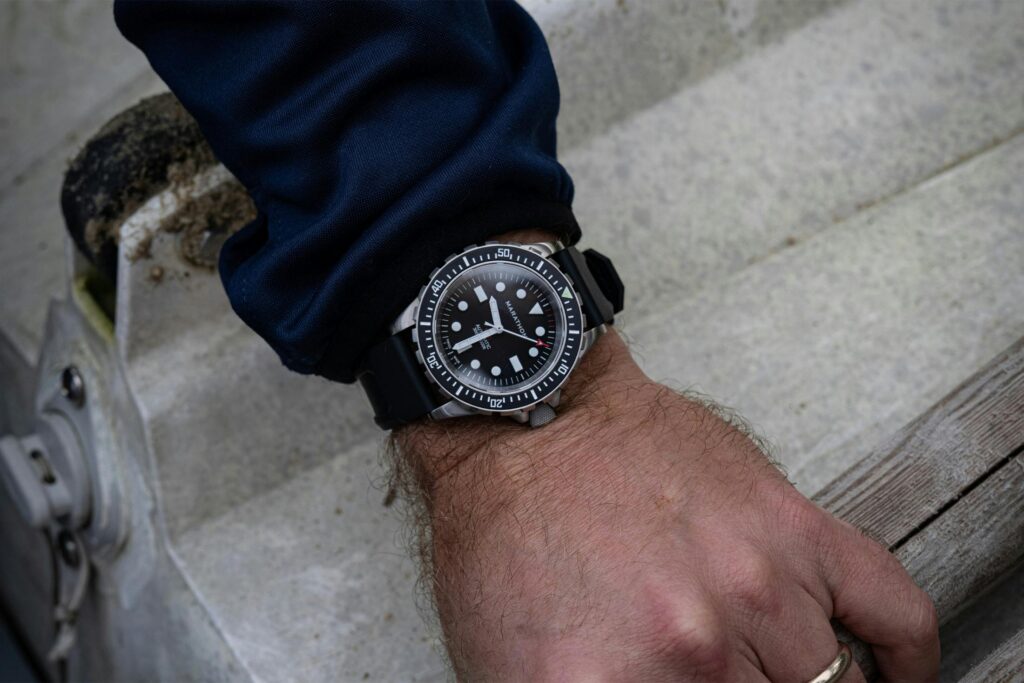
I actually appreciate that transparency. To me, it also shifts the story away from scarcity and toward what Marathon is doing with the SAR family. This collaboration gives us the first look at a lighter case and a more useful mechanical movement in a design that has changed relatively little over the years. I think that direction is way more interesting than the limited-edition number. Great work W.O.E. & Marathon.

Co-Founder & Senior Editor
Michael Peñate is an American writer, photographer, and podcaster based in Seattle, Washington. His work typically focuses on the passage of time and the tools we use to connect with that very journey. From aviation to music and travel, his interests span a multitude of disciplines that often intersect with the world of watches – and the obsessive culture behind collecting them.