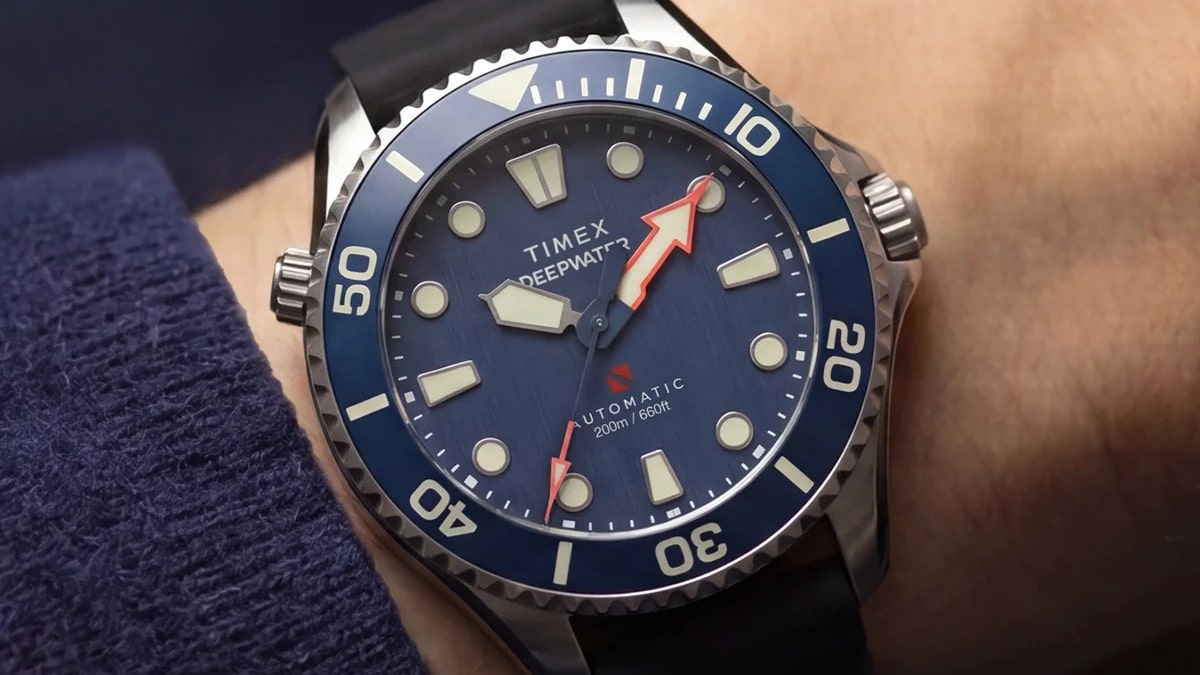
I remember when a lot of Timex dive watches were really dive watches in looks alone. Bezels didn’t always turn, crowns didn’t always screw down, and you probably weren’t buying one because you needed something especially capable underwater. That’s part of why the new Timex Deepwater Meridian 200 HEV Automatic caught my attention.
The big update is an automatic helium escape valve. This is a pretty specialized feature designed to vent helium that can build up inside a watch during saturation diving as pressure drops during decompression. It’s legitimate professional dive-watch hardware, even if the vast majority of people buying this Timex will never put themselves in a situation where it actually does anything.
And Timex has used one before. Earlier this year, the brand introduced the $999 Deepwater Meridian 300 Titanium HEV Automatic, a 300-meter diver with a Grade 5 titanium case. Now that same type of feature has made its way into a stainless-steel Deepwater starting at $469.
That price is where things get especially interesting to me. We’re now talking about the kind of money where affordable Seiko and Citizen divers naturally enter the conversation. Those brands have decades of serious dive-watch history behind them. Timex is still building that reputation with the Deepwater line, so offering this much hardware for under $500 feels pretty deliberate.
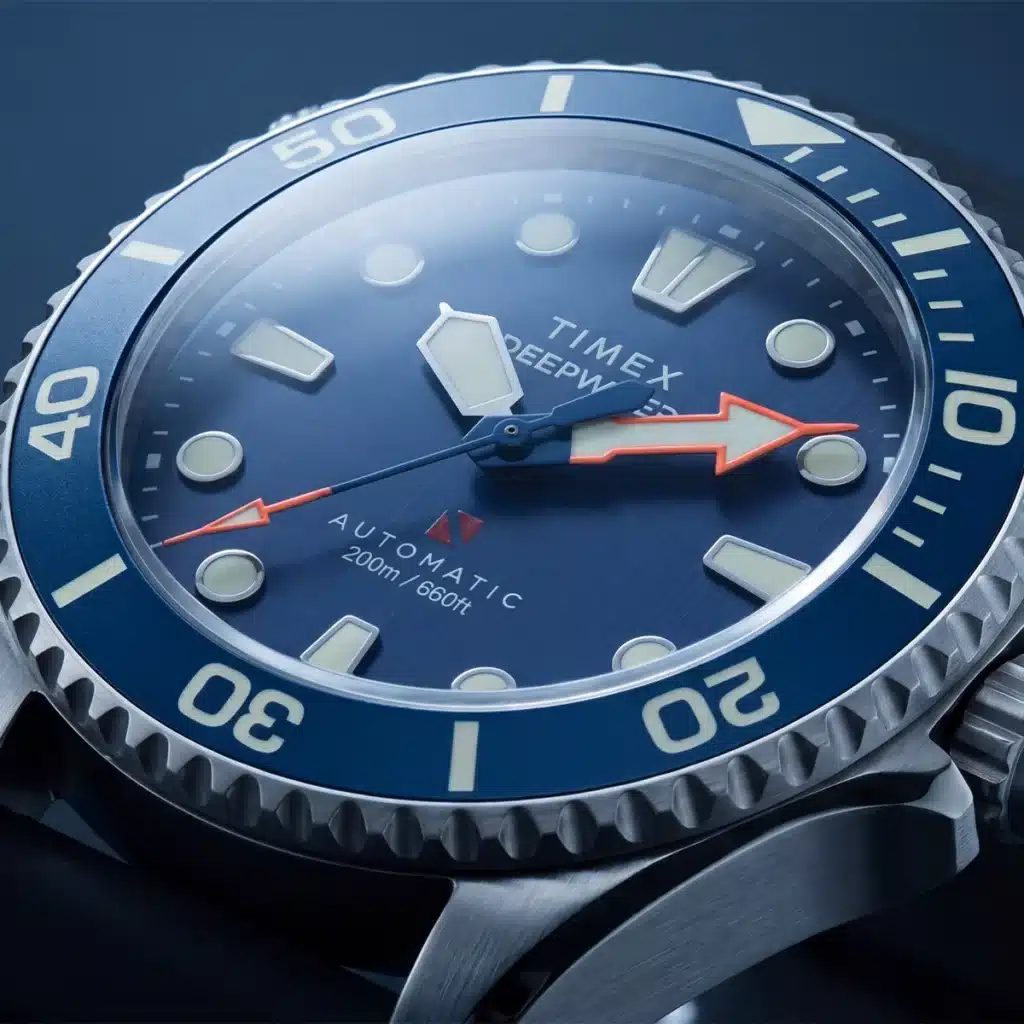
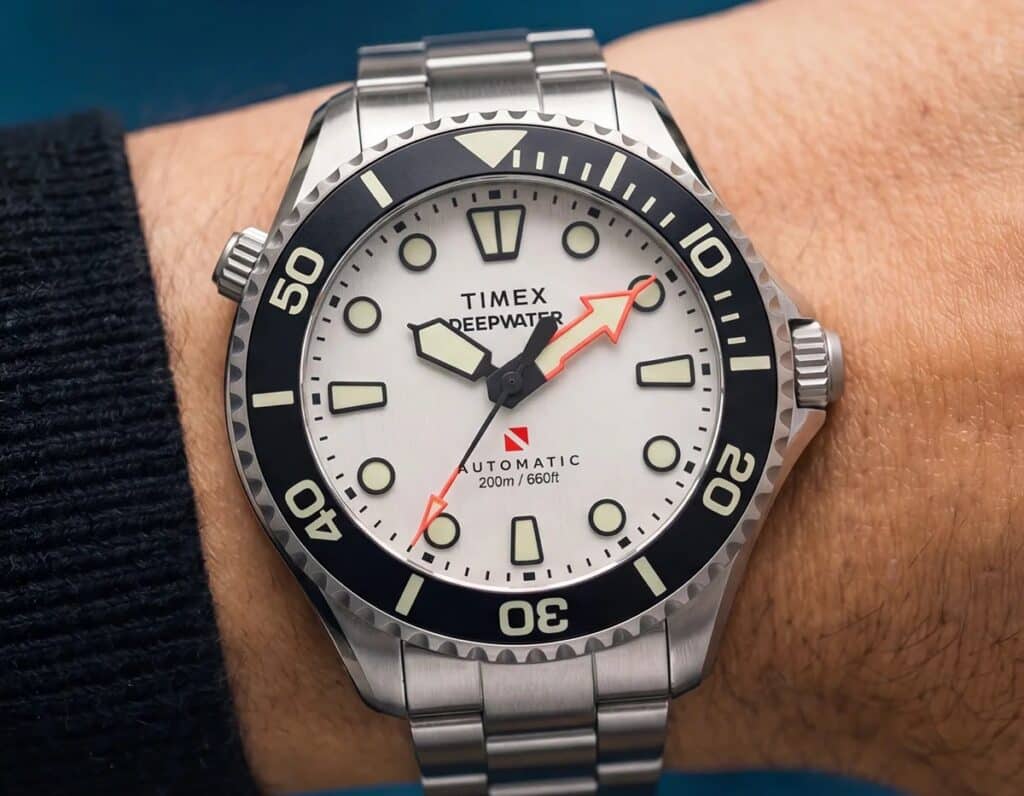
The rest of the Meridian 200 HEV supports that idea. There’s 200 meters of water resistance, a screw-down crown and caseback, a unidirectional ceramic bezel, anti-reflective sapphire crystal, Super-LumiNova, and a Japanese Miyota 21-jewel automatic movement with around 40 hours of power reserve. The rubber strap model is $469, while the stainless-steel bracelet brings the price to $499.
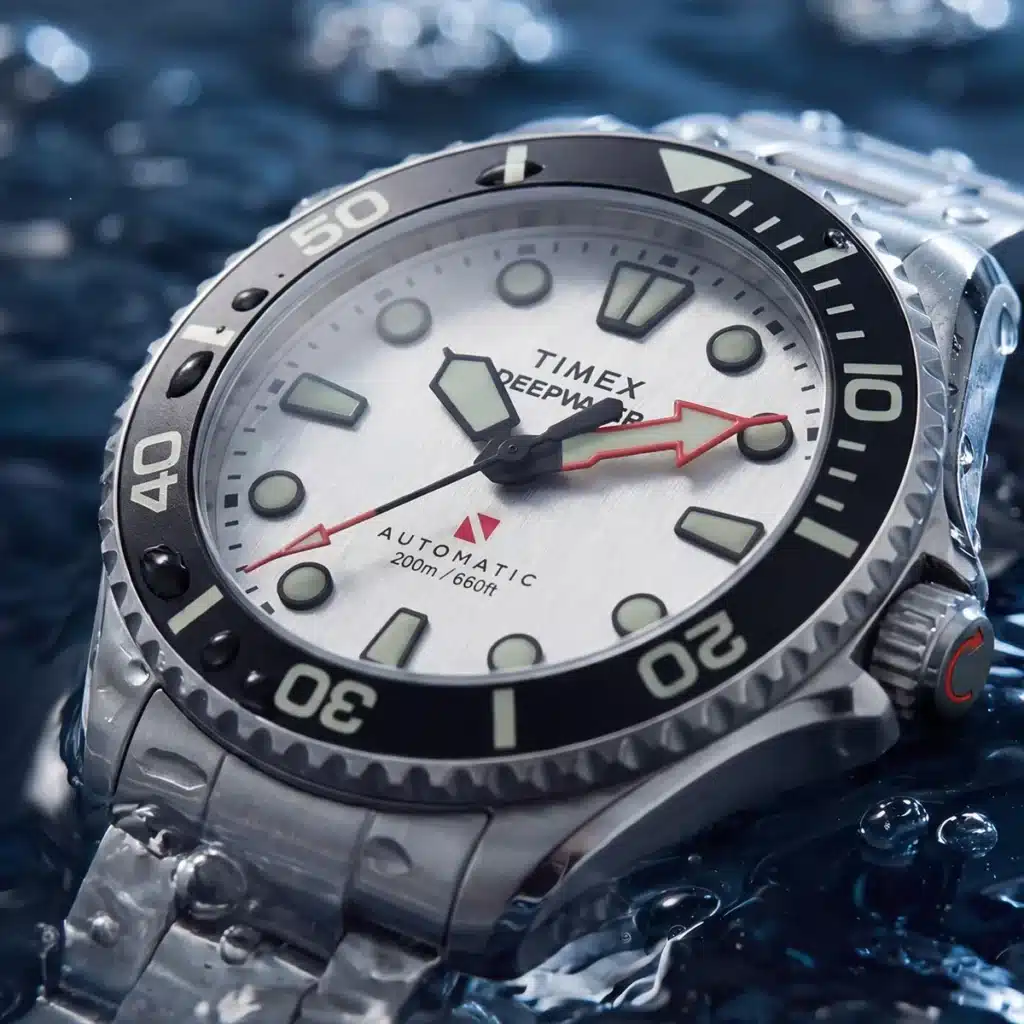
I think that spec sheet would have sounded pretty strange on an affordable Timex diver not that long ago. I remember being impressed when the brand started giving us functional rotating bezels and screw-down crowns. Now there’s a helium escape valve sitting at 10 o’clock. Is it overkill? Probably. I kind of like that it’s overkill.
The bigger question for me is who gravitates toward this instead of one of the established Seiko or Citizen options. I suspect someone buying their first automatic diver may still be drawn to the familiarity and history of those brands. The Timex gets more interesting for someone who already owns a few of the obvious choices, or simply wants something different in this price range.
Size might be the bigger hurdle. The Meridian measures 44mm across, 15.5mm thick, and 51mm lug-to-lug. That’s a substantial watch for casual wear, especially on a smaller wrist. For something intended to remain highly legible underwater and potentially sit over dive gear, though, I understand why Timex went large. The silver-white dial in particular looks extremely easy to read.
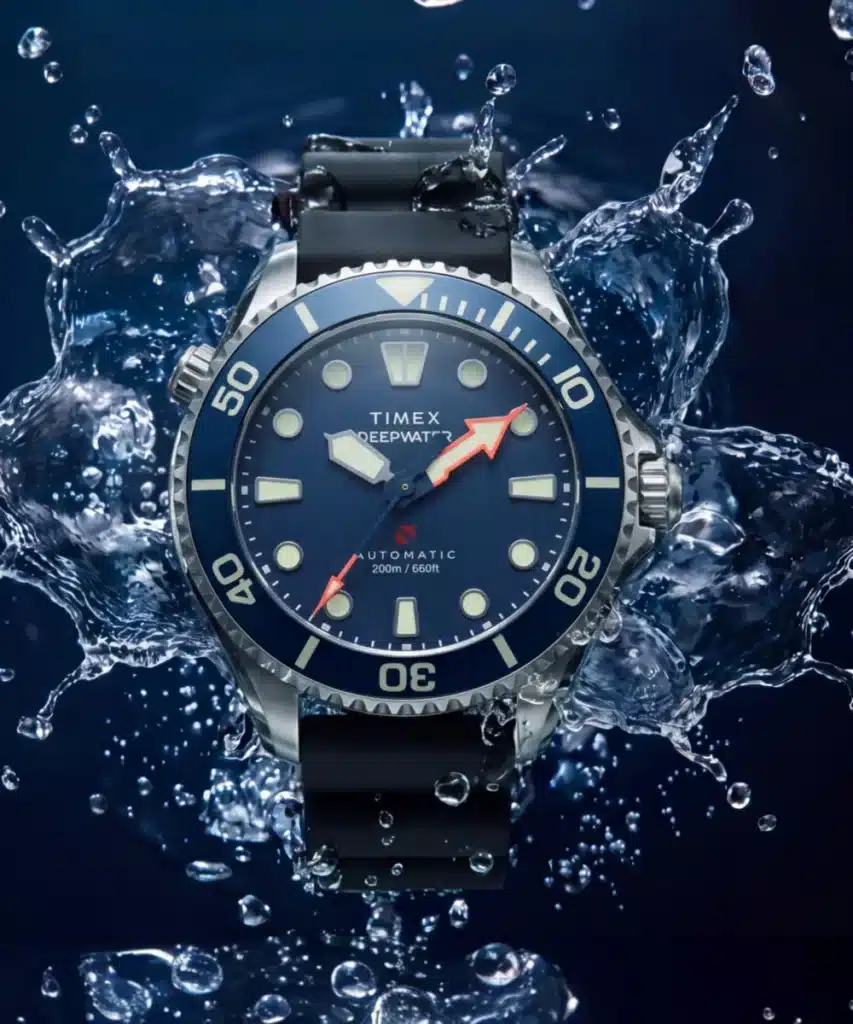
I’d want to see how that 44mm case actually wears before drawing many conclusions about the watch itself. But I’m fascinated by what Timex is doing with Deepwater. A specialized feature that showed up on its $999 titanium diver earlier this year is already available on a $469 model competing in the heart of the affordable dive-watch market. That’s a very different Timex from the one I remember.

Co-Founder & Senior Editor
Michael Peñate is an American writer, photographer, and podcaster based in Seattle, Washington. His work typically focuses on the passage of time and the tools we use to connect with that very journey. From aviation to music and travel, his interests span a multitude of disciplines that often intersect with the world of watches – and the obsessive culture behind collecting them.