Caravelle was never really on my radar when I got into watch collecting. In fact, my first exposure to the brand came shortly after meeting my fellow Broke Watch Snob, Kaz. At the time, he had this orange quartz Caravelle that had been gifted to him, and somewhere in that conversation he mentioned the brand’s connection to Bulova. I remember thinking that little bit of history was pretty cool, then more or less moving on.
Years later, Caravelle has found its way back into my collecting orbit. Bulova has started digging into this somewhat forgotten corner of its history again, and the Caravelle by Bulova Sea Hunter was one of the watches that caught my attention.
Part of that comes down to where my collection is right now. Lately, I’ve had this persistent itch to tie a bow on things with a simple black-dial dive watch on a stainless steel bracelet. I realize how ridiculous it is to talk about putting a finishing touch on a watch collection, as if any of us actually believe this stuff ever ends. Still, there was a very specific space I wanted to fill, and the Sea Hunter seemed like it could fit.
I’d also watched the initial wave of coverage around the Sea Hunter come and go. Rather than jump in immediately, I wanted some of that early hype to settle before buying one and spending time with it myself. One comparison in particular kept coming up: whether a watch like the Sea Hunter could occupy the kind of entry-level dive watch territory once dominated by the Seiko SKX007.
That’s a pretty loaded comparison for someone who remembers what the SKX007 represented when it was still readily available. And after buying the Sea Hunter and living with it for a while, it became one of the more interesting threads I wanted to pull on.
Where the Sea Hunter Came From
Bulova launched Caravelle in 1962 as a more affordable line. Jeweled movements were a major part of the formula, and by 1968 Caravelle had become the largest-selling jeweled-movement watch manufacturer in the United States.
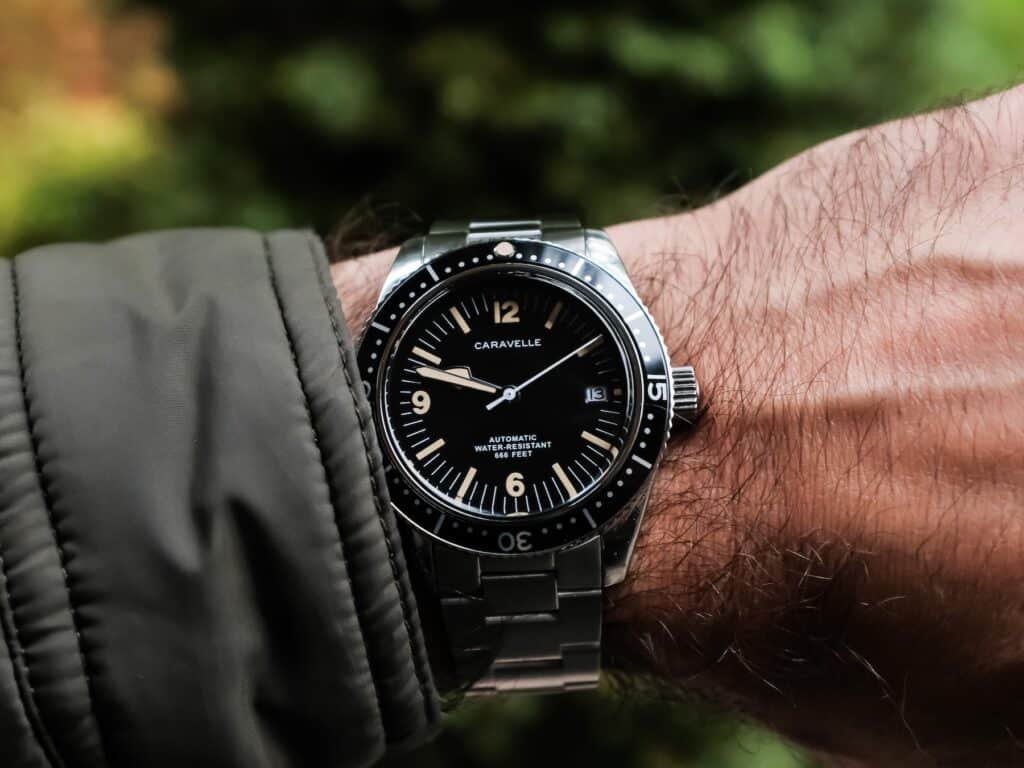
Somewhere in that massive catalog were Sea Hunter dive watches carrying the 666-foot depth rating that would eventually contribute to the “Devil Diver” nickname. That gives the modern Sea Hunter some legitimate history to draw from, and thankfully Bulova didn’t go overboard trying to recreate an old watch exactly.
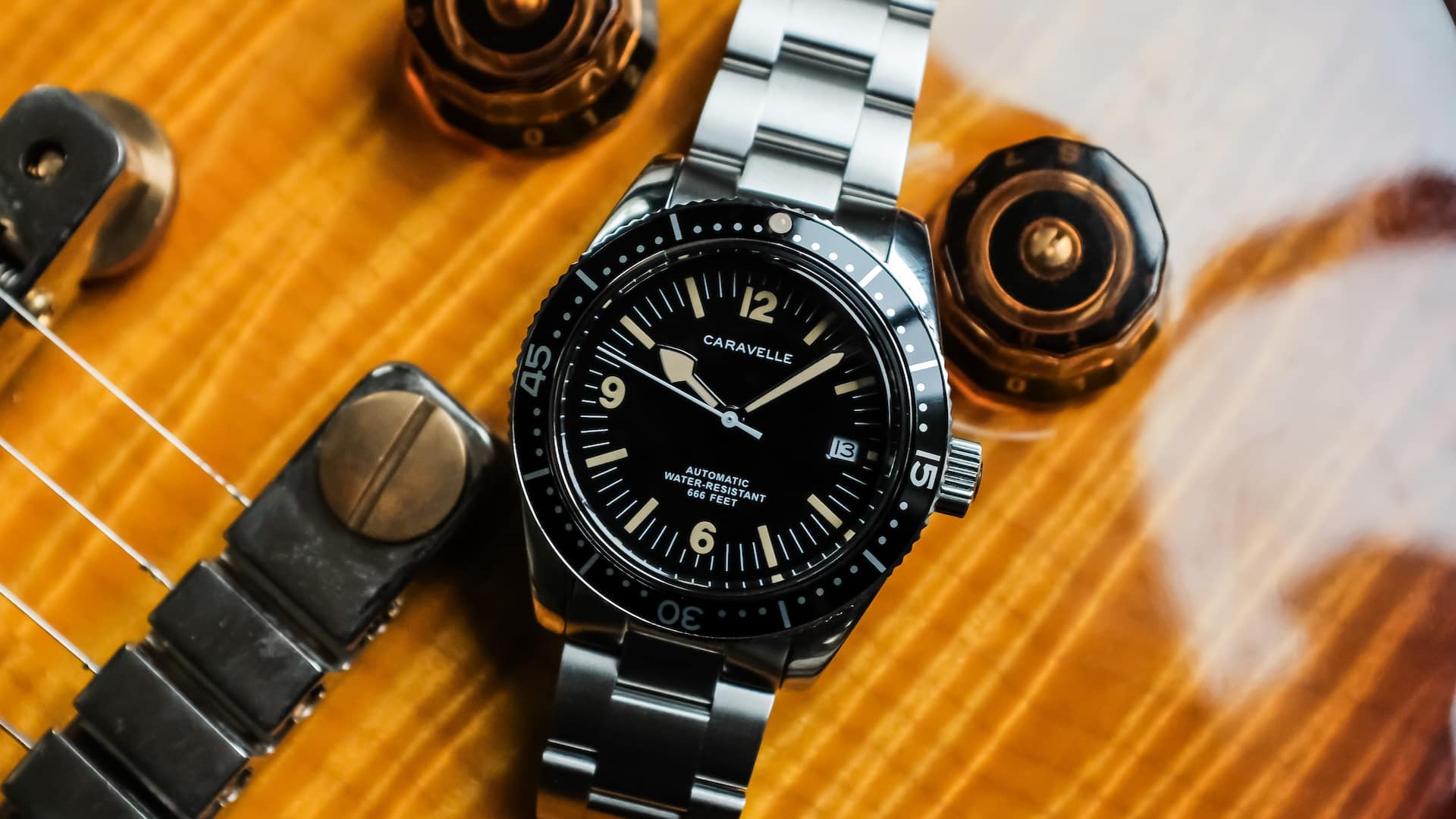
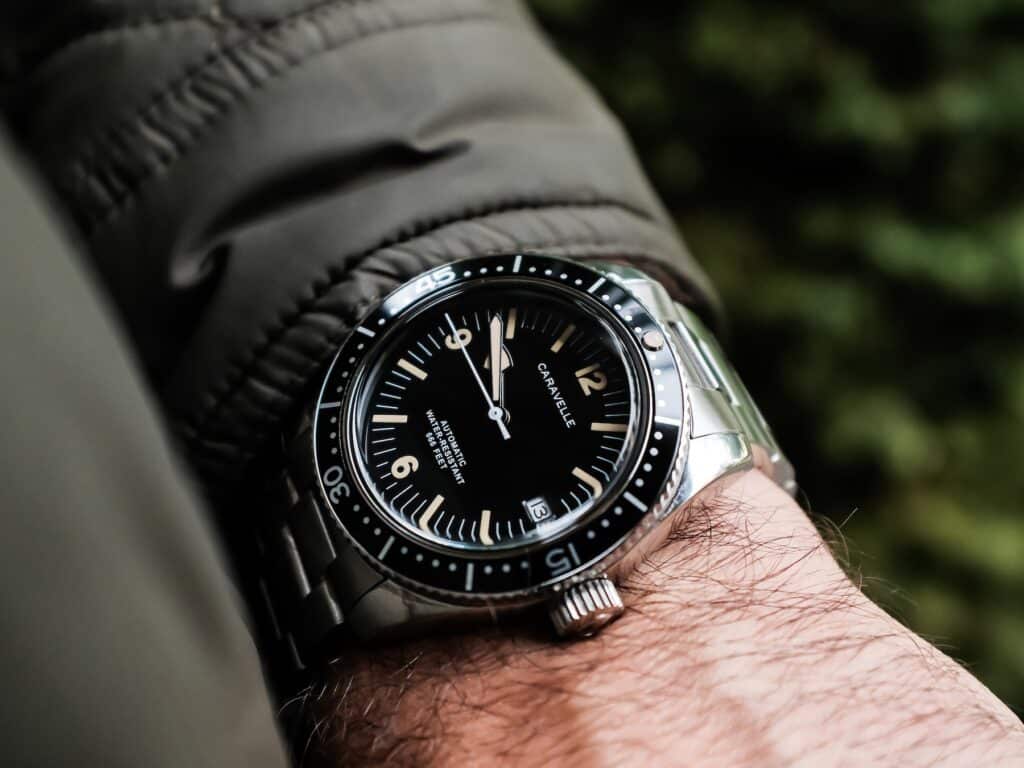
At 39mm across and 45.5mm lug to lug, this is right around where I like a dive watch to land. My wrists are on the smaller side, and the Sea Hunter never felt oversized or stretched across them. There’s a compactness to the footprint that fits the vintage inspiration well. Thickness is another matter.
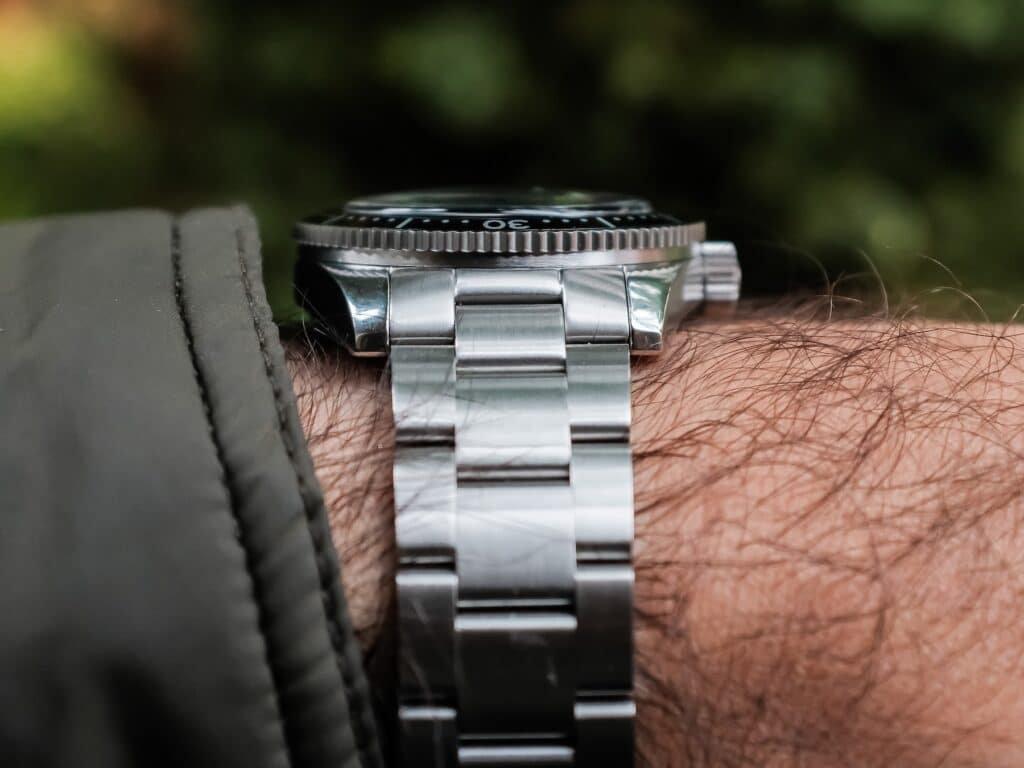
The Sea Hunter measures 14.3mm from the caseback to the top of its domed mineral crystal. That’s chunky for a 39mm watch, and there is some top-heaviness once it’s on the wrist. Surprisingly, I didn’t mind it much. The overall proportions hide some of the height, and that chunky profile actually reminded me of wearing an SKX007. Both manage to feel pretty compact while carrying more vertical heft than their other dimensions suggest. For me, that works with the Sea Hunter. I wouldn’t want the case dramatically thinner if doing so meant losing some of the character created by the domed crystal and older dive-watch proportions.
Case, Bezel, and Bracelet
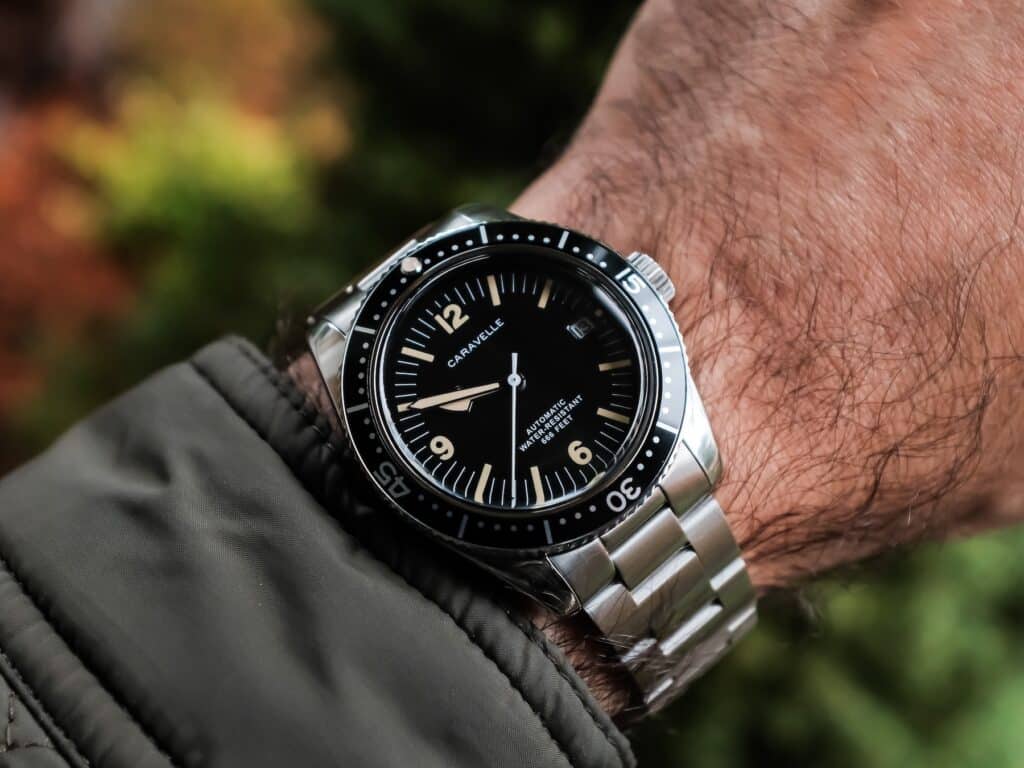
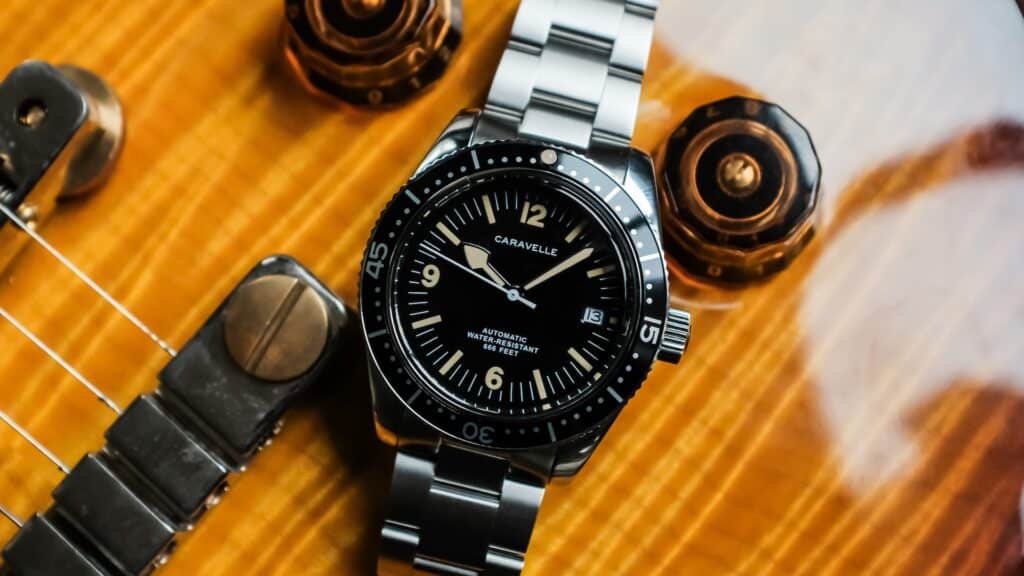
The case has a pretty simple, industrial finish with polished steel doing most of the work. I expect those surfaces to pick up scratches easily, but this isn’t a watch I’d spend much time trying to preserve in showroom condition.
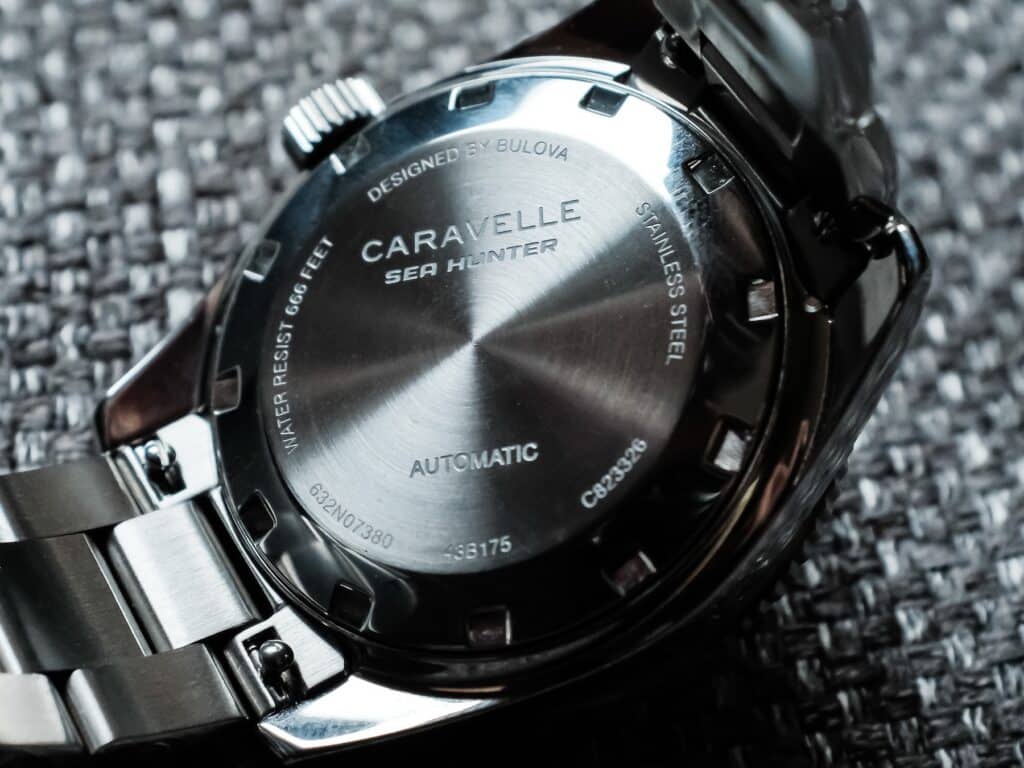
A screw-down crown and threaded caseback give me 200 meters of water resistance. The bezel gets the job done too. There’s enough grip to use it easily, and the aluminum insert looks appropriate with the rest of the design. The action is a little tinny, though. It’s functional without being especially satisfying to play with.
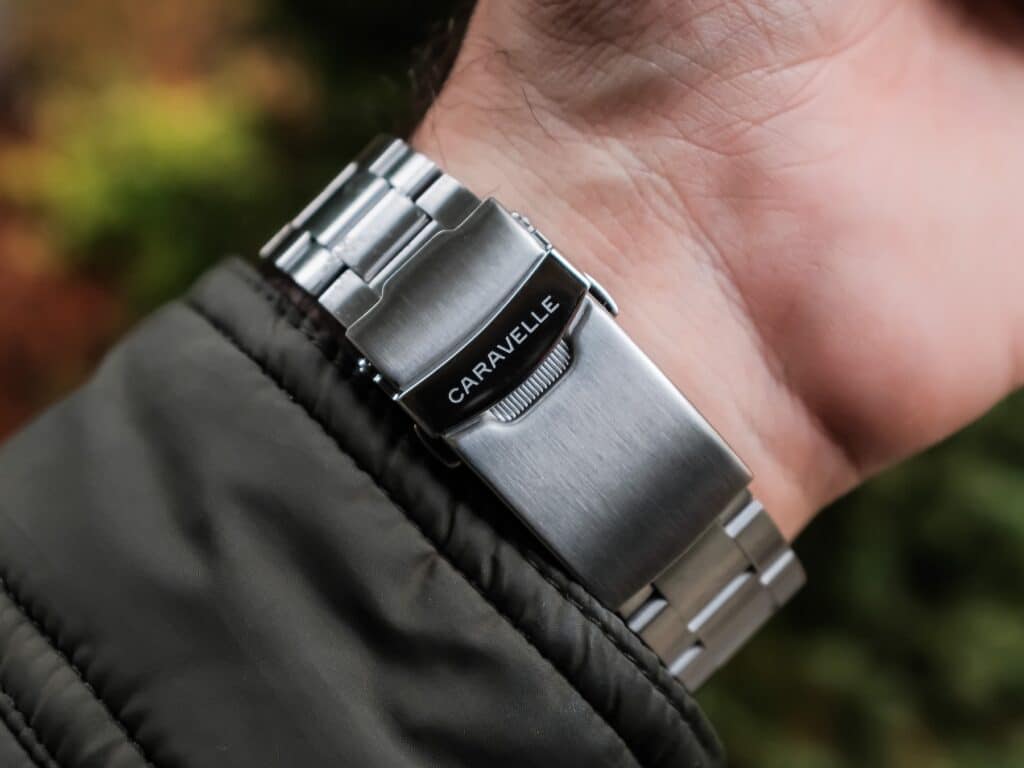
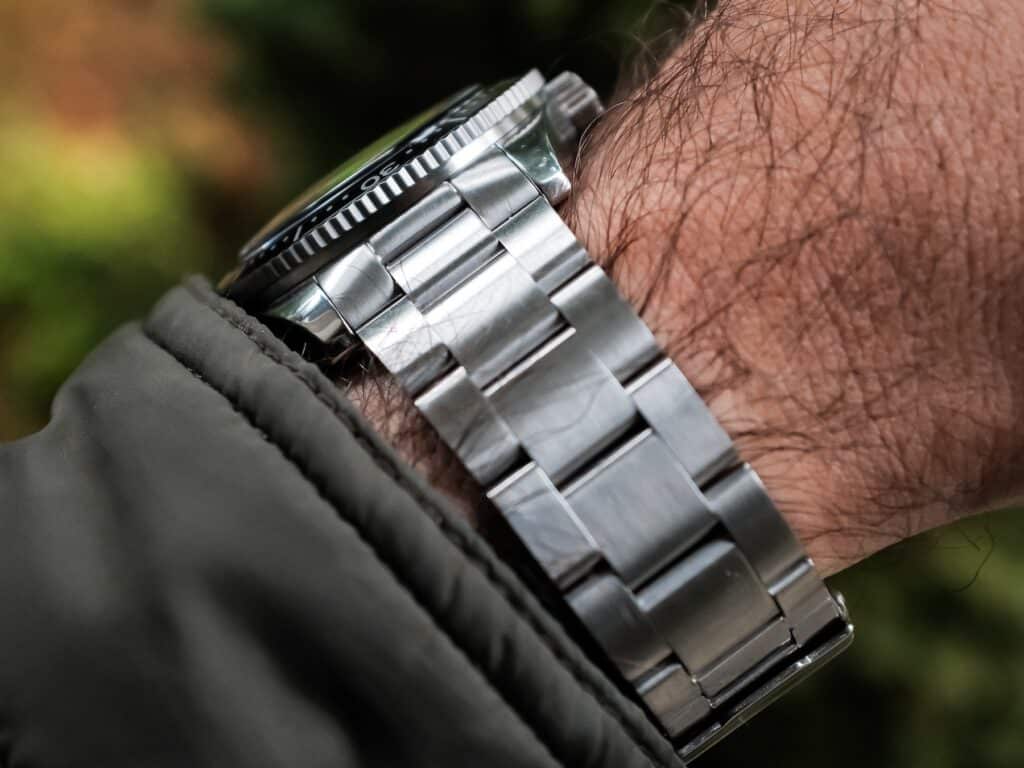
The bracelet is similar. It starts at 20mm and tapers to 18mm at the clasp, with several micro-adjustment positions and a fold-out dive extension. Bulova also used solid end links with quick-release spring bars, which makes getting the bracelet off surprisingly painless. There is some jangliness to the bracelet, and I noticed it immediately. Once I had it sized and on my wrist, I cared a lot less.
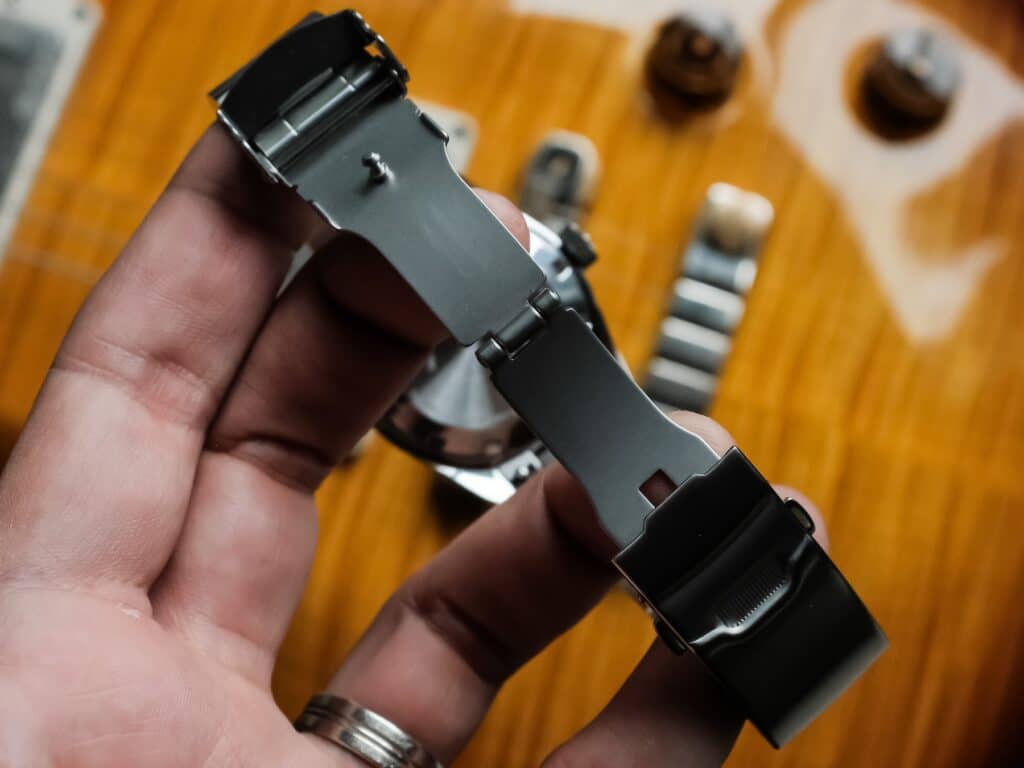
That’s one of the recurring themes with the Sea Hunter. I can find areas where more money would improve the experience, but at $425 I have to decide which compromises actually bother me. The mineral crystal is the one I’d change first. I like the domed shape and what it does for the profile, but sapphire would give me more confidence about how the watch will look after several years of regular wear. I can live with some bracelet rattle more easily than scratches across the crystal.
The Dial Gets Most of It Right
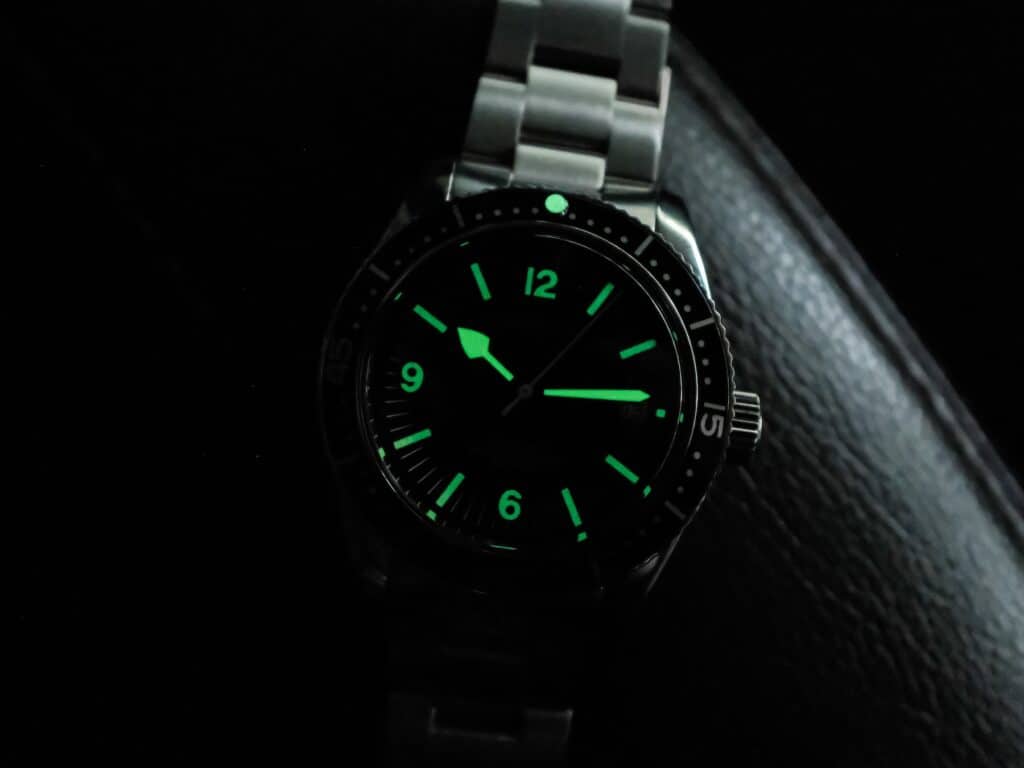
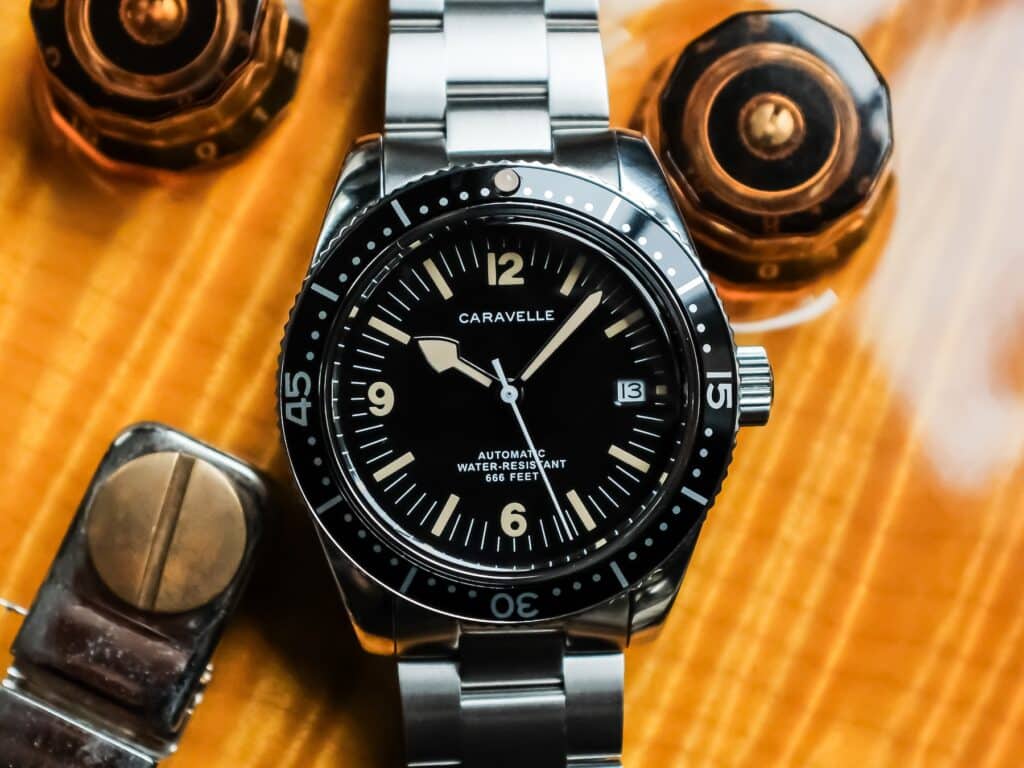
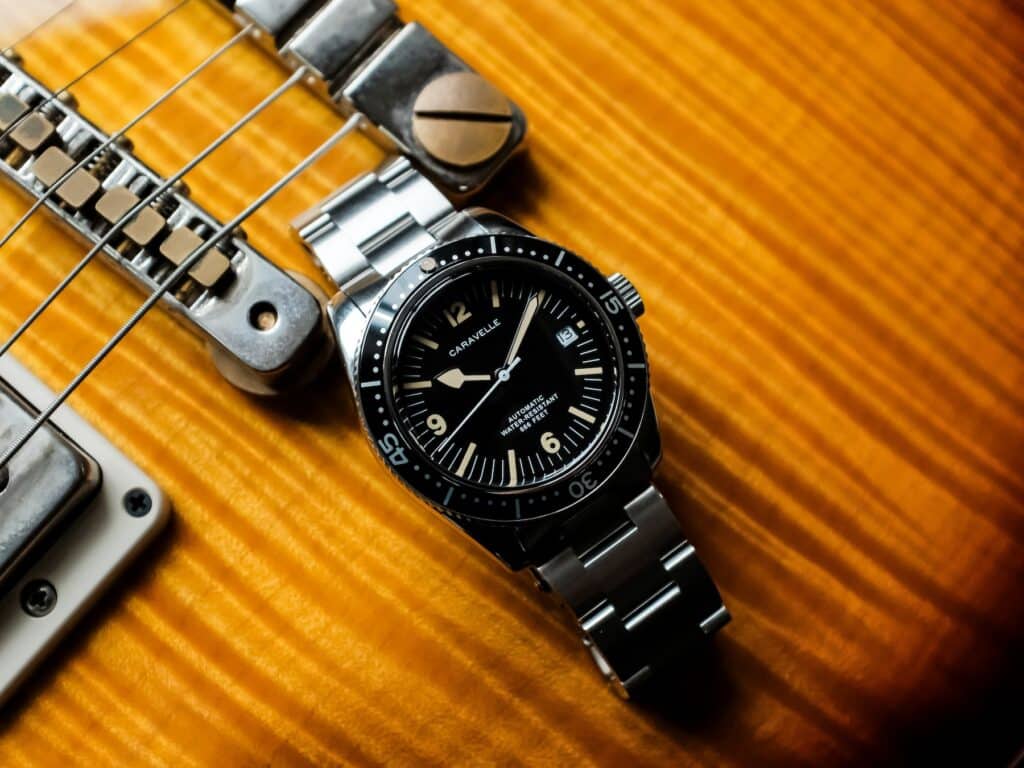
The dial is probably where I spent the most time deciding how I felt about the Sea Hunter. I like the unusual handset. It’s a shape I rarely see on contemporary divers, and it gives the watch some identity without leaning on the same design language I see everywhere else. The date window is also small enough that it doesn’t dominate the dial while still giving me a complication I use. My issue is the brown-toned lume.
I would’ve preferred neutral lume here. The handset, domed crystal, aluminum bezel, and case proportions already establish the vintage influence. The brown pushes that treatment farther than I personally want, and spending more time with the watch never changed my mind about it. It still looks okay. I just think neutral lume would have looked better.
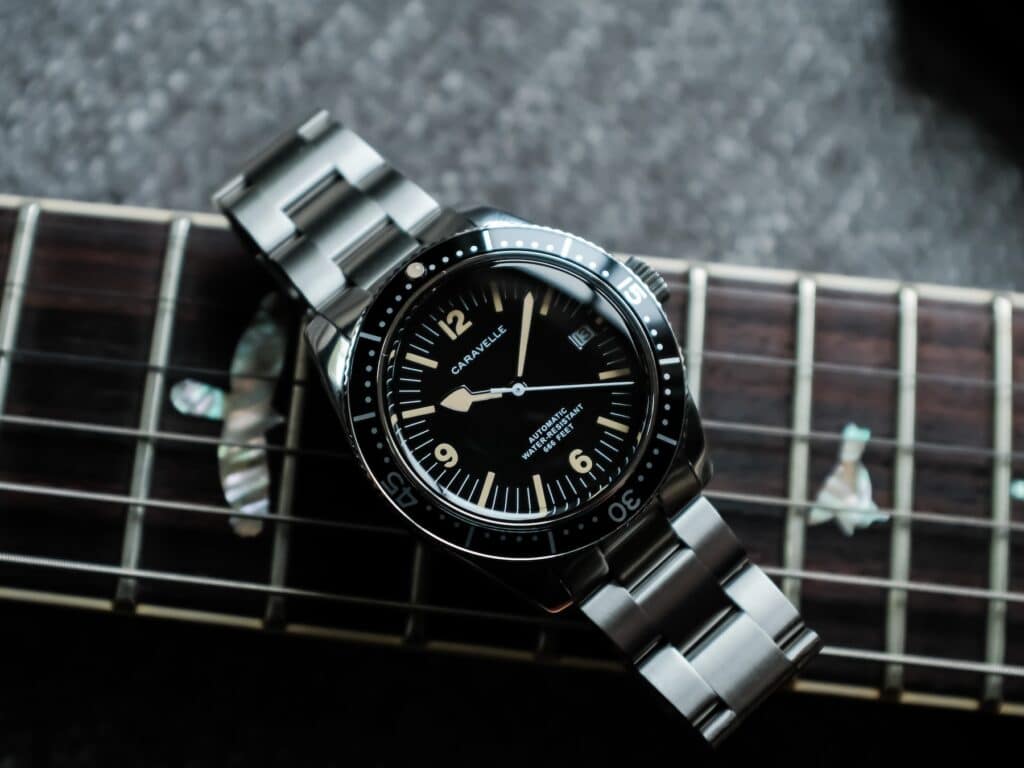
The raw aluminum numerals on the bezel insert feel slightly more modern than the rest of the watch, but the overall design remains cohesive enough that it never bothered me. There are also a bunch of smaller choices I appreciate more after wearing the Sea Hunter. The restrained date window, useful 20mm lug width, bracelet taper, quick-release spring bars, and compact dimensions all make ownership easier. None of those details are particularly exciting on their own. They’re the things I notice after spending time with a watch.
The Miyota and That SKX Comparison
Inside is the Miyota 8215-33E, a 21-jewel automatic running at 3Hz with a stated accuracy range of minus 20 to plus 40 seconds per day. It hacks, carries a date, and provides about 42 hours of power reserve. That works for me. The Sea Hunter moved in and out of a larger rotation, and resetting a simple three-hand watch after the power reserve ran down was never much of an inconvenience. I didn’t find myself wishing for a more elaborate movement. Hand winding isn’t particularly pleasant. There’s a crunchy feeling through the crown that reminds me I’m dealing with an inexpensive mechanical caliber. Once the watch was running, I rarely thought about it again. And then there’s the SKX007.
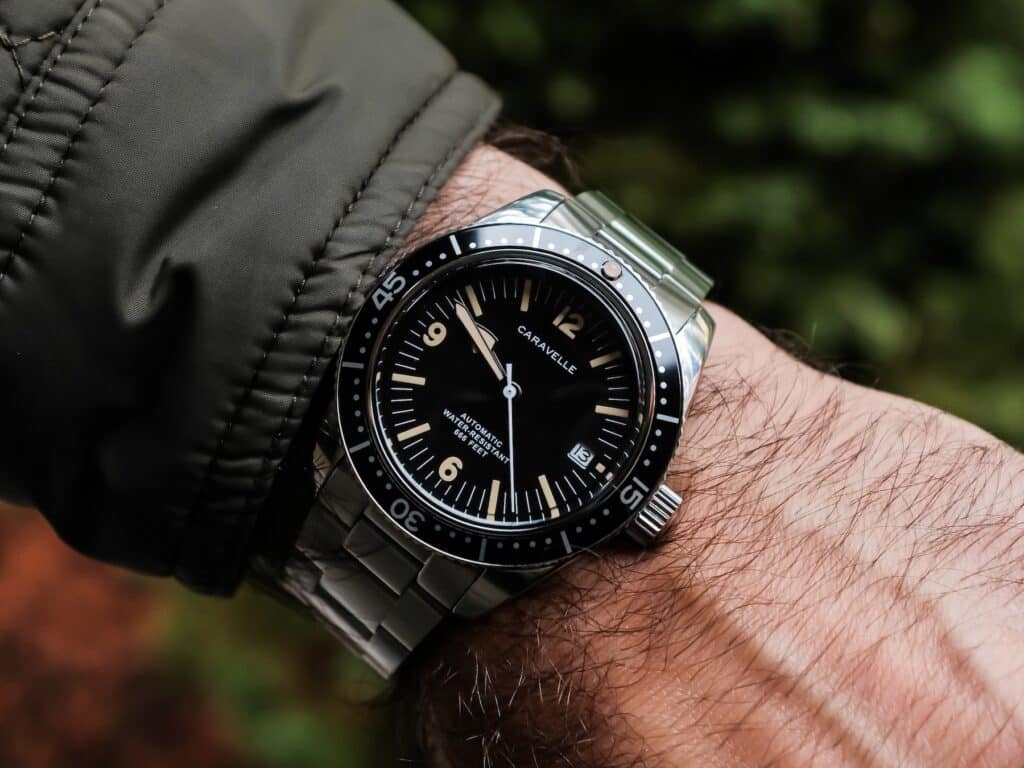
After wearing the Sea Hunter, I understand why that comparison came up. Both have manageable footprints, automatic movements, legitimate water resistance, a slightly top-heavy feel, and enough rough edges that you become aware of where the price was kept under control. I don’t think the Sea Hunter dethrones the SKX, though. If I were looking for something closer to that experience, the Citizen NY0040 (check out our review) would probably come to mind first, even though that’s discontinued as well and now requires some hunting.
More importantly, I think assigning another watch the SKX’s old job ignores how the SKX got there. Those watches were readily available for years. People modified them, beat them up, went diving with them, sold them, bought them again (me), and spent an unreasonable amount of time arguing about their alignment on watch forums (also, me). The Sea Hunter hasn’t had that kind of time.
Wrapping Things Up
At $425, what I have in front of me makes sense. I can complain about the mineral crystal, jangly bracelet, bezel feel, basic movement, and brown lume. I can also see where spending more to address those things would start changing the entire value proposition. Most of those compromises didn’t end up bothering me very much. My bigger problem was that I never really connected with the watch.
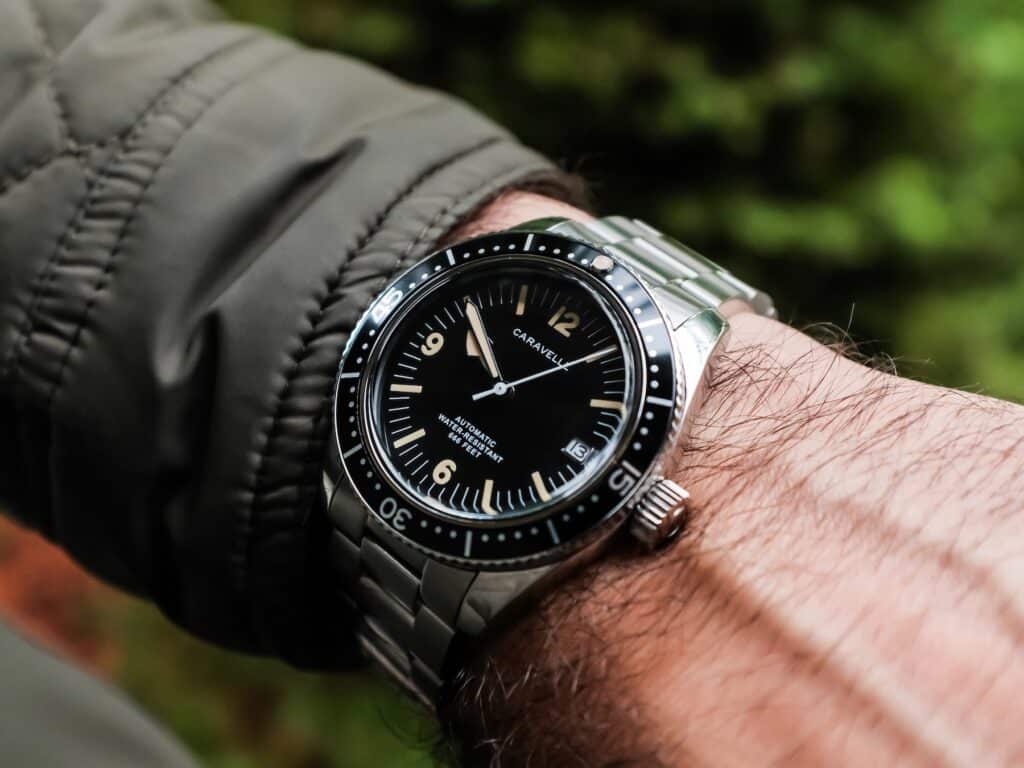
I bought the Sea Hunter because I wanted a simple black-dial diver on a steel bracelet. There was a specific opening in my collection, and I thought this might finally fill it. Once the initial novelty faded, though, the Sea Hunter became something I wore occasionally rather than something I regularly reached for.
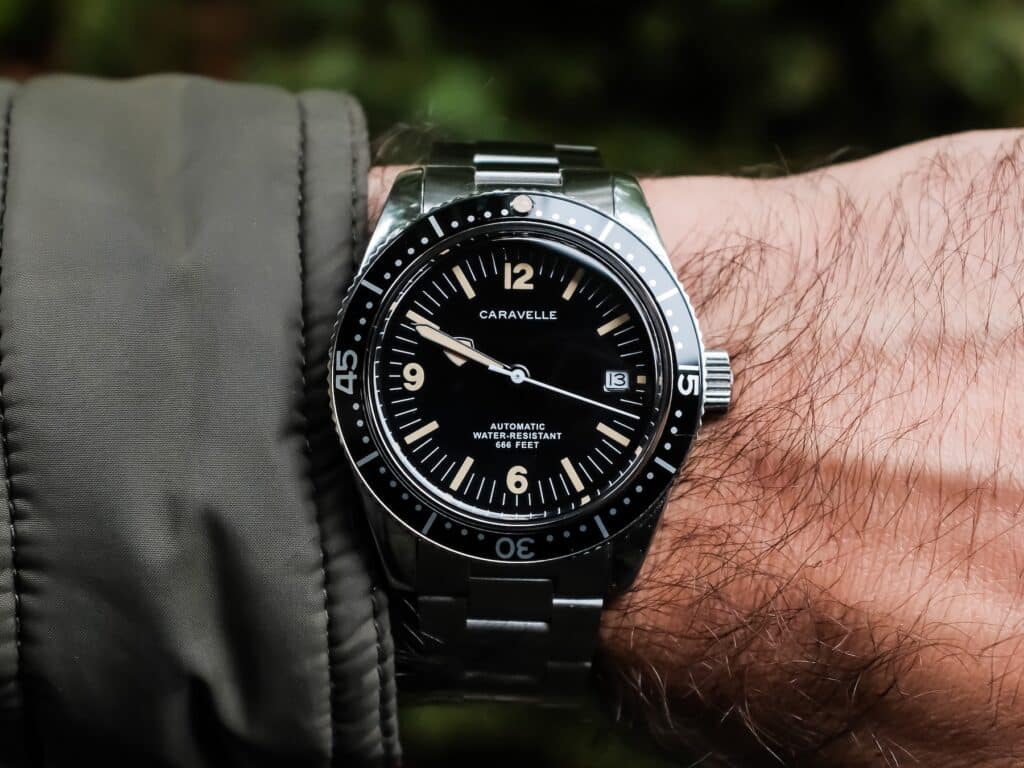
There wasn’t a single flaw responsible for that. I liked handling it. I enjoyed figuring out the details and seeing what Bulova had managed to do at this price. I came away respecting the Sea Hunter more than I expected to. I just don’t think I’ll keep mine forever.
That’s probably the best thing this watch taught me. Sometimes I can identify a gap in my collection with incredible specificity and still be wrong about what belongs there. Years ago, Caravelle meant little more to me than that orange quartz watch Kaz owned and some vague connection to Bulova. Buying the Sea Hunter gave me a much better idea of what Bulova can do with this part of its history, and I’m glad I finally spent some time with one. The black-dial/steel bracelet diver spot in my collection is still open, though. I haven’t tied that bow yet, and probably won’t for some time.

Co-Founder & Senior Editor
Michael Peñate is an American writer, photographer, and podcaster based in Seattle, Washington. His work typically focuses on the passage of time and the tools we use to connect with that very journey. From aviation to music and travel, his interests span a multitude of disciplines that often intersect with the world of watches – and the obsessive culture behind collecting them.