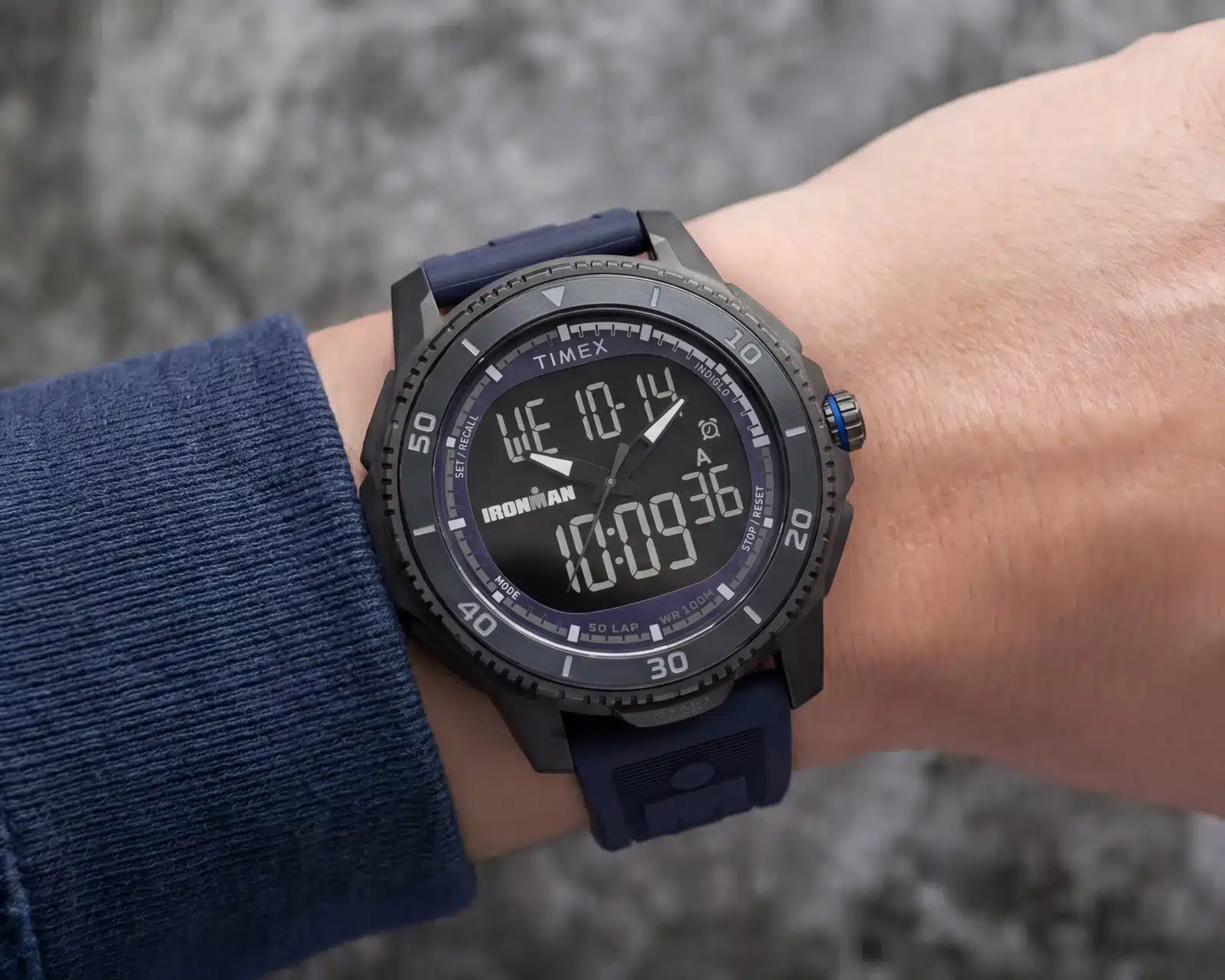
Timex’s relationship with Ironman goes back to the mid-1980s, and it’s difficult to separate that history from the countless inexpensive digital sports watches the partnership produced over the following decades. The new Timex Ironman Adrenaline takes that familiar formula somewhere a little different. It’s bigger, considerably more aggressive, and more expensive than the Ironman watches many of us probably remember. That’s probably what makes this release worth paying attention to.
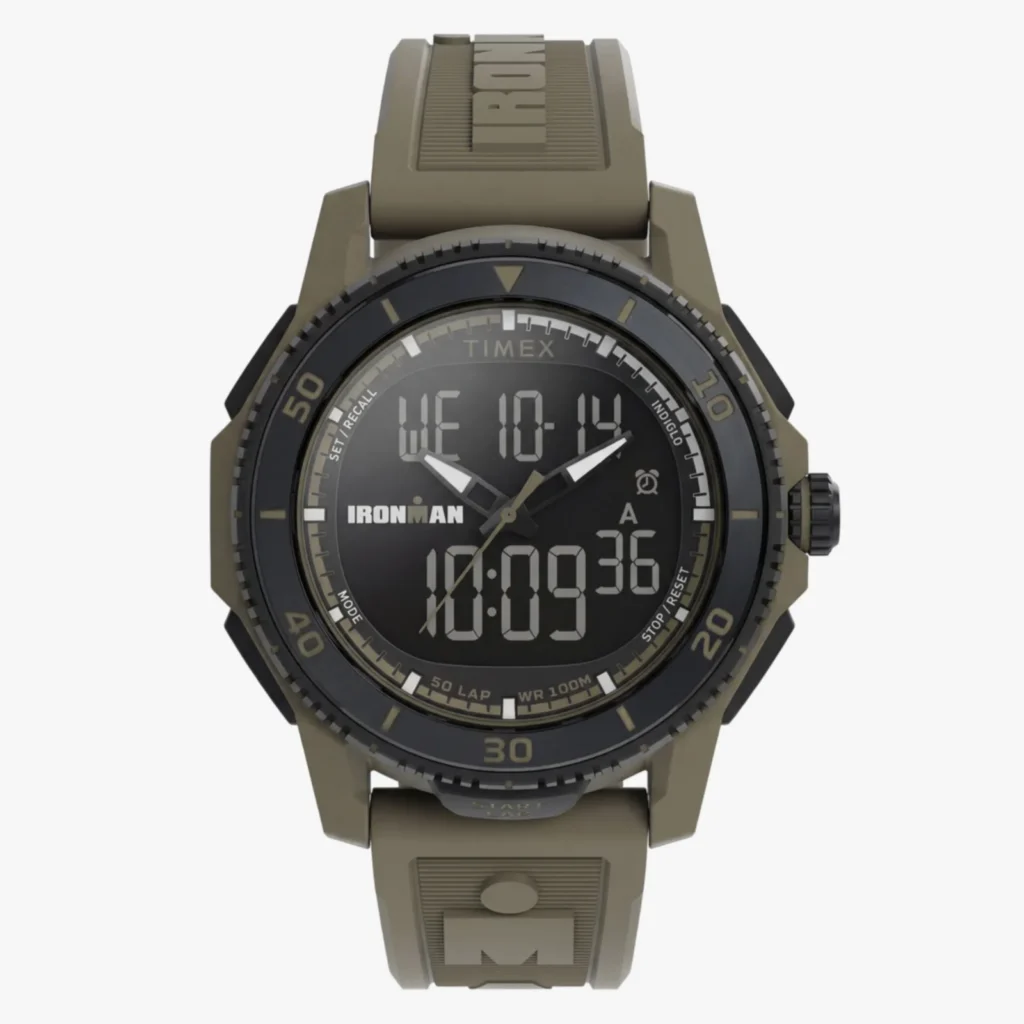
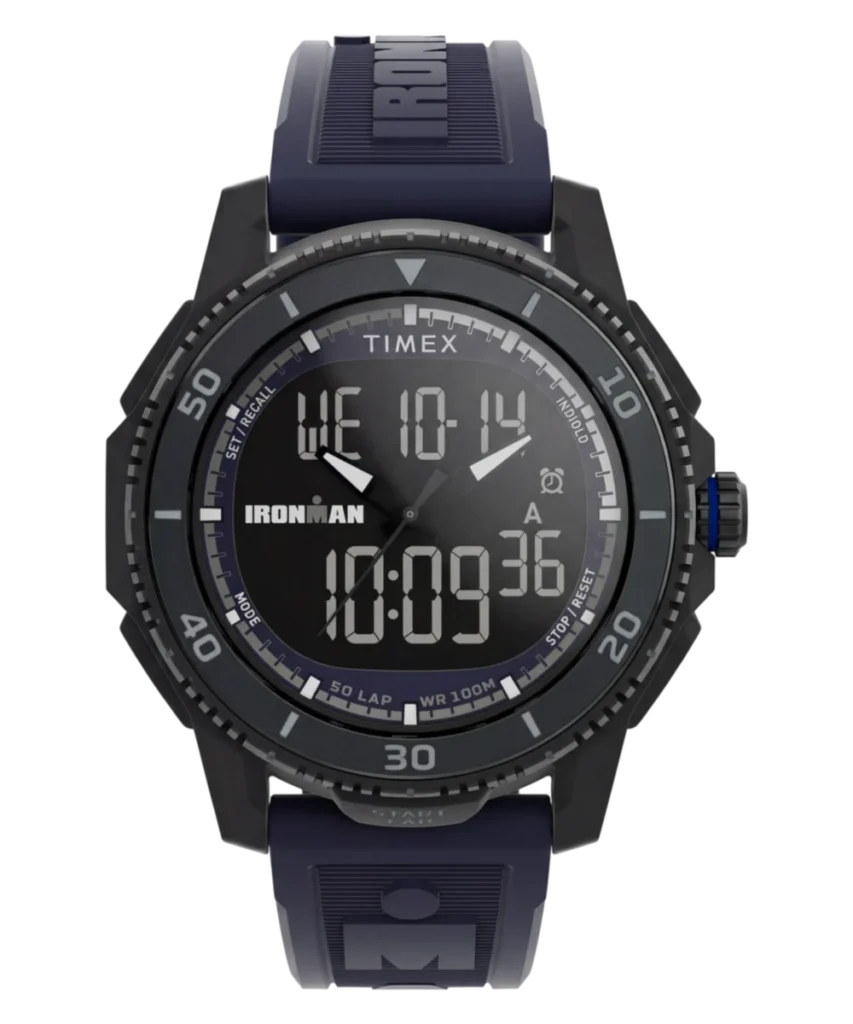
The new Adrenaline arrives in two relatively subdued colorways: a sand-colored version with a matching strap and a black model paired with a dark blue strap. Both ditch the brighter orange accents associated with the existing Adrenaline, giving an already busy ana-digi design a slightly calmer appearance. To me, the sand version is particularly interesting because the monochromatic treatment lets the case architecture do most of the talking. And there’s plenty of case to talk about.
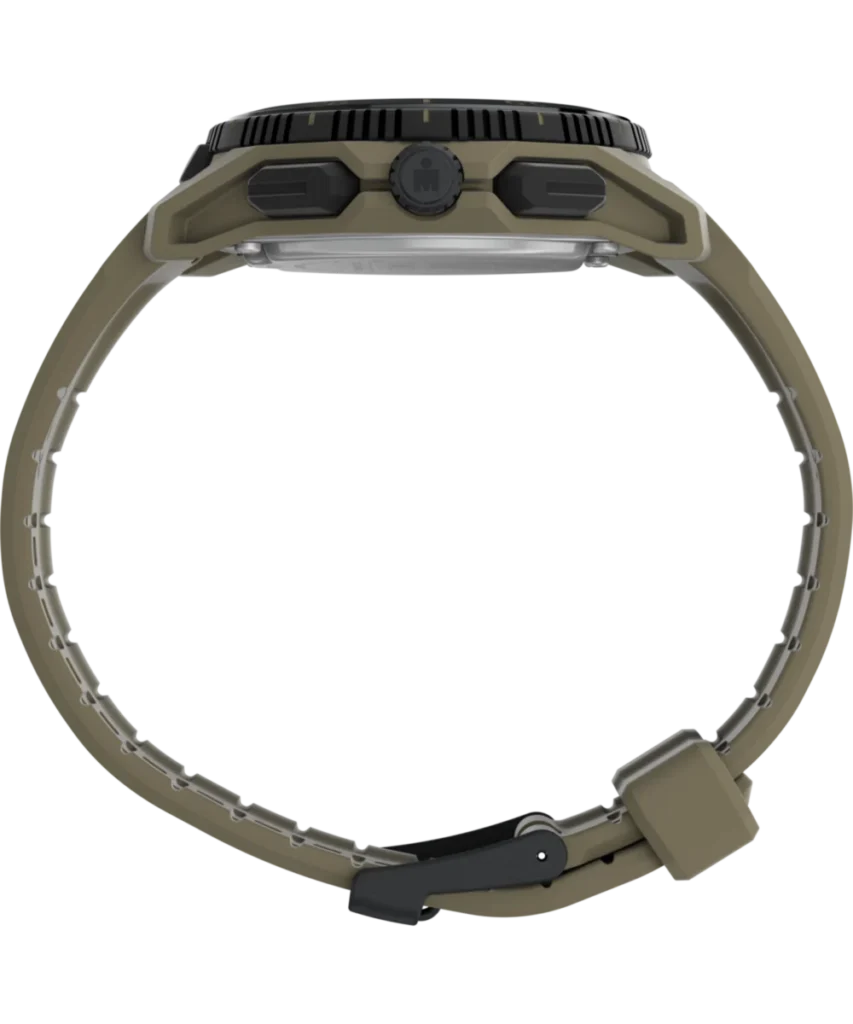
Timex measures the resin case at 46.5mm across, 52mm lug-to-lug, and 15mm thick. Weight is just 56.73 grams, which should help on paper, though we haven’t handled the watch and can’t say how those dimensions translate to the wrist. My take is that 46.5mm remains a substantial proposition regardless of material, and this will probably be the first hurdle for anyone accustomed to smaller watches. A stainless-steel bezel sits above the resin case, while a mineral crystal protects the display. Water resistance is rated to 100 meters.
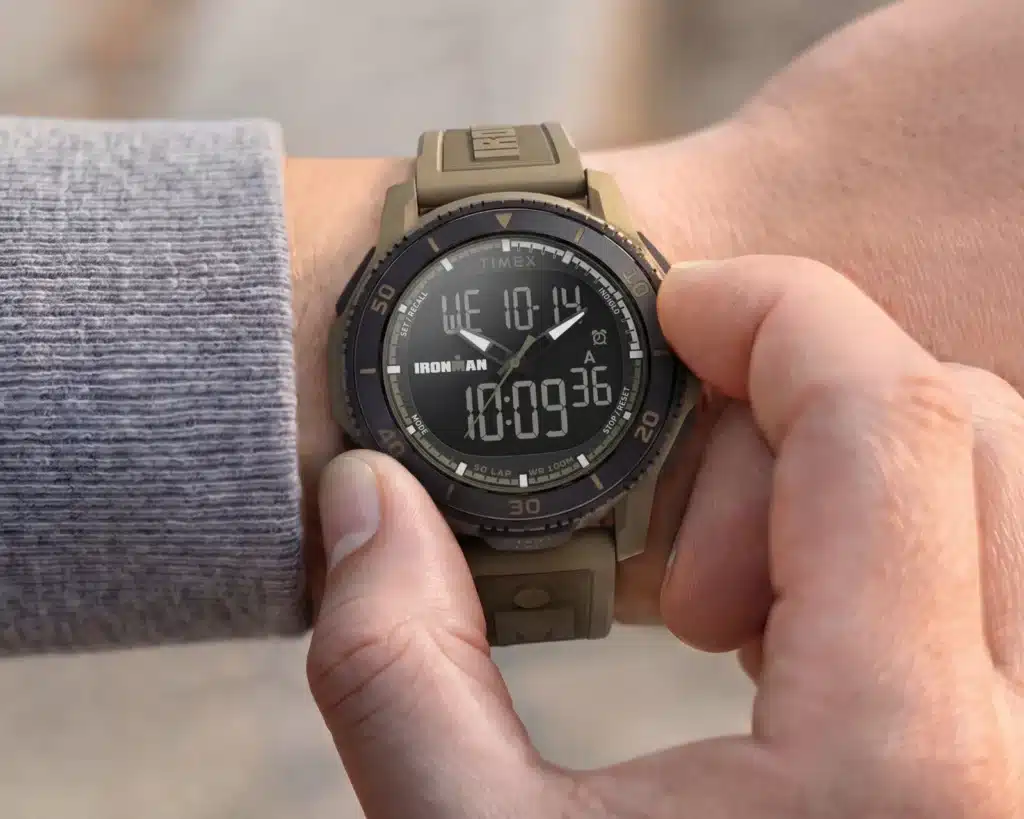
The obvious comparison here is G-Shock. The resin construction, oversized protective case, ana-digi display, and general visual attitude all point in that direction. However, I think focusing entirely on that comparison sells the Ironman side of the story short. Timex has decades of legitimate history building purpose-driven sports watches, and the Adrenaline feels like an attempt to make that identity visually relevant again.
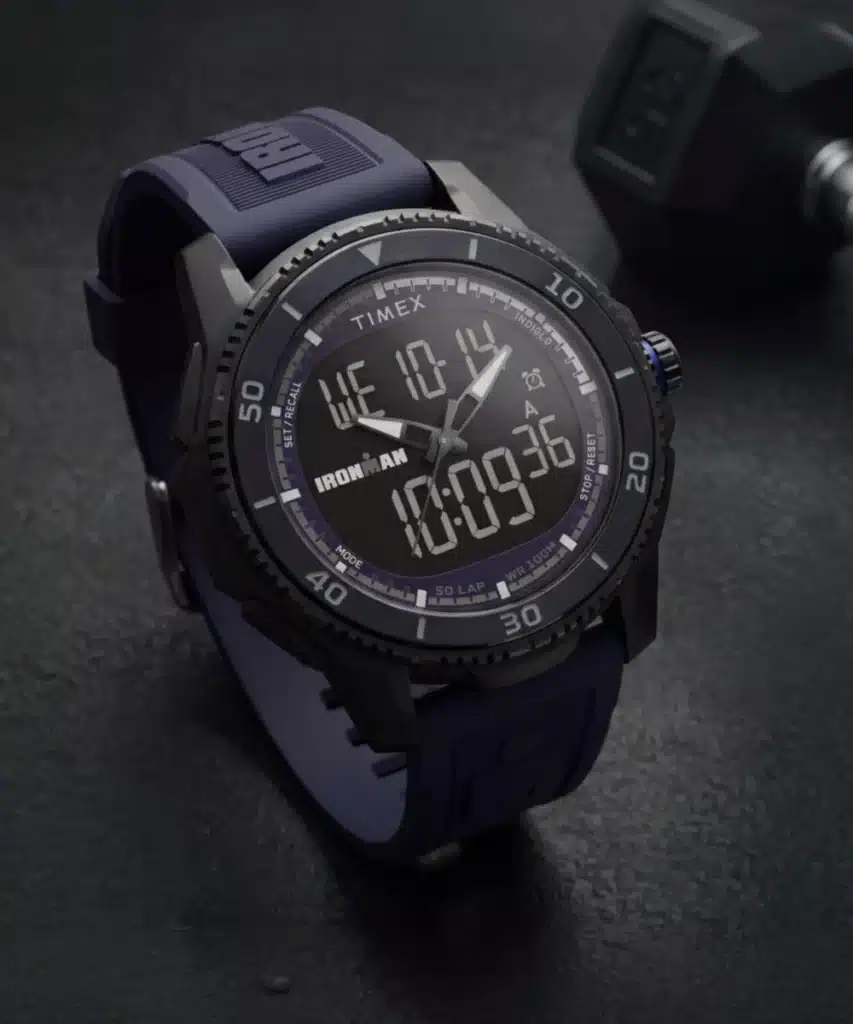
The functionality supports that idea. There’s a 50-lap memory, countdown timer, daily alarm, second time zone, luminous hands, and Timex’s INDIGLO backlight. The unidirectional elapsed-time bezel adds another way to track time without digging through digital functions. Timex also allows the negative digital display to be switched off by holding the four-o’clock pusher for several seconds, leaving the analog hands to handle timekeeping duties alone. I think that’s clever, even if it’s probably a feature I’d play with a few times before settling into my preferred display mode.
Then there’s the $229 price. In my opinion, that’s reasonable considering the unusual ana-digi execution and feature set, though it moves the Adrenaline into a much more competitive part of the sports-watch market. Timex is asking buyers to see some additional value in the Ironman name and this particular execution.
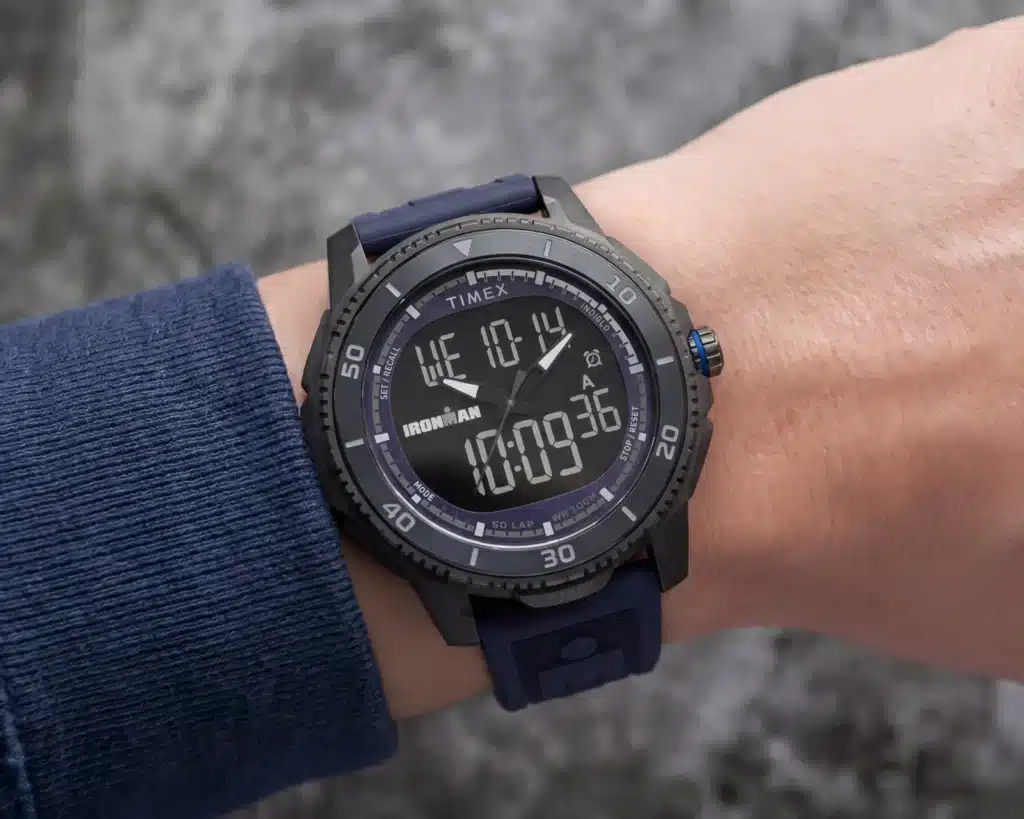
And I think that’s ultimately the more interesting story here. Ironman has real sports-watch history behind it, and Timex appears interested in giving that identity a more distinctive modern form. Whether the Adrenaline’s considerable dimensions or price make sense once it’s actually on the wrist remains an open question. For now, though, it’s encouraging to see Timex digging into this side of its history with something more adventurous than a straightforward retro reissue.

Co-Founder & Senior Editor
Michael Peñate is an American writer, photographer, and podcaster based in Seattle, Washington. His work typically focuses on the passage of time and the tools we use to connect with that very journey. From aviation to music and travel, his interests span a multitude of disciplines that often intersect with the world of watches – and the obsessive culture behind collecting them.
How does this compare to the existing Adrenaline model? The design is nice, but I’ve read a lot of complaints about reliability, ranging from issues with water intrusion during low risk activities such as washing dishes, to issues with the the watch hands not working soon after purchase. Sam’s Club sells the TWG062500VQ with two straps for $99.
Timex has lost their mind. Both G Shock and Garmin are better choices .