
I feel like the Monza has always taken up a slightly weird corner of TAG Heuer’s chronograph catalog. To me, the Carrera and Monaco have clearer identities, while the Monza has spent decades changing shape and character. TAG Heuer’s latest version seems comfortable continuing that pattern, although this time the design feels way easier to understand.
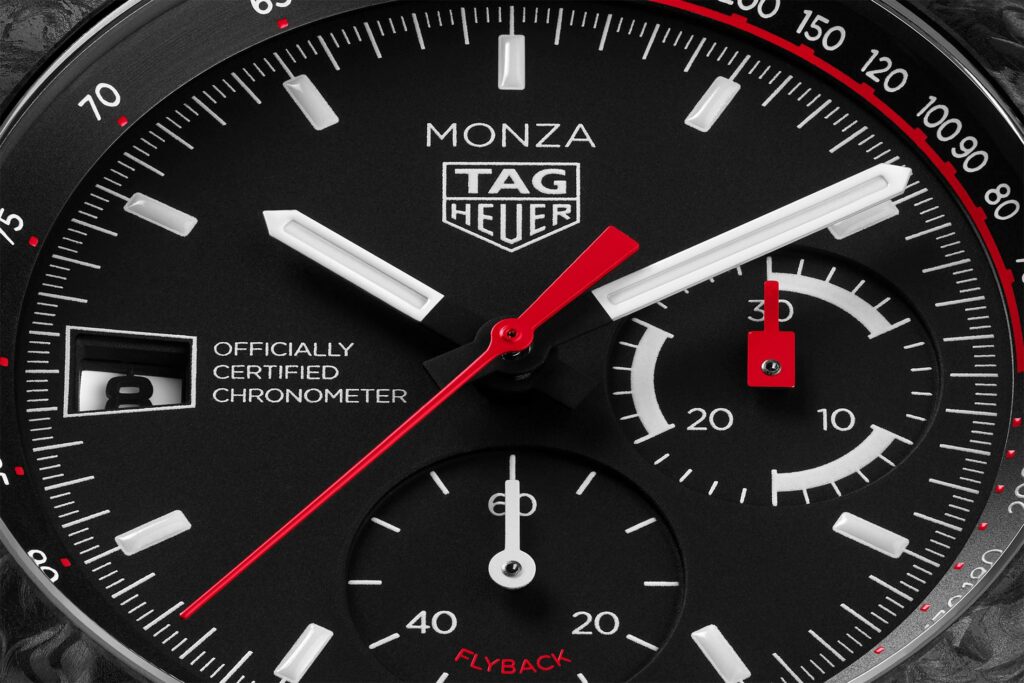
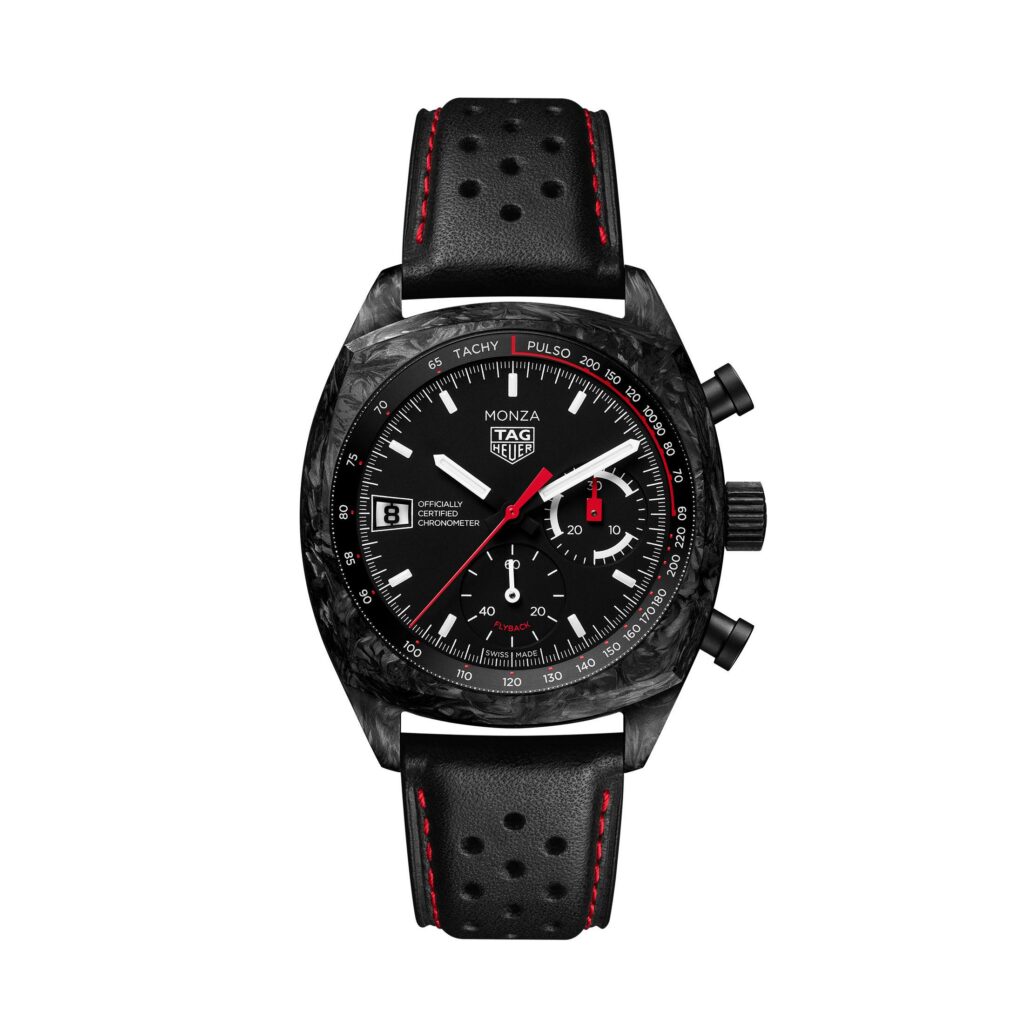
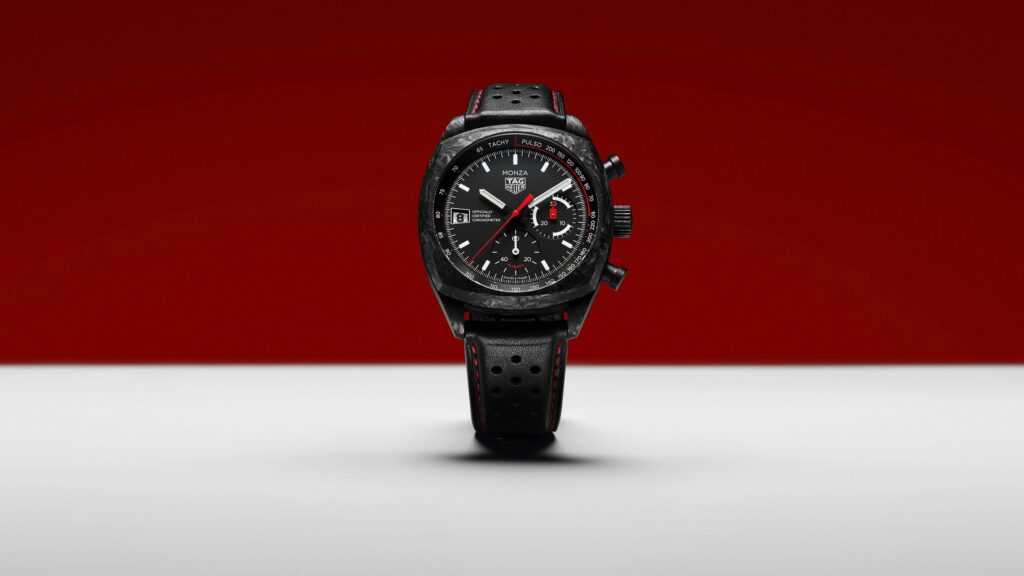
The new TAG Heuer Monza Flyback Chronograph ref. CR5092.FC8372 arrives ahead of Formula 1’s return to Monza with a 42mm forged-carbon case, matte-black dial, red accents, and the automatic TH20-12 flyback chronograph movement. Production is limited to 500 numbered examples.
There’s plenty of history for TAG Heuer to pull from here. Heuer introduced the original Monza in 1976 following Ferrari’s 1975 Formula 1 constructors’ championship and Niki Lauda’s drivers’ title. That watch also marked Heuer’s first use of a black-coated case, and black, red, and white quickly became recognizable parts of the Monza vocabulary.
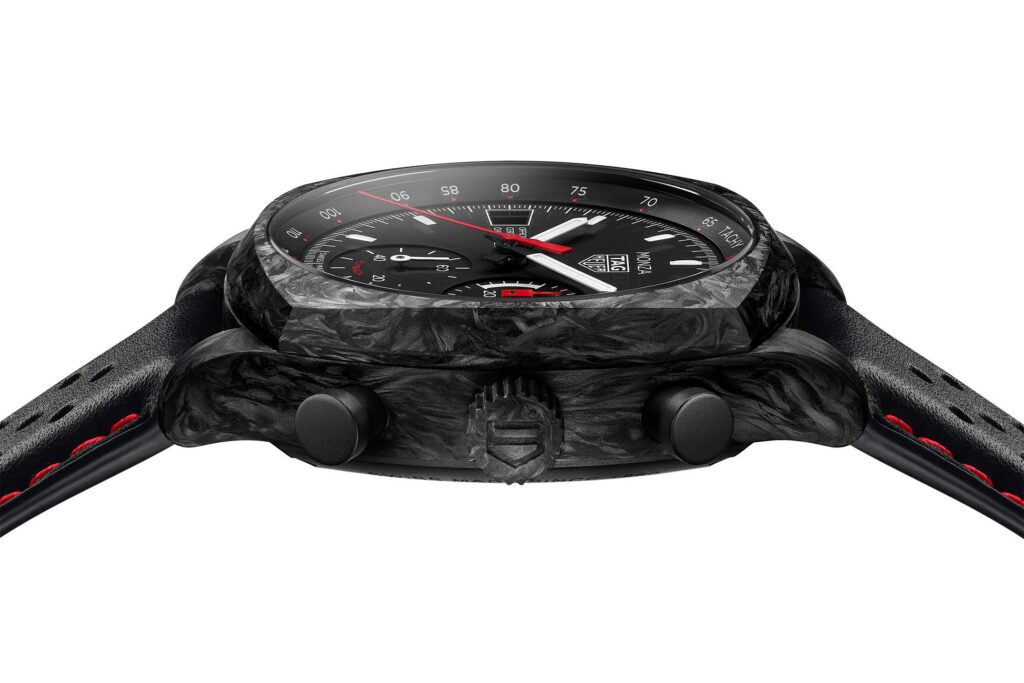
The more relevant comparison might be the carbon Monza TAG Heuer introduced in 2023. That version went hard on the contemporary treatment, combining a carbon case with an openworked dial and translucent blue and red elements. The new Monza keeps the carbon construction while calming everything else down.
The matte-black dial is conventional by comparison, with printed indices, white Super-LumiNova, two registers, and red reserved primarily for the chronograph indications and scales. There’s still quite a bit happening around the dial, including both pulsometer and tachymeter scales, yet the overall presentation looks more coherent. It reads as a Monza without requiring TAG Heuer to recreate something from 1976.
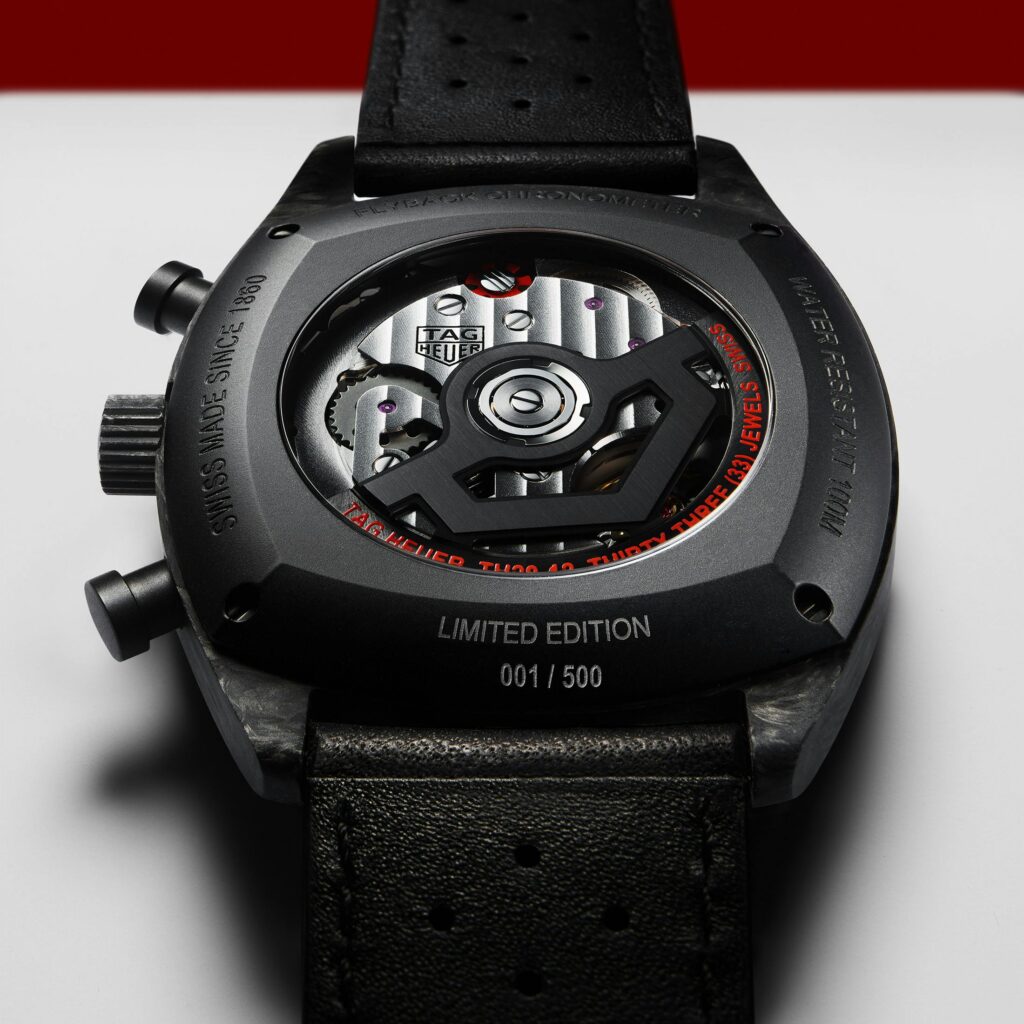
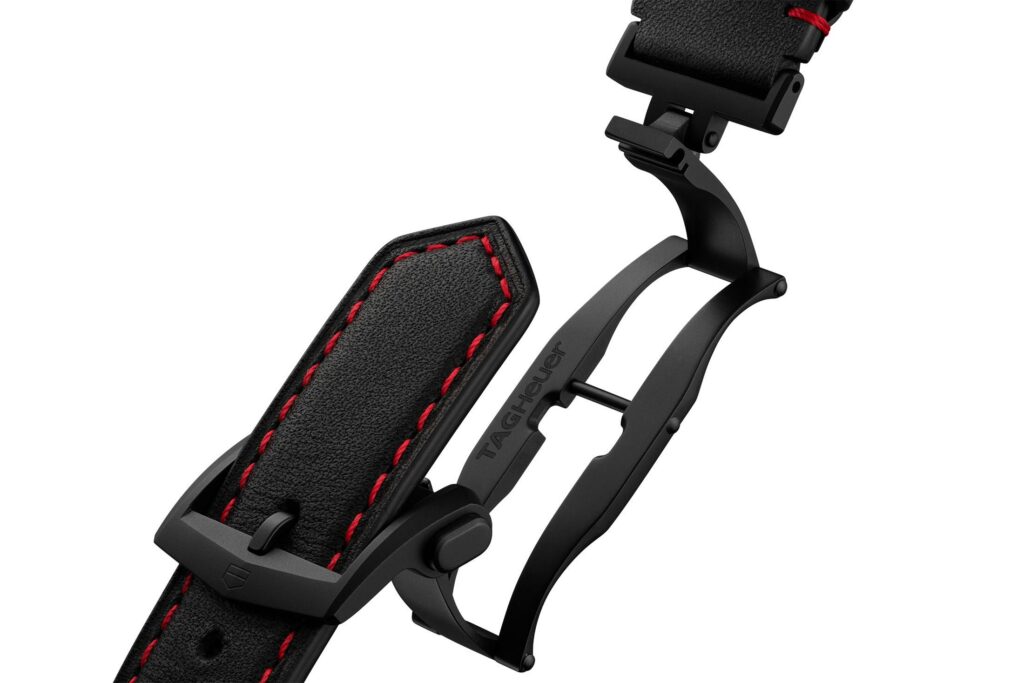
Inside is TAG Heuer’s COSC-certified TH20-12 automatic flyback chronograph caliber. It runs at 4Hz and provides an 80-hour power reserve. The forged-carbon case measures 42mm across, 15.22mm thick, and 50.85mm lug-to-lug, with 100 meters of water resistance. TAG Heuer currently specifies a Grade 5 titanium caseback with black PVD coating, while the watch comes on a perforated black calfskin strap.
Then we get to $13,400. The movement and carbon construction give TAG Heuer plenty to point toward, though that remains a difficult number for a Monza. Historical associations can only carry that conversation so far, especially considering the original Monza was deliberately positioned as a less expensive Heuer chronograph.
Still, the more important question may be where TAG Heuer takes the Monza from here. This version suggests the brand sees it as a place to experiment with carbon, flyback movements, and contemporary chronograph design rather than pursue increasingly faithful vintage recreations.
I think this direction has potential. The new watch certainly looks more convincing than the previous carbon experiment from where we’re sitting. Whether the Monza should continue further down this road or eventually reconnect with the smaller, simpler character of its earlier generations is something I’m thinking about with this one. And that price. Wild.

Co-Founder & Senior Editor
Michael Peñate is an American writer, photographer, and podcaster based in Seattle, Washington. His work typically focuses on the passage of time and the tools we use to connect with that very journey. From aviation to music and travel, his interests span a multitude of disciplines that often intersect with the world of watches – and the obsessive culture behind collecting them.