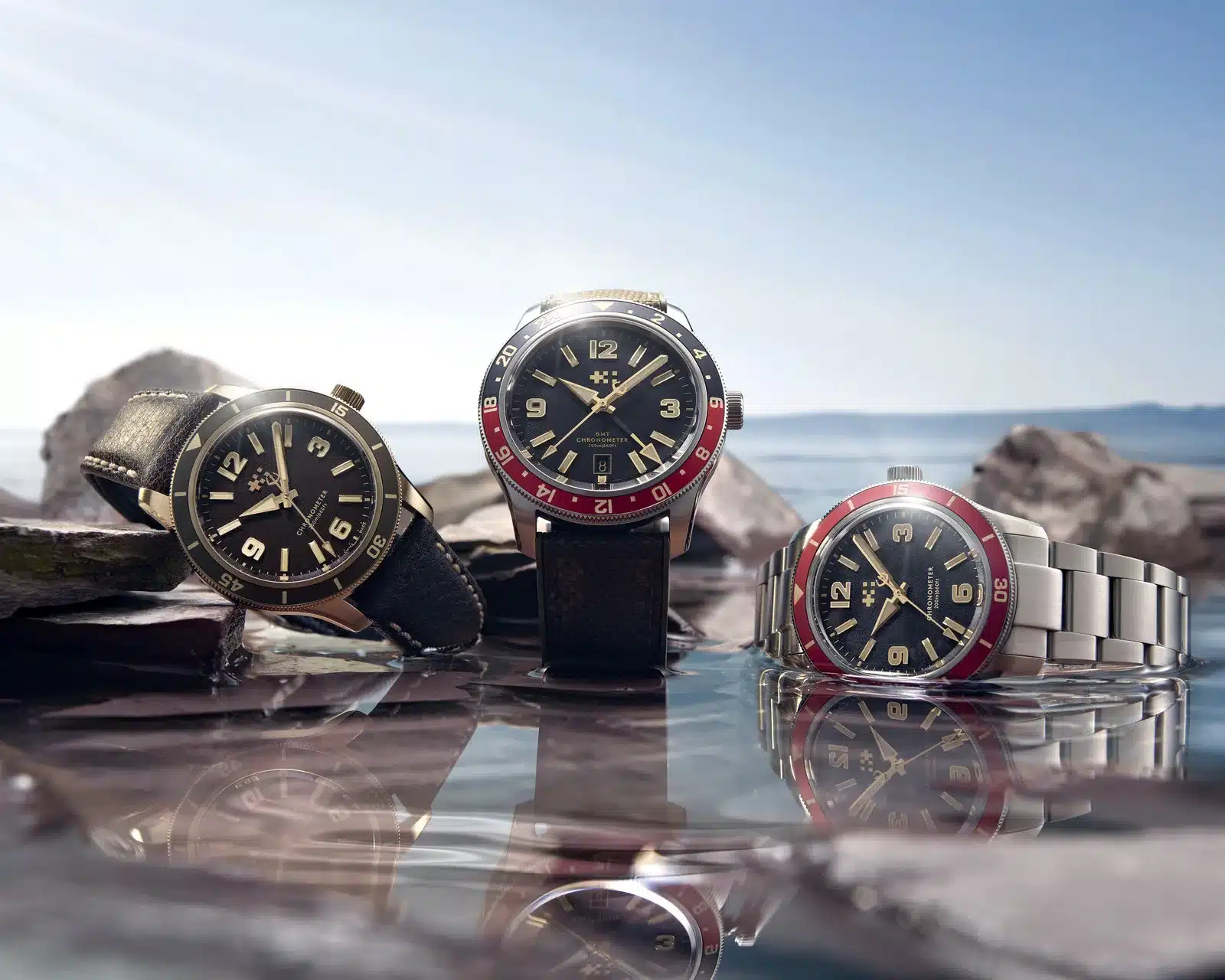
Christopher Ward has never been particularly shy about poking at the traditional Swiss watch industry. With its new C60 Trident Biscay collection, though, the brand has made the target unusually obvious. The accompanying campaign uses the headline “Mock Tudor,” ostensibly referencing the architectural practice of making modern buildings look older than they are. Sure. We get it.
The Biscay replaces the outgoing C65 Aquitaine as Christopher Ward’s vintage-leaning diver, and the change feels significant. Where the Aquitaine leaned into a somewhat dressier interpretation of the genre, the Biscay heads directly toward the skin divers of the 1960s. More importantly, the design looks coherent enough that the Tudor joke doesn’t have to do all the talking.
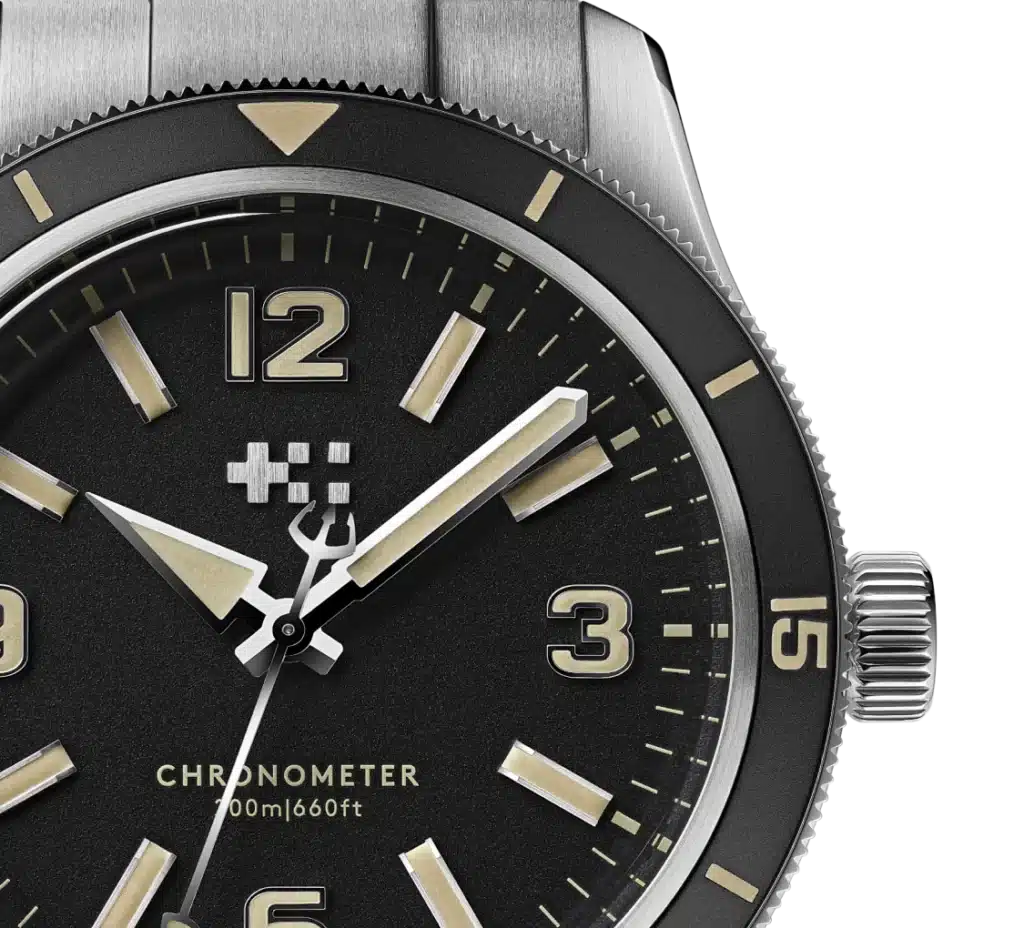
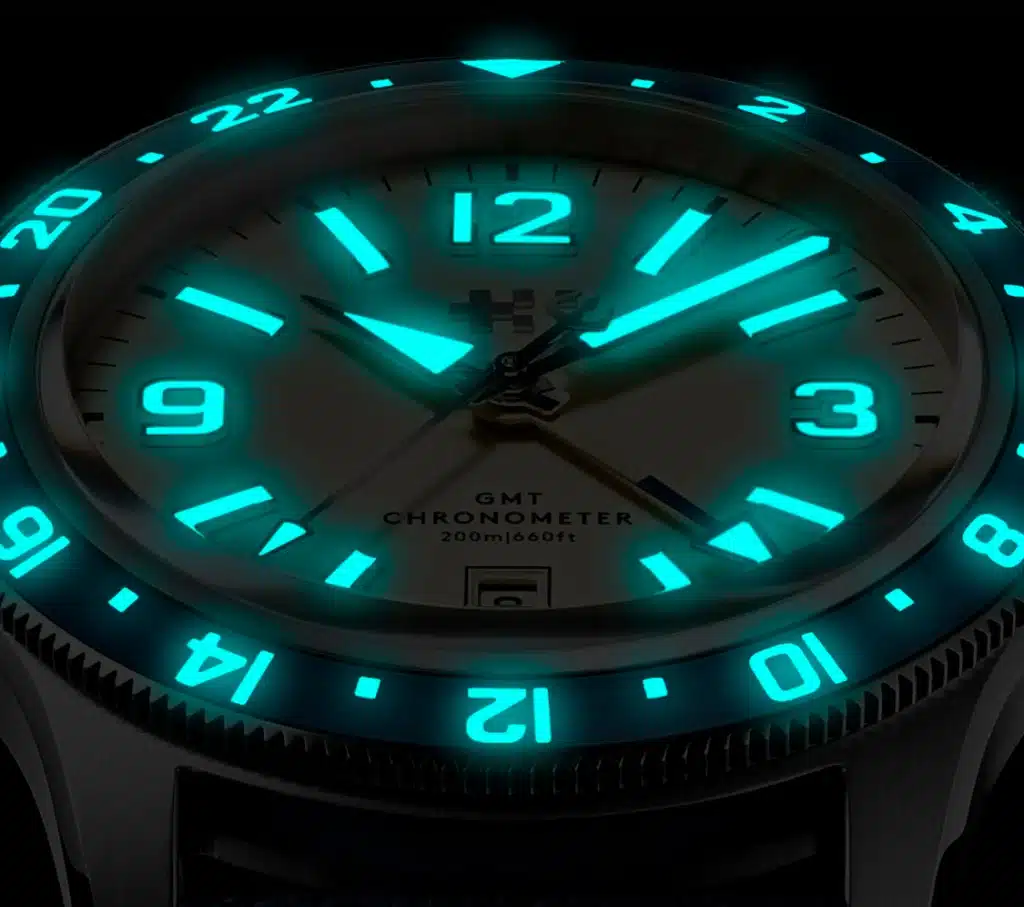
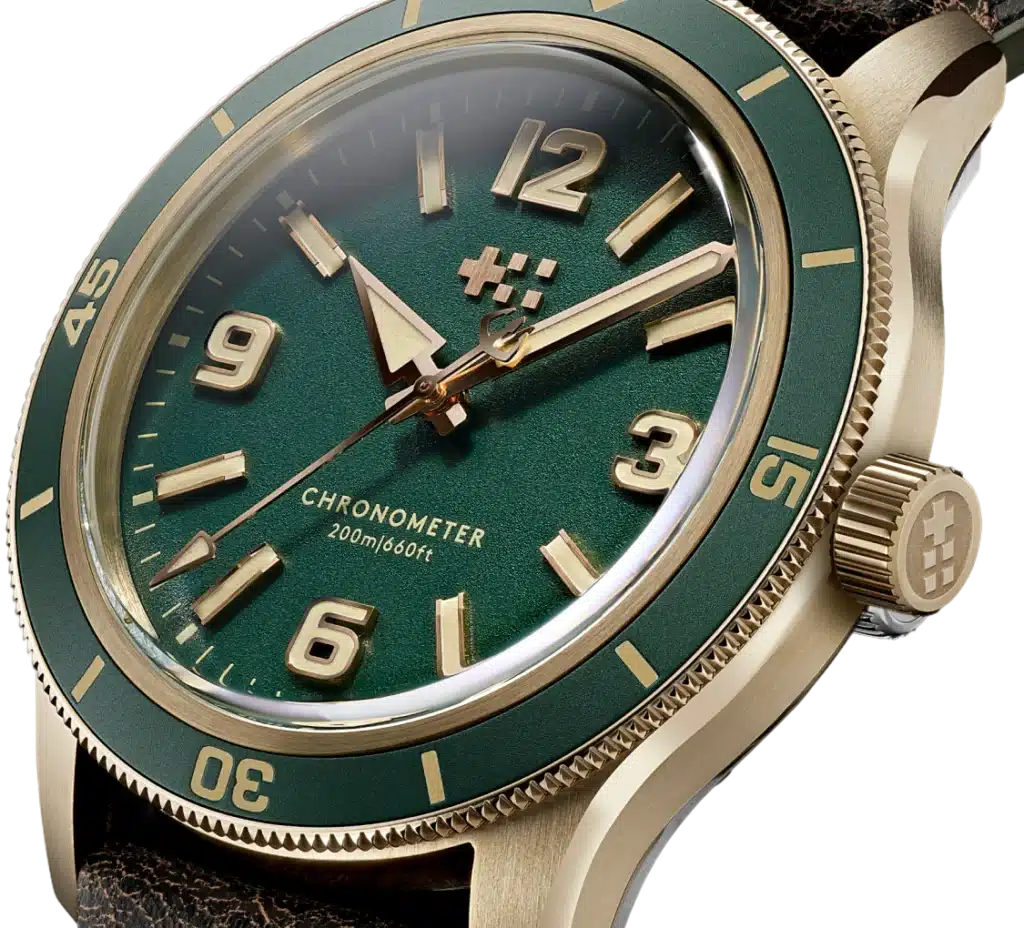
At first glance, the dial is what stands out here. Large applied Arabic numerals occupy the cardinal positions, joined by polished baton markers and Christopher Ward’s familiar Trident handset. There’s a fine granular texture underneath, while custom Grade X1 BL Super-LumiNova gives the markers and hands the warm appearance associated with aged radium lume. Christopher Ward developed the color specifically for the Biscay, and I think the warmer treatment works with this particular design rather than feeling needlessly applied.
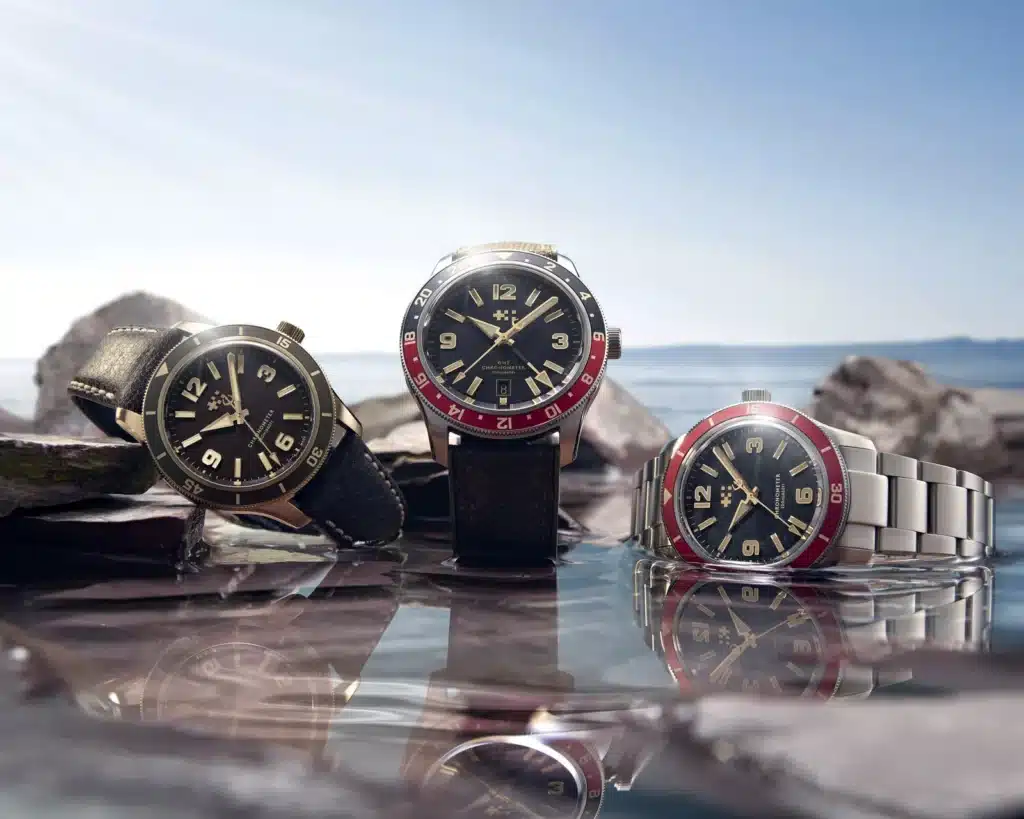
The steel Biscay Automatic comes in 39mm and 42mm sizes, with a redesigned Light-catcher case measuring roughly 11mm thick. You also get a box sapphire crystal, hardened anodized aluminum bezel, screw-down crown, and 200 meters of water resistance. Inside is a COSC-certified Sellita SW300-1 running at 4Hz with a 56-hour power reserve. The automatic is a true no-date configuration, avoiding an unused date position at the crown.
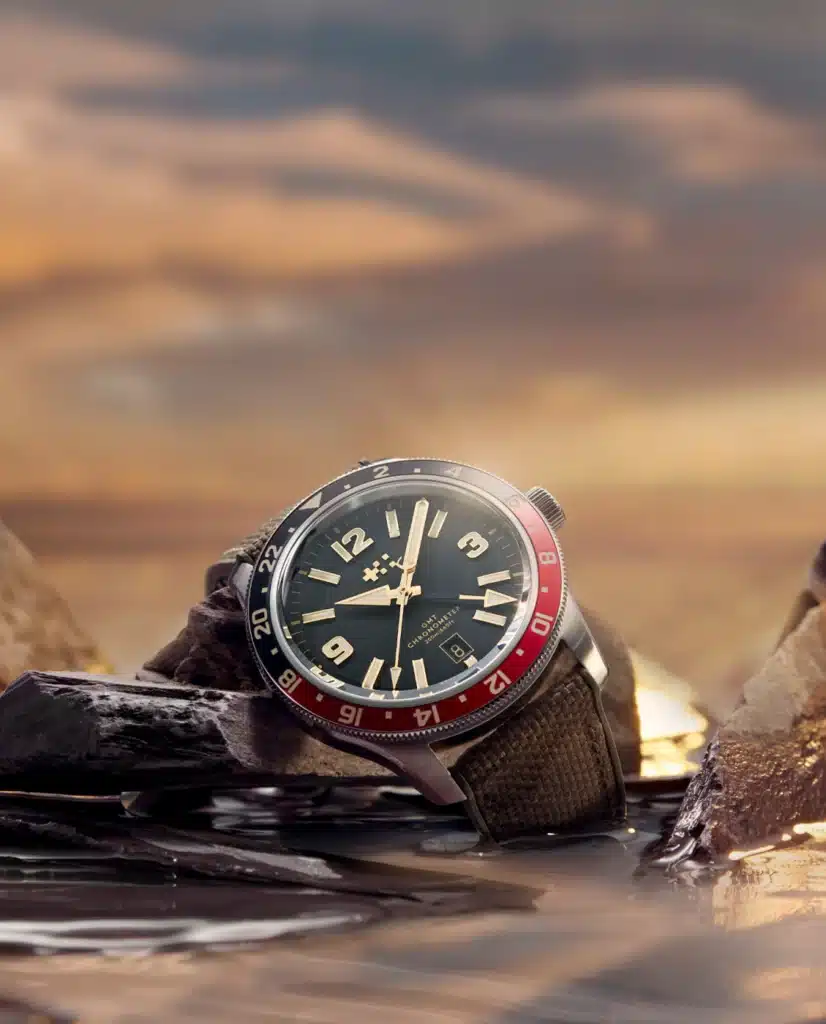
Christopher Ward has built a full family around the concept, too. The Biscay GMT comes in both case sizes and uses the COSC-certified Sellita SW330-2 with a 56-hour reserve, while the Biscay Bronze is restricted to 39mm and uses a marine-grade aluminum-bronze alloy. Christopher Ward says the alloy develops patina more gradually than conventional bronze formulations.
The Biscay Automatic retails for $2,095 on the three-row Bader bracelet. The Biscay Bronze goes for $2,095 on leather. And the Biscay GMT retails for $2,020 on the Bader.
Christopher Ward is openly encouraging buyers to place this watch alongside considerably more expensive Swiss divers. The Biscay doesn’t match something like the Black Bay 58 feature for feature, and the movement comparison deserves more nuance than a list of numbers can provide. However, a slim 39mm dive watch with 200 meters of water resistance, chronometer certification, an aluminum bezel, and a properly developed bracelet makes the comparison reasonable enough to consider.
Christopher Ward has spent the last several years proving it can make technically ambitious watches like the Bel Canto and Twelve X. With the Biscay, it’s returning to the value conversation that built much of its reputation, and openly naming the company it wants you to compare it against.
The specifications make that provocation credible on paper. Whether the Biscay feels equally convincing once enthusiasts start handling it is the more interesting question.

Co-Founder & Senior Editor
Michael Peñate is an American writer, photographer, and podcaster based in Seattle, Washington. His work typically focuses on the passage of time and the tools we use to connect with that very journey. From aviation to music and travel, his interests span a multitude of disciplines that often intersect with the world of watches – and the obsessive culture behind collecting them.