There’s a problem with buying an understated Rolex: once the obvious prestige is out of the equation, we’re left with a much harder question — which one would we actually want to wear all the time? That makes the Rolex Air-King 14000 vs. Explorer 14270 debate more interesting than a straight contest between two famous references. We’re not here to decide which one sounds better in collector circles or carries more bragging rights. We want to know which watch makes more sense when it becomes part of the daily routine, the excitement wears off, and we have to live with the choice instead of admiring it in a display case.
That’s where our watch experience matters. After more than a decade of hands-on reviews, we’ve learned to notice the little annoyances and pleasures that only show up once a watch is on the wrist for more than a few minutes. We’re interested in the things that affect whether a watch becomes a reliable favorite or an expensive object we admire from across the room. We’ve put both of these references under that same scrutiny, and we’re using those observations to answer a pretty simple question: which one would we be happier owning when we want a Rolex that keeps its head down?
Overview and Identity
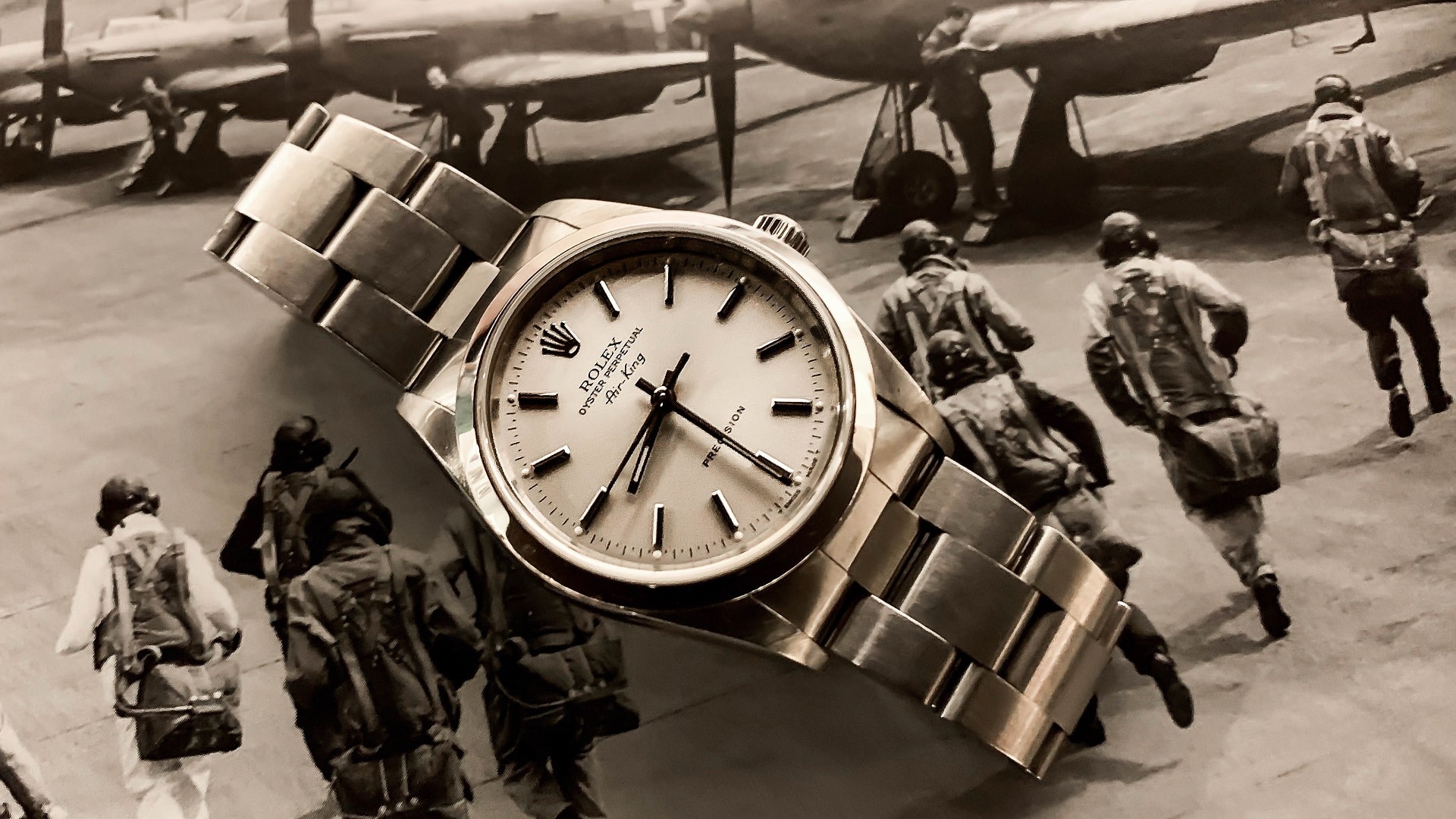
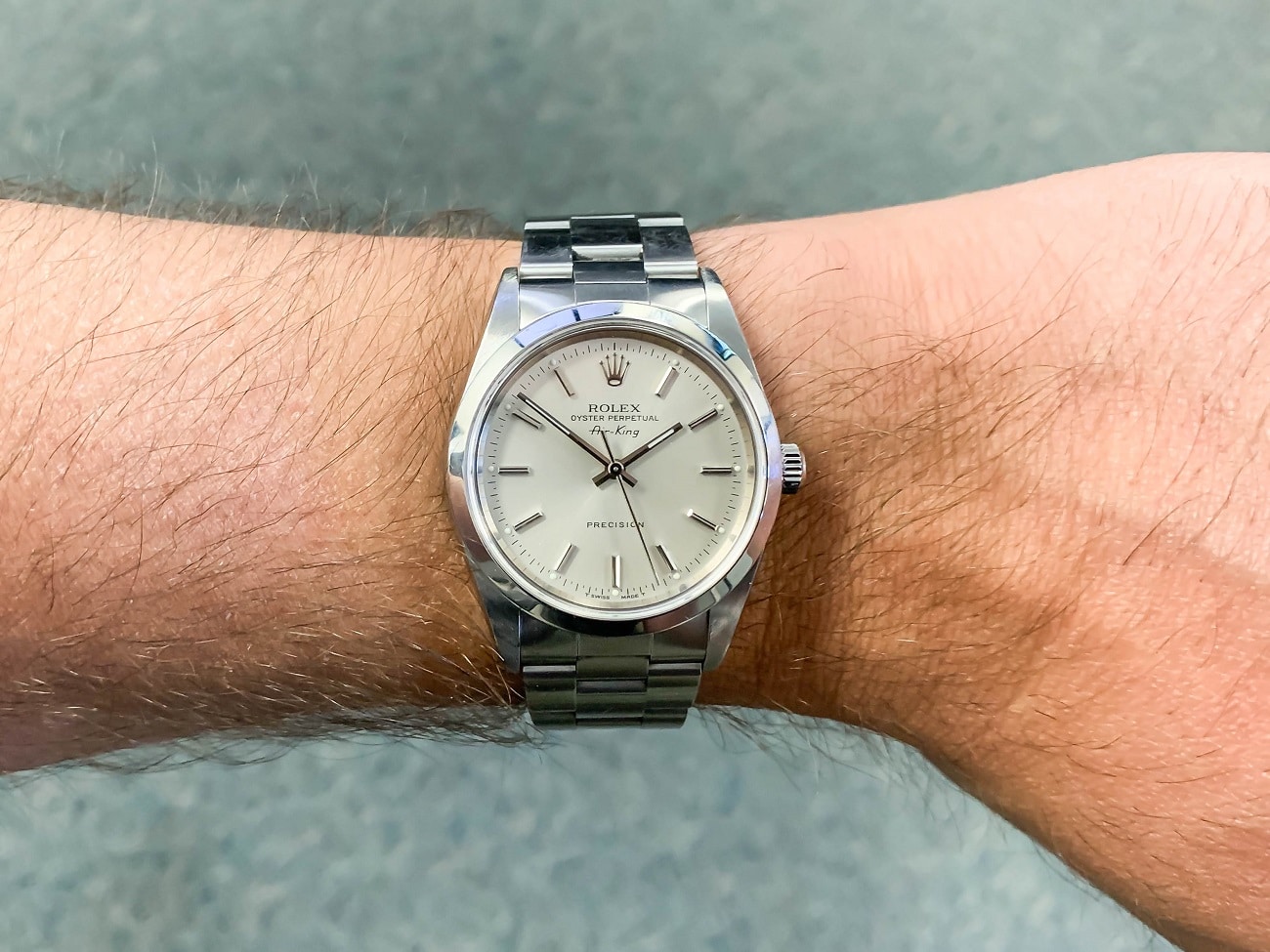
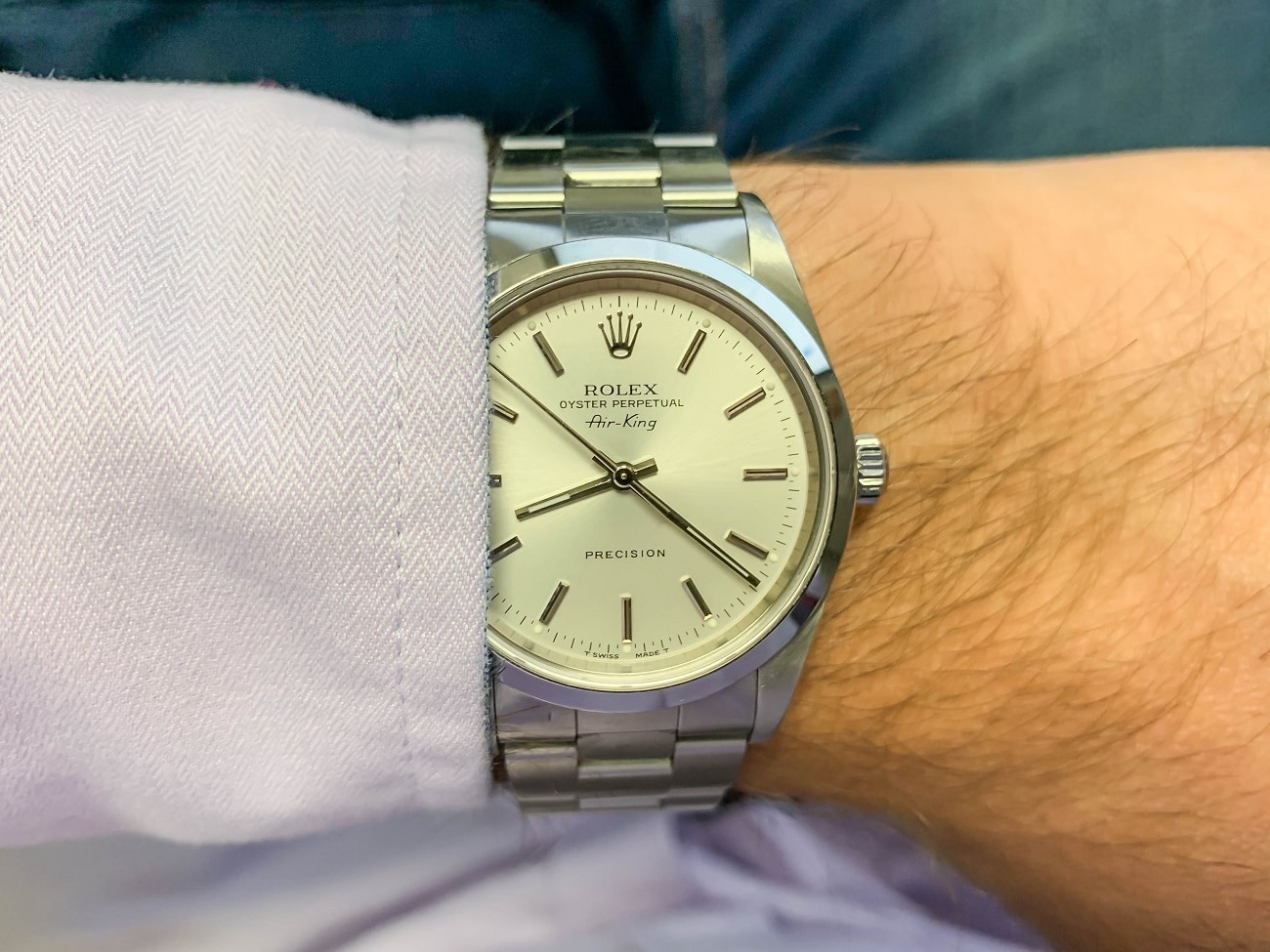
The Rolex Air-King 14000 is the often-forgotten, unsung hero of the Rolex sports lineup, and that makes it interesting for anyone who wants a Rolex without turning the watch into the main event. The Air-King is the last surviving model from Rolex’s “Air” series, but its history isn’t what makes the 14000 appealing today. In our testing period, it came across as a genuinely low-profile Rolex, especially next to the steel sports references that tend to dominate collector attention. It has the kind of presence that lets us enjoy the brand without feeling like we’ve put a billboard on our wrist. For someone who wants an understated Rolex precisely because they don’t want the usual Rolex attention, that matters.
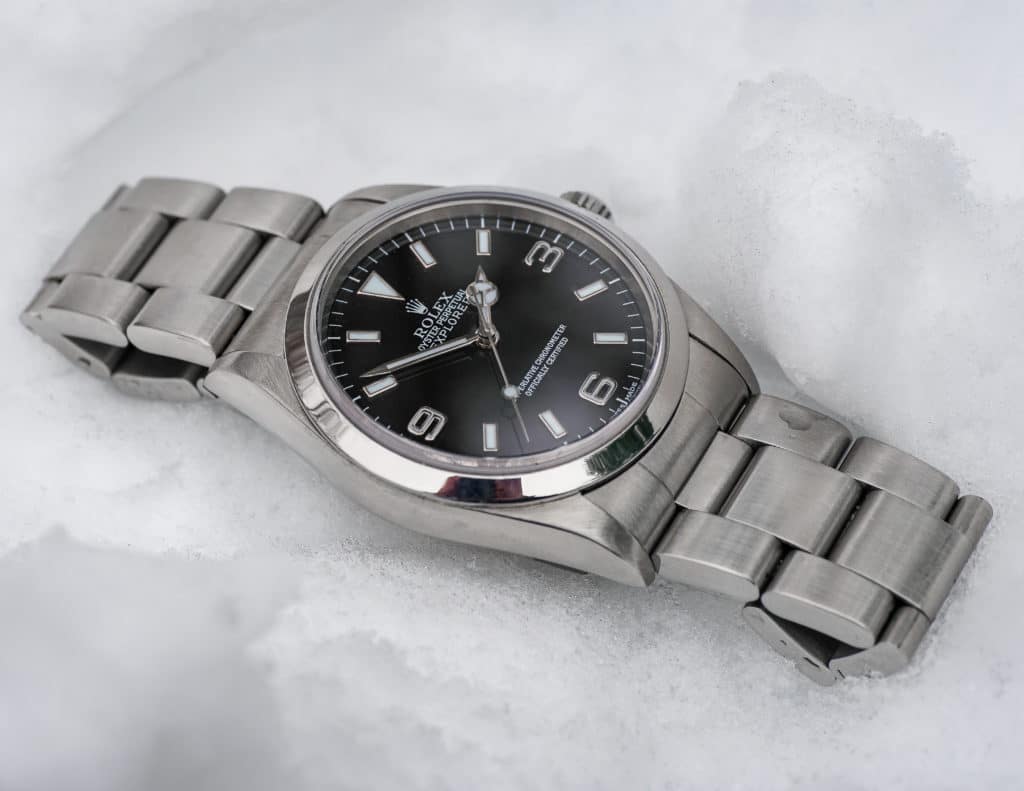
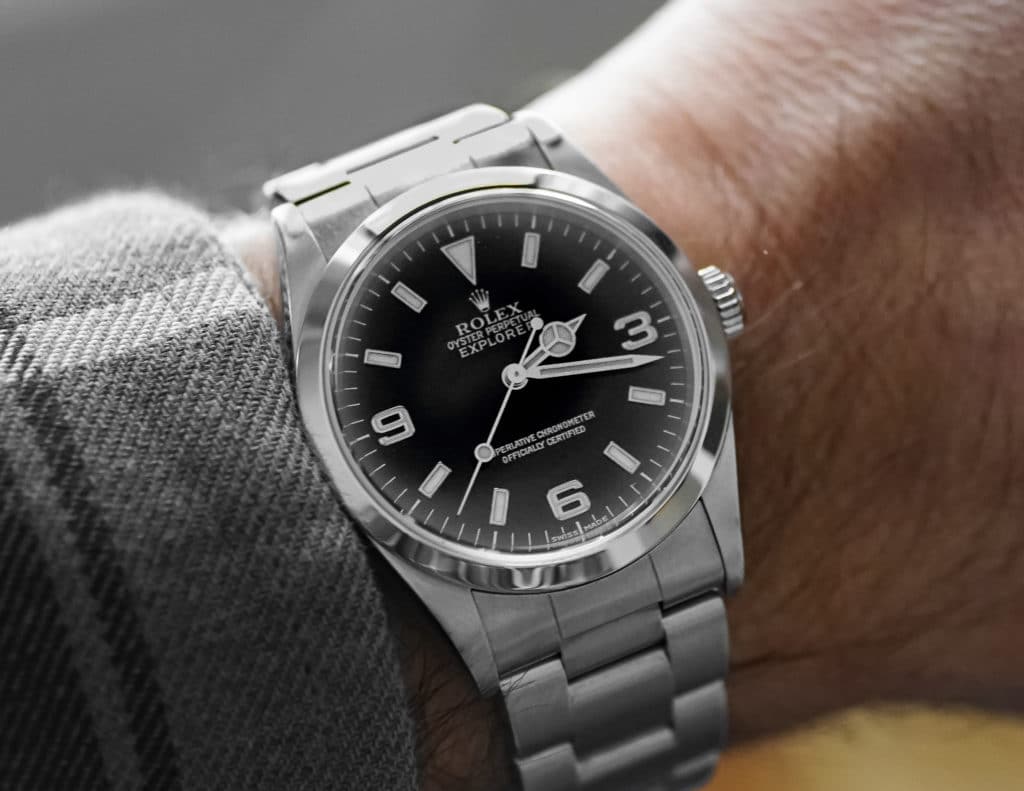
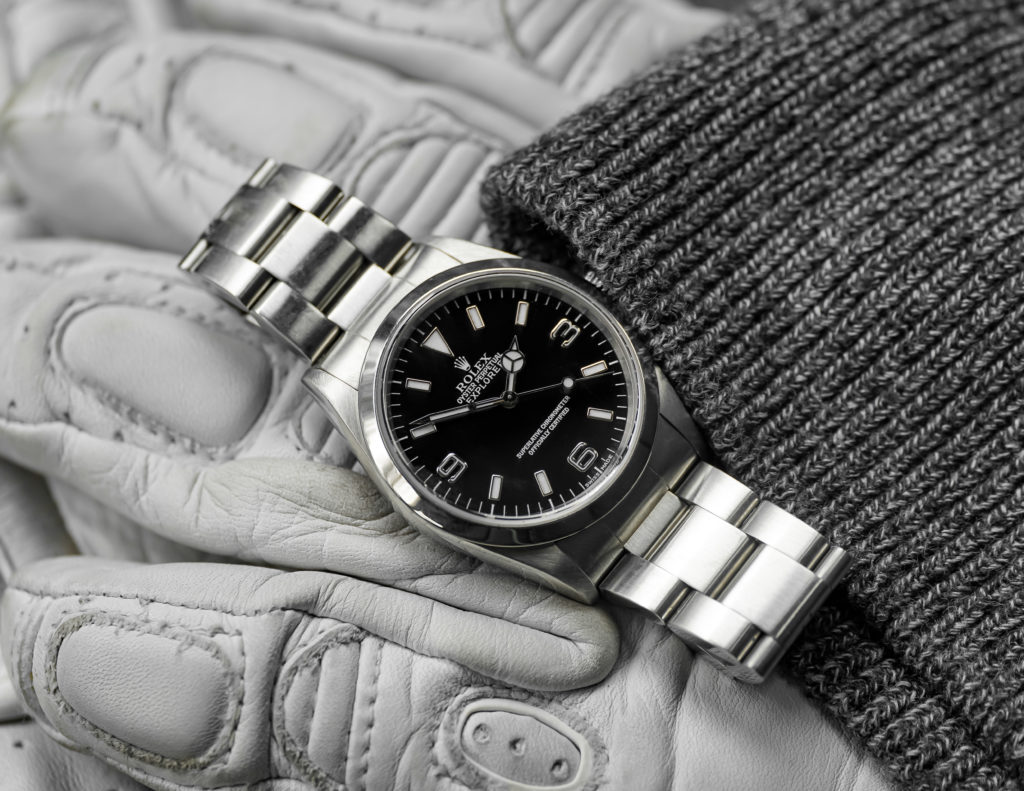
The Rolex Explorer 14270 takes understatement in a more purposeful direction. The design is simple, but we’ve always connected with it more once we ignore the Everest and cave-exploration mythology that often gets used to explain why the Explorer matters. We’ve never needed that story to enjoy the watch. What works for us is what happens when it’s actually on the wrist: the restrained design has enough character to stay interesting, while the overall layout feels deliberate rather than anonymous. That creates the real distinction between these two.
- The Air-King 14000 is the more overlooked, low-profile choice for buyers who want Rolex without the usual sports-watch spotlight.
- The Explorer 14270 is the more intentionally designed minimalist choice, with enough personality to stand on its own without relying on its adventure mythology.
Dial, Bracelet & Wearability: Understated Purity vs Classic Sports-Watch Versatility
The Air-King 14000’s dial is probably where its whole understated thing makes the most sense. The silver surface has just enough sunburst to keep it from becoming a blank sheet of paper, while the eleven stick markers, Rolex crown, and near-total lack of text keep things beautifully uncluttered. There’s no date window and no Cyclops to break up the layout, either. After spending significant wrist reviewing it, we found it quite easy to read without feeling like we were wearing a watch designed by someone who had recently discovered spreadsheets. Even the old Tritium hour markers still showed some life decades later, although the hands weren’t quite as enthusiastic.
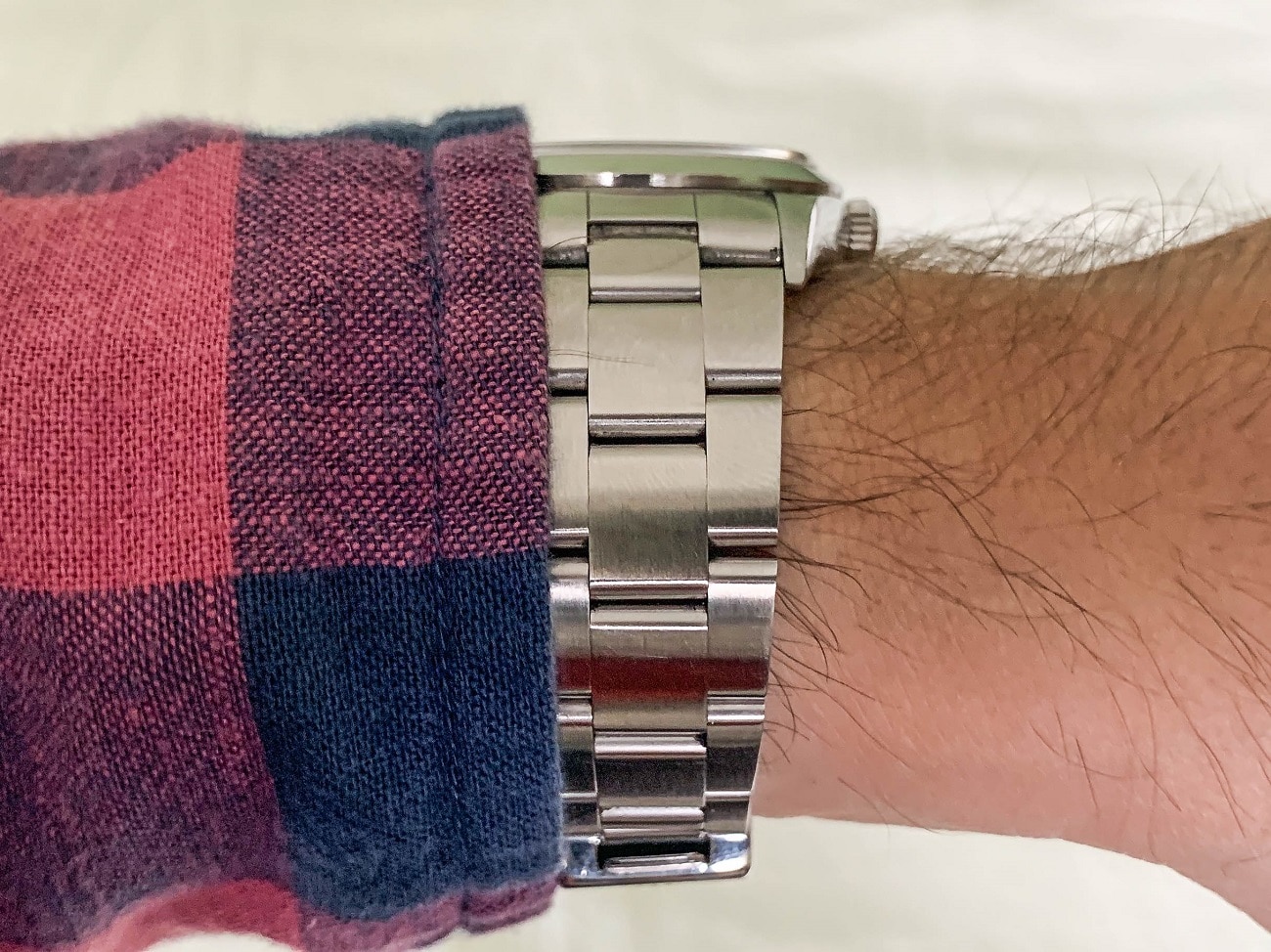
The Oyster bracelet (reference 76350 / 19) follows the same philosophy. At 19mm, it’s narrower than the bracelet on the Explorer 14270, but that’s the point: it’s scaled to the smaller case rather than pretending the watch needs extra visual weight. The gentle taper down to 14mm at the clasp also helps it sit naturally on the wrist. The clasp is simpler than what you’ll find on the Explorer or Submariner from the same era, without a safety lock, but we never found ourselves nervously checking whether the 20-year-old watch was still attached. That balance makes the Air-King easy to wear with whatever happens to be on us that day, and it’s easy to understand why it struck us as a credible one-watch option.
The Explorer 14270 we reviewed hands-on starts with an equally restrained dial but brings more character through the details. We’ve never been particularly susceptible to the charms of every 3-6-9 dial that comes across our desk, but this one gets a pass. The Arabic numerals, luminous markers, and clean handset create one of those layouts where reading the time requires almost no thought. There’s no digging through layers of decoration to find the hour. That sounds small until you’ve spent a week with a watch that makes you work for the basic information it’s supposed to provide.
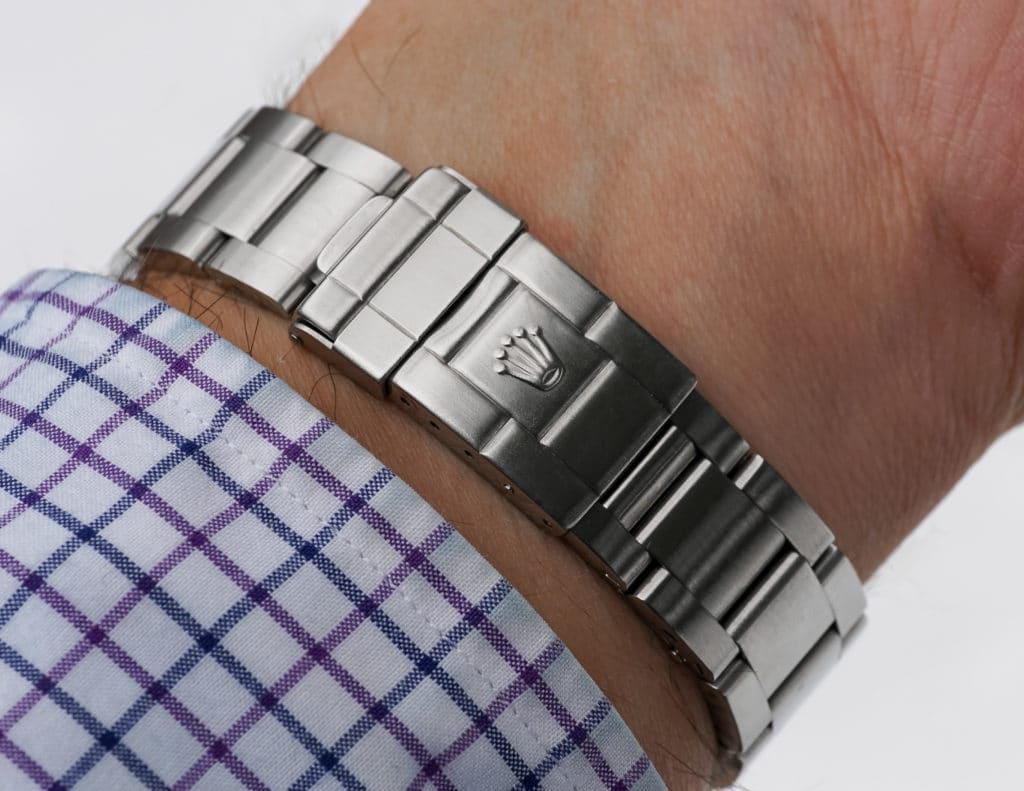
Its 20mm Oyster bracelet feels more substantial and more recognizably “sports Rolex” than the Air-King’s. The older 78790 bracelet and hollow 558B endlinks are technically dated, and putting it next to a good modern microbrand bracelet makes that obvious. Still, we wouldn’t confuse older construction with poor quality. The finishing is excellent, the faux three-link design has plenty of charm, and keeping the 14270 on its original bracelet gives us the complete experience. It’s one of those cases where modern hardware may be objectively better, but replacing the old bracelet would also remove some of what makes the watch feel like itself.
- The Air-King 14000 pairs its subtle sunburst dial and simple stick markers with a narrower, gently tapering 19mm Oyster bracelet, keeping the overall package light and easygoing.
- The Explorer 14270 pairs its highly legible 3-6-9 dial with a wider 20mm Oyster bracelet, adding more visual definition while retaining the proportions and character of an older Rolex sports watch.
Build Quality & Technical Approach
Both Rolex references come from an era when Rolex was still building these watches as straightforward mechanical tools rather than objects designed to win spec-sheet arguments. But they don’t take the same route. This is where the comparison gets into what tends to matter after the honeymoon period ends: how the cases, bracelets, movements, and older hardware hold up in real ownership, and whether the age of these five-digit references adds character or creates compromises.
Movements:
The Air-King 14000 uses Rolex Caliber 3000, an in-house automatic movement also used in the no-date Submariner and Explorer from the same period. Rolex rated it for a 42-hour power reserve, although we’d be careful treating that number as gospel on a decades-old example that may not have seen regular servicing. In our testing, the Air-King was running around -7 seconds per day, which is respectable for its age and condition. More importantly, it restarted almost immediately after sitting dormant, with the movement coming back to life from nothing more than handling the watch.
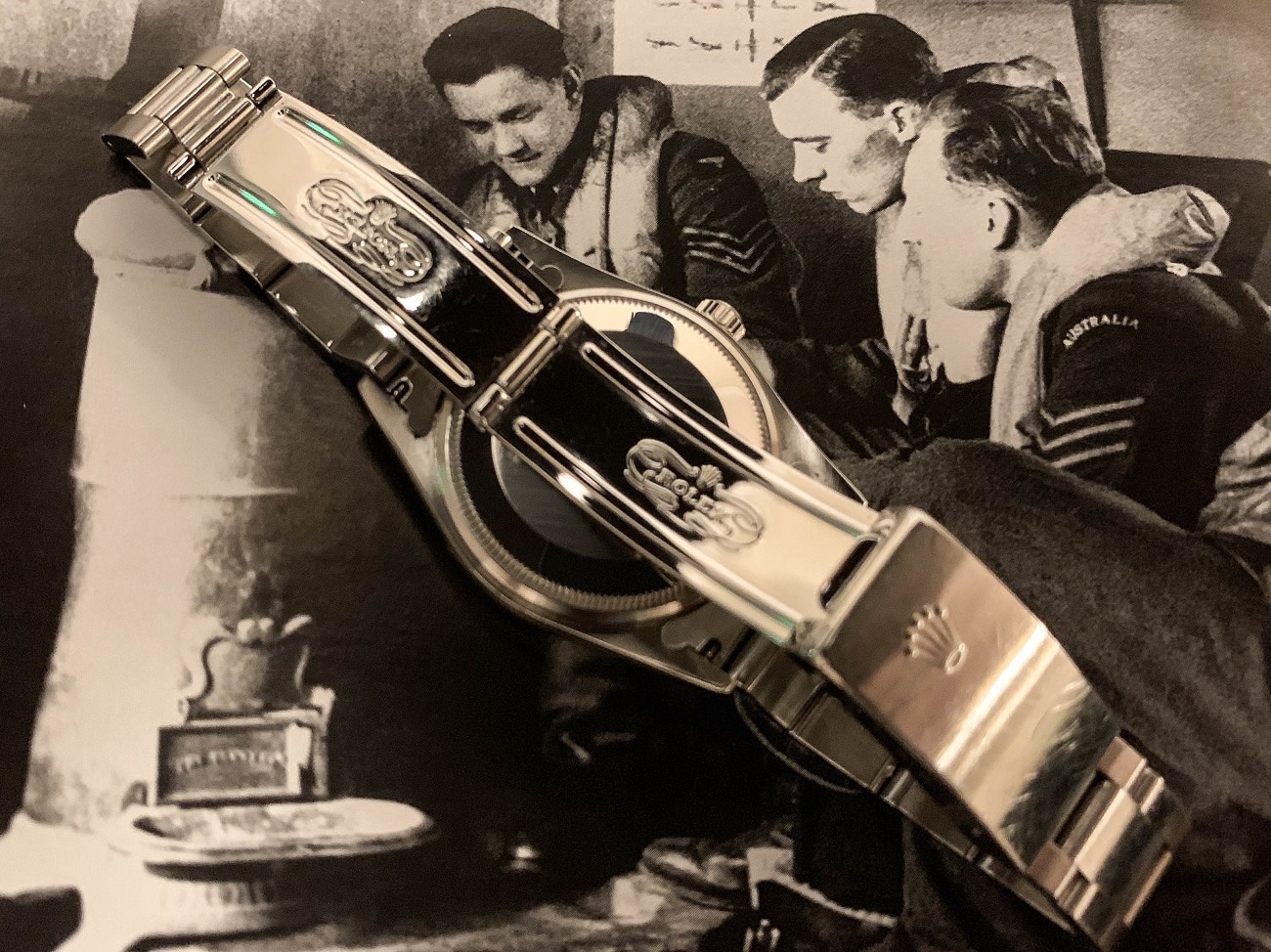
The bigger story with this particular Air-King was what happened after years of ownership. It had gone around 20 years without a full service and eventually developed a problem where the rotor would spin freely without properly winding the movement. The repair was expensive enough to make the missed servicing feel like a false economy, and the manual winding had also started to feel noticeably less smooth. That’s useful context when buying an older Rolex: Caliber 3000 has the pedigree, but service history can matter just as much as the movement name stamped into the paperwork.
The Explorer 14270 also runs Caliber 3000, so these two watches share the same mechanical foundation. Our tested example had spent most of the previous 20 years as a “safe queen,” yet it still impressed us with how quickly it came alive after being dormant. The second hand was already moving before we had finished unscrewing the crown to set the time, while the rotor remained quiet as it replenished the roughly 42-hour power reserve. It also kept around -4 seconds per day and wound smoothly, despite the lack of recent use.
One important distinction between the two examples is that the Explorer’s Caliber 3000 was regulated and tested for COSC certification when it left Rolex. However, the Air-King’s version was not COSC certified. We wouldn’t turn that into a massive winner-loser point, especially with watches this old. What matters more in actual ownership is the condition of the individual movement. Two Rolexes can share the same caliber and still give you very different experiences once decades of wear, storage, and servicing come into play.
Case Construction & Finishing:
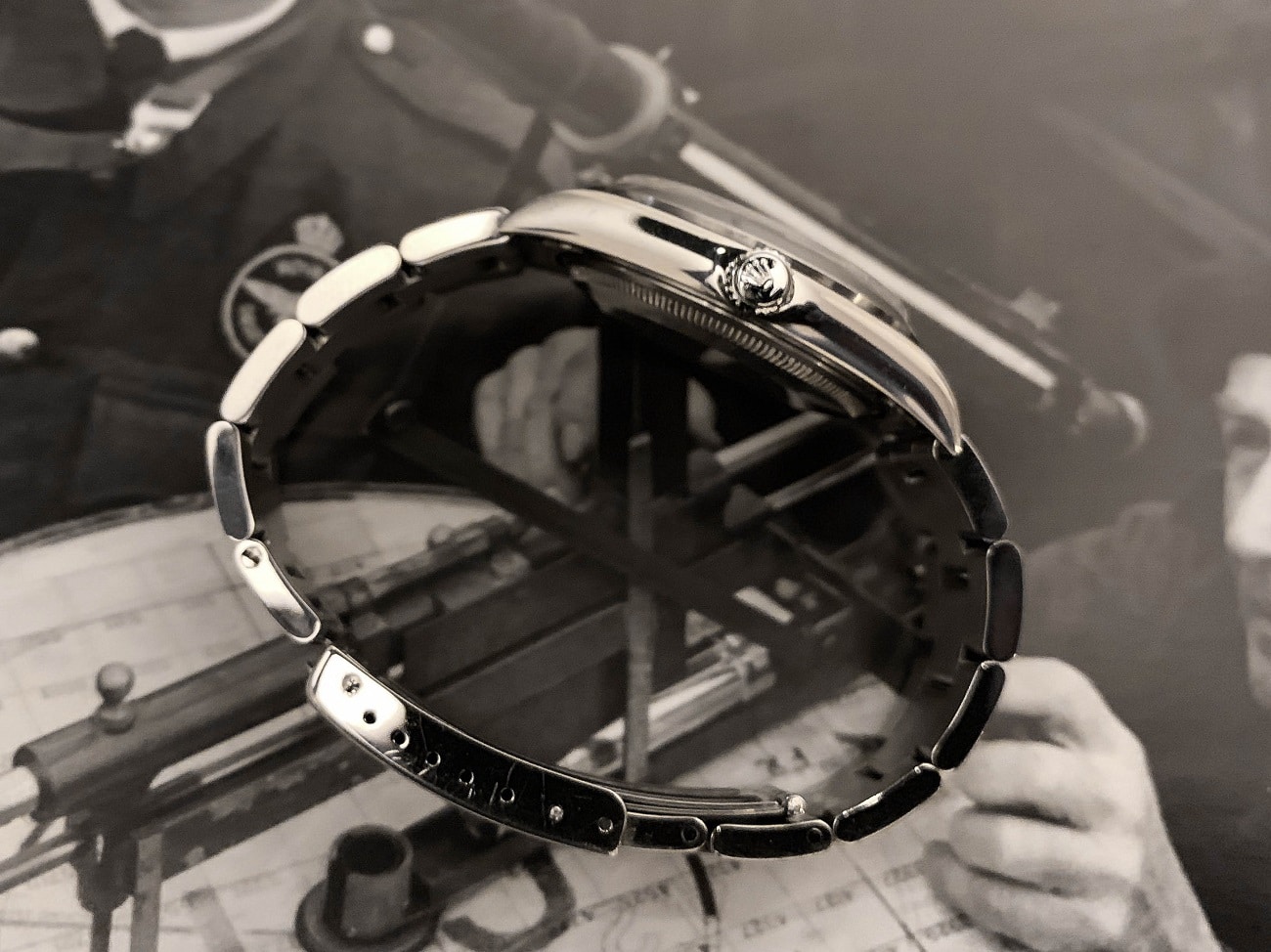
The Rolex Air-King 14000 uses the iconic Oyster case, but its older proportions give it a very different feel from the chunky Rolexes we’re used to seeing today. At 34mm, it can look small by modern standards, and even during our testing, a three-quarter view on a 6.75-inch wrist made that obvious. On the wrist, though, the thin, sharp lugs and 11.2mm case thickness changed the story. The 42.8mm lug-to-lug kept it compact without feeling awkward, while the smooth bezel and slim profile let it disappear under a shirt cuff. The finishing also works because it stays true to those proportions. There’s nothing overly aggressive about the case, and the older, thinner lug treatment gives the 14000 a much more classic feel than Rolex’s modern, broader-shouldered cases. On wrists around 7 inches or smaller, that compact shape makes a lot of sense.
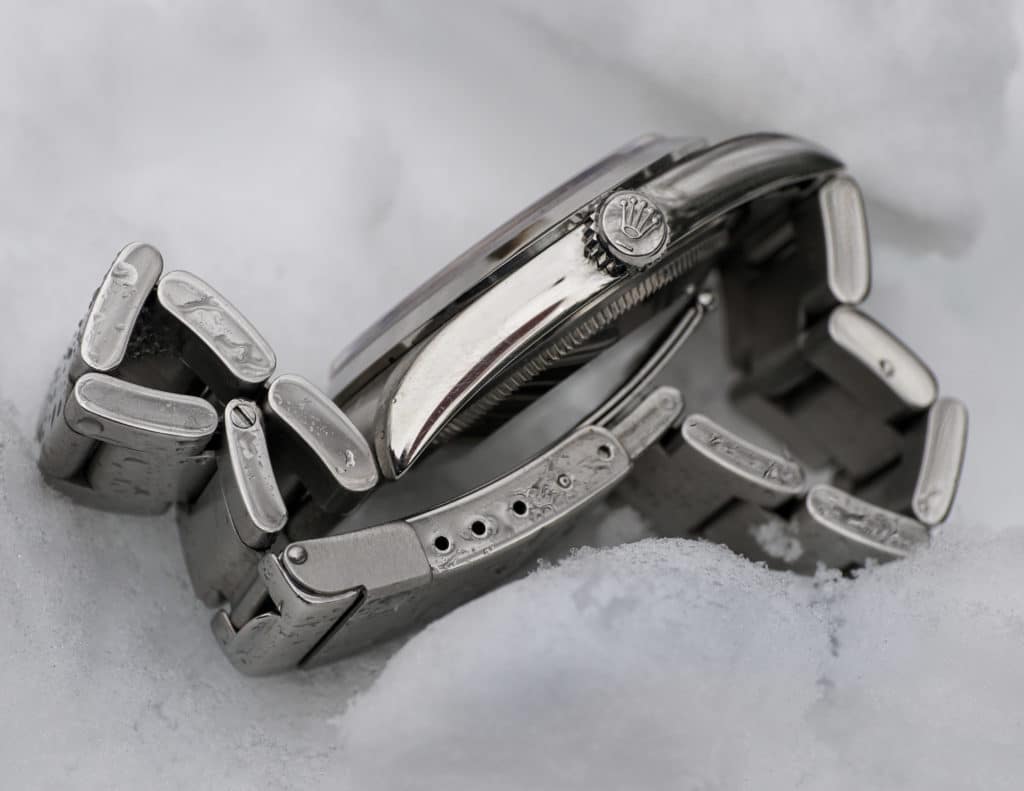
The Explorer 14270 uses the same Oyster formula and adds a bit more visual presence at 36mm, but the case stays distinctly compact. Its 43.6mm lug-to-lug and 11.1mm height create an easy-wearing package that feels comfortable without becoming insubstantial. We also like what Rolex left off the case. No crown guards and a smooth bezel avoid the usual tool-watch hardware, giving the Explorer a dressier character than its marketing as a rugged adventure watch might indicate. In practice, it lands closer to an Oyster Perpetual in personality than a no-date Submariner, which helps explain why it works so naturally in more settings.
Water Resistance & Lume:
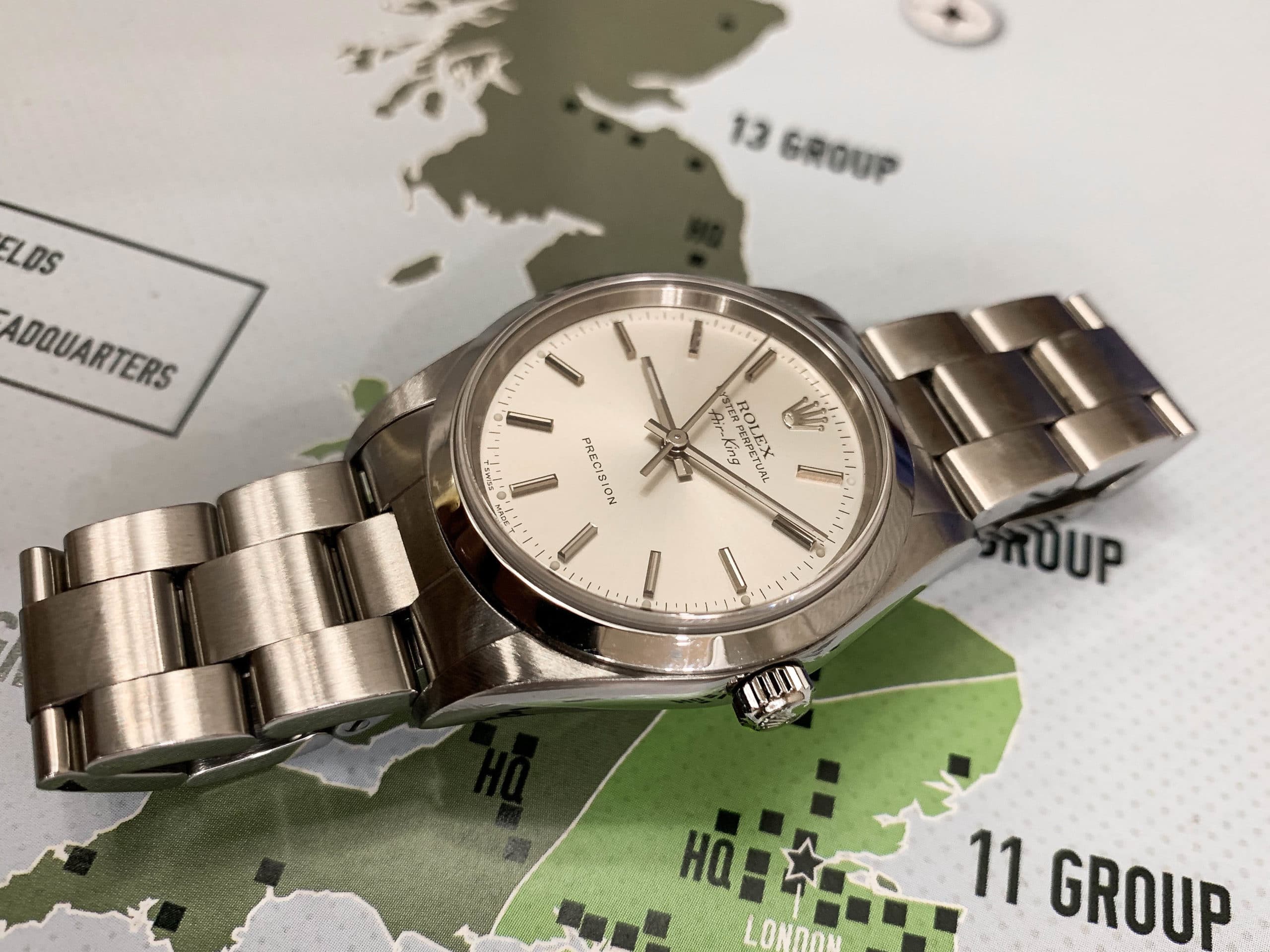
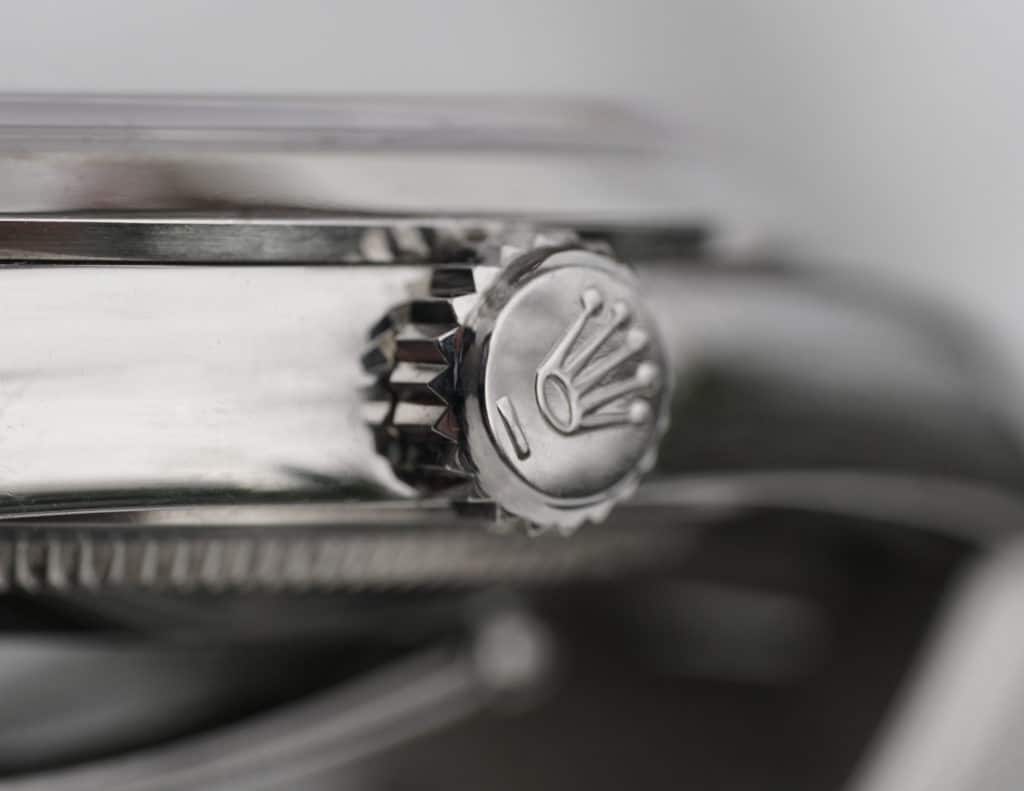
The Rolex Air-King 14000 gives us 100 meters of water resistance, which is plenty for the sort of everyday use this watch encourages. Its signed 5.2mm Twinlock crown is the important bit here: keep it properly screwed down and the Air-King can handle swimming without turning a casual dip into a watch-repair appointment. The lume is more interesting because this is a vintage watch using Tritium. The hour markers and stick hands still showed lume decades later, although the markers were noticeably stronger than the hands. That won’t match modern luminous compounds, but seeing a 20-year-old watch still glowing at all is pretty impressive.
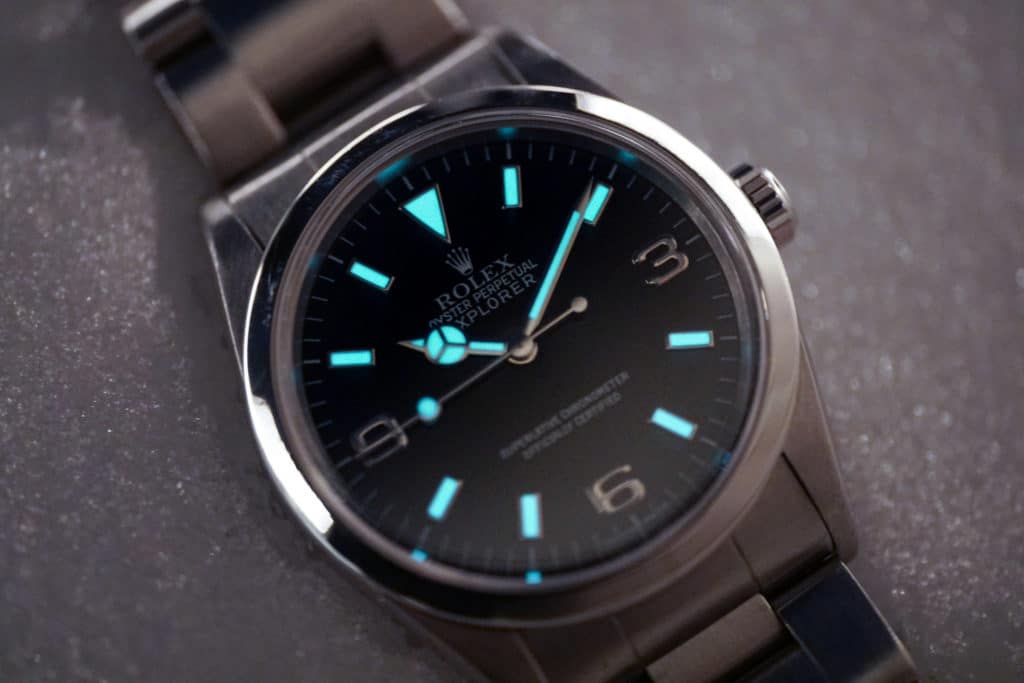
The Explorer 14270 is rated to 330 feet, or a little over 100 meters, with its Twinlock crown providing the same basic reassurance around water. That’s enough for swimming and everyday exposure, which is about where most of us actually need the rating. Its Super-LumiNova is the stronger nighttime performer of the two. The 3-6-9 numerals themselves aren’t lumed, but the hour markers and hands still produced a strong green glow during our wrist-testing and remained visible well into the night. The hour markers also held their charge longer than the hands, which is a small but useful detail when checking the time after the lights go out.
- The Air-King 14000 has the same Caliber 3000 pedigree, 100m water resistance, and compact Oyster construction, but its older Tritium lume and service history deserve closer attention.
- The Explorer 14270 combines the same Caliber 3000 foundation with COSC certification, 100m water resistance, stronger Super-LumiNova, and a slightly larger, dressier Oyster case.
Cost Considerations
The Rolex Air-King 14000 remains the more accessible entry point into this corner of vintage Rolex. In the US pre-owned market, examples generally fall around $3,800-$6,000, depending on condition, dial, and whether it includes the original box and papers. At those prices, the 14000 can still feel like a relatively grounded way into Rolex compared with many of the brand’s sports models, especially when the watch hasn’t been caught up in the same vintage Rolex price frenzy. That said, condition matters more here than the headline number, particularly with a decades-old movement that may be due for service.
The Explorer 14270 asks for a larger commitment. Pre-owned prices typically land around $5,700-$7,400, with the average hovering near $6,500, again depending heavily on condition, production year, and whether the set is complete. We think that premium is worth considering carefully because both watches share Caliber 3000 and much of the same basic Rolex DNA. Paying more for the Explorer gets you a more sought-after reference, but it doesn’t automatically mean you’re getting twice the everyday experience.
Final Thoughts: Which Is the Better Understated Rolex?
After putting both watches through the same lens, we’d take the Rolex Explorer 14270. The Air-King 14000 is a genuinely appealing oddball in the Rolex lineup, and there’s something satisfying about a watch that doesn’t seem interested in reminding everyone around you that it’s a Rolex. But once we stop thinking about which one is more discreet and start thinking about which one we’d want to keep wearing for years, the Explorer pulls ahead.
For us, the difference is that the Explorer’s restraint feels intentional. It doesn’t need its smaller size or overlooked reputation to be interesting. The design does that work on its own, giving us enough personality to stay engaged without turning the wrist into a conversation starter. That makes the higher asking price easier to understand, even if it still means being pickier about the individual example we buy.
The Air-King 14000 would still be the one we’d point toward if the whole point of buying a Rolex is to keep things as quiet as possible. But that isn’t quite the same thing as being the better understated Rolex. For us, the 14270 lands in the harder-to-find middle ground: it feels unmistakably like a classic Rolex when we look down at it, yet never feels like it needs to prove that fact to anyone else.
So the verdict is the Rolex Explorer 14270. Not because it is louder, rarer, or more impressive on paper, but because it gets the difficult part of understatement right: it knows when to stay quiet without giving us a reason to stop appreciating it. Be sure to let us know your thoughts on this hands-on analysis in the comments below.

Co-Founder and Senior Editor
Kaz has been collecting watches since 2015, but he’s been fascinated by product design, the Collector’s psychology, and brand marketing his whole life. While sharing the same strong fondness for all things horologically-affordable as Mike (his TBWS partner in crime), Kaz’s collection niche is also focused on vintage Soviet watches as well as watches that feature a unique, but well-designed quirk or visual hook.
Great comparison!
As an owner of both watches; your comments, descriptions and critiques are spot on.
Keep up the good work and I always enjoy your articels and perspective on watches.
Thanks Fredrick. Glad you enjoyed it!