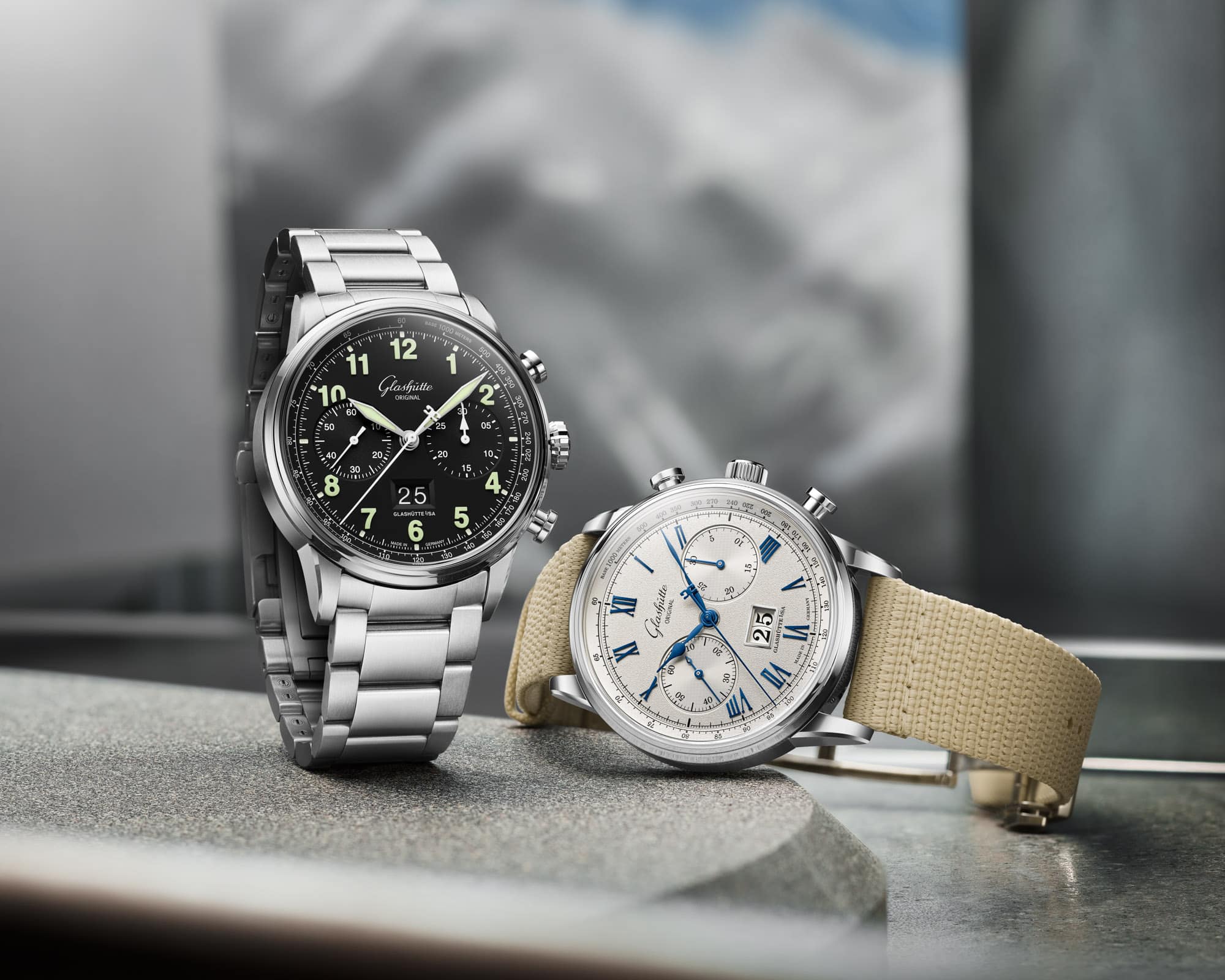
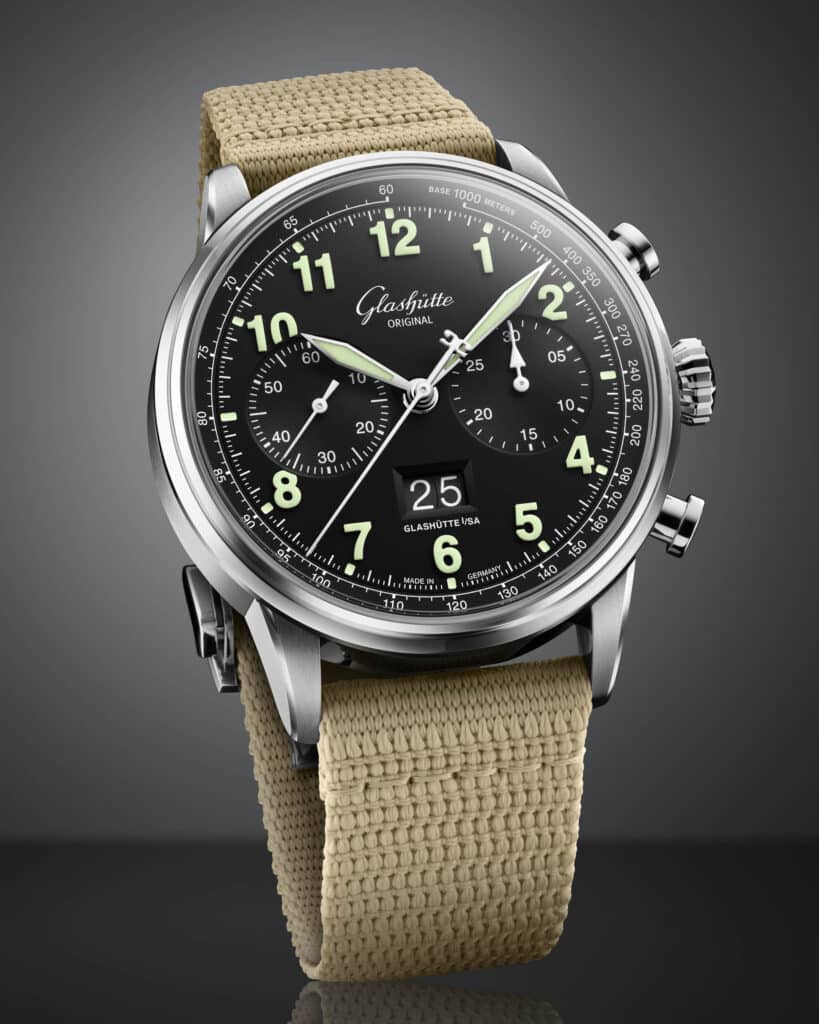
Glashütte Original has introduced two new Senator Chronographs for 2026, and the interesting part has less to do with the brand’s historical positioning than with what has disappeared. The new Senator Chronograph and Senator Chronograph Navigator share the same stainless steel case and Caliber 37-24 automatic flyback chronograph movement. Both measure 41mm across and 12.9mm thick, with a 48.5mm lug-to-lug measurement. They also retain Glashütte Original’s Panorama Date, which remains one of the easiest ways to identify a modern GO from across the room. Both are regular-production models.
I think those dimensions deserve some more attention. The existing Senator Chronograph Panorama Date measures 42mm by 14.6mm and includes a 12-hour chronograph counter and power-reserve indication. The new Caliber 37-24 pares that package down to central chronograph seconds, a 30-minute counter, small seconds, Panorama Date, and flyback functionality. The result is a watch that’s 1mm narrower and 1.7mm thinner.
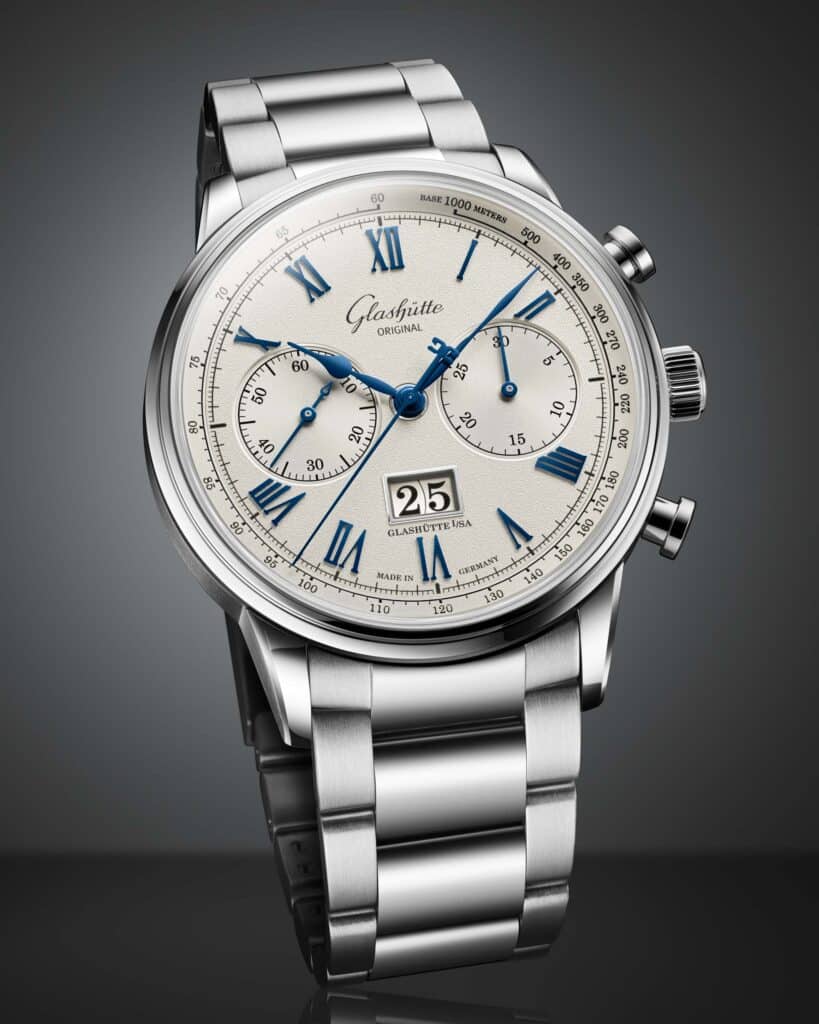
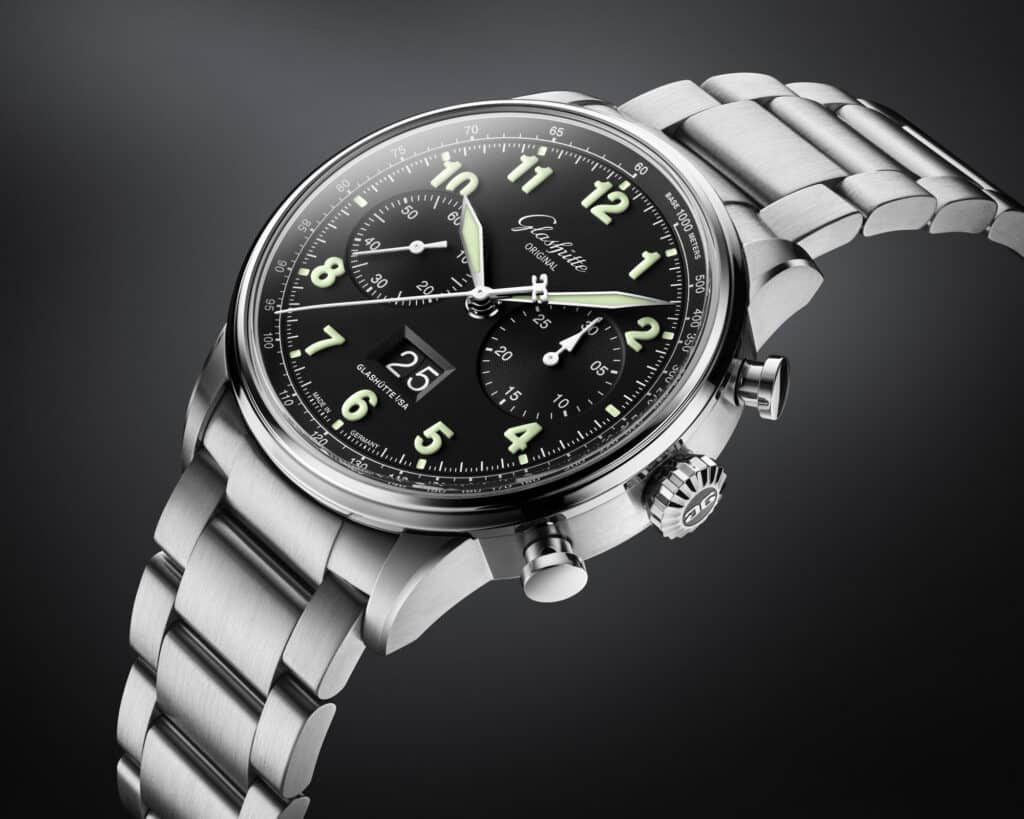
That trade makes sense to us. A 12-hour counter certainly gives a chronograph more practical range, although the simpler configuration gives these watches a cleaner identity. At first glance, the new layout feels considerably less busy, with two subdials balancing each other at 3 and 9 and the Panorama Date sitting alone at 6.
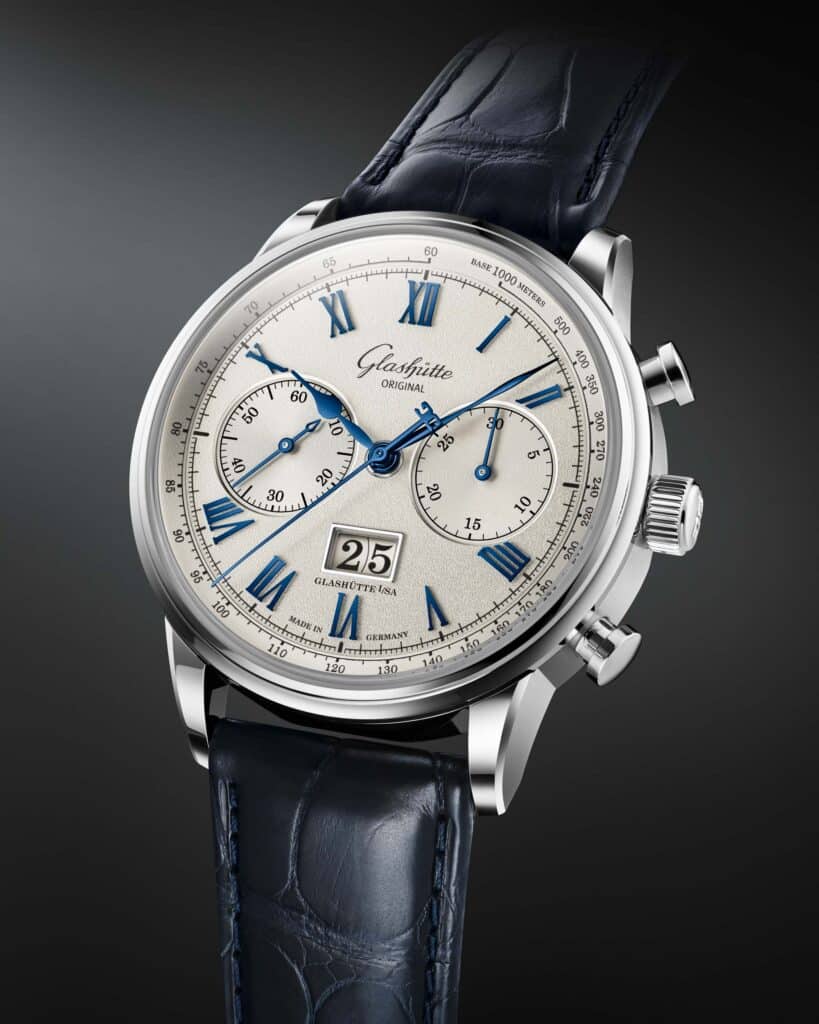
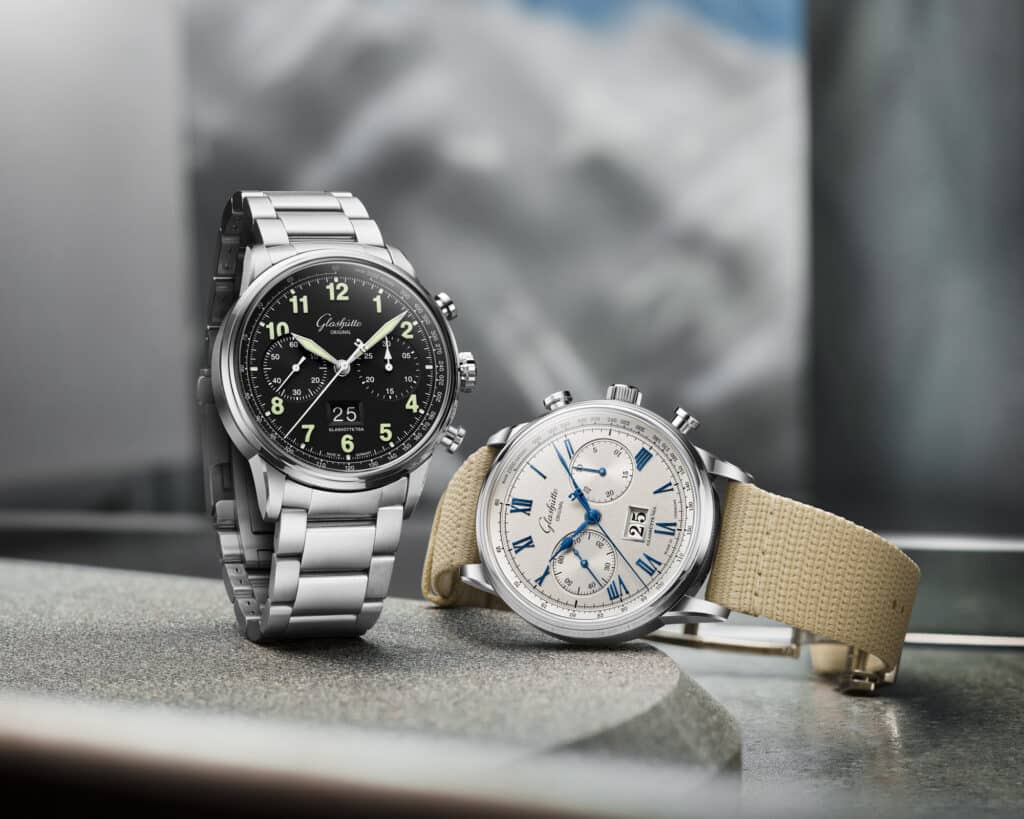
To me, the standard Senator Chronograph is the more interesting of the two visually. Glashütte Original says its design references observation watches made in Glashütte around the late 19th and early 20th centuries. Whatever you make of that connection, I feel the execution stands on its own. The galvanic silver dial has a finely embossed surface, while the Roman numeral markers are solid gold with a blue coating. Blued hands and a white-gold frame around the Panorama Date finish the arrangement.
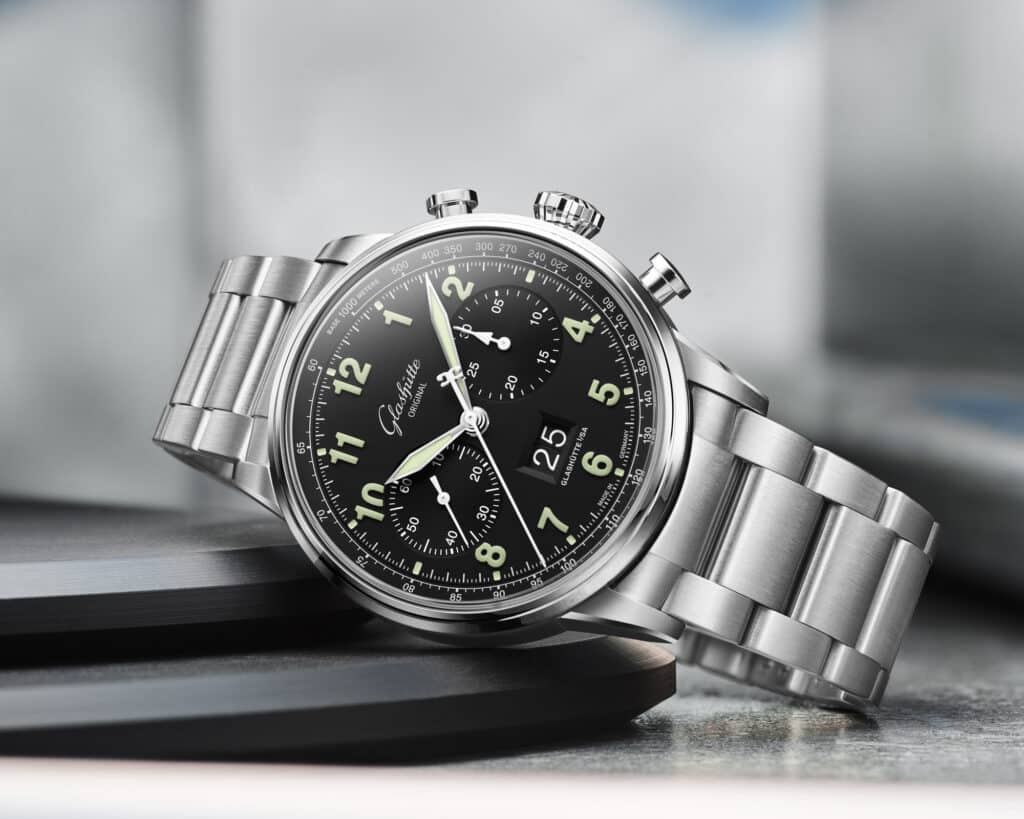
The Navigator goes in a more familiar pilot-watch direction. Its matte black dial uses Arabic numerals made from solid luminous material, paired with Super-LumiNova-filled sword hands and an onion-style crown. Glashütte Original points toward its 1940s pilot watches for inspiration here. The result reads clearly enough without needing that history to do much explanatory work.
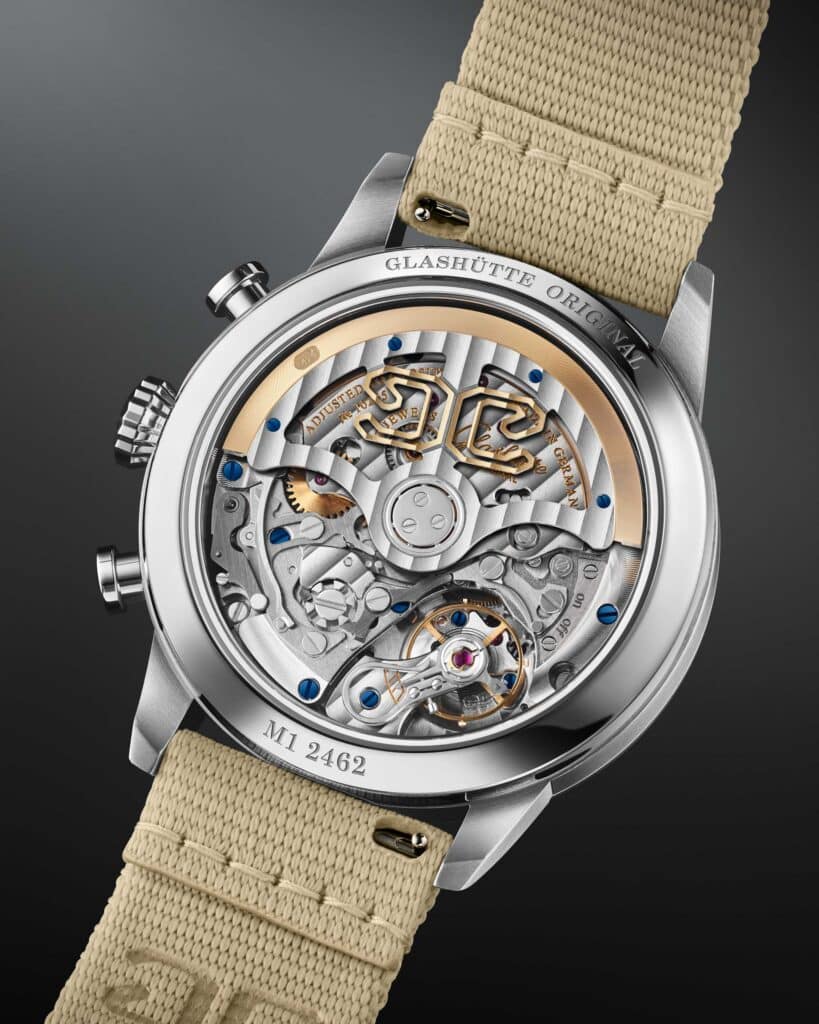
Underneath, both watches are mechanically identical. Caliber 37-24 is an automatic, column-wheel flyback chronograph running at 4Hz with a 70-hour power reserve and silicon hairspring. The movement is visible through a sapphire caseback and carries familiar GO details including the three-quarter plate and skeletonized rotor with a 21-karat gold oscillating weight. Water resistance is 50 meters.
And then there’s the price. $16,100 is serious territory for a steel chronograph, even one with an integrated manufacture flyback movement and this level of movement construction. Still, the number isn’t difficult to understand within Glashütte Original’s position in the market. Whether buyers see enough distinction here is a separate question.
For now, the strongest argument for these watches may be their restrained approach. Glashütte Original removed complications, reduced the case dimensions, and let the remaining elements breathe. I think sometimes, editing is the more interesting technical decision.

Co-Founder & Senior Editor
Michael Peñate is an American writer, photographer, and podcaster based in Seattle, Washington. His work typically focuses on the passage of time and the tools we use to connect with that very journey. From aviation to music and travel, his interests span a multitude of disciplines that often intersect with the world of watches – and the obsessive culture behind collecting them.