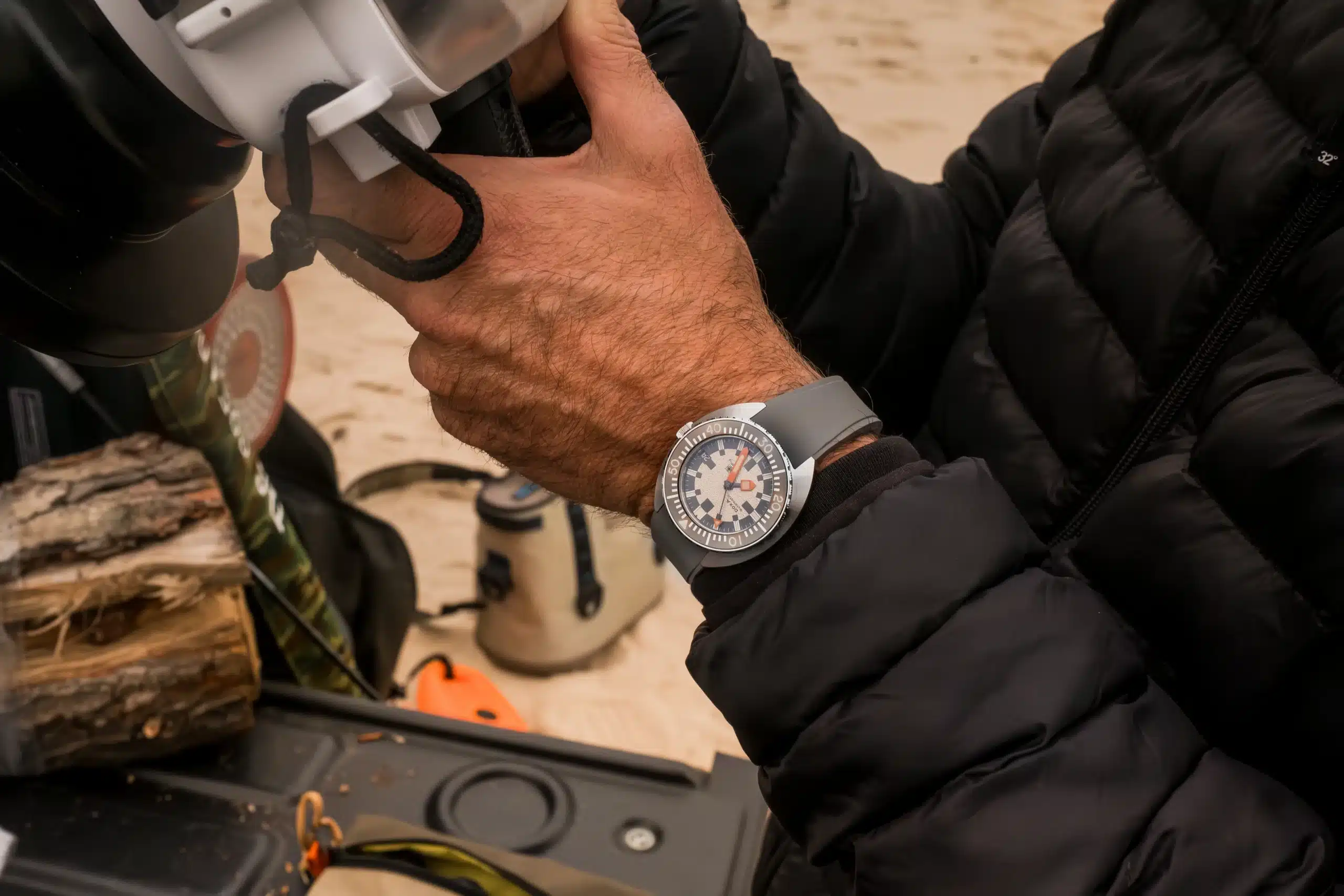
There’s a specific kind of marketing that asks you to pay for wear you didn’t put in yourself. Distressed denim built that whole.. thing. Now it looks like the idea has crept into dive watches, where a raw steel case and a bezel designed to fade get sold as features instead of the natural result of a hard life. I’ve owned a modern Doxa Army, so I came into this one hoping to like it. Instead I keep circling the same question about the Doxa Sub Army 200T for Hodinkee Limited Edition.
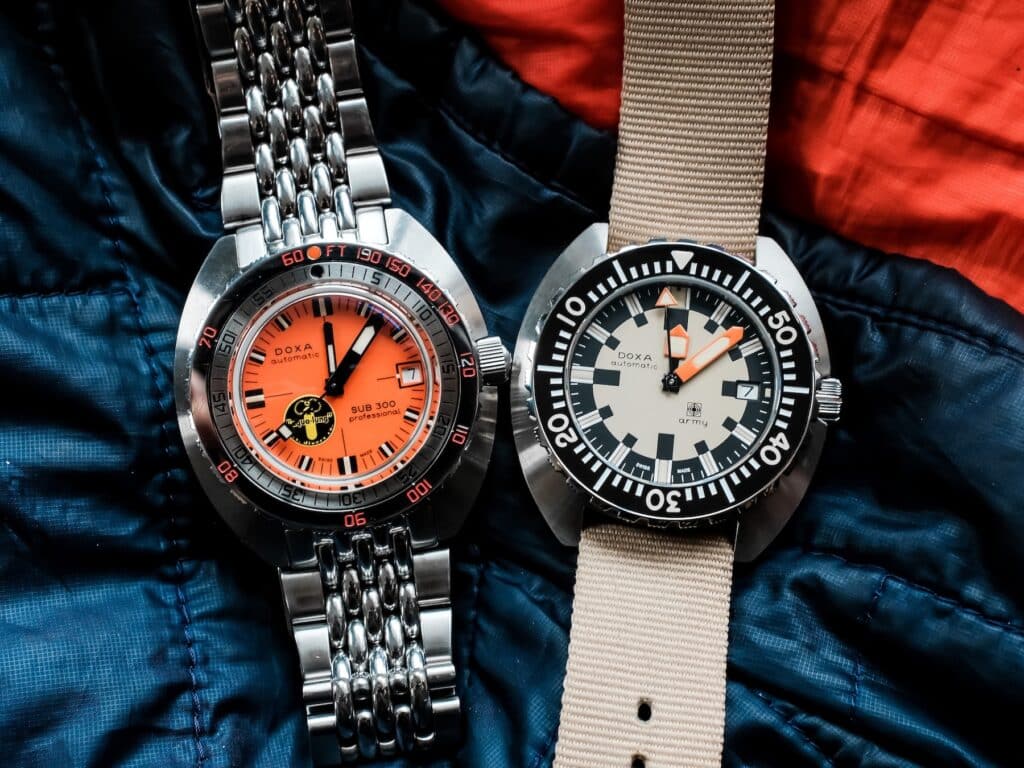
The backstory is very real. According to Watches of Switzerland (and obsessive Doxa historians), Doxa built the original Army in 1969 alongside the Swiss Army, produced it in small batches through 1975, and issued most examples to support staff attached to the country’s elite combat divers rather than the divers themselves. Very few survive. The ones that do tend to show cases worn back to bare metal, which is the exact look this release chases. That history is pretty dang cool, and it’s the reason the raw finish carries any weight at all. The vintage pieces earned their scars over decades of service. This 250-piece edition arrives pre-aged, with a 316L case left raw on purpose and an anodized aluminum bezel picked because it patinas instead of staying put.
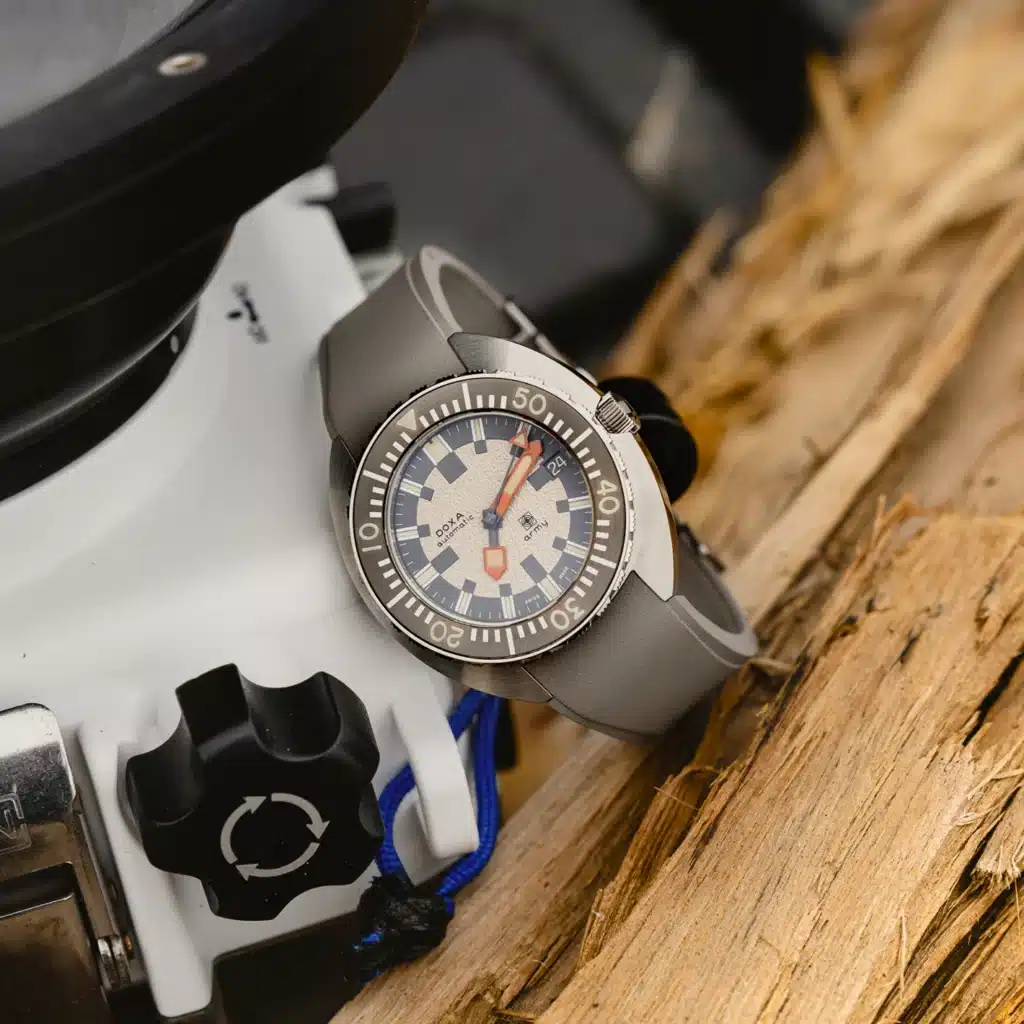
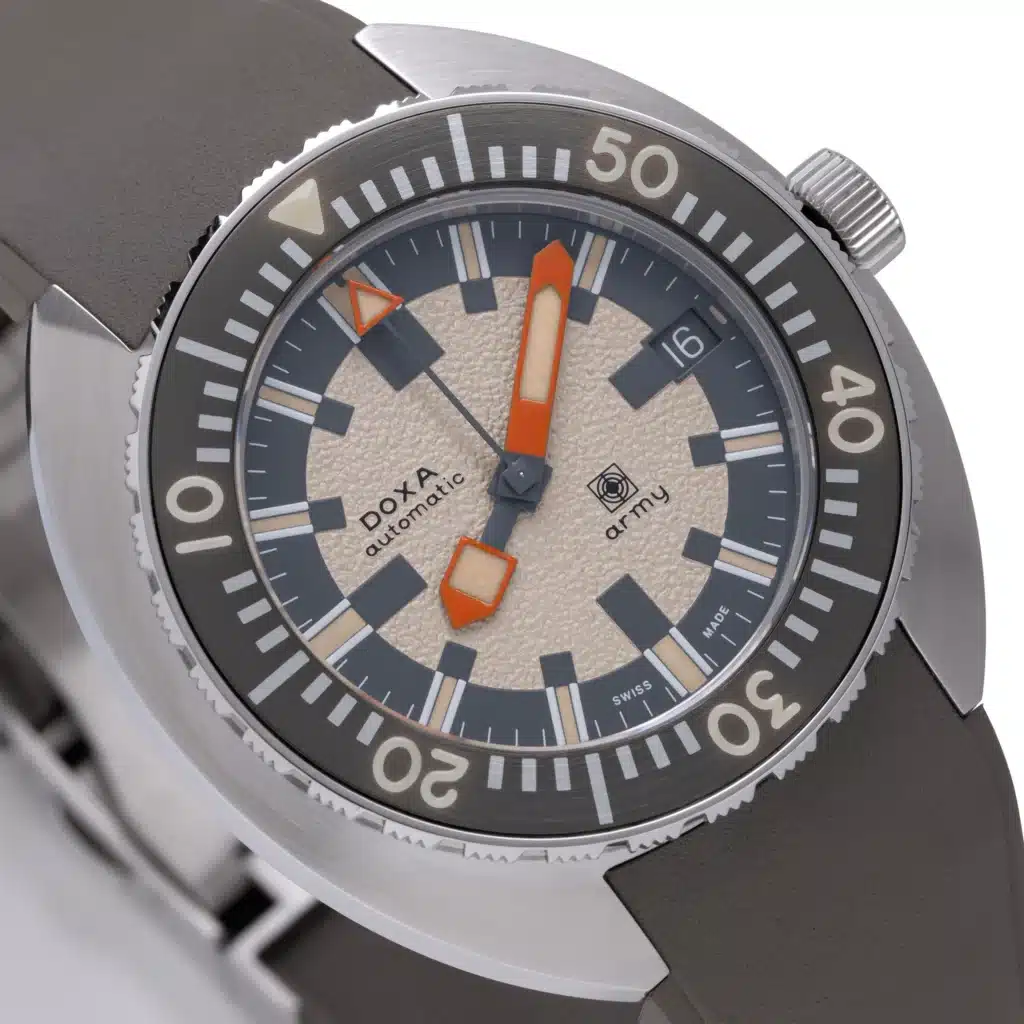
Strip away the wear narrative and everything else makes sense. The watch measures 39mm across and 41.5mm lug to lug, trimming the vintage footprint by roughly ten percent and landing it in comfortable everyday territory. You get a sandblasted tan dial, the Army’s checkerboard minute track, oversized orange hands, and Old Radium Super-LumiNova throughout. Water resistance sits at 200m, down from the 300m my old steel Army delivered, since this version drops the helium escape valve to keep the case slim. A Swiss automatic runs things at 4Hz with a 38-hour power reserve. It ships on a taupe rubber strap with a grey NATO in the box.
Here’s where I land, at least for today. Credit where it’s due, an anodized bezel (also looks pre-worn) that ages is a more honest move than printing a bunch of fake patina onto a dial, and the smaller case fixes the one thing that kept the older Army off plenty of wrists. Still, something about paying two grand for a watch built to look secondhand on day one keeps nagging at me.
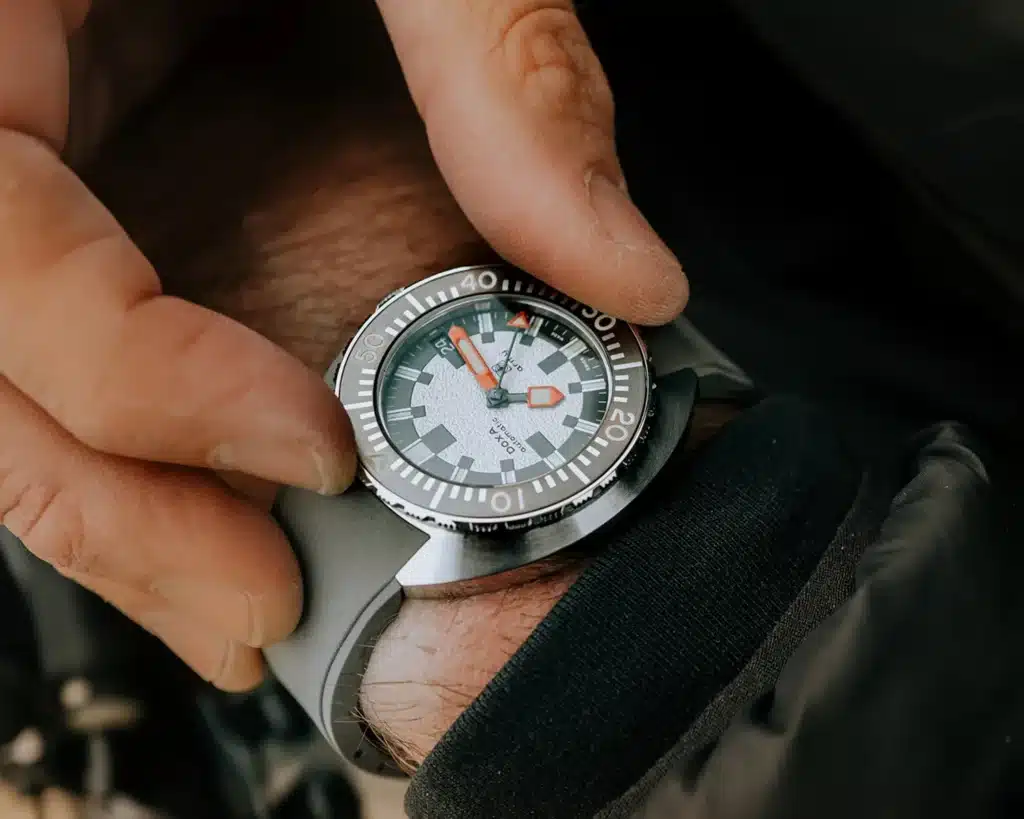
There’s also something a little too “popcorn ceiling” about that dial texture. My steel Army won me over because it made an ultra-rare reference wearable and priced it near a standard Sub 300. The buy-in here feels different, and I’m not sure factory-fresh wear is a story worth the premium.
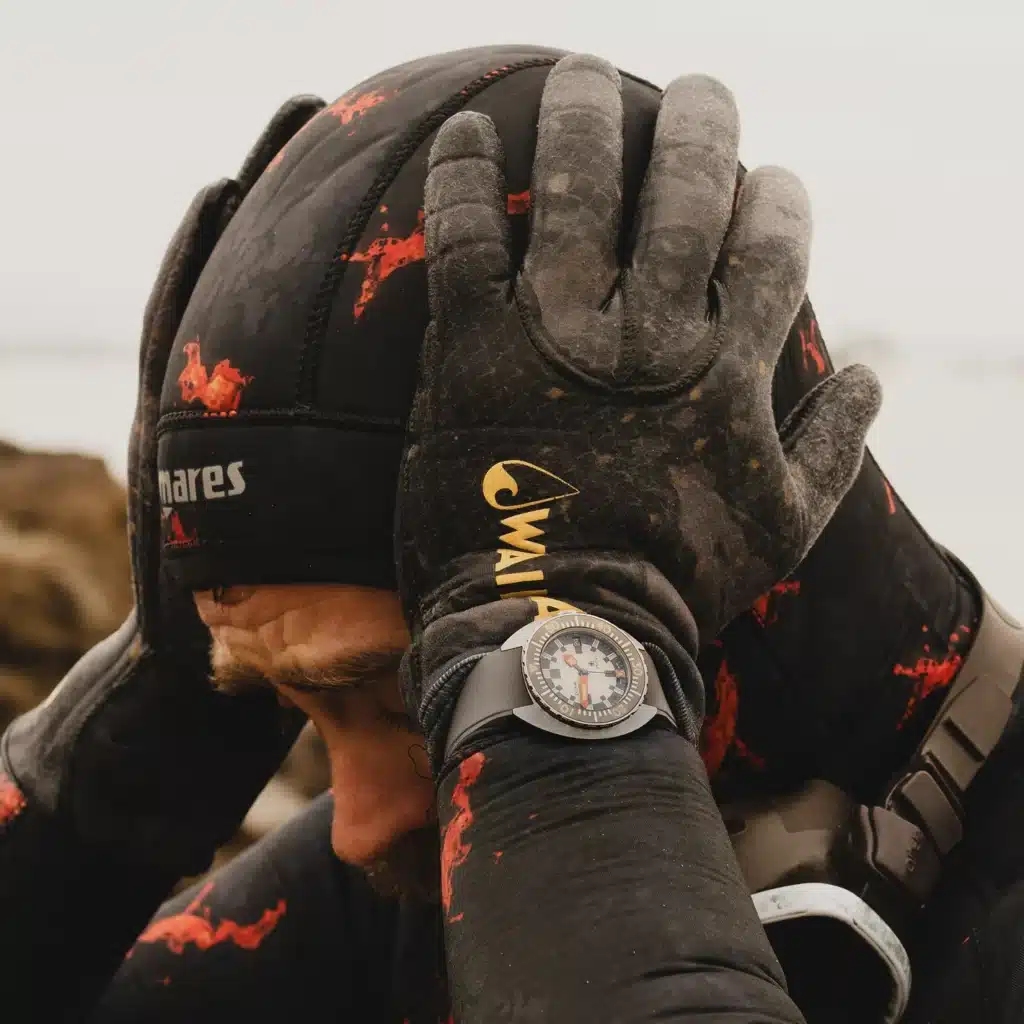
Maybe that doubt fades once it’s on the wrist and the raw steel starts collecting scratches that are actually mine. I ate my words the last time I criticized Doxa’s strategy behind the Army. Or maybe the pitch works better as an idea than as an object you live with. Either way, 250 people get to find out before the rest of us do.

Co-Founder & Senior Editor
Michael Peñate is an American writer, photographer, and podcaster based in Seattle, Washington. His work typically focuses on the passage of time and the tools we use to connect with that very journey. From aviation to music and travel, his interests span a multitude of disciplines that often intersect with the world of watches – and the obsessive culture behind collecting them.
They were gone like a wind! I’d a chance to buy one on time but I didn’t pull the trigger because I don’t like the over-the-top grey color-way or theme of the watch. If it would be a high contrast black or other darker color dial just like the regular Army lineup, I’d be all for it. The iconic orange hands don’t really go well with the overstated grey.
Sold out already? Sheeesh.
Yes, sold out in about less than 20 minutes. They had it scheduled for release at 11AM EDT but people who signed up for the email got an early access around 10:45 AM. So didn’t take long at all for them to be gone forever, Lol. I hope Doxa will release a new, regular, unlimited 39MM case version of Army in the future where we don’t have to fight against the time and get pressurized into making split second decisions into making a sub 2K purchase.