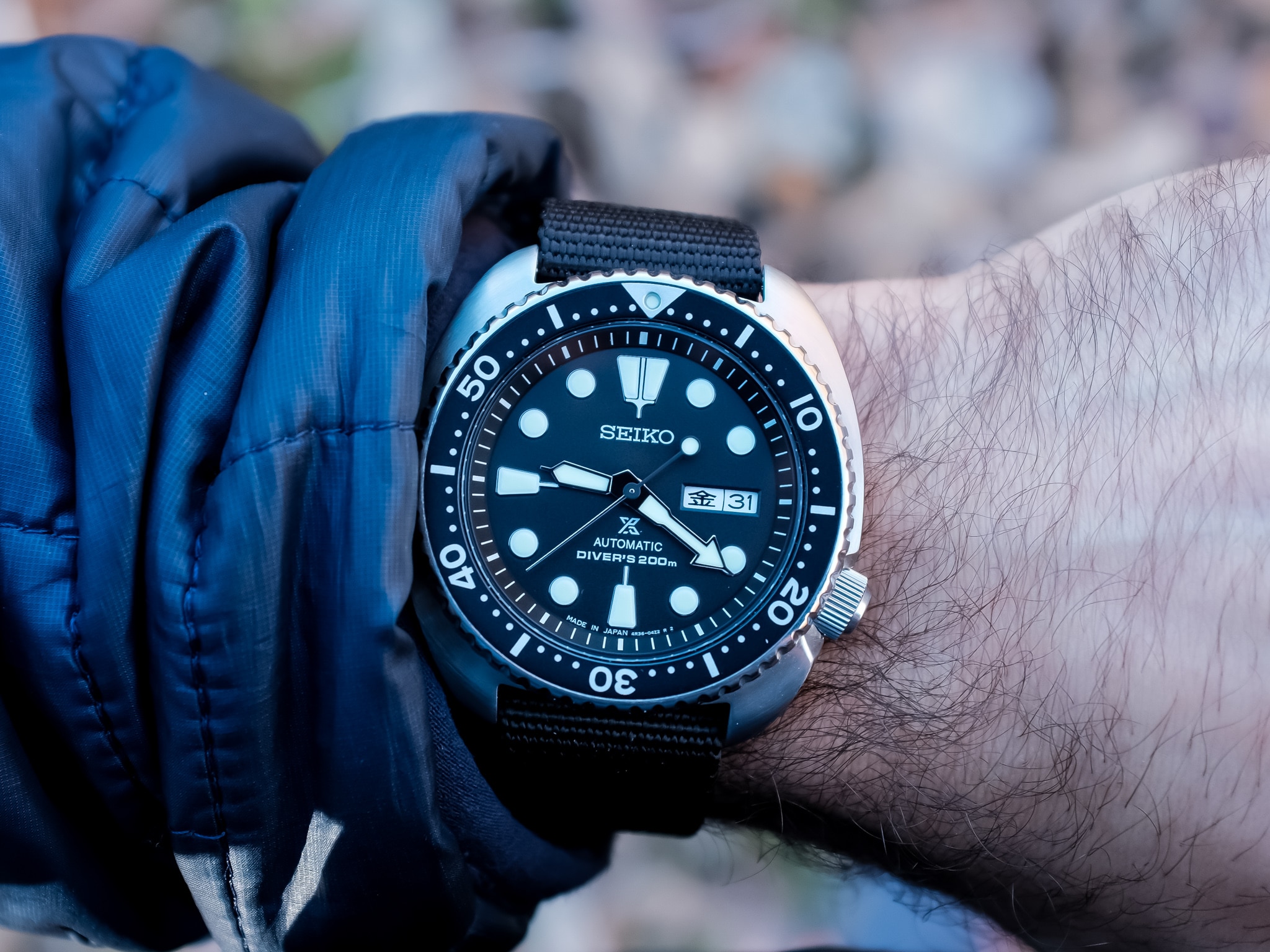
The Seiko Turtle vs Orient Kamasu debate doesn’t only happen before you buy one. It also happens months—or even years—later, when someone asks whether you’d buy the same watch again. That’s when the spec sheet becomes a lot less interesting than your wrist time. You start thinking about the watch that kept finding its way onto your wrist, the one that still makes you smile when you catch it in good light, and the one you never seriously considered selling even after newer releases came along. That’s the question we’re interested in here: which of these two affordable divers is more rewarding to live with once the excitement of a new purchase wears off?
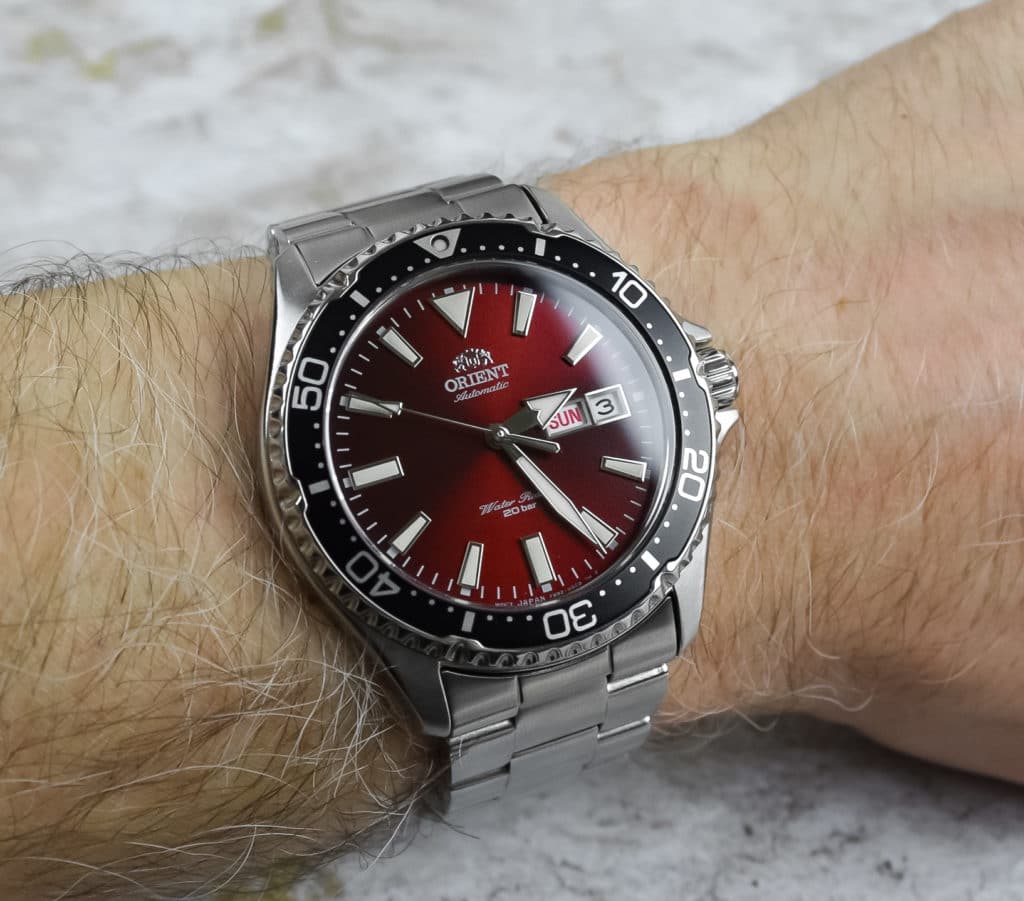
We’ve had more than a decade to figure out that lasting appeal isn’t something you can pull from a specification table. It comes from spending real time with watches, including extended hands-on reviews of both the Seiko Turtle and the Orient Kamasu, then seeing how they hold up after countless strap changes, daily wear, and the inevitable temptation of the next watch purchase. Both have earned loyal followings, but they don’t reward long-term ownership in quite the same way. That’s what we’re here to find out.
Overview and Identity
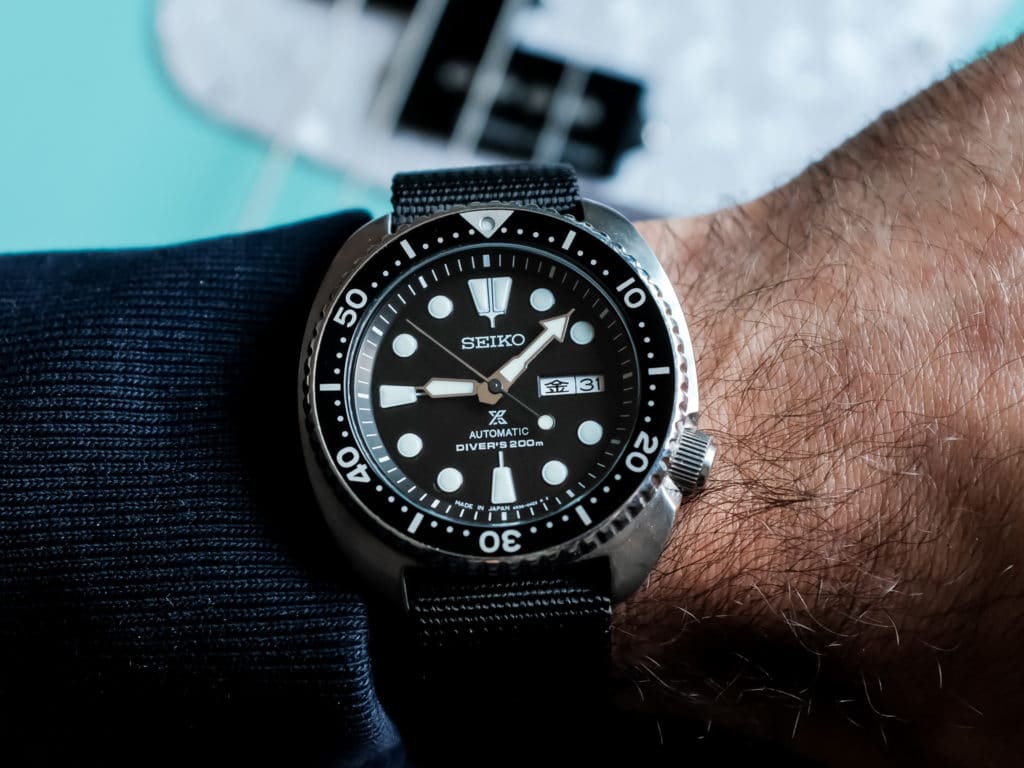
The Seiko Turtle is one of those rare reinterpretations that never feels trapped by its past. When Seiko brought it back in 2016, they resisted the urge to reinvent the original 6309 formula, instead preserving the distinctive cushion case and giving it the modern upgrades enthusiasts had been asking for. As noted in our hands-on review, that decision paid off. The Turtle felt like a diver with genuine staying power, and it’s easy to see why the design has remained relevant long after the initial excitement around the reissue faded.
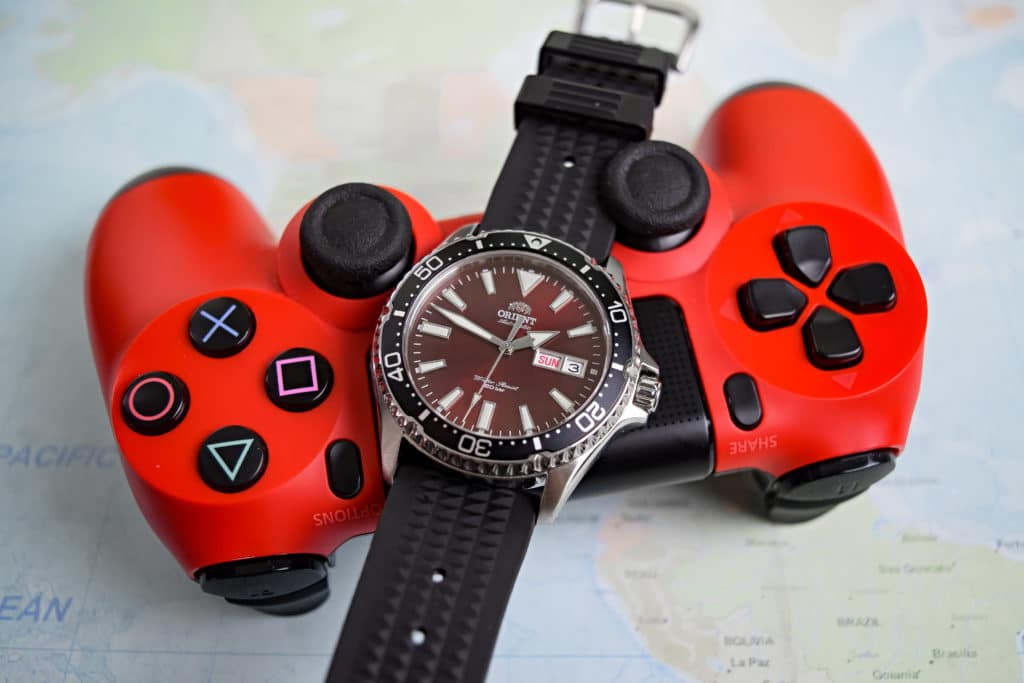
The Orient Kamasu comes from a different mindset. Rather than leaning on heritage, it makes its case through thoughtful execution and exceptional value. During our extended review period, what stood out wasn’t just the hacking and hand-winding movement, sapphire crystal, sharper styling, and 200m of water resistance—it was how complete the package felt at its price. The Kamasu is easier to recommend on paper, but whether it develops the same long-term collector attachment as the Turtle is a much more interesting question.
- The Seiko Turtle is the more iconic enthusiast’s diver, built around enduring character, everyday comfort, and a design that has already proven it can stand the test of time.
- The Orient Kamasu is a more modern, value-driven diver that combines contemporary styling with strong everyday practicality at a very approachable price.
Dial & Wearability: Familiar Character vs Modern Refinement
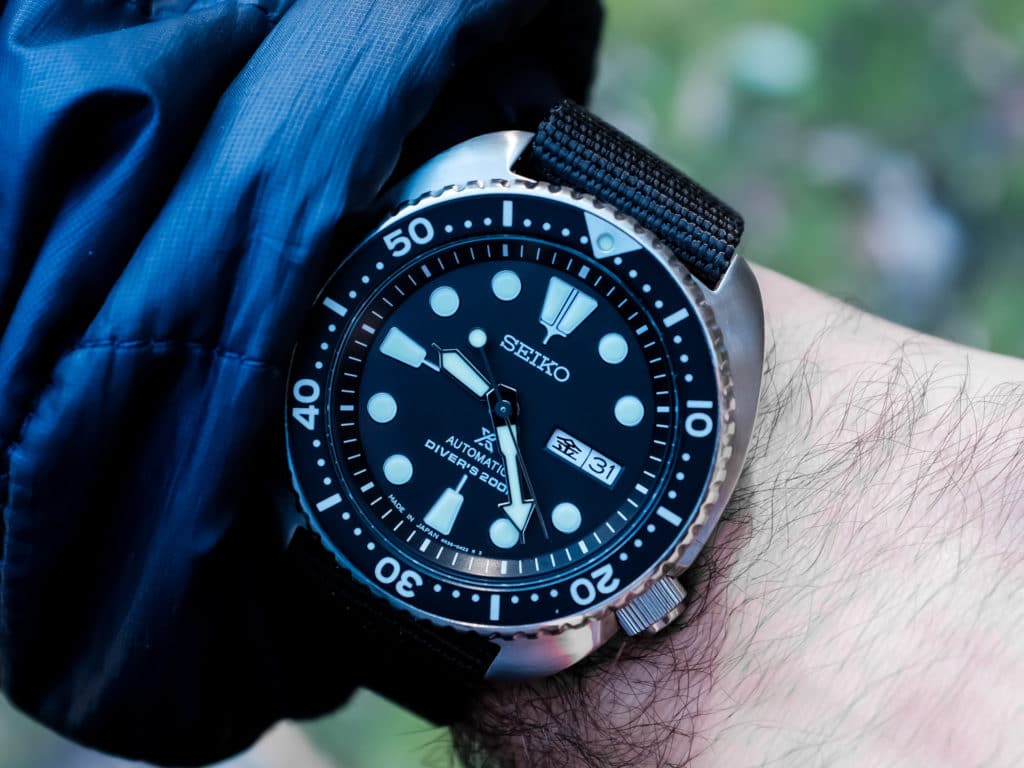
The Seiko Turtle’s dial is a good reminder that Seiko doesn’t need flashy textures or complicated layouts to get our attention. Throughout our testing, the matte black dial stood out for its simplicity. Everything is exactly where you’d expect it to be, making the watch effortless to read at a glance. Collectors can debate “Made in Japan” text under 6 o’clock, K versus J references, or the Kanji day wheel all day long (and they absolutely will). The funny part is that the Kanji wheel is arguably the least practical of the bunch if you can’t read what day it says. None of that changes the ownership experience, though. The Prospex ‘X’ logo also didn’t bother us, although we’ve heard many complain about the same. In short, the Turtle’s appeal comes from a dial that has been doing the simple things quite well for decades.
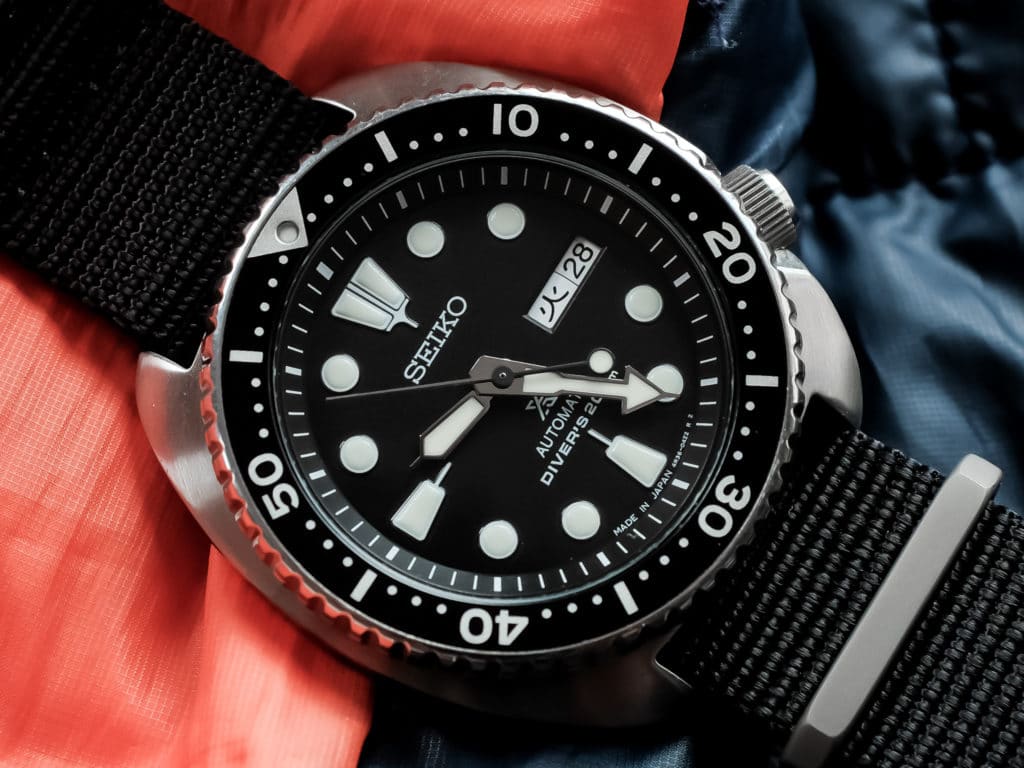
The Turtle’s versatility doesn’t stop at the dial. In our experience, Seiko’s newer soft-vented silicone strap is a noticeable improvement over the older options, with a softer feel, a sturdier buckle, and a steel keeper that makes it enjoyable on its own. That said, the real fun starts once you swap it out. We’ve always felt the Turtle is one of those rare dive watches that looks at home on almost anything—a NATO, canvas, rubber, stainless steel bracelet, or even a Ute strap. Lately, we’ve especially enjoyed it on a titanium NATO, but it’s quite difficult to find a strap combination that doesn’t suit the watch. That adaptability is a big part of why the Turtle stays interesting years after you buy it.
The Orient Kamasu takes a more refined approach. During our review, the dial immediately grabbed our attention, especially the deep red version that shifts into a ruby-like sunburst under direct light. The applied indices appear to float above the dial thanks to the absence of a chapter ring, while the long minute and second hands reach cleanly to the minute track. Even the framed day-date window and Orient logo feel thoughtfully integrated rather than added as an afterthought.
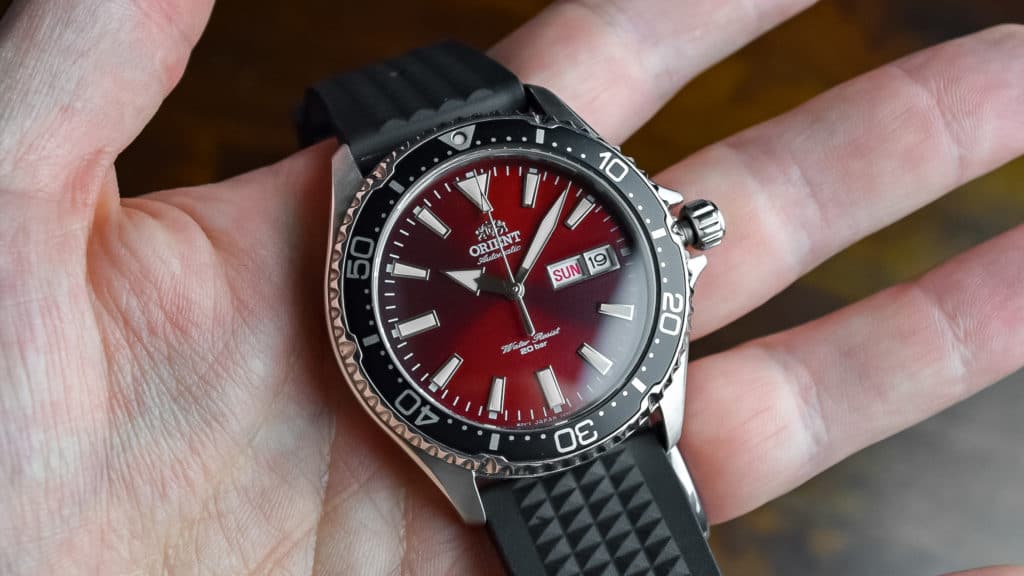
The Kamasu feels more complete straight out of the box. Its fully brushed Oyster-style bracelet suits the watch well, and while the hollow end links and pressed clasp won’t fool anyone into thinking it’s a luxury bracelet, they also don’t get in the way of the experience. Throughout our testing, the clasp stayed secure, the four micro-adjustment positions helped dial in a comfortable fit, and the watch remained well-balanced on the wrist.
- The Seiko Turtle appeals if you enjoy making a watch your own—its understated dial and strap-friendly nature keep it feeling fresh long after the purchase.
- The Orient Kamasu feels more finished from day one, combining a more eye-catching dial with a bracelet that’s comfortable enough to leave as is.
Build Quality & Technical Approach
Both the Seiko Turtle and Orient Kamasu promise a lot for the money, but affordable dive watches have a habit of looking equally impressive until you start living with them. This is where we get into the less glamorous stuff—the movements, bezel feel, lume, case construction, and everyday durability. It may not be the part of the comparison that gets Instagram excited, but it’s often the part that decides which watch is still on your wrist a few years later.
Movements:
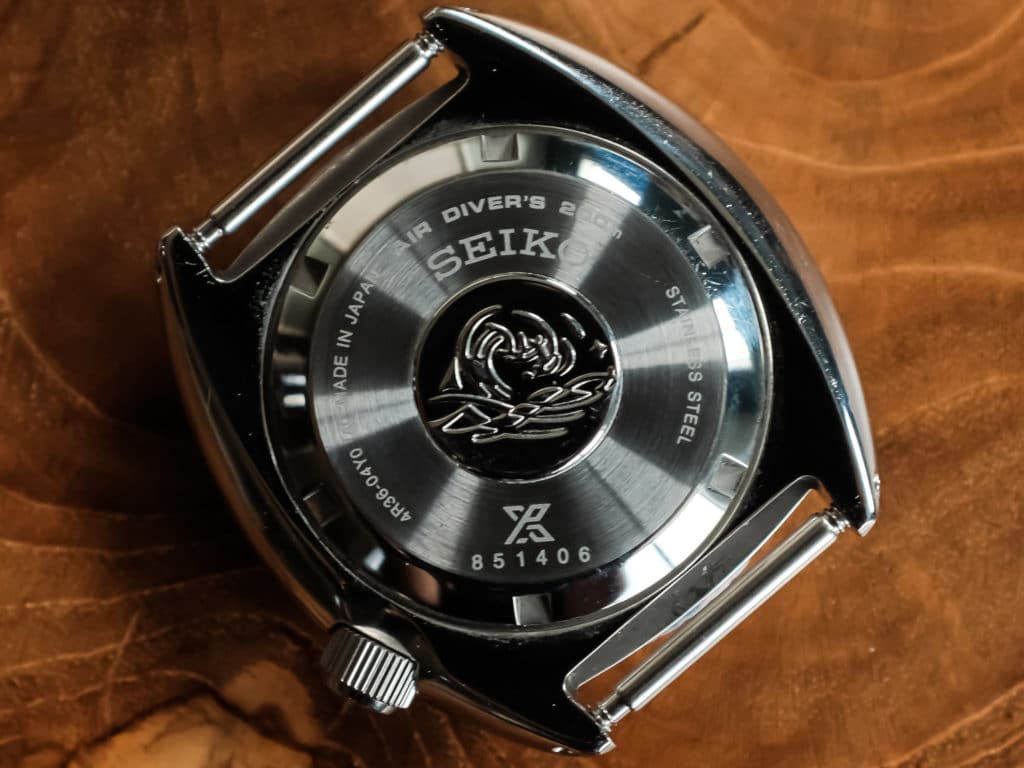
Seiko’s in-house 4R36 automatic movement powers the Seiko Turtle, and its personality matches the rest of the watch: dependable, uncomplicated, and not too concerned with impressing anyone on paper. It’s essentially an evolution of the familiar 7S26, adding hacking and hand-winding while retaining roughly a 40-hour power reserve. Although Seiko’s published accuracy figures (-35/+45 seconds per day) leave plenty of room for variation, our review sample comfortably outperformed those expectations. Some owners have reported less consistent results, but the 4R36 has largely proven itself as the kind of movement you wear rather than worry about.
The Orient Kamasu counters with the in-house F6922, another hacking, hand-winding automatic that feels well-suited to an everyday diver. Built on Orient’s long-running 46943 architecture, it brings a slightly tighter stated accuracy (+25/-15 seconds per day) than the Seiko while beating at the same 21,600 vibrations per hour. During our review, we noted that the movement was still relatively new, so there wasn’t the same depth of long-term ownership data available. Even so, it gave us little reason to doubt its reliability, and it reinforces the Kamasu’s approach of delivering a thoughtfully specified package without overcomplicating the ownership experience.
Case Construction & Finishing:
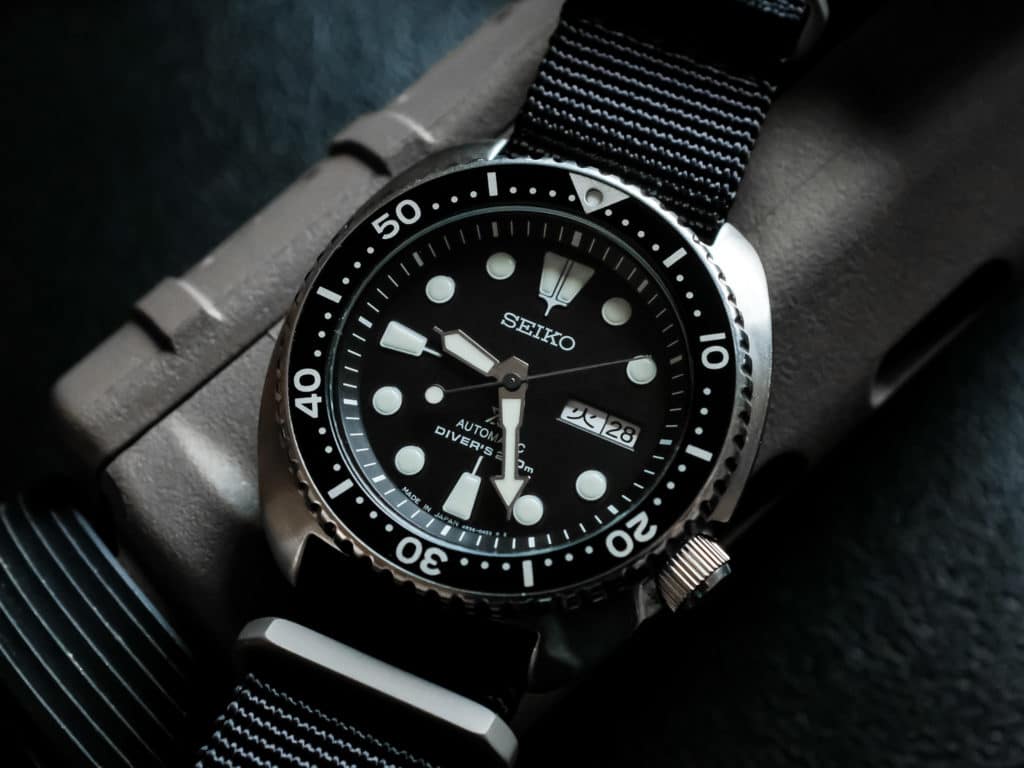
The Turtle’s case is proof that dimensions don’t always tell the whole story. On paper, its 44.3mm diameter and 14mm thickness sound imposing, yet during our testing it consistently wore smaller than expected—a bit of that familiar “Seiko magic” at work. The slightly longer lugs compared to the original 6309 are noticeable, but we never found them cumbersome, even on a 6.75-inch wrist. In fact, we still prefer this cushion case over the 6105 “Willard” style because it strikes a better balance between presence and everyday comfort. It has plenty of wrist presence without constantly reminding you that it’s there.
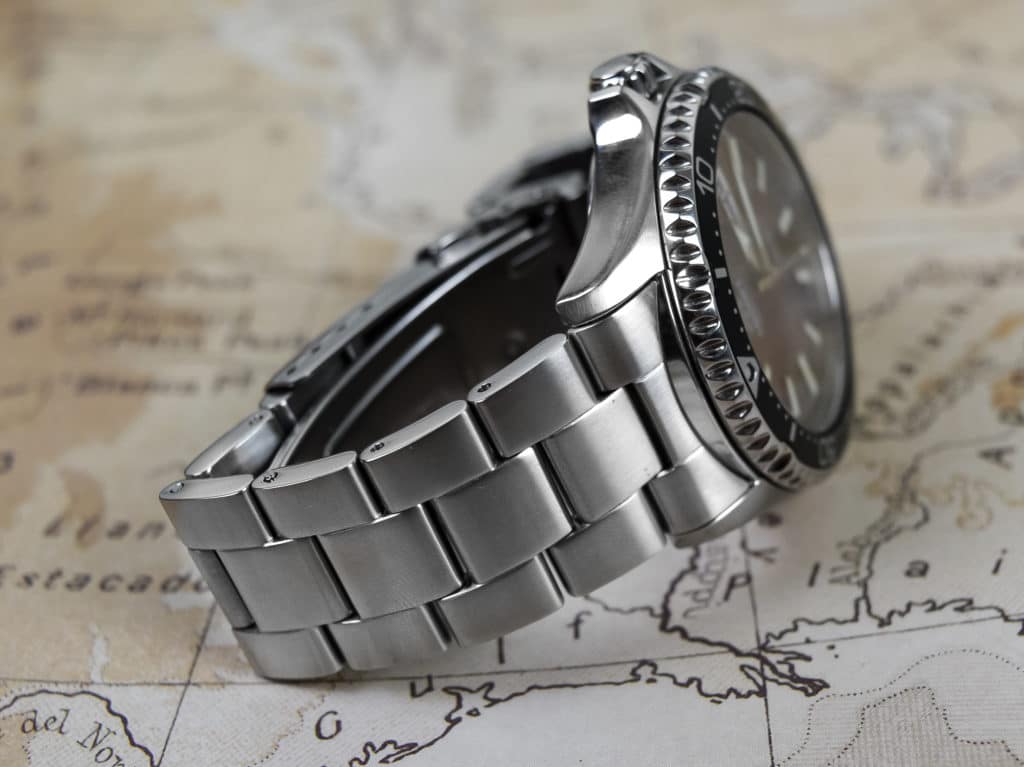
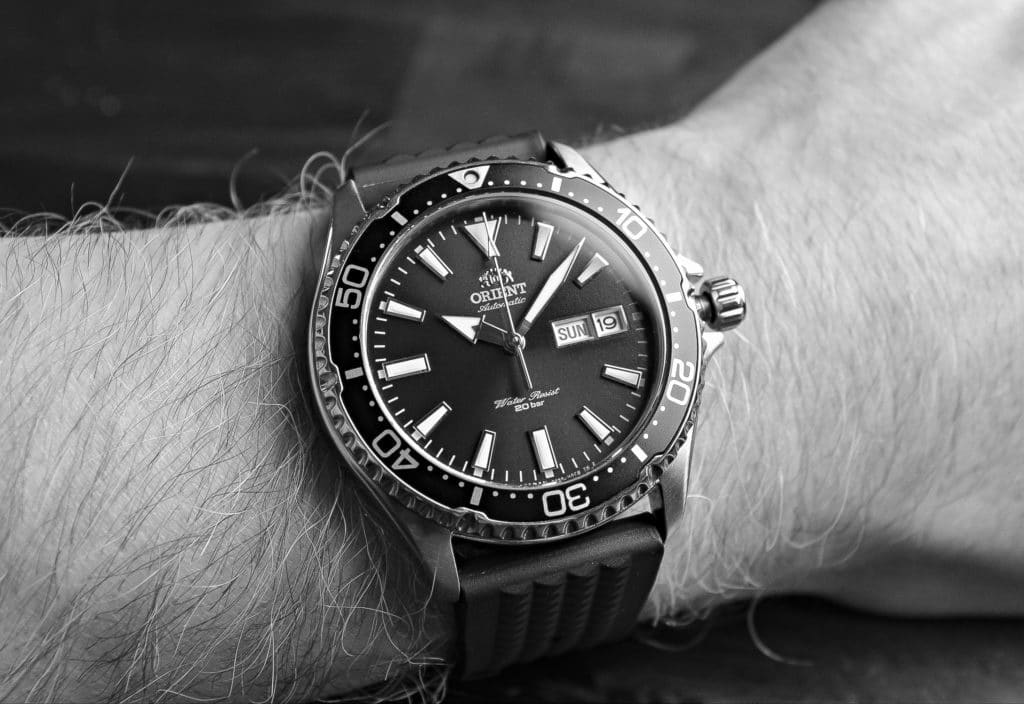
The Orient Kamasu takes the more conventional route. Its 41.5mm case lands comfortably in the middle ground, making it an easy recommendation for a wide range of wrist sizes. The finish is straightforward rather than elaborate, with brushed surfaces across the top and polished case sides that add enough contrast to keep things visually interesting. The downward-curving lugs and approachable 13mm thickness also help the watch sit comfortably throughout the day. Our biggest gripe remains the crown, though. It’s smaller than we’d like, and the crown guards don’t leave much room to grip it, making screwing it down more fiddly than it needs to be.
Crystals & Bezels:
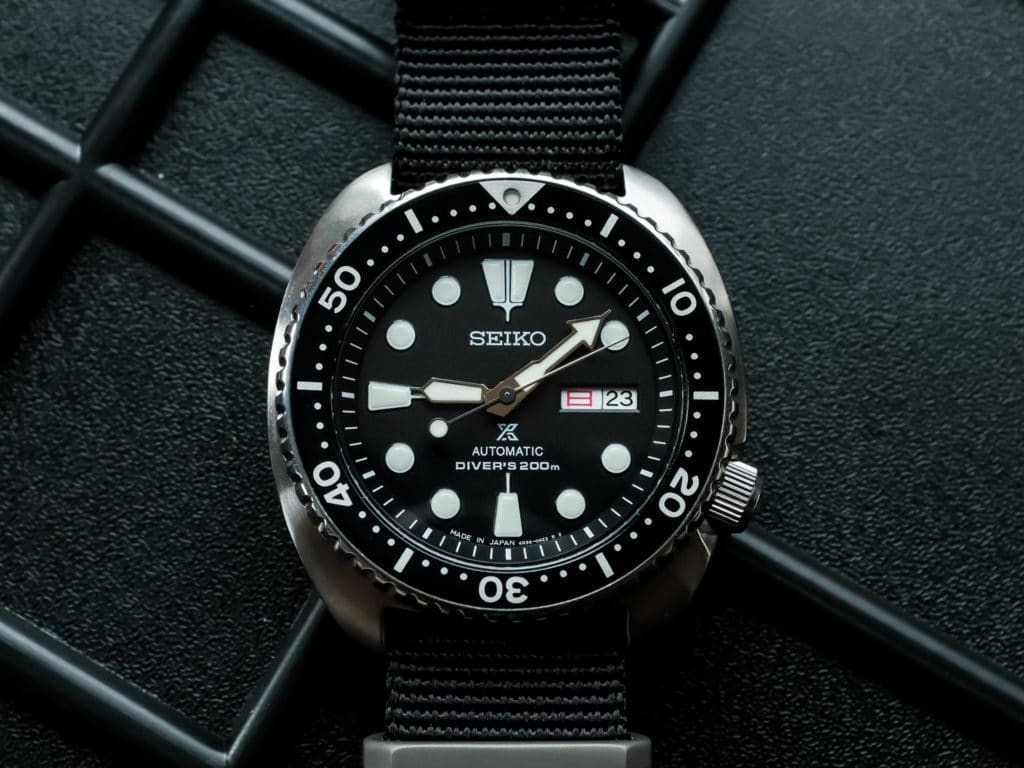
The Seiko Turtle sticks with Hardlex instead of sapphire, and despite the internet’s obsession with that choice, it never became an issue during our time with the watch. We’d still welcome sapphire at this price, but Seiko’s Hardlex has proven durable enough for everyday wear. The bezel tells a more mixed story. Its smooth action is satisfying to use, yet our review sample suffered from the all-too-familiar Seiko bezel alignment issue. It’s frustrating because the bezel itself feels well executed—the aluminum insert and smooth rotation deserve better quality control than the occasional off-center alignment.
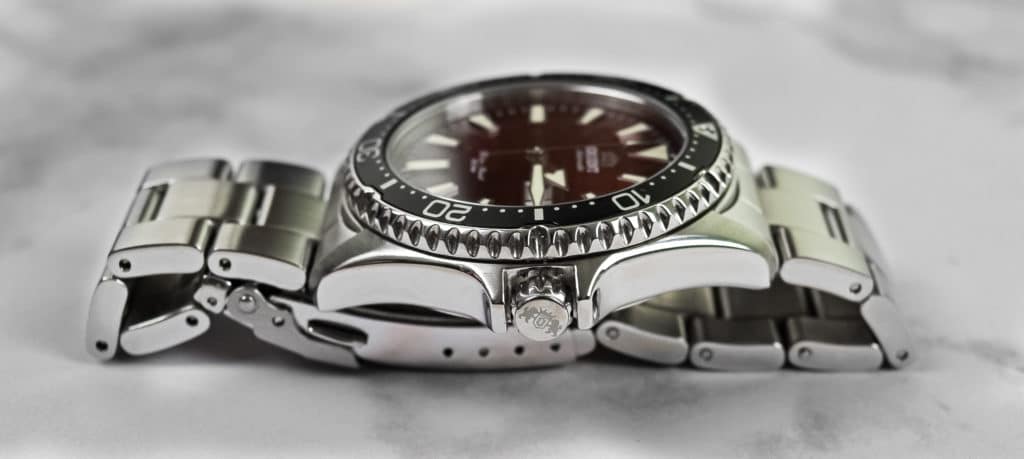
The Orient Kamasu gains an immediate edge with its flat sapphire crystal, and this is one area where the value proposition becomes hard to ignore. At this price, you simply don’t find sapphire on many competing Seiko divers. The unidirectional 120-click bezel also leaves a positive impression. While the coin-edge grip could be more pronounced, the action remained smooth and consistent while testing, making it easy to operate despite the slightly shallow grip. Like the Turtle, it uses an aluminum bezel insert, but the overall execution feels a little more polished straight out of the box.
Water Resistance & Lume:
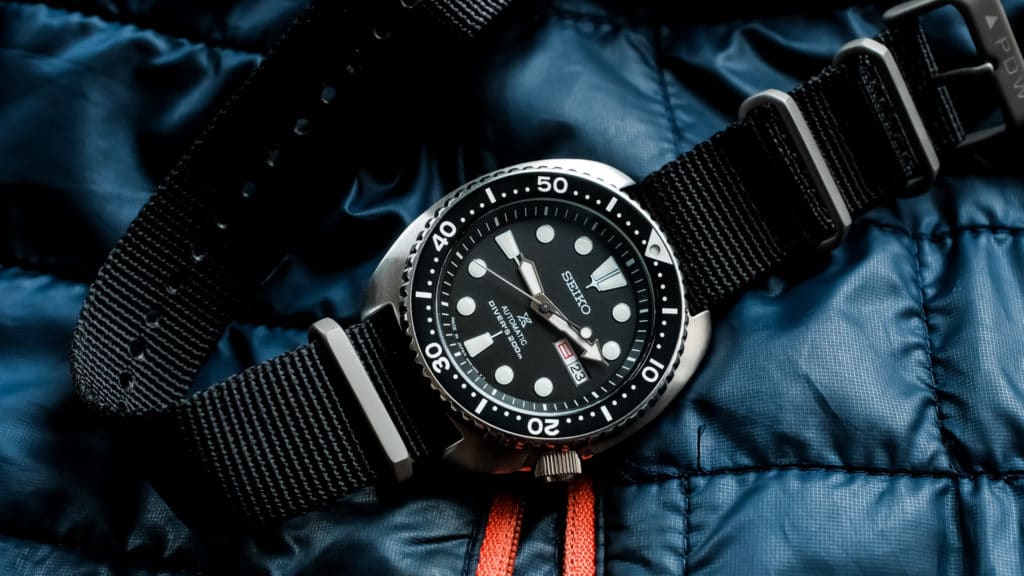
The Seiko Turtle doesn’t ask you to baby it. Its asymmetrical case protects the screw-down crown while helping deliver 200 meters of water resistance, making it feel every bit like the capable dive watch it’s meant to be. The lume is equally reassuring. In regular use, the oversized Lumibrite-filled hands and indices were virtually impossible to confuse at a glance, even in low light. It’s the kind of straightforward legibility that quietly earns your trust instead of trying to impress you with marketing claims.
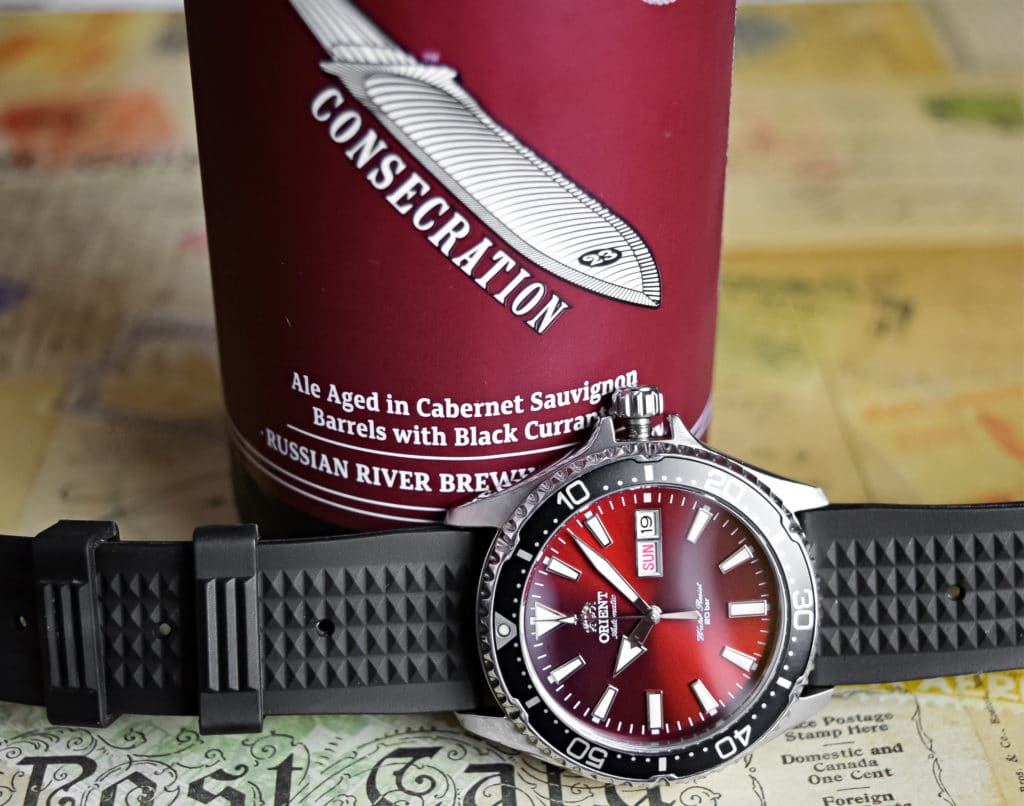
The Orient Kamasu matches the Turtle with a screw-down crown and the same 200-meter water resistance, so there’s little to separate them in terms of everyday capability. What genuinely surprised us was the lume. We described it as “killer” in our review for good reason—it charges quickly, shines intensely, is very responsive, and can comfortably go toe-to-toe with Seiko’s reputation in this department. If you assumed the Turtle would walk away with an easy lume victory, the Kamasu has other ideas.
- The Seiko Turtle prioritizes proven movement reliability and a distinctive case design, though you’ll have to accept Hardlex and the occasional bezel-alignment gamble.
- The Orient Kamasu delivers the stronger value package on paper, pairing sapphire, excellent lume, and a smoother overall execution with only a slightly fiddly crown holding it back.
Cost Considerations
The Seiko Turtle has become one of those increasingly rare watches that still feels like a bargain despite everything else around it getting more expensive. We noted how modern Seiko divers have steadily climbed toward—and sometimes beyond—the $1,000 mark through King Turtle, Save the Ocean, PADI, and other special editions. Yet the standard Turtle (SRPE93 version) remains widely available for around $370, making it the one we’d continue recommending. It delivers nearly everything that made the original so appealing without nudging buyers toward the pricier variants, and it’s one of the few affordable divers we can confidently see lasting a lifetime.
The Orient Kamasu keeps up the pressure. The official Orient Watch USA store currently lists the red-dial model at $375, putting it in essentially the same conversation as the standard Turtle while offering features like a sapphire crystal that many buyers expect to cost considerably more. If your goal is to stretch every dollar as far as possible, the Kamasu makes a very compelling case.
Final Thoughts: Which Affordable Diver Ages Better?
After working through the Seiko Turtle vs Orient Kamasu comparison, our answer is straightforward: the Seiko Turtle ages better. That isn’t because it offers more on paper. The Kamasu makes a compelling case with its sapphire crystal, excellent lume, capable in-house movement, and polished out-of-the-box package.
The Turtle wins here because we’ve already seen how well it holds up as an ownership experience, not just a purchase. Its distinctive cushion case still feels fresh, it’s enjoyable to wear on different straps, and it has earned a reputation that goes beyond specifications. We can nitpick the Hardlex crystal, the generous accuracy tolerance, or the occasional bezel alignment issue, but none of those have stopped it from becoming one of the defining affordable dive watches of the last decade.
So here’s the verdict: choose the Seiko Turtle if you want the affordable diver that’s more likely to reward years of ownership rather than just the first few weeks. Choose the Orient Kamasu if your priority is getting the strongest value package today. If we were buying one to wear for the next five or ten years, we’d still reach for the Turtle.

Co-Founder and Senior Editor
Kaz has been collecting watches since 2015, but he’s been fascinated by product design, the Collector’s psychology, and brand marketing his whole life. While sharing the same strong fondness for all things horologically-affordable as Mike (his TBWS partner in crime), Kaz’s collection niche is also focused on vintage Soviet watches as well as watches that feature a unique, but well-designed quirk or visual hook.
Totally agree Kaz have both watches,but the turtle just gets over the line
Turtle always makes its way back in to my collection!
Hard to argue, though as you said both are great values. I had a PADI Turtle for a bit and it was great but I already had the Vampire/Monster (SRP 313), and to me that watch is my forever diver, even over pricier options from Swiss brands. Nothing else looks like it and it’s such a cool look. YMMV of course.
Great reviews thanks