If you’ve spent any time circling Omega, you’ve probably run into the same decision that messes with a lot of collectors: Omega Speedmaster vs. Omega Seamaster. One side pulls you toward the Moonwatch, with its hand-wound ritual and the kind of enthusiast recognition that follows you around, whether you asked for it or not. The other side points to the Seamaster, where 300 meters of water resistance, automatic or quartz convenience, and a more carefree sport-watch personality make a strong case for daily wear. After 10 years of reviewing watches, and after spending real wrist time with multiple models from both of these collections, we’ve learned that this comparison gets less simple once you stop staring at icons and start wearing them.
So that’s the goal here: not to crown the “better Omega” in some abstract forum-debate sense, but to sort out what kind of wearer each model line actually suits, and which suits most people better. We’ll look at where the Speedmaster’s chronograph-first personality feels rewarding, where the Seamaster’s sport-watch practicality starts to matter, and where both lines ask you to live with their quirks. By the end, you should have a clearer sense of which Omega line fits your wrist, your routine, and your tolerance for the little ownership details that only show up after you’ve worn the watch for more than a weekend.
Collection Identity & Philosophy: Chronograph Ritual vs Sport-Watch Readiness
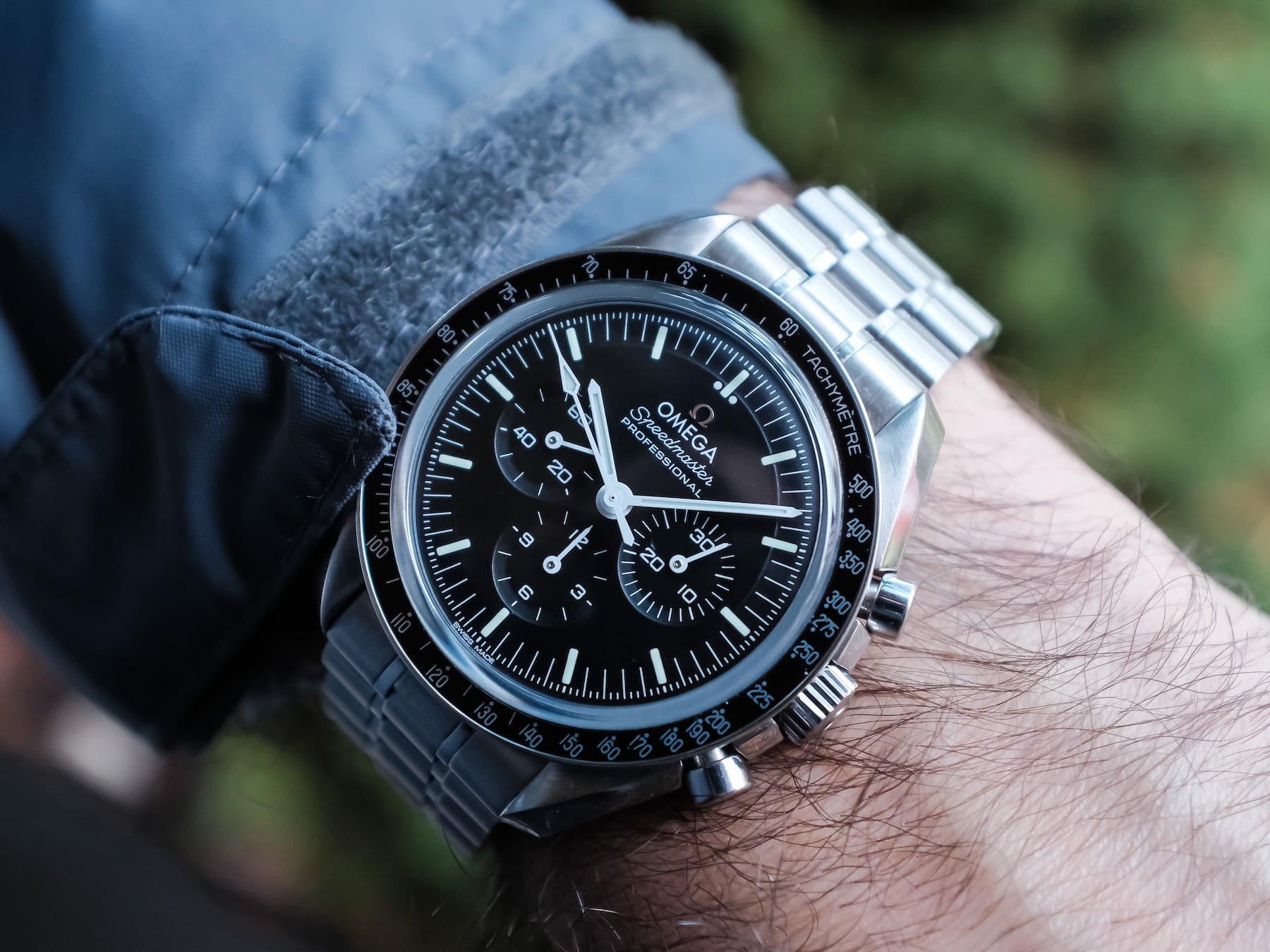
The Speedmaster line is the more emotionally charged side of this comparison. Its appeal sits in the chronograph layout, the hand-wound rhythm, the black-and-white dial language, and the feeling that you’re wearing one of Omega’s most recognizable ideas. It asks for a little more from you, but that’s also part of why people get attached to it. You wind it, use the pushers, notice the subdials, think about the strap, and generally engage with it in a way that feels more deliberate than automatic. And that philosophy shows up across the collection. The standard Moonwatch gives you the clearest version of the Speedmaster identity, while smaller or more vintage-leaning references bring the same basic idea into slightly easier-wearing territory. The Reduced adds another wrinkle by making the Speedmaster feel more approachable and convenient, even if it doesn’t scratch the same purist itch. Different executions, same broader point: the Speedmaster is at its best when you want the watch to feel like something you participate in, not something you forget is there.
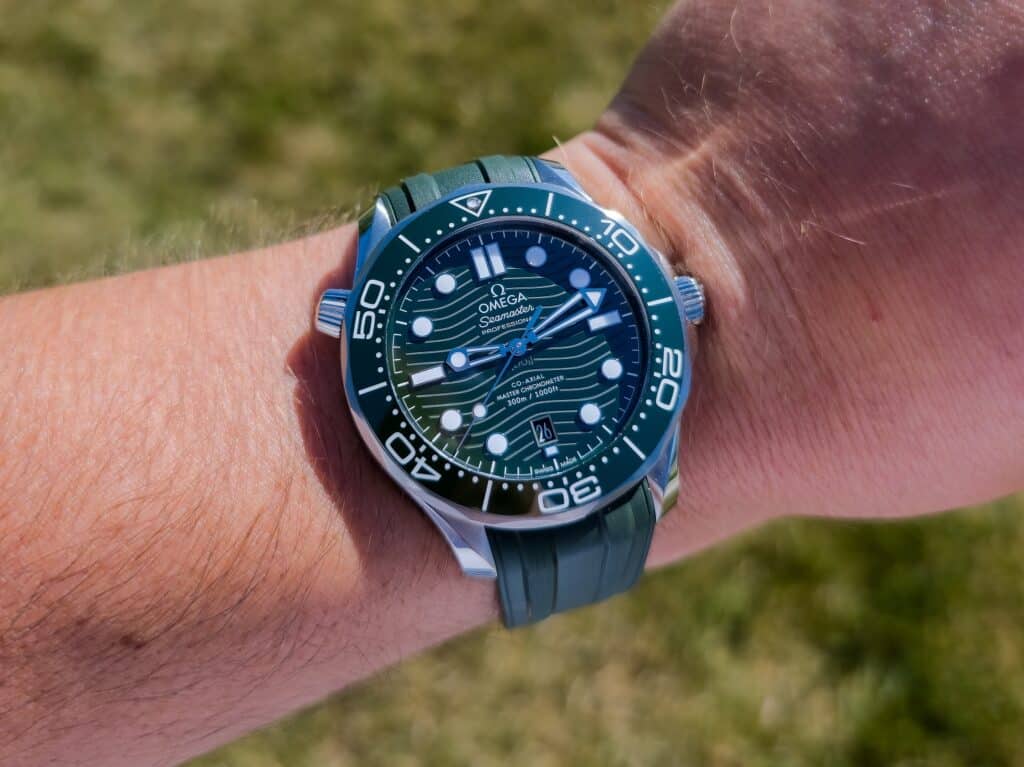
The Seamaster line comes from a more practical place. Its identity is tied to water resistance, sport-watch confidence, automatic or quartz convenience, and the ability to move through more of normal life without much ceremony. It can still feel premium, and some versions are far more polished than the old “tool watch” label suggests, but the collection’s larger personality is easier to understand. It’s the Omega line you reach for when the day might involve rain, travel, a pool, a sweaty walk, or anything else that makes you glad you didn’t choose the more delicate-feeling option. For instance, the modern Diver 300M leans into luxury sport-watch territory, older neo-vintage references bring a cleaner, more tool-like feel, and the quartz-era models prove that the Seamaster doesn’t always need mechanical romance to make sense.
If the Speedmaster is about interaction, the Seamaster is about readiness. It’s still an enthusiast watch, but it doesn’t ask you to build your day around its personality. So before getting into wearability, maintenance, design, and daily ownership, that’s the split.
Dial & Wearability: Clean Chronograph Balance vs Dive-Watch Muscle
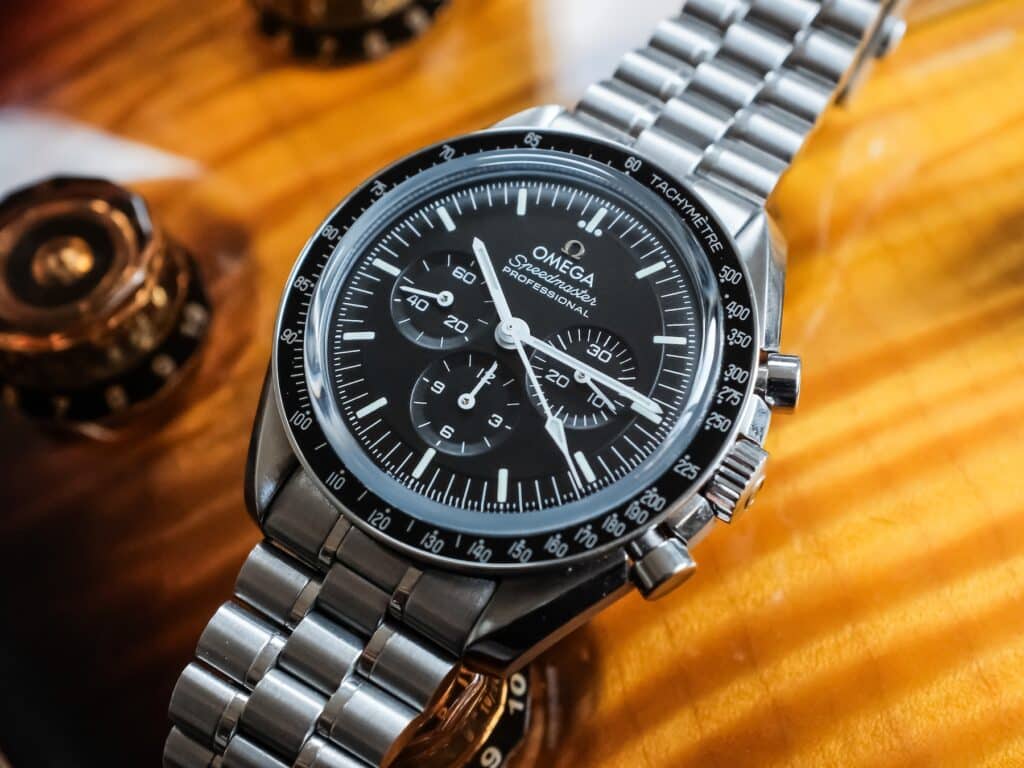
The Speedmaster line has a cleaner, more structured way of presenting itself on the wrist. The modern Moonwatch gives you the most familiar version of that: crisp black-and-white contrast, balanced subdials, sharp printing, and a dial that doesn’t feel crowded despite carrying a chronograph layout. The stepped dial adds a little depth without making the watch feel dressed up, and on the sapphire version we reviewed hands-on, the applied logo gives the face a small lift without turning it into jewelry. The bigger shift, though, is the bracelet. The newer Speedmaster bracelet tapers more dramatically, articulates sooner, and helps the watch head sit lower instead of feeling like it’s perched on the wrist. Speedmasters have always been easy to throw on straps, but the latest bracelet finally feels like part of the watch rather than the thing you tolerate until a NATO arrives.
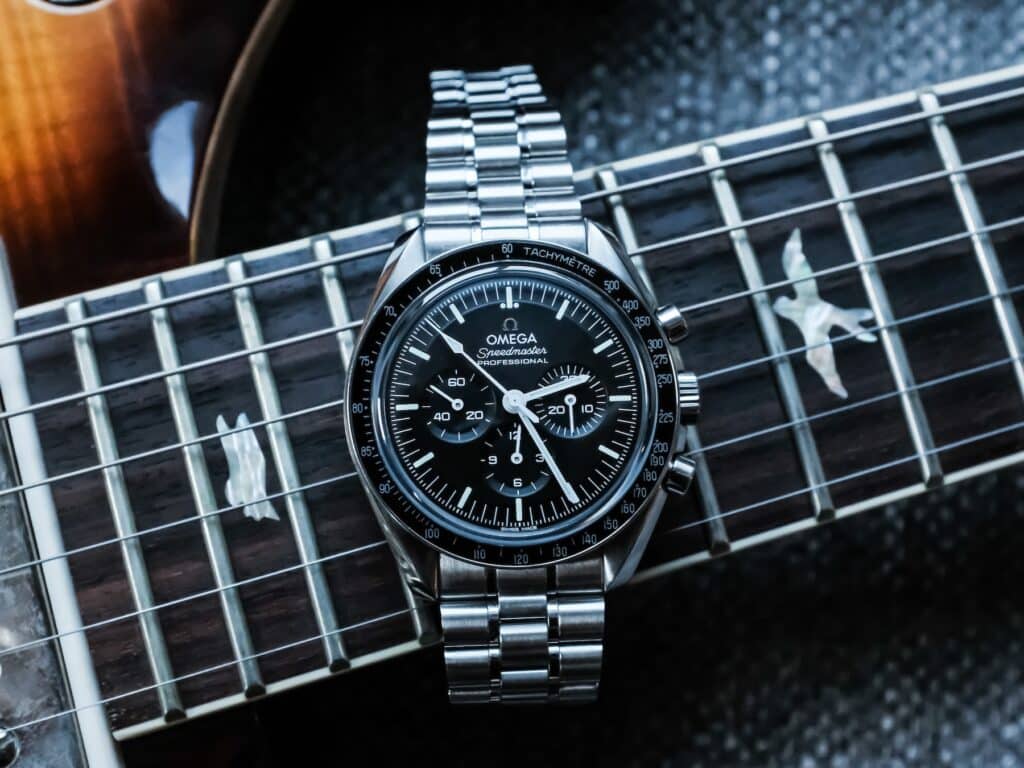
That Speedmaster dial language changes once you move away from the standard Professional. The First Omega in Space brings a glossier dial, recessed subdials, and silver alpha hands that push the line into a more vintage, slightly dressier mood. It looks great when the light catches the dial, but the thinner polished hands can lose some contrast compared with the Professional’s more straightforward white handset. The strap situation is less charming. The stock brown leather strap feels underwhelming for the watch, and the 19mm lug width adds a little unnecessary annoyance, though 20mm NATOs work quite well. The Reduced goes another direction again: the subdials are pushed farther out into the indices, the running seconds move sides, the indices have minute markers below them, and the bracelet’s 18mm width with limited taper can make the watch wear a bit larger than expected. It’s still very much a Speedmaster, but it proves the collection’s wearability depends heavily on the exact branch of the family you choose.
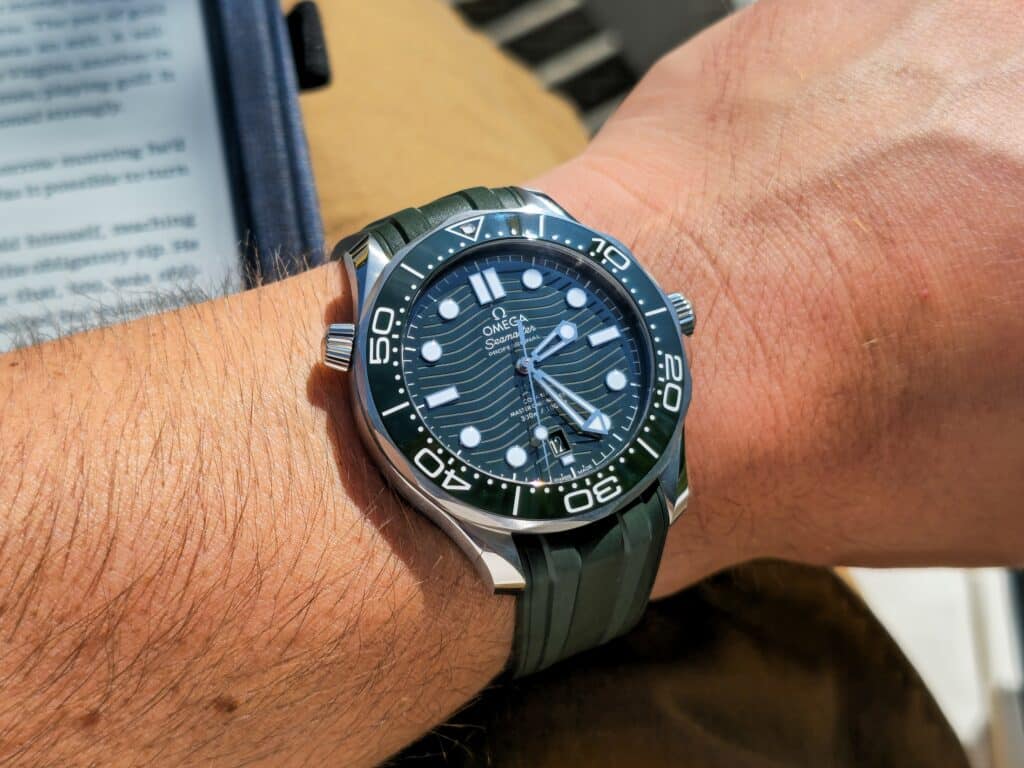
The Seamaster line is more visually active. As mentioned in our dedicated review, the modern Diver 300M leans hard into the wave dial, skeleton hands, polished accents, and a wrist presence that feels more extroverted than the Speedmaster. The horizontal wave pattern can make the watch look wider on the wrist, but the proportions still come together well enough that it doesn’t feel clumsy. The dial has a glossy, almost porcelain-like shine, with the engraved waves adding texture you notice immediately. The trade-off is legibility: the skeleton hands are part of the Seamaster identity at this point, but they give up some instant readability against the markers. On rubber, though, the modern Seamaster makes a lot more sense. The strap is soft, well-finished, and suits the watch’s sportier personality, even if the hole spacing could be better. The bracelet, by comparison, feels like Omega confusing weight with quality, especially since it does not taper from the lugs.
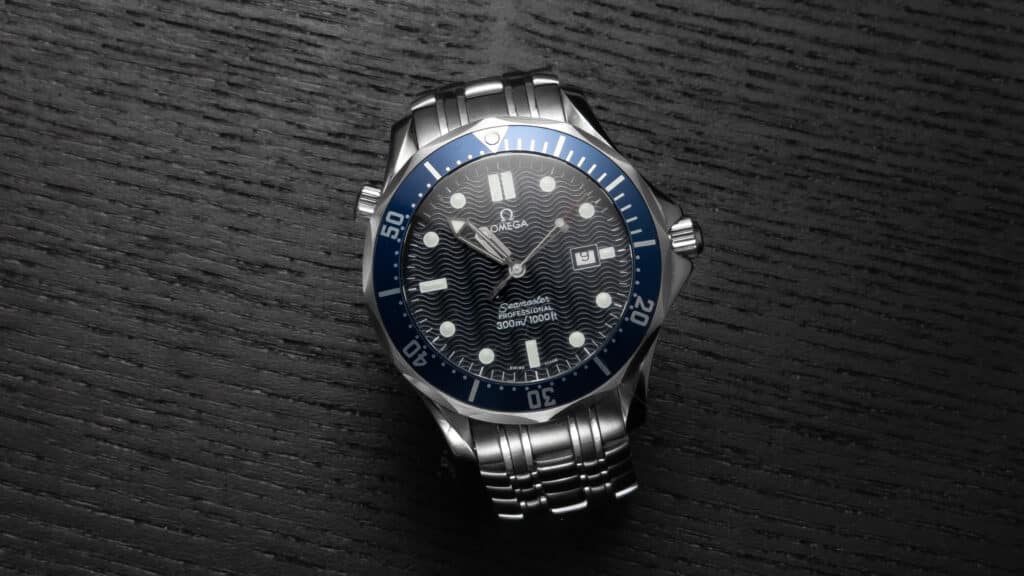
Older Seamasters show why the line has such a loyal following beyond the current Diver 300M. The 2254.50 keeps the wave dial in black but makes it more subtle, with the pattern disappearing or coming alive depending on the light. Its solid sword hands are easier to read than the skeletonized hands used on many Seamaster references, and the color-matched date wheel keeps the dial from feeling interrupted. The 3-link bracelet articulates well and wears comfortably, though the lack of microadjustment and the way it meets the lugs keep it from feeling seamless. The quartz 2541 brings a softer ‘90s version of the Seamaster formula: a muted wave dial, readable skeleton hands, a red-tipped second hand that adds just enough color, and a bracelet that looks excellent but can be a nightmare to size due to the collar-and-pin mechanism. A NATO may photograph well on it, but that model feels most at home on its bracelet. Very Omega: beautiful solution, mildly irritating execution.
- The Speedmaster line offers a cleaner chronograph balance, better strap flexibility, and a more controlled wrist presence, though some variants bring hand-legibility and bracelet-width quirks.
- The Seamaster line gives you more dial texture, a stronger visual personality, and excellent comfort when the strap or bracelet works. That said, it can also be busier and more fussy than the “daily diver” label suggests.
Build Quality & Technical Approach
Both the Omega Speedmaster and Omega Seamaster are built with the kind of confidence you expect from Omega, but they express it in very different ways. That difference shows up in the movements, case finishing, crystals, bezels, water resistance, and lume — all the technical stuff that sounds boring until it starts shaping how the watch feels on the wrist, how often you worry about it, and where each line makes the most sense in daily life.
Movements:
The Speedmaster line keeps its mechanical appeal tied to interaction. The modern 3861 Moonwatch moves the formula forward with a hand-wound Co-Axial chronograph movement that adds METAS certification, anti-magnetism, about 50 hours of reserve, and stronger real-world accuracy (around +3 seconds a week in testing) without turning the watch into something sterile. The important part isn’t just that it’s more advanced than the older 1861. It’s that the winding feels smoother, the pushers feel firmer, and the whole start-stop-reset routine still gives you that tiny mechanical ceremony Speedmaster people pretend they don’t care about while absolutely caring about it.
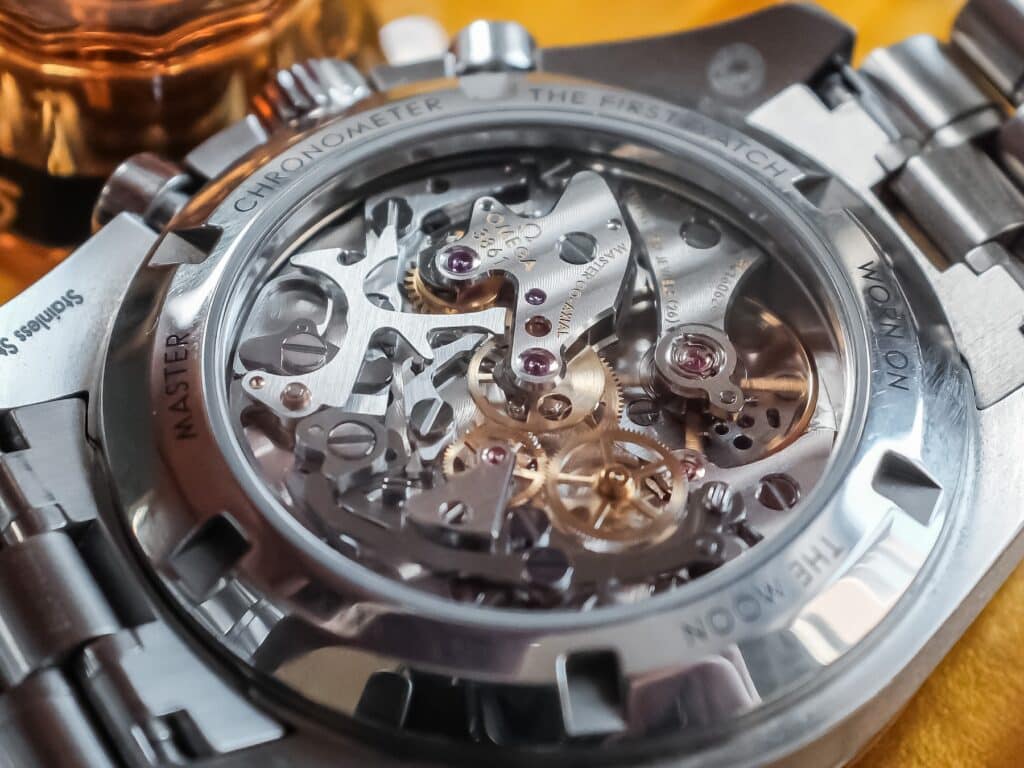
That hands-on quality runs through the wider Speedmaster family, but not always in the same way. The First Omega in Space uses the caliber 1861, a Lemania-based, cam-actuated manual-wind chronograph with about 40 hours of power reserve. As covered in our full review, it gives that older Speedmaster experience: less technically flashy than the 3861, but still tied to the ritual of winding and operating a mechanical chronograph. The Speedmaster Reduced takes a different route with the automatic caliber 3220, built around an ETA 2890 base with a chronograph module stacked on top. That makes it more convenient as a daily watch, but it also changes the relationship. You gain grab-and-go ease, but lose the morning wind that makes the Moonwatch feel so deliberately mechanical.
On the other hand, the Seamaster line is less about ritual and more about technical confidence. The modern Diver 300M’s caliber 8800 is the clearest example: a METAS-certified Co-Axial automatic rated to 0/+5 seconds per day (ours was within +1 second per day), with serious anti-magnetic resistance and the kind of smooth winding feel that makes the crown interaction better than most people expect from a dive watch. It’s not trying to be romantic in the same way a hand-wound Speedmaster is. It aims to be accurate, durable, low-drama, and quietly overbuilt for normal life unless your normal life involves hanging out inside MRI machines, in which case, maybe solve that first.
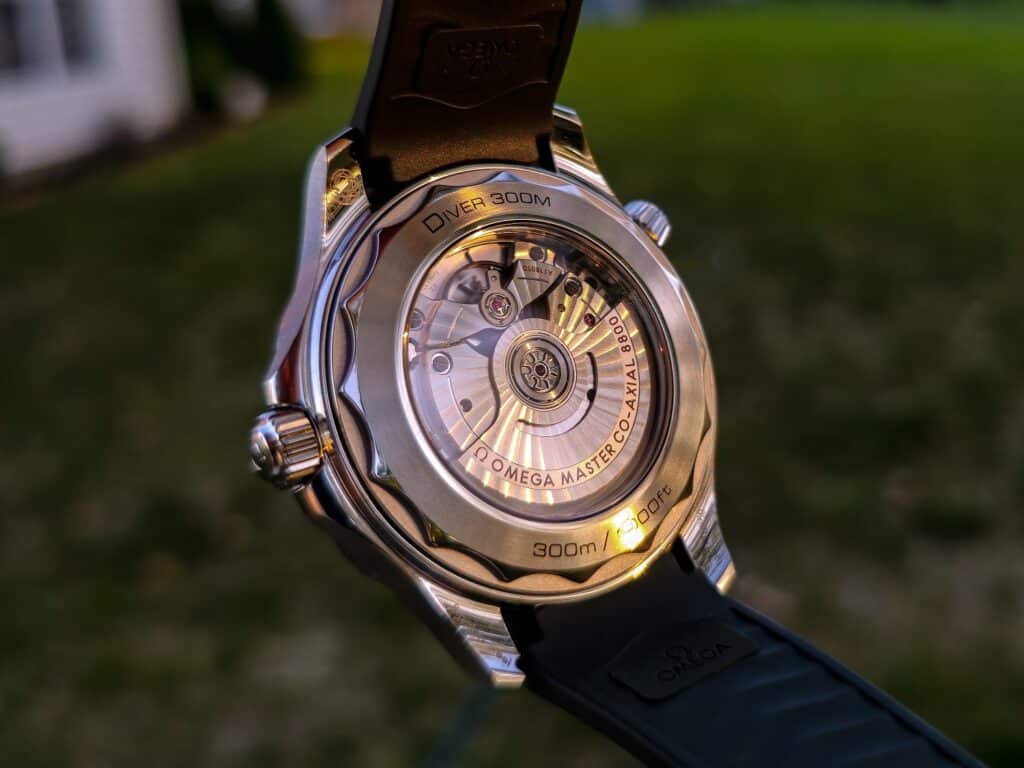
Older Seamaster movements show how broad that philosophy gets. The 2254.50’s caliber 1120 is a COSC-certified automatic based on the ETA 2892-A2, upgraded and refined in a way that makes it feel like a dependable pre-Co-Axial sweet spot rather than a downgrade. The quartz 2541 we tested in detail pushes the idea even further with the caliber 1438, a chronometer-grade quartz movement that keeps better time than mechanical pieces and removes winding, power reserve, and accuracy drift from the daily equation. Purists can argue with the wall if they want, but that quartz Seamaster makes a strong case for practicality over romance.
Case Construction & Finishing:
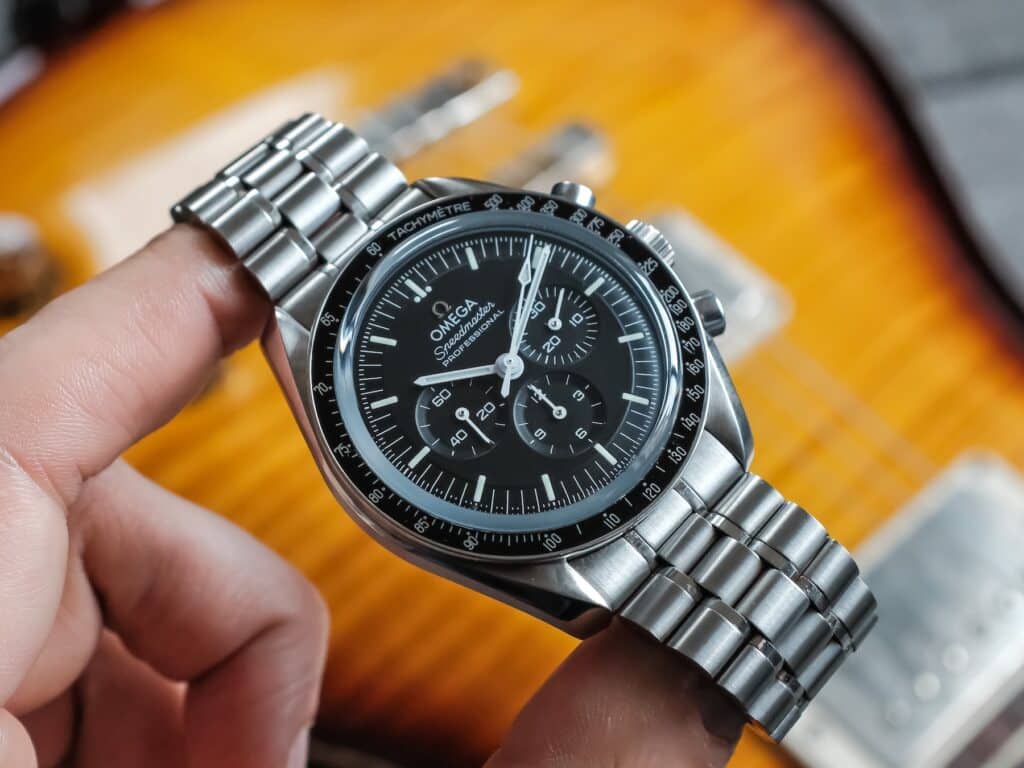
The Speedmaster line feels built around measured refinement rather than brute force. The modern Moonwatch keeps the familiar Speedmaster shape, but the small case refinements make it feel more settled on the wrist than older versions. The redesigned, polished end links help reduce the visual length of the watch and add shine to align with the case. The First Omega in Space pulls things in a more vintage direction with a 39.7mm straight-lug case and no crown guards. It feels less armored than the Professional, but that’s also the point. It has more of that “desktronaut with taste” energy, which is probably where most of us live anyway. The finishing backs up, with brushed or blasted case sides and lugs playing against polished top surfaces and bezel edges, while the wider signed crown gives the watch a satisfying winding feel, even if the grip is easier to catch from below than head-on. The Reduced takes the case idea smaller again at 38mm, with a 44mm lug-to-lug that makes it friendlier for medium and smaller wrists, though its 12mm thickness can make the proportions feel a little squat. Read our wrist-testing experience of the Reduced for more on these smaller details. Across the line, the Speedmaster tends to use finishing as a quiet detail: brushed or blasted surfaces where you expect tool-watch restraint, polished accents where the case needs a little lift, and enough shape in the lugs and flanks to keep it from feeling like a flat slab of chronograph nostalgia.
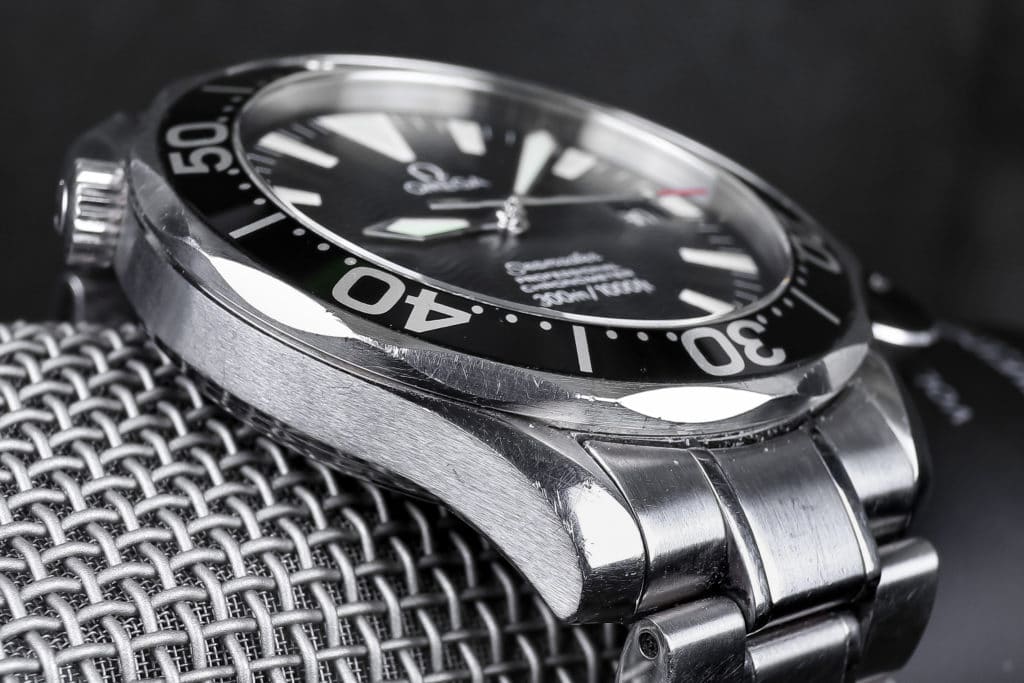
The Seamaster line carries more sculptural confidence. The modern Diver 300M is listed at 42mm and 13.9mm thick, but it wears thinner than that because the watch head sits flatter and the lyre-lug case does a lot of visual work. The polished tops of the lugs twist into a sharp bevel, while the inner lug brushing and case flank finishing give the whole thing that slightly dressier Omega sport-watch feel. The 2254.50 we spent testing time with shows the same family shape in a cleaner, slimmer form: 41mm wide, around 12mm thick, with a narrow midcase, sharp brushing, and a hardly-there polished chamfer that lets it move between cuff and beach without looking confused. The quartz 2541 pushes the wearability angle even harder, using its 41mm case, 47.5mm lug-to-lug, and 11mm thickness to feel flatter, lighter, and easier than the automatic versions. The caseback stands out too, with a crisp hippocampus engraving and an overall build that feels properly high-end without needing to shout about it. In short, the Seamaster case language is more fluid and polished than the Speedmaster’s, but it still has practical weight behind it. It looks dressier, wears more easily than expected, and feels like Omega spent a lot of time making steel look more expensive.
Crystals and Bezels:
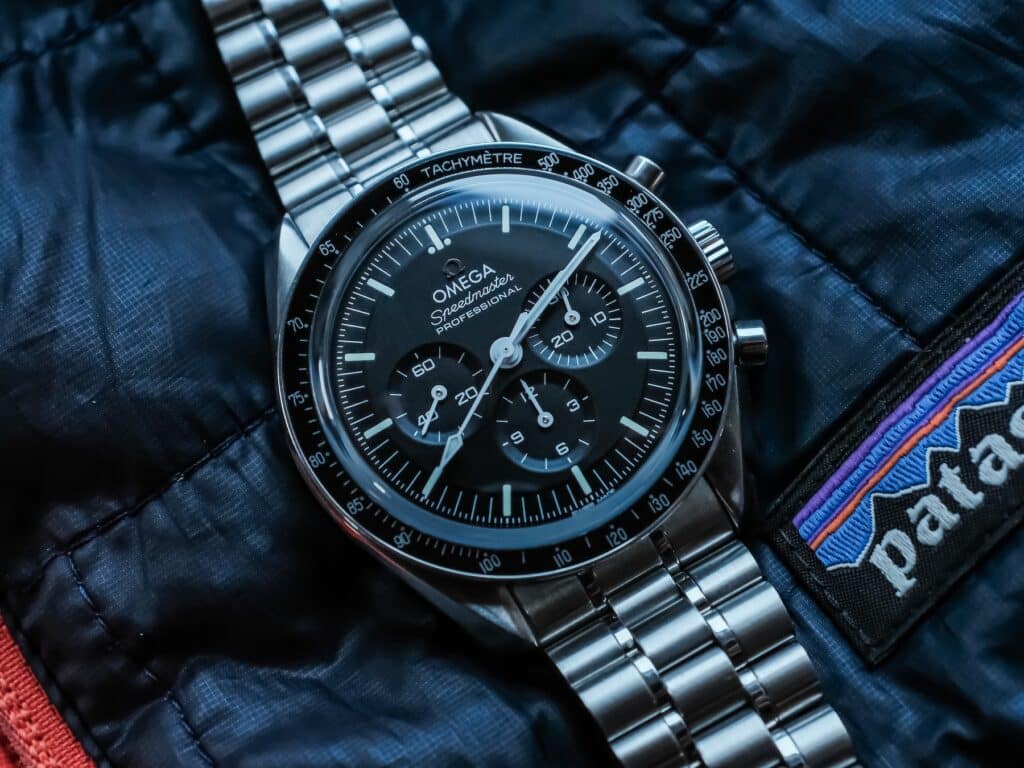
The Speedmaster line keeps this part of the experience tied to heritage, but not always in the same way. The old hesalite Moonwatch experience has its charm, but it also means living with scuffs and the occasional polishing session, which gets less romantic after the fifth time you notice a new mark. The modern sapphire Moonwatch smooths that out for daily wear while keeping the classic Speedmaster look, and the return of the dot-over-ninety bezel gives the watch back one of those tiny visual details Speedmaster people absolutely notice. The First Omega in Space takes a similar practical-vintage route, using a box sapphire crystal instead of plexi, so it keeps the older profile without asking you to baby the crystal quite as much.
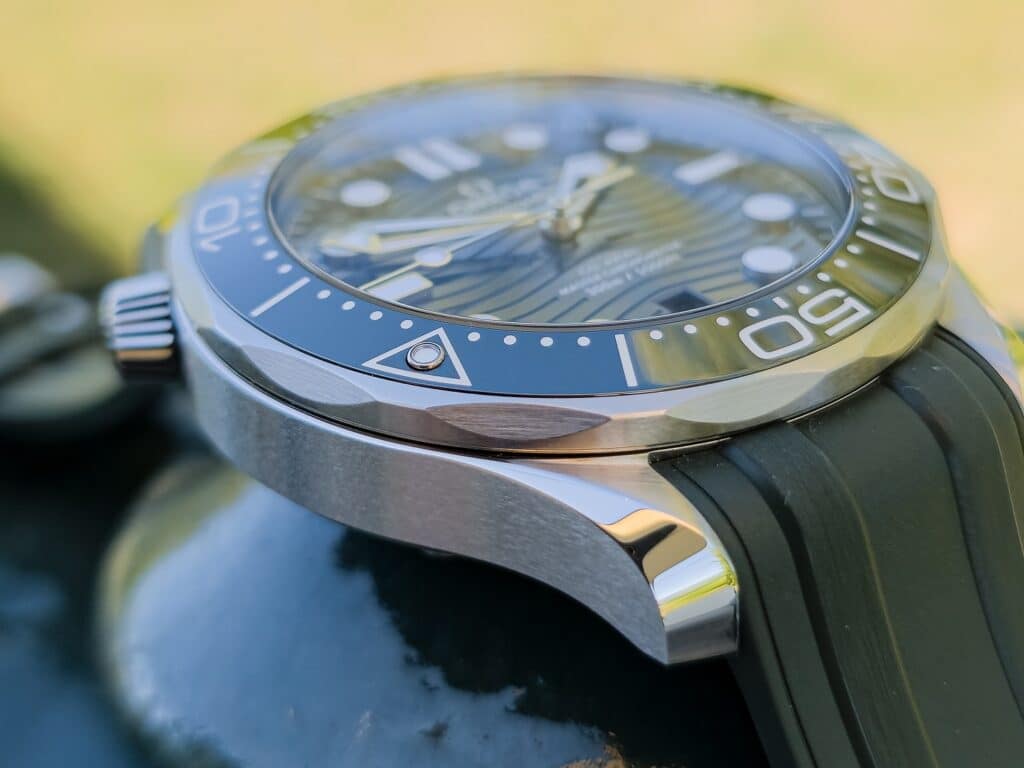
The Seamaster line is more technically ambitious here, but also more quirky in an open way. The modern Diver 300M has one of those sapphire crystals that almost disappears on the wrist thanks to heavy anti-reflective coating, though that outside AR layer can pick up faint marks at certain angles. Its ceramic bezel looks sharp and has crisp 60-click action with no back play, but the scalloped edge is not easy to grip, especially if your hands are wet or sweaty. Older Seamasters keep that same form-over-function tension: the 2254.50’s sloped aluminum bezel suits the case beautifully but can be frustrating to turn. The quartz 2541 adds a softly domed sapphire crystal and a bezel that looks right but lacks the grip and tactile satisfaction you want from a diver. Very Seamaster, honestly: visually polished, technically capable, and occasionally annoying in ways you only learn by wearing the thing.
Water Resistance & Lume:
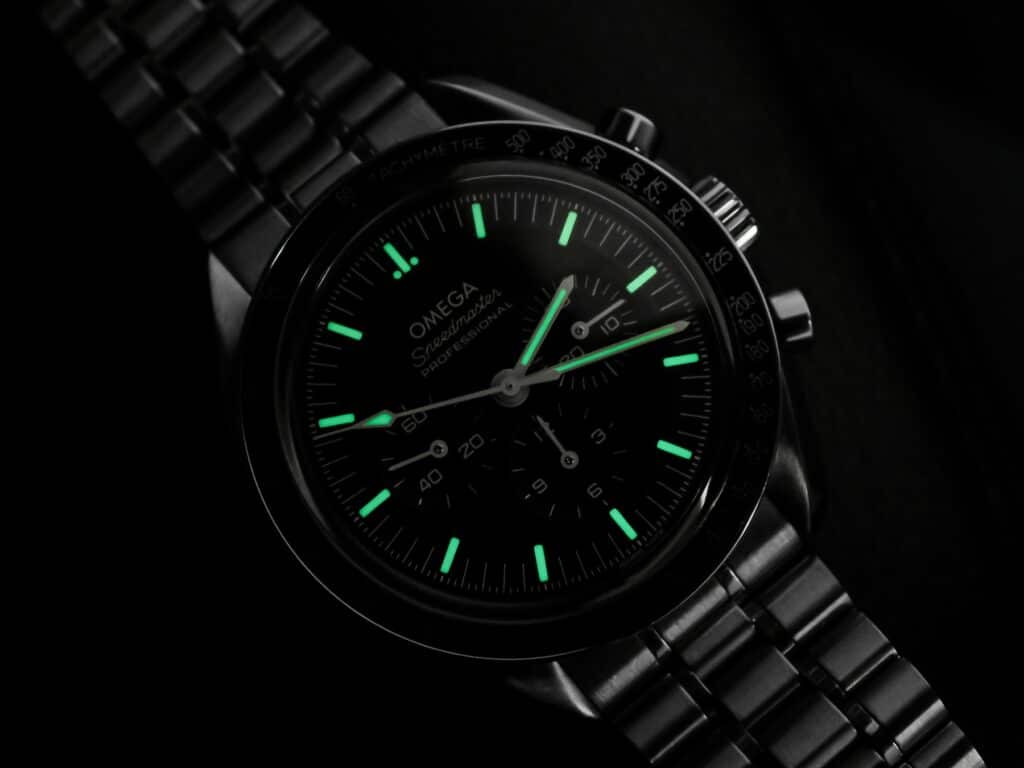
The Speedmaster line is clearly not pretending to be the watch you grab before jumping into a pool. The modern Moonwatch sits at 50 meters of water resistance, which is fine for normal life but not exactly “reckless vacation behavior” territory. Its lume, though, does more than the old chronograph layout might make you expect: bright enough to trust, subtle rather than showy, and persistent enough to stay useful through the night. The FOIS also comes with 50m WR, but feels more limited in the lume department, with smaller lume plots that are bright and usable for about an hour in the dark. That fits the broader Speedmaster experience: enough low-light utility to function, but aquatic confidence isn’t the line’s real USP.
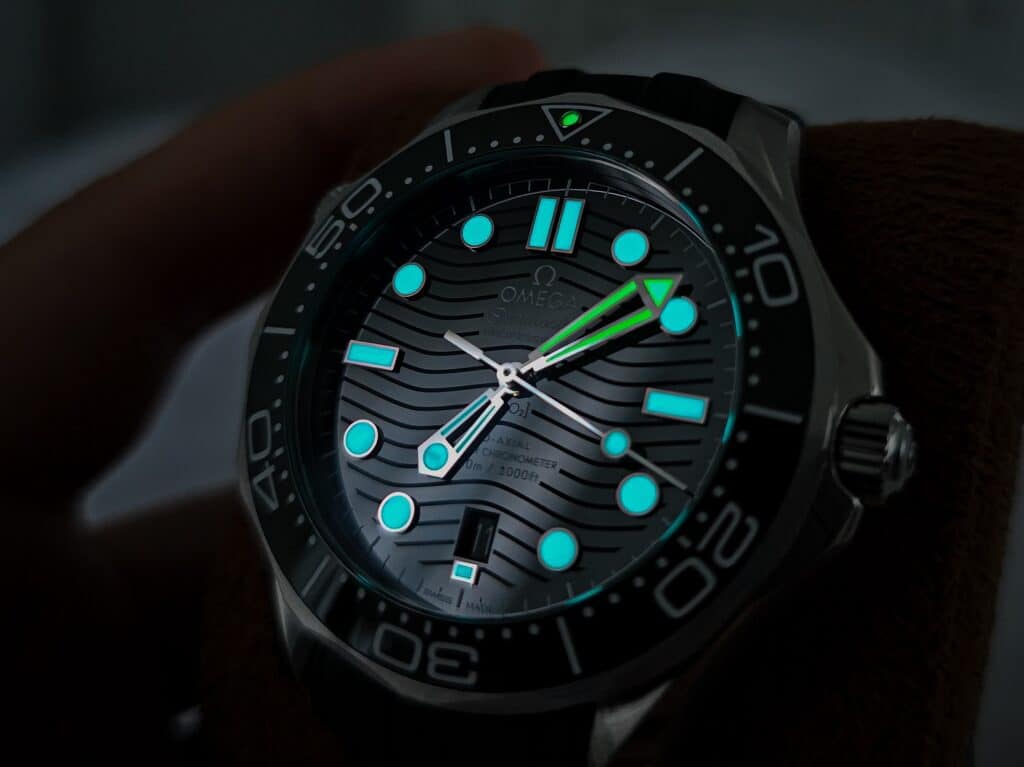
The Seamaster line is the part of Omega’s catalog built around actual water resistance, not just sporty styling. The modern Diver 300M brings 300 meters of water resistance, a screw-down crown, and the familiar helium escape valve that most owners will never touch unless they’re either saturation divers or too curious. The crown action itself is smooth when winding, though screwing and unscrewing it is less satisfying because the crown runs small. Lume is more expressive than the Speedmaster’s: blue on the markers and hands, green on the minute hand and bezel pip, easy to orient at night, and visually fun without being the longest-lasting glow in the box. The 2254.50 keeps the same practical 300-meter Seamaster attitude, with a screw-down crown and C3 Super-LumiNova that charges quickly, burns bright, and hangs on well. The quartz 2541 also sits at 300 meters, with a crown that’s neatly tucked away and rarely needs attention, which is exactly the kind of lazy practicality quartz owners are quietly smug about.
- Speedmaster: More mechanically engaging, with hand-wound chronograph movements, tactile pushers, heritage-minded crystals/bezels, and refined case finishing. It feels deliberate and rewarding, but its 50m water resistance and modest lume make it less carefree.
- Seamaster: More technically practical, with automatic or quartz convenience, stronger water resistance, punchier lume, sharper sport-watch finishing, and more advanced crystal/bezel execution. It’s easier to trust daily, though some bezel and crown quirks come with the package.
Cost Considerations and Resale Value
The Speedmaster line is no longer the easy “buy the icon, feel clever” proposition it once was. The modern 3861 Moonwatch now sits around $9,000 in sapphire form, after debuting at $7,150, which makes the old casual Speedy recommendation a lot harder to toss around without wincing a little. The same goes with the FOIS, which is available at around $8,500 – $8,900. The upside is that Speedmasters remain widely available secondhand, and that matters. If you’re patient, the used market gives you room to choose condition, bracelet, crystal, and movement generation instead of walking straight into the boutique and letting MSRP punch you in the ribs. The wider Speedmaster family also gives buyers more ways to manage cost without leaving the collection entirely. The Reduced has long been the “Omega wings without Moonwatch money” option, helped by smaller sizing, broad availability, and real Speedmaster DNA, even if it will always live in the Professional’s shadow. The catch is that the better examples, OEM bracelets, and certain variants are getting harder to ignore from a value standpoint, so the bargain angle is not as simple as it used to be. Still, among Omega chronographs, the Reduced (at $2,300 – $6,000) and smaller Speedmaster offshoots can make the collection feel less financially absurd.
The Seamaster line plays a different pricing game. The modern Diver 300M asks around $5,600 on rubber or $5,900 on bracelet, which puts it firmly in luxury territory but still below the current Speedmaster 3861. That bracelet premium matters because it gives you more resale flexibility later, even if you plan to wear it mostly on rubber. The awkward part is that the Seamaster sits in a strange middle ground: more expensive than many enthusiast-favorite dive watches, less unattainable than a Submariner, and polished enough to justify some of the jump if you care about finishing, movement tech, and that unmistakable Omega wrist presence. Older Seamasters complicate the value story in a good way. The 2254.50 has become one of those discontinued enthusiast-loved references people sell, miss, and then quietly try to buy again, which tells you something about staying power even when exact pricing shifts around ($2,500 – $4,800 pre-owned, based on condition). The quartz 2541 takes an even more practical angle: it removes a lot of mechanical ownership fuss while keeping the Seamaster design and everyday durability that made the line stick in the first place. It may not satisfy every mechanical purist. However, as a cost-conscious ownership experience within Omega (current secondhand pricing ranges between $2,000 – $3,500 based on condition), the quartz Seamaster makes a stronger argument than the “lesser version” crowd wants to admit.
Final Thoughts: Which Omega Line Actually Belongs on Your Wrist?
At the end of this Omega Speedmaster vs. Omega Seamaster comparison, the verdict is pretty clear. For most people, the Seamaster is the easier and more logical Omega to own and wear every day. The Speedmaster may be the one that pulls harder emotionally, but the Seamaster is the one that makes fewer demands once it’s on your wrist.
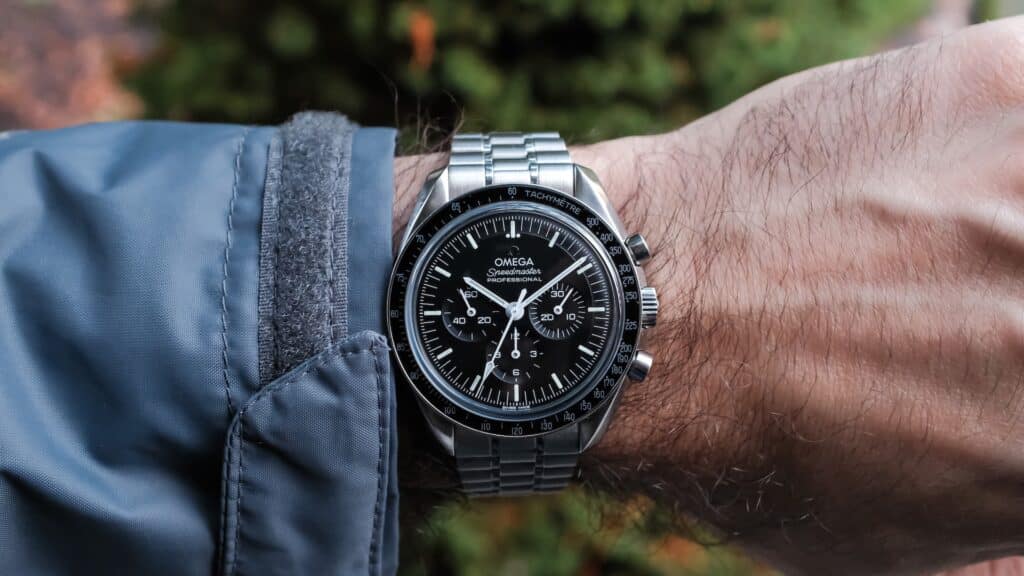
The Omega Speedmaster makes more sense if you want the line with more collector gravity. It’s for the enthusiast who enjoys chronograph interaction, hand-wound ritual, strap changes, and the feeling of wearing something that other watch people immediately understand. It is not the best fit if you want one low-stress luxury watch for swimming, travel, sweat, rain, or daily unpredictability. The Speedmaster can work as a daily watch, but it asks for more buy-in from the person wearing it.
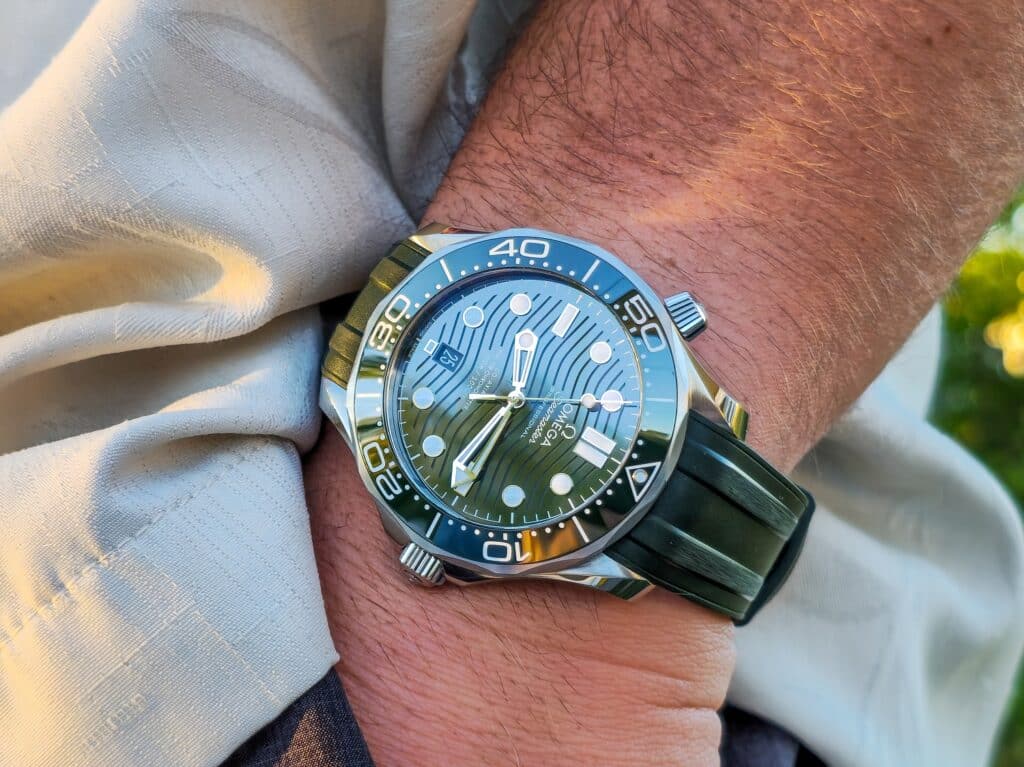
The Omega Seamaster handles more of normal life with less fuss. It suits someone who wants an Omega they can wear through work, weekends, weather, water, and travel without constantly adjusting expectations around the watch. It gives up some of the Speedmaster’s chronograph charm and enthusiast recognition, but gains the practical confidence that matters once the watch becomes part of your routine. It is not for you if the whole point of buying an Omega is owning the more emotionally loaded, historically important chronograph line, or if you know you’ll miss the tactile ritual of using a Speedmaster.

Co-Founder and Senior Editor
Kaz has been collecting watches since 2015, but he’s been fascinated by product design, the Collector’s psychology, and brand marketing his whole life. While sharing the same strong fondness for all things horologically-affordable as Mike (his TBWS partner in crime), Kaz’s collection niche is also focused on vintage Soviet watches as well as watches that feature a unique, but well-designed quirk or visual hook.