The dive watch is the most crowded category in this hobby, and that makes it the hardest place to say anything new. Most years the genre just churns: another rehoused Seiko movement, another sub-$300 homage, another bezel insert in a color nobody asked for. What stood out in 2026 is how the watches worth your attention earned it on two fronts at once. Almost every one reaches back to something real, a specific historic case, a 1959 original, a 62MAS platform, a revived frogman dive shop in Paris, and almost every one delivers hardware that used to cost far more. Titanium, in-house calibers, COSC certification, and 300 meters of water resistance keep showing up lower and lower on the price ladder. Provenance on one side, falling cost on the other, and the best releases of the year sit right where those two lines cross. Here are five of the best dive watches of 2026 so far.
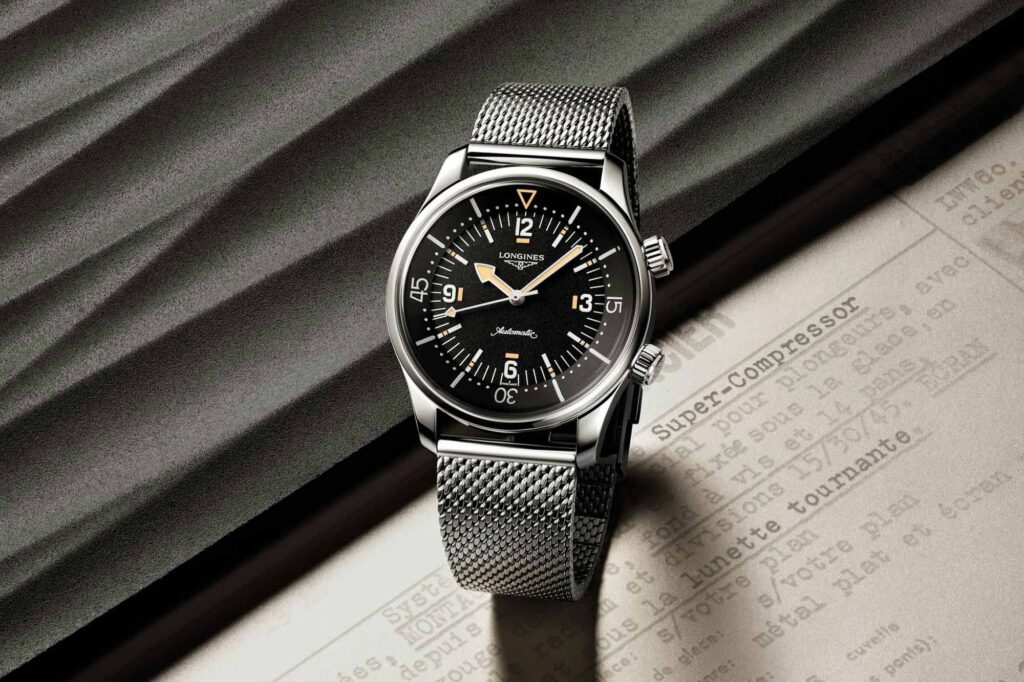
Longines Legend Diver 59
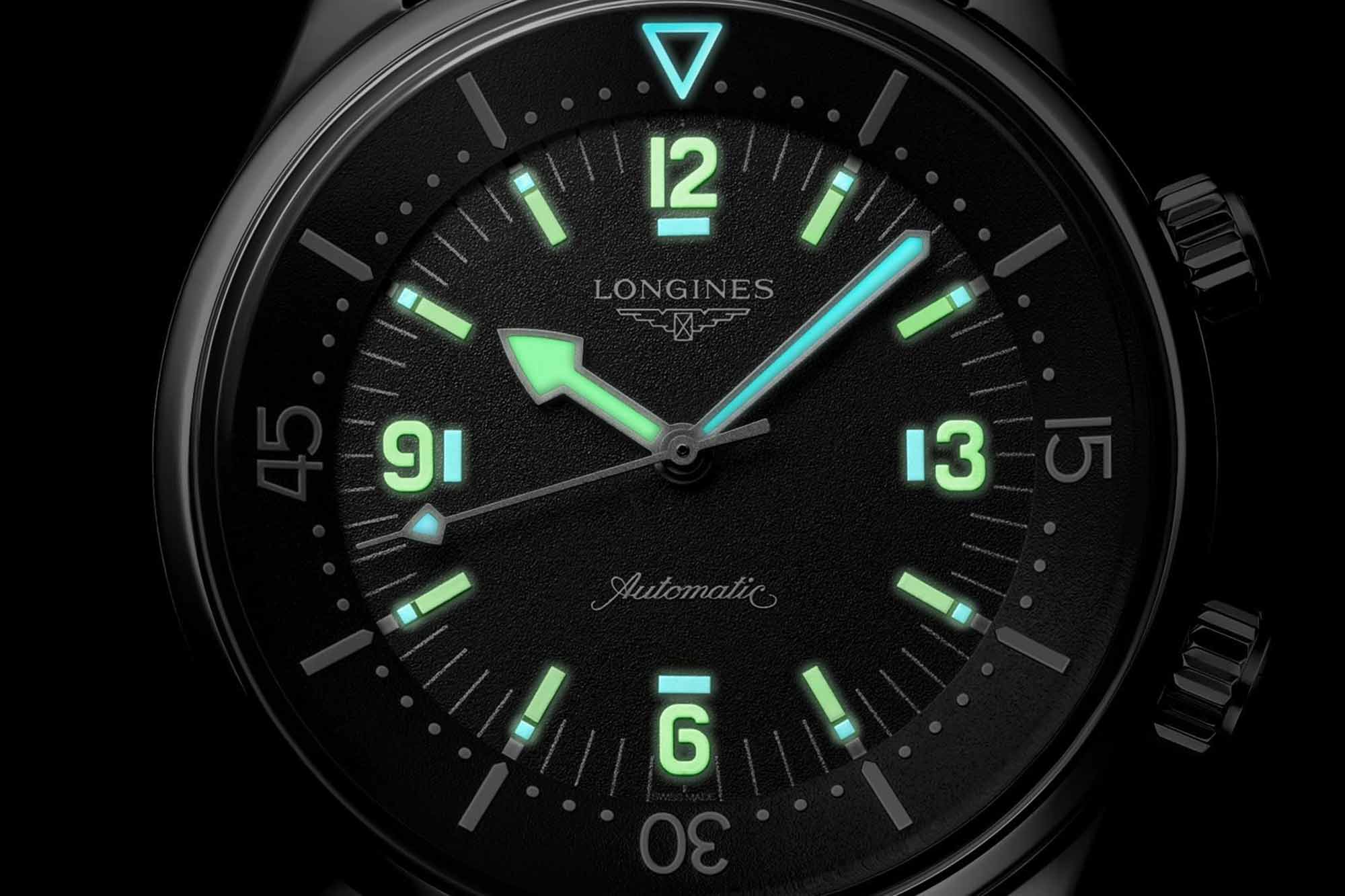
Start with the watch that arguably started the modern reissue era. The Legend Diver 59 is Longines leaning all the way into its own history, and the name is the tell: the 59 is a nod to 1959, the year the original appeared, well before Tudor turned numbered reissues into a marketing language. The reissue brings back the full 42mm case, a big watch with long, thick lugs and a 12.85mm profile, and pairs it with a matte, textured dial that breaks cleanly from the glossy faces across the rest of the collection. Sandblasted hands and indices in old-radium lume finish the vintage intent. Inside sits the L888.6, an ETA-made caliber built exclusively for Longines with COSC certification, 72 hours of reserve, a silicon balance spring, and 300 meters of water resistance. The catch is the $4,100 price, which lands well above the $2,400 Hydroconquest and asks you to buy into lineage and 42mm wrist presence as much as the spec sheet. The 39mm versions exist for buyers who want less of both.
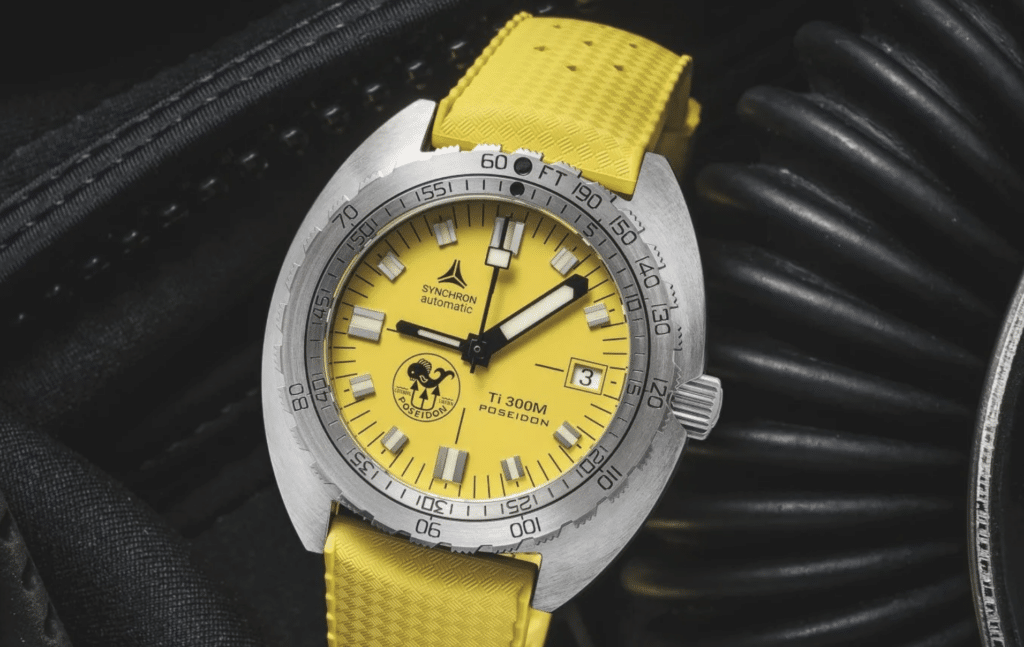
Synchron Ti300M Poseidon
If the Longines is heritage at full retail, the Ti300M Poseidon is heritage at a price that makes you do a double take. Built to mark a ten-year collaboration with the dive equipment maker Poseidon and limited to 500 pieces, it takes the familiar Synchron diver and rebuilds it in Grade 5 titanium with weight as the obsession. The result is 50 grams total for a 300-meter watch with a sapphire crystal and a 120-click unidirectional bezel, in conservative dimensions at 41mm wide, 11.9mm thick, and 45mm lug to lug. The movement is the part that should worry the competition: the La Joux-Perret G100 in Soigné grade, adjusted in four positions, with a single-piece tungsten rotor and KIF anti-shock. The bezel carries a non-decompression US Navy dive table rather than treating the scale as decoration, and the watch ships on a genuine Tropic strap from a brand that actually manufactures them. At $1,290 pre-order it undercuts most Swiss titanium divers while matching them on paper. The reservations are honest ones. The sunshine-yellow dial is a committed look, and the design lives downstream of Doxa, a lineage worth understanding before the homage question bothers you.
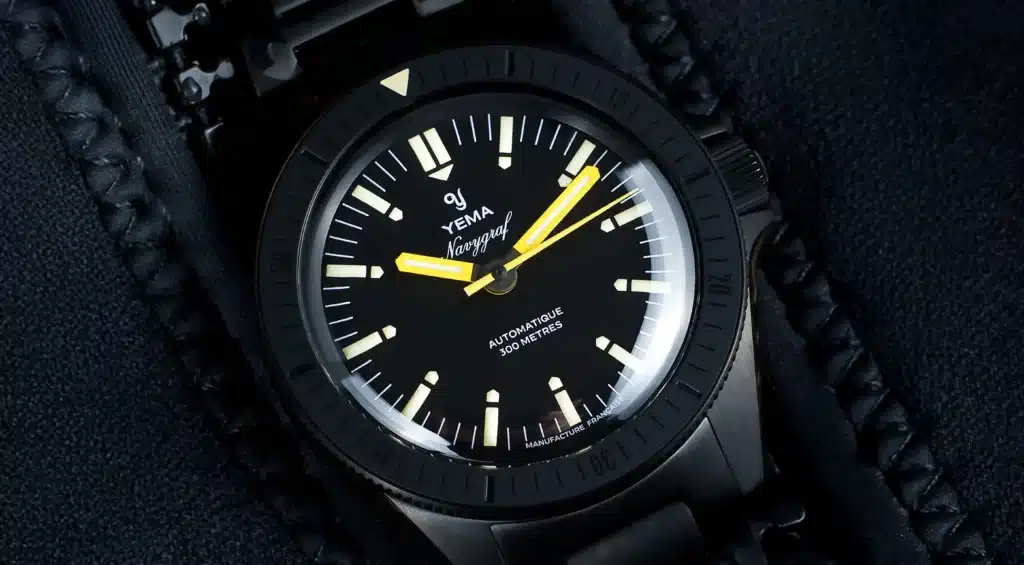
Yema Navygraf Phantom CMM.10
My pick for the spec sheet that makes the least sense at the price. The Navygraf Phantom CMM.10 is a fully blacked-out Navygraf, with black IP coating across the case, bezel, dial, and H-link bracelet, and brushing pronounced enough to help hide the micro-scratching that black coatings usually broadcast. The case holds the line’s sub-vintage 38mm proportions at a slim 11mm thick, with a screw-down crown inside a proper guard, a double-domed sapphire, a sandblasted black ceramic bezel insert with the scale in relief, and 300 meters of water resistance. Yellow handset accents and a white minute track keep it legible against the monochrome, and a sapphire caseback shows off the part that matters: the in-house Caliber CMM.10, running at 4Hz with a 70-hour reserve. An in-house movement with these materials under $2,090, limited to 200 pieces with taxes and duties bundled in, continues an argument Yema has been winning for a few years now. Two things give pause. The bracelet’s four micro-adjustment positions need a tool, which feels dated on a diver at this price, and the long-term reliability of the CMM.10 is still a question only wrist time will answer.
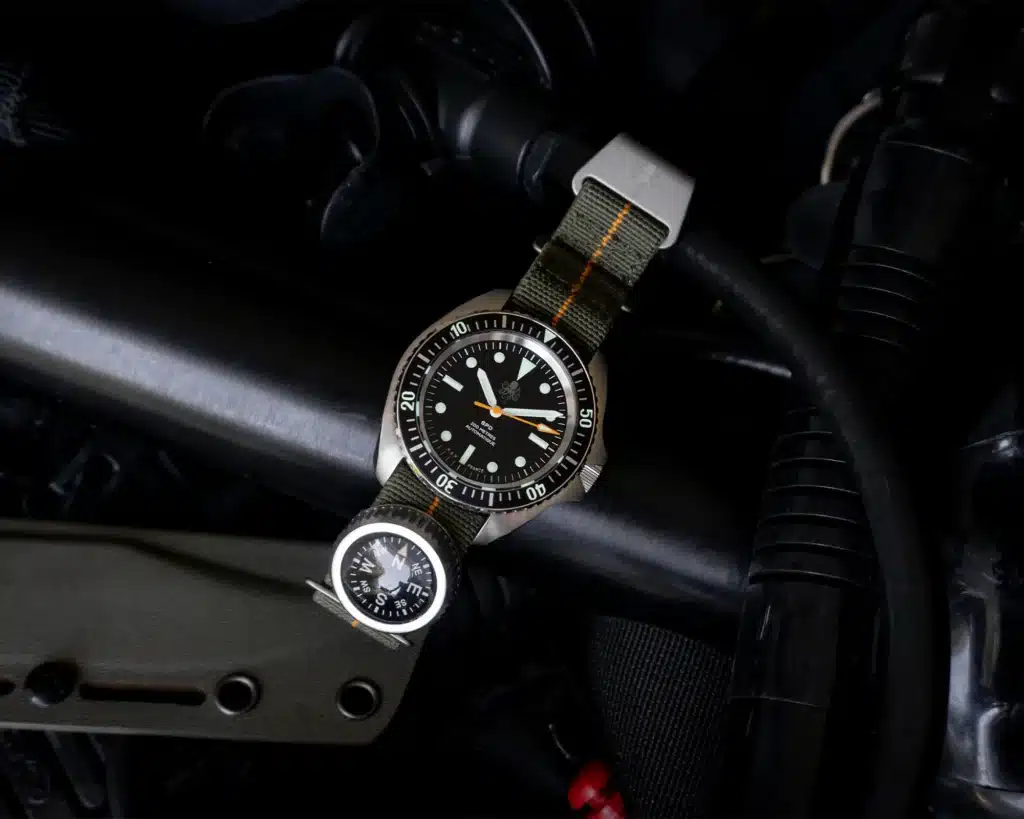
PDW × HGP SPD Diver 200M
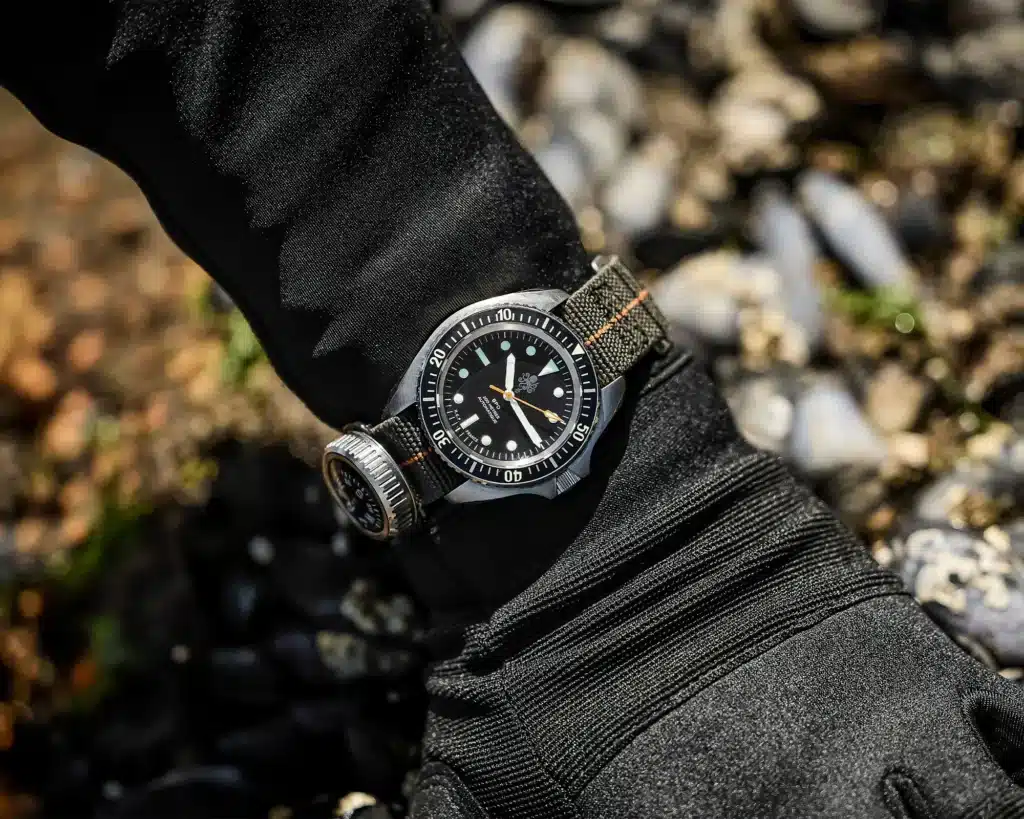
The personal favorite of the group, and the one with the best story. The SPD Diver 200M is built on the Monnin case, the flat, low-profile design from French case maker Georges Monnin that Heuer turned to in the mid-1970s when it wanted into the dive market with no waterproof-case experience of its own, with Breitling, Sinn, Aquadive, and Zodiac following. The collaboration pairs PDW’s Special Projects Division with HGP, a Paris dive shop that outfitted French Navy frogmen from the 1970s through the 1990s, went dormant, and returned to production in France in 2023. Each watch is hand-assembled there, with the Seiko NH38 regulated in-house to a tolerance tighter than Seiko’s factory baseline. The case is 316L steel at 42mm wide, 47mm lug to lug, and 13.2mm thick, with a flat sapphire, a 60-click steel bezel, screw-down crown and caseback, 200 meters of water resistance, and a black brass dial wearing seven layers of C3 lume. The whole kit, including PDW’s excellent Ti-MNPara strap, a compass module, a canvas pouch, and a patch, is $649. The hard part is availability: the run was tiny and is very likely gone, and the SPD tactical styling, Kraken Trident at twelve and an orange sweep hand, won’t speak to everyone. The case, the spec, and the French assembly make the value case regardless.
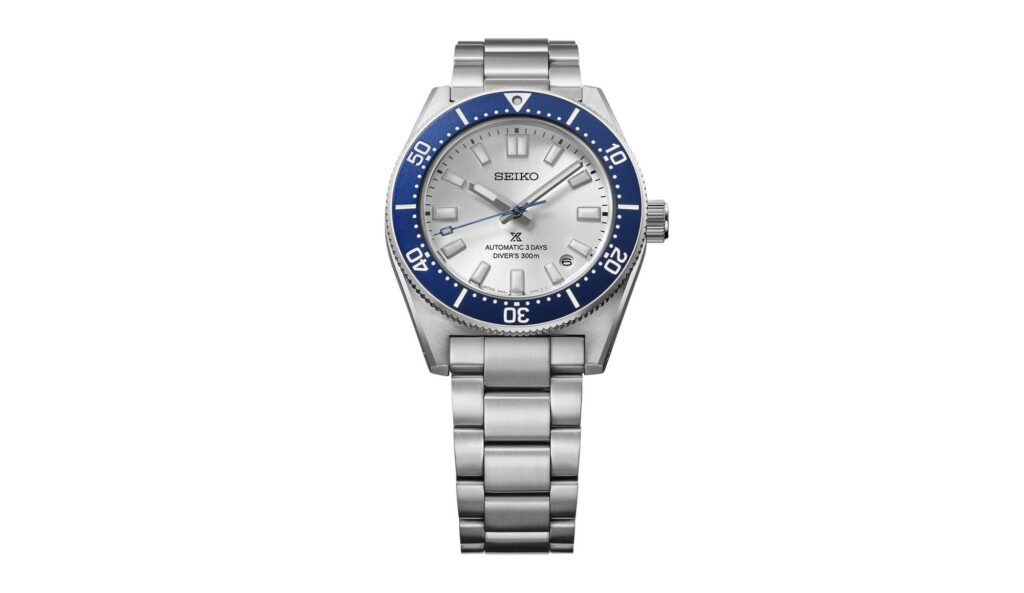
Seiko Prospex HBC005 (145th Anniversary)
Seiko’s 145th anniversary program runs deep, and the diver worth singling out is the HBC005. It sits on the 62MAS-inspired platform that watches like the SPB143 refined over the past few years, now in the silver-and-blue colorway threading through the whole anniversary lineup. The case measures 40mm wide, 13mm thick, and 46.4mm lug to lug, with 300 meters of water resistance and the 6R55 inside for a 72-hour reserve, a meaningful number at this price. The silver dial gets a subtle brushed finish, rectangular lume-filled markers, and a blue seconds hand matched to a blue aluminum bezel, with no limited-edition shouting beyond the standard wordmark. That restraint is the appeal. At $1,400, limited to 4,000 pieces, it is the heritage pick that does not overplay its hand. The honest note is that this is the 62MAS formula again rather than anything new, and its cheaper Samurai-based sibling, the HBB001 at $595 with a 40-hour 4R35 and a 9,999-piece run, stretches the word “limited” far enough to make the whole exercise feel a little softer than it should.
Where this leaves us
What ties these five together is the same pair of forces. Every one of them is selling a story it can actually back up, a 1959 original, a Doxa-adjacent lineage, an in-house caliber, a frogman dive shop brought back to life, a 62MAS platform with real history behind it. And every one of them hands you hardware that would have cost considerably more a few years ago: titanium at 50 grams, COSC certification, in-house movements, 300 meters of water resistance, all of it drifting steadily down the price ladder. The crowded part of the market hasn’t gone anywhere, and the genre still churns out plenty of forgettable homages. But the watches that rose above it in 2026 did so by reaching back for provenance and passing real engineering down to the rest of us. The first half of the year made that clear, and the back half looks like it has more coming.

Co-Founder & Senior Editor
Michael Peñate is an American writer, photographer, and podcaster based in Seattle, Washington. His work typically focuses on the passage of time and the tools we use to connect with that very journey. From aviation to music and travel, his interests span a multitude of disciplines that often intersect with the world of watches – and the obsessive culture behind collecting them.
Stop saying 42 is a big watch- it isn’t men are bigger than they were in 1800s. At 6’4 240 lbs a 42mm looks ridiculous on me. Like a ladies watch. I collect high end tool watches and I’ve gotten about all the bigger tool watches. Start making watches for men.
NO U