For a long time the microbrand playbook was easy to summarize. Take a Seiko movement, wrap it in a dive case borrowing heavily from something Swiss and expensive, keep it under $300, and lean on a good Instagram feed to move the first batch. Plenty of that still exists. But the more interesting independents have spent 2026 outgrowing the formula. The releases that stuck with me this year lean on titanium, COSC certification, in-house-grade finishing, real antimagnetic protection, and dials you simply can’t get from the majors at any sane price. These are the risks the big Swiss houses won’t take anymore, taken by brands a fraction of their size. A few of them cost real money now, which is its own conversation. Even so, each one earns the attention. Here are five of the best microbrand releases of 2026 so far.
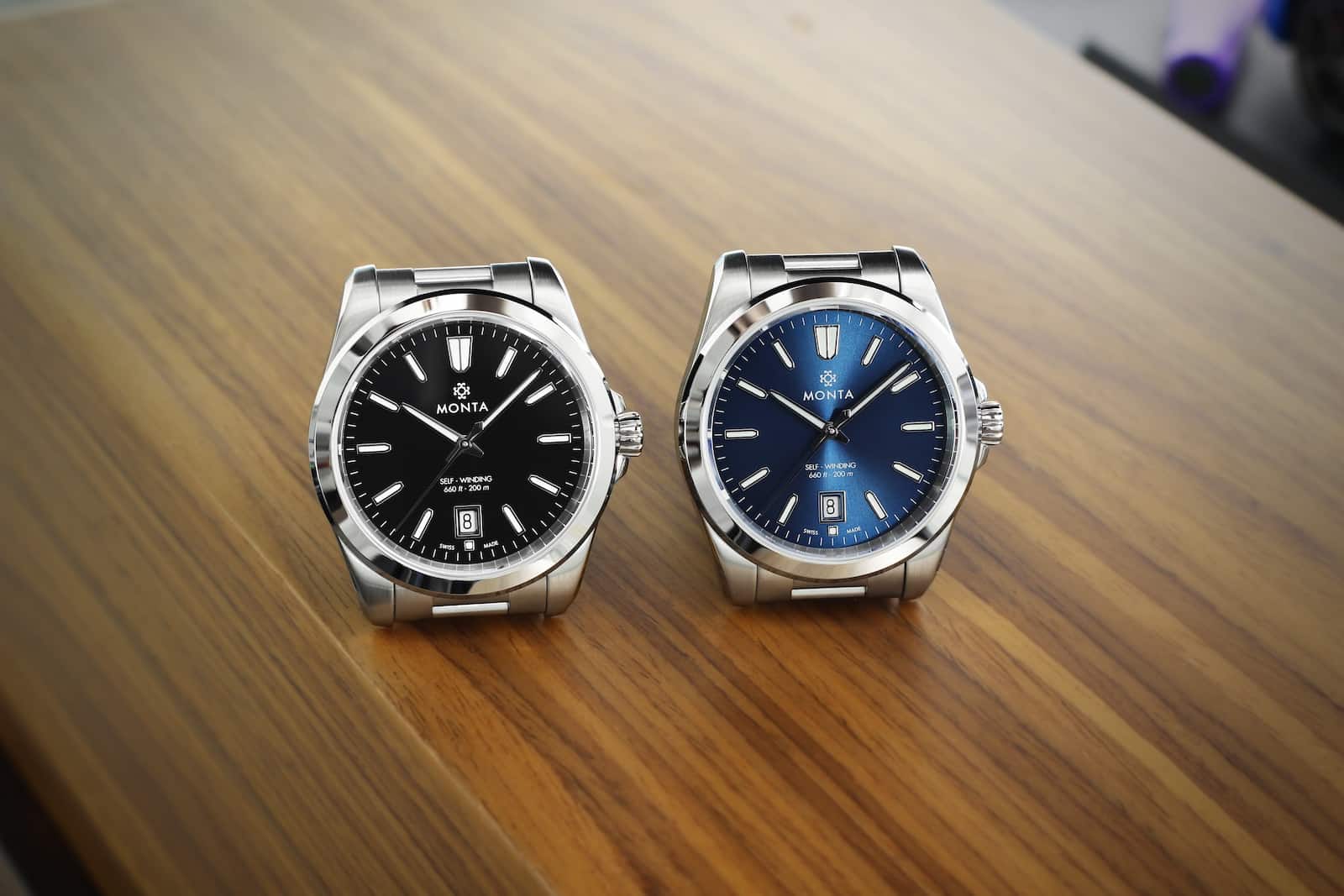
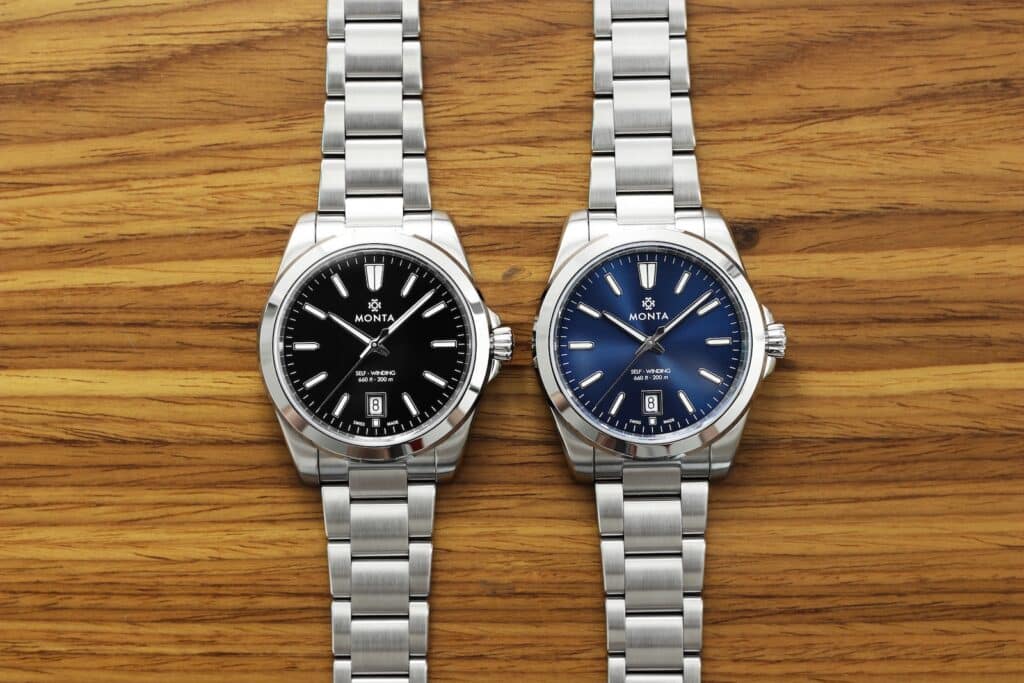
Monta Noble 40
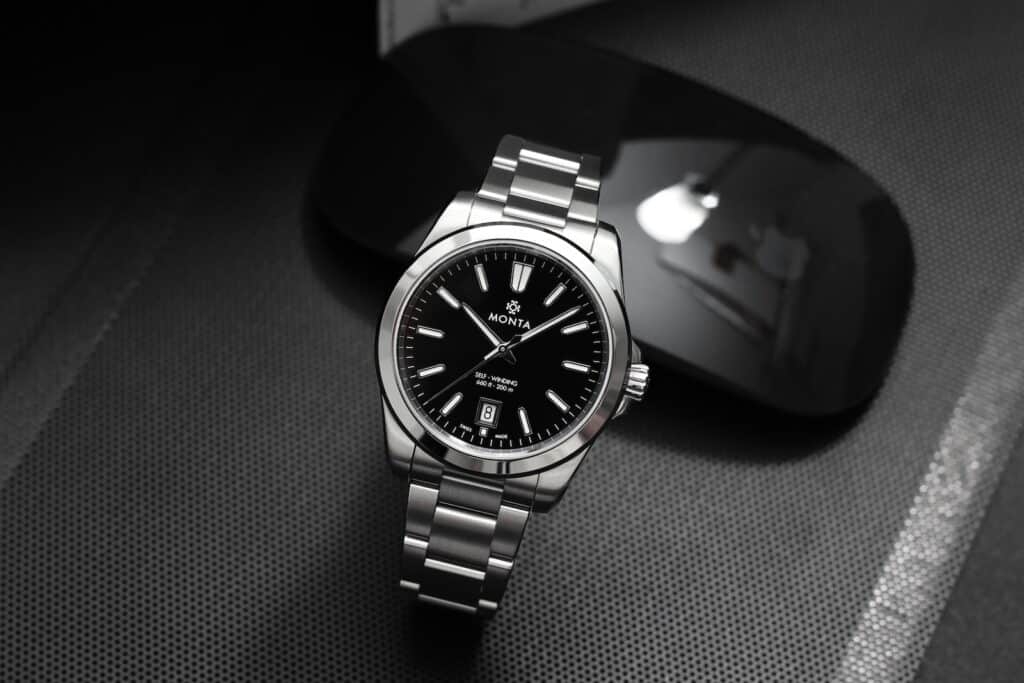
If you want proof the independent space has grown up, start with Monta. The St. Louis brand has spent years building a reputation on fit and finish that embarrasses watches well above its price, and the Noble 40 extends that run by sizing its clean do-everything watch up to a more universally wearable 40mm. The spec sheet is serious. You get a 316L steel case at 10.5mm thick, 200 meters of water resistance, the excellent 3-slot quick-adjust clasp Monta has refined over several generations, and the in-house-designated M-22 caliber based on the Sellita SW300 with 56 hours of reserve. The two dials, black lacquer and a layered sunburst blue, play it completely safe. That restraint is the whole point with Monta, though it’s fair to ask whether understated execution holds your attention the way a louder design might. Pricing opens at $1,595 for the first hundred orders and settles at $1,895 at full retail. For the finishing on offer, that still reads as value.
Serica 7505
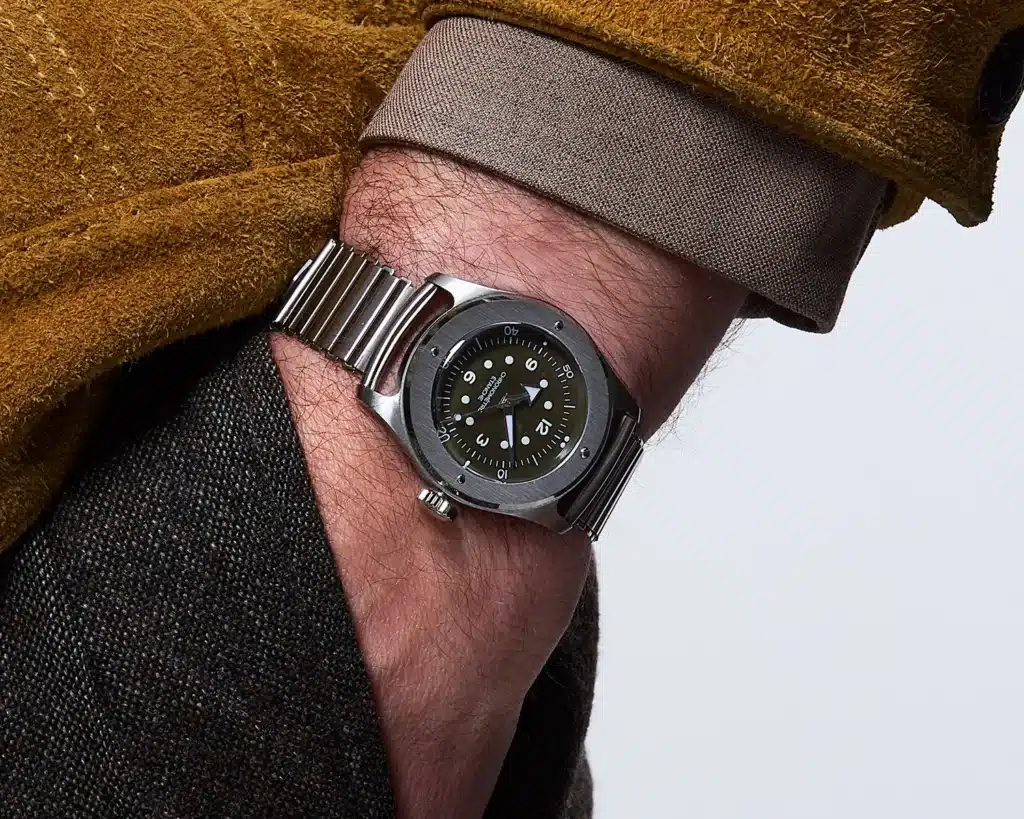
The French independent Serica has built one of the most credible field watch catalogs in the business without a shred of lifestyle marketing, and the Ref. 7505 is the entry that signals you actually pay attention to the space. The headline is the sizing. At 35mm in diameter, 9.60mm thick, and just 41.50mm lug to lug, it revives the proportions of the mid-century military watches that created the genre, and almost nobody launches at that size today. Serica didn’t cut corners to get there. You still get a screw-down crown, a double-domed sapphire, 200 meters of water resistance, and the COSC-certified Soprod M100 inside, all wrapped in the unsigned dials that have become the brand’s calling card. The wide stepped bezel does push the dial opening smaller than some will like, and 35mm remains a gamble in a market still drifting larger. Pricing runs $1,291 for the black and olive Minute Critical dials and $1,409 for the tuxedo variant. Either way, Serica looks a step ahead of the curve.
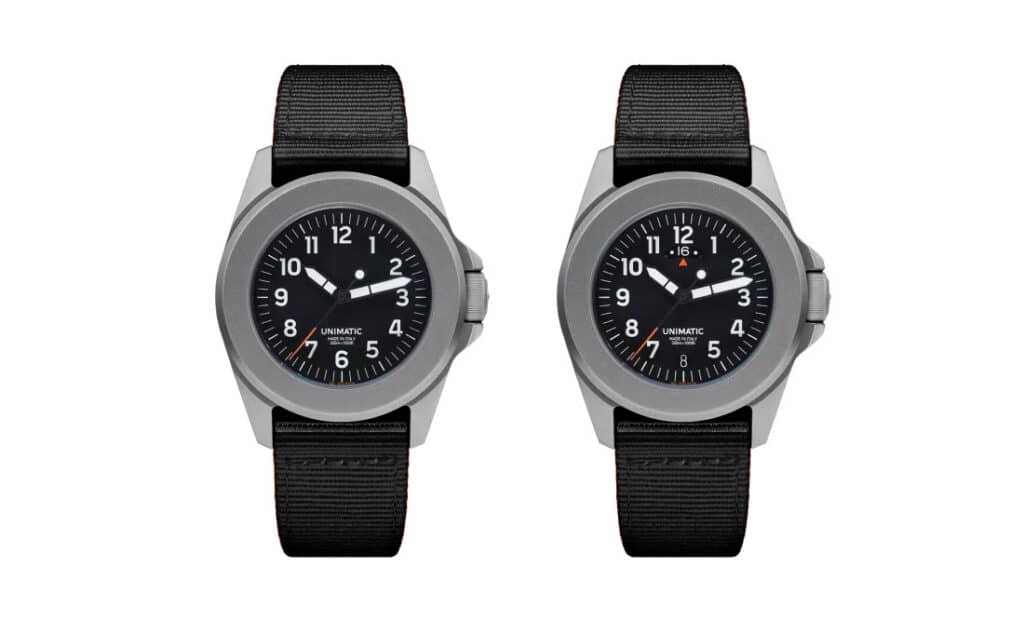
Unimatic Modello Quattro Ultratool
My personal favorite of the group. Unimatic has always been a love-it-or-hate-it proposition, all blocky cases and stripped-down dials that either click with your collector brain or read like industrial design homework. The Modello Quattro Ultratool is the most convincing version of the formula yet, and it lands precisely because it refuses to do the expected microbrand thing. Rather than force a fragile automatic into a watch built to be abused, Unimatic went quartz and leaned all the way in. The case is Grade 2 titanium at a featherweight 65 grams, built around a proprietary 360-degree shock system that cradles the movement in a polyurethane shell. The GMT version skips the usual fourth hand for a rotating 24-hour disc under twelve o’clock, which keeps the dial honest and symmetrical. Quartz will scare off a chunk of collectors, and the brutal minimalism won’t be for everyone. At $700 for the time-only model and $840 for the GMT, both limited to 99 pieces, it’s the rare modern tool watch that feels unpretentious.
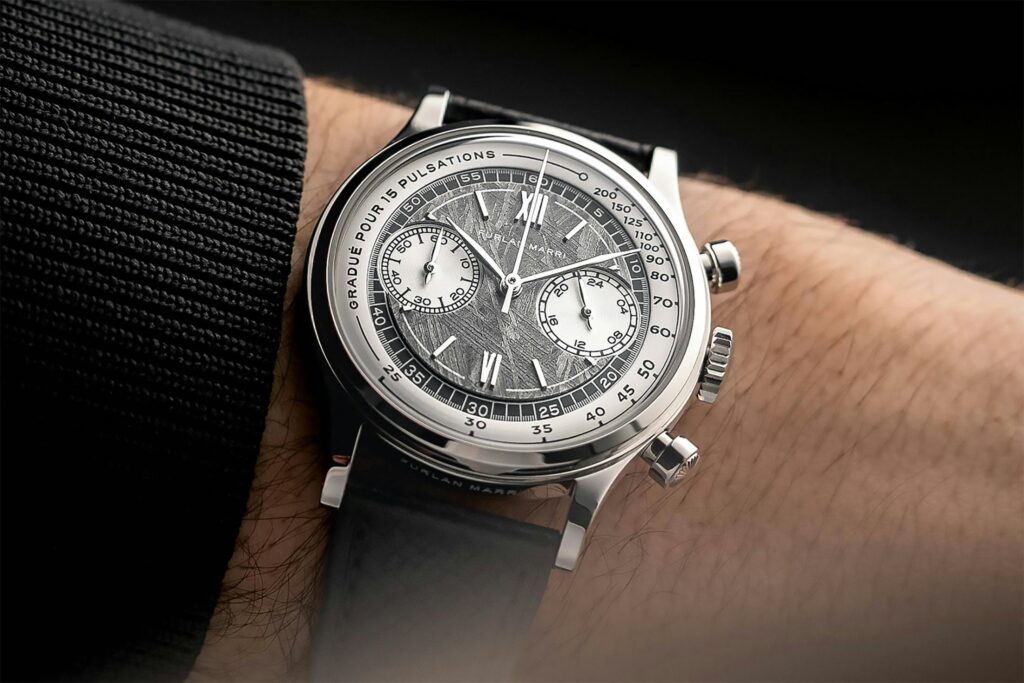
Furlan Marri Meteorite Octa Chronograph
Furlan Marri arrived in 2021 on a wave of hype and flipped resale prices that made it easy to keep at arm’s length. The Meteorite Octa is the first release that earns the attention on its own merits. The brand took its familiar twin-register chronograph and fit it with a dial cut from the Muonionalusta meteorite, a roughly 4.5-billion-year-old specimen whose Widmanstätten crystal patterns are impossible to fake and unique to every slice. The case stays vintage-correct at 38mm wide and 46mm lug to lug, in 316L steel with the kind of mixed brushing, polishing, and embossing that punches above the price. Inside sits the Seiko VK64 mechaquartz, which delivers the satisfying chronograph feel collectors like, even if the quartz base will disappoint anyone chasing a fully mechanical movement. Meteorite legibility is always a fair question until you handle one in the metal. Pricing landed at CHF 720 during a limited pre-order window, with no plans to reproduce the run, so this one may already be tough to track down. It remains one of the most striking dials of the year.
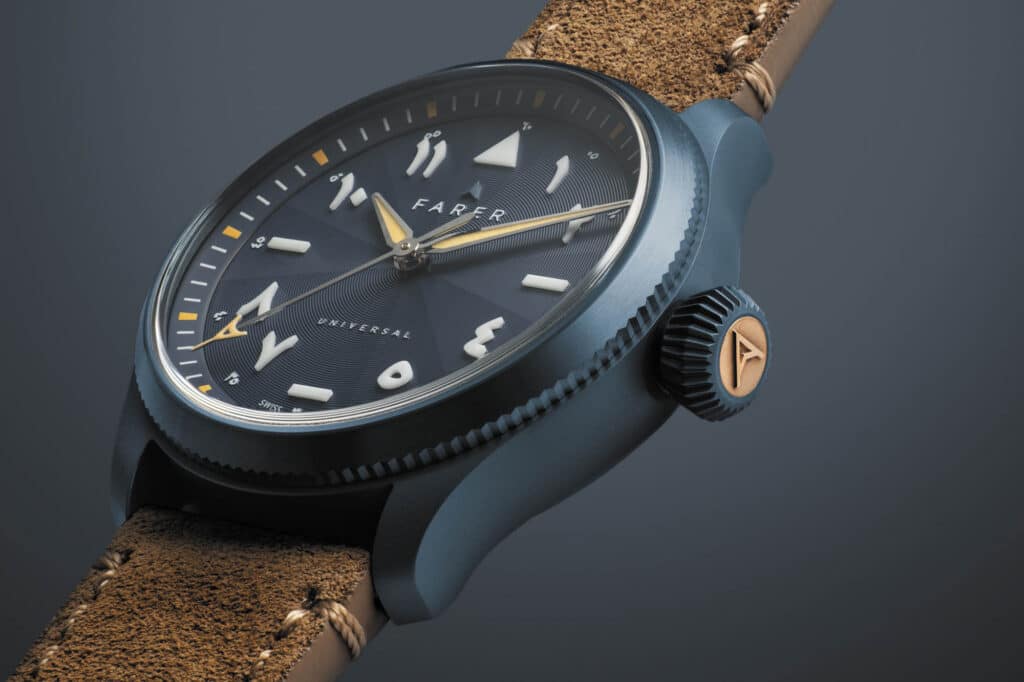
Farer Pilot Series II
British indie Farer has always packed more variation into a collection than its size suggests, and its designs have leaned loud enough that they don’t always land. The Pilot Series II is the most restrained thing the brand has made, and it’s better for it. The four-piece run is built on a fresh 40mm titanium case and split across three dial layouts: the 1940s-flavored Curtis, the Type B Flieger Barnwell, and the more contemporary, sandblasted Hewlett. A fourth piece, the Curtis Eastern Arabic, swaps in Eastern Arabic numerals, caps the run at 100 pieces, and is the clear standout, with a case finish that recalls the old IWC Mark limited editions. All four run the Sellita SW300-1 with 56 hours of reserve behind a soft-iron Faraday cage rated to 500 Gauss, a meaningful spec for a pilot watch rather than a line of marketing copy. At $1,525 it lands in a crowded titanium-pilot field, and Farer is betting that variety and finishing carry it. Complimentary caseback engraving is a nice touch on top.
Where this leaves us
What ties these five together is a willingness to spend on the things that actually matter to enthusiasts. Titanium cases, COSC certification, real antimagnetic shielding, meteorite dials, and finishing that holds up next to watches costing several times more. A few years ago most of this would have been unthinkable from brands this small, and much of it is exactly the kind of risk the major Swiss houses have grown too cautious to take. That’s the real story of the microbrand space in 2026. The first half of the year made it clear, and the second half looks like it has plenty more coming.

Co-Founder & Senior Editor
Michael Peñate is an American writer, photographer, and podcaster based in Seattle, Washington. His work typically focuses on the passage of time and the tools we use to connect with that very journey. From aviation to music and travel, his interests span a multitude of disciplines that often intersect with the world of watches – and the obsessive culture behind collecting them.