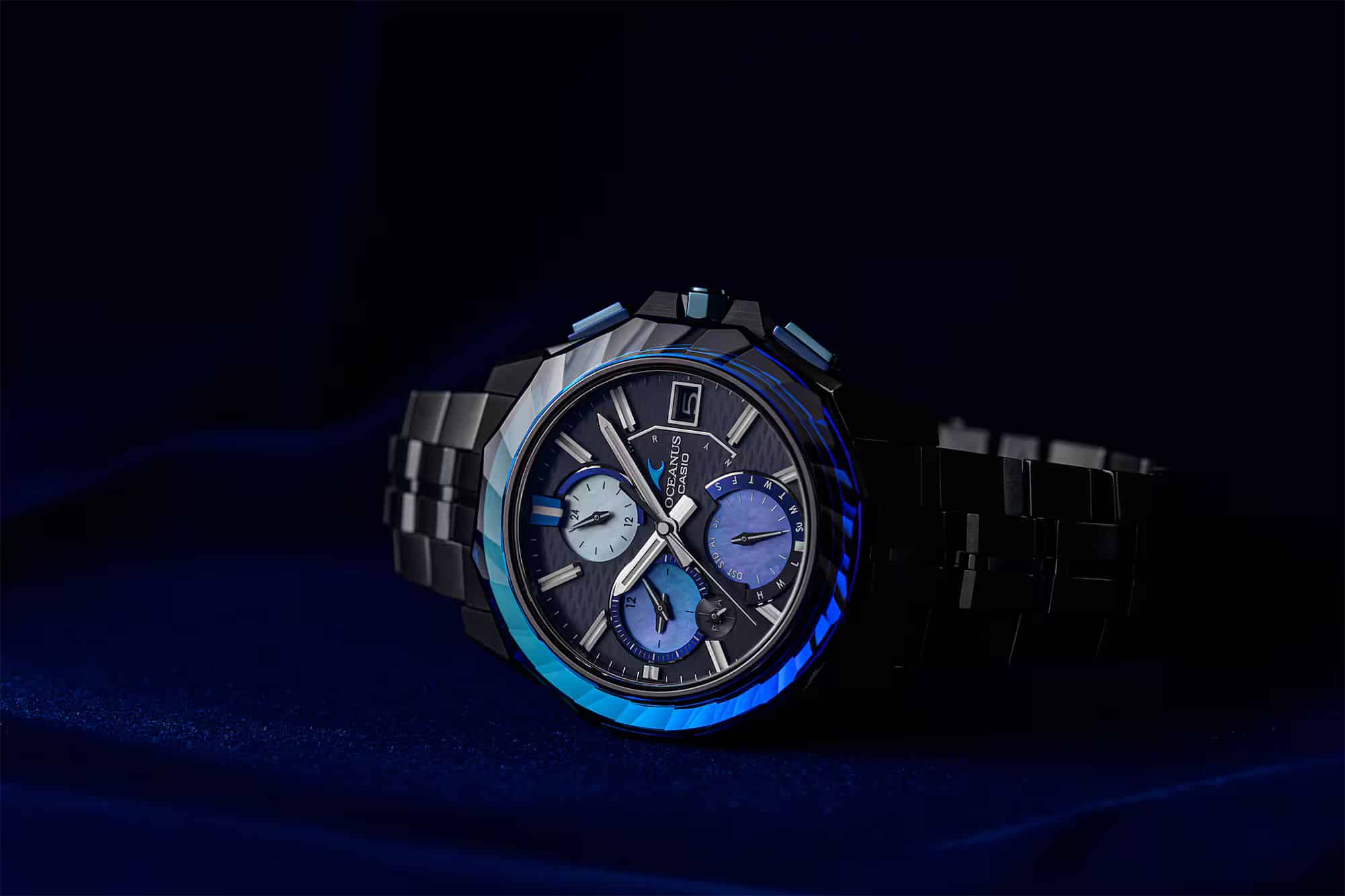
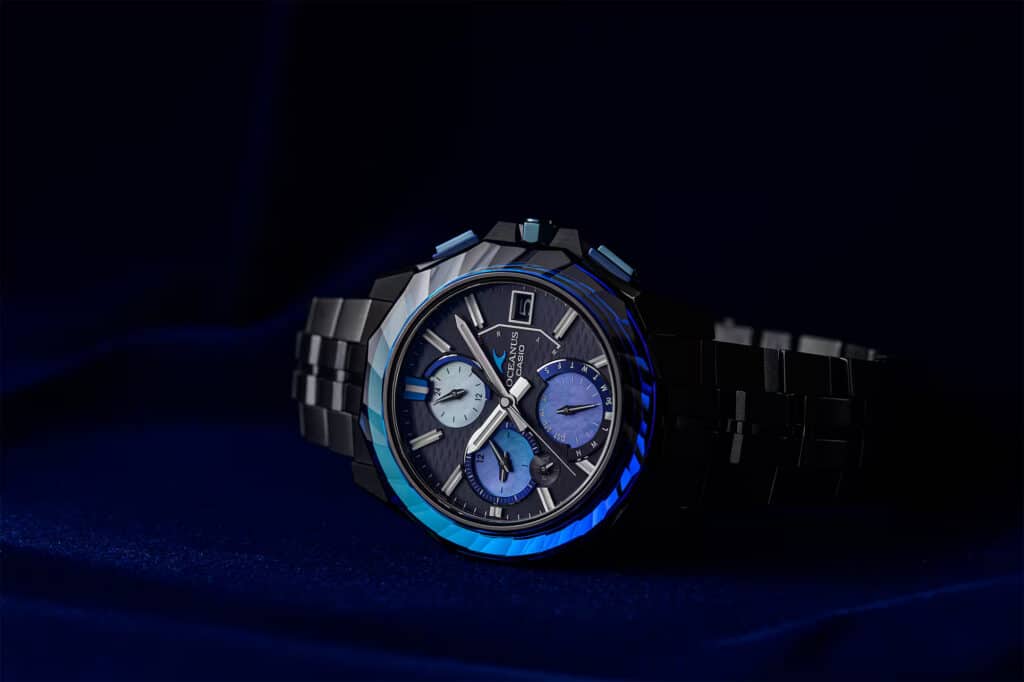
Casio’s Oceanus line has always been something of an outlier in the broader G-Shock and Edifice conversation. It doesn’t get the hype cycles, the Reddit threads, or the influencer wrist shots. And yet, the Manta series has built a reputation among collectors who appreciate Japanese craftsmanship pushed into a solar-powered, Bluetooth-connected package. The latest addition to the family, the OCW-S6000AP-1A, leans further into that artisan territory with a limited edition of 700 pieces tied to the traditional Awa indigo dyeing technique.
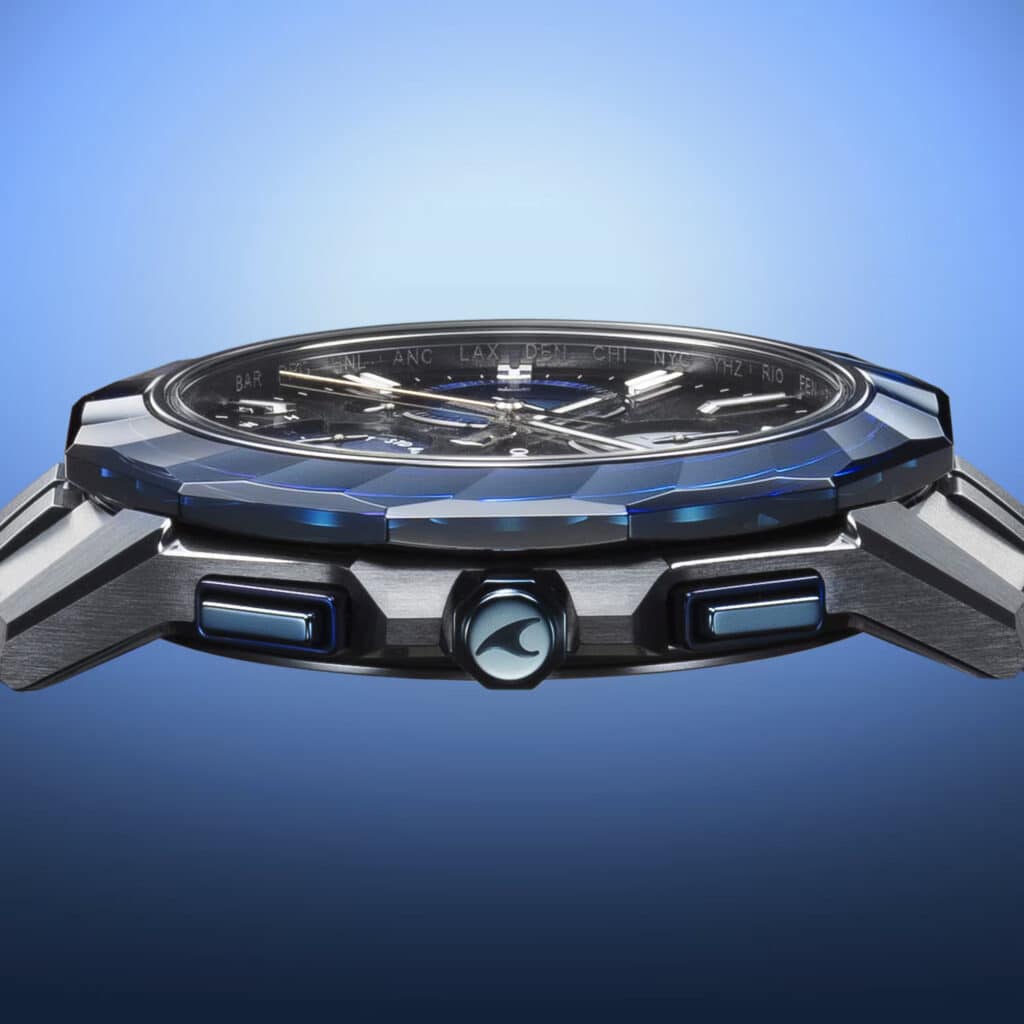
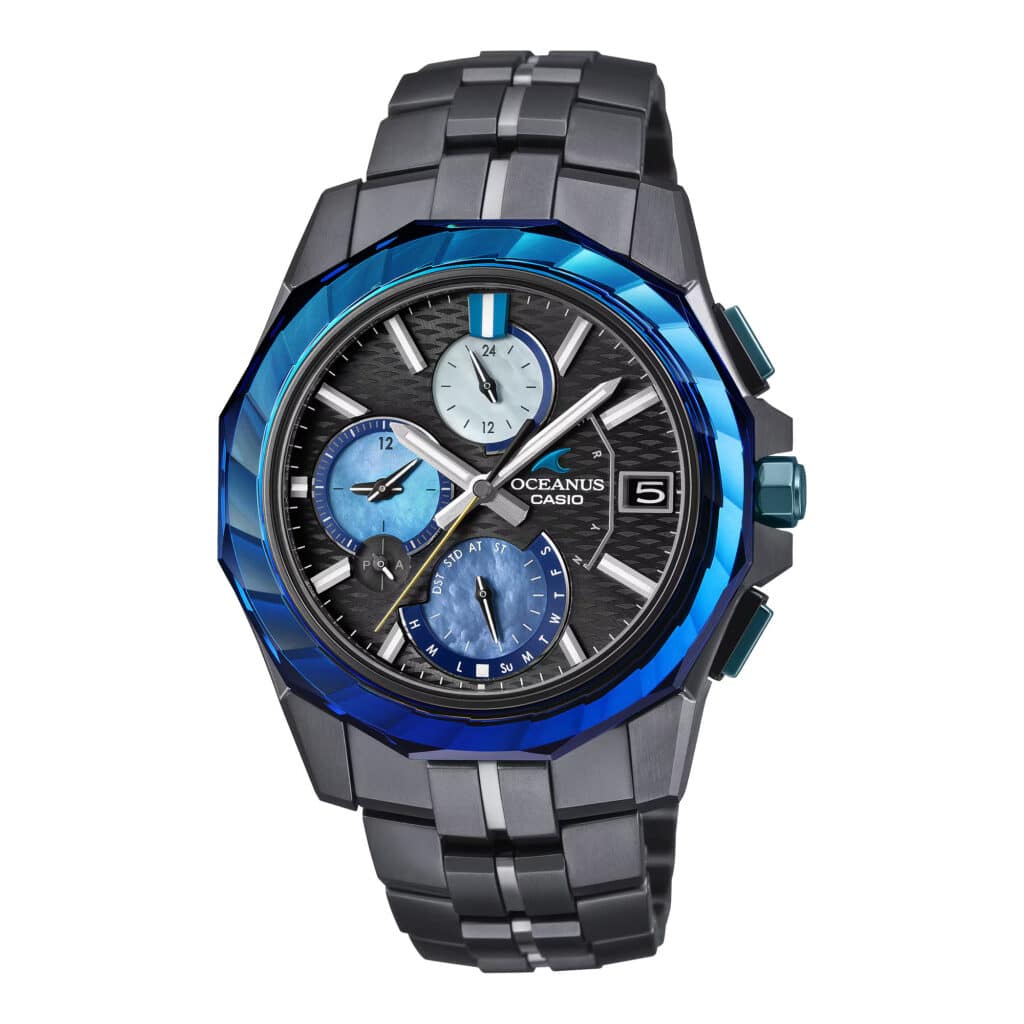
The “Indigo Ocean” theme isn’t entirely new for Oceanus. Casio has drawn from Awa indigo before, but the execution here feels especially deliberate. The sub-dials at six, nine, and twelve are crafted from mother-of-pearl treated with the dyeing process, each rendered in a slightly different shade of blue. Against the black wave-patterned main dial, they create a layered, almost tonal effect that pulls the eye inward. The sapphire bezel gets a spiral cut treatment that picks up and reflects those blue tones, tying the whole visual package together.
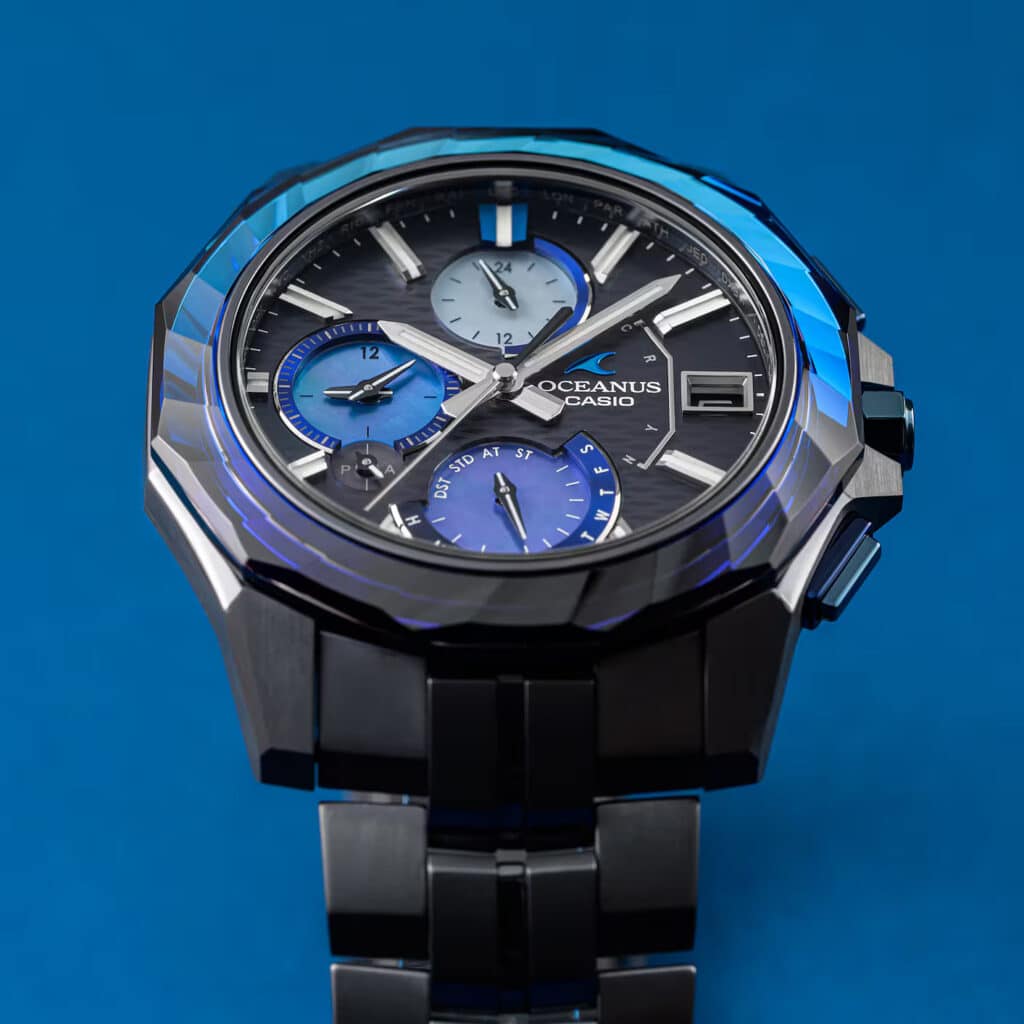
From a specs standpoint, the watch follows the familiar Oceanus Manta formula. The titanium case comes in at 47.1 × 42.5 × 9.2mm, which keeps the profile slim despite the larger footprint. You get Tough Solar charging, Multiband 6 radio synchronization across 27 cities, Bluetooth connectivity through Casio’s own app, and a power-saving mode. The dial layout covers date, day of the week, a second time zone, and a 24-hour indicator. Water resistance is rated at 100 meters. None of this will surprise anyone who’s followed the S6000 platform, but the full package remains impressively comprehensive for what is essentially a solar quartz watch.
What stands out here is the price. At ¥495,000 (roughly $3,100…wowzah), this is firmly in mechanical territory for a lot of collectors. Casio has been creeping the Oceanus line upward for a while, and a limited run of 700 pieces with artisan dial work does justify some premium. Still, the question of whether the broader market sees a solar-powered Casio at that price as aspirational or simply expensive is worth considering. The Oceanus faithful likely won’t flinch. For everyone else, it’s a harder sell when the floor for a solid Swiss mechanical starts in a similar neighborhood.
Sales in Japan begin June 12, and as with most premium Oceanus releases, international availability remains uncertain. It’ll be interesting to see how quickly the run moves and whether Casio continues pushing the Manta deeper into this artisan-craft positioning. The craftsmanship is clearly there. The audience for it, at this price, is the part that’s still sorting itself out, at least in my mind.

Co-Founder & Senior Editor
Michael Peñate is an American writer, photographer, and podcaster based in Seattle, Washington. His work typically focuses on the passage of time and the tools we use to connect with that very journey. From aviation to music and travel, his interests span a multitude of disciplines that often intersect with the world of watches – and the obsessive culture behind collecting them.