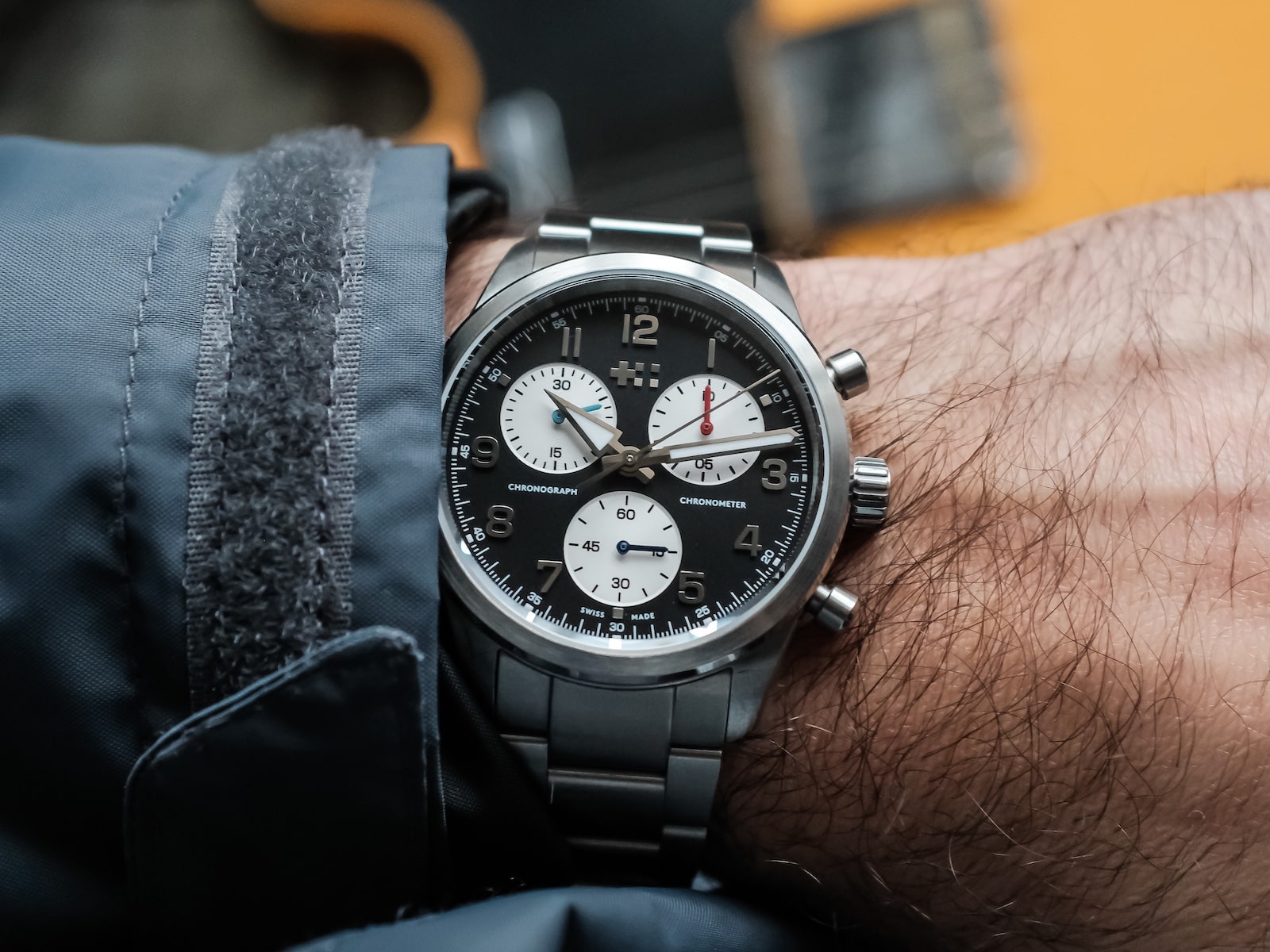
Over the years, I’ve spent a fair amount of headspace figuring out how I feel about Christopher Ward. Earlier in my collecting days, the brand felt up and coming, a bit experimental with its designs and branding, and somewhat difficult to pin down. Today, I see them as a focused, value-driven powerhouse with several releases that genuinely speak to me. While this certainly isn’t one of the newest hits from the brand, the watch that pulled me in was the Christopher Ward C63 Valour Chronograph introduced in 2024.
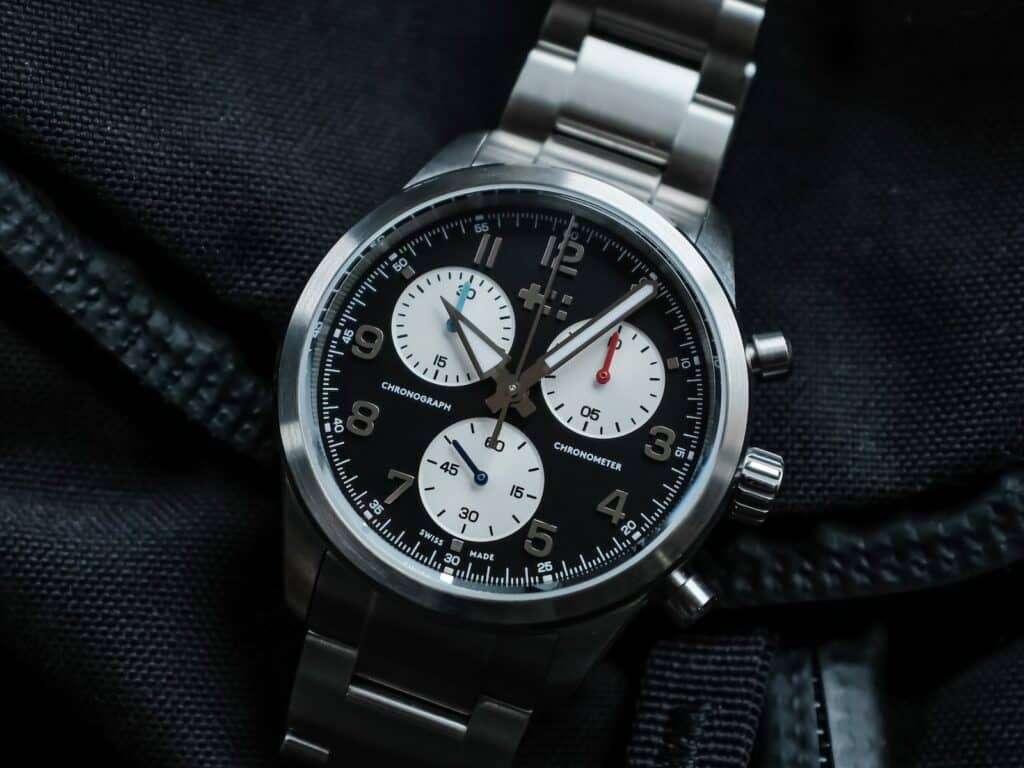
Part of their Military collection, it sits in an interesting spot within the lineup today. It’s the only chronograph currently in the catalog, and it carries Chronometer certification. Thankfully, Christopher Ward was kind enough to send one out recently so I could finally satisfy my lingering curiosity.
Christopher Ward’s Military collection carries a specific weight within the brand’s catalog. These aren’t casual vintage-inspired pieces with a vaguely military aesthetic. The collection has formal approval from the British Ministry of Defence, and the connection shapes both the design and technical expectations. The watches draw heavily from mid-20th-century military-issued timepieces, but they are built to modern standards, often with chronometer-certified movements and robust case construction that reflects real-world durability.
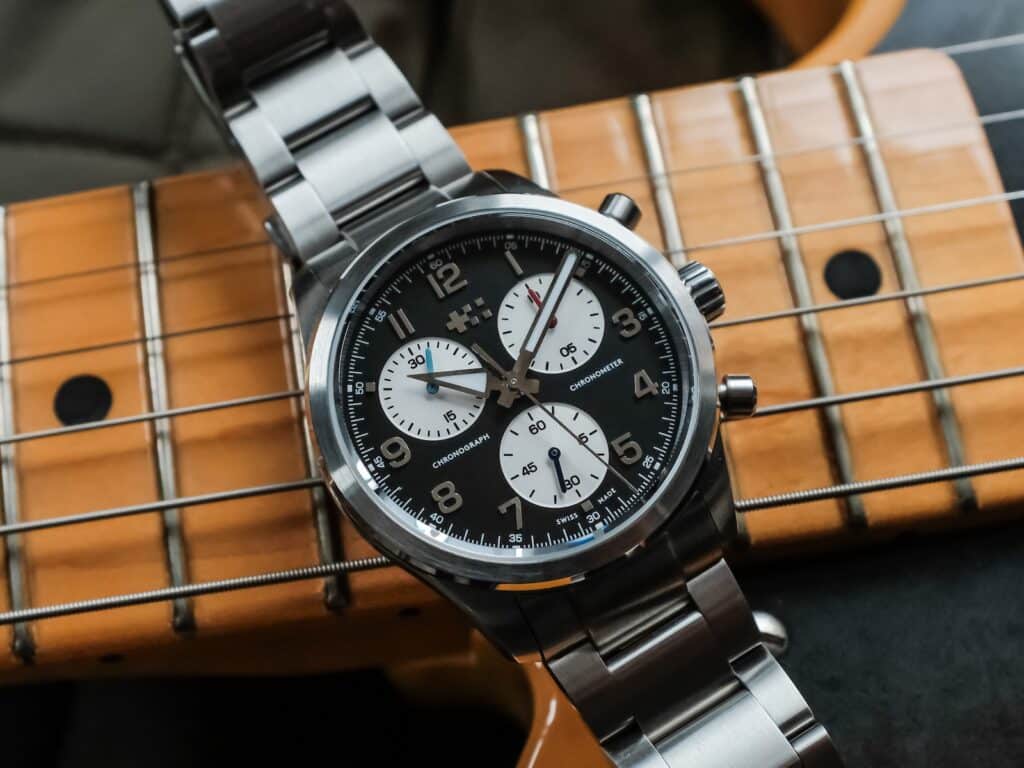
It’s an interesting lane for Christopher Ward to occupy. Designed in England and assembled in Switzerland, the Military line leans into heritage without abandoning the brand’s broader push toward higher finishing and tighter performance tolerances. In theory, it’s a blend of institutional legitimacy and contemporary execution. In practice, that balance can be difficult to get right, especially when you introduce something as mechanically involved as a chronograph into the mix.
Case and Experience
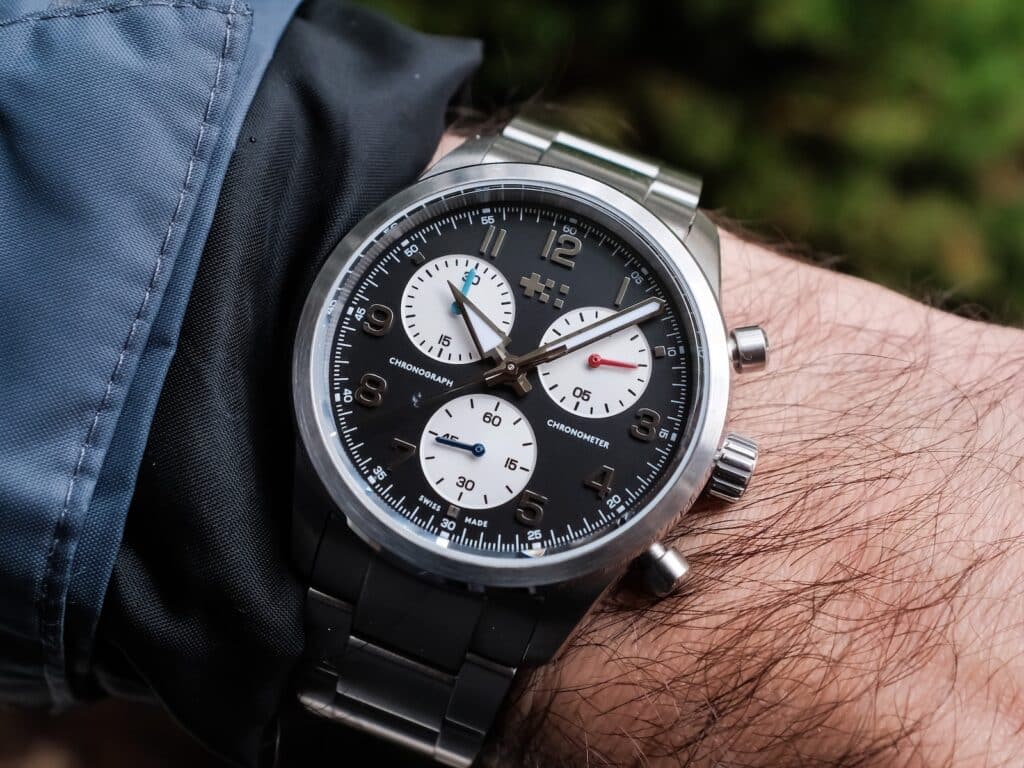
On paper, the Christopher Ward C63 Valour reads as restrained. The case comes in at 39mm across, 11.55mm thick, and just under 46mm lug-to-lug. Those are friendly numbers, especially for a chronograph, and on the wrist they translate to something compact and close-wearing. Paired with the Bader bracelet, the watch sits low and balanced, without the top-heavy feel that can plague thicker chronographs.
The dimensions suggest something lean, and the fact that this is a quartz chronograph might lead you to expect a lighter, more utilitarian presence. Instead, the case has real density. There’s a reassuring solidity to it that elevates the overall experience beyond what the spec sheet might imply.
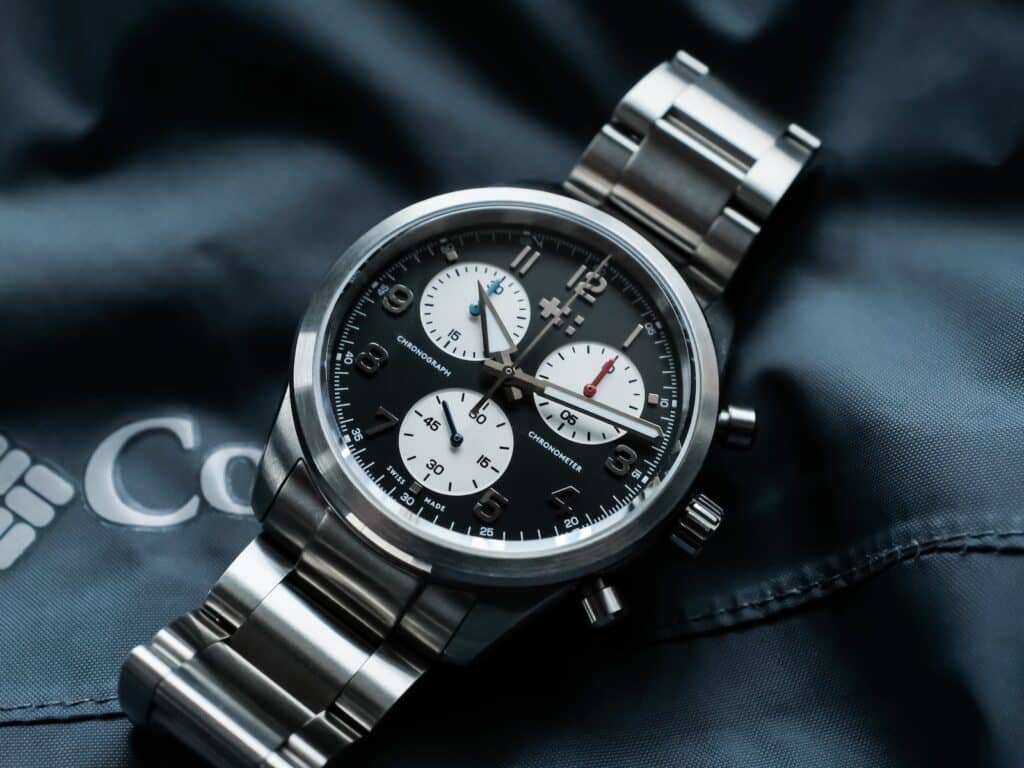
Christopher Ward refers to this as their Light-catcher case, and while I usually roll my eyes at branded case architecture, I have to admit the execution works. The interplay between brushed surfaces and sharper polished accents gives the watch a more dynamic presence as light moves across it throughout the day. It doesn’t read as purely tool-driven or strictly military in its personality. There’s a dressed-up edge to it, which makes it feel more versatile than a straightforward field chronograph.
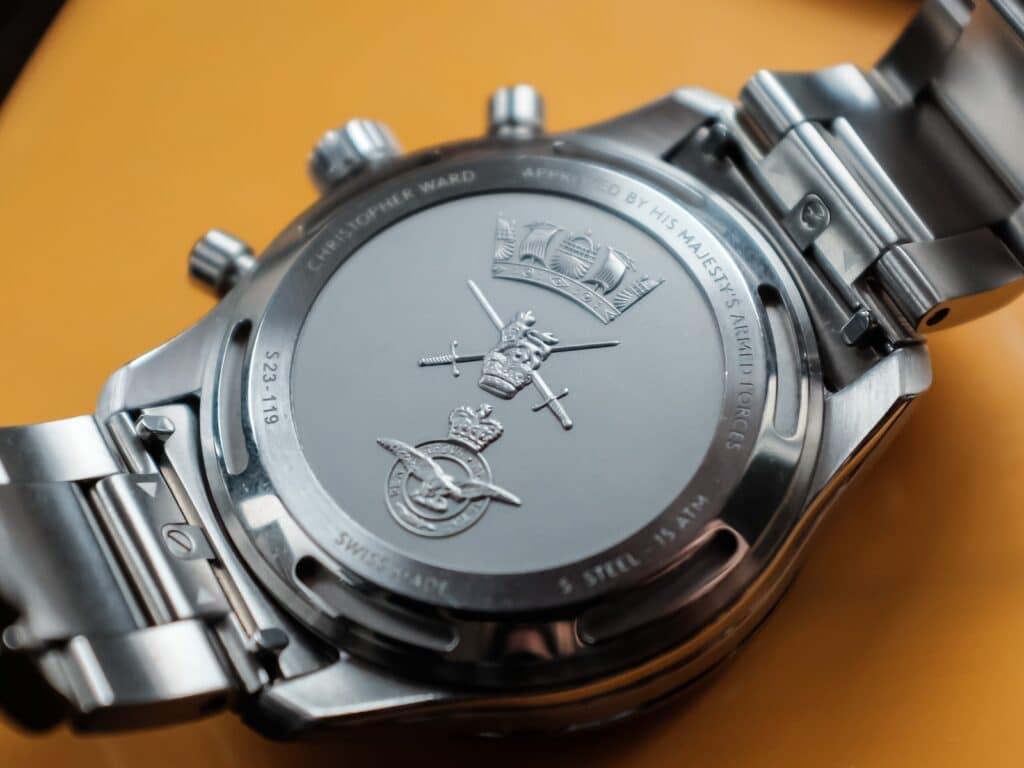
Flip it over and you get the heraldic crest representing the Army, Navy, and RAF, deeply engraved into the caseback. Around the perimeter sits the inscription noting its approval by His Majesty’s Armed Forces. The engraving has depth and clarity, and it reinforces that this isn’t just aesthetic borrowing. Whether that matters emotionally will depend on the collector, but as a piece of execution, it’s impressive.
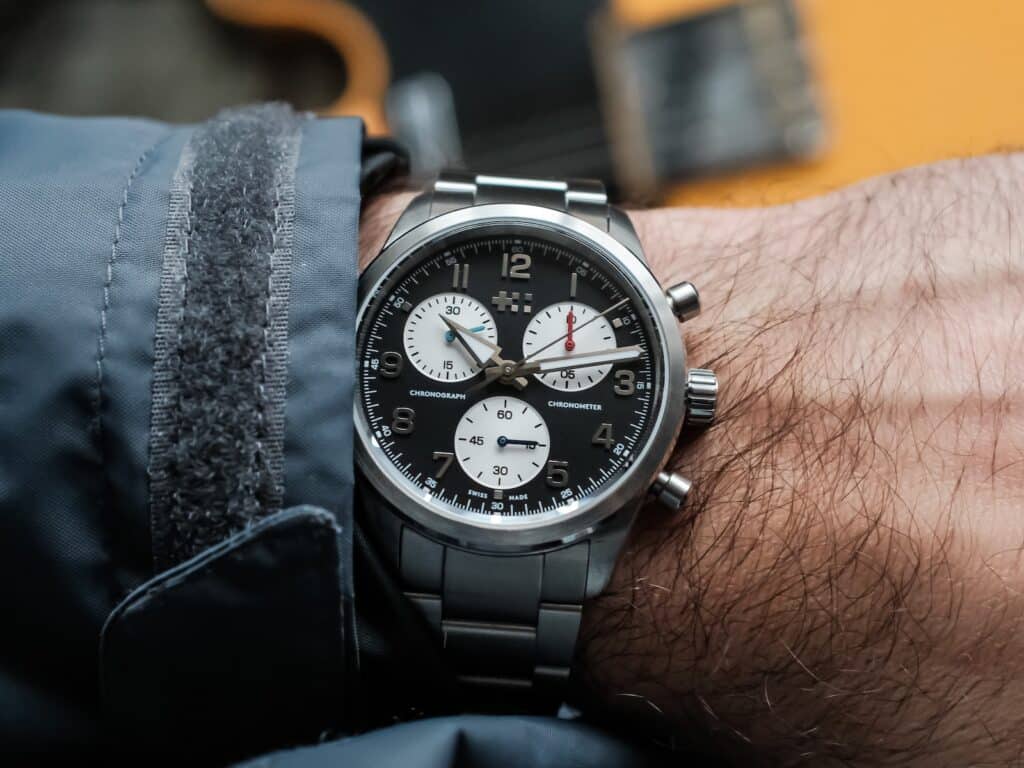
The chronograph is operated by a pair of proud pump pushers that stand off the case. They’re prominent without feeling oversized, and they make actuation easy. The screw-down crown supports 150 meters of water resistance, which is more than most chronograph owners will realistically use but adds to the sense that this is built to handle more than desk duty.
I’ll admit, part of my enthusiasm here might be tied to the fact that I’ve been craving a well-executed quartz chronograph for a while. Still, even stepping back from that bias, the case construction and overall wrist experience feel genuinely strong.
Dial and Legibility
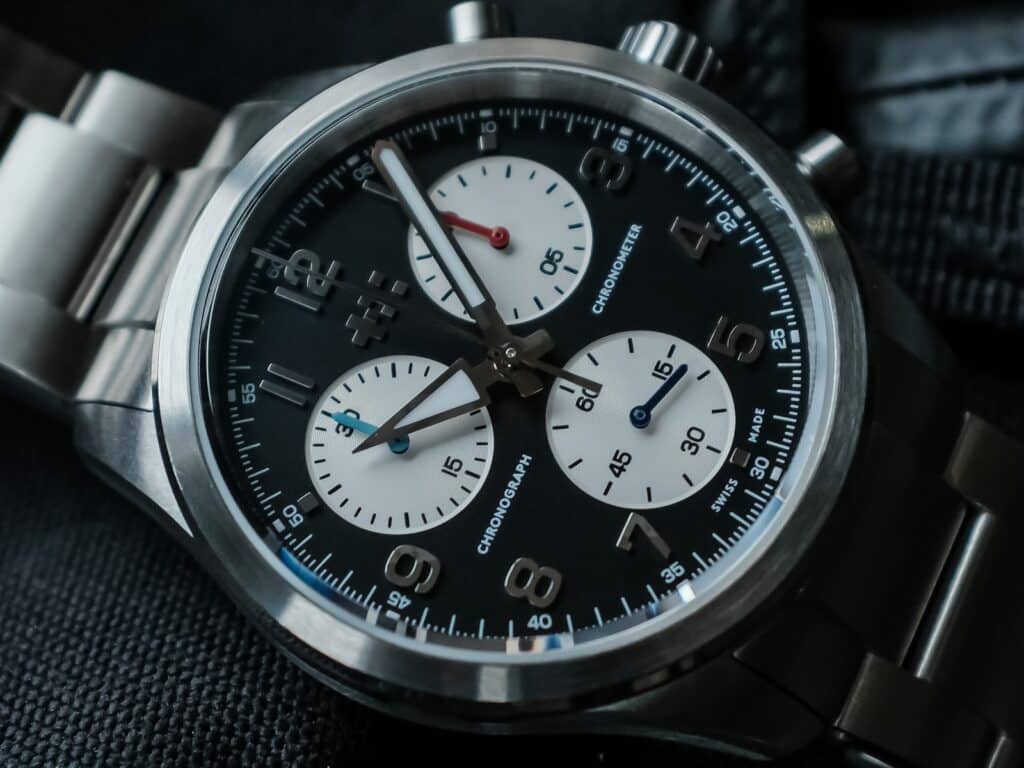
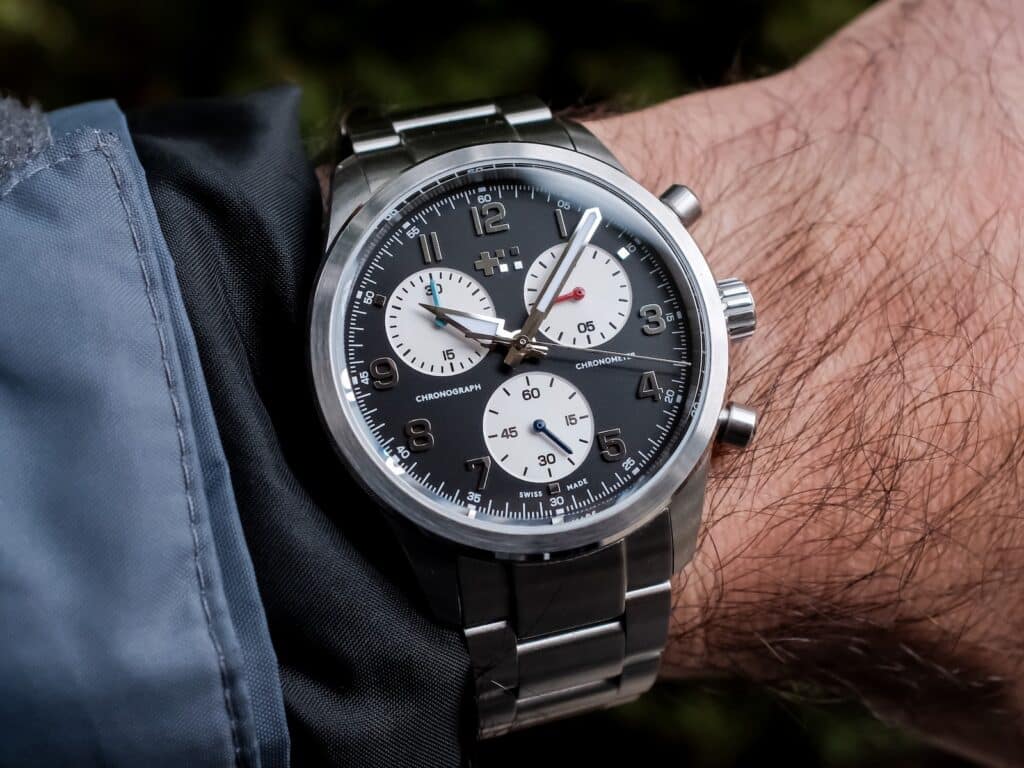
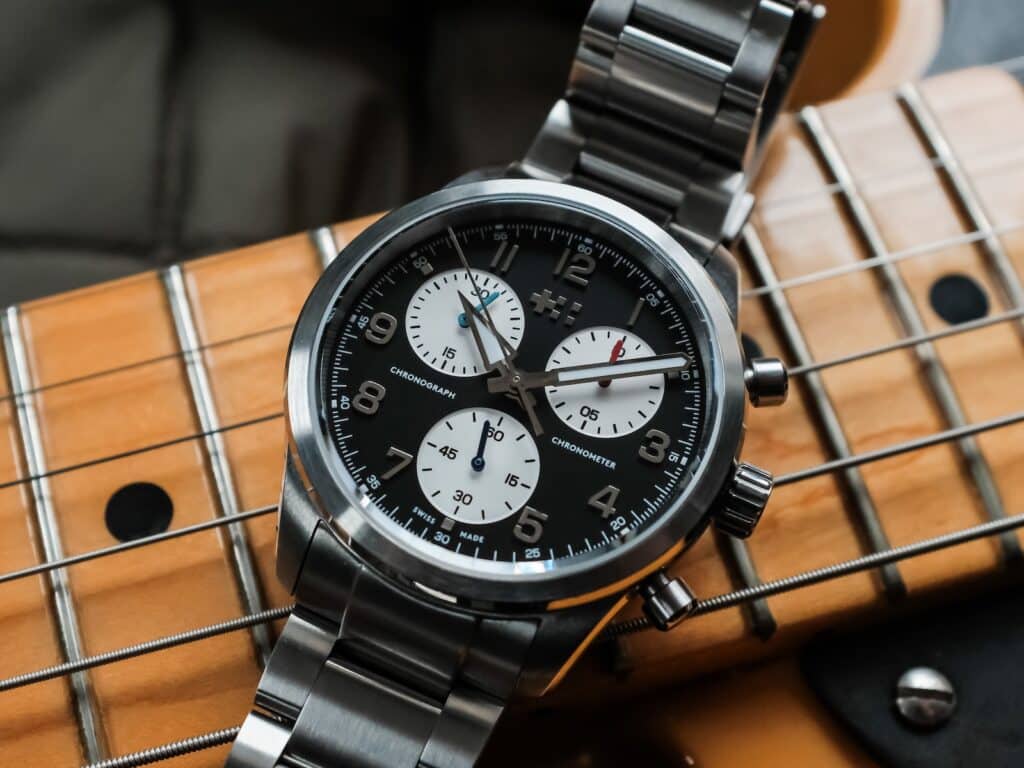
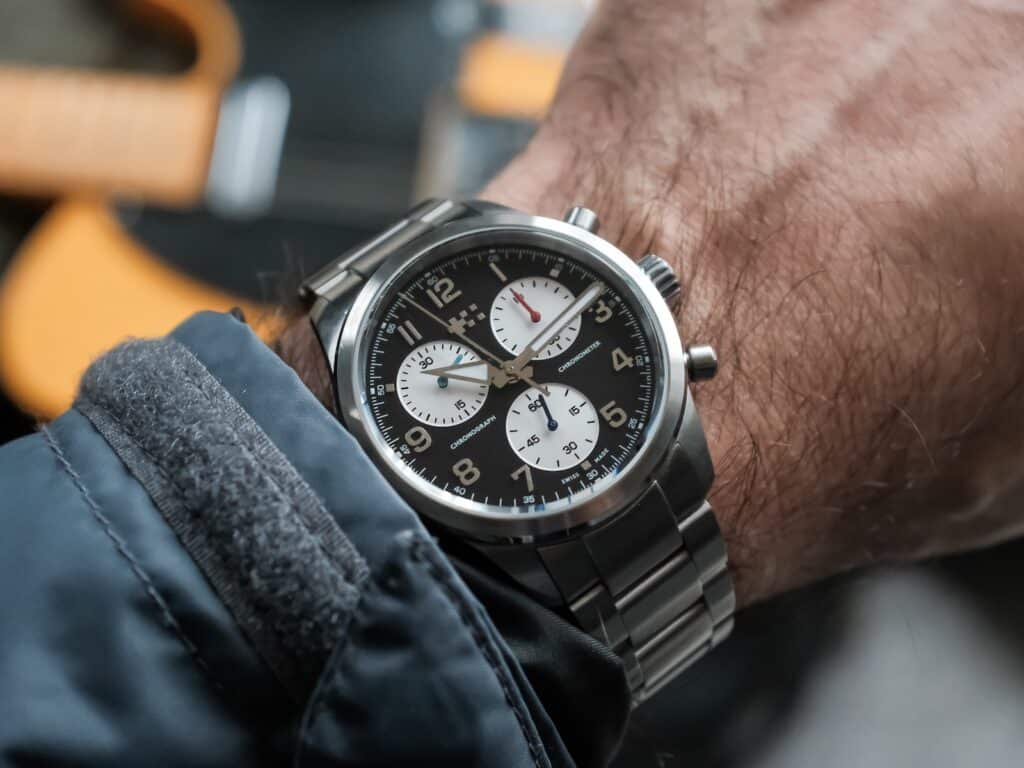
The Christopher Ward C63 Valour uses a reverse panda layout, with a matte black base and contrasting white sub-dials. It’s a familiar chronograph formula. Each of the three sub-dials carries a seconds hand colored to represent a branch of service: red for the Army, dark blue for the Navy, and light blue for the RAF. It’s a small detail, but one that feels more than decorative.
Functionally, the layout is straightforward. Running seconds sit at six o’clock, a 30-minute counter lives at ten, and the 1/10th of a second display occupies the two o’clock position. Everything remains high contrast and easy to parse at a glance. Even with multiple colors in play.
What really elevates the dial for me are the applied Arabic numerals. They’re diamond polished and highly reflective, catching light in a way that feels closer to something you’d expect from a more traditionally luxury-leaning chronograph. Like the case, they create a constant shift in character depending on lighting conditions. In brighter light, they sparkle. Indoors, they settle down to almost black, but retain crisp definition. I never found myself struggling for legibility, and that’s partly because those polished surfaces outline the numerals clearly against the darker dial.
The Christopher Ward flag logo at twelve receives the same applied treatment, tying everything together visually. And again, this isn’t what I typically associate with a purely utilitarian military watch. For me, that’s a positive. It feels like Christopher Ward’s interpretation of what a modern military-inspired chronograph could be, rather than a strict reproduction exercise.
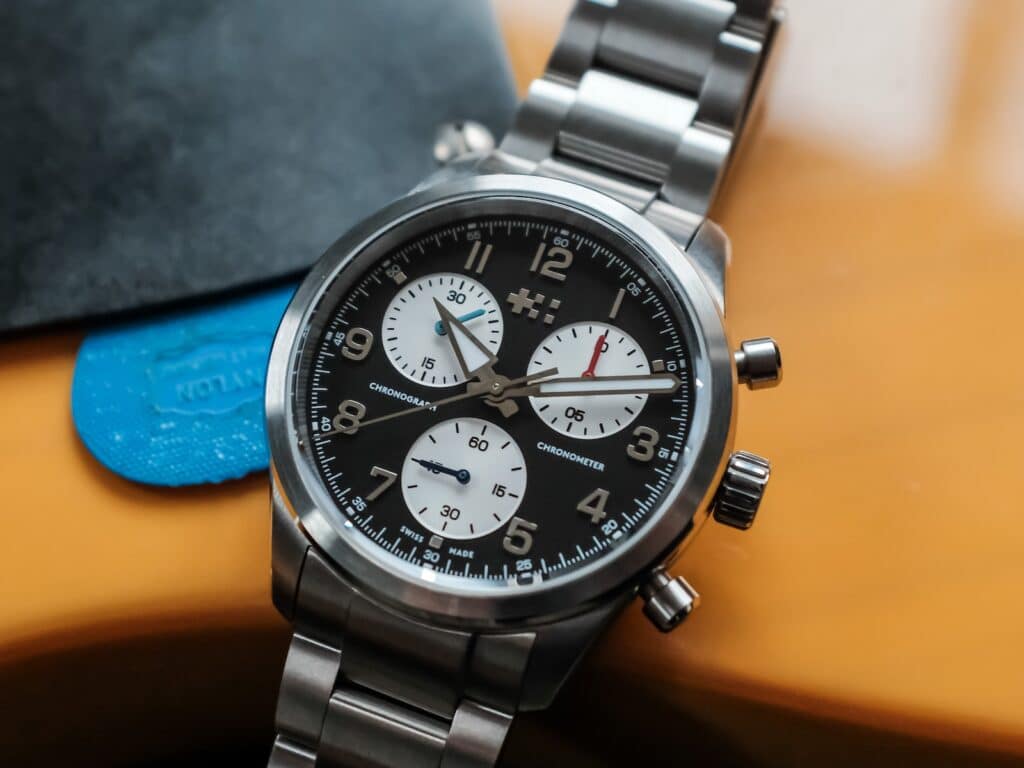
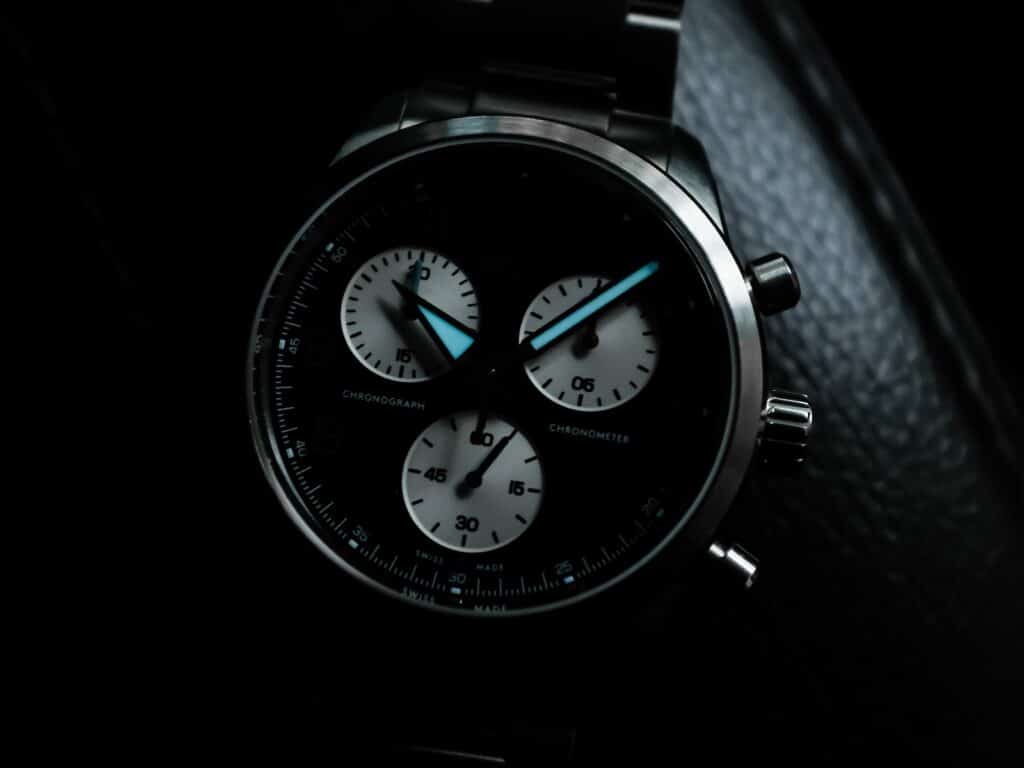
The handset supports that clarity. The hour and minute hands are bold, filled generously with Super-LumiNova X1 BL C1, and easy to track in both daylight and low light. Lume performance is strong without drifting into overstatement. One detail I appreciated more than I expected was the absence of the brand’s trident counterweight on the center seconds hand. I’ve never fully connected with that design cue, and this dial feels more balanced without it.
Movement and the Quartz Question
They didn’t go the easy route here with the Christopher Ward C63 Valour. There’s no meca-quartz compromise, no off-the-shelf budget module dropped in to hit a price target. Inside is the ETA G10.212 AD COSC, a quartz chronograph that’s rated to ±10 seconds per year. Per year. That level of precision is rare in this territory, especially under the $1,000 mark, and even more so in a chronograph.
The movement undergoes a 13-day COSC testing protocol across multiple temperatures and varying humidity levels to validate its thermal stability. That might sound clinical on paper, but in practice it translates into something very simple. I set the watch once, and I stopped thinking about it. Weeks passed. It remained spot on. There’s a freedom in that consistency that mechanical chronographs simply don’t offer, even the expensive ones.
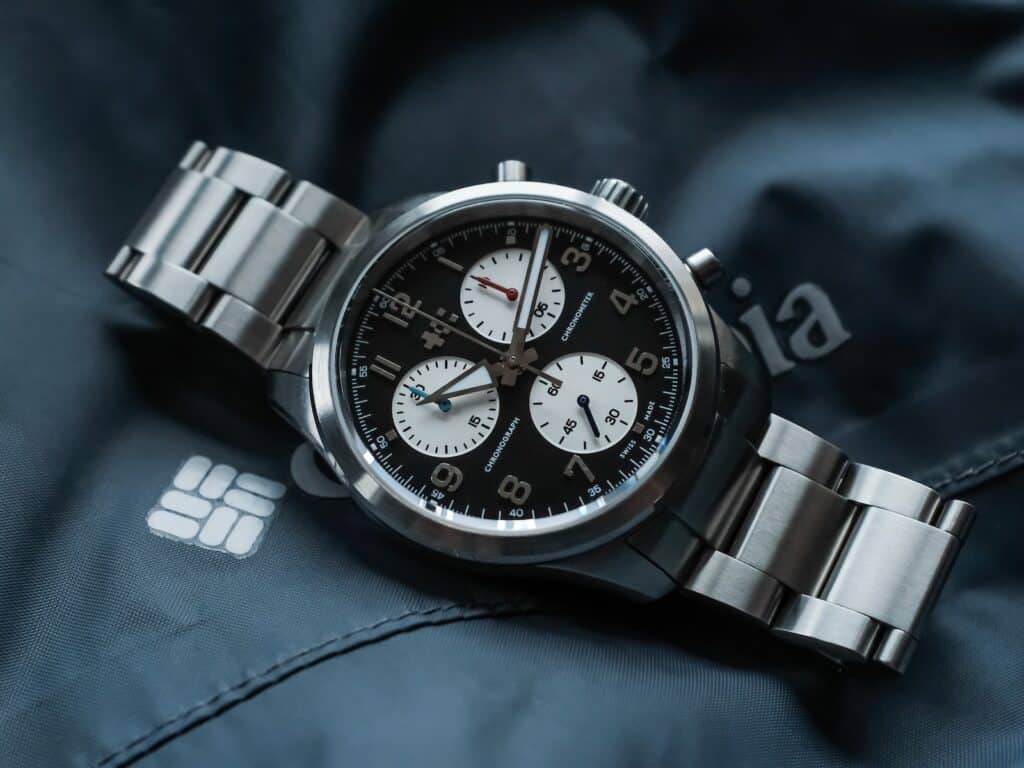
Actuation through the pump pushers is crisp, and the reset action is genuinely satisfying. The hands snap back to zero with a dance that feels super engineered and entertaining. It’s one of those small mechanical-adjacent pleasures that quartz skeptics rarely talk about. Now, I’m aware that for many collectors, quartz is a dealbreaker regardless of how advanced or regulated it may be. I can explain thermocompensation, COSC certification, and annual deviation rates all day long. It won’t matter for some people. Mechanical romance runs deep in this hobby.
For me, though, this movement reinforces the intent behind the watch. It prioritizes consistency, durability, and accuracy over theater. And in a chronograph that leans into military legitimacy, that feels appropriate. I genuinely don’t have complaints here. The movement has been reliable, precise, and refreshingly low-maintenance. After the novelty wears off, that kind of stability starts to matter more than I expected.
Bracelet and Daily Wear
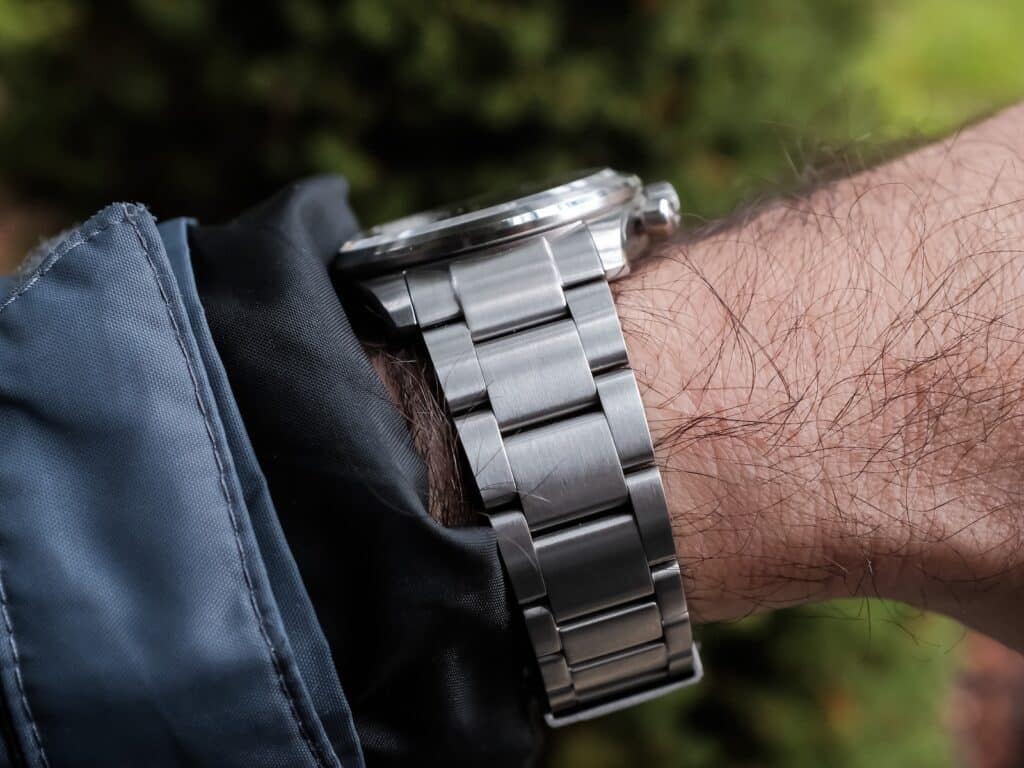
The Valour comes fitted to Christopher Ward’s Bader bracelet, integrated cleanly into the 20mm lugs. It’s their interpretation of a classic Oyster-style layout, and it feels familiar in a good way. The links are secured with screws rather than friction pins, and there’s a generous mix of full and half links, which made dialing in the fit straightforward.
There’s a noticeable taper from 20mm at the lugs down to roughly 16mm at the clasp. On the wrist, that taper helps the watch feel more refined than the military positioning might suggest. It pulls some of the visual weight downward and keeps the overall profile from feeling blocky.
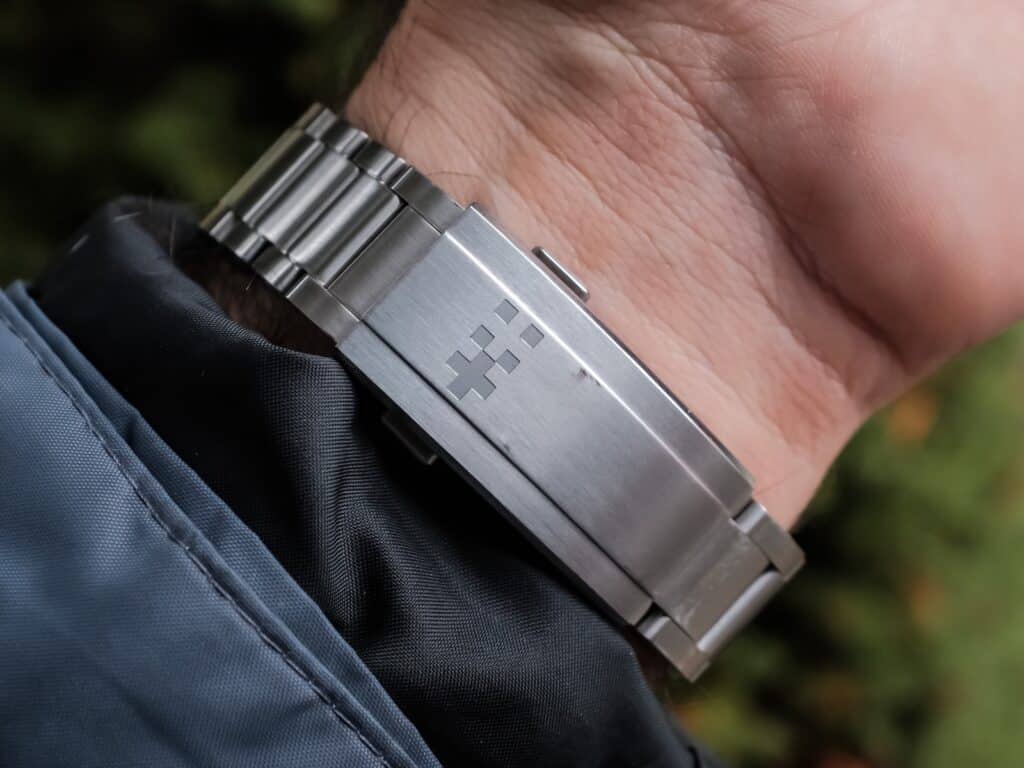
The clasp uses a dual push-button system with a simple on-the-fly extension underneath. It’s not an elaborate micro-adjustment system, but it works. During warmer days, being able to expand it slightly without tools made a real difference. The quick-release spring bars are another practical touch. If you prefer straps, swapping over is painless. And because this is a standard 20mm lug width, you’re not locked into proprietary options.
In day-to-day wear, the bracelet has been comfortable and easy. The only minor quirk I’ve noticed is a faint squeak from the links when moving throughout the day. It’s subtle, and from what I’ve read it tends to diminish over time as the bracelet settles in. Still, it’s worth mentioning. It doesn’t undermine the experience, but it’s there. Overall, the bracelet supports what the case and movement are already doing. It keeps the watch feeling substantial, balanced, and practical without tipping into overbuilt territory.
Where It Stands Today
Even though the Christopher Ward C63 Valour launched in 2024, I keep coming back to the idea that it represents something important. The brand has had some headline-grabbing releases recently, pieces that showcase real engineering ambition and attract a lot of attention. The C63 Valour occupies its own space in the catalog, and there’s nothing else they make that overlaps with it directly.
Part of me likes to imagine this as Christopher Ward’s interpretation of the RAF-issued chronographs that followed earlier contract transitions, or even the CWC Bangladesh Air Force pieces that sit deep in the nerdier corners of military watch history. That lineage may exist more in my head than in official documentation, but the watch carries that spirit convincingly.
Are there quirks? Sure. The bracelet’s faint squeak is real. The dressed-up finishing might feel at odds with someone seeking pure tool austerity. And for some, the buy-in will feel high for a quartz chronograph, even one with COSC certification.
Still, at $945 in this configuration, it feels thoughtfully positioned. More importantly, it earns its place in my mental shortlist of modern military-inspired chronographs that balance performance with refinement. I didn’t expect to obsess over it the way I have.
And if I’m honest, I don’t think this design has run its course. There’s room for it to evolve. A white dial true panda variant would be compelling, especially paired with the Consort bracelet for a slightly different personality. For now, though, this one clarified my feelings about where Christopher Ward stands today. And sending it back will be harder than I’d like to admit.

Co-Founder & Senior Editor
Michael Peñate is an American writer, photographer, and podcaster based in Seattle, Washington. His work typically focuses on the passage of time and the tools we use to connect with that very journey. From aviation to music and travel, his interests span a multitude of disciplines that often intersect with the world of watches – and the obsessive culture behind collecting them.
Overrated company, way overpriced watch.
Hi, Harlan:
We strongly believe that Chr. Ward has come a long way over the last few years in regard to the quality they’re putting out and how they’re trying to evolve their product offerings. I think it may be easy to feel the brand is overrated because we are by no means the only watch media outlet that speaks very highly of them. But it’s our opinion that based on our hands-on reviews with Chr. Ward pieces, that the praise is justified. But again, that’s our opinion and not everyone is going to agree.
In regard to the price of the watch, if someone is in the market for a quart chronograph with a clean military design, there are certainly more budget friendly options out there. However, what informs the price of the Valour here is the build quality, accuracy, movement, and the provenance/impetus of its design.
Thank you for reading and sharing your thoughts on the piece.
Best,
-Kaz
I appreciate the readability, the prominence of the subdials. Definitely appears to be function forward without sacrificing style. I’ve always felt that quartz chronographs get overlooked but when you’re in the market for reliable accuracy, why not? Definitely a piece to consider.
I’m so bummed I had to send this one back
As a Speedy wearer for the past 55 years, I’m impressed. My niggling complaints would be that I would prefer it had a day/date complication and markers instead of Arabic numerals.
That would be a nice combination. I still think Christopher Ward has a lot of room to experiment with this watch.