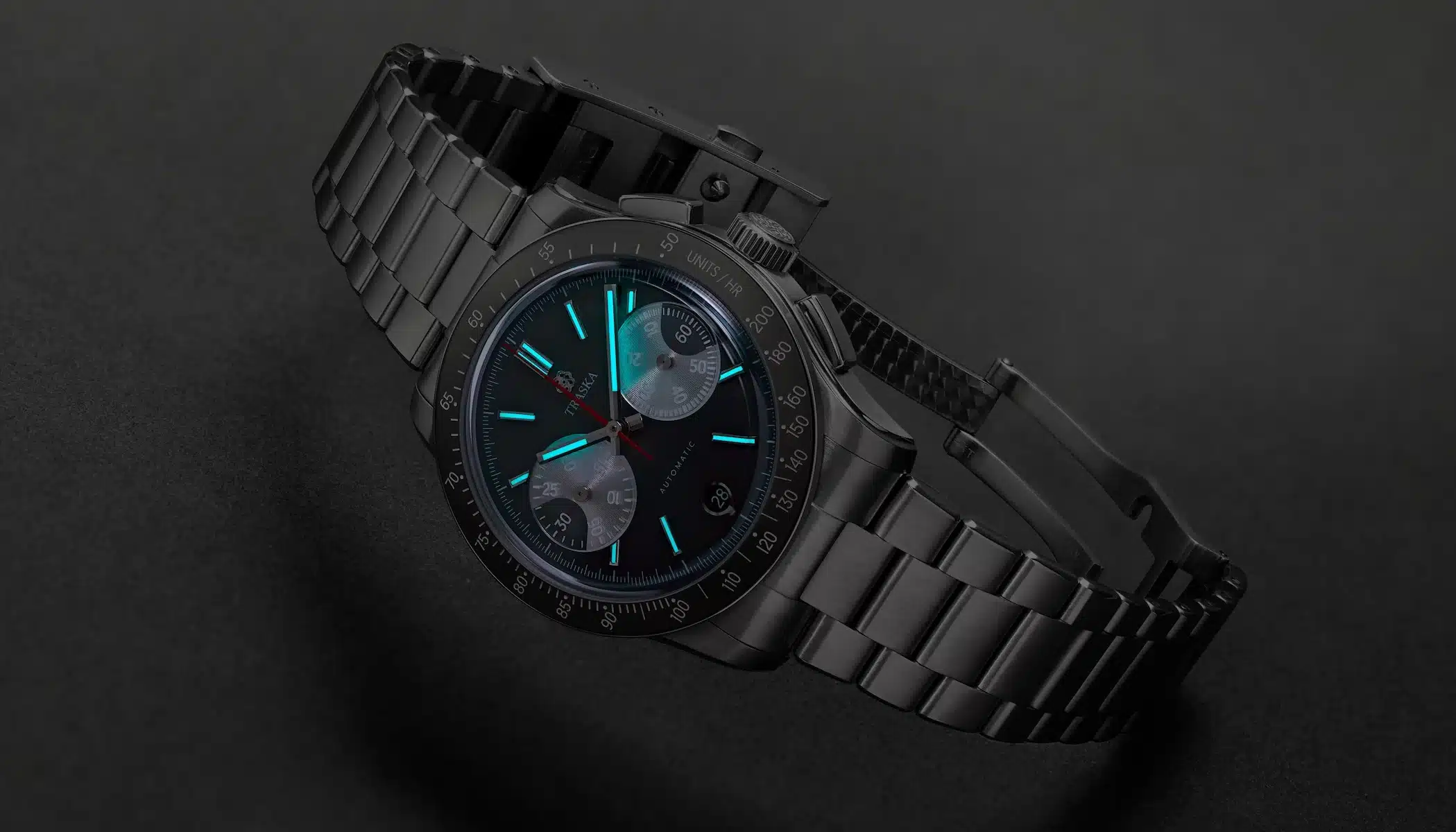
It’s been amazing to see Traska evolve over the years, along with the deep enthusiast-driven following the brand has nurtured. I still love the fact that I got to review one of the divers a while back. But this feels like a totally new brand these days. The new Traska Chronograph reads like a brand working through a set of design problems in public and inviting collectors to follow the logic. Traska has built its reputation on functional restraint and material durability, and this Traska Chronograph fits squarely within that lineage while allowing itself a few deliberate departures from convention. Let’s go!
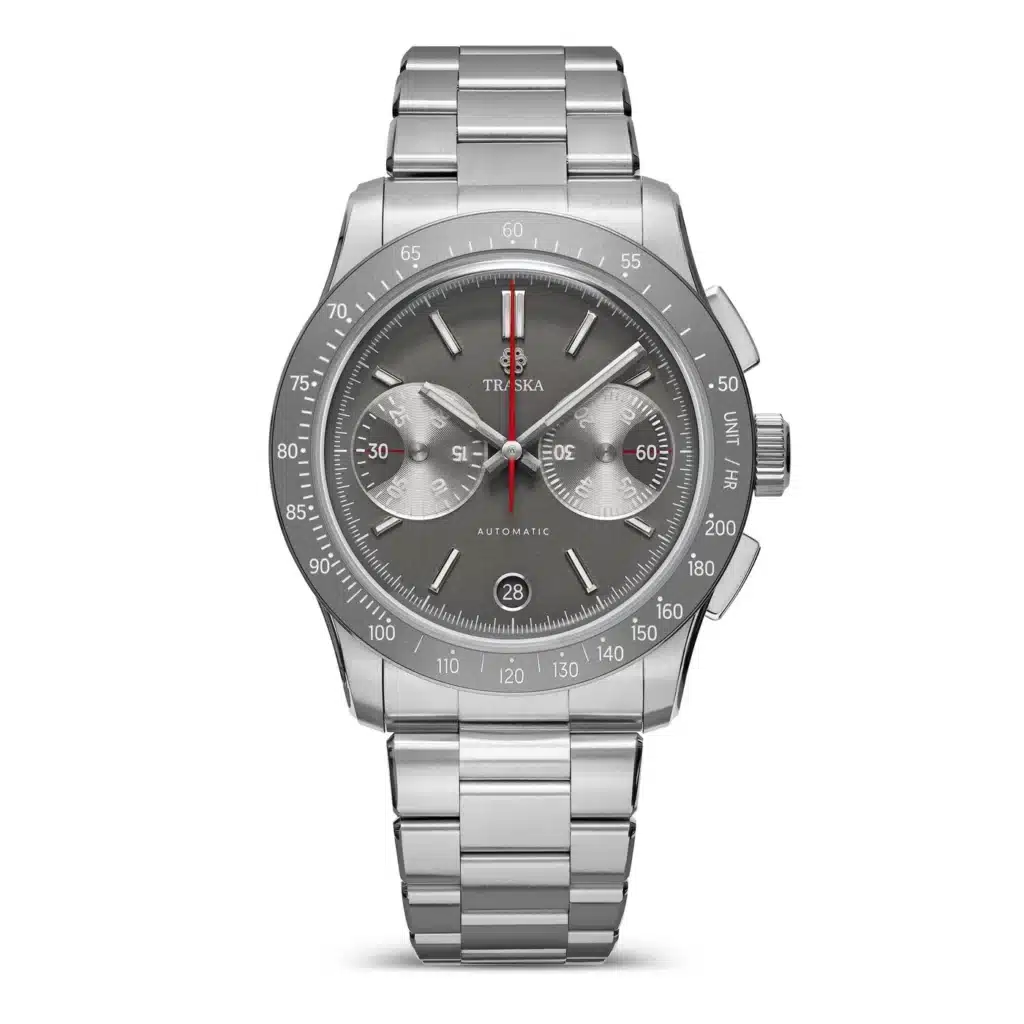
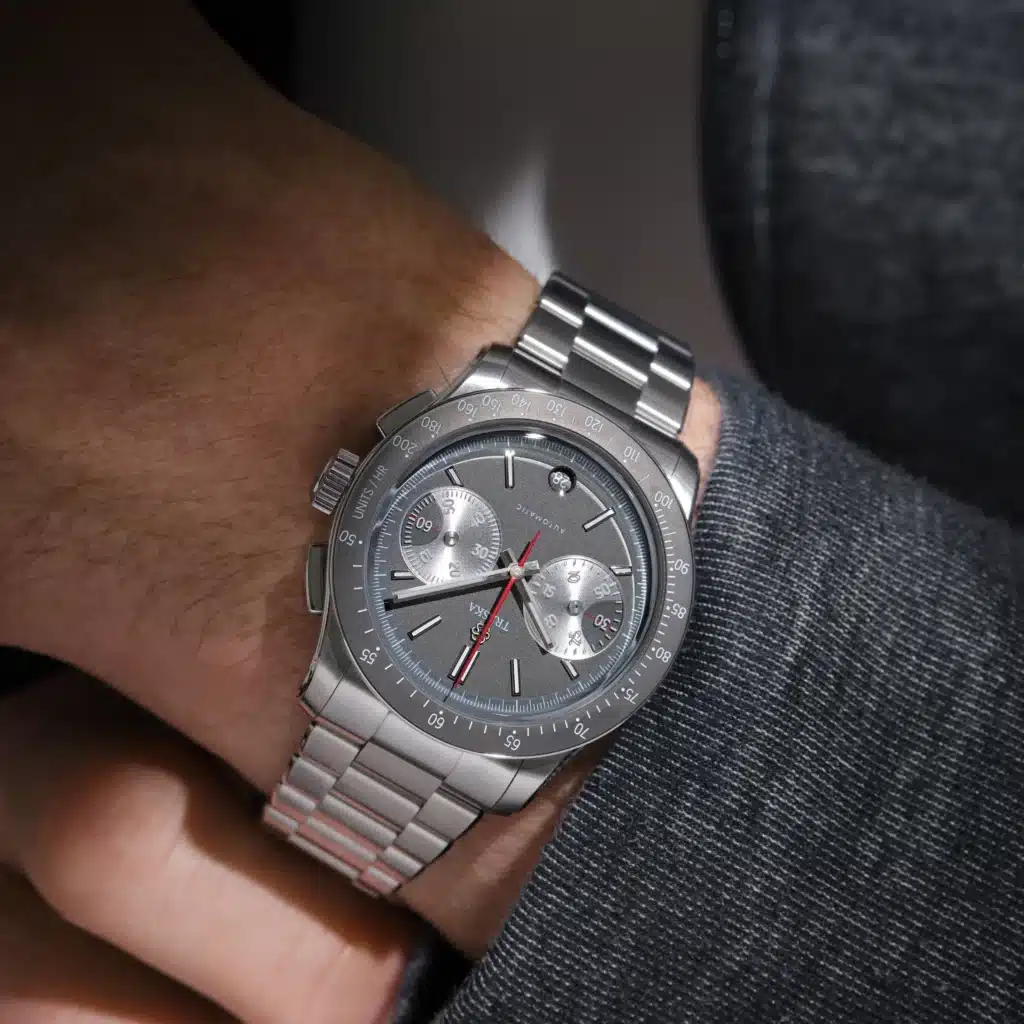
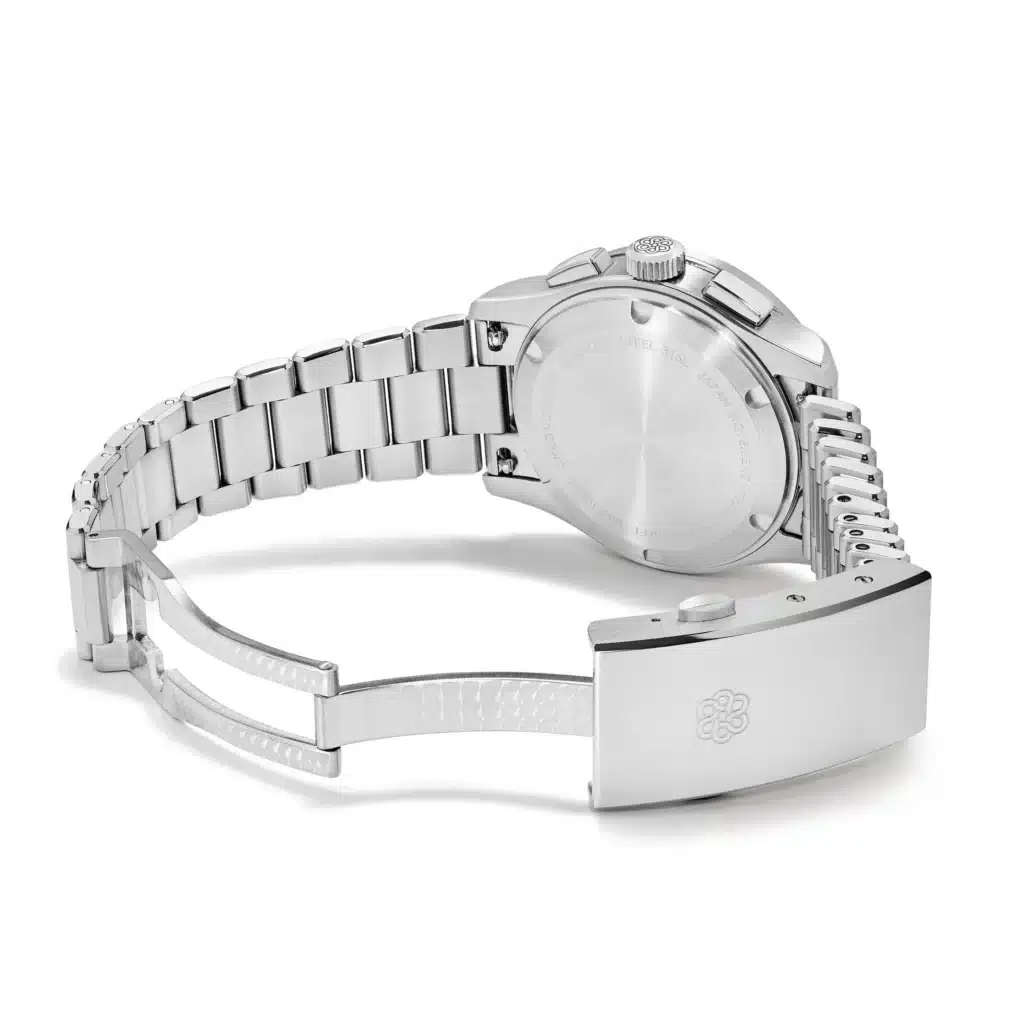
At first glance, the proportions set expectations. A 39mm case diameter paired with a 46.5mm lug to lug length places the watch in familiar, wearable territory for most wrists, while the 13.75mm thickness including the crystal acknowledges the realities of a modern automatic chronograph movement. The case seems to avoid visual heaviness (something I was worried about, considering the movement choice) through its shaping, with concave cutouts along the flanks that soften the profile and keep the watch from reading as blocky. A 21mm lug width gives the watch a slightly broader stance, which is then pulled back by a bracelet that tapers decisively to 16mm at the clasp. That taper does a lot of work in keeping the overall silhouette balanced rather than top-heavy.
The dial architecture is where Traska makes its clearest statement. Two symmetrical sub-dials replace traditional hands with transparent rotating discs. Elapsed minutes are shown on the left and running seconds on the right, with numerals appearing to float above printed red index lines. It’s a novel, unconventional solution, but one that stays legible and orderly because the symmetry is carefully maintained. The absence of sub-dial hands reduces visual congestion and reinforces the sense that every element has been considered for a reason rather than novelty.
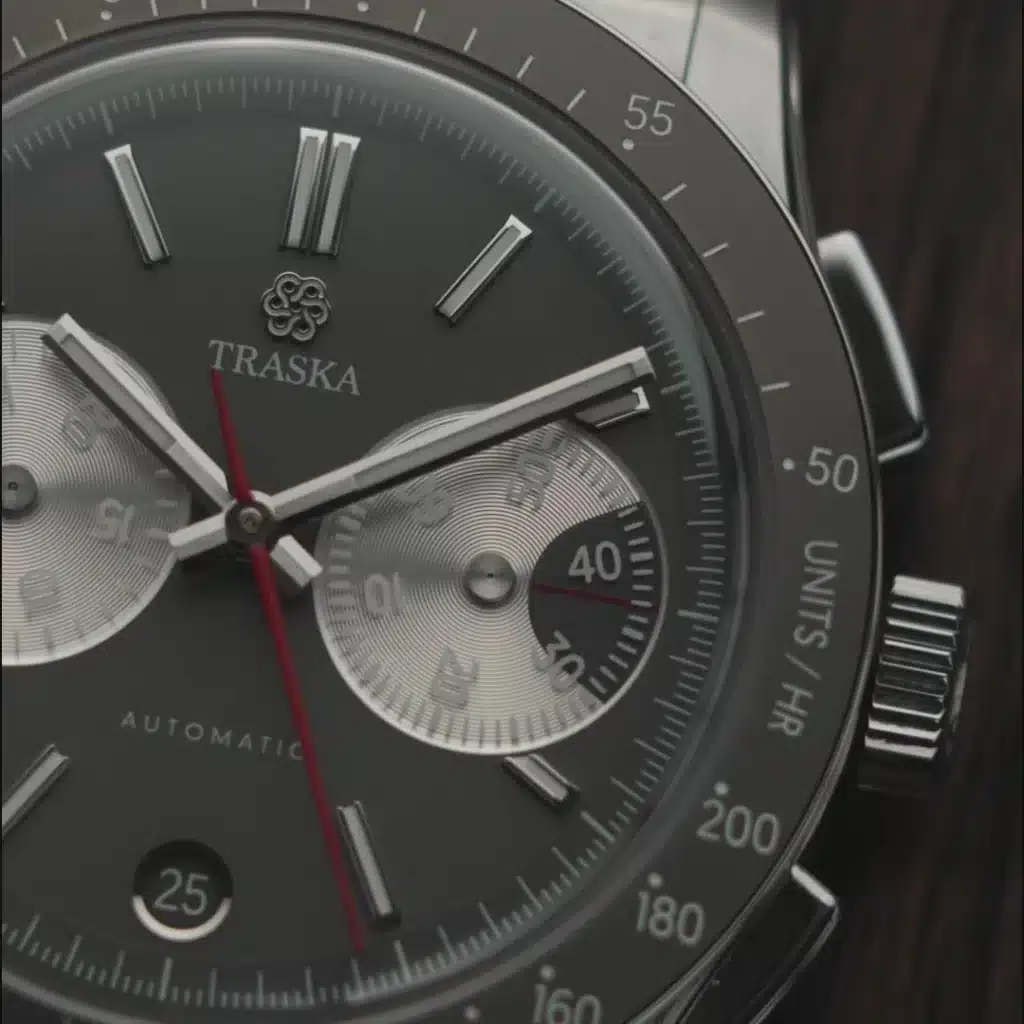
Framing the dial is a tungsten tachymeter bezel, calibrated to measure speeds between 50 and 200 units per hour. Tungsten is an unusual choice, but it aligns with Traska’s broader emphasis on durability. The brand’s signature steel hardening process is applied to the rest of the case, and the bezel material is selected specifically to stand alongside that hardened steel without becoming the weak point. The result is a watch that presents itself as purpose-built, with materials chosen to age consistently rather than unevenly.
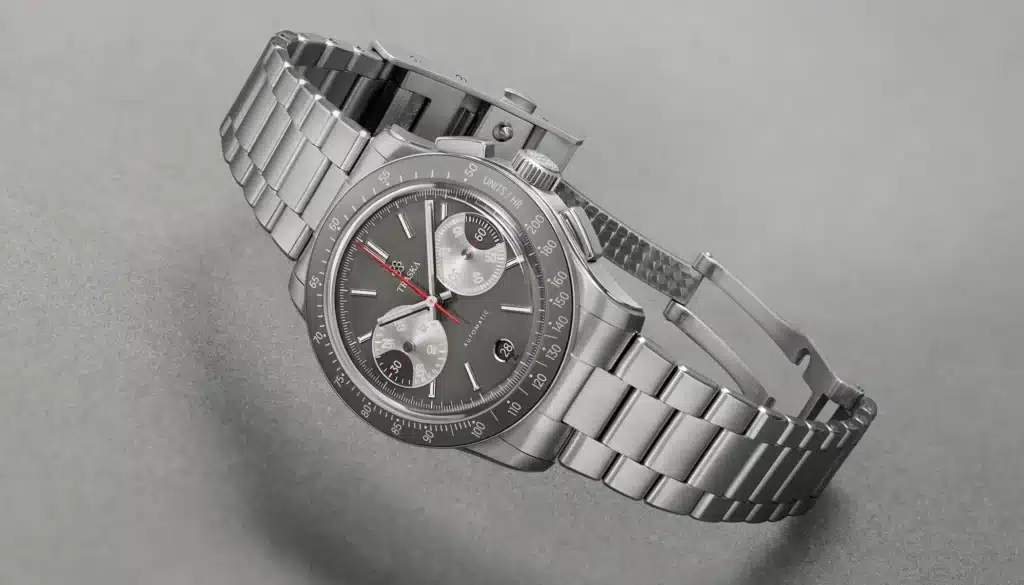
The chronograph pushers lean into that functional aesthetic. Their square shape contrasts with the otherwise restrained case design, adding a note of industrial character without overwhelming the watch. Water resistance is rated at 75 meters, reinforcing that this is a chronograph intended for regular use rather than careful rotation.
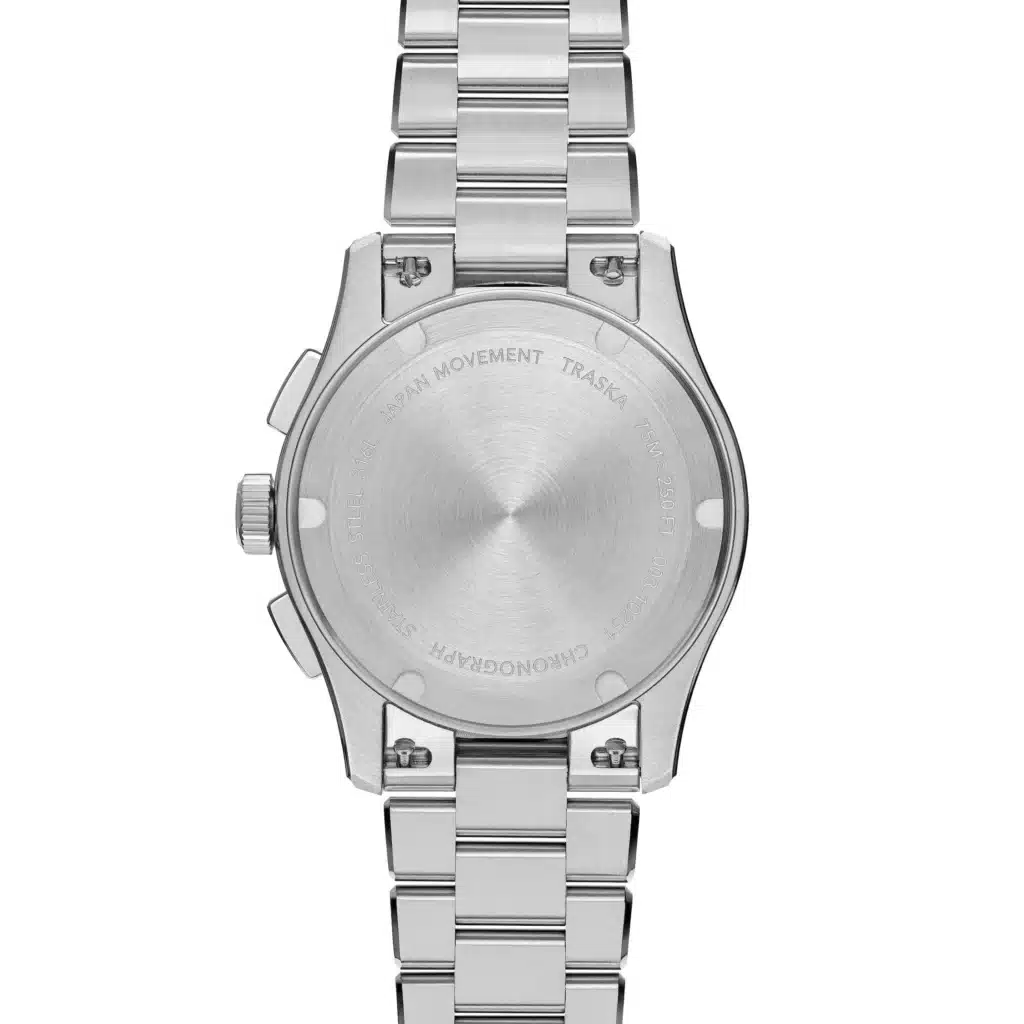
Powering the watch is the Seiko NE86, a movement choice that reflects pragmatic priorities. Traska evaluated Swiss alternatives before settling on the NE86 for several specific reasons. It is 0.3mm thinner than its closest competitor, which directly impacts the final case thickness. It uses a column wheel to reduce wear over time, and its vertical clutch allows the chronograph to run continuously without mechanical stress. These are choices that shape how the watch is built and how it’s expected to be used.
The Chronograph launches in a single colorway, Tungsten Gray, with limited availability. The first 100 pieces are scheduled to ship immediately at launch on March 1 at 11:00 AM ET, with remaining orders expected to follow in mid to late April. Pricing is set at $1,650 and to me, this is a lot of chronograph for the money. There are no reservations, and any future production would require a minimum seven month lead time.
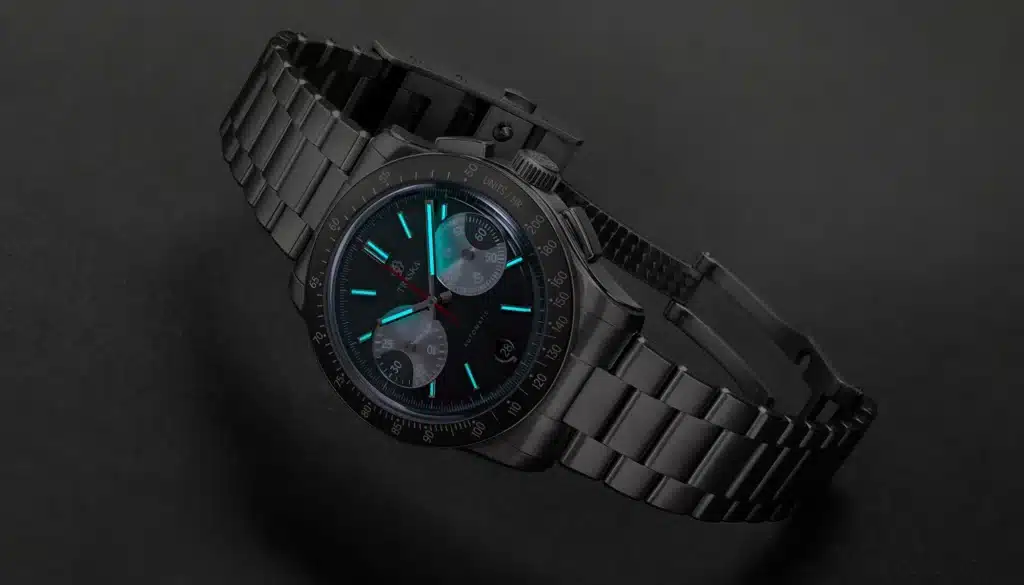
Taken as a whole, I think the Traska Chronograph feels like a controlled experiment that stayed within the brand’s established boundaries. It introduces new visual mechanics, a solid chronograph movement, and a distinctive material choice, all while maintaining proportions and construction that reflect long-term usability. For collectors who value clarity of intent over spectacle, this release offers a clear view into how Traska thinks about modern tool-oriented watchmaking. In other words … I’d rock the heck out of this thing.

Co-Founder & Senior Editor
Michael Peñate is an American writer, photographer, and podcaster based in Seattle, Washington. His work typically focuses on the passage of time and the tools we use to connect with that very journey. From aviation to music and travel, his interests span a multitude of disciplines that often intersect with the world of watches – and the obsessive culture behind collecting them.