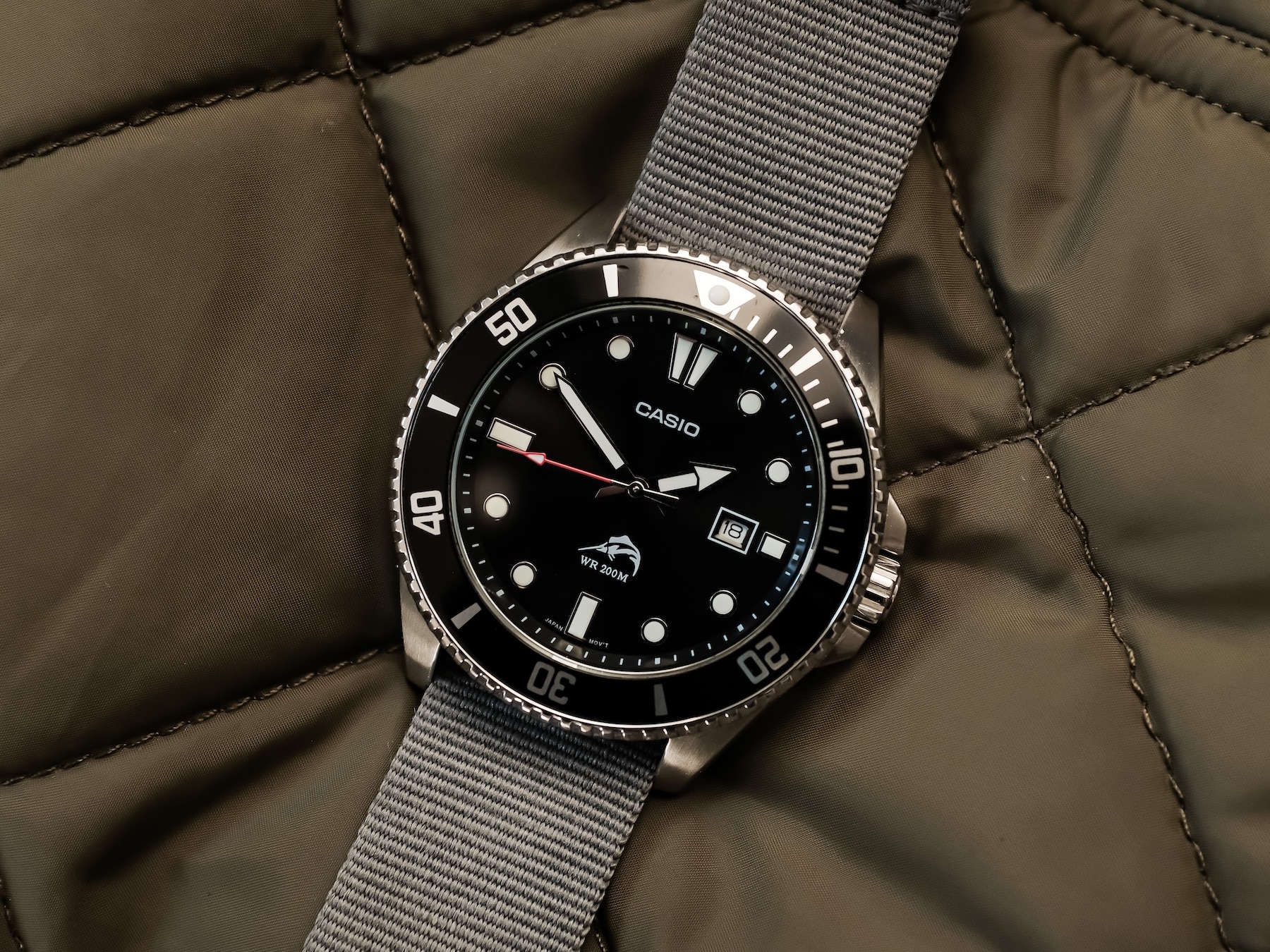
I’m a little embarrassed to admit this, but in nearly ten years of TBWS, I’ve never actually owned a Casio Duro. I’ve barely even spent meaningful time with one. That feels wrong when I say it out loud, because this is a watch that has existed in plain sight for a long time now. I even wrote about it years ago, right around the period when it started showing up very publicly on Bill Gates’ wrist, and it was already taking on that strange second life where a very ordinary watch becomes something people rally around. Outside of that, my only real exposure before now amounted to a few brief moments handling Kaz’s personal Duro. Enough to register what it was, but never enough to understand why this thing refuses to go away.
Context and First Impressions
There’s a whole corner of the internet that treats the Duro like a shared secret. r/DuroGang alone has grown into its own small universe, which is a strange thing to wrap your head around when you step back and remember what this watch actually is. That kind of collective fixation doesn’t usually form around accident or novelty alone, especially not at this price point.
So when a friend offered to lend me his Casio Duro for a proper review, it felt like a long-overdue nudge. Like a chance to finally spend real time with a watch that’s been circling the edges of my collecting life for years. I was genuinely curious to see what sticks once the mythology fades and all that’s left is wrist time.
Case, Proportions, and Wear
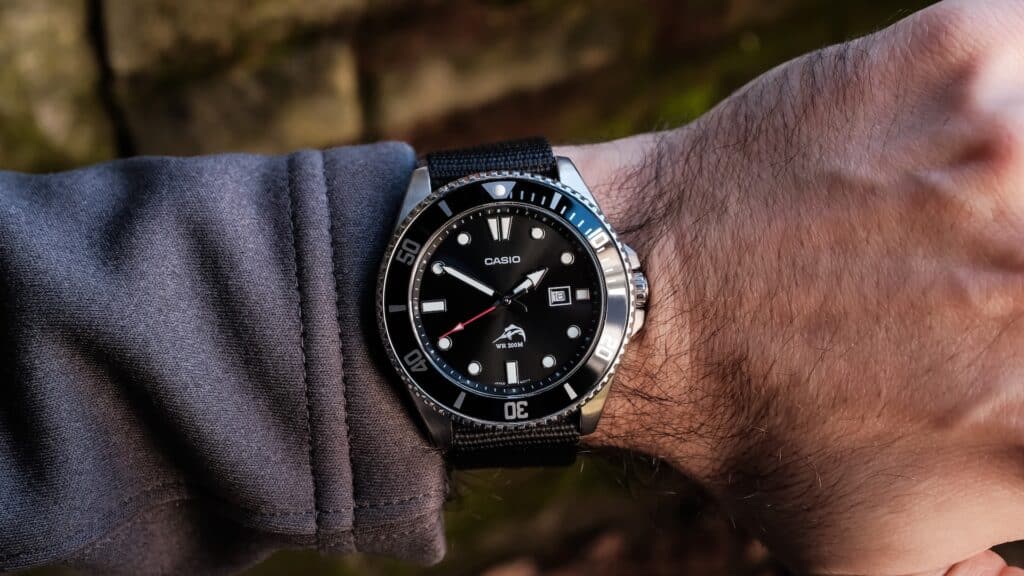
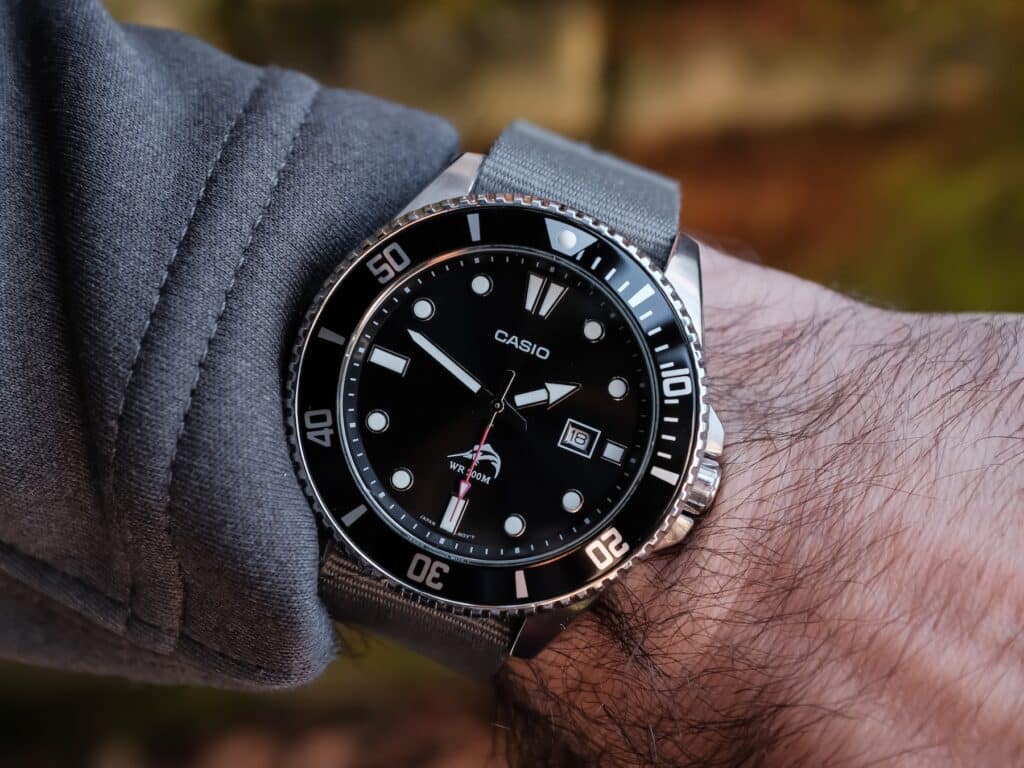
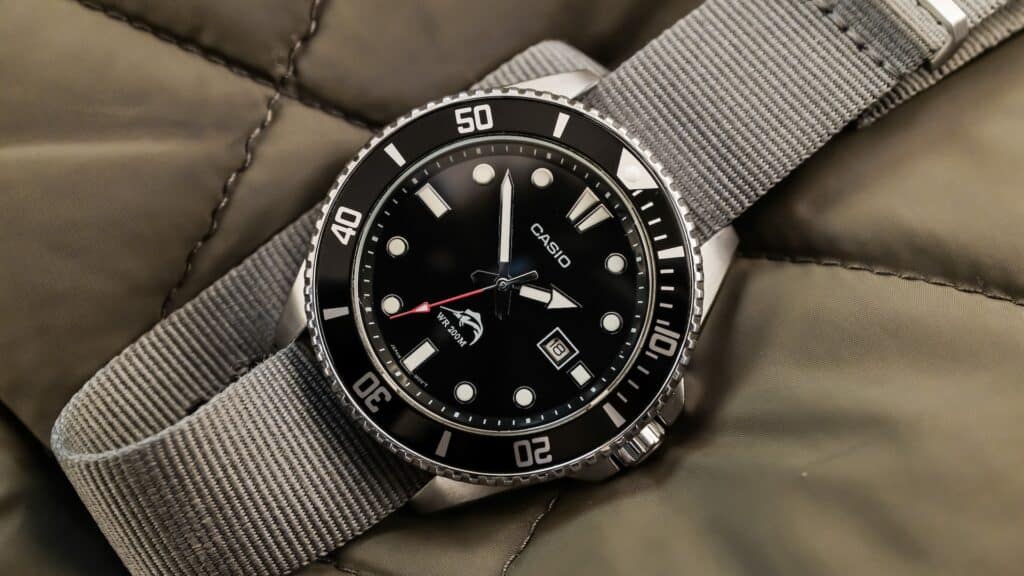
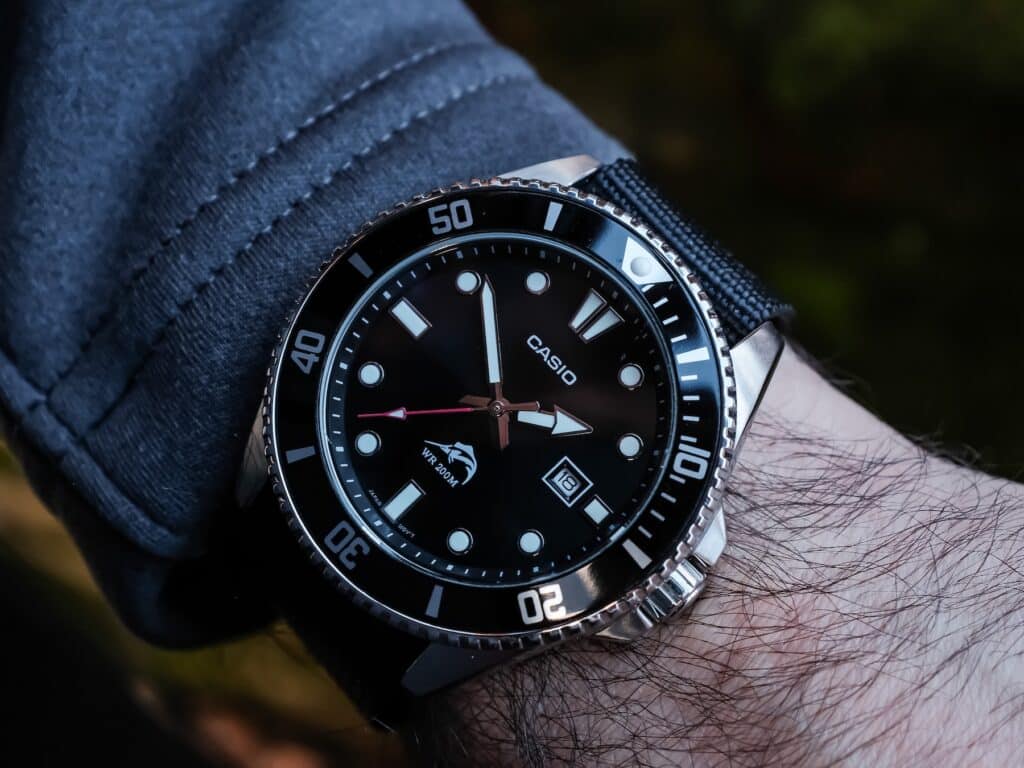
The first thing that confronts you with the Duro is the size. On paper, a 44.2mm diver that’s 12.1mm thick with a 48.5mm lug-to-lug doesn’t exactly read as subtle, and it’s easy to assume that this is where the watch either works for you or doesn’t. I’ll be honest, those numbers gave me pause at first. Large divers are nothing new, but there’s always that moment before you strap one on where you wonder if it’s going to feel needlessly oversized or simply straightforward about what it is, especially when the watch is also claiming 200 meters of water resistance and the basic posture of a true dive watch.
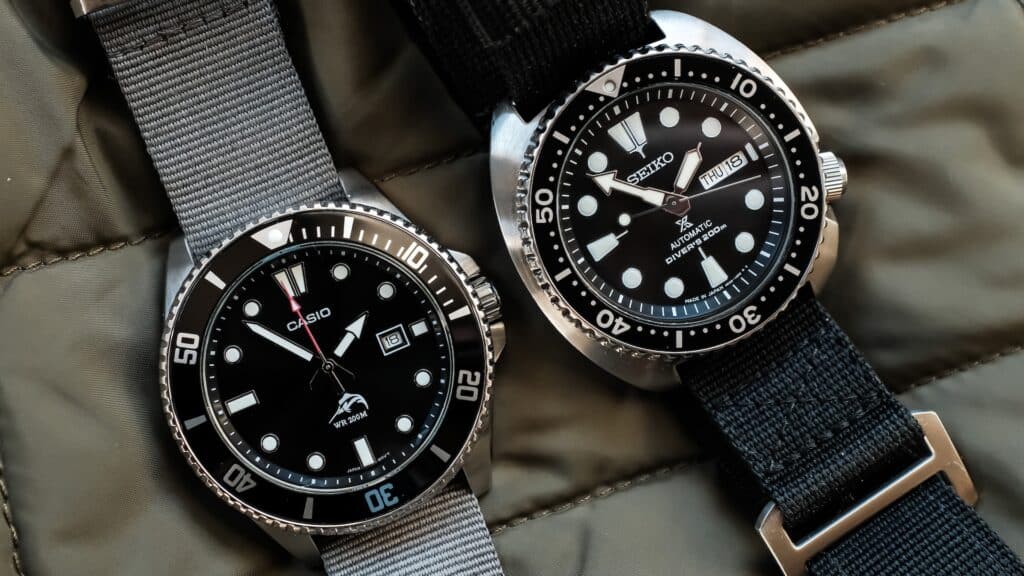
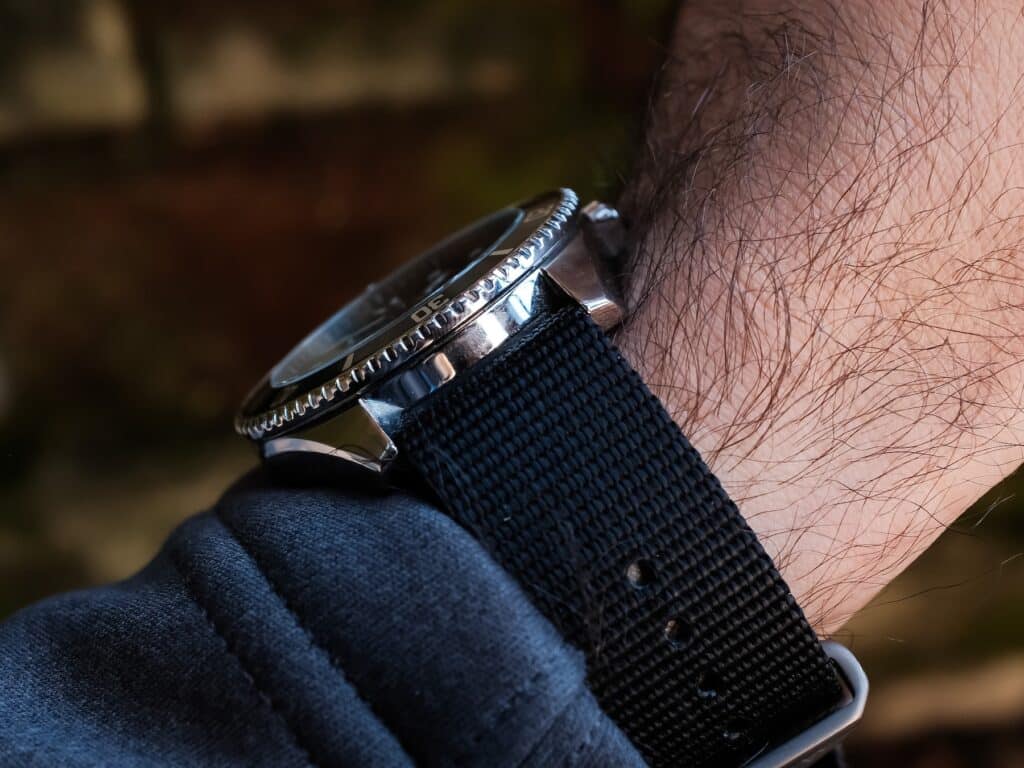
Once on the wrist, that concern faded faster than I expected. Part of that is familiarity. I’ve owned and enjoyed watches in this size range before, including a Seiko Turtle that lives in roughly the same territory (I’ve dropped in some comparison shots for size reference). Against that backdrop, the Casio Duro didn’t feel like an outlier. The relatively short lug-to-lug measurement helps, and the way the lugs curve down means the case doesn’t sprawl across the wrist the way the raw diameter might suggest. It wears large, but not clumsy—kind of like the Turtle
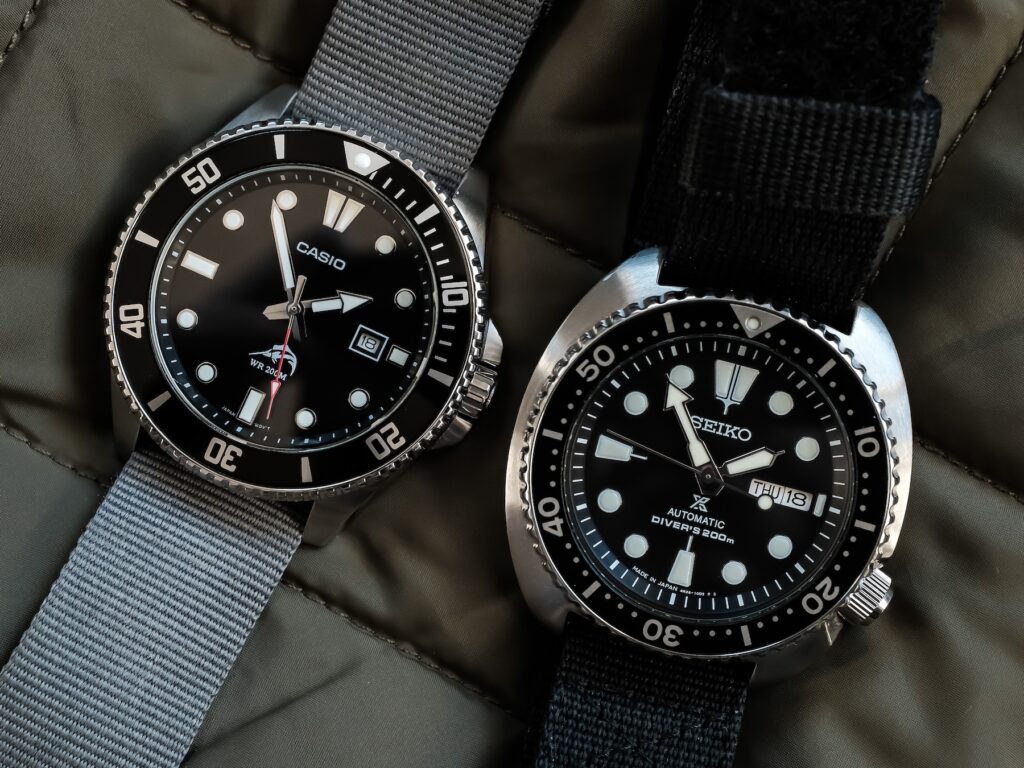
What surprised me was how quickly I stopped wishing it were smaller. There was a time when the idea of a downsized Casio Duro sounded appealing, at least in theory. Spending time with this one changed that. The proportions make sense once you accept the watch on its own terms, and I’m starting to think that shrinking it would alter the character that people seem so attached to. There’s a reason the smaller version never really took hold with the community, and I understand that better now.
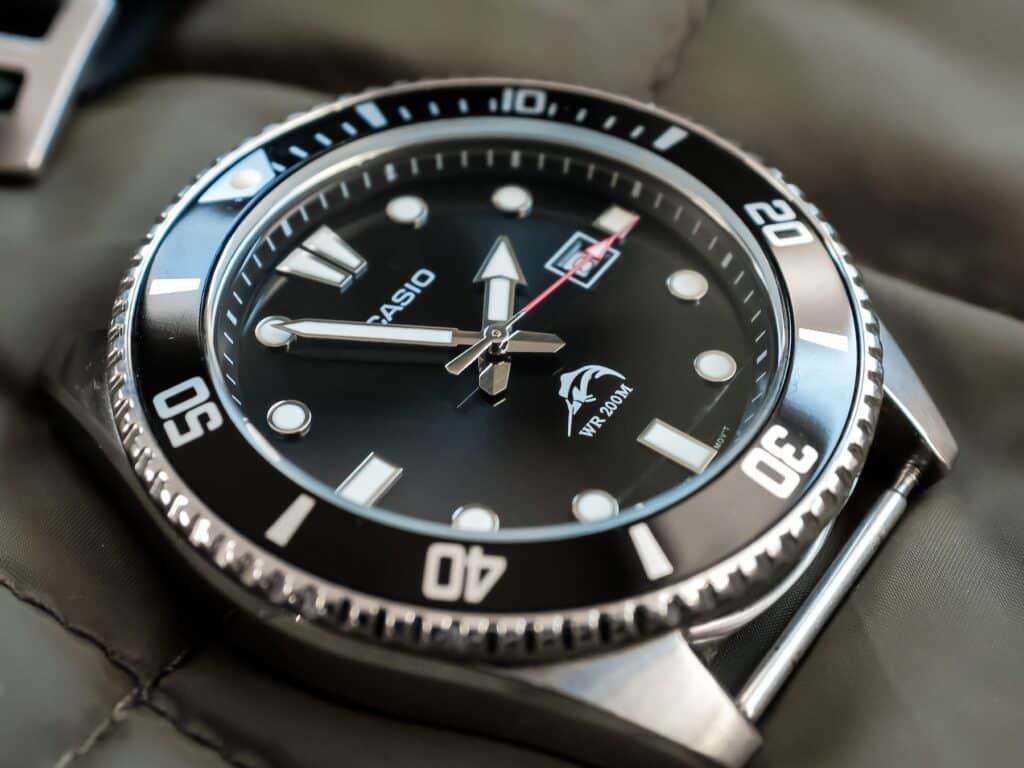
The finishing is straightforward, but it’s handled with more care than the price would lead you to expect. A brushed top surface contrasts cleanly with polished sides, and there’s a subtle bevel running along the case that catches light just enough to break things up. The lugs are nicely shaped, not just functional stubs, and the overall silhouette feels deliberate rather than generic.
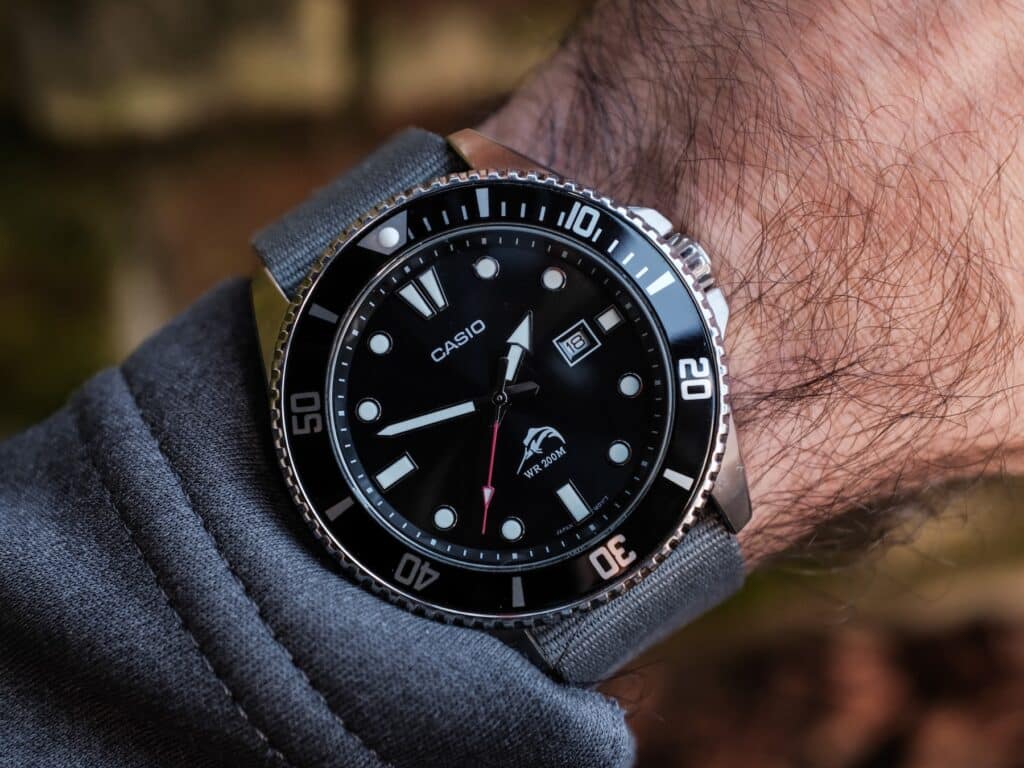
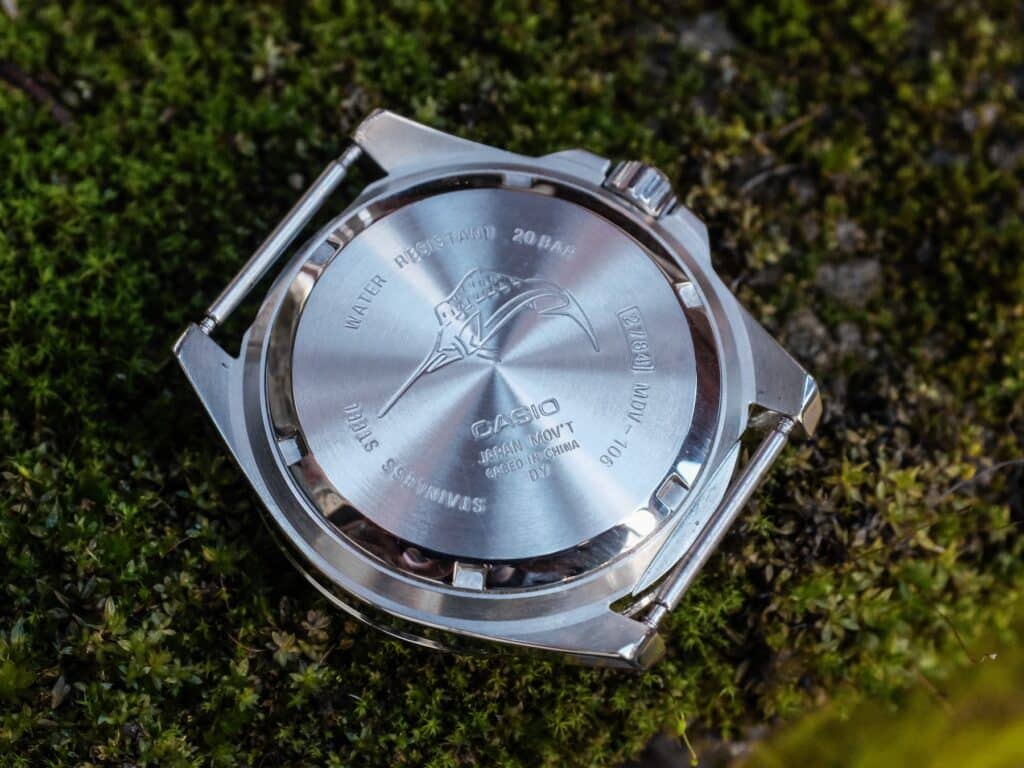
Functionally, this is a proper diver. A screw-down crown flanked by guards and a solid screw-down caseback all contribute to a baseline sense of trust. The unidirectional aluminum bezel clicks with a firmness that feels satisfying without calling attention to itself. It’s smoother than what I expected but maybe this one has been more broken in than what I’d feel with a new example. Either way, it was a pleasing experience and very similar to watches I’ve handled that cost 10 times more.
Dial, Hands, and Legibility
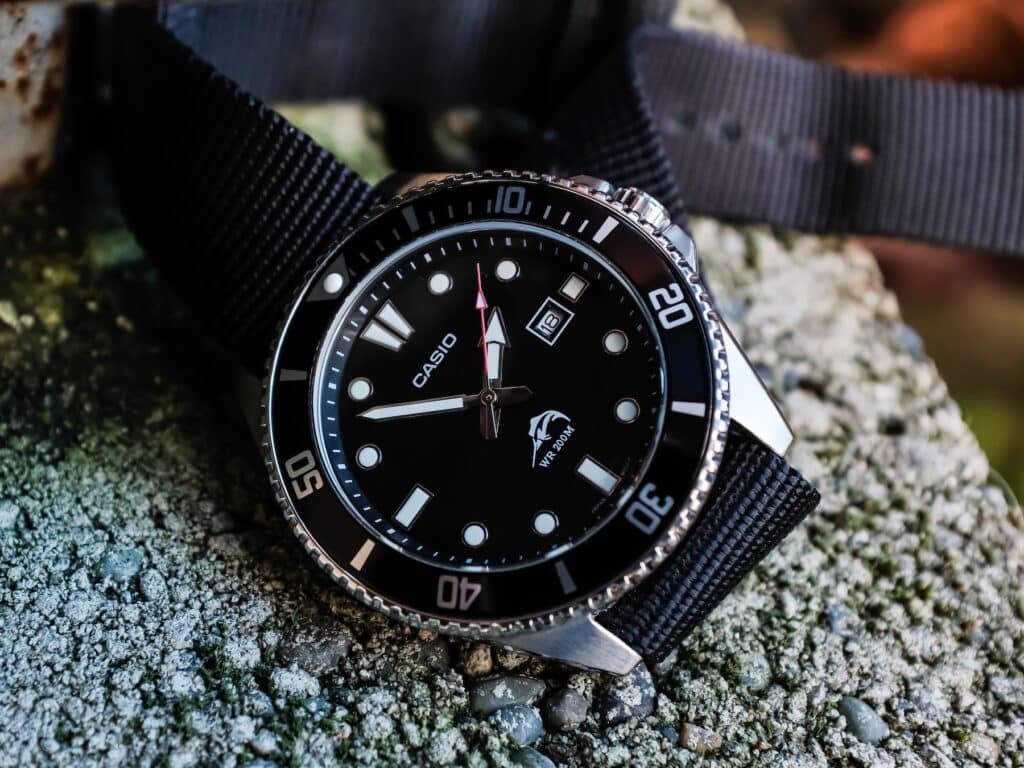
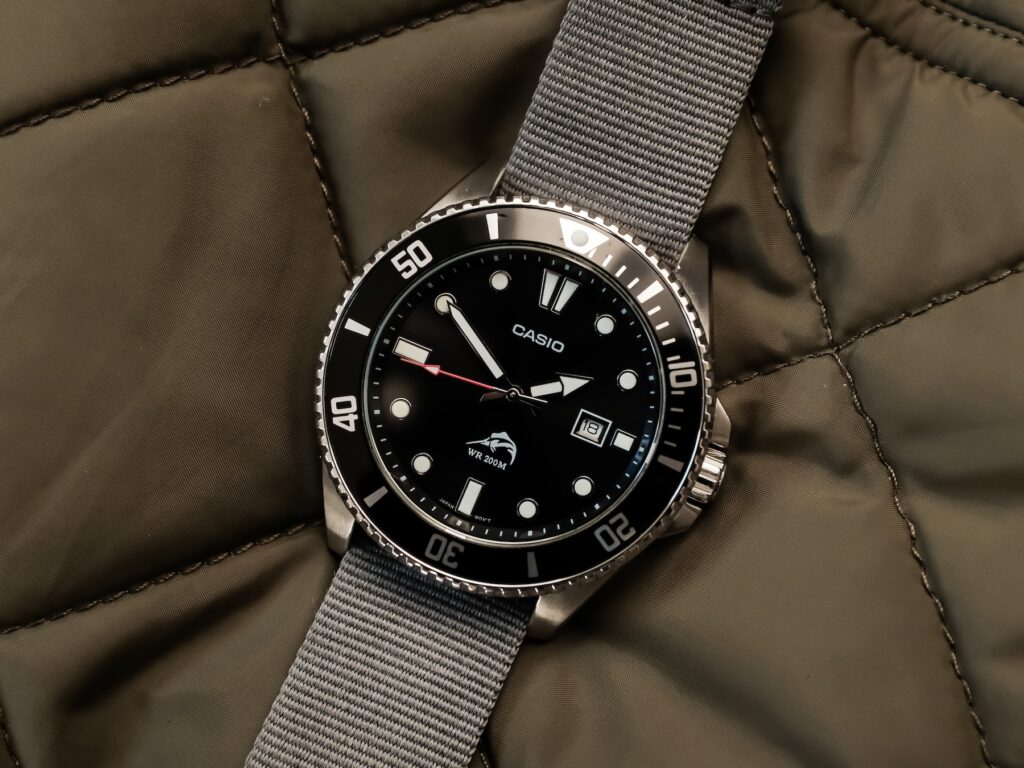
Under the flat mineral crystal, the dial follows familiar dive-watch conventions without trying to reinvent them. The black dial on this example has its own identity once you spend time with it. Legibility is strong, helped by arrow-shaped hands that are more thoughtfully finished than I expected. They’re actually faceted and polished in a way that catches light cleanly, and that same care carries through to the applied hour indices.
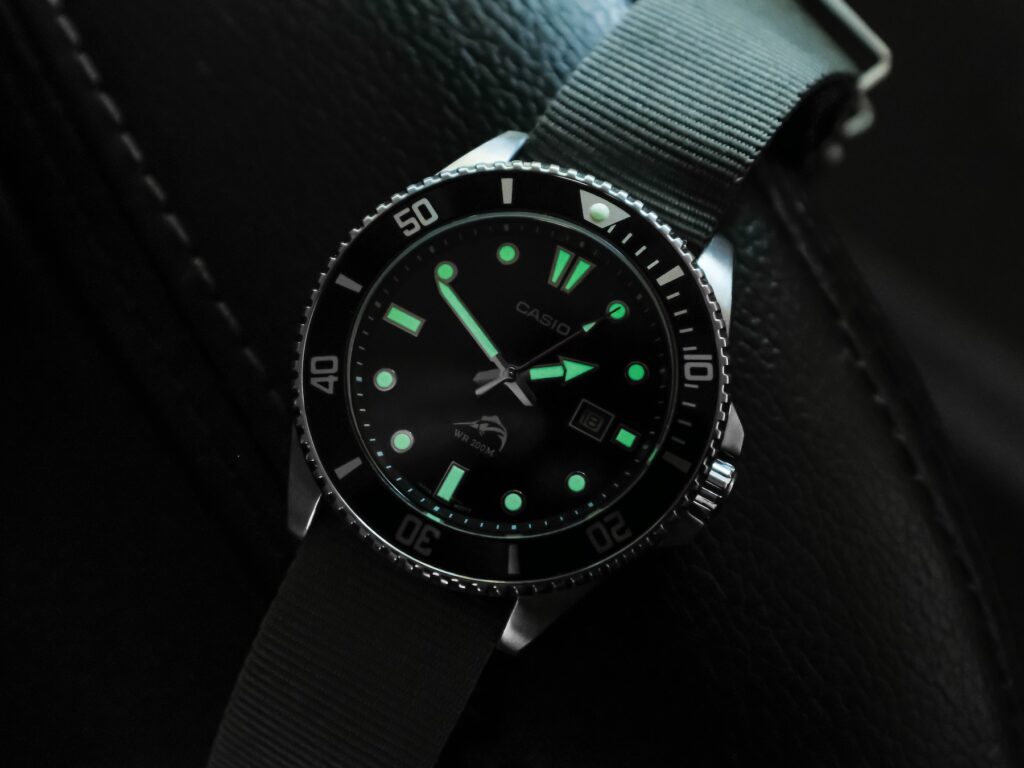
Those indices are filled generously with lume, enough to do the job without feeling skimpy, even if the glow could stand to hang around a little longer. The date window at three o’clock is another small surprise. It’s framed, proportionate, and easy to read, which is more than I can say for plenty of watches that cost considerably more.
One of the details I paid attention to early on was the seconds hand. With mass-produced quartz watches, alignment can be unpredictable, and misalignment is one of those things that becomes impossible to unsee once you notice it. On this Duro, the seconds hand tracked cleanly enough. Not perfect but not horrible either. I know this is something that can bug people so just keep in mind that there will definitely be some variance between watches from Casio.
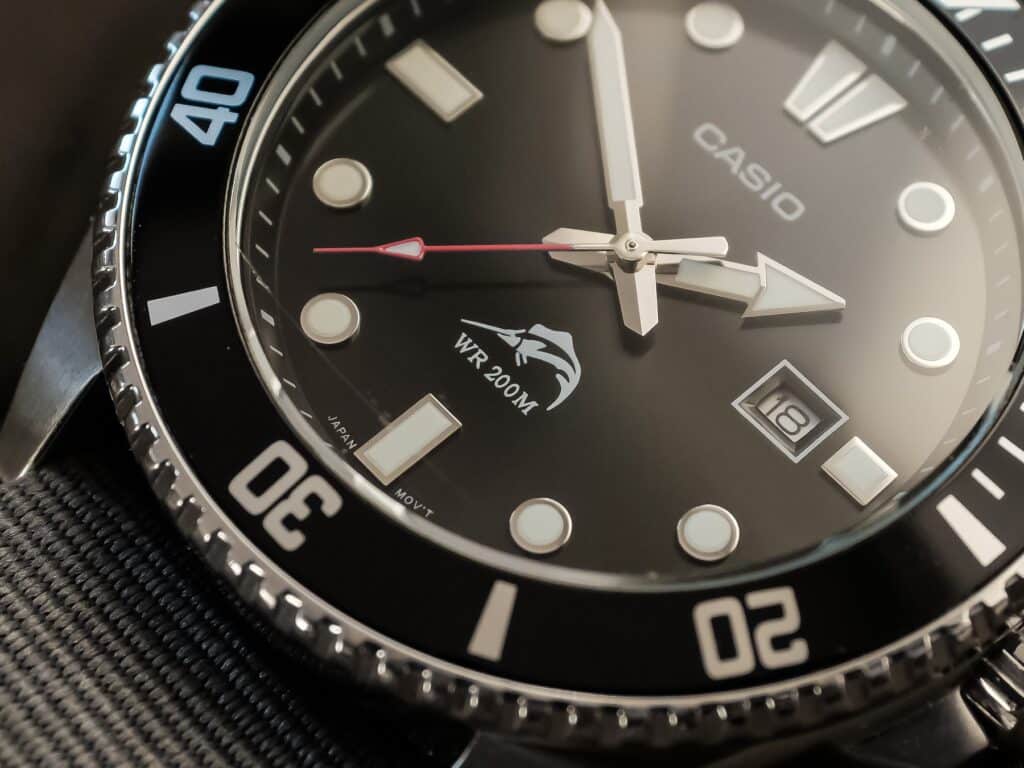
Dial text is kept to a minimum. Casio sits at twelve, with the 200-meter rating down at six, and just above that you’ll find the marlin logo that has become inseparable from the Duro’s identity. It’s Casio’s designation for watches rated to 200 meters, though whether it appears on your watch depends on geography. In the U.S., the original MDV-106 is still available with the marlin intact. In other regions, including parts of Europe, the newer MDV-107 replaces it, and the logo disappears. Functionally the watches are the same, but the presence or absence of that emblem clearly carries weight for collectors. Personally, I find it so iconic that I’d miss it if it were gone.
Movement and Daily Use
The movement choice has drawn criticism from some corners, which I’ve never fully understood. Yes, this is a quartz-powered watch, and if your instinct is to recoil at that, I get where it comes from. Mechanical bias runs deep in this hobby. But this is an inexpensive diver intended to be durable, straightforward, and easy to live with. In that light, quartz makes complete sense.
The Casio 2784 inside offers quickset date and hacking seconds, runs within about plus or minus 20 seconds a month, and will go roughly three years on a battery. In practice, that means it’s ready whenever you are. I didn’t find myself thinking about winding, setting, or syncing it. I just picked it up and wore it, and because of that, I ended up wearing it for longer stretches than I initially realized.
Living With It
I didn’t have the opportunity to spend time with the stock rubber strap, as this example didn’t come with it. Instead, I rotated it exclusively on my own straps from Toxic NATOs and Prometheus Design Werx. That experience reinforced just how well the Casio Duro lends itself to strap swapping. The 22mm lug width feels right for the case, and there’s no shortage of options that work aesthetically. There’s also a healthy aftermarket if you prefer to run it on a bracelet, which makes sense given how many people seem to treat this watch as a long-term companion.
As for whether it stays, the answer is simple. It doesn’t. This watch belongs to my friend, and I’ll be giving it back. But that doesn’t really tell the whole story. Spending time with it left me wanting one of my own, and I’ve already started looking at which version I’d pick up. At this price (officially $84.95 on Casio’s site—you can find it for much less), it’s hard not to see it as a fun, low-friction addition to a collection. Not a statement piece, not a substitute for anything else I own, just a watch puts a smile on my face.
Circling back to where this started, the Casio Duro makes more sense to me now than it ever did from a distance. The mythology didn’t disappear once I wore it, but it did become grounded. I get it now. What’s left is a watch that fits naturally into real collecting life, which is probably why it refuses to fade away. Now if you’ll excuse me, I’m going to go browse r/DuroGang again to read more about a watch I don’t own yet.

Co-Founder & Senior Editor
Michael Peñate is an American writer, photographer, and podcaster based in Seattle, Washington. His work typically focuses on the passage of time and the tools we use to connect with that very journey. From aviation to music and travel, his interests span a multitude of disciplines that often intersect with the world of watches – and the obsessive culture behind collecting them.
I have this in blue got it on Amazon for under $60. I also have others Rolex Sub, Omega Planet Ocean, Seiko origibal orange monster, etc.
love it with a Nato strap…orange, blue, and blue and yellow.
get lots of compliments