We’ve spent a lot of time chasing watches that don’t announce themselves. Not because we’re allergic to nice things, but because some of the most satisfying watches we’ve owned are the ones that remain restrained unless you already know what you’re looking at. These are the pieces that don’t rely on bezel engravings of the size of billboards or instantly recognizable case shapes. They’re the watches that reward familiarity: the kind you notice because of how the dial behaves in natural light, how the case sits a little differently than expected, or how nothing about it feels desperate for attention. That’s what we mean by “sleeper luxury.” Not cheap, not flashy, and not trying to win Instagram.
Our perspective here comes from nearly a decade of actually living with watches across every price tier. We’ve worn these pieces alongside affordable watches we genuinely love, swapped straps obsessively, tracked accuracy over weeks, and paid attention to what we kept reaching for when nobody was watching. This is about the quiet satisfaction of owning something well-made that only another watch nerd might clock across the table. If that sounds like your kind of luxury, you’re in the right place.
Monta Skyquest GMT
| Price: | $2,435 |
| Water Resistance: | 300m |
| Case Dimensions: | 40.7mm (diameter) x 47.4mm (lug-to-lug) x 11.8mm (thickness) |
| Lug Width: | 20mm |
| Movement: | Monta Caliber M-23 (Sellita SW330-2 base) |
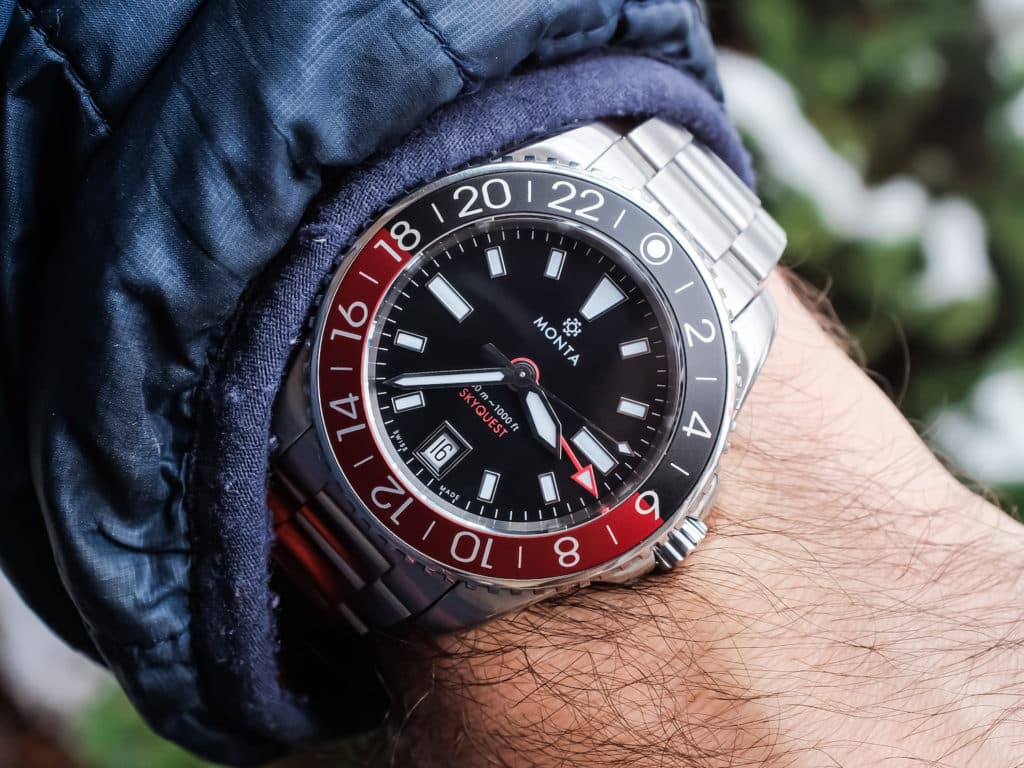
The Skyquest is one of those watches that feels almost anonymous until you spend time with it. On the wrist, it lands in a sizing sweet spot that doesn’t call attention to itself. The case feels intentional rather than aggressive, and the proportions make it easy to forget you’re wearing a 300-meter, travel-ready sports watch. That’s part of the appeal here. It wears smaller than the numbers suggest once you notice how the dial and bezel balance each other visually. The larger 24-hour bezel markings help with quick reads, but they also draw your eye outward, making the watch feel calmer and more compact during daily wear.
Using the Skyquest day-to-day, the practical details start to stack up. The bezel action feels confident and predictable, which matters more than it sounds when you’re tracking another time zone instead of just admiring the watch. Grip is never an issue, even with gloves or cold hands, and the bezel never felt vague or sloppy during our hands-on testing. The dial changes lean toward clarity over character. We missed a bit of the charm of earlier design quirks, but the trade-off is a cleaner layout that’s easier to read at a glance. The applied markers and hands feel the right size for real use, not merely for photos. Add in strong BGW9 Swiss SuperLumiNova and a crystal that stays legible in harsh lighting, and this becomes a watch that does its job without asking for praise.
What cements the sleeper-luxury angle, though, is the bracelet and the overall finish. This is where Monta separates itself from most brands operating in the same space. The bracelet feels considered and solid with a milled clasp and screw links. It also features a tool-free adjustment system that is used rather than ignored. Comfort across long days was excellent, and it never felt like the weak link. Inside, the Caliber M-23 behaves reliably. It’s easy to live with, and simple to service down the road. The 55-hour power reserve was also a nice-to-have feature. The Skyquest doesn’t try to be clever or nostalgic. It feels like a modern travel watch built for people who care about execution more than brand recognition.
Pros
- The case proportions wear smaller and more balanced than the specs suggest.
- The bezel action is firm, grippy, and easy to use in real-world situations.
- The dial layout prioritizes legibility without feeling sterile.
- Bracelet quality and tool-free micro-adjustment punch well above the category.
- Reliable GMT movement that’s easy to live with and service long term
Cons
- Loss of some earlier design quirks may feel less charming to longtime fans.
- The screw-down crown could be slightly larger for easier handling.
- The price puts it up against intense competition from established brands.
Atelier Wen Perception
| Price: | $3,200 – $3,600 |
| Water Resistance: | 100m |
| Case Dimensions: | 40mm (diameter) x 47mm (lug-to-lug) x 9.4mm (thickness) |
| Lug Width: | Integrated bracelet, starts 22mm at the case, tapering down to about 18mm at the clasp |
| Movement: | Dandong SL1588 Automatic |
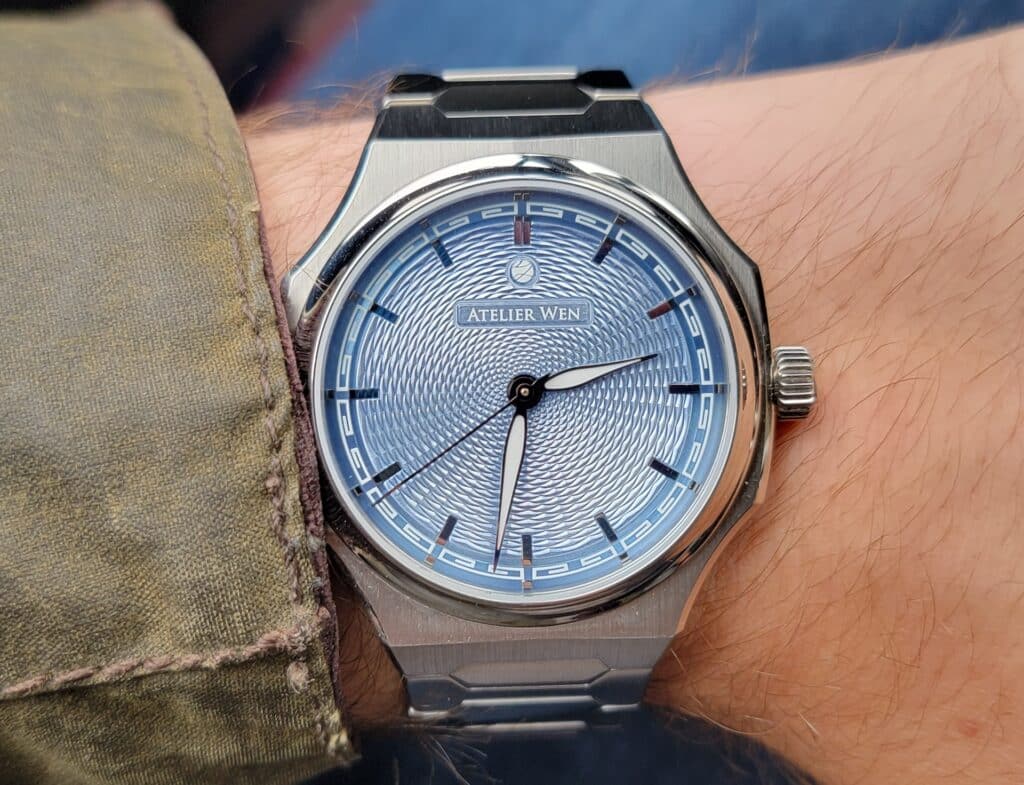
At a glance, the Perception does not scream for validation. From the first stretch of wrist time, it was clear this watch was not trying to borrow credibility from Swiss tropes or retro cues. The use of 904L steel immediately sets that tone. In hand, the case finishing feels deliberate and controlled, landing closer to much higher-priced timepieces. At 40mm wide and 9.4mm thick, it wears slim and composed, sliding under a cuff without protest. The alternating brushed and polished surfaces, paired with crisp chamfers along the bezel and bracelet edges, give the watch depth that only reveals itself in natural light. Daily wear felt confident thanks to 100 meters of water resistance and a screw-down crown. Our review team even found the engraved stone lion caseback to be intentional, reinforcing a clear cultural identity.
On the wrist, the Perception balances presence and restraint, though it is worth noting how the integrated bracelet changes the equation. Once attached, the effective lug-to-lug stretches closer to 52mm, which you feel if you are sensitive to span. That said, articulation is smooth, and comfort is never compromised over long days. What stood out most was how easy it was to fine-tune the fit. The toolless micro-adjust clasp became part of our daily routine, especially as wrist size shifted throughout the day. It is one of those quality-of-life details that only matter once you live with a watch, and it made the Perception easier to reach for than expected.
The dial is where this watch fully earns its sleeper status. The layered, hand-guilloché patterns draw from Chinese architectural motifs, creating depth without turning the watch into a design exercise. The blue dial we tested shifted constantly, moving from muted steel tones indoors to brighter, almost ocean-like hues outside. Despite the visual complexity, legibility never suffered, which speaks to the restraint behind the layout.
During our testing, the modified Dandong SL1588 ran about 10 seconds fast per day, with a power reserve of about 40 hours. It does not hack, which some will notice at this level, but winding and setting felt smooth and considered. At around $3,200, expectations are high, and competition is severe. What makes the Perception resonate is that its finishing, bracelet execution, dial work, and cultural grounding all pull in the same direction. For watch nerds paying attention to where modern luxury is evolving, this is one of those pieces that quietly resets a few assumptions.
Pros
- The 904L steel case delivers high-end finishing and durability.
- The hand-guilloché dial, rooted in Chinese design, adds depth and a clear identity.
- The toolless micro-adjust clasp makes all-day wear easier.
- 100m water resistance supports confident daily use.
Cons
- The integrated bracelet wears larger than the case dimensions suggest.
- Movement lacks hacking seconds.
- Accuracy falls short of chronometer standards at this price.
Rolex Air King Ref. 14000
| Price: | $5,400 – $6,900 |
| Water Resistance: | 100m |
| Case Dimensions: | 34mm (diameter) x 42.8mm (lug to lug) x 11.2mm (thickness) |
| Lug Width: | 19mm |
| Movement: | In-house caliber 3000 automatic |
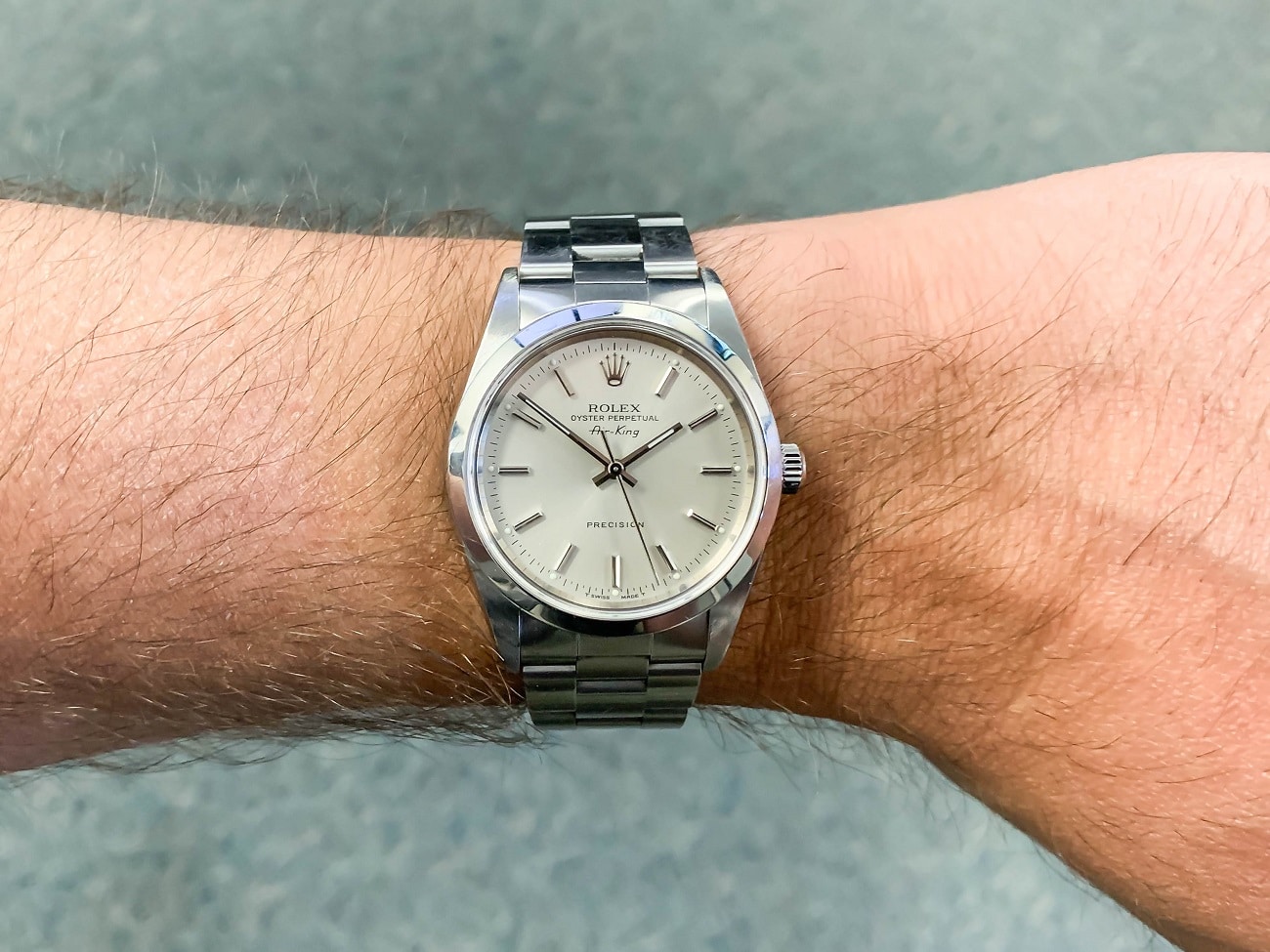
The Air-King makes the most sense once you stop looking for flash and start appreciating how quietly well it’s put together. The case proportions feel intentional and balanced, with a slim 11.2mm profile and a 42.8mm lug-to-lug, keeping everything centered and comfortable. The thin, tapered lugs do a lot of quiet work here, helping the watch sit low and smooth rather than feeling top-heavy. It has that older Oyster-case sensation of melting into the wrist, where you stop noticing it after a few hours. The polished bezel paired with brushed case surfaces adds enough refinement without drifting away from the tool-watch DNA that defined Rolex in this era. It is understated in a way that most modern Rolex models are not.
The dial is where the 14000 earns its sleeper status. The silver sunburst finish reacts gently to daylight, offering soft reflections without ever pushing into flashiness. It is clean and symmetrical, almost austere, with simple baton markers and the Rolex crown at twelve doing all the talking. No date window, no cyclops, nothing breaking the visual rhythm. The tiny “T Swiss Made T” text at six, along with the tritium lume plots, quietly anchors the watch in a different design mindset. One that prioritizes clarity and purpose over spectacle. Even decades on, the lume still offers a faint glow, which feels less like a party trick and more like a reminder of how thoughtfully these watches were built.
Living with the Air-King reinforces how much substance is hiding behind the simplicity. The in-house Caliber 3000 ran at around -7 seconds per day during our testing, even without recent service. Winding feels smooth and deliberate, and the twin-lock crown provides enough confidence for everyday water exposure without hesitation. The 19mm Oyster bracelet tapers down to 14mm, keeping the whole package balanced and discreet on the wrist. No safety lock, no clever mechanisms, just solid engineering that still feels premium because it does not try to prove itself. Most people will see an old Rolex. Watch nerds will see precisely why this one matters.
Pros
- The oyster bracelet feels solid and well-balanced, with an elegant taper that enhances comfort.
- The clean, symmetrical dial delivers timeless Rolex restraint without visual clutter.
- Caliber 3000 remains smooth, accurate, and dependable decades later.
Cons
- The proportions may feel unfamiliar to those used to modern Rolex sizing.
- The 19mm lug width limits strap options.
- Servicing costs remain high despite the watch’s mechanical simplicity.
Nomos Zürich World Time
| Price: | $6,100 |
| Water Resistance: | 30m |
| Case Dimensions: | 40mm (diameter) x 50mm (lug-to-lug) x 11mm (thickness) |
| Lug Width: | 20mm |
| Movement: | Nomos DUW 5201 Automatic |
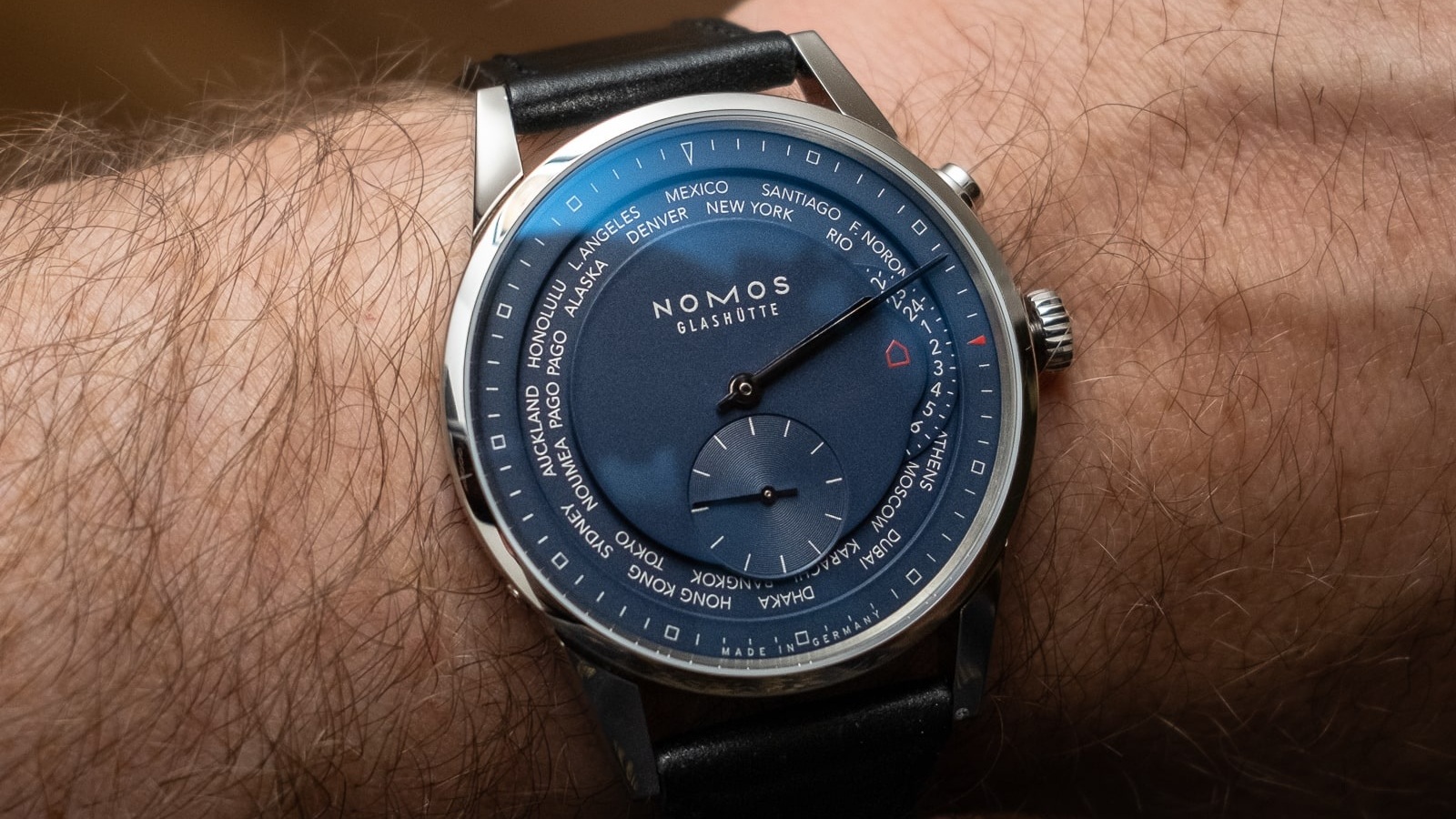
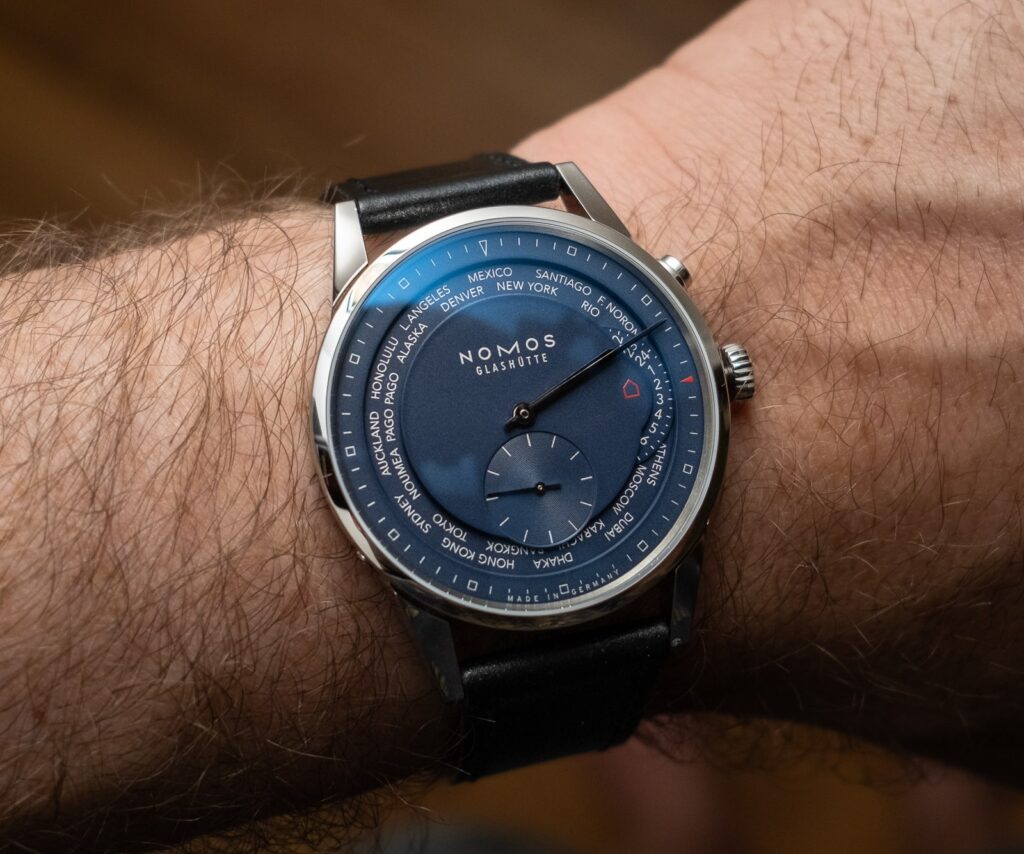
The Zürich World Time does not announce itself as a luxury travel watch. At first pass, it can feel almost overly restrained, like it is trying a little too hard to stay out of the conversation. Then you live with it. The blue dial slowly does the heavy lifting, shifting between navy and steel tones depending on the light, never glossy, never loud. That calm surface gives space for the city ring and rhodium hands to stay legible without competing for attention. The small red home-time indicator is the only intentional pop of color, and it earns its place by staying visible whether you are under harsh airport lighting or sitting in a dim cabin. Nothing here feels accidental.
What makes it a true sleeper is how it behaves once you travel with it. The pusher at two o’clock advances local time in clean one-hour jumps, leaving home time untouched on the 24-hour subdial. On short regional trips, resetting took seconds. No crown fiddling. No recalculating offsets. Press, glance, and move on. The in-house DUW 5201 movement remained steady during our time with it and delivered a power reserve of around 42 hours, as stated. The 40mm case wears slim, but the long lugs give it more wrist presence than the diameter suggests. On medium wrists, it felt balanced and elegant. On smaller wrists, it edged closer to the limit. The fully polished case also showed fine scratches sooner than expected, which subtly changed how we handled it day to day.
Comfort is top-notch. The shell cordovan strap breaks in quickly and stays comfortable through long stretches without constant adjustment. What caught us off guard was how modern the watch felt over time. Despite its clean, almost minimalist layout, it never came across as sterile. Functionally, it leans closer to a GMT-style solution than a traditional world timer packed with cities and complications, but that restraint is why it works. After extended wear, the Zürich felt like a complication-forward watch for people who value clarity over theatrics. It is a luxury that hides in plain sight, and most people will miss it. Watch nerds will not.
Pros
- Intuitive one-button local time adjustment makes real-world travel painless.
- Subtle blue dial remains very legible while revealing depth only in changing light.
- DUW 5201 in-house movement delivered consistent, reliable performance during extended wear.
- The understated design grows more distinctive the longer it stays on the wrist.
Cons
- Extended lug length limits comfort and wearability on smaller wrists.
- World-time execution functions closer to a simplified GMT than a full complication.
- Polished case surfaces pick up fine scratches more quickly than expected during daily use.
Omega Railmaster
| Price: | $6,400 |
| Water Resistance: | 150m |
| Case Dimensions: | 40mm (diameter) x 46.5mm (lug-to-lug) x 12.5mm (thickness) |
| Lug Width: | 20mm |
| Movement: | Omega 8806 Master Chronometer Co-Axial |
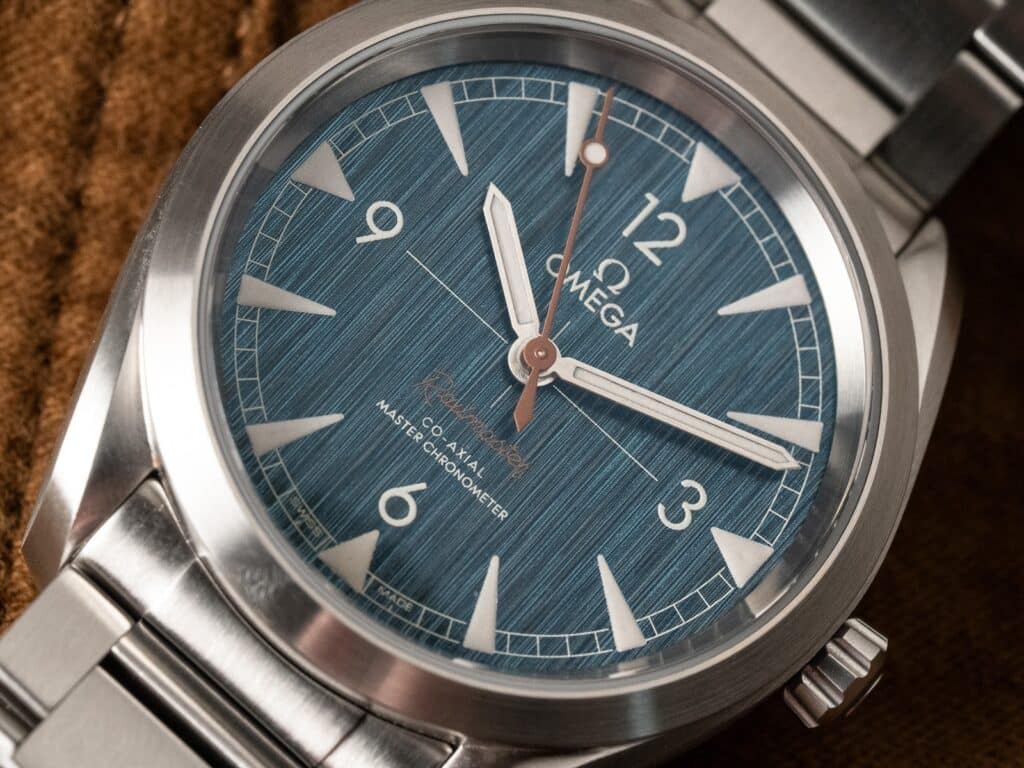
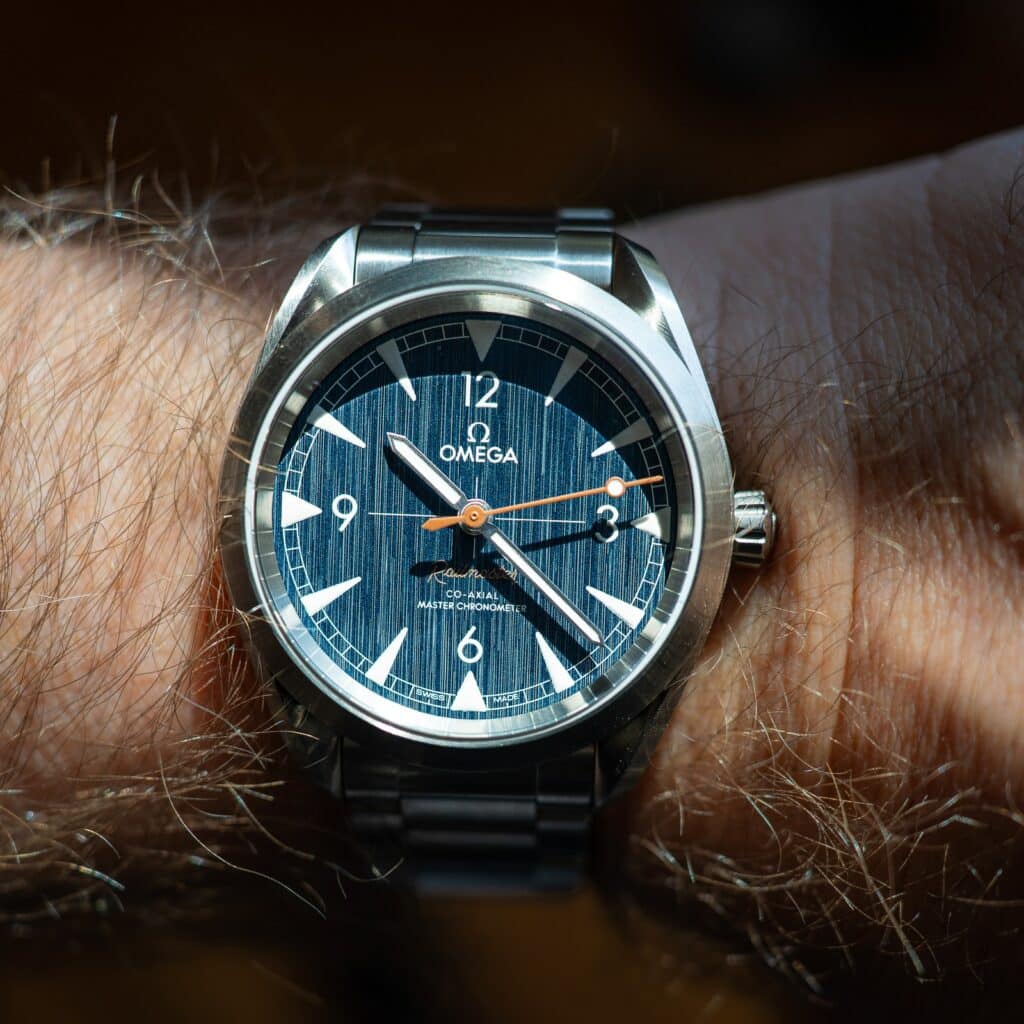
The Railmaster is easy to overlook if you’re scanning for obvious luxury signals. It does not chase nostalgia aggressively, and does not flex either. On paper, it looks almost too restrained: a 40mm steel case, brushed finishing throughout, no date complication to break things up. The dial carries the experience, with a vertically brushed surface that keeps shifting character as the light changes. Depending on the angle, it moves between darker and warmer tones, sometimes picking up a subtle metallic warmth that feels intentional rather than decorative. It never steals focus, but it keeps you engaged. The bronze second hand plays a similar role. It adds the right amount of contrast to remind you this watch was designed, not assembled.
In daily wear, the Railmaster feels purposeful without feeling severe. The case proportions do most of the work here. A 46.5mm lug-to-lug keeps it planted on the wrist, and the 12.5mm thickness stays low enough to disappear under a sleeve. The predominantly brushed surfaces lean into the tool-watch side of the spectrum, while the polished chamfers add enough refinement to keep it from feeling flat. Inside, the Co-Axial Master Chronometer movement is where the sleeper luxury shows itself. It is METAS-certified, resistant to magnetic fields, and during our testing, it ran at roughly +1 second per day. You notice that kind of performance after weeks of consistent wear when the watch simply stays on time without fuss.
The three-link style bracelet with an entirely brushed finish feels solid and well-made, though the lack of micro-adjustment made fine-tuning fit less convenient than we would like. The links are secured using a slim rod system with tiny cap screws on either side. Pricing can also feel ambitious when compared to simpler alternatives, but the movement, finishing, and overall coherence help explain where that cost is going. For a deeper breakdown, our full review digs into the details.
Pros
- The Master Chronometer movement delivers certified accuracy and durability in real-world use.
- Dial finishing shows depth and character without sacrificing legibility.
- The balanced design blends utilitarian roots with subtle refinement.
- Comfortable proportions work well across a wide range of wrists.
Cons
- The time-only layout offers no added complications.
- The bracelet lacks micro-adjustment, limiting fine fit control.
- Pricing may feel high compared to simpler alternatives in the category.
Grand Seiko SBGH295 Sōkō Frost
| Price: | $6,900 |
| Water Resistance: | 100m |
| Case Dimensions: | 40mm (diameter) x 47mm (lug-to-lug) x 12.7mm (thickness) |
| Lug Width: | 21mm |
| Movement: | 9S85 Hi-Beat Automatic |
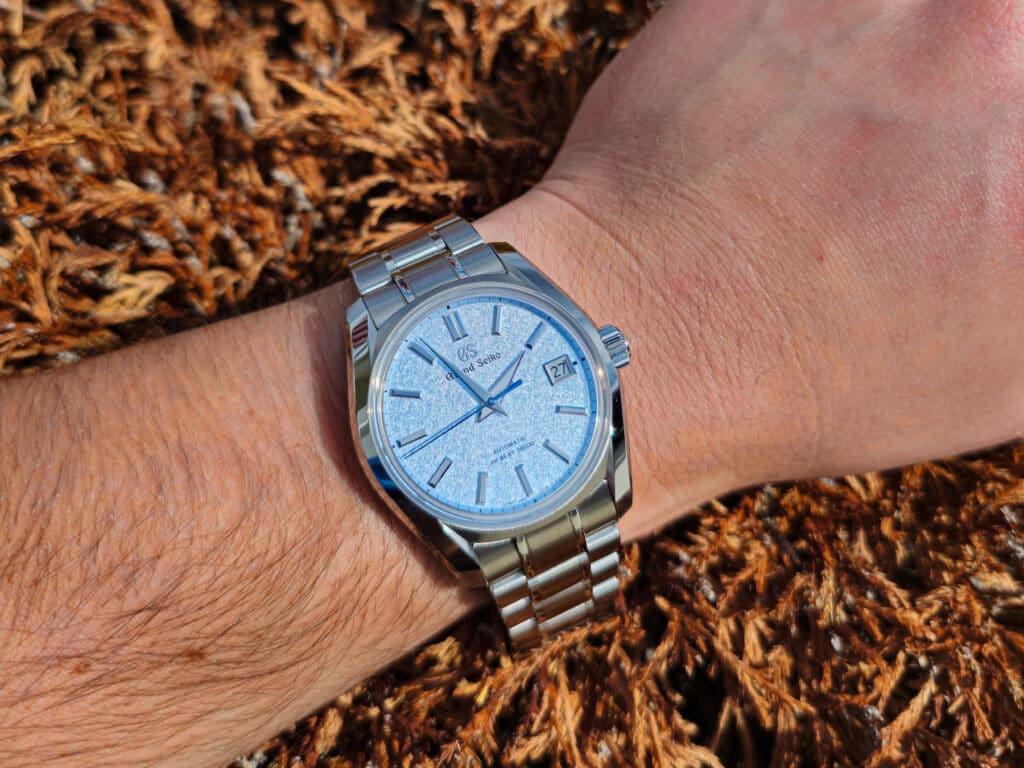
This Grand Seiko is one of those watches that does not reveal itself all at once. Spend a few minutes with it, and the surface comes alive. The frosted texture has a delicate cross-hatched pattern that adds depth without turning the dial into a spectacle. Light passes over it differently depending on where you are, sometimes appearing cool and airy, other times warmer and softer. The hands and indices are sharply finished, stepped, and faceted in a way that ensures they continuously catch the light. Even the date window feels considered, applied, and finished to the same standard as the rest of the dial furniture. Through the flat sapphire crystal, which uses an anti-reflective coating to remain clear without tinting the view, everything feels deliberate and cohesive.
On the wrist, the case design flexes just as hard as the dial. The 40mm stainless steel case wears as expected, neither shrinking nor spreading out awkwardly. The lugs curve down naturally, keeping the watch planted and comfortable over long days. The finishing is what sets Grand Seiko apart. Brushed surfaces dominate the mid-case, framed by Zaratsu-polished bevels that reflect light like a mirror. These bevels twist upward to form a bezel-less transition into the crystal, which helps the watch wear thinner than its stated 12.7mm thickness. A portion of that height comes from the flat box crystal, and visually, it works in the watch’s favor. A screw-down crown backs 100 meters of water resistance.
The bracelet is where expectations need to be managed. Grand Seiko’s reputation here is not excellent, and while this one is not class-leading, it is better than we expected. It is well finished, comfortable, and free of rattles. The smaller push-button clasp looks clean and helps articulation, but it offers no micro-adjustment. Fit depends entirely on link removal, which worked for us but could become frustrating as wrist size changes. That issue is softened by the included strap option and the drilled lugs, which make swapping easy, even with the slightly odd 21mm width.
Inside, the Hi-Beat 9S85 movement is a quiet technical flex. Running at 36,000 vibrations per hour, the second hand glides more smoothly than most mechanical watches. Technologies like MEMS-fabricated components and the Spron 530 mainspring are invisible in use, but they show up in reliability and consistency. To learn how they add to the experience, check out our in-depth review. This is sleeper luxury at its purest. Everything rewards someone who notices execution, not logos.
Pros
- Case finishing and Zaratsu polishing are class-leading at this level.
- The Hi-Beat movement delivers smooth operation and a strong technical pedigree.
- The frosted dial shows depth and character that grows with extended wear.
- The comfortable proportions make it easy to wear daily despite the refinement.
Cons
- The bracelet lacks micro-adjustment, limiting fine fit control.
- The uncommon 21mm lug width reduces strap options slightly.
- Bracelet quality, while manageable, does not match the excellence of the case and dial.
Glashütte Original SeaQ
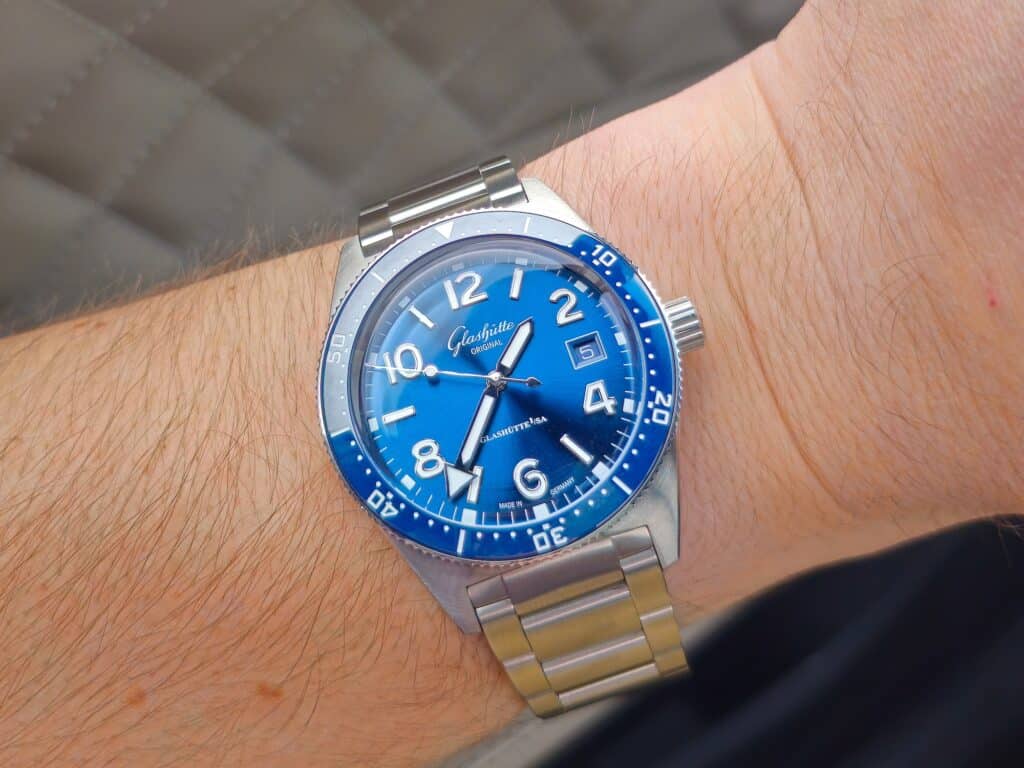
| Price: | $10,200 |
| Water Resistance: | 200m |
| Case Dimensions: | 39.5mm (diameter) x 47.5mm (lug-to-lug) x 12.5mm (thickness) |
| Lug Width: | 20mm |
| Movement: | SeaQ Caliber 39-11 Automatic |
The SeaQ caught us off guard because it does not behave like a watch trying to prove anything. On paper, it reads like a familiar luxury diver formula. Once it hit the wrist, though, the character shifted immediately. The dial carries far more nuance than the spec sheet suggests, moving from bright, energetic tones outdoors to much darker, almost inky shades indoors. Under the domed sapphire crystal, the sunburst finish introduces a subtle curvature that gives the surface a sense of motion rather than a flat shine. It feels dynamic without being loud. Paired with clean Arabic numerals and restrained text, the layout stays open and easy to read, never cluttered.
In use, the SeaQ feels like a luxury tool watch built by people who care deeply about tactile details. The unidirectional bezel rotates with a firm, precise click, with no play or hesitation, and it held up during timing tasks without drifting or feeling vague. The screw-down crown inspired the same confidence we expect from established dive watch benchmarks, and the case finishing reinforces that trust. Brushed surfaces dominate where wear occurs, while polished edges catch enough light to remind you that this is not a purely utilitarian object.
Inside, the Calibre 39-11 ticks away at 28,800 beats per hour. You do not get to admire the hand finishing thanks to the closed caseback, but it is all there, from beveled edges to polished screwheads, a swan-neck regulator, and a skeletonized rotor. The 40-hour power reserve is modest, but during testing, the watch never felt fragile or needy. It felt calm, composed, and ready for regular wear. Our full hands-on review digs deeper into those impressions.
On the bracelet side, the SeaQ is excellent where it matters most. The brushed 20mm bracelet feels silky smooth in the hand, with finely finished links that disappear on the wrist and suit the watch’s tool-forward personality perfectly. Glashütte’s tool-less quick-adjust clasp is a standout, using a discreet push button that lets you extend the bracelet without opening it, keeping the clasp compact, clean, and comfortable. The only real nit to pick is how the bracelet meets the case. The transition feels a bit less cohesive than the rest of the watch.
Pricing is high for a dive watch, and competition in this space is fierce. But it is not trying to win a spec race or dominate a room. It is the kind of watch that another watch nerd notices because of how well everything works together.
Pros
- The dial shows rich tonal shifts that reward real-world lighting conditions.
- The balanced 39.5mm case wears comfortably and naturally on the wrist.
- The bracelet includes a useful quick-adjust clasp.
- Exact bezel action with firm, confident clicks
Cons
- Pricing sits at the high end of the luxury dive watch segment.
- The extended lug-to-lug may not suit every wrist shape.
- Power reserve is modest for a watch at this level.
If you’ve spent time with any of these watches, we’re curious how they’ve worked their way into your rotation. And if there’s a sleeper luxury watch you think we missed, drop it in the comments. If it’s genuinely under the radar and holds up on the wrist, there’s a good chance we’ll convince ourselves we need to try it.

Co-Founder and Senior Editor
Kaz has been collecting watches since 2015, but he’s been fascinated by product design, the Collector’s psychology, and brand marketing his whole life. While sharing the same strong fondness for all things horologically-affordable as Mike (his TBWS partner in crime), Kaz’s collection niche is also focused on vintage Soviet watches as well as watches that feature a unique, but well-designed quirk or visual hook.