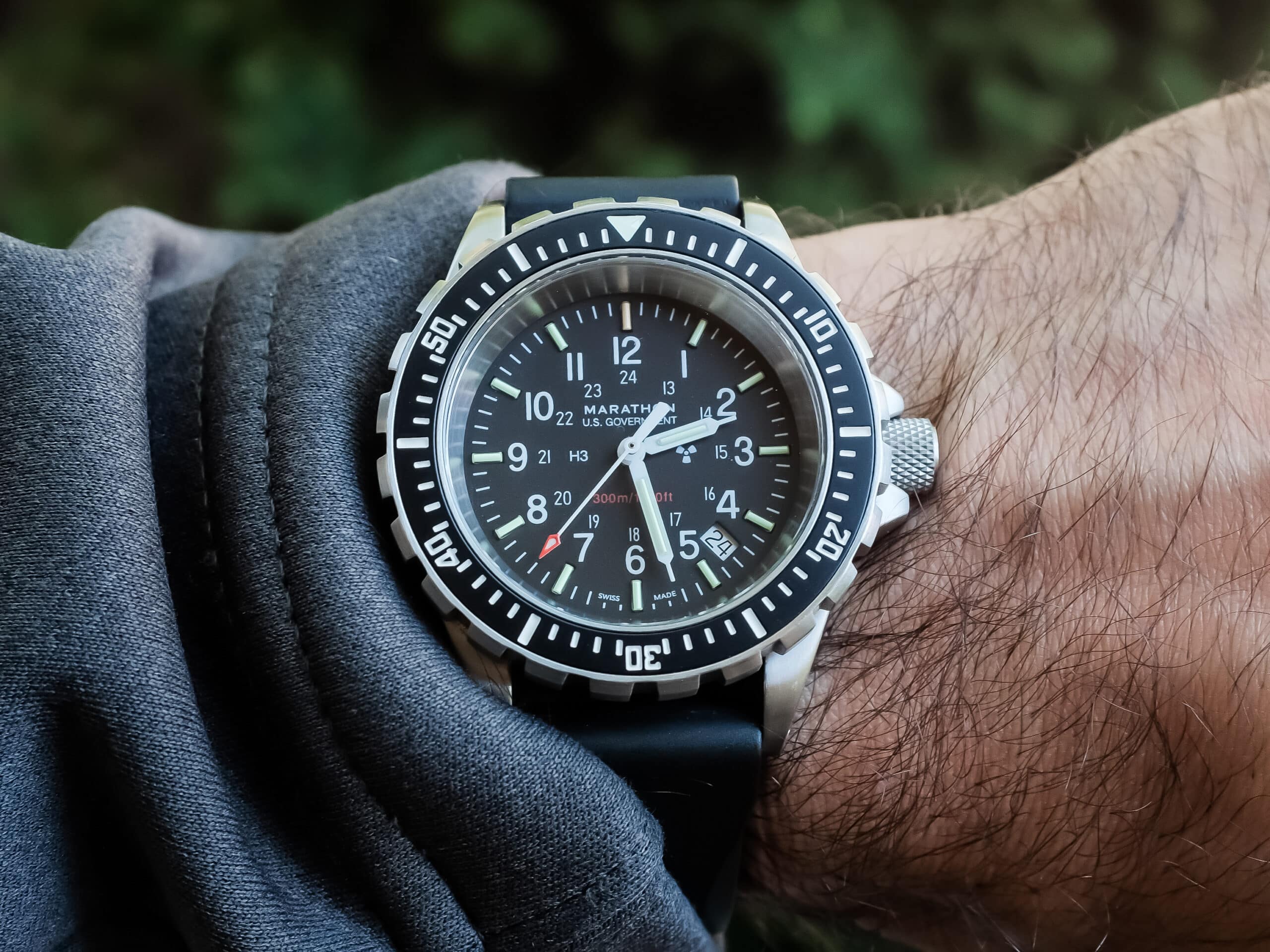
The CWC SBS Diver vs Marathon TSAR debate isn’t another simple spec-sheet comparison. It’s a real-world question of what kind of military dive watch you want on your wrist. Both of these watches were built for service, not showrooms: the CWC SBS Diver for British Military forces, and the Marathon TSAR for Canadian search-and-rescue teams. Each carries the kind of authenticity that most “tactical” divers only pretend to have, but in practice, they wear and behave very differently.
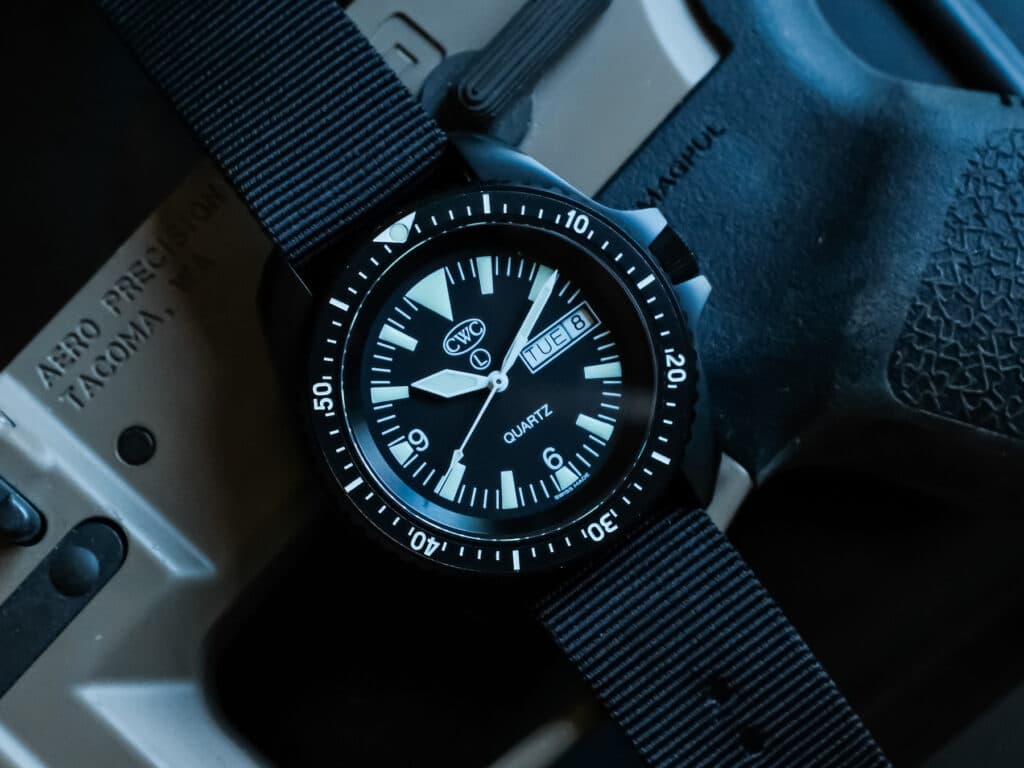
After more than a decade reviewing tool watches that have earned their scars honestly, we’ve spent serious wrist time with both. In this hands-on comparison, we’re cutting through the hype to figure out which watch truly deserves the title of the real military dive watch. More importantly, we’ll find out which one fits your kind of everyday mission.
Overview & Identity
When it comes to the CWC SBS Diver vs Marathon TSAR comparison, both watches carry real military DNA, not just in marketing, but in mission. But where they overlap in purpose, they differ sharply in personality.
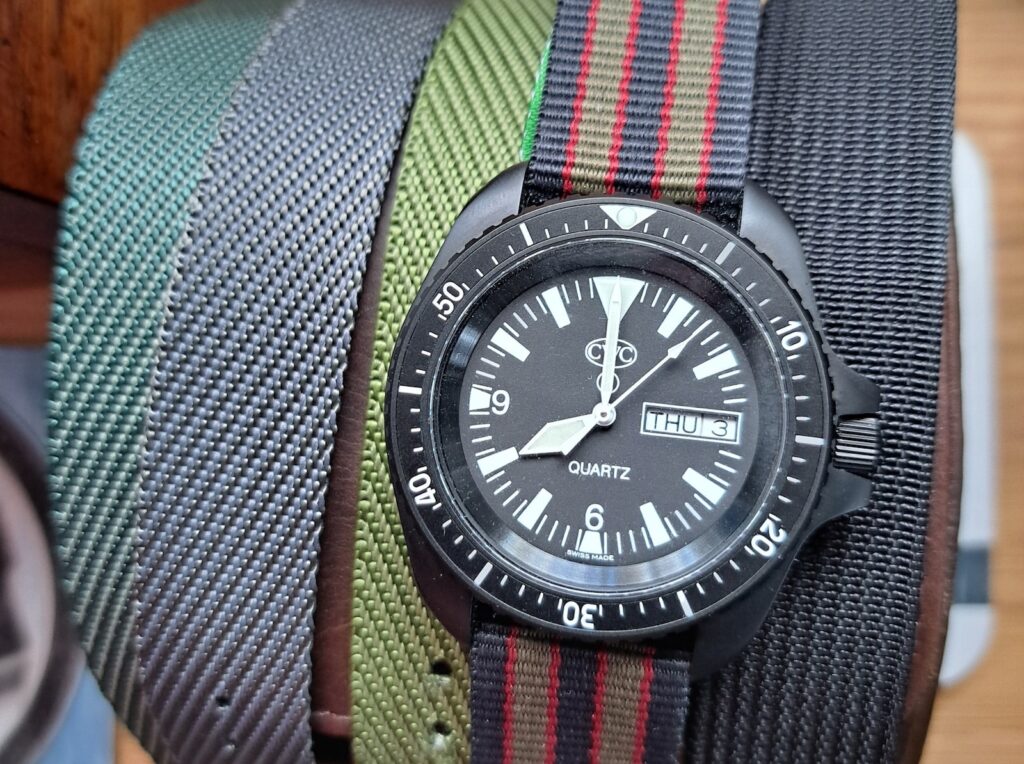
The CWC SBS Diver we tested hands-on feels like the quiet professional: blacked-out, low-profile, and built to MOD specifications dating back to 1987. It’s the kind of watch that looks great, wears comfortably, and never feels fragile. On our wrists, it felt stealthy without being sterile. It’s handsome in a way only a true tool watch can be. The bezel action, lume, and overall construction all speak to a design that hasn’t been compromised for trend or fashion. After plenty of wrist time, it’s clear why the SBS Diver still holds its place among enthusiasts as a genuinely field-tested, no-nonsense piece.
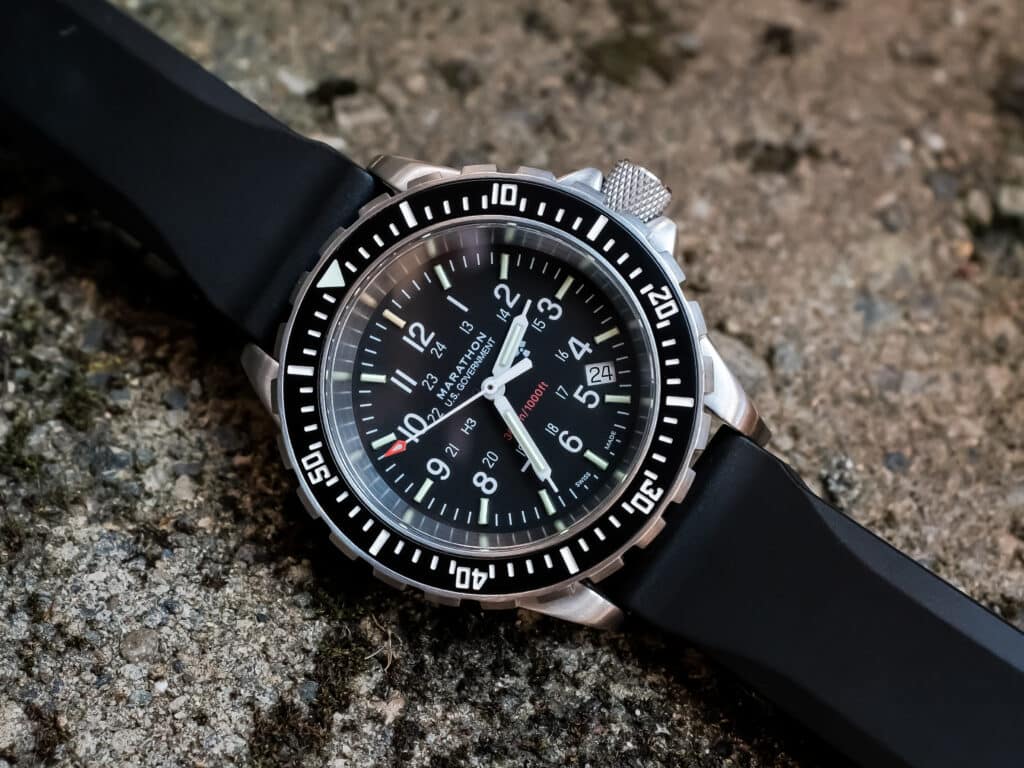
The Marathon TSAR sits at the opposite end of the same spectrum, with a rugged 41 mm quartz brute built for durability. It’s over-engineered in the best way, with tritium tubes that glow endlessly and a case that feels like it could stop a small vehicle. Sure, it lacks the vintage-leaning charm of the CWC, and its bulk can limit versatility, but it’s hard to find another diver this tough or this authentic beyond G-Shocks. The TSAR isn’t subtle; it’s reliable, in a big, unapologetic package.
- The CWC SBS Diver is a stealthy, heritage-driven tool watch that balances military authenticity with everyday wearability.
- The Marathon TSAR is a purpose-built, over-engineered powerhouse that prioritizes toughness and function over finesse.
Design & Wearability: Understated Utility vs Unbreakable Presence
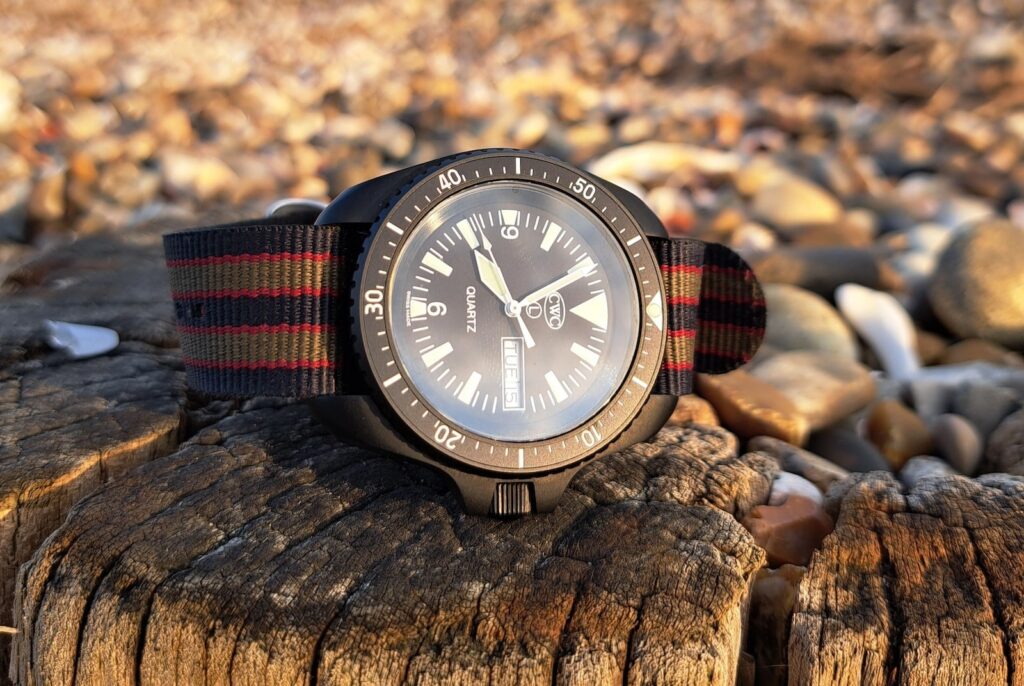
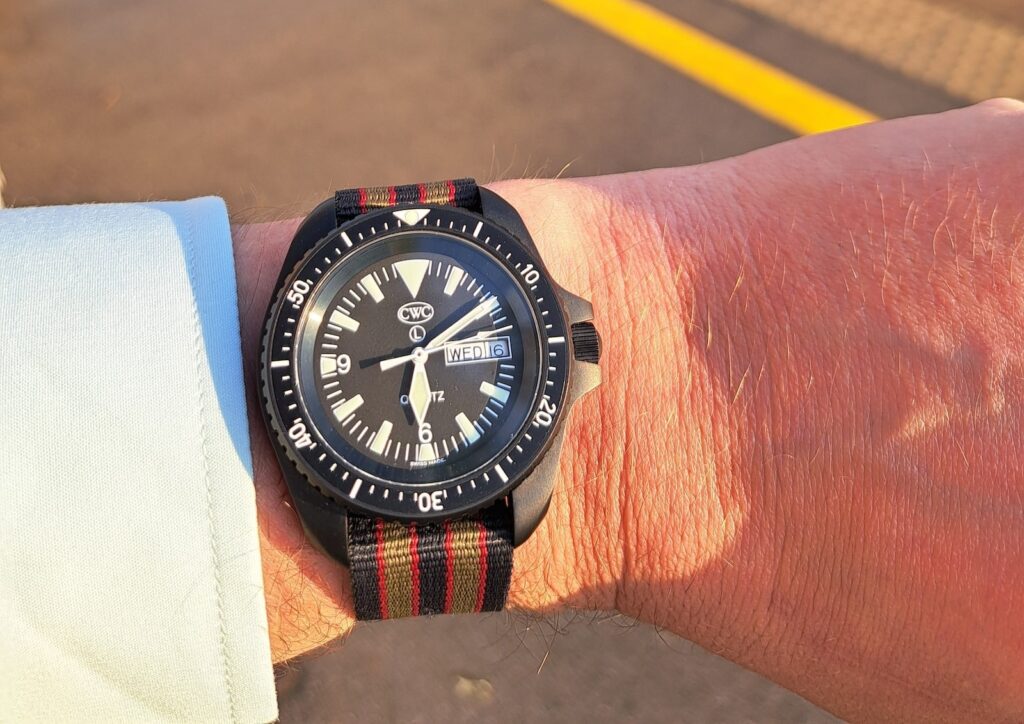
The CWC SBS Diver keeps its design language simple, with form following function in every detail. While spending time with it, our review team found it’s smaller than you expect but carries a dense, reassuring heft that makes it feel ready for anything. The dial’s oversized hour markers deliver instant legibility. The sword hands, a departure from typical diver styles, add clarity and character without shouting for attention. On the wrist, the ribbed fabric strap kept it secure and breathable, and the proportions felt right. It’s light enough for daily wear but sturdy enough to remind you it’s military-grade.
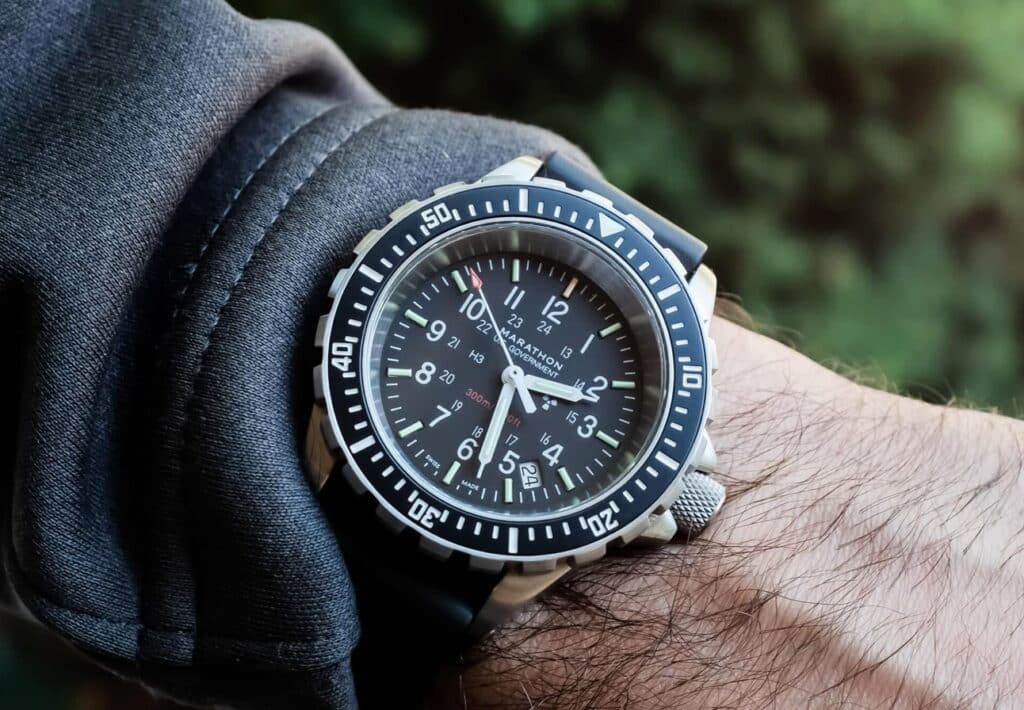
The Marathon TSAR wears its toughness like a badge of honor. The black dial, whether you go for the plain logo or not, feels like equipment, not decor. The red depth rating and H3 radiation markers add a touch of grit, breaking up the utilitarian layout. At the same time, the tritium tubes glow with that steady, always-visible confidence we noted in our hands-on review. On the wrist, it feels every bit the tank it looks like: dense, reassuring, and purpose-built. The rubber strap still carries that oddly satisfying vanilla scent and feels bombproof. The steel bracelet is pure function: no quick releases, just the kind of hardware that makes sense once you’ve lived with it.
- CWC delivers a compact, stealth-forward design with balanced proportions that wear effortlessly day to day.
- Marathon delivers bold design with heavy-duty construction that feels tough on the wrist.
Build Quality & Technical Approach
Both watches meet true military diving standards, yet they take distinctly different paths when it comes to durability and accuracy.
Movements:
The CWC SBS Diver sticks to the same philosophy that’s made it a trusted military issue for decades: reliability over flash. Inside beats a Swiss quartz movement that’s as no-nonsense as they come. During our time with it, accuracy barely drifted, gaining around five seconds over several weeks. The joy here is pure practicality: no winding, no fuss, just dependable timekeeping that’s ready whenever you are.
The Marathon TSAR takes a similarly utilitarian approach but leans heavily into purposeful durability. It uses a high-torque ETA F06 quartz movement, powerful enough to drive its thick hands through anything you throw at it. Accuracy measured within -0.3/+0.5 seconds per day during our testing, and the three-year battery life adds real-world convenience. It’s not chasing HAQ bragging rights, but it doesn’t need to. It’s built for absolute reliability under pressure: the kind of watch that feels as indestructible inside as it looks outside.
Case Construction & Finishing:
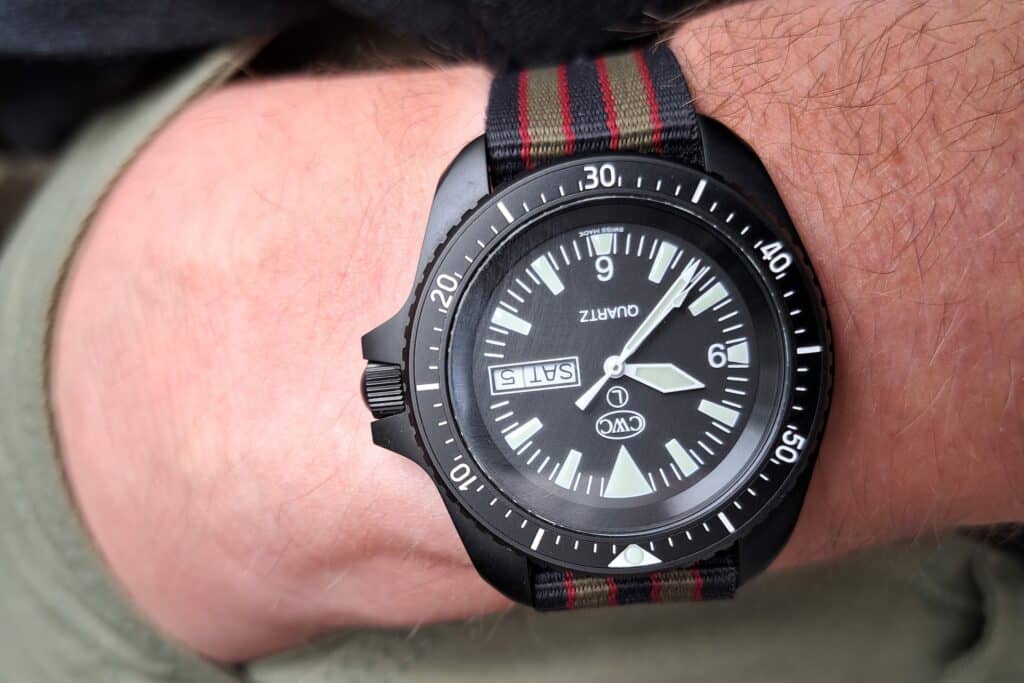
The SBS Diver keeps things purpose-built and refined in that understated, military way. The black PVD-coated case immediately stands out. It’s not flashy, but quietly confident. As we noted during testing, the matte finish effectively reduces glare. It’s lighter than it looks but carries a reassuring weight, thanks to the rugged case construction.
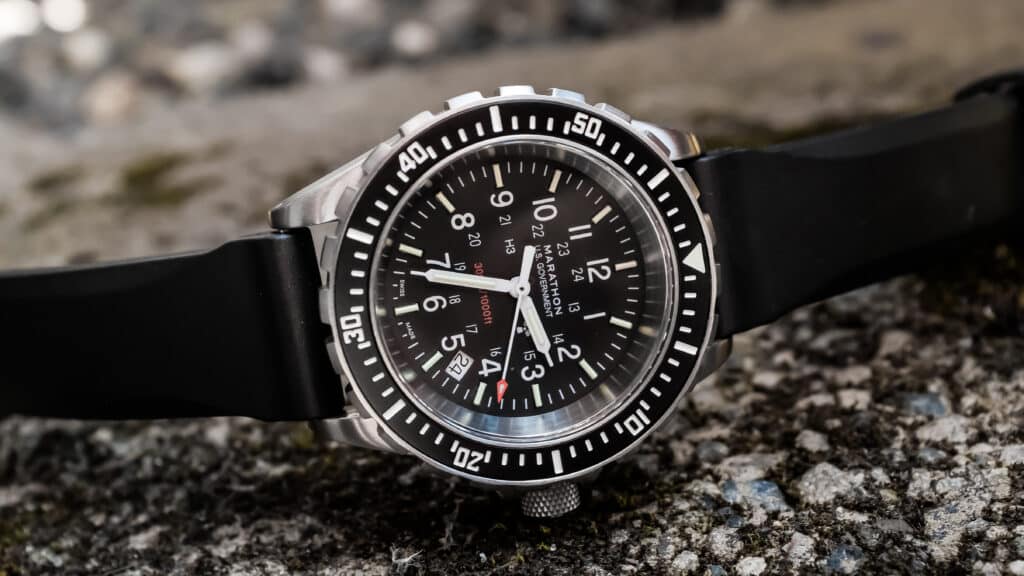
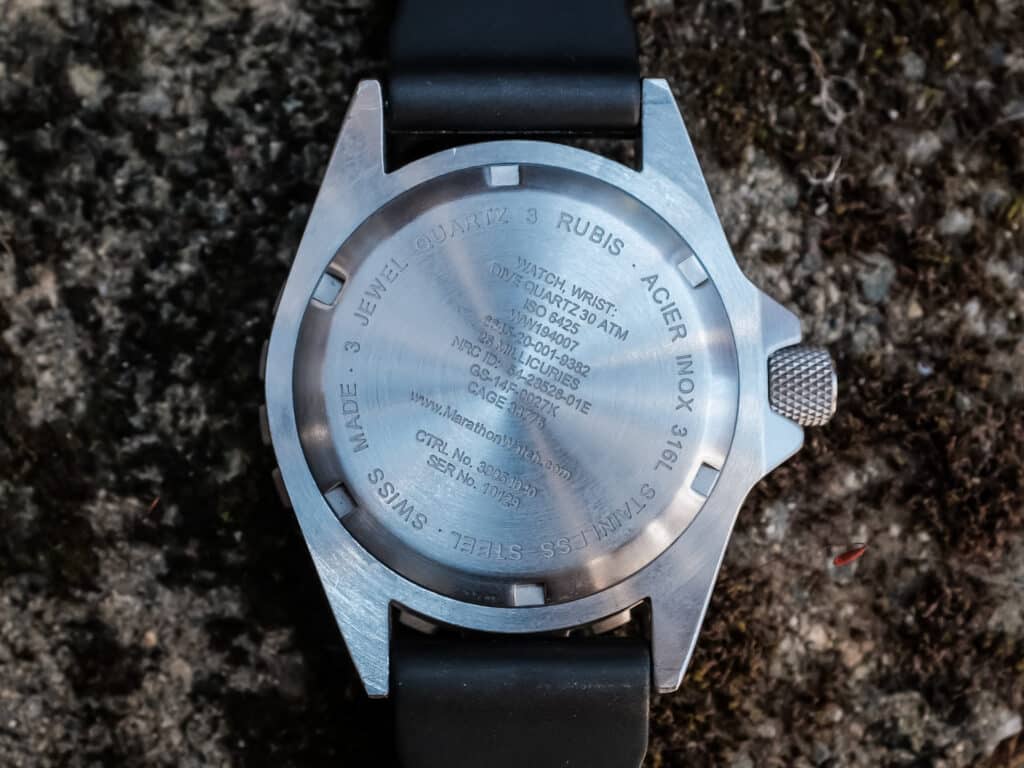
The Marathon TSAR goes in the opposite direction, embracing raw, industrial heft. Its 14mm-thick, thoroughly brushed case feels overbuilt in the best possible way. During our review, we noted how the slab-sided design and toothy 120-click bezel make it easy to operate even with gloves. That’s very much by design for its Arctic and rescue origins. The drilled 20mm lugs simplify strap changes, and the oversized, knurled crown feels secure and satisfying to use. The screw-down caseback is etched with enough detail to double as reading material: a fun quirk that adds to its charm.
Crystals:
The SBS Diver features a flat sapphire crystal, a choice that aligns with its military-first design philosophy. While worn on our wrists, the crystal proved clear in bright light, thanks to a subtle AR coating that kept glare under control. It feels right for a watch meant to be worn hard: less fragile, easier to live with, and quick to wipe clean after a swim or a field day. It adds to the timepiece’s functional, no-fuss character.
The TSAR takes a different route, opting for a synthetic sapphire crystal that emphasizes durability and long-term clarity. The sapphire surface shrugged off contact with gear, keys, and the occasional desk knock without a mark. It delivers razor-sharp dial visibility from every angle and feels sturdy, matching the rest of the watch.
Water Resistance & Lume:
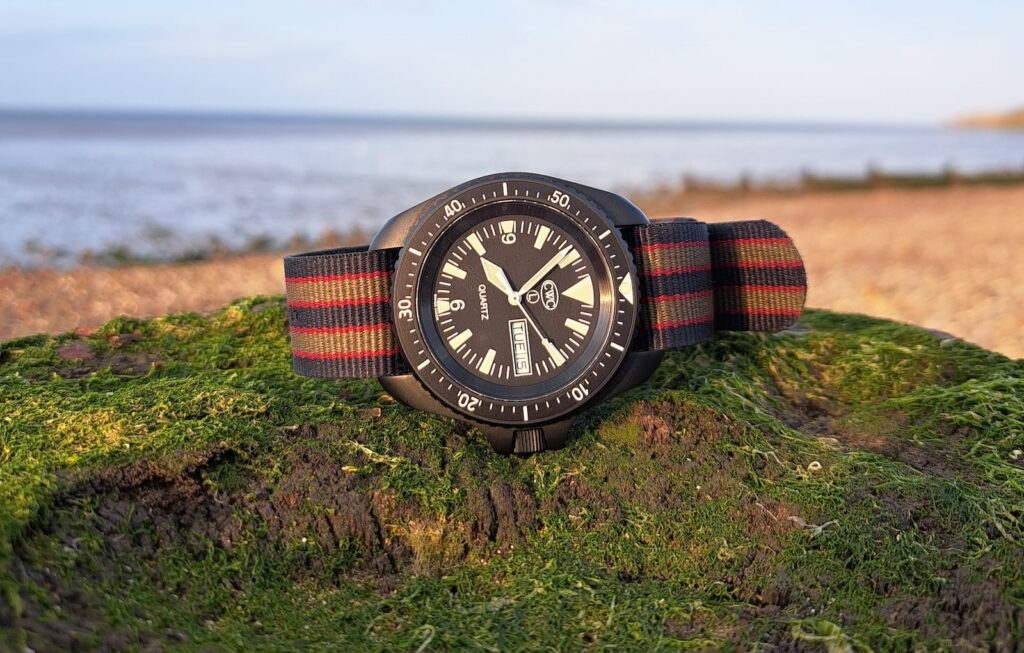
Rated for 300m of water resistance, the SBS Diver is built to handle real-world use far beyond casual swimming. We took it through swims, rain, and daily wear without a second thought, and the rating proved itself in use, keeping the watch bone-dry and unfazed no matter how much water it saw. The lume reacts instantly to light, glowing bright after a few seconds in the sun and staying visible deep into the night. Despite the thin sword hands, legibility remains excellent, even in low light.
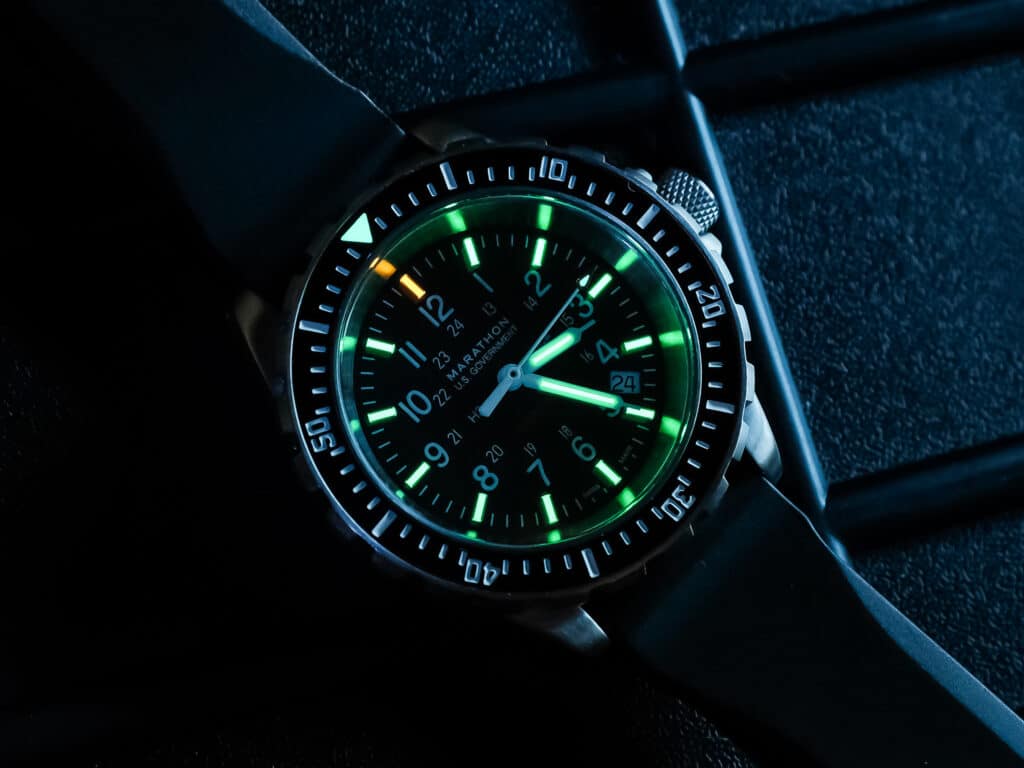
The Marathon TSAR takes the same 300m depth rating and doubles down on military precision. As we noted in our testing, it’s tested to 30 ATM and felt like it could handle a pressure chamber session without breaking a sweat. The lume setup is a mix of MaraGlo and tritium tubes — a combination that glows subtly and continuously, with no charging required. In pitch darkness, the tritium markers stay visible without being overpowering. It’s the kind of illumination that feels designed for function-first use, not a light show.
- CWC SBS Diver: Built for authentic military use with a rugged PVD-coated case, reliable Swiss quartz movement, and bright, long-lasting lume. All of these are wrapped in a lightweight, no-fuss package.
- Marathon TSAR: An overbuilt, sapphire-equipped tank powered by a high-torque quartz movement, tritium illumination, and industrial-level durability.
Cost Considerations
The CWC SBS Diver sits in that tricky middle ground where military provenance meets modern pricing. At around £729 (roughly $965), it’s not cheap for a quartz diver, and that sticker can catch some people off guard. We noted the same while handing over our unit to people who know watches (but not the brand). Even such seasoned enthusiasts were surprised when told the price. But context matters: this isn’t a fashion watch. You’re paying for heritage, reliability, and a watch that’s still made for the same unit it was designed for decades ago.
The Marathon TSAR plays in a higher bracket, with an MSRP around $1,200 for the rubber strap or a bit more for the bracelet. That price might raise eyebrows at first, but as we discussed in our review, discounts of 10–15% are typical, and the used examples hold up remarkably well thanks to their near-indestructible builds. Compared to automatic versions, which add a few hundred more, the quartz TSAR still feels like the smarter buy for someone who values precision and longevity over romantic mechanical charm.
Final Takeaway: Which One Wins the Real Military Dive Watch Face-off?
After spending extended wrist time with both watches, the CWC SBS Diver vs Marathon TSAR showdown ends with two very different definitions of what real military toughness means. Both deliver professional-grade build quality, 300m water resistance, and no-nonsense quartz reliability. But their personalities couldn’t be further apart.

The CWC SBS Diver doesn’t need to shout to prove its credentials. It’s smaller, more balanced, and feels genuinely lived-in. That’s the kind of design that’s been refined over decades of real use rather than marketing feedback loops. Its 300m capability and steady quartz heart make it ready for anything, but what stands out most is how naturally it fits into daily life. It’s military in origin, civilian in comfort.
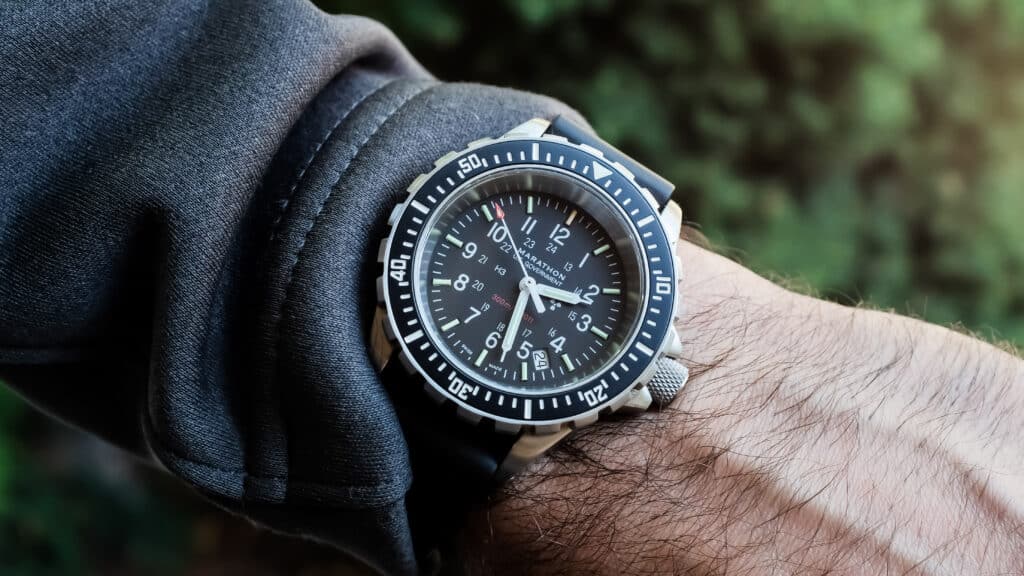
The Marathon TSAR, on the other hand, is the louder, tougher sibling: a functional tool that feels engineered to survive anything. It justifies its price tag through brick-solid construction, Tritium lume, sapphire crystal, and sheer usability. But it’s also a watch that rarely lets you forget you’re wearing it. That’s part of its charm, and its limitation.
The CWC SBS Diver takes the win because it’s built smarter. It carries its military DNA without compromising wearability, offering authenticity that feels earned rather than engineered. While the TSAR is a tank, the SBS Diver is a field-tested tool that still belongs on your wrist after the mission ends. For us, that balance of real-world comfort and honest provenance makes it the more authentic expression of a “real military dive watch.”
Do you agree or disagree with our assessment after hands-on testing these watches? Let us know your thoughts in the comments below.

Co-Founder and Senior Editor
Kaz has been collecting watches since 2015, but he’s been fascinated by product design, the Collector’s psychology, and brand marketing his whole life. While sharing the same strong fondness for all things horologically-affordable as Mike (his TBWS partner in crime), Kaz’s collection niche is also focused on vintage Soviet watches as well as watches that feature a unique, but well-designed quirk or visual hook.
Marathon navigator steel
Really hoping we can get one in for a review soon. I’ve been eyeing that one for a while and it seems like they did a great job.
You have made a mistake! The CWC SBS diver also has sapphire crystal glass and has done for about 10 years!
Corrected 🙂
Good write up. I have a CWC diver and a Marathon GSAR Anthracite and an OSAR. They’re both great watches. For me the Marathons fits my use case a little bit better and are in my wrist more often. The big chunky bezels are easier to operate with gloves and in inclement conditions. The function forward history and development of the SAR line also resonates quite a bit with me.
That’s good insight. I will say … there’s nothing like the action on the chunky Marathon bezels. Always a treat.