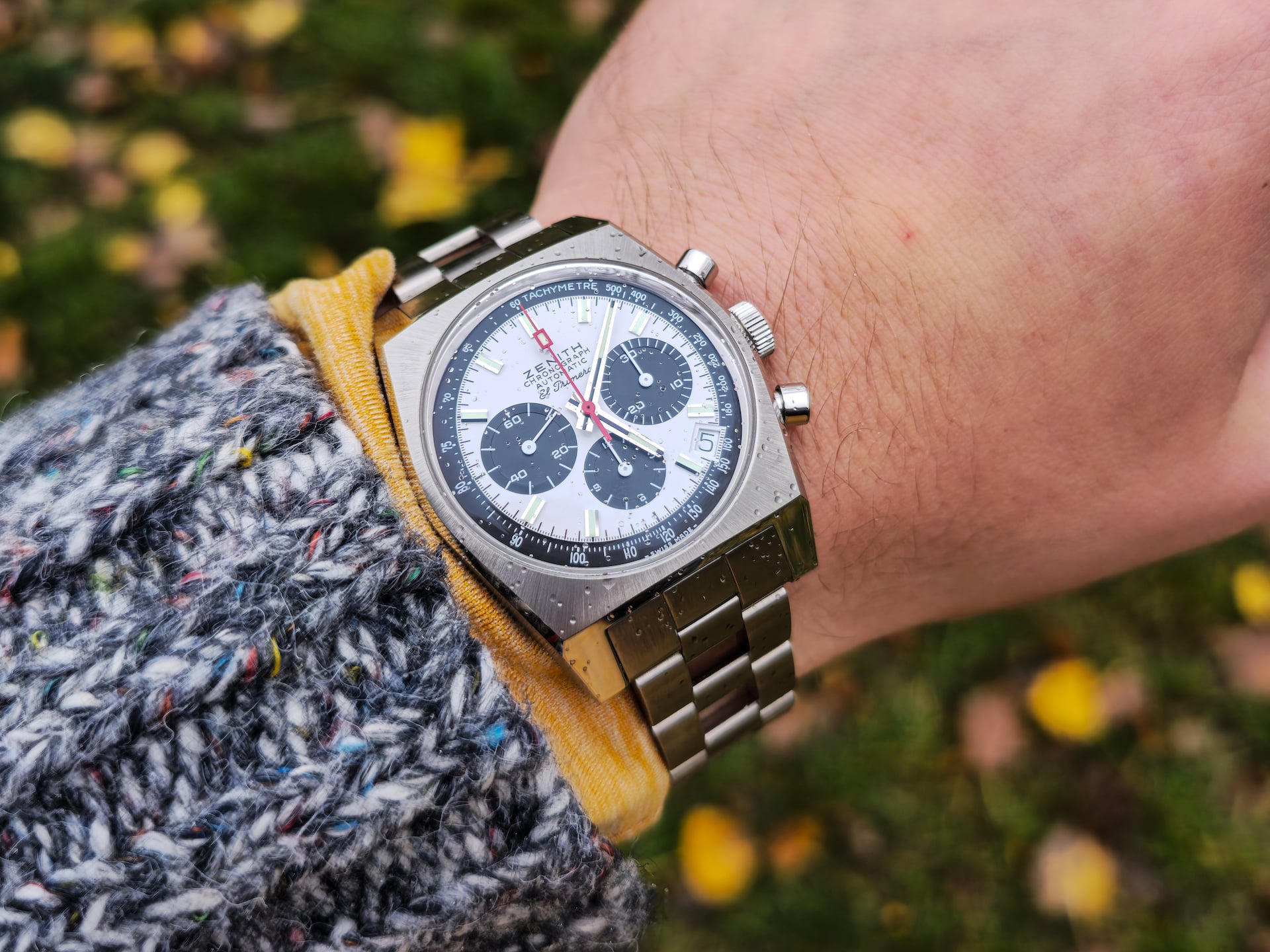
When comparing vintage revival chronographs, you can’t overlook either the TAG Heuer Carrera ‘Glassbox or the Zenith El Primero A384 Revival. But if you’re comparing those two, you’ve probably realized it isn’t a simple “which chronograph looks better” kind of debate. It’s a question of which heritage revival feels more authentic on the wrist. Both watches reach back into the golden age of racing chronographs, but they take very different routes to get there. Over time, we’ve logged many hours with both, scrutinizing proportions, testing comfort, and living with them the way real people wear watches, not the way press photos suggest.
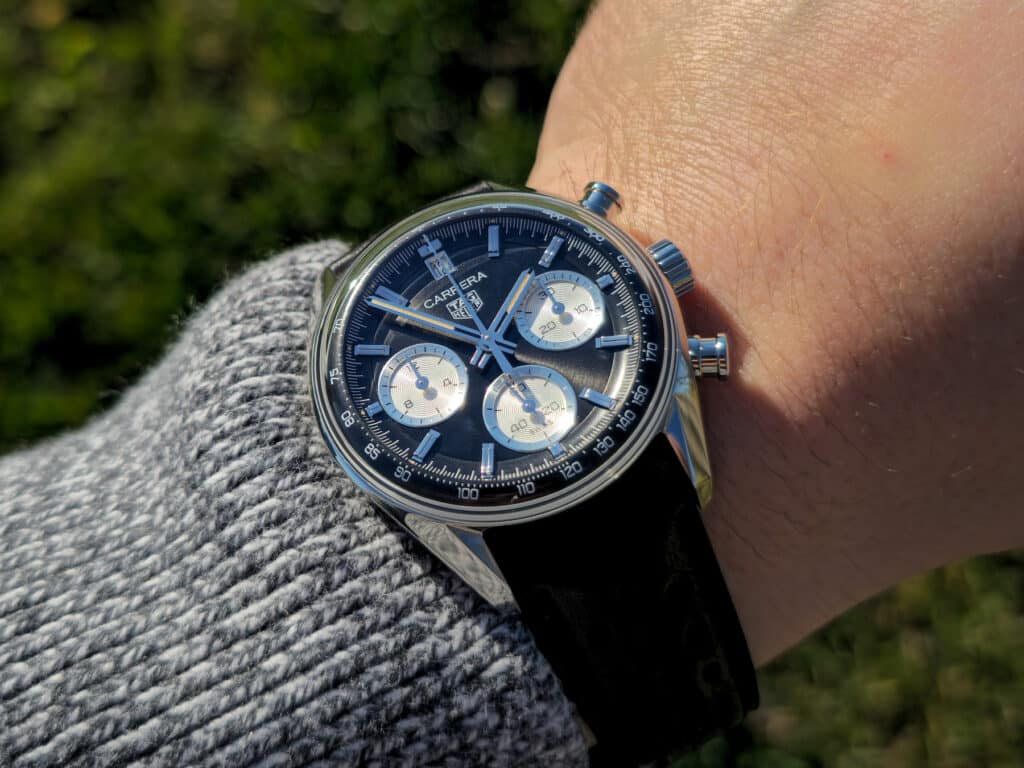
The Carrera ‘Glassbox’ impressed our review team for its retro-modern flow, and the Zenith El Primero A384 for its unapologetic 1969-era charm. But, apart from nostalgia or specs, this comparison is about experience: how each wears, how the movements feel under your fingers, and which one ultimately earns a permanent spot in a modern collection.
Overview & Identity
When it comes to the TAG Heuer Carrera ‘Glassbox’ vs. the Zenith El Primero A384 Revival, both watches approach heritage revival from very different angles. Yet, each seeks to answer the same question: how do you bring the past forward without losing its soul?
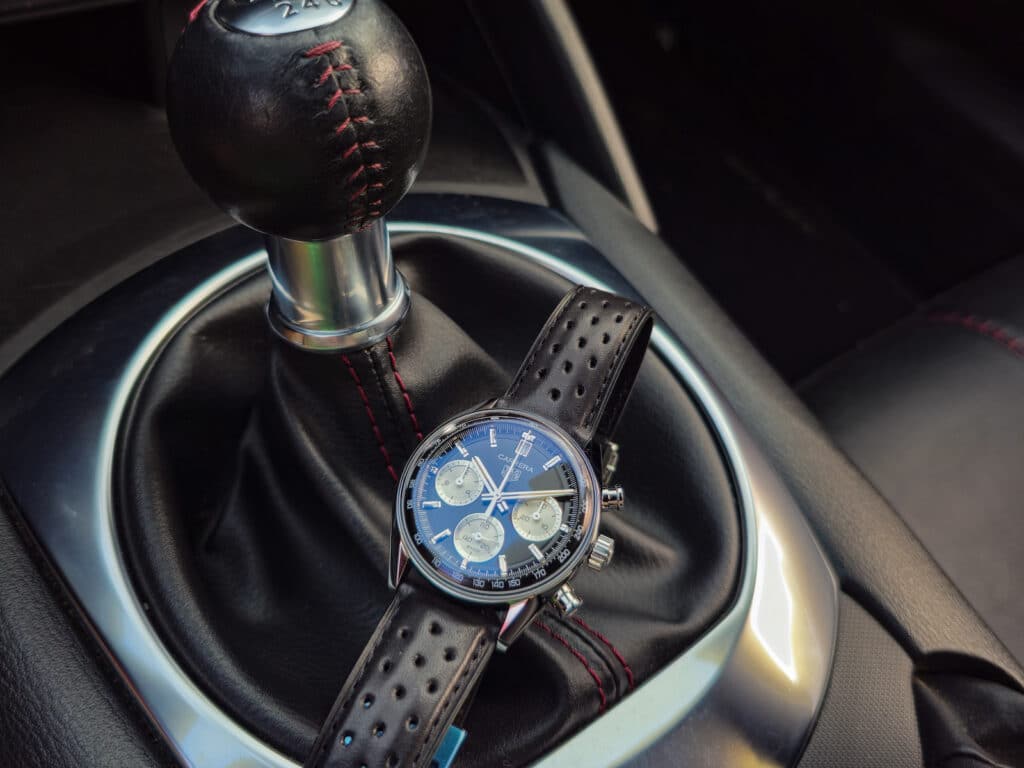
The TAG Heuer Carrera ‘Glassbox’ Chronograph we tested feels like the first time in years that TAG has remembered what made the Carrera special. Its 39mm case fits like it was designed for real wrists, not display windows. The domed sapphire crystal, i.e., the “Glassbox,” adds warmth and distortion that make the dial feel alive, while the pushers deliver tactile feedback that rivals the best of the El Primeros we’ve handled. Inside, the TH20 movement is reliable and one of the best-performing calibers you’ll find around this price point. It’s modern TAG finally finding its stride again, and it shows.
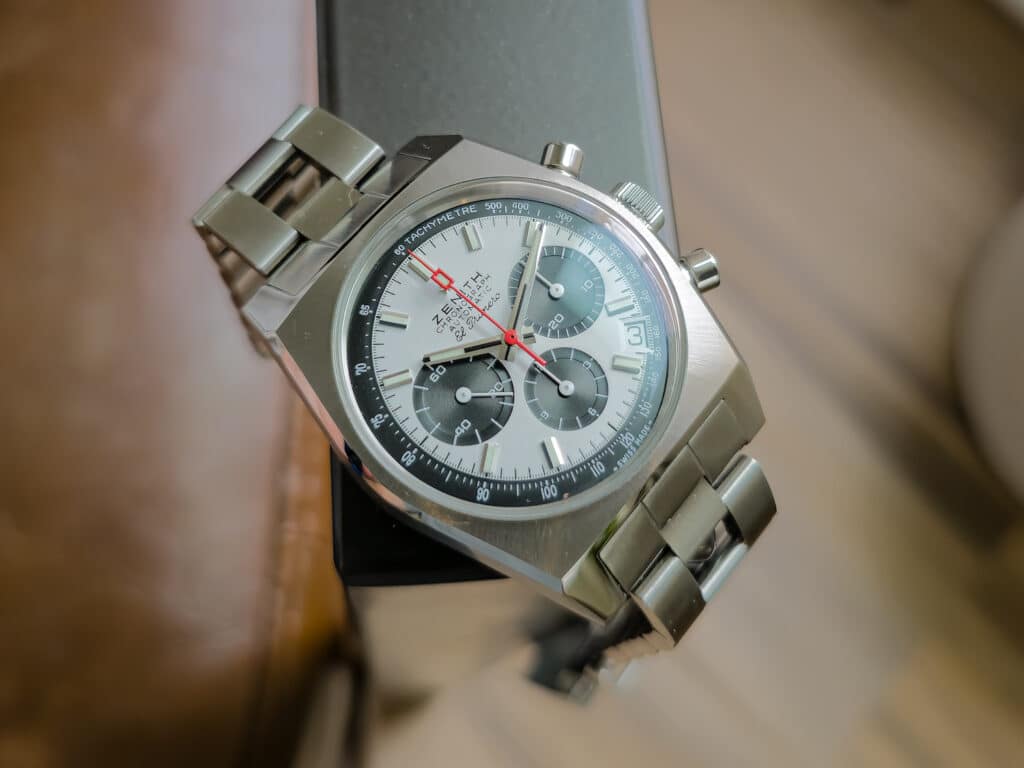
The Zenith El Primero A384 Revival, on the other hand, leans into nostalgia and nails it. The cushion-shaped case, the jangly ladder bracelet, and that towering crystal all combine to create something unapologetically ’70s. While testing in person, the watch felt like a time capsule that still beats at 36,000 vibrations per hour. That’s proof that Zenith didn’t reissue a classic; they resurrected it. It’s faithful, charming, and confident in its identity.
- The Carrera ‘Glassbox’ feels like TAG getting out of its own way: refined but still approachable and modern. It’s the kind of chronograph you throw on every day and forget how “heritage” it’s supposed to be.
- The El Primero A384 Revival is the opposite kind of win: retro, a little rattly, and bursting with personality. It doesn’t chase modern refinement; it celebrates the quirks.
Design & Wearability: Polished Modernity vs Heritage Authenticity
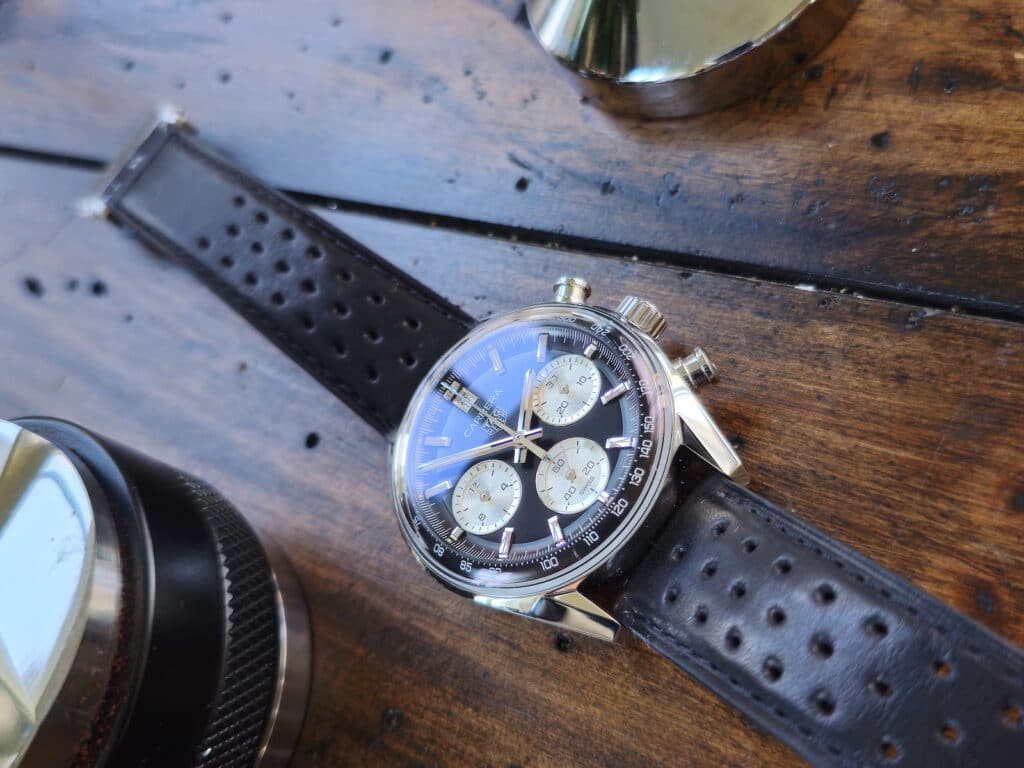
The Carrera ‘Glassbox’ makes a strong first impression. On paper and in photos, it’s one of the best Carrera designs TAG has produced in years. The reverse panda layout, applied indices, and dial that shifts from slate black to deep brown promise plenty of visual appeal. But as mentioned in our dedicated review, those polished indices and hands, while luxurious at a glance, feel uneven and plasticky up close, lacking the sharpness expected at this price. The sub-dials add some depth, though their printing still feels a touch unfinished. It’s as if TAG tried too hard to make the dial shout “premium,” rather than letting the design speak for itself.

On the wrist, it redeems itself somewhat. The black perforated leather strap is soft and comfortable right out of the box—one of the best OEM straps we’ve handled under $10K. The slim deployant clasp stays unobtrusive, though its fully polished finish will pick up desk-diving scars fast.
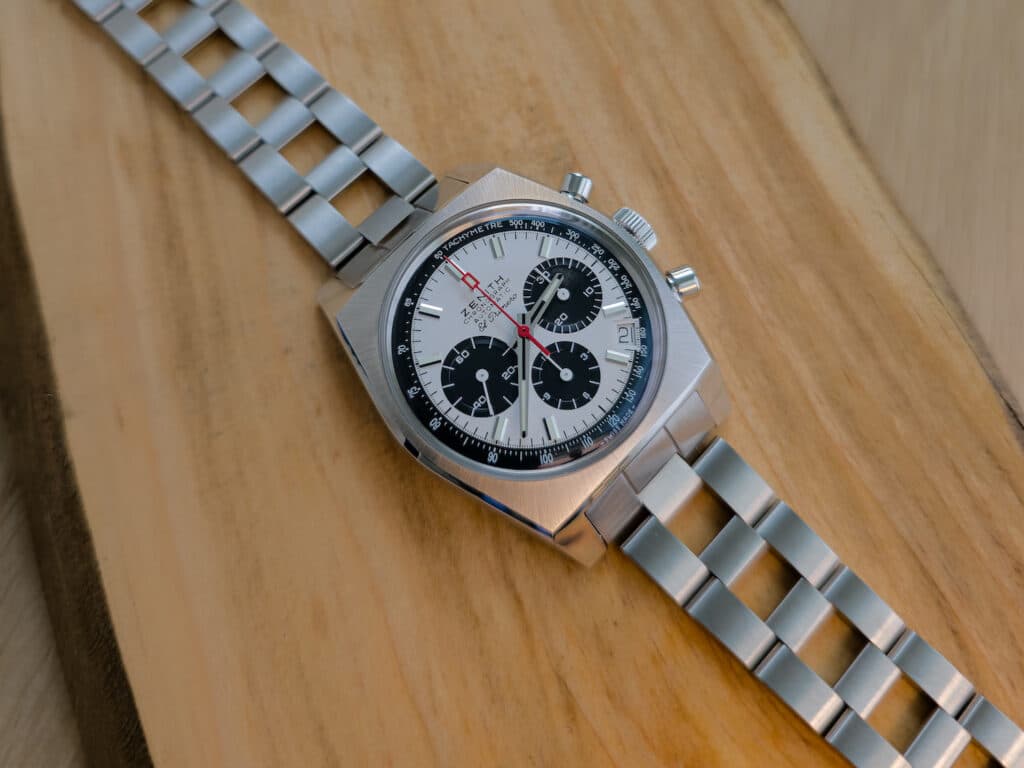
The Zenith El Primero A384 Revival nails that late-’60s vibe instantly. The white panda dial is pure charisma: crisp printing, faceted indices that catch the light, and black-filled hands that stay readable in any glare. The red chrono hand adds attitude without excess, and even the slightly mismatched sub-dials feel right once on the wrist. It’s a dial you admire between emails, not only to check the time. That’s something we highlighted in our hands-on review.
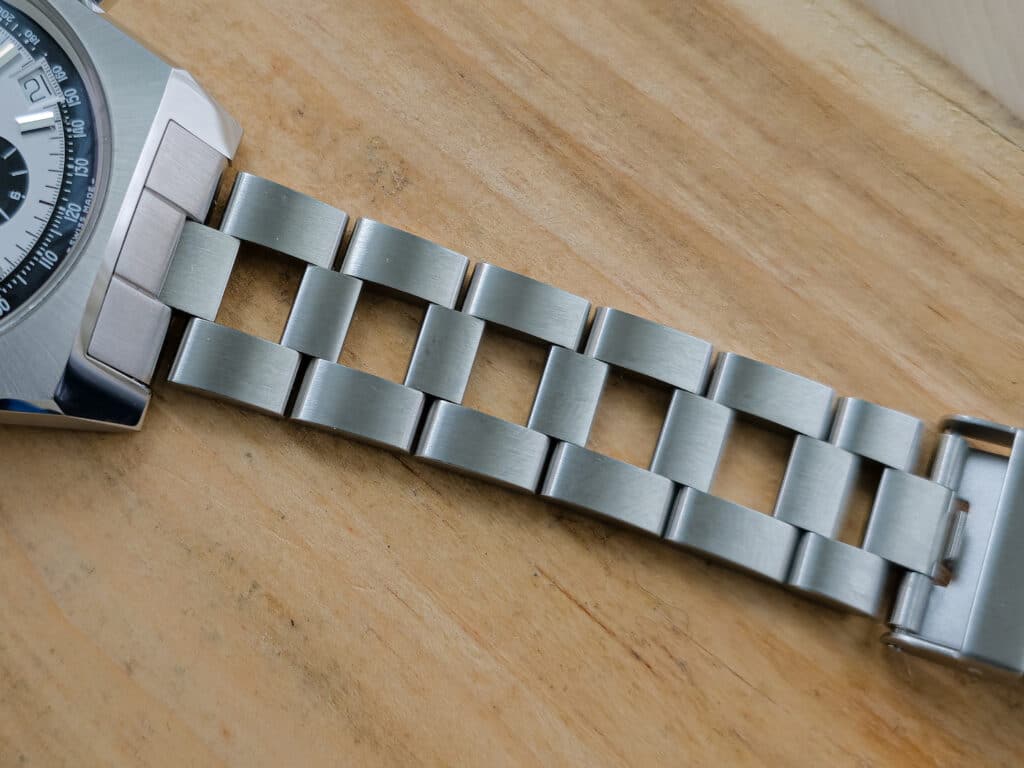
Then there’s the bracelet: objectively rough, subjectively perfect. The brushing is inconsistent, the clasp feels stamped and flimsy, and the end links don’t inspire confidence. Yet somehow, it works. It drapes beautifully and carries that nostalgic jangle only authentic vintage bracelets have. Swap it for a modern strap and you lose the soul. Moreover, we believe the light weight is a significant advantage, making this watch exceptionally comfortable and effortless to wear. It’s one of the most comfortable chronographs we’ve experienced.
- The Carrera ‘Glassbox’ is modern TAG doing its best to feel classic—sleek, wearable, but a bit too polished for its own good.
- The El Primero is messy, charming, and alive. It’s proof that sometimes, imperfection is what makes a heritage watch work.
Build Quality & Technical Approach
Both watches may share vintage roots, but their executions couldn’t be more different.
Movements:
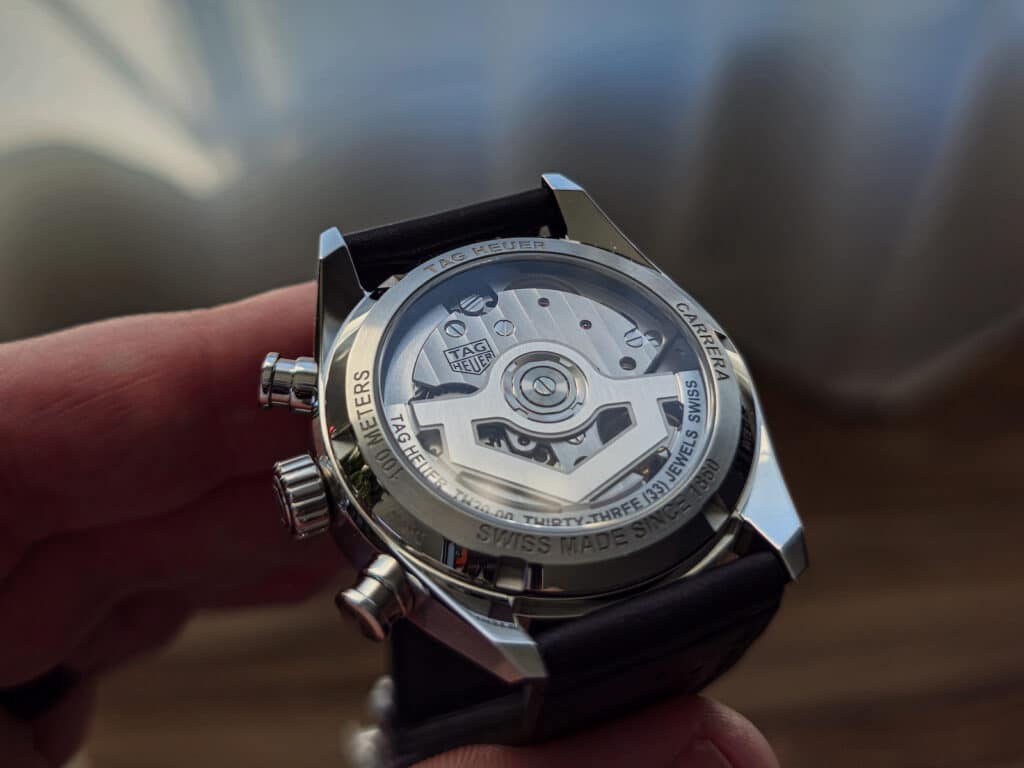
Inside the Carrera ‘Glassbox’ beats TAG’s in-house TH20 movement, and it’s easily one of the watch’s strongest points. This automatic column-wheel chronograph uses a vertical clutch and bi-directional winding system, delivering a robust 80-hour power reserve. As we noted during testing, the winding action feels tactile and mechanical, more like a Speedmaster than the gritty wind of a Valjoux or Sellita. The finishing isn’t flashy. It’s functional, industrial, and modern. The TH20 doesn’t try to impress visually; it wins by feel and consistency, offering absolute refinement.
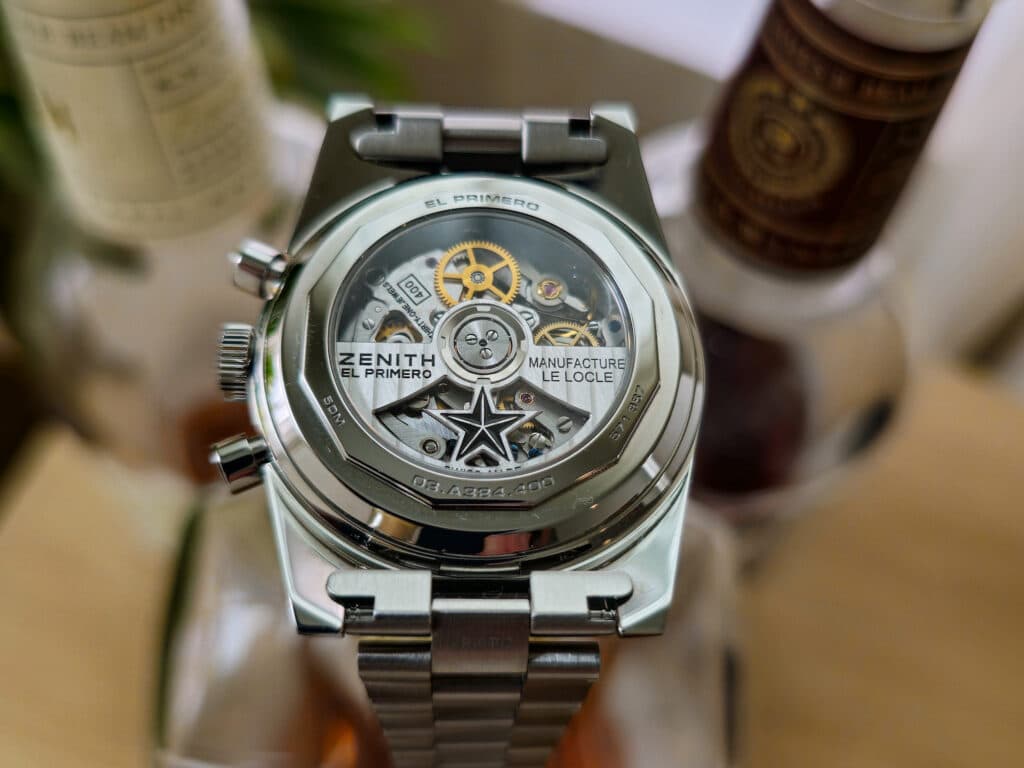
Zenith takes the opposite route: heritage first, engineering second, but still executed beautifully. The El Primero 400 inside the A384 Revival is the same legendary 5Hz, 36,000 vph high-beat chronograph that defined the movement’s legacy in 1969. It’s compact, precise, and tactile. Setting the date and time feels deliberate, with the cams clicking into place through that familiar column-wheel actuation. The winding is smooth and weighty, and once on the wrist, the rotor stays silent. As we highlighted in our El Primero A384 Revival review, this movement is part of watchmaking history, refined enough to remain competitive more than 50 years later.
Case Construction & Finishing:
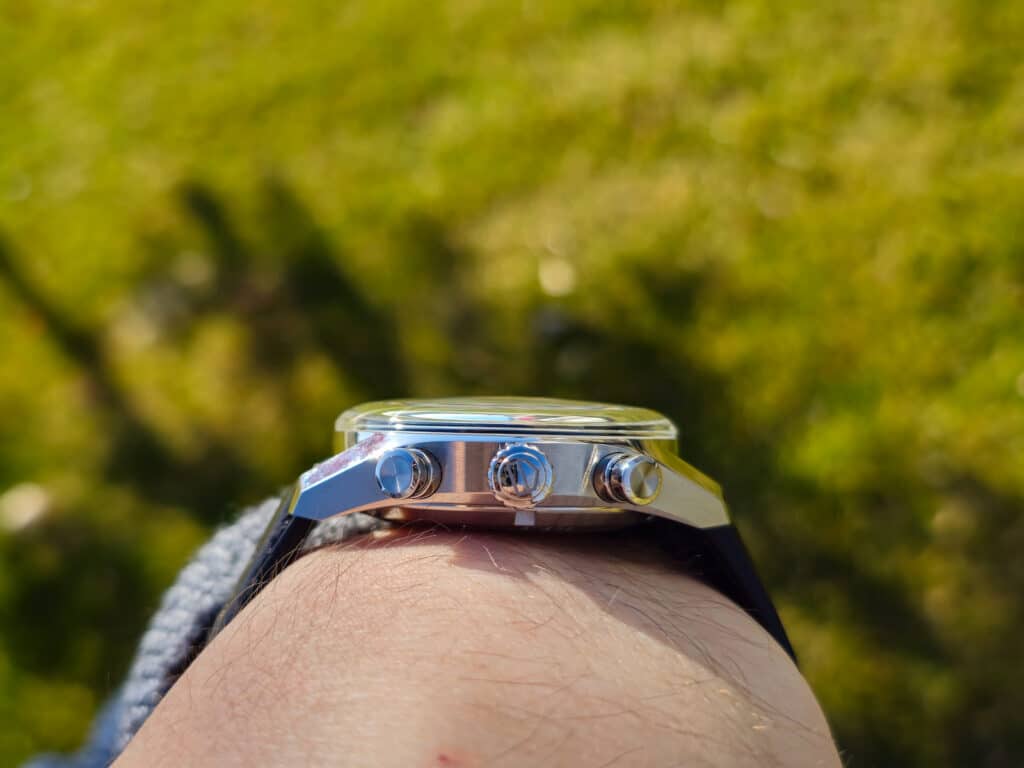
The Glassbox nails one of the hardest balancing acts in modern watchmaking: capturing vintage proportions while delivering modern quality. The 39mm case sounds chunky on paper at 13.9mm thick, but on our wrists, it melted in effortlessly, feeling smaller thanks to the twisted, polished lugs and fine brushing along the mid-case. The finish transitions cleanly from brushed to mirror polish, giving it that classic Carrera sharpness without looking over-restored. The crown and pump pushers are a highlight: slightly oversized, with a brushed center and polished bevel that make them satisfying to use and visually cohesive with the case. As we mentioned during our review, this case feels wearable, tactile, and purposeful.
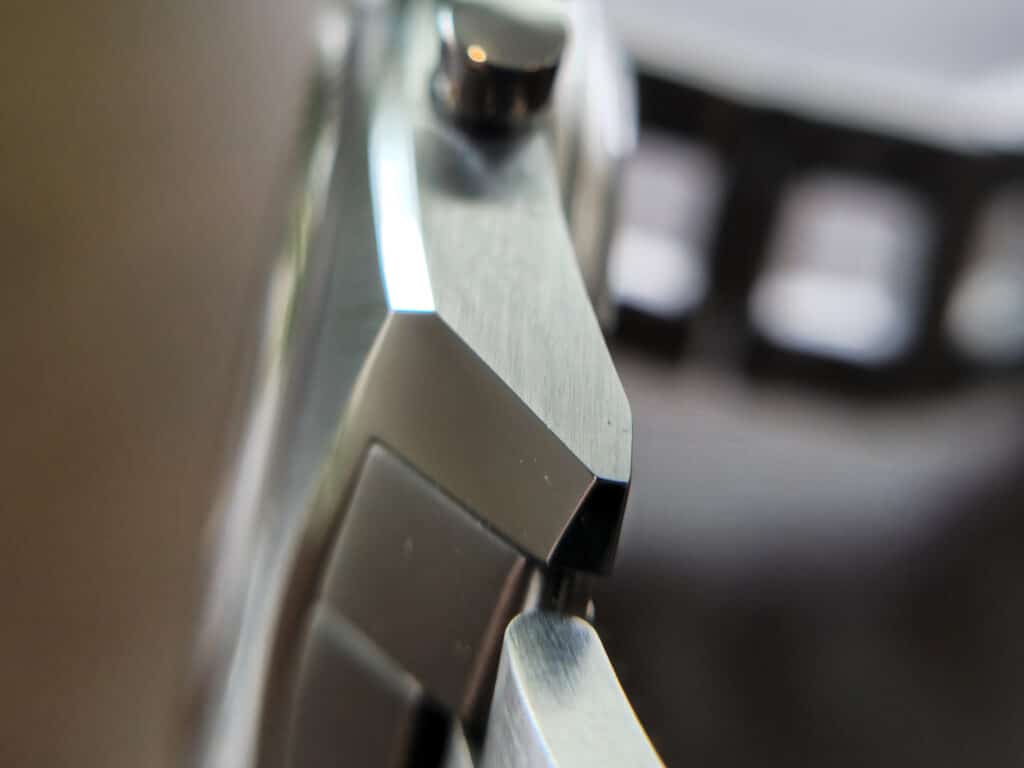
The El Primero A384 Revival takes a very different approach that’s smaller, bolder, and far more vintage in spirit. Its 37mm cushion-shaped case wears closer to 38.5mm, perfectly proportioned and balanced on the wrist. The mix of horizontal brushing on the flanks and radial brushing on top gives the steel real texture, while the sharp bevel running along the case edge adds definition and catches light beautifully. The flat lugs, polished to a mirror finish, contrast with the brushed surfaces, adding visual punch. During our time with it, we noted how this finishing feels high-end yet authentic. It’s the kind of surface treatment that picks up scratches quickly, but in a way that only adds character.
Crystals:
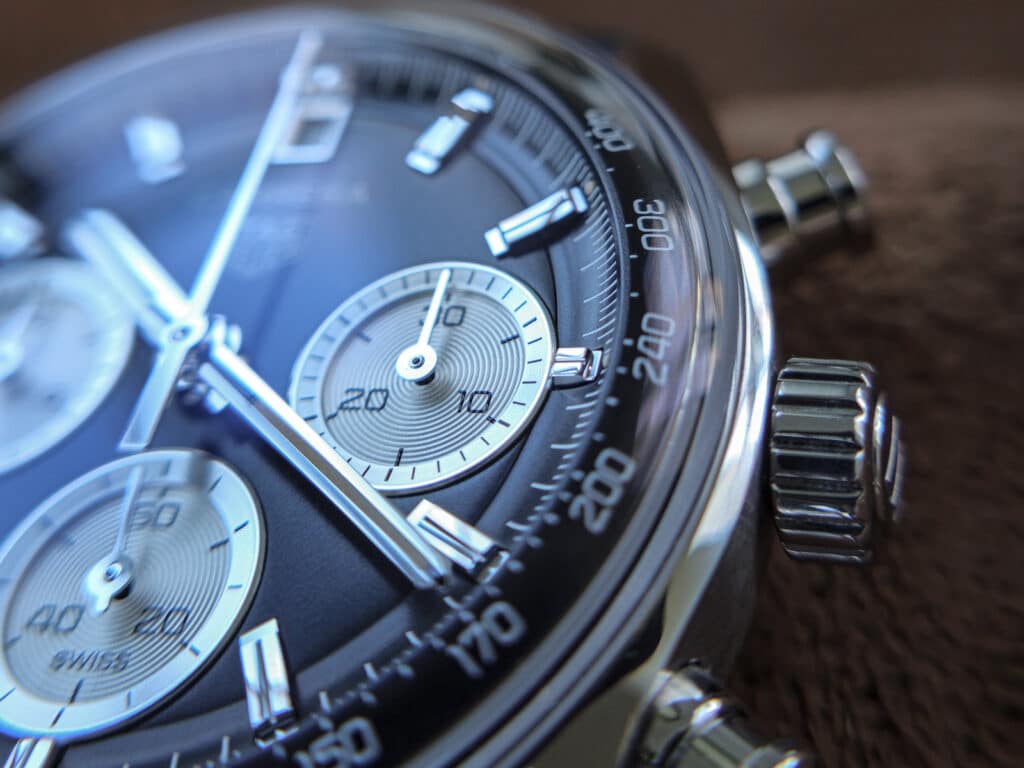
The ‘Glassbox’ earns its nickname from the stunning sapphire dome that defines the entire watch. Instead of a traditional bezel, the crystal stretches edge-to-edge, wrapping around the dial and tachymeter scale like a transparent glass shell. It adds around 2–3mm to the watch’s total height but makes it feel thinner and more fluid on the wrist. While testing it, we noted how clear it was: no milky ring, no haze, just pure visibility. The anti-reflective coating could be stronger under harsh light, but the way the crystal curves and catches reflections gives the watch a warmth and depth few modern chronographs manage. It’s one of the best sapphire executions at this price point.
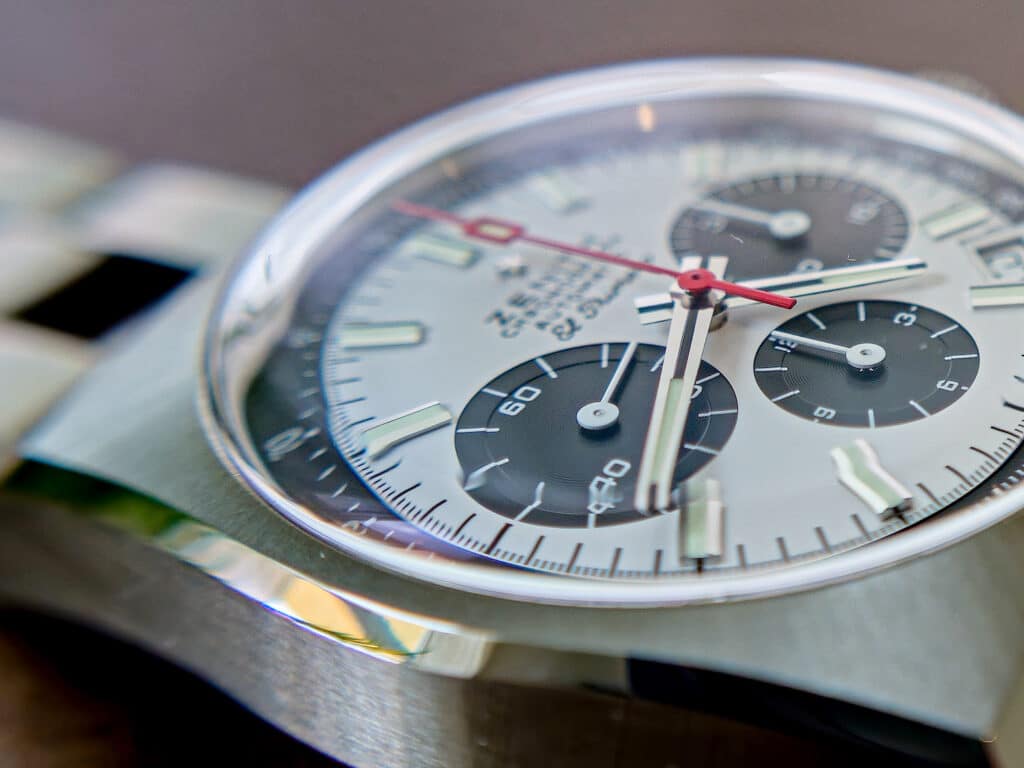
The Zenith El Primero A384 Revival goes for a slightly different but equally impressive approach. Its tall, dramatically domed sapphire crystal mimics the vintage plexi of the original 1969 model, but with modern scratch resistance and clarity. The dome rises several millimeters above the case, giving subtle distortions and a warmth that keeps the retro feel alive. Even without official specs on AR coating, we found that reflections were minimal, proof that Zenith put real thought into how this crystal interacts with light.
Water Resistance & Lume:
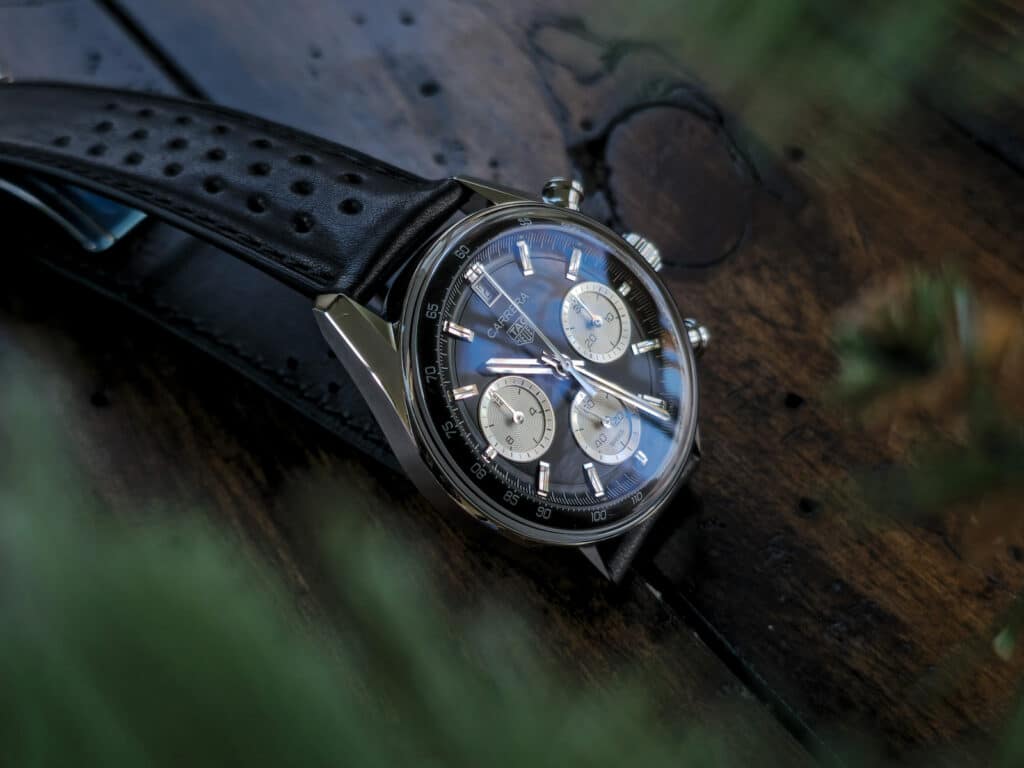
The TAG offers a practical 100 meters of water resistance, more than enough for daily wear, rain, or the occasional swim. It’s not pretending to be a tool watch, and that’s fine. The chronograph pushers and crown are well-sealed, and the overall construction inspires confidence without over-engineering. We also noted the lume as a nice touch: creamy in tone, neatly applied, and filled into those black-painted indices and hands. It’s not dive-watch bright, but it’s consistent and easy to read after dark.
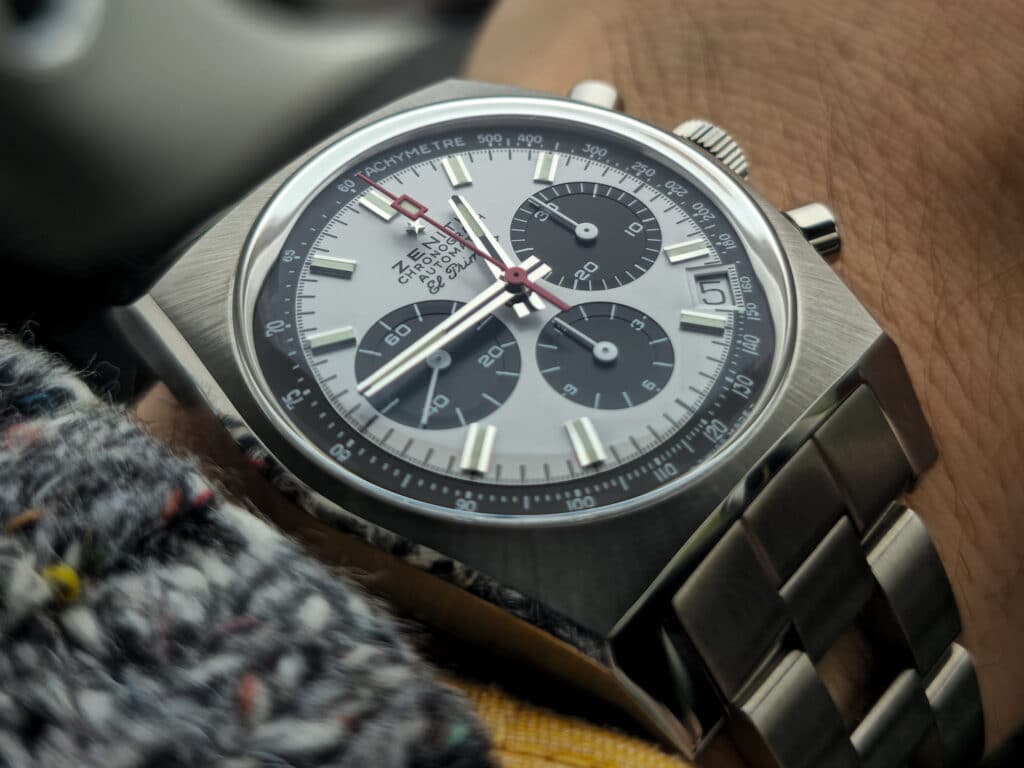
The Zenith model keeps things more delicate with 50 meters of water resistance, which is fair for a heritage reissue that was never designed for deep water. This is a watch built for desks and evenings out, not surf trips. The lume, while present, barely earns a mention. It’s weak, patchy, and fades quickly in low light. As our review team mentioned, it’s mostly there for completeness, not performance. The A384 trades functional lume for aesthetics, and that compromise fits its purpose: a collector’s chronograph that wears like history, not a field instrument.
- The Carrera ‘Glassbox’ prioritizes modern precision and refinement. It’s engineered for today but grounded in classic design.
- The El Primero A384 Revival stays faithful to its roots, celebrating vintage charm and heritage mechanics over outright practicality.
Final Thoughts: Which Heritage Revival Got It Right?
After weeks of wrist time with both, it’s clear the TAG Heuer Carrera ‘Glassbox’ and Zenith El Primero A384 Revival represent two different philosophies on how to honor a legacy. However, only one truly nails the emotional and mechanical balance that makes a revival feel authentic.
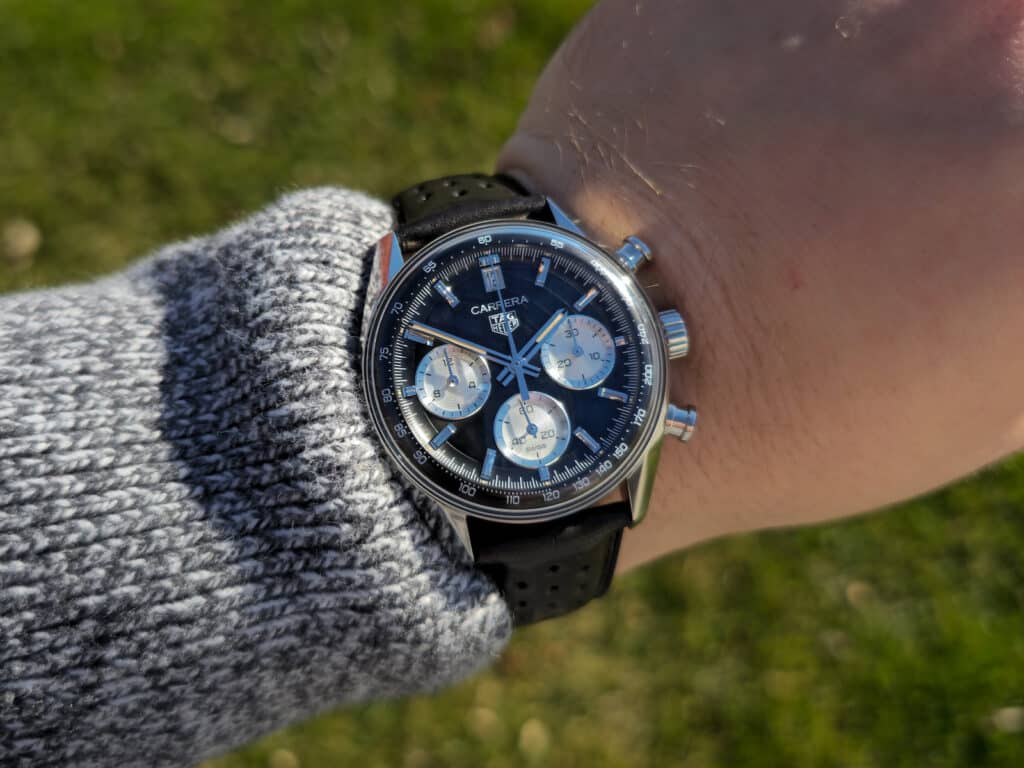
The TAG gets so much right on paper: great case, excellent in-house TH20 movement, and a crystal that’s one of the best in the segment. But the dial keeps pulling it back. It looks fantastic from a distance, yet falls apart under scrutiny, with finishing that doesn’t justify its price. It’s a product caught between impressing newcomers with shine and satisfying long-time enthusiasts with depth.
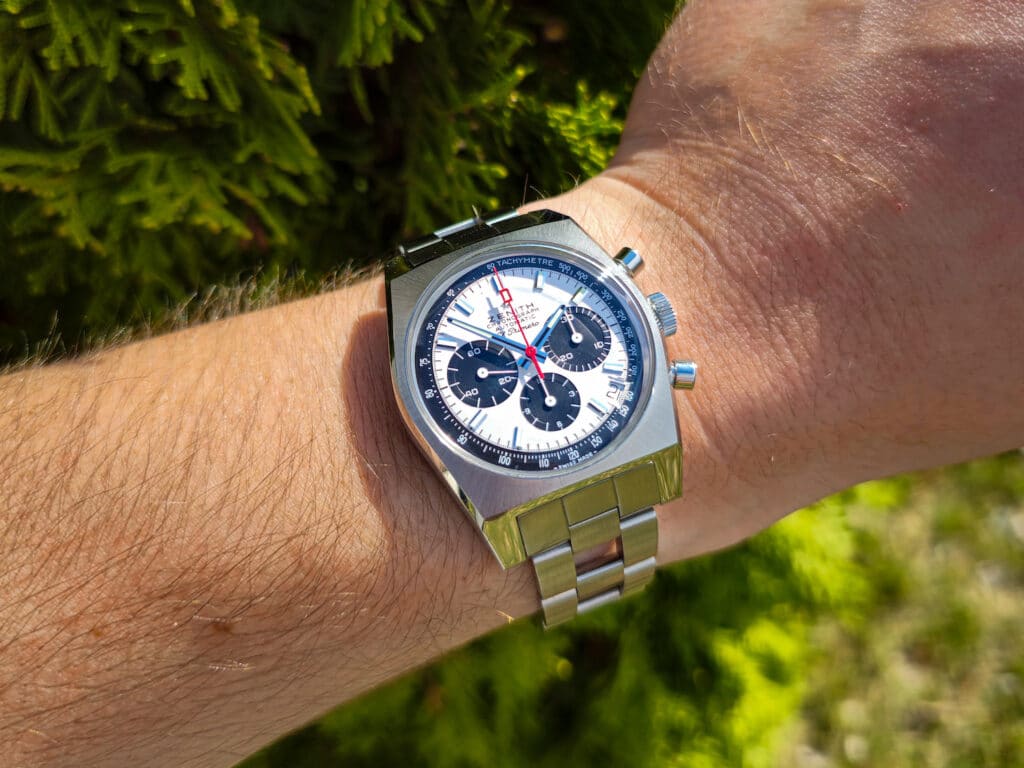
The Zenith, meanwhile, feels like it never left 1969 in the best possible way. It’s imperfect, a bit jangly, but full of life. It still feels special every time you wind it, and the case finishing holds up beautifully even under close inspection. The bracelet may not be the best by modern standards, but it fits the character so well that you stop caring.
In the end, the Zenith timepiece did a better job of reviving the heritage. The Carrera ‘Glassbox’ is a promising reinterpretation, but the A384 Revival is the one that feels like stepping back into the golden age of chronographs, without leaving the present behind. And while the TAG comes in several thousand dollars lower ($6,450 vs $9,000), the Zenith’s premium largely reflects what you’re paying for: a historically important movement and a more faithful, characterful revival. So the real question is whether that extra hit of authenticity is worth the added cost on your wrist.

Co-Founder and Senior Editor
Kaz has been collecting watches since 2015, but he’s been fascinated by product design, the Collector’s psychology, and brand marketing his whole life. While sharing the same strong fondness for all things horologically-affordable as Mike (his TBWS partner in crime), Kaz’s collection niche is also focused on vintage Soviet watches as well as watches that feature a unique, but well-designed quirk or visual hook.